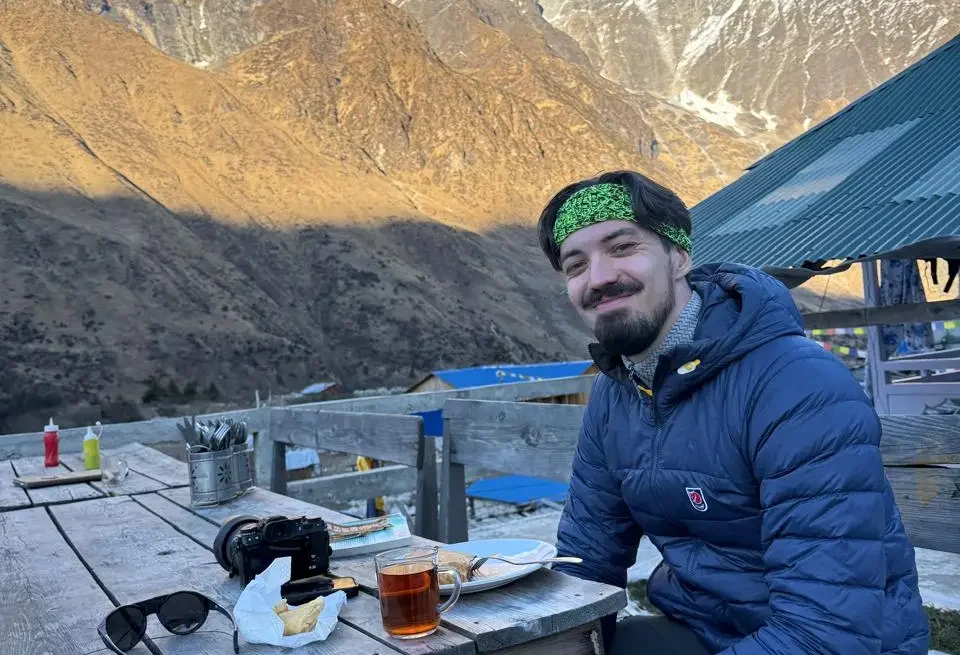
The Manaslu Circuit Trek in November sits in a sweet spot that experienced Himalayan trekkers know well: the sky is clear, the air is dry, the monsoon has been gone for weeks, and the trails are quiet enough to hear the river below and the wind off Manaslu above. If you are planning the Manaslu Circuit Trek and wondering whether November is the right month, this guide answers every question you have: what the weather actually does at each camp, when Larke La starts to ice over, whether teahouses are open, what to pack for cold mornings above 4,000 meters, and how November compares to October on every factor that matters for trekkers.
November is not the most popular month on the Manaslu Circuit, and that is exactly the point. October fills first because it has the name recognition. November gives you almost identical conditions in the first two weeks, thinner crowds, fewer permit queues, and sharper mountain views because the last traces of atmospheric haze from the monsoon season are completely gone by the time you are reading your altimeter at Samagaun. Our guides who cross Larke La every season rank the first two weeks of November among the single best trekking windows of the entire year.
What makes November special on the Manaslu Circuit
After the monsoon ends in late September and October, the Himalayan sky enters its clearest phase. By November, every particle of moisture that the summer storms drove into the atmosphere has settled out. The result is visibility that trekkers from temperate climates have rarely experienced: you can see the south face of Manaslu at 8,163 meters from your teahouse window in Lho at 3,180 meters with a clarity that feels almost wrong, like someone added a mountain to the background while you were sleeping.
November also brings a quality of light that photographers specifically target. The sun is lower in the sky than in October, which means golden hour starts earlier and lasts longer. The angle catches the seracs and ridges on Manaslu, Himlung Himal, Ngadi Chuli, and Shringi Himal with a warmth that midday October light cannot produce. If you are trekking with a camera and cared enough to read this far, November mornings at Samagaun looking north toward the Tibetan plateau are going to produce the best mountain photographs you have ever taken.
The trails in November are firm, dry, and clearly marked. Monsoon erosion has already been identified and repaired by October, and the November freeze-thaw cycle that affects some higher trails has not yet started in the first two weeks. You are walking on the best version of the path: solid ground, no mud, no leeches, no washed-out sections, and no standing water on the lower sections through the Budi Gandaki gorge.
November weather on the Manaslu Circuit: temperatures by elevation
The Manaslu Circuit climbs from around 900 meters at Machhakhola to 5,106 meters at the Larke La pass. The temperature range across that vertical distance in November is enormous. What is a pleasant warm afternoon at the start of the trek is a genuinely cold night by the time you are at high camp. The table below shows what to expect at each major elevation zone during the day and at night in November.
| Elevation zone | Key villages | Daytime temp | Night temp |
|---|---|---|---|
| 900 to 1,500 m | Machhakhola, Jagat | 15 to 20°C | 2 to 7°C |
| 1,500 to 2,500 m | Deng, Namrung | 12 to 17°C | 0 to 5°C |
| 2,500 to 3,200 m | Lho, Shyala | 5 to 12°C | -3 to 1°C |
| 3,200 to 3,900 m | Samagaun, Samdo | 0 to 8°C | -8 to -3°C |
| 4,000 to 4,500 m | Dharamsala / Larkya Phedi | -5 to 3°C | -12 to -8°C |
| 5,106 m | Larke La pass | -8 to -2°C | -20 to -15°C |
These are typical ranges for the month. Individual days vary. A clear, windless day in early November can feel warmer than the table suggests at lower elevations. A storm moving across the Tibetan plateau in late November can drive temperatures at Dharamsala well below what the table shows. The practical takeaway is that you pack for the coldest reasonable scenario at the highest elevation, and you peel off layers as you descend.
Early November vs late November: the difference matters
November is not a single weather event. The first two weeks and the last two weeks behave quite differently on the Manaslu Circuit, and understanding this distinction affects your itinerary planning and gear choices.
| Factor | 1 to 15 November | 16 to 30 November |
|---|---|---|
| Larke La snow | Minimal to none | Possible light snow and ice patches |
| Teahouses open | All open | Some upper valley lodges starting to close |
| Trekker numbers | Moderate (fewer than October) | Low to very low |
| Daylight hours | Around 11 hours | Around 10.5 hours, sunset by 5pm |
| Larke La crossing | Straightforward, no technical gear needed | Microspikes advisable, early start essential |
| Temperatures at Dharamsala | -10 to -8°C overnight | -15 to -12°C overnight |
| Trail foliage | Autumn colors on lower trees | Mostly bare at lower elevations |
If you have flexibility in your dates, starting your trek between November 1 and 12 gives you the conditions of late October with the quieter trails of deep autumn. Most years this window is near-perfect: all lodges open, pass clear, temperatures cold enough to be bracing without being dangerous, and mountain views that photographers queue for in October now entirely yours.
Late November trekking is possible and some trekkers prefer the extreme solitude. But it requires a more serious gear setup, a willingness to leave Dharamsala by 4am for the pass crossing, and acceptance that some lodge owners in Samdo and Dharamsala may already be packing up for the winter. If you are trekking late November, contact us in advance so we can confirm which lodges are still operating that specific week. Trail conditions shift year to year and we have guides on the circuit every season who report current status.
Trail conditions in November
The Manaslu Circuit trail runs through five distinct terrain types, each of which behaves differently in November. Understanding what you are walking on and through helps you pace yourself correctly and choose the right footwear.
From Machhakhola (900 m) to Jagat (1,410 m), the trail follows the Budi Gandaki river through a narrow gorge on stone and earthen paths. In November these sections are dry and firm. The moss and algae that make some riverside sections slippery in monsoon are dried out. Footwear with moderate grip handles this section easily. This part of the circuit is also where birding is best in November because migratory species are passing through on their way south.
From Jagat (1,410 m) through Deng (1,804 m) to Namrung (2,630 m), the trail climbs through mixed forest and farmland. November is harvest time in the lower valleys and you will often walk past terraced fields being cut and bundled. The trail surface is reliable and the forest sections are beautiful in early November when the deciduous trees still hold some yellow and orange color. There are several suspension bridge crossings in this section; all are stable year round.
From Namrung (2,630 m) through Lho (3,180 m) to Samagaun (3,530 m), the character of the trek shifts completely. The forest gives way to open alpine terrain, the villages become stone and timber rather than mud and thatch, and the Manaslu massif comes into full view for the first time. In November this section has cold mornings that warm by mid-morning, clear afternoons, and evenings that drop below freezing quickly after sunset. The trail surface is rocky and solid. At this elevation in November there is no mud and no dust because any moisture freezes overnight.
From Samagaun (3,530 m) to Samdo (3,875 m) and then to Dharamsala (4,460 m), you are in high mountain territory. In early November this section is dry and the trail is as good as it gets all year. In late November there can be frost on the rocks in the morning that makes the first hour of walking careful going. Trekking poles are worth having from this elevation onward in November regardless of your experience level.
The Larke La crossing from Dharamsala (4,460 m) to Bimthang (3,720 m) is the technical crux. In October the pass is almost always snow-free. In early November it remains largely snow-free but there can be ice on the north-facing approach just below the summit. In late November there is typically a dusting of snow and the pre-dawn crossing (which you must do to safely cross and descend before afternoon winds develop) will have ice patches. Microspikes are a sensible addition to your kit for late November. Crampons are not normally required unless there has been recent snowfall. Your guide will assess conditions the morning of the crossing and advise on pace and timing.
Mountains visible from the Manaslu Circuit in November
The Manaslu Circuit passes closer to more 7,000 and 8,000 meter peaks than almost any other trek in Nepal. November gives you the clearest views of the year because the atmosphere is completely dry and the low sun angle creates a three-dimensional depth to the mountain faces that summer haze flattens out. Here is what you are looking at from the key viewpoints.
Manaslu (8,163 m): The eighth highest mountain in the world appears dramatically from Lho village and dominates the view from Samagaun. The south face and Manaslu Glacier are fully visible in November morning light. The view from the Pungyen Gompa day hike above Samagaun puts you at about 4,200 meters looking up at a wall of ice and rock that fills the entire sky. For more on what is visible from specific points, see the mountains visible on the Manaslu Circuit Trek guide.
Himlung Himal (7,126 m): Visible from the high section of the circuit above Samagaun. Himlung is a popular mountaineering objective and its elegant peak is one of the most photographed summits on the upper circuit.
Ngadi Chuli (7,871 m): Also called Peak 29, Ngadi Chuli is visible from multiple points on the middle circuit. Its technical profile and impressive height make it one of the most striking peaks in the range for trekkers who know what they are looking at.
Shringi Himal (7,161 m): This peak is visible from the Tsum Valley side and from the middle section of the circuit. The view from Namrung on a clear November morning with Shringi catching first light is a moment most trekkers remember specifically.
Ganesh Himal range: The Ganesh massif sits to the south and east and comes into full view from the descent to Bimthang after crossing Larke La. On a clear November afternoon after the crossing, the combination of the Annapurna range to the south and Ganesh Himal to the east is one of the great panoramas of Nepal trekking.
Wildlife on the Manaslu Circuit in November
November is an excellent month for wildlife observation on the Manaslu Circuit. The dry conditions and clear air make sightings more likely than in any other season. The most significant animals to look for are in the upper valley zones that you reach in the second half of the trek.
Blue sheep, called bharal locally, are frequently spotted on the rocky slopes above 4,000 meters between Samagaun and Samdo. In November the bharal herds are beginning their winter grazing routines and may be visible in groups of 10 to 30 animals on cliff faces that would be invisible in monsoon vegetation. They are the primary prey species for snow leopards in the Manaslu Conservation Area, so where you see bharal, snow leopard territory is close.
Snow leopard sightings are rare but November is considered a better month than most for the possibility. The snow leopard follows prey movement toward lower elevations as winter approaches. Guides who work the upper circuit regularly in November have seen tracks and occasional sightings in the Samdo area and on the rocky flanks above Dharamsala. Expect to be very lucky if you see one, but carry binoculars and scan cliff faces in the early morning.
Himalayan marmots are active in October and beginning to hibernate by late November. In early November you will still see them at the entrances to their burrows in the grassy areas around Samdo. By the third week of November they are mostly underground for the winter. The lower forest sections have strong bird activity through the whole month. The Namrung to Lho section at dawn is particularly good for Himalayan monal, blood pheasant, and multiple species of laughingthrush.
Festivals and cultural events in November
November overlaps with two significant cultural events that add a layer of experience to the trek that is unavailable in other months.
Mani Rimdu: This is the most important festival in the Tibetan Buddhist communities of the upper Manaslu valley. Mani Rimdu typically falls in November (the exact date shifts with the Tibetan lunar calendar, usually landing in early to mid-November) and involves masked dance performances, ritual fire ceremonies, and communal gatherings at the major monasteries. If you are in Lho when Mani Rimdu is happening at Ribung Gompa, you are witnessing a ceremony that has been performed without interruption for centuries. Read more about the major festivals in the Manaslu region to check specific dates before your trip.
Tihar (Deepawali): The Hindu festival of lights usually falls in October or early November. In the lower valley villages like Jagat and Machhakhola where Gurung and mixed Hindu-Buddhist communities live, Tihar means butter lamps on every windowsill, rangoli patterns on the trail, and the sound of Deusi-Bhailo singing from house to house in the evenings. It is one of those unexpected cultural encounters that turns a trek through a village into a memory.
The Nubri and Tsum communities in the upper valley maintain a calendar of monastery ceremonies throughout the year. November often sees additional puja ceremonies at Pungyen Gompa above Samagaun and at the smaller shrines along the trail. Ask your guide what is scheduled the week you will be passing through specific villages. These ceremonies are not tourist events and attending respectfully when invited is a privilege.
Crowds in November: what to actually expect
The Manaslu Circuit is a restricted-area trek with a permit system that naturally limits daily arrivals. Even in peak October, the circuit never approaches the crowd levels of the Everest or Annapurna base camp routes. November is quieter still, and the difference is noticeable.
In early November you will encounter other groups at major teahouse stops like Samagaun and Namrung. You will share Larke La crossing days with perhaps 10 to 30 other trekkers, which by any standard is a quiet mountain experience. At Dharamsala (high camp) the night before the pass crossing, you may share a lodge with one or two other groups. By late November, you may cross Larke La as the only group on the pass.
The practical benefits of lower crowd levels in November go beyond solitude. Teahouse owners give you more time and attention. The guides who manage these lodges have been running at capacity for the October rush and they visibly enjoy November groups. Food quality is often better because the kitchen is not managing 40 orders at once. Room availability is straightforward, which matters less on the Manaslu Circuit than on more crowded routes but still simplifies planning.
If you are the kind of trekker who came to Nepal to walk into a remote high-altitude landscape and have it feel genuinely wild, November on the upper Manaslu Circuit delivers that in a way that October, as good as it is, sometimes cannot.
Plan your November Manaslu Circuit Trek
Manaslu Treks and Expedition is a TAAN-registered local operator specializing only in the Manaslu Circuit. We confirm current trail and teahouse conditions before every departure. No advance payment required.
Crossing Larke La in November: what your guide needs you to know
The Larke La pass at 5,106 meters is the defining challenge of the Manaslu Circuit. Crossing it safely in November requires preparation, timing, and respect for what altitude and cold do to your body. Here is what our guides tell every client before the crossing day.
Start time: Leave Dharamsala no later than 4am. This is not open to negotiation in late November. The pass reaches 5,106 meters and the descent to Bimthang is long. Afternoon winds on the Tibetan plateau side of the pass can develop suddenly and turn a manageable crossing into a miserable or dangerous one. Leaving at 4am puts you on the summit as dawn breaks, gives you the most spectacular mountain sunrise of the entire trek, and has you descending while the sun is warming the slope rather than as winds rise.
Gear for the crossing: You need a headlamp with fresh batteries, a down jacket worn from the moment you leave Dharamsala, thermal base layers that are already on when you go to sleep, insulated gloves (not just liner gloves), wool or synthetic hat covering ears, and gaiters if there is any snow forecast. In early November, trail runners with good grip have crossed the pass. In late November, proper trekking boots with ankle support and good grip are essential. Microspikes should be in your pack from mid-November onward.
Acclimatization before the crossing: The standard 14-day itinerary includes a rest day in Samagaun and another shorter day in Samdo. Both of these serve a specific physiological purpose. At Samagaun (3,530 m), your body is producing more red blood cells and your kidneys are adjusting fluid balance. The day hike to Pungyen Gompa (4,200 m) on the Samagaun rest day is designed to push your body to a higher elevation before sleeping lower, which accelerates acclimatization. Do not skip the rest days. In November, cold adds to altitude stress and the acclimatization period matters more than it does in warmer months. Read the full Larke La pass complete guide for detailed preparation advice.
What to eat the night before: A full carbohydrate meal the evening before the crossing and a hot breakfast (even if you are not hungry at 3am) will make a measurable difference in your energy on the pass. High-altitude cold suppresses appetite but your body needs fuel more than it tells you it does. Dal bhat the night before is standard. Teahouses at Dharamsala can usually make porridge and hot drinks from 3am if you ask the evening before.
Recommended 14-day November itinerary
The standard 14-day Manaslu Circuit itinerary works well for November trekkers. The acclimatization days are built in exactly where they need to be for cold-weather conditions. Below is the day-by-day schedule with specific November notes at the stages where conditions differ from other months.
| Day | Route | Elevation | November notes |
|---|---|---|---|
| Day 1 | Drive Kathmandu to Machhakhola | 900 m | 8 to 9 hours. Road dry and fast in November. Arrive before dark. |
| Day 2 | Machhakhola to Jagat | 1,410 m | 6 to 7 hours. Warm and pleasant. First permit checkpoint. Bird activity high along the river. |
| Day 3 | Jagat to Deng | 1,804 m | 6 hours. Gorge narrows. Some sections receive no sunlight in late November afternoon. Bring a layer for shaded sections. Read the Deng village guide. |
| Day 4 | Deng to Namrung | 2,630 m | 6 to 7 hours. First Tibetan Buddhist villages appear. Cold evenings begin. Read the Namrung village guide. |
| Day 5 | Namrung to Lho | 3,180 m | 4 to 5 hours. First full view of Manaslu. Ribung Gompa visible on the terrace above Lho. Mani Rimdu possible in early November. Read the Lho village guide. |
| Day 6 | Lho to Samagaun | 3,530 m | 4 to 5 hours. Nubri Tibetan culture fully present. Pungyen Gompa visible on the hillside above. Read the Samagaun village guide. |
| Day 7 | Acclimatization at Samagaun | 3,530 m | Day hike to Pungyen Gompa (4,200 m) recommended. Best Manaslu views of the trek. Sleep low, hike high. November sunrise at this gompa is extraordinary. |
| Day 8 | Samagaun to Samdo | 3,875 m | 3 to 4 hours. Short day for continued acclimatization. Optional walk toward the Tibetan border viewpoint. Blue sheep often visible above the village. Read the Samdo village guide. |
| Day 9 | Rest at Samdo | 3,875 m | Second acclimatization day. The cold at 3,875 m in November is serious at night. Sleeping bag rated below -10°C required. |
| Day 10 | Samdo to Dharamsala | 4,460 m | 3 to 4 hours. Short day but the elevation gain is significant. Arrive early, eat well, drink 3 to 4 liters of water, sleep as early as possible. Read the Dharamsala guide. |
| Day 11 | Dharamsala to Bimthang via Larke La | 5,106 m / 3,720 m | 7 to 8 hours. Depart 4am. In late November add microspikes. The hardest and most memorable day of the trek. |
| Day 12 | Bimthang to Tilije | 2,300 m | 5 to 6 hours. Rapid descent through rhododendron forests. In November these forests are bare at higher points but still beautiful. Temperature climbs noticeably as you descend. |
| Day 13 | Tilije to Dharapani | 1,963 m | 3 to 4 hours. Trek ends at the Annapurna Circuit junction. |
| Day 14 | Drive Dharapani to Kathmandu | 1,380 m | 7 to 8 hours by private vehicle or jeep. Arrive Kathmandu evening. |
What to pack for November: the cold-specific gear list
The packing list for November on the Manaslu Circuit is different from the October or spring list in specific ways. The baseline gear is the same but the cold-weather items are not optional extras. They are essential. Here is what matters most for November specifically, broken down by category. For the full general packing list, read the Manaslu Circuit Trek packing list.
| Category | November requirement | Notes |
|---|---|---|
| Sleeping bag | Rated to -15°C or below | Teahouses provide blankets but they are not sufficient above 3,500 m in November. Your bag is the difference between good sleep and poor sleep, and sleep quality directly affects acclimatization. |
| Down jacket | 800 fill power minimum, full-length zip | Worn from the moment you leave Dharamsala for the pass. Also worn at teahouse dinners above 3,500 m in November. |
| Gloves | Two pairs: liner gloves and insulated outer gloves | On the pass crossing your hands will be handling trekking poles before dawn at -10°C or colder. Liner gloves alone are inadequate. |
| Headlamp | With fresh lithium batteries | Cold kills standard alkaline batteries fast. Lithium batteries maintain output down to -30°C. Keep the headlamp in your sleeping bag overnight before the pass crossing so the batteries stay warm. |
| Trekking boots | Waterproof, ankle-support, good cold grip | For late November, ensure your boots are compatible with microspikes. Try them together before the trip, not at 4am at Dharamsala. |
| Microspikes | Carry from mid-November onward | Lightweight Kahtoola-style microspikes add around 500 grams and can prevent a serious fall on iced rock just below the Larke La summit. |
| Base layers | Merino wool or synthetic, top and bottom | Worn to sleep in from Samagaun upward. The same layers go straight from your sleeping bag onto your body at 3am before the pass crossing. |
| Water thermos | Insulated 1 liter bottle | Fill with hot water the night before the pass crossing. Hot liquid on the ascent in the dark is morale and fuel simultaneously. |
| Sun protection | SPF 50+ sunscreen, UV sunglasses, lip balm | UV radiation at 5,000 meters in November is extremely high even on cold days. Snow reflection adds to this. Many trekkers underestimate this and get a serious burn on the pass crossing. |
Permits for the Manaslu Circuit in November
Three permits are required regardless of what month you trek. The cost structure for November depends on whether you trek before or after November 30, which is the cutoff between the peak season rate and the off-peak rate.
Manaslu Restricted Area Permit (RAP): September through November is the peak season rate of USD 100 per person per week (USD 15 per person per extra day). If you are finishing your trek in December, the days you spend in December fall under the off-peak rate of USD 75 per week. For most trekkers doing a 14-day itinerary starting in early November, the entire trek falls under peak season pricing.
Manaslu Conservation Area Permit (MCAP): NPR 3,000 per person (approximately USD 22). No seasonal variation.
Annapurna Conservation Area Permit (ACAP): Required because the standard circuit exits through the Annapurna region via Besisahar. NPR 3,000 per person (approximately USD 22). No seasonal variation.
We handle all three permits in Kathmandu before your trek departure. You provide a passport copy and we process everything. On the morning of departure for Machhakhola, your permits are already in your guide’s hands. For the complete breakdown of what each permit covers and where checkpoints are, read the Manaslu Circuit restricted area permit guide.
Cost of the Manaslu Circuit Trek in November
November falls within peak season pricing for the Manaslu Restricted Area Permit. The overall package cost from our side is the same as October pricing because the service structure does not change. What you may find cheaper in November are flights to and from Kathmandu (slightly lower demand after the October peak) and accommodation in Kathmandu before and after the trek. Teahouse prices on the trail are fixed and do not vary by month.
For detailed package pricing including what is included and excluded at each group size, read the Manaslu Circuit Trek cost for 2026 and 2027. The full breakdown with a day-by-day itinerary is at the 14-Day Manaslu Circuit Trek trip page.
November vs October on the Manaslu Circuit
October has the reputation. November has the reality. Here is an honest comparison across the factors that trekkers actually care about.
| Factor | October | November |
|---|---|---|
| Sky clarity | Excellent | Superior (drier air, less haze) |
| Temperatures | Mild to cold | Cold to very cold above 3,500 m |
| Trekker numbers | Highest of the year | Noticeably lower |
| Larke La conditions | Snow-free, very manageable | Snow-free early, possible ice patches late |
| Festival activity | Dashain and Tihar in lower villages | Mani Rimdu at upper monasteries |
| Wildlife sightings | Good | Slightly better (animals moving to lower elevation) |
| Photography light | Excellent | Excellent (lower sun angle creates richer light) |
| Teahouse availability | All open, sometimes full | All open early Nov, some closing late Nov |
| Flights to Kathmandu | Higher demand, book early | Slightly lower demand |
| Gear required | Standard trekking kit | Cold-weather extensions required |
The honest summary: October is easier and more forgiving. November is more rewarding if you are properly prepared. Many trekkers who have done both rank their November trip higher because of the clarity, the quiet, and the sense of having the mountains largely to themselves.
Altitude sickness in November: what cold adds to the equation
Acute mountain sickness (AMS) is a risk on any trek above 3,000 meters regardless of fitness level or experience. In November, cold air adds a physiological layer to altitude management that is worth understanding before you go.
Cold stress and altitude stress share some of the same physiological pathways. Both increase your body’s demand for oxygen, both strain your cardiovascular system, and both increase the risk of dehydration because cold air holds less moisture and because you stop noticing thirst in cold temperatures. In November above 3,500 meters, you need to drink water deliberately even when you do not feel thirsty, which is the opposite of how most people drink at sea level.
Signs of AMS include headache, nausea, dizziness, fatigue beyond what the day’s distance justifies, and poor sleep. The rule on the Manaslu Circuit is the same year round: if symptoms appear, stop ascending. Rest for 24 hours. If symptoms do not improve or worsen, descend. Our guides carry pulse oximeters and check blood oxygen levels each morning from Samagaun upward. A reading below 80 at rest is worth monitoring. A reading below 75 in a symptomatic trekker is a signal to descend.
The best protection against AMS in November is the same as in any month: follow the itinerary as written, do not skip acclimatization days regardless of how good you feel, drink 3 to 4 liters of water per day from Samagaun upward, eat full meals even when cold suppresses your appetite, and tell your guide immediately if anything feels wrong. For more on preparation, read the Manaslu Circuit Trek difficulty assessment and the Manaslu Circuit Trek preparation guide.
Accommodation and food in November
All teahouses along the Manaslu Circuit are open through the first three weeks of November. The lodges at Samagaun, Samdo, and Dharamsala typically remain operational into the last week of November, though this varies by year and by how early winter arrives in the upper valley. By December most upper-valley lodges close for the winter. Our team confirms current operating status directly with lodge owners before every trek departure in late November.
November teahouses are warmer inside than in October because owners have more time for each group and tend to keep communal dining areas heated longer in the evening. The menus in November are not reduced from October. Dal bhat, noodle soup, fried rice, pasta, and egg dishes are all available throughout the circuit. Above Samagaun in November, lodge owners typically have good stocks of basic food items because they ordered for the October season and have remaining inventory. Read the Manaslu Circuit accommodation guide for what to expect at each stage.
Getting to the Manaslu Circuit in November
The drive from Kathmandu to Machhakhola takes 8 to 9 hours by private vehicle or jeep via Arughat. In November, the road is at its best condition of the year. The monsoon damage that makes the journey rough from June through September has been repaired by November, and the road is dry and fast. This is one of the underrated advantages of November: the approach drive that others describe as grueling is actually manageable and sometimes even pleasant in dry post-monsoon conditions. For a detailed breakdown of transport options, read the bus vs jeep guide for the Manaslu Circuit.
Kathmandu international flights in November have lower demand than in October. If you are flying from Europe or North America, booking your Kathmandu arrival for early November gives you more date flexibility and often better fares than the October peak. Allow at least one full day in Kathmandu before the trek begins for permit processing and a final gear check.
Who should trek Manaslu Circuit in November
November on the Manaslu Circuit is well suited to trekkers with previous cold-weather experience, those who prioritize solitude and photography over warm conditions, trekkers who found October’s crowd levels on other Nepal routes frustrating, and experienced trekkers who want the best views the circuit offers.
November is not the best choice for first-time high-altitude trekkers who are uncertain about how their body responds to cold, for trekkers who have not done overnight camping or winter trips at lower altitudes first, or for those who need the reassurance of lodges definitely being open late at night. Early November is appropriate for a wider range of experience levels than late November, which genuinely requires serious cold-weather preparedness.
For context on whether the difficulty level matches your fitness and experience, read the Manaslu Circuit difficulty guide and the Manaslu Circuit for beginners guide. If you are unsure, contact us on WhatsApp and describe your trekking history. We will give you an honest assessment of whether November timing is right for your experience level.
Frequently asked questions: Manaslu Circuit Trek in November
Is November a good time for the Manaslu Circuit Trek?
Yes. The first two weeks of November are among the best trekking conditions of the entire year. Skies are clear, trails are dry and firm, crowd levels are lower than October, and mountain views are exceptional. The cold above 3,500 meters requires proper gear preparation, but for trekkers who pack correctly, November delivers an outstanding experience.
Is Larke La open in November?
Yes, in early November Larke La is open and the crossing is straightforward without technical gear in most years. In late November there can be light snow and ice patches near the summit that make microspikes advisable. The pass closes for extended periods from December onward and is usually impassable from January through early March.
How cold does it get at Dharamsala (high camp) in November?
Overnight temperatures at Dharamsala (4,460 m) in November typically fall between -12°C and -8°C. On nights with a wind, the felt temperature can be significantly lower. A sleeping bag rated to -15°C is the minimum recommendation for comfortable sleep at high camp in November.
Are all teahouses open in November on the Manaslu Circuit?
All teahouses are open through at least the first three weeks of November. Some upper-valley lodges in Samdo and Dharamsala begin closing in the final week of November as winter approaches. We confirm operating status with lodge owners before each late-November trek departure.
What permits do I need for November trekking?
Three permits are required: the Manaslu Restricted Area Permit (USD 100 per person per week for September to November), the Manaslu Conservation Area Permit (NPR 3,000), and the Annapurna Conservation Area Permit (NPR 3,000). All are processed in Kathmandu through a registered agency before the trek begins. Solo trekking without a licensed guide is not permitted.
Can I do the Manaslu Circuit in November without a guide?
No. The Manaslu Circuit is a government-designated restricted area. Independent trekking without a licensed guide from a TAAN-registered agency is not legally permitted regardless of the season. This applies to November as to any other month. Read the full explanation of the guide requirement.
What sleeping bag do I need for November?
A sleeping bag rated to -15°C (comfort rating, not lower limit) is the minimum for November. This rating is needed specifically for the nights at Samdo (3,875 m) and Dharamsala (4,460 m). Below Samagaun the bag rating matters less because ambient temperatures are warmer, but since you are carrying the bag the entire trek, bring the appropriate bag for the coldest nights.
How crowded is the Manaslu Circuit in November?
Significantly less crowded than October. You will still encounter other groups at major teahouse stops, but the Larke La crossing in November typically involves sharing the pass with a handful of other groups rather than the longer queues possible on peak October days. Late November can be very quiet indeed.
What is Mani Rimdu and can I see it in November?
Mani Rimdu is the most important festival in the Tibetan Buddhist monasteries of the upper Manaslu valley. It involves masked cham dance performances, ritual fire ceremonies, and communal gatherings. It typically falls in early to mid-November based on the Tibetan lunar calendar. If you time your trek to pass through Lho or Samagaun during the festival, witnessing the ceremonies at Ribung Gompa or Pungyen Gompa is one of the more memorable cultural experiences available in Nepal trekking.
How do I book the Manaslu Circuit Trek in November?
Contact us directly via WhatsApp, email, or the inquiry form on our trip pages. For a November departure, we recommend booking six to eight weeks in advance. We handle all permits, guide logistics, accommodation, and transport. No advance payment is required until you arrive in Kathmandu. View the Manaslu Circuit Trek trip page for full itinerary and pricing.
Ready to trek Manaslu in November?
We are a local, TAAN-registered Manaslu specialist. Our guides cross Larke La every season and confirm trail conditions before every November departure. No advance payment required. All permits handled in Kathmandu.