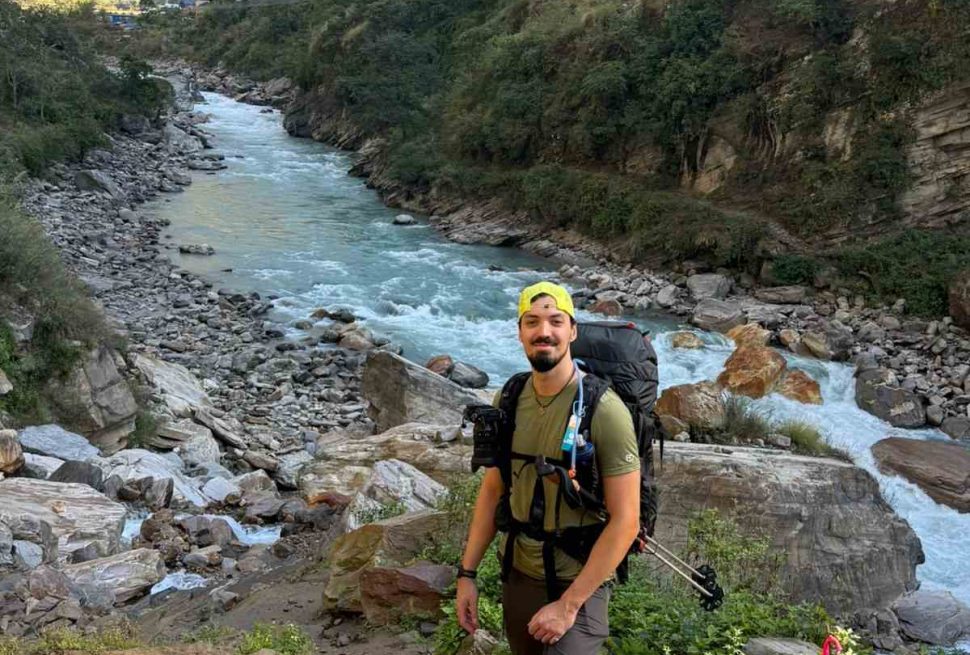
Deng is a village that many Manaslu Circuit trekkers pass through without fully registering its significance. At 1,860 meters in the upper Budhi Gandaki gorge, it sits between Jagat below and the increasingly Tibetan settlements above, occupying a transitional position that reflects the broader cultural and ecological shift that the circuit undergoes in this section of the valley. The gorge at Deng is narrower and more dramatic than it is at Jagat, the forest denser, the river louder, and the settlements more spaced out. The walk to reach Deng and the walk that continues from it are among the most remote-feeling stretches of trail on the entire Manaslu Circuit Trek, and the village itself, small and set against a backdrop of forested slopes and cascading waterfalls, has a character that stays with trekkers who pay attention to it.
This guide covers everything a trekker needs to know about Deng: its position on the circuit, how to reach it, what to expect in terms of accommodation and food, the cultural and natural character of the village and its surroundings, and the trail that continues north toward Namrung and the upper valley.
The Manaslu Circuit Trek is a spectacular journey around Mount Manaslu (8,163 m), the eighth-highest mountain in the world. Located…
Deng Village: Location and Basic Facts
Deng sits at 1,860 meters above sea level on the left bank of the Budhi Gandaki river in Gorkha District. Some sources spell the village name as Dyang or Deng Khola, reflecting local pronunciation variations, but it is the same settlement. It is typically the third or fourth overnight stop on the standard Manaslu Circuit itinerary, depending on where trekkers begin the walk and how the days are divided between Soti Khola and Jagat.
| Detail | Information |
|---|---|
| Elevation | 1,860 meters (6,102 feet) |
| Alternative spellings | Dyang, Deng Khola |
| District | Gorkha District, Gandaki Province |
| River | Budhi Gandaki (left bank) |
| Cultural character | Transitional — hill communities with early Tibetan Buddhist influence |
| Teahouses | 3 to 5 teahouses during trekking season |
| Days from Jagat | 1 day (4 to 5 hours walking) |
| Days from Namrung | 1 day (5 to 6 hours walking) |
| Position in circuit | Third or fourth overnight stop from the road-end |
| Special features | Dramatic gorge, multiple waterfalls, suspension bridges, deep forest |
The elevation gain from Jagat to Deng is approximately 520 meters, and the trail between them passes through some of the most enclosed and dramatic gorge terrain on the entire circuit. The Budhi Gandaki narrows significantly between these two villages, and the forested walls press in on both sides in sections where there is barely room for the trail and the river together. Deng emerges from this narrow gorge at a point where the valley widens slightly, offering the village a small area of flat or gently sloping ground on which its teahouses and houses are arranged.
Getting to Deng: Trail from Jagat
The walk from Jagat to Deng is one of the most varied and visually compelling days on the lower Manaslu Circuit. It passes through small settlements, crosses suspension bridges, climbs above cliff sections where the river takes up the entire gorge floor, and descends through forest to reach the river again. The major village on this section is Philim, which serves as a natural lunch stop and is sometimes used as an overnight stop by itineraries that want to break the Jagat-to-Deng day into two shorter stages.
| Section | Distance | Altitude Change | Time | Notes |
|---|---|---|---|---|
| Jagat to Salleri | ~3 km | +100m | 1 hour | Forest trail, small settlements |
| Salleri to Philim | ~5 km | +120m | 1.5 hours | River crossings, gorge walking; Philim is a good lunch stop |
| Philim to Ekle Bhatti | ~3 km | +130m | 1 hour | Trail climbs above gorge, forest |
| Ekle Bhatti to Deng | ~3 km | +170m | 1 to 1.5 hours | Steep descent and re-ascent; bridge crossing; dramatic gorge section |
Philim is the largest and most developed village on the trail between Jagat and Namrung. It has several teahouses, some small shops, and a more established look than the smaller settlements on either side of it. Many trekkers stop here for lunch. Philim also marks a point where the cultural shift toward Tibetan influence begins to become more pronounced: the architecture, the prayer flags, and the presence of chortens and mani walls become more consistent above Philim than below it.
Between Philim and Deng, the trail enters some of the most challenging gorge terrain on the lower circuit. In one section, the trail climbs steeply above the river on a path cut into the rock face, then descends back to a suspension bridge crossing, then climbs again on the far bank. This roller-coaster quality to the terrain is characteristic of gorge walking in the Budhi Gandaki: the river dictates the path, and where the river takes up the full gorge floor, the trail must find a way over the obstacles above. Trekkers who find this section tiring should note that it is the hardest single section of trail between Machhakhola and Namrung, and that Deng, visible below when the trail reaches its highest point above the gorge, is not far beyond.
Accommodation in Deng
Deng has three to five teahouses operating during the main trekking seasons of spring and autumn. These are small family operations, and the total bed capacity of the village is limited. Advance arrangements through your trekking agency are advisable if you intend to stay at Deng, particularly during the peak months of October and November when multiple groups may arrive on the same day.
| Facility | Availability at Deng | Notes |
|---|---|---|
| Room type | Twin-sharing, basic | Foam mattress, pillow, blankets; limited single rooms |
| Sleeping bag | Essential at this altitude | Nights are cold; always use your own sleeping bag |
| Bathroom | Shared, outdoor or basic indoor | Squat toilets; cold water for washing |
| Hot shower | Possible at some teahouses (bucket shower) | Charged separately; not always available |
| Electricity | Solar power, limited | Charging possible but slow and unreliable; carry power bank |
| Wi-Fi | Limited or unavailable | Do not rely on connectivity above Jagat |
| Phone signal | Variable; Ncell better than NT in some spots | Signal becomes increasingly unreliable above Jagat |
| Common room heating | Wood stove in common room | Only warm space in the building in the evenings |
| Room cost | NPR 250 to 500 per person | Usually subsidized by meal purchases at the teahouse |
The teahouses at Deng are basic but represent good value for the remoteness of the location. By this stage of the circuit, the supply chain from the road-end below is already two or three days of carrying, and the prices for accommodation and food reflect this logistics cost. The rooms are cold at night: at 1,860 meters, even in October, the temperature after dark drops significantly, and a sleeping bag rated to minus five or minus ten degrees Celsius is essential for comfort.
The Manaslu Circuit Trek is a spectacular journey around Mount Manaslu (8,163 m), the eighth-highest mountain in the world. Located…
Food in Deng
The food available at Deng follows the standard teahouse menu, though the range is somewhat narrower than at Jagat below. Dal bhat remains the most reliable and nutritious option and is always available. Thukpa, the Tibetan noodle soup that becomes increasingly common as the circuit enters the cultural zone above, begins to appear on menus at Deng as the Tibetan influence on the upper valley starts to make itself felt. Fried rice, chapati, egg dishes, and various soups complete most teahouse menus.
| Food Category | Items Available | Typical Price Range |
|---|---|---|
| Main meals | Dal bhat, thukpa, fried rice, vegetable curry, noodles | NPR 400 to 650 |
| Light meals | Chapati, egg dishes, Tibetan bread, pancakes, porridge | NPR 250 to 500 |
| Soups | Garlic soup, vegetable soup, noodle soup, tomato soup | NPR 180 to 300 |
| Hot drinks | Milk tea, black tea, ginger tea, lemon tea, instant coffee | NPR 100 to 180 |
| Snacks | Biscuits, chocolate, packaged nuts | NPR 100 to 300 |
| Water | Boiled water, mineral water | NPR 100 to 200 per liter |
Garlic soup is worth ordering at Deng even at this relatively modest altitude. The walk from Jagat through the dramatic gorge section between Philim and Deng is physically demanding, and the restorative warmth of a bowl of garlic soup at the end of the day is one of the small pleasures that the teahouse culture of the Manaslu Circuit offers. The garlic in the soup has mild circulatory benefits that become more relevant at the higher altitudes above, and starting the habit of ordering it at Deng is good practice for the altitude-conscious days ahead.
The Gorge at Deng: Landscape and Environment
The gorge at and around Deng is one of the most spectacular sections of the Budhi Gandaki canyon. The river has cut through a geological fault zone here, producing walls that in some sections are vertical and hundreds of meters high, with the river roaring through a channel so narrow that the sky above appears as a thin ribbon of light. The scale of this gorge gives the circuit one of its most memorable visual experiences: the feeling of walking at the bottom of a great crack in the earth, with the civilization of the lower hills left far behind and the high mountains above still hidden by the gorge walls.
Waterfalls
The section of the Budhi Gandaki gorge around Deng is notable for its waterfalls. The steep gorge walls collect water from the ridges and forests above and channel it down in waterfalls that vary from thin white threads on distant rock faces to powerful cascades that cross the trail itself. After the monsoon season, in October and November, the waterfalls are at their best: fed by the monsoon’s accumulated moisture in the ridge soils and springs, they run powerfully and continuously. Some of these falls create spray zones on the trail that can make the path slippery on cold mornings and that require care in navigation.
The most dramatic waterfall in the Deng area is a large fall visible from the trail on the approach to the village, dropping several hundred meters from an unseen source on the cliff face above to a rocky pool at the base. The sound of this fall is audible long before the fall itself comes into view, adding its voice to the constant roar of the Budhi Gandaki below.
Forest and Vegetation
The forest around Deng is temperate in character, a step above the subtropical bamboo and banana groves of the lower valley. Oak, rhododendron, and alder dominate the forest composition on the accessible slopes. Higher on the ridge faces, where the forest merges into the cloud zone, more moisture-dependent species appear: mosses and ferns cover every available surface, and the trunks of the larger trees carry layers of epiphytic growth that give the forest a lush, green, primeval appearance. In spring, the rhododendrons that cover the slopes below and above Deng bloom in sequences from lower to higher altitude, extending the flowering season across a vertical range of several hundred meters.
Wildlife Near Deng
The dense forest around Deng supports a diverse assemblage of Himalayan wildlife, much of it difficult to observe but audible and traceable. The birdlife is rich and varied, with forest species predominating. The large mammals of the gorge, including Himalayan black bear, barking deer, and serow (a goat-like animal of the steep forest slopes), are present but shy and mostly nocturnal. Trekkers who walk quietly and pay attention to the forest edges have a reasonable chance of encountering some of the gorge’s more accessible wildlife.
| Species | Type | Habitat Around Deng | Observation Notes |
|---|---|---|---|
| Brown dipper | Bird | Fast-flowing river and streams | Common; distinctive bobbing behavior on river boulders |
| Great barbet | Bird | Dense forest canopy | Commonly heard — loud, repetitive wailing call |
| Khalij pheasant | Bird | Forest understory | Secretive; may be startled from trail verges |
| Himalayan monal pheasant | Bird | Forest above and around Deng | Seen in flight or on open slopes; spectacular male plumage |
| Himalayan griffon | Bird | Soaring above the gorge on thermals | Large and conspicuous in flight |
| Serow | Mammal | Steep rocky and forested slopes | Uncommon sighting; distinctive goat-like appearance |
| Barking deer (muntjac) | Mammal | Dense forest | Rarely seen; distinctive alarm bark heard |
| Rhesus macaque | Mammal | Forest near settlements | Common in troop; forages near teahouses |
| Red panda | Mammal | Bamboo forest at higher elevations above Deng | Very rare; habitat present; mostly nocturnal |
The red panda is one of the most sought-after mammals in the Himalayan region, and the bamboo forest on the slopes above Deng falls within the altitude range where red pandas are documented in the Manaslu Conservation Area. Sightings are genuinely rare and should not be expected, but the knowledge that the habitat is present adds an element of possibility to early morning walks above the village. Red pandas are most active at dawn and dusk and most visible in winter when snow on the ground makes their reddish-brown fur more conspicuous. October and November trekkers have occasionally reported sightings in the bamboo zones above the gorge floor.
Cultural Character of Deng
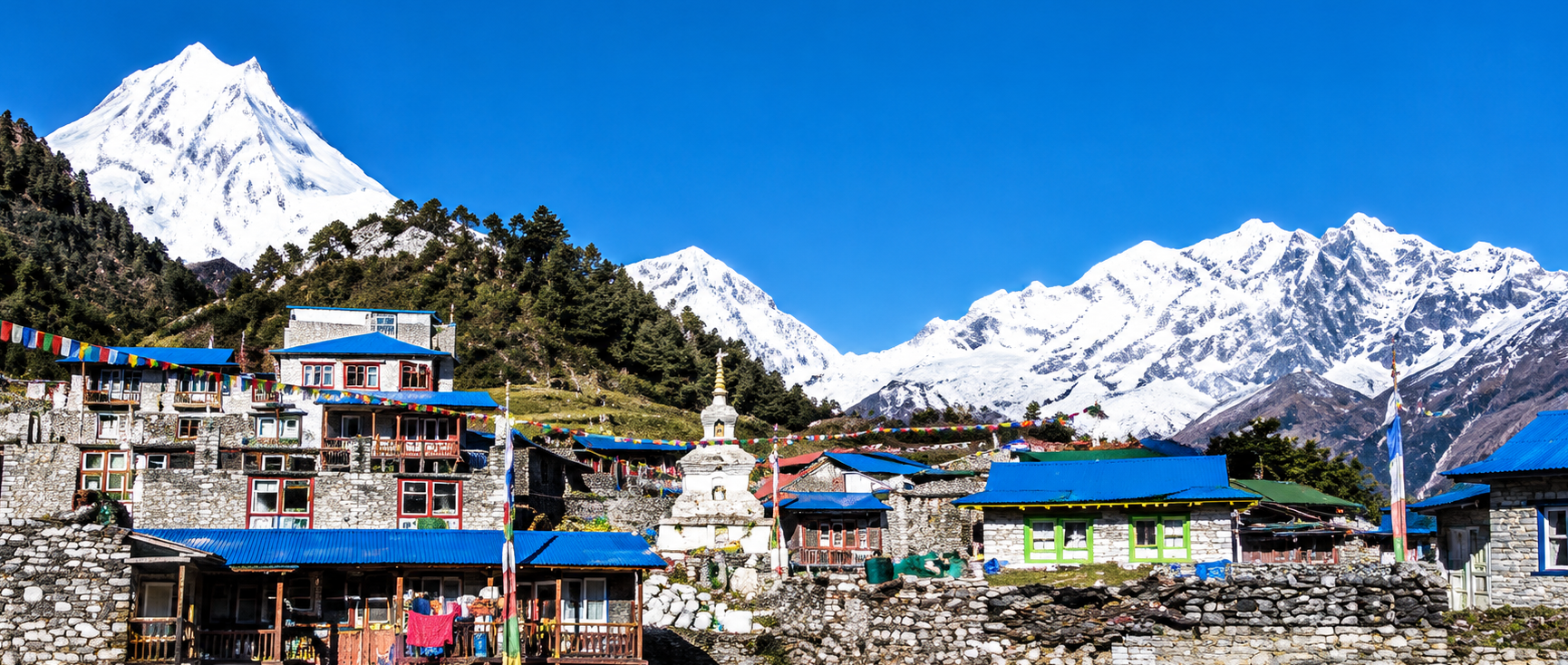
Deng represents one of the most interesting cultural transition points on the Manaslu Circuit. The communities of the lower valley, predominantly Gurung and Magar hill communities with a Hindu-Buddhist cultural synthesis, give way at Deng to the beginnings of the Nubri Tibetan Buddhist culture that defines the upper valley. This transition is not abrupt: Deng itself has a mixed character, with elements of both the lower valley culture and the Tibetan-influenced culture above, but the presence of more chortens, mani walls, and prayer flags in and around the village marks it as a point where the cultural landscape is changing.
The Nubri People
The Nubri are a Tibetan-origin community who have lived in the upper Budhi Gandaki valley for centuries, maintaining a distinct cultural identity based on Tibetan Buddhism, the Tibetan language, and cultural practices that reflect their origins north of the Himalayan watershed. They are not recent migrants but an established community whose presence in the valley predates the modern borders between Nepal and Tibet. Their villages from Deng northward show progressively more pronounced Tibetan cultural characteristics: whitewashed houses with flat roofs and carved wooden window frames, gompas and monasteries on prominent positions above the settlements, chorten-flanked entry gates at village approaches, and a religious and community life organized around the Buddhist calendar and the cycles of agriculture and animal husbandry.
At Deng, the Nubri presence is beginning to predominate, and trekkers will start to notice the distinctive architecture and the more consistent presence of Buddhist religious structures that will become ubiquitous in Namrung, Lho, Samagaun, and the villages above. The teahouse families at Deng often speak both Nepali and the local Nubri dialect, with younger family members having more Nepali-language competency from their exposure to education and to the trekking economy.
Agriculture and Livelihoods at Deng
The livelihoods at Deng combine agriculture, livestock management, and the teahouse economy that serves the Manaslu Circuit trekking trade. The agricultural terraces around the village support maize, millet, potatoes, and buckwheat, adapted to the altitude and the climate of the mid-valley. Livestock, including yaks at higher altitudes, cattle at the village level, and goats throughout, provide both food and transport. The porters who carry supplies up from the road-end below are an essential part of the local economy, and many of them come from villages at this altitude level, supplementing agricultural income with porterage work during the trekking seasons.
The Manaslu Circuit Trek is a spectacular journey around Mount Manaslu (8,163 m), the eighth-highest mountain in the world. Located…
Suspension Bridges on the Jagat to Deng Section
The section of the Manaslu Circuit between Jagat and Deng crosses the Budhi Gandaki multiple times on suspension bridges, each one a functional piece of infrastructure that allows the trail to follow whichever bank of the river offers passage. These bridges are maintained by the local communities and the road department, and their condition varies from excellent to weathered. The crossing of a suspension bridge over the Budhi Gandaki gorge is one of the characteristic experiences of the lower Manaslu Circuit: the bridge sways as trekkers cross, the river roars far below between polished boulders, and the gorge walls rise on both sides to forest-covered ridges that disappear into the cloud.
The etiquette for crossing suspension bridges on the Manaslu Circuit is to give way to yak and mule caravans, which have right of way, and to cross in single file when the bridge is long or has a significant load already on it. The bridges are rated for a maximum load, and crossing alongside a heavily loaded animal is not advisable. Step to the uphill side of the trail and wait for the caravan to pass before crossing.
Trail from Deng to Namrung: What Comes Next
After Deng, the circuit continues northward toward Namrung, the next major overnight stop at 2,630 meters. The day from Deng to Namrung covers approximately 14 to 16 kilometers with around 770 meters of net altitude gain and takes five to six hours for most trekkers. This is one of the longer and more demanding days on the lower circuit in terms of sustained altitude gain.
| Section | Distance | Altitude Change | Walking Time | Key Feature |
|---|---|---|---|---|
| Deng to Rana | ~4 km | +200m | 1.5 hours | Forest trail; gorge continues to narrow |
| Rana to Bihi Phedi | ~4 km | +150m | 1.5 hours | River crossings; bridge at Bihi Phedi |
| Bihi Phedi to Ghap | ~3 km | +200m | 1 hour | Steeper climb; Tibetan Buddhist character becomes stronger |
| Ghap to Namrung | ~4 km | +220m | 1.5 to 2 hours | Forest path; Namrung visible on a terrace above the valley |
Ghap is a small village on the route between Deng and Namrung where the Tibetan Buddhist cultural character of the upper valley becomes much more prominent. The village entrance is flanked by chortens and a mani wall, and the houses have the flat-roofed, whitewashed appearance that characterizes Nubri villages. Ghap is sometimes used as an overnight stop by itineraries that want to divide the Deng-to-Namrung day, and it has basic teahouse facilities for this purpose.
Weather at Deng Through the Seasons
At 1,860 meters, Deng has a climate that is cooler and wetter than Jagat below but still below the altitude threshold where cold becomes the dominant concern. The gorge environment moderates temperature extremes somewhat, providing shelter from wind and trapping moisture from the river and the surrounding forest. The monsoon months are the wettest and least suitable for trekking, with heavy rainfall, leeches on the trail, and muddy conditions that make the already technical gorge sections genuinely dangerous in places.
| Season | Months | Daytime Temp | Nighttime Temp | Conditions at Deng | Suitability |
|---|---|---|---|---|---|
| Spring | March to May | 12°C to 22°C | 3°C to 10°C | Rhododendrons blooming on slopes; some afternoon cloud and rain; leeches possible from late April | Good; March and April best |
| Monsoon | June to September | 14°C to 22°C | 10°C to 16°C | Heavy rain, leeches throughout the forest section, trail muddy and slippery, bridges may be precarious | Not recommended |
| Autumn | October to November | 8°C to 18°C | 0°C to 8°C | Clear skies, dry trail, good visibility, cold nights especially from mid-November | Excellent; peak season |
| Winter | December to February | 0°C to 10°C | -5°C to 2°C | Cold, some frost, upper circuit sections may be snow-closed; Deng itself accessible | Possible with full winter gear; upper circuit likely inaccessible |
October is the optimal time to visit Deng on the Manaslu Circuit. The gorge in October has a particular visual quality: the forest is at its lushest after the monsoon’s rain, the waterfalls are still flowing powerfully, the sky is clear, and the walking temperatures are perfect. The morning light on the gorge walls, where patches of mist still cling to the forest as the sun climbs above the ridges, creates conditions that are genuinely beautiful and unlike anything visible in the dry season months of winter.
Practical Information for Deng
Cash and Money
There is no ATM at Deng and no currency exchange. All transactions are in cash Nepali rupees. Trekkers should carry enough rupees to cover all expenses from the road-end to the Annapurna side of the pass, as no ATMs exist on the circuit route until Dharapani or Besisahar at the end. If you are unsure how much to carry, your trekking agency can advise based on your specific itinerary and the current price levels on the circuit.
Water Safety
Boiled water from teahouses is the safest drinking water source at Deng. The river water should not be consumed untreated. Side streams feeding into the Budhi Gandaki from the ridge above may appear clean but can carry pathogens from animal grazing and natural sources. Always treat water from any source other than a teahouse boiler with purification tablets or a UV sterilizer. Staying consistently hydrated is important at this stage of the circuit: the physical demands of the gorge walking are significant, and dehydration contributes to fatigue and poor altitude response in the days above.
Altitude and Health at Deng
At 1,860 meters, Deng is below the threshold where altitude sickness is a primary concern for most healthy adults. The altitude gain from Jagat to Deng represents a manageable step and should not cause problems for trekkers who are otherwise in good health. The main health concerns at this stage of the circuit are the physical ones of any sustained mountain walking: foot care, hydration, nutrition, and protecting skin and eyes from the sun which is stronger at this elevation than at sea level.
Trekkers with a history of respiratory conditions should be aware that the cold, damp air of the gorge can trigger symptoms. The wood smoke from teahouse stoves can also be irritating in the enclosed common rooms at night. A light scarf or neck gaiter worn over the nose and mouth during cold mornings helps, and staying out of particularly smoky common rooms is advisable for anyone with respiratory sensitivities.
Deng in the Context of the Full Manaslu Circuit
Deng is the midpoint of the lower circuit section between the road-end and the beginning of the clearly Tibetan upper valley at Namrung and above. It represents the deepest point of the gorge experience and the most remote-feeling section of the trail before the character of the route changes at the higher altitudes. Trekkers who appreciate the gorge environment, its geology, its wildlife, its forests, and its waterfalls, will find Deng one of the most satisfying overnight stops on the circuit in terms of its landscape character.
| Village | Elevation | Days from Start | Cultural Zone | Landscape |
|---|---|---|---|---|
| Soti Khola | 700m | Day 0 | Hill communities | Road-end, subtropical gorge |
| Machhakhola | 869m | Day 1 | Hill communities | Lower gorge, agricultural terraces |
| Jagat | 1,340m | Day 2-3 | Mixed, permit checkpoint | Gorge deepens, forest begins |
| Deng | 1,860m | Day 3-4 | Transition to Tibetan influence | Deepest gorge, waterfalls, dense forest |
| Namrung | 2,630m | Day 5-6 | Nubri Tibetan Buddhist | Valley opens, Ganesh Himal views |
| Lho | 3,180m | Day 6-7 | Nubri Tibetan Buddhist | Rhododendron forest, Manaslu visible |
| Samagaun | 3,530m | Day 7-8 | Nubri Tibetan Buddhist | Open alpine, Manaslu dominant |
The day spent at Deng, whether as a lunch stop or an overnight, is a useful physical and psychological preparation for what comes next. The gorge walking of the lower circuit, with its riverbank scrambles and suspension bridge crossings, gives way above Deng to a more sustained upland character: steeper climbs, broader views, and the beginning of the cultural landscape that makes the upper Manaslu Circuit one of the most extraordinary trekking experiences in Nepal.
Frequently Asked Questions About Deng
What is the elevation of Deng village?
Deng village sits at 1,860 meters (6,102 feet) above sea level. It is also sometimes written as Dyang or Deng Khola on maps and permit documents, reflecting local spelling variations. At this altitude, it sits approximately 520 meters above Jagat below and 770 meters below Namrung above, in the deepest and most dramatic section of the Budhi Gandaki gorge on the Manaslu Circuit.
Is Deng a typical overnight stop on the Manaslu Circuit?
Yes. Most standard Manaslu Circuit itineraries include Deng as an overnight stop, typically as the third or fourth night on the circuit. Some itineraries that cover more ground per day may use Deng as a lunch stop and continue to Ghap or even Namrung, but this makes for a very long day and is not recommended for most trekkers. Deng is also used by itineraries that want an extra acclimatization or rest day before the long climb to Namrung. The teahouses at Deng are adequate for overnight stays, and the village offers a good base for exploring the gorge environment and the surrounding forest in the late afternoon.
What makes the gorge around Deng special?
The gorge around Deng is the deepest and most enclosed section of the Budhi Gandaki canyon on the Manaslu Circuit. The river has cut through a fault zone in the Himalayan geology, producing walls that in some sections are nearly vertical and hundreds of meters high. The trail between Jagat and Deng passes through sections where the gorge narrows so much that the sky appears as a thin ribbon of light above. Waterfalls cascade from the cliffs in multiple locations, and the dense temperate forest that covers the gorge walls is one of the most pristine forest environments accessible to trekkers anywhere in Nepal.
Are there leeches on the trail near Deng?
Leeches are present in the forest sections of the Budhi Gandaki gorge, including the trail to and from Deng, during and after the monsoon season (June to September). In October and November, the drier conditions mean that leech activity is minimal. Spring trekkers from late April onward may encounter leeches in the wetter, more humid sections of the gorge, particularly after rain. Leech gaiters or deterrent sprays are available in Kathmandu and are useful for spring trekkers doing the lower circuit sections. Leeches are an irritant rather than a significant health risk, but they are unpleasant and their bites can become infected if not kept clean.
What wildlife might I see near Deng?
The forest around Deng is rich in birdlife. The most commonly seen birds on the trail between Jagat and Deng include the brown dipper on the river, the great barbet in the forest canopy (unmistakable by its loud wailing call), and various pheasants and laughing thrushes in the forest understory. The Himalayan monal, Nepal’s national bird, is present in the forest above Deng and is sometimes seen in flight over the gorge. For larger mammals, the barking deer and serow may be encountered early in the morning on the forest trails. Red pandas are theoretically possible in the bamboo forest above the gorge but are extremely rarely seen.
How many teahouses are at Deng?
Deng typically has three to five teahouses operating during the main trekking seasons. The total bed capacity of the village is limited, and advance arrangements through your trekking agency are advisable for overnight stays, especially during peak season in October and November. The teahouses are basic but functional, providing the essential services of accommodation, food, and a warm common room that all Manaslu Circuit teahouses share.
Is the walk from Deng to Namrung difficult?
The walk from Deng to Namrung is one of the longer days on the lower circuit, covering approximately 14 to 16 kilometers with around 770 meters of net altitude gain. Most trekkers complete it in five to six hours. The route passes through several small villages and the culturally significant settlement of Ghap before arriving at Namrung on its terrace above the valley. The ascent is sustained but not technically difficult. The major challenge is the cumulative altitude gain over a long day of walking, and trekkers who are already feeling tired from the previous days should take the day slowly and use the intermediate villages as rest points.
The Gorge Within the Journey
Deng is not one of the famous stops on the Manaslu Circuit. It does not have a monastery, a dramatic mountain view, or an acclimatization hike to a high vantage point. What it has is the gorge itself: the most dramatic expression of the Budhi Gandaki’s geological power, the deepest immersion in the temperate forest that covers the mid-valley, and the sense of being genuinely far from anywhere that the circuit’s lower section provides in its purest form.
Trekkers who measure the circuit only by its high-altitude milestones, the passes, the monasteries, the mountain views, will find Deng forgettable. Trekkers who understand that a journey of this length and character is also about the terrain through which it passes, the forests, the rivers, the gorges, the birds, the communities, will find Deng one of the more memorable stops on the route. The waterfalls above the village, audible from the teahouse common room at night, and the river in the gorge below, constant and powerful and old beyond comprehension, give Deng a natural authority that the more celebrated villages above do not surpass, only transform into a different key.
If you are planning a Manaslu Circuit Trek and want advice on how to structure the lower gorge section of the route, how to pace the days between the road-end and Namrung, or what to expect at each overnight stop, contact us at Manaslu Treks. We have guided trekkers through every section of this circuit and can help you get the most out of the entire route from the first gorge day to the pass crossing and beyond.
The Manaslu Circuit Trek is a spectacular journey around Mount Manaslu (8,163 m), the eighth-highest mountain in the world. Located…