
What This Trek Is and Who It Is Built For
Most trekking companies sell the 9 day Manaslu Circuit as the “short version” of the standard circuit. That framing misses the point entirely. This is not a shorter, easier version of anything. It is a compressed, high-output route through one of the most demanding restricted-area trekking corridors in the Himalayas, done at a pace that average trekkers cannot sustain. You cover 177 kilometres, gain and lose over 8,000 metres of elevation, cross a 5,106 metre pass, and sleep at altitudes that most people have never experienced. You do it in 9 days.
At Manaslu Treks and Expedition, we designed this itinerary specifically for people who train, who are used to physical output as a daily habit, and who want a Himalayan experience that actually pushes them. Trail runners who want to feel the Manaslu route under their feet. Ultra marathon athletes building altitude adaptation before a race. Cyclists, military athletes, and swimmers who are tired of recreational trekking that never gets genuinely hard. Experienced hikers who have done Everest Base Camp or the Annapurna Circuit and found them disappointingly manageable.
The Manaslu Circuit done in 9 days is not comfortable. You will walk 7 to 9 hours on most days. You will sleep at 4,460 metres the night before a 5,106 metre pass crossing. Your legs will be tired before the hardest day begins. That is exactly the point. If you want comfortable, the 14 day version is the right choice. If you want to find out what you are actually capable of at altitude, this is the route and this is the pace.
Why Trail Runners Are Choosing the Manaslu Circuit
The Manaslu Circuit has developed a specific reputation among trail running and ultra endurance communities over the past five years. The Manaslu Trail Race, one of the most respected multi-stage mountain running events in Asia, uses a variation of this circuit as its course. The 2026 race runs from November 7 through November 19, covering approximately 140 kilometres of running terrain across 7 race stages, with the Larkya La crossing at 5,106 metres as the defining physical test of the entire event.
The race brings together elite trail runners from across the world alongside amateur athletes who have trained specifically for the altitude and terrain. What they all share is the understanding that the Manaslu Circuit is genuinely different from any running or trekking environment they have encountered in Europe or North America. The altitude, the remoteness, the permit requirements, and the sheer scale of the mountain landscape create a level of challenge that is hard to replicate anywhere else.
You do not need to be a competitive runner to use this itinerary. What you need is the fitness base and the mindset. Trail runners come to the Manaslu Circuit to move fast, cover ground efficiently, and experience the circuit the way it was walked for centuries by the Nubri and Gurung communities of the region: not as a sightseeing exercise, but as a genuine crossing from one side of the mountain to the other.
Runners who have completed this route describe specific things that stay with them: the way the trail through the Budhi Gandaki gorge rewards fast movement with rhythm, the long open descent from the pass to Bimthang where your legs can actually open up, the feeling at the top of the Larkya La when the wind is behind you and the Himlung Himal fills the sky ahead. These are experiences you cannot manufacture. They come from being fit enough to be present in the landscape rather than surviving it.
The Manaslu Trail Race: Background and Connection to This Route
Understanding the Manaslu Trail Race gives context to why this circuit matters to the endurance community. The race was designed around the premise that the Manaslu Circuit contains some of the finest trail running terrain in Asia: varied, dramatic, technically interesting in places, and at altitudes that push the limits of aerobic capacity in ways that flatland runners have never experienced.
Participants in the race run approximately 140 kilometres across 7 stages over 11 days, with two additional non-running hiking days. Stages are deliberately kept under 30 kilometres because of the altitude, but the combination of thin air, technical terrain, and accumulated fatigue makes each stage far harder than the distance suggests. The race regularly attracts athletes who have competed in races like the Ultra Trail du Mont Blanc, the Tor des Geants, and the Western States 100.
Many of those athletes do the Manaslu Circuit on a guided trek in the year before they race, using it as an altitude scouting trip and acclimatization experience. Others complete the trek as a standalone challenge with no race connection at all, drawn by the quality of the terrain and the rarity of being in a restricted area where the number of people on the trail at any given time is tightly controlled.
Our 9 day itinerary covers the same core route as the race: Machha Khola to Dharapani, through the Budhi Gandaki valley, up to Samagaon, across the Larkya La, and down through Bimthang. The difference is that we do it as a guided trekking experience with full logistical support, teahouse accommodation, and permits arranged in advance. You bring the fitness. We bring everything else.
Elevation Profile: Every Metre You Will Gain and Lose
Athletes make better decisions on a trail when they understand what the elevation profile actually requires. Here is an honest breakdown of the 9 day Manaslu Circuit Trek elevation data:
- Day 1: Drive from Kathmandu (1,350m) to Machha Khola (870m). No elevation gain. Long road day. Rest.
- Day 2: Machha Khola (870m) to Jagat (1,340m). Elevation gain approximately 470m. Trail distance 20 to 22km. Moderate warm-up day.
- Day 3: Jagat (1,340m) to Deng (1,860m). Elevation gain approximately 520m. Trail distance 18 to 20km. Good trail through gorge section.
- Day 4: Deng (1,860m) to Namrung (2,630m). Elevation gain approximately 770m. Trail distance 16 to 18km. First significant sustained climb.
- Day 5: Namrung (2,630m) to Samagaon (3,530m). Elevation gain approximately 900m. Trail distance 18 to 20km. Above 3,000m for the first time. Pace naturally slows.
- Day 6: Samagaon (3,530m) to Dharamsala (4,460m). Elevation gain approximately 930m. Trail distance 8 to 10km only. Short distance but significant altitude. This is the day your body notices the elevation seriously.
- Day 7: Dharamsala (4,460m) to Bimthang (3,720m) via Larkya La (5,106m). Gross elevation gain approximately 650m to the pass, then loss of approximately 1,400m to Bimthang. Total trail distance 16 to 22km depending on conditions. The hardest day.
- Day 8: Bimthang (3,720m) to Dharapani (1,900m). Elevation loss approximately 1,820m. Trail distance 22 to 25km. Long descent through rhododendron forest. Quads take significant load on this day.
- Day 9: Drive from Dharapani to Kathmandu. No elevation. Recovery day in transit.
Total gross elevation gain across the trekking days: approximately 4,240 metres. Total gross elevation loss: approximately 5,100 metres. The asymmetry matters. You lose more than you gain, and much of the loss comes on the two longest descent days (Day 7 and Day 8), which is where untrained quads pay the price.
Athletes who train specifically for downhill running or who carry experience from mountain races with significant descent sections (the UTMB, for example, has 10,000m of descent) will manage the Bimthang to Dharapani day much better than those who only train on flat terrain or treadmills.
Trail Conditions by Section: What the Ground Is Actually Like
Trail runners who book this route need to know what they will actually be moving on, not just the distances. The Manaslu Circuit is not a manicured trail. It is a real mountain path used by local communities, porters, yak herders, and the occasional trekking group. The surface and quality change significantly as you gain altitude.
Machha Khola to Jagat (Days 2 to 3): Wide, established trails through subtropical forest. Some stone steps, suspension bridges, and riverside paths. Good footing on most sections. This is the most runnable part of the entire circuit and where trail runners feel most at home. The Budhi Gandaki gorge section has some exposed traverses on cliff paths, but nothing that requires hands.
Jagat to Namrung (Days 3 to 4): Trail narrows and becomes more varied. Mix of stone paths, dirt trails, and some bamboo forest sections. After rain this section can be muddy in places. Still very runnable for experienced trail runners. Suspension bridges become a rhythm rather than an obstacle.
Namrung to Samagaon (Day 5): Trail quality remains good but the altitude begins to compress your pace regardless of fitness. The path above Lho crosses open hillsides with views of the Manaslu massif. Rocky in places, loose in others. Trail runners naturally shift from running to power hiking at around 3,200m as the thin air limits aerobic output.
Samagaon to Dharamsala (Day 6): Short distance but the ground becomes rocky and increasingly barren. Moraine debris appears. Trail is clear but uneven. No running at this altitude on this day. Your job on Day 6 is to move steadily and arrive at Dharamsala without burning energy you need for the pass.
Dharamsala to Larkya La to Bimthang (Day 7): The approach to the pass in darkness is over glacial moraine: loose rock, frozen ground, some snow depending on season. Poles are strongly recommended. The pass itself is a wide, cold, wind-exposed saddle. The descent from the pass to Bimthang is steep and rocky in the upper section, then becomes a long, runnable track through boulder fields and alpine meadow. Some sections of the descent are genuinely fast and technical under the right conditions.
Bimthang to Dharapani (Day 8): Mostly wide, established trail through rhododendron and oak forest. This is the most runnable full-day descent on the circuit. Trail runners who have managed their energy across the first seven days can genuinely open up on sections of this descent and cover the ground quickly. The lower valley section near Dharapani is paved road.
How to Train for the 9 Day Manaslu Circuit Trek as an Athlete
Arriving at a trekking company in good general fitness is not the same as arriving prepared for the Manaslu Circuit. General cardiovascular fitness helps. Altitude adaptation is a separate system entirely, and no amount of sea level training fully replaces time spent above 3,500 metres. What training can do is make your cardiovascular engine and your musculoskeletal system strong enough to cope with the demands of the circuit so that your body has the maximum possible capacity to adapt to the altitude rather than fighting both fatigue and thin air simultaneously.
Here are the specific training priorities for anyone preparing for this route:
- Long slow distance: Your aerobic base needs to be solid. Regular runs or hikes of 3 to 5 hours at conversational pace build the foundation. Athletes from running backgrounds often train too fast and miss the endurance base they actually need for a 7 to 9 hour day in the mountains.
- Vertical gain accumulation: If you live in a flat area, find stairs, treadmill incline, or a stair stepper and accumulate vertical. Aim for 500 to 1,000 metres of vertical gain per session in the final 8 weeks of preparation. The Manaslu Circuit will ask your legs for consistent uphill output across multiple consecutive days.
- Downhill training: Specifically train your quads for eccentric loading. Run or hike downhill. The Bimthang descent on Day 8 will find any weakness in your downhill conditioning. Athletes who have not trained specifically for descent often find this day harder than the pass crossing.
- Back to back training days: The circuit asks you for 7 consecutive high-output days after two travel days. Train with back to back long efforts to simulate cumulative fatigue. A training block of Thursday long run, Friday recovery, Saturday long run, Sunday long run teaches your body what consecutive days of output feel like.
- Strength training: Weighted squats, single-leg deadlifts, calf raises, and hip stability work all pay dividends on a mountain trail. Trail running alone is not enough to build the postural strength you need for 9 days of loaded trekking.
- Heat acclimatization (if possible): Training in a sauna or hot environment stimulates some of the same physiological adaptations as altitude. It is not a replacement for altitude exposure but is better than nothing for sea-level athletes.
12 Week Training Plan for Manaslu Circuit Trail Runners
This plan assumes you are coming in with a base of regular aerobic exercise and at least some trail or hill running experience. It is structured to peak your fitness 2 weeks before departure and then taper for the final 10 days.
Weeks 1 to 3: Base Building
- 4 to 5 sessions per week
- One long session of 3 to 4 hours at easy effort
- Two medium sessions of 60 to 90 minutes with some elevation gain
- One strength session focusing on legs and core
- One rest or active recovery day
- Total weekly volume: 6 to 8 hours
Weeks 4 to 6: Vertical Accumulation
- Increase vertical gain in every session
- Long session becomes 4 to 5 hours with 800 to 1,200m of gain
- Add a second long session on the weekend (back to back format)
- Include one session per week of sustained steep uphill (real hills or treadmill at 12 to 15 percent grade)
- Strength training twice per week
- Total weekly volume: 8 to 10 hours
Weeks 7 to 9: Specific Load
- Peak training block
- Long day of 5 to 6 hours once per week
- Back to back long sessions on the weekend (3 to 4 hours each day)
- Focus on time on feet rather than pace
- Practice eating and drinking while moving
- Total weekly volume: 10 to 12 hours
Weeks 10 to 11: Maintain and Sharpen
- Reduce total volume by 20 to 30 percent
- Keep some intensity in shorter sessions
- Continue strength work but reduce volume
- Focus on sleep, nutrition, and recovery
Week 12: Taper
- Light sessions only
- 30 to 45 minute easy runs or walks
- No long sessions
- Prioritize sleep, hydration, and nutrition above all
Altitude Training and Acclimatization for Endurance Athletes
Here is something that surprises many fit athletes when they first come to the Himalayas: elite fitness does not protect you from altitude sickness. The mechanisms of acute mountain sickness (AMS) are independent of cardiovascular fitness. Your VO2 max does not determine how quickly your body produces more red blood cells, adjusts your respiratory rate, or manages fluid distribution at altitude. Some of the fittest athletes on earth have had serious AMS at 3,500 metres. Some untrained trekkers sail through 5,000 metres without a headache.
What fitness does give you is a better aerobic base to work from once you are acclimatized, which means that once your body has adjusted, you can perform at a higher level than an unfit person at the same altitude. But the adjustment process itself is determined by your body’s individual response, your ascent rate, and factors like hydration, sleep quality, and previous altitude exposure.
Practical acclimatization guidance for athletes:
- Arrive early if possible: Spending 2 to 3 nights in Kathmandu at 1,350m before the trek begins does nothing for acclimatization (the altitude is too low), but it gives your body time to recover from long haul travel and adjust to a different sleep cycle, which matters more than most people acknowledge.
- Follow the itinerary ascent rate: The 9 day itinerary is structured around a reasonable ascent rate. Do not push ahead of the guide, do not try to cover extra distance on rest stops, and do not treat the days below 3,000m as warm-up time to bank fitness. Walk steadily and within yourself.
- Hydrate aggressively: At altitude your respiratory rate increases, which means you lose more water through breathing than you do at sea level. Aim for 3 to 4 litres of water daily from Day 4 onward. Athletes who are accustomed to lower hydration volumes during training need to consciously increase intake.
- Do not push on Day 6: The Samagaon to Dharamsala day is only 8 to 10km. Athletes consistently underestimate the impact of climbing from 3,530m to 4,460m and arrive at Dharamsala more depleted than they expected. Move slowly. Eat properly. Sleep early.
- Watch for symptoms: Headache, nausea, poor sleep quality, and loss of appetite are all early AMS signs. Communicate these to your guide immediately. The protocol is simple: do not ascend further until symptoms resolve. If symptoms worsen, descend.
- Diamox (acetazolamide): Some athletes use it prophylactically. Consult a doctor before departure. It is not a substitute for proper ascent rate, but it can help some individuals who have had AMS in the past.
Nutrition Strategy for Athletes on the Manaslu Circuit
Nutrition on the Manaslu Circuit is a genuine logistical challenge for athletes who are used to managing their intake precisely. Teahouses serve dal bhat (rice, lentils, and vegetables), noodles, soups, eggs, chapatti, and porridge. The food is calorie-dense and appropriate for high output trekking. It is not race-nutrition engineered for glycogen management and electrolyte precision.
The key principles for athletes:
- Eat more than feels comfortable, especially at altitude: Appetite suppression is a universal high altitude effect. Your body will not always signal hunger even when you are in serious calorie deficit. Force yourself to eat at every meal even if you do not feel hungry, particularly on Days 5 through 7.
- Carbohydrates are your friend: The trail running community has many athletes who follow low carbohydrate diets. High altitude is not the environment to test metabolic fat adaptation. Carbohydrates are the most oxygen-efficient fuel source, and at 4,000+ metres, oxygen efficiency is the limiting factor. Eat rice, eat bread, eat oatmeal.
- Bring your own supplements and gels if you rely on them: Teahouses do not stock energy gels, protein bars, or electrolyte tablets. Bring enough for the full 7 trekking days. Electrolyte supplementation is particularly important given the high fluid intake required at altitude.
- Protein matters for recovery: You are doing 7 consecutive days of significant physical output. Eggs in the morning and lentils at dinner provide reasonable protein but may not be adequate for athletes who are used to higher intake. Bringing protein powder in a reusable container is a practical solution.
- Breakfast before the pass crossing is non-negotiable: On Day 7 you will be walking 8 to 10 hours with a major climb and a very long descent. Eat a full breakfast at Dharamsala before you leave, even if it is 4am and you are not hungry. You will need the fuel.
Hydration and Water on the Manaslu Circuit
Water availability on the Manaslu Circuit is not the issue. Clean water is the issue. Stream water is abundant throughout the route but should not be consumed untreated. Teahouses sell bottled water and provide boiled water. Boiled water is generally safe and significantly cheaper than bottled. A Steripen, water purification tablets, or a filter bottle are all practical solutions that eliminate the cost and plastic waste of bottled water.
Athletes who are used to training with sports drinks need to understand that electrolyte replacement on the circuit requires planning. Your body loses sodium and potassium through sweat at rates that increase with altitude and output. Plain water consumption at very high volumes without electrolyte replacement can lead to hyponatremia, which presents similarly to AMS and is sometimes confused with it. Bringing electrolyte tablets (Nuun, High5, SOS, or similar) and adding them to at least 2 of your daily litres of water is a straightforward way to manage this.
Practical hydration targets by day:
- Days 1 to 3 (below 2,000m): 2.5 to 3 litres minimum
- Days 4 to 5 (2,000m to 3,500m): 3 to 3.5 litres minimum
- Days 6 to 7 (above 3,500m and pass day): 3.5 to 4.5 litres minimum
- Day 8 (descent): 3 litres minimum, more if the day is warm
Gear and Kit List for Trail Runners and Athletes on Manaslu
Trail runners often pack lighter than standard trekkers, which is generally an advantage on this route. The circuit does not require technical climbing equipment. What it requires is layering for extreme temperature variation: you will trek in subtropical heat on Days 2 and 3 and cross a 5,106 metre pass in sub-zero wind chill on Day 7. The same body needs to be comfortable in both environments.
Footwear:
- Trail running shoes with a stiff enough midsole for rocky terrain. Shoes with good grip on wet rock perform significantly better on the lower gorge sections.
- Gaiters are useful on the pass crossing day for keeping snow and debris out of low-cut trail shoes.
- A second pair of camp shoes or sandals for evenings at teahouses, which saves your trail shoes from lasting wear.
Clothing:
- Base layer: merino wool or technical synthetic, long and short sleeve versions
- Mid layer: lightweight fleece or soft shell for above 3,000m evenings
- Insulating layer: down jacket rated to at least minus 10 degrees Celsius for Dharamsala and the pass
- Waterproof shell: non-negotiable. Rain at lower elevations, wind and potential snow at the pass
- Trekking trousers: softshell or quick-dry. At least one warmer pair for the upper valley
- Buff or balaclava: essential for the pass crossing
- Gloves: liner gloves plus a waterproof outer glove
- Sun hat: mandatory below 3,500m
- Warm hat: essential above 3,500m and on the pass
Running and technical kit:
- Trekking poles: highly recommended for the pass descent. Most trail runners who dismiss poles change their mind on the Bimthang descent after 7 days of accumulated leg fatigue.
- Running vest or lightweight pack (20 to 25 litres): carries your daily essentials while your main pack is carried by the porter
- Headlamp: bright, with spare batteries. You will use it on Day 7 before dawn
- GPS watch: optional but useful for tracking pace and monitoring heart rate response to altitude
- Sleeping bag: rated to minus 10 degrees Celsius minimum. Our package includes a sleeping bag loan.
Health and safety:
- Pulse oximeter: an inexpensive and invaluable tool for monitoring your blood oxygen saturation at altitude. A reading below 85 percent at rest is a warning sign that warrants conversation with your guide.
- Blister kit: even experienced trail runners get blisters after 7 consecutive days on rough ground
- Sun protection: SPF 50+ sunscreen and UV-protective sunglasses are mandatory above 3,500m
- Personal first aid: anti-inflammatories, electrolytes, any personal medications, and a conversation with your doctor before departure about altitude medication options
Running vs Trekking on the Manaslu Circuit: What Is Actually Possible
A question every trail runner asks before booking: can I actually run sections of this route, or is it trekking-only terrain?
The honest answer is that significant portions of the lower circuit are genuinely runnable. The sections from Machha Khola to Jagat, from Jagat to Deng, and from Bimthang to Dharapani are all sections where a fit trail runner can cover ground at a genuine running pace. The Budhi Gandaki gorge trail below Jagat has stretches that resemble a smooth mountain trail race course.
However, several factors limit running on this route compared to a race environment:
- Porter pace: Your guide and porter walk at a trekking pace. If you run ahead, you need to wait and the logistics of the group become complicated. Most athletes on this route power hike the uphills and run the flat and downhill sections, which is a more practical approach than trying to run continuously.
- Altitude: Above 3,200 metres, running pace becomes physiologically difficult even for elite athletes. Your aerobic capacity at 3,500m is roughly 80 to 85 percent of what it is at sea level. At 4,000m it is closer to 70 to 75 percent. Most athletes find that a brisk power hike is more sustainable and no slower than a struggling shuffle at high altitude.
- Trail surface: Many sections of the upper circuit are on rocky, uneven ground that requires precise foot placement. Running on this terrain carries a higher injury risk, particularly as accumulated fatigue builds across the week.
- Conservation area rules: The Manaslu restricted area is not a race venue. Moving through villages at running pace is considered disrespectful by local communities. Walk through villages, monasteries, and culturally significant areas. This is a matter of basic courtesy in someone else’s home.
The optimal approach for a trail runner on this circuit is to run where the terrain and altitude allow it comfortably, power hike everything above 3,200m, and treat the route as a 7-day mountain adventure rather than a race. The fitness you carry into the trek determines the pace and the ease; it does not need to be expressed through running every metre.
Recovery Between Days on a Fast-Paced Trek
Nine consecutive days of high physical output requires a recovery strategy, not just rest. The teahouse environment offers limited recovery tools, but athletes can still manage recovery effectively with some planning.
- Sleep is the primary recovery tool: Altitude disrupts sleep for many people, particularly in the first night above 3,500m. Expect interrupted sleep at Samagaon and Dharamsala. The disruption is normal and is not necessarily a sign of AMS. Sleeping at an angle with your head slightly elevated can help reduce the feeling of breathlessness that wakes altitude newcomers in the night.
- Compression: Wearing compression tights or calf sleeves during the day and at night helps manage lower limb swelling, which occurs at altitude due to fluid redistribution. Athletes who use compression regularly in training should bring their compression kit.
- Elevation of legs: In teahouses, elevate your legs against the wall for 10 to 15 minutes before sleep. This drains pooled fluid from the lower legs and reduces the heavy-leg feeling at the start of the following day.
- Active recovery movement: On the shorter days (particularly Day 6 from Samagaon to Dharamsala), use the afternoon to walk gently around the village rather than staying entirely sedentary. Light movement maintains blood flow and reduces stiffness better than complete rest.
- Food timing: Eat within 30 minutes of arriving at the teahouse each evening, before your appetite is fully suppressed by the altitude and fatigue. The combination of protein and carbohydrates in the early recovery window matters just as much in the mountains as it does after a race.
Mental Preparation for the Manaslu Challenge
Athletes who have completed mountain challenges consistently identify the mental component as underestimated. The 9 day Manaslu Circuit has several specific mental demands that are worth thinking about before you arrive:
The Day 7 mindset: You wake at 3 or 4am after a cold, sometimes broken night at 4,460 metres. You are already fatigued from 6 previous days of trekking. The pass crossing will take 8 to 10 hours. There is no option to stop and wait for conditions to improve. You cross the pass or you return the way you came. The mental frame that serves athletes best here is not “this is the hardest thing I have ever done” but rather “I trained for this and this is what trained for feels like.” The difference between those two frames is the difference between managing the day and being defeated by it.
Patience at altitude: Athletes who are used to moving fast find altitude humbling in a specific way. The effort required to walk at 4,000m is genuinely higher than the effort to run at sea level, and the pace is dramatically slower. Accept this early and it becomes interesting rather than frustrating. Fight it and you will exhaust yourself trying to maintain a pace your cardiovascular system cannot sustain in thin air.
Day 8 leg fatigue: The descent from Bimthang to Dharapani is 22 to 25km of mostly downhill terrain on day 8 of 9 consecutive output days. Your legs will be tired in a way they probably have not been tired before unless you have completed a multi-day mountain race. This is not a problem to solve; it is an experience to move through. The trail is good, your guide knows the way, and Dharapani is at the end of it.
The reward structure is different from racing: There is no finish line tape, no timing chip, no ranking. The reward on the Manaslu Circuit is the experience itself: the specific view from the top of the Larkya La at 7am on a clear day, the smell of rhododendron forest on the descent, the sound of the Budhi Gandaki from a trail 200 metres above it. Athletes who come from a competitive background sometimes struggle with an objective that is not measurable. The Manaslu Circuit asks you to value the experience for what it is.
How the 9 Day Schedule Works Around Athlete Physiology
The 9 day itinerary is not arbitrary. It was built around the physiological realities of what a fit person’s body can accomplish while ascending through a significant altitude gradient. Here is the reasoning behind the key schedule decisions:
- No acclimatization day: Unlike the 14 day version which includes a rest day at Samagaon, the 9 day itinerary moves through without a dedicated rest day. This works for athletes because their cardiovascular efficiency at altitude is higher than average, their recovery between days is faster, and they can sustain a higher daily output over consecutive days. However, it requires honest self-monitoring. If AMS symptoms appear, the schedule stops.
- The Samagaon to Dharamsala day is short deliberately: Day 6 covers only 8 to 10km, which feels almost insultingly short for a fit athlete. It is short because you are climbing from 3,530m to 4,460m and your goal is to arrive at Dharamsala with energy in reserve for the pass crossing the following morning. Athletes who push too hard on Day 6 pay for it on Day 7.
- The pass crossing day starts before dawn: The pre-dawn start is not theatrics. Snow and ice on the pass are hardest at night and early morning, giving the best footing. Afternoon winds on the Larkya La can be severe enough to make crossing dangerous. Starting at 4am means reaching the pass before the midday wind picks up and arriving at Bimthang with enough daylight to manage the rocky descent safely.
- Day 8 is long by design: The descent from Bimthang to Dharapani is 22 to 25km, which is the longest trekking distance of the circuit. It is placed at the end of the route, after the pass, because descending is physiologically easier than ascending and because ending a 9 day athletic challenge with a long, open trail descent is genuinely satisfying.
Permits and Regulations for the Manaslu Restricted Area
The Manaslu Circuit lies within a government-designated restricted area. This status is not a formality; it is the primary mechanism that keeps the trail as quiet and undeveloped as it is. The permit system limits the number of people who can access the route in any given year, which is exactly why the Manaslu Circuit still feels like a genuine mountain crossing rather than a managed tourism corridor.
Three permits are required:
- Manaslu Restricted Area Permit (RAP): USD 100 per person per week during peak season (September to November). USD 75 per person per week during other months. The standard 9 day circuit runs across two permit weeks, so the total RAP cost in peak season is USD 200 per person.
- Manaslu Conservation Area Permit (MCAP): USD 30 per person. Covers environmental protection contributions for the conservation area.
- Annapurna Conservation Area Permit (ACAP): USD 30 per person. Required for the Dharapani exit section of the circuit, which passes through the Annapurna Conservation Area boundary.
A local municipality entry fee of NPR 1,000 (approximately USD 7.50) is collected at the Jagat checkpoint on the first trekking day.
Solo trekking update 2026: As of March 2026, Nepal updated the Manaslu restricted area regulations. Solo trekkers can now obtain all required permits without the previous requirement of travelling as part of a group of at least two people. A licensed guide is still mandatory throughout the restricted area. All permits must be arranged through a registered trekking agency. We handle the full permit process for every booking, including solo athletes.
All permits are included in our package pricing. There are no additional permit costs when you book through us.
What Is Included in the Manaslu Athlete Trek Package
Our 9 day Manaslu Circuit package is designed to remove every logistical complexity from your experience so that your entire mental and physical capacity is available for the trekking itself. Here is exactly what is covered:
- Airport pickup and drop-off in Kathmandu
- One night hotel accommodation in Kathmandu before the trek (three-star standard)
- One night hotel accommodation in Kathmandu after the trek
- Ground transportation from Kathmandu to Machha Khola and from Dharapani to Kathmandu
- All three required permits (RAP, MCAP, ACAP) and the municipality entry fee
- A licensed, English-speaking local trekking guide from the Gorkha District, with specific Manaslu Circuit experience
- Porter service: one porter carries the gear of two trekkers, with a maximum load of 20kg total (10kg per trekker)
- All teahouse accommodation during the trek
- All meals during the trek: breakfast, lunch, and dinner on all trekking days
- Morning tea or coffee on every trekking morning
- Sleeping bag and down jacket loan (to be returned at the end of the trek)
- Trekking map of the Manaslu Circuit
- First aid kit carried by the guide
- Trekking completion certificate from Manaslu Treks and Expedition
- Farewell dinner in Kathmandu hosted by our team
- All government taxes and local charges
Not included: international airfare, Nepal visa fee, travel insurance, personal trekking gear, personal expenses (snacks, bottled water, Wi-Fi, hot showers, battery charging at teahouses), and tips for the guide and porter.
Cost and Pricing for the 9 Day Manaslu Challenge Trek 2026
Pricing is based on group size. All prices are fully inclusive of the items listed above. There are no hidden costs and no advance deposit required. You pay after you arrive in Nepal.
| Group Size | Price Per Person | Enquire |
|---|---|---|
| 1 person (solo athlete) | USD 1,090 | |
| 2 people | USD 1,050 | |
| 3 to 5 people | USD 990 | |
| 6 to 10 people | USD 950 |
Groups of more than 10 people should contact us directly via our contact page or WhatsApp for a group rate. Solo athletes booking a private trekking package get a dedicated guide and the full flexibility of a self-paced experience within the itinerary structure.
Manaslu Circuit vs Other Nepal Challenge Routes for Athletes
Nepal has several routes that attract athletes and endurance-focused trekkers. Here is an honest comparison of how the 9 day Manaslu Challenge sits against the main alternatives:
| Route | Max Altitude | Duration | Crowd Level | Permit Required | Trail Running Potential |
|---|---|---|---|---|---|
| Manaslu Circuit (9 days) | 5,106m (Larkya La) | 9 days | Low | Restricted Area Permit | High in lower sections |
| Everest Base Camp | 5,364m | 12 to 14 days minimum | Very high | Sagarmatha NP permit | Low (crowded) |
| Annapurna Circuit | 5,416m (Thorong La) | 10 to 14 days | High | ACAP only | Moderate (road sections) |
| Langtang Valley | 4,984m (Kyanjin Ri) | 7 to 9 days | Moderate | Langtang NP permit | Moderate |
| Dolpo (Upper) | 5,360m (Shey La) | 18 to 25 days | Very low | Restricted Area Permit | High (very remote) |
| Kanchenjunga Base Camp | 5,143m | 18 to 22 days | Very low | Restricted Area Permit | High |
The Manaslu Circuit wins for athletes who want the combination of genuine challenge, restricted-area remoteness, trail quality that rewards fast movement, and a duration that is achievable within a 2-week travel window. Dolpo and Kanchenjunga offer a comparable wilderness experience but require significantly more time.
The Everest Base Camp route has become crowded to the point where the experience of moving through the trail has been significantly compromised. The Annapurna Circuit has large sections of paved or unpaved road that make trail running both less enjoyable and less relevant to the mountain environment. Neither offers the combination of qualities that the Manaslu Circuit provides for athletes who want the real thing.
Safety and Emergency Protocols on a Fast-Paced Trek
Moving faster through a high-altitude environment carries specific safety considerations that athletes need to understand before departing. The 9 day pace reduces the time your body has to adapt, which increases the vigilance required from both you and your guide.
Our safety protocols:
- Our guides carry a comprehensive first aid kit including oxygen (available in limited supply), altitude medication, blister treatment, and emergency communication equipment
- All guides are trained in wilderness first aid and altitude sickness recognition and response
- We maintain contact with our Kathmandu office throughout the trek via satellite communication at checkpoints
- Emergency helicopter evacuation is available from all sections of the route. The main landing zones are near Samagaon, near Samdo, and at Bimthang
- We build in decision points at Samagaon and Samdo where a guide can make a professional assessment of a trekker’s condition and, if necessary, reverse the direction of travel
The non-negotiable rule: If your blood oxygen saturation drops below 80 percent at rest, if you have a severe headache that does not respond to hydration and ibuprofen, or if you experience ataxia (loss of coordination), vomiting, or confusion, you descend immediately. Your guide has the authority to make this call and our company fully supports that authority.
Travel insurance is mandatory for this trek: Helicopter evacuation from the Manaslu region costs USD 3,000 to USD 6,000 without insurance. Your policy must cover high-altitude trekking above 5,000 metres and emergency evacuation. Purchase it before leaving your home country.
Best Time for Athletes and Trail Runners on the Manaslu Circuit
October (Peak Recommendation for Athletes): The best overall conditions. Trails are dry and firm after the monsoon, which maximises running potential on the runnable sections. Views from the Larkya La are typically at their clearest in October. The Manaslu Trail Race takes place in November, so October is the preferred month for athletes who want to scout the route before the race.
September: The monsoon officially ends in September. Early September can still have wet trails. Late September is often excellent, with the trail drying rapidly and the rhododendron forest still lush from the rains. Crowds are lower than October.
November: The Manaslu Trail Race occupies the first two weeks of November. If you are not racing, November is a fine trekking month with cold but dry conditions. The Larkya La begins to accumulate snow in late November. Early November remains excellent.
March and April: Spring is the best secondary window. Rhododendron bloom transforms the lower sections of the trail. Conditions are dry and stable. The upper sections are colder than autumn but manageable for fit athletes with appropriate gear.
Monsoon (June to August): Not recommended. Trail conditions are difficult, leeches are present below 2,500m, and the Larkya La crossing becomes hazardous. The lower sections can be done in monsoon but the upper circuit and the pass are best avoided.
December to February: Winter crossings of the Larkya La carry significant additional risk. Deep snow can make the pass impassable, and temperatures at Dharamsala can drop to minus 20 degrees Celsius. Only experienced high-altitude mountaineers should attempt the pass in winter.
9 Days Manaslu Circuit Trek Overview
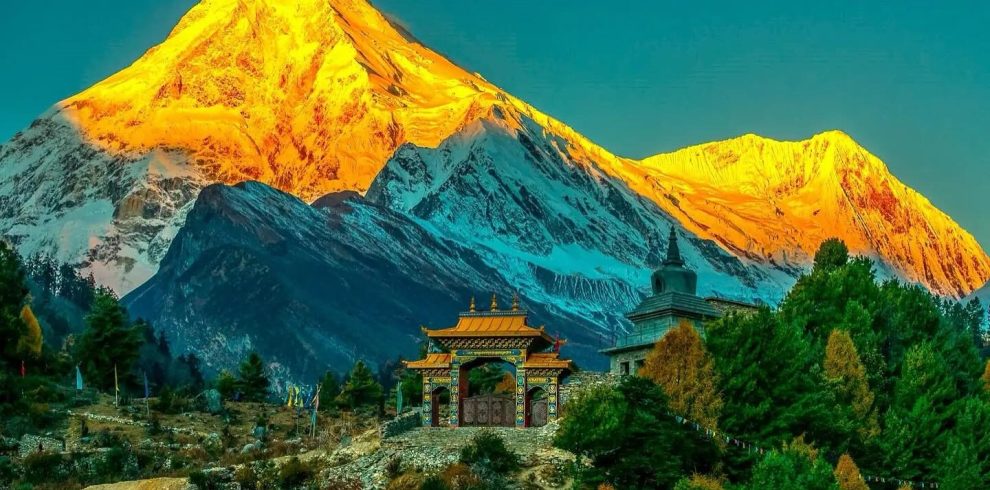
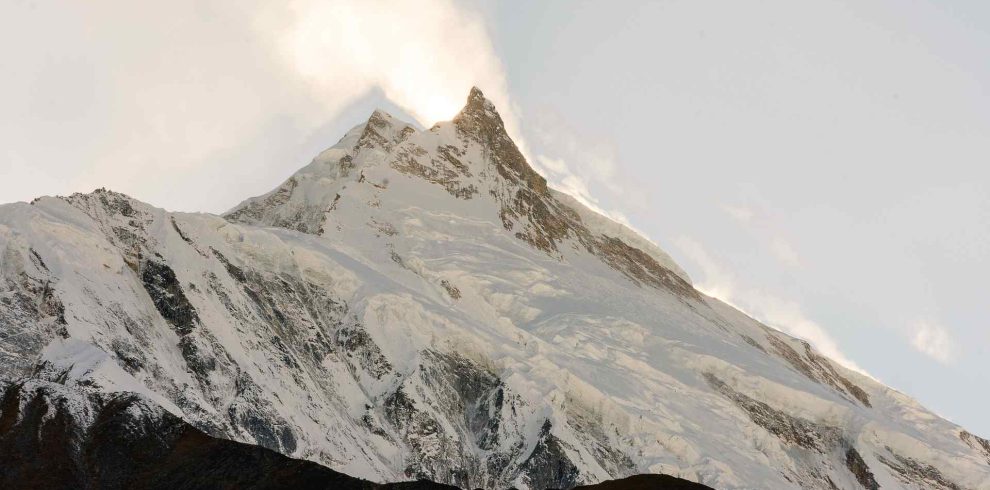
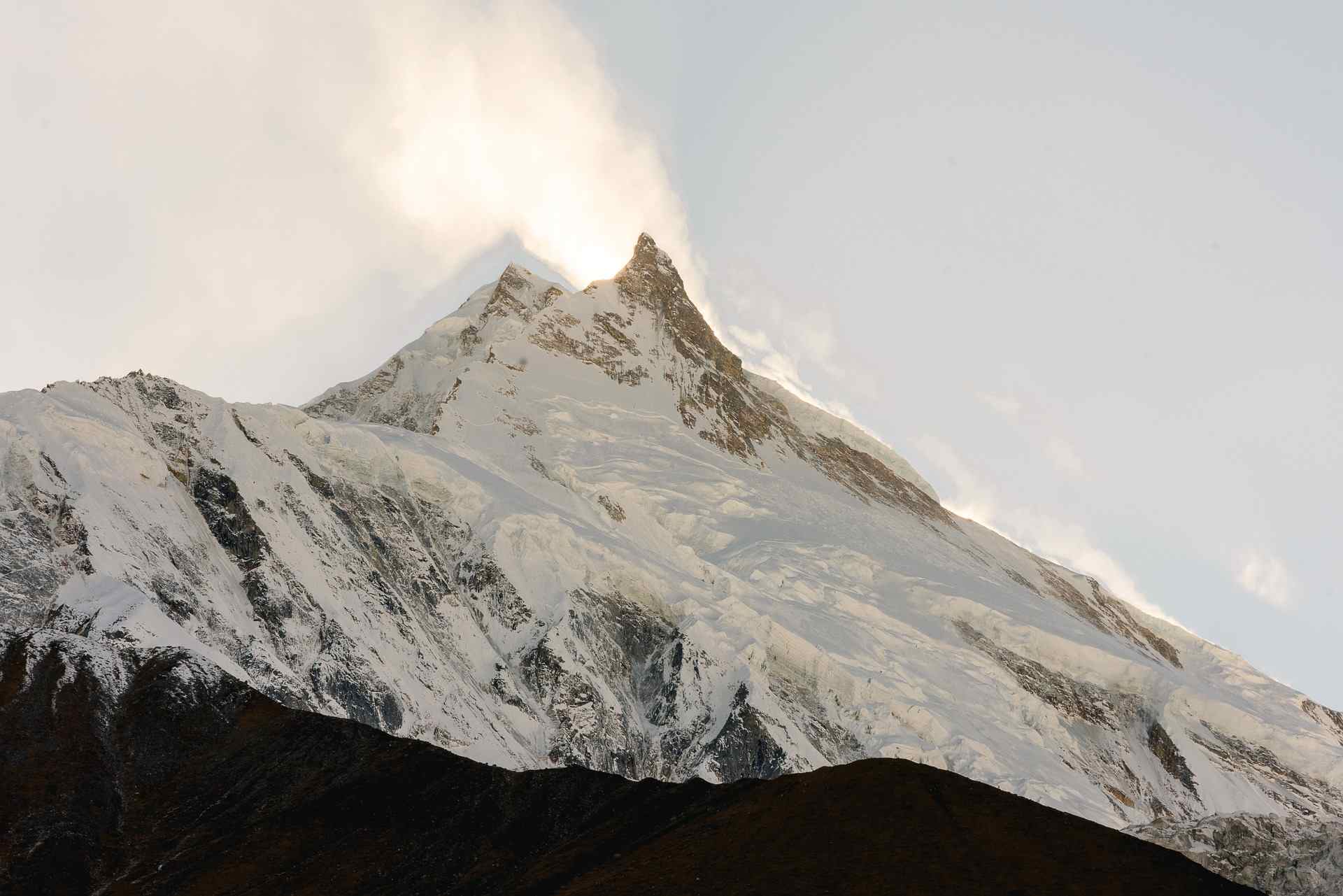
The 9 Days Manaslu Circuit Trek takes you deep into one of Nepal’s most unspoiled Himalayan regions. Known to locals as “The Spirit Mountain”, Mount Manaslu (8,163m) is the world’s 8th highest peak. This classic circuit trail circles the mountain, offering raw beauty, cultural immersion, and an authentic trekking experience. While it is still less crowded than the Everest, Annapurna, or Langtang treks, the Manaslu Circuit is quickly gaining popularity among trekkers seeking something unique and off the beaten path.
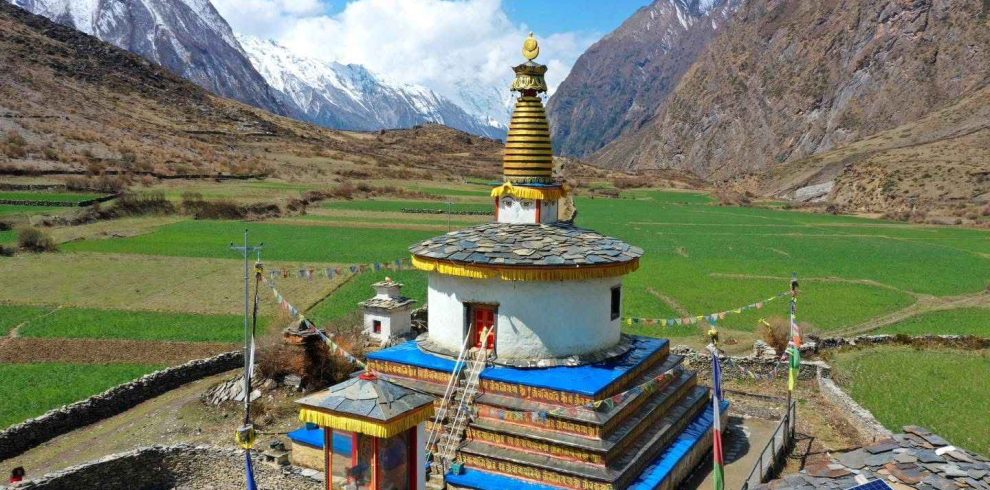
The journey’s highest point is the breathtaking Larkya La Pass (5,106m), a challenging yet rewarding crossing that showcases panoramic views of the surrounding Himalayas. Along the trail, you’ll walk close to the Nepal–Tibet border, where Tibetan Buddhist culture is deeply rooted in daily life. Prayer flags flutter in the wind, mani walls inscribed with mantras line the pathways, and traditional chortens mark sacred spaces.
The route takes you from the subtropical foothills of the Himalayas through lush forests and river valleys, gradually rising into the alpine zone and finally to the rugged, rocky landscapes near the pass. One of the most memorable aspects of this trek is experiencing the simple yet fascinating lifestyle of remote mountain villages, where traditions have remained unchanged for generations.
For those with extra time, the trek can be extended with a side trip to the Manaslu & Tsum Valley Trek, a magical, hidden valley where ancient Tibetan customs and monastic life are preserved to this day. Whether you are a nature lover, cultural explorer, or adventure seeker, the Manaslu Circuit Trek offers the perfect escape into Nepal’s untouched wilderness.
Why Book the Manaslu Circuit Trek for Trail Runners with Us?
- We offer a 100 percent hassle-free trekking experience with all permits, transport, meals, and accommodation arranged for you
- No advance booking fee is required; you can pay after arriving in Nepal by international card, bank transfer, or cash
- Our itinerary is crafted by experienced local Manaslu trekking guides who know every detail of the trail
- We provide 24/7 customer support before and during your trip via WhatsApp, email, or phone
- Our guides and porters are friendly, professional, and trained in emergency rescue, altitude sickness response, and first aid
- You can trek at your own pace with no pressure; if you need extra time or rest days, we’re always flexible
- We book the best available tea houses along the route for cleaner rooms, better food, and a more comfortable stay
- We focus on your safety, comfort, and satisfaction from the moment you contact us until the end of your trek
How to Book the Manaslu Circuit Trek for Trail Runners and Endurance Athletes
9 Days Manaslu Circuit Trek – Trip Highlights
- Experience the journey around Mount Manaslu, the world’s eighth highest peak at 8,163 meters, also known as the Spirit Mountain.
- Cross the stunning Larkya La Pass at 5,106 meters, a challenging high pass that rewards trekkers with panoramic Himalayan views.
- Immerse yourself in Tibetan Buddhist culture with ancient monasteries, fluttering prayer flags, mani walls, and traditional mountain villages.
- Walk through diverse landscapes ranging from subtropical valleys and waterfalls to alpine meadows and dramatic glacial terrain.
- Enjoy the peace of a remote and less crowded trail, an authentic wilderness experience away from the busy Everest and Annapurna regions.
- Extend your adventure with an optional side trip to the Tsum Valley, a mystical hidden valley where centuries-old Tibetan traditions are still alive.