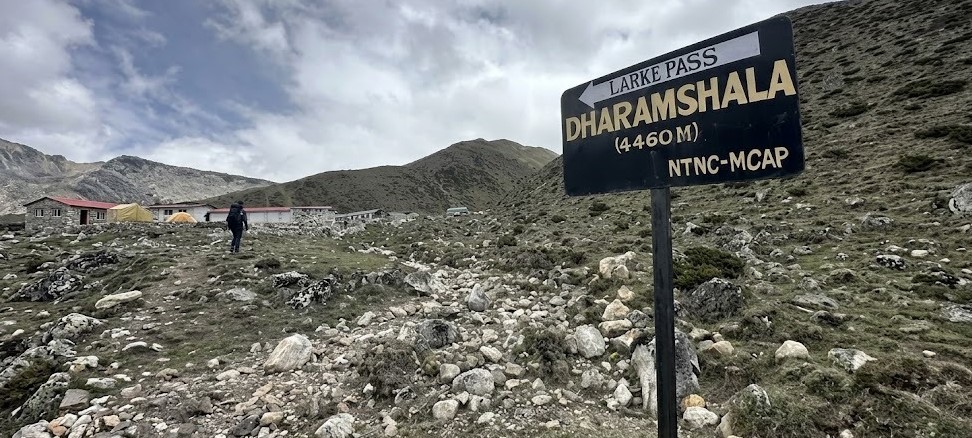
Dharmasala is the highest overnight stop on the Manaslu Circuit Trek, sitting at 4,460 meters above sea level in a broad glacial valley below Larke La Pass. The settlement has no permanent residents. Every building here was put up to serve trekkers, and the teahouses close completely once the trekking season ends and the first heavy snowfalls arrive. When you reach Dharmasala in the afternoon, you will find a small cluster of stone and wood structures, a few yaks grazing on the thin vegetation nearby, and a sky so clear and wide that the stars at night are unlike anything you have seen at lower altitude.
The village is also called Larkya La Phedi or Larke Phedi. Phedi means the foot of a pass in Nepali, and that is exactly what Dharmasala is: the last resting place before you begin the long climb to Larke La Pass at 5,106 meters. Every trekker on the standard Manaslu Circuit Trek spends one night here. The following morning, usually beginning in the dark hours between 3 and 5 in the morning, they set off for the hardest and most rewarding day of the entire circuit. Dharmasala is the pivot point of the whole trek.
This guide covers everything a trekker needs to know about Dharmasala: its location, what the teahouses are actually like, what you can eat and what you should eat at this altitude, how to manage the cold, how to read your own body for altitude warning signs, and exactly what to expect on the pass crossing day. If you are preparing for the Manaslu Circuit and want to understand what the night before the pass feels like, this is the guide that answers those questions.
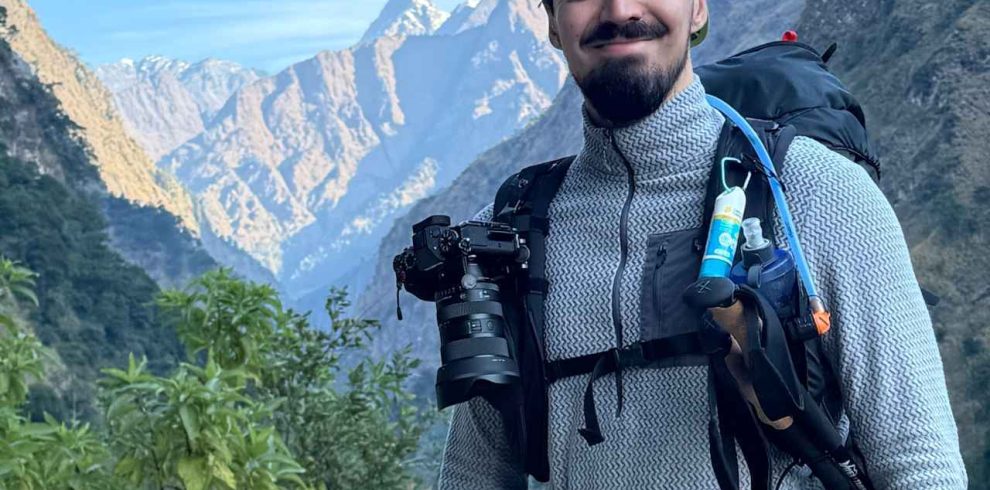
The Manaslu Circuit Trek is a spectacular journey around Mount Manaslu (8,163 m), the eighth-highest mountain in the world. Located…
Where Is Dharmasala Located
Dharmasala lies in the upper Larkya Khola valley, within the Manaslu Conservation Area, in Gandaki Province of Nepal. The settlement is part of the administrative area associated with Tsum Nubri Rural Municipality. To the north and west, the terrain rises steeply toward the glaciated flanks of Larke La Pass. To the south, the valley descends back toward Samdo and the Budhi Gandaki corridor that you have been following since the start of the trek. To the east, the massive white pyramid of Mt. Manaslu fills the sky.
The valley floor around Dharmasala is relatively flat compared to the gorge terrain you crossed earlier in the trek. The Larkya Khola stream runs through the valley, fed by meltwater from the glaciers above. The surrounding landscape is largely barren at this elevation: bare rock, thin alpine grass, and scattered boulders. There are no trees here. The treeline was left behind below Samdo. In every direction, the horizon is defined by high ridges and snow-covered peaks.
| Detail | Information |
|---|---|
| Elevation | 4,460 meters (14,632 feet) |
| Also Known As | Larkya La Phedi, Larke Phedi, Dharamsala |
| Province | Gandaki Province |
| Conservation Area | Manaslu Conservation Area |
| River | Larkya Khola (tributary of Budhi Gandaki) |
| Settlement Type | Seasonal trekking settlement (no permanent residents) |
| Village Below | Samdo (3,875m) — 3 to 4 hours south |
| Pass Above | Larke La Pass (5,106m) — 4 to 5 hours north |
| Number of Teahouses | 2 to 3 teahouses (open during trekking season only) |
| Nearest Town | Larke Bazar (small trading point nearby) |
Dharmasala is a genuinely remote location. There is no road access, no emergency services within reach, and no village community to draw on. The teahouses here operate with what they can carry in on the backs of porters or yaks from Samdo. Everything you consume at Dharmasala, every cup of tea and every bowl of soup, was carried to this altitude by someone who walked the same trail you did. That context shapes how you think about the food prices and the service.
The Trail from Samdo to Dharmasala
The walk from Samdo to Dharmasala is the penultimate day of trekking before the pass crossing. It is not a long day in terms of distance, covering roughly 9 kilometers, but the altitude gain of about 580 meters at elevations already above 3,800 meters makes it harder than the numbers suggest. Most trekkers take 3 to 4 hours for this section, moving slowly and steadily to manage the thin air.
From Samdo, the trail follows the Larkya Khola upstream. The valley here is wide and the walking is initially relatively gentle as you leave the village behind. As the trail progresses north and west, the terrain becomes more obviously glacial: the valley sides are steeper, moraines appear on both sides of the trail, and the vegetation thins to scattered tufts of alpine grass. Several stream crossings on wooden or stone bridges punctuate the walk. The cold is more noticeable here than at Samdo because the valley is shaded for longer portions of the day.
Many itineraries include a detour to Larke Glacier viewpoint during this day. The glacier flows from the high peaks west of the pass and is visible from certain points along the trail. Getting close to the glacier requires a short off-trail scramble and adds an hour or more to the day, but the view of the crevassed ice is memorable. Your guide can advise whether conditions and timing make the detour worthwhile on your particular trek day.
| Stage | From | To | Distance | Elevation Change | Walking Time |
|---|---|---|---|---|---|
| Day before pass | Samdo (3,875m) | Dharmasala (4,460m) | ~9 km | +585m | 3 to 4 hours |
| Pass crossing day | Dharmasala (4,460m) | Larke La Pass (5,106m) | ~7 km | +646m | 4 to 5 hours |
| Descent from pass | Larke La Pass (5,106m) | Bhimtang (3,590m) | ~9 km | -1,516m | 4 to 5 hours |
| Full crossing day total | Dharmasala (4,460m) | Bhimtang (3,590m) | ~16 km | +646m then -1,516m | 8 to 10 hours |
One detail that surprises many trekkers: the walk from Samdo to Dharmasala is short enough that even with an early lunch in Samdo, you can arrive at Dharmasala in mid-afternoon with several hours of daylight remaining. This is intentional. Arriving early at Dharmasala gives you time to rest, acclimatize, eat a proper early dinner, and get to sleep at a reasonable hour before the 3 or 4 AM start for the pass. Trekkers who push their pace on the Samdo-Dharmasala leg and arrive exhausted sleep worse and perform worse on the pass the next day.
Trail Conditions Between Samdo and Dharmasala
The trail from Samdo to Dharmasala is generally well-marked and follows an obvious line up the valley. In autumn, the path is typically clear and the stream crossings are straightforward. In spring, snowmelt can swell the streams and make some crossings more challenging. In winter and early spring, snow may cover sections of the trail above 4,000 meters, and the path requires more careful navigation. Your guide will be familiar with the current conditions and will set an appropriate pace.
The final approach to Dharmasala involves a gradual rise onto a higher bench of the valley. When you round a bend in the trail and see the teahouse rooftops ahead, the sense of relief is genuine. You are at one of the highest points at which you will sleep on this trek. Everything above here is pass territory, and the pass crossing itself begins from this spot.
Accommodation in Dharmasala: What to Expect
There are two to three teahouses at Dharmasala, with the exact number varying slightly depending on the season and whether all owners have reopened after the previous winter. These are among the most basic accommodations on the entire Manaslu Circuit. Do not arrive expecting the standards of the teahouses at Samagaun or even Samdo. Dharmasala is a high-altitude shelter, and everything about it reflects the difficulty of supplying and maintaining structures at 4,460 meters.
The buildings are constructed from stone and wood, with corrugated metal or tarpaulin roofing. Rooms are small, typically holding two to four wooden platform beds with thick yak-wool blankets. The blankets are essential because room heating does not exist at Dharmasala. Temperatures inside the rooms at night can drop to near zero or below even in the main trekking seasons. If you have a sleeping bag, use it at Dharmasala regardless of how comfortable you felt with just blankets in Samdo.
| Facility | Availability at Dharmasala | Notes |
|---|---|---|
| Room type | Shared platform beds or wooden beds, 2 to 4 per room | Very small rooms, minimal furniture |
| Bedding | Thick yak-wool blankets provided | Bring your own sleeping bag for extra warmth |
| Bathroom | Shared outdoor toilet, squat style | Basic, no flush system |
| Hot shower | Not available | Cold water wash only; most trekkers skip |
| Electricity | Solar only, very limited | Charging may be available at NPR 400 to 600; not guaranteed |
| Wi-Fi | Not available | No internet connection at this altitude |
| Phone signal | Intermittent, unreliable | Some Ncell signal occasionally; Nepal Telecom variable |
| Heating in dining room | Yak dung or wood stove, limited fuel | The dining room is the warmest place in the building |
| Room price | NPR 300 to 600 per person per night | Higher than lower villages due to supply difficulty |
The dining rooms at Dharmasala teahouses function as the social and thermal center of the stop. Trekkers from all groups gather here in the late afternoon and evening, warming themselves by the central stove, eating, and talking about the next day. The stove burns yak dung or small amounts of wood, and it provides real warmth in an enclosed space. The dining room is where you spend most of your waking hours at Dharmasala, and the atmosphere on a clear evening with good company and a bowl of hot soup is one of the memorable parts of the Manaslu Circuit experience.
Advance reservations for Dharmasala are strongly recommended, particularly during the peak October and November season. The number of beds here is far smaller than in any other village on the circuit. Groups of 10 or more trekkers arriving without reservations may find all beds taken. In peak season, trekkers sometimes sleep in the dining room or on improvised surfaces if the teahouses are full. Your guide or agency should confirm Dharmasala reservations before you leave Samdo.
Sleeping at 4,460 Meters: Practical Tips
Sleep quality at Dharmasala is typically poor, and this is normal. At 4,460 meters, many trekkers experience broken sleep, vivid dreams, or periods of waking in the night. The reduced oxygen at this altitude affects breathing patterns during sleep, and a condition called periodic or Cheyne-Stokes breathing is common: brief pauses in breathing followed by a sudden catch of breath. This is not dangerous in otherwise healthy trekkers but it is unsettling if you do not know what is happening.
Getting any sleep at Dharmasala is better than none. Go to bed early, even if you do not feel sleepy. Avoid alcohol, which disrupts sleep quality and impairs your body’s acclimatization response. Eat a warm dinner before sleep. Drink enough water. Keep your sleeping bag close to your body for maximum warmth. Set a quiet alarm rather than asking the teahouse to wake you loudly, as other trekkers may be starting at slightly different times.
Food and Drinks at Dharmasala
The menu at Dharmasala teahouses is limited but adequate for the nutritional needs of pass-crossing day preparation. Dal bhat is available and remains the most nutritious and filling option. Soup of various kinds is particularly important at this altitude: garlic soup has a long-standing reputation among high-altitude trekkers for helping reduce symptoms of altitude sickness, and the garlic available in Dharmasala teahouses is locally sourced from lower valleys and genuinely effective as a warming, circulation-improving food.
Because everything at Dharmasala is carried in from Samdo or further down the valley, the menu is simpler than at villages lower on the circuit. Fresh vegetables are limited. Meat options are minimal or absent. The focus is on carbohydrate-heavy foods that provide sustained energy for the next day’s effort: rice, noodles, bread, oats. Eat a large meal the evening before the pass crossing. Your body needs fuel in reserve because the pass day begins early and ends late.
| Food Category | Common Items | Typical Price at Dharmasala |
|---|---|---|
| Main meals | Dal bhat, fried rice, thukpa (noodle soup), vegetable curry | NPR 600 to 900 |
| Soups | Garlic soup, vegetable soup, tomato soup, noodle soup | NPR 250 to 400 |
| Breakfast (evening before pass) | Porridge, oats, Tibetan bread with butter and honey, fried eggs | NPR 300 to 500 |
| Snacks | Biscuits, chocolate, nuts, dried fruit, instant noodles | NPR 150 to 350 |
| Hot drinks | Milk tea, ginger tea, black tea, hot lemon, instant coffee | NPR 150 to 250 |
| Water | Boiled water, mineral water | NPR 100 to 200 per liter |
Water management at Dharmasala deserves specific attention. At 4,460 meters, staying hydrated is more important than at lower altitudes because the body loses more water through respiration in the thin, cold, dry air. You should be drinking at least 3 to 4 liters of water daily at this point in the trek. Boiled water or water purification tablets are essential because stream water at this altitude, while it looks clean, can still carry giardia and other pathogens. The teahouses sell boiled water, and buying it here rather than relying on stream water is worth the cost.
On the morning of the pass crossing, eat something warm before you leave, even if you are not hungry. A bowl of porridge or oats, a cup of sweet tea, and a piece of bread gives your body the fuel it needs to begin climbing in cold dark conditions. Many trekkers skip breakfast in the excitement and urgency of an early start, and they pay for it with low energy several hours into the crossing. The teahouses at Dharmasala are experienced with early starts and can have food ready by 3 or 4 AM if your guide arranges this the night before.
Garlic Soup: Why Every Trekker Orders It
Garlic soup appears on the menu of almost every teahouse above 3,500 meters on the Manaslu Circuit, and Dharmasala is no exception. The recommendation to drink garlic soup at altitude has been part of Himalayan trekking culture for decades, and while there is no rigorous clinical proof that garlic specifically prevents altitude sickness, the logic behind the recommendation is sound. Garlic contains allicin and other compounds that promote blood circulation, support the immune system, and have mild anti-inflammatory properties. Better circulation at altitude means more efficient oxygen delivery to tissues.
Whether or not the medical benefits are definitively proven, garlic soup at Dharmasala is warm, filling, and comforting in cold conditions. The soup made in the teahouses here is a simple broth with substantial amounts of fresh garlic and often ginger, both of which contribute to warmth. On a cold evening at 4,460 meters when your body is tired from two weeks of trekking, a bowl of hot garlic soup before dinner is one of the small pleasures of this unusual settlement.
Altitude and Acclimatization at Dharmasala
At 4,460 meters, Dharmasala is at a genuine high-altitude elevation where the effects of reduced atmospheric oxygen become significant for most people. By the time you reach Dharmasala, you should have already spent two or more days above 3,500 meters during your acclimatization stops at Samagaun and Samdo. Those stops are not optional conveniences: they are physiologically essential for your body to produce enough additional red blood cells and adjust its breathing patterns to function at altitude.
If you have followed a standard Manaslu Circuit itinerary with proper acclimatization rest days, you should arrive at Dharmasala in reasonable condition. Light symptoms like a mild headache, some fatigue, and reduced appetite are normal at this elevation. What you should not have are signs of serious altitude sickness: severe headache that does not respond to ibuprofen or paracetamol, vomiting, loss of coordination, confusion, or breathlessness at rest. These symptoms require immediate descent regardless of how close you are to the pass.
| Symptom | Likely Cause | Action |
|---|---|---|
| Mild headache, slight fatigue | Normal acclimatization response at 4,460m | Rest, hydrate, take ibuprofen if needed, monitor overnight |
| Persistent severe headache | Possible Acute Mountain Sickness (AMS) | Do not ascend further; rest at Dharmasala; consult guide |
| Nausea without vomiting | AMS response, common at altitude | Rest, sip water, try garlic soup, avoid alcohol |
| Repeated vomiting | Moderate to severe AMS | Descend to Samdo immediately; do not attempt pass |
| Breathlessness at rest | High Altitude Pulmonary Edema (HAPE) risk | Descend immediately; use emergency descent bag if available |
| Confusion, loss of balance | High Altitude Cerebral Edema (HACE) risk | Descend immediately; this is a medical emergency |
| Difficulty sleeping, vivid dreams | Normal periodic breathing at altitude | Normal; use sleeping bag for warmth and rest as much as possible |
The rule at Dharmasala is the same as at every other point on the Manaslu Circuit: if you feel significantly unwell, do not attempt to ascend the following day. The pass at 5,106 meters is 646 meters higher than Dharmasala, and a trekker already struggling at 4,460 meters will be in serious difficulty at the top of the pass. A rest day at Dharmasala, or if necessary a descent to Samdo, is far better than committing to the pass in deteriorating condition. Your guide and your agency will support the right decision; the pass is not going anywhere, and your safety is the priority.
Medications and First Aid at Dharmasala
Acetazolamide (Diamox) is the most commonly used medication for altitude sickness prevention and treatment. If your doctor has prescribed it for the trek, continue taking it according to their instructions while at Dharmasala. Do not start acetazolamide for the first time at Dharmasala if you have not tried it before: the medication causes increased urination and some trekkers experience tingling in the extremities as side effects, and discovering these reactions the night before the pass is poor timing.
Your personal first aid kit should be accessible, not buried in the bottom of your pack, at Dharmasala. Carry ibuprofen or paracetamol for headache. Carry oral rehydration salts for dehydration. Carry any personal medications you take regularly. If your agency or guide carries a pulse oximeter, ask for a reading at Dharmasala. A blood oxygen saturation (SpO2) reading below 80 percent at rest is a sign that your body is not acclimatizing well and should influence the go or wait decision for the pass crossing.
Weather at Dharmasala: What to Expect Through the Seasons
Dharmasala’s weather is determined by its elevation, its position in a north-facing valley, and its proximity to high glaciated terrain. The climate here is cold, windy, and significantly more severe than anything you experienced in the lower Budhi Gandaki valley. Even in the peak October and November trekking season, temperatures at Dharmasala drop well below freezing at night. In the early morning hours when most trekkers are beginning their pass crossing, temperatures can be between minus 10 and minus 20 degrees Celsius depending on the season and the wind.
| Season | Months | Daytime Temperature | Nighttime Temperature | Conditions | Pass Crossing Status |
|---|---|---|---|---|---|
| Spring | March to May | 0°C to 10°C | -10°C to -5°C | Variable, afternoon clouds, snowmelt streams, some fresh snow possible | Usually possible; check conditions before attempting |
| Monsoon | June to September | 2°C to 12°C | -8°C to -3°C | Heavy rain at lower elevations, snow and whiteout possible on the pass | Not recommended; teahouses may be closed |
| Autumn | October to November | -2°C to 8°C | -15°C to -8°C | Clear skies, best mountain views, stable weather, cold nights | Excellent; prime season |
| Winter | December to February | -10°C to 0°C | -20°C to -12°C | Very cold, heavy snow, pass often closed, teahouses closed | Usually not possible; serious risk |
Wind is the factor that catches many trekkers off guard at Dharmasala and on the pass itself. Even on clear days with good temperature readings, strong wind on the pass can create dangerous wind-chill conditions. A wind speed of 40 to 50 kilometers per hour at minus 15 degrees Celsius produces a wind-chill equivalent to minus 30 degrees or lower. This level of cold can cause frostbite on exposed skin within minutes. Wind forecasts are difficult to access at Dharmasala with limited connectivity, which is why starting the pass crossing early, before afternoon winds typically build, is the standard practice.
Reading the Weather Before the Pass Crossing
The experienced guides who lead Manaslu Circuit treks watch the weather carefully from Dharmasala the evening before the crossing. Clear skies at sunset, low wind in the valley, and cold dry air are all good signs for the following morning. A heavy cloud buildup to the west in the evening, particularly lenticular clouds forming over the high peaks, can indicate deteriorating conditions developing. If the evening is very windy at Dharmasala, the pass itself will be significantly more exposed and dangerous.
Your guide makes the final call on whether conditions are safe to attempt the pass. Trust that decision. Guides who work this route have crossed Larke La Pass dozens of times across different seasons and understand weather pattern signals that are not visible in a weather app or satellite image. If your guide says conditions are marginal and recommends waiting a day, the correct response is to wait. A forced crossing in poor conditions has ended badly for trekkers on this pass in the past.
Mountain Views from Dharmasala
The mountain scenery from Dharmasala is among the most dramatic on the entire Manaslu Circuit. At 4,460 meters, with no trees or ridges blocking the view, the surrounding peaks appear enormous and close. Mt. Manaslu at 8,163 meters dominates the eastern horizon. From Dharmasala, the full bulk of Manaslu’s south and southeast flanks is visible: the glaciated upper ridges, the hanging glaciers, and the massive ice falls that define the lower approaches to the summit. On a clear afternoon at Dharmasala, watching the light change on the Manaslu massif is an experience that needs no description beyond telling you to have your camera ready.
| Mountain | Elevation | Visible From | Notes |
|---|---|---|---|
| Mt. Manaslu | 8,163m (26,781 ft) | Dharmasala and the pass | 8th highest mountain in the world; dominates the eastern skyline |
| Himlung Himal | 7,126m (23,379 ft) | Larke La Pass summit | Clear views from the pass top; a major Himalayan peak |
| Cheo Himal | 6,820m (22,375 ft) | Larke La Pass summit | Visible to the northwest from the pass |
| Kang Guru | 6,981m (22,904 ft) | Larke La Pass summit | Also called Kangguru; visible in the Annapurna region to the south |
| Annapurna II | 7,937m (26,040 ft) | Larke La Pass summit | Visible to the south from the pass as you begin the descent |
| Larke Peak | 6,249m (20,501 ft) | Dharmasala and the pass | The peak directly above Dharmasala and the pass approach |
| Samdo Peak | 5,633m (18,481 ft) | Dharmasala | Visible looking south from Dharmasala |
The evening light on Manaslu from Dharmasala is something trekkers remember for years. As the sun drops toward the western ridges, the summit of Manaslu catches the last light in shades of orange and pink while the valleys below already darken. This alpenglow effect is common in the Himalayas but the scale of Manaslu, viewed at close range from the same high valley as the peak, gives it a particular intensity. The mountain fills the sky rather than sitting on the horizon, and the sense of being in the presence of something vast and indifferent to human scale is difficult to shake.
Dawn at Dharmasala, for trekkers who are awake at 3 or 4 AM preparing for the pass, brings a different kind of beauty. The sky before sunrise at 4,460 meters is extraordinarily clear and dark. Stars are visible in a density not achievable at lower elevations where atmospheric haze and light pollution reduce the sky’s depth. The Milky Way is often visible as a genuine band of light, not just a faint suggestion. In the moments before you leave Dharmasala for the pass, looking up at that sky is worth the sleepy effort it takes to notice it.
What to Pack for Dharmasala and the Larke La Pass Crossing
Everything you need for the pass crossing must already be in your pack when you arrive at Dharmasala. There is no last-minute shopping here, no gear rental, and no warm room to sort through your belongings in. The packing decisions you made in Kathmandu and the items you carried all the way from Machhakhola are what you have available on the pass. The following table focuses specifically on the items critical for survival of comfort on the overnight at Dharmasala and the pass crossing the following morning.
| Category | Essential Items | Why It Matters at This Point |
|---|---|---|
| Insulation layers | Down jacket (minimum 700-fill), fleece mid-layer, thermal base layers top and bottom | Night temperatures below -10°C in main seasons; pass temperatures can reach -20°C with wind chill |
| Head and hands | Warm hat covering ears, balaclava or neck gaiter, thick gloves and waterproof outer mitts | Wind on the pass causes rapid heat loss from exposed skin; frostbite risk is real |
| Footwear | Waterproof trekking boots (broken in and proven), thick wool socks (carry at least 2 pairs), gaiters | Snow and ice on the pass approach; wet feet at -15°C are a medical emergency |
| Sleeping system | Sleeping bag rated to at least -10°C (ideally -15°C) | Teahouse blankets alone are insufficient in cold autumn and all winter nights |
| Navigation and light | Headlamp with fresh or fully charged batteries, spare batteries | Pass crossing starts in complete darkness between 3 and 5 AM; headlamp failure = serious problem |
| Trekking poles | Both poles with snow baskets attached | Ice and snow on the upper pass approach; poles prevent falls and reduce knee stress on descent |
| Hydration | 2 insulated water bottles (1 liter each), thermos with hot water optional | Plastic bottles may freeze on the pass; insulated bottles prevent water from becoming ice |
| Pass-day food | High-energy snacks: chocolate, nuts, energy bars, dried fruit, biscuits | No food available between Dharmasala and Bhimtang; 8 to 10 hours of walking requires fuel |
| Sun protection | Sunglasses with UV protection (glacier-rated), sunscreen SPF 50+ | Snow reflection at altitude causes rapid sunburn and snow blindness; serious injury risk |
| Emergency | Personal first aid kit, altitude medication, emergency whistle, space blanket | No rescue services accessible on the pass; self-sufficiency is mandatory |
A note about water bottle freezing: at the temperatures on the upper section of Larke La Pass, a standard plastic water bottle can freeze solid within an hour if carried in a side pocket of your pack. Put your water bottles inside your pack where body heat from your back partially insulates them, or carry an insulated sleeve. Some experienced trekkers fill a small thermos with boiling water the night before and carry it in an inside jacket pocket, so they have a warm drink available on the summit. The combination of exercise and extreme cold makes hydration management on the pass different from any other day of the trek.
The Larke La Pass Crossing: What Actually Happens
The Larke La Pass crossing is the defining physical and psychological event of the Manaslu Circuit Trek. At 5,106 meters, it is one of the highest trekking passes in the Himalayas accessible on a standard guided trek without technical climbing equipment. The crossing from Dharmasala to Bhimtang on the far side covers approximately 16 kilometers and involves ascending 646 meters to the pass and then descending 1,516 meters to Bhimtang. Total walking time is 8 to 10 hours.
The standard practice is to begin walking from Dharmasala at 4 AM, sometimes as early as 3 AM. Starting this early serves two purposes. First, it gets trekkers across the upper section of the pass before afternoon winds build. Second, the snow on the upper approach is firmer in the pre-dawn cold, making footing more secure. As the sun rises and temperatures warm, the snow softens and the surface becomes less predictable. By mid-morning, when the sun is fully on the pass, the snow on south-facing sections can be soft enough to post-hole through.
The first hour of walking from Dharmasala is through darkness. Headlamps illuminate a trail of footprints from previous trekking groups and the path is generally obvious, but the darkness combined with the cold and the altitude makes this initial section feel demanding. The body is not yet warm, the lungs are working hard in the thin air, and the first psychological challenge is simply getting into a rhythm despite the discomfort. Experienced guides set a deliberately slow pace in this initial section, knowing that a fast early push creates problems higher on the route.
As dawn breaks, typically one to two hours after leaving Dharmasala, the scale of the terrain becomes visible. The valley walls on either side rise to snow-covered ridges. The trail follows a route through moraines and glacial debris before reaching the snow-covered upper section of the pass approach. Ice axes are not required but trekking poles with firm pressure are essential. In some years and some seasons, fixed ropes assist trekkers on particularly icy sections. Your guide will advise on the current state of the trail.
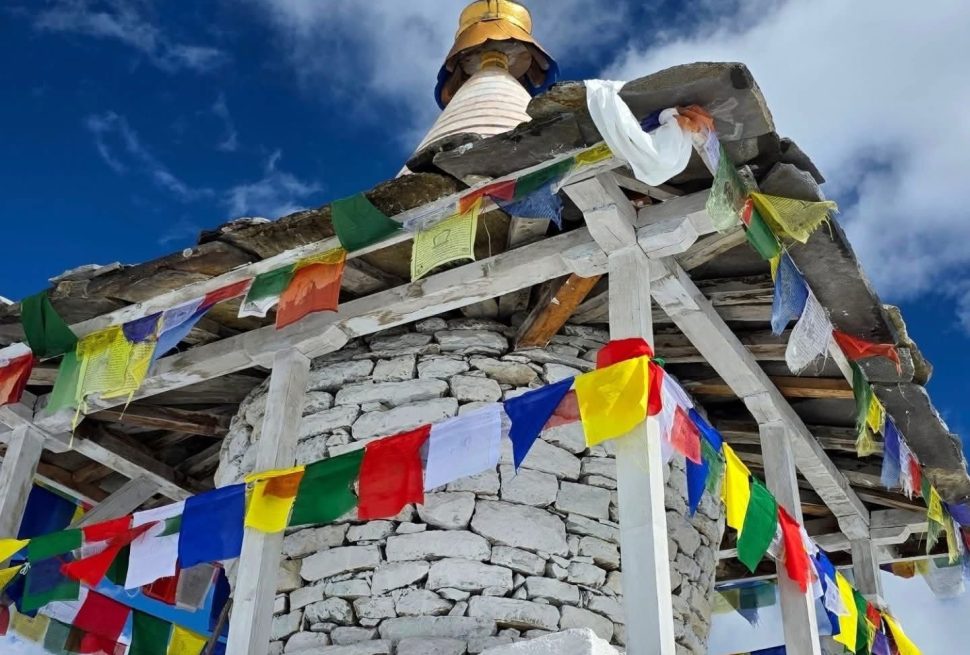
The summit of Larke La Pass is marked by a cluster of prayer flags and cairns. Reaching the summit typically takes 4 to 5 hours from Dharmasala. The views from the top are extraordinary by any standard: Manaslu, Himlung Himal, Cheo Himal, Kang Guru, and on very clear days Annapurna II are all visible. Most trekkers pause here for 10 to 20 minutes to photograph, catch their breath, and absorb where they are. The wind usually discourages longer stops. Then the descent begins.
The descent from the pass to Bhimtang is long, steep, and hard on the knees. From the summit at 5,106 meters to Bhimtang at 3,590 meters is a drop of 1,516 meters. The upper descent crosses glacial moraine and snow fields. Lower, the trail passes through meadows and eventually enters rhododendron forest, a dramatic transition from the barren high-altitude landscape that has defined the past several days. The air gets noticeably thicker with each 100 meters of descent. By the time you reach Bhimtang, the sense of oxygen in the air is almost luxurious after days above 4,000 meters.
What to Do if You Cannot Complete the Pass Crossing
Despite careful preparation, some trekkers find themselves unable to complete the pass on the day they attempt it. Severe altitude sickness, injury, sudden weather deterioration, or extreme exhaustion are all possible reasons to turn back. If you reach a point on the pass approach where continuing feels genuinely unsafe, the correct decision is to descend. There is no disgrace in this. Returning to Dharmasala from halfway up the approach and waiting for better conditions, or descending to Samdo and exiting the circuit from there, is a rational and responsible choice.
Do not allow group pressure or a sense of having come so far to override your body’s signals on the pass. The Manaslu Circuit can be repeated. Health and life cannot be replaced. Your guide is equipped to lead you back down safely and to communicate with your agency about alternative exit routes if necessary. Most established trekking agencies including Manaslu Treks have contingency plans for trekkers who cannot complete the pass and can arrange exit routes via Samdo and back to the road at Arughat or Gorkha.
Dharmasala in the Context of the Full Manaslu Circuit
Dharmasala is one of the last stages before the Manaslu Circuit completes its arc and drops into the Annapurna region. Understanding where Dharmasala sits in the full route helps trekkers appreciate why the preparations made here matter so much for the experience as a whole.
| Circuit Section | Key Stops | Altitude Range | Character |
|---|---|---|---|
| Lower approach | Machhakhola, Jagat, Deng | 869m to 1,860m | Subtropical gorge, hot and humid, dramatic river scenery |
| Mid valley | Namrung, Lho | 1,860m to 3,180m | Temperate forest, transition to alpine terrain, first mountain views |
| Upper valley acclimatization | Samagaun, Samdo | 3,530m to 3,875m | High alpine, rest days, dramatic Manaslu views, Tibetan culture |
| Pass approach | Dharmasala | 4,460m | Last teahouse, maximum altitude preparation, cold and remote |
| Pass crossing | Larke La Pass | 5,106m | Highest point, panoramic 360-degree views, most demanding day |
| Annapurna descent | Bhimtang, Tilje, Thonje, Dharapani | 3,590m to 1,860m | Rapid descent, forest return, road access at Dharapani or Besisahar |
Everything in the weeks before Dharmasala was preparation for this night and the following day. The lower valley walking built your legs and your lung capacity. The acclimatization days at Samagaun and Samdo prepared your blood and your breathing for higher altitude. The slower pace of the upper valley trained your patience and your attention to your own body’s signals. When you arrive at Dharmasala and look up at the ridge above, knowing that the pass lies just beyond it, the entire preceding journey suddenly feels purposeful in a new way.
After Dharmasala, the character of the trek changes completely. The descent into the Annapurna region brings rapidly thickening air, richer vegetation, and a sense of the physical effort being behind you. The days from Bhimtang onward are shorter, warmer, and less demanding. The circuit ends at Besisahar or Dharapani where vehicles can take trekkers back to Kathmandu. But the memories of Dharmasala, the night spent shivering in a stone teahouse at 4,460 meters watching stars through a cracked window and trying to sleep before the biggest day of the trek, tend to stay with people long after the circuit is complete.
Comparing Dharmasala with Other Manaslu High-Altitude Stops
Trekkers who have been on other major Himalayan circuits sometimes compare the high-altitude stop before the main pass with similar experiences on other routes. Thorong Phedi on the Annapurna Circuit serves a similar purpose before Thorong La Pass. Gorak Shep on the Everest Base Camp trek is another comparable last-stop settlement. Understanding how Dharmasala compares gives context to its strengths and limitations.
| High-Altitude Stop | Trek | Elevation | Pass Above | Number of Teahouses | Facilities Level |
|---|---|---|---|---|---|
| Dharmasala (Larkya La Phedi) | Manaslu Circuit | 4,460m | Larke La (5,106m) | 2 to 3 teahouses | Very basic; no WiFi, no hot shower |
| Thorong Phedi (High Camp) | Annapurna Circuit | 4,925m | Thorong La (5,416m) | 2 to 3 teahouses | Basic; similar standard to Dharmasala |
| Gorak Shep | Everest Base Camp | 5,164m | Kalapathar (5,643m) | Several lodges | More developed; relatively more facilities |
Dharmasala is comparable in standard to Thorong Phedi on the Annapurna Circuit and notably more remote and basic than Gorak Shep on the Everest route. The Manaslu Circuit’s restricted area status means it sees significantly fewer trekkers than either of those other routes, which keeps the infrastructure at Dharmasala simpler. This is both a limitation and a quality: the remoteness and the small scale of Dharmasala are part of what makes the Manaslu Circuit feel different from more commercial trekking routes.
Permits and Regulations Relevant at Dharmasala
By the time you reach Dharmasala, all your permits should have been checked multiple times at checkpoints in Jagat, Namrung, Lho, and Samagaun. No new permits are required specifically at Dharmasala, but your Manaslu Restricted Area Permit, Manaslu Conservation Area Permit, and Annapurna Conservation Area Permit remain valid and may be checked again at checkpoints between the pass and Bhimtang on the far side. Keep all permit documents accessible in your pack.
The guide requirement that applies throughout the Manaslu Circuit continues at Dharmasala and on the pass itself. Trekkers are not permitted to cross Larke La Pass without a licensed guide. This rule is practical as well as regulatory: the pass crossing is genuinely hazardous in poor conditions, and navigation errors on the upper section in snow or whiteout conditions have had serious consequences for unguided trekkers in the past. Your guide’s knowledge of the route, the terrain, and the weather patterns is a safety asset that matters most on the pass day.
After Dharmasala: What Comes Next
Once you cross Larke La Pass and descend to Bhimtang at 3,590 meters, the character of the trek changes dramatically. Bhimtang is a proper village with more established teahouses, a lower altitude that your body immediately appreciates, and views of the Manaslu and Annapurna ranges that are different in character from those you had on the Manaslu side. Many trekkers describe arriving in Bhimtang as one of the emotional high points of the circuit: the relief of having completed the pass, the sudden warmth of lower altitude, and the sense of the trek opening up into its final friendly phase.
From Bhimtang, the remaining days take trekkers through Tilje, Thonje, and Dharapani, where the road and vehicle access returns. The trail on the Annapurna side is different in character: warmer, greener, with more established infrastructure and more populated villages. The permits system transitions from the Manaslu Conservation Area to the Annapurna Conservation Area at Dharapani. From Dharapani or Besisahar, jeeps and buses connect to Kathmandu, typically an 8 to 10 hour journey.
Trekkers who exit at Dharapani often have time to visit Besisahar, the administrative center of Lamjung District and a substantial town with ATMs, restaurants, and accommodation that feels luxurious after two weeks on the circuit. The contrast between Dharmasala and Besisahar, 24 to 48 hours apart on the trail and road, is one of the most striking transitions in Himalayan trekking.
Frequently Asked Questions About Dharmasala
How many teahouses are at Dharmasala?
There are two to three teahouses at Dharmasala, depending on the season and whether all owners have opened their establishments. The exact number can vary from year to year as some structures are damaged or upgraded during the off-season. The total sleeping capacity at Dharmasala is small, typically between 20 and 40 beds across all teahouses. In peak season, this capacity can be stretched when multiple groups arrive on the same afternoon. Booking in advance through your trekking agency is strongly recommended to secure accommodation, particularly for October and November visits.
Is there electricity at Dharmasala?
Electricity at Dharmasala comes entirely from solar panels. There is no grid connection and no hydropower at this altitude. Solar charging is available at some teahouses and costs between NPR 400 and NPR 600 per device per charge. On cloudy days, when the solar panels are not generating enough power, charging may not be available at all and the teahouse may prioritize their stored power for lighting the dining room and kitchen. Charge all your devices fully in Samdo before walking to Dharmasala, because Samdo has more reliable charging infrastructure.
What time do trekkers leave Dharmasala for the pass?
Most trekking groups leave Dharmasala between 3 and 5 AM for the Larke La Pass crossing. The exact departure time depends on the group’s pace, the current trail conditions, and the guide’s assessment of the weather. Slower groups or groups with members who need more time on the ascent start closer to 3 AM. Faster groups in good condition may leave at 4 or 4:30 AM. The goal is to reach the summit of the pass before midday, when afternoon winds typically build and temperatures can actually drop further as wind-chill increases despite the risen sun. Ask your guide what time you will be departing and set your alarm accordingly.
Is Larke La Pass always accessible in October and November?
Larke La Pass is almost always accessible in October and November under normal weather conditions. These are the peak months for Manaslu Circuit trekking precisely because the pass is most reliably crossable during autumn. However, occasional early snowfall or unusual weather systems can close the pass temporarily even in October or November. Heavy snowfall the previous night, combined with low visibility and high winds the following morning, can make the crossing unsafe. Your guide monitors conditions and will delay the attempt if the situation is not right. A one or two day delay at Dharmasala waiting for a weather window is rare but not unheard of in autumn.
What altitude is Dharmasala and should I be worried?
Dharmasala is at 4,460 meters above sea level. At this altitude, the atmospheric pressure provides roughly 58 percent of the oxygen available at sea level. Most people experience some symptoms at this elevation, including mild headache, reduced appetite, and disrupted sleep. These symptoms are manageable and expected. What should concern you are more severe symptoms: a headache that does not respond to medication, vomiting, breathlessness at rest, confusion, or difficulty walking straight. These indicate serious altitude sickness and require immediate descent. A pulse oximeter reading below 80 percent blood oxygen saturation at rest is a warning sign that warrants careful monitoring and potentially descent to Samdo.
Can I hire porters or guides at Dharmasala?
No. There are no services for hiring guides or porters at Dharmasala. This is a small trekker settlement with no connection to the broader trekking service infrastructure. All guides and porters for the Manaslu Circuit must be arranged in Kathmandu before the trek begins. The Manaslu Circuit requires trekkers to travel with a licensed guide from a registered agency, and this arrangement must be in place before you reach the Jagat checkpoint, let alone Dharmasala. If a trekker has somehow reached Dharmasala without a guide, they have already been in violation of the trek regulations for many days and will not find a solution at this remote outpost.
Are hot showers available at Dharmasala?
Hot showers are generally not available at Dharmasala. The teahouses here are too basic and the water supply too limited for shower facilities. Cold water for washing is available, but most trekkers do not shower at Dharmasala and save that for the better-equipped teahouses in Bhimtang after the pass crossing. The dry, cold conditions at 4,460 meters actually reduce sweating significantly compared to lower altitudes, so a day or two without showering is not as uncomfortable as it sounds. Wet wipes for a quick clean before sleep are a useful addition to your pack for this stage of the trek.
What is the difference between Dharmasala and Dharamsala in India?
These are two completely different places with phonetically similar names. Dharamsala in India is a city in Himachal Pradesh, home to the Tibetan government in exile and the Dalai Lama, and is a major tourist destination. Dharmasala on the Manaslu Circuit in Nepal is a tiny seasonal settlement of two to three teahouses at 4,460 meters altitude, accessible only on foot, with no permanent population. The name Dharmasala comes from the same Sanskrit root, meaning a resting place or shelter for travelers, but the two locations are entirely distinct. When making travel arrangements for the Manaslu Circuit, be specific about which Dharmasala you mean when communicating with airlines, hotels, or travel agents who may not be familiar with the Manaslu trekking context.
How difficult is the Larke La Pass crossing for a first-time high-altitude trekker?
The Larke La Pass crossing is considered a serious undertaking but is achievable for physically fit trekkers who have followed the proper acclimatization schedule and are traveling with an experienced guide. It is not a technical climb requiring specialist equipment in most conditions. The difficulty comes from the combination of high altitude, long duration, cold temperatures, possible snow and ice on the upper section, and the psychological pressure of starting at 3 or 4 AM in the dark. First-time high-altitude trekkers who have built up their fitness through the preceding two weeks of circuit walking and have taken proper rest days at Samagaun and Samdo have completed this pass successfully many times. The critical factor is honest self-assessment at Dharmasala: if your body is genuinely struggling with the altitude the evening before the pass, communicate that to your guide.
What happens if weather closes the pass and I am stuck at Dharmasala?
If weather prevents crossing and the closure looks likely to last more than a day or two, the practical option is to descend to Samdo and wait there, where the facilities are significantly better. Samdo has more food options, better electricity, and more comfortable accommodation for an extended wait. In rare cases of prolonged pass closure, trekkers descend the entire Manaslu side and exit via the road at Arughat or Gorkha, ending the circuit without crossing the pass. Your agency should be notified of the situation and can advise on alternatives. Travel insurance that covers trek interruption is strongly recommended for the Manaslu Circuit for exactly this kind of scenario.
Why Dharmasala Stays With You
Dharmasala is objectively not a comfortable place. The rooms are cold, the toilets are outside, the sleep is broken, and the alarm goes off in the small dark hours before you are ready to face the day. But the trekkers who have spent a night at Dharmasala and crossed Larke La Pass the following morning rarely describe this as a negative experience. They describe it as one of the defining nights of their trekking lives.
There is something clarifying about being in a place with so little. No phone signal, no internet, no entertainment, no comfort beyond a warm bowl of food and a thick blanket. What remains when these things are removed is the company of the people around you, the extraordinary landscape outside, and your own thoughts about what you have done to get here and what lies ahead in the morning. Many trekkers find the evening at Dharmasala more memorable than the pass crossing itself, because it is the last still moment before the hardest day.
If you are planning a Manaslu Circuit Trek and want specific information about what to expect at Dharmasala, how to prepare for the Larke La Pass crossing, or how to plan your itinerary for safe acclimatization and strong performance on the pass day, contact us at Manaslu Treks. We have guided trekkers across Larke La Pass across every season and every condition this route presents, and we can help you prepare properly for the night at Dharmasala and the day that follows.
Dharamsala gets especially cold in late autumn. If you are trekking the circuit in November, read the full Manaslu Circuit Trek in November guide for overnight temperatures at Dharamsala, recommended sleeping gear, and what to expect at the high camp before your Larke La crossing.
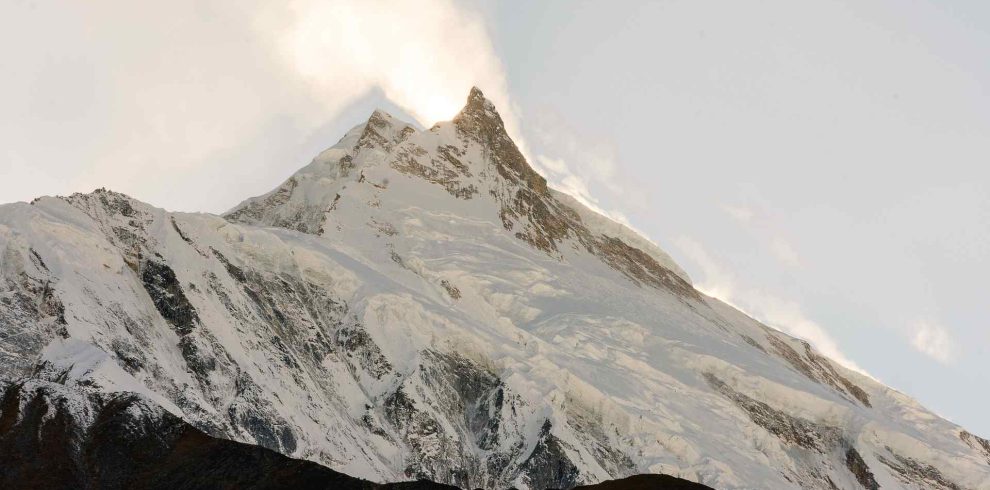
The 9 Days Manaslu Circuit Trek, also known as the Short Manaslu Circuit Trek, is designed for trekkers who want…