Manaslu Circuit Trek from Switzerland – Tour at a Glance
| Duration | 14 days on trail (16–18 days total from Switzerland) |
| Max Altitude | 5,160 m – Larkya La Pass |
| Flight to KTM | Zurich / Geneva via Doha or Dubai (~10–12 hrs) |
| Best Season | Oct–Nov and Mar–May |
| Total Cost | CHF 3,500–6,500 per person (all-in from Switzerland) |
| Package from | CHF 1,200 (USD 1,099) with Manaslu Treks & Expedition |
| Nepal Visa | On arrival at Kathmandu airport – no pre-application needed |
| Difficulty | Moderate–Strenuous (altitude is the main challenge) |
| Book With Us | WhatsApp: +977-9869225929 | info@manaslutreks.com |
The as high asacclimatizedkeeping the trail the Everest Base Camp routecompleted the Tour du Mont Blanc, the Haute Route, or the travelers,connectionsthe explicitly specify that the trek reaches above 5,000 m and that helicopter evacuation coverage is required at that altitudehas requiredan ,Acclimatization from Switzerland is a natural fit. Swiss trekkers are seasoned mountain walkers, acclimatised to altitude from the Alps, and experienced in multi-day routes with elevation and technical terrain. The difference with the Manaslu Circuit in Nepal is scale – the mountains here are more than twice the height of anything in Switzerland, the trails are wilder, and the cultural landscape of the Tibetan Buddhist Nubri Valley is unlike anything in Europe.
Switzerland has direct connections to Kathmandu via Zurich (ZRH) and Geneva (GVA) through Gulf hubs, making the journey straightforward. Once you land in Nepal, the 14-day Manaslu Circuit Trek takes you from subtropical river gorges at 930 m to the Larkya La Pass at 5,160 m, across a restricted zone that limits daily trekker numbers and keeps the trail authentically remote.
This guide covers everything a Swiss trekker needs to plan the Manaslu Circuit Trek: flights from Zurich or Geneva, Nepal visa process, permits, costs in CHF, what is included and excluded, and what to expect on the ground.
Why Swiss Trekkers Choose the Manaslu Circuit
Swiss trekkers already understand mountains. The Alps offer some of the finest multi-day trekking in the world, and many Swiss hikers have done the Tour du Mont Blanc, Haute Route, or Via Alpina. What draws them to Nepal is something the Alps cannot offer: genuine altitude above 5,000 m, a restricted trekking zone with controlled access, and a cultural landscape rooted in Tibetan Buddhism that has remained largely untouched by mass tourism.
The Manaslu Circuit in particular appeals because it is not Everest Base Camp. The trail from Machha Khola to the Larkya La sees a fraction of the foot traffic on the Khumbu region. The upper villages of Samagaon and Samdo feel genuinely remote. The permit system enforces licensed guide accompaniment and limits daily entries, which means the trail stays the way it was a decade ago on the EBC route.
The Swiss franc is also one of the strongest currencies against the Nepalese rupee. Nepal remains very affordable for Swiss travellers even when costs are factored in at full price. A CHF 1,200 trekking package that includes all permits, a licensed guide, accommodation and three meals per day represents exceptional value compared to an equivalent Alpine hut-to-hut route. We also publish dedicated planning guides for other regions, including our guide for trekkers from Sweden, Norway and Denmark.
Flights from Switzerland to Kathmandu
There are no direct flights from Switzerland to Kathmandu. All routes require one connection through a Gulf hub. The main options from Zurich (ZRH) and Geneva (GVA) are via Doha (Qatar Airways) and via Dubai (Emirates). Both airlines operate regular services to Tribhuvan International Airport (KTM) in Kathmandu.
From Zurich (ZRH): Qatar Airways operates daily flights from ZRH to DOH with onward connection to KTM. Total journey time including transit is typically 10 to 13 hours. Emirates from ZRH via DXB is a similar option. Swiss trekkers often find Qatar Airways gives the best combination of price and convenience, with Doha being a smooth transit airport.
From Geneva (GVA): Qatar Airways and Emirates both serve GVA. Alternatively, trekkers from western Switzerland sometimes position to Paris (CDG) or Frankfurt (FRA) for a wider range of connections, which can reduce fares in some booking windows.
Typical return fares: CHF 1,000 to CHF 1,800 for economy class return, depending on season and booking lead time. October departures (peak autumn trekking) sit at the higher end. Spring (March–April) departures are generally cheaper. Booking four to six months ahead is recommended, particularly for October starts when guide availability also fills up.
Nepal Visa for Swiss Citizens
Swiss passport holders receive a Nepal tourist visa on arrival at Tribhuvan International Airport. There is no requirement to apply at a Nepalese embassy in Switzerland before travel.
The standard option for the Manaslu Circuit is the 30-day visa at USD 50 (approximately CHF 45 at typical rates), paid in USD cash at the airport. A 14-day trek plus two to three Kathmandu days fits comfortably within 30 days. The online NepaliPort system allows pre-registration before departure, which speeds up the queue at the airport – worth doing if arriving during October peak season.
Your Swiss passport must show at least six months of validity remaining beyond your Nepal entry date.
Permits Required for the Manaslu Circuit Trek
The Manaslu Circuit is a restricted area trek. All permits must be processed in Kathmandu after your arrival, through a registered trekking agency. Your agency collects your documents on arrival day and typically has permits ready within 24 hours.
Manaslu Restricted Area Permit (MRAP): USD 100 per person for the first 7 days in peak season (September–November), then USD 15 per additional day. Off-season: USD 75 for first 7 days, USD 10 per additional day.
Manaslu Conservation Area Permit (MCAP): Approximately NPR 3,000 (~CHF 25) per person.
Annapurna Conservation Area Permit (ACAP): Approximately NPR 3,000 (~CHF 25) per person – required after crossing the Larkya La toward Dharapani.
Chumnubri Rural Municipality Permit: Approximately NPR 1,000 (~CHF 8), collected on trail.
Since March 2026, solo trekkers no longer need a second foreign trekker on the same permit application. However, the licensed guide requirement remains fully enforced at all checkpoints.
Manaslu Circuit Trek Cost from Switzerland (CHF)
| Cost Category | CHF Range | Notes |
|---|---|---|
| Return flights ZRH or GVA to KTM | CHF 1,000–1,800 | Via Doha or Dubai; book 4–6 months ahead |
| Nepal tourist visa (30 days) | CHF 45 | USD 50 cash at KTM airport |
| Trekking package (14 days) | CHF 1,200–1,750 | Includes guide, porter, permits, accommodation, meals |
| Travel insurance | CHF 100–220 | Must cover helicopter evacuation above 5,500 m |
| Kathmandu hotel (3 nights) | CHF 60–200 | USD 25–70 per night in Thamel |
| Personal trail expenses | CHF 100–200 | Showers, charging, snacks, WiFi |
| Tips for guide and porter | CHF 100–160 | Customary; guide ~USD 10/day, porter ~USD 7/day |
| Total from Switzerland | CHF 2,600–4,300 | Excluding shopping and personal extras |
What Is Included in the Manaslu Package for Swiss Trekkers
- All trekking permits: Manaslu Restricted Area Permit (MRAP), Manaslu Conservation Area Permit (MCAP), Annapurna Conservation Area Permit (ACAP) and Chumnubri community fee
- Government-licensed, English-speaking guide throughout the full circuit
- Porter service (1 porter per 2 trekkers; 10–12 kg limit per porter)
- All teahouse accommodation on trail (twin-sharing standard rooms)
- Three meals per day on trail: breakfast, lunch and dinner
- Private 4WD jeep transfer Kathmandu to Machha Khola (trailhead)
- Return jeep transfer Dharapani to Kathmandu (after trek)
- Airport pickup and drop-off in Kathmandu
- Pre-trek briefing, trail map and equipment check in Kathmandu
- All government taxes and local authority fees
- First aid kit and basic emergency medical supplies carried by guide
What Is Not Included
- Return international flights Zurich or Geneva to Kathmandu and back
- Nepal tourist visa fee (USD 50 / ~CHF 45, pay in USD cash at airport)
- Travel insurance with helicopter evacuation cover to 5,500 m (mandatory since March 2026)
- Kathmandu hotel nights before and after the trek
- Personal trekking gear, clothing and equipment
- Hot showers on trail (CHF 2–3 equivalent per shower)
- Device charging fees at teahouses (CHF 1.50–4 per charge)
- WiFi fees at teahouses where available
- Bottled water, cold drinks, snacks, alcohol and personal food choices
- Tips for guide and porter (customary and expected)
- Power adapter (Nepal uses Type C/D sockets at 230V – compatible with Swiss plugs in most cases)
- Any personal expenses and emergency costs
Travel Insurance Requirements
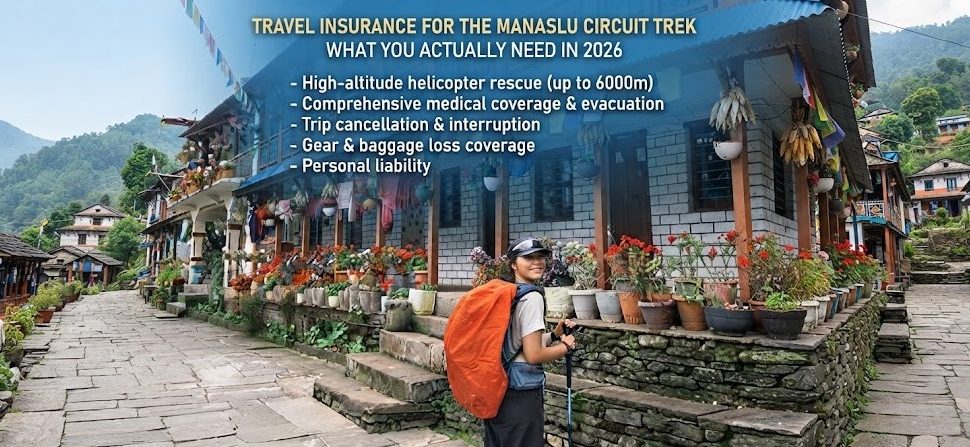
Travel insurance is mandatory for the Manaslu Circuit Trek. Since March 2026, Nepal’s Department of Immigration requires proof of travel insurance covering helicopter evacuation above 5,500 m before issuing the Restricted Area Permit. Your policy document must clearly state this altitude coverage.
Swiss-based insurance options with solid adventure trekking coverage include Zurich Insurance, Helvetia with an adventure sports rider, and international policies from World Nomads or IMG Global. When purchasing, specify explicitly that the trek reaches above 5,000 m and that helicopter evacuation coverage at that altitude is required. A three-week policy typically costs CHF 100–220 with adequate coverage.
Important note for Swiss trekkers: Standard Complémentaire health insurance (Zusatzversicherung) may include some medical cover abroad but rarely covers helicopter evacuation at altitude in Nepal. Do not rely on it as your primary policy for this trek. Purchase dedicated travel insurance with adventure trekking extension.
The 14-Day Manaslu Circuit Trek Itinerary
The standard 14-day Manaslu Circuit Trek operated by Manaslu Treks and Expedition follows this route:
Days 1–2: Fly Zurich/Geneva → KTM. Kathmandu arrival, permit processing, pre-trek briefing. Drive to Machha Khola (930 m) next morning – approximately 9 hours by private jeep.
Day 3: Machha Khola to Jagat (1,340 m) – 5–6 hrs. First permit checkpoint.
Day 4: Jagat to Deng (1,860 m) – 6–7 hrs. River gorge section with suspension bridges.
Day 5: Deng to Namrung (2,630 m) – 6–7 hrs. Rock tunnels, mani walls, first high-altitude views.
Day 6: Namrung to Lho (3,180 m) – 5–6 hrs. First sighting of Mount Manaslu.
Day 7: Lho to Samagaon (3,520 m) – 4–5 hrs. Optional side trip to Pungyen Gompa monastery.
Day 8: Acclimatisation at Samagaon. Hike to Manaslu Base Camp (4,800 m) or Birendra Lake. Essential for altitude adaptation.
Day 9: Samagaon to Samdo (3,875 m) – 3–4 hrs. Last settlement before the pass.
Day 10: Samdo to Dharamsala / Larkya Phedi (4,460 m) – 3–4 hrs. Early night; 3:30 AM start next day.
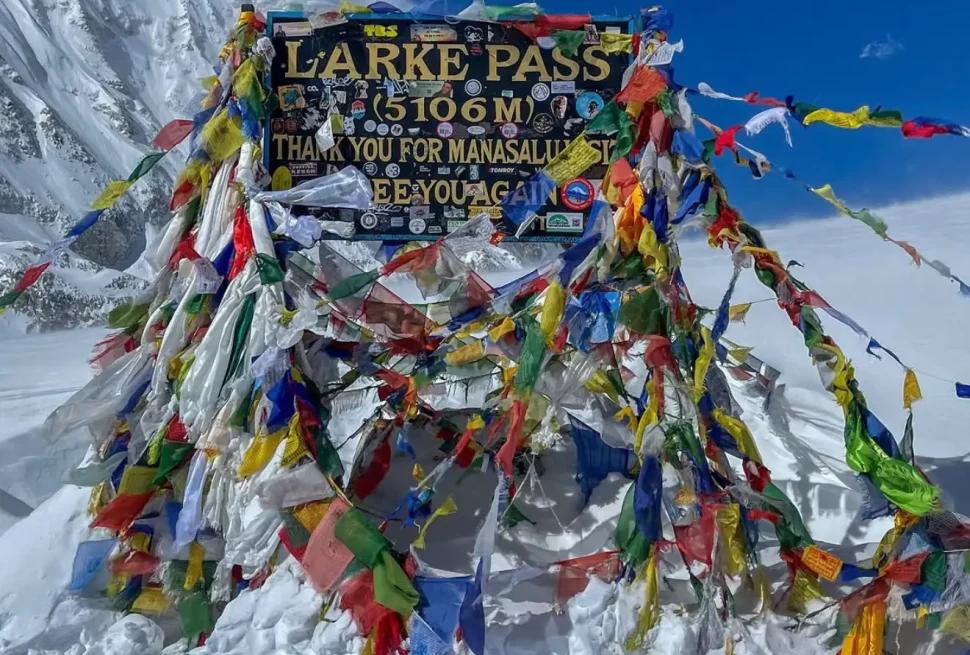
Day 11: Dharamsala over Larkya La Pass (5,160 m) to Bhimthang (3,720 m) – 9–11 hrs. The defining day of the trek.
Day 12: Bhimthang to Tilche (2,300 m) – 5–7 hrs. Long descent through rhododendron forest.
Day 13: Tilche to Dharapani and drive to Besisahar or Kathmandu.
Day 14: Rest day in Kathmandu. Debrief and shopping. Evening flight or onward travel.
Altitude and the Larkya La Pass: What Swiss Trekkers Should Know
Swiss trekkers often have a natural advantage with altitude awareness. The Alps regularly put Swiss hikers at 3,000–4,000 m, and many have experience of Mont Blanc (4,808 m) or the Breithorn (4,164 m). That familiarity with how altitude feels is genuinely useful on the Manaslu Circuit.
However, 5,160 m is a different category. At the Larkya La, available oxygen is roughly half of what you have at sea level. The acclimatisation day at Samagaon (Day 8) is non-negotiable – skipping it significantly increases AMS risk regardless of prior Alpine experience. The symptoms to watch for: persistent headache unresolved by rest and water, loss of appetite, nausea, and difficulty sleeping. If shortness of breath appears at rest, descend immediately.
Diamox (acetazolamide) can be prescribed by your Swiss doctor (Hausarzt) before departure. The standard preventive dose is 125 mg twice daily from one to two days before ascending above 3,000 m. Discuss this at a pre-travel appointment.
Best Time to Trek from Switzerland
Autumn (October–November): The best month is October. Skies are clear after the monsoon, visibility is exceptional, and trail conditions are stable. Book flights and guides by April for October departures – this window fills. Late November brings cold and snow risk on the Larkya La.
Spring (March–May): Late March through April is excellent. Rhododendron forests at lower elevations bloom spectacularly. Skies are clear in the morning with afternoon cloud building through May. Swiss trekkers who cannot take October leave often find spring ideal, and fares from Zurich/Geneva are typically lower in this window.
Packing Tips for Swiss Trekkers
Swiss trekkers are typically well-equipped. Key items from a Manaslu perspective:
- Down jacket: Rated to −10 °C or below. The Larkya La pre-dawn start in October reaches −10 to −15 °C with wind chill.
- Waterproof shell: Essential for rain in lower sections and wind above treeline.
- Trekking poles: Strongly recommended for steep descents, especially the post-pass drop to Bhimthang.
- Headlamp with spare batteries: Mandatory for the 3:30 AM Larkya La start.
- Power bank: 10,000 mAh minimum. Charging is available at teahouses but is slow and expensive above 3,500 m.
- Power adapter: Nepal uses Type C/D sockets (230V). Swiss Type J plugs are not directly compatible – bring a universal adapter.
- Cash in USD: Carry enough USD for your visa (USD 50), permits (paid by agency), and trail expenses converted to NPR in Kathmandu. There are no ATMs after Arughat.
Why Book the Manaslu Circuit Trek with Manaslu Treks and Expedition
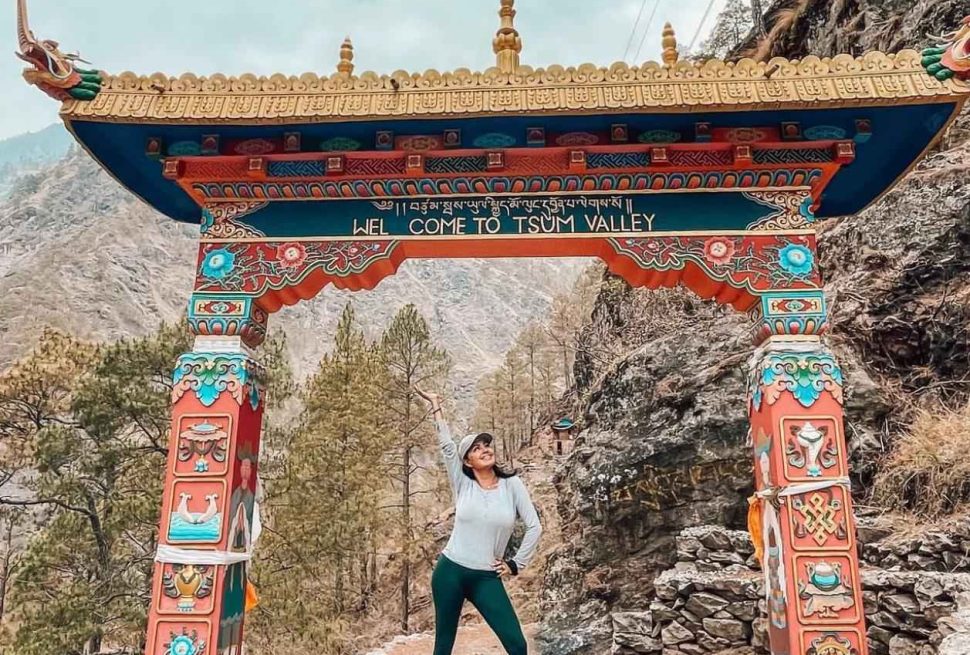
Manaslu Treks and Expedition works exclusively in the Manaslu region and Tsum Valley. Our guides are from the Manaslu area. They know every checkpoint, teahouse owner, and seasonal condition on the circuit. We handle all permit processing through official government channels, arrange transport, confirm teahouse reservations during peak season when beds at Dharamsala are scarce, and provide a full pre-trek briefing in Kathmandu.
For Swiss trekkers, we communicate clearly in English (and can coordinate in German where needed) before departure, provide a detailed packing and preparation guide tailored to the route, and remain available via WhatsApp throughout your trip for any questions or changes.
Our 13-day Manaslu Circuit Trek starts from USD 1,099 (approximately CHF 1,200). The 14-day version with an extra acclimatisation day is the recommended option for most trekkers from Europe.
WhatsApp Us
Frequently Asked Questions – Manaslu Circuit Trek from Switzerland
Do I need a visa before I leave Switzerland?
No. Swiss passport holders receive a Nepal tourist visa on arrival at Kathmandu airport. Pay USD 50 in cash at the counter.
Can I trek alone without a guide?
No. The Manaslu Circuit is a restricted area trek. A licensed guide is legally required and enforced at every checkpoint. Solo independent trekking is not permitted.
How do I get from Kathmandu to the trailhead?
By private jeep from Kathmandu to Machha Khola – approximately 9 hours. We arrange this as part of the package. There is no flight option to the Manaslu trailhead.
Is my Swiss health insurance valid in Nepal?
Basic KVG insurance has very limited coverage outside Switzerland. Even supplementary Zusatzversicherung typically does not cover helicopter evacuation in Nepal. Buy dedicated travel insurance with helicopter evacuation cover for this trek.
What currency should I bring?
Bring USD cash for your Nepal visa and as a reliable exchange currency. Exchange USD to Nepalese Rupees (NPR) in Kathmandu – rates are better there than at Zurich airport. Swiss francs can be exchanged in Thamel but USD gives better rates. ATMs in Thamel accept Swiss debit and credit cards.
Can I extend the trek to include Tsum Valley?
Yes. The 19-day Manaslu Circuit and Tsum Valley Trek combines both routes and is one of the most rewarding extended trekking experiences in Nepal.