Manaslu Circuit Trek in October 2026: The Golden Month Guide
Why October turns the Manaslu Valley into the most breathtaking trekking destination in the Himalayas — and exactly how to plan your trip. Contact our manaslu trekking company to plan your trip with local experts.
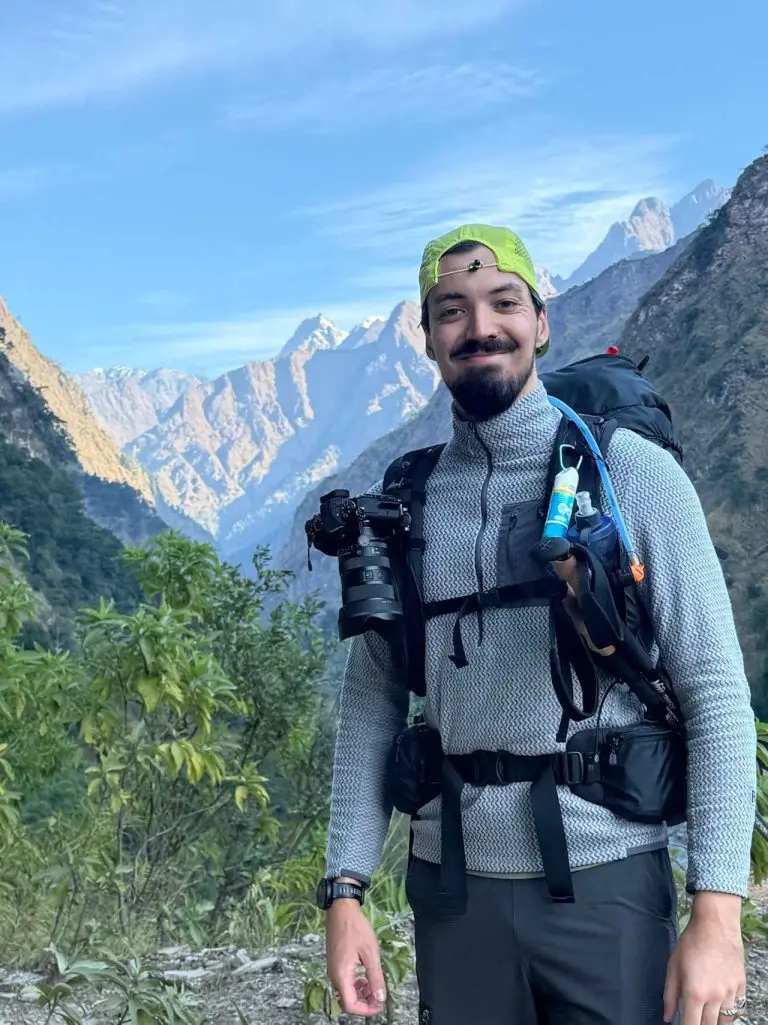
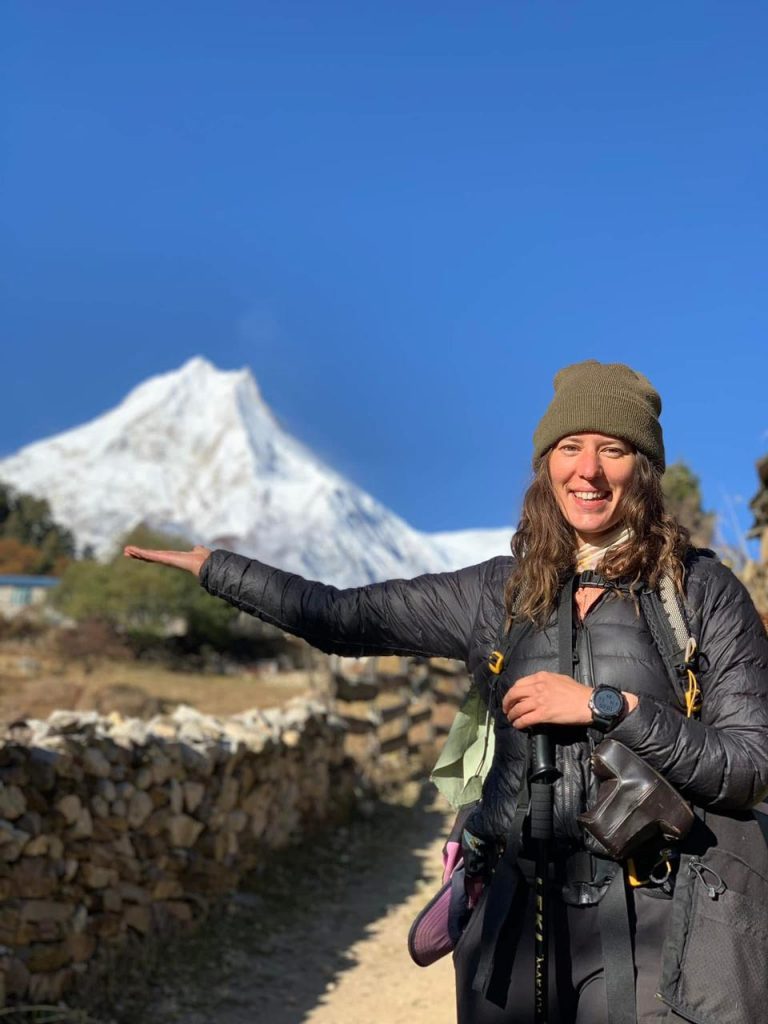
There is a moment that every Manaslu veteran talks about. It happens somewhere between Namrung and Lho on a clear October morning, when you look left and see Manaslu’s north face glowing white against a sky so blue it does not look real. The air is completely still. The monsoon clouds that shrouded the mountains all summer are gone. The forest below has just begun its seasonal turn from deep green to a patchwork of amber and rust. Your boots are dry because there has been no rain for three days. And the trail ahead of you feels like it was built for exactly this moment.
That moment does not happen in June. It rarely happens in late September. It almost always happens in October.
At Manaslu Treks and Expedition, we have been running the Manaslu Circuit route since the trail first opened to foreign trekkers in 1991. We have taken trekkers through every season. We have crossed Larkya La Pass in snowstorms, in fog, in rain, and in the kind of crystalline autumn morning that makes people cry from sheer beauty. Based on that experience, we say this without hesitation: October is the single best month to trek the Manaslu Circuit.
This guide is built specifically for October 2026. It covers weather forecasts, Dashain festival timing, permit costs, the best departure dates, an October-tuned packing list, and every practical detail you need to plan a world-class Himalayan trek.
Why October Is Called the Golden Month for Manaslu
The term “golden month” gets used loosely in trekking marketing. With Manaslu in October, it is not marketing language. It is a literal description of the landscape. From mid-October onward, the oak and rhododendron forests between Deng and Namrung shift through gradients of amber, gold, burnt orange, and deep red. Walking through those forests feels like moving through a slow-motion sunset.
But the golden month label also refers to weather quality. The monsoon system, which drives heavy rains across the Himalayan foothills from June through September, retreats south in late September. By early October the sky above Manaslu is typically post-monsoon blue, which has a particular quality of depth and clarity that trekkers from Europe or North America say they have never seen at home. Visibility at Manaslu Base Camp viewpoints regularly exceeds 200 kilometres in October.
There are five specific reasons October stands above every other month on the Manaslu Circuit:
Weather reliability. Post-monsoon high-pressure systems settle over the Himalayas and stay settled. Rain days in October on the Manaslu Circuit average two to three across the entire month at lower elevations, compared to fifteen to twenty days in August.
Mountain views. Clear air means the full Manaslu massif is visible from dozens of viewpoints on the route. Manaslu at 8,163m, Himalchuli at 7,893m, Ngadi Chuli (Peak 29) at 7,871m, and Ganesh Himal to the south are all photogenic in October in ways they simply are not during other seasons.
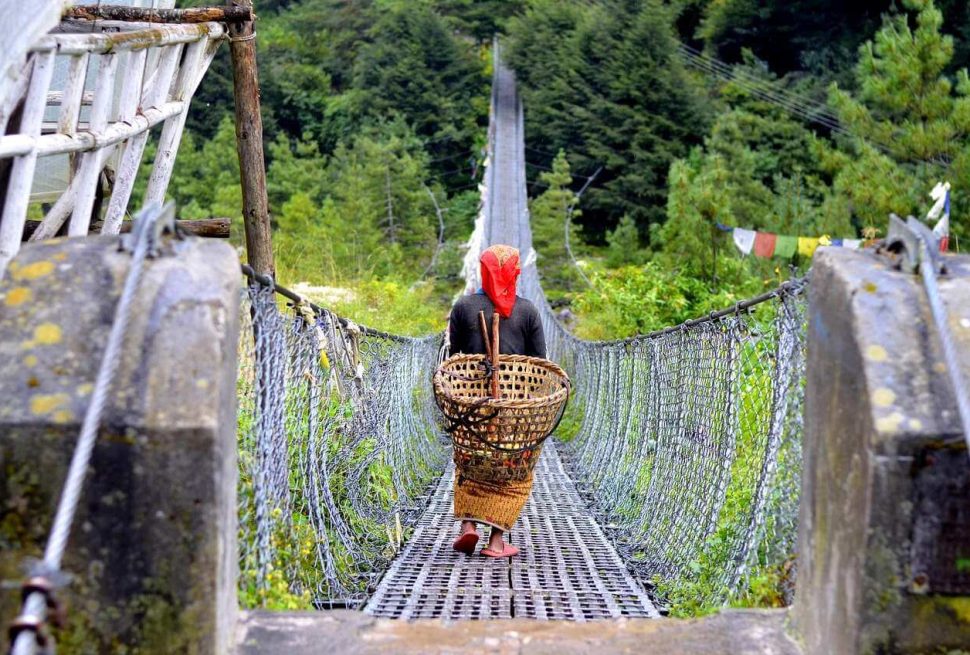
Trail conditions. The monsoon trails need time to dry out. By October the paths through the lower gorges are firm, the river levels are normalizing, and the suspension bridges are functioning without the swollen-river anxiety of August crossings. The upper trail above Samagaun is dry, hard-packed, and dust-free thanks to the recent rains settling everything down.
Temperature comfort. October provides the rare sweet spot where daytime temperatures at lower elevations are warm enough to hike comfortably in a single layer, while the absence of summer humidity makes even the steep climbs feel manageable. Nights are cold but not brutal at most camps until you reach Dharamsala.
Autumn colour. No other trekking month in Nepal delivers the autumn colour show that mid-to-late October does on the Manaslu Circuit. The lower forest sections, particularly around Tatopani, Philim, and the stretch approaching Lho, are extraordinary from roughly October 15 onward.
For a full comparison of all trekking seasons, see our Manaslu Circuit Trek main and our best time to trek Manaslu guide.
October Weather on the Manaslu Circuit: Week by Week
October on the Manaslu Circuit is not a single uniform weather experience. The month has four distinct phases, and understanding them helps you pick the ideal departure date.
Week 1: Oct 1 to 7
Dashain festival peak. Kathmandu transport limited. Lower trails may have residual post-monsoon moisture. Good weather but occasional cloud build-up in afternoons. Start day logistics complicated by festival.
Week 2: Oct 8 to 14
Festival winds down. Weather improves daily. Post-monsoon drying accelerates. October 11 to 14 often see the first truly dry, clear days of autumn. Excellent departure window opening.
Week 3: Oct 15 to 21
The statistically most stable window of the entire year. Crystal clear skies, zero precipitation at most elevations, perfect mountain views, autumn colours at their peak. Ideal week for Larkya La crossing.
Week 4: Oct 22 to 31
Still excellent but temperatures begin dropping faster at altitude. First light snowfall possible on Larkya La by late October. Pre-winter transition beginning. Still fully trekable but gear requirements increase.
Based on this pattern, we recommend departing Kathmandu for the Manaslu Circuit between October 10 and October 16 for an October 2026 trip. This timing means you reach the high-altitude sections of the trek (Samagaun, Samdo, Dharamsala) during the week of October 19 to 26 when conditions are near-perfect for Larkya La. Trekkers who leave on October 10 reach Larkya La around day 10 to 11, which lands squarely in the prime window.
Temperature and Conditions by Altitude in October
The Manaslu Circuit covers an elevation range from roughly 700m at Soti Khola to 5,160m at Larkya La Pass. This 4,460-metre span means temperatures vary enormously along the route, and October packing must account for all of them.
| Location | Elevation | Daytime Temp | Night Temp | October Conditions |
|---|---|---|---|---|
| Soti Khola | 730m | 20°C to 25°C | 14°C to 17°C | Warm, humid, jungle-like. Light shirt weather. |
| Machha Khola | 930m | 18°C to 22°C | 12°C to 15°C | Comfortable. Trail drying from monsoon. |
| Jagat | 1,410m | 16°C to 20°C | 10°C to 13°C | Pleasant days. Light layer needed at night. |
| Deng | 1,860m | 14°C to 18°C | 8°C to 11°C | Autumn colour beginning. Clear skies typical. |
| Namrung | 2,660m | 10°C to 15°C | 3°C to 7°C | Mountain views exceptional. Light fleece at night. |
| Lho (Manaslu Base Camp viewpoint) | 3,180m | 8°C to 13°C | 0°C to 4°C | PRIME VIEWS. Manaslu north face at its best. |
| Samagaun | 3,520m | 6°C to 11°C | -1°C to 3°C | Acclimatization day here. Spectacular views. |
| Samdo | 3,875m | 4°C to 9°C | -3°C to 0°C | Windy afternoons. Down jacket needed. |
| Dharamsala (Larkya La Base) | 4,460m | 0°C to 5°C | -8°C to -10°C | Cold nights. Full winter sleeping bag required. |
| Larkya La Pass | 5,160m | -2°C to 5°C | N/A (cross morning) | Wind chill. Full winter layers. Crampons possible late Oct. |
| Bimthang | 3,590m | 7°C to 13°C | 0°C to 4°C | Immediate warmth after pass. Stunning valley. |
| Dharapani | 1,960m | 14°C to 20°C | 9°C to 13°C | Warm again. Trek end zone. |
Dashain Festival 2026 and What It Means for Your Trek
Dashain is Nepal’s most important festival, a 15-day celebration of the goddess Durga’s victory over the demon Mahishasura. It is the Nepali equivalent of Christmas and Eid combined. In 2026, Dashain begins around October 2 and reaches its climax (Vijaya Dashami) around October 12, followed by a secondary celebration called Kojagrat Purnima a few days later.
For trekkers planning a Manaslu Circuit trip, Dashain creates both challenges and unique cultural opportunities.
The Practical Challenges
During Dashain, Kathmandu slows dramatically. Government offices, trekking permit offices at the Nepal Tourism Board, gear shops on Thamel, and banks all operate on reduced hours or close entirely during the main festival days (roughly October 9 to 13). Local buses and shared jeeps to Soti Khola run less frequently as drivers return to their home villages.
Tea houses at lower elevations (Soti Khola, Machha Khola) may have reduced staff during the festival week, as Nepali workers return home for the celebration. Service at these lodges is typically more basic during this period.
The Cultural Opportunity
If you arrive in Kathmandu before October 2 and begin your trek before the festival peak, you will walk through villages decorated with marigold garlands and red tika powder. Children wear new clothes. Elders give blessings. The Manaslu valley communities celebrate more quietly than Kathmandu, but the festival energy is genuine and warm.
Walking through Gho, Deng, or Ghap during Dashain and receiving a tika blessing from a local family is an experience that no non-festival traveller ever gets. Our guides facilitate these interactions where welcomed.
Recommended Dashain Strategy for October 2026 Trekkers
Option one: Arrive Kathmandu by September 28, complete all permits by October 1, begin trek October 2 to 4 (early festival period at lower villages, less disruption at altitude), cross Larkya La around October 13 to 15.
Option two: Arrive Kathmandu October 8 to 10, use festival slowdown for acclimatization and sightseeing in Kathmandu, begin trek October 12 to 14 after festival peak passes, cross Larkya La October 22 to 25 in peak autumn conditions.
Both options work. Option two gives you the single best Larkya La weather window. Option one lets you experience lower-valley communities during the festival itself.
October Trail Conditions: What the Ground Actually Looks Like
Trail quality on the Manaslu Circuit changes substantially between September and October, and understanding this shift helps set realistic expectations. If you are deciding between the tail end of monsoon and early autumn, our Manaslu Circuit Trek in September guide covers what changes in the weeks just before October.
In September, the final weeks of monsoon leave the lower gorge sections muddy, the river levels high, and the trail through sections like the Budhi Gandaki gorge slippery. Leeches are active in September below 2,000m. Some sections of the trail between Jagat and Deng involve crossing small seasonal streams that swell during heavy rain.
By October, everything changes. The post-monsoon drying process transforms the lower trail into firm, well-drained paths. The gorge sections that were muddy in September become pleasant rock-and-dirt paths with excellent grip. River levels at the major crossings (Jagat bridge, Ekle Bhatti crossing, Syala bridge) are manageable and the suspension bridges are functioning normally.
The mid-altitude sections between Deng and Namrung (roughly 1,860m to 2,660m) are particularly beautiful in October. The pine and rhododendron forests, still lush from monsoon moisture, frame the valley and create natural corridors of shade that make the afternoon walking hours genuinely enjoyable rather than hot and exposed.
Above 3,500m at Samagaun and Samdo, the trail takes on an open, high-altitude quality. There is very little vegetation at this elevation. The paths are rocky and dusty in early October but can have occasional light snow patches in the mornings by late October. These are not an obstruction to walking but they do require solid ankle boots.
The Larkya La approach from Dharamsala is a steep, rocky trail that gains roughly 700m to reach the pass. In October, this section is typically clear of snow and ice until the final 150m to 200m of the ascent where wind-driven snow can accumulate on the north-facing slopes. Crampons or microspikes are standard gear for the pre-dawn crossing, which begins at 3:00 AM to allow time to descend to Bimthang before afternoon cloud builds.
13-Day October Manaslu Circuit Trek Itinerary
The standard Manaslu Circuit can be completed in 10 to 14 days depending on pace, side trips, and acclimatization needs. For October 2026, we recommend the 13-day schedule below, which includes a full acclimatization day at Samagaun and comfortable daily distances that leave energy for photography and cultural exploration.
For full itinerary options, including a 14-day Manaslu Circuit trek with extra rest days and a 10-day fast-paced version, visit our dedicated trek pages.
Depart Kathmandu by jeep or local bus (we arrange private transport for our groups) via Arughat Bazaar. The road passes through the Trishuli Valley and then follows the Budhi Gandaki gorge south to Soti Khola. This is your last night with hot showers and electricity from the grid. October daytime temperature here: 20 to 25°C.
In October, the drive is comfortable with clear mountain visibility as you approach the Ganesh Himal range. Soti Khola tea houses are well-stocked with fresh vegetables from local farms at this time of year.
Your first full day on the trail follows the east bank of the Budhi Gandaki river. The path winds through subtropical jungle and small farming villages. In October, this section is dry and pleasant after the monsoon-season mud has fully cleared. The trail crosses several suspension bridges and passes through the village of Khursane.
Wildlife is active in October. Look for langur monkeys in the canopy above Lapubesi and listen for the calls of Himalayan hornbills in the lower forest sections.
The trail continues upriver through the gorge, passing the Budhi Gandaki hot springs at Tatopani (not to be confused with the Tatopani near Annapurna). Jagat is the first checkpoint where your Restricted Area Permit is verified. The checkpoint building here is a formal stone structure with a military presence. Have your permit documentation ready.
In October, the Tatopani hot springs are at their most enjoyable. Cool mornings make a 10-minute soak in the 40°C waters feel genuinely restorative. October day hikers from Kathmandu sometimes drive to Tatopani specifically for the springs, so arrive before noon for a quieter experience.
The character of the trek begins changing above Jagat. The subtropical jungle gives way to temperate forest and the trail enters a dramatic gorge section with several technically interesting sections of cliff-edge path. Ekle Bhatti is a mid-point stop with good tea and views down the gorge. Deng village (also called Dyang by some maps) sits at a river junction with good accommodation.
The autumn colour is noticeable from this elevation in mid-to-late October, with the hillsides above the river showing the first patches of amber in the oak forest canopy. October daytime temperature at Deng: 14 to 18°C.
Today crosses through the villages of Ghap and Lho before reaching Namrung. The elevation gain is significant (800m) and the terrain shifts from river valley to open mountain slopes. The first proper mountain views open up above Lho, where on a clear October day you can see Manaslu’s full north face reflected in the clarity of the post-monsoon air.
Namrung is a stone village with excellent tea houses. October nights here require a mid-weight sleeping bag (rated to 0°C minimum). The Ghap monastery, passed just below Namrung, is one of the oldest Tibetan Buddhist structures on the route.
The trail passes through Lho and Sho before crossing into the high-altitude Nubri Valley. This is the single most scenically dramatic day of the trek. From Lho at 3,180m, the entire south face of Manaslu fills your field of view. On a clear October morning, the mountain appears close enough to touch. Photography stops here can add an hour to what is already a long day.
Samagaun is the largest village on the high-altitude section, with a helicopter landing pad, a basic medical post, and the best tea house accommodation above Namrung. Rest well tonight — tomorrow is your acclimatization day.
This acclimatization day is not optional — it is physiologically essential. After two consecutive days above 3,000m, your body needs 24 hours at the same altitude to increase red blood cell production and adapt to reduced oxygen levels. Skipping this rest day dramatically increases AMS risk on the subsequent high-altitude days.
The hike to Manaslu Base Camp at 4,800m takes four to five hours round trip from Samagaun and is one of the finest acclimatization hikes in all of Nepal. In October, you will see an active high-altitude glacial environment with minimal cloud cover. Birendra Tal (Manaslu Glacier Lake) is 30 minutes above Samagaun and worth visiting in the morning light. Return to Samagaun for the night, sleeping lower than your highest point — the classic acclimatization formula.
A deliberately short day that allows continued acclimatization while moving toward the pass. The trail follows the Budhi Gandaki headwaters through open, treeless terrain. Samdo sits near the Tibetan border and has a small but functional selection of tea houses. The valley here has a very different feel from the forested lower sections — open, windswept, and lunar in quality, surrounded by glaciated peaks.
October at Samdo sees occasional strong winds from the northwest. These are daytime thermal winds and typically calm by sunset. Bring a windproof shell for the afternoon hours. Night temperatures drop to minus 3°C.
Another short but important acclimatization day. Dharamsala (also known as Larkya La Base Camp or High Camp) sits at 4,460m and consists of a small cluster of stone tea houses with dormitory-only accommodation. Space is limited and fills quickly in October. Our groups always pre-book Dharamsala beds through our network — this is not a place where you want to arrive and find no space.
Arrive early (by 1 PM), eat a substantial meal with extra carbohydrates (carbohydrates convert more efficiently to energy at altitude than protein or fat), drink three litres of water minimum, and sleep by 8 PM. Your alarm will go off at 2:30 AM for the pass crossing.
The most demanding and most rewarding day of the entire circuit. Departure at 3:00 AM with headlamps is standard. The sky above Dharamsala in October is extraordinary — the Milky Way is visible and the stars are sharp enough that it feels like you are trekking through a planetarium ceiling.
The ascent to the pass takes four to five hours. The upper sections in October may have wind-compacted snow on the north-facing slopes, particularly in the final 200m before the pass summit. Microspikes significantly reduce the time and energy needed to navigate these sections. Bring both trekking poles.
The pass itself is marked by prayer flags that in October are snapping in the wind at altitude. The descent to Bimthang is long (nearly 1,600m of descent) through a spectacular glacial moraine. Bimthang at 3,590m feels like a different world after the barren high terrain — green alpine meadows, a small monastery, and the warmth of a lower altitude welcome.
The descent from Bimthang follows the Dudh Khola (Milk River) valley toward the Marshyangdi river system. This is the Annapurna Conservation Area zone and the landscape shifts to broad valley scenery. October here is warm and colourful, with apple orchards in the villages of Gho and Tilje still carrying late-harvest fruit. The temperature rise from 3,590m to 2,300m is immediately noticeable and most trekkers find this the most physically comfortable day since the lower gorge.
The final full day of trekking descends to Dharapani on the Annapurna Circuit main trail. This village has good accommodation and is the first point with reliable electricity and mobile data connectivity in several days. Most trekkers experience a mix of relief and genuine sadness here — the Manaslu bubble is ending. Dharapani has a bus/jeep connection to Besisahar and onward to Kathmandu.
Early jeep departure for Besisahar (2 hours) and then onward to Kathmandu via the Prithvi Highway (4 to 5 hours). Arrive Thamel by early afternoon. We recommend booking an extra night in Kathmandu to allow full recovery before international flights, as the long drive after 12 days of trekking is more physically demanding than most trekkers anticipate.
For extended options including the full Manaslu Circuit with Tsum Valley in 19 days or the 23-day Tsum Valley deep exploration, see our dedicated pages.
Crossing Larkya La Pass in October: Everything You Need to Know
Larkya La at 5,160m is the reason many trekkers choose the Manaslu Circuit over the Annapurna or Everest routes. It is a genuine high-altitude pass crossing, not a viewpoint hike or a gently graded trail to a scenic lake. The crossing demands preparation, the right gear, and respect for the altitude.
In October, Larkya La is at its most accessible and most beautiful of the year. Here is the complete picture of what the October crossing involves.
Starting Time and Why 3 AM Is Not Negotiable
Every Larkya La crossing departs Dharamsala between 2:30 AM and 3:30 AM regardless of season. In October, the reason is twofold. First, the rock and scree on the approach trail is firmer when frozen, making the ascent faster and more stable than in afternoon melt conditions. Second, afternoon cloud frequently builds over the Manaslu massif even in October, and a late crossing risks deteriorating visibility on the descent to Bimthang. The 3 AM departure allows four to five hours for ascent and three to four hours for descent, clearing the high zone before any afternoon weather development.
Snow and Ice Conditions in October
In early October (before the 15th), Larkya La is typically snow-free or has only trace amounts of summer glacial ice on the upper north-facing approach. In mid-October (the 15th to 22nd), light wind-driven snow may coat the uppermost 200m of the approach in thin patches. In late October (after the 22nd), these patches become more consistent and microspikes become more valuable, though the pass remains fully crossable for well-equipped trekkers.
The standard gear for an October Larkya La crossing includes: microspikes or light crampons (we provide these for all our groups), two telescoping trekking poles, waterproof outer shell jacket and trousers, insulated down jacket worn from departure, liner gloves plus thick insulated gloves, balaclava or buff plus hat, and a headlamp with fresh batteries (cold nights drain batteries; carry a spare set inside your jacket).
Altitude and Acclimatization Protocol
At 5,160m, Larkya La has atmospheric oxygen levels roughly 53% of sea level. For context, most trekkers sleeping in Dharamsala the night before the crossing are at 4,460m — already at altitude — and the additional 700m gain to the pass is done while already significantly altitude-adapted from the previous eight to nine days of gradual ascent.
Trekkers who follow the 13-day itinerary above, including the acclimatization day at Samagaun and the gradual progression through Samdo and Dharamsala, have a very high success rate on the pass crossing. The trekkers who struggle are almost always those who have rushed the lower sections or skipped the Samagaun rest day.
Permits and Costs for October 2026
The Manaslu Circuit requires three permits that are mandatory for all foreign trekkers. These cannot be obtained independently — you must be booked with a registered Nepali trekking agency.
| Permit | Cost (Autumn Season) | Where Issued | Notes |
|---|---|---|---|
| Restricted Area Permit (RAP) | USD 100 per person per week | Nepal Tourism Board, Kathmandu | Most expensive in Oct/Nov (autumn). USD 75 off-season. Most groups need 2 weeks. |
| Manaslu Conservation Area Permit (MCAP) | NPR 3,000 (approx. USD 22) | Nepal Tourism Board or entry checkpoints | Fixed rate year-round. Required for all trekkers. |
| Annapurna Conservation Area Permit (ACAP) | NPR 3,000 (approx. USD 22) | Nepal Tourism Board or Besisahar | Required if exiting via Dharapani to Annapurna side. |
| TIMS Card | USD 10 to 20 | Nepal Tourism Board or TAAN office | Check current requirements with your agency before travel. |
For a 13-day trek crossing into the Annapurna exit, the RAP alone costs USD 200 per person (two weeks). Total permit costs for an October 2026 Manaslu Circuit trek run approximately USD 250 to USD 260 per person including all three permits.
Important: permit rates occasionally change between announcement and the trekking season. Always confirm current fees with your agency before finalising your budget. Our team at Manaslu Treks updates permit pricing on our Manaslu Circuit Trek as soon as changes are announced.
October-Specific Packing List for Manaslu Circuit
October packing for the Manaslu Circuit is more demanding than many trekkers expect, because the route spans a 4,460m elevation range that requires gear suited to everything from tropical gorge humidity to sub-zero alpine nights. The general rule is: pack for the high point, not the average.
Base Layers
- Merino wool or synthetic moisture-wicking long-sleeve top (x2)
- Thermal leggings (x1, for Dharamsala and above)
- Lightweight hiking T-shirts (x2, lower sections)
- Trekking trousers with zip-off legs (x2)
- Lightweight shorts (optional, lower valleys)
Insulation Layers
- Mid-weight fleece jacket (x1)
- Down jacket (600 fill or higher, rated -10°C) — ESSENTIAL
- Light fleece or grid-fleece layer (x1)
Outer Shell
- Waterproof breathable shell jacket (Gore-Tex or equivalent)
- Waterproof shell trousers
- Wind-resistant softshell for active use at altitude
Footwear
- Waterproof ankle-high trekking boots (broken in before travel)
- Camp sandals or lightweight shoes for tea houses
- Wool trekking socks (x4 to 5 pairs, Merino recommended)
- Thin liner socks (x2 to 3 pairs)
- Gaiters (low gaiters for dust, high gaiters for late-October snow)
Head and Hands
- Balaclava or thermal neck buff
- Insulated beanie hat
- Sun hat with brim (essential for October high-UV days)
- Thin liner gloves (x1 pair)
- Insulated waterproof gloves (x1 pair, for pass day)
Trekking Equipment
- Trekking poles (collapsible, two — not optional for Larkya La)
- Microspikes or light crampons (October standard)
- Headlamp (450 lumen minimum) plus spare batteries
- 35 to 45 litre daypack
- Duffel bag for porter (max 15 kg)
- Sleeping bag rated to minus 10°C
- Sleeping bag liner (adds 5°C warmth)
Sun and Wind Protection
- Sunscreen SPF 50 or higher (UV at altitude is intense in October)
- Lip balm with SPF
- Glacier-rated sunglasses (Category 3 or 4 lens)
- Eye drops (altitude air is very dry in October)
Medical and First Aid
- Diamox (acetazolamide) — consult your doctor before travel
- Ibuprofen and paracetamol
- Oral rehydration salts (x10 sachets)
- Blister kit (Compeed plus moleskin)
- Pulse oximeter (optional but highly recommended)
- Antiseptic cream and adhesive plasters
- Antihistamine and personal prescriptions
Tea House Accommodation in October
The Manaslu Circuit is a tea house trek, meaning you stay in locally-owned lodges rather than camping. The quality of these lodges has improved dramatically in the past decade, though the circuit remains more basic than the Everest or Annapurna routes.
| Section | Tea House Standard | October Booking Pressure | Key Amenities |
|---|---|---|---|
| Soti Khola to Jagat | Basic to moderate | Low to moderate | Private rooms, Western toilets at most, hot showers |
| Deng to Namrung | Basic | Moderate | Private or shared rooms, squat toilets, bucket showers |
| Lho to Samagaun | Moderate (best on route) | High — book ahead | Best views on circuit, some en-suite rooms, solar hot water |
| Samdo | Basic | Moderate | Dormitory or basic private rooms, basic meals |
| Dharamsala | Very basic (stone dormitory) | Very high — must pre-book | Dormitory only, basic food, no shower, drop toilets |
| Bimthang | Basic to moderate | Moderate | First hot food after pass, basic private rooms |
| Tilje to Dharapani | Moderate | Low | Hot showers return, reliable electricity, mobile signal |
October is the busiest month on the Manaslu Circuit and accommodation at Samagaun and Dharamsala fills quickly. Groups that arrive at Dharamsala without pre-booked beds may find all rooms taken by 2 PM. We pre-reserve beds at every critical night stop for all our October groups — this is one of the key operational reasons to trek with an experienced local agency rather than independently.
For those looking for more comfort, our luxury Manaslu Circuit trek uses the best available accommodation at each stop and includes upgraded sleeping bags and additional expedition support.
Crowd Levels and Route Traffic in October
A legitimate concern for any trekker in October Nepal is overcrowding. October is Nepal’s busiest trekking month. On the Annapurna Circuit and Everest Base Camp routes, trail traffic in October can mean queues at popular viewpoints, packed tea houses, and a general sense that you are walking through a busy outdoor corridor rather than a remote mountain wilderness.
The Manaslu Circuit is entirely different. Because the Restricted Area Permit requires agency booking and costs significantly more than standard Nepal trekking permits, the circuit self-selects for a smaller, more serious trekking population. Daily permit numbers are also officially capped. In practice, October traffic on the Manaslu Circuit runs to a few hundred trekkers on the entire route simultaneously, compared to several thousand on the Everest Base Camp trail.
What this means practically: you will encounter other trekkers — particularly concentrated at Samagaun during acclimatization days and on the Larkya La crossing day — but you will also have entire sections of trail entirely to yourself. The lower gorge between Jagat and Deng typically sees very few people per day even in peak October. The section above Samdo toward Dharamsala is quiet and remote even by Manaslu standards.
Fitness and Training for an October Manaslu Trek
The Manaslu Circuit is classified as a strenuous trek, not a moderate one. The 5,160m Larkya La crossing, the cumulative daily distances, and the sustained elevation gain require a level of cardiovascular fitness and muscular endurance that goes beyond what ordinary gym attendance provides.
For an October 2026 Manaslu Circuit trek, we recommend beginning a focused training programme at least 12 weeks in advance — by late July at the latest.
12-Week Training Framework
Weeks 1 to 4 (Base Building): Three cardiovascular sessions per week of 45 to 60 minutes each. Options include running, cycling, swimming, or rowing — any sustained aerobic activity. Two strength sessions per week targeting legs (squats, lunges, step-ups) and core (planks, dead bugs, rotational movements). One long walk of two to three hours on the weekend, ideally on hilly terrain with a loaded pack.
Weeks 5 to 8 (Endurance Development): Increase long walk to four to six hours with pack weight building to 6 to 8 kg. Add an additional cardiovascular session (four per week total). Maintain strength work but shift emphasis toward single-leg exercises (Bulgarian split squats, single-leg deadlifts) which closely mimic trail descent loading patterns. If possible, do one multiday backpacking trip in this phase.
Weeks 9 to 12 (Trek-Specific Preparation): Long weekend days of six to eight hours with full pack weight (8 to 10 kg). Practice the actual movements of the trek: extended descents on uneven ground, uphill pace control, stepping over obstacles. Reduce intensity in weeks 11 and 12 (taper phase) to arrive in Nepal fresh rather than fatigued.
If you are over 50 or have any cardiovascular or joint concerns, consult your doctor before beginning this training programme and consider the medical screening consultation we offer before booking. Contact Kiran directly on WhatsApp at +977 9869225929 for a personalised fitness assessment conversation.
Health, AMS Risk, and Altitude Safety in October
Acute Mountain Sickness is the primary safety concern on the Manaslu Circuit, and October presents both advantages and specific risks relative to other seasons.
| Altitude Zone | Key Locations | AMS Risk Level | October-Specific Notes |
|---|---|---|---|
| Below 2,500m | Soti Khola to Namrung | Low | Standard hiking. Hydration is the main focus. October heat at lower elevations means higher sweat loss. |
| 2,500m to 3,500m | Namrung, Lho, Samagaun | Moderate | Climb high, sleep low where possible. Rest day at Samagaun is critical. Headaches here are common and manageable with water and rest. |
| 3,500m to 4,500m | Samdo, Dharamsala | High | Do not push pace. Monitor blood oxygen with pulse oximeter if available. Appetite loss is normal but eat anyway — altitude depletes calories faster. |
| Above 4,500m | Larkya La Pass approach | Very High | Pre-dawn cold increases respiratory load. Slow pace. Turn back if SpO2 drops below 75% despite rest. October cold can mask AMS symptoms — any confusion or loss of coordination is an emergency. |
AMS symptoms to recognise: headache (especially throbbing, worse when lying down), nausea or vomiting, fatigue disproportionate to exertion, loss of appetite, difficulty sleeping. More serious HACE (High Altitude Cerebral Oedema) symptoms include confusion, loss of coordination, and altered consciousness — these require immediate descent.
Diamox (acetazolamide) is a prescription medication that aids acclimatization by stimulating breathing. Many of our trekkers carry it as a precaution and use it preventatively from Samagaun onward. Consult your doctor before travel. The standard dose is 125mg twice daily.
Medical facilities on the Manaslu Circuit are extremely limited. Samagaun has a basic health post. The nearest hospital is in Besisahar or Kathmandu. Helicopter evacuation is available (and expensive — travel insurance with helicopter evacuation coverage is essential for any Manaslu Circuit trekker).
October Photography on the Manaslu Circuit
October is when the Manaslu Circuit earns its reputation among Himalayan photographers. The combination of post-monsoon atmospheric clarity, autumn forest colour, and the quality of light in October — lower sun angle than summer months, golden-hour windows that last nearly two hours — makes this route one of the finest landscape photography destinations in Asia.
Key photography locations and October-specific conditions:
Lho Monastery and Manaslu View: From the plateau just above Lho village at 3,180m, the full north face of Manaslu fills the frame with no visual obstruction. October morning light from the east side illuminates this face perfectly from roughly 7 AM to 10 AM. This is the single most photographed scene on the Manaslu Circuit.
Samagaun to Birendra Tal: The glacial lake at 3,450m near Samagaun reflects Manaslu in still-water conditions that occur in October mornings before the thermal winds develop. Arrive at the lake by 7:30 AM for the reflection window.
Autumn Forest, Deng to Namrung: Mid-to-late October (October 15 to 31) transforms this section into a colour corridor. The oak, maple, and rhododendron trees turning simultaneously create layered depth shots that do not require a telephoto lens — wide angle shots capture the trail disappearing into the colour.
Larkya La at Sunrise: The pre-dawn crossing means you reach the pass approximately 30 minutes before first light on a standard October departure. The sky transitions from navy to deep orange to clear blue against the jagged Himalayan skyline. This requires a wide-angle lens, a tripod or IMAGE-stabilised body, and cold-rated batteries.
Bimthang Valley: The descent from Larkya La into the Bimthang Valley in October morning light is one of the most dramatic wide-valley shots available to trekking photographers. The combination of glacial moraine, alpine meadow, and the Manaslu massif above creates genuine grandeur at a scale that photographs with impressive depth.
We offer a dedicated Manaslu Circuit Photography Trek that builds additional time at these key locations into the itinerary, with departure dates specifically chosen for optimal October conditions.
Complete Cost Breakdown for October 2026
October is high season, which affects pricing across permits, accommodation, and transport. Here is a realistic cost breakdown for an October 2026 Manaslu Circuit trek.
| Cost Category | Budget Option | Standard Option | Premium Option |
|---|---|---|---|
| Agency Trek Package (guide, porter, permits, accommodation) | USD 950 to 1,100 | USD 1,200 to 1,600 | USD 1,800 to 2,400 |
| Permits (RAP 2 weeks + MCAP + ACAP) | Approx. USD 250 to 260 per person (usually included in package) | ||
| International Flights to Kathmandu | USD 600 to 900 | USD 900 to 1,400 | USD 1,500+ |
| Kathmandu Accommodation (3 nights each way) | USD 15 to 25/night | USD 40 to 80/night | USD 100 to 200/night |
| Kathmandu Meals and Incidentals | USD 20 to 30/day | USD 40 to 60/day | USD 70 to 100/day |
| Travel Insurance (required — with heli evacuation) | USD 80 to 200 depending on home country and provider | ||
| Tips (guide and porter) | USD 8 to 10/day per staff | USD 10 to 15/day per staff | USD 15 to 20/day per staff |
| Estimated Total (excluding international flights) | USD 1,200 to 1,500 | USD 1,600 to 2,100 | USD 2,500 to 3,500 |
Our standard October 2026 Manaslu Circuit packages are available on our main trek with full inclusion details. We offer group departures and private custom itineraries. For B2B pricing and partner agency rates, contact us directly.
Ready to Book Your October 2026 Manaslu Trek?
October 2026 departure slots are filling now. Contact Kiran directly for itinerary planning, permits, and confirmed pricing.
How and When to Book Your October 2026 Trek
October 2026 Manaslu Circuit slots should be booked by June 2026 at the latest, and ideally by April 2026 if you have specific departure date requirements. Here is why early booking matters and what the process looks like.
Why Early Booking Matters for October
The Manaslu Restricted Area Permit system involves quotas that are managed by the government and by agency allocations. Registered agencies like Manaslu Treks have permit allocation relationships that allow us to guarantee October dates — but those allocations are claimed by the agencies that book early. Waiting until August to book an October Manaslu trip risks finding your preferred dates unavailable or your preferred guide no longer free.
Accommodation at Dharamsala (Larkya La base camp) is the hardest constraint. There are fewer than 60 sleeping spaces at Dharamsala, and in peak October a single day can see 80 to 100 trekkers attempting to cross the pass. Our partnerships with Dharamsala tea house owners allow us to hold reservations for confirmed groups — something independent trekkers cannot do.
The Booking Process with Manaslu Treks and Expedition
Step one: Contact us via WhatsApp (+977 9869225929) or email (info@manaslutreks.com) with your preferred October dates and group size.
Step two: We send you a detailed itinerary and cost proposal within 24 hours. For groups of four or more, we offer complimentary itinerary customisation — including side trips, shorter or longer durations, and photography-focused scheduling.
Step three: Confirm the booking with a 20% deposit. This secures your dates, initiates the permit application process, and reserves your guide.
Step four: Final payment 30 days before departure. We handle all permits, domestic transport, accommodation bookings, and provide a full pre-departure briefing.
For custom itinerary options including the couples trek version or the 11-day express version, visit our dedicated pages or ask Kiran directly for a personalised plan.