By Aine, Ireland, living in New Zealand
How This All Started
It is me, Aine. I am from Ireland and I live in New Zealand. My friend Aoife and I had been talking about doing something properly big in the mountains for a long time. Not just a weekend hike. Something that would take us somewhere completely different from anything we had ever done before. Trust our manaslu trekking company for expert guidance on every Manaslu adventure.
We landed on the Manaslu Circuit Trek after a lot of research. Most people who know Nepal trekking have heard of Everest Base Camp and the Annapurna Circuit. Manaslu came up less in conversation but the more we read about it the more it appealed to us. A restricted area that keeps the numbers down, genuine Tibetan Buddhist villages, a high mountain pass at over 5,000 metres, and a route that circles the eighth highest mountain in the world. It seemed right for what we were looking for.
Finding Manaslu Treks and Expedition was straightforward once we knew to look for a company that specialised in this region rather than offering it as one of fifty options. I sent an enquiry and a guide named Kiran responded the same day. We went back and forth over a few messages and I knew within the first two exchanges that this was the right company. He was direct, knowledgeable, and patient with questions from two Irish women in New Zealand who had a lot of opinions and were not afraid to ask them.
Aoife and I confirmed the booking for March 2026. The 14 day Manaslu Circuit Trek starting March 3.
Planning the Manaslu Circuit Trek and need help with permits, route, or itinerary?
WhatsApp us Email us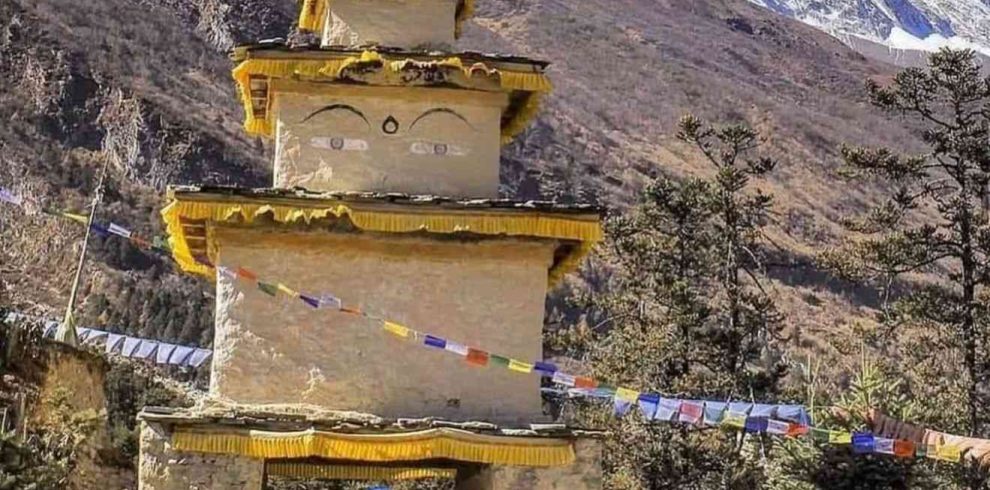
The 14-Day Manaslu Circuit Trek takes you around Mount Manaslu at 8,163 meters, the eighth-highest mountain on earth, through one of…
The Poem Before the Blog
I want to include something here before I tell the story of the trek properly. Aoife and I wrote Kiran a poem at the end of the trek and shared it publicly. I think it captures something about him and about the experience that a straightforward travel blog might not manage on its own. So here it is.
“Kiran is ainm dom”
We once met a kind mountain wizard, Who kept us safe in the snow blizzards, With his flowy red poncho, A cheeky smile and a glow, He admitted he was afraid of lizards.
14 days on the Manaslu we bonded. Big dreams, debates and deep questions we pondered, He picked up Monopoly Deal, Becoming very good at the sly steal, A variation of dahl bhat for every meal.
Controlling the wind and rain with rice, Still giving us words of motivation when his feet were blocks of ice, Our fearless guide leading the way, We were grateful for your help, Day after day.
Two morning milky coffees he would bring, The highlight of our day we would sing, A selfie a day, Keeps the altitude sickness at bay, We can’t wait to see him again next spring.
Us independent girls needed your support, When the supply of oxygen started to get short, We are always fearful when you say nepali flats, However we were all in agreement that… A past life as a mule would be worse than a bat.
We spent our first few days baking in the sun, And teaching you Kiran is ainm dom, While we puffed and panted up the hill, Impressed you could take a call even still.
Dhan’yavada to our favourite guide, We really appreciated having you by our side.
Two strong, crazy Irish girls, Aine and Aoife.
Flying to Kathmandu
Getting to Nepal from New Zealand takes a long time. There is no way around that. The flights go through one of the Asian hubs and by the time you land in Kathmandu you have been travelling for the best part of a day. Aoife had flown from Ireland to meet me in New Zealand a few days before and then we flew together from Auckland to Kathmandu via a connecting flight.
By the time we landed at Tribhuvan International Airport on March 3 we were both tired but the kind of tired that goes away quickly when the surroundings are interesting enough. Kathmandu from the approach is immediately interesting. The city fills the valley bowl and the Himalayan range sits above it to the north. On a clear March day the snow on the peaks was very white against a completely blue sky.
Kiran at the Airport
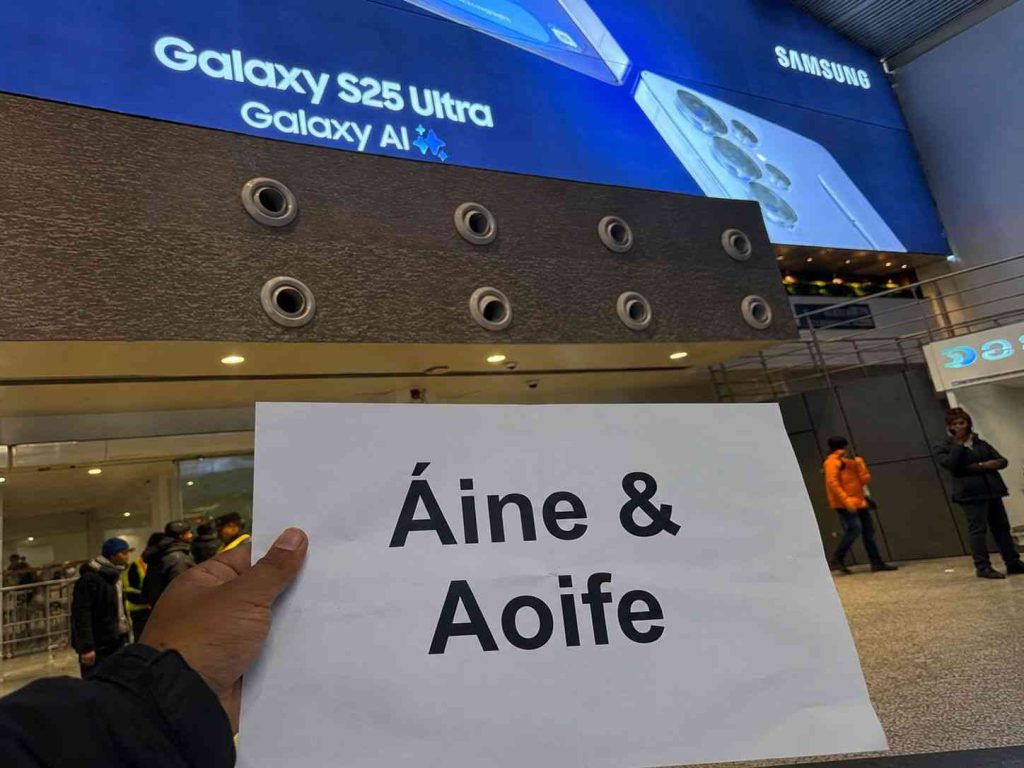
We collected our bags, went through arrivals, and walked into the main hall. The usual crowd of people with signs was waiting at the barrier.
Kiran was there himself. Not a driver. Not someone holding a piece of paper with our names. Kiran, in person, holding a sign with both our names clearly written. Aine and Aoife.
Aoife spotted him first. She said something like that must be him and pointed. He saw us at the same moment and stepped forward with a warm smile and a Namaste. The first thing I noticed was that he was completely relaxed in the noise and the crowd. Not performing relaxedness. Actually relaxed. That told me something immediately.
He took our heavier bags and walked us to the vehicle outside. On the drive to Thamel he pointed things out as we passed them. The temples, the neighbourhoods, the chaos of the afternoon traffic. He answered our questions and asked his own. By the time the car pulled up at the hotel in Thamel we felt like we already knew him a little, which after a very long flight was exactly the right start to the trip.
Planning the Manaslu Circuit Trek and need help with permits, route, or itinerary?
WhatsApp us Email usFirst Evening in Kathmandu
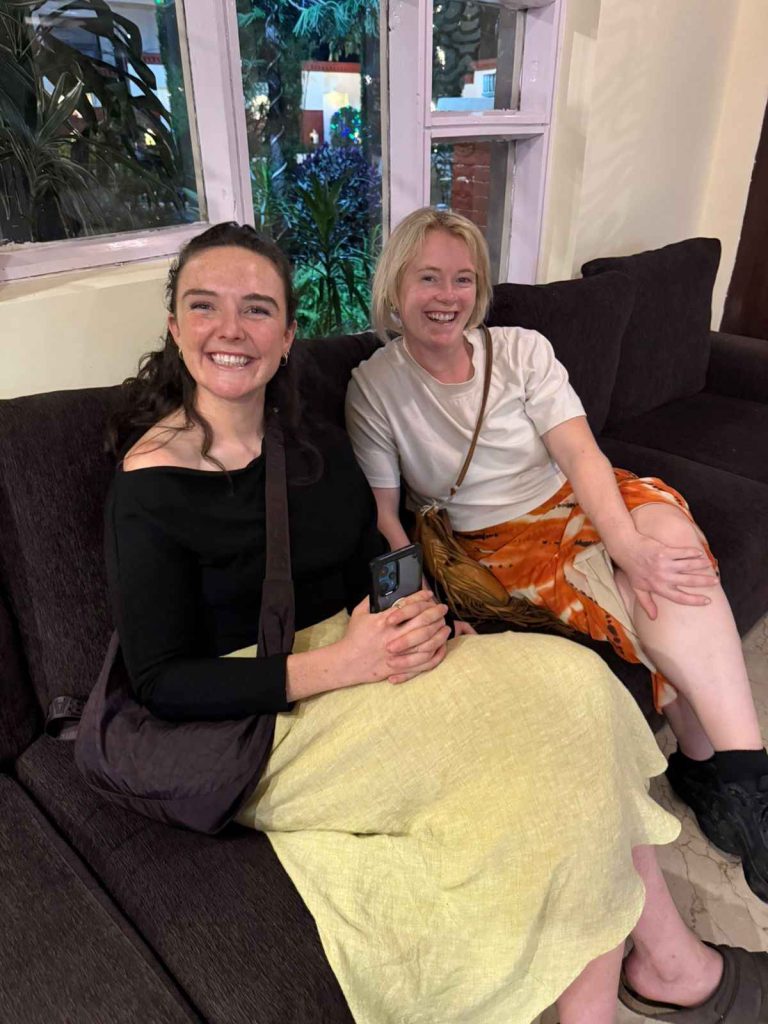
Kiran came up to the hotel lobby with us and we sat together for a while going over the plan for the following days. He explained the drive to Machha Khola the next morning, what to pack in the daypack for the first day on the road, and what to expect from the lower sections of the Manaslu route in March.
He was thorough without being heavy about it. He told us what altitude sickness looks and feels like in honest terms, what to do if either of us experienced it, and why the acclimatization day built into the itinerary was not optional. He answered everything we asked and when we had no more questions he said goodnight and that he would be outside the hotel at 6am.
Aoife and I went to a small restaurant near the hotel and had dal bhat for the first time. Neither of us knew what we were doing with it at first. The restaurant owner showed us how to mix the lentil soup through the rice and eat everything together. We ate too much and walked back to the hotel very pleased with ourselves.
Before going to sleep Aoife pulled out the Monopoly Deal card game she had packed at the bottom of her bag. We had brought it specifically for the evenings in the teahouses. Neither of us knew yet that it would become one of the defining rituals of the entire trek. We played two rounds at the small hotel table and then went to bed. The long drive to Machha Khola started the next morning.
14 Day Manaslu Circuit Trek Itinerary
Day 1: March 3 — Arrive Kathmandu (1,350m)
Day 2: March 4 — Drive Kathmandu to Machha Khola (930m)
Day 3: March 5 — Trek Machha Khola to Jagat (1,410m)
Day 4: March 6 — Trek Jagat to Deng (2,095m)
Day 5: March 7 — Trek Deng to Namrung (2,900m)
Day 6: March 8 — Trek Namrung to Samagaun via Pungen Gompa (3,500m)
Day 7: March 9 — Acclimatization Day Samagaun, Visit Manaslu Base Camp and Birendra Lake
Day 8: March 10 — Trek Samagaun to Samdo (3,785m)
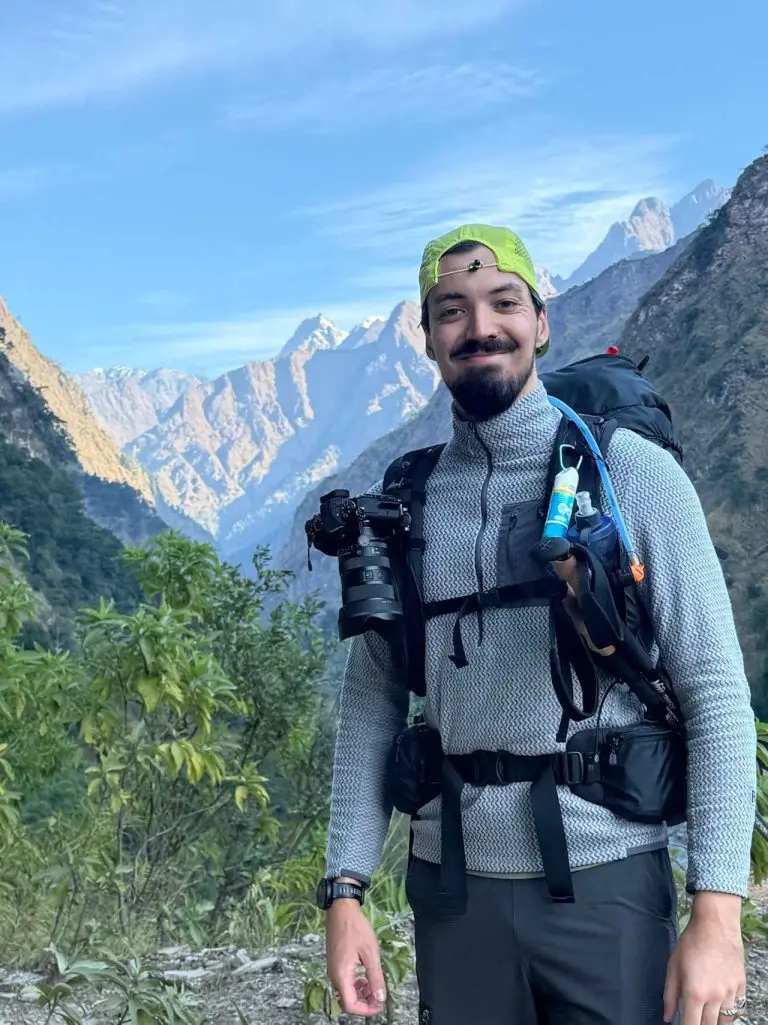
Day 9: March 11 — Trek Samdo to Dharamsala (4,450m)
Day 10: March 12 — Cross Larkya La Pass (5,106m), Descend to Bimthang
Day 11: March 13 — Trek Bimthang to Tilije (2,300m)
Day 12: March 14 — Drive Tilije to Kathmandu (1,350m)
Day 13: March 15 — Leisure Day in Kathmandu
Day 14: March 16 — Departure
Day 2: Drive Kathmandu to Machha Khola
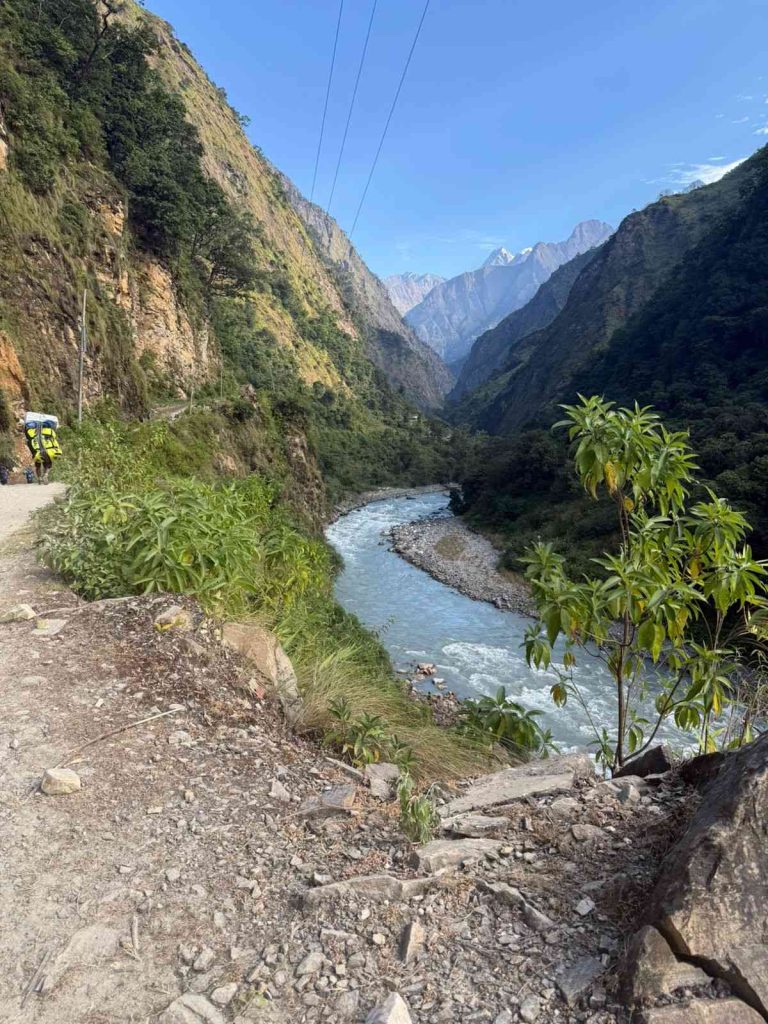
Kiran was outside the hotel at 6am exactly. The jeep was running and Kathmandu was still mostly dark and quiet at that hour. The city before the traffic starts has a completely different character from the afternoon version and I preferred it.
The drive from Kathmandu to Machha Khola follows the highway west out of the valley and then turns north following the Budhi Gandaki river gorge. The road is fine on the highway section and gets progressively rougher the further north the route goes. By the time the jeep turned off the main road toward the Manaslu region the tarmac had mostly disappeared and the track was stone and gravel with river crossings in between.
Aoife and I had both been warned about this section of road by people who had done the trek before us. The warnings were accurate. It is a long and bumpy drive. But looking out the window through the gorge with the river below and the hills rising steeply on both sides made even the rough sections interesting. Kiran pointed out villages on the hillsides above the road, named the rivers as we crossed them, and was generally good company for the hours of driving.
We arrived at Machha Khola by late afternoon. The teahouse was simple and clean and dinner was ready shortly after we arrived. That evening Aoife unpacked the Monopoly Deal cards and put them on the table.
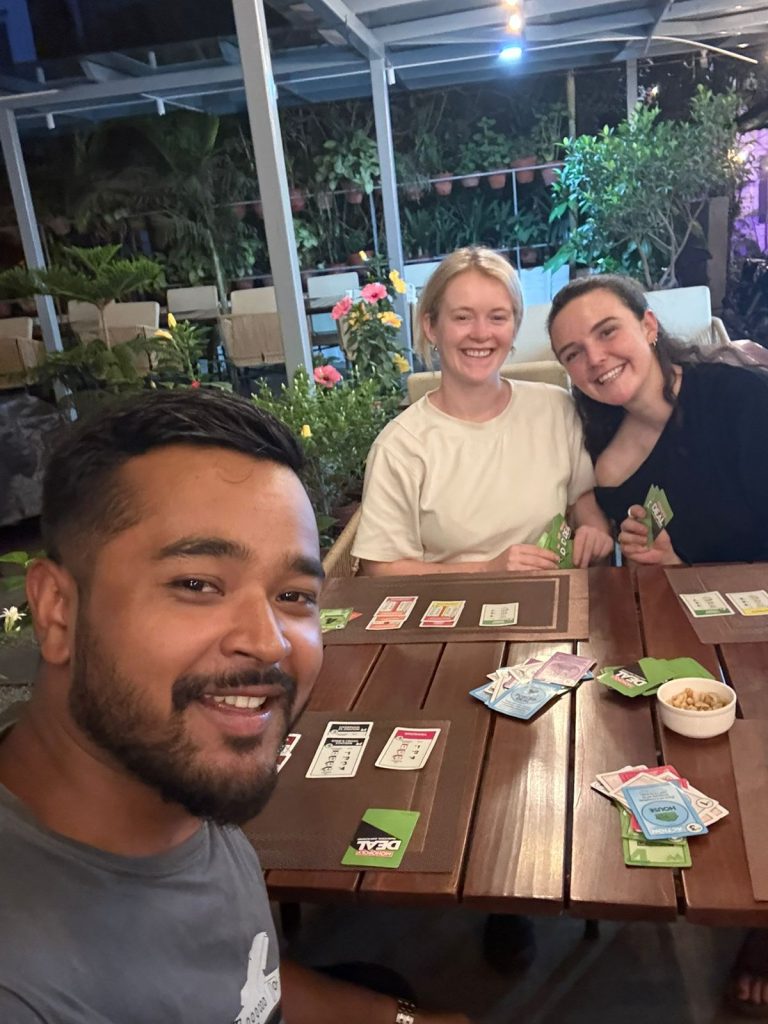
Kiran had never played Monopoly Deal before. He looked at the cards with genuine curiosity and asked Aoife to explain the rules. She explained them. He listened carefully, asked two questions, and then played the first round. He was good almost immediately. There was something about the way he assessed the cards and planned his moves that suggested he was taking it seriously from the first deal. Aoife accused him of bluffing on round two. He smiled and said nothing. We played until the teahouse owner turned the lights down and told us it was late.
Day 3: Machha Khola to Jagat
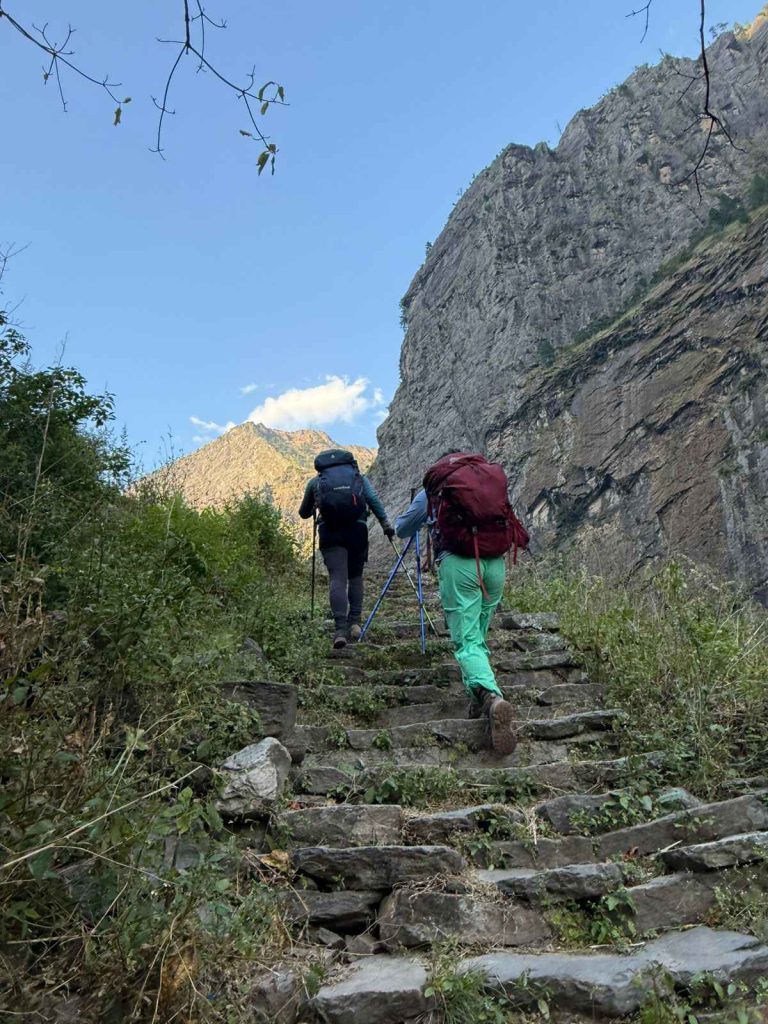
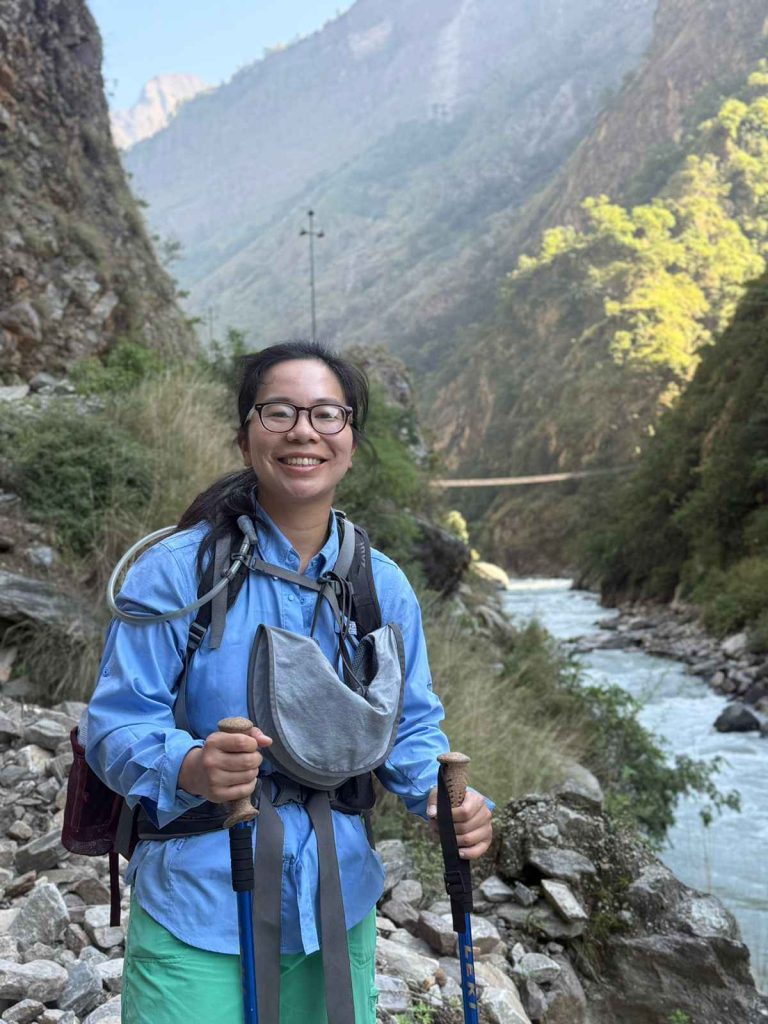
The first full trekking day began at dawn on March 5. The temperature in the lower valley in early March was cool in the morning but warmed quickly once the sun reached the trail. March in the lower sections of the Manaslu route is actually very pleasant. The rhododendrons were just beginning to come into colour on the hillsides and the forest along the Budhi Gandaki was green and alive.
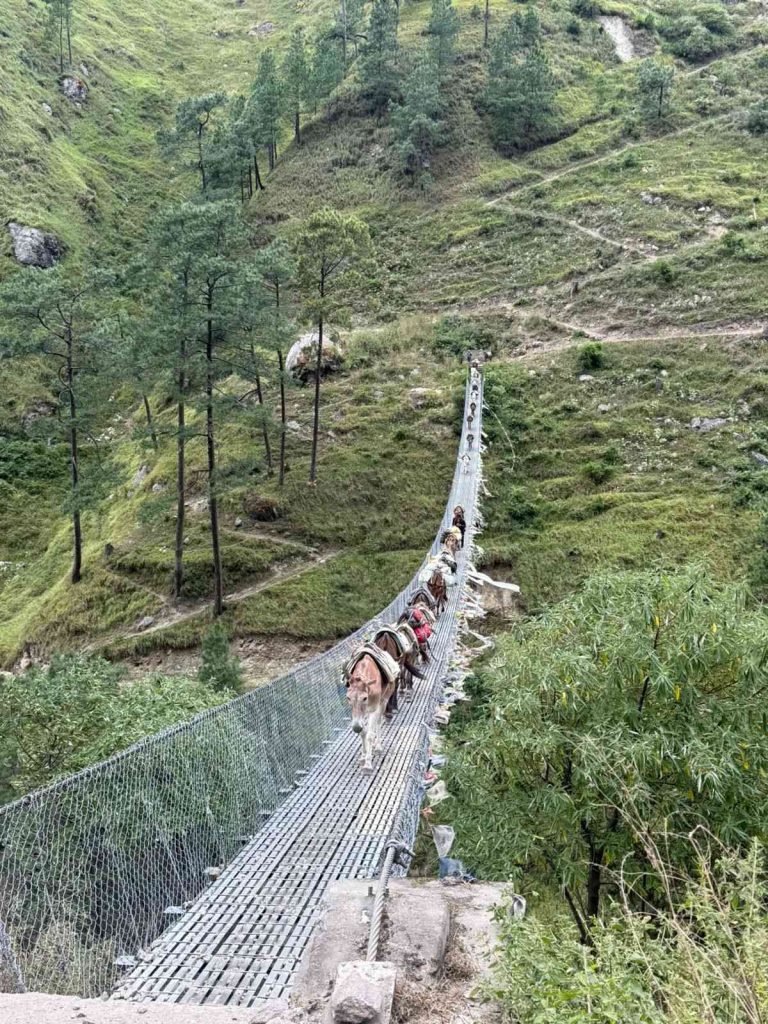
The trail follows the river north through dense subtropical forest crossing back and forth on suspension bridges. The first bridge crossing of the trek happened about forty minutes in and it moved considerably underfoot. Aoife crossed first and turned around on the other side with a slightly wide expression. I crossed behind her and we both agreed it was fine and that we were completely fine and then stood on the other side for a moment recovering from being completely fine.
Kiran crossed behind us both looking at his phone and chatting to someone. He crossed suspension bridges the way most people cross pavements. We found this both reassuring and mildly annoying.
Jagat is the main checkpoint for the Manaslu Restricted Area where permits are checked by the army. Kiran handled all the paperwork smoothly and we were through the checkpoint without any delay. Beyond Jagat the number of other trekkers on the trail dropped immediately and the character of the route changed. This was the beginning of the part of the trek we had come for.
That evening in Jagat after dinner Aoife got the Monopoly Deal cards out again. Kiran sat down without being asked. He had been thinking about the previous night’s games during the day. We could tell because he played the second evening with noticeably more confidence and a couple of moves that surprised both of us. He took two properties from Aoife in the same turn and she looked at him with an expression that he found very funny.
Planning the Manaslu Circuit Trek and need help with permits, route, or itinerary?
WhatsApp us Email usDay 4: Jagat to Deng
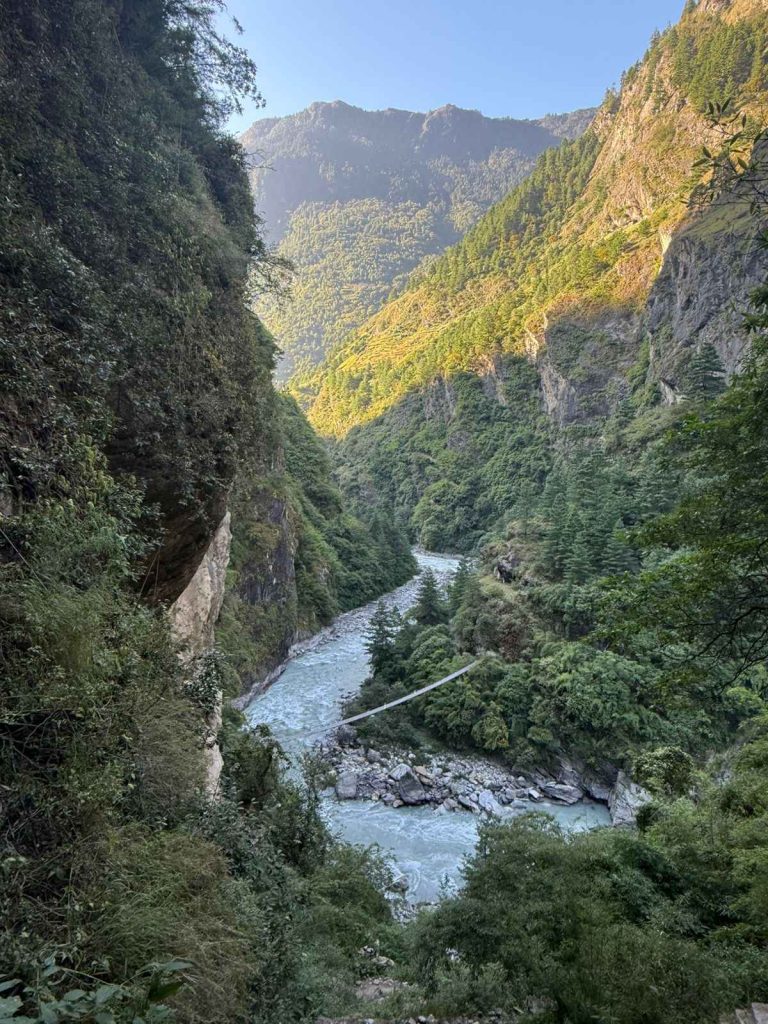
Above Jagat the valley transforms and the landscape begins to reveal what the Manaslu Circuit is actually about. The subtropical jungle of the lower sections starts to thin, the trail opens onto wider views of the gorge and the ridgelines above, and the mountain walls on either side grow taller with every kilometre.
Kiran talked more on this day about what we were walking through. He explained the mani walls that appeared regularly along the trail and why they should always be passed on the left side as a sign of respect. He showed us how to read the prayer flags and told us what each colour represents. Blue for sky and space, white for air and wind, red for fire, green for water, yellow for earth.
He also explained something that day that Aoife and I had been asking about since Kathmandu. The phrase nepali flats. When Kiran described a section of trail as flat, he did not mean flat in the same way that a person from Ireland or New Zealand means flat. He meant relatively less steep than the section before it. The poem line about being fearful when he says nepali flats is accurate and was established as a concept on Day 4 when he described the approach to Deng as a nice flat section and we arrived at the teahouse forty five minutes later having climbed continuously the entire time.
When we pointed this out he looked genuinely surprised, as if the gradient had not registered as climbing in any meaningful sense. This became a running conversation for the rest of the trek.
Deng is a quiet settlement with a small gompa that Kiran said dates back several hundred years. After dinner the Monopoly Deal cards came out again. A Dutch trekker who was staying at the same teahouse asked what we were playing and Aoife invited him to join. Kiran dealt the cards with the ease of someone who had now played enough rounds to have a strategy. He won. The Dutch trekker was surprised. Aoife was not.
Day 5: Deng to Namrung
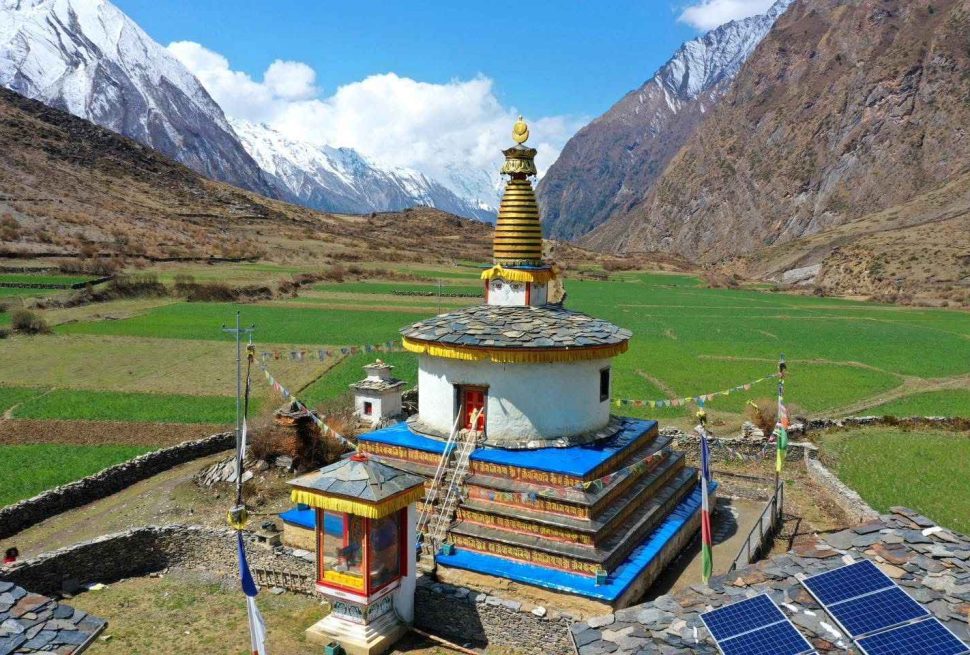
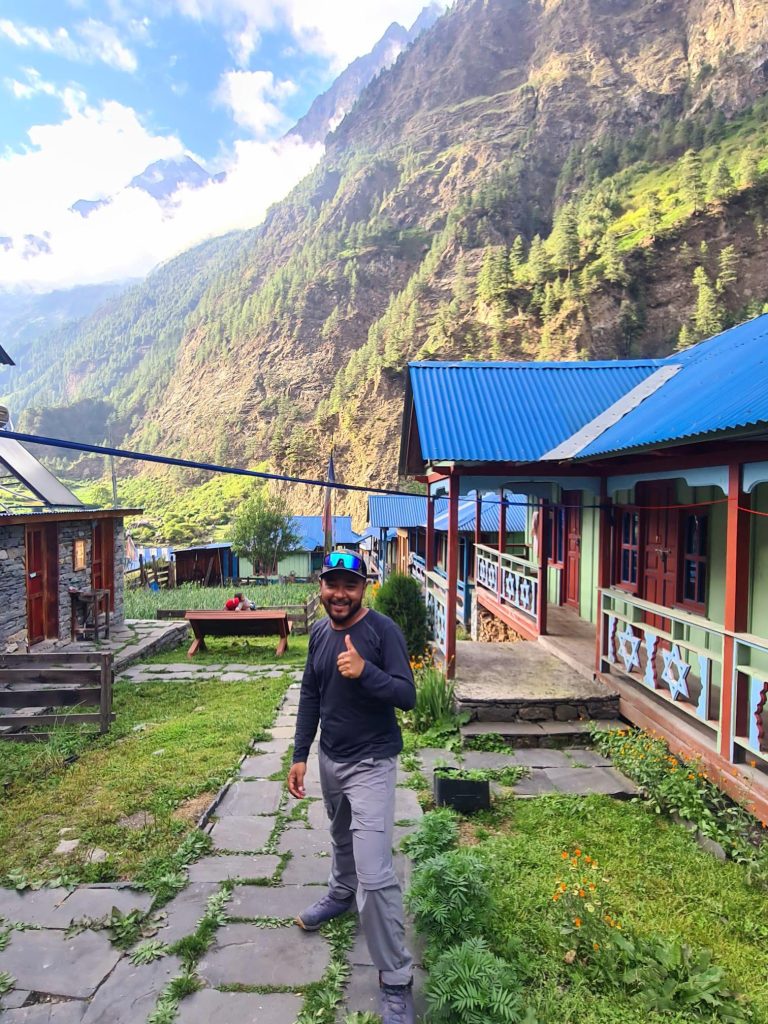
The fifth day of the trek marked the entry into the Nubri region, which is one of the most culturally intact Tibetan Buddhist communities in Nepal. The architecture of the villages changed completely. Stone buildings with carved wooden window frames, prayer flags on every rooftop, chortens at every entrance and exit, and a general atmosphere of a place that has been organised around religious practice for a very long time.
Kiran was from a part of Nepal that had given him genuine knowledge of and feeling for this culture and it showed in how he talked about it. Not as information delivered to tourists but as something he was personally connected to. He stopped at a large mani wall above Deng and spent a moment in his own quiet way before we continued. He did this at every significant religious landmark throughout the trek and neither Aoife nor I ever commented on it. It felt like the right thing to simply respect.
The views of the surrounding peaks grew dramatically through the afternoon. Snow covered ridges appeared above the valley walls and the scale of the Manaslu massif to the north became increasingly present even though the summit itself was not yet fully visible.
Namrung at 2,900 metres was noticeably colder than the lower sections of the route and we both put on extra layers for dinner. Kiran appeared at the dinner table that evening in his red poncho. It was the first time we saw the poncho and it became a fixture from that point forward. It was a large, flowing red waterproof poncho and he wore it over his regular jacket in the rain and wind sections on the higher parts of the route. It was genuinely distinctive. When visibility was poor on the trail we could always locate Kiran immediately by the red poncho somewhere ahead.
Monopoly Deal after dinner. Kiran won again. Aoife demanded a rematch.
Day 6: Namrung to Samagaun via Pungen Gompa
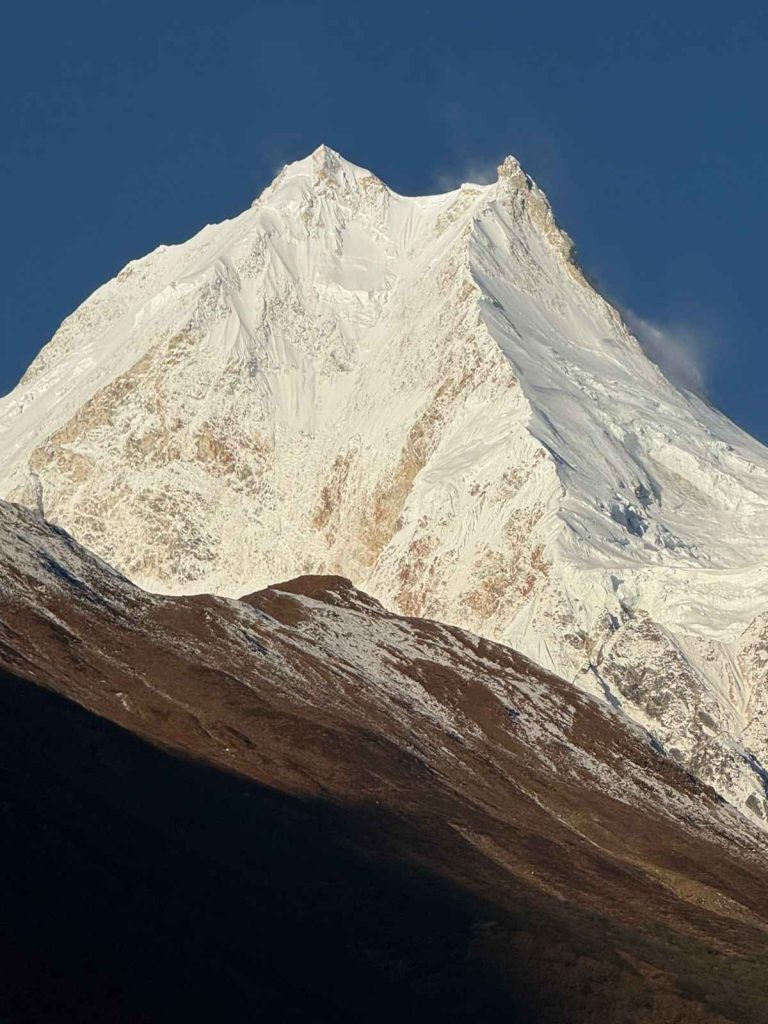
Day six was one of the finest walking days of the entire trek.
The trail between Namrung and Samagaun passes through high yak pastures and open ridgelines with increasingly dramatic views of the mountains above. Mount Manaslu, the eighth highest mountain in the world at 8,163 metres, began to reveal itself properly on this section. I had seen photographs of it during our research in New Zealand but nothing prepares you for standing at a point where the full scale of the mountain is actually in front of you.
We stopped at Lho village where there is a monastery with an extraordinary view of Manaslu from its courtyard. The monastery sits on a promontory above the valley and when you stand at its entrance the mountain fills almost the entire northern horizon. Kiran stopped here and was quiet for a while looking at the mountain. I think for him it was something different from what it was for us. He had been here many times and the mountain clearly meant something specific and personal to him that went beyond the professional context of the trek.
The route continued through Sho village and then to Pungen Gompa before dropping into the wide flat basin where Samagaun sits. Pungen Gompa is a monastery on a ridge above the valley with views across to the Manaslu massif that stopped both of us in our tracks. Kiran introduced us to one of the monks there who had met him on previous treks. They spoke in Nepali for a few minutes and then the monk made tea. We sat in the monastery courtyard drinking butter tea and looking at the mountains and the prayer flags in the wind above us.
Samagaun is the largest settlement in the upper Budhi Gandaki valley and has several teahouses. We arrived in the late afternoon and checked in. After dinner Kiran taught us a Nepali card game as a change from Monopoly Deal and then Aoife suggested we go back to Monopoly Deal because at least with Monopoly Deal we understood what was happening even if Kiran kept winning.
He won three rounds that evening in Samagaun. Aoife studied the cards between rounds and accused him of counting them. He said he was just playing. Aoife said she was just asking.
Day 7: Acclimatization Day in Samagaun, Manaslu Base Camp and Birendra Lake
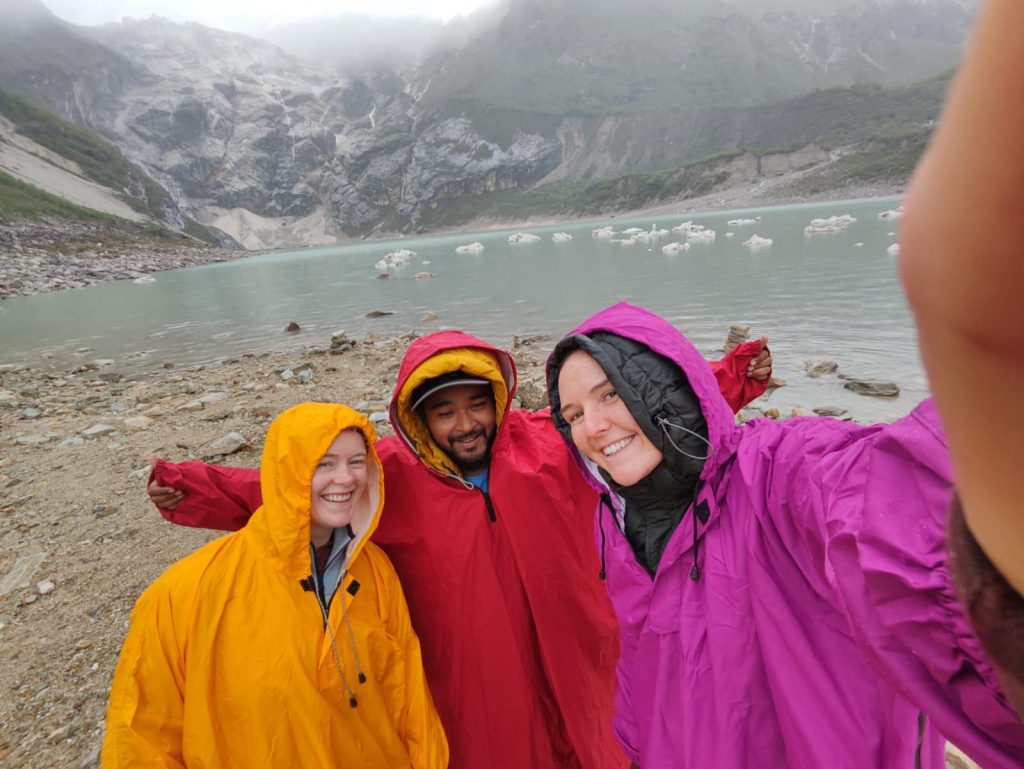
The rest day in Samagaun was one of the most valuable and memorable days of the entire trek. The plan for the acclimatization day was to climb higher during the day and return to sleep at the same elevation. Kiran had explained this principle in Kathmandu and again at several points on the route. The body needs the altitude stimulus to prepare itself for the higher sections ahead.
After breakfast we walked toward the Manaslu Base Camp trail. The route climbs through boulder fields and glacial moraine and the landscape becomes increasingly dramatic as the trail gains altitude. The Manaslu Glacier fills a large bowl above the valley and the sounds of ice moving and occasional small rockfall echo down in a way that has no comparison in ordinary life.
On the way up we stopped at Birendra Lake. The lake sits in a glacial bowl and in March it was still partially frozen at the edges. The colour of the water where it was open was a deep green against the grey of the moraine and the white of the snow above. We sat beside it for a while. Neither of us spoke much. Kiran sat nearby and looked at the mountains.
We climbed to a good altitude above the base camp area and could see expedition tents in the distance on the moraine. There was a team on the mountain preparing for an early season attempt and the sight of those small coloured tents against the glacier gave the entire trek a different sense of scale.
On the descent back to Samagaun Kiran was in good spirits. That evening was the most relaxed of the trek so far. We had a long dinner, talked about the previous days and the days ahead, and then Aoife produced the Monopoly Deal cards. A South Korean trekker at the neighbouring table asked about the game. Aoife invited her. Kiran dealt. By this point he had fully learned the sly steal move that the poem references and he used it on the Korean trekker in round two. She looked at the cards and then looked at him with an expression that was exactly the same as the one Aoife had used on Day 3.
Kiran found this funny both times.
Day 8: Samagaun to Samdo
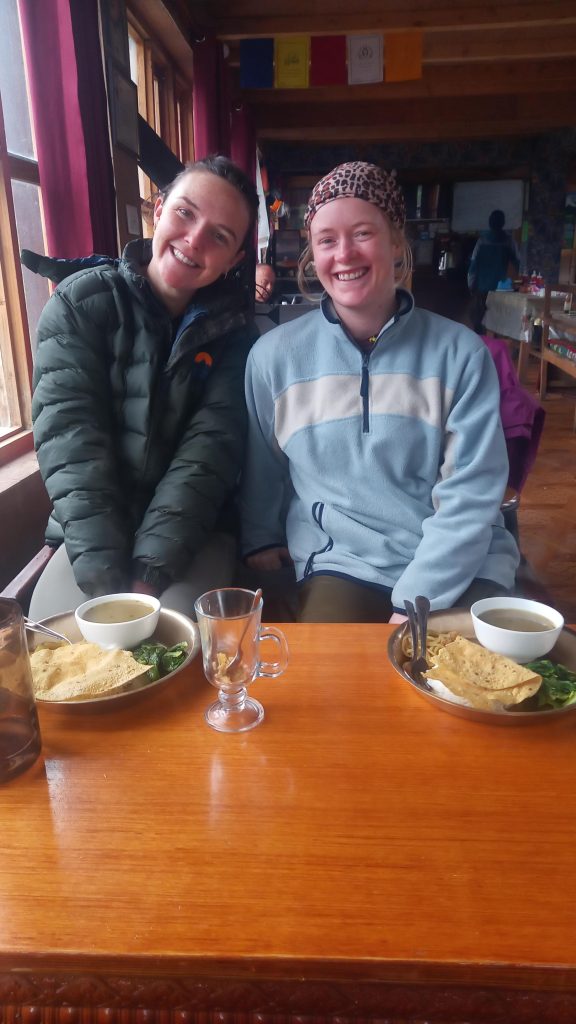
Samdo is a small settlement at 3,785 metres and the last permanent village before the high pass section of the trek. The walk from Samagaun is not long but the altitude was making its presence known by this point in a consistent and honest way. Not dangerously. Just noticeably. Steps on uphill sections required slightly more thought than at lower elevations and breathing needed a small amount of conscious management.
Kiran adjusted the pace on this day without making any announcement about it. He simply slowed things down by a fraction on the steeper sections and stopped for water a little more frequently. When I mentioned at one of the water stops that I could feel the altitude he nodded and said that was exactly right and exactly what the body should be doing at this point of the route.
Samdo itself is a traditional Tibetan Buddhist village close to the Tibetan border. Kiran explained that in earlier decades Samdo was an important trading point between Nepal and Tibet, with salt, wool, and grain moving across the high passes before the border situation changed. The older buildings in the village are substantial and suggest that the trading era brought real prosperity.
We visited the small monastery in Samdo in the evening. A monk was conducting prayers inside. The sound of the drum and the chanting filled the small space and both of us stood at the entrance for several minutes listening before leaving quietly.
Monopoly Deal that evening in Samdo. Kiran won the first round and Aoife won the second. She was very pleased. He congratulated her graciously and suggested a third round which he won. She asked for a fourth.
Day 9: Samdo to Dharamsala
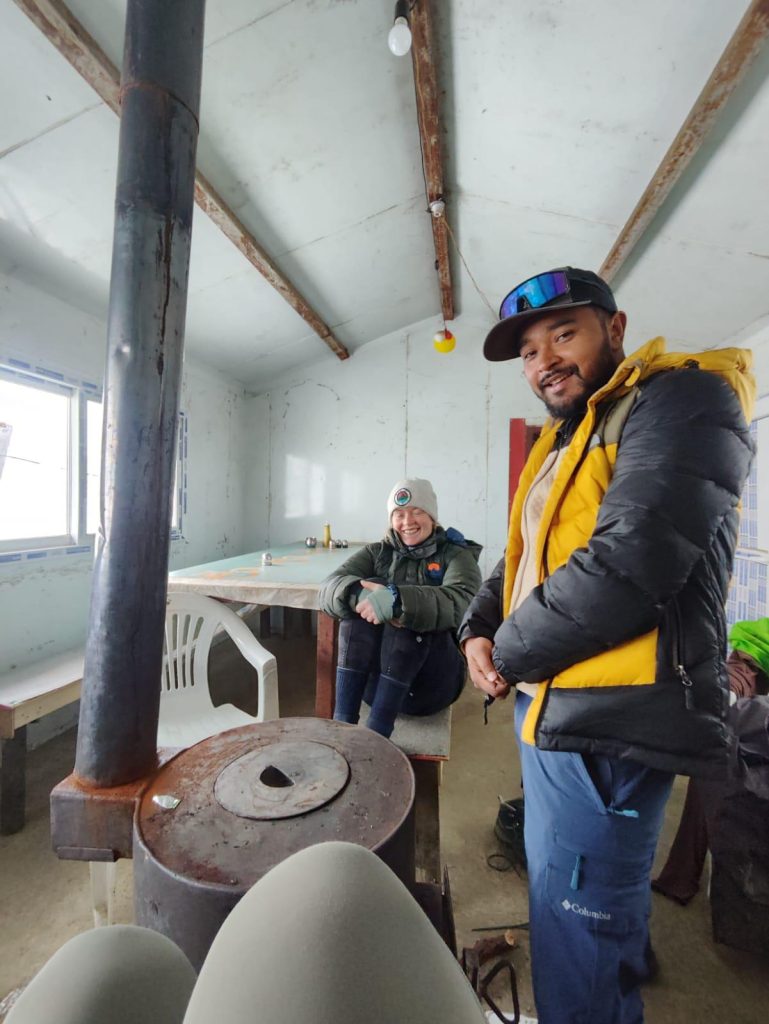
Dharamsala at 4,450 metres is not a village. It is a small collection of very basic teahouses that exist entirely as a staging point for the Larkya La crossing the following morning. There is no settlement there in any real sense. There is a place to sleep before the pass.
The trail from Samdo to Dharamsala follows the valley upward through completely barren glacial terrain. No trees, no grass, only rock and moraine and wind and the enormous presence of the mountains above. The cold at this altitude in March is constant and physical. Even walking steadily the wind on exposed sections cut through clothing that had felt adequate an hour earlier.
Kiran set a very deliberate and slow pace through the entire day. Every step conserved was worth saving for the following morning. We arrived at Dharamsala by midday and Kiran told us to eat a full meal, rest as much as possible, and be ready at 3am the next morning.
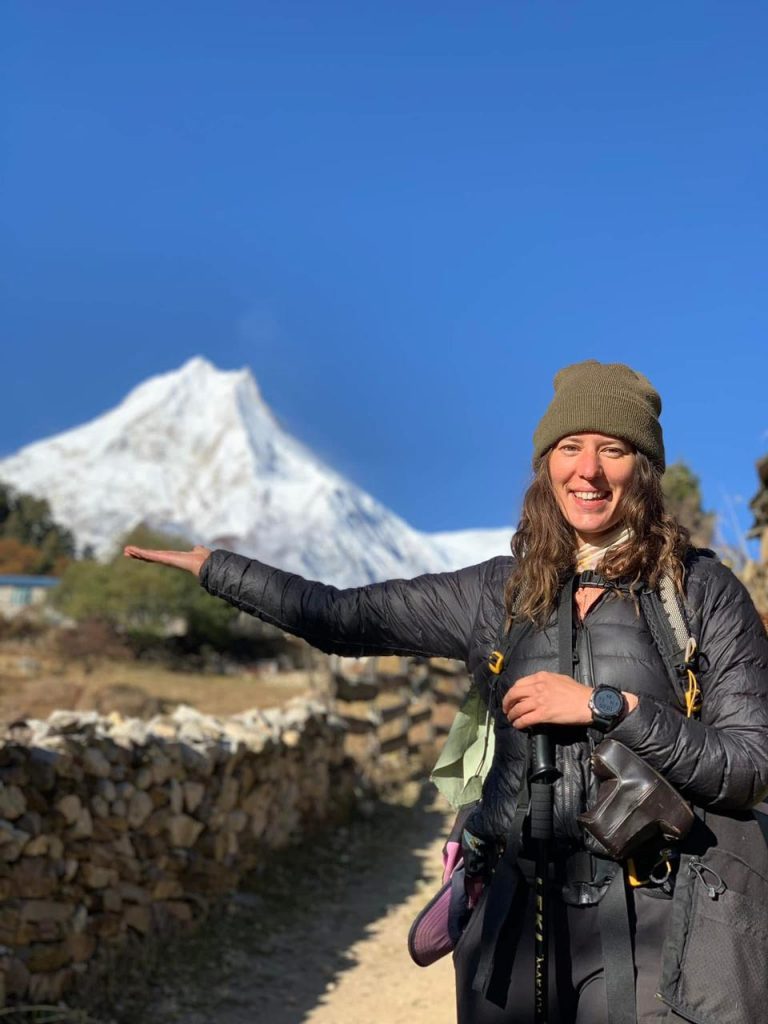
The teahouses at Dharamsala are the most basic of the entire route. The rooms are cold and the blankets are thin. I put on every layer I owned to sleep in and still woke up twice during the night from the cold. Kiran had warned us about this. He had also warned us that the sky above Dharamsala on a clear March night would be worth going outside for despite the cold. He was right. I stepped outside at around midnight and the stars were the clearest and most dense I have ever seen anywhere. At 4,450 metres with no light pollution and completely dry air the sky is a different thing from anything visible at lower elevations. I stood outside for about five minutes before the cold drove me back inside.
No Monopoly Deal that evening. We were in our sleeping bags by 7pm.
Day 10: Larkya La Pass (5,106m) to Bimthang
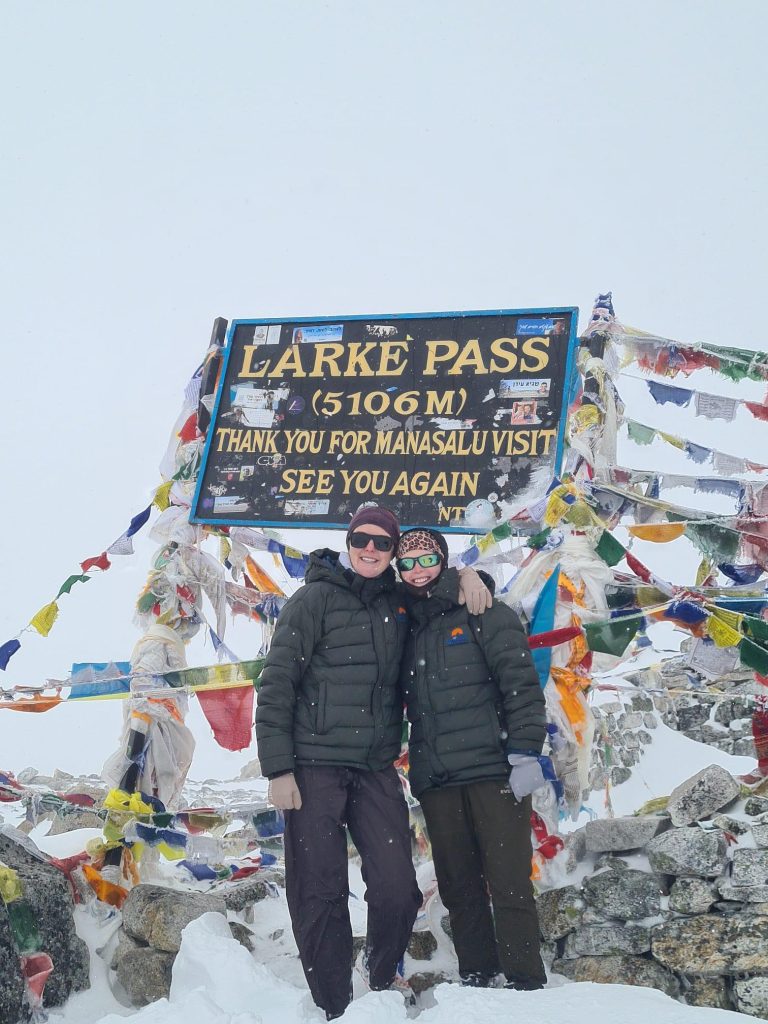
This was the day everything had been building toward.
The alarm went off at 3am. Getting out of the sleeping bag in the cold of Dharamsala at 3am requires a genuine act of will. Aoife and I dressed in everything we had and stepped outside into the darkness. The temperature was well below zero and the stars above were still fully visible.
Kiran was already outside. He had two cups of something hot which he handed to us immediately. That cup of hot liquid in the dark at Dharamsala at 3am is a memory that will stay with me for a long time.
The ascent to Larkya La begins immediately from Dharamsala and climbs through the darkness by headlamp. The trail is clear enough but the terrain is rough and the going requires full concentration on the footing. Kiran walked ahead and both of us followed his line. He set a pace that was slow enough to be sustainable and consistent enough to keep the body warm in the cold.
About two hours into the ascent I noticed Kiran was wearing the red poncho. In the headlamp beam ahead of us it was the most visible thing on the mountain. Bright red moving steadily upward through the darkness. I told Aoife and she said she had been using it as a visual reference point for the previous hour.
The final section before the col steepens and the terrain includes sections of hard packed snow. In March the pass had some icy patches that required careful footwork. Kiran checked back regularly on these sections and kept the pace controlled through the most exposed parts.
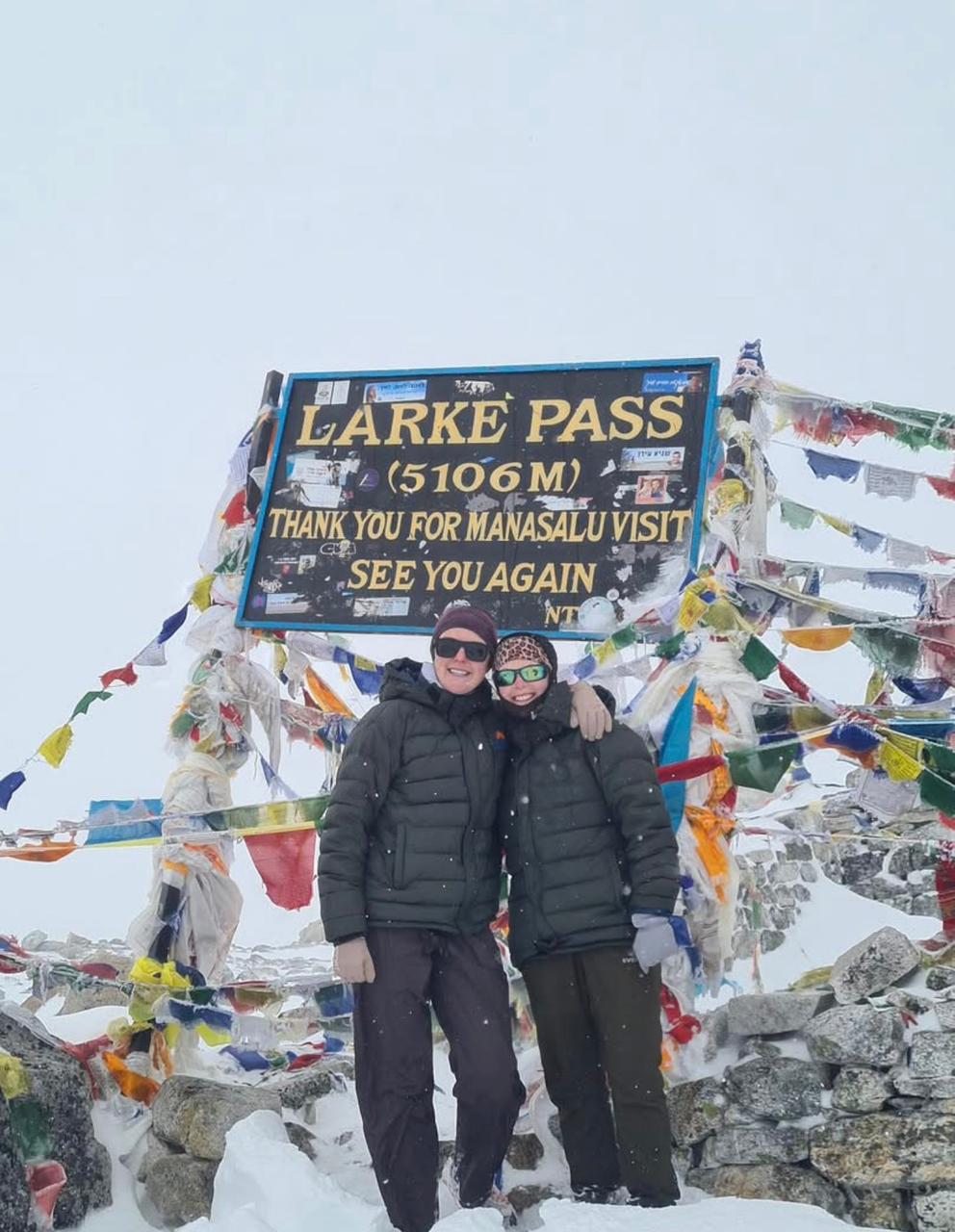
At around 7am we reached Larkya La at 5,106 metres.
The sky to the east was fully light and the mountains around the pass were sharp and white against a completely clear blue sky. Prayer flags were strung across the pass in every direction and they moved in the wind with a sound that was exactly right for that place. The views extended north toward the Tibetan plateau and south down the valley we had been walking up for the previous nine days.
Aoife and I stood at the top of Larkya La and looked at each other and both of us were smiling in the way that does not require any explanation. We had done it. Two Irish women who live in New Zealand, with a guide in a red poncho who was afraid of lizards and had become good at Monopoly Deal, standing at 5,106 metres on top of a Himalayan pass in March.
Kiran took photographs of us at the pass. He had been taking a photograph every single day of the trek. One selfie per day was the routine and it had started on the first morning in Kathmandu. By Larkya La we had a collection of fourteen days of daily selfies and the altitude was visible in our faces across the sequence.
The descent from Larkya La to Bimthang is long and steep and technically demanding. The upper section has loose rock over frozen ground that requires careful footwork and active use of trekking poles. Kiran reminded us to keep steps short and to let the poles take some of the load on the steepest sections.
We reached Bimthang by late morning. The valley below the pass opens into a wide green meadow and after the barren frozen landscape of the previous two days the grass and the trees and the relatively thick air felt like arriving somewhere completely different. I sat down on the grass outside the teahouse and did not move for about twenty minutes.
That evening in Bimthang Aoife produced the Monopoly Deal cards. Kiran sat down. He won the first round. Aoife won the second. They played a third. He won. She asked for a fourth. He said it was getting late. She said it was 7pm. He dealt the cards.
Planning the Manaslu Circuit Trek and need help with permits, route, or itinerary?
WhatsApp us Email usDay 11: Bimthang to Tilije
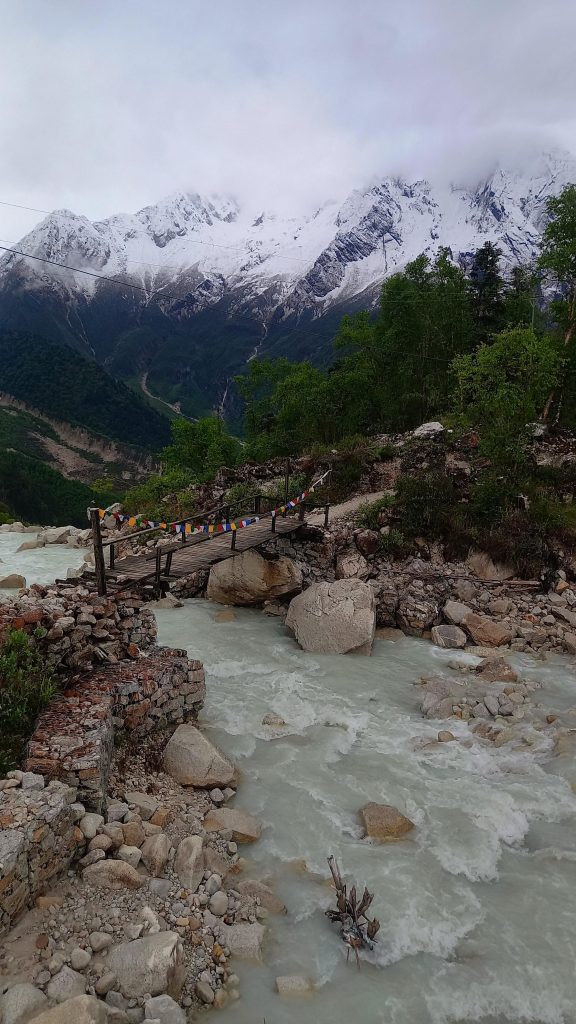
The day after crossing Larkya La was spent descending through some of the most beautiful forest I encountered on the entire trek.
The trail from Bimthang drops through rhododendron and pine forest with the Dudh Khola river growing louder below the path as the route descended. The rhododendrons in the higher sections were just beginning to show their early March colour and the forest had the clean smell of cold mountain air mixed with pine resin.
My legs were tired from the pass crossing and the descent to Bimthang the previous day. Kiran adjusted the pace without being asked, which was consistent with how he had managed every other day on the route when either of us needed more time or a different pace. He was very good at reading how people were moving and responding to it without making anyone feel like they were slowing things down.
At one point on the descent I slipped slightly on a wet root and caught myself. Kiran was behind me at that moment and his hand was at my elbow before I had fully registered the slip. He said nothing. He just made sure I was steady and then continued walking. Aoife saw it from ahead and said later that it was the fastest she had seen him move the entire trek.
Tilije is a larger and more developed village than the settlements of the upper valley. There was a small shop and the energy of the place was noticeably different from the remote communities above the pass. I bought a bottle of cold water and some biscuits and sat on a wall above the river for a while before the final section to the teahouse.
That evening was celebratory. The hard section of the trek was completely behind us. Aoife opened the Monopoly Deal cards for what would be one of the last times on the trek. Kiran won the first round. Aoife pointed out that he was consistently using the sly steal move that the poem later references and that she wanted it on record that she had identified this tactic. Kiran agreed that the move was effective. Aoife demanded it be considered cheating. Kiran said the rules did not say it was cheating. They played another round and he used it again.
Day 12: Drive Tilije to Kathmandu
The drive from Tilije back to Kathmandu took most of the day. The road south through the Marsyangdi valley and then onto the highway was long but the jeep was comfortable enough and the hours gave me time to think about what the previous eleven days had actually been.
I had come to Nepal with Aoife wanting to do something genuinely big in the mountains. Something that would test us and show us a part of the world that was completely different from anywhere either of us had been before. The Manaslu Circuit had delivered all of that and more. The Nubri villages above Jagat, the Pungen Gompa monastery, Birendra Lake, the view of Manaslu from the ridge above Lho, the darkness of the Larkya La ascent at 3am, the red poncho visible ahead in the headlamp beam, and the extraordinary ordinary rituals of the trek. Dal bhat three times a day. The daily selfie. Two milky coffees every morning that Kiran would produce without being asked. The Monopoly Deal games in the teahouse dining rooms after dinner every single evening.
We arrived back in Kathmandu by evening and checked into the hotel. Kiran came in with us and sat for a cup of tea before heading home. He asked how both of us felt, which was the same question he had asked every evening for eleven days. We told him we felt very well and very tired and very glad we had done it. He nodded and looked satisfied.
Day 13: Leisure Day in Kathmandu
The day before departure was spent recovering and exploring Kathmandu properly for the first time. On the arrival day we had been too tired from the long flight to do much. Now with eleven days of Himalayan walking behind us we were both moving well and ready to see the city.
We visited Boudhanath Stupa in the morning. The great dome with its painted eyes above the valley is one of the most remarkable things I have seen anywhere in the world. Monks were walking clockwise around the base in a continuous slow circle and prayer wheels lined the lower level for the full circumference. We followed the monks in their circuit for two complete rounds and then sat near the base for a while just watching the whole thing.
In the afternoon we went to Pashupatinath Temple on the banks of the Bagmati River. Kiran had recommended we see it and explained what to expect before we arrived. The ghats where cremation ceremonies happen openly beside the river are confronting in the best possible sense. Nepal does not hide its rituals or its relationship with death and seeing that openly practiced in a place of obvious spiritual significance was something that stayed with both of us long after we left.
We had a final dinner that evening in Thamel with Kiran. He brought a Nepali colleague and the four of us sat together and ate and talked for a couple of hours. At some point Aoife produced the Monopoly Deal cards from her bag. On the last night, at a restaurant table in Thamel, we played three rounds. Kiran won two of them. He was very gracious about it.
Day 14: Departure
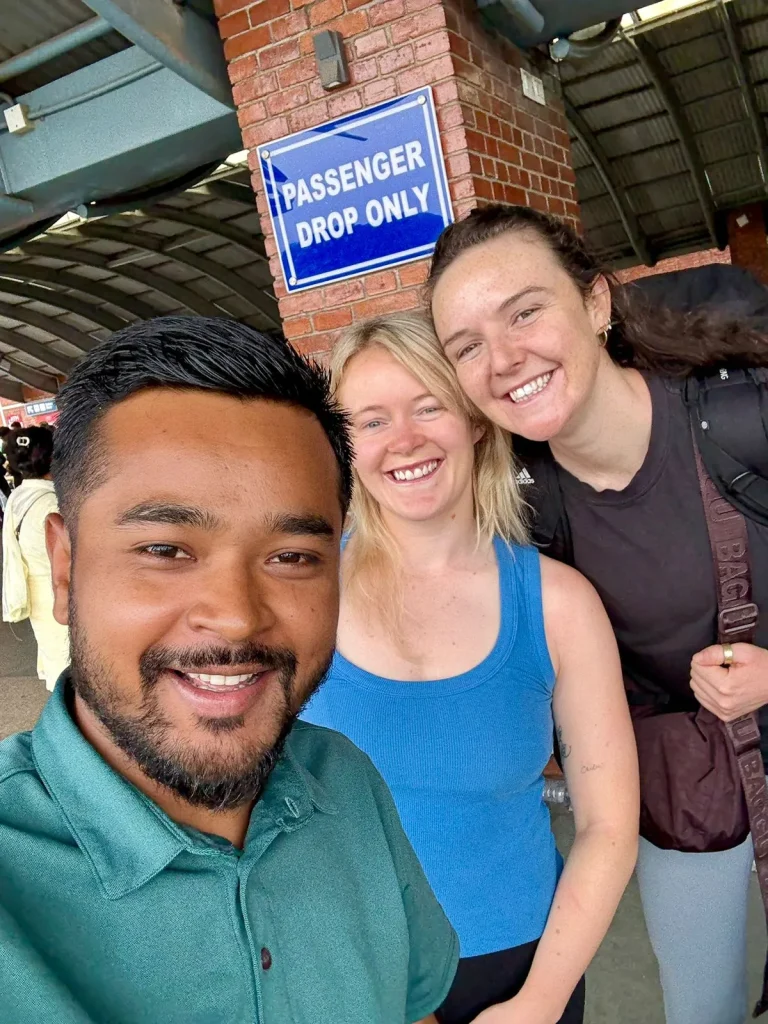
The final morning in Nepal was quiet. We had breakfast, packed our bags, and walked one more time through the streets of Thamel before the airport transfer.
Thamel on the departure morning looked different from the arrival day. I was looking at it differently after everything that had happened between those two days. The noise and colour of the market streets felt familiar now in a way it had not on March 3 when we arrived from the airport tired and slightly overwhelmed by everything.
Aoife bought a small prayer wheel from a shop near the hotel to take home to Ireland. I bought a set of prayer flags that I planned to put up somewhere in New Zealand with a view of the sky.
The transfer to the international airport was on time. Sitting in the departure lounge waiting for the long flight back I wrote in my notebook while Aoife slept in the chair beside me. I wanted to put down as many specific things as I could before the journey home blurred them into something more general.
The aircraft took off and turned east. The Himalayan range was visible to the north for a few minutes before the aircraft banked away. I kept looking out the window until the mountains disappeared completely.
What I Would Tell Anyone Thinking About This Trek
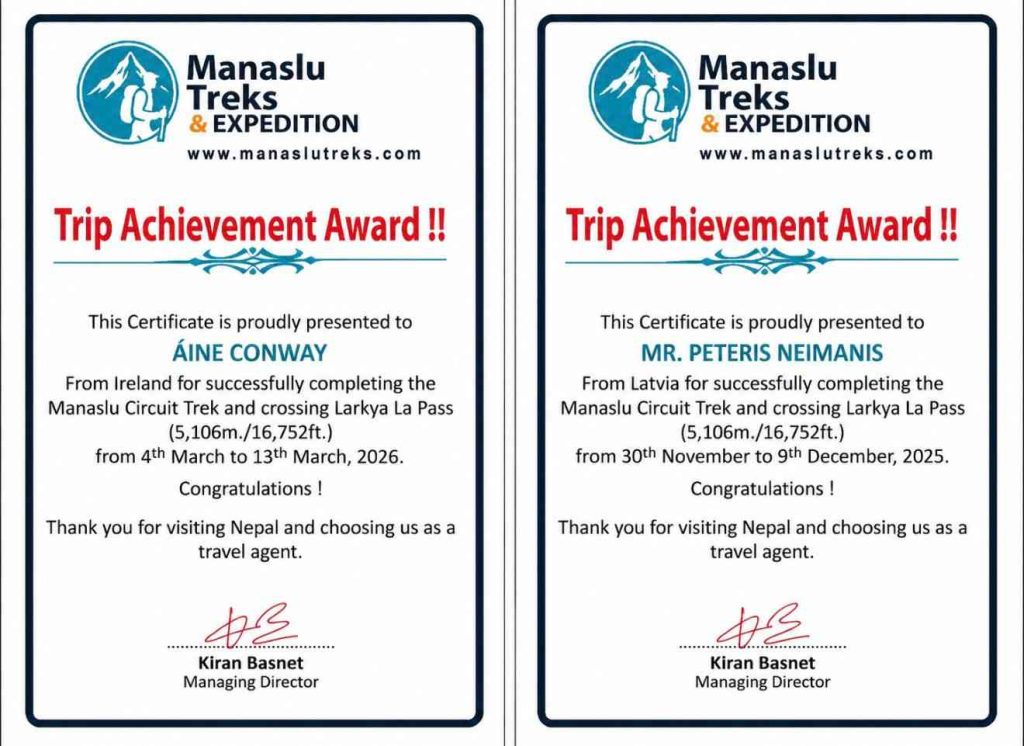
Writing this now in 2026 I want to be honest about a few things for anyone reading this who is considering the Manaslu Circuit.
It is not technically difficult in the mountaineering sense. You do not need climbing skills. But it is genuinely challenging and the altitude at Larkya La Pass is serious. The acclimatization days are not optional. The cold on the high sections in March is real. The distances on some days are long and the terrain is demanding. Your legs will know they have been working by the end of the first week.
What makes the difference is the guide and the planning. The Manaslu Circuit is a restricted area which means you cannot do it without a licensed guide regardless of your experience level. That requirement is actually one of the things that makes the route worth doing because it limits numbers and keeps the trail character intact. But beyond the legal requirement the quality of your guide is genuinely the most important variable in whether this becomes something you survived or something you loved.
Kiran made this trek what it was for both of us. His knowledge of the route and the communities along it is deep and personal. His management of our altitude and pace through every day was consistently right without being controlling or clinical about it. His cultural knowledge of the Nubri region turned the walk through those villages into something with genuine meaning rather than just scenery. And his company through fourteen days of walking, dal bhat, Monopoly Deal, daily selfies, and milky coffees was the kind of company that makes a hard trip feel easy and an easy evening feel like a good memory.
Aoife and I wrote him a poem at the end. I included it at the beginning of this blog because I think it captures something true about the experience. We meant every line of it.
If you are thinking about the Manaslu Circuit Trek, book it with Manaslu Treks and Expedition. Ask for Kiran. Bring Monopoly Deal. Learn some Irish before you go. And when he tells you the next section is flat, know what that means.
We cannot wait to see him again.
Aine Conway, Ireland, living in New Zealand, March 2026
My Recommendation
I recommend the 14 Day Manaslu Circuit Trek with Manaslu Treks and Expedition to anyone who wants a genuine Himalayan trekking experience away from the main tourist routes. The route is beautiful, the culture along the way is extraordinary, and the Larkya La crossing is one of the finest days either of us have had in the mountains anywhere.
The company handled every detail from the first message to the final day without a single problem. The permits were sorted, the teahouses were pre arranged, the pacing was right, and Kiran was exactly the guide both of us needed for this kind of trip. No hidden costs, honest communication throughout, and genuine expertise in the Manaslu region specifically.
For anyone looking at the 14 Day Manaslu Circuit Trek in 2026 or 2027, the cost starts from USD 1,150 per person depending on group size. All meals, permits, accommodation, and guide fees are included. For current pricing and availability you can reach Manaslu Treks and Expedition directly on WhatsApp at the number on their website.
It is worth every cent and every step.
Aine and Aoife, two strong crazy Irish girls.
Planning the Manaslu Circuit Trek and need help with permits, route, or itinerary?
WhatsApp us Email us