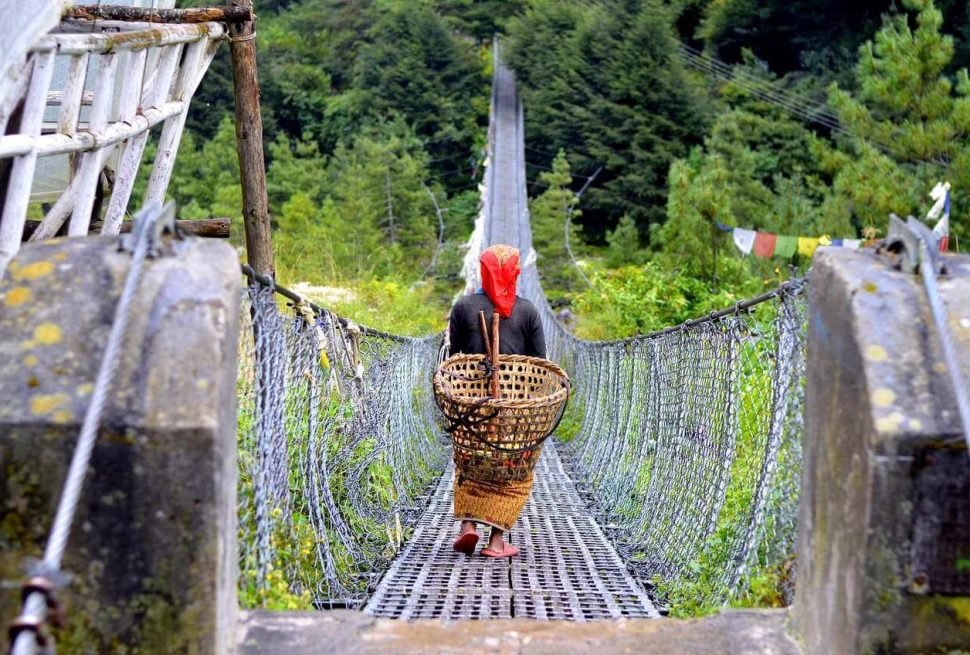
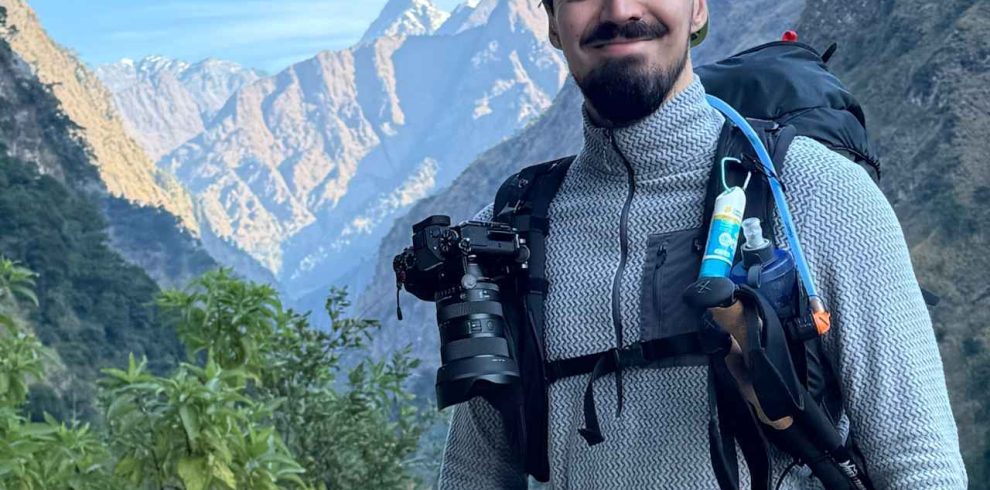
The Manaslu Circuit Trek is a spectacular journey around Mount Manaslu (8,163 m), the eighth-highest mountain in the world. Located…
If you are trying to decide whether November is a good month for the Manaslu Circuit Trek, the short answer is yes, especially the first three weeks. The trails are dry, the air is clear, Manaslu and the surrounding peaks are almost always visible, and the crowds that fill the route in October have mostly gone home. The trade off is temperature. Nights get cold fast once you pass Namrung, and by late November you are trekking into the edge of winter rather than the tail of autumn.
This guide is written from the ground, not from a weather app. Our guides at Manaslu Treks and Expedition run departures through November most years, so what follows is what we actually tell clients before they fly to Kathmandu, not a general description copied from a brochure. We cover temperature by village, what the Larke La Pass is really like in November, current 2026 permit costs, packing, crowd levels, festivals, budget tips, and a full day by day itinerary you can actually use.
How This Guide Was Put Together
This page is written and maintained by Kiran Basnet and the local guiding team at Manaslu Treks and Expedition, a Nepal based agency that works specifically in the Manaslu and Tsum Valley region rather than across every trekking area in the country. The temperature ranges, pass conditions and packing advice below come from years of actually leading groups through the Budhi Gandaki Valley and over Larke La in November, not from a single trip or a desk review of other websites. We update this guide each year once the autumn season is underway so the information reflects current permit prices, road conditions and what our guides are seeing on the ground, and it was last reviewed in August 2026 for the upcoming November season.
Quick Answer: Is November Good for the Manaslu Circuit Trek
| Question | Short Answer |
|---|---|
| Is November a good month overall | Yes, particularly November 1 to 20. Late November turns cold and can bring early snow near the pass. |
| Will the trails be dry | Almost always. November has the lowest rainfall of the main trekking months. |
| Will I see Manaslu clearly | Very likely. Visibility in November is consistently rated among the best of the year. |
| How cold does it get | Daytime is comfortable below 3,000 m. Nights at Samdo, Dharmasala and the pass regularly drop below freezing. |
| Are teahouses open | Yes, all the way through November. Some close for winter in early to mid December. |
| Is it crowded | Quieter than October. Early November still sees a good number of trekkers, late November is noticeably calmer. |
| Can I still cross Larke La | Yes in most years, though a guide who checks daily conditions is essential, and late November crossings sometimes need micro spikes. |
Why Trek the Manaslu Circuit in November
- The clearest air of the year. The monsoon dust has settled and winter haze has not yet built up, so mountain views from Namrung, Lho and Samagaon are often sharper in November than in October.
- Dry trails from Machha Khola to Bimthang. There is essentially no rain risk in November, which matters a lot on the muddy lower sections between Jagat and Deng.
- Fewer trekkers on the trail. October is the busiest month on Manaslu. By mid November the numbers drop noticeably, and teahouses that felt full in October have spare rooms again.
- Harvest season in the lower villages. Around Machha Khola, Jagat and Philim, farmers are drying corn, millet and buckwheat on rooftops and in courtyards, which is a genuinely nice thing to walk through and photograph.
- Comfortable daytime walking temperatures. Below Namrung you are usually walking in a light fleece or even a t shirt by midday, which is a pleasant contrast to the freezing mornings higher up.
- Good visibility for planning the Larke La crossing. Stable high pressure systems are common in November, which gives guides a clearer forecasting window than the more unpredictable spring months.
The Honest Downsides of a November Trek
We would rather tell you this upfront than have you find out on day nine. November is not a soft option, and it gets harder as the month goes on.
- Cold mornings above Samagaon. Water in your bottle can partially freeze overnight at Samdo and Dharmasala. You will be putting on a down jacket before you leave your room most mornings from mid November onward.
- Short daylight hours. By late November you have roughly ten hours of usable daylight, which means an early start and an early finish most days, especially before and after the pass.
- Unheated teahouse rooms. Dining rooms usually have a stove in the evening, but bedrooms almost never do. A good sleeping bag is not optional this month.
- Increasing snow risk near the pass after mid month. Early November snow at Larke La is uncommon, but by the last week of the month a fresh dusting is realistic, and it can linger in shaded sections.
- Limited flexibility if the weather turns. There are fewer buffer days built into most itineraries this time of year, so a two day storm near the pass can genuinely disrupt a tight schedule.
Manaslu Circuit Weather in November, Village by Village
Kathmandu weather tells you almost nothing about what you will experience on this trek. The route climbs from around 700 m to 5,106 m, and the temperature swing across that distance is the single biggest planning factor for a November departure.
| Village | Elevation | Typical Daytime Temp | Typical Nighttime Temp | Notes |
|---|---|---|---|---|
| Machha Khola | 930 m | 18 to 24°C | 8 to 13°C | Comfortable, often the warmest stop of the trek |
| Jagat | 1,340 to 1,410 m | 16 to 21°C | 5 to 10°C | First permit checkpoint, still mild |
| Deng | 1,804 to 1,860 m | 13 to 18°C | 2 to 7°C | Gorge terrain, noticeably cooler than Jagat |
| Namrung | 2,630 to 2,900 m | 8 to 14°C | 0 to 4°C | Fleece weather by day, jacket by evening |
| Lho | 3,180 m | 6 to 12°C | minus 3 to 2°C | First consistently sub zero nights |
| Samagaon | 3,500 to 3,530 m | 4 to 10°C | minus 6 to minus 1°C | Main acclimatization stop, cold but sunny by day |
| Samdo | 3,860 to 3,875 m | 2 to 8°C | minus 9 to minus 3°C | Wind picks up here, dress in layers even at rest |
| Dharmasala (Larke Phedi) | 4,450 to 4,470 m | 0 to 5°C | minus 13 to minus 6°C | Basic lodges, coldest overnight stop on the trek |
| Larke La Pass | 5,106 m | minus 5 to 2°C at crossing time | Not applicable, crossed at dawn | Wind chill can push the felt temperature well below the readings above |
| Bimthang | 3,720 m | 3 to 9°C | minus 5 to 0°C | Milder than Dharmasala once you are over the pass |
These figures are averages from early to mid November. In the final week of the month, subtract another two to four degrees from every nighttime figure above Samagaon, and be ready for the daytime numbers around Dharmasala and the pass to sit closer to freezing as well.
Early November vs Late November: What Actually Changes
| Factor | Early to Mid November (1 to 20) | Late November (21 to 30) |
|---|---|---|
| Weather stability | Generally the most stable window of the whole season | Still often clear, but cold fronts become more frequent |
| Snow risk at Larke La | Low | Moderate, a fresh dusting is common |
| Crowds | Moderate, quieter than October but still active | Noticeably quiet, some lodges may ask you to confirm ahead |
| Daylight hours | Around 10.5 to 11 hours | Closer to 10 hours |
| Teahouse services | Full menu and services available | Some smaller lodges reduce hours or menu options |
| Our recommendation | Our preferred window for a November departure | Doable with an experienced guide, pack for genuine winter cold |
What the Larke La Pass Is Actually Like in November
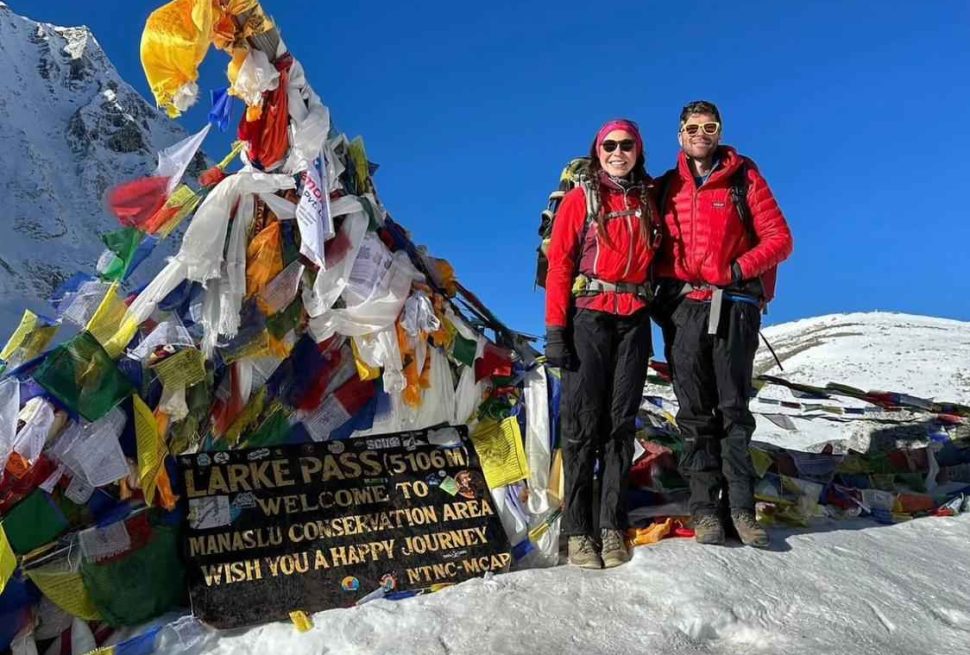
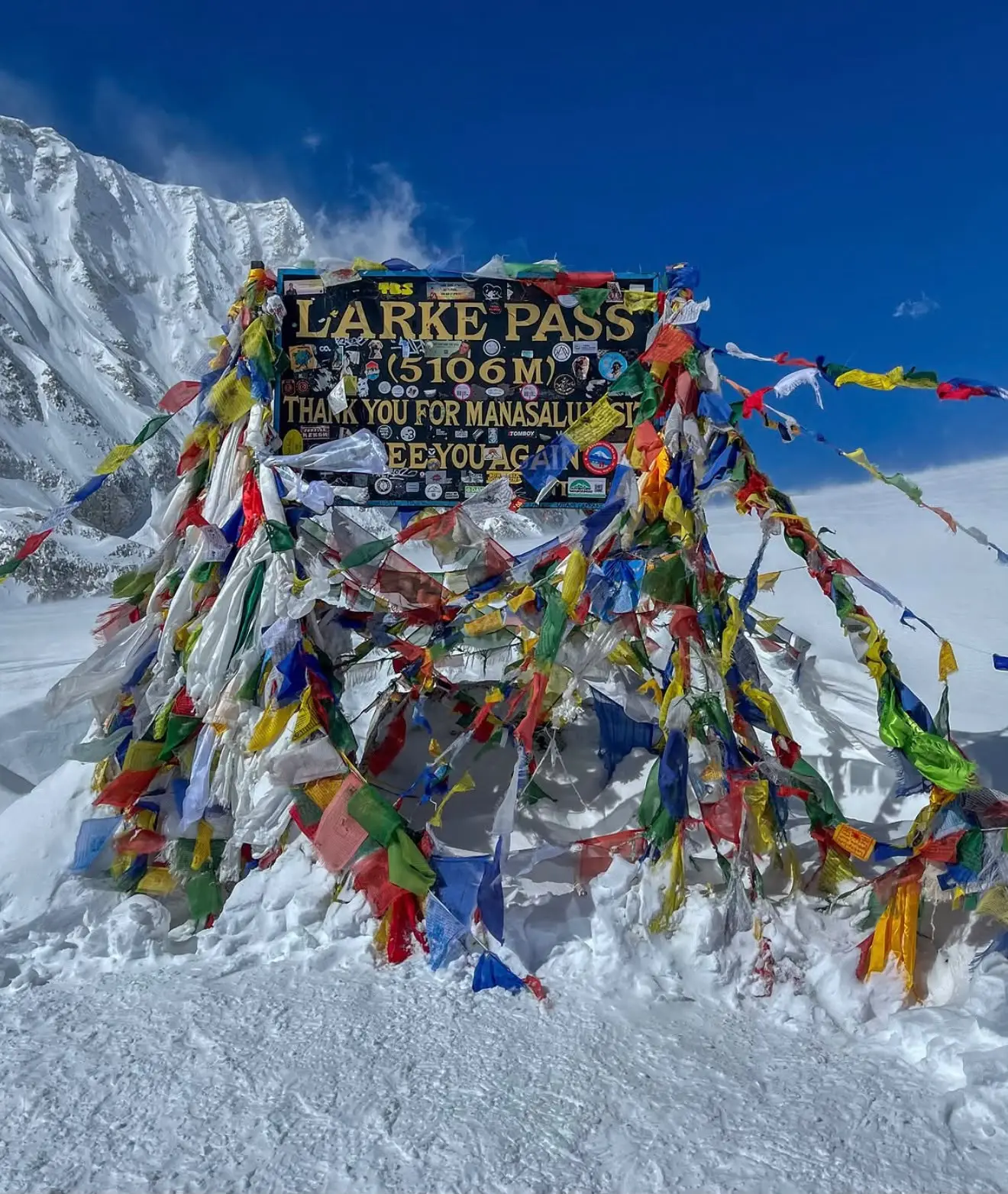
Larke La at 5,106 m is the highest point of the Manaslu Circuit Trek and the day most people are nervous about before they arrive. In November, the crossing usually starts before sunrise from Dharmasala, both to catch calmer wind and to give you enough daylight for the long descent to Bimthang on the other side.
In early November the trail is typically bare rock and frozen ground rather than snow, and the main challenge is cold and altitude rather than technical difficulty. By late November, a covering of snow on the upper sections becomes fairly common, and our guides will usually carry micro spikes for the group as a precaution even if they end up unused.
Wind is often the bigger factor than snow. Even on a clear day, wind chill at the top can make the air feel ten degrees colder than the thermometer suggests, which is why layering properly for this one day matters more than almost anything else you pack.
The descent from the pass down to Bimthang is steep and long, dropping close to 1,400 meters over the second half of the day. Your knees will feel this more than your lungs will. Trekking poles help a lot here, and so does pacing yourself on the way up so you still have energy left for a controlled descent rather than a rushed one. Most groups reach Bimthang in the early to mid afternoon, tired but relieved, and the lodges there feel noticeably warmer than Dharmasala simply because you have dropped over a thousand meters in elevation.
What we tell every client before this day:
- Start walking in the dark with a headlamp, this is normal and expected.
- Eat and drink before you leave Dharmasala, appetite often disappears at this altitude.
- Keep your water bottle inside your jacket, tubes and exposed bottles can freeze.
- Move at a slow, steady pace rather than rushing the climb.
- Trust your guide’s decision if conditions look marginal, a one day delay is always better than pushing through a genuine storm.
Manaslu Circuit Permits and Costs for a November 2026 Trek
Manaslu is a restricted trekking area, which means you cannot walk this route independently. You need a licensed guide, an authorized trekking agency, and three separate permits. Full detail on the rules themselves is in our guide to why the Manaslu Circuit is a restricted area, but here are the numbers that actually matter for a November booking.
| Permit | November Cost (Peak Season Rate) | Notes |
|---|---|---|
| Manaslu Restricted Area Permit (MRAP) | USD 100 for the first 7 days, then USD 15 per extra day | September through November is the peak rate period, it is cheaper outside these months |
| Manaslu Conservation Area Permit (MCAP) | NPR 3,000 (roughly USD 23 to 25) | Fixed rate year round for foreign nationals |
| Annapurna Conservation Area Permit (ACAP) | NPR 3,000 (roughly USD 23 to 25) | Required because the route exits toward the Annapurna region near Dharapani |
| TIMS Card | Not required | The MRAP, MCAP and ACAP together cover the Manaslu Circuit, no separate TIMS card is needed |
A minimum of two trekkers is required to apply for the restricted area permit, and it must be arranged through a registered trekking agency in advance, not on arrival. If you are traveling alone, we can add you to an existing small group or pair you with another solo traveler so the permit requirement is met. For a full breakdown of total trip cost, our permit cost and process guide walks through the paperwork step by step.
Crowds and Teahouse Availability in November
October is the single busiest month on the Manaslu Circuit, and a fair number of those trekkers are still on the trail during the first days of November. By the second week, numbers thin out noticeably, and by late November you may go stretches of the trail without seeing another group at all.
Teahouses remain fully open throughout November, and this is genuinely good news for comfort. In peak October weeks, popular lodges in Samagaon or Lho can fill up, occasionally forcing latecomers into shared or overflow rooms. In November, the same lodges usually have space, and you have a realistic chance of getting a room with a window facing Manaslu rather than whatever is left over. Read more about what the lodges are actually like in our guide to teahouse accommodation on the Manaslu Circuit.
The one thing to watch for is late November, when a handful of smaller, family run lodges above Samagaon start reducing their hours or begin planning their own move down to lower villages for winter. Your guide will know which lodges are still fully staffed, which is one of several reasons independent trekking is not permitted on this route in the first place.
What to Pack for the Manaslu Circuit Trek in November
November packing is really about solving one problem, the huge temperature range between the lower valley and the high villages. You need light layers for Machha Khola and genuinely warm gear for Samdo, Dharmasala and the pass. Our full breakdown is in the Manaslu Circuit Trek packing list, and the table below covers the items that matter most for this specific month.
| Category | Item | Why It Matters in November |
|---|---|---|
| Sleep | Down sleeping bag rated to at least minus 15°C | Bedrooms are unheated, this is the single most important item for comfort above Samagaon |
| Insulation | Quality down jacket | Needed every morning and evening from Namrung upward |
| Base layers | Two sets of thermal base layers | Worn under everything once you pass Lho |
| Hands | Liner gloves plus insulated outer gloves | Fingers get cold fast at Dharmasala and on the pass |
| Head | Warm beanie and a wind resistant buff or neck gaiter | Wind chill is often worse than the raw temperature |
| Feet | Broken in trekking boots and wool socks | Frozen ground and possible light snow near the pass in late November |
| Traction | Micro spikes, available for rent in Kathmandu | Recommended for late November departures crossing Larke La |
| Hydration | Insulated wide mouth bottle rather than a hydration bladder | Bladder tubes can freeze solid overnight at high camps |
| Lower body | Softshell trekking pants plus a lightweight waterproof or windproof shell | Wind protection matters more than rain protection this month |
| Sun protection | Sunglasses with UV protection and high SPF sunscreen | Snow glare and thin air at altitude increase UV exposure even in cold weather |
A sleeping bag and down jacket are included in our standard Manaslu Circuit package and returned at the end of the trek, so you do not need to buy expensive cold weather gear you will only use once.
Festivals and Culture You Might See in November
November sits right after the two biggest festivals on the Nepali calendar, Dashain and Tihar, both of which usually fall in October. That timing works in your favor, because you often arrive in villages still decorated with marigold garlands and prayer flags refreshed for the season, without the transport chaos that surrounds the festivals themselves.
In the upper Manaslu villages, November is also harvest and post harvest season. You will likely see barley, buckwheat and potatoes being dried on rooftops in Lho and Samagaon, and it is common to see monastery prayer ceremonies tied to the changing season as communities prepare for winter. For a deeper look at the calendar, see our guide to major festivals in the Manaslu region.
Recommended November Itinerary, 13 to 14 Days
This is the itinerary structure we use most often for November departures. It follows the classic route along the Budhi Gandaki River and includes the acclimatization day that a cold season crossing of Larke La genuinely needs.
| Day | Route | Elevation |
|---|---|---|
| 1 | Arrive in Kathmandu | 1,350 m |
| 2 | Drive Kathmandu to Machha Khola | 930 m |
| 3 | Trek to Jagat | 1,340 to 1,410 m |
| 4 | Trek to Deng | 1,804 to 1,860 m |
| 5 | Trek to Namrung | 2,630 to 2,900 m |
| 6 | Trek to Lho via Samagaon route | 3,180 m |
| 7 | Trek to Samagaon | 3,500 to 3,530 m |
| 8 | Acclimatization day in Samagaon, hike to Birendra Lake or Pungyen Gompa | 3,500 m plus side hike |
| 9 | Trek to Samdo | 3,860 to 3,875 m |
| 10 | Trek to Dharmasala (Larke Phedi) | 4,450 to 4,470 m |
| 11 | Cross Larke La Pass, descend to Bimthang | 5,106 m pass, 3,720 m overnight |
| 12 | Trek to Tilije | 2,300 m |
| 13 | Drive Tilije to Kathmandu | 1,350 m |
| 14 | Final departure from Kathmandu | Not applicable |
This is the same structure as our standard Manaslu Circuit Trek package, with the acclimatization day placed deliberately before the highest, coldest section of the route rather than lower down, since that is where a November trekker actually needs the extra adjustment time. You can see the difficulty breakdown for each stage in our Manaslu Circuit difficulty guide.
November vs October: Which Should You Choose
| Factor | October | November |
|---|---|---|
| Weather stability | Excellent, generally the most reliable month | Excellent early, good but colder late |
| Crowds | Busiest month of the year | Noticeably quieter, especially after mid month |
| Temperature | Cold at altitude, milder than November overall | Colder, especially nights above Samagaon |
| Teahouse availability | Can fill up in popular villages | Generally easy to find rooms |
| Larke La conditions | Usually snow free and stable | Usually fine early, watch for snow late month |
| Best for | First time trekkers who want the most predictable conditions | Trekkers who want quieter trails and don’t mind colder nights |
If you want the full seasonal breakdown across the entire year rather than just these two months, our best time to trek the Manaslu Circuit guide covers spring, monsoon and winter as well. We also have a dedicated Manaslu Circuit Trek in October guide if you are still deciding between the two months, and an April guide if you are considering spring instead.
Tips From Our Guides for a November Departure
These are the small pieces of advice our guides repeat most often once a November group is actually on the trail, the kind of detail that rarely makes it into a general packing list.
- Book your permit and guide at least three to four weeks ahead if you want an early November slot, this is still a popular window.
- Bring a physical paperback or downloaded content for the evenings, battery life and charging access get less reliable above Samagaon.
- Pack a lightweight thermos or ask your teahouse to fill your bottle with boiled water before bed, it makes a genuine difference to how warm your sleeping bag feels.
- Don’t skip the acclimatization day in Samagaon even if you feel strong, the cold makes altitude symptoms easier to miss.
- Ask your guide about current snow reports at Larke La the night before Dharmasala rather than assuming conditions from earlier in the month.
- If you are trekking in the last week of November, build in one spare day near the pass in case of a short weather delay.
- Sleep with tomorrow’s base layer inside your sleeping bag overnight, it means you are putting on warm clothes rather than cold ones at 5 in the morning.
- A small bag of dried fruit or nuts from Kathmandu is a good backup snack for the pass day, appetite tends to drop at altitude but you still need the calories.
Altitude and Health Notes for November
Cold weather does not cause altitude sickness, but it can mask early symptoms because trekkers sometimes mistake the general discomfort of being cold for normal tiredness. The route profile itself is the same regardless of season, with Samagaon serving as the key acclimatization point before Samdo, Dharmasala and the pass. Walk at a steady pace, drink enough water even when it is cold and you don’t feel thirsty, and tell your guide immediately if you notice a headache, nausea or dizziness that doesn’t improve with rest. Our guides carry a first aid kit and are trained to recognize early symptoms, and our full explanation of what happens if you get sick during the trek covers the options if a descent becomes necessary. You can read more in our guide on what happens if you get sick on the Manaslu Circuit Trek.
Money and Budget Tips for a November Trek
Package prices for the Manaslu Circuit usually cover permits, guide, porter, teahouse accommodation and three meals a day, but there are always extra costs on top, and November has a couple of quirks worth knowing about before you go.
- Hot drinks and snacks. Budget more than you think for tea, coffee and hot lemon, since you will want a lot more of them in the cold above Namrung than you would in a warmer month.
- Wifi and charging fees. Most teahouses charge a small fee for both, and prices rise the higher you go. Carrying a power bank from Kathmandu is cheaper than paying to charge every night.
- Hot showers. Available in the lower villages for a fee, increasingly rare and sometimes simply not available at Samdo and Dharmasala, where the pipes can freeze.
- Extra warm gear rental. If you don’t own a good down jacket or minus 15°C sleeping bag, renting one in Thamel for the trek costs far less than buying new gear you may never use again.
- Tipping. Guides and porters rely on tips as part of their income, and this does not change by season. Budget around 10 percent of your total trip cost as a starting point.
- Emergency buffer. Keep some spare cash in Nepali rupees for the small chance of a weather delay near the pass, which could mean an unplanned extra night on the trail.
For a broader look at where costs add up and how to trim your budget without cutting corners on safety, our guide on how to save money on the Manaslu Circuit Trek goes through this in more detail.
Photography and Views in November
If mountain photography is a priority for your trip, November is genuinely one of the best months of the year to bring a good camera. The combination of low humidity and clean post monsoon air means Manaslu, Ngadi Chuli and the surrounding peaks tend to stand out sharply against the sky rather than fading into haze, which happens more often in the hazier pre monsoon months.
Morning light in the lower valley around Jagat and Deng is soft and warm, especially with harvest activity happening in the fields. Higher up, the clearest views of Manaslu itself usually come from Lho and Samagaon in the early morning before any afternoon cloud has a chance to build. At the pass, the light around sunrise as you approach Larke La is one of the genuine highlights of the whole trek, though cold fingers and camera batteries that drain fast in freezing temperatures are worth planning around. Keep spare batteries in an inside pocket close to your body rather than in your pack.
How Manaslu Compares to Other Nepal Treks in November
November is peak season across almost all of Nepal’s major trekking regions, not just Manaslu, so it is worth understanding what makes this route different if you are choosing between a few options. Everest Base Camp and the Annapurna Circuit both get considerably busier in November than Manaslu does, partly because they don’t require a restricted area permit or a minimum group size, which makes them easier for last minute bookings. Manaslu’s permit system naturally limits numbers, which is a big part of why the trail feels quieter even during the busiest week of the season. If you want a side by side comparison of altitude, difficulty and scenery across the major routes, see our guide comparing Manaslu versus Everest Base Camp, Annapurna, Langtang and Kanchenjunga.
Getting to the Trailhead in November
Most November departures start with a drive from Kathmandu to Machha Khola, taking around 8 to 9 hours by local bus or private jeep depending on current road conditions. November roads are generally in their best condition of the year since the monsoon damage from earlier months has usually been repaired and there is no rain to cause fresh landslides. If you are deciding between transport options for your trip, our guide to bus versus jeep on the Manaslu Circuit breaks down the cost and comfort trade offs.
Frequently Asked Questions
Is November too cold for the Manaslu Circuit Trek?
Not for a well prepared trekker. Daytime temperatures below Namrung are comfortable, and the cold really only becomes serious from Samdo upward. A proper down jacket and a sleeping bag rated to at least minus 15°C solve most of the problem.
Can beginners trek the Manaslu Circuit in November?
Yes, with realistic expectations about the cold and a properly acclimatized itinerary. This is a challenging trek regardless of season because of the altitude and the length of the days, so general fitness and some prior hiking experience help. Our guide for Manaslu Circuit Trek for beginners covers what kind of preparation actually helps.
Will I need crampons or micro spikes in November?
Usually not in early November, when the trail near Larke La is typically bare and frozen rather than snow covered. By late November, a light snowfall is common enough that our guides usually carry micro spikes for the group as a precaution.
Is there wifi and phone signal along the route in November?
Yes in the lower and middle villages, with coverage becoming patchy above Samagaon and largely unavailable at Dharmasala and the pass. This does not change by season, it is a function of village infrastructure rather than weather.
How many days do I need for the Manaslu Circuit in November?
Most trekkers need 13 to 14 days including arrival and departure days in Kathmandu. We do not recommend compressing the schedule in November specifically because the acclimatization day before Larke La becomes more important in cold conditions.
Do I need a guide for a November Manaslu trek?
Yes, this applies in every month of the year. Manaslu is a restricted area, and current regulations require a licensed guide and an agency arranged permit regardless of season or experience level.
What is the coldest part of a November Manaslu trek?
The overnight stop at Dharmasala, also called Larke Phedi, at around 4,450 m. Nighttime temperatures here regularly fall well below freezing, and this is the stop immediately before the Larke La crossing.
Is it better to trek early November or late November?
Early to mid November generally offers the best balance of stable weather, manageable cold and reasonable crowd levels. Late November can still be a great trek, but you should be ready for colder nights and a higher chance of light snow near the pass.
Can I do the Manaslu Circuit Trek without joining a big group?
Yes. Most of our November departures are small private groups or pairs of friends and family rather than large fixed groups. The restricted area permit requires a minimum of two trekkers, but that can simply be you and one travel companion with your own dedicated guide.
Do I need travel insurance for a November Manaslu trek?
Yes, and this applies regardless of season. Your policy should cover trekking up to at least 6,000 meters and include emergency helicopter evacuation, since Larke La sits at 5,106 m and rescue options in that area are limited.
Is the Manaslu Circuit in November suitable for people who have never trekked at altitude before?
It can be, provided you build in the acclimatization day at Samagaon and choose an operator who won’t rush the schedule to save time. Cold weather adds a layer of discomfort but doesn’t change the underlying altitude profile of the route.
Ready to Plan Your November Departure
November remains one of our favorite months to send groups around the Manaslu Circuit, and if you can handle cold nights in exchange for clear skies and quiet trails, it is genuinely hard to beat. Our team can help you choose the right dates within the month, sort out permits, and build an itinerary with the right amount of acclimatization for a cold season crossing of Larke La. Get in touch through our Manaslu Circuit Trek to check current November availability and pricing for 2026 and 2027 departures.