The Manaslu Circuit and Tsum Valley Trek is one of the best options in Nepal if you want to get away from the busy trekking routes. The trail takes you through the Budhi Gandaki Valley, traditional mountain villages, forests, Buddhist monasteries, high alpine landscapes and the Larkya La Pass. Adding Tsum Valley brings another side of the region, with its distinctive culture, old monasteries, stone villages, and quieter trails.
One of the biggest reasons to choose Manaslu treks is the variety along the route. The lower sections around the Budhi Gandaki River are green and narrow, while the landscape changes as you climb toward Namrung, Lho, Samagaun, and Samdo. Tsum Valley has a different feel again, with Tibetan-influenced culture and villages spread along a remote mountain valley.
The trek is also about more than reaching one destination. You get to walk through different landscapes, meet people living in remote mountain villages, visit Buddhist monasteries, see Mount Manaslu and surrounding peaks, and eventually cross the Larkya La Pass before descending toward Bimthang. If you are looking for an off-the-beaten-path trek in Nepal that combines mountain scenery, local culture, traditional villages, and a challenging high-altitude section, the Manaslu Circuit with Tsum Valley is worth considering.
Experience Two Very Different Parts of the Manaslu Region
One of the best things about combining the Manaslu Circuit with Tsum Valley is the variety you get on the same trek. The Manaslu Circuit takes you from the lower Budhi Gandaki Valley, through forests and traditional villages, and gradually into the high mountain area around Samagaun, Samdo, and Larkya La. The scenery changes noticeably as you gain altitude, so the trail never feels like you are walking through the same type of landscape for the whole trip.
Tsum Valley adds something different. After leaving the main Manaslu route near Lokpa, the trail enters a quieter valley with traditional villages, Buddhist monasteries, prayer walls and strong Tibetan cultural influences. Places such as Chumling, Chhokangparo, Nile and Mu Gompa give you a chance to see a different side of life in the Manaslu region.
Doing both routes together means you don’t have to choose between the cultural experience of the Tsum Valley and the high-mountain adventure of the Manaslu Circuit. You get both, along with changing
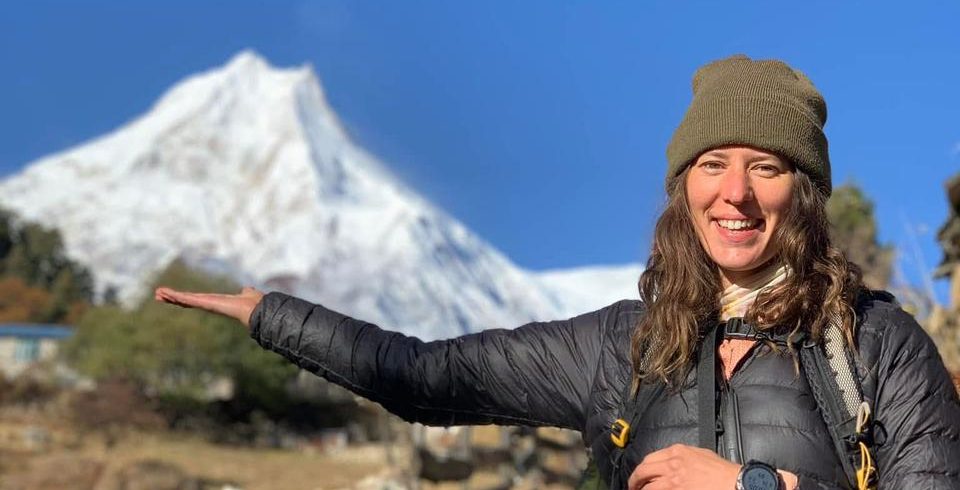
The 19-Day Manaslu Circuit with Tsum Valley Trek is one of Nepal’s most rewarding long-distance Himalayan journeys, combining remote valleys, ancient…
Planning your Manaslu Circuit or Tsum Valley Trek? Contact our local team for itinerary, price and booking advice.
Experience the Changing Landscapes of the Manaslu Circuit
The Manaslu Circuit begins at low elevation along the Budhi Gandaki River, and the change in scenery over the following days is one of the most noticeable features of the trek. Around Machha Khola and the first days of walking, the trail passes through warm lower valley terrain with rice terraces, subtropical forest and small Gurung and Magar settlements.
As the route continues toward Jagat and then Deng, the valley narrows and the trail crosses the Budhi Gandaki repeatedly on suspension bridges, often with waterfalls dropping into the gorge below. This is physically demanding walking on uneven stone paths, but it is also visually dramatic, with the river cutting through steep rock walls far below the trail.
Past Deng, the character of the trek shifts again. Villages like Namrung mark the entry into the upper Manaslu region, where Tibetan Buddhist culture becomes more visible and the forest begins to open into pine and birch woodland.
From Lho onward, the trail climbs into alpine terrain with direct views of Manaslu itself. By Samagaun and Samdo, trekkers are walking through high, dry and wind exposed country that feels very different from the forested lower valley. Dharamsala, the final stop before Larkya La, sits in a stark rocky basin above the tree line.
- Lower Budhi Gandaki river valleys and farmland
- Forests, waterfalls and narrow mountain gorges
- Traditional villages such as Jagat, Deng and Namrung
- Open alpine landscapes around Samagaun and Samdo
- High mountain terrain approaching Larkya La
Discover the Unique Character of Tsum Valley
Tsum Valley branches off the main Manaslu trail near Lokpa and follows the Shiar Khola into a quieter mountain valley. The valley was opened to foreign trekkers in 2008, and its geography has helped maintain a distinct character compared with the main Manaslu Circuit.
The trail climbs through Chumling and toward Chhokangparo, passing chortens, long mani walls and small farming villages built mainly from stone. The architecture and religious traditions reflect the valley’s close cultural connection with Tibet.
Further up the valley, Nile and the settlements near the head of Tsum sit in a wider open basin. This feels very different from the narrow gorge sections of the lower Manaslu trail.
Mu Gompa and Rachen Gompa are important religious sites in the valley, and the combination of monasteries, villages, mountain scenery and everyday local life gives Tsum Valley its own identity. Adding Tsum to the Manaslu Circuit means experiencing a second environment rather than simply adding more walking days to the same route.
- Traditional mountain villages
- Chortens and long mani walls
- Strong Tibetan Buddhist cultural influences
- Mu Gompa and Rachen Gompa
- Wide alpine landscapes in the upper valley
Discover Tibetan Buddhist Culture and Himalayan Traditions
Culture is another major reason to combine the Manaslu Circuit with Tsum Valley. As the trail climbs above the lower Budhi Gandaki Valley, Tibetan Buddhist traditions become increasingly visible in the villages, monasteries and religious structures along the route.
Prayer flags, mani walls, chortens, prayer wheels and monasteries are not simply attractions placed along the trekking route. They are part of the daily religious life of the communities living in the region. Tsum Valley adds even more depth to this experience, with its distinctive villages and active Buddhist monasteries.
Experience Strong Tibetan Buddhist Cultural Influences
From Namrung upward on the Manaslu Circuit, and throughout Tsum Valley, Tibetan Buddhist culture becomes an important part of what you see along the trail. Trekkers pass mani walls, prayer flags, chortens and prayer wheels around villages and trail junctions.
Villages such as Lho and Samagaun have a noticeably different cultural character from the lower sections of the route. In Tsum Valley, these traditions are even more visible through village architecture, monasteries and everyday religious practices.
The important point is that these traditions are part of everyday community life. The religious structures are used by local people, and monasteries remain active places of worship and study.
- Mani walls and carved prayer stones
- Prayer flags around villages and bridges
- Chortens and prayer wheels
- Buddhist monasteries and religious sites
- Traditional mountain architecture
Visit Important Monasteries and Cultural Sites
Tsum Valley is particularly interesting for trekkers who want to see functioning Buddhist monasteries as part of their trekking experience. Mu Gompa, located near the head of the valley, is one of the best known monasteries in Tsum. Rachen Gompa is another important religious site in the valley.
These are working religious communities rather than simply historical buildings. Visitors should therefore behave respectfully, dress appropriately and ask for permission before taking photographs of monks, nuns or interiors.
The main Manaslu Circuit also has important cultural sites around villages such as Lho and Samagaun. Walking through these settlements gives trekkers the opportunity to experience the cultural side of the region alongside its mountain scenery.
- Mu Gompa in upper Tsum Valley
- Rachen Gompa in Tsum Valley
- Monasteries around Lho and Samagaun
- Traditional Buddhist architecture
- Active religious traditions along the route
Trek Through the Manaslu Conservation Area
The Manaslu Circuit passes through the Manaslu Conservation Area, where forests, rivers, wildlife habitat and mountain landscapes are protected alongside the communities that live in the region. The trek is especially interesting because of how quickly the environment changes as the trail gains altitude.
For trekkers, conservation is not just something mentioned in a permit. The condition of the trails, forests, water sources and villages directly affects the quality of the trekking experience. Responsible travel helps protect the area while also supporting the communities that depend on tourism.
Experience Diverse Himalayan Ecosystems
One of the most interesting parts of the Manaslu Circuit is the change in vegetation and landscape as you climb. Around Machha Khola and Jagat, the surroundings are greener and warmer, with farmland, forests and river valleys.
As the trail continues through Deng and Namrung, the vegetation changes toward temperate forest with oak, rhododendron, pine and birch. Above Lho, the forest becomes thinner and the landscape gradually opens into alpine terrain around Samagaun and Samdo.
Beyond Samdo, vegetation becomes increasingly limited as the altitude rises. The landscape around Dharamsala and Larkya La is dominated by rock, moraine, snow and high mountain terrain. Walking through these different environments during one trek gives the Manaslu Circuit much of its character.
- Green river valleys at lower elevations
- Subtropical and temperate forests
- Pine, birch and rhododendron woodland
- Open alpine landscapes
- Rocky and snow covered high altitude terrain
Travel Through a Protected Mountain Landscape
The Manaslu Conservation Area was established to protect the region’s natural environment while supporting the communities living within it. Trekking provides an important source of income for many local businesses, guides, porters and accommodation providers along the route.
Trekkers can contribute to responsible tourism through simple choices. Carrying reusable bottles, managing waste carefully, respecting local rules and using local accommodation and services all help reduce the pressure that tourism can place on remote mountain communities.
The conservation area is therefore an important part of the trekking experience. Protecting the landscape helps preserve the forests, wildlife, water sources and villages that make the Manaslu region special.
- Carry reusable water bottles
- Reduce single use plastic waste
- Use local accommodation and services
- Respect local customs and conservation rules
- Keep the trail and villages clean
Cross the Larkya La Pass
Larkya La, also known as Larke Pass, is one of the main highlights of the Manaslu Circuit. At 5,106 metres, it is a genuine high altitude mountain pass and one of the more demanding parts of the trek. Reaching the pass is not simply about gaining altitude. The crossing involves a long day of walking through cold and exposed terrain before descending toward Bimthang.
Experience the Larkya La Pass
Crossing Larkya La is one of the main reasons trekkers choose the Manaslu Circuit. The trail climbs from Dharamsala toward the pass through a much higher and more exposed landscape than the lower sections of the trek. The altitude, cold, wind and length of the walking day make this section different from the rest of the route.
The experience starts well before reaching the top. Trekkers usually leave early because the day is long and weather conditions can change quickly at high altitude. The trail passes through rocky terrain and may include snow and icy sections depending on the season.
Reaching the top at 5,106 metres gives trekkers a clear sense of how much the landscape has changed since the lower Budhi Gandaki Valley. After the pass, the trail begins a long descent toward Bimthang, bringing another major change in scenery.
- High point of the Manaslu Circuit
- Altitude of approximately 5,106 metres
- Cold and exposed mountain terrain
- Long trekking day from Dharamsala
- Major transition toward Bimthang
Enjoy Dramatic Mountain Scenery Around the Pass
The landscape around Larkya La is very different from the forests and river valleys encountered earlier on the Manaslu Circuit. As you climb above the tree line, the surroundings become more open, rocky and exposed. Mountains and high ridges surround the route, creating a completely different atmosphere from the lower sections.
After crossing the pass, the scenery changes again as the trail descends toward Bimthang. The descent gives trekkers a chance to see the mountains from another direction while gradually returning to lower elevations and more vegetation.
This change is one of the most satisfying parts of the circuit because the pass is not simply the highest point of the trek. It also marks the point where the landscape begins to change significantly as you leave the upper Manaslu side and head toward Bimthang.
- Open high altitude terrain
- Rocky mountain ridges
- Wide views around the pass
- Changing scenery during the descent
- Different perspective toward Bimthang
Explore Remote Villages and Local Mountain Life
The villages are an important part of what makes the Manaslu Circuit and Tsum Valley different from simply walking through a mountain landscape. The trail passes through communities where farming, livestock, trade and tourism are closely connected to everyday life.
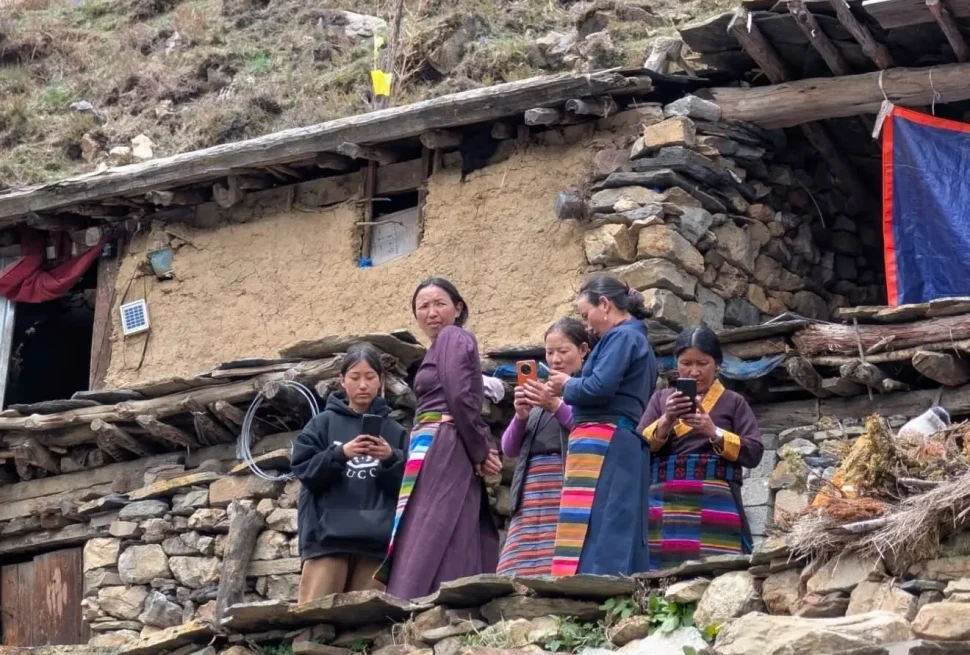
In the upper sections, the villages become smaller and more closely linked to the local Tibetan influenced culture. Walking through these settlements gives trekkers a chance to see how people live in a high mountain environment where access to roads and other services can be limited.
Experience Traditional Himalayan Villages
From the lower Budhi Gandaki Valley to the upper Manaslu region, the trail passes through villages with very different surroundings and architectural styles. Machha Khola, Jagat, Deng and Namrung each have their own character, while villages such as Lho, Samagaun and Samdo reflect the stronger Tibetan cultural influence of the upper region.
Tsum Valley adds another group of traditional settlements, including Chumling, Chhokangparo and Nile. Stone houses, narrow village paths, agricultural terraces, prayer walls and monasteries are all part of the landscape.
These villages are not simply places where trekkers stop for the night. They are working communities. Local people continue to farm, keep animals, run teahouses and manage their households while tourism has become another important part of the local economy.
- Jagat
- Deng
- Namrung
- Lho
- Samagaun
- Samdo
- Chumling
- Chhokangparo
- Nile
See Traditional Mountain Life
Trekking through Manaslu and Tsum Valley gives you a chance to see how communities have adapted to life in difficult mountain terrain. Farming, livestock, local trade and seasonal work remain important parts of life, especially in areas where modern transport and services are limited.
In the upper villages, the short growing season and cold climate influence what people can grow and how they use the land. Houses and community buildings are also adapted to the climate, while monasteries and religious structures remain important parts of village life.
For trekkers, these everyday details can be just as interesting as the mountain views. Taking time to observe village life respectfully gives you a better understanding of the region rather than simply passing through it on the way to the next destination.
- Mountain farming
- Livestock keeping
- Traditional stone houses
- Local teahouses and family businesses
- Monasteries and community religious practices
Enjoy a Quieter Trekking Experience
The Manaslu Circuit and Tsum Valley are a good choice for trekkers who prefer a quieter route and a more local feel. The region receives fewer trekkers than some of Nepal’s busiest trekking areas, particularly in Tsum Valley. That does not mean the trails are empty, but the overall atmosphere is generally more peaceful.
The difference becomes especially noticeable when walking through smaller villages and staying in local teahouses. Instead of moving through large trekking settlements, much of the route passes through smaller communities where tourism is still closely connected to local life.
Experience a Less Crowded Trekking Route
One of the main attractions of the Manaslu region is its quieter trekking environment. Compared with some of Nepal’s most established trekking routes, the Manaslu Circuit generally has a more relaxed atmosphere.
Tsum Valley is quieter still, particularly in the sections beyond Lokpa. Walking through the valley often means sharing the trail with fewer trekking groups and spending more time in smaller villages.
The appeal is not simply having an empty trail. A quieter environment can make it easier to notice the smaller details of the trek, from the sound of the river and movement through the forest to village life and the changing mountain landscape.
- More peaceful walking conditions
- Smaller mountain villages
- Less busy sections in Tsum Valley
- More time to enjoy the surroundings
- A stronger connection with local communities
Enjoy Peaceful Trails and Local Teahouses
The quieter nature of the route can also be noticed at the end of the walking day. Many overnight stops are in small mountain villages where teahouses are family run and closely connected with the local community.
Accommodation becomes more basic as the trail climbs, particularly in higher settlements such as Samdo and Dharamsala. For many trekkers, this is part of the experience because the focus is on the mountain environment rather than hotel style comfort.
Staying in local teahouses also gives trekkers more opportunities to meet other travelers, speak with local families and experience the practical side of trekking in a remote part of Nepal.
- Simple rooms
- Shared facilities in many locations
- Family run accommodation
- Basic but filling meals
- More limited facilities at higher elevations
Combine Adventure, Culture and High Altitude Trekking
The Manaslu Circuit and Tsum Valley work well together because they offer different types of experiences within one trip. Tsum Valley brings more cultural and village experiences, while the main Manaslu Circuit gradually builds toward the high mountain sections and Larkya La Pass.
Experience More Than Mountain Scenery
The Manaslu region offers much more than views of high mountains. The trail passes through forests, river valleys, villages, monasteries, farmland and high alpine terrain, creating a varied experience throughout the trek.
In Tsum Valley, cultural experiences become especially important. The monasteries, prayer walls, traditional villages and local way of life add another dimension to the route.
This combination means that even on days when the mountain views are limited by cloud or weather, there is still plenty to experience around the trail. The villages, forests, rivers and cultural sites remain an important part of the trek.
- Mountain scenery
- River valleys
- Forests
- Traditional villages
- Buddhist monasteries
- High altitude landscapes
Add Tsum Valley for a More Varied Trek
Adding Tsum Valley makes the overall Manaslu itinerary longer, but it also adds a completely different section before continuing toward the higher parts of the circuit. Instead of spending the entire trek on the main Manaslu trail, you take a side route into a separate valley with its own villages, monasteries and landscapes.
The route through Tsum allows trekkers to spend more time around places such as Chumling, Chhokangparo and Nile before visiting Mu Gompa and returning toward the main Manaslu trail.
For trekkers with enough time, this combination gives a more complete experience of the region. You get the cultural character of Tsum Valley together with the high altitude sections and Larkya La crossing of the Manaslu Circuit.
- More time in the Manaslu region
- Different village environments
- More Buddhist cultural sites
- Additional mountain scenery
- Tsum Valley and Larkya La in one itinerary
Experience the Mountains Around Manaslu
Mount Manaslu becomes an increasingly important part of the scenery as the trail climbs toward the upper sections of the circuit. The mountain views change from one section to another, and the landscape around Samagaun, Samdo, Dharamsala and Larkya La provides some of the most memorable high altitude scenery of the trek.
See Mount Manaslu and the Surrounding Mountains
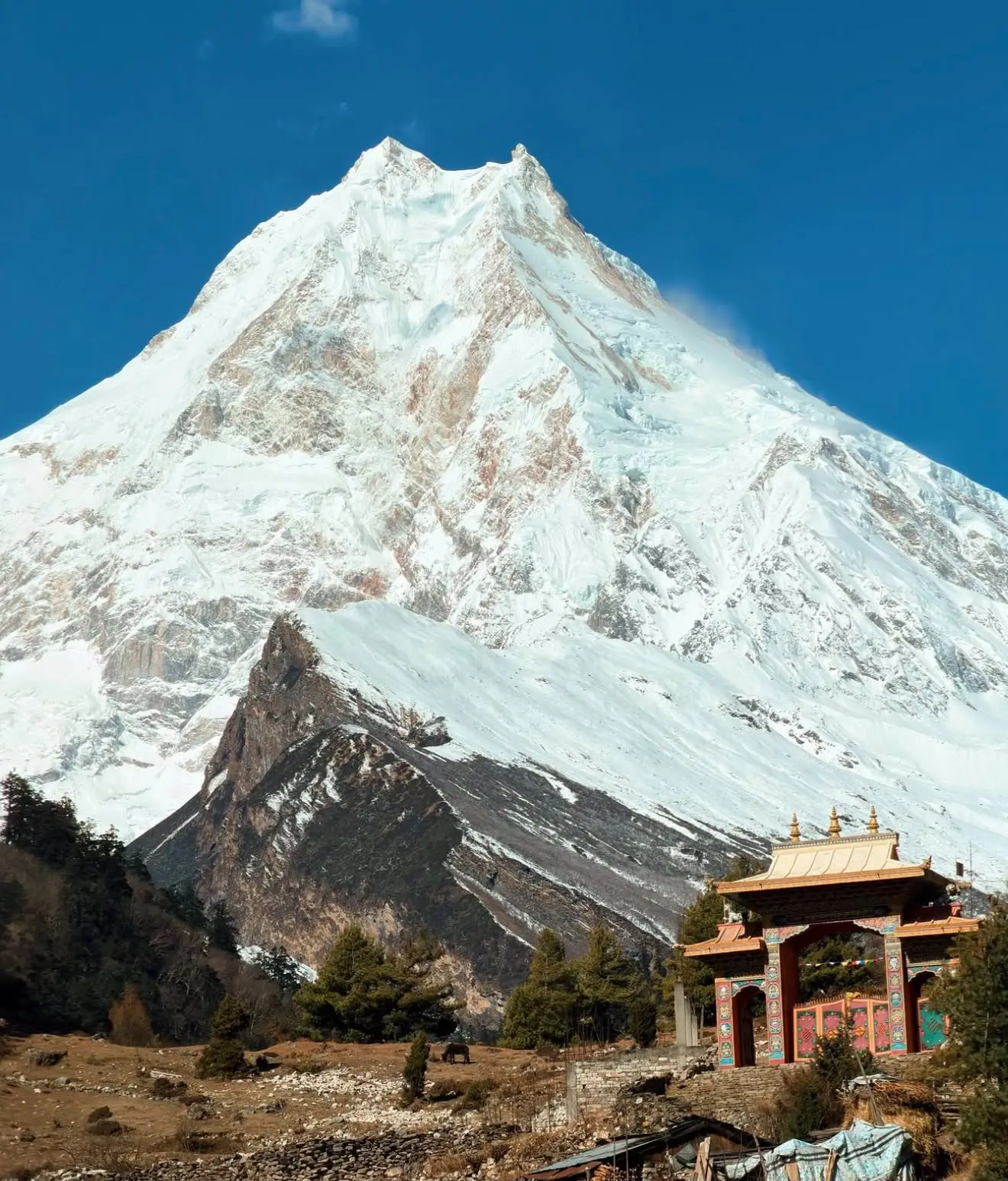
Mount Manaslu is one of the main visual highlights of the trek, especially as you approach the upper Manaslu region. Views become more prominent around Lho and continue to develop toward Samagaun and nearby viewpoints.
The mountain scenery is not limited to one viewpoint. As the trail gains elevation, the surrounding peaks, ridges and valleys create different perspectives throughout the route.
The combination of high mountains and traditional villages makes the scenery particularly interesting. In places such as Lho and Samagaun, the mountain backdrop forms part of the everyday environment of the village, rather than simply being something seen from a dedicated viewpoint.
- Mount Manaslu
- High mountain ridges
- Alpine valleys
- Changing mountain viewpoints
- Mountain scenery around the upper Manaslu region
Watch the Mountain Landscape Change Throughout the Trek
The mountain scenery develops gradually rather than appearing all at once. Lower sections of the trek are dominated by steep valley walls and the Budhi Gandaki River, while the upper sections open into much wider mountain landscapes.
Around Namrung and Lho, the views begin to open toward the higher peaks. Samagaun and Samdo provide a very different environment, with wide open terrain and large mountain faces surrounding the villages.
Near Dharamsala and Larkya La, the landscape becomes increasingly rocky and exposed. After crossing the pass, the descent toward Bimthang provides another change as the trail gradually returns toward lower elevations.
- Steep lower river valleys
- Forest and mountain villages
- Open views around Samagaun
- High altitude terrain around Samdo
- Rocky landscapes around Larkya La
- Changing scenery toward Bimthang
Choose a Trek That Rewards Preparation and Adventure
The Manaslu Circuit and Tsum Valley is a long trek with significant changes in altitude and terrain. It combines easier walking sections with longer days and the high altitude crossing of Larkya La. Good preparation helps trekkers enjoy the route rather than simply trying to get through it.
Experience a Genuine High Altitude Trekking Challenge
The higher sections of the Manaslu Circuit provide a real mountain trekking challenge. The trail climbs gradually from the lower Budhi Gandaki Valley toward Samagaun, Samdo and Dharamsala before reaching Larkya La at 5,106 metres.
Altitude is one of the main factors that makes the upper section demanding. The walking itself can also be tiring because of long days, uneven terrain, cold temperatures and changing weather.
The gradual approach to the higher villages gives trekkers time to adjust to the increasing elevation. Good pacing, sensible acclimatization and listening to your guide and your body are important parts of enjoying this section of the trek.
- Increasing altitude
- Long walking days
- Cold and changing weather
- Uneven mountain terrain
- Larkya La at 5,106 metres
Gain a Strong Sense of Achievement
Completing the Manaslu Circuit and crossing Larkya La gives trekkers a strong sense of achievement because the route requires consistent effort over many days. The experience starts in the lower valleys and gradually takes you into much higher and more demanding terrain.
By the time you reach Larkya La, you have already walked through forests, villages, river valleys and high mountain settlements. Looking back at how much the landscape has changed makes the crossing even more meaningful.
The descent toward Bimthang then provides a satisfying change after the pass. The trail begins to lose altitude and the environment gradually becomes greener again, marking the final stage of the circuit.
- Long multi day trekking experience
- Gradual altitude gain
- High altitude mountain walking
- Crossing Larkya La
- Completing the circuit toward Bimthang
Trek With Local Knowledge and Responsible Support
A trek through Manaslu and Tsum Valley involves more than following a marked trail. The route passes through remote communities, high altitude areas and sections where weather and trail conditions can change. Local knowledge can therefore make the experience smoother while also helping trekkers understand the culture and environment they are walking through.
Benefit From Local Knowledge Along the Route
Local trekking support can be particularly useful in the Manaslu region because conditions vary considerably between the lower valleys, Tsum Valley and the high altitude sections. Guides who know the route can help trekkers understand the day’s walking, local accommodation, weather changes and practical conditions along the trail.
Local knowledge is also useful beyond logistics. Guides can explain village customs, Buddhist traditions, local landmarks and the history of places along the route, helping trekkers understand more of what they are seeing.
This local connection is especially valuable in Tsum Valley, where the cultural character of the villages and monasteries is an important part of the trekking experience.
- Route planning
- Altitude and acclimatization
- Local accommodation
- Weather and trail conditions
- Cultural understanding
- Communication with local communities
Support Local Communities Through Responsible Trekking
Trekking in Manaslu and Tsum Valley creates income for many people living along the route. Local guides, porters, teahouse owners, cooks, transport providers and other small businesses all benefit from responsible tourism.
Choosing local accommodation, eating local meals and using local services allows more of the money generated by trekking to remain within the communities along the route. Simple actions such as reducing plastic waste, respecting local customs and protecting the trail also help keep the region attractive for future visitors.
Responsible trekking is therefore not only about protecting the landscape. It is also about respecting the people who live here and making sure that tourism provides useful opportunities for communities in the Manaslu and Tsum Valley region.
- Stay in locally operated teahouses
- Use local guides and porters
- Eat local meals where possible
- Respect local customs and religious sites
- Reduce waste and plastic use
- Support small local businesses
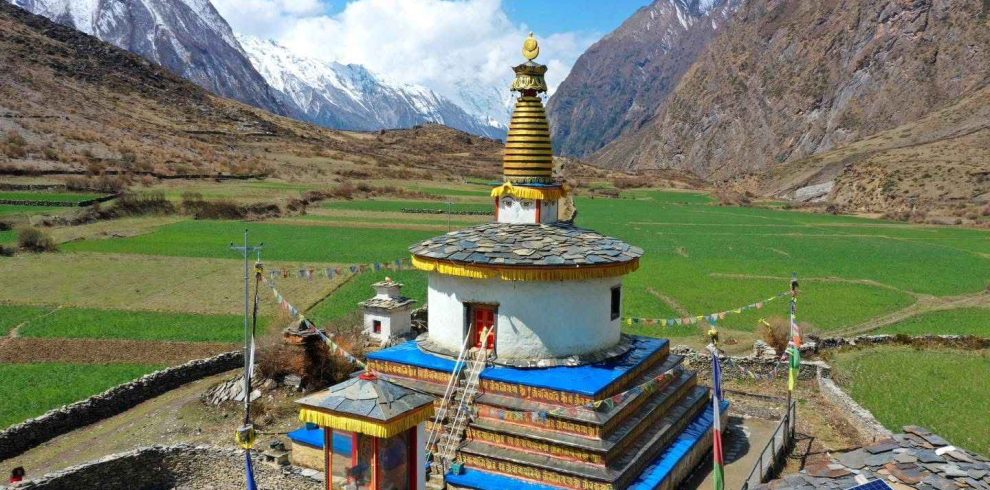
The 23-day Tsum Valley & Manaslu Circuit Trek combines breathtaking Himalayan landscapes with the preserved Tibetan Buddhist culture of a…
Planning your Manaslu Circuit or Tsum Valley Trek? Contact our local team for itinerary, price and booking advice.
Manaslu Circuit and Tsum Valley Trek Prices
The cost of a Manaslu trek depends on the itinerary and the number of people travelling together. We offer private Manaslu Circuit and Tsum Valley trekking packages with different price levels for individuals, couples and groups.
Larger groups receive a lower per person rate because transportation, guide and other trekking costs can be shared across the group. If your group size does not fit the price ranges below, contact us directly and we can provide a customized quotation.
13 Day Manaslu Circuit Trek
Private Manaslu Circuit Trek price per person
| Number of Travellers | Price Per Person |
|---|---|
| 1 Traveller | USD 1,350 |
| 2 to 5 Travellers | USD 1,250 |
| 6 to 8 Travellers | USD 1,200 |
| 9 to 10 Travellers | USD 1,150 |
19 Day Manaslu Circuit with Tsum Valley Trek
Private Manaslu Circuit and Tsum Valley Trek price per person
| Number of Travellers | Price Per Person |
|---|---|
| 1 Traveller | USD 1,895 |
| 2 Travellers | USD 1,855 |
| 3 Travellers | USD 1,795 |
| 4 to 7 Travellers | USD 1,755 |
| 8 to 10 Travellers | USD 1,655 |
23 Day Tsum Valley and Manaslu Circuit Trek
Private Tsum Valley and Manaslu Circuit Trek price per person
| Number of Travellers | Price Per Person |
|---|---|
| 1 Traveller | USD 1,995 |
| 2 Travellers | USD 1,955 |
| 3 Travellers | USD 1,895 |
| 4 to 6 Travellers | USD 1,855 |
| 7 or More Travellers | USD 1,795 |
Need a different itinerary? The Manaslu Circuit and Tsum Valley routes can be customized according to your available time, group size and preferred walking pace. Contact us before booking if you want to add extra acclimatization days, extend your stay in Tsum Valley or customize transportation.
Get Your Manaslu Trek Price
Send us your travel dates and number of trekkers by WhatsApp or email. We will confirm the available itinerary, current price and inclusions before you make your booking.
Planning your Manaslu Circuit or Tsum Valley Trek? Contact our local team for itinerary, price and booking advice.
How Difficult Is the Manaslu Circuit and Tsum Valley Trek?
The Manaslu Circuit and Tsum Valley Trek is a challenging trek, mainly because of its length, changing terrain and the high altitude reached during the Manaslu Circuit. At the same time, the trek is not difficult from the first day. The route begins in the lower Budhi Gandaki Valley, where the altitude is relatively low, and gradually becomes more demanding as you walk toward the upper Manaslu region.
Adding Tsum Valley makes the overall trek longer, but it does not mean that every day is extremely difficult. There are easier walking days, moderate sections and more demanding days. The biggest physical challenge comes later in the itinerary, particularly around Dharamsala and the crossing of Larkya La at 5,106 metres.
For many trekkers, the key is not previous high altitude trekking experience but having enough time, walking at a sensible pace and allowing the body to adjust gradually to the increasing elevation. A beginner who is reasonably fit and properly prepared can also enjoy this trek, provided the itinerary allows enough time for acclimatization and the trek is approached responsibly.
What Makes the Trek Challenging?
The main difficulty comes from the combination of several factors rather than one particularly difficult section. You will spend many consecutive days walking, the trail changes considerably from one section to another, and the altitude becomes a much bigger factor as you approach Samagaun, Samdo, Dharamsala and Larkya La.
- Long trekking days on some sections
- Continuous walking over many days
- Steep climbs and descents
- Uneven stone trails and mountain paths
- Increasing altitude in the upper Manaslu region
- Cold and changing mountain weather
- The high altitude crossing of Larkya La
- Basic accommodation in some remote villages
The Lower Manaslu Circuit Is More About Distance and Terrain
The first part of the Manaslu Circuit is at much lower elevation, so altitude is not yet the main concern. Instead, trekkers notice the trail itself. The route follows the Budhi Gandaki through steep valleys and includes suspension bridges, stone steps, uneven paths and repeated ascents and descents.
Sections around Machha Khola, Jagat and Deng can feel physically demanding because the trail does not simply climb steadily. You may gain elevation and then descend again before climbing toward the next village. The warm conditions at lower elevations can also make some walking days feel harder, particularly when the sun is strong.
Regular walking and good basic fitness are useful for these early sections. You do not need to be a professional athlete, but being comfortable with several hours of walking on uneven terrain will make the trek much more enjoyable.
The Tsum Valley Section Adds More Walking Days
Tsum Valley adds additional walking to the overall itinerary, but its difficulty varies depending on the day’s route and altitude. The trail enters the valley near Lokpa and gradually climbs toward Chumling, Chhokangparo and the higher settlements around Nile and Mu Gompa.
Some sections involve steep climbs and descents, while other parts follow narrower valley trails. Because Tsum Valley is included before the highest sections of the Manaslu Circuit in many itineraries, it can also provide useful time for trekkers to build their walking rhythm before reaching the higher elevations.
The main consideration is the additional number of walking days. If you combine Tsum Valley with the complete Manaslu Circuit, you should plan enough time rather than trying to fit both routes into an unnecessarily short itinerary.
Altitude Becomes the Main Challenge Above Samagaun
As the trail climbs toward Samagaun, Samdo and Dharamsala, altitude becomes increasingly important. The walking pace naturally becomes slower because there is less oxygen available at higher elevations.
This is why a good itinerary does not treat the upper Manaslu section as a race. Spending appropriate time at altitude allows the body to adjust gradually. Acclimatization days and sensible daily elevation gains are important parts of planning the trek.
Trekkers should pay attention to how they feel rather than comparing their walking speed with someone else. At higher elevations, walking slowly, taking regular breaks and maintaining a steady pace is normal.
Larkya La Is the Most Demanding Day
The crossing of Larkya La at 5,106 metres is generally the most demanding part of the Manaslu Circuit. The day begins from the Dharamsala area and involves a long climb through high altitude terrain before reaching the pass and then descending toward Bimthang.
The difficulty comes from the combination of altitude, distance, cold, wind and the length of the day. Conditions can also vary by season. Snow and ice may affect sections of the trail during colder periods, while clear weather can still bring strong wind and cold temperatures at the pass.
This is one reason the itinerary should not be rushed. Reaching Larkya La after gradually gaining altitude gives trekkers a much better chance of enjoying the crossing rather than treating it as a race to the top.
Can a beginner do the Manaslu Circuit and Tsum Valley Trek?
Yes, a beginner can potentially complete the trek if they are reasonably fit, prepared for several consecutive days of walking and follow a sensible itinerary. Previous high altitude trekking experience is helpful but is not the only factor that determines whether someone can complete the route. Preparation, pacing, acclimatization and listening to your body are much more important.
How to Make the Trek More Manageable
You do not need to train like a professional mountaineer for this trek. Regular walking, hiking and cardiovascular exercise before the trip can help build endurance. It is also useful to include some uphill and downhill walking in your preparation because the trail includes both throughout the route.
During the trek, keep a steady pace rather than trying to walk too quickly during the lower sections. Eat regularly, drink enough fluids and give yourself enough time to rest. At higher elevations, follow the planned acclimatization schedule and communicate any health concerns to your guide promptly.
- Build regular walking and hiking into your preparation
- Practice walking uphill and downhill
- Use comfortable and properly fitted trekking footwear
- Keep a steady pace during the trek
- Allow enough time for acclimatization
- Stay hydrated and eat regularly
- Do not ignore unusual symptoms at altitude
- Allow enough time for the Larkya La crossing
Overall Difficulty
Overall, the Manaslu Circuit and Tsum Valley Trek is best described as a challenging but achievable long distance trek. The lower sections are mainly demanding because of the terrain and walking distance, while the upper sections require more attention because of altitude and weather. Larkya La is the main physical challenge.
The trek does not require technical mountaineering skills under normal trekking conditions. The bigger requirement is being prepared for a long trek and understanding that conditions become more demanding as you climb. With a suitable itinerary, proper acclimatization and realistic preparation, the route can be enjoyed by a wide range of trekkers, including people doing their first long high altitude trek.
Planning your Manaslu Circuit or Tsum Valley Trek? Contact our local team for itinerary, price and booking advice.
Who Is the Manaslu Circuit and Tsum Valley Trek Suitable For?
The Manaslu Circuit and Tsum Valley Trek can suit a wide range of trekkers. You do not have to be an experienced mountaineer or have completed another famous trek in Nepal before starting this route. What matters more is being comfortable with several days of walking, preparing properly for the higher elevations and choosing an itinerary that gives you enough time to adjust to the altitude.
Because the trek combines Tsum Valley with the Manaslu Circuit, it is important to understand that this is a longer and more demanding trip than a short Himalayan trek. The route includes steep sections, uneven trails, long walking days and the crossing of Larkya La at 5,106 metres.
Suitable for First Time High Altitude Trekkers
You can consider this trek even if you have never completed a high altitude trek before. Previous trekking experience can certainly help, but it is not a requirement for everyone. A reasonably fit person who prepares properly and follows a well planned itinerary can take on the route.
The important difference is between being new to high altitude trekking and being unprepared for a long trek. Someone with little trekking experience should give themselves enough time to prepare physically and should avoid choosing an itinerary that rushes through the upper Manaslu region.
- Walking for several hours on consecutive days
- Steep uphill and downhill sections
- Uneven mountain trails
- Simple teahouse accommodation
- Changing weather and temperatures
- Gradual increases in altitude
Suitable for Regular Hikers and Experienced Trekkers
If you already enjoy hiking or have completed other multi day treks, the Manaslu Circuit and Tsum Valley can be a good next challenge. Regular hikers are usually familiar with spending long periods on their feet, carrying a daypack and dealing with changing trail conditions.
Previous experience at altitude can also help you understand how your body responds as you climb. However, previous experience does not remove the need for acclimatization because every trekker can react differently to altitude.
Suitable for Trekkers Looking for an Off the Beaten Path Route
This trek is particularly suitable for people who want to spend more time away from Nepal’s busiest trekking routes. Tsum Valley is quieter and has small villages, monasteries and traditional settlements that give the trek a more local feel.
The Manaslu Circuit also offers a mix of remote villages, mountain scenery, Buddhist culture and high altitude trekking. If you enjoy walking through less developed mountain areas and staying in simple local teahouses, the route can be a very good fit.
Suitable for Trekkers Interested in Culture as Well as Mountains
The trek is not only about reaching Larkya La or seeing Mount Manaslu. The route passes through villages, monasteries, mani walls, prayer flags and areas with strong Tibetan Buddhist cultural influences.
Tsum Valley is particularly interesting for trekkers who want to spend time around traditional villages and Buddhist monasteries. People who enjoy learning about local communities and observing village life will find this side of the trek just as interesting as the mountain scenery.
Suitable for People With Enough Time for a Longer Trek
Combining Tsum Valley and the Manaslu Circuit requires more time than doing the main Manaslu Circuit alone. The extra days allow you to explore Tsum Valley before continuing toward the higher sections of the Manaslu route.
This is a good option for travelers who prefer a slower and more complete experience rather than trying to finish the region in the shortest possible itinerary.
- A longer trekking experience in Nepal
- Time to explore both Tsum Valley and Manaslu
- More cultural experiences along the trail
- Several days in remote mountain villages
- A high altitude pass crossing
Who may want to choose a shorter trek instead?
If you have very limited time, are not comfortable walking for several consecutive days, or do not want to reach high altitude, a shorter trek in Nepal may be a better option. The Manaslu Circuit and Tsum Valley should not be chosen simply because it is a popular route. It is better to match the itinerary with your fitness, available time and interest in the type of trekking experience you want.
Is It Suitable for Beginners?
Yes, it can be. Being a beginner does not automatically mean you cannot do the Manaslu Circuit and Tsum Valley Trek. The more important question is whether you are prepared for the length of the trek, the terrain and the higher elevations.
If this is your first long trek, allow enough time for preparation and choose an itinerary with proper acclimatization. Walk at a steady pace, avoid trying to compete with faster trekkers and communicate early if you are struggling.
Who Is This Trek Best For?
Overall, the Manaslu Circuit and Tsum Valley Trek is best suited to travelers who enjoy walking, have enough time for a longer trek and want to experience a combination of mountain scenery, traditional villages, Buddhist culture and high altitude trekking.
- Enjoy multi day hiking and outdoor travel
- Want an off the beaten path trekking experience
- Are interested in local culture and mountain villages
- Want to explore both Tsum Valley and the Manaslu Circuit
- Are prepared for high altitude trekking
- Have enough time for a gradual itinerary
- Are comfortable with simple teahouse accommodation
- Want to cross Larkya La at 5,106 metres
Planning your Manaslu Circuit or Tsum Valley Trek? Contact our local team for itinerary, price and booking advice.
How Many Days Are Needed?
The number of days needed depends on whether you want to trek the Manaslu Circuit alone or combine it with Tsum Valley. A standard 13 Day Manaslu Circuit Trek is suitable for trekkers who want to complete the main circuit, while adding Tsum Valley requires a longer itinerary.
For trekkers who want to explore both areas, we offer a 19 Day Manaslu Circuit Trek with Tsum Valley and a 23 Day Tsum Valley Manaslu Circuit Trek. The longer itineraries allow more time to explore the valley, spend time in the mountain villages and walk at a more comfortable pace.
- 13 Day Manaslu Circuit Trek – A complete Manaslu Circuit itinerary without Tsum Valley.
- 19 Day Manaslu Circuit Trek with Tsum Valley – Combines Tsum Valley with the main Manaslu Circuit in a longer itinerary.
- 23 Day Tsum Valley Manaslu Circuit Trek – A longer option with more time to explore Tsum Valley and the Manaslu region.
How Long Does the Manaslu Circuit Trek Take?
The standard Manaslu Circuit can be completed in around 13 days as a trekking itinerary, depending on the starting point, transportation and the exact schedule. The route follows the Budhi Gandaki Valley through traditional villages before reaching the upper Manaslu region and crossing Larkya La at 5,106 metres.
The 13 day itinerary is a good choice for trekkers who have limited time but still want to experience the main highlights of the Manaslu Circuit. It includes the major villages, high altitude sections and the Larkya La crossing before continuing toward Bimthang and the end of the circuit.
How Many Days Are Needed for Manaslu Circuit and Tsum Valley?
Tsum Valley is a separate section that branches from the main Manaslu route near Lokpa. Adding it to the Manaslu Circuit therefore requires additional walking days. The trail enters Tsum Valley and continues through villages such as Chumling, Chhokangparo and Nile before reaching the upper valley and returning toward the main Manaslu route.
For trekkers who want to experience both areas, the 19 Day Manaslu Circuit Trek with Tsum Valley provides a practical option, while the 23 Day Tsum Valley Manaslu Circuit Trek allows more time for exploration and a more relaxed schedule.
Why Does Tsum Valley Add More Days?
Tsum Valley is not simply a short stop along the main Manaslu Circuit. The trail branches away from the main route and follows a separate valley with its own villages, monasteries and mountain landscapes.
Spending several days in Tsum Valley allows trekkers to reach places such as Chumling, Chhokangparo, Nile and Mu Gompa rather than only walking a short section before returning to the main trail.
- Entering Tsum Valley near Lokpa
- Walking through traditional villages
- Exploring the upper valley
- Visiting monasteries and cultural sites
- Returning to the main Manaslu Circuit
- Continuing toward the higher Manaslu region
Why Is Enough Time Important?
The Manaslu region involves a significant change in altitude. The trek begins in the lower Budhi Gandaki Valley and gradually climbs toward Samagaun, Samdo and Dharamsala before reaching Larkya La at 5,106 metres.
Having enough days allows the itinerary to include appropriate acclimatization and avoids making every walking day unnecessarily long. The higher sections require a slower pace, especially as you approach Dharamsala and Larkya La.
Extra time can also be useful when weather or trail conditions affect the schedule. Remote mountain trekking does not always go exactly according to plan, so some flexibility can make the overall experience much easier.
Can the Trek Be Done in Fewer Days?
The main Manaslu Circuit can be arranged in a shorter itinerary, but reducing the number of days usually means longer walking days and less flexibility. This is particularly important when planning the higher sections before Larkya La.
If you have limited time, the 13 Day Manaslu Circuit Trek is the more suitable option. If you want to include Tsum Valley, it is better to choose one of the longer itineraries rather than trying to fit both areas into an unnecessarily short schedule.
Which Manaslu Trek Is Right for You?
The best itinerary depends mainly on how much time you have and whether you want to include Tsum Valley. Each option provides a different way to experience the Manaslu region.
Choose this option if you want to complete the main Manaslu Circuit without adding Tsum Valley. It is a good choice for travelers with limited time who still want to experience the Larkya La crossing and upper Manaslu region.
19 Day Manaslu Circuit Trek with Tsum ValleyThis option combines Tsum Valley with the main Manaslu Circuit. It gives you time to explore the valley before continuing toward Samagaun, Samdo and Larkya La.
23 Day Tsum Valley Manaslu Circuit TrekThe 23 day option is suitable for trekkers who prefer more time in the region and a less rushed itinerary. It provides additional flexibility for exploring Tsum Valley and the Manaslu Circuit.
Our advice:
Do not choose the shortest itinerary simply because you have the option. If you have enough time, combining Tsum Valley with the Manaslu Circuit gives you a much broader experience of the region. For limited time, the 13 day Manaslu Circuit is the practical choice. For a more complete experience, consider the 19 day or 23 day Tsum Valley and Manaslu options.
Planning your Manaslu Circuit or Tsum Valley Trek? Contact our local team for itinerary, price and booking advice.
What Permits Are Required?
The Manaslu Circuit requires several permits because the route passes through a restricted trekking area and the Manaslu Conservation Area. If you add Tsum Valley, you need an additional restricted area permit for the Tsum Valley section.
For foreign trekkers, the main permits are the Manaslu Restricted Area Permit (MRAP), Manaslu Conservation Area Permit (MCAP) and, when the itinerary enters the Annapurna Conservation Area, the Annapurna Conservation Area Permit (ACAP). A separate Gorkha Tsum Valley Restricted Area Permit is required when trekking in Tsum Valley.
1. Manaslu Restricted Area Permit
The Manaslu Restricted Area Permit is required for the restricted section of the Manaslu trekking route. The fee depends on the season and the number of days spent in the restricted area.
| Season | First 7 Days | Each Additional Day |
|---|---|---|
| September to November | USD 100 per person | USD 15 per person per day |
| December to August | USD 75 per person | USD 10 per person per day |
These are the current rates listed by Nepal’s Department of Immigration for the Manaslu restricted trekking area.
2. Manaslu Conservation Area Permit
The Manaslu Conservation Area Permit, commonly called the MCAP permit, is required for trekking in the Manaslu Conservation Area. The current entry fee is NPR 3,000 for foreign nationals and NPR 1,000 for SAARC nationals, including tax.
MCAP covers destinations including Samagaun, Larkya Pass, Bimthang and Tsum Valley.
Foreign nationals: NPR 3,000 per person
SAARC nationals: NPR 1,000 per person
3. Annapurna Conservation Area Permit
The ACAP permit is required when your itinerary continues into the Annapurna Conservation Area after crossing Larkya La. This commonly applies to Manaslu Circuit itineraries that descend toward Dharapani and continue through the Annapurna Conservation Area.
The current conservation area entry fee is NPR 3,000 for foreign nationals and NPR 1,000 for SAARC nationals, including tax.
If your Manaslu itinerary ends before entering the Annapurna Conservation Area, the exact permit requirement can differ according to your exit point. Your trekking agency should arrange the permits according to the actual route.
4. Tsum Valley Restricted Area Permit
If you add Tsum Valley to your Manaslu trek, you need a separate restricted area permit for the Gorkha Tsum Valley section. The current rates are:
| Season | First Week | Each Additional Day |
|---|---|---|
| September to November | USD 40 per person | USD 7 per person per day |
| December to August | USD 30 per person | USD 7 per person per day |
The Gorkha Tsum Valley restricted area includes the route through Sirdibas, Lokpa, Chumling, Chekampar and Nile.
Do You Need All of These Permits?
It depends on the itinerary. A standard Manaslu Circuit and a combined Manaslu Circuit with Tsum Valley do not require exactly the same permits.
- Manaslu Restricted Area Permit
- Manaslu Conservation Area Permit
- Annapurna Conservation Area Permit if the route enters ACAP
- Manaslu Restricted Area Permit
- Tsum Valley Restricted Area Permit
- Manaslu Conservation Area Permit
- Annapurna Conservation Area Permit if the route enters ACAP
What Documents Are Needed?
For conservation area permits, trekkers need their valid passport and personal details. A recent passport photograph may also be required when applying through the online permit system.
- Valid passport
- Passport details and personal information
- Recent passport photograph
- Confirmed trekking itinerary
- Valid Nepal visa covering the trekking period
Can You Get the Permits Yourself?
Conservation area permits can be obtained through the relevant permit system and designated counters. The restricted area permits are handled through Nepal’s trekking permit system.
For the Manaslu Circuit and Tsum Valley, most international trekkers use a registered trekking agency because the restricted area requirements, trekking itinerary and permit details need to match the actual route.
Your trekking agency can arrange the required permits before you leave Kathmandu and make sure that the permits cover the complete itinerary.
Important:
Permit fees and trekking regulations can change when the Government of Nepal or the relevant conservation authority updates its rules. The rates shown here are intended as the current permit information for planning your Manaslu Circuit and Tsum Valley Trek. It is always worth checking the latest official fee schedule before your departure.
Planning your Manaslu Circuit or Tsum Valley Trek? Contact our local team for itinerary, price and booking advice.
What Is Accommodation Like on the Manaslu Circuit and Tsum Valley Trek?
Accommodation on the Manaslu Circuit and Tsum Valley Trek is mainly provided in teahouses and small mountain lodges. Most are family run and offer a comfortable place to stay after a day of walking. The standard of accommodation in the Manaslu region has improved considerably, and trekkers can find clean rooms, comfortable beds, dining areas and useful facilities throughout much of the route.
Most teahouses provide twin sharing rooms with beds, mattresses, pillows and blankets. Shared bathrooms are common, while some lodges also have rooms with attached bathrooms. Hot showers are available at many teahouses for an additional charge and may use gas, solar or other heating systems depending on the lodge.
The dining room is usually the main social area of the teahouse. This is where trekkers have their meals, relax after walking and meet other people travelling through the region. Many lodges have a central heating stove in the dining area, making the evenings comfortable during colder periods.
Tsum Valley also has a growing selection of teahouses and lodges. Facilities vary from village to village, but the overall standard continues to improve as trekking infrastructure develops in the region. Trekkers can generally expect a clean room, comfortable bed, dining area, meals and the facilities needed for a mountain trek.
Electricity is available at many teahouses for charging phones, cameras and other devices, although some lodges charge a small fee. WiFi and mobile network services are available in parts of the route, but the strength and reliability of the connection can vary. It is useful to keep important documents and information available offline.
- Twin sharing rooms
- Bed, mattress, pillow and blanket
- Shared bathrooms at many lodges
- Attached bathrooms at selected lodges
- Hot showers at many locations for an additional fee
- Dining rooms with heating stoves
- Electricity for charging devices
- WiFi in selected locations
- Mobile network coverage in parts of the route
- Freshly prepared meals
Toilet facilities are also an important part of teahouse accommodation on the route. Most lodges provide shared toilets, while some teahouses have attached bathrooms depending on the location. For a detailed look at toilet facilities, bathroom arrangements and what trekkers can expect along the route, see our complete guide to Manaslu Circuit Trek Toilet Facilities .
A warm sleeping bag is still recommended, particularly for colder nights and the early morning start toward Larkya La. Overall, accommodation on the Manaslu Circuit and Tsum Valley Trek is comfortable, practical and increasingly well developed while still retaining the friendly atmosphere of traditional mountain teahouses.
What Food Is Available on the Manaslu Circuit and in Tsum Valley?
Food on the Manaslu Circuit and in Tsum Valley is mainly prepared by teahouses and local lodges along the trail. The menus include familiar trekking dishes as well as traditional Nepali and Tibetan influenced food. Dal bhat remains one of the most popular meals because it is filling, nutritious and widely available throughout the route.
Dal bhat normally consists of rice, lentil soup, vegetable curry and additional vegetables, with the exact combination depending on the teahouse. Other common meals include noodle soup, fried rice, momos, potatoes, pasta, noodles, Tibetan bread, chapati and different egg dishes.
Breakfast options commonly include porridge, eggs, Tibetan bread, toast, pancakes and tea or coffee. As you move through different villages, the selection can change depending on the ingredients available at each lodge.
Vegetarian food is widely available and is a practical choice for many trekkers. Meat dishes may also be available at various teahouses, but availability depends on the location and supply. Trekkers with food allergies or specific dietary requirements should inform their trekking company before departure so meals can be planned accordingly.
Dal bhat is one of the most reliable meals on the trek. It provides carbohydrates, lentils and vegetables and is commonly available in villages along the route. Many trekkers choose it regularly because it is filling and can be served in generous portions.
The availability of certain foods depends on the location and season. Ingredients have to reach mountain villages by road, porter or other local transport, so it is normal for some menu items to be unavailable from time to time.
Trekkers should also carry a reusable water bottle. Drinking water can usually be arranged at teahouses and local water sources, but water should be properly filtered or treated before drinking unless it has already been safely treated by the lodge or trekking operator.
How Do You Travel to and From the Manaslu Circuit Trek?
The Manaslu Circuit Trek begins with a road journey from Kathmandu toward the trekking starting point in the lower Budhi Gandaki Valley. Depending on the itinerary and current road conditions, trekkers usually travel by private jeep, shared jeep or public bus toward Machha Khola and other starting points along the route.
A private jeep provides more flexibility and is generally more comfortable, particularly for groups travelling together. Public transportation is a more economical option and is also commonly used by local people travelling through the region.
The road journey from Kathmandu is part of the overall trekking experience. The route passes through the Gorkha region before following the Budhi Gandaki Valley toward the Manaslu trekking area. Depending on the exact itinerary, the trek may begin from Machha Khola or another nearby point.
Road conditions can change considerably depending on the season. The route includes sections of mountain road where construction, rainfall, landslides or other local conditions can affect travel time. It is therefore better to treat published driving times as estimates rather than fixed schedules.
- Private jeep from Kathmandu to the trekking starting point
- Shared jeep services
- Public bus services
- Private vehicle for groups wanting more flexibility
- Road transportation from Dharapani after completing the circuit
- Transport toward Besisahar and onward to Kathmandu or Pokhara
If you want to compare the different road transport options in more detail, including public buses, shared jeeps, private jeeps, approximate travel times, road conditions and costs, see our complete guide to Bus vs Jeep on the Manaslu Circuit Trek .
After crossing Larkya La and completing the main trekking section, the route normally continues toward Bimthang and Dharapani. From Dharapani, trekkers connect with the road network toward Besisahar and then continue by road toward Kathmandu or Pokhara, depending on their travel plans.
The exact transport arrangement depends on the trekking package and current road conditions. It is sensible to keep some flexibility around the road sections because mountain travel times can change with weather and local conditions.
What Should You Pack for the Manaslu Circuit and Tsum Valley Trek?
Packing for the Manaslu Circuit and Tsum Valley Trek is mainly about preparing for a wide range of temperatures. The trek begins in relatively warm lower valleys and gradually reaches the colder high altitude environment around Dharamsala and Larkya La.
A layering system works well because temperatures can change significantly during the day. A moisture wicking base layer, warm fleece or down jacket and waterproof outer layer allow trekkers to adjust clothing as conditions change.
Good trekking boots that have already been worn and fitted properly are important. The trail includes rocky sections, stone steps, uneven paths, steep climbs and long descents. Trekking poles are also useful, particularly on steep sections and during the descent after crossing Larkya La.
Warm clothing becomes especially important for the upper sections of the trek. A warm jacket, thermal layers, gloves, hat and good quality socks should be easily accessible rather than packed at the bottom of your bag.
- Comfortable broken in trekking boots
- Warm down or insulated jacket
- Fleece or warm mid layer
- Thermal base layers
- Waterproof and windproof jacket
- Warm gloves and hat
- Comfortable trekking trousers
- Waterproof trousers or rain protection
- Trekking poles
- Warm sleeping bag
- Reusable water bottle
- Water filter or purification tablets
- Sunglasses and sunscreen
- Headlamp with spare batteries
- Basic personal first aid supplies
- Personal medication
- Passport and required travel documents
Sun protection is important even when the weather feels cold. Sunglasses, sunscreen and a hat are useful because ultraviolet exposure becomes stronger at higher elevations. Rain protection is also worth carrying because mountain weather can change quickly.
If your trekking package includes a sleeping bag, down jacket or duffle bag, you may not need to purchase or carry all of these items yourself. Confirm what is included with your trekking company before departure.
How Do You Prepare for High Altitude on the Manaslu Circuit?
Altitude preparation is mainly about giving your body enough time to adjust as the trail climbs. The Manaslu Circuit gradually moves from the lower Budhi Gandaki Valley toward Samagaun, Samdo and Dharamsala before the Larkya La crossing at 5,106 metres.
A properly planned itinerary includes appropriate acclimatization time in the upper Manaslu region. These days are not simply free days. Short walks and gradual activity around the village can help trekkers become accustomed to the increasing elevation before continuing higher.
Walking at a steady pace is important. There is no advantage in rushing during the lower sections and arriving tired at higher elevations. Drink regularly, eat properly and allow yourself enough rest each night.
- Ascend gradually according to the planned itinerary
- Follow the scheduled acclimatization days
- Walk at a comfortable and steady pace
- Drink enough fluids throughout the day
- Eat regular meals
- Get sufficient rest and sleep
- Tell your guide if you feel unwell
- Avoid rushing to reach the next village
Common symptoms associated with altitude can include headache, nausea, dizziness, reduced appetite and unusual tiredness. Trekkers should not ignore symptoms or try to hide them from their guide. If symptoms become concerning, the safest response may be to stop ascending and descend to a lower elevation.
Important: Altitude affects people differently, and good fitness does not guarantee protection from altitude related problems. Anyone with medical concerns or previous altitude problems should speak with a qualified medical professional before travelling and discuss relevant concerns with their trekking operator.
What Is the Larkya La Pass Crossing Like?
Larkya La is the highest point of the Manaslu Circuit, reaching approximately 5,106 metres. The crossing is one of the major highlights of the trek and requires a long day of walking at high altitude.
Trekkers normally stay at Dharamsala the night before crossing the pass. The early start is important because it gives the group enough time to complete the crossing and reach Bimthang during daylight. Depending on the season, weather and walking pace, departure can be around 3:30 to 4:30 in the morning.
The route from Dharamsala gradually climbs toward the pass. The landscape becomes increasingly alpine as you gain elevation, and the final approach can include rocky terrain and snow depending on the season and recent weather.
Conditions around the pass can change quickly. Wind and cold temperatures are common, so warm clothing, gloves, a hat and suitable footwear should be ready before leaving Dharamsala.
After reaching Larkya La, the trail descends toward Bimthang. The descent is long and can be demanding on the legs, particularly after several hours of walking at high altitude. As the trail loses elevation, the landscape changes again and the temperature gradually becomes more comfortable.
Plan for a long day. The Larkya La crossing is generally the longest and most demanding walking day of the Manaslu Circuit. A steady pace is more useful than walking quickly, and trekkers should follow their guide’s advice about departure time, rest stops and pacing.
The exact duration of the crossing depends on the group’s walking speed, weather, trail conditions and the number of breaks taken along the way. Rather than focusing on completing the pass as quickly as possible, the priority should be maintaining a steady pace and reaching the other side safely.
Planning your Manaslu Circuit or Tsum Valley Trek? Contact our local team for itinerary, price and booking advice.
Why Trek With Manaslu Treks and Expedition?
Manaslu Treks and Expedition is a local trekking company focused on the Manaslu region, with the Manaslu Circuit and Tsum Valley as our main trekking routes. Rather than operating a large selection of unrelated destinations across Nepal, our team has built its experience around the trails, villages, teahouses and logistics of this particular region.
From arranging restricted area permits and transportation from Kathmandu to selecting teahouses and preparing trekkers for the Larkya La crossing, our aim is to make the entire trip straightforward from arrival in Nepal until departure.
We Focus Specifically on the Manaslu Region
Manaslu Circuit and Tsum Valley are not simply two trips among dozens of destinations we sell. They are the main focus of our company. This means our team works regularly with the villages, teahouses, guides, porters and local service providers along these routes.
That regional focus matters when planning a trek here. The Manaslu Circuit has restricted area permits, changing road conditions, different accommodation options and a high altitude pass crossing. Tsum Valley also has its own permit requirements and a different trekking environment. Having a team that works specifically with these routes makes it easier to plan the details properly.
We Are a Government Licensed Nepal Trekking Company
Manaslu Treks and Expedition is a government licensed local trekking operator based in Kathmandu. We operate through the official trekking system required for restricted area trekking in Nepal and handle the necessary permit arrangements for the Manaslu and Tsum Valley routes.
This is particularly important for Manaslu because the restricted area cannot simply be treated like an independent trekking route. Permits, guide arrangements and the required documentation need to be handled through an authorized trekking company.
No Advance Payment Required
We do not normally require an advance payment to confirm your Manaslu Circuit or Tsum Valley Trek. You can discuss your itinerary with us, confirm your travel plans and settle the payment after arriving in Nepal.
This approach gives trekkers more confidence when booking from overseas. You do not have to transfer the full trekking cost months before meeting the company or seeing the team in Kathmandu.
There can be specific situations where a small payment is required for certain peak season arrangements, flights or hotels, but this is communicated clearly before any payment is requested.
More Than 350 Trekkers Every Year
Our focus on the Manaslu region has allowed us to work with trekkers from different countries and backgrounds who come to Nepal specifically for the Manaslu Circuit and Tsum Valley.
We handle hundreds of trekkers each year across our Manaslu programs, giving our team regular experience with different walking speeds, group sizes, travel dates, accommodation requirements and itinerary preferences.
This experience is useful because the Manaslu Circuit is not exactly the same for every group. Some trekkers want a shorter itinerary, some prefer additional acclimatization, and others want to combine Tsum Valley with the main circuit.
Experienced and Professional Manaslu Guides
Your guide is one of the most important parts of a Manaslu trek. Our guides are selected for their experience on the Manaslu Circuit and knowledge of the local trekking environment.
A good Manaslu guide does more than lead the group from one village to another. The guide needs to understand the route, communicate with teahouses, monitor the group as altitude increases, manage the pace and make sensible decisions when weather or trail conditions change.
We work with professional guides who understand the Manaslu Circuit, Tsum Valley and Larkya La section rather than treating the route as just another trekking destination.
Carefully Selected Teahouses Along the Route
Where you sleep makes a noticeable difference during a long trek. We arrange teahouse accommodation along the Manaslu Circuit and Tsum Valley based on location, availability, cleanliness, service and the needs of the itinerary.
The teahouse standard in the Manaslu region has improved significantly, and our team works with reliable local lodges throughout the route. Choosing the right accommodation also means considering where the group will stay in relation to the following day’s walking distance and altitude.
We do not simply choose accommodation based on the cheapest available room. We consider the overall trekking experience and the practical needs of the group.
Hassle Free Service From Airport to Airport
Our service starts when you arrive at Kathmandu airport and continues until you are ready to leave Nepal after your trek. We handle the practical arrangements so you do not have to organize each part of the journey separately.
- Airport pickup and transfer to your Kathmandu hotel
- Trek preparation and briefing
- Permit arrangements
- Transportation to the Manaslu trailhead
- Teahouse accommodation during the trek
- Guide and porter arrangements
- Meals during the trekking period
- Transportation after completing the circuit
- Airport transfer before your departure
The idea is simple: you should be able to concentrate on the trek rather than constantly arranging transportation, accommodation and paperwork.
All Inclusive Pricing With No Hidden Fees
We believe the price of a Manaslu trek should be clear before you book. Our package prices are designed to include the main services required for the trek rather than adding unexpected costs after you arrive in Nepal.
Depending on the selected package, inclusions cover permits, transportation, teahouse accommodation, meals, guide, porter service, Kathmandu accommodation and other agreed services.
Easy Booking by WhatsApp or Email
You do not need to complete a complicated booking process to start planning your Manaslu trek. Send us your approximate travel dates, number of trekkers and preferred itinerary through WhatsApp or email.
Our team can then discuss the route, available dates, accommodation, permits, transportation and package price with you before you make your final decision.
A Strong Track Record of Successful Manaslu Treks
Our experience is built from actually taking trekkers through the Manaslu region year after year. We understand that a successful trek is not only about reaching Larkya La. It also means arranging the right permits, choosing appropriate accommodation, managing the walking pace, responding to changing conditions and making sure trekkers know what to expect before they leave Kathmandu.
Our internal company record shows a high completion rate among trekkers who travel with us. If you want to publish a specific figure such as a 90% success rate, we recommend presenting it as a company recorded figure and keeping the underlying booking and completion records available.
Ready to Plan Your Manaslu Circuit or Tsum Valley Trek?
If you are planning the Manaslu Circuit, Tsum Valley Trek or a combined Manaslu and Tsum Valley itinerary, contact our team directly. Tell us your preferred travel dates, group size and how many days you have available. We can recommend a suitable itinerary and explain the complete package before you decide.
WhatsApp:
+977 9869225929
Email:
info@manaslutreks.com
Planning your Manaslu Circuit or Tsum Valley Trek? Contact our local team for itinerary, price and booking advice.
Frequently Asked Questions About the Manaslu Circuit and Tsum Valley Trek
1. Is the Manaslu Circuit and Tsum Valley Trek difficult?
The Manaslu Circuit and Tsum Valley Trek is a challenging long distance trek because of the number of walking days, changing terrain and the high altitude reached during the Manaslu Circuit. The most demanding section is the Larkya La crossing at 5,106 metres. However, the route does not require technical climbing skills. Trekkers with a reasonable level of fitness and enough preparation can take on the trek, including people who are new to high altitude trekking.
For a more detailed explanation of the walking hours, altitude, terrain and Larkya La crossing, read our Manaslu Circuit Trek Difficulty and Preparation Guide .
2. How many days does the Manaslu Circuit and Tsum Valley Trek take?
The length depends on the itinerary you choose. The main Manaslu Circuit can be arranged in different durations, while adding Tsum Valley requires additional days. Our main 13 Day Manaslu Circuit Trek is a popular option for trekkers who want to complete the main circuit.
For a longer combined experience, you can choose the 19 Day Manaslu Circuit Trek with Tsum Valley or the 23 Day Tsum Valley and Manaslu Circuit Trek .
3. Is Tsum Valley worth adding to the Manaslu Circuit?
Tsum Valley is worth considering if you have enough time and want to experience another distinct part of the Manaslu region. The valley has traditional villages, Buddhist monasteries, cultural sites and a different atmosphere from the main circuit. Adding Tsum Valley makes the trek longer, but it also gives you more time to explore the region.
The Manaslu Tsum Valley Trek Guide explains the route, cultural highlights, permits and practical details of combining the two areas.
4. What is the best month for the Manaslu Circuit and Tsum Valley Trek?
Spring from March to May and autumn from September to November are generally the most popular periods for the trek. October is particularly popular because of generally stable weather and clear mountain views. Winter is colder and can bring snow around Larkya La, while the monsoon season can bring rain, cloudy conditions and more difficult road travel toward the trailhead.
For month by month information, see our detailed guide to the Best Time to Trek the Manaslu Circuit .
5. Do I need a guide for the Manaslu Circuit Trek?
Yes. Manaslu is a restricted trekking region and trekkers must follow the current permit and guide requirements. The trek is arranged through a registered trekking agency with the required permits and licensed guide. A local guide also provides practical support with navigation, accommodation, communication, local conditions and altitude management.
6. What permits are required for the Manaslu Circuit and Tsum Valley?
The required permits depend on the route. A Manaslu Circuit normally requires the Manaslu Restricted Area Permit and Manaslu Conservation Area Permit, with an Annapurna Conservation Area Permit required when the itinerary enters the Annapurna Conservation Area. Trekkers who include Tsum Valley also need the Tsum Valley Restricted Area Permit.
Permit fees depend on the season and the number of days covered by the restricted area permits. Our Manaslu Tsum Valley Trek Guide provides additional information about the current permit structure.
7. How difficult is the Larkya La Pass crossing?
Larkya La is the most demanding section of the Manaslu Circuit because the pass reaches approximately 5,106 metres and the crossing involves a long day of walking. The route includes a gradual climb from Dharamsala followed by the descent toward Bimthang. Cold temperatures, wind, altitude and the length of the day make it important to start early, walk steadily and follow the advice of your guide.
Read our detailed guide to Larkya La Pass and the Manaslu Circuit Route for more information about the crossing.
8. Can beginners do the Manaslu Circuit and Tsum Valley Trek?
Yes, beginners can complete the trek if they are reasonably fit, prepare properly and choose an itinerary with appropriate acclimatization. Previous high altitude trekking experience is helpful but is not essential. The important thing is to understand that this is a long trek with several demanding walking days and a high altitude pass crossing.
If you are considering the main circuit without Tsum Valley, the 13 Day Manaslu Circuit Trek provides a straightforward option to explore the main route.
9. What is accommodation like on the Manaslu Circuit and in Tsum Valley?
Accommodation is mainly in family run teahouses and mountain lodges. Most provide twin sharing rooms with beds, mattresses, pillows and blankets. Shared bathrooms are common, while some lodges also have attached bathrooms. Hot showers are available at many locations for an additional charge, and the standard of teahouse accommodation continues to improve throughout the Manaslu region.
You can also read our detailed guide to Accommodation on the Manaslu Circuit Trek for more information about rooms, bathrooms and teahouse facilities.
10. What is the altitude of Larkya La Pass?
Larkya La, also written as Larke Pass, is approximately 5,106 metres above sea level. It is the highest point of the Manaslu Circuit and is crossed between the Dharamsala and Bimthang sections of the trek.
The pass is also one of the defining features of the Manaslu Circuit Trek .
11. What food is available during the Manaslu Circuit and Tsum Valley Trek?
Teahouses serve a range of trekking meals including dal bhat, momos, noodle soup, fried rice, pasta, potatoes, Tibetan bread, chapati, eggs and porridge. Dal bhat is particularly common because it is filling and available throughout much of the route. Vegetarian meals are also widely available, and trekkers with specific dietary requirements should inform their trekking company before departure.
12. How do you travel from Kathmandu to the Manaslu Circuit?
The trek begins with a road journey from Kathmandu toward the lower Budhi Gandaki Valley, usually toward Machha Khola depending on the itinerary. Trekkers can travel by private jeep, shared jeep or public bus. Private jeeps provide greater flexibility and comfort, while public transportation is a more economical option.
For a detailed comparison of the available transport options, read our guide to Bus vs Jeep on the Manaslu Circuit Trek .
13. Where does the Manaslu Circuit Trek start and finish?
The starting point can vary depending on the current road conditions and chosen itinerary, but many Manaslu Circuit itineraries begin around Machha Khola. After crossing Larkya La, the trek continues toward Bimthang and Dharapani. From Dharapani, trekkers connect with the road network toward Besisahar and then continue onward to Kathmandu or Pokhara.
The route, trailhead and transport arrangements are explained in more detail in our Complete Manaslu Circuit Trek Guide .
14. What are the toilet facilities like on the Manaslu Circuit?
Toilet facilities are available at the teahouses and lodges along the route. Shared toilets are common, while some accommodations provide attached bathrooms. Facilities vary between lodges and villages, but trekking infrastructure continues to improve throughout the region.
For more detailed information, see our dedicated guide to Manaslu Circuit Trek Toilet Facilities .
15. Is WiFi and mobile network available on the Manaslu Circuit?
WiFi and mobile network coverage are available in parts of the Manaslu Circuit and Tsum Valley, but coverage varies between villages. Some teahouses provide WiFi for an additional charge, while mobile service is available in selected areas. The connection can become less reliable in remote sections, so trekkers should not depend entirely on internet access during the trek.
16. What should I pack for the Manaslu Circuit and Tsum Valley Trek?
Important items include comfortable trekking boots, warm layers, a waterproof jacket, thermal clothing, gloves, a warm hat, trekking poles, sunglasses, sunscreen, a reusable water bottle, water purification equipment, a headlamp, personal medication and a warm sleeping bag. The exact packing list depends on the season and itinerary.
If your package includes equipment such as a sleeping bag, down jacket or duffle bag, confirm the inclusions with your trekking company before purchasing additional equipment.
17. Is there electricity for charging phones and cameras?
Electricity is available at many teahouses along the Manaslu Circuit and Tsum Valley. Some lodges provide charging facilities in rooms or common areas, while others may charge a small fee. Carrying a power bank is useful because charging availability can vary between locations.
18. Do I need to carry drinking water on the Manaslu Circuit?
Trekkers should carry a reusable water bottle and refill it during the trek. Water can be obtained from teahouses and local sources, but natural water should be filtered or treated before drinking unless it has already been properly treated. Carrying a reusable bottle also reduces the need for disposable plastic bottles along the trekking route.
19. Is the Manaslu Circuit and Tsum Valley Trek suitable for older trekkers?
Age alone does not determine whether someone can complete this trek. Trekkers should consider their general fitness, previous hiking experience, comfort with long walking days and ability to adjust to high altitude. Older trekkers who are physically prepared can enjoy the route, but it is important to choose an appropriate itinerary, allow enough time for acclimatization and avoid rushing the higher sections.
A longer itinerary such as the 23 Day Tsum Valley and Manaslu Circuit Trek can provide more time to experience the region at a measured pace.
20. What makes the Manaslu Circuit and Tsum Valley Trek different from other Nepal treks?
The combination of Manaslu and Tsum Valley gives trekkers the opportunity to experience two distinct parts of the region in one trip. The route includes river valleys, traditional mountain villages, Buddhist monasteries, changing landscapes, high altitude terrain and the crossing of Larkya La at 5,106 metres.
Tsum Valley adds another cultural and landscape experience before the route continues into the higher Manaslu region. For trekkers who want to explore both areas, the 19 Day Manaslu Circuit with Tsum Valley Trek and 23 Day Tsum Valley and Manaslu Circuit Trek are two options available from Manaslu Treks and Expedition.
Planning your Manaslu Circuit or Tsum Valley Trek? Contact our local team for itinerary, price and booking advice.