One question arrives more often than almost any other when people research the Manaslu Circuit Trek: “Can someone my age actually do this?” It is a fair question, and it deserves an honest answer rather than a promotional one.
Age is one factor. It is not the deciding factor. The Manaslu Circuit is a demanding Himalayan route. It crosses high mountain terrain at significant elevation, requires multiple consecutive days of walking, and reaches its highest point at Larkya La Pass, one of the more challenging high-altitude crossings on any trekking circuit in Nepal. None of that changes based on a traveler’s birth year.
What matters far more is fitness, walking endurance, previous trekking experience, a realistic understanding of altitude, and the willingness to follow a sensible acclimatization plan. A 58-year-old who hikes regularly, trains for several months, and chooses a private itinerary with porter support is often better positioned for this route than a 35-year-old who has never walked in the mountains.
Planning your Manaslu Circuit Trek after 50? Contact our local team for itinerary and booking advice.
WhatsApp EmailCan a 50, 60 or 65-Year-Old Do the Manaslu Circuit Trek?
There is no fixed age limit for the Manaslu Circuit Trek. A person in their 50s, 60s, or even 65+ can complete the trek if they are physically fit, properly prepared, and comfortable with high-altitude trekking.
Age itself is not the main factor. Fitness, previous trekking experience, altitude preparation, walking pace, and overall health are much more important.
The Manaslu Circuit is a challenging high-altitude trek. The highest point is Larkya La Pass at around 5,106 meters (16,752 feet), and some trekking days involve 6 to 8 hours of walking over uneven and steep terrain. This means older trekkers should prepare well and avoid rushing the itinerary.
For trekkers over 50, we generally recommend:
- Allowing enough days for gradual altitude gain and acclimatization
- Walking at a comfortable, steady pace rather than trying to keep up with younger trekkers
- Carrying only a light daypack and using a porter for heavier luggage
- Staying well hydrated and eating properly throughout the trek
- Having previous experience with multi-day hikes if possible
- Doing regular walking, hiking, and cardiovascular training before the trip
- Discussing the trek with a doctor beforehand if there are any age-related health concerns
Many older trekkers successfully complete the Manaslu Circuit, but every person is different. A well-planned itinerary with appropriate acclimatization and a professional guide can make the experience safer and more comfortable.
Planning your Manaslu Circuit Trek after 50? Contact our local team for itinerary and booking advice.
WhatsApp EmailTrekking in Manaslu at 50
Being 50 does not by itself make the Manaslu Circuit Trek unsuitable. What matters more is your current fitness, previous trekking experience and how well you prepare for several consecutive days of walking at increasing altitude.
If you regularly hike, walk on hills or exercise and are comfortable spending several hours on your feet, you may be well prepared for the physical demands of the route. The Manaslu Circuit is a high-altitude trek, with the route crossing Larkya La at around 5,100 metres, so gradual acclimatization and a sensible pace are important for trekkers of any age.
There is also no strong evidence that simply reaching 50 increases the likelihood of developing acute mountain sickness. Research on age and altitude illness is mixed, and a systematic review found that older age itself should not be considered a contraindication to high-altitude travel.
Trekking Manaslu at 60
Travelers in their 60s can also consider the Manaslu Circuit if they are physically prepared and choose an itinerary that suits their experience.
At this age, it is more useful to assess your actual ability than to focus on your age. Can you comfortably walk for several hours? Are you used to consecutive days of hiking? Have you previously trekked at altitude? Can you manage steep uphill and downhill sections?
A private trek can be a particularly practical choice if you want more flexibility. Your guide can maintain a comfortable pace, allow appropriate breaks and make sensible adjustments when the group needs them. Porter support also means you do not need to carry your main luggage throughout the trek.
The most important point is not to rush the itinerary. The Manaslu Circuit involves a gradual climb into high altitude, and proper acclimatization is important for everyone. The CDC recommends gradual ascent at high altitude and advises travelers with existing medical conditions to discuss their plans with an appropriate health professional before traveling.
Trekking Manaslu at 65 and Above
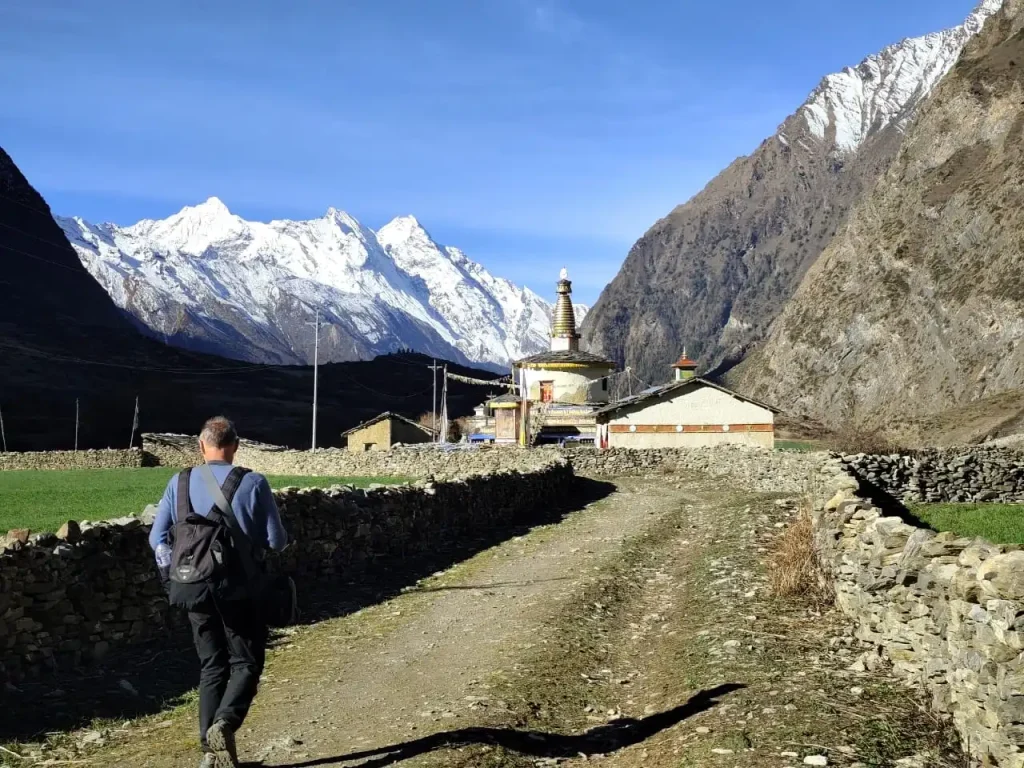
Travelers aged 65 and above should look at the Manaslu Circuit based on their individual fitness, trekking background and health rather than age alone.
If you already enjoy regular hiking and have experience with multi-day or high-altitude trekking, the route may be a realistic goal. However, the Manaslu Circuit should not be underestimated. The combination of long walking days, uneven mountain terrain, high elevation and the Larkya La crossing requires proper preparation.
A private itinerary with an experienced local guide can provide greater flexibility than a fixed group schedule. Porter support can also reduce the amount of weight you need to carry personally.
If you have a medical condition, take regular medication, or have any concerns about strenuous exercise or high altitude, discuss the trek with your doctor before traveling. The CDC specifically recommends that travelers with pre-existing heart or lung conditions consult a doctor familiar with high-altitude medicine before going to high elevations.
There is no universal age at which the Manaslu Circuit suddenly becomes unsuitable. The better question is whether your current fitness, experience and preparation match the demands of the trek.
For travelers in their 60s and 70s, we recommend being realistic about your walking ability, choosing an appropriate itinerary, allowing sufficient time for acclimatization and working with an experienced local guide who can adjust the pace when necessary.
Best Manaslu Circuit Trek Itinerary for Travelers Over 50
For travelers over 50, a well-paced Manaslu Circuit itinerary can make a significant difference to the overall trekking experience. This 15-day plan allows gradual altitude gain, includes a dedicated acclimatization day in Samagaun, and avoids rushing the approach to Larkya La. It is designed for trekkers who prefer a comfortable pace while still experiencing the complete Manaslu Circuit.
| Day | Route | Altitude | Walking / Travel |
|---|---|---|---|
| Day 1 | Kathmandu to Machha Khola | 869 m | Drive |
| Day 2 | Machha Khola to Jagat | 1,340 m | 6–7 hrs |
| Day 3 | Jagat to Deng | 1,804 m | 5–6 hrs |
| Day 4 | Deng to Namrung | 2,630 m | 5–6 hrs |
| Day 5 | Namrung to Lho / Shyala | 3,180–3,500 m | 4–5 hrs |
| Day 6 | Lho / Shyala to Samagaun | 3,530 m | 4–5 hrs |
| Day 7 | Acclimatization Day in Samagaun | 3,530 m | 2–4 hrs optional hike |
| Day 8 | Samagaun to Samdo | 3,875 m | 3–4 hrs |
| Day 9 | Samdo to Dharamsala | 4,460 m | 3–4 hrs |
| Day 10 | Dharamsala → Larkya La Pass → Bimthang | 5,106 m → 3,590 m | 8–10 hrs |
| Day 11 | Bimthang to Tilije | 2,300 m | 5–6 hrs |
| Day 12 | Tilije to Dharapani | 1,860 m | 4–5 hrs |
| Day 13 | Dharapani to Besisahar | — | Drive |
| Day 14 | Besisahar to Kathmandu | 1,400 m | Drive |
| Day 15 | Kathmandu departure | — | International departure |
This itinerary is a recommended option, not a requirement for every traveler over 50. Fitness, previous trekking experience and individual response to altitude vary from person to person. The extra time provides greater flexibility for acclimatization, comfortable walking and sensible adjustments when needed. Private departures can also be customized around your preferred pace and travel dates.
Planning your Manaslu Circuit Trek after 50? Contact our local team for itinerary and booking advice.
WhatsApp EmailManaslu Circuit Trek for Travelers Over 50: Price
Our recommended 15-day Manaslu Circuit Trek for travelers over 50 costs USD 1,350 per person. The package is designed around a comfortable trekking pace, proper acclimatization and reliable support throughout the journey.
What’s Included
- Airport pickup and drop-off in Kathmandu
- Kathmandu hotel accommodation with breakfast
- Ground transportation as outlined in the itinerary
- All required trekking and conservation area permits
- Experienced, licensed English-speaking trekking guide
- Porter service for the trek
- Three meals a day during the trek: breakfast, lunch and dinner
- Teahouse and lodge accommodation throughout the trekking route
- Dedicated acclimatization day in Samagaun
- Sleeping bag and down jacket for the trek
- Trekking map
- Basic first-aid kit carried by the guide
- Trekking completion certificate
- Guide and porter wages, accommodation, meals and insurance
- Government taxes and applicable service charges
- Farewell dinner in Kathmandu
What’s Not Included
- International flights, Nepal visa fees and travel insurance
- Personal expenses, drinks, snacks, laundry, Wi-Fi and charging fees
- Personal trekking equipment and personal medical expenses
- Emergency evacuation, extra accommodation or services required due to unforeseen circumstances
Planning your Manaslu Circuit Trek after 50? Contact our local team for itinerary and booking advice.
WhatsApp EmailHow Difficult Is the Manaslu Circuit Trek for Travelers Over 50?
The Manaslu Circuit Trek is a moderate-to-challenging high-altitude trek, and travelers over 50 should understand the physical demands before booking. The route does not require technical climbing skills, but it involves long days on uneven mountain trails, significant elevation gain, cold conditions at higher elevations, and crossing Larkya La at around 5,100 meters. Current trekking information generally places the highest sections and the Larkya La crossing among the most demanding parts of the route.
For travelers over 50, age is not the main factor in determining whether the trek is suitable. Your current fitness, previous trekking experience, ability to walk for several consecutive days, preparation before the trip, and response to altitude are much more useful factors to consider.
Here is what the difficulty actually looks like on the trail.
Long Walking Days
Most trekking days involve several hours of walking, although the exact duration depends on the itinerary, trail conditions, group pace and where you stop for breaks.
The lower Manaslu trail can involve relatively long distances because the elevation is still lower. As the route climbs higher, daily distances may shorten, but walking can feel harder due to steeper terrain and thinner air. Typical itineraries commonly involve around 4–8 hours of walking on trekking days, with the Larkya La crossing taking considerably longer.
For travelers over 50, the important preparation is not simply being able to complete one long hike. You should be comfortable with walking on consecutive days.
A useful training approach is to gradually increase your walking time before the trek and include some back-to-back hiking days. This helps you understand how your body feels when you start another walking day without a full day of recovery.
You do not need to walk quickly. A steady, sustainable pace is much more useful on a multi-day Himalayan trek.
Uphill Walking and Elevation Gain
The Manaslu Circuit gradually climbs from the lower Budhi Gandaki Valley into the high Himalayan region.
The physical effort changes as you gain elevation. A climb that feels manageable at lower altitude can require considerably more effort higher on the route because there is less oxygen available.
This is one reason your guide should avoid setting an unnecessarily fast pace.
For travelers over 50, good preparation should include uphill walking, stair climbing or hill training where possible. You do not need to train like a mountaineer, but your legs and cardiovascular system should be accustomed to sustained uphill effort.
The goal is to reach each overnight stop with enough energy to continue the following day.
Downhill Walking
Downhill sections are sometimes underestimated when people prepare for the Manaslu Circuit.
The route includes long descents over rocky ground, stone steps and uneven sections. The descent after crossing Larkya La is particularly demanding because it follows a high-altitude ascent and involves a substantial loss of elevation before reaching Bimthang. The pass-crossing day is widely regarded as the hardest day of the circuit.
If you are concerned about your knees or ankles, downhill training before the trek is worth including in your preparation.
Trekking poles can also be useful on steep and uneven descents because they provide additional points of contact and can help with balance.
Good footwear matters just as much. Your boots should be comfortable, properly fitted and well tested before you arrive in Nepal.
Planning your Manaslu Circuit Trek after 50? Contact our local team for itinerary and booking advice.
WhatsApp EmailVaried Mountain Trails
The Manaslu Circuit is not a smooth walking path.
Depending on the section of the route, you may encounter:
- Rocky trails
- Stone steps
- Uneven ground
- Steep uphill sections
- Long downhill sections
- Suspension bridges
- Narrow trail sections
- Loose or rough surfaces
- Seasonal changes in trail conditions
This is not technical climbing, but you need to be comfortable walking on natural mountain terrain. Current route descriptions also identify rugged terrain and remote trail conditions as important contributors to the trek’s difficulty.
For travelers over 50, balance and sure footing can be just as important as cardiovascular fitness.
If you normally walk only on paved roads, adding hills, stairs and uneven trails to your preparation can make a noticeable difference.
High Altitude 5,106 metres
Altitude is one of the most important factors to understand before attempting the Manaslu Circuit.
The route climbs progressively toward the high Himalayan section and eventually crosses Larkya La at approximately 5,106 metres. At this elevation, the reduced availability of oxygen makes physical activity considerably more demanding.
This is why you should not judge your ability to handle the Manaslu Circuit only by how fit you are at sea level.
A very fit person can still experience altitude illness.
The CDC recommends gradual ascent at high altitude and advises travelers to allow their bodies time to adapt rather than ascending too quickly.
For this reason, a properly planned Manaslu itinerary should include appropriate acclimatization and should not treat high-altitude days as a race.
If you develop symptoms that concern you during the trek, tell your guide rather than trying to hide them because you do not want to slow the group.
The Larkya La Pass Crossing
For most trekkers, Larkya La is the defining physical challenge of the Manaslu Circuit.
The pass reaches approximately 5,106 metres, and the crossing involves both a long ascent and a substantial descent. Depending on the itinerary, weather and trail conditions, the crossing can take around 8–10 hours.
The challenge comes from the combination of factors rather than altitude alone:
- Early morning start
- High elevation
- Cold conditions
- Long uphill walking
- Uneven terrain
- Reduced oxygen
- Long descent
- Limited facilities between the overnight points
This is the day when preparation and pacing become particularly important.
You should not arrive at Larkya La already exhausted from walking too quickly over the previous days.
A good itinerary builds toward the pass gradually, with acclimatization before the highest section.
Cold Conditions at Higher Elevations
The lower sections of the Manaslu Circuit can feel very different from the high mountain section.
As you climb toward Samagaun, Samdo and Dharamsala, temperatures become much colder, particularly at night and during early-morning starts.
The Larkya La crossing can be especially cold because trekkers normally begin the pass day early in the morning.
This means your packing needs to account for changing conditions rather than assuming the weather will remain similar throughout the trek.
A proper layering system is more practical than relying on one extremely thick jacket. Warm base layers, an insulating layer, a good outer layer, gloves, a warm hat and appropriate sleeping equipment are important for the higher sections.
Consecutive Walking Days
One of the biggest challenges of the Manaslu Circuit is its cumulative nature.
You are not preparing for one difficult hiking day.
You are preparing to walk repeatedly over many days while gradually gaining altitude.
A person may feel excellent during the first few days and still become tired later in the trek. This is why pacing and recovery matter throughout the route.
For travelers over 50, it can be helpful to view the trek as an endurance journey rather than a series of individual hikes.
A comfortable pace, adequate hydration, sufficient food and good sleep all contribute to how you feel the following morning.
Planning your Manaslu Circuit Trek after 50? Contact our local team for itinerary and booking advice.
WhatsApp EmailRemoteness and Limited Facilities
The Manaslu Circuit also feels challenging because parts of the route are relatively remote.
Facilities become more basic as you move toward the higher sections. Accommodation and services at places such as Dharamsala are considerably simpler than what you may be used to in Kathmandu or lower trekking areas.
This matters because you should be prepared for a mountain environment where comfort and convenience are limited.
For travelers over 50, this is worth considering before booking. If you need specific dietary, medical or accommodation requirements, discuss them with your trekking company before departure so that realistic arrangements can be made.
Carrying a Heavy Backpack
You should not underestimate how much easier the trek can feel when you are not carrying unnecessary weight.
A porter can carry your main trekking luggage, allowing you to walk with a smaller daypack containing only the things you need during the day.
Your personal daypack can normally contain:
- Water
- Snacks
- Camera
- Sunscreen
- Sunglasses
- Rain protection
- Warm layer
- Personal medication
- Essential personal items
Keeping the daypack light is particularly useful on long uphill sections and during the Larkya La crossing.
Mental Endurance Matters Too
The Manaslu Circuit is physically demanding, but the mental side of a long trek should not be ignored.
You may have an early start, several hours of walking ahead of you, changing weather, basic accommodation and days when your body simply feels tired.
The ability to remain patient and maintain a steady pace can make a big difference.
You do not need to enjoy every minute of every walking day. What matters is being prepared for the rhythm of the trek and understanding that some days will feel harder than others.
Does Being Over 50 Make the Trek Much Harder?
Not necessarily.
Age alone does not tell you how difficult the Manaslu Circuit will feel.
Two travelers of the same age can have completely different levels of fitness and trekking experience. A regular hill walker with previous high-altitude experience may find the route manageable, while someone who is rarely active may find the same itinerary much more demanding.
This is why we recommend assessing your actual walking ability and preparation, rather than deciding whether you can do Manaslu based only on your age.
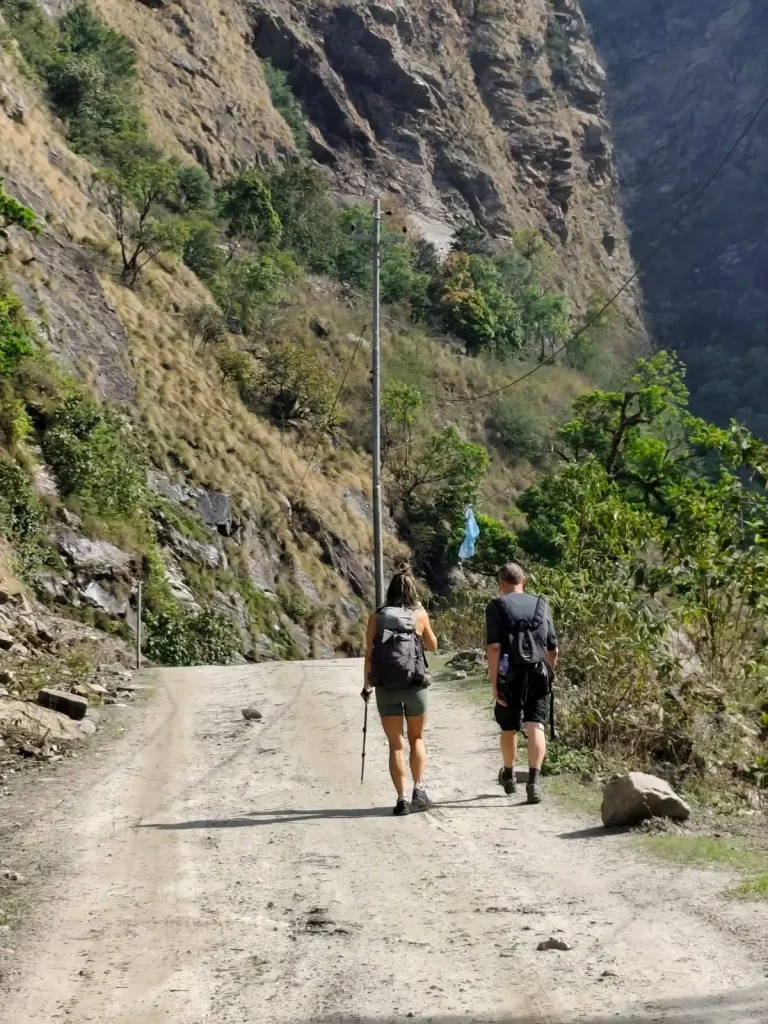
The more useful questions are:
- Can you walk for several hours?
- Can you manage consecutive walking days?
- Are you comfortable with uphill and downhill terrain?
- Have you trained for the trek?
- Have you previously trekked at altitude?
- Are you comfortable carrying a light daypack?
- Are you prepared for basic mountain accommodation?
- Have you allowed enough time for acclimatization?
These questions give a much clearer picture of readiness.
How to Make the Manaslu Circuit More Manageable After 50
If you are over 50 and planning the Manaslu Circuit, there are several practical ways to make the experience more comfortable.
Start training early. Gradually build walking endurance rather than trying to become fit immediately before departure.
Practice hills and stairs. The route involves repeated elevation changes, so flat walking alone is not ideal preparation.
Include longer walks. Occasionally complete several hours of walking so you understand how your body responds.
Practice consecutive days. Back-to-back hikes are useful preparation for the rhythm of the trek.
Use porter support. Carrying a light daypack is generally more comfortable than carrying your full trekking luggage.
Use trekking poles if they suit you. They can be particularly useful on uneven and downhill sections.
Keep a steady pace. Walking too fast early in the day can leave you unnecessarily tired later.
Respect acclimatization. Do not remove acclimatization days simply to shorten the itinerary.
Tell your guide when something feels wrong. Early communication allows your guide to make better decisions.
Allow some flexibility. Weather and mountain conditions cannot always be predicted perfectly.
Is a Private Manaslu Trek Better for Travelers Over 50?
A private Manaslu trek can be a particularly good option if you want more control over the pace and daily schedule.
With a private group, your guide can organize walking breaks around your needs rather than asking you to follow the pace of a larger group.
This can be useful for couples or friends who prefer to stop for photographs, take regular breaks or walk at a relaxed pace.
A private trek does not remove the physical challenges of the Manaslu Circuit, but it can give you more flexibility in how you approach them.
How Many Hours Do You Walk Each Day on the Manaslu Circuit?
Walking hours on the Manaslu Circuit vary from day to day. Some sections are relatively short, while others involve several hours of continuous walking over uneven mountain terrain. The exact duration depends on your itinerary, walking pace, trail conditions, weather, breaks and how the group is feeling at altitude.
For travelers over 50, it is more useful to understand the walking time of each individual day than to rely on an average. The table below gives approximate walking times for a standard Manaslu Circuit itinerary starting from Machha Khola.
| Day | Trekking Section | Approx. Walking Time |
|---|---|---|
| Day 1 | Kathmandu → Machha Khola | Drive |
| Day 2 | Machha Khola → Jagat | 6–7 hours |
| Day 3 | Jagat → Deng | 5–6 hours |
| Day 4 | Deng → Namrung | 5–6 hours |
| Day 5 | Namrung → Lho / Shyala | 4–6 hours |
| Day 6 | Lho / Shyala → Samagaun | 3–4 hours |
| Day 7 | Acclimatization in Samagaun | 2–4 hours optional hike |
| Day 8 | Samagaun → Samdo | 3–4 hours |
| Day 9 | Samdo → Dharmasala | 3–4 hours |
| Day 10 | Dharmasala → Larkya La → Bimthang | 8–10 hours |
| Day 11 | Bimthang → Dharapani | 7–8 hours |
| Day 12 | Dharapani → Kathmandu / onward transport | Drive / transport |
Day 1: Kathmandu to Machha Khola
This is a road day rather than a trekking day. The journey to Machha Khola can take most of the day depending on road conditions and traffic. Once you arrive, the focus is on settling in and preparing for the first walking day.
Day 2: Machha Khola to Jagat — 6 to 7 Hours
The first trekking day is a proper walking day through the Budhi Gandaki Valley. The trail includes forest, rocky sections, suspension bridges and gradual climbs. Although the elevation is still relatively low, several hours of uneven walking make this a good day to establish a comfortable pace.
Day 3: Jagat to Deng — 5 to 6 Hours
The trail continues through the Budhi Gandaki Valley with stone steps, forest and river crossings. The walking time is generally around five to six hours, although trail conditions and the group’s pace can affect the actual duration.
Day 4: Deng to Namrung — 5 to 6 Hours
The route continues gradually upward toward Namrung. As the elevation increases, maintaining a steady pace becomes more important. The objective is to reach Namrung comfortably rather than trying to finish the day as quickly as possible.
Day 5: Namrung to Lho / Shyala — 4 to 6 Hours
This section takes you deeper into the upper Manaslu region, where the landscape becomes increasingly alpine and views of Manaslu become more prominent. Depending on the overnight stop and walking pace, the day normally takes around four to six hours.
Day 6: Lho / Shyala to Samagaun — 3 to 4 Hours
The walk to Samagaun is comparatively short. However, you are now reaching around 3,500 metres, so the shorter walking time should not be confused with an easy day. Arriving without unnecessary fatigue is useful because the following day is reserved for acclimatization.
Day 7: Acclimatization in Samagaun — Optional Hike
This is not a normal point-to-point trekking day. The purpose is to spend another night at altitude and give your body time to adjust. Depending on conditions and how you feel, you can take a short acclimatization hike toward Birendra Lake or another nearby viewpoint. Resting is also perfectly reasonable.
Day 8: Samagaun to Samdo — 3 to 4 Hours
This is one of the shorter walking days, but you are now walking at close to 4,000 metres. The reduced walking time does not necessarily mean the day feels easy. A slow, steady pace and regular hydration are more important than covering the distance quickly.
Day 9: Samdo to Dharmasala — 3 to 4 Hours
The walk to Dharmasala is relatively short, but this is an important preparation day before the Larkya La crossing. The aim is to arrive at Dharmasala without unnecessary fatigue and be ready for the early start the following morning.
Day 10: Dharmasala to Larkya La to Bimthang — 8 to 10 Hours
This is normally the longest and most demanding walking day of the Manaslu Circuit. The route climbs from Dharmasala to Larkya La Pass at approximately 5,106 metres before descending toward Bimthang.
The day combines an early start, high altitude, cold conditions, a long ascent, the pass crossing and a substantial descent. Depending on weather, trail conditions, walking pace and rest breaks, the crossing can take around eight to ten hours, and some groups may take longer.
Day 11: Bimthang to Dharapani — 7 to 8 Hours
After crossing Larkya La, the trail continues downhill toward Dharapani. Although the altitude is dropping, this remains a substantial walking day because of the distance and prolonged descent. Trekking poles can be particularly useful on this section for additional stability.
Day 12: Dharapani to Kathmandu / Onward Transport
Depending on the itinerary and current road conditions, the final section is generally completed by road transport rather than a full day of trekking. The exact transport arrangement should be confirmed before departure because road conditions and travel times can change.
Important: Walking times are approximate, not fixed schedules. Weather, trail conditions, altitude, rest breaks and individual walking pace can all affect the duration of a day. For travelers over 50, the goal should be a comfortable and sustainable pace rather than trying to finish each section as quickly as possible.
The Manaslu Circuit is an endurance trek, so preparation should include regular walking, hill training and occasional consecutive walking days. A well-planned itinerary also allows enough time for acclimatization and flexibility when conditions require a slower pace.
Manaslu Circuit Trek Difficulty Compared With Other Nepal Treks
| Trek | Maximum Elevation | Duration | Remoteness | Restricted Area |
|---|---|---|---|---|
| Manaslu Circuit | Larkya La ~5,106m | 14 to 18 days | High | Yes |
| Everest Base Camp | ~5,364m | 12 to 14 days | Moderate | No |
| Annapurna Circuit | Thorong La ~5,416m | 12 to 18 days | Moderate | Partial |
| Annapurna Base Camp | ~4,130m | 8 to 12 days | Moderate | No |
Manaslu vs Everest Base Camp: Both routes are demanding. Everest Base Camp has better-developed teahouse infrastructure. The Manaslu Circuit remains more remote, receives far fewer trekkers, and requires a Restricted Area Permit. The Larkya La crossing is a genuine mountain pass requiring sustained effort.
Manaslu vs Annapurna Circuit: The Annapurna Circuit benefits from more developed infrastructure and road access at various points. The Manaslu Circuit is more remote and committed. Once inside the Manaslu Conservation Area, early exit options are limited.
Manaslu vs Annapurna Base Camp Trek: Annapurna Base Camp is shorter and generally more accessible. For mature travelers wanting a shorter challenge with significant mountain scenery, Annapurna Base Camp is worth considering as an alternative or as a stepping stone before attempting Manaslu.
How Much Fitness Do You Need for the Manaslu Circuit Trek?
The fitness required is functional trekking fitness, not elite athletic performance. Here is what practically matters:
- Walking endurance: The ability to walk four to seven hours on consecutive days over mountain terrain. This is the single most important factor.
- Cardiovascular fitness: Being able to sustain moderate aerobic effort while gaining altitude. Regular walking, hiking, swimming, or cycling all build this base.
- Leg strength: Uphills require leg power. Downhills require leg endurance and stability. Strong legs make a genuine difference on the longer sections.
- Balance: Mountain trails are uneven. Moving confidently on rocky terrain without excessive stumbling matters as elevation increases.
- Recovery between days: The ability to rest and feel reasonably recovered for the next day’s walking. Sleep, hydration, and good nutrition all affect recovery at altitude.
- Comfort on uneven terrain: Training on varied terrain, including hills and woodland paths, prepares the body for what mountain trails actually feel like.
Planning your Manaslu Circuit Trek after 50? Contact our local team for itinerary and booking advice.
WhatsApp EmailHow to Prepare for the Manaslu Circuit Trek After 50
Several Months Before Departure
- Start walking consistently. Build gradually over weeks, not days.
- Aim for three to four walks per week. Consistency matters more than occasional long outings.
- Walk on hills whenever possible. Flat pavement does not train the muscles needed for mountain terrain.
- Add time and distance gradually each week rather than jumping to demanding distances immediately.
Weeks Before Departure
- Practice longer hikes of five to seven hours on varied terrain.
- Practice two or three consecutive days of walking to experience accumulated fatigue.
- Test trekking footwear completely. New boots should never arrive at the trek.
- Practice using trekking poles on training walks. Poles need technique, not just presence.
- Carry a light daypack during longer walks to simulate trek conditions.
Final Two Weeks
- Avoid dramatically increasing training volume immediately before departure. Arriving fatigued is counterproductive.
- Focus on maintaining fitness rather than building it in the final weeks.
- Ensure equipment is checked and documents are organized well in advance.
Walking Pace for Travelers Over 50
Pace is one of the most underappreciated aspects of Himalayan trekking. Many travelers who struggle on mountain routes have a pace problem, not a fitness problem.
Slow and steady on uphills: On ascending sections, a genuinely slow pace is almost always more efficient than pushing hard and stopping frequently. The Nepali phrase “bistari bistari” means “slowly slowly.” Experienced trekking guides understand this instinctively.
Regular short breaks: Brief, frequent stops allow the body to recover without getting cold. Long unscheduled rests where the body cools down are less effective than consistent short pauses for water and breath.
No racing: Trying to keep pace with younger trekkers or rushing to finish each day’s walking wastes energy needed for the following day. The objective is reaching each destination in reasonable condition.
Communicating with the guide: A guide who does not know how a traveler is feeling cannot help effectively. Expressing genuine fatigue or difficulty is important and useful, not a sign of weakness.
Managing energy across multiple days: Expending too much energy in the first few days makes the higher sections significantly harder. A sustainable daily pace from day one is the sensible approach.
Altitude on the Manaslu Circuit
Altitude is one of the main factors that makes the Manaslu Circuit Trek challenging. The route begins in the lower Budhi Gandaki Valley and gradually climbs through the Himalayan foothills before reaching the high-altitude settlements of Samagaun, Samdo and Dharmasala. The highest point is Larkya La Pass at approximately 5,106 metres (16,752 feet).
| Location | Approx. Elevation |
|---|---|
| Machha Khola | 870 m |
| Jagat | 1,410 m |
| Deng | 1,804 m |
| Namrung | 2,630 m |
| Samagaun | 3,530 m |
| Samdo | 3,865 m |
| Dharmasala | 4,460 m |
| Larkya La Pass | 5,106 m |
| Bimthang | 3,720 m |
The lower sections from Machha Khola through Jagat, Deng and Namrung are warmer and more humid, with forests, rivers, waterfalls and greener landscapes. As you continue toward Samagaun, the scenery gradually becomes drier and more alpine, while the effects of increasing altitude become more noticeable.
At around 3,530 metres in Samagaun, acclimatization becomes particularly important. The route then continues to Samdo and Dharmasala, where the air is thinner and temperatures are colder. Dharmasala, at approximately 4,460 metres, is the final overnight stop before crossing Larkya La.
Larkya La Pass at approximately 5,106 metres is the highest point of the trek and usually the most demanding day. The crossing combines high altitude, cold conditions, a long ascent and a substantial descent. After the pass, the trail descends toward Bimthang, where the lower elevation provides welcome relief.
A gradual itinerary with appropriate acclimatization is therefore an important part of preparing for the Manaslu Circuit, particularly for travelers who are less familiar with high-altitude trekking.
Acclimatization for Travelers Over 50
Acclimatization is not optional. It is how the body adjusts to functioning at altitude with less available oxygen.
Gradual elevation gain: The body adapts more effectively when elevation is gained slowly over multiple days. A well-structured itinerary avoids rapid ascents to high elevations.
The Samagaun rest day: A rest day at Samagaun (approximately 3,530 meters) before the higher sections is included in sensible Manaslu itineraries. Using this day fully is one of the most important decisions on the route.
Why rushing does not help: Moving faster does not make acclimatization happen faster. The body has biological requirements that cannot be shortened by determination or fitness alone.
Hydration at altitude: Staying well hydrated is genuinely important. Tea, soups, and plain water all contribute. Alcohol at altitude is not advisable.
Acclimatization reduces risk but does not eliminate it. The goal is to give the body the best possible conditions to adapt, not to guarantee any particular outcome.
What Happens at High Altitude?
At altitude, available oxygen decreases and the body works harder to perform the same functions. Common experiences include reduced appetite, disturbed sleep, mild headache, increased breathing rate, and general fatigue. These are common and manageable with proper acclimatization, hydration, and rest.
More significant concerns include persistent or worsening headache, nausea, significant loss of balance or coordination, confusion, or difficulty breathing at rest. These symptoms require immediate communication with the guide and a responsible decision about whether to continue, rest further, or descend.
Descending from altitude is the most effective response to serious altitude-related problems. A guide who does not know someone is struggling cannot make appropriate decisions. Clear communication is the most important tool when difficulties arise.
Larkya La Pass for Travelers Over 50
Larkya La deserves its own section because no mature traveler should be surprised by what this day involves.
- Elevation: approximately 5,106 meters above sea level
- Start time: typically 4:00 to 5:00 in the morning
- Duration: seven to ten hours for the full crossing day, depending on pace and conditions
- Cold: temperatures before dawn can be severe, wind on the pass is common
- Approach: sustained uphill walking from Dharmasala camp
- Descent: long and physically demanding drop to Bimthang, placing significant load on legs and knees
- Weather: conditions can change quickly; cloud and snow are possible even in main trekking seasons
Trekkers who arrive at Dharmasala with consistent acclimatization, sensible pacing through the earlier sections, and good cardiovascular and leg fitness are significantly better positioned for Larkya La than those who have rushed the lower sections.
An experienced guide monitors conditions, maintains a sustainable pace during the approach, ensures trekkers start early enough to complete the crossing before afternoon weather deteriorates, and supports trekkers through the most demanding day of the route. Do not underestimate Larkya La. It rewards preparation.
What Is a Typical Day Like on the Manaslu Circuit?
Morning
Wake up between 6:00 and 7:00 AM, earlier on the Larkya La crossing day. Breakfast at the teahouse: typically eggs, porridge, bread, or local dal bhat. The daypack is prepared with water, snacks, sunscreen, and extra layers. The porter handles the main luggage.
Walking
The guide sets a pace appropriate to the group. Short breaks happen every hour or so for water and rest. Lunch is taken at a teahouse along the route, typically around midday. This is a proper sit-down break with a hot meal.
Afternoon
The second half of the day’s walking continues toward the destination. Arrival at the next lodge typically happens in the early to mid afternoon. The rest of the afternoon is genuinely restful: changing clothes, warming up, taking the pace right down.
Evening
Dinner at the teahouse dining room. Tea or coffee afterward. Preparation of clothing and gear for the following morning. Sleep comes reasonably early on the trail, partly from genuine physical fatigue.
At higher elevations, the routine becomes more deliberate. Rest is more important, appetite may decrease, and the guide checks in more actively about how trekkers are feeling.
Accommodation on the Manaslu Circuit for Travelers Over 50
- Rooms: Basic private rooms, typically twin sharing with simple beds and blankets
- Bathrooms: Shared facilities in many locations; Western or squat style toilets depending on the lodge
- Hot showers: Available at some lower elevation lodges, less reliable or unavailable higher up
- Dining: A communal dining room where meals are served
- Electricity: Available at some lodges; limited or charged separately at higher elevations
- Heating: Typically minimal; warm clothing and a quality sleeping bag are essential, not optional
Facilities become progressively more basic as the route climbs toward Samagaun, Samdo, and Dharmasala. Travelers who are comfortable with simple mountain accommodation will find the teahouses perfectly manageable. Hotel-level comfort expectations will lead to disappointment. Setting the right expectations before departure makes a genuine difference to how the experience feels on the ground.
Food and Meals During the Manaslu Circuit Trek
| Meal | Common Options |
|---|---|
| Breakfast | Porridge, eggs (boiled, fried, or scrambled), bread, pancakes, dal bhat |
| Lunch | Noodle soup, fried rice, dal bhat, pasta, potato dishes |
| Dinner | Dal bhat, pasta, noodle dishes, rice, soups, eggs, potatoes |
| Drinks | Tea, black coffee, hot lemon, hot chocolate, ginger tea |
Dal bhat, the traditional Nepali meal of lentil soup with rice and accompaniments, is the staple of mountain trekking. It is nutritious, warming, consistently available at every teahouse on the route, and often refillable. Many experienced trekkers eat dal bhat as their regular choice on the trail.
At higher elevations, appetite often decreases. Eating even when not particularly hungry is worth the effort. The body needs fuel to walk, stay warm, and recover for the following day.
Porter Support for Travelers Over 50
What a porter does: Carries the main trekking bag, including clothing, sleeping bag, and equipment, allowing the trekker to carry only a light personal daypack throughout the walking day.
What porter support does not do: It does not eliminate the physical challenge of the walking itself. It does not make altitude easier. It does not replace fitness or preparation.
Why it matters in practical terms: Carrying a full trekking bag over multiple mountain days at altitude adds significant physical load. A mature trekker carrying 12 kilograms over consecutive mountain days is working considerably harder than the same person with a 5 kilogram daypack. Over 14 to 18 days, this difference in load has a meaningful cumulative impact on energy levels, leg fatigue, and overall enjoyment of the route. Porter support is practical, sensible mountain travel.
Private vs Group Manaslu Circuit Trek for Travelers Over 50
| Factor | Private Trek | Group Trek |
|---|---|---|
| Pace | Set by the individual | Set by group consensus |
| Flexibility | High | Limited |
| Rest stops | As needed | At set points |
| Guide attention | Personal and direct | Shared across group |
| Daily schedule | Adapted to the traveler | Fixed for all members |
| Cost | Generally higher | Generally lower |
| Social experience | More personal | Group atmosphere |
A private Manaslu Circuit Trek allows the guide to maintain a pace genuinely suited to the individual rather than balancing the needs of a mixed-ability group. Rest stops happen when genuinely needed. The guide communicates directly and consistently with one or two travelers rather than managing multiple people simultaneously.
This flexibility does not make the mountain easier. But it removes sources of unnecessary pressure that group trekking introduces, and for mature travelers who prioritize pace and personalized support, that difference is meaningful.
How Manaslu Treks and Expedition SuSupportravelers Over 50
Here is what the local team at Manaslu Treks and Expedition actually does to support mature trekkers on the route, in practical terms.
1. Personalized Walking Pace
The guide maintains a walking pace appropriate to the group. For mature travelers who need a more conservative pace, particularly on uphill sections and above 3,500 meters, a good guide adjusts without requiring repeated requests.
2. Experienced Local Guide
A local guide familiar with the Manaslu route provides practical navigation through trail junctions, knowledge of each day’s conditions before the walk begins, communication with teahouse owners, weather awareness based on local experience, and consistent support at every stage of the daily routine.
3. Proper Acclimatization Planning
The itinerary is structured to allow the body to adapt at altitude. The rest day at Samagaun before the higher sections is built into the schedule rather than treated as optional. Pace through the lower and middle sections is managed to arrive at the higher elevations in reasonable condition.
4. Comfortable Daily Schedule
Walking days are planned with realistic expectations. Start times, rest breaks, and lodge arrivals are organized to allow recovery while maintaining forward progress.
5. Porter Support
Porter service reduces the physical load the trekker carries personally. For mature travelers, this is one of the most practical measures available to make the trek genuinely more manageable across the full duration of the route.
6. Private Trek Flexibility
A private trek allows more control over daily pace, more breaks when genuinely needed, direct and consistent communication with the guide, personalized attention throughout the route, and significantly less pressure from group dynamics or fixed schedules.
7. Daily Communication
The guide checks in with trekkers throughout each day regarding walking progress, comfort, fatigue, appetite, sleep quality, and altitude adaptation. This practical daily communication helps the guide make sensible decisions about pace and schedule.
8. Extra Attention at Higher Elevations
At Samagaun, Samdo, Dharmasala, and during the Larkya La crossing, the guide and team pay closer attention to how trekkers are feeling. Pace is adjusted conservatively, and concerns are taken seriously. These are the sections of the route where careful management makes the most difference to the overall outcome.
9. Local Knowledge of the Manaslu Region
As a Nepal-based company specializing in the Manaslu region, the team understands trail conditions across different seasons, which teahouses provide reliable accommodation, how weather patterns typically behave on the route, permit requirements and logistics, transportation to and from the trailhead, and the practical considerations of traveling through remote mountain villages.
10. No Unnecessary Pressure
The goal is not to complete the route in the minimum possible time. The goal is for the trekker to have a safe, realistic, and genuinely satisfying mountain experience. Pace, communication, rest, and responsible planning are prioritized over speed.
Planning your Manaslu Circuit Trek after 50? Contact our local team for itinerary and booking advice.
WhatsApp EmailWhat If a Traveler Struggles During the Trek?
If a traveler becomes very tired: The guide can adjust the day’s plan, allow extended rest, and reorganize the following day’s schedule where practical.
If altitude adaptation is difficult: The guide will consider slowing the pace, making full use of the Samagaun rest day, or discussing honestly whether continuing to higher elevations is the sensible decision. Descending from altitude is the most effective response to altitude-related problems and must be made in honest communication with the trekker.
If someone cannot complete a planned day’s walk: Options depend on location. In some sections of the Manaslu Circuit, alternatives are limited. In others, stopping at a lower lodge and reorganizing is possible. The guide works within the practical realities of the route.
What should not be expected: Immediate helicopter evacuation is not guaranteed. Emergency services in remote mountain areas operate differently from urban settings. Travel insurance that specifically covers high altitude trekking and emergency evacuation is essential for this reason.
Is a Guide Necessary for the Manaslu Circuit Trek?
The Manaslu Conservation Area is a restricted trekking zone in Nepal. Current regulations require foreign trekkers to travel with a registered, licensed guide to obtain a Restricted Area Permit. Solo trekking without a guide is not permitted in this zone.
Beyond the regulatory requirement, a guide to the Manaslu Circuit provides practical value: navigation through trail sections that are not always clearly marked, knowledge of daily conditions, communication at permit checkpoints, altitude monitoring, pace management, and communication in local languages in villages where English is not widely spoken. Guide regulations can change. It is recommended to confirm current requirements with a registered Nepal trekking company before departure.
Manaslu Circuit Trek Permits for Travelers Over 50
- Manaslu Restricted Area Permit (RAP): Required because the Manaslu Conservation Area borders Tibet. Fees vary by season. This permit requires trekkers to travel with a registered guide.
- Manaslu Conservation Area Permit (MCAP): Required for entry into the national park area of the route.
- Annapurna Conservation Area Permit (ACAP): Required for the section of the route that crosses into the Annapurna Conservation Area near Dharapani.
Permit costs and regulations are subject to change. Verify current 2026 requirements with a registered Nepal trekking company before finalizing plans. A reputable company handles permit acquisition on behalf of trekkers and includes the costs transparently in the trek package.
Manaslu Circuit Trek Transportation
The standard journey begins with road transportation from Kathmandu toward Soti Khola or Machha Khola, typically an eight to twelve hour journey depending on road conditions. The roads through the Gorkha district can be rough in places, and travel time varies by weather and season.
Private 4WD vehicles offer more comfort than shared buses and are recommended for mature travelers wanting a more manageable road journey to the trailhead.
After completing the Manaslu Circuit, the standard exit is through Dharapani, from where road transportation returns toward Besisahar and then Kathmandu. The route can also connect to the Annapurna Circuit for trekkers wishing to extend their mountain experience.
The road journey should not be underestimated. A long day on mountain roads before beginning the trek can be tiring. Many travelers choose to spend a rest day in Kathmandu before departure to arrive at the trailhead reasonably fresh.
Best Time for Travelers Over 50 to Trek Manaslu
| Season | Months | Conditions Summary |
|---|---|---|
| Spring | March to May | Good weather, warming temperatures, rhododendron in bloom at lower elevations |
| Autumn | September to November | Most stable weather, clear visibility, excellent mountain views, main trekking season |
| Winter | December to February | Very cold, snow possible on Larkya La, some lodges closed, significantly harder conditions |
| Monsoon | June to August | Heavy rain, trail erosion, landslide risk, poor visibility, generally not recommended |
Autumn, particularly October and November, is widely considered the best overall season for the Manaslu Circuit. Post-monsoon skies are often clear, mountain views are exceptional, and temperatures are comfortable at most elevations. Spring, particularly March and April, is also popular and reliable, with rhododendron forests at their best in the lower valleys.
Winter conditions are significantly harsher, with Larkya La potentially snow-covered and more hazardous. Monsoon season brings rain, trail erosion, and landslide risk. For most mature travelers, October to November or March to April represents the most comfortable trekking windows.
What Should Travelers Over 50 Pack for Manaslu?
Clothing
- Moisture wicking base layer tops and bottoms (2 sets)
- Fleece midlayer jacket
- Down jacket or insulated jacket (essential for high elevations and Larkya La)
- Waterproof outer jacket
- Waterproof trousers or convertible trekking trousers
- Warm hat covering the ears
- Sun hat or cap for lower sections
- Gloves: a lighter pair for moderate conditions and a warmer pair for high elevations
- Wool or synthetic trekking socks (minimum 3 pairs)
Footwear
- Properly broken in, waterproof trekking boots (not new ones bought before the trip)
- Lightweight camp shoes or sandals for lodge evenings
Equipment
- Trekking poles (strongly recommended for mature travelers on both uphills and descents)
- Headlamp with spare batteries
- Reusable water bottle
- Water purification tablets or filter
- Lightweight daypack (20 to 25 liters)
- Sleeping bag rated to minus 10 or 15 degrees Celsius
Personal Items
- High factor sunscreen (altitude increases UV exposure significantly)
- Good quality sunglasses with UV protection
- Personal medications with sufficient supply plus contingency
- Basic personal first aid items
- Lip balm and minimal toiletries
- Passport, permit copies, and emergency contact details
- Power bank for device charging
The porter carries the main bag. The daypack carries only items needed during the walking day. Keeping the daypack genuinely light matters over a two to three week route.
Travel Insurance for the Manaslu Circuit
Appropriate trekking insurance is essential for any high altitude Himalayan trek. Standard holiday travel insurance is often insufficient for a route of this nature. When checking a policy, verify:
- Does the policy specifically cover high altitude trekking?
- Does coverage extend to the actual maximum elevation of the Manaslu Circuit (above 5,000 meters)?
- Does the policy cover emergency helicopter evacuation from remote mountain areas?
- Are medical expenses in Nepal covered?
- Does the policy cover trip interruption if the trek cannot be completed?
Emergency helicopter evacuation in Nepal is expensive. Without appropriate insurance, a traveler who needs evacuation from a remote section of the route faces significant financial exposure. Confirming coverage details before departure is not optional.
Manaslu Circuit Trek Cost for Travelers Over 50
| Factor | Impact on Cost |
|---|---|
| Private vs group trekking | Private is typically more expensive |
| Number of trekking days | Longer itineraries cost more |
| Porter service | Additional cost if not included in base price |
| Permit fees | Fixed costs based on season |
| Transportation to trailhead | Private 4WD vs shared transport |
| Season | Peak season pricing applies in autumn |
A realistic package from a reputable company typically includes permits, a licensed guide, porter service, teahouse accommodation, and most meals during the trek. International flights, personal expenses, travel insurance, alcoholic beverages, and tips are generally additional costs.
Be cautious about unusually low prices. A package significantly cheaper than the general market average often signals compromised guide experience, permit shortcuts, or reduced porter support. Responsible trekking in a restricted area has genuine costs that cannot be eliminated without cutting corners.
How Long Should Travelers Over 50 Take for the Manaslu Circuit?
| Itinerary Type | Duration | Notes |
|---|---|---|
| Shorter standard | 14 to 15 days | Possible but compact; limited flexibility |
| Standard | 16 to 17 days | Reasonable for well-prepared mature travelers |
| Relaxed private | 18 to 20 days | Most comfortable option for travelers over 50 |
A longer itinerary provides more gradual altitude gain, more time on acclimatization days, less pressure if one day runs slower than planned, and more margin for weather-related delays. Adding days does not change the altitude of Larkya La. What more time provides is the opportunity to arrive at it in better condition.
Planning your Manaslu Circuit Trek after 50? Contact our local team for itinerary and booking advice.
WhatsApp EmailCan the Manaslu Circuit Itinerary Be Customized?
What can be customized: Departure date from Kathmandu, road transport arrangements, pace within each section, additional rest days at Samagaun or other suitable locations, extra time in Kathmandu before or after the trek, and combining the Manaslu Circuit with the Tsum Valley as a separate extension.
What cannot simply be changed: The overall route geography, the requirement to cross Larkya La to complete the circuit, accommodation locations determined by available lodges on the route, and permit requirements. A private trek gives considerably more flexibility than a group arrangement, but the mountain imposes its own practical logistics.
Common Mistakes Travelers Over 50 Should Avoid
- Underestimating altitude: Being fit at sea level does not mean altitude will be easy. These are separate challenges.
- Walking too fast: Speed is the enemy at altitude. The slower pace is almost always the smarter pace.
- Carrying too much: An overloaded pack makes every uphill significantly harder. Use a porter and keep the daypack genuinely light.
- Wearing new boots on the trek: Blisters on day two of a 16-day route are a significant problem. Boots must be properly worn in before departure.
- Skipping acclimatization: The rest day at Samagaun exists for a reason. Using it properly is a smart decision.
- Ignoring weather: Mountain weather can change quickly. Guide advice about conditions and timing should be taken seriously.
- Not communicating with the guide: The guide cannot help with problems they do not know about.
- Trying to match another trekker’s pace: Someone else’s pace is irrelevant. Walking at a sustainable personal pace is what matters.
- Choosing an overly aggressive itinerary: The shortest available itinerary is rarely the best choice for mature travelers on this route.
- Not preparing for consecutive walking days: Training should simulate multiple consecutive walking days, not just a single long outing.
Questions to Ask a Trekking Company Before Booking Manaslu
- Who will be the guide, and how many Manaslu Circuit treks has this guide personally completed?
- What is exactly included in the stated price?
- Which permits are covered, and are current 2026 permit costs reflected?
- Is porter service included, and how many kilograms will the porter carry?
- What happens if the group needs a slower pace on a particular day?
- Can the itinerary be adjusted if conditions require it?
- What transportation is used to and from the trailhead?
- What accommodation is typically used on this route?
- What happens if weather significantly affects transportation or the route?
- What happens if a trekker struggles at altitude?
- What type of insurance should be arranged for this route?
- What equipment does the company provide versus what should the trekker bring?
A company that answers these questions specifically and honestly is more trustworthy than one that provides only general reassurances.
Why Choose Manaslu Treks and Expedition for Travelers Over 50?
Nepal-based local team: Manaslu Treks and Expedition operates from Nepal and specializes in the Manaslu region. The team understands the route from direct experience rather than secondhand sources.
Manaslu specialization: The company’s focus on the Manaslu region means guides with genuine knowledge of specific trail conditions, teahouses, permit checkpoints, and logistical details that affect each trekking group.
Experienced local guides: Local guides with multiple Manaslu Circuit seasons understand how the route changes by season, which sections require more care, and how to support travelers who need a more conservative approach.
Porter support: Porter service is available and strongly recommended. The company can arrange appropriate porter support as part of the package.
Private trek options: Private Manaslu Circuit treks can be arranged for individuals, couples, or small groups. The flexibility this provides is particularly valuable for mature travelers who need personalized pace management.
Permit management: Required permits are handled as part of the service. Trekkers do not need to navigate the permit system independently.
Honest pre-trek communication: Before booking, the team can discuss a traveler’s specific experience level, fitness, and goals to help identify the most appropriate itinerary rather than simply recommending the most expensive or most compressed option.
Is the Manaslu Circuit Trek Right for You After 50? A Practical Self-Assessment
- Can you comfortably walk for four to six hours on consecutive days?
- Have you completed any multi-day hiking or trekking before?
- Are you prepared to spend two to three weeks at significant altitude?
- Are you comfortable with basic teahouse accommodation and shared bathroom facilities?
- Can you walk confidently on uneven, rocky, and occasionally narrow mountain terrain?
- Are you prepared for cold conditions, particularly during the Larkya La crossing?
- Are you willing to walk at a genuinely slow and sustainable pace?
- Are you prepared to follow an acclimatization plan rather than pushing ahead?
- Are you comfortable being in a remote region with limited immediate exit options?
If most answers are yes, the Manaslu Circuit Trek deserves serious consideration with proper preparation and the right local support. If several answers are uncertain, additional preparation time or a shorter Nepal trek as a stepping stone might be the more appropriate starting point.
Frequently Asked Questions
Is the Manaslu Circuit Trek open to travelers over 50?
Yes. There is no age restriction. Suitability depends on individual fitness and health, not age alone. Many travelers over 50, 60, and 65 complete the Manaslu Circuit each year with proper preparation and support.
Do I need a doctor’s clearance before trekking Manaslu over 50?
No formal medical certificate is required for permits, but consulting a doctor before any demanding high altitude trek is strongly recommended. A physician can assess cardiovascular health, review existing conditions, and give personalized guidance on preparation and medications relevant to altitude.
How many months before the trek should preparation begin?
Three to six months before departure gives sufficient time to build the endurance needed for consecutive mountain days. Preparation involves consistent walking on hills and varied terrain, building duration gradually over weeks, and including multi-day walking outings to experience accumulated fatigue before the actual trek.
What medications should travelers over 50 carry on the Manaslu Circuit?
Personal prescription medications should be carried with additional supply as contingency. Many trekkers carry acetazolamide (Diamox) for altitude acclimatization support, which should be discussed with a doctor beforehand. A basic first aid kit covering pain relief, blister treatment, rehydration sachets, and antidiarrheal medication is also recommended. A pulse oximeter to monitor blood oxygen saturation at altitude is genuinely useful for mature trekkers.
Can travelers over 50 trek Manaslu if they have high blood pressure?
High blood pressure does not automatically disqualify a traveler, but it requires careful management and honest medical advice before departure. Some blood pressure medications interact with altitude conditions or with acetazolamide. Blood pressure should be well controlled before undertaking this route. Consulting a doctor who understands high altitude trekking is essential.
Is knee pain a problem on the Manaslu Circuit for older trekkers?
Knee strain is one of the most common issues on demanding mountain routes, and the Manaslu Circuit includes several long steep descents, particularly on the Larkya La crossing day. Trekking poles significantly reduce the load on knees during descents. Strengthening exercises targeting the quadriceps and hamstrings before departure help protect the knee joint. Travelers with existing knee concerns should seek physiotherapy advice before departure.
How cold does it get on the Manaslu Circuit?
At lower elevations, daytime conditions can be warm during spring and autumn seasons. Near Samagaun, Samdo, and Dharmasala, temperatures drop significantly at night, commonly below zero. On the Larkya La crossing day, pre-dawn temperatures can reach minus ten degrees Celsius or colder, with wind chill amplifying this further. A quality sleeping bag rated for cold temperatures, warm insulated layers, and proper gloves are essential.
What happens if a traveler over 50 cannot complete the Manaslu Circuit?
The Manaslu Conservation Area is remote. Once above Machha Khola, immediate exit options are limited in several sections. Above Samagaun, practical options narrow significantly. An experienced guide will monitor condition throughout, communicate honestly about concerns, and help make responsible decisions if stopping or turning back becomes necessary. This is one of the strongest reasons to choose a private trek with a personal guide.
What is the altitude at Larkya La Pass and why does it matter for travelers over 50?
Larkya La sits at approximately 5,106 meters above sea level, where available oxygen is roughly half of what the body processes at sea level. Physical effort feels considerably harder and cold is more severe. Well-structured itineraries include acclimatization days at Samagaun and Samdo before the crossing. For mature travelers, arriving at Larkya La with adequate acclimatization is more important than arriving quickly.
Can couples over 50 trek the Manaslu Circuit together?
Yes, and couples are one of the most common private trekking arrangements on the Manaslu Circuit. A private trek for two allows the guide to manage pace for both travelers, rest stops happen when either person needs them, and the daily schedule reflects both individuals. Where fitness levels differ between partners, the guide balances the pace to support the slower walker while maintaining steady forward progress.
Is there mobile phone and internet coverage on the Manaslu Circuit?
Coverage is limited and inconsistent. Some lower sections and village areas have mobile coverage. In higher and more remote sections, including around Samdo, Dharmasala, and on the Larkya La crossing, coverage is unreliable or absent. Some teahouses at higher elevations offer WiFi for a fee, though connection quality varies. Travelers should not rely on consistent phone or internet access and should communicate trekking plans clearly to family before departure.
Can travelers over 50 combine the Manaslu Circuit with the Tsum Valley?
The Tsum Valley can be added as a separate restricted area extension, requiring additional days and a separate permit. For most mature travelers, completing one route well is more rewarding than attempting both at a rushed pace. Fit and experienced travelers with sufficient time do complete the combined route. Discussing this option with the trekking company during planning is the best starting point.
How does altitude affect sleep for older trekkers?
Disturbed sleep is very common above 3,000 meters. Symptoms include difficulty falling asleep, waking frequently during the night, and a general sense of less restful sleep. This is a normal part of altitude adaptation. Avoiding alcohol at altitude helps. Some travelers find acetazolamide improves sleep quality, though this should be discussed with a doctor. Managing the following day with a sensible pace and regular breaks compensates for less restful nights.
Are there toilets along the Manaslu Circuit trail?
Teahouses along the route have toilet facilities, ranging from basic squat-style to Western-style toilets depending on the lodge. Between lodges during the walking day, facilities are not available. Trekkers manage this practically in the mountain environment as needed. Carrying hand sanitizer and biodegradable soap is recommended. This is a practical reality of mountain trekking that deserves honest conversation with the trekking company during planning.
How do you prevent dehydration on the Manaslu Circuit?
Drinking consistently throughout the walking day rather than waiting until thirsty is the most important habit. Tea, hot lemon, soups, and plain water all contribute to fluid intake. A reusable water bottle in the daypack makes consistent drinking easier during walking hours. Water from natural sources should be purified before drinking using tablets or a filter. The guide will encourage adequate fluid intake, particularly at higher elevations where dehydration risk increases.
What is the best footwear for travelers over 50 on the Manaslu Circuit?
Waterproof ankle-supporting trekking boots with a firm, grippy sole are the right choice. The most important factor is that boots are completely broken in and comfortable before the trek begins. New boots should never arrive at the trailhead. Gaiters are useful for the higher sections and the Larkya La crossing day if snow is encountered. Lightweight sandals or camp shoes for lodge evenings give feet a rest from boots during rest periods.
How much weight should travelers over 50 carry in their daypack?
With a porter carrying the main trekking bag, the daypack carried personally should be kept as light as possible. A target of 5 to 7 kilograms is reasonable, covering water, rain jacket, snacks, sunscreen, sunglasses, headlamp, a warm layer, and personal essentials. Carrying unnecessary weight over multiple mountain days at altitude adds cumulative fatigue that has a measurable impact on energy levels, particularly on the longer and higher sections of the route.
Is solo trekking permitted on the Manaslu Circuit?
Solo trekking without a licensed guide is not permitted under current Nepal trekking regulations. The Restricted Area Permit requires trekkers to be accompanied by a registered, licensed guide. A solo traveler wishing to trek Manaslu must arrange a private guide through a registered trekking company. This is a regulatory requirement, not simply a commercial arrangement. Confirming current requirements before departure is recommended as regulations can change.
What should travelers over 50 eat during the Manaslu Circuit to maintain energy?
Eating consistently at altitude matters even when appetite decreases. Dal bhat, the traditional Nepali meal of lentil soup with rice and accompaniments, is available at every teahouse and provides sustained energy. Porridge, eggs, noodle soups, and potato dishes are reliable options throughout the route. Carrying personal trail snacks such as nuts, energy bars, or dried fruit provides accessible calories during walking hours. Staying consistent with meals even when appetite is lower helps maintain the energy reserves needed for daily walking.
How do travelers over 50 find the right trekking company for Manaslu?
A reputable company should be registered with Nepal Tourism Board, operate with properly licensed guides, handle permits transparently, and give specific honest answers to direct questions about guide experience, itinerary design, porter arrangements, and contingency planning. Companies based in Nepal with direct Manaslu experience are better positioned than general international booking platforms. Reading recent reviews from mature travelers on independent platforms and having a genuine planning conversation before booking helps distinguish companies that take the work seriously from those that do not.