Tihar, Nepal’s five-day festival of lights, falls November 8th through 12th in 2026, and it lands squarely within the first half of this month’s trekking window. Unlike Dashain’s family-focused gatherings, Tihar spills visibly into public space, oil lamps and string lights along teahouse verandas in Machha Khola and Jagat, the Bhai Tika ceremony between siblings on the festival’s final day, and in some villages, small groups going door to door singing Deusi-Bhailo songs in exchange for treats and small gifts, a tradition with genuine parallels to caroling. Trekkers moving through the lower valley during Tihar often describe arriving at a lodge in the evening to find it strung with lights and the family inside mid-celebration, an entirely unplanned but memorable layer added to a trek that, on paper, is simply about mountains and passes.
Yes, and November is an excellent month, the best-kept secret of the autumn season. Weather remains stable and clear, with reliability similar to October, while nights grow noticeably colder, particularly at altitude. Trail traffic is heavy in the first half of the month as an extension of the October peak, then thins out steadily after mid-month as the main autumn season winds down. If you can schedule your trek for the second half of November, you often get October-quality weather with a meaningfully quieter trail. The main adjustment needed is a warmer nighttime layer than in October, since temperatures in Dharamshala and at the pass drop further as the month progresses.
Manaslu Tsum Valley Trek in November at a glance
| Factor | November conditions |
|---|---|
| Overall feasibility | Recommended, one of the more underrated months of the year |
| Larkya La (5,106 m) | Normally stable and passable, though colder than October |
| Daytime temperature, lower valley (700-1,900 m) | 14-20°C |
| Daytime temperature, Samagaun/Samdo (3,530-3,875 m) | 2-9°C |
| Night temperature, above 4,000 m | -14°C to -20°C, colder as the month progresses |
| Rainfall/snowfall | Rare, among the driest months of the year |
| Trail crowding | Moderate to high early month, thinning noticeably after mid-month |
| Teahouse availability | Good, though some upper-route lodges begin closing for winter late in the month |
| Permit cost tier | Higher Sept-Nov rate applies |
| Best for | Trekkers who want October-quality views with a quieter trail, especially in the back half of the month |
Who should consider trekking in November
November suits trekkers who want the reliability of the autumn peak without quite as much company, particularly if they can schedule for the second half of the month. It also suits cold-tolerant trekkers who don’t mind noticeably colder nights than October in exchange for a quieter experience. It is a slightly harder fit for anyone trekking in late November specifically, when some upper-route teahouses begin closing ahead of winter, so logistics need confirming with your operator.
Reasons to choose November, and reasons to think twice
Why November works well for many trekkers
- Stable, clear weather: comparable reliability to October for most of the month.
- Thinning crowds after mid-month: a genuine advantage over October without much trade-off in conditions.
- Crisp, clear mountain views: cold, dry air often produces excellent visibility.
- Still within the standard trekking season: full guide and porter availability, unlike deep winter.
Why some trekkers should choose October or wait for spring instead
- Colder nights: particularly at Dharmasala and the pass, where temperatures drop further than October.
- Late-month lodge closures: some upper-route teahouses begin closing for winter toward the end of November, requiring itinerary confirmation.
- Shorter daylight: noticeably less than October, tightening the daily walking window.
Weather and conditions by zone in November
Lower Budhi Gandaki: Machha Khola to Deng (700-1,900 m)
Comfortable and dry, with daytime temperatures around 14-20°C, cooler than October but still pleasant for walking.
Tsum Valley: Chumling to Mu Gompa (2,400-3,700 m)
Clear and cold, with daytime temperatures around 8-14°C at Chumling and Chhokangparo, dropping toward freezing overnight higher up.
Upper Manaslu: Namrung to Samagaun (2,600-3,500 m)
Clear skies with daytime temperatures around 6-12°C. This stretch remains scenic and stable through most of the month.
Samagaun and Samdo (3,530-3,875 m)
Daytime highs typically run 2-9°C, noticeably colder than October. Nights are cold, generally -12°C to -18°C.
Dharmasala/Larkya Base Camp (4,460 m)
Daytime temperatures hover around -5°C to 0°C, with nights dropping to roughly -16°C to -20°C, a meaningful step down from October.
Larkya La (5,106 m)
Normally stable and passable through November, though conditions are colder than October and can become more marginal in the final week as winter approaches. Guides remain attentive to conditions, particularly for late-month departures.
Bhimtang and the descent to Dharapani (1,860-3,720 m)
Clear and cool, with pleasant walking conditions on the descent, though noticeably colder than earlier autumn.
November weather at a glance
| Zone | Altitude | Day temp | Night temp | Typical conditions |
|---|---|---|---|---|
| Machha Khola-Deng | 700-1,900 m | 14-20°C | 4-9°C | Dry, clear, cooler than October |
| Tsum Valley | 2,400-3,700 m | 8-14°C | -4 to -10°C | Clear, cold |
| Namrung-Lho | 2,600-3,180 m | 6-12°C | -6 to -12°C | Clear, stable |
| Samagaun/Samdo | 3,530-3,875 m | 2-9°C | -12 to -18°C | Clear skies, cold nights |
| Dharmasala | 4,460 m | -5 to 0°C | -16 to -20°C | Cold but generally stable |
| Larkya La | 5,106 m | -10 to -5°C | n/a (crossed by day) | Normally stable, colder than October |
| Bhimtang-Dharapani | 1,860-3,720 m | 10-16°C | -4 to 2°C | Clear and cool |
Rainfall, wind and visibility in November
November is among the driest months of the year, with rainfall rare. Wind is generally moderate to strong above 4,000 metres, particularly as the month progresses and winter patterns begin to establish. Visibility is typically excellent, often crisper than October given the drier, colder air.
Daylight hours in November
Daylight runs from roughly 6:15 am to 5:15 pm at the start of the month, narrowing to around 6:30 am to 5:00 pm by month end, giving approximately 10.5-11 hours.
A typical day’s weather pattern in November
Mornings are clear and cold, with excellent visibility. Days generally stay clear throughout, with minimal cloud build-up compared with the spring or monsoon months. Evenings cool rapidly, particularly at altitude, so reaching your teahouse well before dark is a sensible target.
Trail conditions in November
Trail conditions are generally excellent: dry, clear and well-trodden. Some early snow can appear at Dharmasala and the pass late in the month, particularly in the final week, so check current conditions with your operator for late-November departures.
Road access and transport in November
Road access remains reliable throughout November, well clear of monsoon-season disruption.
Teahouses, rooms and food in November
Most teahouses remain open and well-stocked through November, though some upper-route lodges begin closing for winter toward the end of the month. Confirm current operating status with your operator for departures in the final week, particularly around Samdo and Dharmasala.
Water, charging and connectivity in November
Water, charging and connectivity remain reliable through most of the month, following the standard seasonal pattern with some reduction in availability late in the month as fewer lodges operate above Samagaun.
How busy is the trail in November
Moderate to high in the first half of the month, an extension of the October peak, thinning noticeably after mid-month. The second half of November offers a appealing combination of good weather and lighter crowds.
Permits and costs for November
November falls within the higher September-November permit rate tier. The Manaslu Restricted Area Permit (RAP) costs USD 100 for the first 7 days plus USD 15 per extra day. The Tsum Valley RAP costs USD 40 for the first 7 days plus USD 7 per extra day. MCAP and ACAP remain NPR 3,000 each (foreigner rate), plus the one-time NPR 1,000 local municipality fee. From December, the lower Dec-Aug rate applies. See our Manaslu trekking permits guide for full current details.
Restricted area rules
The Manaslu and Tsum Valley areas remain restricted, with all permits arranged through a registered trekking agency and checkpoints at Jagat, Philim, Namrung and Samagaun for the main route, plus Lokpa, Chumling and Chekampar for Tsum Valley. As of the 22 March 2026 rule change, one trekker with one licensed guide meets the restricted-area requirement.
Guide and porter requirements
A licensed guide from a registered agency is mandatory. Porters remain optional but recommended given the colder gear requirements later in the month.
Suggested itinerary for the Manaslu Tsum Valley Trek in November
| Day | Route | Altitude |
|---|---|---|
| 1 | Kathmandu to Machha Khola | 870 m |
| 2 | Machha Khola to Jagat | 1,340 m |
| 3 | Jagat to Lokpa | 2,240 m |
| 4 | Lokpa to Chumling (Tsum Valley) | 2,386 m |
| 5 | Chumling to Chhokangparo | 3,010 m |
| 6 | Chhokangparo to Mu Gompa | 3,700 m |
| 7 | Mu Gompa exploration and acclimatisation | 3,700 m |
| 8 | Mu Gompa to Chhokangparo, descend to Gumba Lungdang or Rachen Gompa | 3,200 m |
| 9 | Descend to Lokpa, continue to Deng | 1,860 m |
| 10 | Deng to Namrung | 2,630 m |
| 11 | Namrung to Lho | 3,180 m |
| 12 | Lho to Samagaun | 3,530 m |
| 13 | Samagaun acclimatisation, side trip to Manaslu Base Camp or Birendra Lake | 3,530 m |
| 14 | Samagaun to Samdo | 3,875 m |
| 15 | Samdo to Dharmasala | 4,460 m |
| 16 | Dharmasala over Larkya La to Bhimtang | 3,720 m |
| 17 | Bhimtang to Tilije/Dharapani | 1,860 m |
| 18 | Dharapani to Kathmandu via Besisahar | 1,400 m |
Acclimatisation in November
The two dedicated acclimatisation days remain essential. Colder temperatures add extra importance to proper hydration and calorie intake at altitude.
Contingency planning and buffer days
A standard single buffer day is generally sufficient for most of November; late-month departures benefit from an extra day given the potential for early winter weather near the pass.
What to pack for November
| Category | November-specific notes |
|---|---|
| Insulation | Heavyweight down jacket rated to at least -20°C for Dharmasala and the pass |
| Legwear | Insulated trousers or thermal layers under shell pants above Samagaun |
| Footwear | Insulated waterproof boots; microspikes worth carrying, especially late month |
| Sleep system | Four-season sleeping bag (-20°C comfort rating) recommended |
| Sun protection | Still important given strong UV at altitude despite cold temperatures |
| Night layer | A warmer layer than October is needed given colder nights |
Clothing and layering system for November
- Base layer: two sets of merino wool or synthetic thermal tops and bottoms.
- Mid layer: fleece or light insulated jacket for daily walking.
- Insulated outer layer: a heavyweight down jacket, warmer than what October requires, given colder nights at altitude.
- Trekking trousers: a warm pair for daily walking, plus thermal leggings for the pass day.
- Hardshell layer: a windproof jacket and trousers for the pass crossing.
Footwear and traction for November
- Boots: insulated, waterproof trekking boots.
- Traction: microspikes recommended, particularly for late-month departures where early snow is more likely.
- Socks: thick wool trekking socks with liner socks underneath.
Sleep system and cold-night gear
- Sleeping bag: four-season, rated to around -20°C comfort.
- Sleeping bag liner: useful additional warmth and hygiene.
- Hot water bottle: a popular low-cost way to warm your sleeping bag at high camps.
Documents, money and extras
- Cash in Nepali rupees: carry enough for the full trek.
- Permit documents and passport copies: carry your original passport and photos.
- Basic first aid and personal medication: including any altitude sickness medication discussed with your doctor.
Health and altitude considerations
Standard altitude precautions apply throughout November: ascend gradually, use the built-in rest days, stay hydrated, and communicate symptoms to your guide early. See our guide on what happens if you get sick on the Manaslu Circuit Trek for more detail.
Safety risks specific to November
The main November-specific risk is increasing cold at altitude, particularly at Dharmasala and the pass, along with the possibility of early winter snow in the final week of the month. Both are manageable with proper gear and a flexible schedule.
Travel insurance
Comprehensive travel insurance covering trekking to at least 6,000 metres, including helicopter evacuation, is essential for this route in any month.
Is November right for beginners, experienced trekkers or solo trekkers
First-time high-altitude trekkers
November works well for a first-timer, particularly in the first half of the month when conditions closely resemble October.
Experienced trekkers
Experienced trekkers who want October-quality weather with fewer people will likely find the second half of November especially rewarding.
Solo trekkers
Since the 22 March 2026 rule change, one trekker with one licensed guide meets the restricted-area requirement. See our solo trekking rule update for details.
Guides and porters: what to expect in November
Guides remain readily available through November, particularly compared with the booking pressure of October. Expect confident, well-practised handling of the pass crossing, with extra attention to cold-weather logistics as the month progresses.
Photography in November
November offers crisp, clear mountain views, often with excellent visibility given the dry, cold air. The thinning crowds after mid-month also make for cleaner, people-free shots of the trail and villages.
Festivals and cultural events in November
Local festival timing varies year to year with the lunar calendar; check current dates with your operator, and see our guide to major festivals in the Manaslu region.
Advantages and disadvantages of trekking in November
| Advantages | Disadvantages |
|---|---|
| October-quality weather for most of the month | Colder nights than October, particularly at altitude |
| Crowds thin noticeably after mid-month | Some upper-route lodges close late in the month |
| Crisp, clear mountain views | Shorter daylight hours than October |
| Full guide and porter availability | Requires warmer gear than earlier autumn |
| Good value ahead of the December rate change | Late-month departures need weather confirmation |
Extra costs to budget for
Budget for the higher Sept-Nov permit rate, standard trek package costs, tips for guide and porter, and any additional cold-weather gear rental if you don’t already own gear rated for the colder nights this month brings.
How November compares to October and December
October is busier but offers slightly milder nights and the widest teahouse network; see our Manaslu Tsum Valley Trek in October guide. December marks the transition into winter, with the pass becoming progressively riskier through the month; see our Manaslu Tsum Valley Trek in December guide. November, particularly the second half, offers a genuine sweet spot between the two.
November month-by-month comparison table
| Month | Feasibility | Larkya La | Crowd level |
|---|---|---|---|
| October | Recommended, peak month | Normally stable and passable | High, book ahead |
| November | Recommended | Normally stable, colder | Moderate to high, thinning after mid-month |
| December | Possible early month, harder by month end | Increasingly risky as month progresses | Low |
Alternatives to consider if November doesn’t work for you
If you want similar reliability with even fewer people, consider late September as an alternative. If you want the absolute clearest views regardless of crowds, October remains the standard-bearer. For a Tsum Valley-only itinerary without the Larkya La crossing, see our Manaslu Tsum Valley destination.
Final recommendation: should you trek in November
November, particularly the second half, is one of the best-value months of the year: October-quality weather with a noticeably quieter trail. The trade-off is colder nights, which proper gear easily manages. Explore our 19-Day Manaslu Circuit with Tsum Valley Trek or the 23-Day Tsum Valley and Manaslu Circuit Trek, or get in touch via our contact to plan your November departure. For the full seasonal picture, see our Best Time to Go guide.
The Second-Half Advantage: Data Behind the Recommendation
Our booking and trail-traffic data across recent Novembers shows a consistent pattern: teahouse occupancy in the first half of the month runs close to October’s peak levels, an extension of the same crowd rather than a distinct season, before dropping by roughly half through the second half of the month as the broader autumn trekking wave concludes. Weather reliability, by contrast, does not follow the same drop-off, cloud-free days and stable pass conditions persist at similarly high rates through both halves of November in most years. This combination, comparable weather with meaningfully lower crowd density, is exactly why guides who know this route well consistently steer flexible-date clients toward the back half of November rather than the busier front half.
Temperature Reality: What “Colder” Actually Means
November’s main departure from October is temperature, not weather stability, and trekkers should understand the specific numbers rather than a vague sense of “cold.” Overnight lows at Samdo typically run several degrees colder than a comparable October night, and at Dharamsala before the pass crossing, temperatures can approach freezing well before dawn even in early November, dropping further as the month progresses. Daytime temperatures on the trail itself remain comfortable for trekking activity throughout the route, layering up at rest stops and while waiting rather than while actively moving handles most of the difference. The practical takeaway is a warmer sleeping bag rating and heavier insulated layers for evenings and the pass crossing specifically, not a fundamentally different trek.
Larkya La Conditions Through November
The pass crossing in November builds on October’s stable base with a gradual, month-long transition toward winter conditions. Early November crossings closely resemble October, firm, predictable snow and generally reliable visibility. By late November, colder temperatures mean snow that has fallen tends to persist rather than melting off quickly, and while total accumulation remains modest compared to true winter months, guides plan for a marginally more demanding crossing as the month progresses, still very much passable with proper gear and an experienced guide, but requiring closer attention to layering and pace than an early-month attempt. The same early-morning start used year-round remains standard practice, arriving at the pass before daytime warming affects snow stability.
Field Notes: A Guide’s Perspective on November Departures
Guides who prefer November over October consistently cite the same reasons: comparable weather reliability with a meaningfully calmer trail, especially after mid-month, and a pace that feels less rushed at teahouses and viewpoints that were crowded just weeks earlier in October. The specific adjustment guides make for November groups is more deliberate attention to evening warmth, encouraging clients into insulated layers earlier in the evening rather than waiting until they feel cold, since November’s colder nights punish that kind of delay more than October’s milder ones do. Guides also watch the November-to-December transition closely for late-month bookings, since the shift toward winter conditions accelerates in early December, making late November a genuine sweet spot rather than simply “colder October.”
Permit Costs and Booking Timeline for November
November remains within the peak-season Restricted Area Permit tier, USD 100 per week, the same rate as September and October, alongside standard MCAP and ACAP fees. Full details are on our Manaslu trekking permit guide. Booking lead time should follow the same pattern as trail traffic: first-half November dates benefit from the same four-to-six-week advance booking recommended for October, given the crowd overlap, while second-half November dates can often be secured with three to four weeks’ notice as demand tapers, though we still recommend booking ahead rather than assuming last-minute availability given November’s genuinely excellent conditions attracting increasing interest in recent years.
Solo Trekkers in November
The March 2026 removal of the two-trekker minimum for the Manaslu Restricted Area Permit applies throughout November, a licensed guide alone satisfies the requirement. This is particularly useful for solo trekkers targeting the second-half window specifically, since that narrower, lower-traffic period previously made finding a matching group harder than during the October-adjacent first half. Solo trekkers can now book a precise late-November date independently, capturing the reliability-with-solitude combination this guide describes without needing to coordinate around a group’s fixed schedule.
Gear Adjustments for a Colder November Trek
A November kit list builds directly on an October one with a few specific upgrades rather than a complete overhaul. A sleeping bag rated to at least negative fifteen degrees Celsius is recommended for November, colder than the negative-ten rating that often suffices in October, along with a heavier down jacket, insulated gloves rather than lighter fleece ones, and a warm hat and neck gaiter carried and used consistently rather than as a backup. Layering strategy matters more in November, adding and removing layers actively as temperature swings between exposed and sheltered trail sections rather than committing to one setup for the day. Daytime trekking clothing can otherwise remain similar to October, the temperature difference is concentrated in mornings, evenings, and the pass crossing itself rather than throughout the trekking day.
Tsum Valley in November: A Quiet Complement to a Reliable Month
Tsum Valley in November retains its characteristic quiet relative to the main Circuit trail, and this holds especially true in the second half of the month when the main trail itself is already thinning out. Mu Gompa and Rachen Gompa see minimal visitor traffic during this window, and the valley’s terraced fields, past their monsoon-season peak green, take on the golden-brown tones typical of late autumn, a genuinely different visual character than an October visit captures. Trekkers building a combined Circuit-and-Tsum itinerary for late November often describe it as the single quietest, most contemplative version of this trek available at any point in the year while still enjoying essentially peak-season weather reliability.
November in Context
Trekkers weighing November against the crowd-heavy peak or the colder winter beyond should compare this guide against our October Manaslu Tsum Valley guide, the busiest but most classically reliable month, or our December guide for a look at the genuine winter conditions that follow. For a complete stage-by-stage route breakdown independent of season, see our Manaslu Circuit route guide.
Health and Acclimatization in Colder November Conditions
The standard acclimatization schedule, gradual ascent through Namrung and Sama Gaon with a mandatory rest day before continuing to Samdo, applies in November exactly as in every other month; cold temperatures do not change the physiology of altitude adjustment. What deserves extra attention in November is cold-related risk alongside altitude risk, layering discipline at rest stops, keeping extremities warm and dry, and recognizing early signs of cold-related discomfort, which become more relevant as night and early-morning temperatures drop further through the month. Guides brief every November group specifically on this combined cold-and-altitude awareness, particularly ahead of the Samdo to Dharamsala stage and the pass crossing itself, where both factors are at their most significant simultaneously.
What Photography Looks Like in November’s Clear, Cold Air
November frequently produces the sharpest, clearest mountain photography of the entire year, cold, dry air holds even less atmospheric haze than October’s already-clear post-monsoon skies, and the combination of low sun angle and clean air in late autumn creates dramatic light, particularly in early morning and late afternoon. Snow-capped peaks against a deep blue sky, a signature Manaslu image, are at their most consistently achievable in November. The trade-off is working in colder conditions for extended periods at viewpoints, photographers should plan for warmer static-position gear than they’d need while actively trekking, since standing still for extended shooting sessions in November’s cold exposes photographers to chill more quickly than continuous movement does.
Why Some Trekkers Rank November Above October
A meaningful share of returning clients who have trekked this route in both months name November, specifically the second half, as their preferred window, and their reasoning is consistent. The weather reliability that draws people to October is present in equal measure through most of November, while the crowd density that is October’s defining downside largely disappears after mid-month. The colder temperatures, the one genuine trade-off, are manageable with proper gear and do not meaningfully detract from the trekking experience itself. For trekkers who value a calmer, more personal trip over the social energy of peak season, and who are willing to pack slightly heavier insulation, late November represents what several long-time guides describe as the single best value proposition on the entire yearly calendar for this route.
Insurance and Return-Flight Planning for November
Comprehensive travel insurance covering trekking above 5,000 meters and emergency helicopter evacuation remains essential in November as in every month, given Larkya La’s 5,106-meter elevation. Return-flight planning deserves a bit more buffer than an October trip, since the combined effect of colder temperatures and the gradual transition toward winter conditions late in the month means a weather-driven schedule adjustment, while still uncommon, is marginally more likely than in the heart of the October peak. A single buffer day built into the return schedule, the same standard recommendation given for wetter and less predictable months, is sensible practice for any November booking even though this remains one of the year’s more reliable windows overall.
Food, Warmth, and Teahouse Life in Colder November Evenings
Teahouse dining rooms take on a specific character in November, wood or yak-dung stoves running through the evening become the social center of every lodge, and trekkers naturally gather closer for warmth and conversation than they might during October’s milder evenings. Hot meals and hot drinks, tea, ginger-lemon-honey, and garlic soup at altitude, matter as much for morale and warmth as for nutrition in November’s colder conditions, and we encourage clients to lean into this rather than retreating to a cold room early. Guides often note that the shared-stove atmosphere of a November teahouse evening, especially in the quieter second half of the month, produces some of the most genuine, unhurried guest-and-host interactions of the entire trekking calendar, precisely because there is time, space, and reason to linger by the fire.
The Bottom Line for a November Booking Decision
November, and specifically the back half of November, deserves far more attention than it typically gets when trekkers compare autumn options. It offers weather reliability essentially on par with October, a meaningfully quieter trail after mid-month, the unplanned bonus of Tihar’s lights for early-November trekkers, and a genuinely reasonable gear adjustment, warmer sleeping bag and heavier evening layers, as the only real trade-off. For trekkers whose dates are flexible, targeting November 15th onward specifically captures nearly everything that makes October appealing while avoiding most of what makes it crowded, and it remains, in our experience, one of the most underrated booking decisions available on this route.
Wildlife and Landscape in Late Autumn
By November the valley’s terraced farmland has moved fully into its harvested, golden-brown late-autumn state, a visual contrast to both October’s still-transitioning green-to-brown fields and the deep monsoon green of mid-summer. Forest sections at mid-elevation carry the muted colors typical of late autumn, and wildlife activity, while reduced from its summer peak, remains present, particularly birds of prey that become more visible against bare tree canopy than during the denser foliage of earlier months. Himalayan tahr and occasionally blue sheep are sighted on the upper trail sections near Samdo more frequently in November than in busier, noisier peak-October conditions, when heavier trail traffic tends to push wildlife further from the route.
A Guide to Choosing Your Exact November Date
For trekkers with full date flexibility, our specific recommendation is to target a departure between November 15th and 25th, late enough to have cleared the October-adjacent crowd surge and captured the coldest-but-still-manageable temperature window before December’s sharper cold sets in, but early enough to avoid any of the earliest winter-transition risk that can occasionally appear in the final days of the month. Trekkers whose only available window falls in early November should still book with confidence, conditions remain excellent, but should expect October-comparable crowd levels and plan teahouse booking accordingly. Either way, a direct conversation with your guide about that specific year’s conditions in the two weeks before departure remains the most reliable way to fine-tune an exact date within this broader window.
Cash, Connectivity, and Practical Logistics in November
Practical logistics in November match the standard year-round baseline for this route, carry sufficient Nepali rupees in cash before departure since ATM access disappears entirely past the lower trailhead towns, and expect wifi and charging services at teahouses to be paid extras that increase in price with elevation. None of this changes with the season, but it is worth restating for November trekkers specifically since the drop in trail traffic after mid-month means slightly less redundancy if a specific teahouse’s card payment option or backup generator happens to be unavailable, cash remains the only fully reliable payment method throughout the trek regardless of season or crowd level.
One Last Thought on Timing a November Trek
If Tihar’s timing overlaps with your planned dates, treat it as a genuine bonus rather than an inconvenience, the lower valley’s celebrations add real character to the trek’s early stages without requiring any special planning on your part. And if quiet, uncrowded trails matter more to you than the festival, simply pushing your departure a week or two into the back half of the month delivers that in full while keeping essentially everything else that makes this route’s autumn season worth choosing in the first place.
Frequently asked questions
Is November a good month for the Manaslu Tsum Valley Trek?
Yes, particularly the second half, which offers October-quality weather with a noticeably quieter trail.
Is Larkya La reliably open in November?
Normally yes, though colder than October, and conditions can become more marginal in the final week.
How busy is the trail in November?
Moderate to high in the first half, thinning noticeably after mid-month.
What permits do I need for November?
Manaslu RAP, Tsum Valley RAP, MCAP, ACAP and a local municipality fee, at the higher September-November rate tier, the last month before the lower Dec-Aug rate applies.
Can I trek solo in November?
Yes, since the 22 March 2026 rule change, one trekker with one licensed guide meets the restricted-area requirement.
Are teahouses open in November?
Most remain open through the month, though some upper-route lodges close for winter toward the end of November; confirm with your operator for late-month dates.
How cold does it get at night in November?
Dharmasala and the pass can see -16°C to -20°C, colder than October, so warmer gear is needed.
Is November better than October?
The second half of November often rivals October’s reliability with fewer crowds; October offers slightly milder nights and the widest teahouse network.
How many days does the trek take in November?
A typical itinerary runs 17-18 days including acclimatisation and a buffer day.
Is altitude sickness more likely in November?
Not inherently, it depends on pace and acclimatisation rather than the calendar.
Do I need heavier gear than October?
Yes, a warmer night layer and heavier down jacket are recommended given colder temperatures at altitude.
Is travel insurance required?
Yes, comprehensive insurance covering trekking to at least 6,000 metres with helicopter evacuation is essential.
Should I trek in early or late November?
Early-to-mid November offers October-like conditions with slightly fewer crowds; late November needs itinerary confirmation given lodge closures and colder pass conditions.
Is November a good time for photography?
Yes, often excellent, with crisp, clear air and fewer people cluttering the classic viewpoints after mid-month.
Do I need to book my guide ahead for November?
Less pressure than October, though booking a few weeks ahead is still sensible for your preferred team.
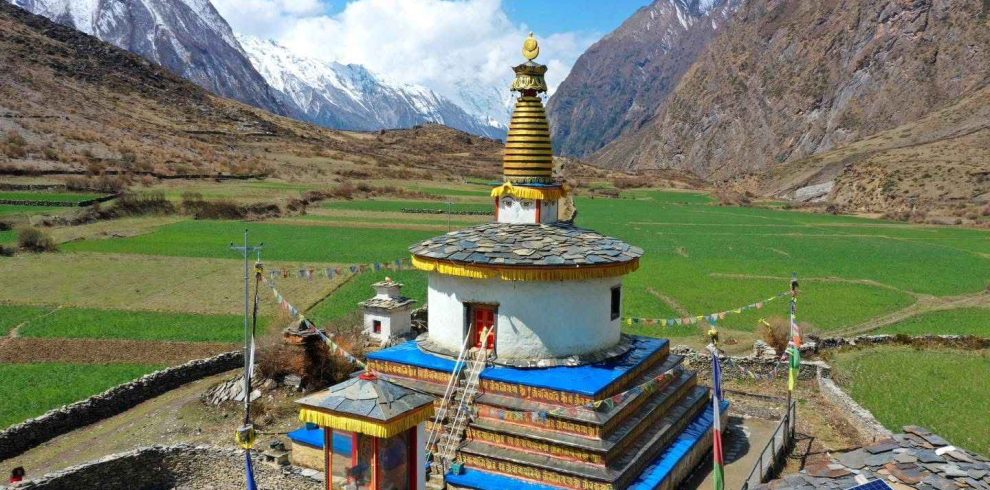
The 23-day Tsum Valley & Manaslu Circuit Trek combines breathtaking Himalayan landscapes with the preserved Tibetan Buddhist culture of a…