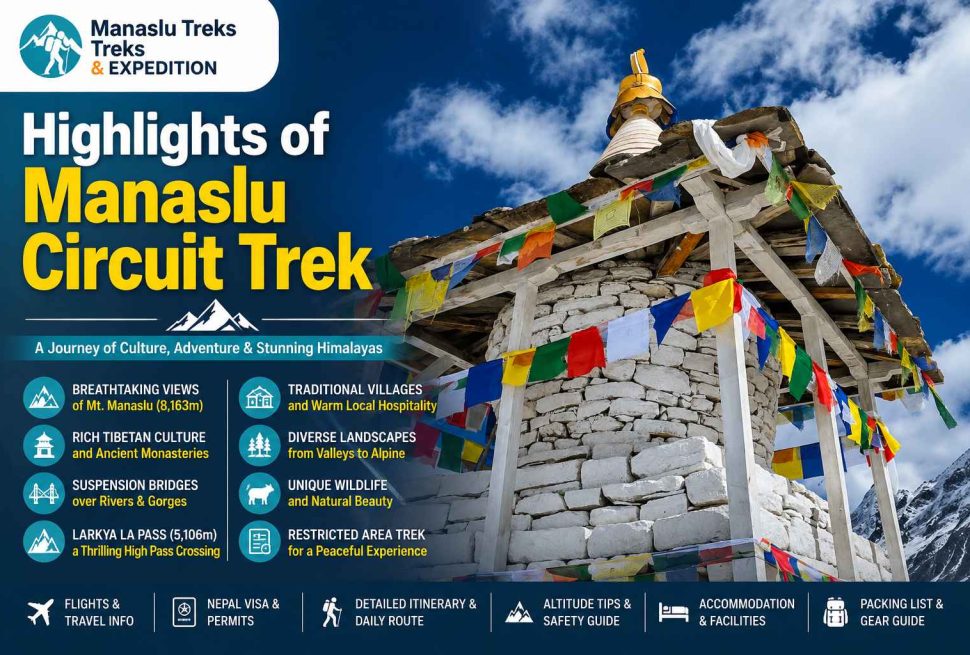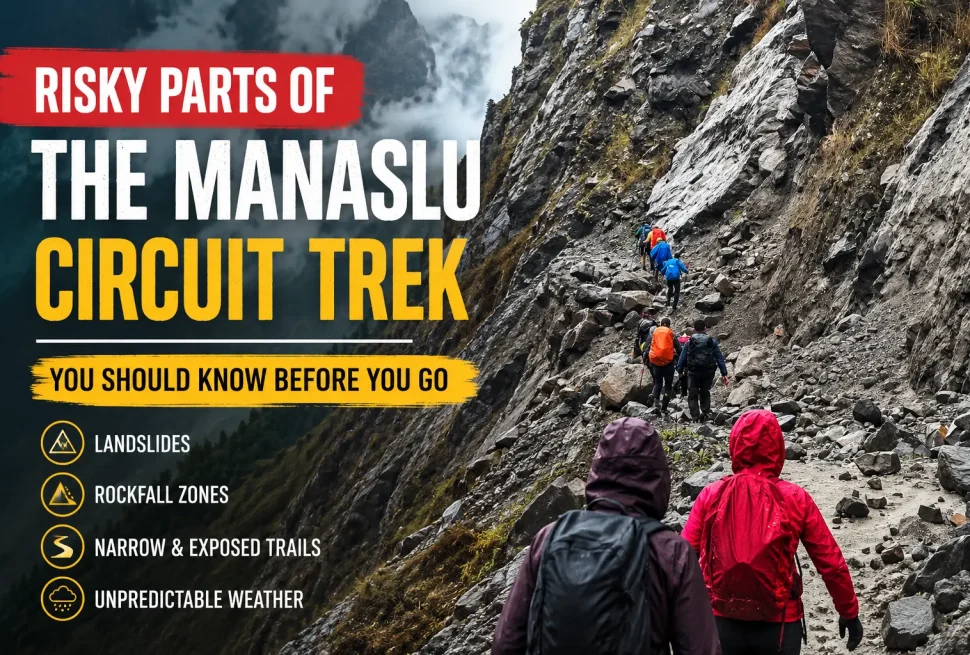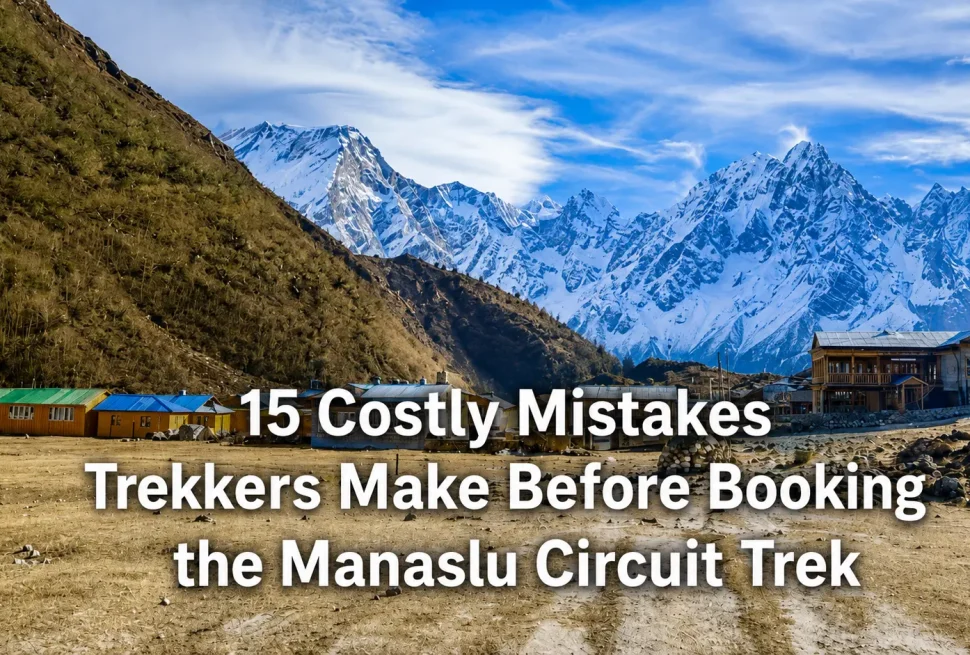
If you have spent any time searching for what the Manaslu Circuit Trek actually costs, you have probably run into the same problem I see trekkers bring to me every season: pages full of vague ranges like “800 to 2000 dollars” with no real explanation of why the number moves so much. That is not good enough when you are planning a three week trip to a restricted area of Nepal. In this guide I am going to break down every single cost category you will run into, with real 2026 and 2027 figures, so you can build your own budget instead of guessing. I have guided and helped plan this route for years, and I will tell you plainly where operators pad their quotes, where cutting corners is genuinely risky, and where you can save money without any downside.
Manaslu Circuit Trek Cost At a Glance
Before we get into the weeds, here is the short version. A fully organized, guided Manaslu Circuit Trek booked through a licensed Nepali trekking company typically runs somewhere between 1100 and 3000 US dollars per person, not including your international flight to Kathmandu. Where you land in that range depends almost entirely on group size, season, room type, and how much of the trip you upgrade. The table below gives you a realistic snapshot of three common tiers so you have a mental anchor before we go category by category.
| Tier | Typical price per person | What is included |
|---|---|---|
| Budget group trek | 1100 to 1400 USD | Larger group (6 or more), shared teahouse rooms, licensed guide, permits, standard season food, no porter |
| Mid range trek | 1500 to 2000 USD | Small group of 2 to 5, licensed guide plus porter, permits, full board meals, some private rooms where available |
| Premium or private trek | 2200 to 3000 plus USD | Private departure for 1 or 2 people, dedicated guide and porter, upgraded lodges where they exist, private jeep transfers, more flexible itinerary |
Those numbers are representative market ranges for a licensed, guided Manaslu Circuit Trek in general, not a fixed quote from any single company. If you want an exact number for your dates and group size, that is a five minute conversation, and I will tell you how to get one later in this article.
What Actually Determines How Much You Pay
Six things move your final price more than anything else. First is season. Trekking in the peak autumn months of September, October, and November costs more because the government charges a higher permit fee in that window, and lodges raise their room and food prices when demand is highest. Second is group size, because guide and porter costs, jeep hire, and some fixed operator overhead get split across more people. Third is whether you hire a personal porter or carry your own pack, which affects both your daily cost and your physical effort on a trek that already sits in the strenuous category, something covered in detail in the Manaslu trek difficulty assessment. Fourth is room type and meal plan, since some lodges at lower altitude now offer private rooms with attached bathrooms for a premium. Fifth is how many rest or acclimatization days you build in, since every extra day on the trail adds a full day of guide fees, porter fees, lodging, and food. Sixth is what you do before and after the trek itself, meaning Kathmandu hotel nights, any side trip such as the Tsum Valley extension, and whether you fly home directly or add other travel in the region.
None of these six factors are hidden or mysterious once you know to look for them, and that is really the whole point of this article. Once you understand how each line item is built, you can read any quote from any company and know exactly what you are paying for and whether it is fair.
Permit Costs Explained in Full
The Manaslu region sits inside a restricted area, which is the single biggest reason this trek costs more than something like the Annapurna Circuit or Everest Base Camp. You need three separate permits, and two of them are priced by the day, which catches a lot of first time trekkers off guard.
The Manaslu Restricted Area Permit, usually shortened to RAP, is issued in weekly blocks and the price changes by season. During the peak autumn window of September through November, it costs 100 US dollars for the first seven days and then 15 US dollars for every additional day beyond that. Outside of that window, meaning December through August, it drops to 75 US dollars for the first seven days and 10 US dollars per additional day. Since a standard Manaslu Circuit itinerary spends roughly eight to ten days inside the restricted zone between Jagat and Dharapani, most trekkers end up paying for one extra day or two beyond the first week, so budget for that rather than assuming the flat weekly number covers your whole trek.
On top of the RAP you need the Manaslu Conservation Area Permit, commonly called MCAP, which covers the section of trail from roughly Jagat up through Samdo and the Larkya La approach. The Manaslu Conservation Area Permit and the Annapurna Conservation Area Permit, or ACAP, which you also need because the trail descends into the Annapurna Conservation Area near Dharapani and Bhulbhule at the end of the circuit, each run around 30 US dollars per person as a one time entry fee, so plan for roughly 60 US dollars combined for the two conservation permits. These two are flat fees regardless of how many days you spend on the trail, unlike the RAP.
| Permit | Peak season Sept to Nov | Rest of year Dec to Aug | Notes |
|---|---|---|---|
| Manaslu Restricted Area Permit (RAP) | 100 USD first 7 days, then 15 USD per extra day | 75 USD first 7 days, then 10 USD per extra day | Requires a minimum of two trekkers per permit group and a licensed guide, arranged through a registered agency |
| Manaslu Conservation Area Permit (MCAP) | Around 30 USD | Around 30 USD | One time entry fee, same price year round |
| Annapurna Conservation Area Permit (ACAP) | Around 30 USD | Around 30 USD | Required because the route exits through Annapurna Conservation Area territory near Dharapani |
One important rule that trips people up: you cannot get the Restricted Area Permit as a fully independent trekker. It must be processed through a registered trekking agency and it legally requires you to be accompanied by a licensed guide, with a minimum of two trekkers per group in most cases. This is not a company trying to upsell you, it is how the Nepal government structures access to the region. You can see the official permit rules directly from Nepal’s Department of Immigration, and it is worth reading the full Manaslu Circuit route breakdown to see exactly which villages fall inside the restricted zone.
Guide and Porter Costs
Your guide is not optional on this route, for the permit reason explained above, and honestly I would not want to attempt this trail without one even if it were allowed. The trail crosses the Larkya La at over 5100 meters, weather changes fast, and route finding above Samdo in poor visibility is genuinely dangerous without local knowledge. A porter is optional, but most trekkers who are not already carrying light are glad they hired one by day four.
Daily rates vary based on the guide’s experience level, language ability, and whether you book through an agency or try to arrange something informally in Kathmandu, which I would not recommend for a restricted area trek since informal arrangements often fall through on the permit paperwork.
| Role | Typical daily rate | What is usually included |
|---|---|---|
| Licensed trekking guide | 30 to 40 USD per day | Guide’s own food, lodging, insurance, and salary, usually bundled into your package price rather than paid separately |
| Senior or fluent multilingual guide | 40 to 50 USD per day | Same as above with more experience and often better English or another language |
| Porter | 20 to 30 USD per day | Carries up to around 20 to 25 kilograms, usually split between two trekkers, own food and lodging included |
| Porter guide, a combined role on shorter budgets | 25 to 35 USD per day | Carries a smaller load and provides basic route guidance, common on tighter budgets but not a substitute for a licensed guide on the restricted section |
A useful rule of thumb: for an eighteen day trip including approach and exit days, guide costs alone typically add somewhere around 500 to 700 US dollars to a package if quoted separately, and a porter adds another 350 to 500 US dollars. Most organized packages fold these into one line item rather than itemizing them, which is honestly fine as long as you ask exactly what is covered.
Accommodation Costs Along the Trail
Teahouse lodging on Manaslu works differently than you might expect if you have trekked Everest Base Camp or Annapurna. Rooms themselves are often nearly free or just a few dollars if you eat your meals at the same lodge, since owners make their real money on food. That said, prices climb the higher you go, simply because everything above the roadhead has to be carried in by porter or mule.
| Section of trail | Typical room cost per night | Room type |
|---|---|---|
| Lower villages, Machha Khola to Jagat | 3 to 8 USD, sometimes free with meals | Basic twin room, shared bathroom |
| Mid section, Deng to Namrung | 5 to 10 USD | Basic twin room, shared bathroom, occasional attached bathroom option |
| Samagaon and Samdo | 8 to 15 USD | Basic twin room, shared bathroom, thicker walls needed for cold |
| Dharamsala or Larkya Phedi before the pass | 10 to 20 USD | Very basic dormitory style rooms, limited capacity, book ahead through your guide |
| Bimthang and descent to Dharapani | 5 to 12 USD | Basic twin room, shared bathroom |
If your package is full board, meaning breakfast, lunch, and dinner are included, the lodge almost always waives the room fee entirely since they are making their margin on your meals instead. That is why most organized trek prices you see quoted are built around full board meal plans rather than room rates in isolation.
Food and Drink Costs, and Why Prices Rise With Altitude
This is one area where independent trekkers most often underestimate their budget. A plate of dal bhat, the staple rice, lentil, and vegetable meal that most trekkers eat once or twice a day, costs around 300 to 500 Nepali rupees near the start of the trek and climbs to 700 to 900 Nepali rupees by the time you reach Samdo or Dharamsala. The same climb applies to everything else on the menu. A hot drink like black tea might be 100 to 150 rupees low down and 200 to 300 rupees high up. A bottle of purified or boiled water goes from around 100 rupees to 300 or 400 rupees the higher you climb, which is exactly why most experienced trekkers carry a filter or purification tablets rather than buying bottled water the whole way.
| Item | Lower altitude price (Machha Khola to Deng) | Higher altitude price (Samagaon to Dharamsala) |
|---|---|---|
| Dal bhat set meal | 300 to 500 NPR | 600 to 900 NPR |
| Fried noodles or fried rice | 250 to 400 NPR | 500 to 700 NPR |
| Black tea | 80 to 120 NPR | 150 to 250 NPR |
| Boiled or purified water, one liter | 100 to 150 NPR | 250 to 400 NPR |
| Chocolate bar or basic snack | 150 to 250 NPR | 300 to 500 NPR |
| Hot shower where available | 200 to 300 NPR | 400 to 600 NPR, often unavailable above Samdo |
If you are paying for food out of pocket rather than on a full board package, a realistic daily food and drink budget on this route runs about 15 to 20 US dollars low down and 25 to 35 US dollars per day once you are above Samagaon, once you add tea, snacks, and the occasional treat on top of your two main meals. Over an eighteen day trip that adds up to real money, which is one reason a lot of trekkers prefer a package that bundles meals in at a fixed price rather than gambling on a daily average.
Transportation Costs to and from the Trailhead
Getting to and from the Manaslu trailhead is its own cost category, and it is more involved than a lot of guides let on. Most itineraries start with a drive from Kathmandu to either Machha Khola or Soti Khola, and end with a drive out from Dharapani or Besisahar back to Kathmandu or Pokhara.
| Route and transport type | Typical cost | Duration |
|---|---|---|
| Kathmandu to Machha Khola or Soti Khola, local bus | 8 to 12 USD per person | 8 to 9 hours, rough road for the final stretch |
| Kathmandu to Machha Khola or Soti Khola, shared jeep | 20 to 30 USD per person | 7 to 8 hours |
| Kathmandu to Machha Khola or Soti Khola, private jeep | 150 to 200 USD for the whole vehicle | 7 to 8 hours, usually split among your group |
| Dharapani or Besisahar back to Kathmandu, local bus | 10 to 15 USD per person | 8 to 10 hours |
| Dharapani or Besisahar back to Kathmandu, shared jeep | 25 to 35 USD per person | 6 to 8 hours |
| Dharapani or Besisahar back to Kathmandu, private jeep | 150 to 200 USD for the whole vehicle | 6 to 8 hours |
| Emergency helicopter evacuation, one way | Often 3000 to 6000 plus USD, normally billed to your insurer | Roughly 45 minutes to an hour from most points on the route |
Local buses are the cheapest option by far but the road into the Manaslu region is rough, unpaved in sections, and slow, so a lot of trekkers on tighter timelines choose a shared jeep as a reasonable middle ground. If your itinerary is organized through an agency, this transport is almost always included in your package price already, so double check whether your quote is inclusive or exclusive of these transfers before comparing two offers side by side.
Gear and Equipment Costs, What to Rent Versus Buy
You do not need to own a full expedition wardrobe to do this trek, and renting gear in Kathmandu’s Thamel neighborhood is genuinely one of the best value decisions you can make, especially for items you will only use once. Rental shops charge roughly 1 to 3 US dollars per day per item for things like down jackets, sleeping bags, trekking poles, and gaiters, and a full rental kit for an eighteen day trip typically runs 60 to 120 US dollars total depending on how much you need.
One thing worth knowing if you book with us specifically: Manaslu Treks and Expedition provides every trekker on the Manaslu Circuit Trek with a sleeping bag and a down jacket as part of the standard package, which you use for the trek and return at the end, so that is two of the more expensive rental or purchase items already handled if you book through us.
If you are buying gear outright rather than renting, expect to spend somewhere between 300 and 600 US dollars on a full kit including boots, a good down jacket if you do not already own one, thermal layers, a sleeping bag rated for well below freezing, trekking poles, and a proper backpack, though prices vary a lot depending on brand and whether you buy genuine gear or the cheaper local copies sold throughout Thamel. For a full comparison of what makes sense to rent versus buy for this specific trip, the gear renting versus buying guide goes through it item by item.
Travel Insurance Costs and Why This Is Not a Place to Cut Corners
I say this to every trekker I work with: do not book this trek without insurance that specifically covers high altitude trekking up to at least 6000 meters and includes helicopter evacuation. The Larkya La sits at 5106 meters and altitude sickness can develop fast even in fit, experienced trekkers. A basic travel insurance policy bought for a beach holiday almost never covers high altitude trekking or helicopter rescue, and that gap has cost people their savings when they actually needed a rescue.
A proper policy for a two to three week trip with high altitude coverage and helicopter evacuation up to 6000 meters typically costs somewhere between 80 and 200 US dollars, depending on your age, your home country, the insurer, and how high the evacuation coverage cap is set. That is a small fraction of what an actual emergency helicopter evacuation costs out of pocket, which commonly runs from 3000 to 6000 US dollars or more depending on distance and weather conditions. For a deeper look at what to check for in a policy before you buy one, our travel insurance guide walks through the specific coverage terms that matter for this route.
Nepal Visa Costs
Almost every nationality can get a Nepal tourist visa on arrival at Tribhuvan International Airport in Kathmandu, and the pricing is straightforward and set in three tiers based on how many days you want. You can confirm the current fees on the Nepal Tourism Board website before you travel.
| Visa length | Fee |
|---|---|
| 15 days | 30 USD |
| 30 days | 50 USD |
| 90 days | 125 USD |
Given that a full Manaslu Circuit itinerary including travel days, a couple of nights in Kathmandu before and after, and any buffer days usually runs somewhere around fifteen to twenty two days total, most trekkers on this route choose the 30 day visa rather than the 15 day option, since running short on visa days mid trek is not a situation you want to deal with from a teahouse with no phone signal. Bring cash in US dollars for the visa fee and pay in exact denominations if you can, since change is not always readily available at the airport counter.
Tipping Costs and What Is Actually Expected
Tipping is not legally required anywhere in Nepal, but it is a genuine and expected part of how guides and porters earn a living wage on top of their daily rate, and skipping it entirely is considered poor form on a trek of this length. The common approach is to tip as a lump sum at the end of the trek rather than daily, often pooled if you are in a group.
As a general guideline, plan for somewhere around 10 to 15 US dollars per day for your guide and 8 to 10 US dollars per day for your porter, calculated across the whole trek and handed over as one payment at the end, though many trekkers instead think of it as a percentage, commonly around 10 percent of the total trip cost split between the crew. If you are trekking as a group, it is common practice to pool tips together and hand over a combined amount so the guide can distribute it fairly among the full crew including kitchen staff at any lodges the group used repeatedly. For exact recommended amounts broken down by role and trip length, our dedicated tipping guide covers this in more depth than I can fit here.
Group Size and How It Changes Your Per Person Cost
Group size is one of the biggest levers on your final per person price, because fixed costs like a private jeep, a guide’s flat daily rate, and some administrative permit processing fees get divided across however many people are sharing the trip.
| Group size | Typical effect on per person price |
|---|---|
| Solo trekker | Highest per person cost, since you still need a minimum of two people per Restricted Area Permit group in most cases, meaning solo trekkers are often paired with another guest or pay a single supplement |
| 2 to 4 people | Baseline pricing most companies quote as their standard rate |
| 5 to 8 people | Often 10 to 15 percent cheaper per person than the small group rate |
| 9 or more people | Can be 15 to 25 percent cheaper per person, though very large groups sometimes need two guides for safety and pacing reasons, which can offset some of the savings |
If you are trekking solo and want to keep costs down, ask your operator whether they can pair you with another solo traveler or an existing small group on your preferred dates. Most established companies run departures throughout the season and can often slot you into one at a lower rate than a fully private booking.
Sample Total Cost Scenarios, Budget, Mid Range, and Premium
Here is how these categories actually stack up into a full trip budget, shown across three realistic scenarios. These figures assume a standard fifteen to eighteen day itinerary, exclude international airfare into Kathmandu, and are built around peak autumn season pricing, which sits at the higher end of what you would pay in spring or the quieter months.
| Cost category | Budget scenario | Mid range scenario | Premium scenario |
|---|---|---|---|
| Permits, all three combined | 190 to 220 USD | 190 to 220 USD | 190 to 220 USD |
| Guide, full trip | Included in package | Included in package | Included, senior guide |
| Porter | Not included, self carry | Included, one porter per two trekkers | Included, one porter per trekker |
| Accommodation and meals | Basic teahouse, full board | Basic to mid teahouse, full board | Best available room each night, full board plus extras |
| Transport to and from trailhead | Local bus | Shared jeep | Private jeep |
| Kathmandu hotel nights before and after | Budget guesthouse | Mid range hotel | Comfortable hotel |
| Approximate total per person | 1100 to 1400 USD | 1500 to 2000 USD | 2200 to 3000 plus USD |
Notice that permit costs stay identical across all three tiers, since the government does not offer a discount for a fancier trip. What changes is service quality, room type, porter support, and transport comfort. None of the three scenarios above skip on the guide or on safety essentials like insurance, and that distinction matters more than which tier you pick.
Hidden or Easily Forgotten Costs
These are the line items that catch people off guard because they rarely appear in a headline price, but they add up fast if you do not plan for them.
- Wifi access at teahouses, usually 200 to 500 NPR per device per day where available, and often unavailable at all above Samdo
- Battery charging, commonly 100 to 300 NPR per hour or per device, rising with altitude, since most higher villages run on solar or small hydro systems
- Hot showers, often 200 to 600 NPR where offered, and frequently unavailable above Samagaon
- Extra acclimatization or weather delay days, which add a full day of guide, porter, food, and lodging cost per person if your itinerary needs to shift, and weather delays around the Larkya La are common enough to plan a buffer day for
- Kathmandu incidentals, meaning meals out, a SIM card at around 100 to 300 NPR plus data top ups, and any sightseeing before or after your trek
- Departure tax or airport fees not already built into your international ticket
- Trip cancellation or curtailment coverage, which is a separate add on from basic medical and evacuation insurance and worth pricing out if your dates are not fully flexible
How Manaslu Circuit Trek Cost Compares to Everest Base Camp and Annapurna Circuit
People planning their first big Nepal trek often ask how Manaslu stacks up financially against the two most famous routes in the country, and the honest answer is that it sits in the middle for different reasons than you might expect.
Everest Base Camp usually costs a bit more overall mainly because of the Lukla flight, which alone commonly runs 340 to 400 US dollars round trip and is prone to weather delays that can force an expensive helicopter transfer if you are on a tight schedule. Everest Base Camp does not require a restricted area permit, so its permit costs are lower, but the flight cost and generally higher teahouse prices along that heavily trafficked route often bring the total close to or above what you would pay for Manaslu.
The Annapurna Circuit, by contrast, is usually the cheapest of the three, since it does not require a restricted area permit at all, just the Annapurna Conservation Area Permit, and much of the route now has road access which keeps teahouse prices lower. A guided Annapurna Circuit trip often lands somewhere around 900 to 1300 US dollars.
Manaslu sits between the two, generally a bit less than Everest Base Camp once you account for the Lukla flight, but noticeably more than Annapurna Circuit because of the restricted area permit fees and the mandatory guide requirement. What you get in exchange is a trail with a fraction of the foot traffic of either of those other two routes, which in my experience is worth the extra cost for a lot of trekkers looking for a quieter, more remote experience of the Himalaya.
Practical Ways to Reduce Your Total Cost Without Cutting Corners on Safety
There are real, legitimate ways to bring your budget down on this trek, and none of them involve skipping insurance or your guide, both of which I would consider non negotiable on a restricted area route at this altitude.
- Travel outside the September through November peak window. Spring, roughly March through May, still gives you good weather and the Restricted Area Permit costs 25 US dollars less for the first week
- Join an existing small group departure instead of booking a fully private trip, which spreads fixed transport and guide costs across more people
- Rent gear in Thamel instead of buying items you will only use once, particularly for a down jacket and sleeping bag if your operator does not already supply them
- Carry your own pack instead of hiring a porter if you are confident in your fitness and pack light, though be honest with yourself about this since altitude fatigue changes what feels manageable by day eight or nine
- Choose a shared jeep instead of a private one for the trailhead transfer if you can coordinate timing with other trekkers
- Limit paid extras like wifi, hot showers, and bottled water by bringing a power bank, a book or downloaded entertainment, and a water filter or purification tablets
- Book your trek directly with a registered local operator rather than through a foreign booking platform that adds its own markup on top of the same ground services
What I would not recommend cutting is your guide, your permits, or your insurance. Those three are either legally required or directly tied to your safety in an area with limited rescue infrastructure, and the money saved by skipping any of them is not worth the risk.
How to Get an Exact Quote for Your Own Trip
Everything in this article is built from real, current market figures, but your exact total depends on your specific dates, your group size, whether you want a porter, and how many rest days you build in. The fastest way to get a precise number is to send us your travel dates and rough group size and let us build an itemized quote around your specific needs rather than trying to reverse engineer it from a general guide like this one. You can see what is included in a standard departure on the Manaslu Circuit Trek trip listing as a starting point.
Frequently Asked Questions
What is the minimum realistic budget for the Manaslu Circuit Trek?
Once you add up permits, a guide, basic teahouse lodging, full board meals, transport to and from the trailhead, and a simple insurance policy, it is very difficult to complete this trek responsibly for under about 1100 US dollars per person, even trekking in a larger group during the cheaper off season months and self carrying your own pack.
Why do some companies quote much lower prices than others for the same trek?
Usually one of a few things is happening. Some operators quote a bare bones price and then charge separately for items competitors bundle in, such as permits, an experienced guide, or transport. Others cut corners on guide qualifications, insurance for their staff, or food quality. A small number are simply underpricing to win bookings and hoping to make it up on upsells once you arrive. Always ask exactly what is included before comparing two numbers side by side.
Is tipping mandatory on the Manaslu Circuit Trek?
No, it is not legally required, but it is a strongly expected part of how guides and porters supplement their income, and it is considered standard practice among nearly all trekkers who complete a multi day guided trip in Nepal. Planning for it as part of your total budget from the start avoids any awkwardness at the end of the trek.
Does the price change significantly by season?
Yes. The Restricted Area Permit alone costs 25 US dollars more for the first week during the September through November peak season compared to the rest of the year, and teahouse food and room prices also tend to run a bit higher during peak months due to demand. Spring, roughly March through May, is the main alternative season with generally good weather and slightly lower costs.
What is typically included and excluded in a standard organized package?
Most organized packages include your permits, a licensed guide, accommodation and full board meals along the trail, and ground transport to and from the trailhead. Commonly excluded items are your international flight, Nepal visa fee, personal travel insurance, gear you do not already own, tips, and personal expenses like wifi, hot showers, and bottled drinks. Always request an itemized breakdown rather than assuming what a headline price covers.
How much extra cash should I carry on the trail beyond my package cost?
A reasonable buffer is somewhere around 15 to 25 US dollars per day for hot drinks, snacks, wifi, charging, hot showers, and the occasional treat, plus your planned tipping amount for the end of the trek. There are no ATMs once you leave the last larger town, so carry cash, ideally a mix of Nepali rupees and some US dollars for the entry permits and visa if you have not already paid those in Kathmandu.
Is travel insurance actually required, or just recommended?
Most trekking agencies, including us, require proof of insurance with high altitude and helicopter evacuation coverage before confirming your booking, since the guide and porter team need to know a rescue is financially possible if something goes wrong at altitude. Even where it is not strictly enforced by paperwork, going without it on a route that crosses a pass above 5100 meters is not a risk worth taking.
How much does the Restricted Area Permit actually cost, in plain terms?
During peak season, September through November, it is 100 US dollars for your first seven days in the restricted zone, then 15 US dollars for each additional day. During the rest of the year it drops to 75 US dollars for the first seven days, then 10 US dollars per additional day. Since most itineraries spend eight to ten days inside the restricted zone, plan for one to three extra days beyond the base weekly fee.
Can I reduce cost by trekking without a porter?
Yes, skipping a personal porter and carrying your own gear saves roughly 350 to 500 US dollars across a full trip. Just be realistic about your fitness and the weight of a full multi day pack at altitude, since the physical toll of self carrying can affect your pace and enjoyment on the tougher days around the Larkya La, so weigh that trade off honestly before you decide.
What is the total cost including international flights?
International airfare into Kathmandu varies enormously by your home country and season, commonly somewhere between 700 and 1500 US dollars round trip from most Western countries, sometimes more from farther afield. Add that to a ground package of 1100 to 3000 US dollars and a realistic all in total for most trekkers lands somewhere between 2000 and 4000 US dollars for the full trip from home and back, though this varies a great deal based on where you are flying from and how far in advance you book.
Do I need a personal guide or can I join a fixed group departure to save money?
Joining a fixed group departure is one of the most effective ways to reduce your per person cost, since the guide, porter team, and any private transport get split across more people while you still get the same permits, safety standards, and route. Most established operators run scheduled departures through the main trekking seasons that you can simply book into.
If you want a real number for your own trip rather than a general range, reach out and I will put together an honest, itemized quote based on your dates, group size, and what you actually want included. Call or message us on WhatsApp at +977 9869225929, email info@manaslutreks.com, or send your details through our contact and we will get back to you with a straight answer, not a sales pitch.