The Manaslu region in Nepal carries centuries of history within its valleys and passes. What today draws trekkers from around the world, as the Manaslu Circuit Trek was once an essential artery of trans Himalayan commerce. Understanding this history reveals why this eighth-highest mountain remains one of Nepal’s most culturally rich and carefully protected trekking destinations. Book with the best manaslu trek company for competitive pricing and guaranteed departures.
Planning the Manaslu Circuit Trek and need help with permits, route, or itinerary?
WhatsApp us Email usAncient Salt Trading Routes Along the Budhi Gandaki
Long before the Nepalese government opened the Manaslu region to trekking, the trails through these valleys served a vital economic purpose. The route that modern trekkers follow along the Budhi Gandaki River formed part of an ancient salt trading network connecting Nepal with Tibet.
For generations, traders led caravans of yaks and mules across these high mountain passes. From Tibet, they carried salt, wool, and precious stones southward. On the return journey, grain, rice, and textiles moved north toward the Tibetan plateau. Villages along this route developed as crucial waypoints where goods changed hands and customs duties were collected.
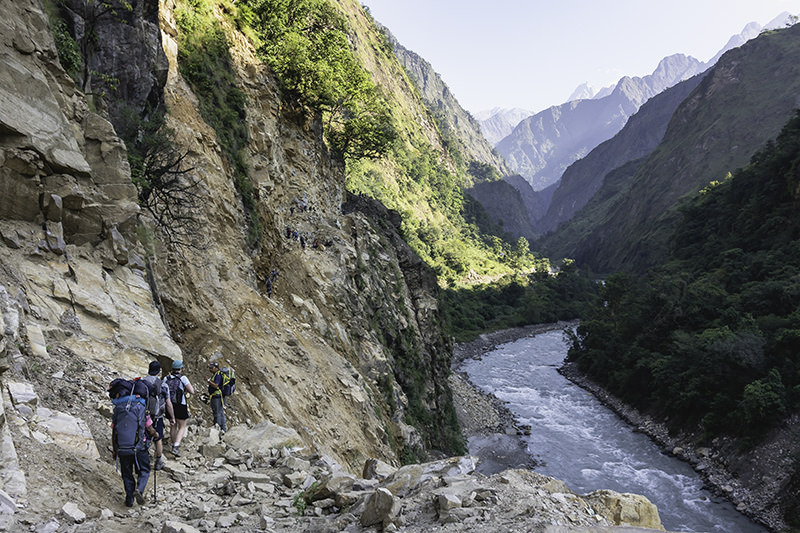
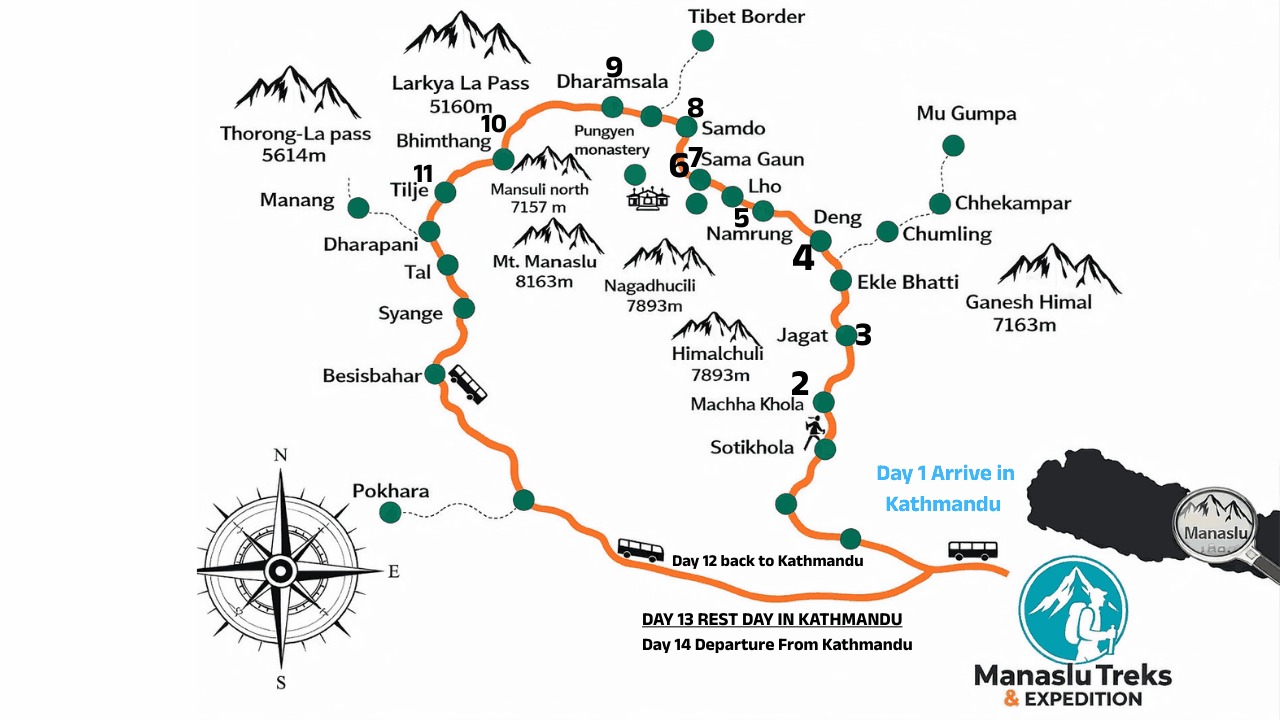
Jagat village, which trekkers encounter early in the Manaslu Circuit Trek, operated as a major customs post on this trans Himalayan trade route. Here, officials inspected and taxed commodities before allowing them to continue toward markets in Kathmandu and beyond. The stone paths worn smooth by countless footsteps of pack animals tell this story even today.
The trade patterns established along the Budhi Gandaki shaped settlement patterns throughout the region. Communities of Nubri and Tsum peoples in the higher valleys maintained close economic and cultural ties with Tibet. The Gurung settlements in the central hills facilitated exchange between lowland and highland economies. This historical framework explains much of the cultural diversity trekkers experience along the circuit.
Planning the Manaslu Circuit Trek and need help with permits, route, or itinerary?
WhatsApp us Email usEarly Mountain Exploration and the First Ascent
While local communities knew Manaslu intimately for centuries, the mountain entered recorded mountaineering history relatively recently. In 1950, H.W. Tilman became one of the first Europeans to observe Manaslu during his exploration of the Annapurna range. Accompanied by Major J.O.M. Roberts, Tilman trekked to Larkya La pass and identified what appeared to be a feasible route to the summit, though they made no attempt.
Between 1950 and 1955, four Japanese expeditions explored various approaches to climbing Manaslu via the north and east faces. These reconnaissance missions laid the groundwork for what would become a significant achievement in Himalayan mountaineering.
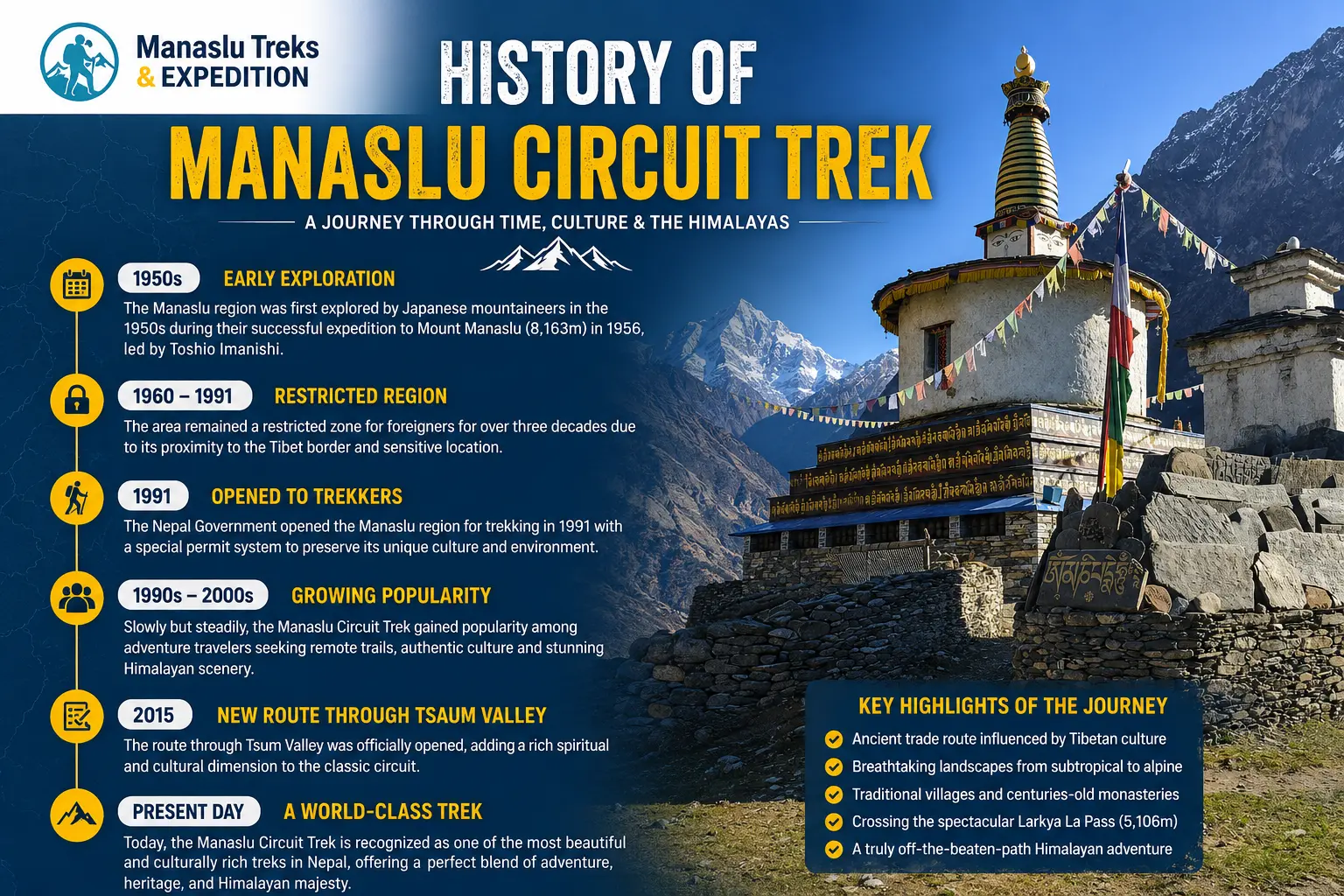
On May 9, 1956, Toshio Imanishi of Japan and Gyalzen Norbu, a Sherpa climber, successfully completed the first ascent of Manaslu. The expedition was led by Aritsune Maki. This achievement came just three years after the first successful climb of Mount Everest, during a period when the world’s highest peaks were rapidly being conquered.
The relationship between Japanese mountaineers and Manaslu proved enduring. Just as British expeditions became associated with Everest, Manaslu developed a particular connection with Japanese climbing teams. On May 4, 1974, Japanese climbers Naoko Nakaseko, Masako Uchida, and Mieko Mori, along with Jambu Sherpa, completed what is recognized as the first ascent of any 8,000 meter peak by women.
The winter first ascent came on January 12, 1984, when Polish climbers Maciej Berbeka and Ryszard Gajewski reached the summit via the normal route. Charlie Mace made the first American ascent in 1997.
Planning the Manaslu Circuit Trek and need help with permits, route, or itinerary?
WhatsApp us Email usThe Region Opens to Trekking in 1991
Despite mountaineering activity on Manaslu itself, the surrounding region remained closed to foreign trekkers for decades. Political sensitivities related to the proximity of the Tibetan border kept the area off limits. The mid 20th century brought significant changes. After Chinese control extended to Tibet in the 1950s, the ancient trade routes were closed. The Nepalese government designated the entire Manaslu region as a restricted area, prohibiting foreign visitors.
For nearly four decades, from the 1950s through the 1980s, villages that had bustled with trading activity returned to isolated agricultural existence. The paths that once connected Nepal and Tibet saw little outside traffic.
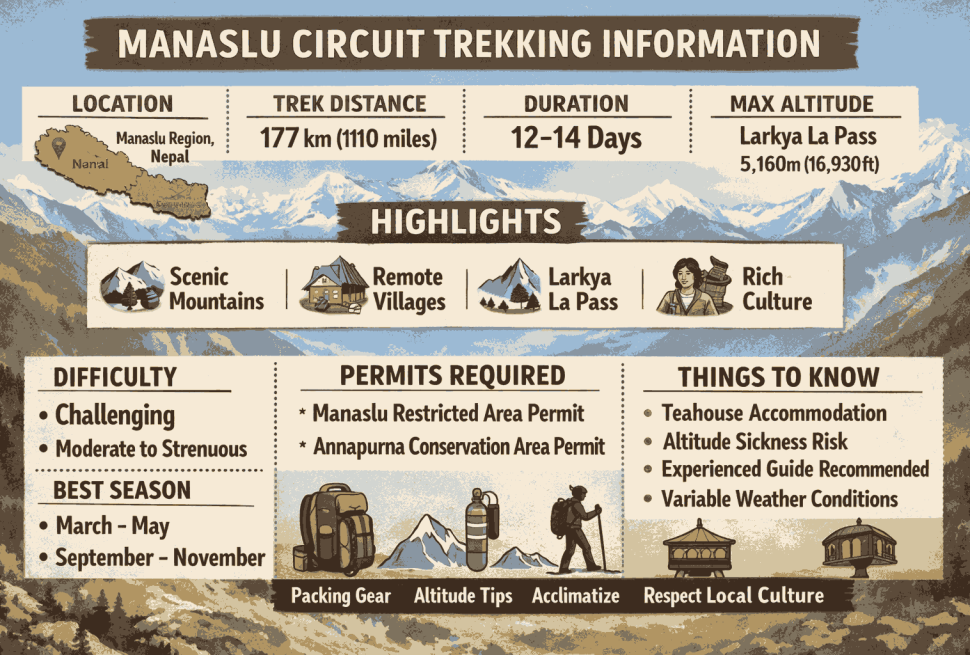
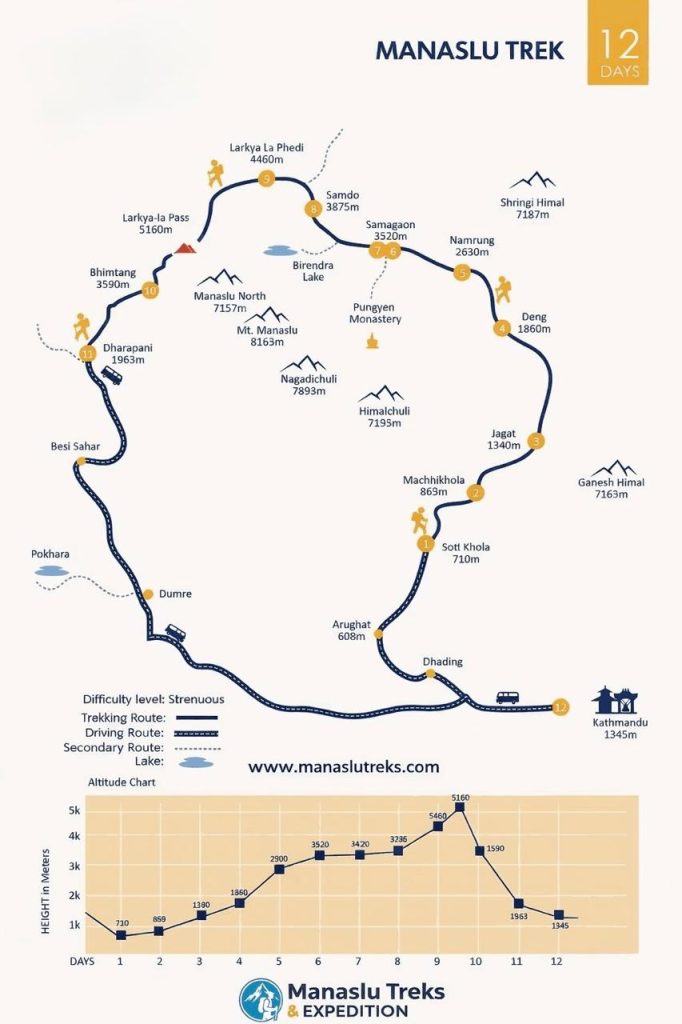
In 1991, the Nepalese government permitted trekking in the Manaslu region for the first time. This decision opened a 177 kilometer route that circuits the Manaslu massif, crossing Larkya La pass at 5,106 meters before descending to the Annapurna region.
The timing proved significant. By 1991, Nepal’s more famous trekking routes around Everest and Annapurna had already seen substantial development. The Manaslu Circuit Trek offered something different: a chance to experience Himalayan trekking in an area where infrastructure remained minimal and cultural traditions continued with less outside influence.
Establishing Conservation and Restricted Area Status
Opening to tourism brought both opportunities and concerns. The Manaslu region holds extraordinary biodiversity, ranging from subtropical forests in the lower Budhi Gandaki valley to alpine and nival zones above 5,000 meters. The area provides habitat for snow leopards, red pandas, musk deer, Himalayan tahr, and numerous bird species.
Equally important was the region’s cultural heritage. Communities practicing Tibetan Buddhism had maintained their traditions relatively unchanged for centuries. The challenge was allowing tourism while protecting both natural ecosystems and cultural integrity.
The National Trust for Nature Conservation began working in the Manaslu region in early 1997 under the Manaslu Ecotourism Development Project. This initiative received funding from the Government of Nepal and the Asian Development Bank. The project developed basic ecotourism infrastructure while building local capacity for sustainable resource management.
On December 28, 1998, the Manaslu Conservation Area was officially declared under the National Parks and Wildlife Conservation Act. Covering 1,663 square kilometers, it became the second conservation area under NTNC management, following the successful model established in the Annapurna region.
The Manaslu Conservation Area Project operates field offices in Philim and Sirdibas, with information centers in Jagat and Samagaun. Revenue from trekking permits supports conservation work, infrastructure development, and community programs. The organization has helped establish micro hydropower projects in multiple villages, improved access to drinking water and healthcare, and created economic opportunities through tourism related employment.
The Restricted Area Permit System
From the beginning, trekking in the Manaslu region operated under different rules than most other areas in Nepal. The restricted area status reflects ongoing security concerns related to the Tibetan border and the desire to control the pace and nature of tourism development.
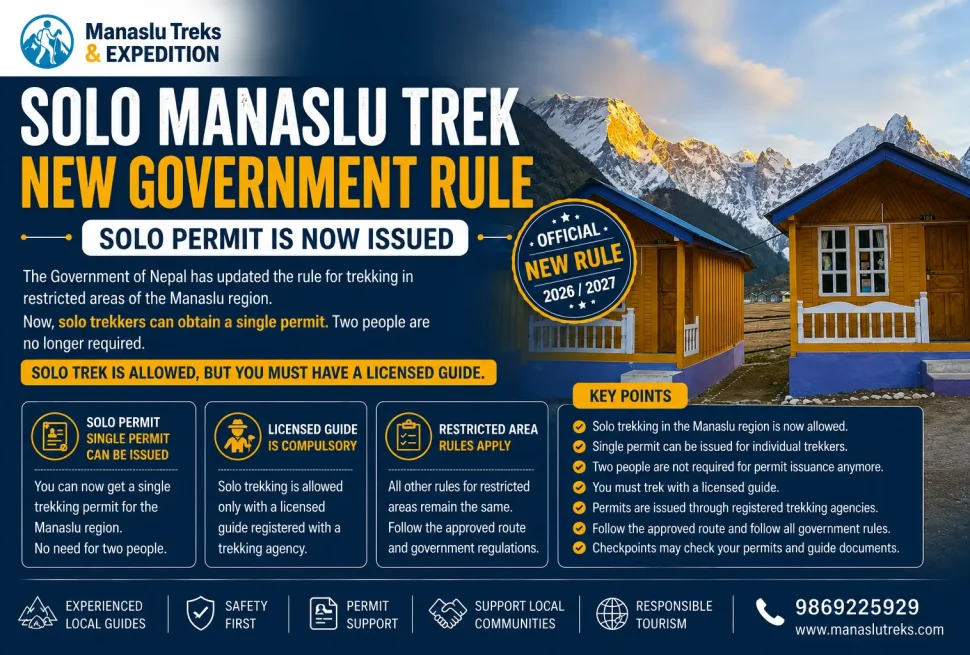
The Manaslu Restricted Area Permit system requires that trekkers travel with a licensed guide through a registered trekking company. Initially, and for many years, regulations mandated a minimum group size of two foreign trekkers. This requirement meant solo travellers needed to find a trekking partner or join an organized group to obtain the necessary permit.
On March 22, 2026, the Department of Immigration in coordination with the Trekking Agencies Association of Nepal revised the permit regulations. The requirement for two foreign trekkers was eliminated, allowing solo travelers to trek the circuit provided they hire a licensed guide. This change addressed long standing frustrations while maintaining the requirement for professional guide services.
Permit costs vary by season. During the autumn months of September through November, when weather conditions are most favorable, the Manaslu Restricted Area Permit costs 100 USD per person for the first seven days, with 15 USD for each additional day. From December through August, the cost reduces to 75 USD for the first seven days and 10 USD per additional day.
Additionally, trekkers must obtain a Manaslu Conservation Area Permit, which costs 30 USD regardless of season or duration. Because the circuit concludes by passing through a section of the Annapurna Conservation Area, an Annapurna Conservation Area Permit is also required, also 30 USD.
In 2024, a local rural municipality entry permit was added to the requirements. The Tsum Nubri Rural Municipality Entry Permit costs 1,000 Nepalese Rupees and is collected at the checkpoint in Jagat village.
Development of Trekking Infrastructure
When the region first opened in 1991, trekking the Manaslu Circuit required a fully supported camping expedition. Teahouses and lodges were scarce or nonexistent. Trekkers needed to carry tents, food supplies, cooking equipment, and employ a larger support staff.
Infrastructure development proceeded gradually over the following decades. Local communities, recognizing economic opportunities from tourism, began establishing teahouses and lodges along the main trekking routes. This transformation accelerated notably during the 2000s and 2010s.
The change brought both benefits and challenges. Teahouse trekking made the circuit accessible to more people and at lower cost. It generated income that stayed within local communities rather than going primarily to outside trekking companies. At the same time, increased visitation put pressure on waste management systems, local resources, and cultural preservation.
The Manaslu Conservation Area Project worked to guide this development. Programs focused on proper waste disposal, sustainable building practices, and maintaining cultural authenticity. Training initiatives helped local people develop skills in hospitality, guiding, and sustainable tourism practices.
Planning the Manaslu Circuit Trek and need help with permits, route, or itinerary?
WhatsApp us Email usTourism Evolution and Current Patterns
From a limited number of adventurous trekkers in the early 1990s, the Manaslu region has seen steady growth in visitor numbers. Statistics from 2018 indicate approximately 7,000 trekkers completed the circuit that year. While this represents substantial growth from earlier years, it remains a fraction of the numbers on the Everest Base Camp or Annapurna Circuit routes.
This lower volume suits many trekkers who specifically seek less crowded trails and more authentic cultural experiences. The restricted area status and permit requirements help moderate growth and maintain the character that makes the trek appealing.
Peak trekking seasons fall during spring (March through May) and autumn (September through November). Spring offers the advantage of rhododendron blooms in the lower elevations and generally stable weather before the monsoon arrives. Autumn offers the clearest mountain views and the most reliable conditions for crossing the Larkya La pass.
The inclusion of side treks has expanded the appeal of the region. The Tsum Valley, only opened to foreign trekkers in 2008, offers an additional restricted area experience with even stronger Tibetan Buddhist cultural elements. Combining the Manaslu Circuit with Tsum Valley creates a longer trek that showcases more of the region’s diversity.
Cultural Heritage Along the Circuit
Understanding the history of the Manaslu region deepens appreciation for what trekkers encounter along the circuit. The villages are not museum pieces but living communities with roots extending back centuries.
In the higher elevations, settlements like Lho, Samagaun, and Samdo reflect clear Tibetan Buddhist influence. Stone houses with carved wooden details, monasteries where monks and nuns maintain daily practices, and mani walls inscribed with prayers all demonstrate cultural continuity stretching back generations.
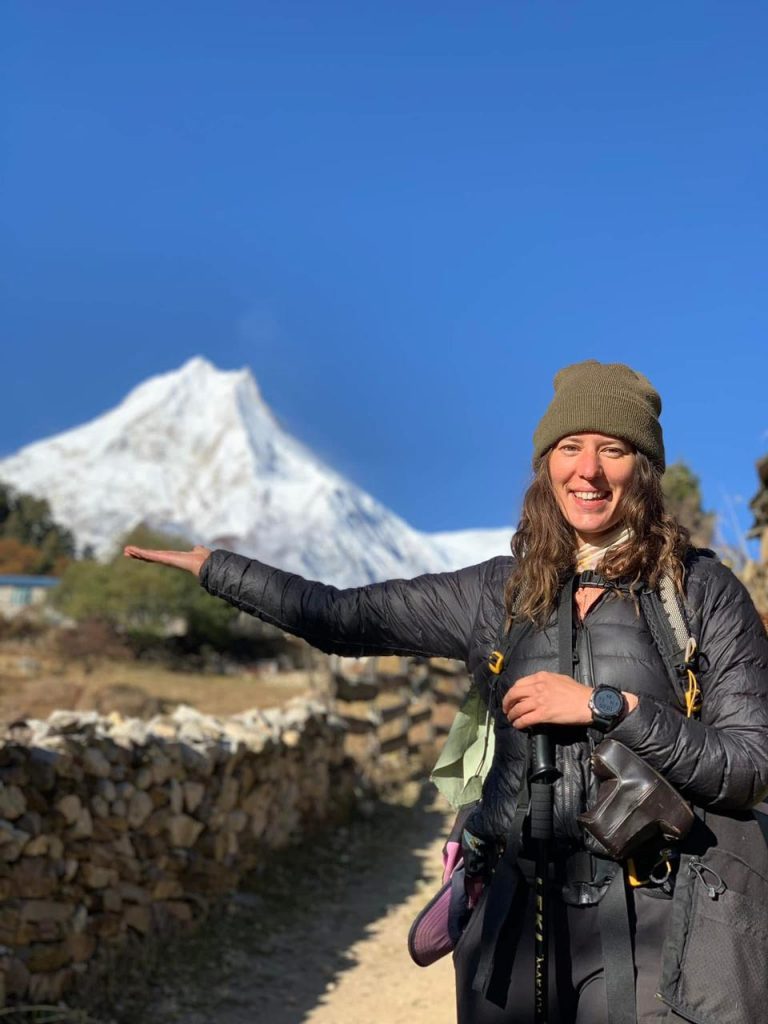
The Nyilgpa Monastery in Samagaon traces its origins approximately 400 years. Pungen Gompa, accessible as a side trip from Samagaun, offers another ancient monastery experience. These are not tourist attractions but active spiritual centers for local communities.
Lower in the valleys, Gurung villages show different cultural patterns while still maintaining strong traditions. The mix of Hindu and Buddhist practices, distinct architectural styles, and different languages all reflect the historical layering of cultures in the region.
Local festivals, agricultural practices, and social structures evolved over centuries in relative isolation. The salt trading era brought cross cultural exchange without eroding fundamental traditions. Even as tourism has become economically important, communities work to maintain cultural authenticity rather than creating performed versions of their heritage for visitor consumption.
Contemporary Challenges and Considerations
The history of Manaslu trekking continues to be written. Current discussions focus on balancing conservation, cultural preservation, and economic development through tourism.
Climate change presents observable impacts in the region. Glacial retreat affects water resources. Changes in precipitation patterns influence agriculture. Local communities and conservation managers grapple with these challenges while trying to maintain the landscapes that draw visitors.
The September 2012 avalanche that killed eleven climbers on Manaslu served as a reminder of the mountain’s dangers. The region’s reputation as a challenging but achievable 8,000 meter peak must be balanced against proper respect for objective hazards.
Infrastructure development raises ongoing questions. How much modernization serves trekkers and locals without degrading the remote character people seek? Where should electricity reach? What building materials and architectural styles preserve cultural integrity while meeting practical needs?
These questions don’t have simple answers. The Manaslu Conservation Area Project works with local communities to make decisions that consider multiple perspectives and long term sustainability rather than short term profit.
Practical Understanding for Modern Trekkers
The history outlined here informs practical aspects of trekking the Manaslu Circuit today. The ancient trading routes explain why villages are positioned where they are and why particular passes were chosen. Understanding that these were working trade routes, not recreational paths, helps explain the sometimes steep and challenging terrain.
The relatively recent opening to tourism in 1991 explains why infrastructure remains less developed than in other popular trekking regions. This is a feature, not a bug, for many who choose this circuit. The restricted area status and permit requirements exist for specific historical and political reasons. They’re not arbitrary bureaucracy but reflect legitimate concerns about border security and sustainable development.
The involvement of the Manaslu Conservation Area Project since 1997 explains many facilities trekkers encounter: the information centers, the micro hydropower, the organized waste management in villages where it exists. The permit fees directly support this ongoing work.
Cultural sensitivity matters particularly in the Manaslu region because the communities haven’t had decades to adapt to mass tourism. What you experience in villages reflects authentic practices, not performances. Respectful engagement with local culture means understanding this history and context.
Looking Forward
The Manaslu Circuit Trek stands at an interesting point in its development. No longer the unknown alternative it was in the 1990s and early 2000s, it nonetheless remains less traveled than Nepal’s most famous routes. The 2026 rule change allowing solo trekkers may increase numbers, or the higher permit costs for single travelers may moderate that effect.
Infrastructure will likely continue developing, though the conservation area framework and community priorities should guide the pace and nature of that development. The challenge will be providing adequate services for increasing visitor numbers while maintaining the remote, authentic character that defines the experience.
Climate change will influence the region whether through immediate impacts like glacial lake outburst floods or gradual shifts in precipitation and temperature. How communities and conservation managers respond will shape the region’s future.
The fundamental appeal of the Manaslu Circuit Trek, however, rests on elements with deep historical roots. The spectacular mountain scenery exists because of geology. The cultural richness reflects centuries of tradition. The sense of remoteness comes from the region’s geography and political sensitivity. These core elements persist even as specific conditions evolve.
For trekkers interested in Himalayan adventure with strong cultural dimensions and authentic experiences, understanding this history adds depth to the journey. The trail you walk through the Budhi Gandaki valley carried salt and wool for generations before it carried trekkers. The passes you cross connected trading partners before they connected adventure seekers. The villages where you stay developed over centuries, not decades.
This history matters. It explains what exists now and informs what should be protected moving forward. The Manaslu region’s evolution from restricted area to carefully managed trekking destination offers lessons about balancing access and preservation, development and sustainability, tradition and change.
The story continues with each trekking season, each policy decision, each local initiative, and each group of visitors who choose this circuit. Understanding where it came from helps inform where it should go next.
Planning the Manaslu Circuit Trek and need help with permits, route, or itinerary?
WhatsApp us Email us