December Closes One Trekking Year and Opens Another
We treat December differently from every other month on our booking calendar, not because the trek itself changes character overnight, but because the date you choose within December effectively determines which season you are actually trekking in. Book the first week and you are, for practical purposes, taking a colder version of a late-November trip: manageable, well within the capability of a properly equipped trekker, still riding the tail end of autumn’s stability. Book the last week, and you are, for practical purposes, taking an early version of a January trip: genuine winter conditions, a pass crossing that demands real caution, and a trail that has emptied out almost entirely. There is no single honest answer to “is December good for this trek,” only an honest answer to “is your specific December date good for this trek,” and that is the question this guide is built to help you answer.
Yes, but December is a month of two halves, and the honest answer depends heavily on which week you’re asking about. Early December often still carries some of November’s stability, with Larkya La typically passable and conditions manageable with solid cold-weather gear. As the month progresses, winter sets in more firmly: snow accumulation increases, temperatures drop further, and the pass becomes progressively less predictable, approaching January-level risk by the final week. If your trip falls in the first half of December, treat it similarly to a colder version of November. If it falls in the second half, prepare and plan as you would for a January departure, with the same honest caution around the pass that we apply to deep winter.
Manaslu Tsum Valley Trek in December at a glance
| Factor | December conditions |
|---|---|
| Overall feasibility | Possible early in the month, harder and less predictable by month end |
| Larkya La (5,106 m) | Increasingly risky as the month progresses, approaching January-level caution late month |
| Daytime temperature, lower valley (700-1,900 m) | 10-16°C |
| Daytime temperature, Samagaun/Samdo (3,530-3,875 m) | -2 to 5°C |
| Night temperature, above 4,000 m | -18°C to -25°C, colder as the month progresses |
| Rainfall/snowfall | Rare at low altitude, snow is increasingly likely at altitude as the month progresses |
| Trail crowding | Low, and dropping further as the month goes on |
| Teahouse availability | Reduced above Samagaun, especially in the second half of the month |
| Permit cost tier | Lower Dec-Aug rate applies from 1 December |
| Best for | Experienced, cold-tolerant trekkers, ideally scheduled in the first half of the month |
Who should consider trekking in December
December suits experienced trekkers who are comfortable with genuine winter conditions and who can prioritize the first half of the month for the most reliable pass crossing. It is not the best choice for first-time high-altitude trekkers or anyone with zero schedule flexibility around the pass. If solid winter gear and a flexible mindset aren’t things you want to deal with, October or November offers a considerably easier experience.
Reasons to choose December, and reasons to think twice
Why do some trekkers choose December
- Maximum solitude: among the quietest months of the trekking calendar, especially in the second half.
- Lower permit rate: December marks the return to the cheaper Dec-Aug rate tier.
- Crisp, clear early-winter light: cold, dry air often produces excellent visibility in the first half of the month.
- A different atmosphere: snow-dusted villages and a quiet, contemplative trail.
Why most trekkers should choose October or November instead
- Increasing pass risk through the month: Larkya La becomes progressively less predictable as December progresses.
- Reduced teahouse network: particularly above Samagaun in the second half of the month.
- Serious cold: night temperatures at Dharmasala and the pass drop well below what October or November requires gear-wise.
- Shorter daylight: among the shortest of the year, tightening the daily walking window.
Weather and conditions by zone in December
Lower Budhi Gandaki: Machha Khola to Deng (700-1,900 m)
Cool and generally dry, with daytime temperatures around 10-16°C. This section remains comfortable for walking throughout the month.
Tsum Valley: Chumling to Mu Gompa (2,400-3,700 m)
Cold and clear, with daytime temperatures around 4-10°C at Chumling and Chhokangparo, dropping well below freezing overnight higher up.
Upper Manaslu: Namrung to Samagaun (2,600-3,500 m)
Cold but generally clear, with daytime temperatures around 0-8°C. Snow becomes more likely on shaded trail sections as the month progresses.
Samagaun and Samdo (3,530-3,875 m)
Daytime highs typically run -2°C to 5°C, colder than November. Nights drop to roughly -16°C to -22°C, colder still by month’s end.
Dharmasala/Larkya Base Camp (4,460 m)
Daytime temperatures hover around -8°C to -3°C, with nights dropping to -20°C to -25°C or colder, particularly in the second half of the month.
Larkya La (5,106 m)
Early December often sees the pass still reasonably passable, similar to a colder version of November. As the month progresses, snow accumulation increases and the crossing becomes less predictable, with guides applying the same careful, weather-dependent judgment used in January by the final week. Do not assume a fixed crossing date late in December without built-in flexibility.
Bhimtang and the descent to Dharapani (1,860-3,720 m)
Cold but clear on the descent, with conditions becoming noticeably milder as you drop toward Tilije and Dharapani.
December weather at a glance
| Zone | Altitude | Day temp | Night temp | Typical conditions |
|---|---|---|---|---|
| Machha Khola-Deng | 700-1,900 m | 10-16°C | 0-5°C | Cool, dry, clear |
| Tsum Valley | 2,400-3,700 m | 4-10°C | -8 to -14°C | Cold, clear, patchy snow late month |
| Namrung-Lho | 2,600-3,180 m | 0-8°C | -10 to -16°C | Cold, generally clear |
| Samagaun/Samdo | 3,530-3,875 m | -2 to 5°C | -16 to -22°C | Cold, clear skies, increasing snow late month |
| Dharmasala | 4,460 m | -8 to -3°C | -20 to -25°C | Very cold, snow increasingly likely |
| Larkya La | 5,106 m | -13 to -8°C | n/a (crossed by day) | Passable early month, increasingly risky late month |
| Bhimtang-Dharapani | 1,860-3,720 m | 6-12°C | -8 to -2°C | Cold but clear |
Rainfall, wind and visibility in December
Rainfall is rare in December, with snow the more relevant form of precipitation at altitude, increasingly likely as the month progresses. Wind picks up at altitude as winter patterns establish more firmly. Visibility is typically excellent in clear weather, particularly in the first half of the month, though storm systems can significantly reduce visibility at altitude with less warning as December wears on.
Daylight hours in December
Daylight runs from roughly 6:45 am to 5:00 pm, among the shortest windows of the year at approximately 10.25 hours, similar to January.
A typical day’s weather pattern in December
Mornings are typically clear and very cold, especially at altitude. Days generally stay clear in the first half of the month, with an increasing chance of cloud and snow build-up by the afternoon as December progresses. Early starts and reaching your teahouse well before dark are standard practice throughout the month.
Trail conditions in December
Trail conditions are generally good below Namrung throughout the month. Above Samagaun, expect increasing snow and ice on shaded sections as December progresses, particularly approaching Dharmasala and the pass, where conditions in the second half of the month can resemble January.
Road access and transport in December
Road access is generally reliable in December, clear of monsoon-season disruption, though early winter weather can occasionally cause brief delays, particularly later in the month.
Teahouses, rooms and food in December
Teahouses below Samagaun remain reliably open throughout December. Above Samagaun, availability decreases as the month progresses, with several lodges closing for winter by the second half of December, similar to the reduced network seen in January. Confirm current operating status with your operator, particularly for late-December departures.
Water, charging, and connectivity in December
Water, charging and connectivity remain reliable at lower elevations. Above Samagaun, expect the same reduced reliability that characterises the winter months, with solar charging affected by shorter days and a power bank a sensible backup.
How busy is the trail in December?
Low, and dropping further as the month progresses. By the final week of December, trail traffic is close to January levels.
Permits and costs for December
December marks the return to the lower December-August permit rate tier. The Manaslu Restricted Area Permit (RAP) costs USD 75 for the first 7 days plus USD 10 per extra day. The Tsum Valley RAP costs USD 30 for the first 7 days plus USD 7 per extra day. MCAP and ACAP remain NPR 3,000 each (foreigner rate), plus the one-time NPR 1,000 local municipality fee. See our Manaslu trekking permits guide for full current details.
Restricted area rules
The Manaslu and Tsum Valley areas remain restricted, with all permits arranged through a registered trekking agency and checkpoints at Jagat, Philim, Namrung and Samagaun for the main route, plus Lokpa, Chumling and Chekampar for Tsum Valley. As of the 22 March 2026 rule change, one trekker with one licensed guide meets the restricted-area requirement.
Guide and porter requirements
A licensed guide from a registered agency is mandatory, and an experienced winter-season guide is valuable for December departures, particularly in the second half of the month. Porters are optional but recommended given the extra weight of cold-weather gear.
Suggested itinerary for the Manaslu Tsum Valley Trek in December
| Day | Route | Altitude |
|---|---|---|
| 1 | Kathmandu to Machha Khola | 870 m |
| 2 | Machha Khola to Jagat | 1,340 m |
| 3 | Jagat to Lokpa | 2,240 m |
| 4 | Lokpa to Chumling (Tsum Valley) | 2,386 m |
| 5 | Chumling to Chhokangparo | 3,010 m |
| 6 | Chhokangparo to Mu Gompa | 3,700 m |
| 7 | Mu Gompa exploration and acclimatisation | 3,700 m |
| 8 | Mu Gompa to Chhokangparo, descend to Gumba Lungdang or Rachen Gompa | 3,200 m |
| 9 | Descend to Lokpa, continue to Deng | 1,860 m |
| 10 | Deng to Namrung | 2,630 m |
| 11 | Namrung to Lho | 3,180 m |
| 12 | Lho to Samagaun | 3,530 m |
| 13 | Samagaun acclimatisation, side trip to Manaslu Base Camp or Birendra Lake | 3,530 m |
| 14 | Samagaun to Samdo | 3,875 m |
| 15 | Samdo to Dharmasala | 4,460 m |
| 16 | Dharmasala over Larkya La to Bhimtang | 3,720 m |
| 17 | Bhimtang to Tilije/Dharapani | 1,860 m |
| 18 | Dharapani to Kathmandu via Besisahar | 1,400 m |
December departures, particularly in the second half of the month, benefit from at least one extra buffer day around the pass, similar to a January itinerary.
Acclimatisation in December
The two dedicated acclimatisation days remain essential. Cold-weather stress adds extra importance to hydration, calorie intake and resisting the urge to rush the schedule.
Contingency planning and buffer days
Early-December departures can generally work with a standard single buffer day. Departures in the second half of the month should plan for at least one extra day of flexibility around Dharmasala and the pass, mirroring January-level contingency planning.
What to pack for December
| Category | December-specific notes |
|---|---|
| Insulation | Down jacket rated to at least -20°C, colder-rated for late-month departures |
| Legwear | Insulated trousers or thermal layers under shell pants above Samagaun |
| Footwear | Insulated waterproof boots; microspikes recommended, especially late month |
| Sleep system | Four-season sleeping bag (-20°C comfort rating or colder) recommended |
| Sun protection | Important given strong UV and snow glare at altitude |
| Shift in kit through the month | Early-month gear can be November-level; by late month, plan as you would for January |
Clothing and layering system for December
- Base layer: two sets of merino wool or synthetic thermal tops and bottoms.
- Mid layer: fleece or insulated jacket for daily walking.
- Insulated outer layer: a down jacket rated to at least -20°C, colder-rated still for late-December departures.
- Trekking trousers: a warm, wind-resistant pair, plus thermal leggings for the pass day.
- Hardshell layer: windproof jacket and trousers for the pass crossing and any snow.
Footwear and traction for December
- Boots: insulated, waterproof trekking or light mountaineering boots.
- Traction: microspikes recommended, especially for departures in the second half of the month.
- Socks: thick wool trekking socks with liners underneath.
- Gaiters: useful for the Dharmasala to Bhimtang section, especially late month.
Sleep system and cold-night gear
- Sleeping bag: four-season, rated to at least -20°C comfort.
- Sleeping bag liner: additional warmth and hygiene.
- Hot water bottle: a popular low-cost way to warm your sleeping bag at high camps.
Documents, money and extras
- Cash in Nepali rupees: carry enough for the full trek.
- Permit documents and passport copies: carry your original passport and photos.
- Basic first aid and personal medication: including any altitude sickness medication discussed with your doctor.
Health and altitude considerations
Standard altitude precautions apply throughout December: ascend gradually, use the built-in rest days, stay hydrated, and communicate symptoms to your guide early. Cold stress adds extra importance to staying warm and dry. See our guide on what happens if you get sick on the Manaslu Circuit Trek for more detail.
Safety risks specific to December
The main risk is the pass’s increasing unpredictability as the month progresses, along with serious cold at Dharmasala and above. Neither risk is unmanageable with the right guide, gear and flexible schedule, but both deserve honest respect, particularly for departures in the second half of the month.
Travel insurance
Comprehensive travel insurance covering trekking to at least 6,000 metres, including helicopter evacuation, is essential for this route in any month, and particularly worth confirming carefully for a December departure.
Is December right for beginners, experienced trekkers or solo trekkers
First-time high-altitude trekkers
Early December can work for a well-prepared first-timer with a good guide; late December is better suited to those with prior winter trekking experience.
Experienced trekkers
Experienced trekkers who specifically want solitude and don’t mind genuine winter conditions, particularly in the second half of the month, will find December rewarding.
Solo trekkers
Since the 22 March 2026 rule change, one trekker with one licensed guide meets the restricted-area requirement. See our solo trekking rule update for details.
Guides and porters: what to expect in December
Guides working in December, particularly in the second half, are typically among the more experienced winter-season staff, given the judgment calls required around the pass. Expect close daily communication about conditions and a conservative approach as the month progresses.
Photography in December
December offers crisp, clear early-winter light in the first half of the month, with snow-dusted peaks and villages providing a striking, quiet aesthetic. Fewer trekkers on the trail also means cleaner, people-free shots at the classic viewpoints.
Festivals and cultural events in December
Local festival timing varies year to year with the lunar calendar; check current dates with your operator, and see our guide to major festivals in the Manaslu region.
Advantages and disadvantages of trekking in December
| Advantages | Disadvantages |
|---|---|
| Maximum solitude, especially by month end | Larkya La becomes increasingly risky as the month progresses |
| Lower permit rate returns from 1 December | Reduced teahouse network above Samagaun late month |
| Crisp, clear early-winter visibility | Serious cold at Dharmasala and the pass |
| Quiet, contemplative trail atmosphere | Shortest daylight hours of the year |
| Good early-month option before deep winter sets in | Not recommended for first-timers late in the month |
Extra costs to budget for
Budget for standard trek costs and the lower Dec-Aug permit rate, cold-weather gear rental if you don’t already own gear rated for winter conditions, a buffer day allowance particularly for late-December departures, and tips for your guide and porter.
How December compares to November
November offers more stable, more predictable conditions throughout, with a wider teahouse network and less pass-crossing uncertainty; see our Manaslu Tsum Valley Trek in November guide. December, especially in its first half, can still deliver a good trek for well-prepared, flexible trekkers, but the month’s back half calls for the same honest caution we apply to deep winter conditions.
December month-by-month comparison table
| Month | Feasibility | Larkya La | Crowd level |
|---|---|---|---|
| November | Recommended | Normally stable, colder | Moderate to high, thinning after mid-month |
| December | Possible early month, harder by month end | Increasingly risky as month progresses | Low |
Alternatives to consider if December doesn’t work for you
If you want a reliable pass crossing without December’s late-month uncertainty, consider shifting earlier into November. If your dates are fixed for December and fall in the second half of the month, discuss a Tsum Valley-only itinerary that avoids the Larkya La crossing with your operator, see our Manaslu Tsum Valley destination for details.
Final recommendation: should you trek in December
December works best as an early-month option: book the first two weeks if you can, bring solid cold-weather gear, and build in schedule flexibility around the pass. If your only available dates fall in the second half of the month, treat the trip with the same honest respect we’d apply to a January departure, an experienced guide and genuine flexibility make it achievable, but it is not a month to approach casually. Explore our 19-Day Manaslu Circuit with Tsum Valley Trek or the 23-Day Tsum Valley and Manaslu Circuit Trek, or get in touch via our contact to plan your December departure with an honest assessment of current conditions. For the full seasonal picture across all twelve months, see our Best Time to Go guide.
Early December in Detail: The Last Stable Window
The first one to two weeks of December typically retain enough of November’s stability to remain genuinely comfortable for well-prepared trekkers. Larkya La is normally still passable without the deep-winter snow accumulation that defines late December through February, daytime trekking conditions across the lower and mid route remain manageable, and trail traffic, already thin after November’s mid-month drop-off, becomes close to nonexistent, offering a level of solitude comparable to July or August but without the monsoon rain. Guides watch this window closely each year, since the exact date winter conditions firm up varies, some years early December remains mild through the second week, other years the shift happens earlier, and current-year conditions reporting matters more for this specific window than for almost any other point on the calendar.
Late December in Detail: Genuine Winter Arrives
By the final one to two weeks of December, conditions have typically shifted decisively toward winter. Snow accumulation at Larkya La increases meaningfully, temperatures at the pass and at Samdo and Dharamsala drop toward the extreme lows that define January and February on this route, and the crossing itself demands the same conservative, weather-dependent approach used throughout deep winter, early starts, willingness to hold an extra day at Dharamsala if conditions are not favorable, and acceptance that the pass may occasionally be closed entirely for a period. This is not a window we discourage outright, experienced, well-equipped trekkers do complete it successfully most years, but it requires the same honest, cautious framing we apply to a January booking rather than the more relaxed approach appropriate to October or November.
Permit Costs and the Mid-Month Price Shift
December offers a genuine cost advantage that most trekkers overlook: it falls under the lower Restricted Area Permit tier, USD 75 per week, the same rate that runs from December through August, rather than the USD 100 per week peak-season rate that applies September through November. This means a December trek, particularly an early-December one that still enjoys near-November trail conditions, delivers close to peak-season trekking quality at meaningfully lower permit cost. Full details are on our Manaslu trekking permit guide. This value proposition is strongest for the first half of the month specifically, since it pairs favorable pricing with conditions that have not yet shifted into the more demanding winter territory of the month’s back half.
Field Notes: A Guide’s Perspective on December Departures
Guides who run December trips describe a month that genuinely rewards careful date selection more than almost any other on the calendar. The specific skill for a December booking is not generic winter guiding experience but current, in-season judgment about exactly where that particular year’s transition point falls, some Decembers stay mild through the 15th, others shift as early as the first week. We track this closely through direct communication with lodge owners and other guides moving through the route in real time, and we adjust client recommendations, sometimes suggesting an early-December booking shift a few days earlier if conditions are firming up ahead of schedule, based on this current information rather than a fixed calendar assumption.
Gear Requirements Across the December Split
An early-December kit closely resembles a solid late-November setup, a sleeping bag rated to at least negative fifteen degrees Celsius, a genuinely warm down jacket, insulated gloves, and layering discipline at rest stops. A late-December kit needs to shift meaningfully closer to true winter standards, a sleeping bag rated to negative twenty degrees or colder, expedition-weight down for the pass crossing, and redundant insulation for extremities given the sharper cold and increased snow exposure. Trekkers uncertain which half of the month their trip effectively falls into should default to preparing for the colder scenario, arriving overprepared for mild conditions costs nothing, while arriving underprepared for a late-December cold snap carries real risk.
Solo Trekkers in December
The March 2026 removal of the two-trekker minimum for the Manaslu Restricted Area Permit applies throughout December, a licensed guide alone satisfies the requirement regardless of which half of the month you book. Given December’s already-thin trail traffic, particularly in the back half, this policy change matters considerably for solo trekkers who previously would have struggled to find a matching group during this quiet stretch of the calendar. A solo trekker can now book a precise early-December date, capturing the value and relative stability discussed throughout this guide, without needing anyone else’s schedule to align.
Larkya La: A Week-by-Week Read on Pass Conditions
Rather than treating the pass as a single December condition, it helps to think in roughly weekly increments. Week one typically mirrors late November, firm snow base, generally reliable crossing windows with an early start. Week two often still holds reasonably well most years, though guides begin watching overnight snowfall more closely. Week three is where the shift usually becomes noticeable, fresh accumulation more likely, crossing decisions made with more caution and more willingness to hold an extra day. Week four, the final stretch before New Year, typically requires the same deep-winter approach used in January, multiple buffer days built in, full readiness for the crossing to be delayed, and acceptance that a rare full closure, while uncommon, is a real possibility this late in the month.
Tsum Valley in December: A Genuinely Peaceful Alternative
For trekkers drawn to December’s quiet but wary of the Circuit side’s late-month pass risk, a Tsum Valley-focused itinerary that does not require crossing Larkya La at all offers a compelling alternative. Mu Gompa and Rachen Gompa remain accessible throughout December without the elevation and pass-specific concerns that apply to the full Circuit route, and the valley’s near-total emptiness of other trekkers during this month creates an unusually still, contemplative atmosphere at its monasteries. This is a genuinely useful option for trekkers whose December dates fall in the riskier back half of the month but who still want a meaningful high-altitude cultural trekking experience without the specific winter pass-crossing considerations discussed throughout this guide.
Comparing December to January
Trekkers whose dates land in December’s colder back half should also review our January Manaslu Tsum Valley guide, which covers deep-winter conditions in full detail and applies closely to a late-December departure. Trekkers hoping for more stable conditions should instead look at our November guide. For a complete stage-by-stage route breakdown independent of season, see our Manaslu Circuit route guide.
Health and Cold-Weather Safety in December
Standard acclimatization protocol, the rest day at Sama Gaon before continuing toward Samdo, applies in December exactly as year-round, cold temperatures do not reduce the need for gradual ascent. What deserves heightened attention in December, particularly in the back half, is genuine cold-weather safety alongside altitude awareness, recognizing early signs of frostnip or frostbite on exposed skin, maintaining hydration despite reduced thirst sensation in cold air, and layering proactively rather than waiting to feel cold before adding insulation. Guides brief every December group on this combined cold-and-altitude awareness in more depth than they would for an October or November group, since the margin for error narrows as temperatures drop, particularly during the pass crossing itself.
What Genuinely Experienced Trekkers Say About December
Trekkers who have completed this route in December, particularly an early-December departure, consistently describe an experience that feels closer to a private expedition than a standard guided trek, empty teahouses, personal attention from guides and lodge owners, and a landscape blanketed in the first meaningful snow of the season without the extreme cold of true deep winter. The honest caveat these same trekkers offer is that December rewards preparation and genuine flexibility around exact dates more than almost any other month, those who booked rigidly around a fixed date regardless of that year’s specific conditions reported more mixed experiences than those who worked with a guide to fine-tune timing within the month based on current information.
Insurance and Final Booking Considerations
Comprehensive travel insurance covering trekking above 5,000 meters and emergency helicopter evacuation is essential for any December booking, and this matters more than usual for late-December dates specifically, given the increased likelihood of weather-related schedule adjustments discussed throughout this guide. We recommend confirming your policy details before booking rather than after, and building at least one, ideally two, buffer days into a late-December itinerary ahead of any onward international flight. Early-December trekkers can generally follow the same single-buffer-day standard we recommend for November, the added caution is specifically warranted for the month’s back half.
The Bottom Line for a December Booking Decision
December is not a month to book on the calendar name alone, it is a month to book on the specific date, with a clear-eyed understanding of which half of the month, and therefore which set of conditions, your trip actually falls into. Early December, particularly the first two weeks, offers a genuinely compelling combination of near-November stability, lower permit costs, and near-total solitude, arguably one of the best-value windows on the entire yearly calendar for a well-prepared trekker. Late December demands the same respect and preparation as a January booking, real winter conditions and a pass crossing that requires patience and flexibility. Talk to a guide about exactly where that year’s transition point falls before locking in a date, and prepare for the more demanding scenario if you’re ever uncertain which half of the month you’re really booking.
Photography in December’s Changing Light
Early December offers photography conditions close to late November, clear, cold air and dramatic light against increasingly snow-covered peaks. As the month progresses, fresh snowfall lower down the route, occasionally reaching Sama Gaon and even Namrung in a heavy year, adds a genuinely different visual character than any other month on this route, a fully whitened landscape rather than the green-to-brown palette of the rest of the year. Photographers specifically chasing snow-covered village and monastery scenes, rather than clear-sky mountain panoramas, often find the back half of December uniquely rewarding for exactly this reason, provided they come prepared for the cold-weather demands of shooting in genuine winter conditions.
Closing Out the Trekking Year on Manaslu
December is the last entry in our month-by-month series covering this route, and it fittingly captures something true about trekking Manaslu and Tsum Valley generally, there is no single “best” answer, only the right answer for a specific trekker’s priorities, experience level, and dates. Whether that means chasing April’s rhododendron bloom, October’s dependable clarity, July’s hard-earned solitude, or December’s split-personality window between autumn’s tail and winter’s start, the route rewards trekkers who plan with honest, current, season-specific information rather than generic advice. That is the approach behind every guide in this series, and it is the same approach we bring to every client conversation before a booking, regardless of which month ultimately fits their trip.
Practical Logistics for a December Trek
Cash remains the only fully reliable payment method past the lower trailhead towns regardless of month, and December’s low trail traffic makes this even more relevant, fewer operating teahouses in the back half of the month means less redundancy if a specific lodge’s card or backup power option is unavailable. Wifi and charging remain paid extras at every stop, increasing in price with elevation as they do year-round. Trekkers should also confirm directly with their guide, rather than assuming, which specific teahouses remain open through their planned December dates, since some lodges reduce operations or close entirely for the coldest stretch of the year, particularly above Samdo.
Frequently asked questions
Is December too late in the year for the Manaslu Tsum Valley Trek?
Not necessarily; early December can still deliver good conditions, though the month gets progressively harder toward the pass by its final weeks.
Is Larkya La open in December?
Often passable early in the month, becoming increasingly unpredictable as December progresses, similar to January-level caution by month end.
Should I trek in early or late December?
Early December is considerably more reliable; late December requires the same flexible, well-prepared approach as a January trek.
How busy is the trail in December?
Low throughout, dropping further by the end of the month toward January-level solitude.
What permits do I need for December?
Manaslu RAP, Tsum Valley RAP, MCAP, ACAP and a local municipality fee, at the lower December-August rate tier, which begins on 1 December.
Can I trek solo in December?
Yes, since the 22 March 2026 rule change, one trekker with one licensed guide meets the restricted-area requirement.
Are teahouses open in December?
Below Samagaun, yes, reliably. Above Samagaun, availability decreases through the month, with several lodges closed by the second half of December.
How cold does it get at Larkya La in December?
Daytime crossing temperatures typically range from -13°C to -8°C, colder still in the final week.
Is December suitable for first-time trekkers?
Early December can work with a good guide; late December is better suited to those with prior winter trekking experience.
Do I need heavier gear than November?
Yes, a colder-rated down jacket and sleeping bag are recommended, particularly for departures in the second half of the month.
How many days does the trek take in December?
A typical itinerary runs 17-19 days including acclimatisation, with an extra buffer day recommended for late-month departures.
Is altitude sickness more likely in December?
Not inherently, though cold stress adds extra importance to staying warm, hydrated and well-fed at altitude.
Is travel insurance required?
Yes, comprehensive insurance covering trekking to at least 6,000 metres with helicopter evacuation is essential, and worth confirming carefully for a December departure.
Why does the permit rate change on 1 December?
The government’s seasonal permit structure shifts from the higher September-November tier back to the lower December-August tier, unrelated to trail conditions themselves.
What happens if the pass is unsafe when I arrive?
Your guide will wait for a weather window using buffer days; in rare cases of extended closure, the itinerary can be adjusted with your operator’s support, similar to how a January trek is managed.
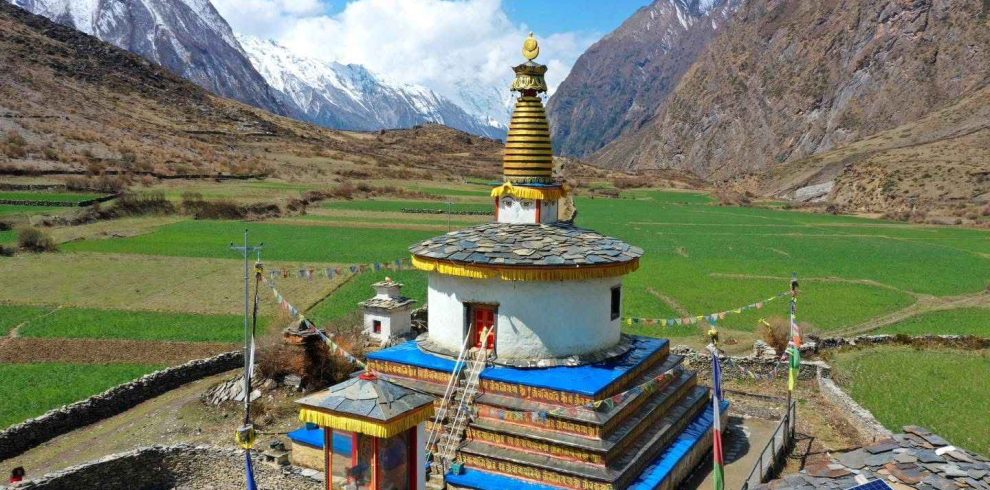
The 23-day Tsum Valley & Manaslu Circuit Trek combines breathtaking Himalayan landscapes with the preserved Tibetan Buddhist culture of a…