By late December, most of the trekking traffic has drained out of the Manaslu region. The teahouses that were fully booked in October have half their rooms empty, guides who spent autumn moving groups between Sama Gaon and Dharmashala are back in Kathmandu waiting for spring bookings, and the trail through Tsum Valley belongs mostly to the Tamang and Tibetan Buddhist families who live there year round. January is the deepest part of that quiet stretch, and for a specific kind of trekker, that quiet is the entire draw.
The practical answer, since it shapes everything else in this guide: the lower and middle sections of the route are walkable in January, but this is the coldest, quietest, and least forgiving month on the circuit. Tsum Valley itself, sitting mostly between 2,000 and 3,700 metres, stays accessible with a proper winter kit and a guide who knows the route in winter. The problem is the far side of the loop. Samdo, Dharmashala, and the 5,106 metre Larkya La regularly see deep cold, heavy snow accumulation, and short daylight, and the pass itself can become unsafe to cross without an experienced guide, the right equipment, and real flexibility in your schedule. January suits trekkers who want solitude and clear winter skies in Tsum Valley and who are either skipping the full Manaslu Circuit loop or are prepared, experienced, and travelling with a guide who treks this route through winter. It does not suit first time trekkers hoping for a guaranteed Larkya La crossing on a fixed departure date.
Mid-January also brings Maghe Sankranti, one of the older festivals on the Nepali calendar, marking the sun’s move north and the slow lengthening of days. In the lower villages along the Budhi Gandaki, families mark it with sesame sweets and rice pudding, and it is worth asking your guide about local customs if your trek dates overlap with it. It is a small detail, but it is the kind of thing that only shows up if you are actually walking through these villages in January rather than reading about the trek from a desk in October.
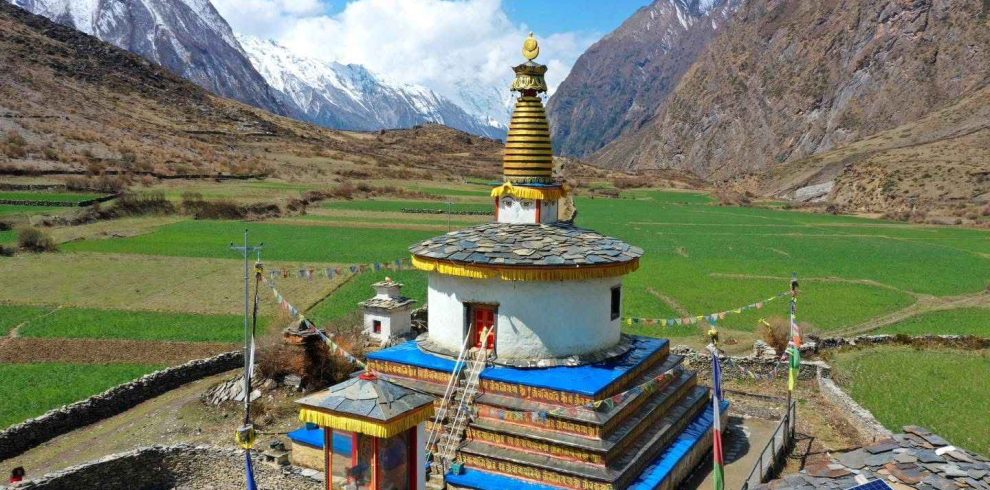
The 23-day Tsum Valley & Manaslu Circuit Trek combines breathtaking Himalayan landscapes with the preserved Tibetan Buddhist culture of a…
Manaslu Tsum Valley Trek in January at a glance
| Factor | Conditions in January |
|---|---|
| Trek feasibility | Tsum Valley: yes, straightforward with winter gear. Full circuit with Larkya La: possible but weather dependent and not guaranteed |
| Overall recommendation | Good for Tsum Valley only itineraries and experienced winter trekkers. Not the first choice for a first time Larkya La crossing |
| Lower region temperature | Roughly 8 to 16°C by day, 0 to 6°C at night in the lower Budhi Gandaki and lower Tsum, varying with elevation and weather |
| Upper region temperature | Around minus 5 to 5°C by day at Samagaun and Samdo, dropping well below minus 15°C at night and at Larkya La itself in clear cold conditions |
| Rain risk | Low. January is a dry season month with occasional light precipitation |
| Snow risk | High above 4,000 metres, moderate around Samdo and Dharmashala, low in Tsum Valley and the lower Budhi Gandaki |
| Larkya La condition | Frequently snow covered, sometimes closed by fresh snowfall for days at a time. Crossing requires an experienced guide, microspikes or crampons, and a flexible schedule |
| Trail difficulty | Harder than the same route in spring or autumn because of cold, ice on stone steps and shorter days |
| Crowd level | Very low. January is one of the two quietest months on this route along with February |
| Teahouse availability | Reduced above Samagaun. Many high altitude lodges close or run limited service. Tsum Valley and the lower route stay open |
| Visibility | Often excellent on clear days, since winter air is dry and dust free, but storms can bring sudden whiteout conditions at altitude |
| Suggested experience level | Tsum Valley only: suitable for reasonably fit beginners with a guide. Full circuit: experienced high altitude trekkers preferred |
| Suggested contingency days | 3 to 5 extra days if attempting the full circuit and Larkya La |
| Main advantage | Empty trails, clear cold air, and an intimate look at Tsum Valley without any crowds |
| Main disadvantage | Real risk that Larkya La is unsafe or closed on your planned crossing day |
Weather varies by elevation, exact location and year. Figures above are general patterns for a typical January, not a forecast for any specific date. Checked as of 14 July 2026.
Who should consider this month
January suits three kinds of trekkers. The first is someone who wants Tsum Valley specifically, the ancient Buddhist villages of Chhokangparo, Nile and Mu Gompa, and is happy to either skip the Larkya La crossing or build in enough spare days to wait out a storm. The second is an experienced winter trekker who has crossed a high pass in snow before, travels with a guide who has January experience on this exact route, and can accept that the itinerary might change at short notice. The third is a photographer or trekker who specifically wants empty trails and dry, clear winter light, and who values that experience more than a guaranteed summit style crossing of the pass.
January is a poor match for anyone on a rigid return flight two or three days after their planned Larkya La crossing, anyone attempting their first ever high altitude trek without previous cold weather experience, and anyone who is not willing to pay for a guide with genuine winter route knowledge.
Main reasons to choose this month
The trail is empty. Where October sees fifty or more trekkers passing through Samagaun on a busy day, January might see a handful. Teahouse owners who remain open have time to talk, and you get the pick of rooms in the lodges that are running. Tsum Valley in particular feels far more remote than it does in the October crowds, and its winter light on the terraced fields and whitewashed chortens is different from the green haze of spring or the golden dust of autumn. Air quality is usually at its best of the year, since there is little agricultural burning and no monsoon humidity, so long distance mountain views on clear days can be sharper than in any other month.
Main reasons not to choose this month
Cold is the honest limiting factor. Above Samagaun, night temperatures regularly fall well below freezing, and a snowstorm at Dharmashala or Larkya La can trap a party for a day or more waiting for conditions to improve. Several teahouses above Samagaun close for the season, so your accommodation options narrow exactly where the trek gets hardest. Daylight is short, which compresses your usable walking hours on the longer stages. If your schedule cannot absorb a delay of several days, January adds real risk to the Larkya La crossing specifically, even though the rest of the route is manageable.
Weather overview
January sits in the middle of Nepal’s dry winter season, after the autumn trekking peak and before the pre monsoon warm up of spring. Skies are frequently clear and stable for days at a stretch, broken by occasional cold fronts that bring snow to the higher elevations and a few degrees of chill to the lower valleys. The lower Budhi Gandaki corridor and lower Tsum Valley stay relatively mild by Himalayan winter standards, since they sit under 2,000 metres for much of the route in from Soti Khola or Machha Khola. Once the trail climbs past Lokpa into upper Tsum, and separately once the Manaslu Circuit route climbs past Namrung toward Samagaun, winter asserts itself properly.
Expected temperatures by altitude
As a general pattern, not a forecast, daytime temperatures in the lower Budhi Gandaki valley below 1,500 metres run roughly 10 to 18°C in direct sun, dropping to 2 to 8°C after dark. In Tsum Valley proper, between about 2,000 and 3,700 metres, daytime highs typically sit between 2 and 12°C depending on elevation and sun exposure, with nights commonly falling to minus 5 to 2°C. Around Samagaun and Samdo, both above 3,500 metres, daytime temperatures in January often hover close to freezing, from roughly minus 5 to 5°C, and nights routinely drop to minus 10 to minus 18°C. At Dharmashala and on Larkya La itself, above 4,400 metres, daytime cold can persist even under clear skies, and night and early morning temperatures at the pass have been reported below minus 15 to minus 20°C in multiple independent trekking reports for this route in winter.
Lower Budhi Gandaki Valley conditions
From the roadhead at Machha Khola or Soti Khola up to around Jagat and Philim, January trekking is comfortable. Days are cool but pleasant for walking, terraced fields are quiet in the winter agricultural lull, and the trail surface is normally dry and stable. This section poses little difficulty beyond the usual up and down river valley walking that defines the first days of any Manaslu itinerary.
Tsum Valley conditions
Once the trail turns north from Lokpa into Tsum Valley, elevation climbs steadily through Chumling, Chhokangparo and on toward Nile and Mu Gompa. Villages here sit in a broad, relatively open valley that catches good sun during the day, so even in January the middle of the day can be comfortable in direct light, while shaded sections and early mornings are properly cold. Snow is possible on the higher stretches near Mu Gompa and Ngula Dhojyang, but rarely deep enough to block travel. This is the most reliably walkable part of the whole route in January.
Upper Manaslu conditions
Beyond the Tsum Valley side trip, the main circuit trail climbs from Lokpa and Namrung toward Lho, Shyala and Samagaun. This is where winter starts to bite. Forest sections can hold ice in shaded patches, particularly early in the morning, and the open, wide valley above Lho exposes trekkers to wind that makes the actual air temperature feel considerably colder.
Samagaun and Samdo conditions
Samagaun, the main acclimatisation stop before the pass, sits at roughly 3,530 metres and is cold but functional in January, with a reduced but real set of open teahouses. Samdo, higher again near 3,860 metres and close to the Tibet border, sees fewer operators stay open through winter, and those that do often keep shorter hours and a simpler menu. Both villages are manageable with a good sleeping bag and a guide who knows which lodges are actually running that week.
Dharmashala conditions
Dharmashala, also called Larke Phedi, is the last stop before the pass at around 4,460 metres and is the most basic accommodation on the entire circuit even in peak season. In January it is exposed: a single, simple shelter rather than a proper village, cold at all hours, and entirely dependent on the pass being a realistic prospect the next morning. Some operators choose to skip an overnight here in winter and instead make an early, long push from Samdo on a clear weather day, weather and group fitness allowing.
Larkya La Pass conditions
This is the crux of a January Manaslu Tsum Valley Trek. Larkya La sits at 5,106 metres and funnels wind and snow in a way that other, lower sections of the trek simply do not. Multiple independent trekking sources describe January conditions at the pass as including temperatures well below minus 15°C, frequent fresh snowfall that can bury the trail markers, and periods where local guides judge the crossing unsafe due to avalanche risk or whiteout visibility. It is not accurate to say the pass is always closed in January, and well prepared, well guided parties do cross it. It is equally not accurate to promise it will be open on your specific date. Any January itinerary that includes the full circuit needs a guide making a real time call on crossing day, and a client willing to accept that call.
Bhimtang descent conditions
After Larkya La, the trail drops fast toward Bhimtang at around 3,590 metres. This descent is steep and can hold snow and ice on the upper switchbacks, but conditions improve quickly as elevation drops, and Bhimtang itself, along with the villages further down toward Dharapani, are noticeably milder than the high pass area.
Weather by zone
| Trekking Zone | Approximate Elevation | Day Conditions | Night Conditions | Main Concern |
|---|---|---|---|---|
| Lower Budhi Gandaki Valley | 600 to 1,500 m | 10 to 18°C, mostly dry and sunny | 2 to 8°C | Minimal, comfortable walking |
| Tsum Valley | 2,000 to 3,700 m | 2 to 12°C in sun | minus 5 to 2°C | Cold shaded sections and early starts |
| Samagaun and Samdo | 3,530 to 3,860 m | minus 5 to 5°C | minus 10 to minus 18°C | Reduced teahouse operation, dry cold |
| Dharmashala | about 4,460 m | Cold even in sun | minus 15°C or colder | Basic shelter, high exposure |
| Larkya La Pass | 5,106 m | Variable, can be well below freezing | Below minus 15 to minus 20°C reported | Snow depth, wind chill, avalanche risk, closure risk |
| Bhimtang descent | 3,590 m and down | Improves quickly with descent | Cold but milder than the pass | Icy upper switchbacks |
Rain expectations
January is a dry month across the whole route. Rain in the lower valleys is uncommon, and when precipitation does occur at higher elevation it usually falls as snow rather than rain. This is one of January’s genuine advantages over the monsoon months: trails stay mostly dry and stable below the snow line.
Snow expectations
Snow is the defining hazard of this month above roughly 3,800 metres. Fresh snowfall events can happen at any point in January and are not predictable more than a few days out. Depth varies significantly by year: some Januarys bring a relatively light, manageable snowpack at Larkya La, others bring accumulation heavy enough that guides choose to wait several days or advise against the crossing entirely for that group. Tsum Valley sees far less snow than the pass area and rarely enough to affect walking.
Wind and cold exposure
Wind chill matters as much as air temperature above Samagaun. Open sections near Larkya La and the approach from Dharmashala can funnel wind that makes the effective cold considerably worse than the thermometer suggests. A good windproof outer shell is not optional at this altitude in January.
Visibility and mountain views
On clear days, January delivers some of the best long distance visibility of the year, since winter air is dry and largely free of the haze that builds up later in spring and the dust of pre monsoon months. The tradeoff is that storm systems, when they arrive, can drop visibility to near zero at altitude with little warning, which is part of why guides treat the Larkya La crossing decision seriously in this month.
Daylight hours
January has the shortest days of the trekking calendar, with roughly 10 to 10.5 hours between sunrise and sunset in this part of Nepal. This compresses the usable walking window on longer stages, particularly the Dharmashala to Bhimtang day that crosses the pass, and is a major reason guides push for very early starts, often well before dawn, on crossing day.
Suggested daily walking schedule
In January, plan to start walking earlier than you would in autumn, both to make the most of limited daylight and to cross exposed sections before afternoon wind picks up. A typical day below Samagaun might run from around 7:30am to early afternoon, leaving time to reach a warm dining room before the cold evening sets in. On the Dharmashala to Bhimtang crossing day, guides commonly start in darkness, by headlamp, aiming to be over Larkya La and descending before late morning, since afternoon cloud and wind at the pass are more likely and more dangerous than morning conditions.
Trail conditions
Below Samagaun, the trail is in its normal dry season state: stable, well trodden, with occasional icy patches in shaded forest sections early in the morning. Above Samagaun, expect packed snow and ice on stone steps and exposed ridgelines, particularly approaching Dharmashala and on both sides of Larkya La. Trekking poles and, depending on conditions that week, microspikes or light crampons are useful rather than optional extras.
Road conditions
The road access from Kathmandu toward the trailhead at Machha Khola or Soti Khola is generally in reasonable shape in January, since this is the dry season and the route does not suffer the landslide disruption that affects it during monsoon. Some sections remain rough, unsealed and dusty, and delays are still possible, but January is one of the more reliable months for this drive.
Transport reliability
Jeep and local bus services to the trailhead run on their normal dry season schedule in January, without the monsoon era disruptions. Confirm current departure times with your operator, since winter demand is lower and some services may run less frequently simply because fewer trekkers are travelling that week.
Teahouse availability
Teahouse status matters more for a January trip than almost any other planning factor. Tsum Valley and the lower Budhi Gandaki route keep a healthy set of teahouses open, since local life continues there through winter regardless of trekker numbers. Above Samagaun, several lodges close for the season, and Dharmashala in particular may have only one basic option running, similar in principle to the reduced count the operator has documented for the monsoon season, though for different reasons. A guide with current, direct contact with lodge owners is the only reliable way to know what is actually open on your travel dates, since this changes year to year and even week to week depending on individual owners’ decisions.
Room and bed availability
With trekker numbers at their lowest of the year, room availability is rarely a problem in January, and you will typically get a private room rather than sharing, even at lodges that would be fully booked in October. The tradeoff is fewer total lodges operating, so route planning around which villages have any open accommodation at all matters more than which specific lodge you prefer.
Food options
Menus shrink somewhat in January, particularly at higher elevation lodges running with reduced stock and fewer guests to justify a full kitchen. Dal bhat, the traditional rice, lentil and vegetable meal, remains the most reliable, freshest and most filling option throughout the route, and is a sensible default at altitude regardless of season.
Drinking water
Water sources can freeze overnight at the higher villages, so mornings sometimes mean waiting for a lodge to boil water rather than relying on a tap. Carrying a wide mouth bottle that will not crack if its contents partially freeze, and a means of purification as backup to boiled water, is sensible winter practice.
Charging and internet
Solar charging is less reliable in winter due to shorter daylight and colder panel performance, and many higher lodges rely on limited generator hours. Bring a fully charged power bank and expect to pay a small per device charging fee at most teahouses, a normal practice across this route in every season. Mobile signal and wifi are patchy at best above Namrung and should not be relied upon for real time communication.
Crowd level
January is, along with February, the quietest month on this route. Where autumn sees dozens of trekkers passing through the main villages daily, January numbers are commonly in the single digits. This is a genuine drawing point for trekkers who value solitude over social atmosphere in the dining hall.
Permit requirements
The Manaslu Tsum Valley Trek requires several permits, all arranged through a registered trekking agency rather than independently. For the Manaslu Restricted Area Permit, the December to August rate applies in January: USD 75 per person for the first seven days, then USD 10 per person for each additional day. The Tsum Valley Restricted Area Permit, also charged at the December to August rate in January, is USD 30 per person for the first seven days, then USD 7 per person per additional day. You will also need the Manaslu Conservation Area Permit and, for the exit through Dharapani, the Annapurna Conservation Area Permit, each a flat NPR 3,000 for foreign trekkers regardless of season. A one time local municipality fee of NPR 1,000 is collected on the trail by the Chum Nubri Rural Municipality. These figures reflect the rates published on our own permit guide as of July 2026 and should be reconfirmed with your agency before booking, since government fee schedules can change. For the full breakdown, including checkpoint locations and required documents, see our Manaslu trekking permits guide.
Restricted area trekking rules
Manaslu and Tsum Valley are both government designated restricted areas, which means independent trekking without a guide is not permitted at any time of year, January included. As of a rule change on 22 March 2026, the Department of Immigration removed the old requirement for a minimum of two trekkers per group in restricted areas, so a single trekker travelling with one licensed guide now satisfies the permit requirement. See our full writeup of this change in Solo Trekking in Manaslu: New Government Rule Update. A licensed guide from a registered agency remains compulsory regardless of group size. Confirm current rules with your agency before booking, since restricted area policy has changed more than once in recent years.
Guide requirements
A licensed guide is mandatory for both the Manaslu and Tsum Valley restricted areas in every month of the year, and this matters more in January than in any other month because of the judgment calls involved around Larkya La. Look specifically for an operator whose guides have actual January or February experience on this route, not just general Manaslu experience gathered in autumn, since winter route finding, snow assessment and the decision of whether to attempt the pass on a given day are a different skill set from guiding the same trail in October.
Recommended itinerary
A January Manaslu Tsum Valley Trek attempting the full loop typically runs 19 to 23 days including Kathmandu transfers, several days longer than the same itinerary in peak autumn once winter contingency days are built in properly. Our own 19 day Manaslu Circuit with Tsum Valley Trek and the longer 23 day Tsum Valley and Manaslu Circuit Trek are both built around this loop and can be adjusted with extra winter contingency days. Trekkers who want Tsum Valley without the pass crossing can complete a shorter, lower elevation itinerary of around 14 to 16 days, entering and exiting through the lower Budhi Gandaki without continuing over Larkya La, which removes the main weather risk of the month entirely. Trekkers set on the classic loop without the Tsum Valley extension can compare against our main Manaslu Circuit Trek package.
Suggested acclimatisation plan
Standard acclimatisation principles apply regardless of season: no more than roughly 400 to 500 metres of net sleeping elevation gain per day above 3,000 metres, with a rest or acclimatisation day built in around Samagaun before continuing toward Samdo and Dharmashala. Cold weather does not reduce the risk of altitude sickness, and in fact can mask early symptoms or make trekkers more reluctant to admit discomfort, so a disciplined pace matters just as much in January as in October.
Suggested contingency days
For a January full circuit attempt, build in three to five spare days specifically around the Dharmashala to Bhimtang stage, rather than distributing them evenly through the itinerary. This gives your guide room to wait out a snowstorm at Samagaun or Samdo rather than pushing toward an exposed high camp in poor conditions. Trekkers doing Tsum Valley only can keep a smaller buffer of one to two days for general winter weather delays.
Packing list for this month
January packing needs to cover a wide temperature range, from comfortable low valley days to severe cold at Dharmashala and Larkya La. The list below reflects what this route actually demands in January, not a generic four season list. For a full item by item breakdown that applies year round, see our Manaslu Tsum Valley Trek packing list.
| Item | Essential, Recommended, or Optional | Why It Is Needed in January |
|---|---|---|
| Down jacket, expedition weight | Essential | Night temperatures at Samdo, Dharmashala and Larkya La regularly fall well below freezing |
| Sleeping bag rated to minus 20°C or warmer | Essential | Teahouse rooms are unheated and blankets alone are not enough above Samagaun |
| Waterproof shell jacket | Essential | Wind protection matters as much as rain protection at altitude in winter |
| Waterproof trousers | Recommended | Useful for wind and occasional snow, less critical than in monsoon |
| Thermal base layers, two sets | Essential | Layering system is the core defence against the day to night temperature swing |
| Insulated, waterproof trekking boots | Essential | Needed for snow and ice sections above Samagaun |
| Gaiters | Recommended | Keep snow out of boots on the Dharmashala to Bhimtang stage |
| Microspikes or light crampons | Essential above Samagaun | Ice on stone steps and the approach to Larkya La is common in January |
| Trekking poles | Essential | Stability on icy and snow covered ground |
| Sun protection, glacier glasses | Essential | Snow glare at altitude is intense even on cold days |
| Power bank, minimum 20,000mAh | Essential | Solar and generator charging are less reliable in winter |
| Water purification tablets or filter | Recommended | Backup for mornings when lodge water sources are frozen |
Clothing and layering system for January
- Base layer: a moisture wicking thermal top and bottom, two sets so one can dry while the other is worn.
- Mid layer: a fleece or synthetic insulating layer for camp evenings and cold mornings.
- Outer layer: an expedition weight down jacket for Samdo, Dharmashala and the pass crossing itself.
- Head and neck: a warm hat that covers the ears, plus a neck gaiter or buff for wind at altitude.
- Hands: lightweight liner gloves for daily wear, plus a heavier insulated outer glove or mitten for the pass crossing.
Footwear for snow and ice
- Insulated, waterproof leather or synthetic trekking boots with a sole stiff enough to take microspikes, not a lighter three season boot.
- Two pairs of thick trekking socks, rotated daily to keep feet dry.
- A snug but not tight fit, since overly tight boots restrict circulation and increase cold injury risk.
Rain and wind protection
- Rain itself is unlikely in January, so a waterproof shell is used mainly for wind protection rather than rain.
- A hooded, fully waterproof outer shell also guards against the occasional wet snow at lower elevation.
- Waterproof trousers are a useful secondary layer against wind chill at altitude.
Snow and ice equipment
- Microspikes: the practical choice for most January conditions on this route, particularly on icy stone steps and the approach to Larkya La.
- Full crampons and an ice axe: occasionally warranted in a heavy snow year. This is a call made by your guide based on conditions that specific week, not a fixed requirement decided months in advance.
- Gaiters: keep snow out of boots on the Dharmashala to Bhimtang stage.
Sleeping bag rating for January
- A four season bag rated to at least minus 20°C comfort, not just minus 20°C limit, is the sensible standard for nights at Samdo, Dharmashala and near the pass.
- A sleeping bag liner adds a useful few extra degrees of warmth and keeps the bag cleaner over a multi week trip.
- Teahouse rooms above Samagaun are unheated, so the bag is your main source of warmth overnight, not the room itself.
Electronics and power management
- Cold weather drains battery life faster than normal, so carry batteries and power banks close to your body, ideally in an inner jacket pocket rather than an outer pack pocket.
- Bring a power bank of at least 20,000mAh, since solar and generator charging are both less reliable in winter.
- Keep a spare set of batteries for a headlamp, since early starts on crossing day happen before sunrise.
Health and altitude concerns
Altitude sickness risk on this route is driven by elevation gain and pace, not by the calendar month, so standard acclimatisation practice applies in January exactly as it would in any other month. Cold weather adds a separate set of risks: frostbite on exposed skin during the pass crossing, and a faster deterioration if a trekker becomes wet or exhausted at altitude. Guides on this route are trained to recognise both altitude illness and cold injury, and a realistic pace with proper acclimatisation days is the most effective prevention for both. For a detailed look at what happens if illness occurs on this route and how guides respond, see our guide to getting sick on the Manaslu Circuit Trek.
Main safety risks
The two dominant risks in January are cold injury at altitude and the judgment call around crossing Larkya La in marginal snow conditions. Both are manageable with an experienced guide, appropriate gear and a flexible schedule, and both become considerably more dangerous if a trekker or operator tries to force a fixed departure date regardless of conditions. Ice on lower trail sections is a secondary but real risk, particularly on stone steps in shaded forest early in the morning.
Travel insurance
Travel insurance that explicitly covers trekking above 5,000 metres and includes helicopter evacuation is not optional for this route in any month, and is more important in January given the added cold weather and pass closure risk. Confirm your policy’s altitude limit covers 5,106 metres, check that it covers rescue and evacuation specifically, and carry proof of coverage with you rather than only at home. This is general guidance, not a recommendation of any specific insurer, and you should read your policy’s exact terms before departure.
Suitability for beginners
A beginner with reasonable fitness can comfortably manage the Tsum Valley portion of this trek in January with a good guide and proper gear. Attempting the full circuit including Larkya La as a first ever trek, in the coldest month of the year, is a harder proposition, and most operators would steer a genuine first timer toward either a shorter Tsum Valley itinerary in January or the full circuit in a more forgiving month.
Suitability for experienced trekkers
Experienced trekkers who have handled snow and cold on a previous high altitude trip will find January rewarding: empty trails, sharp winter light, and a real sense of earning the crossing rather than following a well worn autumn queue over the pass.
Suitability for solo travellers
Independent solo trekking without a guide is not permitted in either the Manaslu or Tsum Valley restricted areas. Since March 2026, a single trekker travelling with one licensed guide satisfies the group size requirement, which makes solo travel considerably more practical than it was previously, provided you book through a registered agency. January’s quiet trails are, if anything, particularly well suited to this kind of one on one guided solo trip, since you are not competing for teahouse rooms or trail space.
Guide and porter advice
Beyond the legal requirement for a guide, a porter is useful in January to help manage the additional weight of winter gear over a long, cold multi week itinerary. Confirm that your porter is also equipped with adequate winter clothing and footwear, since this is a basic welfare and safety issue as much as a comfort one, and reputable agencies provide this as standard.
Photography conditions
January offers some of the clearest, sharpest long range mountain photography conditions of the year, thanks to dry winter air and low humidity. Morning light on snow covered peaks above Tsum Valley and the upper Manaslu villages is a particular highlight. The tradeoff is working with gloved hands in serious cold at altitude, and batteries that drain faster than usual, both manageable with preparation.
Cultural events and festivals
Maghe Sankranti, a widely observed Nepali festival marking the winter solstice period in the lunar calendar, usually falls in mid January and is celebrated in villages along the lower route. See our roundup of major festivals in the Manaslu region for the wider annual calendar. Sonam Lhosar, the Tamang New Year, and in some years the Tibetan Losar observed in Tsum Valley’s Buddhist communities, can also fall in January or February depending on the lunar calendar for that particular year. Exact dates shift annually, so confirm the current year’s calendar with your operator rather than assuming a fixed date, and treat any festival timing as a welcome bonus rather than a itinerary anchor.
Advantages and disadvantages of trekking in January
| Advantages of Trekking in January | Disadvantages of Trekking in January |
|---|---|
| Lowest crowds of the year, private rooms almost guaranteed | Real risk that Larkya La is unsafe or closed on your planned date |
| Clear, dry winter air often gives excellent mountain visibility | Several teahouses above Samagaun close for the season |
| Tsum Valley is fully walkable and feels remote | Severe cold at Samdo, Dharmashala and the pass, well below freezing at night |
| Stable, mostly dry trail conditions below the snow line | Short daylight hours compress the usable walking day |
| Often lower package pricing than peak autumn and spring | Requires a guide with genuine winter route experience, which not every agency has |
Seasonal extra costs
January can bring a few extra costs beyond the standard trip price: additional contingency days if a storm delays your Larkya La crossing, which means extra guide, porter and lodging costs for those days, and potentially a higher spec gear rental if you do not own suitable winter equipment already. Against that, permit fees for the Manaslu and Tsum Valley Restricted Area Permits are at their lower December to August rate in January, and package pricing from most operators tends to be lower than the September to November peak.
Comparison with the previous month
December is milder than January at the start of the month but converges toward similar winter conditions by its final weeks. Early December still carries some of late autumn’s stability, while January is winter at its most established, colder on average but also more consistently dry.
Comparison with the next month
February is close to January in most respects, marginally milder as the month progresses, with slightly longer daylight. Neither month should be assumed safer than the other for the Larkya La crossing specifically. See our full Manaslu Tsum Valley Trek in February guide for the detailed comparison.
Month comparison
| Factor | December | January | February |
|---|---|---|---|
| Weather stability | Good early, declining late month | Stable but cold | Stable, slowly milder |
| Temperature | Cool, milder than January | Coldest month on route | Cold, marginally milder than January |
| Rain or snow | Low rain risk, rising snow risk late month | Low rain risk, real snow risk at altitude | Low rain risk, real snow risk at altitude |
| Visibility | Generally good | Often excellent on clear days | Often excellent on clear days |
| Crowd level | Low, rising through the month | Very low | Very low |
| Pass condition | Increasingly risky through the month | Snow covered, weather dependent | Snow covered, weather dependent, slowly improving |
| Overall suitability | Good early month, caution late month | Tsum Valley yes, full circuit with caution | Tsum Valley yes, full circuit with caution |
Better alternatives if conditions are poor
If a storm makes Larkya La unsafe during your window, the practical alternative is not to force the crossing but to complete Tsum Valley as a standalone loop, entering and exiting through the lower Budhi Gandaki without continuing over the pass. This still delivers the cultural core of the trek, the monasteries and villages of Tsum Valley, without the highest risk section. Trekkers set on the full circuit specifically should consider shifting their date to April, May, October or November, when Larkya La is far more consistently passable.
Final recommendation
January rewards trekkers who want Tsum Valley’s villages and monasteries in genuine winter quiet, and who either do not need the Larkya La crossing or are experienced, well equipped and flexible enough to let a guide make the real time call on pass conditions. It is not the right choice for a first high altitude trek on a fixed schedule, or for anyone unwilling to budget extra contingency days. Book with a guide who has direct January experience on this specific route, not just general Manaslu experience, and build genuine flexibility into your return flight dates. For a month by month comparison across the full year, see our Best Time to Go on the Manaslu Tsum Valley Trek guide. Travellers who want one local team to organise permits, transport, guides and porters can contact Manaslu Treks, a specialist Manaslu trek operator based in Nepal.
Planning a January departure? Contact our local team to check current trail conditions, permit rules and itinerary options before you book.
Frequently asked questions
Can I trek the Manaslu Tsum Valley Trek in January?
Yes. Tsum Valley and the lower and middle sections of the Manaslu route are walkable in January with proper winter clothing and a licensed guide. The full circuit including Larkya La is also possible but depends on conditions at the pass that week, and your guide should make the final call on crossing day rather than a fixed itinerary decided months in advance.
Is Larkya La Pass open in January?
It is often passable but not guaranteed. January regularly brings fresh snowfall to the pass, and conditions can range from a manageable, well trodden crossing to a unsafe whiteout that forces a delay of several days. No operator can honestly promise the pass will be open on a specific date this month.
How cold is the Manaslu Tsum Valley Trek in January?
Lower Tsum Valley and the Budhi Gandaki corridor are cool but comfortable, typically 8 to 18°C by day. Samagaun and Samdo see daytime temperatures near freezing and nights down to roughly minus 10 to minus 18°C. Dharmashala and Larkya La are colder again, with night and early morning temperatures reported below minus 15 to minus 20°C in multiple trekking sources for this route.
Does it snow on the Manaslu Tsum Valley Trek in January?
Snow is common above roughly 3,800 metres, particularly at Dharmashala and Larkya La, and can arrive with little warning. Tsum Valley and the lower route see far less snow and rarely enough to affect walking.
Does it rain on the Manaslu Tsum Valley Trek in January?
Rain is uncommon in January. This is a dry season month across the route, and precipitation at higher elevation typically falls as snow rather than rain.
Are teahouses open in January?
Yes in Tsum Valley and the lower Budhi Gandaki, where local life continues year round. Above Samagaun, several lodges close for the winter and Dharmashala may have only one basic option running. A guide with current contact with lodge owners is the reliable way to confirm what is open on your dates.
Is the Manaslu Tsum Valley Trek safe in January?
It is manageable with the right preparation: a guide experienced in winter conditions on this specific route, appropriate cold weather and snow gear, and a flexible schedule that does not force a Larkya La crossing on a fixed date regardless of conditions. The main risks are cold injury at altitude and being caught in poor pass conditions, both of which are reduced substantially by good guiding and planning.
Is travel insurance required?
Insurance that covers trekking above 5,000 metres and includes helicopter evacuation is strongly recommended for this route in any month, and particularly worth confirming carefully for a January trip given the added cold and pass conditions. Check your policy’s altitude limit and rescue coverage before booking.
Can beginners do this trek in January?
Beginners can comfortably manage a Tsum Valley only itinerary in January with a good guide. The full circuit including Larkya La is a harder proposition for a first time high altitude trekker in the coldest month of the year, and many operators would suggest a shorter Tsum Valley trip in January or the full circuit in a more forgiving month instead.
Can solo travellers do this trek in January?
Independent trekking without a guide is not permitted in either restricted area. Since a March 2026 rule change, one trekker travelling with one licensed guide satisfies the group requirement, which makes solo travel more practical than before, provided you book through a registered agency.
Is a licensed guide required?
Yes, in every month of the year, for both the Manaslu and Tsum Valley restricted areas. For January specifically, look for a guide with genuine winter experience on this route, since the judgment call on crossing Larkya La safely depends heavily on that experience.
How many contingency days should I keep in January?
For a full circuit attempt, three to five spare days built around the Dharmashala to Bhimtang stage is a sensible allowance, giving your guide room to wait out a storm rather than pushing into marginal conditions. Tsum Valley only itineraries need less, typically one to two days.
What sleeping bag rating do I need in January?
A four season bag rated to at least minus 20°C comfort is the sensible standard for nights at Samdo, Dharmashala and near the pass. Teahouse rooms are unheated throughout this route.
Do I need microspikes or crampons in January?
Microspikes are useful for most January conditions above Samagaun, particularly on icy stone steps and the approach to Larkya La. Full crampons and an ice axe are occasionally warranted in a heavy snow year, a call best left to your guide based on conditions that week.
What are the trail conditions like in January?
Dry and stable below Samagaun, with occasional icy patches in shaded forest sections. Above Samagaun, expect packed snow and ice on exposed sections, particularly near Dharmashala and Larkya La.
Is January a good month for mountain views?
On clear days, yes, often among the best of the year, since winter air is dry and largely free of haze. The tradeoff is that storms can bring sudden whiteout conditions at altitude with little warning.
How crowded is the trek in January?
Very quiet. January and February are the two lowest trekker traffic months on this route, a significant contrast to the busy October and November peak.
Should I hire a porter in January?
A porter is useful given the additional weight of winter gear over a multi week itinerary. Confirm your porter also has adequate winter clothing and footwear, a basic welfare standard reputable agencies provide.
What happens if Larkya La is blocked or unsafe on my planned day?
Your guide will typically recommend waiting at Samdo or Dharmashala for conditions to improve, which is why contingency days matter so much in January. If conditions remain unsafe, completing Tsum Valley as a standalone loop without continuing over the pass is the practical fallback.
Is January better than December for this trek?
Neither month is simply better. Early December offers milder, more stable conditions carried over from autumn, while January is colder but often equally or more stable once winter settles in properly. Late December can actually see deteriorating pass conditions as winter arrives, which is worth weighing against January’s more consistent, if colder, pattern.
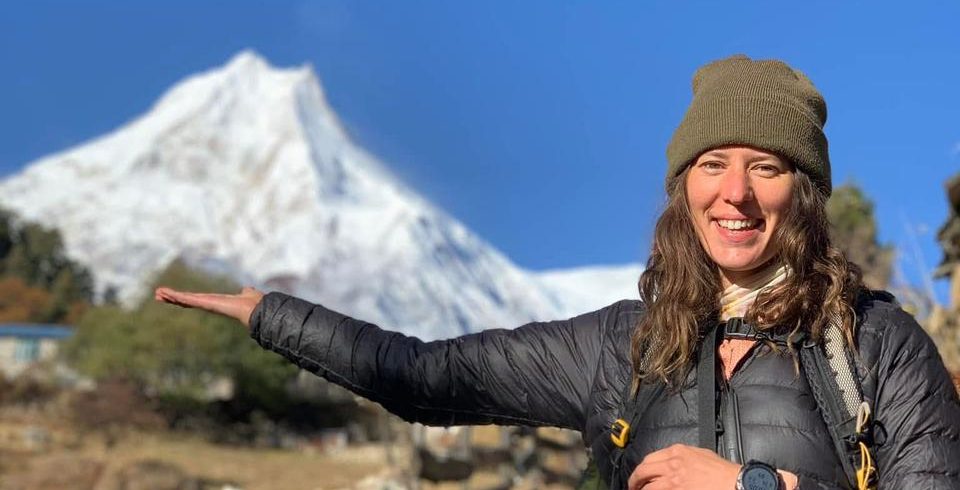
The 19-Day Manaslu Circuit with Tsum Valley Trek is one of Nepal’s most rewarding long-distance Himalayan journeys, combining remote valleys, ancient…