Everything you need to know about toilets, showers, hot water, and hygiene on the Manaslu Circuit, written from real experience guiding this route. Contact our manaslu trekking company to plan your trip with local experts.
- The Real Picture: What Facilities Are Actually Like
- Toilet Facilities by Village and Altitude
- Deng Village: The One Shared Toilet Exception
- Trail Toilets at Small Tea Houses Along the Way
- Shower Facilities: Hot Water on the Circuit
- Gas Shower Safety: Ventilation Is Not Optional
- Toilet Paper and Sanitary Supplies
- Hygiene Practices That Actually Matter at Altitude
- Full Bathroom and Hygiene Packing List
- Frequently Asked Questions
The Real Picture: What Facilities Are Actually Like
This is the question I get from nearly every client before they depart for the Manaslu Circuit Trek. What are the bathrooms like? Is there hot water? Will I have a private toilet? People who have trekked Everest Base Camp or the Annapurna Circuit sometimes expect similar infrastructure. People who have never trekked in Nepal at all often expect the worst.
The honest answer is that Manaslu facilities are much better than most people anticipate, and very different from what you find on the more commercialized routes. Here is what you need to understand before you go:
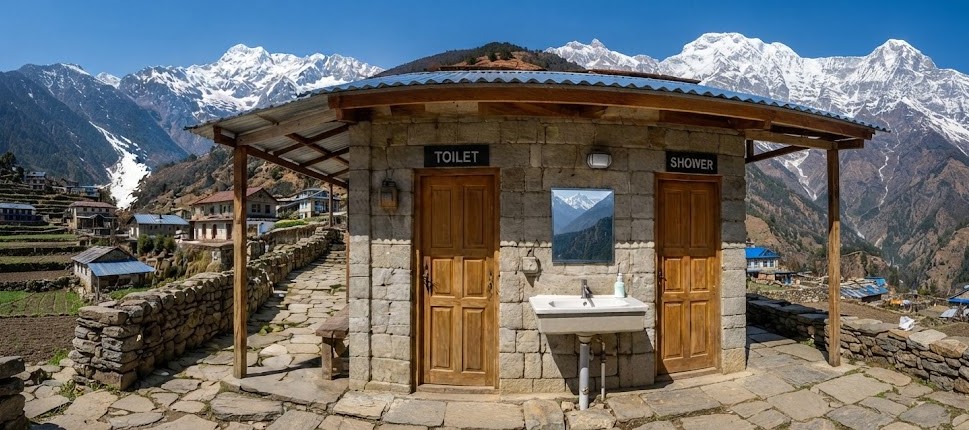
- Most tea houses on the Manaslu Circuit give you a private toilet attached to your room or in a shared block used by guests of that lodge only. The quality of that toilet varies significantly by altitude and village, but having your own toilet rather than sharing with the entire street is the standard experience from Soti Khola right through to Bimthang.
- Hot showers are available at every major village on the route. This is not a luxury that disappears above 3,000 metres. You will find hot shower options at Jagat, Deng, Namrung, Lho, Samagaun, Samdo, and Bimthang. The method of heating changes as you gain altitude, but the hot water itself is there.
- The one place where toilet sharing with other guests happens more commonly is Deng village. This is not a problem with every lodge in Deng, but the older and more basic lodges in this section do have shared bathroom facilities among multiple rooms. It is worth knowing in advance so it does not come as a surprise.
- Toilet paper and sanitary supplies are sold at tea houses along the route but at significantly higher prices than Kathmandu. Buying everything you need in Kathmandu before you start is the practical and economical choice. More on quantities and what to bring below.
- On trail between villages, small roadside tea houses exist specifically to serve trekkers with rest stops. These tea houses have toilets you can use. You do not need to go behind a bush on this trail except in extreme situations.
Below is a detailed breakdown of every aspect of facilities on the Manaslu Circuit so you can plan with complete confidence before you leave Kathmandu. This guide is based on operating this route across multiple seasons at Manaslu Treks and Expedition, not on secondhand information aggregated from travel forums.
I have guided more than 20 Manaslu circuits since 2018. The facility information in this guide reflects what trekkers actually encounter on the ground, not idealized descriptions from brochures. Where facilities are excellent, I say so. Where they are basic, I say that too. You need accurate expectations to pack correctly and enjoy the experience.
Toilet Facilities by Village and Altitude
The quality and type of toilet facilities change as you climb higher on the circuit. Here is a village by village breakdown of what you will actually find at each major overnight stop, from the trailhead all the way through to the exit at Dharapani.
Soti Khola / Machha Khola
710 to 869 mJagat
1,340 mDeng
1,804 mNamrung
2,630 mLho / Sho
3,180 to 3,310 mSamagaun
3,530 mSamdo
3,875 mLarkya Phedi
4,460 mBimthang
3,590 mDharapani
1,960 mThe general pattern is straightforward: facilities are most comfortable at the lower and middle altitudes, particularly in villages like Samagaun where multiple competing lodges have invested in guest facilities. Facilities become more basic at the highest overnight stop at Larkya Phedi, which is also the one night where most trekkers skip the shower entirely because of the very early start required the next morning for the pass crossing.
Deng Village: The One Shared Toilet Exception
Deng sits at 1,804 metres and is one of the most important overnight stops in the lower Budhi Gandaki valley. It is a checkpoint village with a permit verification station, and most circuit trekkers sleep here on Day 4 of the standard itinerary. It is also the one village where shared toilet facilities come up most consistently in client feedback, so it deserves its own section.
Why Shared Facilities Occur at Deng
- Deng has a mix of older, established tea houses that were built before the recent increase in trekking tourism and newer lodges that have been upgraded more recently.
- The older tea houses in Deng have bathroom blocks that serve multiple rooms rather than individual attached bathrooms. If you stay in one of these, you will share the toilet and washing area with other guests staying in the same lodge.
- This is not shared facilities with the entire village or with people from other lodges. It is sharing within the same tea house, which is a meaningfully different experience than using a public toilet.
- Newer and better-equipped lodges in Deng do have individual room bathrooms or bathroom blocks used exclusively by fewer guests. If private facilities matter to you at Deng specifically, ask your guide to confirm which lodge you are booked into before arrival.
- At Manaslu Treks and Expedition, we know the current status of every lodge in Deng across seasons and book accordingly based on your preferences.
What Shared Facilities at Deng Actually Look Like
- Clean squat toilet in an indoor or covered outdoor block shared with 4 to 8 other guests from the same lodge
- Running cold water tap for handwashing at or near the toilet block
- Hot shower in a separate cubicle within the same bathroom block, typically gas heated
- Basic cleanliness maintained by lodge staff throughout the day
- No queuing problem in practice because tea houses are not at capacity on most nights outside peak October weeks
If you are particular about private facilities, request a room with attached bathroom when booking or tell your guide at the start of the trip. In most cases this is possible at Deng with advance notice. Do not raise it for the first time when you arrive at the lodge after a long walking day. Peak season October is the only time when room choices are genuinely limited due to high occupancy.
Trail Toilets at Small Tea Houses Along the Way
One of the most practical questions trekkers ask is what happens between villages. On a 5 to 7 hour walking day, you will need toilet access before you reach your overnight stop. The good news on the Manaslu Circuit is that small tea houses appear at regular intervals along the entire route, and every single one of them has a toilet you can use.
How Trail Tea House Toilets Work
- Small tea houses appear every 1.5 to 3 hours of walking on almost every section of the Manaslu Circuit. These are not major lodges. They are single room structures where a family serves tea, soup, biscuits, noodles, and snacks to passing trekkers. Every one of them has a toilet.
- The expected practice is to buy something before using the toilet. Order a tea, a lemon honey ginger drink, a packet of biscuits, or a bowl of noodles. Spending NPR 100 to 300 at a small tea house entitles you to use their toilet without any awkwardness. This is understood by all trekkers and guides operating on this route.
- Trail tea house toilets are outdoor squat style, usually in a small separate structure. They are basic, but functional and clean enough. Your guide will point them out as needed.
- There is never a long stretch on this route where you would have no access to a trail toilet. The Budhi Gandaki gorge section in the first few days has some longer gaps between tea houses, but these are rarely more than 2.5 to 3 hours apart.
- Carry your own toilet paper. Trail tea houses do not stock toilet paper for passing guests. This is the one item you absolutely must have in your day pack at all times on the trail.
Your guide will naturally suggest rest stops at tea houses during the walking day. These stops serve the dual purpose of hydration and toilet access. If you need a toilet stop between the scheduled rest points, simply tell your guide and they will find the nearest tea house. There is no need to manage this situation yourself, especially in the gorge sections where the trail is not always obvious to new trekkers.
Exceptions: Sections With Longer Gaps
- The early section between Soti Khola and Machha Khola has some longer stretches through the gorge where tea houses are 2 to 3 hours apart. Plan your morning toilet stop before leaving your overnight village on this section.
- The Larkya La crossing day from Larkya Phedi to Bimthang has no tea houses on the pass itself. You will use the toilet at Larkya Phedi before the pre-dawn departure, and the next opportunity is on the descent toward Bimthang. This is the one day where managing toilet needs requires planning. Most trekkers find the physical intensity of the crossing means this is less of a concern than they anticipated.
Shower Facilities: Hot Water on the Circuit
This is where the Manaslu Circuit genuinely surprises most trekkers. Hot showers are available at every major overnight village on this route. You do not need to go days without washing. Many trekkers from more developed trekking routes in other parts of the world are genuinely impressed by the shower access on Manaslu compared to what they expected from a restricted area circuit.
Shower Availability by Section
- Lower section (Soti Khola to Deng, 710 to 1,804 m): Hot showers at all lodges. Electric and gas systems both used at this altitude. Consistent hot water, strong pressure in most lodges.
- Middle section (Jagat to Namrung, 1,340 to 2,630 m): Hot showers at all main lodges. Gas heated systems begin to dominate here. Water pressure is adequate at most lodges.
- Upper section (Lho to Samagaun, 3,180 to 3,530 m): Hot showers available. Gas heated exclusively. Allow 10 to 15 minutes for the water to heat before stepping in. Samagaun has the best shower facilities of the entire upper circuit.
- High altitude section (Samdo and Larkya Phedi, 3,875 to 4,460 m): Hot shower available at Samdo. Limited at Larkya Phedi. Most experienced trekkers skip the shower at Larkya Phedi due to the very early next day start and the basic heating setup.
- Post-pass section (Bimthang and Dharapani, 3,590 to 1,960 m): Full hot shower facilities resume at Bimthang. This is where most trekkers have their most celebrated shower of the entire trip after crossing Larkya La.
Shower Costs on the Manaslu Circuit
- Hot showers are charged separately from room and board at most tea houses above 2,500 metres
- Typical cost is NPR 200 to NPR 500 per shower depending on altitude and lodge
- At Samagaun and Samdo, budget NPR 400 to NPR 600 for hot shower access
- Some package bookings include shower costs. Confirm this with your agency before departure so you are not caught short on cash above Arughat
- Showers in the lower villages (Soti Khola, Machha Khola, Jagat) are sometimes included in the room rate or charged at NPR 100 to NPR 200
Take your shower in the late afternoon or early evening immediately after arriving at your overnight village, not just before bed. The gas heating systems at high altitude tea houses take time to build pressure and consistent heat. Going early means you benefit from a full system. Trekkers who shower at 8 p.m. often get lukewarm water because multiple guests have used the system before them and the gas canister pressure has dropped.
Gas Shower Safety: Ventilation Is Not Optional
This section is genuinely important and not something most trekking blogs cover adequately. Gas heated showers, which dominate the Manaslu Circuit above 2,000 metres, produce carbon monoxide as a byproduct of combustion. In a small, enclosed bathroom at altitude, this is a real safety concern that requires deliberate action on your part every time you use a gas shower on this route.
How Gas Shower Systems Work
- A small gas burner heats water as it flows through a pipe before it exits the showerhead
- The burner runs continuously while water flows and extinguishes automatically when you turn the water off
- The system is simple, robust, and effective at providing consistent hot water even at altitude
- The burner produces a small amount of carbon monoxide during combustion, identical to any gas-fired appliance
- In an enclosed space with poor ventilation, carbon monoxide can accumulate to levels that cause headache, dizziness, nausea, and in severe cases, unconsciousness
Carbon Monoxide Risk at Altitude
At altitude above 3,000 metres, your body is already dealing with reduced oxygen levels. Carbon monoxide binds to red blood cells more effectively than oxygen and compounds the effect of altitude on your blood oxygen saturation. Symptoms of carbon monoxide exposure at altitude can easily be confused with AMS, which means trekkers sometimes do not recognize what is happening. The symptoms overlap: headache, dizziness, nausea, confusion.
Never use a gas shower with all windows and vents closed. Always open the window, vent panel, or door gap before turning on the gas and before turning on the water. If the bathroom has no ventilation opening at all, prop the door open or do not use the shower. This is the most important safety rule about bathroom facilities on the Manaslu Circuit and it is not negotiable.
What to Do Before Every Gas Shower
- Locate the ventilation: check for a window, a vent panel cut into the upper wall, a gap under the door, or any opening. Every properly installed gas shower bathroom should have at least one.
- Open the ventilation fully before doing anything else. If it is a window, open it. If it is a vent panel, unblock it. If you can only prop the door, do that.
- Light the gas burner as instructed by the lodge owner and let it run for 30 seconds before stepping under the water.
- Keep the ventilation open for the entire duration of your shower. Do not close it to avoid cold air. The gas risk is greater than the discomfort of a cold draft.
- If you feel a headache, dizziness, or nausea that begins during the shower, turn off the gas immediately, exit the bathroom, and get fresh air. Do not push through it. Tell your guide immediately.
- After your shower, turn off the water, which extinguishes the burner, and ventilate the room for a few minutes before closing the bathroom for the next person.
Tell your guide or a lodge staff member before you use a gas shower, especially at high altitude. A guide or another trekker who knows you are in the shower and can knock if you are taking unusually long is a practical safety net. This is not an extreme precaution. It is just sensible at altitude where carbon monoxide risk and altitude effects can combine unpredictably.
Toilet Paper and Sanitary Supplies: What to Buy and Where
Toilet paper and sanitary supplies are available for purchase at tea houses along the Manaslu Circuit. This is factually accurate. What most guides and blogs do not tell you is that the price increases sharply the further you go from Kathmandu, the quality is inconsistent, and availability at the highest villages is not guaranteed. Carrying everything you need from Kathmandu is the right approach, and it is much cheaper.
What Is Available on the Trail and at What Cost
| Item | Kathmandu Price | Lower Trail (to Jagat) | Mid Trail (Deng to Namrung) | Upper Trail (Samagaun and above) |
|---|---|---|---|---|
| Toilet Paper (1 roll) | NPR 30 to 50 | NPR 80 to 120 | NPR 150 to 200 | NPR 250 to 350 |
| Wet Wipes (pack of 20) | NPR 80 to 120 | NPR 180 to 250 | NPR 300 to 400 | NPR 400 to 500 |
| Hand Sanitizer (100 ml) | NPR 150 to 200 | NPR 300 to 400 | NPR 400 to 500 | Often unavailable |
| Sanitary Pads | NPR 80 to 150 per pack | NPR 200 to 300 | NPR 350 to 500 | Very limited, may not be available |
| Biodegradable Soap | NPR 200 to 350 | NPR 400 to 500 | Not commonly stocked | Not available |
The price multipliers above are real and consistent across every season I have guided this route. A roll of toilet paper that costs NPR 40 in Thamel costs NPR 300 at Samagaun. This is not price gouging. It is the reality of supply chains that rely on porters and mule trains carrying supplies up a restricted valley. Buy everything in Kathmandu.
How Much to Bring
- Toilet paper: 6 to 8 rolls per person for a 14-day circuit. This sounds like a lot until you count the actual number of times you will need it over two weeks including trail stops.
- Wet wipes: 3 to 4 packs of 20 to 25 wipes per person. These serve double duty for freshening up on days when a shower is not practical (particularly the Larkya La crossing day and Larkya Phedi night).
- Hand sanitizer: Minimum 2 bottles of 100 ml per person, 3 if you are a heavy user. Use it before every meal and after every toilet stop. Getting a stomach illness on a remote restricted area circuit is a miserable experience that is largely preventable.
- Sanitary products: Bring your full supply for the duration of the trek plus a 3-day buffer. Do not rely on trail availability above Deng. Menstrual cups are an excellent option for this trek specifically because they reduce the supply and waste management burden significantly.
- Small zip-lock bags or a lightweight dry bag: Used toilet paper and sanitary waste must be carried out and disposed of in bins in lower villages. Many tea houses provide a bin but not all. Having a sealed bag in your day pack means you are never in a situation where you have no option but to leave waste on the trail.
The Manaslu Conservation Area has strict waste management requirements. Used toilet paper should never be buried on the trail or left near water sources. Carry it in a sealed bag and dispose of it in the bins provided at tea houses or in village waste collection points. The Manaslu region stays cleaner than most Himalayan circuits because trekkers and guides take this seriously. Please contribute to maintaining that standard.
Hygiene Practices That Actually Matter at Altitude
Altitude changes how your body responds to infections and illness. A stomach bug that would be an inconvenience at home becomes a serious problem at 3,500 metres where you need to keep eating and drinking to maintain performance and prevent altitude sickness. The following hygiene practices are not generic travel advice. They are field-tested habits from guiding trekkers through a restricted area with no pharmacy access above Arughat.
Handwashing and Sanitizing
- Wash hands with soap and water before every meal. Most tea houses have a tap and soap near the dining area. Use it every time without exception.
- Use hand sanitizer after every toilet stop, both in lodges and at trail tea houses. Trail tea house water supplies are not always reliable for handwashing.
- Sanitize before handling snacks from your day pack on the trail. Your hands touch trekking poles, rocks, handrails, and dozens of surfaces during a walking day.
- Do not share water bottles or cutlery with other trekkers. A stomach illness can spread rapidly through a trekking group. This is particularly important in the confined dining rooms of high altitude tea houses where everyone eats together.
Managing Hygiene When Shower Access is Limited
- On nights when a shower is not practical, wet wipes are your best option for a full body refresh. Warm your wet wipes inside your sleeping bag for 10 minutes before use. Cold wipes at 4,000 metres are unpleasant enough to discourage the habit.
- Focus wipe cleaning on armpits, groin, and feet. These areas carry the most bacterial load from a day of physical exertion and are the most important for skin health on a multi-week trek.
- Change your base layer socks daily. Wet socks increase blister risk dramatically. Carry a minimum of 3 pairs and rotate them, hanging damp pairs to dry on your pack during walking days.
- Keep your sleeping bag liner clean. A thin silk or cotton liner is easy to wash and dry and prevents your sleeping bag from accumulating body oils and bacteria over two weeks.
Water and Stomach Safety
- Never drink untreated water directly from streams or taps in tea houses. Always treat tap water with purification tablets or a filter before drinking, regardless of what the tea house owner tells you about water source quality.
- Order boiled water from tea houses when your tablets or filter are not practical. Boiled water sold by the jug or thermos is safe and cheaper than buying bottled water at altitude.
- Avoid ice in drinks above the lower valley villages. Ice is made from untreated water in all but the most modern urban establishments. There are no modern urban establishments on the Manaslu Circuit.
- Eat dal bhat at altitude rather than raw salads or uncooked vegetables. Cooked food served hot is the safest choice for stomach health on a mountain trek.
Full Bathroom and Hygiene Packing List
This is the complete list I give every client from Manaslu Treks and Expedition before they depart for the circuit. Pack all of this in Kathmandu. Do not plan to buy any of it on the trail above Deng.
| Item | Quantity | Notes |
|---|---|---|
| Toilet Paper | 6 to 8 rolls | Compact rolls preferred. Pack in a zip-lock bag to keep dry. |
| Biodegradable Wet Wipes | 3 to 4 packs (80 to 100 wipes total) | Use for body wipe down on no-shower nights |
| Hand Sanitizer | 2 to 3 bottles of 100 ml | One in day pack, one in main bag. Refill day pack bottle daily. |
| Biodegradable Soap | 1 to 2 bars | For handwashing when tap water is available |
| Shampoo | 100 ml travel bottle | Small enough not to add weight. Use on shower days only. |
| Conditioner | 50 ml (optional) | Altitude and cold air dries hair significantly. Worth packing. |
| Toothbrush and Toothpaste | Standard supply for trip duration | Travel size toothpaste fine for 14 days |
| Microfiber Towel | 1 medium (40 x 80 cm) | Tea houses provide towels in most lodges but having your own is more hygienic |
| Sanitary Pads or Menstrual Cup | Full supply plus 3-day buffer | Do not rely on trail availability above Jagat |
| Blister Kit | 1 compact kit | Compeed or equivalent blister plasters, alcohol wipes, needle |
| Lip Balm with SPF | 2 to 3 sticks | Altitude sun and cold air damages lips severely |
| Nail Scissors or Clippers | 1 | Long nails cause blister problems in trekking boots over two weeks |
| Zip-lock Bags (large) | 4 to 6 | For carrying used toilet paper and sanitary waste until disposal point |
| Waste Disposal Bags (small) | 10 to 15 | Individually seal used sanitary items before placing in zip-lock carrier bag |
| Headlamp | 1 (already in gear list) | Essential for night toilet trips, especially at Larkya Phedi where the toilet is an outdoor block |
This hygiene kit adds approximately 800 grams to 1.2 kilograms to your total pack weight depending on quantities. This is easily offset by not carrying unnecessary items. The hygiene kit is not optional weight. Getting sick from poor hygiene practices on a restricted area trek with no pharmacy access is far more costly than carrying an extra kilo for two weeks.
What You Do Not Need to Bring
- Full size shampoo or conditioner bottles. Travel sizes are completely sufficient for 14 to 19 days and save significant weight and space.
- Electric toothbrush. No reliable charging access above Deng, and even at lower villages power is not guaranteed. Use a manual toothbrush.
- Full western-style toiletry bag with 15 items. Ruthlessly edit to essentials only. Every gram matters when you are walking 5 to 7 hours per day for two weeks at altitude.
- Hair dryer or straightener. This should go without saying, but clients have asked. There is no scenario on the Manaslu Circuit where this is usable.
- Perfume or strongly scented products. These attract insects at lower altitudes and are genuinely unpleasant for other guests in the confined dining rooms of small tea houses.
Ready to Trek the Manaslu Circuit?
Our team handles permits, licensed guides, tea house bookings, and all logistics from Kathmandu. You show up, we handle the rest. Get in touch to plan your trek with people who know this route better than anyone.