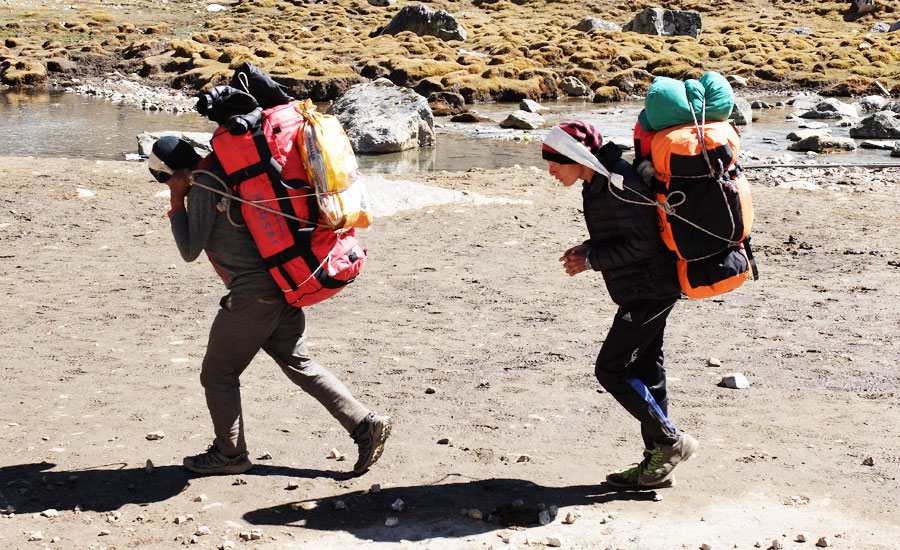
If you are planning the Manaslu Circuit Trek, one of the most common questions we get from trekkers is whether they really need a porter. Some travelers assume that hiring a porter is an unnecessary extra cost, or something only “less fit” trekkers need. After guiding hundreds of trekkers around the Manaslu region, we can tell you the opposite is true: a porter is one of the smartest, most cost-effective decisions you can make for this particular trek.
The Manaslu Circuit is not a gentle walk. It is a restricted, high-altitude circuit that crosses the 5,106-meter Larkya La Pass, runs through remote villages with limited infrastructure, and demands 12 to 18 days of consecutive walking at altitude. In this guide, we break down exactly why hiring a porter matters here more than on almost any other trek in Nepal, what a porter actually does, how much it costs, how weight limits and ethics work, and how to hire one the right way.
What Does a Porter Actually Do on the Manaslu Circuit Trek?
Before getting into the reasons, it helps to understand the actual role. A porter is a local trekking staff member whose job is to carry your main luggage (usually a duffel bag) between overnight stops, so you only carry a light daypack. On the Manaslu Circuit specifically, porters:
- Carry your main duffel bag or backpack, typically between 10 and 20 kg, between teahouses each day
- Walk the same route as you, usually arriving at the next teahouse before or shortly after the group
- Help identify which teahouses have rooms available in villages with limited lodging
- Assist with basic logistics such as pointing out trail junctions, river crossings, and suspension bridges
- Often work alongside a licensed guide, since a guide is legally required in the Manaslu restricted area while a porter is optional but strongly recommended
- Provide an additional layer of support in case a trekker is struggling with fatigue, blisters, or altitude symptoms
A porter is not the same as a guide. On the Manaslu Circuit, a government-licensed guide is mandatory because this is a restricted area bordering Tibet. A porter is a separate, optional hire whose only job is carrying your load — though many trekkers combine the two into a single “porter-guide” role to save money, which we cover further down.
Who Should Definitely Hire a Porter for This Trek?
While we recommend a porter for almost every trekker on the Manaslu Circuit, it becomes close to essential in certain situations:
- First-time high-altitude trekkers who have not previously carried a loaded pack above 4,000 meters for multiple consecutive days
- Trekkers over 45, or anyone recovering from a previous knee, ankle, or back injury
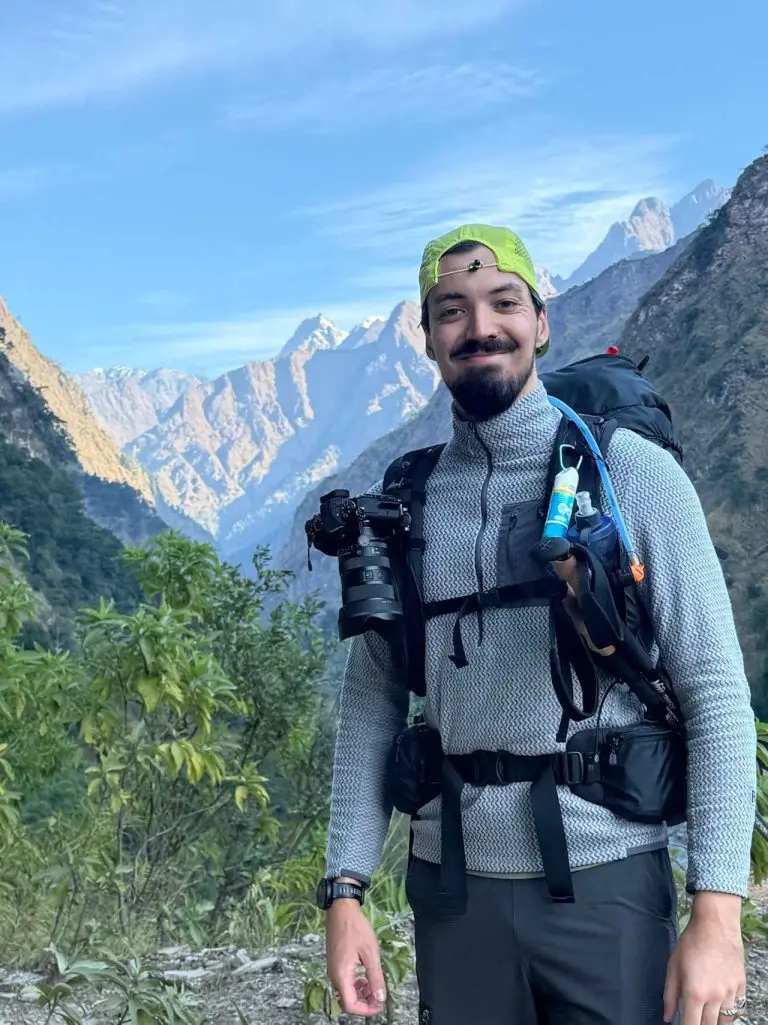
- Photographers and videographers carrying camera bodies, lenses, tripods, or drones in addition to standard trekking gear
- Anyone combining the Manaslu Circuit with a side trip into Tsum Valley, which extends the total trekking days and cumulative load-bearing time significantly
- Trekkers traveling in the shoulder seasons (early spring or late autumn), when colder temperatures mean more layers, heavier sleeping bags, and heavier duffels overall
- Solo travelers joining a group trek, since a shared porter split between two people is one of the most cost-effective additions to any Manaslu itinerary
Reason 1: The Manaslu Circuit Is Genuinely Difficult, Not a Casual Trek
Unlike shorter, more commercialized routes, the Manaslu Circuit is consistently rated as a strenuous, high-altitude trek. If you are still deciding how hard this trek really is, our Manaslu Trek Difficulty: A Realistic Assessment breaks this down in detail, but here is what matters for the porter question:
- The full circuit covers roughly 150 to 180 kilometers depending on your chosen itinerary and start/end points
- Most itineraries run 12 to 18 days, meaning your body is under continuous daily load for nearly two weeks
- Daily walking hours range from 5 to 8 hours, with some days on the far side of Larkya La stretching to 8 or 9 hours
- The trail includes steep ascents and descents, landslide-prone sections, and multiple suspension bridge crossings
- There is a significant net elevation gain from around 700 meters at the start to 5,106 meters at Larkya La
Carrying a fully loaded backpack of 12 to 18 kg over this terrain, every single day, adds a level of cumulative fatigue that most trekkers underestimate until they are three or four days in. For a full day-by-day breakdown of exactly where these demanding stretches fall, see our Manaslu Circuit Trek Itinerary: 10 to 22 Day Route Guide.
Reason 2: Larkya La Pass and the High-Altitude Sections Make Every Kilogram Matter
The crossing of Larkya La Pass (5,106 m) is the single hardest day of the entire trek, and it is exactly the day where carrying less weight has the biggest payoff. Consider what that day actually involves:
- A pre-dawn start, often between 4:00 and 5:00 AM, to cross the pass before strong winds pick up in the afternoon
- 6 to 9 hours of continuous walking at altitudes above 4,800 meters, where oxygen levels are roughly half of sea level
- Snow, ice, and loose scree underfoot, especially early or late in the trekking season
- No teahouses or shelter between Dharamsala (also called Larkya Phedi) and Bimthang on the other side
- Extreme cold, with temperatures frequently dropping below freezing even in the morning departure window
You can see exactly where this stage sits within the wider route in our Manaslu Circuit Trek Route: Complete Stage by Stage Guide. At this altitude, every kilogram you are not carrying translates directly into reduced oxygen demand, slower fatigue build-up, and a lower risk of the kind of exhaustion that contributes to poor decision-making on exposed terrain. This is one of several genuinely risky stretches on the route — we cover the others in detail in Risky Parts of the Manaslu Circuit Trek Before You Go. A porter carrying your duffel means you cross this pass with only a daypack: water, snacks, layers, and camera gear.
Reason 3: Manaslu Is a Restricted, Remote Region With Limited Emergency Infrastructure
Unlike the Everest or Annapurna regions, the Manaslu Circuit is a restricted area under the Manaslu Restricted Area Permit (MRAP) system, which exists precisely because this region is remote and borders Tibet. Some practical realities of this remoteness:
- There are no roads for most of the route, meaning no vehicle evacuation is possible if you are injured or too exhausted to continue
- Helicopter rescue is available but weather-dependent, expensive without insurance, and not always immediately possible in poor visibility
- Teahouses are more basic than on Everest Base Camp or Annapurna Circuit routes, with fewer beds and less redundancy if you fall behind schedule
- Mobile network coverage is patchy to non-existent in many villages
- A minimum of two trekkers and one licensed guide is required on your MRAP application — solo trekking in the restricted zone is not permitted
In this kind of environment, anything that reduces your physical risk (fatigue, dehydration, poor pace due to a heavy pack) reduces your overall exposure to a genuine emergency. A porter is one of the simplest, cheapest ways to lower that risk. For the full breakdown of permits, guide requirements, and group-size rules, see our Manaslu Circuit Trek 2026/2027 – Cost, Itinerary, Difficulty, Permits guide.
Reason 4: Porters Significantly Reduce Injury and Altitude Sickness Risk
This is the most practical, evidence-based reason to hire a porter. Carrying a heavy pack at altitude does not just tire you out faster — it directly increases physiological strain in ways that matter for safety:
- Higher exertion increases oxygen demand, which can worsen or accelerate symptoms of acute mountain sickness (AMS)
- Heavier loads increase strain on knees, ankles, and the lower back, especially on the steep, uneven descents common on this route
- Fatigue from carrying weight for hours each day reduces your reaction time and balance on exposed, narrow, or icy sections of trail
- Blisters and foot problems are more common and more severe when your feet are absorbing extra load, day after day
- Poor pacing due to a heavy pack often pushes trekkers to walk faster than their body wants, which is one of the most common contributors to altitude sickness
A lighter daypack lets you walk at a pace that matches your body’s actual acclimatization needs — slow and steady — rather than a pace dictated by wanting to get a heavy bag off your shoulders as quickly as possible.
Reason 5: You Actually Get More Out of the Trek
Beyond safety, there is a simple experiential argument for hiring a porter: the Manaslu Circuit is one of the most visually rewarding treks in Nepal, and carrying a heavy pack makes it harder to enjoy that. With a porter:
- You have the energy and mental space to actually look up at Manaslu (8,163 m), Himlung Himal, and the surrounding peaks instead of staring at the trail in front of you
- You can stop for photos, video, or drone shots without worrying about slowing down the group under a heavy load
- You arrive at teahouses with enough energy left to explore the village, talk with locals, or simply rest properly before dinner
- You have more mental bandwidth for cultural interactions in Tibetan-influenced villages like Samagaon, Samdo, and the Tsum Valley side trips
- Your recovery each night is faster, which compounds into a better experience over a 12 to 18 day trek
If seeing the trek’s highlights is part of why you booked it, our Highlights of Manaslu Circuit Trek page gives a good sense of what you’ll want energy left over to enjoy.
Reason 6: Hiring a Porter Directly Supports the Local Economy
This is a reason many trekkers do not think about until they are already on the trail, but it matters a great deal in a region like Manaslu:
- Porter work is one of the most significant sources of income for families in the Gorkha and Manaslu region, alongside teahouse ownership and farming
- Unlike guides, who typically require years of language training and licensing, porter work provides an entry point into the trekking economy for younger workers and those from lower-income households
- Money paid to porters circulates directly and immediately into local communities, rather than leaving the region
- Responsible tourism organizations, including the International Porter Protection Group (IPPG), specifically highlight porter employment as one of the most direct ways trekkers can support Himalayan communities
- Choosing not to hire a porter does not reduce your impact on the region — it simply removes an opportunity for a local worker to earn an income from your trip
If community impact and responsible trekking matter to you, hiring a porter (and treating them fairly, which we cover below) is one of the most direct ways to put that principle into practice.
Reason 7: It Is Genuinely Affordable for What You Get
Cost is often the first objection trekkers raise, but the actual numbers make this one of the easiest additions to justify in your budget. Here is a realistic breakdown:
- A standard porter on the Manaslu Circuit typically costs between USD 15 and 25 per day, which usually includes their food and basic lodging
- A porter-guide hybrid, who carries a lighter load (around 10 to 12 kg) while also providing basic guiding support, runs USD 20 to 30 per day
- A customary end-of-trek tip for a porter is roughly USD 60 to 80 for the full circuit, on top of the daily rate
- For a 13 to 14 day circuit, total porter costs including tip typically land somewhere between USD 250 and 400 per porter
- One porter is often shared between two trekkers, splitting that cost roughly in half per person
Compare that to the cost of the trek itself, your flights to Nepal, and your permits, and the porter fee is a small percentage of your total trip cost — often less than a single night at a nice hotel back home — for a meaningful reduction in physical strain and risk. For a full cost breakdown of the whole trek, including permits, guides, and accommodation, see our Manaslu Circuit Trek complete cost and FAQ guide.
Planning the Manaslu Circuit Trek and want help arranging the right guide and porter setup for your group?
WhatsApp us Email usPorter vs. Porter-Guide vs. Guide Only: Which Do You Actually Need?
Trekkers are often confused about the difference between these three roles, and what is legally required versus optional on the Manaslu Circuit. Here is a simple comparison:
| Role | Carries your bag? | Can lead the trek? | Legally required? | Typical cost/day |
|---|---|---|---|---|
| Guide (licensed) | No | Yes | Yes, mandatory in the restricted area | USD 25–35 |
| Porter | Yes, up to ~20 kg | No | No, optional | USD 15–25 |
| Porter-guide | Yes, up to ~12 kg | Basic guiding only | No, optional (does not replace the licensed guide requirement) | USD 20–30 |
- You always need a licensed guide on the Manaslu Circuit — this is a legal requirement, not a preference, because it is a restricted border area
- A porter is optional, but strongly recommended given everything covered above
- A porter-guide can be a good middle-ground for budget-conscious trekkers on a two-person or small group trip, since it combines two functions into one salary — though it does not remove the requirement for a separately licensed guide in most restricted-area permit setups
- Larger groups often hire one guide and one porter per two trekkers, which is the most common and comfortable setup
How Much Weight Can a Porter Carry on the Manaslu Circuit?
Ethical weight limits matter both for porter welfare and for your own logistics planning. The widely recognized standard, supported by organizations like the IPPG, is:
- A maximum of around 20 kg per porter is considered the responsible upper limit, though many reputable agencies cap it lower, closer to 15–18 kg
- When one porter is shared between two trekkers, this usually works out to about 10 kg of duffel weight per person
- Porters should have appropriate clothing, footwear, eyewear (for snow glare near Larkya La), and shelter provided by the trekking agency, not out of their own pocket
- Bags should be weighed at the start of the trek, and any trekker packing far beyond the agreed limit should expect to repack or pay for an additional porter
- Reputable agencies also carry insurance for their porters covering high-altitude work and rescue, which is worth asking about directly when booking
If you want a clear sense of what actually needs to go in that duffel bag, our Manaslu Circuit Trek Packing List is built specifically around these weight limits, separating what goes in your porter-carried duffel from what stays in your own daypack.
What Should You Pack If a Porter Is Carrying Your Duffel?
Once a porter is carrying your main bag, your own daypack should be built around comfort and emergency access rather than storage capacity. A practical split looks like this:
- In your daypack (carried by you): water bottle or bladder, sunscreen and sunglasses, a warm mid-layer, rain shell, snacks, camera or phone, a headlamp, basic first-aid items, and your permits/passport
- In your porter-carried duffel: sleeping bag, spare clothing layers, toiletries, a change of trekking clothes, down jacket for camp use, and anything you do not need mid-walk
- Pack your duffel so it can be easily identified and does not exceed your agreed weight allocation, usually marked with a tag or your name
- Avoid packing anything fragile or highly valuable in the porter-carried bag if you will be separated from it for hours at a time
- Keep your down jacket and an extra warm layer accessible in your own daypack on summit-style days like the Larkya La crossing, in case you and your porter are separated by pace
Common Myths About Hiring a Porter on the Manaslu Circuit
A few misconceptions keep trekkers from booking a porter even when it would clearly benefit them. Here is where those myths fall apart:
- “Only unfit or inexperienced trekkers need a porter.” In reality, many experienced high-altitude trekkers hire porters specifically because they understand how much cumulative load affects performance over a 12 to 18 day trek, regardless of fitness level
- “It’s too expensive to be worth it.” At USD 15 to 25 per day, often split between two trekkers, a porter typically adds a small fraction to your total trip cost once flights, permits, and accommodation are factored in
- “My guide can carry my bag if needed.” Guides are responsible for navigation, safety decisions, permit checks, and communication with teahouses — asking them to also carry a heavy duffel compromises their ability to do that job well
- “Porters don’t really need the work, they’re used to it.” Porter work is physically demanding regardless of experience, and the income it provides is often essential to family livelihoods in the Manaslu region
- “I can just pack lighter instead.” Packing light helps, but even a well-optimized duffel for a 12 to 18 day trek in variable weather, from subtropical valleys to snow-covered passes, will still weigh more than most trekkers want on their own back for two straight weeks
When Should You Book Your Porter?
Porter availability, like guide availability, tightens up during the two main trekking seasons: spring (March to May) and autumn (September to November). If you are still deciding when to go, our Best Time to Trek the Manaslu Circuit Trek guide covers the seasonal trade-offs in detail. For porter planning specifically:
- Book your porter alongside your guide and permits at least 4 to 6 weeks in advance during peak autumn season, when demand across the whole Manaslu region is highest
- If you’re joining a group departure rather than a private trip, porters are usually arranged automatically as part of the package — confirm this explicitly before assuming it’s included
- Let your agency know in advance if you have any camera equipment, medical gear, or unusually heavy items so they can plan weight allocation properly
- If your trip includes the Tsum Valley extension or a longer 18-day itinerary, mention this upfront, since it may affect whether one porter per two trekkers is still sufficient
How to Hire a Reliable and Ethical Porter for the Manaslu Circuit
Not all porter arrangements are equal. Here is what to actually check before you commit to an agency or freelance hire:
- Confirm the agency pays porters a fair daily wage that meets or exceeds the local standard rate, rather than the bare legal minimum
- Ask whether the porter’s food and lodging are covered separately from their wage, or deducted from it
- Ask directly about insurance coverage for high-altitude trekking and emergency rescue
- Confirm that appropriate gear (boots, warm clothing, sunglasses) is provided if the porter does not already own it
- Check that weight limits are actually enforced, not just stated in a brochure
- Avoid arrangements where a single porter is asked to carry the bags of three or more trekkers to cut costs
- Read reviews or ask previous trekkers specifically about how porters were treated on their trip, not just how the trekkers themselves were treated
Booking through a locally established Manaslu-region operator, rather than a third-party agency with no presence on the ground, generally makes it easier to verify these standards directly.
Porter Etiquette and Tipping on the Manaslu Circuit
Once you’ve hired a porter, a few simple habits go a long way:
- Greet your porter directly and learn their name — a small gesture that is often skipped but always appreciated
- Do not exceed the agreed weight limit without discussing it first
- Offer to share snacks or tea when appropriate, especially on longer days
- Check in on how they are doing, particularly at altitude, the same way you would check in on a guide
- Budget a tip of roughly USD 60 to 80 for a full circuit, typically given as a group at the end of the trek
- If traveling in a group, pool tips together and present them collectively, which is the standard practice for most Nepali trekking crews
Frequently Asked Questions About Hiring a Porter for the Manaslu Circuit
Is a porter mandatory on the Manaslu Circuit Trek?
No. A licensed guide is mandatory because Manaslu is a restricted area, but a porter is optional. That said, given the length, altitude, and remoteness of the route, we recommend one for almost every trekker.
Can one porter carry bags for two trekkers?
Yes, this is the most common arrangement. One porter typically carries up to around 20 kg total, split as roughly 10 kg per trekker.
Do porters speak English?
Not always, and that’s normal — a porter’s role is carrying your load, not guiding or translating. Your licensed guide handles communication, route-finding, and cultural interpretation.
What happens if my bag is too heavy?
Reputable agencies weigh bags before departure. If you exceed the agreed limit, you’ll typically be asked to repack, leave items behind, or pay for an additional porter.
Should I hire a porter or a porter-guide?
If you’re on a very tight budget and trekking as part of a small, straightforward group, a porter-guide can work. If you want dedicated route knowledge, cultural insight, and full compliance with restricted-area guide requirements, hire a separate licensed guide plus a porter.
Can I hire a porter directly, or only through an agency?
Independent porters do work in some regions of Nepal, but for a restricted area like Manaslu, hiring through an established local agency is strongly recommended. It ensures your porter is properly registered, insured, and paired correctly with your licensed guide and permit application.
Will my porter also carry my daypack on hard days like Larkya La?
Generally no — your daypack stays with you at all times so you always have immediate access to water, layers, and emergency items. Your porter carries the main duffel only, and on the Larkya La crossing itself, porters typically travel with the group’s overall luggage on the same schedule as everyone else.
What if I only need help for part of the trek, not the whole circuit?
Most agencies price porters on a per-day basis for the full itinerary, since logistics and route planning assume continuous coverage. If you only anticipate needing help on specific tough sections, it’s worth discussing this directly with your operator, though a full-trip porter is the standard and most practical arrangement.
Final Thoughts: A Porter Is One of the Best-Value Decisions on This Trek
The Manaslu Circuit rewards trekkers who arrive prepared and leave the region better than they found it. Hiring a porter checks both boxes at once: it meaningfully reduces your physical risk on a genuinely demanding route, and it puts fair, direct income into the hands of local communities who depend on the trekking season. For the relatively small cost involved, relative to your total trip budget, it is one of the easiest decisions you’ll make while planning this trek.
If you’re ready to start planning your route, permits, and crew, our team can help you put together the right combination of guide and porter support for your group size and budget.