Notes From a Guide’s August Logbook
One of our senior guides keeps a running logbook of trail conditions across every season, and his August entries tell the story of this month better than any generalized description could. Early August: “Rain most afternoons, Budhi Gandaki running high and brown, trail intact but muddy through Jagat.” Mid-August: “Road to Machha Khola cut by a slip near Arughat, jeep transfer rerouted, added half a day.” Late August: “First clear morning in nine days at Samagaun, monsoon clouds visibly thinning, guests commented the light looked different.” That last entry captures something real: August is the month the monsoon starts losing its grip, gradually and unevenly, and where you fall within the month matters more for trip planning here than in almost any other stretch of the calendar.
Yes, and August is close to July in most respects, still deep in the monsoon, still wet, still very quiet, but with the first genuine signs of drying appearing toward the end of the month as the monsoon begins its retreat. Road access carries the highest disruption risk of the year in August, since accumulated monsoon rainfall through July and August puts the most cumulative strain on the jeep track and river crossings. Larkya La remains passable for well-prepared groups with an experienced guide, similar to July, with wet snow and reduced visibility a regular feature. If you can schedule a departure in the final week of August, conditions are often noticeably better than mid-month. If your only window is early-to-mid August, treat it exactly like a July trek in terms of preparation.
Manaslu Tsum Valley Trek in August at a glance
| Factor | August conditions |
|---|---|
| Overall feasibility | Possible, similar profile to July, improving toward month end |
| Larkya La (5,106 m) | Passable, same caution as July applies |
| Daytime temperature, lower valley (700-1,900 m) | 15-20°C |
| Daytime temperature, Samagaun/Samdo (3,530-3,875 m) | 8-15°C |
| Night temperature, above 4,000 m | 5-10°C day, below freezing at night |
| Rainfall | Heavy through most of the month, first signs of easing in the final week |
| Trail crowding | Very low |
| Teahouse availability | Similar to July, limited above Samagaun |
| Permit cost tier | Dec-Aug lower rate still applies, the last month of this tier |
| Best for | Experienced trekkers seeking solitude, ideally targeting the final week |
Who should consider trekking in August
August suits the same profile of trekker as July: experienced, comfortable with wet conditions, and prioritising solitude over guaranteed views. If you have any flexibility in your dates within August, the final week generally offers a modest improvement over the first three weeks, as the monsoon begins to loosen its grip.
Reasons to choose August, and reasons to think twice
Why some trekkers choose August
- Continued solitude: trail traffic remains close to July’s very low levels for most of the month.
- Early drying trend: the final week can offer noticeably better conditions than earlier in the month.
- Lush late-summer scenery: the valley remains vividly green.
- Last chance at the Dec-Aug permit rate: August is the final month before the higher September-November permit tier applies.
Why most trekkers should choose a different month
- Continued heavy rain: particularly in the first three weeks of the month.
- Highest road disruption risk of the year: cumulative monsoon rainfall through July and August affects the jeep track more than any other period.
- Reduced teahouse network: similar to July, availability above Samagaun remains limited.
- Demanding pass crossing: wet snow and low visibility persist through most of the month.
Weather and conditions by zone in August
Lower Budhi Gandaki: Machha Khola to Deng (700-1,900 m)
Daytime temperatures typically run 15-20°C, with heavy rain continuing through most of the month, easing somewhat in the final week. Leeches remain common.
Tsum Valley: Chumling to Mu Gompa (2,400-3,700 m)
Similar to July, with some rain-shadow benefit, daytime temperatures around 12-18°C, and persistent cloud cover.
Upper Manaslu: Namrung to Samagaun (2,600-3,500 m)
Wet and cloudy for most of the month, daytime temperatures around 10-16°C, with brief clearer spells becoming more frequent toward month end.
Samagaun and Samdo (3,530-3,875 m)
Similar teahouse and weather profile to July, daytime highs roughly 8-15°C, regular rain or drizzle easing somewhat in the final week.
Dharmasala/Larkya Base Camp (4,460 m)
Limited teahouse operations continue, similar to July’s reduced count. Daytime temperatures around 5-10°C, with wet snow still possible.
Larkya La (5,106 m)
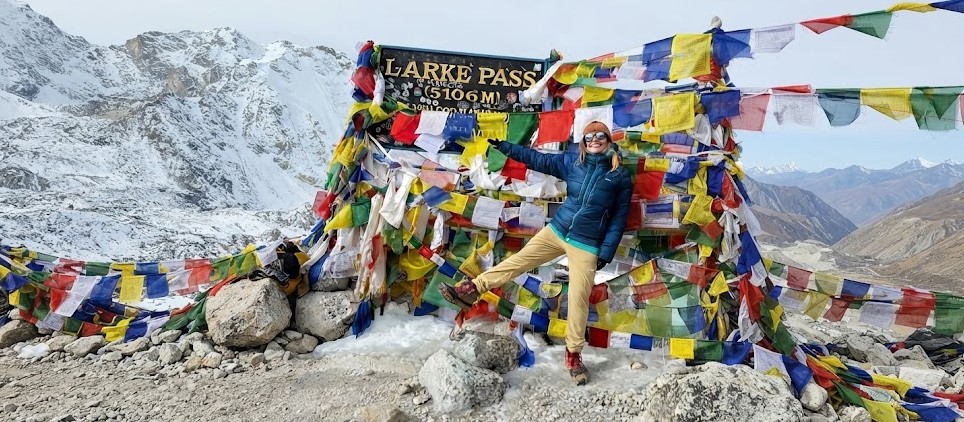
Passable with the same caution that applies in July: wet, heavy snow and reduced visibility are common through most of the month, with conditions typically improving somewhat in the final week as the monsoon begins its retreat.
Bhimtang and the descent to Dharapani (1,860-3,720 m)
Lush and green, with regular rain through most of the month, easing toward the very end.
August weather at a glance
| Zone | Altitude | Day temp | Night temp | Typical conditions |
|---|---|---|---|---|
| Machha Khola-Deng | 700-1,900 m | 15-20°C | 13-17°C | Heavy rain, easing late month, leeches |
| Tsum Valley | 2,400-3,700 m | 12-18°C | 6-10°C | Partly rain-shadowed, persistent cloud |
| Namrung-Lho | 2,600-3,180 m | 10-16°C | 4-8°C | Wet, occasional clearer spells late month |
| Samagaun/Samdo | 3,530-3,875 m | 8-15°C | 0-5°C | Regular rain, easing late month |
| Dharmasala | 4,460 m | 5-10°C | near freezing | Wet snow possible, limited teahouses |
| Larkya La | 5,106 m | 0-5°C | n/a (crossed by day) | Passable, same caution as July |
| Bhimtang-Dharapani | 1,860-3,720 m | 15-20°C | 8-12°C | Lush, wet, improving late month |
Rainfall, wind and visibility in August
Rainfall remains heavy through the first three weeks of August, broadly similar to July, with the clearest signal of change appearing in the final week as the monsoon begins its seasonal retreat. Wind is generally moderate. Visibility remains limited through most of the month, improving gradually toward the end.
Daylight hours in August
Daylight runs from roughly 5:35 am to 6:50 pm, around 13.25 hours, gradually shortening from July’s peak as the month progresses.
A typical day’s weather pattern in August
The pattern mirrors July for most of the month: a brief clearer window in the early morning, followed by building cloud and rain through the day. By the final week, mornings often stay clear for longer, an early sign of the approaching transition to autumn.
Trail conditions in August
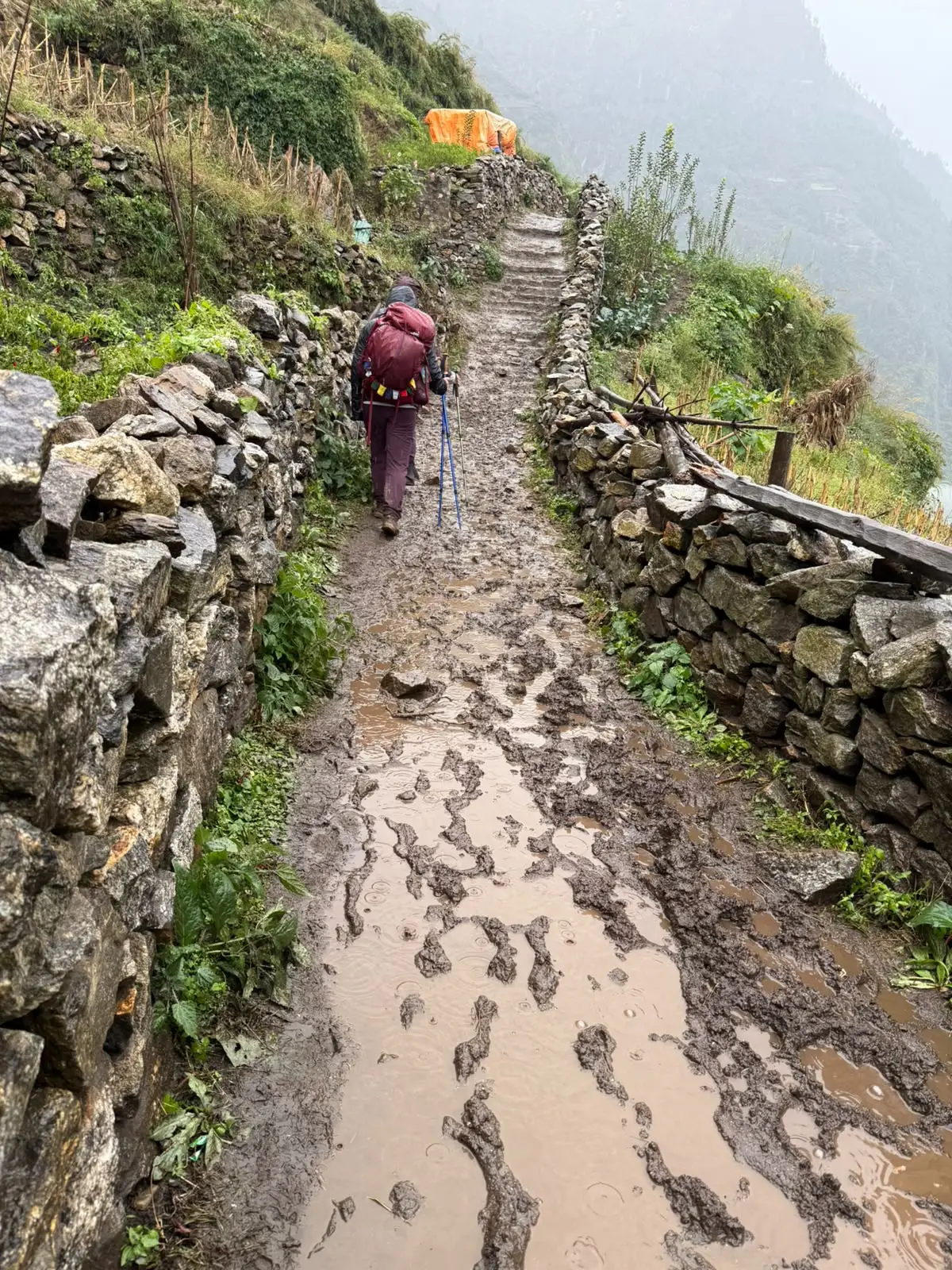
Trail conditions remain challenging through most of the month: muddy, sometimes slippery, with a real chance of localised landslides after heavy rain, particularly given the cumulative saturation from July’s rainfall. Conditions typically firm up somewhat in the final week.
Road access and transport in August
August carries the highest road disruption risk of the year. Two consecutive months of monsoon rain by this point mean the jeep track and any river crossings are under the most cumulative strain of the year. Build meaningful buffer time into your arrival and departure schedule, and stay in close contact with your operator about current road conditions before departure.
Teahouses, rooms and food in August
Similar to July, teahouse numbers above Samagaun remain reduced for most of the month, with a gradual pickup as some lodges reopen ahead of the September-October season. Confirm current availability with your operator before finalising your itinerary.
Water, charging and connectivity in August
Similar to July: reduced solar charging reliability given persistent cloud, and a power bank is a sensible backup. Water treatment remains important throughout.
How busy is the trail in August
Very low for most of the month, picking up slightly in the final week as some trekkers plan early-season arrivals ahead of the autumn peak. This remains one of the two quietest months of the year alongside July.
Permits and costs for August
August is the last month of the December-August lower permit rate tier. The Manaslu Restricted Area Permit (RAP) costs USD 75 for the first 7 days plus USD 10 per extra day. The Tsum Valley RAP costs USD 30 for the first 7 days plus USD 7 per extra day. MCAP and ACAP are each NPR 3,000 (foreigner rate), plus the one-time NPR 1,000 local municipality fee. From September, the higher Sept-Nov rate tier applies. See our Manaslu trekking permits guide for full current details.
Restricted area rules
The Manaslu and Tsum Valley areas remain restricted, with all permits arranged through a registered trekking agency and checkpoints at Jagat, Philim, Namrung and Samagaun for the main route, plus Lokpa, Chumling and Chekampar for Tsum Valley. As of the 22 March 2026 rule change, one trekker with one licensed guide meets the restricted-area requirement.
Guide and porter requirements
A licensed guide from a registered agency is mandatory, with an experienced guide especially valuable given ongoing monsoon conditions. Porters are optional but recommended given the extra weight of wet-weather gear.
Suggested itinerary for the Manaslu Tsum Valley Trek in August
| Day | Route | Altitude |
|---|---|---|
| 1 | Kathmandu to Machha Khola | 870 m |
| 2 | Machha Khola to Jagat | 1,340 m |
| 3 | Jagat to Lokpa | 2,240 m |
| 4 | Lokpa to Chumling (Tsum Valley) | 2,386 m |
| 5 | Chumling to Chhokangparo | 3,010 m |
| 6 | Chhokangparo to Mu Gompa | 3,700 m |
| 7 | Mu Gompa exploration and acclimatisation | 3,700 m |
| 8 | Mu Gompa to Chhokangparo, descend to Gumba Lungdang or Rachen Gompa | 3,200 m |
| 9 | Descend to Lokpa, continue to Deng | 1,860 m |
| 10 | Deng to Namrung | 2,630 m |
| 11 | Namrung to Lho | 3,180 m |
| 12 | Lho to Samagaun | 3,530 m |
| 13 | Samagaun acclimatisation, side trip to Manaslu Base Camp or Birendra Lake | 3,530 m |
| 14 | Samagaun to Samdo | 3,875 m |
| 15 | Samdo to Dharmasala | 4,460 m |
| 16 | Dharmasala over Larkya La to Bhimtang | 3,720 m |
| 17 | Bhimtang to Tilije/Dharapani | 1,860 m |
| 18 | Dharapani to Kathmandu via Besisahar | 1,400 m |
As with July, build at least two buffer days into an August itinerary given the elevated risk of both road and weather delays, particularly for departures in the first three weeks.
Acclimatisation in August
The two dedicated acclimatisation days remain essential regardless of season, altitude risk does not ease with the calendar.
Contingency planning and buffer days
Given August’s status as the highest road-risk month of the year, contingency planning matters as much here as in July. Confirm with your operator how weather and road delays are handled in your specific itinerary.
What to pack for August
| Category | August-specific notes |
|---|---|
| Rain protection | Full waterproof jacket and trousers, essential for most of the month |
| Insulation | Mid-weight down jacket for Dharmasala and the pass |
| Footwear | Waterproof trekking boots with strong grip; gaiters recommended |
| Leech protection | Leech socks and salt or repellent for the lower forested sections |
| Pack protection | Dry bags for electronics, documents and sleeping bag |
| Spare clothing | Extra dry layers and socks, as in July |
Rain and wet-weather protection
- Waterproof jacket and trousers: fully seam-sealed rain gear, essential for most of the month.
- Pack cover and dry bags: double protection for gear and electronics.
- Quick-dry clothing: synthetic or merino layers throughout.
Leech and footwear protection
- Boots: waterproof trekking boots with strong tread.
- Leech socks or gaiters: for the lower forested sections.
- Salt or leech repellent: a simple, effective solution.
- Camp shoes: a dry pair to change into each evening.
Cold-weather gear for the pass
- Down jacket: mid-weight, ideally paired with a waterproof outer layer.
- Gloves: a waterproof outer pair over a warm liner.
- Trekking poles: essential for stability on wet or slushy trail.
Documents, money and extras
- Cash in Nepali rupees: carried in a waterproof pouch.
- Permit documents and passport copies: kept dry in a sealed bag.
- Basic first aid and personal medication: including any altitude sickness medication discussed with your doctor.
Health and altitude considerations
Standard altitude precautions apply regardless of season. Staying warm and dry is especially important given the wet conditions. See our guide on what happens if you get sick on the Manaslu Circuit Trek for more detail.
Safety risks specific to August
The main risks mirror July: wet snow and reduced visibility at Larkya La, muddy trail conditions, and the added factor of August’s elevated road disruption risk given cumulative monsoon saturation. A good operator manages these risks with conservative scheduling and real buffer time.
Travel insurance
Comprehensive travel insurance covering trekking to at least 6,000 metres, including helicopter evacuation, is essential, and worth double-checking for weather and road-delay coverage given August’s risk profile.
Is August right for beginners, experienced trekkers or solo trekkers
First-time high-altitude trekkers
Not recommended; April or October are far better introductions to this route.
Experienced trekkers
Suited to experienced trekkers who specifically want solitude and are prepared for demanding, wet conditions.
Solo trekkers
Since the 22 March 2026 rule change, one trekker with one licensed guide meets the restricted-area requirement. See our solo trekking rule update for details.
Guides and porters: what to expect in August
Guides working in August bring the same experience level and conservative planning approach as in July, with close attention to road and weather conditions throughout.
Photography in August
Similar to July: atmospheric, moody conditions with lush green scenery, improving toward clearer light in the final week as the monsoon eases.
Festivals and cultural events in August
Local festival timing varies year to year; check current dates with your operator, and see our guide to major festivals in the Manaslu region.
Advantages and disadvantages of trekking in August
| Advantages | Disadvantages |
|---|---|
| Continued solitude, similar to July | Highest road disruption risk of the year |
| Last month at the Dec-Aug permit rate | Heavy rain through most of the month |
| Improving conditions toward month end | Reduced teahouse network above Samagaun |
| Lush, green scenery | Demanding, wet-snow pass crossing |
| Quiet, uncrowded trail | Not suitable for first-time trekkers |
Extra costs to budget for
Budget as you would for July: at least two buffer days, quality rain gear, and tips for guide and porter. Booking your permits before the end of August also locks in the lower Dec-Aug rate if your trip straddles the September rate change.
How August compares to July and September
July and August are broadly similar in feasibility and conditions; see our Manaslu Tsum Valley Trek in July guide. September brings the start of the monsoon’s retreat and a shift into the higher permit rate tier, with conditions improving noticeably by mid-to-late month; see our Manaslu Tsum Valley Trek in September guide. If your dates are flexible, pushing into September often means meaningfully better conditions for only a modest cost increase.
August month-by-month comparison table
| Month | Feasibility | Larkya La | Crowd level |
|---|---|---|---|
| July | Possible, not recommended for first-timers | Passable but demanding, wet snow at times | Very low, ~7-10/day |
| August | Possible, similar to July | Passable, same caution | Very low |
| September | Improving through the month | Passable, clearing | Low rising to moderate |
Alternatives to consider if August doesn’t work for you
If your dates are flexible, shifting into late September often gives meaningfully better conditions. If you specifically want a quiet trail without August’s road risk, consider June instead, which is generally drier, particularly in its first half. For a Tsum Valley-only itinerary without the Larkya La crossing, see our Manaslu Tsum Valley destination.
Final recommendation: should you trek in August
August suits the same experienced, solitude-seeking trekker as July, with a modest silver lining: conditions in the final week often improve as the monsoon begins its retreat. If your schedule allows targeting late August specifically, that is the sweet spot within an otherwise demanding month. Explore our 19-Day Manaslu Circuit with Tsum Valley Trek or the 23-Day Tsum Valley and Manaslu Circuit Trek, or get in touch via our contact to discuss timing. See our Manaslu Circuit Trek Monsoon Update 2026 for the latest ground conditions, and our Best Time to Go guide for the full seasonal picture.
Road Access: The Real August Bottleneck
More than rain on the trail itself, road access between Kathmandu or Soti Khola and the trailhead is the single biggest variable in August, and it deserves more attention than most guides give it. Two full months of accumulated monsoon rainfall by August puts real cumulative stress on the jeep track along the Budhi Gandaki valley, small slips, washouts at stream crossings, and temporary road closures for clearing are all realistic possibilities, particularly after any period of sustained heavy rain. This is different from trail conditions on foot, which remain manageable with proper guiding throughout August, road disruption is a logistics and timing issue rather than a safety issue for trekkers on the trail itself. We build buffer time into every August itinerary specifically to absorb a possible one-day road delay without threatening the overall schedule or return flight connections.
Reading the Monsoon’s Retreat Through the Month
Meteorologically, Nepal’s monsoon typically begins withdrawing from the west in early September, but its influence weakens unevenly through August itself, most noticeably in the final third of the month. Guides watch specific signals: fewer consecutive rain days, clearer early mornings even if afternoon cloud still builds, and a shift in wind pattern at higher elevations near Samdo and the pass. These signals do not follow a fixed calendar date, some years the shift is obvious by August 20th, other years it holds wet through the month’s final days, but the general trend is consistent enough that late-August departures statistically see better conditions than early-to-mid-August ones, based on our own multi-year trip records.
Larkya La Conditions in August
The pass crossing in August closely mirrors July, wet snow accumulation and reduced visibility remain the primary hazards rather than dry-cold conditions, and early starts before daytime cloud buildup remain the standard approach. What differs slightly by late August is a gradual reduction in new snowfall frequency as the broader monsoon pattern weakens, meaning late-month crossings can see marginally more stable conditions than a comparable early-August attempt, though this is a trend rather than a guarantee any specific date will benefit from it. As with July, we treat every August pass-crossing decision as a fresh daily assessment based on current overnight conditions rather than a fixed date on an itinerary, and buffer days at Dharamsala remain part of any properly planned August schedule.
Field Notes: What Guides Actually Watch For in August
Beyond the road and pass considerations already covered, experienced guides running August trips watch a handful of specific, practical signals: leech activity, which peaks in August’s warm, saturated forest sections even more than in June or July, river crossing water levels, which can rise quickly after a heavy rain event further upstream, and group morale over consecutive wet days, which becomes a genuine guiding skill in its own right during this stretch of the calendar. The guides who do this well tend to build deliberate rest and recovery time into wet-weather stages, extra time at a warm teahouse dining room rather than pushing through discomfort for the sake of the schedule, and clients consistently report that this pacing adjustment makes far more difference to trip satisfaction than the weather itself.
Gear and Preparation for August
An August packing list should mirror a July one closely: genuinely waterproof jacket and trousers, dry-bag lining throughout the pack, multiple dry clothing changes reserved for evenings, well broken-in waterproof boots, and full leech prevention gear, gaiters and treated socks, given that August rivals July for peak leech activity in the lower forest sections. The one adjustment worth making for a late-August departure specifically is packing slightly less redundant rain gear and slightly more layering flexibility, since the tail end of the month can swing between a wet morning and a genuinely clear, warm afternoon within the same day as the monsoon pattern breaks down. Trekkers departing in the first half of August should prepare exactly as they would for July, with no reduction in wet-weather readiness.
Permit Costs and Booking for August
August remains within the lower Restricted Area Permit tier, USD 75 per week, the same rate covering December through August before the September peak-season increase to USD 100 per week. Full permit details are on our Manaslu trekking permit guide. Booking pressure is minimal in August, but given the road disruption risk discussed above, we recommend at least two to three weeks’ lead time so that transport and contingency planning can be built into the itinerary properly rather than arranged last-minute.
Solo Trekkers and August Timing
The March 2026 removal of the two-trekker minimum for the Manaslu Restricted Area Permit applies to August as it does year-round, a licensed guide alone satisfies the permit requirement. Like July, August’s low overall trekker numbers previously made finding a spontaneous trekking partner difficult, so this policy change is especially useful for solo travelers with an August window, particularly those specifically targeting the more favorable final-week conditions discussed earlier, who can now book on their own preferred dates without waiting to find a matching group.
Late August as a Genuine Shoulder-Season Opportunity
Trekkers with real date flexibility and an August constraint should specifically target the final week of the month, roughly August 24th through 31st, when our multi-year trip data shows the clearest, driest conditions of the entire month with meaningful consistency. This window offers a genuine hybrid experience, still well below September and October’s crowd levels, still within the lower August-rate permit tier, but with noticeably improved weather compared to earlier in the month. Several returning clients have specifically booked back-to-back years in this exact window after a good first experience, describing it as an insider’s alternative to the crowded, more expensive September and October peak. It is not a guarantee, monsoon retreat timing varies year to year, but it is a data-backed recommendation rather than a hopeful guess.
Comparing August to the Coming Peak Season
Trekkers whose dates could shift slightly should compare this guide against our September Manaslu Tsum Valley guide, the first fully peak-season month, or our July guide for a direct comparison of the two deepest monsoon months. For a complete stage-by-stage route breakdown independent of season, see our Manaslu Circuit route guide.
Tsum Valley’s Late-Monsoon Character
Tsum Valley in August carries the same quiet, rain-shadow-assisted advantage over the main Circuit trail that it does in June and July, precipitation totals in Chhekampar and Nile stay measurably lower than comparable elevations on the main route, and the side valley’s monasteries remain fully accessible throughout the month. Late August specifically offers a compelling window for a Tsum-focused itinerary, the valley’s forest and terraced farmland are at their most lush after two months of steady rain, and the near-total absence of other trekkers this deep into monsoon season gives the valley’s villages and monasteries a stillness that is difficult to experience during any other part of the year. Trekkers building extra days into Tsum Valley specifically in August, rather than rushing through to the Circuit side, tend to report the most memorable cultural encounters of the entire trip.
Health and Practical Considerations Carried Over From July
Foot care, hydration discipline, and gear-drying routines that matter in July matter equally in August, changing into dry socks every evening, inspecting feet nightly for early blister or fungal signs, and using teahouse kitchen warmth to dry wet gear overnight rather than leaving it damp. Water treatment remains standard practice at every stop regardless of how much rain has fallen. The one August-specific addition worth flagging is increased river crossing awareness, given the cumulative two months of monsoon rainfall by this point in the season, water levels at the route’s suspension bridge crossings run at their highest of the year in August, a visual and psychological factor for most trekkers on well-maintained bridges, but a detail worth mentioning so it does not come as a surprise.
Who Should Book August, Realistically
The same honest framework that applies to July applies to August: this month suits trekkers with prior wet-weather trekking experience, genuine schedule flexibility to absorb a possible road or pass delay, and realistic expectations about the trade-off between solitude and comfort. It especially suits trekkers who can target the final week specifically, treating late August almost as an early shoulder-season option rather than a deep-monsoon gamble. It does not suit anyone whose trip depends on guaranteed clear mountain photography, a fixed non-negotiable return schedule, or a first high-altitude trekking experience without prior wet-conditions exposure. Being clear-eyed about which category describes you is, as with July, the most useful thing this guide can offer before booking.
Wildlife and Forest Activity in August
The lower and mid-elevation forest sections between Machha Khola and Namrung are at their most biologically active in August, sustained warmth and moisture support the year’s peak insect and bird activity, and trekkers with an interest in Himalayan flora and fauna, rather than mountain panoramas specifically, often find August surprisingly rewarding for this reason. Butterfly activity in particular peaks in August in the forest sections, and the understory vegetation reaches its fullest, greenest state of the entire year. This is also peak leech season, discussed earlier, which is directly connected to the same warm, humid conditions that support this broader burst of forest biodiversity, the trade-off is real but so is the ecological richness on display for anyone prepared for it.
Planning Your Return: Building Buffer Into an August Itinerary
Given the road disruption risk covered earlier, an August itinerary should never be scheduled back-to-back with a tight international flight connection. We recommend a minimum one full buffer day between the planned end of the trek and any onward flight, ideally built in around the Kathmandu return rather than earlier in the trip, since road-access delays typically affect the lower valley transfer stages rather than the trekking days themselves. Trekkers who have booked flexible-date flights or added this buffer consistently describe far less trip-ending stress than those who cut it close, and our own trip planning defaults to this buffer automatically for every August booking regardless of whether a client requests it specifically.
What Returning Clients Say About August Specifically
Clients who have trekked this route in both August and a peak-season month consistently highlight the same handful of contrasts when asked to compare. Teahouse conversations run longer and go deeper in August, simply because there is time and no queue of other guests waiting for attention. The valley’s color palette, deep saturated greens against grey monsoon cloud, produces a strikingly different set of photographs than the browner, clearer look of October, and several clients specifically kept both a peak-season and an August trip photo set for this reason. And the sense of having the trail largely to themselves, sharing a dining room with one other small group rather than a full house, is the detail almost every August returner mentions first when describing what made the trip memorable, more so than any single landscape or landmark along the way.
Costs, Value, and How August Compares Financially
Beyond the lower USD 75 weekly permit rate, August offers the same modest cost advantages as June and July, less competition for guide and porter allocation, generally easier availability on shared transport, and occasionally more room to negotiate small extras at teahouses that are not operating at full capacity. It is worth being clear that this is not a dramatically cheaper trek, core costs, permits, guide fees, teahouse accommodation, are broadly consistent year-round on this route, but for trekkers comparing a deep-shoulder-season month against September or October specifically, August’s combination of lower demand and unchanged core pricing represents genuine, if modest, value, particularly when paired with a late-August departure date that also captures improving weather.
The Bottom Line for an August Booking Decision
August is not a month to book by accident, it is a month to book deliberately, ideally targeting the final week specifically, with full wet-weather preparation regardless of exact departure date, and with a realistic understanding that road access, not trail conditions or altitude, is the biggest variable to plan around. Done with that awareness, August rewards trekkers with a genuinely quiet, lush, characterful version of this route that few visitors ever experience. Done without it, treating August like a standard autumn departure, it can turn into a frustrating trip. We would rather set that expectation clearly here than have a client discover the difference on the trail.
A Quick Word on Insurance for Monsoon-Season Trekking
Given the road disruption and pass-crossing conditions discussed throughout this guide, comprehensive travel insurance covering high-altitude trekking and emergency evacuation is essential for any August departure, arguably more so than for a standard autumn trip. Confirm your policy specifically covers trekking above 5,000 meters, since Larkya La sits at 5,106 meters, and covers emergency helicopter evacuation, which is the standard rescue method used on this route if conditions or a medical issue require it. We ask every client to share proof of appropriate coverage before departure, regardless of season, but it is a detail worth double-checking specifically before a wet-season trek.
Frequently asked questions
Is August better than July for this trek?
Broadly similar, with a modest improvement in the final week of August as the monsoon begins to ease.
Is Larkya La open in August?
Usually passable, with the same wet-snow and low-visibility caution that applies in July.
How busy is the trail in August?
Very low for most of the month, one of the two quietest months of the year alongside July.
What permits do I need for August?
Manaslu RAP, Tsum Valley RAP, MCAP, ACAP and a local municipality fee, at the December-August lower rate tier, the last month before the higher September-November rate applies.
Can I trek solo in August?
Yes, since the 22 March 2026 rule change, one trekker with one licensed guide meets the restricted-area requirement.
Is the road to the trailhead reliable in August?
This is the highest-risk month of the year for road delays, given cumulative monsoon rainfall; build meaningful buffer time into your schedule.
Is August suitable for first-time trekkers?
No, similar to July, this month is better suited to experienced trekkers comfortable with wet, demanding conditions.
Are there leeches in August?
Yes, in the lower forested sections, similar to June and July.
Should I target early or late August?
Late August generally offers better conditions as the monsoon begins its retreat, if your schedule allows the flexibility.
How many days does the trek take in August?
A typical itinerary runs 19-20 days including acclimatisation and at least two weather buffer days.
Is altitude sickness more likely in August?
Not inherently, it depends on pace and acclimatisation rather than the calendar.
Do I need special gear for August?
Yes, the same full monsoon kit recommended for July: waterproofs, leech protection, and extra dry layers.
Is travel insurance required?
Yes, comprehensive insurance covering trekking to at least 6,000 metres with helicopter evacuation is essential.
Are teahouses open in August?
A reduced number above Samagaun, similar to July, with availability gradually improving toward month end.
Is September a better choice than August?
Often yes, particularly from mid-September onward, as conditions improve with the monsoon’s retreat, for only a modest permit cost increase.
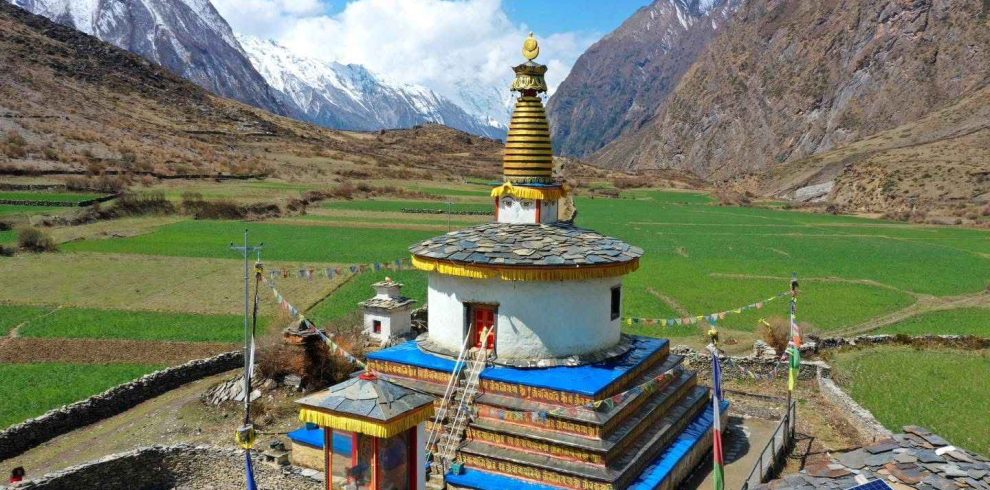
The 23-day Tsum Valley & Manaslu Circuit Trek combines breathtaking Himalayan landscapes with the preserved Tibetan Buddhist culture of a…