Table of Contents
- Why Solo Women Are Choosing Manaslu
- Is the Manaslu Circuit Trek Safe for Solo Women?
- Sanitary Facilities on the Trail: Honest Details
- Permits and Regulations for Solo Women
- Best Time to Trek as a Solo Woman
- Day by Day Itinerary
- What to Pack: Women Specific Packing List
- Accommodation Along the Route
- Food, Water and Nutrition on Trek
- Health, Altitude Sickness and Medical Preparation
- Cost Breakdown for Solo Women
- Choosing a Female Guide or Male Guide
- Cultural Sensitivity and Dress Code
- Phone, Connectivity and Emergency Contacts
- Mental and Emotional Preparation
- Frequently Asked Questions
1. Why Solo Women Are Choosing Manaslu
The Manaslu Circuit Trek has quietly become one of the most talked-about trekking routes in Nepal among solo women travelers. While Everest Base Camp and the Annapurna Circuit still dominate travel blogs, Manaslu offers something those trails can no longer promise: genuine remoteness, fewer crowds, and a trekking experience that feels personal and raw. Contact our manaslu trekking company to plan your trip with local experts.
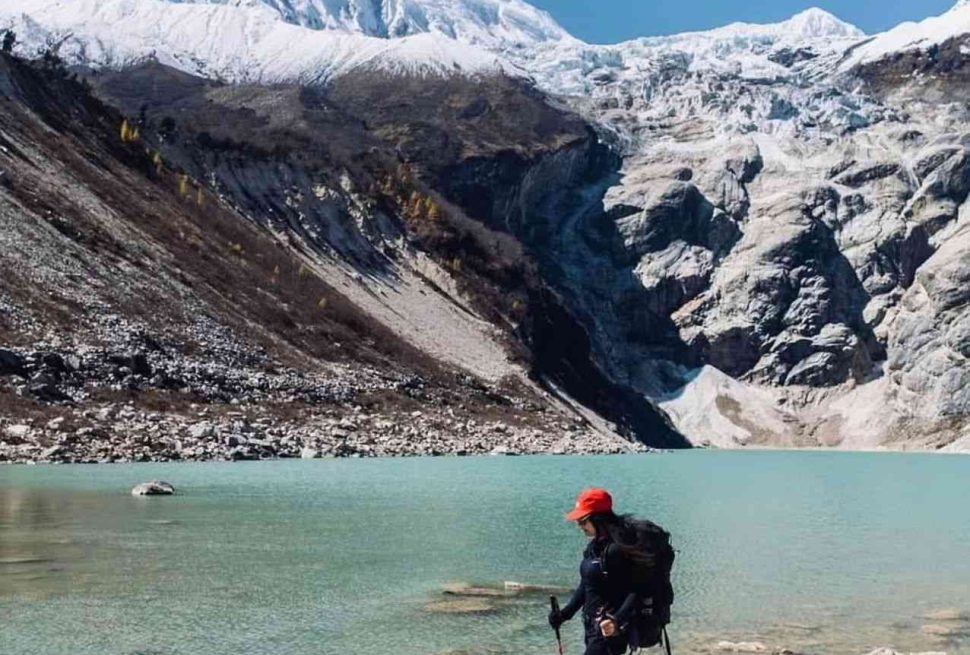
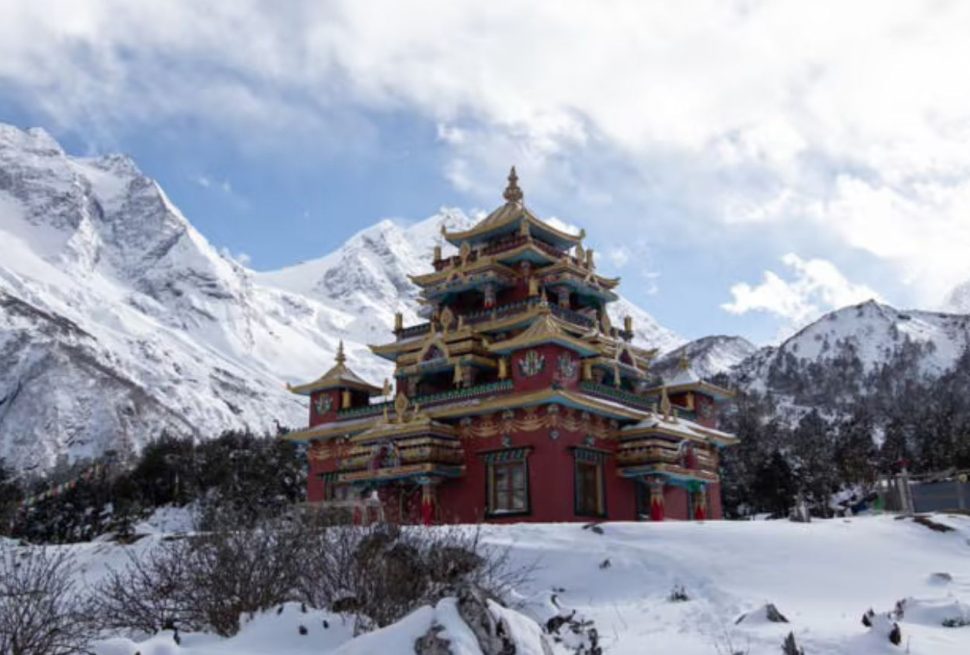
Located in the Gorkha District of Nepal, the Manaslu Circuit loops around Mount Manaslu (8,163 m), the world’s eighth highest peak. The trail crosses the Larkya La Pass (5,160 m), passes through Tibetan influenced villages, Buddhist monasteries, dense rhododendron forests, and glacial valleys. It is 177 kilometers long and takes between 14 and 18 days depending on your pace and start point.
So why are solo women choosing it in growing numbers?
The trail feels safe. The villages along Manaslu are small, tight-knit communities of Gurung, Tibetan, and Nubri people who have been hosting trekkers for decades. Locals are not aggressive, harassment is rare, and the culture is one of Buddhist warmth and hospitality. Women traveling through this region consistently report feeling welcomed rather than watched.
The regulation helps. Unlike open trekking trails where anyone can walk alone, the Manaslu Conservation Area is a restricted zone. Every trekker must hire a licensed guide. This rule, which many solo women initially see as an inconvenience, actually becomes a safety feature. You are never alone on a remote mountain trail. Your guide is your local translator, safety monitor, and emergency contact rolled into one person.
The community is growing. Women-only trekking groups, solo female travel forums like Girls Love Travel, and social media communities have helped create a network of women who share detailed, honest accounts of the Manaslu trail. That peer knowledge makes first-time solo trekkers far more confident before they even leave home.
This guide is written for women who want honest, detailed information. We cover everything from where you go to the toilet above 4,000 meters to how to deal with altitude sickness alone. We do not sugarcoat the challenges, but we also do not exaggerate them. The Manaslu Circuit is doable, safe, and deeply rewarding for solo women who prepare well.
2. Is the Manaslu Circuit Trek Safe for Solo Women?
Safety is the first question every solo woman asks, and it deserves a direct answer. Yes, the Manaslu Circuit Trek is safe for solo women. But like any mountain environment, safety depends on preparation, the people you travel with, and your own awareness.
On the Trail
The trekking trail itself presents no particular danger specific to women. The physical risks, altitude sickness, weather changes, trail slips, are the same for all trekkers. The social environment along the Manaslu Circuit is calm. Tea house owners are mostly women or families. Other trekkers on the trail are friendly and a sense of informal community develops naturally, especially at shared dinner tables.
There are no reports of serious assault or harassment of women trekkers on the Manaslu trail in recent years. This matches the experience of our guide team who lead dozens of women through Manaslu each season. The local culture is not predatory toward foreign women. That said, common sense practices still apply everywhere in the world.
Practical Safety Practices for Solo Women
- Always trek with a licensed, government-registered guide. It is legally required on Manaslu and practically wise.
- Book accommodation at tea houses rather than camping alone in remote areas.
- Avoid walking in the dark. Start early and reach your tea house before sunset.
- Trust your instincts. If a guide, fellow trekker, or situation feels wrong, remove yourself from it.
- Share your daily itinerary with someone at home and check in every 2 to 3 days.
- Keep a copy of your permits, passport, and emergency contact numbers in a separate location from your originals.
- Carry a personal safety whistle and a small door alarm if you want added peace of mind in your room.
- Choose tea houses with internal door locks wherever possible. Most do have them.
Choosing the Right Guide
Your guide is the single biggest safety factor on this trek. A good guide knows the trail, speaks the local language, can read weather and altitude symptoms, and acts as a cultural buffer. Some solo women prefer a female guide; others are comfortable with male guides who come with strong references from other women. We discuss this in detail in the guide selection section below.
“I was nervous about trekking solo in a restricted area. Within the first two days I realized my fear was completely out of proportion to reality. The villages are safe, the locals are kind, and having a guide meant I always had someone who knew exactly what to do in any situation.” — Priya S., solo trekker from India, October 2024
3. Sanitary Facilities on the Trail: Honest Details
This section gets more detailed than most trekking guides. We cover it thoroughly because it is one of the most searched topics by women planning solo mountain treks, and most travel blogs give vague answers that leave women unprepared.
Toilets at Tea Houses
The majority of tea houses along the Manaslu Circuit have toilets. These are almost exclusively squat toilets in the lower altitude sections (Soti Khola to Namrung) and a mix of squat and basic flush toilets in the middle section (Namrung to Samdo). Above Samdo and around the Larkya La Pass area, facilities become more basic.
The toilets are generally separate from the main building, accessed from outside. Most are clean enough to use comfortably. Tea house owners maintain them because their business depends on trekker satisfaction. You will not find sparkling Western-standard bathrooms, but you will find functional, reasonably clean facilities at every overnight stop.
| Section | Altitude Range | Toilet Type | Cleanliness | Toilet Paper Available? |
|---|---|---|---|---|
| Soti Khola to Jagat | 700 m to 1,400 m | Squat, some flush | ★★★★ | Carry your own |
| Jagat to Namrung | 1,400 m to 2,630 m | Squat mostly | ★★★ | Carry your own |
| Namrung to Sama Gaun | 2,630 m to 3,530 m | Squat and basic flush | ★★★ | No |
| Sama Gaun to Samdo | 3,530 m to 3,875 m | Squat, outdoor | ★★ | No |
| Samdo to Larkya La | 3,875 m to 5,160 m | Pit toilet or outdoor | ★★ | No |
| Bimthang to Dharapani | 3,590 m to 1,860 m | Squat, improving | ★★★ | Carry your own |
Managing Periods on the Manaslu Trek
This is a real and practical concern that many guides and blogs ignore. Here is straightforward, experience-based advice.
Products to bring: Menstrual cups are the single best option for high-altitude trekking. They hold more volume (important when you cannot change frequently), require no disposal infrastructure, and generate no waste that needs to be packed out. If you are not used to a cup, practice using it at home for 2 to 3 months before the trek.
Organic cotton tampons are the second option. Pack enough for your full estimated cycle plus extra days, as altitude can delay or advance your period. Pads are functional but more cumbersome to change in basic toilet facilities and require disposal in your trash bag.
Disposal: Never burn sanitary waste in Nepal. It is culturally offensive and environmentally harmful. Carry a small ziplock bag for used products and dispose of them in the waste bins at larger villages like Namrung, Sama Gaun, or Dharapani where proper waste facilities exist. Some trekkers use biodegradable bags designed for this purpose.
Privacy for changing: Tea houses provide enough privacy for changing in your room. During the day on the trail, step behind a large rock or off the trail into vegetation. Your guide will wait at a discreet distance. If you have a female guide this is naturally easier, but male guides on the Manaslu Circuit are very accustomed to giving solo women privacy when needed.
Altitude and periods: High altitude can affect your menstrual cycle. Some women experience heavier or irregular periods. Altitude does not worsen cramps significantly for most women but be prepared with your usual pain medication and a hot water bottle (tea houses can fill one for you).
Washing and Hygiene
Hot showers exist at most tea houses up to around 4,000 meters. Above that, bucket showers with solar-heated water are available at some lodges but not all. At the highest camps (Larkya Phedi and around the pass), cold water washing from a basin is the norm.
Biodegradable wet wipes are a trekker’s best friend on this trail. They work when hot water is not available and help you stay clean and comfortable on long walking days. Bring at least 200 wipes for a 14-day trek.
Hand sanitation is critical, especially before meals. Carry a 250ml bottle of hand sanitizer and replenish it at pharmacies in Kathmandu or Arughat before the trek starts. Washing hands with soap and water should be done whenever possible, especially before eating and after toilet visits.
Urinating on the Trail
On a 7 to 8 hour walking day, you will need to urinate outside. The trail has no public toilets between villages. Step 10 to 15 meters off the trail, away from water sources, and use the leave no trace principle. A pee funnel device like a Shewee or GoGirl allows women to urinate standing up without removing layers, which is particularly useful at altitude where getting undressed in cold wind is uncomfortable. Many women who trek Manaslu now carry one and report it as one of the best pieces of gear they brought.
4. Permits and Regulations for Solo Women
The Manaslu Circuit Trek requires two main permits. There are no special permits for solo women or different requirements based on gender. However, understanding the guide requirement is important.
| Permit Type | Cost (2025) | Valid For | Where to Get |
|---|---|---|---|
| Manaslu Restricted Area Permit (RAP) | USD 100 per week (Sep to Nov) USD 75 per week (other months) |
One entry, one week at a time | Department of Immigration, Kathmandu |
| Manaslu Conservation Area Permit (MCAP) | NPR 3,000 (approx. USD 22) | Entire trek | Nepal Tourism Board or trail checkpoints |
| Annapurna Conservation Area Permit (ACAP) | NPR 3,000 (approx. USD 22) | Required for Dharapani section | Nepal Tourism Board, Kathmandu or Besisahar |
Guide requirement: Nepal’s government mandates that all trekkers in the Manaslu restricted area travel with a licensed guide. Solo trekkers cannot obtain the Restricted Area Permit without proving a guide booking. This rule applies regardless of gender or nationality. A reputable agency like Manaslu Treks and Expedition handles all permit paperwork for you.
Permits are checked at multiple checkpoints along the route. Carry all permits in a waterproof document folder at all times.
5. Best Time to Trek as a Solo Woman
The Manaslu Circuit can technically be done in all seasons, but the experience varies dramatically. For solo women, choosing the right season adds an important layer of safety and comfort.
| Season | Months | Trail Traffic | Weather | Solo Women Rating |
|---|---|---|---|---|
| Autumn (Best) | October, November | High | Clear, dry, cold at altitude | ★★★★★ |
| Spring (Second best) | March, April, May | Moderate to High | Warm, rhododendrons in bloom, some afternoon cloud | ★★★★ |
| Winter | December, January, February | Very Low | Very cold, Larkya La may be blocked by snow | ★★ |
| Monsoon | June, July, August | Very Low | Heavy rain, leeches, trail slips, low visibility | ★ |
For solo women in particular, October is the ideal month. The weather is stable, trails are dry, mountain views are at their clearest, and there are enough other trekkers on the trail to create a comfortable sense of community without being overcrowded. Tea houses are fully operational and well-stocked.
November is also excellent but temperatures drop significantly after mid-November, especially above 3,500 meters. Spring (March to May) offers blooming rhododendrons, warmer temperatures at lower altitudes, and good mountain views.
6. Day by Day Itinerary
The standard Manaslu Circuit Trek itinerary is 14 to 16 days. Below is a 14-day version with notes specifically relevant to solo women. Distances, altitudes, and daily walking times are noted for planning purposes.
7. What to Pack: Women Specific Packing List
Packing for a high-altitude mountain circuit is a balance between being prepared and not destroying your back. The golden rule is: your porter carries your main bag (max 10 to 12 kg), you carry a day pack (5 to 6 kg) with your essentials. Below is a women-specific packing list built around the Manaslu Circuit.
Clothing
| Item | Quantity | Notes |
|---|---|---|
| Moisture-wicking base layer (top) | 2 | Merino wool preferred, odor resistant |
| Moisture-wicking base layer (bottom) | 2 | Lightweight, quick dry |
| Trekking trousers | 2 | Zip-off style doubles as shorts in lower sections |
| Fleece mid-layer jacket | 1 | 100 to 200 weight, packs small |
| Down jacket (800 fill minimum) | 1 | Essential above 3,500 m |
| Waterproof rain jacket | 1 | Also acts as windbreaker at altitude |
| Rain trousers | 1 | Lightweight, packable |
| Trekking shirts (long sleeve) | 2 | Sun protection and modesty in villages |
| Thermal underwear set | 1 | For high camps and Larkya La night |
| Sports bras | 3 | Quick-dry material, no underwire |
| Underwear (quick dry) | 4 to 5 | Merino wool highly recommended |
| Trekking socks (wool) | 4 pairs | Smartwool or Darn Tough brand |
| Warm hat (beanie) | 1 | Covers ears, essential at altitude |
| Sun hat with brim | 1 | UV protection in lower sections |
| Gloves (liner + outer) | 1 pair each | Layered gloves for pass crossing |
| Buff or neck gaiter | 1 | Multi-use: neck, face, dust mask |
| Gaiters | 1 pair | For snow on and around the pass |
Footwear
- Waterproof trekking boots (ankle support, broken in before the trek)
- Camp sandals or lightweight shoes for tea house evenings
- Microspike traction devices for icy sections on the pass
Hygiene and Sanitary Items (Women Specific)
- Menstrual cup or sufficient tampons and pads for your cycle plus 5 extra days
- Ziplock disposal bags for used products
- Pee funnel device (Shewee or similar)
- Biodegradable wet wipes (200 plus)
- Hand sanitizer (250 ml, refillable)
- Biodegradable soap and shampoo
- Travel towel (microfiber, quick dry)
- Toothbrush and toothpaste
- Lip balm with SPF (altitude sun is intense)
- Sunscreen SPF 50 (200 ml minimum)
- Small mirror
- Hair ties and bobby pins
Medical Kit
- Diamox (acetazolamide) for altitude sickness — consult your doctor before the trek
- Ibuprofen and paracetamol
- Oral rehydration salts
- Diarrhea medication (Imodium) and rehydration sachets
- Antihistamine
- Blister plasters and second skin
- Bandages and antiseptic wipes
- Pulse oximeter (cheap and invaluable at altitude)
- Personal prescription medications
- UTI treatment medication (UTIs can occur at altitude due to dehydration and cold)
8. Accommodation Along the Route
Tea houses (also called lodges or guesthouses) are the standard accommodation on the Manaslu Circuit. They range from basic timber-built rooms in higher villages to surprisingly comfortable stone lodges in places like Namrung and Sama Gaun.
As a solo woman, you will typically be given a single room when available. In peak season (October, November) rooms can be scarce at popular stops. Your guide will phone ahead to book in advance, which is standard practice on this trail.
What to Expect
- Twin or single beds with a mattress and pillow. Bring a sleeping bag (minimum 0°C rated, or -10°C for the high camps).
- Blankets are provided but quality varies. Your sleeping bag is your main warmth source.
- Rooms have doors with internal locks at most lodges. Bring a small door wedge or portable door alarm if you want extra security.
- Electricity for charging is available at most lodges (small fee applies).
- WiFi exists at lodges up to about 3,500 m. Above that it is unreliable or absent.
- Hot showers are available below 4,000 m (pay extra, usually NPR 200 to 400).
Accommodation by Section
| Village | Altitude | Tea Houses | Solo Room Available? | Hot Shower? |
|---|---|---|---|---|
| Soti Khola | 700 m | 3 to 4 | Usually yes | Yes (solar) |
| Jagat | 1,410 m | 4 to 5 | Usually yes | Yes |
| Namrung | 2,630 m | 5 to 6 | Yes | Yes |
| Sama Gaun | 3,530 m | 6 to 8 | Yes | Yes (solar) |
| Samdo | 3,875 m | 2 to 3 | Sometimes | Bucket only |
| Larkya Phedi | 4,460 m | 1 | Shared dorm likely | No |
| Bimthang | 3,590 m | 3 to 4 | Yes | Yes (solar) |
| Dharapani | 1,860 m | Many | Yes | Yes (gas) |
9. Food, Water and Nutrition on Trek
Tea house food on the Manaslu Circuit is simple, calorie-dense, and genuinely good. The menus follow a familiar Himalayan format: dal bhat (lentils and rice), noodle soups, fried rice, momos (dumplings), pasta, porridge, and pancakes. Dal bhat is the best choice for energy on long trekking days. It is unlimited on most menus and provides sustained carbohydrate and protein fuel.
For solo women managing energy and mood on a demanding multi-week trek, nutrition matters more than many people realize. Carry snacks for the trail: nuts, dried fruit, energy bars, dark chocolate, and instant oatmeal sachets for mornings when the tea house kitchen is slow.
Water Safety
Never drink directly from streams or taps on the Manaslu Circuit without treatment. Options for safe water include:
- Boiled water sold by tea houses (ask for “hot water” and let it cool)
- Water purification tablets (iodine or chlorine)
- SteriPen UV water purifier (fast, effective, battery-dependent)
- Sawyer Squeeze or similar filter system (no batteries required)
Buying plastic bottled water on trek is strongly discouraged. It creates plastic waste in areas with no disposal infrastructure. Carry a 1-liter reusable bottle and a 2-liter soft flask for extra capacity on long days.
10. Health, Altitude Sickness and Medical Preparation
Altitude sickness is the primary health risk on the Manaslu Circuit. The Larkya La Pass at 5,160 m is a serious altitude challenge. Acute Mountain Sickness (AMS) affects people regardless of fitness level, age, or gender. There is no reliable way to predict whether altitude will affect you until you are there.
Acclimatization Rules to Follow
- Follow the “climb high, sleep low” principle where possible
- Take the acclimatization day at Sama Gaun seriously. Do not skip it to save time.
- Ascend no more than 500 m of altitude gain per day above 3,000 m
- Drink 3 to 4 liters of water per day
- Avoid alcohol above 3,000 m
- Avoid sleeping pills at altitude (they suppress breathing rate)
AMS Symptoms to Know
| Symptom Level | Signs | Action |
|---|---|---|
| Mild AMS | Headache, fatigue, mild nausea, dizziness | Rest, hydrate, do not ascend further. Take ibuprofen for headache. |
| Moderate AMS | Severe headache, vomiting, loss of balance, severe fatigue | Descend immediately to lower altitude. Inform guide. |
| Severe AMS / HACE / HAPE | Confusion, inability to walk straight, coughing up fluid, blue lips | Emergency descent. Call for helicopter evacuation. Administer supplemental oxygen if available. |
A pulse oximeter is a small device that costs under USD 20 and measures your blood oxygen saturation. A reading below 85% at altitude is a warning sign. Below 80% is a medical emergency. Carry one and check your reading each morning at high altitude.
Discuss Diamox (acetazolamide) with your doctor before the trek. It is a prescription medication that can help prevent and treat AMS. Many solo women trekkers take it prophylactically starting 1 to 2 days before reaching 3,500 m.
11. Cost Breakdown for Solo Women
Solo trekking on Manaslu costs more per person than group trekking because all fixed costs (guide, permits, transport) are carried by one person. Here is a realistic budget breakdown for a 14-day solo trek.
| Cost Item | Estimated Cost (USD) | Notes |
|---|---|---|
| Licensed guide (14 days) | 420 to 560 | USD 30 to 40/day, experience dependent |
| Porter (optional for solo) | 280 to 420 | USD 20 to 30/day, recommended |
| Manaslu Restricted Area Permit | 200 to 300 | Seasonal rate |
| MCAP Permit | 22 | Fixed fee |
| ACAP Permit | 22 | For Dharapani section |
| Tea house accommodation (14 nights) | 56 to 140 | USD 4 to 10 per night |
| Meals on trek (3 per day x 12 days) | 150 to 240 | USD 4 to 7 per meal |
| Kathmandu hotel (2 nights) | 40 to 120 | Budget to mid-range |
| Kathmandu to Arughat jeep | 40 to 60 | Private jeep |
| Return transport to Kathmandu | 20 to 40 | Bus or shared jeep |
| Hot showers, charging, extras | 40 to 80 | Estimate only |
| Gear (if not already owned) | 150 to 400 | Down jacket and boots are biggest costs |
| Total Estimate | 1,440 to 2,404 | Depending on choices |
Many solo women book a complete package through an agency like Manaslu Treks and Expedition or Next Trip Nepal which bundles permits, guide, porter, Kathmandu accommodation, and transport into one price. This typically costs USD 1,200 to 1,800 for a solo trekker and removes the logistical burden of arranging everything independently.
12. Choosing a Female Guide or Male Guide
The question of whether to hire a female or male guide is personal, and both options are valid. Here is an honest breakdown.
Female Guides
Female trekking guides in Nepal are still a minority, but their numbers are growing thanks to organizations like Three Sisters Adventure Trekking and government training programs. A female guide understands hygiene needs, period management on trail, and cultural dynamics from a shared perspective. Many solo women report feeling more relaxed discussing health concerns and physical discomfort with a female guide.
The challenge is availability. Female guides with specific Manaslu Circuit experience are not as numerous as male guides. They may need to be booked further in advance. Expect similar or slightly higher daily rates.
Male Guides
The majority of experienced Manaslu guides are male. A good male guide with references from previous solo female clients is an equally strong choice. The key criteria are the same regardless of gender: licensed, experienced on the Manaslu trail specifically, respectful, sober, physically fit, and with verifiable references.
Ask your trekking agency for the specific guide’s name and experience profile before booking. Ask for references from previous solo female clients. Any reputable agency will provide this without hesitation.
13. Cultural Sensitivity and Dress Code
The Manaslu Circuit passes through predominantly Buddhist Tibetan communities. Cultural respect is not optional — it is part of being a good guest in someone else’s home.
Dress Considerations for Women
The trail runs through remote villages where Western norms around clothing do not always translate. Covering your shoulders and knees in villages is appreciated and reduces unwanted attention. Trekking trousers and a long-sleeve shirt are appropriate. Sports bras visible without a top layer are considered inappropriate in Buddhist communities.
At higher altitude tea houses when temperatures drop, nobody cares what you wear inside. These are practical recommendations for public spaces in villages.
General Cultural Tips
- Walk clockwise around all mani walls, stupas, and chortens
- Remove boots before entering monastery interiors
- Ask before photographing local people, especially women and children
- Accept tea or food offered by locals with both hands or your right hand
- Avoid showing the soles of your feet in monastery or home settings
- Greet locals with “Namaste” in lower villages and “Tashi Delek” in Tibetan communities
- Respect monastery visiting hours and do not enter prayer halls during active ceremonies unless invited
14. Phone, Connectivity and Emergency Contacts
Staying connected is both a comfort and a safety consideration for solo women. The Manaslu Circuit has variable connectivity.
| Section | Mobile Signal | WiFi at Tea Houses |
|---|---|---|
| Soti Khola to Jagat | NTC 4G (intermittent) | All lodges |
| Jagat to Namrung | NTC 4G (patchy) | All lodges |
| Namrung to Sama Gaun | NTC Best signal | All lodges |
| Sama Gaun to Samdo | NTC Best signal | All lodges |
| Around Larkya La | No signal | None |
| Bimthang to Dharapani | NTC returning | All lodges |
Recommended: Purchase a NTC SIM card in Kathmandu before departure. It has better mountain coverage than NCELL in this region. A satellite communicator device like a Garmin inReach Mini gives two-way text messaging and GPS tracking regardless of mobile signal. Many solo women trekkers now carry one as a non-negotiable piece of safety equipment.
Emergency Numbers in Nepal
- Tourist Police: 1144
- Nepal Police: 100
- Himalayan Rescue Association: +977-1-4444825
- CIWEC Travel Medicine Center Kathmandu: +977-1-4435232
- Manaslu Treks and Expedition Emergency Line: Available 24 hours to registered clients
15. Mental and Emotional Preparation
The Manaslu Circuit is a physically demanding trek, but solo trekking at altitude is also an emotional experience. Understanding this before you go makes the difficult moments easier to navigate.
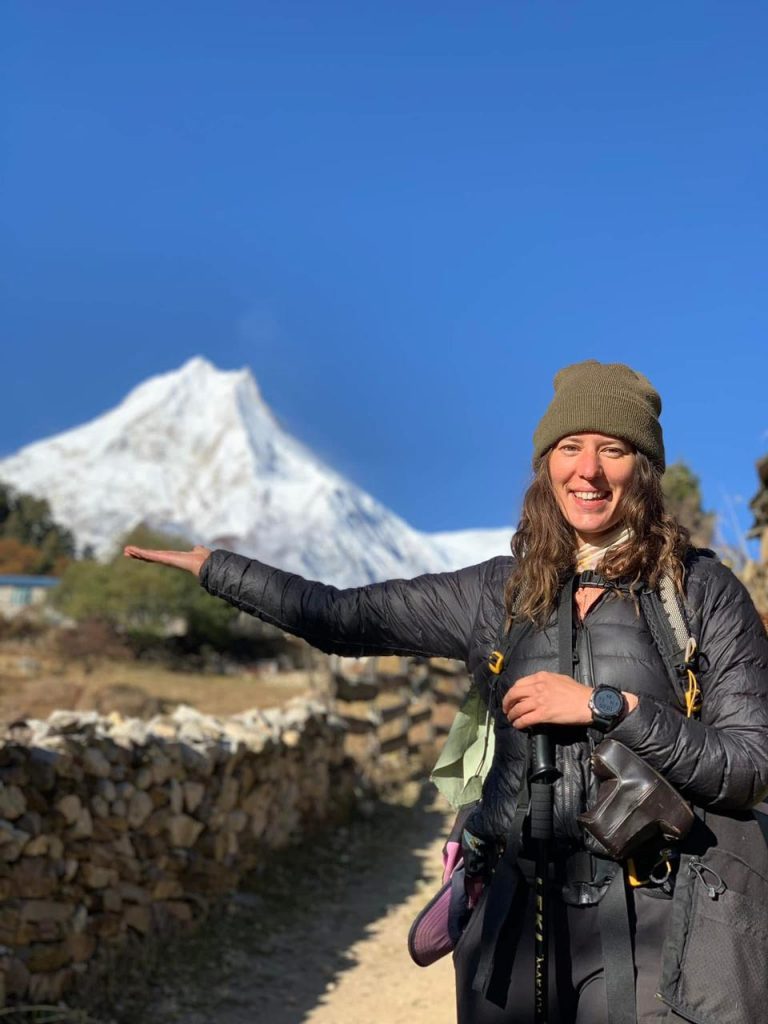
There will be days when you feel euphoric. Standing at the Larkya La looking at Manaslu against a blue sky produces a type of joy that is hard to replicate anywhere else on earth. There will also be days when you feel lonely, physically exhausted, or anxious about the altitude ahead.
Both are normal. Both are part of solo mountain travel. Solo women who trek Manaslu consistently report that the experience builds a kind of quiet confidence that transfers directly back into their ordinary life at home.
A few mental preparation tips from women who have completed the circuit:
- Keep a trek journal. Writing at the end of each day processes the experience and gives you something to read back on hard days.
- Let yourself take photographs and be in them. You are there. Document it.
- Connect with other trekkers at tea house dinner tables. The community of people you meet on the Manaslu trail is one of its great hidden gifts.
- Prepare for phone-free sections. Practice being unreachable before the trek so it does not feel distressing when it happens on trail.
- Give yourself permission to rest. Pushing through exhaustion at altitude is dangerous, not admirable.
16. Frequently Asked Questions
No. Nepal’s government requires all trekkers in the Manaslu restricted area to have a licensed guide. This applies to all nationalities and genders. Permits will not be issued without guide documentation.
Yes. Manaslu Treks and Expedition organizes women-only group departures in October and April each year. These are small groups of 4 to 8 women trekking together with a female lead guide where available. Contact us for current schedule and availability.
It is manageable. Wear your most reliable product the night before the pass crossing. A menstrual cup is ideal for this day as it needs no changing for up to 12 hours. Pack a change of products in your day pack. Many women have crossed the Larkya La during their period without significant issue.
Mostly yes. Dal bhat, pasta, soups, and fried rice are all vegetarian. The lower sections have more meat options. Above Namrung the diet becomes more Tibetan and plant-forward by default. Vegans will find it more challenging but manageable with advance planning and snacks.
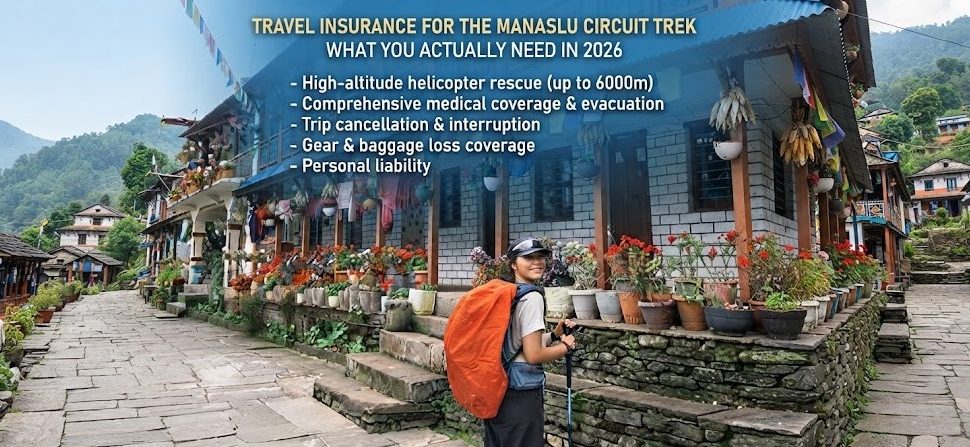
Yes, without exception. Your insurance must specifically cover trekking above 5,000 meters and helicopter evacuation. Read your policy document carefully. World Nomads and True Traveller are popular options among trekkers with good Himalayan coverage. Emergency helicopter rescue from Manaslu can cost USD 3,000 to 7,000.
You do not need to be an athlete. You need to be able to walk 6 to 8 hours a day for 12 consecutive days. Training beforehand with weighted day hikes, stair climbing, and cardiovascular exercise 3 to 4 times a week for at least 2 months makes a significant difference to your enjoyment on trail.
Ready to Plan Your Solo Manaslu Circuit Trek?
Our team at Manaslu Treks and Expedition has guided solo women on this route for over 15 years. We handle all permits, arrange experienced guides, and provide 24-hour support throughout your trek.
Plan with Manaslu Treks Explore Next Trip NepalFinal Thoughts
The Manaslu Circuit Trek is one of Nepal’s greatest trekking experiences and it is absolutely within reach for solo women who prepare thoughtfully. The trail is safe, the communities are welcoming, the sanitary facilities are manageable with the right gear, and the mountain scenery is among the most beautiful on the planet.
Solo women who have walked this circuit describe it as a turning point. Not because it was easy, but because it was genuinely theirs. Every decision, every difficult hour above 4,000 meters, every sunrise view of Manaslu earned through their own effort.
If you are sitting at home wondering whether you are the type of person who does this kind of thing, the answer from thousands of women who asked the same question is simple: you become that person by going.
For specific itinerary planning, permit assistance, or to connect with a female guide for the Manaslu Circuit, visit manaslutreks.com or reach out to our B2B and individual trekking team at nexttripnepal.com.
You May Also Like
- Manaslu Circuit Trek: Full Route and Itinerary Guide
- How Much Does the Manaslu Circuit Trek Cost in 2025?
- All Permits Required for Manaslu Circuit Trek
- Nepal Trekking Packages for Solo Travelers
- Best Time to Do the Manaslu Circuit Trek