September by the Numbers: What Our Bookings Actually Show
Pull up our trip data for the last several Septembers and a clear pattern emerges: cancellations and date-shift requests cluster heavily in the first two weeks of the month, and satisfaction ratings from completed treks jump noticeably for anything departing after the 20th. That is not a coincidence, it reflects a genuine split in what September delivers depending on exactly when you go. Early September still carries real monsoon-retreat uncertainty, rain, cloud, occasional road disruption, while late September increasingly delivers the clear skies and stable trails the Manaslu region is known for in autumn. Trekkers who understand this split before booking, rather than treating “September” as one uniform month, consistently end up happier with the trip they chose.
Yes, and September is a month of two halves. The first two to three weeks are still influenced by the retreating monsoon, so expect a mix of clear spells and rain, similar in character to a calmer version of August. From roughly the third week onward, conditions typically firm up quickly as the monsoon withdraws, marking the start of the autumn trekking season. If you can schedule a departure in late September, you often get autumn-quality weather with a trail that is still far quieter than the October peak. If your only window is early September, treat it with the same flexible, buffer-day mindset as a monsoon-season trek.
Manaslu Tsum Valley Trek in September at a glance
| Factor | September conditions |
|---|---|
| Overall feasibility | Improving steadily through the month |
| Larkya La (5,106 m) | Passable, clearing as the month progresses |
| Daytime temperature, lower valley (700-1,900 m) | 18-24°C |
| Daytime temperature, Samagaun/Samdo (3,530-3,875 m) | 6-13°C |
| Night temperature, above 4,000 m | -8°C to -14°C, more stable late month |
| Rainfall | Common early month, tapering off from around the third week |
| Trail crowding | Low rising to moderate as autumn season begins |
| Teahouse availability | Improving through the month as lodges reopen for autumn |
| Permit cost tier | Higher Sept-Nov rate applies from 1 September |
| Best for | Trekkers who can schedule flexibly and target the back half of the month |
Who should consider trekking in September
September suits trekkers who can build in flexibility around their exact departure date, ideally aiming for the third or fourth week for the best combination of stable weather and a still-quiet trail. It is a harder recommendation for anyone with a fixed early-September date and zero schedule flexibility, since conditions at that point are still transitional.
Reasons to choose September, and reasons to think twice
Why late September works well for many trekkers
- Early access to autumn conditions: late September often delivers clear, stable weather before the October crowds arrive.
- Quieter than October: even in the clearer back half of the month, trail traffic remains lower than the October peak.
- Green, freshly washed landscapes: the valley looks lush following the monsoon.
- First reopening of high-altitude teahouses: lodges above Samagaun begin reopening in preparation for the autumn season.
Why some trekkers should wait for October instead
- Early-month unpredictability: the first two to three weeks can still bring rain and reduced visibility.
- Higher permit rate: September falls into the higher Sept-Nov permit tier, a modest cost increase over the Dec-Aug rate.
- Less predictable trail conditions: mud and residual monsoon damage can still affect sections of the route early in the month.
Weather and conditions by zone in September
Lower Budhi Gandaki: Machha Khola to Deng (700-1,900 m)
Warm, with daytime temperatures around 18-24°C. Rain remains common in the first half of the month, tapering off noticeably by late September.
Tsum Valley: Chumling to Mu Gompa (2,400-3,700 m)
Improving through the month, with daytime temperatures around 12-17°C. Clearer skies become more consistent from the third week onward.
Upper Manaslu: Namrung to Samagaun (2,600-3,500 m)
Transitional early on, with daytime temperatures around 10-15°C, shifting to more reliably clear conditions by late September.
Samagaun and Samdo (3,530-3,875 m)
Daytime highs typically run 6-13°C, improving steadily. Nights remain cold, roughly -6°C to -12°C.
Dharmasala/Larkya Base Camp (4,460 m)
Daytime temperatures around -2°C to 3°C, with conditions becoming more stable and predictable as the month progresses.
Larkya La (5,106 m)
Passable throughout the month, with conditions clearing progressively. Early September can still see snow or reduced visibility carried over from the monsoon; by late September, crossings are typically much more straightforward.
Bhimtang and the descent to Dharapani (1,860-3,720 m)
Green and increasingly dry through the month, with the descent becoming notably more pleasant from late September onward.
September weather at a glance
| Zone | Altitude | Day temp | Night temp | Typical conditions |
|---|---|---|---|---|
| Machha Khola-Deng | 700-1,900 m | 18-24°C | 12-16°C | Rain early month, clearing by late month |
| Tsum Valley | 2,400-3,700 m | 12-17°C | 4-8°C | Improving through the month |
| Namrung-Lho | 2,600-3,180 m | 10-15°C | 2-6°C | Transitional, clearer late month |
| Samagaun/Samdo | 3,530-3,875 m | 6-13°C | -6 to -12°C | Improving, more stable late month |
| Dharmasala | 4,460 m | -2 to 3°C | -10 to -14°C | Clearing through the month |
| Larkya La | 5,106 m | -6 to -1°C | n/a (crossed by day) | Passable, progressively clearer |
| Bhimtang-Dharapani | 1,860-3,720 m | 14-20°C | 4-9°C | Green, drying through the month |
Rainfall, wind and visibility in September
Rainfall is common in the first half of the month, a continuation of the retreating monsoon, and drops off noticeably from around the third week. Wind remains moderate, picking up as usual above 4,000 metres. Visibility follows the same pattern: limited and variable early on, becoming increasingly clear and reliable through the back half of the month.
Daylight hours in September
Daylight runs from roughly 5:50 am to 6:15 pm at the start of the month, narrowing to around 6:00 am to 5:50 pm by month end, giving approximately 12-12.5 hours.
A typical day’s weather pattern in September
Early in the month, the pattern resembles August: a clearer morning followed by building afternoon cloud and possible rain. By late September, this pattern loosens considerably, with many days staying clear well into the afternoon, a clear signal of the shift into autumn.
Trail conditions in September
Trail conditions improve steadily through the month. Early September can still show muddy patches and occasional minor monsoon-related trail damage at lower elevations; by late September, conditions are typically firm and dry across most of the route.
Road access and transport in September
Road access improves through the month as monsoon-related disruption eases. Early-month departures should still budget some contingency time; by late September, road conditions are generally reliable.
Teahouses, rooms and food in September
Teahouse availability improves steadily through September as lodges above Samagaun reopen ahead of the autumn season. Early in the month, expect a similar reduced network to August; by late September, most of the route’s teahouses are back in full operation.
Water, charging and connectivity in September
Water, charging and connectivity improve through the month alongside general trail conditions, with solar charging becoming more reliable as skies clear.
How busy is the trail in September
Low early in the month, rising to moderate by late September as the autumn season begins in earnest. This remains noticeably quieter than the October peak throughout.
Permits and costs for September
September marks the start of the higher September-November permit rate tier. The Manaslu Restricted Area Permit (RAP) costs USD 100 for the first 7 days plus USD 15 per extra day. The Tsum Valley RAP costs USD 40 for the first 7 days plus USD 7 per extra day. MCAP and ACAP remain NPR 3,000 each (foreigner rate) year-round, plus the one-time NPR 1,000 local municipality fee. See our Manaslu trekking permits guide for full current details.
Restricted area rules
The Manaslu and Tsum Valley areas remain restricted, with all permits arranged through a registered trekking agency and checkpoints at Jagat, Philim, Namrung and Samagaun for the main route, plus Lokpa, Chumling and Chekampar for Tsum Valley. As of the 22 March 2026 rule change, one trekker with one licensed guide meets the restricted-area requirement.
Guide and porter requirements
A licensed guide from a registered agency is mandatory. Porters remain optional but popular as the season picks up and pack weights include both transitional and cold-weather layers.
Suggested itinerary for the Manaslu Tsum Valley Trek in September
| Day | Route | Altitude |
|---|---|---|
| 1 | Kathmandu to Machha Khola | 870 m |
| 2 | Machha Khola to Jagat | 1,340 m |
| 3 | Jagat to Lokpa | 2,240 m |
| 4 | Lokpa to Chumling (Tsum Valley) | 2,386 m |
| 5 | Chumling to Chhokangparo | 3,010 m |
| 6 | Chhokangparo to Mu Gompa | 3,700 m |
| 7 | Mu Gompa exploration and acclimatisation | 3,700 m |
| 8 | Mu Gompa to Chhokangparo, descend to Gumba Lungdang or Rachen Gompa | 3,200 m |
| 9 | Descend to Lokpa, continue to Deng | 1,860 m |
| 10 | Deng to Namrung | 2,630 m |
| 11 | Namrung to Lho | 3,180 m |
| 12 | Lho to Samagaun | 3,530 m |
| 13 | Samagaun acclimatisation, side trip to Manaslu Base Camp or Birendra Lake | 3,530 m |
| 14 | Samagaun to Samdo | 3,875 m |
| 15 | Samdo to Dharmasala | 4,460 m |
| 16 | Dharmasala over Larkya La to Bhimtang | 3,720 m |
| 17 | Bhimtang to Tilije/Dharapani | 1,860 m |
| 18 | Dharapani to Kathmandu via Besisahar | 1,400 m |
Early-September departures benefit from an extra buffer day, similar to a monsoon-season itinerary; late-September departures need less contingency, closer to a standard autumn schedule.
Acclimatisation in September
The two dedicated acclimatisation days remain essential at any point in the month. Improving weather late in September does not reduce altitude risk.
Contingency planning and buffer days
Build in an extra buffer day for early-September departures specifically; by late September, standard single buffer day contingency is generally sufficient.
What to pack for September
| Category | September-specific notes |
|---|---|
| Insulation | Mid-weight down jacket for Dharmasala and the pass |
| Rain protection | Still worth carrying for early-month departures |
| Footwear | Waterproof trekking boots, especially useful early in the month |
| Layering system | Transitional layers that work for both possible rain and clearing autumn conditions |
| Sleep system | Three-season sleeping bag generally sufficient, four-season for extra comfort |
| Sun protection | Increasingly important as skies clear later in the month |
Transitional clothing and layering for September
- Base layer: moisture-wicking tops and bottoms suited to both humid early-month days and clearer late-month conditions.
- Mid layer: a fleece or light insulated layer for cooler mornings and evenings.
- Insulated outer layer: a mid-weight down jacket for Dharmasala and the pass.
- Rain shell: still worth packing, particularly for departures in the first half of the month.
Footwear for variable conditions
- Boots: waterproof trekking boots, useful given the potential for both mud and dry trail depending on your dates.
- Gaiters: a sensible addition for early-month departures.
- Socks: a mix of lightweight and midweight options.
Documents, money and extras
- Cash in Nepali rupees: carry enough for the full trek.
- Permit documents and passport copies: carry your original passport and photos.
- Basic first aid and personal medication: including any altitude sickness medication discussed with your doctor.
Health and altitude considerations
Standard altitude precautions apply throughout September regardless of the improving weather: ascend gradually, use the built-in rest days, stay hydrated, and communicate symptoms to your guide early. See our guide on what happens if you get sick on the Manaslu Circuit Trek for more detail.
Safety risks specific to September
Early-month risks resemble August: reduced visibility, possible rain and lingering trail mud. These risks decrease steadily through the month, with late-September conditions closer to a standard, more predictable autumn trek.
Travel insurance
Comprehensive travel insurance covering trekking to at least 6,000 metres, including helicopter evacuation, is essential for this route in any month.
Is September right for beginners, experienced trekkers or solo trekkers
First-time high-altitude trekkers
Late September works reasonably well for a first-timer; early September is better suited to those with prior monsoon-adjacent trekking experience.
Experienced trekkers
Experienced trekkers who want an early taste of autumn conditions with fewer crowds than October will likely enjoy late September specifically.
Solo trekkers
Since the 22 March 2026 rule change, one trekker with one licensed guide meets the restricted-area requirement. See our solo trekking rule update for details.
Guides and porters: what to expect in September
Guides working in September track the monsoon’s retreat closely to advise on timing. Expect a more conservative approach early in the month and a more standard autumn routine by the final week.
Photography in September
September rewards patient photographers: early-month shots can feature dramatic post-rain cloud and light, while late-month conditions offer the clear views typical of the autumn season, often with a greener landscape than October provides.
Festivals and cultural events in September
Local festival timing varies year to year with the lunar calendar; check current dates with your operator, and see our guide to major festivals in the Manaslu region.
Advantages and disadvantages of trekking in September
| Advantages | Disadvantages |
|---|---|
| Early access to autumn conditions late in the month | Early-month weather still transitional and less predictable |
| Quieter than October even in the clear back half | Higher permit rate than the Dec-Aug tier |
| Green, freshly washed landscapes | Teahouse availability still recovering early in the month |
| Teahouses reopening ahead of autumn | Requires schedule flexibility to get the best conditions |
| Good value ahead of the October price and crowd peak | Residual trail mud possible early in the month |
Extra costs to budget for
Budget for the higher Sept-Nov permit rate compared with the Dec-Aug tier, plus standard trek package costs, tips for guide and porter, and consider a buffer day allowance if your departure falls in the first half of the month.
How September compares to August and October
August is wetter and quieter throughout, without September’s late-month clearing trend; see our Manaslu Tsum Valley Trek in August guide. October is the most stable, most popular month of the autumn season, but with significantly higher crowds; see our Manaslu Tsum Valley Trek in October guide. Late September offers a genuine sweet spot: much of October’s reliability with noticeably fewer people.
September month-by-month comparison table
| Month | Feasibility | Larkya La | Crowd level |
|---|---|---|---|
| August | Possible, similar to July | Passable, same caution | Very low |
| September | Improving through the month | Passable, clearing | Low rising to moderate |
| October | Recommended, peak month | Normally stable and passable | High, book ahead |
Alternatives to consider if September doesn’t work for you
If you need guaranteed stable weather and can only travel early in the month, consider shifting to October instead. If you want September’s quieter trail but with less weather uncertainty, aim specifically for the last ten days of the month. For a Tsum Valley-only itinerary without the Larkya La crossing, see our Manaslu Tsum Valley destination.
Final recommendation: should you trek in September
September, and particularly the final ten days, is an excellent time to trek: a genuine sweet spot between the wet solitude of monsoon season and the crowded reliability of October. Build in flexibility around your exact dates if you can, and lean toward the back half of the month for the best combination of stable weather and manageable crowds. Explore our 19-Day Manaslu Circuit with Tsum Valley Trek or the 23-Day Tsum Valley and Manaslu Circuit Trek, or get in touch via our contact to plan your September departure. See our Manaslu Circuit Trek Monsoon Update 2026 for current ground conditions, and our Best Time to Go guide for the full seasonal picture.
Early September: What to Actually Expect
The first two weeks of September closely resemble late August, occasional rain, variable visibility, and a still-recovering trail after the wettest part of the monsoon. Road access between Kathmandu or Soti Khola and the trailhead can still see occasional disruption in this window, though less frequently than deep monsoon months. Larkya La remains passable with an experienced guide, but the same wet-snow, reduced-visibility considerations that apply to July and August carry into early September. Trekkers with genuine flexibility should treat an early-September date the way they would treat August, full wet-weather preparation, buffer days built into the schedule, and realistic expectations about mountain visibility.
Late September: The Turning Point
Somewhere around the third week, the shift becomes unmistakable. Skies clear more consistently, humidity drops, and the trail firms up day by day as accumulated monsoon moisture finally drains and dries. This is the point at which September effectively becomes autumn, temperatures cool into the crisp, comfortable range associated with the region’s peak season, mountain views become far more reliable, and the trail begins filling with the first wave of the year’s autumn trekkers, though numbers remain well below the October peak. Guides who track this transition closely describe late September as offering nearly all of October’s reward with a meaningfully smaller crowd, making it one of the better-kept secrets on this route for trekkers who can time a departure precisely.
Larkya La as September Progresses
The pass crossing tracks the same early-versus-late split as the rest of the month. Early September crossings carry monsoon-tail characteristics, wet snow, potential visibility issues, and the same early-start, conservative-decision approach used through July and August. By late September, crossings increasingly resemble the more stable, predictable conditions typical of October, drier snow underfoot, better visibility, and less day-to-day uncertainty in the crossing decision. Guides watch the same signals discussed for August, consecutive dry days, clearer overnight skies at Dharamsala, wind pattern shifts, to gauge exactly when a given September has made its turn, since the transition date varies by a week or more from year to year.
Rhododendron, Wildlife, and the Post-Monsoon Landscape
September does not offer the spring flower bloom that defines March and April, but it offers something different: a landscape at its most lush and green following two full months of monsoon rain, before autumn’s drier air begins browning the valley floor in October and November. Waterfalls along the lower trail run at some of their fullest levels of the year in early September, and the forest sections retain the dense, layered green of peak monsoon well into the month. Bird and insect activity, elevated since June, begins tapering only gradually, meaning early-to-mid September still offers some of the richest wildlife viewing of the year for trekkers specifically interested in the region’s biodiversity rather than mountain panoramas alone.
Permit Costs and Booking for September
September marks the start of the peak-season Restricted Area Permit rate, USD 100 per week, up from the USD 75 per week that applies December through August, a detail worth factoring into cost comparisons regardless of which half of the month you choose. Full permit details, including MCAP and ACAP fees, are on our Manaslu trekking permit guide. Booking demand rises through the month as awareness of the late-September conditions shift grows among trekkers, so guide and porter allocation should be secured three to four weeks ahead for a late-September date specifically, less urgency applies to early-September bookings given lighter demand for that window.
Field Notes: A Guide’s Perspective on September Departures
Guides consistently name late September as one of their personal favorite windows to work, combining reliable conditions with a trail that has not yet reached October’s full volume. The specific piece of judgment they bring to September groups is flexibility around exact departure timing, several guides on our team actively recommend clients with movable dates shift a planned early-September booking a week or two later if forecasting suggests an earlier-than-usual monsoon retreat that year, since the payoff in trail and pass conditions can be substantial for a relatively small schedule adjustment. This kind of real-time, experience-based recommendation is something only a guide with multiple prior September seasons on this exact route can offer with confidence.
Gear and Preparation Across the September Split
Packing for September genuinely depends on which half of the month your trek falls in, and a one-size-fits-all list undersells the difference. Early-September trekkers should pack as they would for August, full waterproof outer layers, dry-bag lining, leech prevention gear, and flexible scheduling expectations. Late-September trekkers can shift toward a more typical autumn kit, lighter rain protection as a contingency rather than a daily expectation, warmer insulating layers for the cooler, clearer nights that come with the drier air, and standard cold-weather gear for the Larkya La crossing itself. Anyone booking a September date without a firm sense of which half they fall into should prepare for the wetter scenario and be pleasantly surprised if conditions turn out better, rather than the reverse.
Solo Trekkers in September
The March 2026 policy change removing the two-trekker minimum for the Manaslu Restricted Area Permit applies fully in September, a licensed guide alone satisfies the requirement regardless of which half of the month you choose. This is particularly useful for solo trekkers targeting the specific late-September window discussed throughout this guide, since that narrower target date range previously made finding a matching group or travel partner more difficult. Solo trekkers can now lock in a precise late-September date based on their own schedule and, ideally, real-time monsoon-retreat forecasting, without needing to coordinate around a group’s fixed itinerary.
Tsum Valley’s September Transition
Tsum Valley follows the same early-late split as the main Circuit trail, quieter and wetter in the first weeks, firming up and clearing through the back half of the month. What stays constant throughout September is the valley’s relative quiet compared to the Circuit’s main route, since Tsum-specific itineraries remain a smaller share of overall trekker traffic even as October approaches, and Mu Gompa and Rachen Gompa continue to offer a noticeably calmer visitor experience than October or November delivers. Trekkers building a combined Circuit-and-Tsum itinerary for late September get, in effect, the best available combination on this route all year: firming autumn conditions on the main trail and continued relative solitude in the side valley.
Choosing Between September and October
Trekkers weighing September against the safer bet of full autumn should compare this guide directly against our October Manaslu Tsum Valley guide, generally the single most reliable month of the year, or our August guide for context on the deep-monsoon conditions early September can still resemble. For a full stage-by-stage route breakdown independent of season, see our Manaslu Circuit route guide.
Health and Acclimatization Notes for September
The standard gradual-ascent acclimatization schedule through Namrung, Sama Gaon, and Samdo applies identically in September regardless of which half of the month you trek, altitude physiology does not shift with weather patterns. What can differ slightly is exertion management, early-September’s residual humidity places similar hydration demands on trekkers as August, while late-September’s drier, cooler air brings the more familiar autumn consideration of increased fluid loss through drier breathing at altitude combined with reduced thirst sensation in cold conditions. Either way, the built-in rest day at Sama Gaon before continuing toward Samdo remains a fixed, non-negotiable part of every itinerary we run in September, regardless of how favorable conditions look on a given date.
What Photographers Should Know About September Light
September’s changing conditions produce two genuinely distinct photographic opportunities within a single month. Early September offers the dramatic, moody cloud formations and post-rain clarity bursts characteristic of monsoon’s tail end, similar to July and August but with slightly more frequent clearing windows. Late September increasingly offers the crisp, high-contrast light and consistently clear mountain views associated with peak autumn, without October’s haze from increased trail dust and higher trekker volume affecting distant visibility. Photographers with flexible dates who can target the last week of September specifically often describe it as offering some of the clearest, most saturated mountain photography of the entire year, a narrow window before October’s own conditions, while still excellent, become slightly hazier with increased traffic.
How to Decide Which Half of September Suits You
For trekkers with genuinely flexible dates, the decision comes down to priorities. Choose early-to-mid September if budget flexibility matters less than avoiding October’s crowds entirely, if you have wet-weather trekking experience and don’t mind a monsoon-tail experience similar to August, or if that is simply the only window your schedule allows. Choose late September if reliable mountain visibility is a priority, if this is a first high-altitude trek and you want more predictable conditions, or if you can monitor forecasting in the weeks before departure and adjust within a narrow window. Neither choice is objectively wrong, they simply serve different trekkers, and being honest with yourself and your guide about which priorities matter most leads to a better-matched trip either way.
Booking Timeline Recommendations by Half of Month
Early-September bookings can generally be finalized two to three weeks ahead, demand is lighter and guide availability is rarely a constraint during this window. Late-September bookings benefit from earlier commitment, four to five weeks ahead where possible, both because demand rises through the month as trekkers increasingly target the favorable back-half conditions, and because it gives more room to shift a booking a few days later if forecasting suggests the monsoon retreat is running behind its typical pattern that particular year. We work with clients throughout the lead-up to a September departure to fine-tune exact dates based on current conditions reporting, rather than locking in a rigid date months in advance and hoping for the best.
What Returning Clients Say About Timing Their September Trek
Clients who successfully targeted late September, particularly those who kept a few days of scheduling flexibility around their planned departure, consistently describe the trip as feeling like “getting October before everyone else arrives.” Several have specifically credited a guide’s mid-month recommendation to shift their departure a few days later, based on that year’s actual conditions reporting rather than a generic calendar rule, with meaningfully improving their trip. This kind of real-time adjustment is only possible with genuine local knowledge and a guiding relationship built on honest, current information rather than a fixed sales pitch, which is exactly the approach we take with every September booking on this route.
Insurance and Practical Preparation Notes for September
Regardless of which half of September you trek, comprehensive travel insurance covering trekking above 5,000 meters and emergency helicopter evacuation remains essential, Larkya La’s 5,106-meter elevation applies the same coverage requirement in September as any other month. Early-September trekkers should also carry the same wet-weather contingency mindset around road access covered in our August guide, since residual monsoon effects on the jeep track have not fully cleared this early in the month. Late-September trekkers can generally relax that specific concern, though standard trip insurance and a realistic buffer day before any onward international flight remain sound practice for any high-altitude trek regardless of season.
The Bottom Line for a September Booking Decision
September rewards trekkers who plan around its split character rather than treating it as a single uniform window. Early-September dates work best for flexible, experienced trekkers comfortable with monsoon-tail conditions and lower costs in trade for less certainty. Late-September dates work best for trekkers who want autumn’s reliability with a meaningfully smaller crowd than October delivers, provided they can commit with reasonable lead time and, ideally, some flexibility to shift a few days based on that year’s specific conditions. Talk to a guide with genuine multi-year September experience on this route before locking in an exact date, the difference between a well-timed and poorly-timed September booking is larger than for almost any other month on the calendar.
A Note on Dashain Preparations Beginning in September
While Dashain itself, Nepal’s largest festival, falls in late October in 2026, its preparations visibly begin during September in villages along the trail, families along the route start preparing home brews, cleaning and repainting houses, and planning travel back to home villages for the celebration. Trekkers passing through in September, especially the latter half, sometimes catch the early signs of this build-up, an added layer of cultural texture even though the festival’s peak days fall outside the month. Guides can point out these preparations and explain their significance, adding useful cultural context that a trekker passing through independently would likely miss entirely.
Costs Snapshot for a September Departure
Beyond the USD 100 per week Restricted Area Permit rate, a September trekker should budget similarly to an October or November trip, MCAP and ACAP fees at NPR 3,000 each, standard teahouse and guide costs consistent across the autumn season, and modestly higher demand for shared transport as the month progresses, particularly in its final week as trekkers converge ahead of the October peak. Early-September dates can still capture some of the lighter-demand pricing typical of the monsoon months on transport specifically, even though permit costs themselves have already shifted to the peak-season rate at the start of the month.
Frequently asked questions
Is September a good month for the Manaslu Tsum Valley Trek?
Yes, particularly the final ten days, which often deliver autumn-quality conditions with fewer crowds than October.
Is early September still monsoon season?
Effectively yes, the first two to three weeks are transitional and can still bring rain, similar to a calmer version of August.
Is Larkya La passable in September?
Yes, with conditions clearing progressively through the month; late September is typically the more reliable window.
How busy is the trail in September?
Low early in the month, rising to moderate by late September as the autumn season begins.
What permits do I need for September?
Manaslu RAP, Tsum Valley RAP, MCAP, ACAP and a local municipality fee, at the higher September-November rate tier.
Can I trek solo in September?
Yes, since the 22 March 2026 rule change, one trekker with one licensed guide meets the restricted-area requirement.
Should I trek in early or late September?
Late September is generally preferable for more stable, predictable conditions; early September requires more flexibility and buffer time.
Are teahouses open in September?
Availability improves through the month as lodges reopen ahead of the autumn season; expect a fuller network by late September.
How many days does the trek take in September?
A typical itinerary runs 17-19 days including acclimatisation, with an extra buffer day recommended for early-month departures.
Is altitude sickness more likely in September?
Not inherently, it depends on pace and acclimatisation rather than the calendar.
Is September better than October?
Late September rivals October’s reliability with fewer crowds; October offers the most consistently stable weather of the year but at its busiest.
Do I need rain gear in September?
Worth carrying for early-month departures; less critical by late September as conditions dry out.
Is travel insurance required?
Yes, comprehensive insurance covering trekking to at least 6,000 metres with helicopter evacuation is essential.
How cold does it get at Larkya La in September?
Daytime crossing temperatures typically range from -6°C to -1°C.
Is September a good time for photography?
Yes, particularly late in the month, offering clear autumn-style views with greener landscapes than October.
Why do permit costs increase in September?
September marks the start of the higher-demand September-November tier under the government’s seasonal permit structure, unrelated to trail conditions themselves.
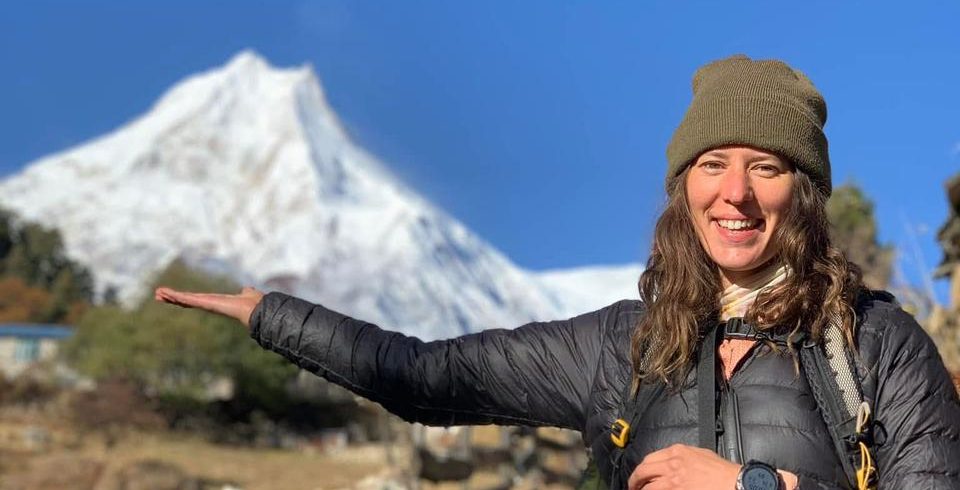
The 19-Day Manaslu Circuit with Tsum Valley Trek is one of Nepal’s most rewarding long-distance Himalayan journeys, combining remote valleys, ancient…