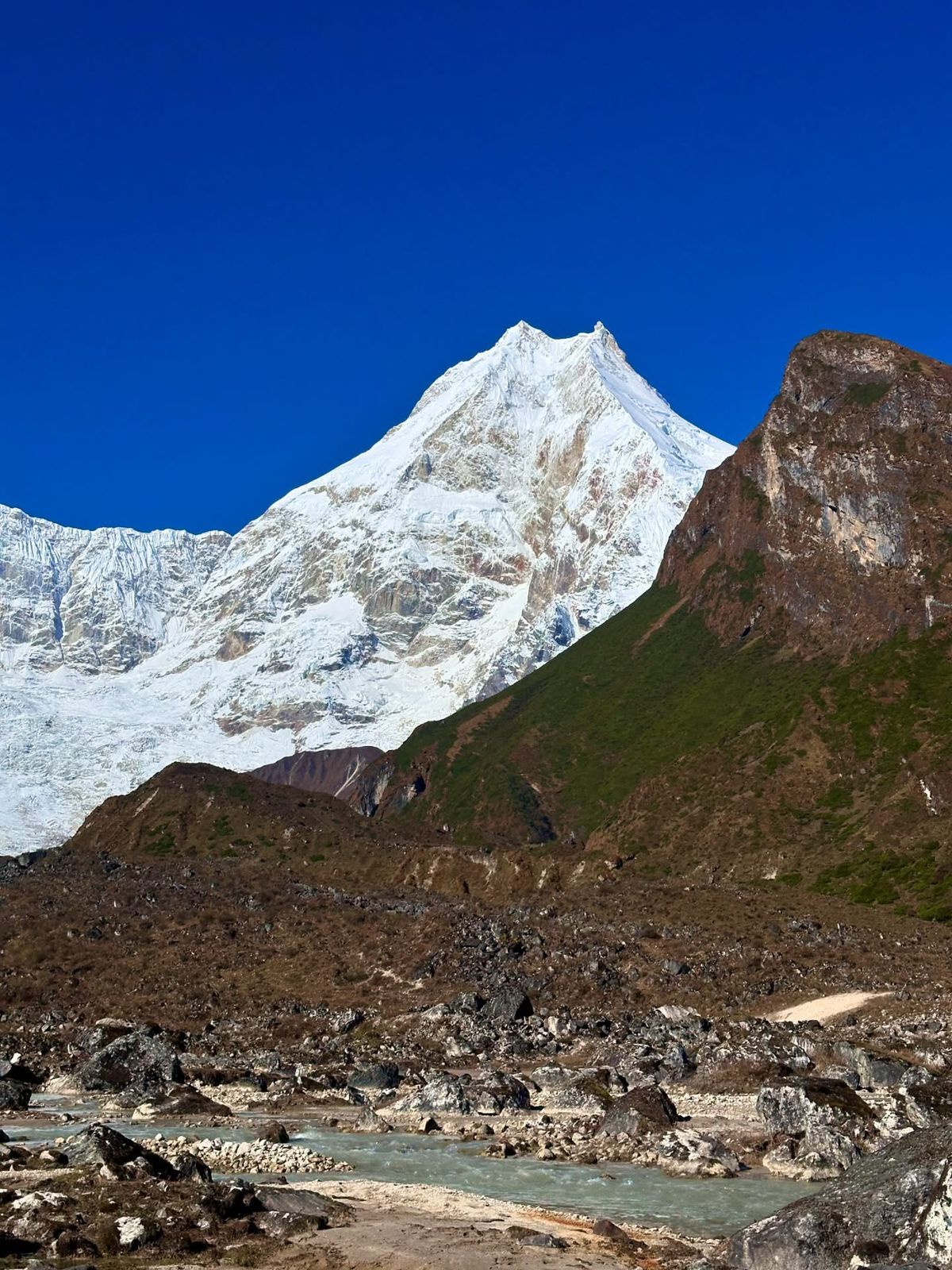
Saka Dawa in Tsum Valley: The Month Locals Call Sacred
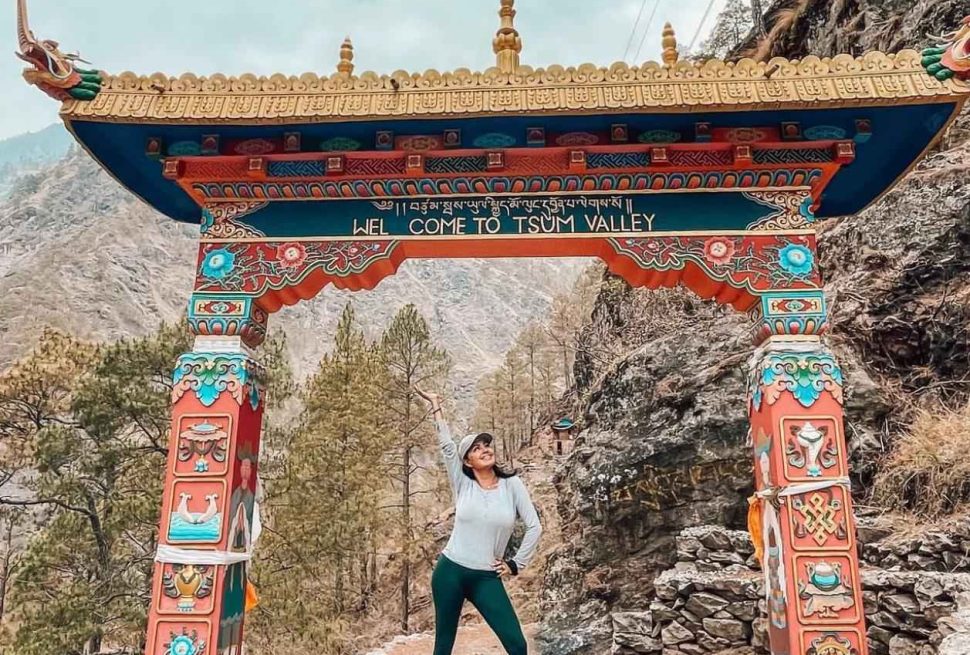
Ask a Tsum Valley local what May means and the answer rarely starts with weather, it starts with Saka Dawa, the holiest month on the Tibetan Buddhist calendar, when merit earned through prayer, pilgrimage, and good deeds is said to multiply many times over. In 2026 the month-long observance runs from roughly 16 May through 14 June, with the peak full-moon day falling on 31 May. Rachen Gompa and Mu Gompa, the two great nunnery and monastery sites deep in upper Tsum, fill with maroon-robed nuns and monks, butter lamps burn through the night, and pilgrims from Chhekampar, Chhule, and Nile walk up to pay respects. Trekking through Tsum Valley during this window means sharing the trail with people for whom the journey is devotional rather than recreational, and it is, without exaggeration, one of the more moving cultural experiences available on this route at any time of year.
Yes, and May is a strong choice, essentially April’s warmer, slightly less crowded sibling, with one important caveat: it is the last reliable window before the monsoon arrives in early-to-mid June. Early and mid-May generally offer excellent conditions, warm temperatures, a normally passable Larkya La, and a trail that is a touch quieter than the April peak. By late May, pre-monsoon cloud build-up and occasional afternoon thunderstorms become more common, and humidity rises noticeably in the lower valley. If you can trek in the first three weeks of May, conditions are very good. If your only available window is the final week, be prepared for more variable weather and build in extra flexibility.
Manaslu Tsum Valley Trek in May at a glance
| Factor | May conditions |
|---|---|
| Overall feasibility | Recommended, particularly in the first three weeks |
| Larkya La (5,106 m) | Normally passable, watch for pre-monsoon storm activity later in the month |
| Daytime temperature, lower valley (700-1,900 m) | 24-30°C |
| Daytime temperature, Samagaun/Samdo (3,500-3,900 m) | 10-16°C |
| Night temperature, above 4,000 m | -6°C to -12°C |
| Rainfall/snowfall | Rare early month, increasing chance of afternoon showers and thunderstorms by late May |
| Trail crowding | Moderate, quieter than April |
| Teahouse availability | Good throughout the month |
| Permit cost tier | Dec-Aug lower rate still applies |
| Best for | Trekkers who want April-like conditions with slightly fewer people, ideally scheduled in the first three weeks |
Who should consider trekking in May
May suits trekkers who want warm, reliable conditions similar to April but prefer a marginally quieter trail, and who can prioritise dates in the first half or middle of the month rather than the final week. It is a reasonable choice for first-timers and experienced trekkers alike, though anyone who is particularly weather-sensitive or has zero schedule flexibility should aim for early May specifically rather than risk the pre-monsoon transition at month’s end.
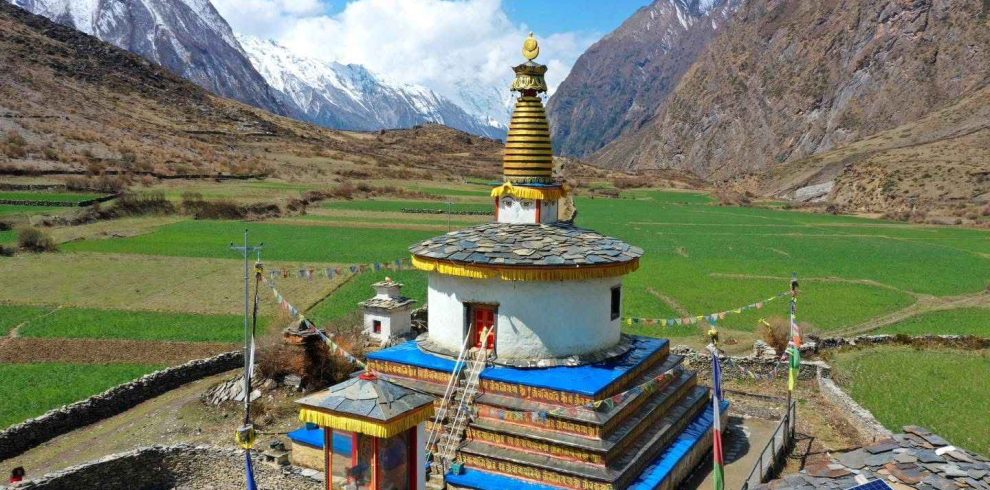
The 23-day Tsum Valley & Manaslu Circuit Trek combines breathtaking Himalayan landscapes with the preserved Tibetan Buddhist culture of a…
Reasons to choose May, and reasons to think twice
Why May works well for many trekkers
- Warm, comfortable temperatures: across the whole route, from the lower valley through to the pass.
- Slightly quieter than April: a real but modest reduction in trail traffic and easier teahouse availability.
- Reliable Larkya La conditions: especially in the first three weeks of the month.
- Lush, green scenery: lower valleys are at their most vibrant as spring growth continues.
Why some trekkers should aim for April instead
- Late-month weather risk: the final week of May can bring pre-monsoon storms and rising humidity, less predictable than April.
- Shorter safety margin: less buffer before the monsoon arrives if your itinerary runs long or gets delayed.
- Fading rhododendron season: peak blooms are mostly over by May, particularly at lower elevations.
Weather and conditions by zone in May
Lower Budhi Gandaki: Machha Khola to Deng (700-1,900 m)
Hot by regional standards, with daytime temperatures often 24-30°C and rising humidity as the month progresses. Early starts help you beat the heat of the day.
Tsum Valley: Chumling to Mu Gompa (2,400-3,700 m)
Warm and green, with daytime temperatures around 16-22°C at Chumling and Chhokangparo. Afternoon cloud build-up becomes more noticeable as May progresses.
Upper Manaslu: Namrung to Samagaun (2,600-3,500 m)
Comfortable trekking weather, generally 14-20°C during the day, with clear mornings and a greater chance of afternoon cloud than in April.
Samagaun and Samdo (3,530-3,875 m)
Daytime highs typically run 10-16°C, still comfortable, with nights around -4°C to -10°C, milder than April.
Dharmasala/Larkya Base Camp (4,460 m)
Daytime temperatures around 2-7°C, nights roughly -8°C to -12°C. Afternoon cloud and occasional light precipitation become more likely as the month goes on.
Larkya La (5,106 m)
Generally passable and well-trodden through most of May, particularly in the first three weeks. By late May, pre-monsoon storm systems can bring snow or reduce visibility at the pass with less warning than earlier in the season, so guides pay closer attention to forecasts during this period.
Bhimtang and the descent to Dharapani (1,860-3,720 m)
Warm and green, with lush vegetation typical of late spring. Afternoon showers become slightly more common on the descent by month’s end.
May weather at a glance
| Zone | Altitude | Day temp | Night temp | Typical conditions |
|---|---|---|---|---|
| Machha Khola-Deng | 700-1,900 m | 24-30°C | 14-18°C | Hot, humid, occasional late-month showers |
| Tsum Valley | 2,400-3,700 m | 16-22°C | 6-10°C | Warm, green, increasing afternoon cloud |
| Namrung-Lho | 2,600-3,180 m | 14-20°C | 4-8°C | Comfortable, clear mornings |
| Samagaun/Samdo | 3,530-3,875 m | 10-16°C | -4 to -10°C | Mild, generally stable |
| Dharmasala | 4,460 m | 2-7°C | -8 to -12°C | Cooler, occasional afternoon cloud |
| Larkya La | 5,106 m | -3 to 2°C | n/a (crossed by day) | Normally passable, storm risk rises late month |
| Bhimtang-Dharapani | 1,860-3,720 m | 18-25°C | 6-12°C | Warm and lush |
Rainfall, snowfall, wind and visibility in May
Early May is generally dry with excellent visibility. By mid-to-late May, afternoon cloud build-up becomes more frequent, occasionally developing into short thunderstorms, particularly at lower and mid elevations. Snowfall at altitude is uncommon but not impossible during a late-month storm system. Wind patterns follow the usual pattern of increasing exposure above 4,000 metres. Visibility remains generally good through most of the month but can drop quickly during an afternoon storm.
Daylight hours in May
Daylight runs from roughly 5:15 am to 7:00 pm, around 13.5 hours, among the longest of the year. This gives ample time for the day’s walk even with a later-than-usual start.
A typical day’s weather pattern in May
Clear mornings are the norm, with cloud building through the afternoon, particularly from mid-May onward, and a chance of a short thunderstorm in the lower valley by late afternoon. This is precisely why guides favour early starts and aim to reach the day’s teahouse before early-to-mid afternoon throughout May.
Trail conditions in May
Trails are generally dry and clear throughout the route, with any residual winter snow near the pass fully consolidated or melted at lower sections by this point. Late-month rain can create brief muddy patches at lower elevations, but conditions remain generally favourable for walking throughout May.
Road access and transport in May
Road access is generally reliable through most of May, though late-month rains can occasionally cause brief delays on the more exposed sections of the jeep track, a preview of the more serious monsoon-season disruption to come in June.
Teahouses, rooms and food in May
Teahouses are well-stocked and fully operational throughout May, including at Samdo and Dharmasala. Availability is generally easier than in peak April, though popular villages can still see busy periods, particularly early in the month.
Water, charging and connectivity in May
Water, charging and connectivity follow the standard seasonal pattern: reliable lower down, less consistent above Samagaun. Solar charging remains generally effective given the clear mornings typical of this month.
How busy is the trail in May
Moderate. Quieter than April but still an active trekking month, particularly in the first half. Crowd levels taper off somewhat by late May as the pre-monsoon transition approaches and some trekkers shift their plans earlier in the season.
Permits and costs for May
May falls within the December-August lower permit rate tier. The Manaslu Restricted Area Permit (RAP) costs USD 75 for the first 7 days plus USD 10 per extra day. The Tsum Valley RAP costs USD 30 for the first 7 days plus USD 7 per extra day. MCAP and ACAP are each NPR 3,000 (foreigner rate), plus the one-time NPR 1,000 local municipality fee. See our Manaslu trekking permits guide for full current details.
Restricted area rules
The Manaslu and Tsum Valley areas remain restricted, and all permits must be arranged through a registered trekking agency. Checkpoints are at Jagat, Philim, Namrung and Samagaun for the main route, and Lokpa, Chumling and Chekampar for Tsum Valley, plus an ACAP check near Dharapani. As of the 22 March 2026 rule change, one trekker with one licensed guide meets the restricted-area requirement.
Guide and porter requirements
A licensed guide from a registered agency is mandatory. Porters remain optional but popular given typical pack weights; many trekkers share one porter between two people.
Suggested itinerary for the Manaslu Tsum Valley Trek in May
| Day | Route | Altitude |
|---|---|---|
| 1 | Kathmandu to Machha Khola | 870 m |
| 2 | Machha Khola to Jagat | 1,340 m |
| 3 | Jagat to Lokpa | 2,240 m |
| 4 | Lokpa to Chumling (Tsum Valley) | 2,386 m |
| 5 | Chumling to Chhokangparo | 3,010 m |
| 6 | Chhokangparo to Mu Gompa | 3,700 m |
| 7 | Mu Gompa exploration and acclimatisation | 3,700 m |
| 8 | Mu Gompa to Chhokangparo, descend to Gumba Lungdang or Rachen Gompa | 3,200 m |
| 9 | Descend to Lokpa, continue to Deng | 1,860 m |
| 10 | Deng to Namrung | 2,630 m |
| 11 | Namrung to Lho | 3,180 m |
| 12 | Lho to Samagaun | 3,530 m |
| 13 | Samagaun acclimatisation, side trip to Manaslu Base Camp or Birendra Lake | 3,530 m |
| 14 | Samagaun to Samdo | 3,875 m |
| 15 | Samdo to Dharmasala | 4,460 m |
| 16 | Dharmasala over Larkya La to Bhimtang | 3,720 m |
| 17 | Bhimtang to Tilije/Dharapani | 1,860 m |
| 18 | Dharapani to Kathmandu via Besisahar | 1,400 m |
Acclimatisation in May
The two dedicated acclimatisation days, at Mu Gompa and Samagaun, remain essential regardless of the warmer temperatures. Altitude risk is unrelated to how mild the weather feels.
Contingency planning and buffer days
A spare day or two is worth building in, particularly if your trek falls in the final week of May, to allow flexibility around any pre-monsoon storm activity near the pass.
What to pack for May
| Category | May-specific notes |
|---|---|
| Insulation | Light-to-mid-weight down jacket sufficient for Dharmasala and the pass |
| Legwear | Standard trekking trousers, breathable options preferred for the warm lower valley |
| Footwear | Waterproof trekking boots; microspikes rarely needed but worth having as insurance |
| Sleep system | Three-season sleeping bag generally sufficient |
| Sun protection | High priority throughout, strong UV at altitude |
| Rain gear | Moves up the priority list, especially for late-May departures |
Clothing and layering system for May
- Base layer: lightweight, breathable tops and bottoms for the warm lower sections.
- Mid layer: a light fleece for cooler mornings and evenings at altitude.
- Insulated outer layer: a light-to-mid-weight down jacket for Dharmasala and the pass.
- Trekking trousers: breathable, quick-drying trousers, useful given the heat lower down.
- Hardshell layer: a packable waterproof jacket, more important this month than in April given rising storm risk.
Rain protection for late May departures
- Waterproof jacket and trousers: pack a genuine waterproof shell, not just a light showerproof layer, if trekking in the final week of May.
- Pack cover or dry bags: recommended to protect gear during afternoon showers.
- Quick-dry clothing: useful given the higher humidity this month.
Footwear and traction
- Boots: waterproof trekking boots remain the standard recommendation.
- Traction aids: microspikes are rarely necessary in May but light enough to carry as a precaution.
- Socks: lightweight trekking socks for lower elevations, warmer pairs for the pass day.
Sun and altitude protection
- Sunglasses: essential given strong UV exposure at altitude.
- Sunscreen and lip balm with SPF: reapply regularly, particularly above the treeline.
- Sun hat: useful throughout, especially in the hot lower valley sections.
Documents, money and extras
- Cash in Nepali rupees: carry enough for the full trek.
- Permit documents and passport copies: carry your original passport and photos.
- Basic first aid and personal medication: including any altitude sickness medication discussed with your doctor.
Health and altitude considerations
Standard altitude precautions apply regardless of the warm weather lower down: ascend gradually, use the built-in rest days, stay hydrated, and communicate symptoms to your guide early. See our guide on what happens if you get sick on the Manaslu Circuit Trek for more detail.
The 23-day Tsum Valley & Manaslu Circuit Trek combines breathtaking Himalayan landscapes with the preserved Tibetan Buddhist culture of a…
Safety risks specific to May
The main May-specific risk is the growing chance of afternoon thunderstorms and reduced visibility, particularly in the final week of the month, which can affect the pass crossing with less advance warning than in earlier months. Heat and hydration management in the lower valley is also worth taking seriously given the higher daytime temperatures.
Travel insurance
Comprehensive travel insurance covering trekking to at least 6,000 metres, including helicopter evacuation, is essential for this route in any month.
Is May right for beginners, experienced trekkers or solo trekkers
First-time high-altitude trekkers
May works well for first-timers, particularly if scheduled in the first three weeks of the month for the most predictable conditions.
Experienced trekkers
Experienced trekkers will appreciate the slightly quieter trail compared with April, without a major trade-off in conditions if timed well.
Solo trekkers
Since the 22 March 2026 rule change, one trekker with one licensed guide meets the restricted-area requirement. See our solo trekking rule update for details.
Guides and porters: what to expect in May
Guides remain in solid demand through May, particularly the first half of the month. Expect close monitoring of forecasts as the month progresses, particularly for departures scheduled in the final week.
Photography in May
May offers lush, green valleys and generally clear mountain views, particularly in the first three weeks. Afternoon cloud can create dramatic light for photography, though it also means planning shoots for morning hours when skies are clearest.
Festivals and cultural events in May
Buddha Jayanti (Buddha’s birthday) typically falls in May and can be a meaningful time to be in the Tsum Valley’s monasteries, depending on the lunar calendar date each year. Check current dates with your operator, and see our guide to major festivals in the Manaslu region.
Advantages and disadvantages of trekking in May
| Advantages | Disadvantages |
|---|---|
| Warm temperatures throughout the route | Rising storm risk toward the end of the month |
| Quieter than April | Higher humidity and heat in the lower valley |
| Lush, green scenery | Narrowing safety margin before monsoon onset |
| Reliable pass crossing, especially early month | Fading rhododendron season compared with April |
| Long daylight hours | Less predictable in the final week than earlier in May |
Extra costs to budget for
Budget for standard trek package costs and permits, tips for guides and porters, hot showers and charging fees (typically NPR 200-500 per use), and consider a slightly earlier May date if you want to minimise storm-related schedule risk without paying any premium associated with April’s peak-season demand.
How May compares to April and June
April offers slightly more reliable weather and the rhododendron bloom, at the cost of larger crowds; see our Manaslu Tsum Valley Trek in April guide. June marks the transition into monsoon, with rising rain, leeches at lower elevations and reduced crowds; see our Manaslu Tsum Valley Trek in June guide. May, particularly the first three weeks, sits comfortably between the two: nearly as reliable as April with a bit more breathing room on the trail.
May month-by-month comparison table
| Month | Feasibility | Larkya La | Crowd level |
|---|---|---|---|
| April | Recommended, one of the best months | Normally passable with standard gear | Moderate to high |
| May | Recommended, narrowing window | Normally passable, watch pre-monsoon storms | Moderate |
| June | Possible for prepared trekkers, transitional | Passable, snow/sleet possible | Low |
Alternatives to consider if May doesn’t work for you
If your only available dates fall in late May and you want to minimise storm risk, consider shifting earlier into April, or later into the post-monsoon autumn window from late September onward. For a Tsum Valley-only itinerary without the Larkya La crossing, see our Manaslu Tsum Valley destination.
Final recommendation: should you trek in May
May, particularly the first three weeks, is an excellent choice: warm, reliable, and a touch quieter than April. If your dates are flexible, aim for early or mid-May rather than the final week to maximise your safety margin before the monsoon arrives. Explore our 19-Day Manaslu Circuit with Tsum Valley Trek or the 23-Day Tsum Valley and Manaslu Circuit Trek, or get in touch via our contact to plan your May departure. For the full seasonal picture, see our Best Time to Go guide.
Monsoon Onset: Reading the Signs in Late May
The monsoon does not arrive in Nepal on a single date, it builds over roughly two to three weeks, and late May is when the earliest signals show up on this route. Watch for afternoon cloud that builds earlier in the day than it did in April, cumulus stacking up over the ridgelines by late morning rather than early afternoon, and a shift in the wind pattern in Sama Gaon and Samdo from the clean, dry mornings typical of peak spring to a heavier, more humid feel even before any rain falls. Local teahouse owners in the upper valley track this closely because it affects everything from drying laundry to firewood supply, and most can tell you within a few days how close the real monsoon is by reading the cloud buildup pattern over Manaslu itself.
None of this makes late May a bad time to trek, the route remains fully walkable and Larkya La is normally still open, but it does mean packing a genuinely waterproof shell rather than a shower-resistant one, and building one or two buffer days into the itinerary in case a system moves through earlier than the calendar average suggests. Trekkers who depart in the first half of May essentially avoid this consideration altogether.
Rhododendron’s Last Blooms and the Green-Up of the Valley Floor
By May the rhododendron bloom that defines March and April has largely finished at the lower and mid elevations, Machha Khola, Jagat, Deng, but it persists longer at higher elevation, and forest around Namrung and Lihi frequently still holds color into the first two weeks of May, particularly the deep red varieties that bloom later than the pink and white ones lower down. What replaces the flower show is a different kind of visual change, the entire valley floor turns a deeper, more saturated green as pre-monsoon moisture wakes up the undergrowth, terraced fields around Philim and Deng are actively being planted, and the contrast between green terraces and the still-white summits above becomes one of the more photogenic combinations of the trekking calendar.
Bird activity also picks up noticeably in May, this is nesting season for many Himalayan species, and the forest sections between Jagat and Namrung are consistently active with movement and calls in the early morning hours, more so than in the quieter winter months.
Field Notes: A Guide’s Perspective on May Departures
Guides who have run this route across many Mays tend to describe it as the “sweet spot before the switch,” warm enough that down jackets stay in the bag most days below Samdo, dry enough that the trail is still in its best condition, and quiet enough, especially after the third week of April crowds thin out, that teahouse dining rooms in Samagaun and Bimthang feel unhurried rather than packed. The specific piece of local knowledge worth passing on is elevation-dependent timing: guides watch Larkya La conditions daily through May via other guide groups coming from the opposite direction, radio and word-of-mouth exchange at Dharamsala is still the most reliable real-time source of pass conditions, more current than any app-based forecast.
The other thing experienced guides flag for May specifically is hydration and sun exposure, longer daylight hours and clearer skies mean more UV exposure at altitude than trekkers expect, and the combination of warmth and altitude leads some trekkers to under-drink because they don’t feel the same cold-weather thirst cues they’d get in October or November. We brief every May group on this specifically before the Samdo to Dharamsala stage.
What to Pack Differently for a May Departure
May’s gear list differs meaningfully from an October or November packing list, and treating it as identical is one of the more common mistakes we see. Base layers can be lighter, a mid-weight merino top is usually sufficient below Samdo rather than the heavier options needed in shoulder season, and the heaviest down jacket in a typical kit sees use only at Dharamsala and the pass crossing itself, not at lower elevations. What should not be reduced is rain protection, a genuinely waterproof, not merely water-resistant, jacket and a pack cover or dry-bag liner are worth the weight given the late-month monsoon risk discussed above. Sun protection also deserves more attention in May than in cooler months, a wide-brim hat, high-SPF sunscreen reapplied through the day, and sunglasses rated for high-altitude UV are not optional extras.
Footwear can stay the same as any other season, a broken-in waterproof boot with ankle support remains the standard recommendation regardless of month, since terrain difficulty, not temperature, is what drives that choice.
Booking Windows and Permit Timing for May
Permit costs for May fall under the lower Manaslu Restricted Area Permit tier that applies December through August, USD 75 per week rather than the September to November peak-season rate of USD 100 per week, which makes May one of the more cost-efficient months to trek this route from a permits perspective while still enjoying near-peak trail conditions. Full current figures, including MCAP and ACAP fees, are on our Manaslu trekking permit guide. Because permits require a licensed guide and cannot be processed same-day, we recommend booking a May departure at least three to four weeks ahead to allow paperwork processing time, slightly less urgency than April’s peak-season crush but still enough lead time to matter.
Water Levels and River Crossings on the Lower Trail in May
The Budhi Gandaki, the river the lower trail follows and crosses repeatedly between Machha Khola and Deng, changes character noticeably through May as snowmelt from higher elevations combines with the season’s first rain to raise water levels above their dry-season winter baseline. The suspension bridges used on this route are built for exactly this, they are not seasonal structures, but trekkers should expect a visibly more powerful river below them in late May compared to a December or January crossing of the same bridge. This is a visual and psychological factor more than a safety one for anyone staying on the maintained trail and bridges, but it does mean guides pay closer attention to any sections where the trail runs close to the riverbank, since minor path erosion from rising water is more common in this transitional period than in the depths of the dry season.
Health and Acclimatization Considerations Specific to May
Acclimatization physiology does not change with season, the same gradual ascent profile through Namrung, Sama Gaon, and Samdo before the Larkya La push applies in May exactly as it does in October. What does change is how trekkers manage exertion in warmer temperatures, dehydration compounds altitude symptoms, and the combination of a warm, sun-exposed climb through the lower valley followed by a cold, exposed pass crossing a few days later means trekkers need to layer and hydrate deliberately rather than relying on how they felt on a cooler-season trek. We build the same number of acclimatization days into May itineraries as any other month, the standard rest day at Sama Gaon before continuing to Samdo is non-negotiable regardless of how good conditions look, altitude does not care what the weather is doing.
Why Some Trekkers Deliberately Choose May Over October
October gets more attention as Manaslu’s peak season, but a meaningful share of returning trekkers and experienced guides actually prefer May, and the reasons are consistent across conversations we have had with past clients. First, the greener valley floor and the tail end of the rhododendron bloom offer a different, arguably more varied, visual experience than October’s browner post-monsoon landscape. Second, teahouses and trails are measurably quieter in early-to-mid May than at October’s peak, without sacrificing much in terms of pass safety or trail conditions. Third, longer daylight hours in May mean more flexible daily start times and less pressure to be moving before dawn on long stages. The trade-off, the late-month monsoon risk discussed earlier, is real but manageable with a departure in the first three weeks of the month, which is why we steer flexible-date clients toward early-to-mid May specifically rather than the back end of it.
The 23-day Tsum Valley & Manaslu Circuit Trek combines breathtaking Himalayan landscapes with the preserved Tibetan Buddhist culture of a…
A Day in Rachen Gompa During Saka Dawa
For trekkers who time a Tsum Valley extension to overlap with Saka Dawa, a visit to Rachen Gompa during this period looks noticeably different from a normal-season visit. The nunnery, home to dozens of resident nuns, holds extended prayer sessions through the day, the courtyard fills with butter lamp offerings, and it is common to see families who have walked in from Chhekampar and further afield specifically for the occasion, some carrying offerings of grain, butter, and khata scarves. Photography is generally welcomed outside active ceremonies but guides will advise on when to hold back, certain prayer sessions are considered inappropriate to photograph, and respecting that guidance matters more here than at almost any other stop on the route. Trekkers who build in a full rest day at Rachen Gompa or nearby Chhekampar during peak Saka Dawa dates, rather than passing through on a tight schedule, consistently describe it as one of the most memorable single days of the entire trip.
Comparing May Departure Costs Against Peak Autumn
Beyond the lower USD 75 per week Restricted Area Permit rate discussed earlier, May trekkers typically see modest savings across several other line items compared to October. Domestic flight and jeep transport between Kathmandu and the trailhead is less contested in May, which occasionally translates into more available seats at standard rather than surge pricing. Teahouse rates themselves are largely fixed regardless of season on this route, but negotiating flexibility on things like wifi access or hot shower charges tends to be slightly easier when a lodge is not fully booked, which is more often the case in May outside the immediate Saka Dawa window. None of this makes May dramatically cheaper than October, permits and core logistics costs are the same order of magnitude either month, but for budget-conscious trekkers choosing between two otherwise-comparable windows, May carries a small consistent edge.
Related Routes and Preparation Resources
Trekkers weighing a May departure against other months on this same route may also find it useful to compare against our April Manaslu Tsum Valley guide for a direct look at the two best-adjacent months, or our full Manaslu Circuit route breakdown for a stage-by-stage itinerary that applies regardless of which month you choose. Anyone still deciding on Larkya La specifically, rather than the trek as a whole, should also see our dedicated guide to the pass itself, which covers technical conditions across every month of the year in more depth than a single-month article can.
Solo Trekkers and the May Guide Requirement
Since the 22 March 2026 policy change, solo trekkers no longer need a second travel companion to obtain the Manaslu Restricted Area Permit, a licensed guide alone now satisfies the requirement. This matters more in May than it might in peak October, since solo travelers previously had to actively search for a trekking partner or join a group specifically to meet the old two-person minimum, often constraining them to fixed departure dates. Now a solo trekker can lock in any May date that suits their schedule, pair with one of our licensed guides, and depart without needing to coordinate around anyone else’s calendar, a meaningful piece of flexibility for anyone trying to time a trip around the Saka Dawa window specifically.
Frequently asked questions
Is May a good month for the Manaslu Tsum Valley Trek?
Yes, particularly the first three weeks, which offer conditions close to April with a slightly quieter trail.
Is Larkya La reliably open in May?
Generally yes, especially early and mid-month. Late May carries more storm risk than earlier in the month.
Should I trek in early or late May?
Early to mid-May is preferable for the most predictable conditions; late May carries higher pre-monsoon storm risk.
How busy is the trail in May?
Moderate, quieter than April but still an active month, especially in the first half.
What permits do I need for May?
Manaslu RAP, Tsum Valley RAP, MCAP, ACAP and a local municipality fee, at the December-August lower rate tier.
Can I trek solo in May?
Yes, since the 22 March 2026 rule change, one trekker with one licensed guide meets the restricted-area requirement.
Is it hot in the lower valley in May?
Yes, daytime temperatures often reach 24-30°C around Machha Khola and Jagat, with rising humidity as the month progresses.
Do I need rain gear in May?
A packable waterproof shell is a sensible addition, particularly for departures in the final week of the month.
How many days does the trek take in May?
A typical itinerary runs 17-19 days including acclimatisation and a buffer day.
Is altitude sickness more likely in May?
Not inherently, it depends on pace and acclimatisation rather than the calendar.
Is May better than April?
They’re close: April has the rhododendron bloom and slightly more predictable weather; May is a touch quieter and just as warm, with more storm risk late in the month.
Do I need trekking poles in May?
Yes, recommended for stability, particularly on the pass crossing.
Is travel insurance required?
Yes, comprehensive insurance covering trekking to at least 6,000 metres with helicopter evacuation is essential.
How cold does it get at Larkya La in May?
Daytime crossing temperatures typically range from -3°C to 2°C.
Is May a good time for photography?
Yes, particularly in the first three weeks, with lush green valleys and generally clear morning skies.
What happens if a storm hits during the trek?
Your guide will adjust the schedule and, if necessary, wait out the weather using buffer days before attempting the pass crossing.
The 23-day Tsum Valley & Manaslu Circuit Trek combines breathtaking Himalayan landscapes with the preserved Tibetan Buddhist culture of a…