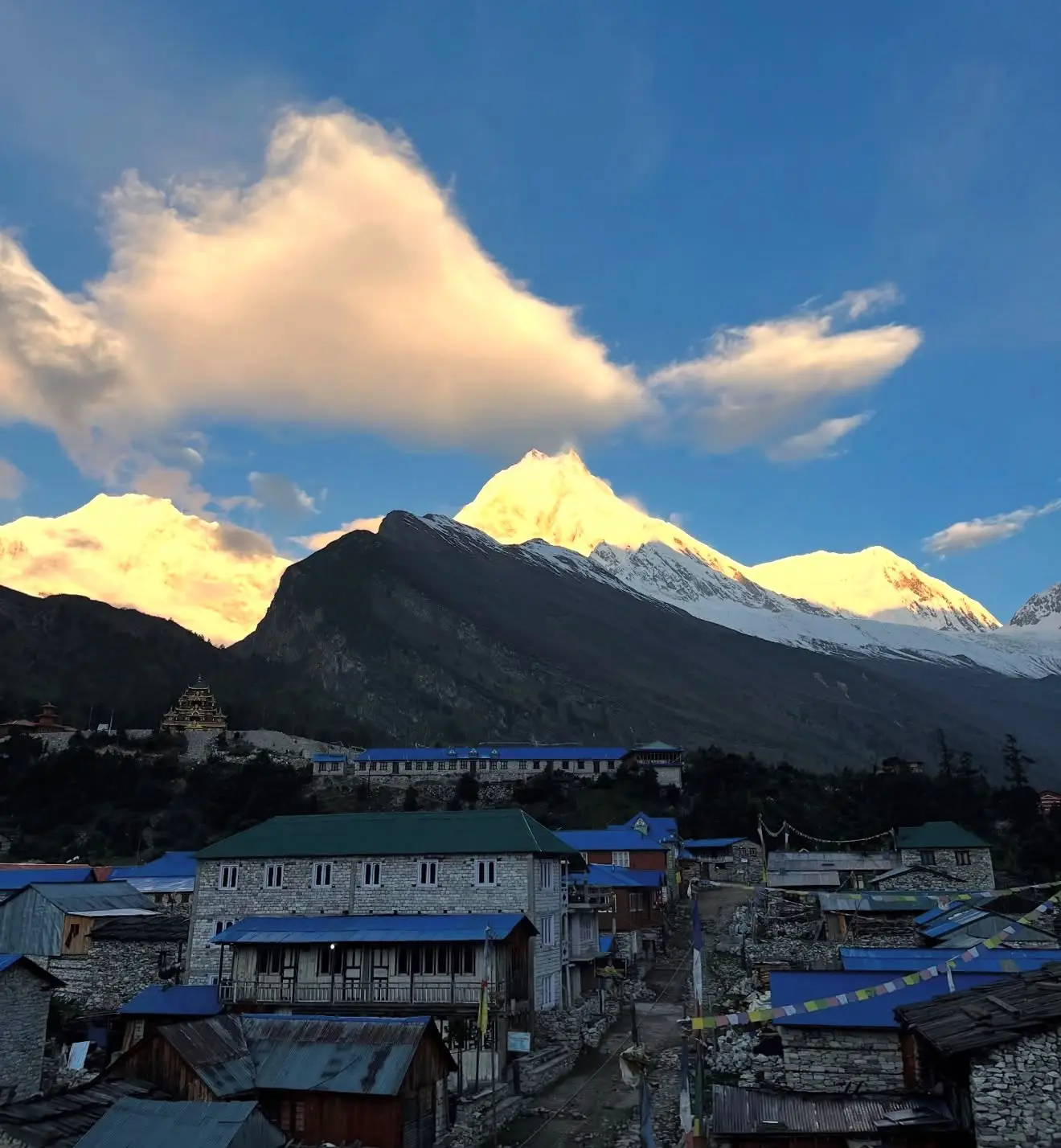
Before You Book a July Departure, Read This Honestly
We would rather talk a mismatched client out of a July booking than take the money and have a miserable client on the trail, so here is the direct version. July is the hardest month of the year to trek this route comfortably, full stop. If you are picturing clear mountain panoramas, dry trails, and a relaxed pace, July will not deliver that, and no amount of positive marketing changes the physical reality of monsoon rainfall on this route. What July does deliver, for the right trekker, is something genuinely different: near-total solitude on a trail that is normally busy, a valley transformed by rain into its most dramatically green state, and a level of access to Sherpa and Tsum-bo hospitality that only happens when a lodge has one group instead of fifteen. Whether that trade is worth it depends entirely on who you are as a trekker, and this guide is written to help you answer that honestly before you commit.
Yes, but July is peak monsoon and this is the most demanding month of the year to attempt this route. Rain is a near-daily feature at lower and mid elevations, teahouse numbers along the upper route drop to their lowest point of the year, and trail traffic is minimal, our own operational data from July 2026 recorded roughly 7-10 trekkers per day on the route, compared with 50-100 or more during the autumn peak. Larkya La remains passable for prepared groups with an experienced guide, but wet snow and reduced visibility make the crossing more demanding than at any other time except deep winter. July suits experienced, well-prepared trekkers who specifically want solitude and are comfortable with sustained wet conditions. It is not recommended for first-time trekkers or anyone who wants a predictable, comfortable experience.
Manaslu Tsum Valley Trek in July at a glance
| Factor | July conditions |
|---|---|
| Overall feasibility | Possible, not recommended for first-time trekkers |
| Larkya La (5,106 m) | Passable but demanding, wet snow at times, guide judgment critical |
| Daytime temperature, lower valley (700-1,900 m) | 15-20°C |
| Daytime temperature, Samagaun/Samdo (3,530-3,875 m) | 8-15°C |
| Night temperature, above 4,000 m | 5-10°C day, below freezing at night |
| Rainfall | Heaviest of the year, near-daily at lower and mid elevations |
| Trail crowding | Very low, operator data: roughly 7-10 trekkers/day on the route |
| Teahouse availability (July 2026 operator count) | Samagaun 5 open, Samdo 4 open, Dharmasala 1 open, Bhimtang 3 open |
| Permit cost tier | Dec-Aug lower rate still applies |
| Best for | Experienced, well-prepared trekkers specifically seeking solitude |
Who should consider trekking in July
July suits experienced trekkers who have handled wet, low-visibility conditions before, who are comfortable with a reduced teahouse network and a more conservative, flexible itinerary, and whose main priority is solitude rather than mountain views. It is not a good fit for first-time high-altitude trekkers, anyone with a fixed non-negotiable schedule, or anyone whose primary goal is photography of the peaks.
Reasons to choose July, and reasons to think twice
Why a small number of trekkers choose July
- Maximum solitude: the quietest trail conditions of the entire year, based on our own July 2026 operator data.
- Dramatic, lush scenery: waterfalls swell and the lower valley is at its greenest.
- A genuine off-the-beaten-path experience: for trekkers who have done the route before and want something different.
Why most trekkers should choose a different month
- Heavy, near-daily rain: the defining feature of the month at lower and mid elevations.
- Lowest teahouse count of the year: just a handful of lodges operating above Samagaun, per our July 2026 count.
- Demanding pass crossing: wet snow and reduced visibility at Larkya La make this the most technically challenging non-winter month.
- Road disruption: the highest risk of the year for delays on the jeep track to and from the trailhead.
Weather and conditions by zone in July
Lower Budhi Gandaki: Machha Khola to Deng (700-1,900 m)
Daytime temperatures typically run 15-20°C, with heavy, near-daily rainfall. Leeches are common in this section, and trail conditions are consistently muddy.
Tsum Valley: Chumling to Mu Gompa (2,400-3,700 m)
Tsum Valley’s partial rain shadow gives it somewhat drier conditions than the main valley, though rain and cloud remain frequent. Daytime temperatures range roughly 12-18°C.
Upper Manaslu: Namrung to Samagaun (2,600-3,500 m)
Wetter and cloudier than in June, with daytime temperatures around 10-16°C. Views of the peaks are infrequent, mostly glimpsed in brief clearings.
Samagaun and Samdo (3,530-3,875 m)
Our July 2026 operator data recorded 5 teahouses open at Samagaun and 4 at Samdo. Daytime highs run roughly 8-15°C, with regular rain or drizzle and nights dipping toward freezing.
Dharmasala/Larkya Base Camp (4,460 m)
Only 1 teahouse was recorded open here in our July 2026 count, so this section requires careful logistics planning with your operator. Daytime temperatures hover around 5-10°C, with wet snow possible.
Larkya La (5,106 m)
Passable but demanding in July. Wet, heavy snow and reduced visibility are common, and the crossing requires an experienced guide making real-time judgment calls. This is not a month to attempt with an inexperienced or under-resourced operator.
Bhimtang and the descent to Dharapani (1,860-3,720 m)
Our data recorded 3 teahouses open at Bhimtang in July 2026. The descent is lush and green, with regular rain continuing most of the way down.
July weather at a glance
| Zone | Altitude | Day temp | Night temp | Typical conditions |
|---|---|---|---|---|
| Machha Khola-Deng | 700-1,900 m | 15-20°C | 13-17°C | Heavy, near-daily rain, leeches |
| Tsum Valley | 2,400-3,700 m | 12-18°C | 6-10°C | Partly rain-shadowed, still frequently wet |
| Namrung-Lho | 2,600-3,180 m | 10-16°C | 4-8°C | Wet, cloudy, infrequent views |
| Samagaun/Samdo | 3,530-3,875 m | 8-15°C | 0-5°C | Regular rain/drizzle, 5/4 teahouses open |
| Dharmasala | 4,460 m | 5-10°C | near freezing | Wet snow possible, only 1 teahouse open |
| Larkya La | 5,106 m | 0-5°C | n/a (crossed by day) | Passable but demanding, wet snow |
| Bhimtang-Dharapani | 1,860-3,720 m | 15-20°C | 8-12°C | Lush, regular rain, 3 teahouses open at Bhimtang |
Rainfall, wind and visibility in July
July is the wettest month of the year on this route. Rain falls most days, often heaviest in the afternoon and overnight, though mornings can still offer brief clear windows. At altitude, precipitation frequently falls as wet, heavy snow rather than rain. Wind is generally moderate but can pick up during storm activity. Visibility is the most limited of any month, with clear mountain views the exception rather than the rule.
Daylight hours in July
Daylight runs from roughly 5:15 am to 7:05 pm, around 13.75 hours, though usable clear daylight is often less given persistent cloud cover.
A typical day’s weather pattern in July
Mornings occasionally offer a brief window of clearer weather before cloud and rain build through the day. Guides in July plan around this pattern closely, often starting earlier than usual and aiming to reach shelter well before the heaviest afternoon rain.
Trail conditions in July
Trail conditions are the most challenging of the year: consistently muddy and slippery at lower and mid elevations, with the risk of minor landslides on exposed sections after heavy rain. Above Samagaun, wet snow can make the approach to Dharmasala and the pass itself notably harder going than in the drier months.
Road access and transport in July
Road access carries the highest disruption risk of the year in July. Landslides and rain-related delays on the jeep track are a real possibility, and a reliable operator will build meaningful contingency time into your arrival and departure schedule.
Teahouses, rooms and food in July
Based on our own July 2026 count, teahouse numbers above Samagaun are at their lowest point of the year: 5 open at Samagaun, 4 at Samdo, just 1 at Dharmasala, and 3 at Bhimtang. This means less flexibility if your preferred lodge is closed, and your guide’s local knowledge becomes especially important for planning each day’s stop. Food variety is reduced compared with peak season, given the difficulty of resupply during heavy rain.
Water, charging and connectivity in July
Water, charging and connectivity are all somewhat less reliable in July than in drier months, given reduced teahouse operations and cloud cover affecting solar charging. A quality power bank and a reliable water purification method are worth prioritising this month specifically.
How busy is the trail in July
Extremely low. Our July 2026 operational data recorded approximately 7-10 trekkers per day on the route, compared with 50-100 or more during the October autumn peak. This is the quietest month of the year alongside August.
Permits and costs for July
July falls within the December-August lower permit rate tier. The Manaslu Restricted Area Permit (RAP) costs USD 75 for the first 7 days plus USD 10 per extra day. The Tsum Valley RAP costs USD 30 for the first 7 days plus USD 7 per extra day. MCAP and ACAP are each NPR 3,000 (foreigner rate), plus the one-time NPR 1,000 local municipality fee. See our Manaslu trekking permits guide for full current details.
Restricted area rules
The Manaslu and Tsum Valley areas remain restricted, with all permits arranged through a registered trekking agency and checkpoints at Jagat, Philim, Namrung and Samagaun for the main route, plus Lokpa, Chumling and Chekampar for Tsum Valley. As of the 22 March 2026 rule change, one trekker with one licensed guide meets the restricted-area requirement.
Guide and porter requirements
A licensed guide from a registered agency is mandatory, and in July an experienced guide is important given the demanding conditions at the pass and reduced teahouse network. Porters are optional but strongly recommended given the extra weight of monsoon gear.
Suggested itinerary for the Manaslu Tsum Valley Trek in July
| Day | Route | Altitude |
|---|---|---|
| 1 | Kathmandu to Machha Khola | 870 m |
| 2 | Machha Khola to Jagat | 1,340 m |
| 3 | Jagat to Lokpa | 2,240 m |
| 4 | Lokpa to Chumling (Tsum Valley) | 2,386 m |
| 5 | Chumling to Chhokangparo | 3,010 m |
| 6 | Chhokangparo to Mu Gompa | 3,700 m |
| 7 | Mu Gompa exploration and acclimatisation | 3,700 m |
| 8 | Mu Gompa to Chhokangparo, descend to Gumba Lungdang or Rachen Gompa | 3,200 m |
| 9 | Descend to Lokpa, continue to Deng | 1,860 m |
| 10 | Deng to Namrung | 2,630 m |
| 11 | Namrung to Lho | 3,180 m |
| 12 | Lho to Samagaun | 3,530 m |
| 13 | Samagaun acclimatisation, side trip to Manaslu Base Camp or Birendra Lake | 3,530 m |
| 14 | Samagaun to Samdo | 3,875 m |
| 15 | Samdo to Dharmasala | 4,460 m |
| 16 | Dharmasala over Larkya La to Bhimtang | 3,720 m |
| 17 | Bhimtang to Tilije/Dharapani | 1,860 m |
| 18 | Dharapani to Kathmandu via Besisahar | 1,400 m |
Given reduced teahouse availability and demanding pass conditions, most reputable operators build at least two buffer days into a July itinerary, more than in any other non-winter month.
Acclimatisation in July
The two dedicated acclimatisation days remain essential and should not be skipped even with limited teahouse choices, altitude risk does not decrease because conditions are wet.
Contingency planning and buffer days
July is the month where buffer days matter most outside of winter. Budget for at least two spare days across the itinerary to absorb potential road delays and weather-related pass delays. Confirm with your operator exactly how this is priced and handled.
What to pack for July
| Category | July-specific notes |
|---|---|
| Rain protection | Full, genuine waterproof jacket and trousers, the single most important item this month |
| Insulation | Mid-weight down jacket for Dharmasala and the pass |
| Footwear | Waterproof trekking boots with strong grip; gaiters recommended throughout |
| Leech protection | Leech socks and salt or repellent for the lower forested sections |
| Pack protection | Full waterproofing for pack contents: dry bags for electronics, documents and sleeping bag |
| Spare clothing | More spare dry layers and socks than usual, given the sustained wet conditions |
Full monsoon rain kit
- Waterproof jacket and trousers: fully seam-sealed, high-quality rain gear is essential, not optional, in July.
- Pack cover plus internal dry bags: double protection for electronics, documents and your sleeping bag.
- Umbrella: some trekkers find a compact umbrella useful on lower sections during steady rain.
- Quick-dry clothing: synthetic or merino layers throughout, cotton is best avoided entirely this month.
Footwear and leech protection
- Boots: waterproof trekking boots with strong tread for consistently muddy trail.
- Leech socks or gaiters: worn through the lower forested sections.
- Salt or leech repellent: a simple, effective traditional solution.
- Camp shoes: a dry pair of sandals or shoes to change into each evening.
Cold and wet-weather gear for the pass
- Down jacket: mid-weight, ideally with a waterproof outer shell or worn under a hardshell.
- Gloves: a waterproof outer pair over a warm liner for the pass crossing.
- Trekking poles: essential for stability on wet, sometimes slushy trail.
Documents, money and extras
- Cash in Nepali rupees: carry enough for the full trek, kept in a waterproof pouch.
- Permit documents and passport copies: kept dry in a sealed bag alongside your original passport.
- Basic first aid and personal medication: including any altitude sickness medication discussed with your doctor.
Health and altitude considerations
Standard altitude precautions apply regardless of season. Wet conditions add extra importance to foot care and staying warm and dry to avoid hypothermia risk at altitude. See our guide on what happens if you get sick on the Manaslu Circuit Trek for more detail.
Safety risks specific to July
The main July-specific risks are reduced visibility and wet snow at Larkya La, muddy and occasionally unstable trail sections at lower elevations, minor landslide risk on the road, and a much thinner teahouse safety net above Samagaun. All are manageable with an experienced guide and a well-prepared itinerary, but they make July more demanding than any other non-winter month.
Travel insurance
Comprehensive travel insurance covering trekking to at least 6,000 metres, including helicopter evacuation, is essential in any month and particularly worth confirming for weather and road-delay coverage in July.
Is July right for beginners, experienced trekkers or solo trekkers
First-time high-altitude trekkers
July is not recommended for a first high-altitude trek. April or October offer a far gentler, more predictable introduction.
Experienced trekkers
This is squarely an experienced trekker’s month: those who have handled wet, low-visibility conditions before and specifically want solitude will find July rewarding, with the right preparation and operator.
Solo trekkers
Since the 22 March 2026 rule change, one trekker with one licensed guide meets the restricted-area requirement. Given how quiet July is, this rule change is especially relevant this month. See our solo trekking rule update for details.
Guides and porters: what to expect in July
Guides working in July are typically among the most experienced on the team, given the judgment calls required at the pass and the reduced teahouse network. Expect a conservative, safety-first approach to daily planning.
Photography in July
July offers dramatic, moody conditions: mist rolling through the valley, swollen waterfalls, and vividly green landscapes. Clear mountain views are rare, so this month suits photographers interested in atmosphere over classic peak shots.
Festivals and cultural events in July
Local festival timing shifts year to year with the lunar calendar; check current dates with your operator. See our guide to major festivals in the Manaslu region for a general overview.
Advantages and disadvantages of trekking in July
| Advantages | Disadvantages |
|---|---|
| Maximum solitude, roughly 7-10 trekkers/day on the route | Heaviest rainfall of the year |
| Lush, dramatic green scenery | Lowest teahouse count of the year above Samagaun |
| Genuine off-the-beaten-path experience | Demanding, wet-snow pass crossing |
| Potential for more flexible/lower rates | Highest road disruption risk of the year |
| Unique atmospheric photography opportunities | Not suitable for first-time high-altitude trekkers |
Extra costs to budget for
Budget for standard trek costs and permits, plus at least two buffer days for weather and road delays, quality rain gear if you do not already own it, and tips for your guide and porter, whose experience and judgment matter more than usual this month.
How July compares to June and August
June is drier, particularly in the first half, and sees somewhat more teahouses open; see our Manaslu Tsum Valley Trek in June guide. August is similar to July in most respects, with the first signs of drying appearing toward month end; see our Manaslu Tsum Valley Trek in August guide. July sits at the wettest point of the year, between these two.
July month-by-month comparison table
| Month | Feasibility | Larkya La | Crowd level |
|---|---|---|---|
| June | Possible for prepared trekkers, transitional | Passable, snow/sleet possible | Low |
| July | Possible, not recommended for first-timers | Passable but demanding, wet snow at times | Very low, ~7-10/day |
| August | Possible, similar to July | Passable, same caution | Very low |
Alternatives to consider if July doesn’t work for you
If you want a quiet trail without peak-monsoon intensity, consider late September or early June instead. If you specifically want reliable weather and don’t mind more company on the trail, April or October are the better fit. For a Tsum Valley-only itinerary without the Larkya La crossing, see our Manaslu Tsum Valley destination.
Final recommendation: should you trek in July
July is for a specific kind of trekker: experienced, well-prepared, and seeking solitude over comfort or guaranteed views. With the right guide and a properly equipped itinerary that includes real buffer time, it is a viable and even rewarding month. For most trekkers, though, April, May, September or October will offer a considerably easier and more predictable experience. Explore our 19-Day Manaslu Circuit with Tsum Valley Trek or the 23-Day Tsum Valley and Manaslu Circuit Trek, or get in touch via our contact to discuss whether a July departure suits your experience level. See our Manaslu Circuit Trek Monsoon Update 2026 for the latest ground conditions, and our Best Time to Go guide for the full seasonal picture.
Who Should Actually Book July, and Who Shouldn’t
Based on years of running trips through this window, the trekkers who come away genuinely satisfied with a July departure share a few traits: prior high-altitude trekking experience, ideally in wet or variable conditions elsewhere, realistic expectations set before arrival rather than hoped for during the trek, quality waterproof gear they already own and trust rather than gear bought last-minute, and a personality that finds solitude and unpredictability appealing rather than stressful. Trekkers who should choose a different month include first-timers to high-altitude trekking, anyone whose trip is built around photography of clear mountain views, families with young children, and anyone with a tight, inflexible return-flight schedule, since July is the month most likely to require a weather-driven itinerary adjustment.
Larkya La in July: What Actually Happens at the Pass
At 5,106 meters, July precipitation at the pass falls predominantly as snow, and fresh accumulation combined with reduced visibility from cloud is the defining hazard of a July crossing, more so than the rain that dominates lower elevations. Crossings still happen regularly in July, but timing becomes more conservative: guides push start times earlier, sometimes well before first light, to cross before daytime cloud buildup reduces visibility to near zero, and the decision to attempt the crossing on any given day is made fresh each morning based on overnight snowfall and visibility rather than following a fixed schedule. Multi-day weather holds at Dharamsala, waiting an extra day or two for a safe window, are more common in July than in any month besides the depths of winter, and any itinerary booked for July should build at least one full buffer day into the schedule specifically for this possibility.
The Solitude Trade-Off: What Empty Teahouses Actually Mean
Our July 2026 operational data of 7-10 trekkers per day, against 50-100 or more in October, translates into a genuinely different social experience on the trail. Dining rooms that seat thirty people in autumn might hold a single group of four in July, and lodge owners, freed from the pressure of turning tables for a full house, often have far more time and inclination for conversation, stories, and genuine hospitality than during the rush of peak season. Several long-time guides on this route describe July as the month when they hear the best stories from teahouse owners, family history, valley folklore, personal accounts of how the region has changed, simply because there is time and space for those conversations to happen. The flip side is fewer resupply options if a specific teahouse happens to be closed for the season, so route planning with a guide who knows exactly which lodges stay open through July matters more than in busier months.
Gear That Actually Matters for a July Trek
A July kit list should be built around one priority above all others: staying dry, or at minimum, having a reliable way to get dry again each evening. A genuinely waterproof jacket and trousers rated for sustained rain, not just showers, dry-bag lining inside the pack for every item rather than trusting a pack cover alone, two full changes of dry clothing sealed away and reserved strictly for evenings, and quick-dry base layers that do not stay saturated for hours are the highest-priority items. Footwear deserves specific attention in July, a well broken-in, genuinely waterproof boot is essential, and many experienced July trekkers carry a second, lighter pair of camp shoes specifically so wet trekking boots can be left to dry overnight rather than put back on wet the next morning. Leech prevention, gaiters and treated socks, matters as much or more in July as in June, since this is peak leech season in the lower forested sections.
Trail Conditions and Landslide Management in Peak Monsoon
July carries the highest landslide risk of the year on the exposed lower sections between Machha Khola and Jagat, saturated slopes after weeks of continuous rain are inherently less stable, and this is the month our guides check trail conditions most rigorously before and during any departure. In practice this means daily communication with other guides and lodge owners moving through the same sections, willingness to build in reroutes or short waits if a section looks compromised, and, in rare cases, adjusting a day’s itinerary on short notice. This is not a reason to avoid July outright, the route remains genuinely passable with proper guiding, but it is a reason July departures should only run with guides who have specific, current, in-season experience on this exact trail rather than general high-altitude guiding experience alone.
Permit Costs and Booking for July
July falls under the lower Restricted Area Permit tier, USD 75 per week, the same rate that applies from December through August. Full details are on our Manaslu trekking permit guide. Guide and porter availability is never a constraint in July, this is the quietest month for bookings, but we still recommend at least two weeks’ lead time to allow for a genuinely honest pre-trip conversation about conditions and expectations, which matters more for July than for any other month on this route.
Health, Hydration, and Practical Wellbeing in Monsoon Conditions
Sustained wet conditions bring specific health considerations beyond the leech and landslide topics already covered. Foot care becomes a daily discipline rather than an occasional concern, changing into completely dry socks every evening without exception, applying foot powder or anti-chafe balm proactively, and inspecting feet each night for early blister or fungal signs prevents small issues from becoming trip-ending ones. Appetite and hydration can both dip in humid, overcast conditions the way they can in June, and we brief July groups specifically on maintaining consistent food and water intake regardless of how thirsty or hungry they feel, since the body’s normal signals are less reliable in this climate than in cool, dry autumn air. Rain gear management, actually drying out wet gear overnight using teahouse space near the kitchen stove rather than leaving it to sit wet, is a small habit that significantly improves comfort over a multi-day July trek.
Field Notes: A Guide’s Perspective on Running July Trips
Guides who specifically enjoy leading July departures describe a different kind of professional satisfaction than in busier months, more direct problem-solving, closer client relationships built over a genuinely shared challenge, and a slower, more attentive pace that autumn’s high-volume schedule rarely allows. The specific skill July demands of a guide is judgment under uncertainty, reading a pass crossing decision on imperfect information, managing client morale through several consecutive wet days, and knowing exactly which lodges, trail sections, and contingency routes remain reliable when conditions are at their most difficult. We assign only guides with multiple prior July seasons on this exact route to July bookings, general high-altitude experience elsewhere is not considered sufficient for this specific month, given how much of the job in July is local, season-specific judgment rather than textbook guiding.
If July Doesn’t Sound Right for You
If reading this honestly has you leaning toward a different month, our October guide covers the most reliable conditions of the year, and our April guide covers the best of the spring window. For trekkers still drawn to July’s solitude but wanting to understand the full route regardless of month, our Manaslu Circuit route guide breaks down every stage in detail.
Solo Trekkers in July
The March 2026 change removing the two-trekker minimum for the Manaslu Restricted Area Permit applies to July exactly as it does year-round, a licensed guide alone satisfies the requirement. This is arguably most useful in July of all months, since low overall trekker numbers make it genuinely difficult to find a spontaneous trekking partner or an existing group to join during this window. A solo trekker set on a July date can now book independently with a single licensed guide without needing anyone else’s schedule to align, which matches well with the kind of self-directed, solitude-seeking traveler July tends to suit best in the first place.
What Genuinely Surprises First-Time July Trekkers
Clients who complete a July trek despite the challenges consistently mention a few things that surprised them in hindsight. The rain is rarely constant all-day downpour, more often it comes in defined windows, heavy morning or afternoon showers with genuine dry, even bright, periods in between, rather than the unbroken grey they expected. The cloud that obscures peaks also produces some of the most dramatic, fast-changing mountain views of the year during brief clearing windows, when cloud tears apart to reveal a summit for a few minutes before closing again. And the quiet is more profound than most trekkers anticipate, several return clients specifically describe the sound of the Budhi Gandaki river and birdsong replacing the general trail chatter of busier seasons as one of the most memorable parts of a July trip, once they adjust their expectations away from what a typical dry-season trek looks like.
Tsum Valley’s Monastery Life During the Monsoon Retreat
July falls within the traditional monastic rains retreat observed at monasteries across the Tibetan Buddhist world, including Rachen Gompa and Mu Gompa in upper Tsum, a period when resident monks and nuns commit to an intensive period of study and meditation rather than travel. Trekkers passing through during this period will find the monasteries quieter in terms of visitor-facing activity but often witness a more authentic, undisturbed version of daily monastic life than during busier tourist seasons, morning and evening prayer sessions proceeding exactly as they would with no visitors present at all. Guides familiar with the retreat calendar can help arrange respectful visits that do not disrupt this period, and trekkers interested in Tibetan Buddhist practice specifically often find July’s quieter monastery atmosphere more meaningful than a peak-season visit surrounded by other trekking groups.
The Bottom Line for a July Booking Decision
If you have read all of the above and July still sounds appealing rather than daunting, you are likely exactly the trekker this month suits. Come with proper waterproof gear, realistic expectations about pace and visibility, built-in schedule flexibility for a possible weather hold, and a guide with genuine July-specific experience on this route, and you will very likely come away with a trip that feels more personal and more memorable than a standard autumn departure, for entirely different reasons than the ones that usually sell people on this trek. If any of the honest caveats in this guide gave you pause, that is useful information too, and we would rather help you choose a better-suited month now than have you discover the mismatch three days into a July trek.
Frequently asked questions
Is July too wet for the Manaslu Tsum Valley Trek?
It is the wettest month of the year, but not impossible. Experienced, well-prepared trekkers with a strong operator can complete it successfully.
Is Larkya La open in July?
Usually passable, but demanding, with wet snow and reduced visibility common. An experienced guide is essential.
How many teahouses are open above Samagaun in July?
Based on our own July 2026 count: 5 at Samagaun, 4 at Samdo, 1 at Dharmasala, and 3 at Bhimtang, the lowest counts of the year.
How busy is the trail in July?
Extremely quiet. Our July 2026 operator data recorded roughly 7-10 trekkers per day, compared with 50-100 or more in the October peak.
What permits do I need for July?
Manaslu RAP, Tsum Valley RAP, MCAP, ACAP and a local municipality fee, at the December-August lower rate tier.
Can I trek solo in July?
Yes, since the 22 March 2026 rule change, one trekker with one licensed guide meets the restricted-area requirement.
Is July suitable for first-time trekkers?
No, this is one of the more demanding months and is better suited to experienced trekkers.
Are there leeches in July?
Yes, common in the lower forested sections. Leech socks and salt are effective countermeasures.
Do I need special gear for July?
Yes, a full, genuine waterproof kit is essential, along with leech protection and extra spare dry clothing.
How many days does the trek take in July?
A typical itinerary runs 19-20 days including acclimatisation and at least two weather buffer days.
Is altitude sickness more likely in July?
Not inherently, though wet, cold conditions add extra importance to staying warm and dry throughout the trek.
Is July better than August for this trek?
They are broadly similar; August shows the first signs of drying toward month end, giving it a slight edge for late-month departures.
Can road delays affect my trip in July?
Yes, this is the highest-risk month of the year for rain-related road delays; build meaningful buffer time into your schedule.
Is travel insurance required?
Yes, comprehensive insurance covering trekking to at least 6,000 metres with helicopter evacuation is essential, and particularly important given July’s demanding conditions.
Why would anyone trek in July?
Primarily for solitude and a different, greener, quieter experience of the route, appreciated by trekkers who have already done the classic seasons.
The 19-Day Manaslu Circuit with Tsum Valley Trek is one of Nepal’s most rewarding long-distance Himalayan journeys, combining remote valleys, ancient…