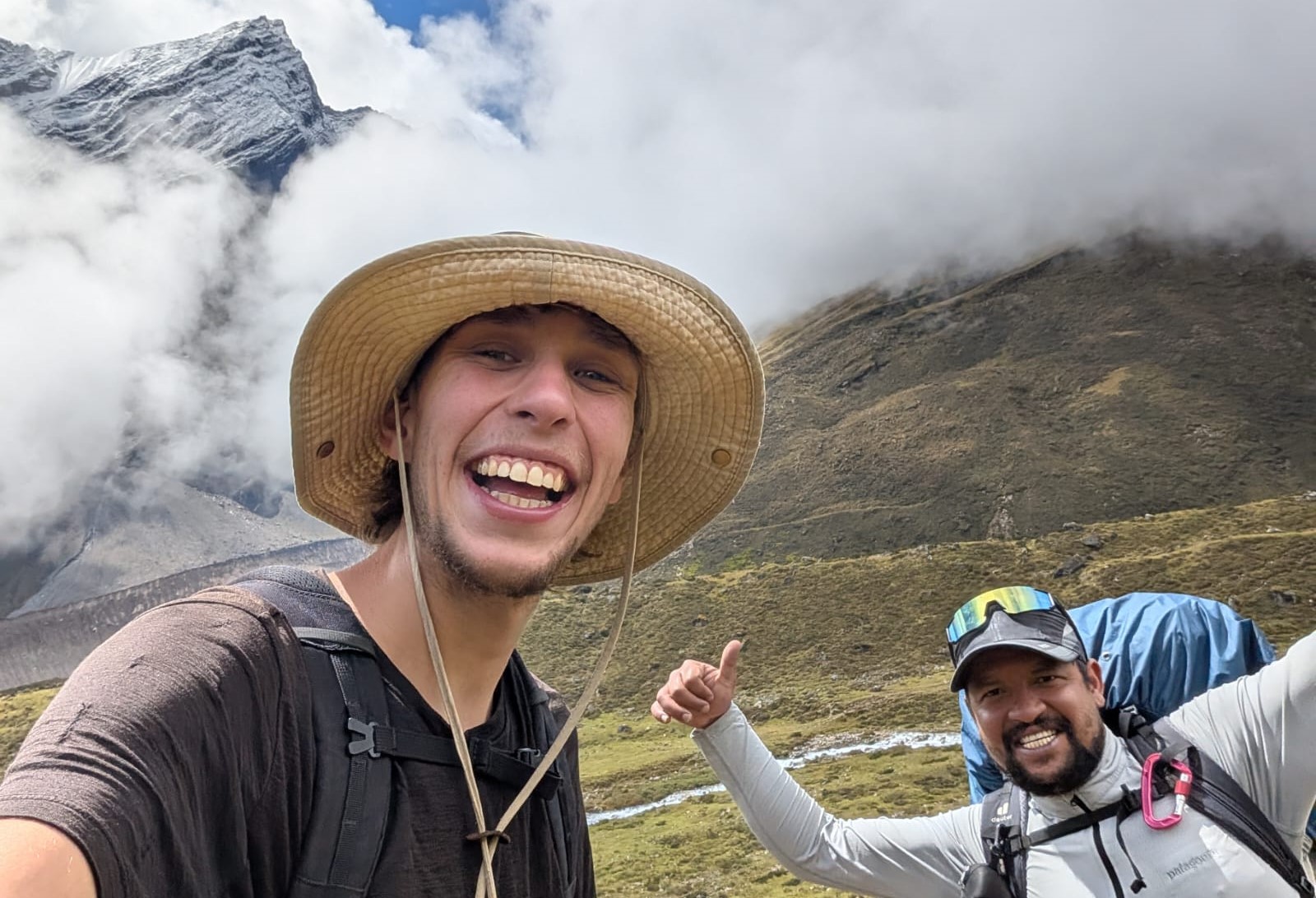
This is one of the more interesting questions we get from trekkers planning the Manaslu Circuit Trek, usually somewhere around the point in their research where they realize the trek ends in a village called Dharapani. The question is almost always the same: since I’ve already come this far, and I’m already acclimatized, can I just keep walking onto the Annapurna Circuit instead of turning around and heading home?
The answer is yes. Not “technically yes with a lot of asterisks” — genuinely yes, and it’s one of the more popular ways experienced trekkers link two of Nepal’s best circuits into a single, extraordinary trip. Below, we explain exactly why Dharapani is the connection point, what permits and planning that actually involves, and — just as important — who this combination is realistically right for.
The Short Answer: Yes, and It’s a Well-Established Route
Trekking the Annapurna Circuit directly after the Manaslu Circuit isn’t a workaround or a loophole — it’s a recognized combined route that trekking agencies across Nepal run regularly, often as an 18 to 23 day package. The two trails physically meet at Dharapani, a village at around 1,960 metres, and from there you simply keep walking in the same direction you were already heading, onto the Annapurna Circuit toward Chame, Manang, and eventually Thorong La.
Why Dharapani Is the Natural Connection Point
Dharapani isn’t an arbitrary spot someone decided to link two treks at — it’s where the geography does the work for you:
- The standard Manaslu Circuit itinerary already descends from Bimthang, on the far side of Larkya La, down into the Marsyangdi valley, arriving at Dharapani as the trek’s natural endpoint
- Dharapani itself sits directly on the classic Annapurna Circuit trail, the same route trekkers doing Annapurna the traditional way from Besisahar pass through
- There’s no gap between the two trails to bridge, no missing section of path, and no need to backtrack — the Manaslu trail simply joins the Annapurna trail at this one point
- Most Manaslu-only trekkers, once they reach Dharapani, catch a jeep from here toward Besisahar and on to Kathmandu or Pokhara — continuing onto Annapurna instead of taking that jeep is really the entire decision
What Actually Happens at Dharapani
This is worth spelling out because it sounds more complicated than it is. There’s no special crossing point, no checkpoint transfer, no change of trekking crew required by the geography itself. You finish your final Manaslu trekking day, arrive in Dharapani, and the next morning, instead of loading into a jeep, you put your boots back on and walk further up the valley toward Chame. That’s the entire transition.
Permits: What You Already Have, and What You Need to Add
This is the part that surprises people the most, because it turns out you’re not starting from zero on the permit side:
- The Manaslu Circuit already requires the Manaslu Restricted Area Permit (MRAP) and the Manaslu Conservation Area Permit (MCAP) for the restricted section of the route
- What a lot of trekkers don’t realize is that the standard Manaslu Circuit itinerary already crosses into the Annapurna Conservation Area (ACA) on its way down to Dharapani and Besisahar, which means most Manaslu trekkers are already issued an Annapurna Conservation Area Permit (ACAP) as part of their standard permit package, even if they never intended to continue onto the Annapurna Circuit
- Since the ACAP functions as a one-time entry permit rather than a permit valid for a fixed, short window tied to specific dates, it generally continues to cover you as you keep walking deeper into the Annapurna Conservation Area toward Manang and Thorong La
- Where the details can vary is around TIMS card requirements for the extended route, and permit rules have genuinely changed more than once in recent years — this is exactly the kind of detail worth confirming directly with your agency at the time of booking rather than relying on last year’s blog post, including this one
The practical takeaway: continuing onto Annapurna after Manaslu is not a matter of applying for an entirely separate trek’s worth of paperwork from scratch. It’s mostly a matter of confirming your existing permits carry you through, and sorting out anything additional with your agency before you set off, not after you’re already past Dharapani.
Do You Need a Whole New Guide or Trekking Team?
No, and this is one of the genuine advantages of doing the combination rather than treating it as two separate trips. Your existing guide, who is already licensed for the Manaslu restricted area, can continue with you onto the Annapurna Circuit, since Annapurna doesn’t require the same restricted-area licensing that Manaslu does. If you’ve hired a porter, they can continue too. You’re not disbanding one team in Dharapani and hiring a fresh one — you’re extending the same trip with the same people who already know how you trek, what your pace is, and how you’ve been handling altitude so far.
How Long the Combined Trek Actually Takes
Combining both circuits is a genuinely long undertaking, and it’s worth being upfront about that rather than downplaying it:
- The Manaslu section alone typically runs 11 to 14 trekking days, from the trailhead at Machhakhola or Soti Khola through to Dharapani, including the Larkya La crossing
- The Annapurna section from Dharapani through to Muktinath and down to Pokhara typically adds another 7 to 10 days, depending on your pace and acclimatization schedule
- All told, most combined itineraries run somewhere between 18 and 23 days total, not counting your arrival and departure days in Kathmandu
- This is a serious time commitment, closer to three weeks than two, and it needs to be planned as such from the start of your trip rather than added on as an afterthought
If you’re still working out how the standard Manaslu-only itinerary breaks down before deciding whether to extend it, our Manaslu Circuit Trek Itinerary: 10 to 22 Day Route Guide is the right place to start.
The Route From Dharapani to Thorong La, Step by Step
Once you’re on the Annapurna side of Dharapani, the route follows the classic Annapurna Circuit trail up the Marsyangdi valley:
- Dharapani (1,960 m) to Chame (2,670 m) — a full trekking day back into the rhythm of the trail after Dharapani
- Chame to Pisang (around 3,200 to 3,300 m), with the option of the Upper Pisang route for better mountain views
- Pisang to Manang (around 3,519 to 3,540 m), the major hub and acclimatization stop of the Annapurna Circuit
- A dedicated acclimatization day in Manang, often used for a day hike higher up the valley before returning to sleep at the same elevation
- Manang up through Yak Kharka to Thorong Phedi or High Camp (around 4,540 m), positioning for the pass crossing
- An early-morning crossing of Thorong La (5,416 m), the highest point of the entire combined trek, followed by a long descent to Muktinath
- From Muktinath, most trekkers continue down to Jomsom and either fly or drive onward toward Pokhara
Why This Combination Makes Practical Sense
Beyond the appeal of trekking two iconic circuits in one trip, there are real logistical reasons this combination is popular rather than just an ambitious novelty:
- Instead of finishing at Dharapani and taking a long, bumpy jeep ride back to Kathmandu just to fly home, you use your own legs as the exit route, ending in Pokhara — a genuinely more scenic and satisfying way to close out the trip
- You avoid the cost and time of flying home, then flying back to Nepal later for a separate Annapurna trip, which for many international trekkers is the realistic alternative
- Your body is already acclimatized to altitude by the time you reach Dharapani, which — with proper reacclimatization on the Annapurna side, covered below — can make the second half of the trip feel more manageable than starting Annapurna cold
- You get the remote, culturally distinct Nubri and Tsum valleys of Manaslu and the more established, teahouse-dense Manang valley and Mustang-adjacent landscape of Annapurna in a single, continuous journey, rather than two disconnected trips
The Physical Reality: Two Passes Over 5,000 Metres
It would be dishonest to present this combination as simply “a slightly longer trek.” It’s genuinely one of the more demanding trekking combinations available in Nepal:
- You’ll cross Larkya La (5,106 m) on the Manaslu side and Thorong La (5,416 m) on the Annapurna side — two separate high-altitude passes in a single trip
- Both passes involve long summit days, often starting before dawn, with several hours of walking above 4,800 metres in cold, thin air
- The cumulative fatigue of 18 to 23 days of trekking, even with rest days built in, is substantially greater than either circuit completed on its own
- This is not a combination we’d recommend for a first-time trekker’s introduction to the Himalayas — it’s better suited to trekkers who already have some high-altitude experience or who are prepared to train seriously beforehand
For an honest look at how demanding the Manaslu half specifically is, our Manaslu Trek Difficulty: A Realistic Assessment is worth reading before you commit to adding a second circuit on top of it.
Re-Acclimatizing After Larkya La Before Tackling Thorong La
This is a detail that catches some trekkers off guard: crossing one high pass doesn’t mean your body is simply “done” acclimatizing and ready for the next one automatically. A few things to understand:
- After crossing Larkya La, the route drops significantly in elevation down to Dharapani at under 2,000 metres — a meaningful altitude loss, not a plateau
- Re-ascending toward Manang and Thorong La means your body needs to reacclimatize to high altitude again, not simply pick up where it left off
- The good news is that having already spent time above 5,000 metres generally does help your body respond faster the second time, a phenomenon sometimes referred to as altitude memory, though it’s not a guarantee against acute mountain sickness on the second pass
- This is exactly why the standard acclimatization day in Manang matters just as much on this combined route as it would if you were starting the Annapurna Circuit fresh — skipping it because “you’re already acclimatized” from Manaslu is a common and risky mistake
If you want a clear picture of what normal altitude adjustment feels like versus genuine warning signs, on either pass, our Normal Trekking Symptoms at High Altitude guide is worth reviewing again before you start the Annapurna half, not just before Manaslu.
How the Two Regions Actually Feel Different
Part of what makes this combination so appealing isn’t just the logistics — it’s the contrast between the two halves of the trip:
- The Manaslu side, through the Nubri and Tsum valleys, feels remote and lightly visited, with strong Tibetan Buddhist cultural influence, basic teahouses, and a real sense of walking through a restricted, less commercialized region
- The Annapurna side, particularly through Manang, feels noticeably more developed, with a longer-established teahouse trekking culture, more trekkers on the trail, and a wider variety of food and accommodation options
- The landscape shifts too — from the forested, glacier-fed valleys of Manaslu to the high, dry, almost lunar terrain around Manang and Muktinath, which sits in the rain shadow of the Annapurna massif
- Trekkers who do both back to back often describe it as feeling like two genuinely different trips stitched together, rather than more of the same scenery repeated for three weeks
If you’re still weighing up how the two circuits compare on their own merits, our Manaslu Circuit Trek vs Annapurna Circuit Trek comparison covers that in more depth.
Thinking about combining the Manaslu Circuit with the Annapurna Circuit from Dharapani? We can build a custom itinerary and confirm your permit plan before you go.
WhatsApp us Email usWho This Combined Trek Is Actually Right For
This route makes the most sense for a fairly specific kind of trekker:
- Trekkers with three or more weeks of genuine vacation time, since trying to compress this combination into two weeks defeats the purpose and risks your health
- Trekkers with prior high-altitude experience, or at minimum, a serious multi-month training plan behind them
- People who specifically want to see both the remote, restricted character of Manaslu and the classic, established trekking culture of Annapurna, rather than just wanting “a really long trek”
- Trekkers who are honestly comfortable adjusting or slowing down the second half of the trip if the first half took more out of them than expected
Who Probably Shouldn’t Try to Combine Both
Just as important is being honest about who this isn’t a good fit for:
- First-time trekkers with no prior high-altitude experience — either circuit alone is already a significant undertaking, and stacking them multiplies both the physical demand and the risk of a rushed, undertrained attempt
- Anyone with a fixed, tight travel schedule who would be tempted to cut acclimatization days short in the Annapurna section just to make a flight home
- Trekkers who finished the Manaslu Circuit and are honestly, physically depleted rather than simply tired in the normal way — pushing through genuine exhaustion into a second high pass is where serious problems happen
- Anyone without proper travel insurance that explicitly covers both regions and high-altitude evacuation, given how remote parts of both routes are
Budget and Time Considerations
Combining both circuits costs more than either alone, but usually less than doing them as two entirely separate trips from abroad. A few things to budget for beyond the daily trekking costs:
- Additional guide and porter days for the extended itinerary, typically at the same daily rates you’d already agreed for the Manaslu section
- Any additional permit costs specific to extending into the Annapurna Circuit, which your agency should confirm and itemize clearly before departure
- Extra nights of teahouse accommodation and meals across the additional 7 to 10 days on the Annapurna side
- A buffer of two to three extra days in your overall schedule for weather delays, which matter more on a longer trip with two high passes than on either circuit alone
Choosing the Right Season for the Combined Route
Season matters even more on a combined trek, since you need stable weather across a longer window rather than just a week or two:
- Autumn (September to November) is generally considered the best season for this combination, offering the most reliable weather across both regions during the several weeks the trip requires
- Spring (March to May) also works well and adds the bonus of rhododendron blooms on the lower sections of both trails
- Winter significantly raises the risk of snow closing Thorong La, Larkya La, or both, which is a serious consideration on a trip this long and logistically committed
- If you’re flexible, starting in early autumn gives you the best chance of clear conditions for both pass crossings without running into early winter snowfall toward the end of the trip
For more detail on timing specifically for the Manaslu half, see our Best Time to Trek the Manaslu Circuit Trek guide.
Packing and Gear Adjustments for the Longer Trip
Gear for a three-week combined trek needs a bit more thought than a standard packing list for either circuit alone:
- Pack for a wider range of conditions than either circuit alone would require, since you’ll pass through forested lower valleys, high alpine terrain, and the dry, wind-exposed landscape near Muktinath
- Bring enough clothing to manage roughly three weeks without relying entirely on laundry, which is limited and slow to dry at higher elevations
- Consider slightly more robust footwear than you might pack for a shorter trek, given the cumulative mileage on two full circuits
- Our Manaslu Circuit Trek Packing List covers the core gear that applies to both halves of the trip, with the main addition being extra layers and supplies for the additional days
How to Actually Plan This With an Agency
The practical steps for putting this trip together are simpler than the scale of the trek might suggest:
- Book it as a single, private, custom itinerary rather than trying to stitch together two separate fixed-departure group trips, since your pace and rest-day needs won’t line up neatly with two unrelated group schedules
- Confirm with your agency, in writing, exactly which permits are included and which (if any) need to be arranged separately for the Annapurna extension
- Ask specifically whether your Manaslu guide and porter will continue with you, or whether a handover happens at Dharapani, so you know what to expect
- Build in a short buffer day around Dharapani itself, so a late arrival from the Manaslu side or a need for extra rest doesn’t throw off the entire Annapurna schedule
Common Mistakes People Make Attempting This Combination
A few patterns come up again and again with trekkers who plan this combination themselves without much guidance:
- Assuming that finishing Larkya La means the Annapurna section will feel easy by comparison, and under-preparing for Thorong La as a result
- Skipping the Manang acclimatization day because “I’m already acclimatized,” despite the altitude drop at Dharapani resetting a meaningful part of that adjustment
- Booking too tight a schedule, leaving no room for weather delays on either pass, and then feeling pressured to push through deteriorating conditions to stay on track
- Not confirming permit and guide continuity in advance, and discovering complications only after arriving in Dharapani with limited options to sort them out on the spot
A Trekker We Guided Who Made This Call at Dharapani
A few seasons back, we had a trekker finish the Manaslu Circuit at Bimthang feeling strong and genuinely undecided about whether to continue toward Annapurna or head home as originally planned. We sat down with him in Dharapani, went through his remaining schedule honestly, and agreed he had enough time and enough left in the tank to continue, as long as he committed to the full acclimatization day in Manang rather than trying to save a day by skipping it. He crossed Thorong La about ten days later in good weather, and told us afterward that the two halves of the trip felt so different from each other that it barely registered as “one long trek” — it felt like two separate, equally memorable trips that happened to share a single pair of boots.
That’s really the pitch for this combination when it’s done properly: not an endurance stunt, but two very different experiences of the Himalayas, joined at exactly the point where the trail already connects them.
The Alternative: Doing the Two Circuits as Separate Trips
Combining both isn’t the only sensible option, and it’s worth saying so plainly. Splitting Manaslu and Annapurna into two separate trips, months or years apart, has real advantages of its own:
- Each trek gets your full, fresh energy and attention, rather than one circuit being tackled on the tail end of another three-week trip
- You have more flexibility with shorter vacation windows, since either circuit alone can be done in under two weeks
- You give yourself a second reason to return to Nepal, which a lot of trekkers end up doing anyway once they’ve experienced one region and want to see the other
- If your schedule, budget, or fitness level doesn’t comfortably support a three-week combined trip this year, there is genuinely no downside to doing Manaslu now and Annapurna on a future trip, rather than forcing both into one attempt
The combined route is a fantastic option when the timing and preparation line up. It’s not something to force just because the trail happens to make it physically possible.
Frequently Asked Questions About Combining Manaslu and Annapurna
Is Dharapani really where the two treks connect?
Yes. Dharapani sits directly on the classic Annapurna Circuit trail, and it’s also the standard endpoint of the Manaslu Circuit itinerary after the descent from Bimthang. The two routes meet at this one point.
Do I need to buy a completely new set of permits for the Annapurna section?
Not entirely — most Manaslu Circuit itineraries already include an ACAP as part of the standard permit package, since the route passes through the Annapurna Conservation Area on the way to Dharapani. Confirm the specifics with your agency, since permit rules for extended routes have changed more than once in recent years.
Can I use the same guide for both circuits?
Yes, in most cases. A guide licensed for the Manaslu restricted area can continue with you onto the Annapurna Circuit, which doesn’t require the same restricted-area licensing.
How much extra time should I plan for the Annapurna section?
Most trekkers add roughly 7 to 10 days from Dharapani through to Muktinath and down to Pokhara, on top of the 11 to 14 days a standard Manaslu Circuit itinerary takes.
Is this a good idea for a first-time high-altitude trekker?
Generally, no. Either circuit alone is a serious undertaking. Combining both, including two separate passes above 5,000 metres, is better suited to trekkers with some prior high-altitude experience or a serious training plan behind them.
The Bottom Line
Yes, you can trek the Annapurna Circuit directly after the Manaslu Circuit, and Dharapani is exactly where that transition happens — no shortcuts, no missing trail, just a continuation of the same walk in the same direction. Most of what you need permit-wise is already in place by the time you arrive there, your existing guide can typically continue with you, and the two halves of the trip genuinely feel like different experiences rather than more of the same. What it demands in return is honesty about the scale of the undertaking: three weeks or more, two passes above 5,000 metres, and a body that needs to reacclimatize partway through rather than coast on momentum from the first half.
If you’re seriously considering this combination, get in touch and we’ll help you plan a realistic, properly paced itinerary from Machhakhola all the way to Muktinath, rather than trying to piece it together on your own mid-trip.