Is July a good month for the Manaslu Circuit Trek? Honestly, not really, and any guide who tells you otherwise is trying to fill a booking. July sits in the middle of the Nepal monsoon, and the Manaslu region gets the full effect of it: wet trails, leeches in the lower forest, cloud sitting on the ridgelines for most of the day, and a real chance of road disruption on the drive to the trailhead. It is not an impossible month, and it is not a dangerous one if you go with an experienced team and build in flexible days, but it is one of the harder and less rewarding times of year to walk this route. If your main goal is clear mountain views of Manaslu and the surrounding peaks, July is the wrong month. If you can accept limited visibility, muddy boots, and a slower pace in exchange for quiet trails and green hillsides, there is still a trek to be had here. This guide lays out exactly what July looks like on the ground, day by day, so you can decide for yourself with real information rather than a sales pitch.
Overview: What Trekking Manaslu Circuit in July Actually Means
The Manaslu Circuit Trek circles the eighth highest mountain on earth, Mount Manaslu at 8,163 m, running from the low, humid Budhi Gandaki gorge up through Tibetan influenced villages to the Larkya La at 5,106 m before dropping into the Marsyangdi valley near the Annapurna region. In spring and autumn this route is genuinely one of the finest treks in Nepal. In July, the same trail is walking through a different season entirely. Monsoon rain arrives most days, usually from late morning through the afternoon and evening, with mornings often the only reliably dry window. The lower and middle sections of the trek, roughly Machha Khola through Namrung, sit in thick forest and river gorge terrain that turns to mud and running water once the rains set in. Higher up, above Samagaon and toward Samdo and Dharamsala, the weather is a bit more mixed, sometimes clearer in the early morning, but afternoon cloud is still the rule rather than the exception. The Larkya La itself is the crux of the whole trip in July, since a pass at 5,106 m can pick up fresh snow even in summer, and route finding across the glacier moraine gets harder when snow covers the usual markers and footpath. None of this means July is off limits. It means you need honest expectations, a guide who knows the current trail conditions, and a schedule with slack built into it rather than one where every day is tightly timed.
Temperature and Rainfall by Altitude Band
July temperatures on the Manaslu Circuit follow the altitude the way you would expect, but the humidity and cloud cover change how those temperatures actually feel on the trail. In the lower gorge around Machha Khola and Jagat, at around 900 to 1,400 m, daytime temperatures typically sit in the high 20s Celsius with heavy humidity, and nights rarely drop below the high teens. It feels like a hot, sticky river valley because that is exactly what it is during monsoon. Moving up through Deng and Namrung, between 1,800 and 2,900 m, daytime temperatures ease into the low twenties, with nights cooling into the low teens, though the humidity and rain keep everything feeling damp rather than crisp. Around Samagaon and Samdo, from 3,500 to 3,900 m, July days are noticeably milder, often in the mid teens Celsius, with nights dropping close to freezing or just above it. This is also where afternoon cloud tends to roll in from the valley below, so even a mild morning can turn cold and wet by early afternoon. At Dharamsala, just under the pass at 4,450 m, and on the Larkya La itself at 5,106 m, temperatures can fall well below freezing at night and stay only a few degrees above freezing during the day, and a summer snowfall on the pass is entirely possible even in July. Rainfall across the whole route is heaviest in the lower and middle sections, since that is where the moist air coming up from the Indian plains collides with the first real wall of the Himalaya. By the time you are above Samagaon, total rainfall volumes are lower, but the trail can still turn to slush from a mix of rain lower down and leftover snow patches higher up. The practical takeaway is that you should pack for both heat and humidity in the lower valley and for near freezing conditions at the pass, sometimes within the same week.
Mud, Leeches and Trail Conditions in the Lower Gorge
This is the part of the July trek that catches first time trekkers off guard the most. The stretch from Machha Khola to Namrung runs through subtropical and lower temperate forest along the Budhi Gandaki river, and in monsoon this whole corridor turns damp, green, and full of leeches. They are on the leaf litter, on tree trunks along the trail, and on grass edges, and they will find any gap in your gaiters or boots within minutes of a rest stop. They are not dangerous, just unpleasant and a bit unnerving the first few times, and a bite typically bleeds more than it should because of the mild anticoagulant leeches release, but a simple pinch of salt or a lit lighter gets one off quickly and the bite itself heals without issue. Underfoot, the stone stairs and mule trail sections that make up much of this part of the route become slick with a thin film of mud and moss once the rain has been falling for a few days straight, and a walking pole becomes far more useful here than it would be in dry season. Streams that are a simple rock hop crossing in October can swell into fast moving, knee deep water in July, and some of the temporary wooden bridges and log crossings along this stretch take damage or wash out entirely during a heavy monsoon, meaning your guide may need to reroute around a crossing or wait an hour or two for water levels to drop after a storm passes. None of this makes the lower gorge unsafe with a competent guide managing the pace and the crossings, but it does mean slower days than the same stretch would take in spring or autumn, wetter gear by the end of each day, and a trail that rewards careful footing over speed. For a fuller sense of what this stretch looks like stage by stage in any season, the Manaslu Circuit Trek route guide breaks down each day in detail.
The 19-Day Manaslu Circuit with Tsum Valley Trek is one of Nepal’s most rewarding long-distance Himalayan journeys, combining remote valleys, ancient…
Visibility and Mountain Views in July
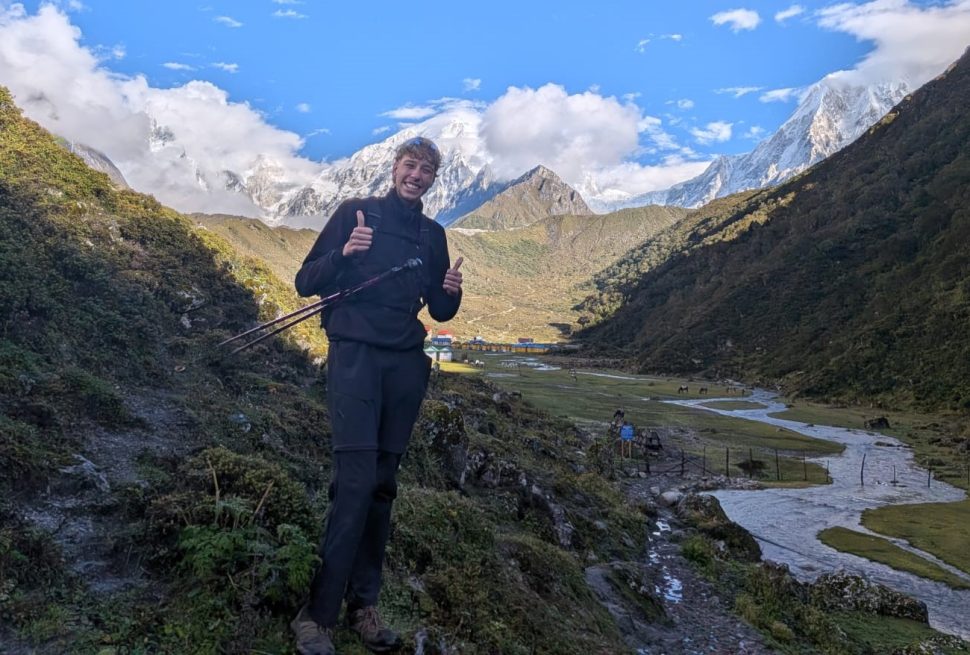
Be honest with yourself about why you are doing this trek. If mountain photography is the main reason, July is going to disappoint you more often than not. Monsoon cloud typically builds through the morning and blankets the valley by midday, and it is common to walk for hours with views limited to the near side of the gorge or the ridge directly above camp, with no sign of Manaslu, Himalchuli, or Peak 29 at all. The exception, and it is a real one, is early morning. On a clear night the cloud can drain out of the valley overnight, and the hour or so around sunrise sometimes delivers a genuine, if brief, view of the high peaks before the cloud builds back in. Guides who know this route will sometimes wake a group half an hour earlier than usual on a promising morning specifically to catch that window at a viewpoint like the one above Samagaon looking toward Manaslu base camp, or the ridge near Samdo. There is no guarantee of it on any given day, and a full week of trekking might produce two or three good viewing mornings rather than a daily one. What you get instead in July is a different kind of scenery: waterfalls running at full volume off the gorge walls, terraced fields at their greenest, rhododendron and forest undergrowth thick and alive, and rivers running loud and full through the valley. It is a legitimately different, more intimate kind of trek, just not the wide open Himalayan panorama most trekking brochures show you.
Larkya La Pass Conditions in July
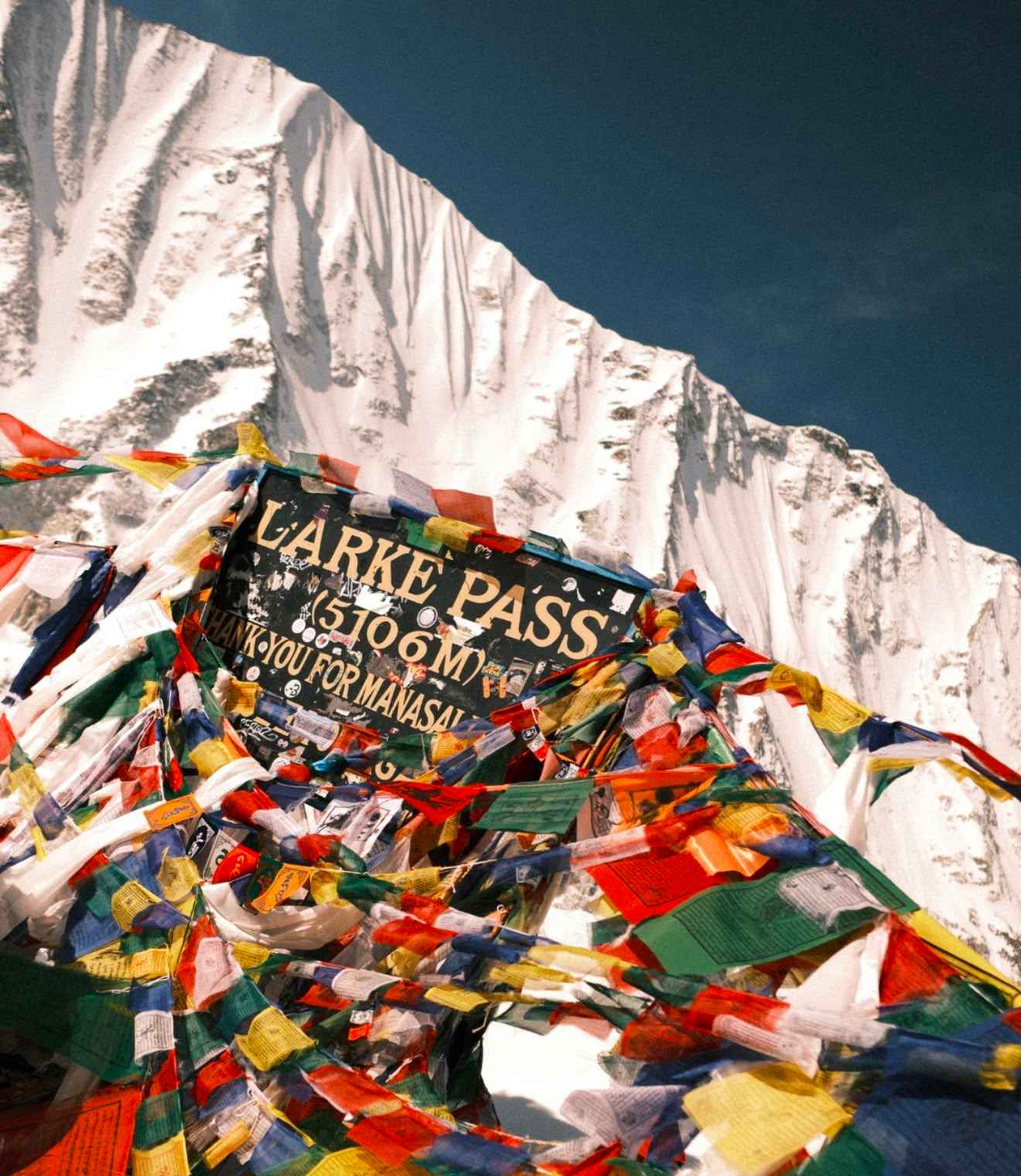
The Larkya La at 5,106 m is the technical and logistical high point of the whole circuit, and July is the least predictable month to cross it. In spring and autumn the pass is usually a long, cold, but straightforward day on a well worn footpath across the glacier moraine below Larkya Peak. In July, fresh snowfall is common at this elevation even in the middle of summer, and a dusting or a deeper fall can bury the usual trail markers and rock cairns that mark the safe line across the moraine. This means slower travel, a guide who needs to actively read the terrain rather than simply follow a familiar path, and a real chance of turning back or waiting a day at Dharamsala if snowfall the night before has made conditions unsafe or visibility too poor to navigate safely. Cloud on the pass itself is the norm rather than the exception in July, and a whiteout, where sky and snow blend into a single grey field with no horizon, is a genuine risk that any responsible guide takes seriously. The long summit day from Dharamsala over the pass to Bimthang, which typically runs 8 to 10 hours, becomes both physically and mentally harder under these conditions, since the descent side toward Bimthang can also be icy or snow covered in the early morning before the sun has had a chance to soften it. This is precisely why a licensed guide with current, firsthand knowledge of conditions on the pass matters more in July than in almost any other month. It is also why any honest itinerary for this month builds in at least one buffer day around Samagaon or Dharamsala, so that a bad weather window does not force a rushed or risky crossing.
Road and Landslide Risk to the Trailhead
Getting to and from the Manaslu trailhead is its own consideration in monsoon, separate from the trek itself. The drive from Kathmandu to Machha Khola runs roughly 160 km and normally takes about 8 to 9 hours, following rural roads through the middle hills that are cut into steep, unstable slopes in several sections. In July these roads are at their most vulnerable point in the year. Heavy rain saturates the hillsides above the road, and landslides, some minor and cleared within hours, some larger and closing the road for a day or more, are a real possibility on the Arughat to Machha Khola stretch and along parts of the return route through Besisahar and the Prithvi Highway. This is not a reason to panic, since local drivers and road crews in Nepal deal with this every monsoon and clearance usually happens quickly, but it is a reason to build slack into your travel days rather than book a tight connection straight through to an international flight on the day you are due back in Kathmandu. A good operator will monitor road conditions in the days before your trip starts and may adjust the exact route or add a buffer day around the drive in or out if heavy rain has been forecast. If your dates are flexible at all, treat the day after your planned return to Kathmandu as a buffer rather than a travel day.
Teahouse and Accommodation Availability
Unlike some other Nepal trekking regions where certain lodges close for the off season, teahouses along the Manaslu Circuit generally stay open through July, since local families along this route rely on trekking income across most of the year and the route also serves as a trade corridor between villages regardless of season. The practical difference in July is availability of dry rooms and drying space rather than availability of beds. With far fewer trekkers on the trail than in peak autumn season, you are unlikely to face a full teahouse, but rooms and common areas can feel damp, and drying wet gear overnight over a wood stove in the dining room is standard practice rather than an exception. Electricity and charging, hot showers, and wifi are less consistent in the more remote villages like Samdo and Dharamsala in any season, and monsoon cloud cover can affect solar powered systems specifically, so pack accordingly with a power bank and don’t expect a hot shower every night once you are above Samagaon. Food remains simple teahouse fare throughout, dal bhat, noodle soups, potatoes prepared various ways, and basic breakfast options, consistent with any season on this route.
Why Some Trekkers Still Choose July
Given everything above, it is fair to ask why anyone books this trek in July at all, and there are a few honest reasons beyond simple scheduling necessity. The trail is quiet. Where autumn brings a steady stream of trekking groups through villages like Jagat, Deng, and Namrung, July sees a fraction of that traffic, and it is possible to walk for long stretches without passing another foreign trekker, giving the villages along the route a much more lived in, unhurried feel. The scenery, while lacking mountain views most of the time, is genuinely lush in a way the dry autumn and winter months are not, with waterfalls at full flow, terraced fields bright green, and the forest sections thick with growth. Local agricultural life is also fully active in July, with planting and field work underway in the lower villages, giving a more grounded sense of how people actually live along this valley rather than the version of it geared toward trekking season. Some trekkers also simply have July as their only available window, whether due to work schedules or school holidays, and would rather trek Manaslu in imperfect conditions than not at all. All of these are legitimate reasons, but they should be weighed honestly against the downsides above rather than papered over. A trekker who goes into July expecting an autumn trek with slightly more rain will be disappointed. A trekker who goes in understanding it as a genuinely different, quieter, greener, cloudier version of the same route tends to come away satisfied.
Pros and Cons of Trekking Manaslu Circuit in July
| Aspect | Pros in July | Cons in July |
|---|---|---|
| Crowds | Far fewer trekkers on the trail, quieter teahouses, more personal interaction with local families | Some smaller teahouses may run reduced services since demand is low |
| Scenery | Waterfalls at full flow, forests and terraced fields at their greenest, dramatic close up river gorge scenery | Mountain views of Manaslu and surrounding peaks are rare and unreliable, mostly limited to brief early morning windows |
| Trail conditions | Rivers and forest at their most alive, an interesting contrast to dry season trekking | Muddy stone steps, leeches in the lower gorge, swollen streams, and occasional temporary bridge damage between Machha Khola and Namrung |
| Larkya La pass | Can still be crossed successfully with an experienced guide and flexible schedule | Fresh snow, poor visibility, and a genuinely less predictable and more demanding crossing than in peak seasons |
| Travel to trailhead | Roads are generally passable most days with normal monsoon precautions | Real risk of landslide delay on the Kathmandu to Machha Khola drive, requiring flexible travel dates |
| Cost and logistics | Lower season sometimes means more flexible teahouse and guide availability at short notice | Permit fees do not drop enough to offset the added difficulty, and trip pace often needs to slow down, adding contingency days |
Day by Day Sample Itinerary for a July Manaslu Circuit Trek
This is the standard 13 day Manaslu Circuit Trek itinerary that Manaslu Treks and Expedition runs, adapted here with July specific notes. In practice, a July departure should treat the acclimatization day at Samagaon and the day before the pass as flexible windows rather than fixed, since weather delays are more likely this month than in spring or autumn.
| Day | Route | Altitude | Notes for July |
|---|---|---|---|
| Day 1 | Arrival in Kathmandu, airport transfer | 1,300 m | Expect afternoon showers, standard for Kathmandu monsoon evenings |
| Day 2 | Kathmandu to Machha Khola, about 160 km, 8 to 9 hrs drive | 930 m | Build in extra time for possible road delays from landslide clearance |
| Day 3 | Machha Khola to Jagat, 11 to 12 km, 5 to 6 hrs walk | 1,410 m | First stretch of leech country begins, wear gaiters from this point |
| Day 4 | Jagat to Deng, 19 km, 6 to 7 hrs walk | 1,860 m | Muddy stone steps and possible temporary bridge diversions in the gorge |
| Day 5 | Deng to Namrung, 19 km, 6 to 7 hrs walk | 2,900 m | Rain usually eases slightly as altitude increases, forest still dense and wet |
| Day 6 | Namrung to Samagaon, 17 km, 6 to 7 hrs walk | 3,500 m | First real chance of clear early morning views if skies cooperate overnight |
| Day 7 | Acclimatization day at Samagaon, short side hike 8 to 10 km, 4 to 5 hrs | 3,500 m | Useful as a genuine weather buffer day in July, not just for altitude |
| Day 8 | Samagaon to Samdo, 8 to 9 km, 3 to 4 hrs walk | 3,860 m | Shorter day, terrain more open, less mud but still exposed to afternoon cloud |
| Day 9 | Samdo to Dharamsala, 11 to 12 km, 4 to 5 hrs walk | 4,450 m | Cold overnight, guide checks pass conditions and snow reports before proceeding |
| Day 10 | Dharamsala over Larkya La, 5,106 m, to Bimthang, 17 to 19 km, 8 to 10 hrs | Descends to about 3,700 m | Longest and most demanding day of the whole trek in July, an early alpine start is standard |
| Day 11 | Bimthang to Tilije, 12 to 13 km, 5 to 6 hrs walk | 2,300 m | Warmer, greener valley on the Marsyangdi side, forest and waterfalls in full monsoon flow |
| Day 12 | Tilije to Kathmandu, about 210 km, 8 to 10 hrs drive | 1,300 m | Same road delay caution applies on this return leg |
| Day 13 | Final departure from Kathmandu | Ideally not booked directly against a same day international flight |
For a more detailed stage by stage description of the terrain, water sources, and village facilities along each of these days in any season, see the full Manaslu Circuit Trek route guide. Trekkers with more time available sometimes extend this trip into the 23 day Tsum Valley and Manaslu Circuit combination, though it is worth noting that Tsum Valley in July carries the same monsoon considerations as the main circuit, so it is not a way around the season, simply a way to see more of the region while you are already committed to trekking in it.
What to Pack for Monsoon Trekking on Manaslu
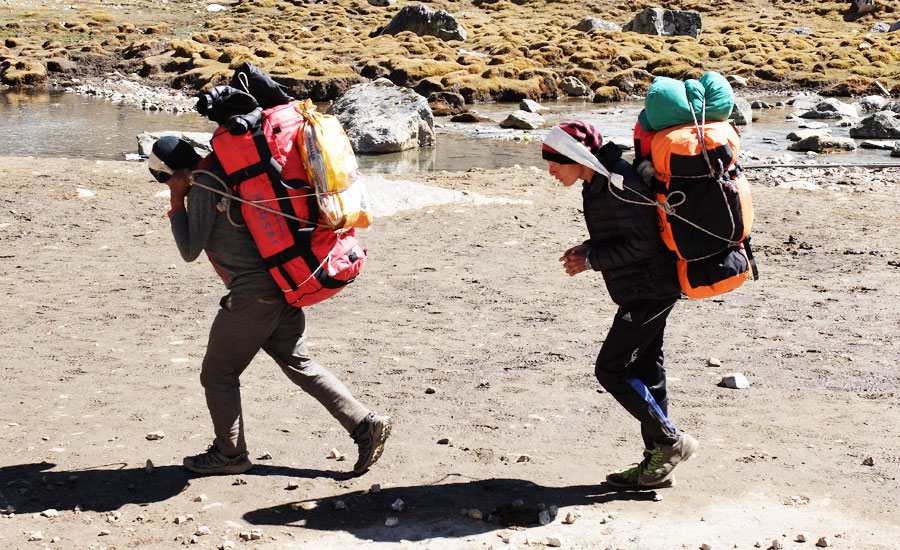
Packing for a July Manaslu trek is a balance between wet, humid lower valley conditions and cold, potentially snowy conditions at altitude, all within the same trip. A proper rain jacket that is fully waterproof rather than just water resistant is the single most important item, paired with a rain cover for your backpack or a waterproof pack liner, since a soaked sleeping bag or set of dry clothes at the end of a wet day is a serious morale problem. Gaiters are worth the extra weight for the lower gorge sections specifically to keep leeches out of your boots and socks. Trekking boots should be broken in and genuinely waterproof, and a second pair of light shoes or sandals for evenings gives your feet a chance to dry out properly overnight. Quick drying trekking clothes rather than cotton make a real difference here, since cotton stays wet and cold once it is soaked and does not dry overnight in humid teahouse conditions. For the upper section above Samagaon and especially for the pass crossing, you still need genuine cold weather layers, a warm insulated jacket, gloves, a warm hat, and thermal base layers, since nighttime and early morning temperatures at Dharamsala and on the Larkya La itself can fall well below freezing regardless of the season. Trekking poles help significantly on the slick stone steps in the lower gorge and on any snow covered sections near the pass. A headlamp, a basic first aid kit including something for leech bites and blister care, water purification tablets or a filter, and a dry bag or set of ziplock bags to keep your phone, passport, and permits dry at all times round out the essentials. Manaslu Treks and Expedition provides a sleeping bag and a down jacket as part of the trek package, which is returned at the end of the trip, so these two bulky, cold weather items do not need to be carried from home.
Permits, Guide Requirements and Costs
The Manaslu region is a restricted area under Nepal government regulations, and this status applies year round with no seasonal exception, meaning July is no different from any other month in this respect. Every trekker must be accompanied by a licensed guide and must trek as part of an organized group arrangement rather than independently, regardless of group size or experience level. This is a legal requirement enforced at checkpoints along the route, not a preference or a marketing point. The permits required are the Manaslu Restricted Area Permit, the Manaslu Conservation Area Permit, and the Annapurna Conservation Area Permit, since the route crosses from one conservation area into the other on the far side of the Larkya La, plus TIMS registration and a local Chumnubri Rural Municipality fee paid in cash, usually in Nepali rupees, at a checkpoint near Jagat. Restricted area permit pricing is tiered by season, and July falls within the cheaper December to August bracket rather than the more expensive September to November peak season bracket. As a rough guide, expect the restricted area permit to run around USD 75 for the first seven days with an additional charge of roughly USD 10 per extra day beyond that in this off season window, the Manaslu Conservation Area Permit around USD 30, and the Annapurna Conservation Area Permit around USD 30, on top of the local municipality fee of about USD 10. These figures do shift periodically as Nepal government offices update fee schedules, so treat them as a reasonable planning estimate and reconfirm the exact current figures with your operator close to your departure date rather than relying on any single source, including this one, as the final word.
| Permit or fee | Approximate cost | Notes |
|---|---|---|
| Manaslu Restricted Area Permit | About USD 75 for the first 7 days, plus about USD 10 per extra day | July falls in the cheaper December to August season bracket, priced lower than September to November |
| Manaslu Conservation Area Permit | About USD 30 | Covers the conservation area on the Manaslu side of the pass |
| Annapurna Conservation Area Permit | About USD 30 | Required for the descent side of the route into the Annapurna Conservation Area |
| Chumnubri Rural Municipality fee | About USD 10 | Local fee, cash only, typically collected at a checkpoint near Jagat |
For a full breakdown of current costs, what is included in a package price, and how permit rules apply to solo travelers versus groups, the Manaslu Circuit Trek cost and permit FAQ covers this in more depth. Manaslu Treks and Expedition’s standard 13 day package runs USD 1,350 per person for a solo traveler, USD 1,250 per person for a group of 2 to 5, USD 1,200 per person for a group of 6 to 8, and USD 1,150 per person for a group of 9 to 10, and these rates should be confirmed as current at the time of booking. The package includes airport pickup and drop off, 2 nights in a Kathmandu hotel with breakfast, teahouse lodging throughout the trek, transport to and from the trailhead, all of the permits listed above, a licensed English speaking guide, porter service at a ratio of 1 porter per 2 trekkers carrying up to 20 kg, guide and porter wages, three meals a day during the trek plus morning tea or coffee, insurance for guide and porter staff, a sleeping bag and down jacket provided for the duration of the trip and returned at the end, a trekking map, a completion certificate, a first aid kit, government taxes, and a farewell dinner in Kathmandu. It does not include your international airfare, Nepal entry visa fee, your own personal travel and evacuation insurance, personal expenses such as laundry, phone or wifi charges, bottled water and other beverages, alcohol and snacks, or any extra food ordered beyond what the package covers.
Who July Actually Suits
July suits a specific kind of trekker rather than everyone. It works reasonably well for someone who has already trekked in Nepal during a clearer season and is genuinely more interested in a quiet trail and a different landscape than in mountain photography this time around. It works for a trekker whose only available travel window falls in July, who understands and accepts the tradeoffs going in rather than discovering them on day four. It works less well for a first time Himalaya trekker whose main goal is big mountain views, since the odds of a clear look at Manaslu itself are genuinely low this month, and for anyone with a tightly fixed return flight that does not allow for a day or two of slack around potential road delays. It also asks more of your gear and your patience than a September or October trek would, since wet boots, damp sleeping conditions, and a slower pace through the lower gorge are the norm rather than the exception. None of this is a reason to cancel a July trip if it is your only option, but it is worth reading the Manaslu trek difficulty assessment and the seasonal comparison for the Manaslu and Tsum Valley region before committing, so you know exactly what you are trading against a spring or autumn departure.
Frequently Asked Questions
Is the Manaslu Circuit Trek open in July?
Yes, the trek is open and teahouses along the route generally continue operating through July, since local families depend on trekking income across most of the year and the trail also functions as a trade route between villages regardless of season. What changes is not whether the trek is available but how comfortable and predictable it is, since monsoon rain, cloud cover, and the added difficulty at the Larkya La make July one of the more demanding months to complete the full circuit.
Will I see Mount Manaslu during a July trek?
Possibly, but not reliably. Afternoon cloud cover is the norm through most of July, and full mountain views are the exception rather than the rule. Your best chance is a brief window right around sunrise on a night when the sky has cleared overnight, particularly from viewpoints near Samagaon or Samdo, but you should go into a July trek expecting limited visibility on most days rather than counting on clear mountain photography as a certainty.
Is it safe to cross the Larkya La pass in July?
It can be crossed safely with an experienced, licensed guide who checks current snow and weather conditions before committing to the crossing day, and who is willing to hold at Dharamsala for an extra day if conditions look unsafe. Fresh snowfall and poor visibility are more common on the pass in July than in spring or autumn, which makes route finding harder and the day longer, but it is not an unsafe undertaking when approached with appropriate caution and a flexible schedule rather than a fixed, unmovable timeline.
Are there leeches on the Manaslu Circuit Trek in July?
Yes, leeches are common in the forested lower gorge sections of the trek, roughly between Machha Khola and Namrung, during the monsoon months including July. They are not dangerous and a bite is easily treated, but gaiters and a proactive check of your boots and socks during rest stops make the experience considerably less unpleasant.
Do permit fees and the licensed guide requirement change in July?
The requirement for a licensed guide and organized group trekking in the restricted Manaslu region applies year round with no seasonal exception, so this does not change in July. Permit pricing is tiered by season, and July falls within the lower cost December to August bracket for the Manaslu Restricted Area Permit rather than the higher September to November bracket, though the Manaslu Conservation Area Permit, Annapurna Conservation Area Permit, and local municipality fee remain the same regardless of season. Exact figures should always be reconfirmed close to your travel date since Nepal government fee schedules are updated periodically.
What is the biggest risk on a July Manaslu trek?
The two practical risks worth planning around are landslide related delays on the rural road drive between Kathmandu and the trailhead near Machha Khola, and difficult, weather dependent conditions on the Larkya La pass crossing itself. Both are manageable with a flexible itinerary, an experienced local operator monitoring conditions, and travel dates that are not booked too tightly against an international flight, but they are real considerations specific to the monsoon season rather than concerns you would face in the same way during autumn or spring.
Should I bring my own sleeping bag and down jacket for a July trek?
Not with Manaslu Treks and Expedition’s standard package, since a sleeping bag and down jacket are provided as part of the trip and returned at the end, which saves you from carrying two bulky items from home. You should still bring your own quick drying layers, a proper waterproof rain jacket, gaiters, and cold weather gear for the pass crossing, since these are personal fit items best brought from home rather than rented locally.
Is July cheaper than trekking Manaslu Circuit in October?
Slightly, in terms of the restricted area permit fee, which is priced lower in the December to August bracket than in the September to November peak season bracket. However, this saving is modest and should not be the deciding factor, since the added difficulty, slower pace, and lower chance of clear mountain views in July are a bigger practical tradeoff than the small permit fee difference. If your schedule genuinely allows for either season, autumn generally offers better overall value once you weigh conditions rather than just sticker price.
Can I combine the Manaslu Circuit with Tsum Valley if I am trekking in July?
Yes, the 23 day Tsum Valley and Manaslu Circuit combination is available in July, but it carries the same monsoon considerations as the main circuit trek, including mud and leeches in the lower gorge and reduced mountain visibility, since Tsum Valley shares the same lower approach route. It extends your time in the region rather than avoiding the season’s downsides, so decide based on whether you want to see more of the valley rather than as a way around monsoon conditions.
Final Word and How to Book
July is not the month we would recommend to a first time Nepal trekker chasing clear mountain views, and we would be doing you a disservice to say otherwise. It is, however, a genuine option for a trekker who wants quiet trails, lush scenery, and a slower, more immersive look at life in the Budhi Gandaki valley, and who goes in prepared for mud, leeches in the lower gorge, limited visibility, and a more demanding, less predictable crossing of the Larkya La. With an experienced licensed guide managing the pace, monitoring pass conditions day by day, and building in buffer days rather than rushing a fixed schedule, the trek remains completely doable this month. If you want to talk through your dates, ask about current trail and road conditions before you commit, or get a firsthand read on whether July suits what you are hoping to get out of this trek, contact Manaslu Treks and Expedition directly. Call or message us on WhatsApp at +977 9869225929, email info@manaslutreks.com, or reach us through our contact. You can also review the full itinerary, inclusions, and current pricing on the main Manaslu Circuit Trek before reaching out, and we are happy to give you a straight answer about whether your planned July dates make sense or whether shifting even by a few weeks would give you a noticeably better trip.