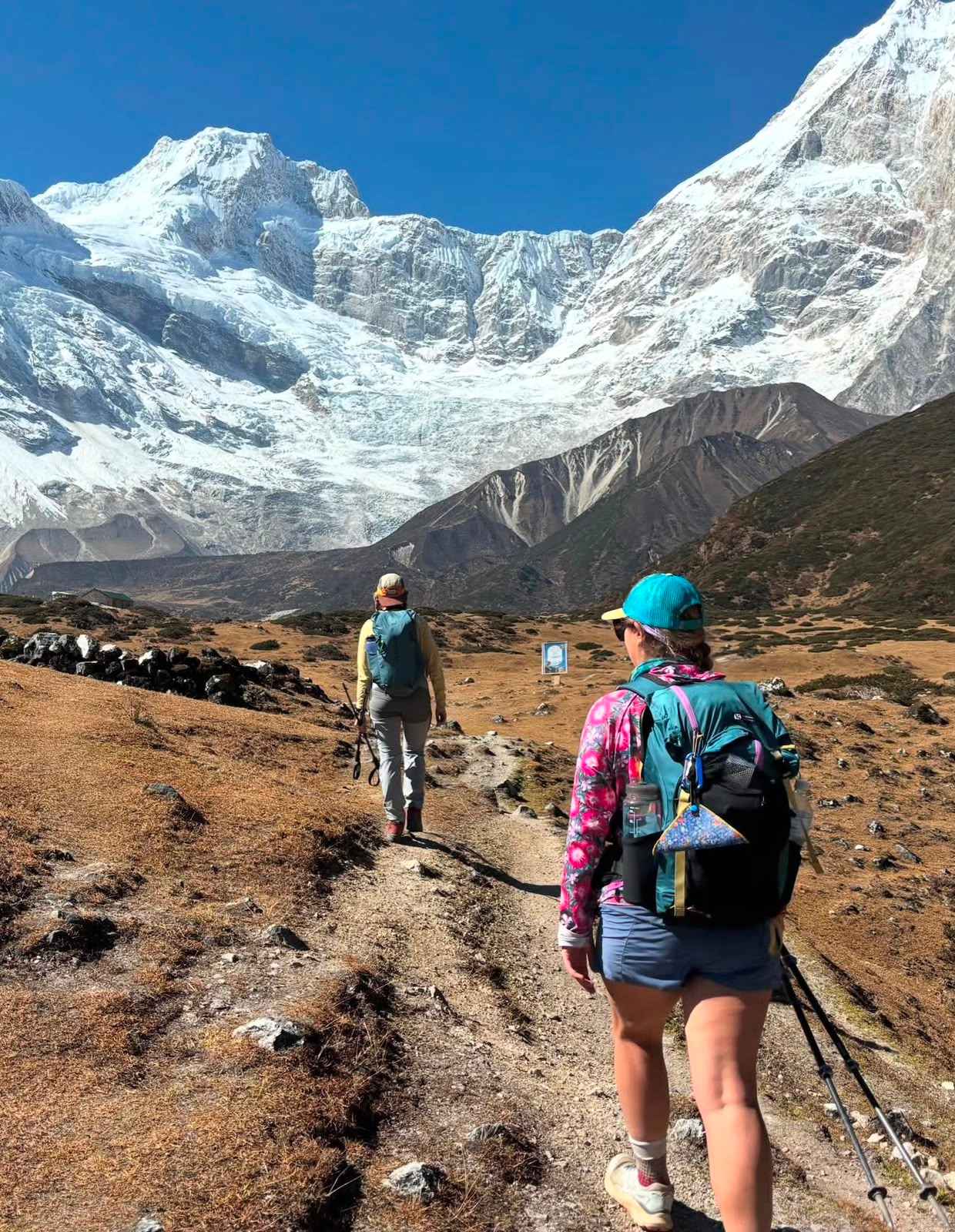
Is August a good month for the Manaslu Circuit Trek? Honestly, it is not the month I recommend first to most clients, and I will not pretend otherwise. August sits at the tail end of Nepal’s summer monsoon, so you are trekking through real rain, muddy trail, leeches in the lower forest, and cloud that hides the mountains more often than it reveals them. That said, August is also not identical to July. In many years the rain starts to ease a little by the second half of the month, the crowds are as thin as you will ever see on this route, and the terraced fields and waterfalls along the Budhi Gandaki gorge are at their greenest and most dramatic. If you go into August with the right gear, a flexible schedule, and a guide who knows where the trail turns dangerous, it can still be a rewarding trek. If you are chasing guaranteed blue sky photos of Manaslu at 8,163 m, this is not your month, and I would rather tell you that now than have you disappointed on the trail.
Manaslu Circuit Trek in August: The Honest Overview
The Manaslu Circuit is a restricted area trek that loops around the eighth highest mountain on earth, crossing the Larkya La (also written Larke Pass) at 5,106 m before dropping down toward the Annapurna side near Dharapani. In a normal year the trek runs from Machha Khola up the Budhi Gandaki river gorge, through Tibetan influenced villages like Samagaon and Samdo, over the pass, and down through Bimthang to Tilije. August falls inside the June to August monsoon window, which in Nepal is the least popular season for trekking almost everywhere except the far northern rain shadow areas like Upper Mustang and parts of Dolpo. Manaslu is not in a rain shadow for its lower and middle sections, so it does get wet. The upper valley above Samagaon sits closer to the Tibetan plateau and does see somewhat less rain than the lower gorge, which is one reason some trekkers still choose this window. But do not read that as “dry.” It means less wet, not dry.
What changes in August compared to July, based on what guides on this route generally observe, is that the heaviest downpours of the core monsoon start to taper off a bit as the season turns, though this varies year to year and there is no guarantee. Some seasons the rain barely lets up until mid September. Others give you three or four genuinely clear mornings a week by late August. I tell clients to plan for the wet scenario and treat any clear window as a bonus.
Temperature and Rainfall by Altitude Band
Temperature on this trek is a function of altitude far more than of the calendar month, but rainfall patterns do shift with elevation too. Here is roughly what to expect band by band in August.
In the lower gorge, from Machha Khola around 930 m up through Jagat and Deng to about 1,800 to 2,000 m, daytime temperatures typically sit in the range of 25 to 30 degrees Celsius with high humidity, and nights stay warm, rarely dropping below 18 to 20 degrees. This is the section where the monsoon feels most intense. Afternoon rain is common most days, sometimes arriving as a short intense downpour, other times as a steady drizzle that lasts for hours.
Through the middle section, Namrung to Samagaon, roughly 2,900 to 3,500 m, daytime temperatures drop to a more comfortable 15 to 20 degrees, with nights around 8 to 12 degrees. Rain is still frequent but the intensity tends to ease slightly compared to the gorge below.
Above Samagaon, at Samdo (3,860 m) and Dharamsala (4,450 m), you are entering a drier rain shadow influence from the Tibetan plateau. Daytime temperatures here run about 10 to 15 degrees, dropping toward freezing or just below at night. Precipitation at this altitude can fall as sleet or wet snow rather than rain, particularly overnight.
At Larkya La itself, 5,106 m, expect daytime temperatures around 0 to 5 degrees at the moment of crossing, colder in wind, and often colder still if cloud sits on the pass, which it frequently does in August. Overnight lows near Dharamsala before the pass can fall to minus 5 or lower. Bring a genuinely warm sleeping bag regardless of what the lower valley weather suggested the night before.
As a rough rule of thumb for the whole route in August, expect rain or at least heavy cloud on somewhere between twelve and eighteen days out of a typical thirteen day itinerary, concentrated more in the lower and middle sections than at altitude. That is not a guaranteed number, it will vary by year, but it sets realistic expectations.
Leeches and Mud in the Lower Gorge Sections
This is the part of an honest August guide that most companies skip over, and I think that is a disservice to trekkers. From Machha Khola to roughly Namrung, the trail runs through dense subtropical and lower temperate forest along the Budhi Gandaki, and in August this forest floor is thick with leeches. They are not dangerous, they do not carry disease in this region as far as is documented, but they are unpleasant, they get into boots and socks, and a bite left unnoticed can bleed for longer than you would expect because of the anticoagulant in their saliva. Bring gaiters, treat your boots and lower trouser legs with a repellent containing DEET or picaridin, and check your ankles and boot tops at every stop. Some local porters simply flick them off with a fingernail and keep walking, and that is really the extent of the emergency: mildly gross, not medically serious.
The trail surface itself is the bigger practical concern in this stretch. Stone steps that are perfectly manageable in the dry autumn season become slick with a thin film of algae and mud in August, particularly on the many suspension bridge approaches and the carved rock ledges above the river between Jagat and Deng. Landslide debris and washouts are also more common on this section during monsoon, since the trail in places is cut into loose river cliff. A good local guide will know which short stretches to slow down on, where to use trekking poles for a third point of contact, and which sections have had recent slides reported by other guides coming the other direction. This is one of the clearest reasons the licensed guide requirement on this route is not just a bureaucratic formality, it is a genuine safety layer in August specifically.
Visibility and Cloud Cover for Mountain Views
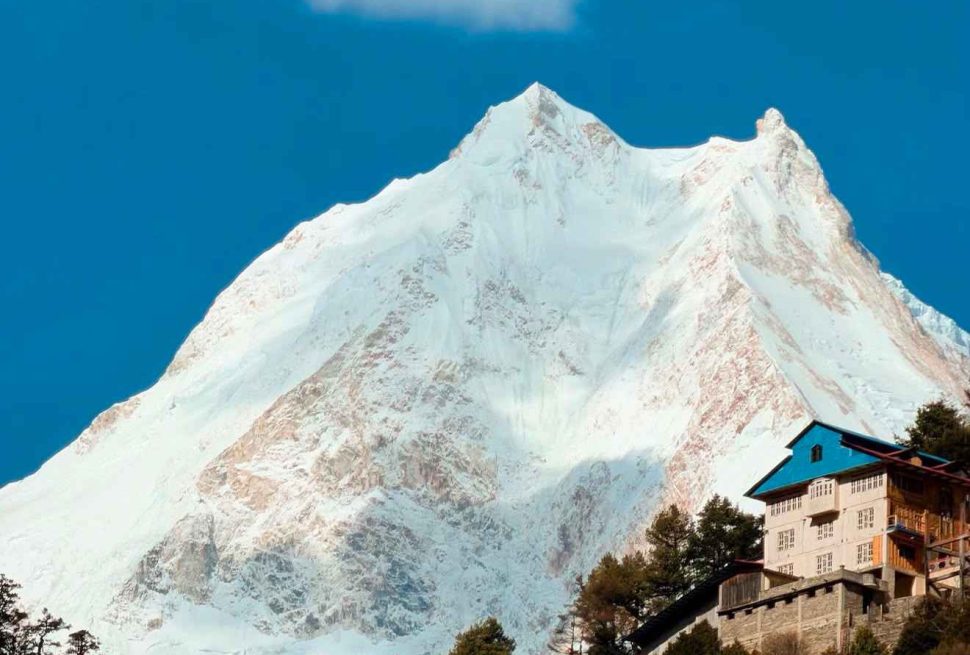
I want to be direct here because so many trekking blogs oversell this. In August, cloud typically builds through the morning and sits over the peaks by mid day, clearing only occasionally, often in the very early morning before sunrise or briefly in the evening after a rain shower has passed. You should plan to see Manaslu and the surrounding peaks clearly on some mornings, particularly around Samagaon and Samdo where the valley is more open and altitude works in your favor, but you should not expect it every day, and you should not plan a trip around guaranteed summit photography. Some groups get lucky with two or three genuinely clear, calm mornings with the full massif visible. Other groups spend the better part of a week looking at cloud and mist with the mountain only half revealed. If mountain photography is your main goal, the post monsoon window from late September through November is a far more reliable bet, and I would rather steer you there than sell you an August trip under false pretenses. What August does deliver reliably is dramatic, moody, cloud wreathed scenery, waterfalls swollen with runoff, and forest at its most lush, which has its own appeal for trekkers who are not purely chasing clear summit shots.
Larkya La in August: Pass Conditions
The Larkya La at 5,106 m is the technical and psychological crux of this trek in any season, and August adds its own variables. The approach from Dharamsala starts early, usually well before dawn, specifically to cross while the weather is calmer and before afternoon cloud and precipitation build. In August this early start matters even more than usual. Snow can fall on the pass even in summer, since 5,106 m is high enough that precipitation often arrives as snow rather than rain regardless of season, and a fresh dusting can make the boulder strewn sections on both the Dharamsala side and the descent to Bimthang more slippery and harder to navigate. Visibility on the pass itself is frequently poor in August, with cloud sitting right on the saddle, which is why a guide who has crossed this pass many times and can navigate by memory and trail markers, not just by view, is essential rather than optional here.
The descent from the pass to Bimthang drops roughly 1,400 meters and crosses some loose scree and occasional snow patches even in summer. Poles, sturdy waterproof boots with good ankle support, and a guide setting a sensible pace are what get people down safely. I have crossed this pass in poor visibility more than once, and the difference between a smooth crossing and a stressful one almost always comes down to starting early, moving steadily, and trusting the guide’s read of the weather rather than trying to push through a worsening window because of a fixed itinerary.
Road Conditions and Landslide Risk to the Trailhead
Getting from Kathmandu to the trailhead at Machha Khola is, in most years, the single riskiest part of an August Manaslu trip, and it rarely gets enough attention in generic guides. The drive covers roughly 160 km but takes eight to nine hours because a meaningful stretch of road, particularly beyond Arughat, is unpaved, narrow, and cut into unstable hillside. In monsoon season this road is prone to landslides, washouts, and temporary blockages after heavy rain, and it is not unusual for vehicles to be delayed for hours, or in worse cases for a day, while a crew clears debris or a alternate route is found. The return drive from Tilije or Dharapani back to Kathmandu carries similar risk on certain stretches, especially where the road follows river cliffs.
What this means practically is that your itinerary needs built in flexibility. A thirteen day package like the one outlined below assumes normal conditions, but in August I always tell clients to keep a buffer day or two free in their overall travel plans in case the road to or from the trailhead is disrupted. This is not scaremongering, it is simply how monsoon travel works in the middle hills of Nepal, and any honest operator should tell you the same thing rather than promising a guaranteed schedule.
Teahouse and Accommodation Availability in August
On the positive side, August is low season on this route, and that has real practical benefits. Teahouses that fill up fast in October and November have plenty of space in August, so you are unlikely to face a scramble for rooms even without advance booking through an agency, though most trekkers on a guided package will have rooms arranged in advance regardless. Prices for rooms and food along the route stay roughly the same as other seasons since teahouse owners set fixed menus, but you will find owners have more time to chat, and the atmosphere in villages like Samagaon and Namrung feels noticeably quieter and more relaxed than during the autumn rush.
The tradeoff is that a few smaller teahouses in the more remote upper sections occasionally close or run with reduced staff during the quietest weeks of monsoon, since owners sometimes travel down to lower villages or to Kathmandu when trekker numbers are low. A guide with current route knowledge, working with a company that has real contacts along the trail, will know which lodges are open on a given week and can adjust the exact stopping point if needed. This is one more argument for going with a licensed guide and an established local operator rather than trying to plan a fully independent trip in August, quite apart from the legal requirement.
Why Some Trekkers Still Choose August
Given everything above, you might reasonably ask why anyone treks Manaslu in August at all. There are a few honest reasons, and I want to present them without oversell. First, the trail is genuinely quiet. Where autumn sees a steady stream of trekking groups on the popular sections, August might mean you pass only a handful of other foreign trekkers in a day, and some sections you will have almost entirely to yourself. For travelers who value solitude and a slower, more personal experience of the villages along the route, that has real value. Second, the landscape is at its greenest. Terraced fields are full, forest is lush, and waterfalls that are a trickle in the dry season come down in full force, which makes for a very different, more dramatic kind of scenery than the browner tones of late autumn or the stark cold of winter. Third, for trekkers whose travel dates are fixed by work or family schedules and August is simply the window they have, a well prepared trek is still very possible, it is just a different trek than the one you would have in October, with different gear, different pacing, and different expectations for mountain views.
None of this changes the core facts: more rain, more mud, more leeches, less reliable mountain visibility, and higher road risk to the trailhead. Anyone telling you August is just as good as October for this specific trek is not being straight with you.
Pros and Cons of Trekking Manaslu Circuit in August
| Aspect | Pros | Cons |
|---|---|---|
| Crowds | Quietest season on the route, more personal experience with teahouse owners and villages | Some remote teahouses may run reduced hours or close temporarily |
| Scenery | Lush green terraces, full waterfalls, dramatic cloud effects | Mountain views of Manaslu and neighboring peaks unreliable, often clouded over |
| Trail conditions | Rain intensity often easing slightly compared to July in many years | Mud, slippery stone steps, and leech activity remain significant through the lower gorge |
| Travel to trailhead | Same road access as other seasons, just with added risk | Higher landslide and washout risk on the Kathmandu to Machha Khola road |
| Temperature | Warmer nights at lower altitude than autumn or winter | High humidity and afternoon showers make trekking days feel long and sticky |
| Larkya La crossing | Still passable with an early start and an experienced guide | Possible fresh snow, poor visibility, and colder wind chill on the pass |
| Cost and availability | Same fixed package pricing, no seasonal surcharge, easier last minute booking | Restricted Area Permit still required and fees still apply in full |
Day by Day Sample Itinerary for Manaslu Circuit Trek
Below is the standard thirteen day itinerary that Manaslu Treks and Expedition runs for this route. The distances, walking times, and altitudes are the same regardless of season, though in August you should expect walking times toward the longer end of each range given wet trail conditions, and you should build in the possibility of an extra buffer day around the road transfers at the start and end. For a full stage by stage breakdown of the trail itself, see our detailed Manaslu Circuit Trek route guide.
| Day | Route | Altitude | Notes |
|---|---|---|---|
| Day 1 | Arrival in Kathmandu | 1,300 m | Airport transfer, briefing, gear check ahead of the trek |
| Day 2 | Kathmandu to Machha Khola, about 160 km, 8 to 9 hrs drive | 930 m | Long drive day, in August allow for possible road delays from landslide clearance |
| Day 3 | Machha Khola to Jagat, 11 to 12 km, 5 to 6 hrs walk | 1,410 m | First checkpoint for permits, entering the humid lower gorge |
| Day 4 | Jagat to Deng, 19 km, 6 to 7 hrs walk | 1,860 m | Heaviest leech and mud exposure section, gaiters recommended |
| Day 5 | Deng to Namrung, 19 km, 6 to 7 hrs walk | 2,900 m | Terrain begins opening up, forest starts to thin with elevation |
| Day 6 | Namrung to Samagaon, 17 km, 6 to 7 hrs walk | 3,500 m | First real chance of morning mountain views on a clear day |
| Day 7 | Acclimatization day at Samagaon, short side hike 8 to 10 km, 4 to 5 hrs | 3,500 m | Rest and acclimatize, optional hike toward Manaslu base camp viewpoint if weather allows |
| Day 8 | Samagaon to Samdo, 8 to 9 km, 3 to 4 hrs walk | 3,860 m | Shorter day, entering drier rain shadow influenced terrain |
| Day 9 | Samdo to Dharamsala, 11 to 12 km, 4 to 5 hrs walk | 4,450 m | Final staging point before the pass, cold overnight temperatures |
| Day 10 | Dharamsala over Larkya La (5,106 m) to Bimthang, 17 to 19 km, 8 to 10 hrs | Descends to about 3,700 m | Longest and hardest day, very early start required |
| Day 11 | Bimthang to Tilije, 12 to 13 km, 5 to 6 hrs walk | 2,300 m | Descending back into warmer, greener terrain on the Annapurna side |
| Day 12 | Tilije to Kathmandu, about 210 km, 8 to 10 hrs drive | 1,300 m | Long return drive, again allow buffer time for August road conditions |
| Day 13 | Final departure from Kathmandu | 1,300 m | Transfer to airport for international flight |
For a broader look at how this compares across the year, including which months suit which kind of trekker, our guide to the best time for Manaslu and Tsum Valley trekking lays out the full seasonal picture rather than just this one month. And if you want a sense of how demanding this route actually is day to day, our Manaslu trek difficulty assessment covers the pass crossing, daily distances, and altitude gain in detail.
What to Pack for Monsoon Trekking on Manaslu
Packing for August on this route is different from packing for October, and getting it right makes a real difference to how much you enjoy the trip. A full waterproof jacket and waterproof trousers are not optional here, they are core kit, since you will likely use them on multiple days. Waterproof gaiters help enormously against both mud and leeches on the lower gorge sections. Trekking boots should be genuinely waterproof, broken in well before the trip, and paired with a couple of changes of hiking socks so you can swap out a wet pair at lunch. A dry bag or good pack liner is essential to keep your sleeping bag and spare clothes dry inside your backpack, since even a good rain cover on your pack will not keep everything bone dry through a full day of steady rain.
For the cold at altitude, layering still matters just as much as in any other season, since temperatures at Dharamsala and on Larkya La do not care what month it is. A warm sleeping bag rated to at least minus 10 degrees Celsius, a down jacket, thermal base layers, and a warm hat and gloves are all necessary for the days above Samdo. Manaslu Treks and Expedition provides a sleeping bag and down jacket as part of the package, returned at the end of the trip, so you do not need to buy these outright if you do not already own suitable gear.
Other useful items for August specifically include a strong insect repellent containing DEET for leeches and mosquitoes in the lower forest, a small bottle of salt or a leech specific repellent that some local guides swear by, a headlamp with spare batteries for the early Larkya La start, trekking poles for stability on slick stone steps, a quick drying travel towel, and a basic personal first aid kit for blisters and minor cuts in addition to the first aid kit your guide carries. A dry pair of camp shoes or sandals for evenings at the teahouse, once your trekking boots are soaked through, is a small comfort that makes a real difference after a wet day.
Permits and Costs for the Manaslu Circuit Trek in August
Because the Manaslu region is a restricted area, permits here work differently from more open trekking regions like the Annapurna or Everest base camp routes, and a licensed guide is legally mandatory regardless of your experience level or group size. Solo, unguided trekking is not permitted inside this restricted zone. August falls at the very end of the cheaper permit season, since the Manaslu Restricted Area Permit is priced by season, with a lower rate running from December through August and a higher rate from September through November. This means August is actually the last month you can catch the lower restricted area permit rate before the September price jump, which is a small but real cost advantage for trekkers on a fixed August schedule.
Roughly speaking, the Manaslu Restricted Area Permit costs around USD 75 for the first seven days plus about USD 10 per additional day during this December to August off season bracket, compared to a higher rate in the September to November peak season. On top of this you need a Manaslu Conservation Area Permit at around USD 30, an Annapurna Conservation Area Permit at around USD 30 since the route exits through Annapurna Conservation Area territory near Dharapani, and a local Chumnubri Rural Municipality fee of about USD 10, which is typically paid in cash, in Nepali rupees, at a checkpoint along the trail, usually at Jagat. These figures move periodically with government policy, so always reconfirm exact numbers close to your departure date rather than relying on any article, including this one, as a final quote.
| Permit | Approximate Cost | Notes |
|---|---|---|
| Manaslu Restricted Area Permit | About USD 75 for first 7 days plus about USD 10 per extra day (December to August off season rate) | Higher rate applies September to November, reconfirm before departure |
| Manaslu Conservation Area Permit | About USD 30 | Covers the conservation area portion of the route |
| Annapurna Conservation Area Permit | About USD 30 | Required since the route exits through Annapurna Conservation Area near Dharapani |
| Chumnubri Rural Municipality local fee | About USD 10, paid in Nepali rupees cash | Usually collected at a checkpoint, commonly Jagat |
Beyond permits, our thirteen day package pricing for the Manaslu Circuit Trek is USD 1,350 per person for a solo traveler, USD 1,250 per person for a group of two to five, USD 1,200 per person for a group of six to eight, and USD 1,150 per person for a group of nine to ten. Treat these as approximate figures subject to confirmation at the time of booking rather than a fixed guarantee, since currency shifts and permit changes can move the final number slightly. For a fuller cost and permit breakdown, including a wider range of frequently asked questions, our Manaslu Circuit Trek FAQ for cost and permits covers this in more depth.
Our standard package includes airport pickup and drop off, two nights in a Kathmandu hotel with breakfast, teahouse lodging throughout the trek, transport to and from the trailhead, all required permits (Manaslu Restricted Area Permit, Manaslu Conservation Area Permit, Annapurna Conservation Area Permit, TIMS and local government fees), a licensed English speaking guide, porter service at a ratio of one porter per two trekkers carrying up to 20 kg, guide and porter wages, three meals a day during the trek plus morning tea or coffee, insurance for guide and porter, a sleeping bag and down jacket provided for your use and returned at the end of the trip, a trekking map, a completion certificate, a first aid kit, government taxes, and a farewell dinner in Kathmandu. It does not include international airfare, your Nepal entry visa, personal travel and evacuation insurance, personal expenses like laundry, phone or wifi charges, bottled water and other beverages, alcohol and snacks, or any extra food beyond what is included in the package.
Who August Actually Suits
Based on years of guiding this route across different seasons, August genuinely suits a fairly specific kind of trekker. It works well for someone whose travel dates are fixed by a work calendar, a school break, or a family schedule and August is simply what is available, provided they go in with realistic expectations about rain and cloud rather than hoping for an autumn quality trip on an August date. It suits trekkers who care more about solitude, green landscape, and a slower pace than about guaranteed mountain photography, and who are comfortable with wet boots and the occasional muddy, unglamorous trekking day in exchange for having the trail largely to themselves. It also suits trekkers who are flexible about their exact schedule and can accept the possibility of a delayed transfer if the trailhead road is affected by a landslide, rather than trekkers on an extremely tight connecting flight schedule.
It suits less well anyone whose main goal is photographing Manaslu itself in clear conditions, anyone with a strict, non negotiable return flight the day after the trek ends, and anyone who finds mud, humidity, and leeches genuinely intolerable rather than just mildly annoying. If any of that describes you, I would rather recommend shifting your dates toward late September through November, or discuss the option of combining this trek with the Tsum Valley for a longer, richer route that some trekkers find worth the extra days regardless of season, detailed on our 23 day Tsum Valley and Manaslu Circuit combination trek.
Frequently Asked Questions
Is the Manaslu Circuit Trek open in August?
Yes, the trek runs year round as far as permits and access are concerned, and there is no official closure of the route in August. What changes is trail difficulty and reliability of mountain views rather than legal access. Teahouses along the route stay open, though a small number of the more remote lodges may run reduced hours during the quietest weeks. Permits remain valid and issuable in August the same as any other month, and a licensed guide can arrange them the same way regardless of season.
Will I see Mount Manaslu clearly during an August trek?
You might, on some mornings, particularly around Samagaon and Samdo where the valley opens up and cloud often clears briefly before building through the day, but you should not count on it. Afternoon cloud cover is common through most of August, and some trekkers go the better part of a week without a fully clear view of the summit. If you want a near guarantee of clear mountain photography, plan for late September through November instead, when the post monsoon skies are typically far more reliable across the whole route.
How bad are the leeches on this route in August?
Leeches are a genuine, if not dangerous, nuisance through the lower forested gorge from around Machha Khola to Namrung during monsoon months including August. They do not transmit disease as far as documented in this region, and a bite is really just an unpleasant surprise and a bit of prolonged bleeding rather than a medical event. Wearing gaiters, treating boots and lower trousers with a DEET or picaridin based repellent, and checking yourself at rest stops keeps the problem manageable. Above roughly 3,000 m the forest thins out and leech activity drops off significantly.
Is the Larkya La pass crossing dangerous in August?
It is more demanding than in the dry autumn season but still regularly crossed by guided groups throughout monsoon. The main added risks are reduced visibility from cloud sitting on the pass, occasional fresh snow making the boulder sections slippery, and colder wind chill than the surrounding valley weather would suggest. An early departure from Dharamsala, ideally well before dawn, and a guide experienced with this specific pass in poor conditions are the two things that matter most for a safe crossing. Independent trekking without a guide is not legally permitted in this restricted area in any case.
Do I still need a licensed guide for Manaslu Circuit in August?
Yes, without exception. The Manaslu region is classified as a restricted area by the Nepal government, and a licensed guide is mandatory for every trekker regardless of experience, group size, or season. This is not a seasonal rule that relaxes in the quieter months, it applies exactly the same in August as it does in peak autumn season. Restricted Area Permits are issued only through registered trekking agencies working with licensed guides.
Is the road to the Manaslu trailhead safe in August?
The drive from Kathmandu to Machha Khola, and the return drive from Tilije, both run on roads that include unpaved and landslide prone stretches, and this risk is meaningfully higher in August than in the dry season. Temporary delays from debris clearance or short term road blockages after heavy rain are a real possibility and something any honest operator should prepare you for. Building a day or two of schedule flexibility around your international flights, rather than booking a same day connection immediately after the trek, is a sensible precaution during monsoon months.
How much does the Manaslu Circuit Trek cost in August, and are permits cheaper?
Our standard thirteen day package runs USD 1,350 per person solo, USD 1,250 per person for groups of two to five, USD 1,200 per person for groups of six to eight, and USD 1,150 per person for groups of nine to ten, figures that should be treated as approximate and reconfirmed at booking. On the permit side, August actually falls at the tail end of the cheaper December to August Restricted Area Permit bracket, before the higher September to November peak season rate kicks in, so trekkers going in August pay less in permit fees than they would just a few weeks later in September. Conservation area permits and the local municipality fee stay roughly constant year round.
What should I pack differently for an August trek compared to autumn?
The single biggest difference is rain protection: a proper waterproof jacket and trousers, waterproof gaiters, and a dry bag or pack liner to protect your sleeping bag and spare clothes become essential rather than optional. Add a strong insect repellent for leeches and mosquitoes in the lower gorge, and bring an extra pair or two of hiking socks so you can swap out wet ones during the day. Above Samdo you still need the same warm layers, down jacket, and warm sleeping bag that any season at that altitude requires, since cold at 4,000 plus meters does not change much with the calendar.
Should I combine Manaslu Circuit with Tsum Valley if trekking in August?
It is worth considering if your schedule allows the extra time, since Tsum Valley is a quieter side valley that many trekkers find rewarding regardless of season, and combining the two into one longer trip reduces the number of separate approach journeys you need to make on the monsoon prone access road. That said, the same August considerations apply, more rain, more mud, and less reliable mountain visibility, so go in with the same realistic expectations. Details on the combined route are on our Tsum Valley and Manaslu Circuit combination trek.
Get in Touch Before You Book
If you are still weighing whether August is the right window for your own Manaslu Circuit Trek, talk to us before you commit to dates. We can walk you through what a specific week in August has looked like in recent years, help you decide whether a short shift in your dates toward early September makes sense for your goals, and set realistic expectations about weather, gear, and pacing so there are no surprises on the trail. Reach Manaslu Treks and Expedition, based in Thamel, Kathmandu, by phone or WhatsApp at +977 9869225929, or by email at info@manaslutreks.com. You can also send us your dates and questions directly through our contact, or go ahead and look over the full details of the standard package on our Manaslu Circuit Trek trip page. We would rather have an honest conversation with you now about whether August suits your goals than have you arrive expecting a trip we cannot deliver in monsoon conditions.