Is the Manaslu Tsum Valley Trek possible in August?
Yes, and August is close to July in most respects, still deep in the monsoon, still wet, still very quiet, but with the first genuine signs of drying appearing toward the end of the month as the monsoon begins its retreat. Road access carries the highest disruption risk of the year in August, since accumulated monsoon rainfall through July and August puts the most cumulative strain on the jeep track and river crossings. Larkya La remains passable for well-prepared groups with an experienced guide, similar to July, with wet snow and reduced visibility a regular feature. If you can schedule a departure in the final week of August, conditions are often noticeably better than mid-month. If your only window is early-to-mid August, treat it exactly like a July trek in terms of preparation.
Manaslu Tsum Valley Trek in August at a glance
| Factor | August conditions |
|---|---|
| Overall feasibility | Possible, similar profile to July, improving toward month end |
| Larkya La (5,106 m) | Passable, same caution as July applies |
| Daytime temperature, lower valley (700-1,900 m) | 15-20°C |
| Daytime temperature, Samagaun/Samdo (3,530-3,875 m) | 8-15°C |
| Night temperature, above 4,000 m | 5-10°C day, below freezing at night |
| Rainfall | Heavy through most of the month, first signs of easing in the final week |
| Trail crowding | Very low |
| Teahouse availability | Similar to July, limited above Samagaun |
| Permit cost tier | Dec-Aug lower rate still applies, the last month of this tier |
| Best for | Experienced trekkers seeking solitude, ideally targeting the final week |
Who should consider trekking in August
August suits the same profile of trekker as July: experienced, comfortable with wet conditions, and prioritising solitude over guaranteed views. If you have any flexibility in your dates within August, the final week generally offers a modest improvement over the first three weeks, as the monsoon begins to loosen its grip.
Reasons to choose August, and reasons to think twice
Why some trekkers choose August
- Continued solitude: trail traffic remains close to July’s very low levels for most of the month.
- Early drying trend: the final week can offer noticeably better conditions than earlier in the month.
- Lush late-summer scenery: the valley remains vividly green.
- Last chance at the Dec-Aug permit rate: August is the final month before the higher September-November permit tier applies.
Why most trekkers should choose a different month
- Continued heavy rain: particularly in the first three weeks of the month.
- Highest road disruption risk of the year: cumulative monsoon rainfall through July and August affects the jeep track more than any other period.
- Reduced teahouse network: similar to July, availability above Samagaun remains limited.
- Demanding pass crossing: wet snow and low visibility persist through most of the month.
Weather and conditions by zone in August
Lower Budhi Gandaki: Machha Khola to Deng (700-1,900 m)
Daytime temperatures typically run 15-20°C, with heavy rain continuing through most of the month, easing somewhat in the final week. Leeches remain common.
Tsum Valley: Chumling to Mu Gompa (2,400-3,700 m)
Similar to July, with some rain-shadow benefit, daytime temperatures around 12-18°C, and persistent cloud cover.
Upper Manaslu: Namrung to Samagaun (2,600-3,500 m)
Wet and cloudy for most of the month, daytime temperatures around 10-16°C, with brief clearer spells becoming more frequent toward month end.
Samagaun and Samdo (3,530-3,875 m)
Similar teahouse and weather profile to July, daytime highs roughly 8-15°C, regular rain or drizzle easing somewhat in the final week.
Dharmasala/Larkya Base Camp (4,460 m)
Limited teahouse operations continue, similar to July’s reduced count. Daytime temperatures around 5-10°C, with wet snow still possible.
Larkya La (5,106 m)
Passable with the same caution that applies in July: wet, heavy snow and reduced visibility are common through most of the month, with conditions typically improving somewhat in the final week as the monsoon begins its retreat.
Bhimtang and the descent to Dharapani (1,860-3,720 m)
Lush and green, with regular rain through most of the month, easing toward the very end.
August weather at a glance
| Zone | Altitude | Day temp | Night temp | Typical conditions |
|---|---|---|---|---|
| Machha Khola-Deng | 700-1,900 m | 15-20°C | 13-17°C | Heavy rain, easing late month, leeches |
| Tsum Valley | 2,400-3,700 m | 12-18°C | 6-10°C | Partly rain-shadowed, persistent cloud |
| Namrung-Lho | 2,600-3,180 m | 10-16°C | 4-8°C | Wet, occasional clearer spells late month |
| Samagaun/Samdo | 3,530-3,875 m | 8-15°C | 0-5°C | Regular rain, easing late month |
| Dharmasala | 4,460 m | 5-10°C | near freezing | Wet snow possible, limited teahouses |
| Larkya La | 5,106 m | 0-5°C | n/a (crossed by day) | Passable, same caution as July |
| Bhimtang-Dharapani | 1,860-3,720 m | 15-20°C | 8-12°C | Lush, wet, improving late month |
Rainfall, wind and visibility in August
Rainfall remains heavy through the first three weeks of August, broadly similar to July, with the clearest signal of change appearing in the final week as the monsoon begins its seasonal retreat. Wind is generally moderate. Visibility remains limited through most of the month, improving gradually toward the end.
Daylight hours in August
Daylight runs from roughly 5:35 am to 6:50 pm, around 13.25 hours, gradually shortening from July’s peak as the month progresses.
A typical day’s weather pattern in August
The pattern mirrors July for most of the month: a brief clearer window in the early morning, followed by building cloud and rain through the day. By the final week, mornings often stay clear for longer, an early sign of the approaching transition to autumn.
Trail conditions in August
Trail conditions remain challenging through most of the month: muddy, sometimes slippery, with a real chance of localised landslides after heavy rain, particularly given the cumulative saturation from July’s rainfall. Conditions typically firm up somewhat in the final week.
Road access and transport in August
August carries the highest road disruption risk of the year. Two consecutive months of monsoon rain by this point mean the jeep track and any river crossings are under the most cumulative strain of the year. Build meaningful buffer time into your arrival and departure schedule, and stay in close contact with your operator about current road conditions before departure.
Teahouses, rooms and food in August
Similar to July, teahouse numbers above Samagaun remain reduced for most of the month, with a gradual pickup as some lodges reopen ahead of the September-October season. Confirm current availability with your operator before finalising your itinerary.
Water, charging and connectivity in August
Similar to July: reduced solar charging reliability given persistent cloud, and a power bank is a sensible backup. Water treatment remains important throughout.
How busy is the trail in August
Very low for most of the month, picking up slightly in the final week as some trekkers plan early-season arrivals ahead of the autumn peak. This remains one of the two quietest months of the year alongside July.
Permits and costs for August
August is the last month of the December-August lower permit rate tier. The Manaslu Restricted Area Permit (RAP) costs USD 75 for the first 7 days plus USD 10 per extra day. The Tsum Valley RAP costs USD 30 for the first 7 days plus USD 7 per extra day. MCAP and ACAP are each NPR 3,000 (foreigner rate), plus the one-time NPR 1,000 local municipality fee. From September, the higher Sept-Nov rate tier applies. See our Manaslu trekking permits guide for full current details.
Restricted area rules
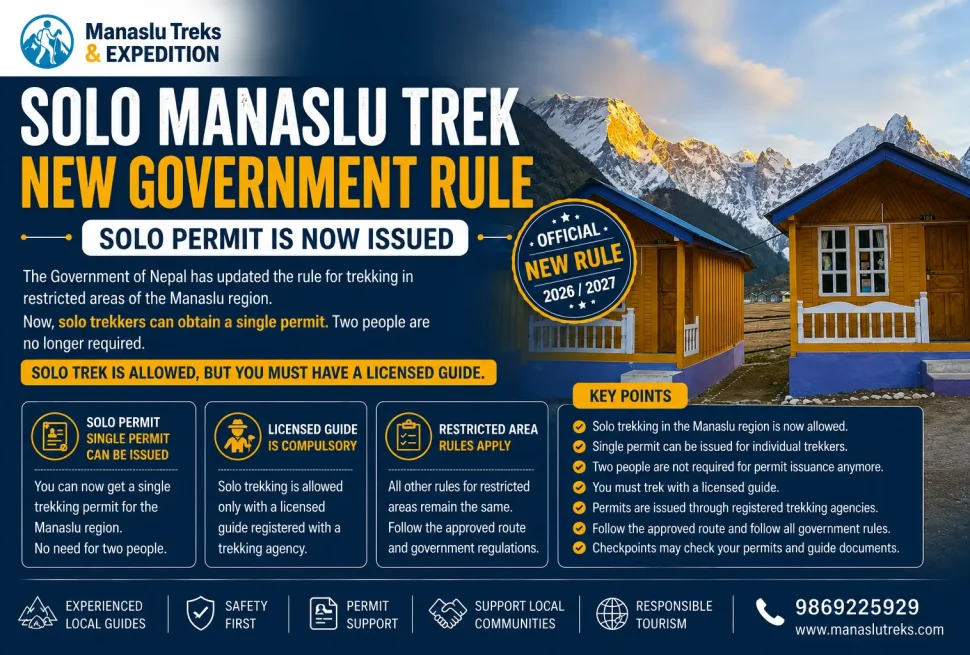
The Manaslu and Tsum Valley areas remain restricted, with all permits arranged through a registered trekking agency and checkpoints at Jagat, Philim, Namrung and Samagaun for the main route, plus Lokpa, Chumling and Chekampar for Tsum Valley. As of the 22 March 2026 rule change, one trekker with one licensed guide meets the restricted-area requirement.
Guide and porter requirements
A licensed guide from a registered agency is mandatory, with an experienced guide especially valuable given ongoing monsoon conditions. Porters are optional but recommended given the extra weight of wet-weather gear.
Suggested itinerary for the Manaslu Tsum Valley Trek in August
| Day | Route | Altitude |
|---|---|---|
| 1 | Kathmandu to Machha Khola | 870 m |
| 2 | Machha Khola to Jagat | 1,340 m |
| 3 | Jagat to Lokpa | 2,240 m |
| 4 | Lokpa to Chumling (Tsum Valley) | 2,386 m |
| 5 | Chumling to Chhokangparo | 3,010 m |
| 6 | Chhokangparo to Mu Gompa | 3,700 m |
| 7 | Mu Gompa exploration and acclimatisation | 3,700 m |
| 8 | Mu Gompa to Chhokangparo, descend to Gumba Lungdang or Rachen Gompa | 3,200 m |
| 9 | Descend to Lokpa, continue to Deng | 1,860 m |
| 10 | Deng to Namrung | 2,630 m |
| 11 | Namrung to Lho | 3,180 m |
| 12 | Lho to Samagaun | 3,530 m |
| 13 | Samagaun acclimatisation, side trip to Manaslu Base Camp or Birendra Lake | 3,530 m |
| 14 | Samagaun to Samdo | 3,875 m |
| 15 | Samdo to Dharmasala | 4,460 m |
| 16 | Dharmasala over Larkya La to Bhimtang | 3,720 m |
| 17 | Bhimtang to Tilije/Dharapani | 1,860 m |
| 18 | Dharapani to Kathmandu via Besisahar | 1,400 m |
As with July, build at least two buffer days into an August itinerary given the elevated risk of both road and weather delays, particularly for departures in the first three weeks.
Acclimatisation in August
The two dedicated acclimatisation days remain essential regardless of season, altitude risk does not ease with the calendar.
Contingency planning and buffer days
Given August’s status as the highest road-risk month of the year, contingency planning matters as much here as in July. Confirm with your operator how weather and road delays are handled in your specific itinerary.
What to pack for August
| Category | August-specific notes |
|---|---|
| Rain protection | Full waterproof jacket and trousers, essential for most of the month |
| Insulation | Mid-weight down jacket for Dharmasala and the pass |
| Footwear | Waterproof trekking boots with strong grip; gaiters recommended |
| Leech protection | Leech socks and salt or repellent for the lower forested sections |
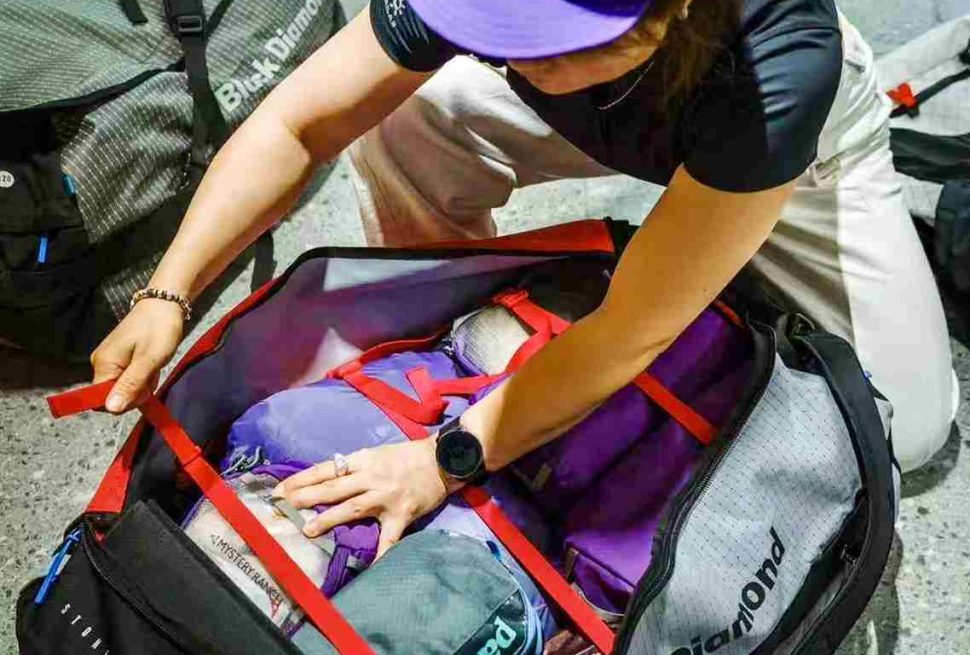
| Pack protection | Dry bags for electronics, documents and sleeping bag |
| Spare clothing | Extra dry layers and socks, as in July |
Rain and wet-weather protection
- Waterproof jacket and trousers: fully seam-sealed rain gear, essential for most of the month.
- Pack cover and dry bags: double protection for gear and electronics.
- Quick-dry clothing: synthetic or merino layers throughout.
Leech and footwear protection
- Boots: waterproof trekking boots with strong tread.
- Leech socks or gaiters: for the lower forested sections.
- Salt or leech repellent: a simple, effective solution.
- Camp shoes: a dry pair to change into each evening.
Cold-weather gear for the pass
- Down jacket: mid-weight, ideally paired with a waterproof outer layer.
- Gloves: a waterproof outer pair over a warm liner.
- Trekking poles: essential for stability on wet or slushy trail.
Documents, money and extras
- Cash in Nepali rupees: carried in a waterproof pouch.
- Permit documents and passport copies: kept dry in a sealed bag.
- Basic first aid and personal medication: including any altitude sickness medication discussed with your doctor.
Health and altitude considerations
Standard altitude precautions apply regardless of season. Staying warm and dry is especially important given the wet conditions. See our guide on what happens if you get sick on the Manaslu Circuit Trek for more detail.
Safety risks specific to August
The main risks mirror July: wet snow and reduced visibility at Larkya La, muddy trail conditions, and the added factor of August’s elevated road disruption risk given cumulative monsoon saturation. A good operator manages these risks with conservative scheduling and real buffer time.
Travel insurance
Comprehensive travel insurance covering trekking to at least 6,000 metres, including helicopter evacuation, is essential, and worth double-checking for weather and road-delay coverage given August’s risk profile.
Is August right for beginners, experienced trekkers or solo trekkers
First-time high-altitude trekkers
Not recommended; April or October are far better introductions to this route.
Experienced trekkers
Suited to experienced trekkers who specifically want solitude and are prepared for demanding, wet conditions.
Solo trekkers
Since the 22 March 2026 rule change, one trekker with one licensed guide meets the restricted-area requirement. See our solo trekking rule update for details.
Guides and porters: what to expect in August
Guides working in August bring the same experience level and conservative planning approach as in July, with close attention to road and weather conditions throughout.
Photography in August
Similar to July: atmospheric, moody conditions with lush green scenery, improving toward clearer light in the final week as the monsoon eases.
Festivals and cultural events in August
Local festival timing varies year to year; check current dates with your operator, and see our guide to major festivals in the Manaslu region.
Advantages and disadvantages of trekking in August
| Advantages | Disadvantages |
|---|---|
| Continued solitude, similar to July | Highest road disruption risk of the year |
| Last month at the Dec-Aug permit rate | Heavy rain through most of the month |
| Improving conditions toward month end | Reduced teahouse network above Samagaun |
| Lush, green scenery | Demanding, wet-snow pass crossing |
| Quiet, uncrowded trail | Not suitable for first-time trekkers |
Extra costs to budget for
Budget as you would for July: at least two buffer days, quality rain gear, and tips for guide and porter. Booking your permits before the end of August also locks in the lower Dec-Aug rate if your trip straddles the September rate change.
How August compares to July and September
July and August are broadly similar in feasibility and conditions; see our Manaslu Tsum Valley Trek in July guide. September brings the start of the monsoon’s retreat and a shift into the higher permit rate tier, with conditions improving noticeably by mid-to-late month; see our Manaslu Tsum Valley Trek in September guide. If your dates are flexible, pushing into September often means meaningfully better conditions for only a modest cost increase.
August month-by-month comparison table
| Month | Feasibility | Larkya La | Crowd level |
|---|---|---|---|
| July | Possible, not recommended for first-timers | Passable but demanding, wet snow at times | Very low, ~7-10/day |
| August | Possible, similar to July | Passable, same caution | Very low |
| September | Improving through the month | Passable, clearing | Low rising to moderate |
Alternatives to consider if August doesn’t work for you
If your dates are flexible, shifting into late September often gives meaningfully better conditions. If you specifically want a quiet trail without August’s road risk, consider June instead, which is generally drier, particularly in its first half. For a Tsum Valley-only itinerary without the Larkya La crossing, see our Manaslu Tsum Valley destination page.
Final recommendation: should you trek in August
August suits the same experienced, solitude-seeking trekker as July, with a modest silver lining: conditions in the final week often improve as the monsoon begins its retreat. If your schedule allows targeting late August specifically, that is the sweet spot within an otherwise demanding month. Explore our 19-Day Manaslu Circuit with Tsum Valley Trek or the 23-Day Tsum Valley and Manaslu Circuit Trek, or get in touch via our contact page to discuss timing. See our Manaslu Circuit Trek Monsoon Update 2026 for the latest ground conditions, and our Best Time to Go guide for the full seasonal picture.
Frequently asked questions
Is August better than July for this trek?
Broadly similar, with a modest improvement in the final week of August as the monsoon begins to ease.
Is Larkya La open in August?
Usually passable, with the same wet-snow and low-visibility caution that applies in July.
How busy is the trail in August?
Very low for most of the month, one of the two quietest months of the year alongside July.
What permits do I need for August?
Manaslu RAP, Tsum Valley RAP, MCAP, ACAP and a local municipality fee, at the December-August lower rate tier, the last month before the higher September-November rate applies.
Can I trek solo in August?
Yes, since the 22 March 2026 rule change, one trekker with one licensed guide meets the restricted-area requirement.
Is the road to the trailhead reliable in August?
This is the highest-risk month of the year for road delays, given cumulative monsoon rainfall; build meaningful buffer time into your schedule.
Is August suitable for first-time trekkers?
No, similar to July, this month is better suited to experienced trekkers comfortable with wet, demanding conditions.
Are there leeches in August?
Yes, in the lower forested sections, similar to June and July.
Should I target early or late August?
Late August generally offers better conditions as the monsoon begins its retreat, if your schedule allows the flexibility.
How many days does the trek take in August?
A typical itinerary runs 19-20 days including acclimatisation and at least two weather buffer days.
Is altitude sickness more likely in August?
Not inherently, it depends on pace and acclimatisation rather than the calendar.
Do I need special gear for August?
Yes, the same full monsoon kit recommended for July: waterproofs, leech protection, and extra dry layers.
Is travel insurance required?
Yes, comprehensive insurance covering trekking to at least 6,000 metres with helicopter evacuation is essential.
Are teahouses open in August?
A reduced number above Samagaun, similar to July, with availability gradually improving toward month end.
Is September a better choice than August?
Often yes, particularly from mid-September onward, as conditions improve with the monsoon’s retreat, for only a modest permit cost increase.