A breakup, a burnout, or a stretch of months that just wore you down rarely comes with a clear next step. Most people in that position do not want another beach resort with a pool bar and a checklist of photo spots. They do not want nightlife, small talk with strangers at a rooftop bar, or another week spent scrolling through other people’s holidays while lying in a hotel bed. What a lot of people actually want, even if they cannot quite put it into words, is somewhere unfamiliar. Somewhere with fewer notifications, fewer decisions to make, and enough physical distance from home that the routine which has been grinding them down cannot follow them there.
That is a different kind of travel question than “where should I go on holiday.” It is closer to “where can I go to just walk, think, and be left alone for a while.” Trekking answers that question in a specific way. You are not sitting still and thinking in circles, you are moving, outside, for hours a day, with a simple daily task in front of you (walk to the next village, eat, rest, sleep, repeat) that does not demand much emotional energy but does hold your attention. It puts something between you and your own head without asking you to pretend nothing happened.
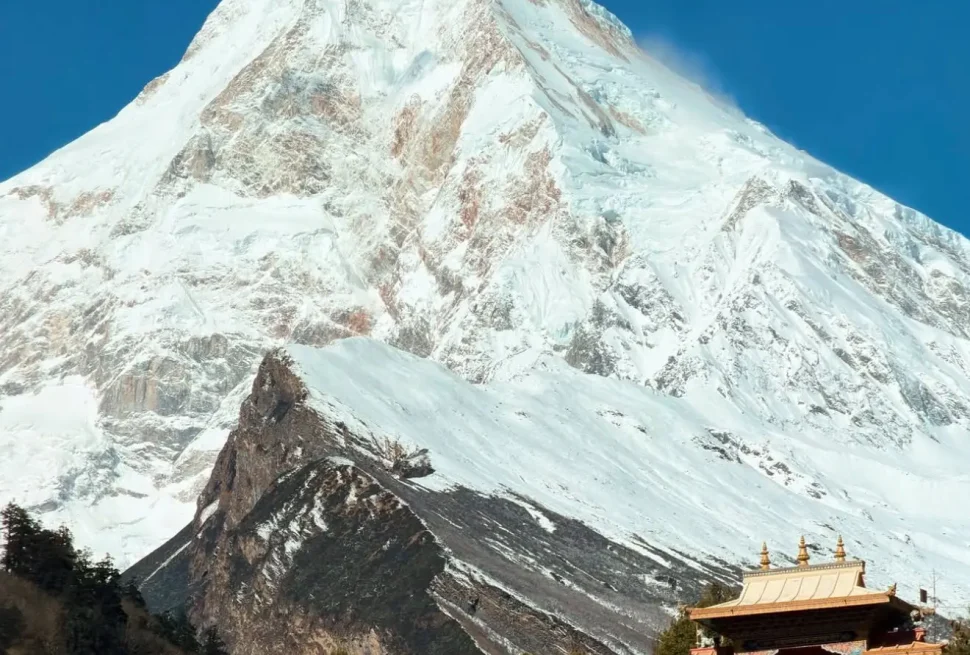
Nepal has dozens of trekking routes, and most of the obvious answers, Everest Base Camp, the Annapurna Circuit, are also the busiest. If part of what you are looking for is space rather than another crowd, the Manaslu Tsum Valley Trek is worth putting on the list. It sits in a restricted area close to the Tibet border, sees a fraction of the traffic of Nepal’s headline routes, and moves through Tibetan Buddhist villages and monasteries that have kept their own rhythm for centuries. It will not fix what happened. It will give you two or three weeks away from the version of your life where it happened, and for a lot of people going through something difficult, that is exactly the kind of trip they are looking for.
This guide answers the practical question first: what is a genuinely good trek to do after a breakup or a hard year, and does Manaslu Tsum Valley actually fit that need or is it just another destination getting pushed by trekking companies. It covers honest comparisons with easier routes, what a normal day on the trail looks like, what the trek costs, how hard it really is, and who should probably choose something else instead.
What Is the Best Trek to Do After a Breakup?
There is no single trek that works for everyone recovering from a breakup, and any article that tells you otherwise is oversimplifying. What actually matters is matching the trip to what you are looking for and to what your body and schedule can handle right now.
If you want a short walk with mountain views, comfortable lodges, and a trail full of other travelers to talk to, Ghorepani Poon Hill or the lower Annapurna trails do that well in four or five days. If you want the single most famous mountain view in the world and do not mind sharing the trail with a few hundred other trekkers a day in high season, Everest Base Camp delivers that. Both are good treks. Neither one is built around solitude.
If what you actually want is quiet, a slower pace, real cultural immersion in villages that have not been remade around tourism, and enough physical demand that you finish each day tired in a good way rather than restless, the Manaslu Tsum Valley Trek is one of the stronger options in Nepal. It is a restricted area, which keeps numbers down by regulation rather than by luck, and it combines two things that do not always come together on the same route: a genuinely remote Himalayan setting and a trail that most trekking companies still do not market as a beginner trip.
The right choice depends on four things: your fitness and trekking background, your available time (Tsum Valley alone runs roughly ten to twelve days including travel from Kathmandu, longer if combined with the full Manaslu Circuit Trek), your budget, and what kind of trip you actually want, cultural, physically demanding, social, or solitary. If you are reasonably fit, have two to three weeks free, and want distance from your normal life rather than a comfortable holiday, Manaslu Tsum Valley deserves serious consideration. If you want something shorter or gentler, it is fair to look elsewhere, and later sections of this guide cover those alternatives honestly rather than pretending one route suits everyone.
Where Should You Travel After a Breakup?
Before settling on a trek at all, it helps to look at the wider set of options people usually consider after a breakup or a difficult period, because trekking is not automatically the right answer for everyone.
Beach holidays and resorts
A beach trip offers rest, warm weather, and very little structure. That is exactly what some people need. It can also leave a lot of empty time to sit with your phone, which is not always helpful when you are trying to get some distance from a relationship that ended over text or social media.
City breaks
New cities offer novelty, food, museums, and people watching. They are a reasonable option if you want stimulation without physical effort. They rarely offer quiet, and a city trip can end up feeling like your normal life with different street names, especially if you spend the evenings back in a hotel room scrolling.
Solo travel in general
Traveling alone, wherever you go, forces a certain amount of decision making and self reliance that can be genuinely useful after a breakup. It gives you back a sense of being capable of running your own life, which a relationship ending can quietly chip away at.
Nature trips and hiking
Shorter hikes, national park trips, and weekend nature escapes give you outdoor time without a major commitment. They are a good entry point if you are not sure you want a multi day trek yet.
Cultural journeys
Trips built around temples, history, food, or art give you something to focus on outside your own situation. Nepal offers this too, and a trek through Tsum Valley includes a strong cultural layer alongside the walking.
Himalayan trekking
Trekking is different from all of the above because it combines physical activity, a clear daily structure, remoteness, and cultural exposure in one trip. You are not choosing between rest and activity, or between culture and nature. A trek like Manaslu Tsum Valley gives you a bit of all of it, along with a physical journey that has a defined beginning, middle, and end.
That last point matters more than it sounds. Staying at a resort, you decide each day what to do, and it is easy to do very little. On a trek, the day has a shape built into it: wake up, eat, walk to the next village, arrive, rest, eat, sleep. There is a village to reach and a route to complete. For some people going through a hard period, having that structure imposed from outside, rather than having to generate it themselves, is a relief in itself.
Why Go Trekking After a Breakup?
None of this is about trekking fixing anything. It cannot undo a breakup or resolve the reasons it happened. What it can do is create some distance and a different set of daily conditions, and for a lot of people that turns out to be useful in a few specific ways.
You leave your normal surroundings. The apartment, the neighborhood, the coffee shop you used to go to together, none of it is in front of you anymore. Some travelers find that physical distance from familiar places makes it easier to think about what happened without constantly being reminded of it by your environment.
You spend far more time outside than in ordinary life. Days on the Manaslu Tsum Valley route run five to seven hours of walking through forest, along rivers, and across mountain terrain. That is a lot of daylight and fresh air compared with a normal working week.
Your day gets a simple structure without much decision making. Walk, eat, arrive, rest, sleep. That predictability can help create some space in a mind that has been going in circles.
You get less time for constant scrolling. Signal is patchy or absent in parts of the Tsum Valley, and teahouse evenings do not offer much else to do besides talking, reading, or going to bed early. This is not a guaranteed digital detox, more on that later, but it does reduce the amount of passive phone time compared with a normal week at home.
You meet people outside your normal social circle. Other trekkers, guides, porters, and villagers are not part of your usual life, and conversations with people who know nothing about your situation can feel different from conversations with friends who do.
You experience something new and unfamiliar, which some travelers find gives them a change of perspective simply because so much of what they are looking at and doing is different from their routine.
You have time to reflect, walking for hours with nothing urgent to respond to, without pretending that reflection alone resolves anything.
You focus on the physical journey rather than your phone, since a rocky trail, a suspension bridge, or a steep climb requires attention in the moment.
You challenge yourself physically, and completing a demanding multi day trek can give some travelers a sense of having done something difficult and finished it, at a time when a lot of other things in life may feel unfinished or out of their control.
You create new memories that are entirely your own, made after the relationship ended, in a place that has nothing to do with it.
None of this heals a breakup. It can help create space, and it may give you a change of perspective for a while. Whether that is worth two or three weeks of your time and a fair amount of physical effort is a decision only you can make, and the rest of this guide is meant to help you make it with accurate information rather than promises.
Why Manaslu Tsum Valley Trek Is a Good Choice for This Kind of Trip
Tsum Valley sits in the upper Budhi Gandaki drainage, tucked behind the main Manaslu Circuit route and close to the Tibet border. It only opened to foreign trekkers in 2008, later than almost every other major trekking area in Nepal, which is one reason its villages and monasteries have kept more of their original character than routes that have been open to tourism for decades.
The setting is genuinely remote. You will walk for several days through terraced hillsides, pine and rhododendron forest, and narrow river gorges before the valley opens out near Chumling and Chhokangparo. Trails here are quieter than the Manaslu Circuit’s main route, and considerably quieter than Everest or Annapurna, because the whole area is a restricted zone with permit numbers well below Nepal’s most visited regions.
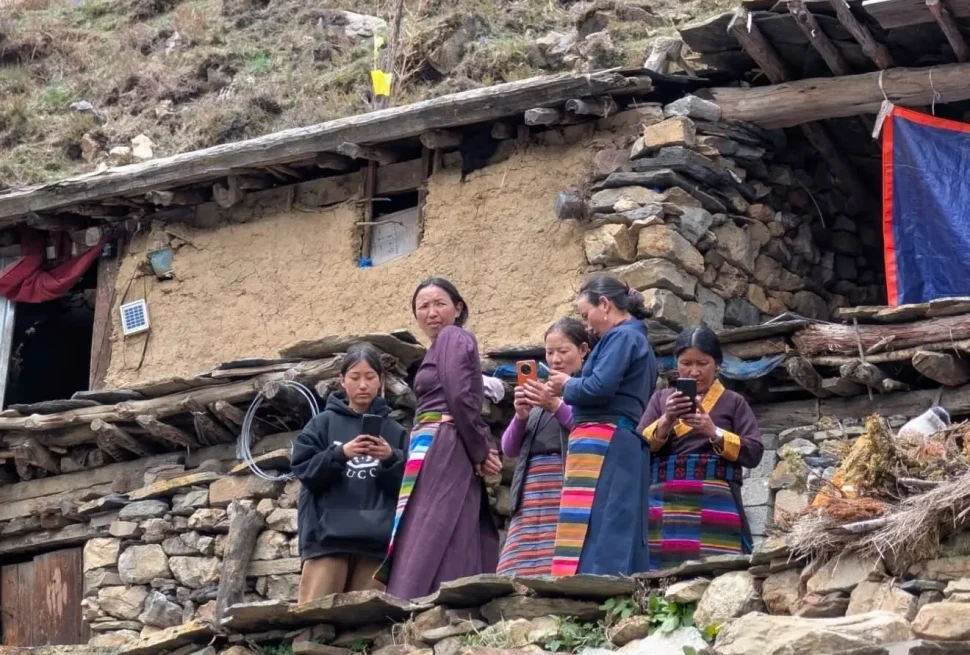
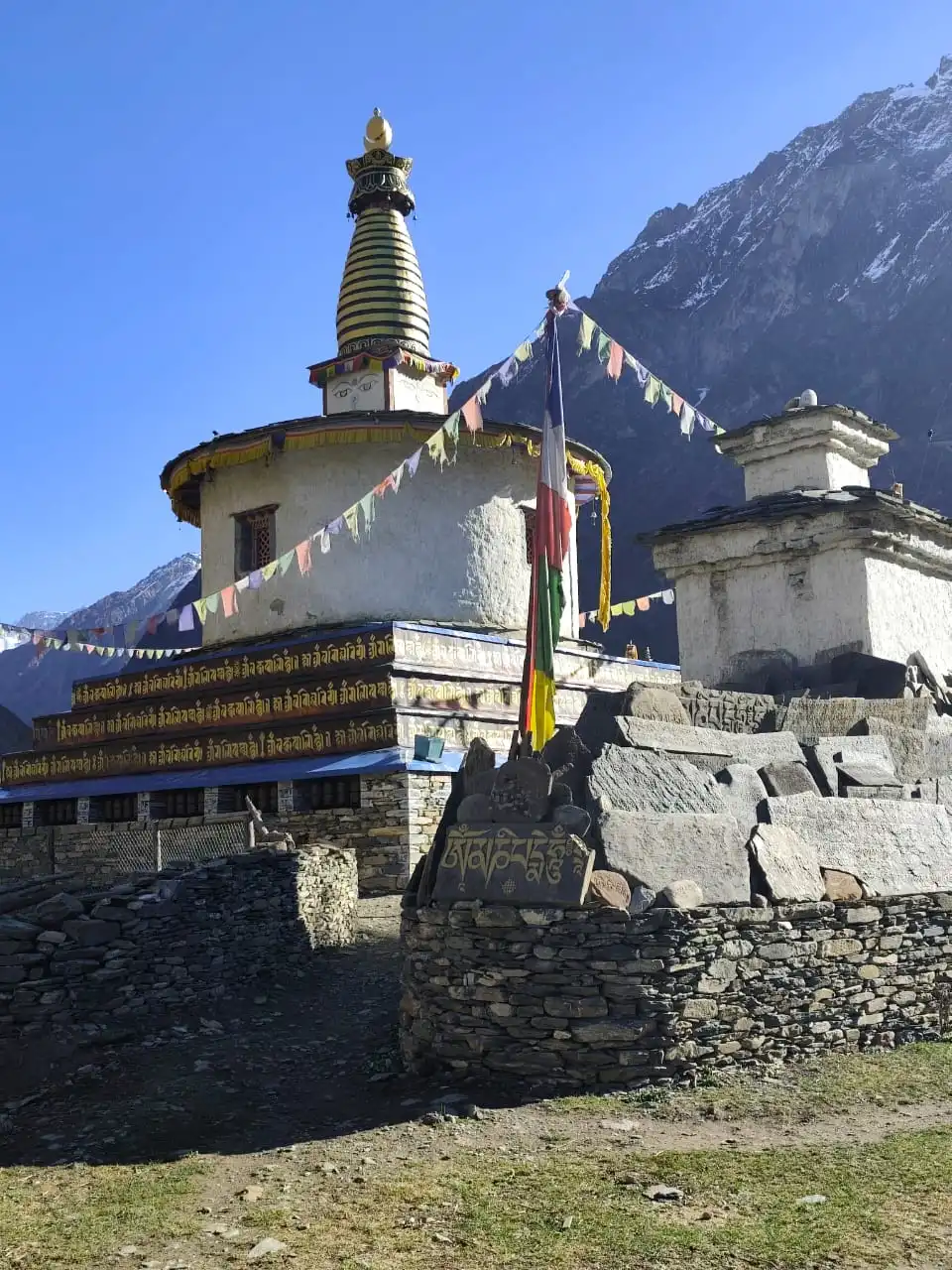
The villages, Chumling, Chhokangparo, Nile, and the settlements around Mu Gompa, are traditional Tibetan Buddhist communities. Long mani walls, chortens, and prayer flags line the trail, and the valley’s monasteries still function as working places of worship where resident monks and nuns carry out daily prayers, not stops that exist mainly for passing trekkers. Locals here speak a Tibetan dialect, follow Nyingma and Bon Buddhist traditions, and much of daily life still runs on farming and herding rather than tourism income.
Accommodation is teahouse style throughout: simple rooms, shared bathrooms in most places, basic but adequate food, and no wifi or hot shower guarantees once you are deep in the valley. This is not a luxury retreat, and nobody should book it expecting one. It is a genuine Himalayan trekking experience with all the discomfort and reward that comes with that.
Walking days run five to seven hours on uneven terrain, crossing suspension bridges over the Budhi Gandaki and climbing steadily as you move from around 900 meters at the trailhead to 3,700 meters at Mu Gompa. Phone signal and internet access are unreliable in the core of the valley and disappear completely in some stretches, which is a genuine break from constant connectivity even if it is not guaranteed or total.
Life on the trail runs on a slower rhythm than home: early starts, walking through the day, arriving at a teahouse in the afternoon, and going to bed not long after dinner because there is not much else to do once it gets dark and cold. For someone trying to get away from a routine that has become exhausting, that slower and simpler daily pattern is a large part of the appeal, separate from the mountain scenery itself.
Is Tsum Valley Good for Someone Who Wants Peace and Solitude?
It is worth being precise about what solitude actually means on a trekking route, because Tsum Valley is not empty and nobody should book the trip expecting to see no one for two weeks.
You will be trekking with a guide, and likely a porter, as required by Nepal’s restricted area regulations. You will pass other trekkers on the trail, though far fewer than on Everest or Annapurna routes. You will stay in teahouses run by local families, eat meals prepared by them, and interact with villagers going about daily life: farming, herding yaks, tending small shops, running the monasteries. Guides, porters, and local people are part of the experience, not an interruption to it.
What Tsum Valley offers instead of total isolation is quiet. Trails between villages are often empty for long stretches. Teahouses are small, usually hosting a handful of trekking groups rather than dozens. Mornings start early and calm, with mist over the valley and little noise beyond birds and the river. Evenings in the smaller villages are dark and still once the kitchen fire goes out. Monasteries like Mu Gompa and Rachen Gompa sit in settings that feel genuinely removed from the modern world, even with a handful of other visitors present on any given day.
If what you are picturing is a fully private wilderness experience with no other people at all, Tsum Valley will not deliver that, and neither will almost any trek in Nepal, since the restricted area system requires a guide by law. If what you want is a route with far fewer crowds than Nepal’s famous trails, small settlements instead of trekking towns, and long quiet stretches on the trail between conversations, Tsum Valley is a strong fit. Travelers who specifically want complete isolation, with no guide, no porter, and no other trekkers, would be better served by a different kind of trip entirely, possibly outside Nepal’s guided restricted area system altogether.
Best Places in Manaslu Tsum Valley to Slow Down
A handful of stops on the route stand out as genuinely good places to slow the pace down, rather than just pass through on the way to the next village.
Chumling (2,386 m)
Chumling is the first proper village inside Tsum Valley, reached after the climb up from Lokpa. It is split into Lower and Upper Chumling and holds three monasteries, including Panago Gompa. Most itineraries schedule an overnight here, which gives you time to walk up to the monasteries in the late afternoon light rather than rushing through. It suits rest after a demanding uphill day more than active exploration.
Chhokangparo (3,031 m)
Chhokangparo sits on one of the widest flat sections of the valley and is actually two adjoining settlements, Chhokang and Paro. The open ground here, framed by the surrounding peaks, makes it one of the more visually striking stops on the route and a natural place to take a slower half day, since several onward trails and monastery visits branch out from here.
Rachen Gompa (3,240 m)
Rachen Gompa is an active nunnery near Chhokangparo, usually visited on the return leg of the trek. It is a working religious site rather than a museum, and visits tend to be quiet and unhurried. This is a good stop for exploration rather than rest, since the monastery itself is the point of coming here.
Nile and Chule (around 3,350 m)
These are the last permanent settlements before Mu Gompa, small and simple, with a genuine end of the road feeling. Most trekkers pass through rather than staying long, but the short walk between Nile and Chule is one of the quieter, more open stretches of the trek and worth slowing down for even briefly.
Mu Gompa (3,700 m)
Mu Gompa is the highest and most significant monastery in the valley, the largest and oldest in the region, sitting close to the Tibet border with views toward Ganesh Himal and Sringi Himal. This is the natural high point of the trek, both in altitude and in atmosphere, and most itineraries build in extra time here, either resting after the climb or continuing a short distance further to a viewpoint before heading back down. It suits both rest, since many trekkers are tired by this point, and quiet exploration around the monastery grounds.
None of these places are staged for visitors or built around a particular kind of experience. They are working villages and monasteries that happen to sit along a trekking route, which is part of why slowing down here feels different from stopping at a scenic viewpoint on a busier trail.
What Does a Typical Day Feel Like on the Manaslu Tsum Valley Trek?
Mornings start early, usually with a wake up call from your guide around six, followed by a basic breakfast, tea or coffee, eggs, porridge, or Tibetan bread, while the kitchen staff pack up for the day. The air is cold and often clear before the day heats up, and packing your bag for the porter happens quickly since there is not much to organize once your gear is sorted the night before.
The walking itself fills most of the day, usually five to seven hours with breaks. The trail moves through pine and rhododendron forest, along the Budhi Gandaki and its side valleys, across suspension bridges strung high over the river, and past mani walls and small settlements. You gain altitude gradually rather than all at once, and your guide will set a pace that allows for that. Tea houses along the way offer a chance to stop for milk tea, noodle soup, or a rest before continuing. Conversation on the trail happens naturally, with your guide, porter, or other trekkers if you are in a group, but there are also long stretches where nobody is talking and the only sound is your own footsteps and the river.
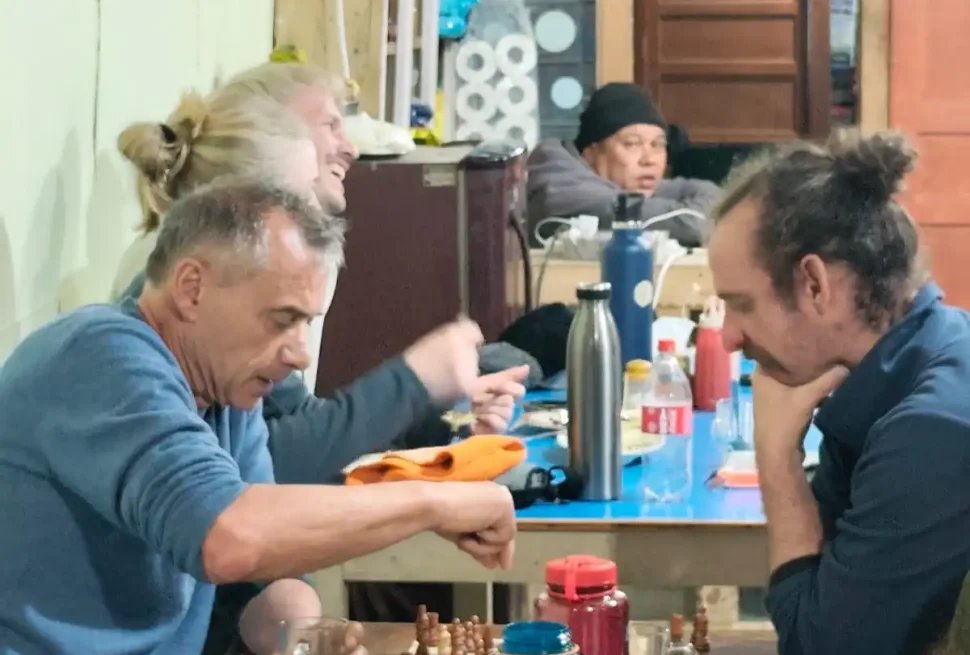
Arrival at the day’s teahouse usually comes in the mid to late afternoon. There is time to wash up, change out of wet or sweaty layers, and rest before dinner. Many trekkers use this window to read, write, or simply sit somewhere warm and watch the light change on the surrounding peaks. Dinner is typically dal bhat, noodles, or simple soups and vegetables, eaten around a shared table or stove with whoever else is staying there that night, which is often where the more genuine conversations of the day happen.
Evenings end early. Once dinner is finished, there is little to do beyond talking, reading by headlamp, or going over the next day’s plan with your guide, and most trekkers are in bed well before ten. Screen time drops sharply compared with a normal evening at home, less because of any deliberate rule and more because there is often no signal, limited battery, and genuinely nothing to check. Sleep tends to come early and, for many people, more deeply than it does at home, helped along by the physical effort of the day.
Can Hiking Help You Clear Your Mind?
There is no medical claim to make here, and this guide is not going to pretend otherwise. Hiking is not a treatment for depression, anxiety, grief, or any other mental health condition, and it should not be treated as a substitute for one.
What can be said honestly is that repetitive walking, fresh air, physical activity, and quiet surroundings are things a lot of people find genuinely helpful for their mood and mental clarity in the short term. The rhythm of walking for hours, one foot after another, on a trail that requires just enough attention to keep you present, gives your mind something to do besides replay the same thoughts. Simple daily routines, wake, walk, eat, sleep, remove a lot of the small decision fatigue that builds up in ordinary life. Time away from constant notifications and comparison on social media gives some people space they did not realize they were missing. None of this is unique to Nepal or to this particular trek, but the combination of remoteness, culture, and physical demand on the Manaslu Tsum Valley route makes that space more complete than it would be on a short local walk.
If you are dealing with a difficult breakup or a hard period and finding it hard to function day to day, a trek can be a genuinely good break, but it is not a substitute for professional mental health support. If things feel like more than ordinary sadness or stress, a conversation with a doctor, therapist, or counselor is a better first step than a plane ticket, and the two are not mutually exclusive. Plenty of people do both.
Travel After a Breakup Alone or With Friends?
There is no single right answer here, and it is worth thinking honestly about which situation actually suits you rather than assuming solo travel is automatically the more meaningful choice.
Solo travel
Traveling alone gives you full independence over your pace, your rest days, and your own thoughts without needing to manage anyone else’s mood or expectations. It also comes with real logistics to consider: in a restricted area like Manaslu and Tsum Valley, a licensed guide is mandatory for every trekker, solo or otherwise, and as of 2026 Nepal’s Department of Immigration removed the old requirement for a minimum of two trekkers on restricted area permits, so a genuinely solo traveler can now obtain the paperwork without needing a second person on the booking. That still means you will not be walking entirely alone, since your guide (and usually a porter) is with you throughout, which also addresses a lot of the safety and loneliness concerns that come with solo trekking in a genuinely remote area.
Traveling with friends
Trekking with one or two friends gives you shared memories, someone to talk to at the end of a long day, and generally easier logistics since costs and planning are split. The trade off is less personal space and pace flexibility, and a group dynamic that may or may not be what you need while processing something difficult.
A private guided trek
Booking a private trek with a local guide, rather than joining a fixed group departure, is a middle path some travelers prefer after a breakup. You get the independence of traveling without friends or family, but with an experienced local guide setting the pace, handling logistics, and providing company on the trail without the emotional weight of familiar relationships. For a restricted area like Tsum Valley, where a guide is required regardless, this often ends up being the most practical option for solo travelers who still want some flexibility over their itinerary.
None of these options is universally better. Someone who finds solitude restorative and copes well with logistics on their own may prefer solo trekking with a private guide. Someone who processes things better out loud, with company, may get more out of the trip with a friend along. Both are valid reasons to book the same trek.
Manaslu Tsum Valley Trek Is Not a Vacation for Everyone
It is worth being direct about this before anyone books: the Manaslu Tsum Valley Trek is a demanding trip, not a relaxing getaway, and going through a hard emotional period does not make the physical trek any easier.
Walking days run five to seven hours, sometimes longer, over uneven terrain with significant uphill and downhill sections, often on the same day. Altitude becomes a real factor above 3,000 meters, with Mu Gompa reaching 3,700 meters, and altitude related discomfort, headaches, poor sleep, reduced appetite, is common even for fit trekkers who acclimatize properly. Accommodation is basic teahouse lodging throughout: simple rooms, shared or squat toilets in many places, and no heating beyond a communal stove in the dining room. Weather in the mountains changes quickly, and rain, cold snaps, or early snow are all possible depending on season. Roads and trails on the approach can be rough, and the drive from Kathmandu to the trailhead alone takes the better part of a day on bumpy, sometimes landslide affected roads.
Physical preparation matters. Someone who does not walk regularly, has no hiking background, and is not reasonably fit will struggle on this route regardless of how much they need a change of scenery. Facilities in the more remote sections are limited: no pharmacies, no reliable medical care beyond basic first aid, and evacuation from deep in the valley takes time and, in serious cases, requires a helicopter.
If what you actually want is a relaxing, low effort holiday where you can process things quietly by a pool or in a comfortable hotel room, this is not that trip, and forcing it will likely leave you exhausted rather than restored. The people who get the most out of Manaslu Tsum Valley are not looking for comfort. They are looking for distance, challenge, and a different pace of life, and are willing to accept some real physical discomfort to get it.
Manaslu Tsum Valley Trek vs Easier Nepal Treks After a Breakup
For travelers weighing Manaslu Tsum Valley against shorter, lower altitude options like Ghorepani Poon Hill or Mardi Himal, here is an honest comparison rather than a sales pitch for the harder route.
| Trek | Typical Duration | Max Altitude | Difficulty | Crowd Levels | Cultural Depth | Solitude | Accommodation |
|---|---|---|---|---|---|---|---|
| Ghorepani Poon Hill | 4 to 5 days | Around 3,210 m (Poon Hill viewpoint) | Easy to moderate | High, one of Nepal’s busiest short treks | Gurung and Magar villages, moderate | Low, popular and social | Comfortable teahouses, frequent wifi |
| Mardi Himal | 5 to 7 days | Around 4,500 m (Mardi Himal Base Camp) | Moderate | Moderate, quieter than Annapurna Base Camp but growing fast | Limited, fewer permanent villages on route | Moderate | Simple teahouses, patchy wifi at altitude |
| Manaslu Tsum Valley | 10 to 14 days | 3,700 m (Mu Gompa) | Moderate to challenging | Low, restricted area with limited permits | Strong, active Tibetan Buddhist monasteries and villages | High relative to Nepal’s popular routes | Basic teahouses, unreliable wifi and signal |
Someone with limited time, a lower fitness level, or a preference for a social trekking atmosphere is better served by Poon Hill or Mardi Himal. Someone with two weeks available, reasonable fitness, and a specific interest in quieter trails and deeper cultural immersion is better served by Manaslu Tsum Valley. Neither trek is automatically the better choice. They serve different needs, and being honest about that upfront saves people from booking a trip that does not match what they actually want.
Manaslu Tsum Valley Trek vs Manaslu Circuit Trek
Trekkers who already know they want the Manaslu region often end up choosing between Tsum Valley on its own, the full Manaslu Circuit, or combining both into one longer trip.
| Feature | Tsum Valley Trek | Manaslu Circuit Trek |
|---|---|---|
| Focus | Cultural immersion, traditional villages, active monasteries | Classic high altitude circuit, dramatic mountain landscapes |
| Max Altitude | 3,700 m (Mu Gompa), no major pass crossing | 5,106 m (Larkya La Pass) |
| Duration | 10 to 12 days round trip from Kathmandu | 13 to 15 days from Kathmandu |
| Difficulty | Moderate, long walking days but no technical pass | Moderate to challenging, includes a high, occasionally icy pass crossing |
| Atmosphere | Quieter, fewer trekkers than the main circuit | Busier than Tsum, still far quieter than Everest or Annapurna |
| Cultural Experience | Very strong, active Nyingma and Bon Buddhist communities | Strong, Tibetan influenced villages along the Budhi Gandaki |
Trekking only Tsum Valley means skipping the high altitude challenge and the Larkya La Pass crossing. Trekking only the Manaslu Circuit means missing the most culturally distinct section of the region. Combining both, usually as a 19 to 23 day itinerary, gives experienced trekkers with enough time and fitness the full picture: roughly ten to twelve days of lower altitude cultural immersion in Tsum, which also serves as useful acclimatization, followed by six to eight days of increasingly high mountain terrain on the main circuit up to the pass. For someone with limited time or moderate fitness, choosing one or the other rather than combining them is often the more realistic option.
How Difficult Is Manaslu Tsum Valley Trek?
Daily walking hours typically run five to seven hours, occasionally longer on the approach days near Machha Khola and Jagat or on the push up to Mu Gompa. Total elevation gain over the trek is significant, moving from around 900 meters at the trailhead to 3,700 meters at the highest point, spread gradually across a week or more, which helps with acclimatization compared with routes that gain height faster.
Terrain varies from riverside trails and forest paths to steep stone staircases and narrow sections above the Budhi Gandaki gorge, along with multiple suspension bridge crossings. None of it is technical climbing, but sustained walking on uneven ground for several hours a day adds up, especially with a full day’s pack even when a porter is carrying the bulk of your gear.
Acclimatization matters above 3,000 meters, and a well planned itinerary builds in rest or short acclimatization days rather than rushing straight to Mu Gompa. Weather adds a further variable: clear in good conditions, but cold mornings and evenings are normal even in the recommended seasons, and rain or early snow is possible outside peak windows.
This trek does not suit complete beginners with no walking or hiking background, and it does not suit anyone expecting a gentle, relaxing pace. It suits people with reasonable general fitness, some hiking or long walking experience, and a realistic understanding that they will be tired most evenings. If you are going through a genuinely difficult emotional period, it is worth being honest with yourself about your physical readiness too, since a demanding trek adds real physical stress on top of whatever you are already carrying emotionally. Rest, sleep, and eating properly in the weeks before departure make a meaningful difference. For a more detailed breakdown by fitness level, see our full Manaslu Trek Difficulty guide.
Best Time to Go Trekking in Nepal After a Breakup
Timing matters as much for trail conditions as for how the trip will feel, so it is worth choosing a season deliberately rather than just booking whenever you can get time off work.
| Season | Months | Conditions | Good to Know |
|---|---|---|---|
| Spring | March to May | Rhododendron forests in bloom below 3,500 m, generally stable weather, warmer than autumn | Popular season, good visibility, some snow may still linger at the highest points early in the season |
| Autumn | September to November | Clearest skies of the year, dry trails, cold mornings and evenings | The most popular and reliable window, book teahouses and permits ahead where possible |
| Winter | December to February | Cold, especially above 3,000 m, occasional snow on the trail, fewer trekkers | Manageable for Tsum Valley alone since it does not cross a high pass, but a real test of cold tolerance; combining with the Manaslu Circuit’s Larkya La Pass in winter is not advisable |
| Monsoon | June to August | Persistent rain, leeches on the lower forested sections, risk of landslides on the approach road and trail | Least recommended season, though the inner valley above Chumling sees somewhat less rainfall than the lower gorge |
Spring and autumn are the two reliable windows for this trek, and most trekkers, including those specifically looking for clear mountain views and stable trail conditions, should plan around one of these. For a full month by month breakdown, see our Manaslu Tsum Valley Trek Best Time guide.
How Much Does Manaslu Tsum Valley Trek Cost?
Costs vary by season, group size, trip length, and whether you book a private or group departure, so treat the figures below as a realistic 2026 range rather than a fixed quote, and confirm current pricing directly with a trekking company before booking.
Permits make up a fixed and unavoidable part of the cost. The Manaslu Restricted Area Permit runs USD 100 per person for the first seven days in the September to November high season, plus USD 15 per person for each additional day, or USD 75 for the first seven days plus USD 10 per extra day for the rest of the year. The Manaslu Conservation Area Permit and the Annapurna Conservation Area Permit, needed if your route exits through Dharapani, each cost around USD 30 per person. Tsum Valley requires its own additional special permit, generally quoted in the range of USD 40 to 50 depending on season and trip length, and a separate Chum Nubri Rural Municipality permit of roughly NPR 1,000 per person. Note that different operators, including different guides on this site, present the Tsum Valley permit fee slightly differently (as a standalone charge versus bundled into RAP registration), so it is worth asking your agency for an itemized breakdown before booking.
Beyond permits, the main cost drivers are guide and porter fees (commonly USD 25 to 35 per day for a licensed guide and USD 18 to 25 per day for a porter, including their meals and insurance), teahouse accommodation (roughly USD 5 to 12 per night, sometimes free with meals purchased), meals on the trail (around USD 20 to 30 per person per day), ground transport between Kathmandu and the trailhead, and travel insurance with high altitude coverage, which typically runs USD 100 to 150 for a month and is worth having given how far evacuation can be from the more remote sections of the valley.
Put together as an all inclusive package, a standalone Tsum Valley trek or a Tsum Valley extension added to the Manaslu Circuit generally falls somewhere between roughly USD 1,200 and 1,500 per person for a standard group departure, with longer combined itineraries of nineteen to twenty three days often priced from around USD 1,650 up to 2,200 or more per person depending on group size and season. Private and solo departures cost more per person than group bookings since fixed costs are spread across fewer travelers. For current package pricing and inclusions, see our Manaslu Circuit Trek Cost guide, and confirm the exact quote for your dates and group size directly with a trekking company, since permit rules and prices do change from year to year.
What Is Included in a Manaslu Tsum Valley Trek Package?
Inclusions vary between companies, so always ask for a written breakdown before booking, but a typical package generally covers a licensed guide for the full route, a porter (often shared between two trekkers), all required permits (RAP, MCAP, ACAP where relevant, Tsum Valley permit, and the Chum Nubri municipality fee), teahouse accommodation for the duration of the trek, and three meals a day while on the trail.
Ground transportation between Kathmandu and the trailhead, whether by local bus, shared jeep, or private vehicle depending on the package tier, is usually included, along with basic first aid supplies carried by the guide and applicable government taxes. Some companies also provide a duffel bag for the porter to carry and a pre trek briefing covering altitude safety and what to expect day by day.
What is typically excluded: international flights to and from Nepal, the Nepal tourist visa fee, personal trekking gear (sleeping bag, down jacket, trekking poles, unless specifically rented through the company), travel and high altitude insurance, hot showers, wifi, and battery charging at teahouses (usually paid on the spot, a few dollars each), personal snacks and bottled or treated water, tips for guide and porter, and any costs arising from itinerary changes due to weather, illness, or personal preference. Always confirm exactly what is and is not covered before paying a deposit, since packages advertised at similar prices can differ meaningfully in what they actually include.
How to Prepare for a Manaslu Tsum Valley Trek
Physical preparation matters more than gear, so start with your body. In the weeks before departure, build up walking stamina with regular hikes on hilly terrain if possible, or stairs and inclines if not, along with general cardio fitness. You do not need technical mountaineering skills, but you do need the ability to walk five to seven hours a day for multiple consecutive days.
For gear, prioritize comfortable, well broken in trekking boots over anything new, a layering system rather than one heavy jacket (base layer, insulating layer, waterproof outer shell), a warm hat and gloves for cold mornings and evenings at altitude, a sleeping bag rated for below freezing temperatures if your package does not include one, a reusable water bottle with a means of purifying water (tablets or a filter), a power bank since charging is unreliable and sometimes chargeable at teahouses, and a basic personal first aid kit with blister care, altitude medication if prescribed by your doctor, and any personal medication you need.
Administratively, make sure your passport has at least six months of validity remaining, arrange your Nepal tourist visa in advance or on arrival, and confirm your trekking company has handled the restricted area permits, since these cannot be obtained independently. Take out travel insurance that specifically covers high altitude trekking and helicopter evacuation. Pack light: your porter has a weight limit, and carrying less makes the daily walk considerably more comfortable.
Culturally, dress modestly, particularly around monasteries and villages, ask before photographing people, walk clockwise around mani walls and chortens as is customary, and remove your shoes before entering monastery buildings when asked. Tsum Valley communities are welcoming to respectful visitors, and small courtesies go a long way in a region that still sees relatively few outside visitors each year.
What About Internet and Phone Connectivity?
Connectivity on this route is inconsistent, and you should not plan around having reliable access. Some villages, particularly Lokpa, Chumling, and Chhokangparo, have basic mobile signal from Nepali providers, though it can be slow or drop entirely depending on weather and location. Certain teahouses offer wifi for a small daily fee, but speed and reliability vary widely and it is common for it to be down entirely for stretches of a day or more. The most remote sections, particularly around Nile, Mu Gompa, and some higher side trails, have limited or no signal and no wifi at all.
Do not expect anything close to city level internet anywhere on this route. Download maps, permits, insurance documents, and anything else you might need offline before you leave Kathmandu. A power bank is genuinely useful, both because charging outlets are limited and sometimes chargeable, and because you will want your phone available for photos and emergencies even without a signal. This is not a guaranteed or complete digital detox, since some connectivity exists in parts of the valley, but for most of the trek you will have meaningfully less access than in ordinary daily life, which for many travelers coming out of a hard period is a large part of the point.
Who Should Choose the Manaslu Tsum Valley Trek?
This trek tends to suit people who enjoy walking for its own sake, want meaningful time in nature rather than a quick scenic stop, are genuinely interested in Tibetan Buddhist culture and village life, prefer quieter trails over Nepal’s busiest routes, want a remote experience rather than a well trodden one, are physically prepared for five to seven hour walking days at altitude, are comfortable with simple teahouse accommodation and basic facilities, are looking for a meaningful, somewhat difficult trip rather than a relaxing one, and have two to three weeks available including travel time to and from Nepal.
Who Should Choose a Different Trek?
Honesty matters here as much as anywhere else in this guide. Someone with limited time, under a week for the actual trek, is better served by a shorter route like Ghorepani Poon Hill. Someone with lower fitness or no hiking background at all should build up experience on an easier trek before attempting Tsum Valley, or consider a cultural tour without the daily physical demands. Someone who wants a highly social trekking atmosphere with plenty of other travelers to meet may find the Manaslu region too quiet compared with Everest or Annapurna. Someone who wants dramatic high altitude mountain scenery and a major pass crossing without the extended cultural section might prefer looking at the Manaslu Circuit on its own or Mardi Himal for a shorter high altitude taste. And someone who genuinely needs rest and comfort right now, rather than physical challenge, may be better off with a normal holiday rather than any demanding trek at all. There is no failure in choosing a different trip. The goal is finding what actually helps, not proving something on a trail.
Frequently Asked Questions
What is the best trek to do after a breakup?
There is no universal answer, but for travelers who want quiet, nature, cultural depth, and physical challenge rather than a relaxing resort holiday, the Manaslu Tsum Valley Trek is a strong option. Those wanting something shorter or easier may prefer Ghorepani Poon Hill or Mardi Himal instead.
Where should I travel after a breakup?
It depends what you need: rest suits a beach trip, stimulation suits a city break, and distance combined with structure and nature suits trekking. Nepal’s Manaslu Tsum Valley region is a good option for travelers specifically looking for a quiet, remote, culturally rich trek.
Is trekking good after heartbreak?
Many travelers find it helpful for creating distance from their normal environment and daily routine, but trekking does not resolve or heal heartbreak. It offers a change of scenery, physical activity, and time to think, not a solution to the underlying situation.
Can hiking help clear your mind?
Some travelers find that the repetitive rhythm of walking, fresh air, and quiet surroundings help create mental space and a change of perspective. This is not a medical claim, and hiking is not a substitute for professional mental health support if you are struggling seriously.
Is Manaslu Tsum Valley good for solitude?
It offers considerably more quiet than Nepal’s busiest routes, with small settlements, empty trail stretches, and far fewer trekkers than Everest or Annapurna. It is not a fully isolated wilderness experience, since a guide and often other trekkers are part of every restricted area trek.
Is Tsum Valley crowded?
No. As a restricted area with permit limits, Tsum Valley sees far fewer visitors than Nepal’s mainstream trekking routes. You will still encounter other trekkers, guides, porters, and villagers along the way.
Can I trek Manaslu alone?
As of 2026, Nepal removed the requirement for a minimum of two trekkers on restricted area permits, so a solo traveler can now obtain the permit individually. A licensed guide is still mandatory for the entire route regardless of group size.
Is Manaslu Tsum Valley Trek difficult?
It is moderate to challenging, with five to seven hour walking days, significant elevation gain up to 3,700 meters, and uneven mountain terrain. It does not involve technical climbing but does require reasonable fitness and some hiking experience.
How many days does the trek take?
A standalone Tsum Valley trek typically runs ten to twelve days from and back to Kathmandu. Combined with the full Manaslu Circuit, itineraries usually extend to nineteen to twenty three days.
What is the best season for the Manaslu Tsum Valley Trek?
Spring (March to May) and autumn (September to November) offer the most stable weather and clearest views. Winter is workable for Tsum Valley alone since it does not cross a high pass, while monsoon (June to August) is the least recommended season due to rain and landslide risk.
How much does the Manaslu Tsum Valley Trek cost?
A standard all inclusive package typically falls between roughly USD 1,200 and 1,500 per person, with longer combined itineraries with the Manaslu Circuit priced higher. Costs vary by group size, season, and operator, so confirm current pricing directly before booking.
Do I need a guide for Tsum Valley?
Yes. Tsum Valley and the wider Manaslu region are restricted areas under Nepali law, and a licensed guide is mandatory for every trekker, including solo travelers.
Is internet available on the Manaslu Tsum Valley Trek?
Connectivity is inconsistent. Some villages have basic mobile signal or paid wifi, while more remote sections have no reliable connection at all. Do not expect city level internet anywhere on the route.
Is Tsum Valley suitable for first time trekkers?
It is possible for a fit first time trekker with some hiking or long walking background, but it is not a beginner route. Trekkers with no hiking experience at all are better served by a shorter, lower altitude trek first.
What should I pack for the Manaslu Tsum Valley Trek?
Broken in trekking boots, layered clothing, a warm hat and gloves, a cold rated sleeping bag if not provided, a reusable water bottle with purification, a power bank, and a basic first aid kit are the essentials. Pack light, since your porter has a weight limit.
Can I combine Tsum Valley with the Manaslu Circuit?
Yes, this is a common combined itinerary, usually nineteen to twenty three days, that adds the cultural depth of Tsum Valley to the high altitude Larkya La Pass crossing on the main circuit. It requires more time, fitness, and budget than either trek alone.
Is Manaslu better than Mardi Himal for solitude?
Manaslu Tsum Valley generally offers more solitude than Mardi Himal, since it sits within a restricted area with lower permit numbers, while Mardi Himal has grown busier in recent seasons as an accessible short trek from Pokhara.
What permits are required for the Manaslu Tsum Valley Trek?
You need the Manaslu Restricted Area Permit, the Manaslu Conservation Area Permit, the Tsum Valley special permit, the Chum Nubri Rural Municipality permit, and the Annapurna Conservation Area Permit if your route exits through Dharapani. A registered trekking agency arranges all of these on your behalf.
Planning Your Manaslu Tsum Valley Trek With a Local Nepal Trekking Company
A trip like this is easier and safer to plan with a local company that actually knows the route, rather than piecing it together yourself, since Tsum Valley cannot legally be trekked without a licensed guide and agency support in the first place.
A local Nepal based operator brings a few concrete advantages: current knowledge of trail and teahouse conditions that change season to season, correct handling of the RAP, MCAP, ACAP, and Tsum Valley permits so nothing holds you up at a checkpoint, proper guide and porter arrangement, realistic transportation planning between Kathmandu and the trailhead, sensible acclimatization built into the itinerary rather than a rushed schedule, direct local communication with teahouses and villages along the way, and a faster, better informed response if something goes wrong, whether that is a weather delay, an illness, or an evacuation.
Manaslu Treks and Expedition is based in Gorkha district, the region both the Manaslu Circuit and Tsum Valley pass through, and our guides have walked this route across multiple seasons. If you are weighing whether this trek is the right way to spend the next few weeks, we are glad to talk through the realistic version of the trip, difficulty, timing, and cost included, rather than just sell you the highlights. You can view our Manaslu Tsum Valley Trek packages or get in touch directly to plan dates that work for you.
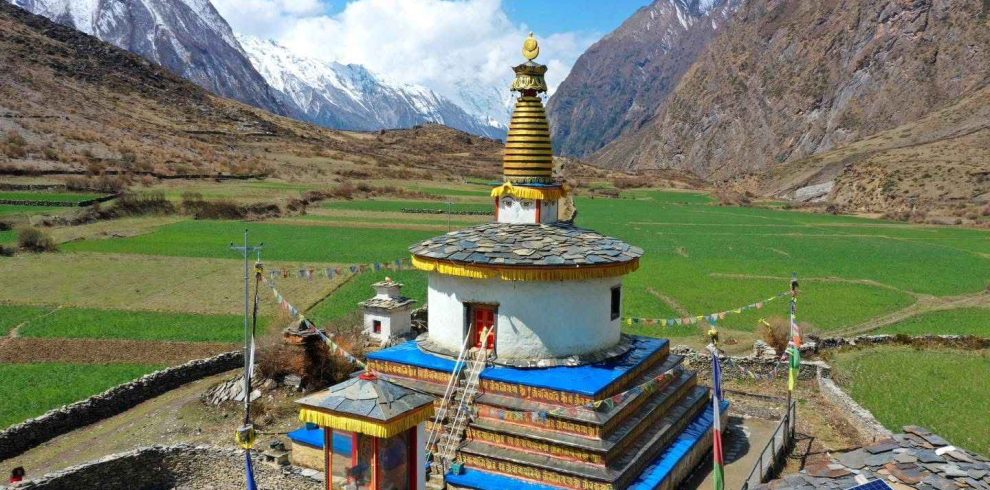
The 23-day Tsum Valley & Manaslu Circuit Trek combines breathtaking Himalayan landscapes with the preserved Tibetan Buddhist culture of a…