You don’t need to be fluent in Nepali to trek in Nepal. You don’t even need more than a few dozen words. But those words? They change everything. The moment you say “Namaste” with your hands pressed together at a checkpoint, or ask for “chiya” at a teahouse instead of pointing at the kettle, something shifts. The person in front of you goes from seeing a tourist to seeing someone who cares enough to try. That’s worth more than any tip or any amount of gear.
This guide gives you everything you need: greetings, directions, food phrases, health words, numbers, and cultural expressions. Every phrase comes with a pronunciation guide so you can actually say it out loud. Use this before your trek, review it on the plane, and screenshot the quick reference card at the end. By the time you reach your first teahouse, you’ll already feel more connected to the trail.
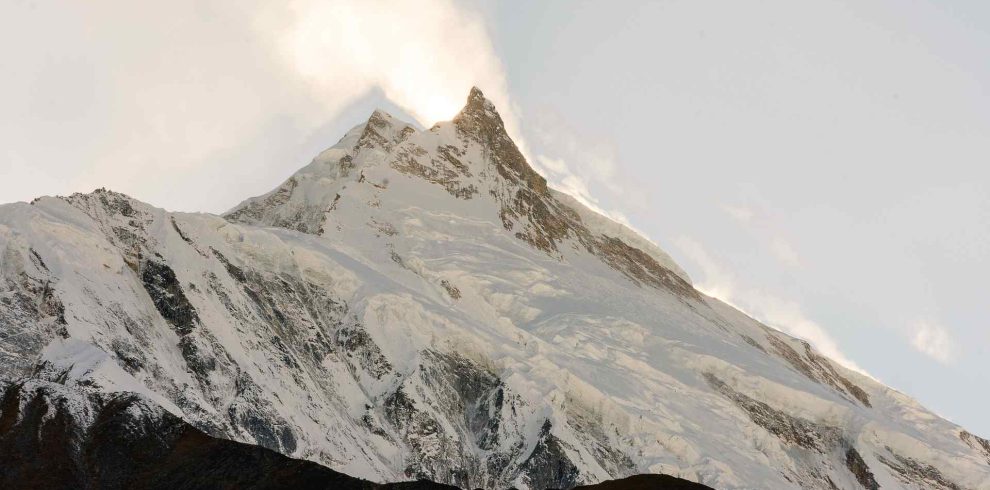
The 9 Days Manaslu Circuit Trek, also known as the Short Manaslu Circuit Trek, is designed for trekkers who want…
Why Learning a Few Nepali Words Changes Everything
Every guide at Manaslu Treks has watched this moment happen hundreds of times. A trekker sits down at a teahouse somewhere on the Manaslu Circuit, orders in Nepali, and the lodge owner’s face just opens up. The smile is real. The service is warmer. The conversation starts. And suddenly, the trekker isn’t just passing through Nepal, they’re part of it for a moment.
Nepal’s trekking regions sit at the meeting point of dozens of ethnic communities: Gurung, Sherpa, Tamang, Magar, Thakali. Most speak Nepali alongside their mother tongue. When you speak even a little Nepali, you’re showing that you didn’t just come to tick a mountain off a list. You came to meet people.
At altitude checkpoints, a simple “Dhanyabad” after your permit gets stamped makes the officer smile. At a village shop, asking “Kati paryo?” before pointing at a price shows respect for the local economy. At a teahouse after a hard day, saying “Mitho chha” about the dal bhat will get you a bigger second serving every single time. These aren’t tricks. They’re just human connections, and Nepali is the bridge.
The good news is that Nepali is phonetic. What you see written is what you say. There’s no silent letter nonsense, no tonal complexity like Mandarin, no script you need to master to speak it. This guide uses simple English phonetic spellings so you can start speaking today.
Essential Greetings and Basic Conversation
Start here. These phrases cover every social situation you’ll find on the trail, from meeting a porter at the trailhead to chatting with a teahouse family at night. The golden rule: always greet first, and always use “Hajur” when talking to anyone older than you.
| Nepali Word / Phrase | Pronunciation | English Meaning | When to Use |
|---|---|---|---|
| Namaste | Na-mas-te | Hello / Greetings | Meeting anyone, any time of day |
| Dhanyabad | Dhan-ya-bad | Thank you | After receiving food, help, or any service |
| Subha bihani | Su-bha bi-ha-ni | Good morning | Morning greeting in teahouses and at camp |
| Tapailai kasto chha? | Ta-pai-lai kas-to chha | How are you? | Friendly conversation with anyone |
| Sanchai chhu | San-chai chhu | I am fine / I am well | Response when someone asks how you are |
| Mero naam [name] ho | Me-ro naam ho | My name is [name] | Introducing yourself to guides, porters, locals |
| Tapai ko bhetnuparda khushi lagyo | Ta-pai ko bhet-nu-par-da khu-shi lag-yo | Nice to meet you | Formal introduction, meeting lodge owners |
| Hajur | Ha-jur | Yes / Respectful acknowledgement | Showing respect to elders and authority figures |
| Hudaina | Hu-dai-na | No / It won’t do | Polite refusal when you don’t want something |
| Maaf garnuhos | Maaf gar-nu-hos | Excuse me / Sorry | Passing someone on a narrow trail or making a mistake |
A note on “Namaste”: most trekkers know this word, but many say it while shaking hands. In Nepal, Namaste is performed with the hands pressed together at the chest, fingers pointing up, and a slight bow. No handshake needed. The word itself means “I bow to the divine in you” and carries real weight. Use it with both hands and mean it.
Trekking Trail Words and Directions
Getting directions on a mountain trail is an art form in itself. Many trail junctions have no signs, and the person you ask might not speak English. These are the words you need to understand what they’re pointing at and what they’re telling you with their hands.
| Nepali | Pronunciation | English Meaning |
|---|---|---|
| Bato | Ba-to | Path / Trail |
| Mathillo | Ma-thil-lo | Upper / The one above |
| Tallillo | Tal-lil-lo | Lower / The one below |
| Daayi | Da-yi | Right |
| Bayaen | Ba-yen | Left |
| Sidha | Sid-ha | Straight ahead |
| Tala | Ta-la | Down / Below |
| Maathi | Ma-thi | Up / Above |
| Kati tadha chha? | Ka-ti ta-dha chha | How far is it? |
| Kati ghanta lagchha? | Ka-ti ghan-ta lag-chha | How many hours does it take? |
| Yaha | Ya-ha | Here |
| Tyaha | Tya-ha | There |
| Gaun | Ga-un | Village |
| Khola | Kho-la | River |
| Danda | Dan-da | Hill / Ridge |
| Himal | Hi-mal | Snow mountain |
| Bato birsiyechhu | Ba-to bir-si-ye-chhu | I’ve lost the trail / I’m lost |
One phrase that will serve you particularly well: “Kati ghanta lagchha?” Ask it at every teahouse before you leave for the next stop. Nepali walking time estimates are based on the pace of a local, who often walks faster than a trekker. Add 20 to 30 percent to whatever number you hear, and you’ll hit your estimate about right.
Teahouse and Food Phrases — Order Like a Local
Dal bhat is the trekker’s fuel. Rice, lentil soup, vegetables, pickle, and sometimes a small serving of meat, all refilled as many times as you want for the same price. When you finish your plate at a teahouse and say “Arko palta” (one more), you’ll see the kitchen staff grin. It means you liked it enough to ask for more, and in Nepal, that’s a genuine compliment.
| Nepali | Pronunciation | English | Context |
|---|---|---|---|
| Khana | Kha-na | Food / Meal | General word for any meal |
| Dal bhat | Dal bhat | Lentil soup with rice | The national trekking meal, unlimited refills |
| Chiya | Chi-ya | Tea | Ask for this everywhere, especially mornings |
| Doodh chiya | Doodh chi-ya | Milk tea | Sweet, milky, warming after a cold morning walk |
| Kalo chiya | Ka-lo chi-ya | Black tea (no milk) | If you prefer tea without milk |
| Paani | Pa-ni | Water | Always ask for boiled or bottled above 3,000m |
| Tato paani | Ta-to pa-ni | Hot water | For filling your thermos, washing hands at altitude |
| Bhat | Bhat | Rice | The base of dal bhat, also a general term for cooked rice |
| Roti | Ro-ti | Flatbread | Common breakfast option in lower elevation teahouses |
| Achar | A-char | Pickle / Chutney | Served alongside dal bhat, adds major flavour |
| Masu | Ma-su | Meat | Ask what type is available before ordering at altitude |
| Tarkari | Tar-ka-ri | Vegetables / Curry | The vegetable side dish in a dal bhat set |
| Mitho chha | Mi-tho chha | It’s delicious | Say this after your first bite — instant connection |
| Arko palta | Ar-ko pal-ta | One more / Again | For dal bhat refills — they’ll love you for this |
| Bil garnuhos | Bil gar-nu-hos | Please bring the bill | Polite way to ask for the check at a teahouse |
| Khana tayaar chha? | Kha-na ta-yaar chha | Is the food ready? | When you’re hungry and waiting at a teahouse |
| Bhok lagyo | Bhok lag-yo | I’m hungry | Useful when your guide needs to know your state |
| Tirkha lagyo | Tirkha lag-yo | I’m thirsty | Ask this so your guide knows you need water soon |
Altitude and Health Phrases — Useful at High Elevation
These phrases aren’t just useful; they can be genuinely important. If you’re trekking at an altitude above 4,000 meters on routes like the Manaslu Circuit Trek or the Larkya La Pass crossing, being able to communicate how you’re feeling is critical. Learn these before you go, not while you’re sitting at base camp with a pounding headache.
The single most important word for any high altitude trek: “Bistarai.” It means: take it slowly, take it easy, no rush. You’ll hear your guide say it constantly. It’s not just a suggestion. It’s the whole philosophy of safe altitude trekking. Pace yourself, breathe deeply, and go bistarai.
| Nepali Phrase | Pronunciation | English Meaning |
|---|---|---|
| Tauko dukhyo | Tau-ko dukh-yo | My head hurts (headache) |
| Boka lagyo | Bo-ka lag-yo | I feel nauseous |
| Thakyo | Tha-kyo | I’m tired / exhausted |
| Bistarai | Bis-ta-rai | Slowly / Take it easy |
| Bistarai jaaun | Bis-ta-rai jaa-un | Let’s go slowly |
| Ausadhi | Au-sa-dhi | Medicine |
| Doctor chahiyo | Doc-tor cha-hi-yo | I need a doctor |
| Aspatal kaha chha? | As-pa-tal ka-ha chha | Where is the hospital / clinic? |
| Shwas pherna garo chha | Shwas pher-na ga-ro chha | I’m having trouble breathing |
| Descent garnu parchha | Des-cent gar-nu par-chha | We need to descend |
If you can say “Tauko dukhyo” and “Bistarai jaaun,” your guide will immediately understand your altitude status and adjust the pace. Never push through a headache at altitude in silence. Say the words, communicate clearly, and trust your guide’s judgment. They’ve seen altitude sickness many times and know exactly what to do.
Numbers 1 to 20 in Nepali
You’ll need numbers for bargaining at local markets, understanding distances in kilometers, asking which floor your room is on, and figuring out how many hours to the next teahouse. Here’s your Nepali number system from one to twenty, plus the big round numbers you’ll use most.
| Number | Nepali | Pronunciation |
|---|---|---|
| 1 | Ek | Ek |
| 2 | Dui | Doo-i |
| 3 | Teen | Teen |
| 4 | Chaar | Chaar |
| 5 | Paanch | Paanch |
| 6 | Chha | Chha |
| 7 | Saat | Saat |
| 8 | Aath | Aath |
| 9 | Nau | Nau |
| 10 | Das | Das |
| 11 | Eghara | Eg-ha-ra |
| 12 | Baara | Baa-ra |
| 13 | Tera | Te-ra |
| 14 | Chawda | Chaw-da |
| 15 | Pandhra | Pan-dhra |
| 16 | Sorha | Sor-ha |
| 17 | Satra | Sa-tra |
| 18 | Athaara | A-thaa-ra |
| 19 | Unnais | Un-nais |
| 20 | Bees | Bees |
| 50 | Pachaas | Pa-chaas |
| 100 | Ek saya | Ek sa-ya |
| 500 | Paanch saya | Paanch sa-ya |
| 1000 | Ek hajaar | Ek ha-jaar |
Shopping and Bargaining
Nepal’s local markets and trailside shops are part of the trekking experience. Whether you’re picking up snacks in Besi Sahar before the Manaslu Circuit or browsing handicrafts in Kathmandu, knowing a few shopping phrases shows respect and usually gets you a fairer price than pointing and nodding.
A word of caution: bargaining is normal in markets but not in teahouses or restaurants on the trail. At a village shop selling local goods, gentle negotiation is fine. At a teahouse where someone has cooked your meal and carried supplies up on foot, pay the listed price and leave a tip.
| Nepali | Pronunciation | English |
|---|---|---|
| Kati paryo? | Ka-ti par-yo | How much does it cost? |
| Mahanago chha | Ma-ha-na-go chha | It’s expensive |
| Ali sasto garnuhos | A-li sas-to gar-nu-hos | Please make it a little cheaper |
| Kinchhu | Kin-chhu | I’ll buy it |
| Kindina | Kin-di-na | I won’t buy it / No thank you |
| Paisa | Pai-sa | Money |
| Rupiya | Ru-pi-ya | Rupees (Nepali currency) |
Respectful Words and Cultural Phrases
One of the things that makes Nepal’s trekking culture special is how people address each other. Nepali has a built-in system of respect in everyday language: how you greet someone depends on their age relative to yours, and getting it right shows real cultural awareness.
If you’re talking to a man who’s clearly older than you, call him “Dajoo” (older brother). A younger man is “Bhaai” (younger brother). Older women are “Didi” (older sister), younger women are “Bahini.” If someone is old enough to be your parent, “Aamaa” for a woman and “Baa” for a man are deeply respectful and often elicit the warmest smile you’ll see on the trail.
| Nepali | Pronunciation | English Meaning |
|---|---|---|
| Dajoo | Da-joo | Older brother (address for older men) |
| Bhaai | Bhai | Younger brother (address for younger men) |
| Didi | Di-di | Older sister (address for older women) |
| Bahini | Ba-hi-ni | Younger sister (address for younger women) |
| Aamaa | Aa-maa | Mother (respectful address to elderly women) |
| Baa | Baa | Father (respectful address to elderly men) |
| Ramro chha | Ram-ro chha | It’s beautiful / It’s good |
| Nepal ramro chha | Ne-pal ram-ro chha | Nepal is beautiful |
| Tapai ko desh kaha ho? | Ta-pai ko desh ka-ha ho | Where are you from? |
| Mero desh [country] ho | Me-ro desh ho | My country is [country] |
| Pheri bhetaula | Phe-ri bhe-tau-la | See you again / Until we meet again |
“Pheri bhetaula” is one of those phrases that hits different on the last day of a trek. You’ve walked with your guide for two weeks, shared meals, sweated through passes, and watched sunrises together from high ridges. When it’s time to say goodbye at the bus station, “Pheri bhetaula” means something real. Many trekkers come back specifically because of the people they met. This phrase is how you leave the door open.
Sherpa and Mountain Words You’ll Hear on the Trail
Nepal’s mountains have their own vocabulary. Much of it comes from Tibetan, passed down through Sherpa culture and woven into the language of every Himalayan trek. You’ll hear these words constantly, especially above the tree line, where Buddhist culture shapes everything from the architecture to the path you walk.
The word “Sherpa” deserves its own explanation. Sherpa is an ethnic group from the Khumbu region of eastern Nepal. They’re known for their remarkable strength at altitude and their deep cultural connection to the Himalaya. Over time, “Sherpa” also became a general term for high altitude guides and expedition members, regardless of ethnicity. If you’re working with a Sherpa guide, understanding this distinction shows respect for their heritage.
La means mountain pass. You’ll see it in the names of every major crossing: Thorong La, Larkya La, Cho La. When your guide says “La pug” (reached the pass), you’ll know exactly what it means.
Ri means peak. Kala Patthar, the famous viewpoint above Gorak Shep in the Everest region, literally means “black rock.” The word “ri” appears in many peak names across the Himalaya.
A gompa is a Buddhist monastery. Nepal’s trekking trails pass dozens of them, from small wayside shrines to large religious complexes such as those at Tengboche and Muktinath. Remove your shoes before entering. Walk around the perimeter clockwise.
Chorten or Stupa are the dome-shaped Buddhist shrines you’ll see at trail junctions, village entrances, and hilltops throughout the mountains. The rule is simple: always pass them on the left, keeping them to your right. This applies to many walls, too, the long stone walls carved with the mantra “Om Mani Padme Hum.”
Mani stones are individual stones carved with prayers and mantras, left at sacred sites by Buddhist pilgrims over the centuries. Never step on them, never move them, never remove them.
Tsampa is roasted barley flour, the traditional high altitude food of Tibetan and Sherpa communities. Mixed with butter tea or water into a thick paste, it’s dense, calorific, and incredibly practical at 5,000 meters. If a teahouse offers it, try it. It’s genuinely part of Himalayan food culture.
Pronunciation Tips — How to Say Nepali Words Correctly
Here’s the good news: Nepali is phonetic. Every letter has one consistent sound, and it doesn’t change based on context. Once you know the sounds, you can read any Nepali word written in transliteration and say it correctly on the first try. This makes it much easier to learn than English, where “through,” “though,” “thought,” and “tough” are all pronounced completely differently despite looking similar.
The “chh” sound is an aspirated “ch” — say a regular “ch” sound and push extra breath out at the same time. “Chha” (the number six) sounds like “ch” with a breathy finish. Practice this one because it comes up constantly: “Dal bhat power chha!” (Dal bhat gives you power) is something you’ll hear guides say every single day.
Stress and rhythm: Nepali words generally place emphasis on the first syllable. “Namaste” is “NA-mas-te,” not “na-MAS-te.” “Dhanyabad” is “DHAN-ya-bad.” Getting the stress right makes your Nepali instantly more recognizable to local ears.
The “ai” ending: Words ending in “ai” like “Bistarai” and “Tapailai” sound like “eye.” “Bis-ta-RYE” and “Ta-PAI-lye.” Say it fast, and it flows naturally.
Don’t worry about being perfect. Nepali people are extraordinarily patient with foreign speakers. The fact that you’re trying is what matters. Even a heavily accented “Namaste” with hands pressed together will get a genuine smile. Mispronunciation is fine. Not trying at all is the only mistake.
Quick Reference Card — Screenshot This Before You Trek
Here are the 30 most useful phrases all in one place. Screenshot this, print it, or copy it into your notes app before you leave for Nepal.
| # | Nepali | Pronunciation | English |
|---|---|---|---|
| 1 | Namaste | Na-mas-te | Hello |
| 2 | Dhanyabad | Dhan-ya-bad | Thank you |
| 3 | Maaf garnuhos | Maaf gar-nu-hos | Excuse me / Sorry |
| 4 | Hajur | Ha-jur | Yes (respectful) |
| 5 | Hudaina | Hu-dai-na | No |
| 6 | Bistarai | Bis-ta-rai | Slowly |
| 7 | Chiya | Chi-ya | Tea |
| 8 | Dal bhat | Dal bhat | Rice and lentils |
| 9 | Paani | Pa-ni | Water |
| 10 | Mitho chha | Mi-tho chha | It’s delicious |
| 11 | Arko palta | Ar-ko pal-ta | One more (refill!) |
| 12 | Kati tadha chha? | Ka-ti ta-dha chha | How far is it? |
| 13 | Kati ghanta lagchha? | Ka-ti ghan-ta lag-chha | How many hours? |
| 14 | Bato | Ba-to | Trail / Path |
| 15 | Sidha | Sid-ha | Straight ahead |
| 16 | Daayi / Bayaen | Da-yi / Ba-yen | Right / Left |
| 17 | Tauko dukhyo | Tau-ko dukh-yo | I have a headache |
| 18 | Thakyo | Tha-kyo | I’m tired |
| 19 | Doctor chahiyo | Doc-tor cha-hi-yo | I need a doctor |
| 20 | Kati paryo? | Ka-ti par-yo | How much? |
| 21 | Ramro chha | Ram-ro chha | It’s beautiful |
| 22 | Dajoo / Didi | Da-joo / Di-di | Brother / Sister (respectful) |
| 23 | Bhok lagyo | Bhok lag-yo | I’m hungry |
| 24 | Tirkha lagyo | Tirkha lag-yo | I’m thirsty |
| 25 | Sanchai chhu | San-chai chhu | I am well |
| 26 | Subha bihani | Su-bha bi-ha-ni | Good morning |
| 27 | Bil garnuhos | Bil gar-nu-hos | Please bring the bill |
| 28 | Nepal ramro chha | Ne-pal ram-ro chha | Nepal is beautiful |
| 29 | Bato birsiyechhu | Ba-to bir-si-ye-chhu | I’m lost |
| 30 | Pheri bhetaula | Phe-ri bhe-tau-la | See you again |
Frequently Asked Questions
Is Nepali hard to learn for English speakers?
Nepali is genuinely one of the more approachable languages for English speakers who want to learn the basics quickly. It’s phonetic, which means you say words exactly as they’re spelled in transliteration. There’s no tonal system like Mandarin or Thai. The grammar is more complex if you want to build full sentences, but for trekking purposes, you can learn everything you need in a few hours of study before your trip. The phrases in this guide cover about 90 percent of what you’ll actually say on the trail. Most people find that a few evenings of review are enough to feel comfortable with greetings, ordering food, and giving directions. And the more you practice out loud before you arrive, the more confident you’ll feel when a local actually responds to you in Nepali.
Will locals laugh if I pronounce Nepali words wrong?
Almost certainly not, and if they do laugh, it’s warm laughter rather than mockery. Nepali people are among the most patient and encouraging language teachers you’ll ever encounter. The typical reaction to a foreigner attempting even a few words of Nepali is genuine delight. Lodge owners have shared that trekkers who attempt Nepali create a completely different atmosphere at the dinner table: conversations start, children come to listen, and people want to teach you more words. The worst thing that can happen is a gentle correction with a smile. You might mispronounce “chiya” as “chee-ah” instead of the correct “chee-ya,” and your teahouse host will kindly repeat it back the right way while handing you your tea. That exchange itself is a small, real moment of connection that you wouldn’t have had otherwise.
What’s the difference between Nepali and the Sherpa language?
Nepali is the national language of Nepal, spoken by the majority of the country’s population and used as a common tongue between different ethnic groups. It belongs to the Indo-Aryan language family and is closely related to Hindi. The Sherpa language, by contrast, is a Tibeto-Burman language belonging to the same family as Tibetan. Sherpas in the Everest region speak their own language at home, which sounds completely different from Nepali. Most Sherpas also speak Nepali fluently as a second language, along with English for those who work in the trekking and expedition industry. The phrases in this guide are all in Nepali, so they’ll be understood everywhere in Nepal. If you want to learn a few Sherpa phrases specifically, “Tashi Delek” (good luck/blessings) is the most universally appreciated greeting in the Khumbu region.
What’s the one Nepali word every trekker absolutely must know?
Bistarai. Without question. It means: take it slowly, take it easy, no rush. You’ll hear it from your guide every morning before a big climb. You’ll hear it from porters as they pass you on the trail with loads twice your weight. You’ll hear it at altitude checkpoints when the officer asks how you’re feeling. And you’ll say it to yourself on every hard uphill section when your lungs are burning, and your legs are screaming. Bistarai is the entire philosophy of safe mountain trekking compressed into four syllables. Nepal’s mountains have been climbed at altitude for generations by people who understood that the mountain is patient, the trail will be there, and the only way through is slowly and steadily. Learn this word, internalize it, and you’ll be a safer, more connected, and more enjoyable trekking companion for everyone around you.
Can I get by in Nepal without speaking any Nepali at all?
Yes, you can. Most teahouses on established trekking routes like the Manaslu Circuit, the Everest Base Camp trail, and the Annapurna Circuit have enough English for basic communication. Menus are usually in English. Permit checkpoints have staff with basic English. And your guide, if you’re using one, handles all communication in Nepali on your behalf. But “getting by” and “experiencing Nepal” are two very different things. Trekkers who speak even a handful of Nepali words consistently report richer experiences: more invitations to share tea, more spontaneous conversations, more authentic moments in villages where tourists rarely stay for dinner. The phrases in this guide take a few hours to learn. The return on that investment, measured in genuine human connection across a two or three-week trek, is enormous. We’d encourage every trekker to try.
Is Nepali the same language as Hindi?
Nepali and Hindi are related but distinct languages, similar to how Spanish and Portuguese are related but different. Both belong to the Indo-Aryan branch of the Indo-European language family and share a significant amount of vocabulary, especially basic words. If you speak Hindi, you’ll find Nepali easier to learn, and many words will be recognizable. If you don’t speak Hindi, learning Nepali for your trek is still straightforward using this guide. One practical difference: in Nepal, Hindi is understood in tourist areas and by people who watch Bollywood films, but using Hindi rather than Nepali can feel slightly presumptuous, as if you’re assuming Nepal is part of India. Using Nepali, even imperfectly, shows that you recognize Nepal as its own country with its own language and culture. That distinction matters to Nepali people, and it’s worth keeping in mind.
What apps help you learn Nepali before a trek?
A few tools are genuinely useful for pre-trek Nepali preparation. Duolingo doesn’t offer Nepali as of 2026, but the Mondly app has a Nepali course that covers basic travel phrases with audio pronunciation, which is very helpful for getting the sounds right. Google Translate has Nepali support and can pronounce words aloud when you tap the speaker icon, making it a useful practice tool. For offline use, the “Learn Nepali” apps available on both Android and iOS vary in quality, but look for ones with audio recordings rather than just text. YouTube also has several free channels where Nepali-speaking teachers teach basic phrases, often specifically for trekkers. A combination of watching YouTube videos for pronunciation, using Mondly for structured learning, and running through the tables in this guide two or three times before your flight is more than enough preparation for a great trekking experience in Nepal.
Want to trek in the Manaslu region? Visit Manaslu Treks, a local Manaslu Trek company in Nepal.
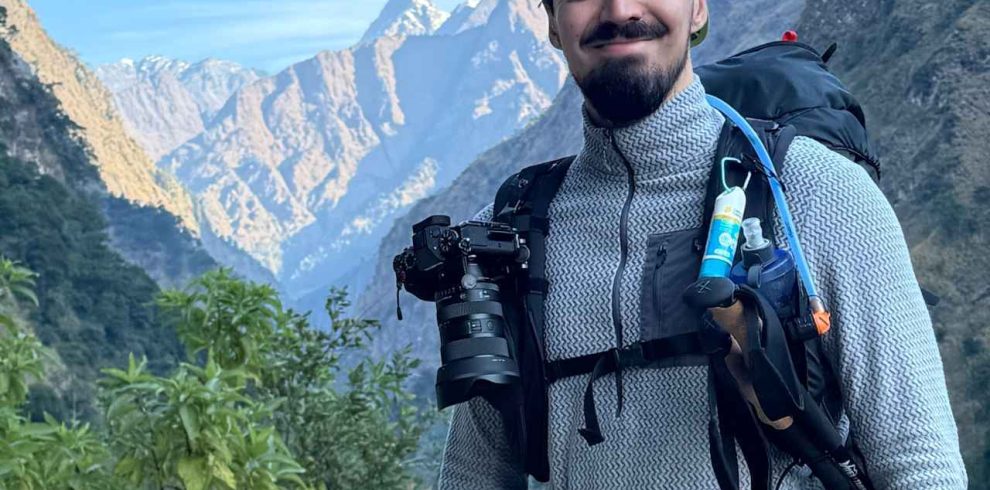
The Manaslu Circuit Trek is a spectacular journey around Mount Manaslu (8,163 m), the eighth-highest mountain in the world. Located…