Short answer: yes, March works for the Manaslu Circuit Trek, but you need to go in with honest expectations. It is the first real month of spring in this region. Lower and middle sections of the trail are pleasant, rhododendron forests start flowering below 3,000 m, and teahouses reopen after the quiet winter months. Higher up, though, March is still a genuinely cold, occasionally snowy month, and Larkya La at 5,106 m can hold winter snow well into the second half of the month. If you want flowers on the lower trail and are prepared for a proper high altitude pass crossing with gaiters, crampons on standby, and flexible timing, March is a good choice. If you want a guaranteed easy pass day with bare trail all the way, you are better off waiting for April or October.
Is March a Good Month for the Manaslu Circuit Trek?
I get asked this every year around late January and February, once people start locking in spring dates. My honest answer, after guiding groups through this region across different seasons, is that March is a transition month rather than a peak month. It sits between the cold, quiet winter of December and February and the busier, more settled trekking window of April and early May. That transitional character is exactly what makes it interesting to some trekkers and frustrating to others.
On the plus side, March gives you noticeably longer days than January, a landscape that is waking up rather than frozen solid, and a trail that has not yet filled up with the crowds you sometimes see in peak spring. Teahouse owners are also glad to see you, since business has been slow through winter, and you tend to get better service and more attention than during the busiest weeks of April.
On the downside, March is not a warm month at altitude. Nights at Samagaon, Samdo, and Dharamsala are still well below freezing, and Larkya La can be under significant snow cover, particularly in the first half of the month. Storms that dump fresh snow on the pass are less frequent than in deep winter, but they do still happen, and a poorly timed one can hold up a crossing for a day or two. If your itinerary has zero buffer days, March adds a bit more risk than April does. For a fuller comparison across the whole trekking calendar, our seasonal guide to the best time for the Manaslu and Tsum Valley trek lays out how March stacks up against autumn and late spring in more detail.
Overview of the Manaslu Circuit in March
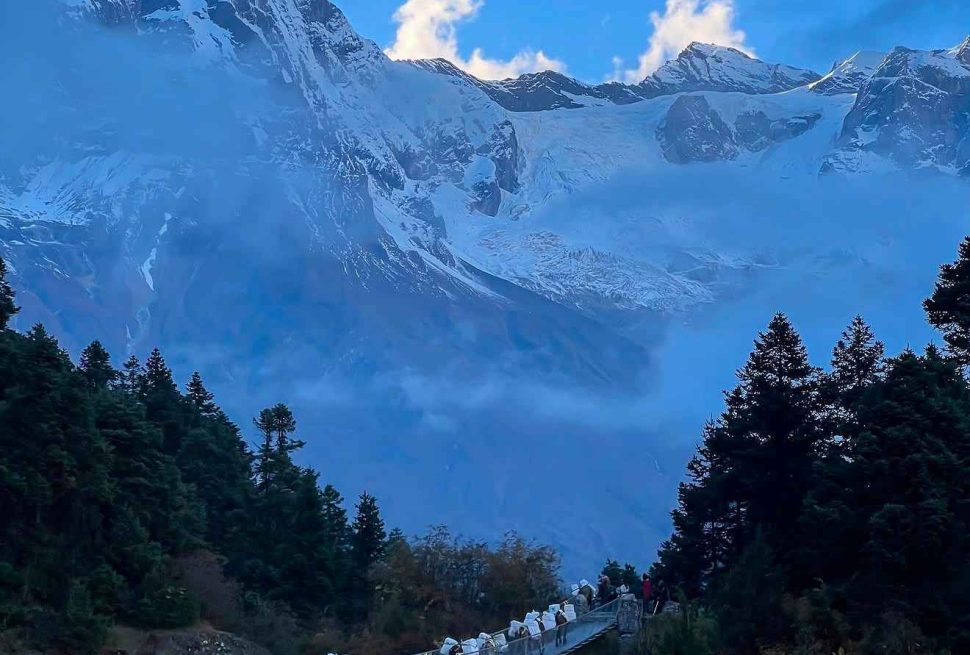
The Manaslu Circuit Trek circles the eighth highest mountain on earth, Mount Manaslu at 8,163 m, through the Manaslu Conservation Area and a stretch of the Annapurna Conservation Area before finishing near the Annapurna region side of the range. The trail runs from the lowland villages along the Budhi Gandaki river up through forested mid hill settlements, into high alpine villages near the Tibetan border, and over Larkya La before dropping down toward Bimthang and Tilije.
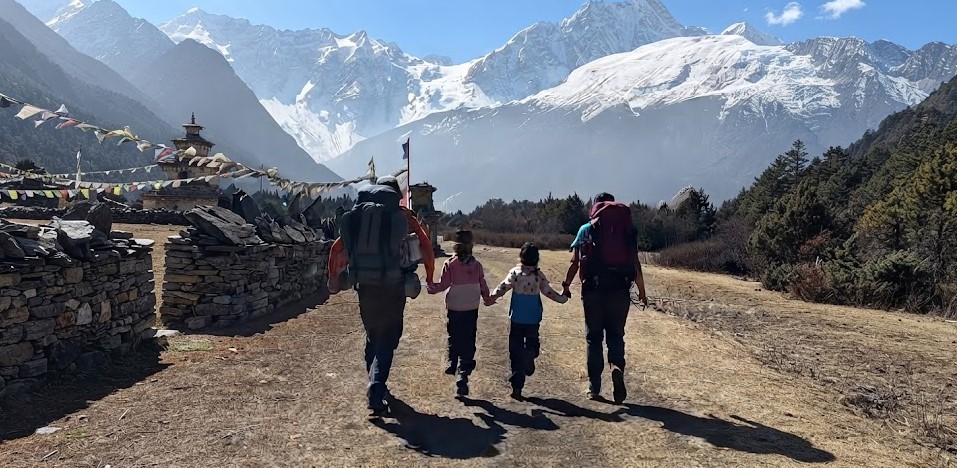
In March, this route shows you almost every season in a single walk. Day one or two out of Machha Khola feels close to a warm hill trek, with terraced fields, waterfalls, and subtropical vegetation. By the time you reach Namrung and Lho, you are walking through forest that in a good year is just starting to show rhododendron color at the lower fringes. Above Samagaon, the character changes completely. You are now in high, dry, wind exposed terrain with Tibetan influenced villages, yak pasture, and views of Manaslu itself dominating the valley. Then comes Larkya La, which in March still very much belongs to winter.
Because Manaslu sits in a restricted area, you cannot walk this route independently. A licensed guide is a legal requirement regardless of your experience or group size, and you need a stack of permits that I cover later in this guide. This is worth knowing before you plan a March trip, since permit offices and agencies sometimes have shorter working patterns in the quieter months, and it pays to book your trek and paperwork a little ahead of time rather than assuming everything can be sorted on short notice. Our Manaslu Circuit Trek package has the full current details on how we handle permits, guides, and logistics for this route.
Temperature and Weather by Altitude Band
Temperature on this trek changes fast because you gain so much elevation over a short horizontal distance. It helps to think in bands rather than a single trip wide number, since what you feel at Machha Khola on day two has almost nothing in common with what you feel at Dharamsala on day nine.
In the lower valley, around Machha Khola and Jagat at roughly 900 to 1,400 m, March days are genuinely comfortable. Expect daytime highs somewhere in the range of 18 to 24 degrees Celsius in direct sun, dropping to a cool but manageable 8 to 12 degrees at night. You will likely be trekking in a t shirt or light layer by midday and adding a fleece once the sun drops behind the ridge in the late afternoon.
Through the mid hills, around Namrung and Lho at 2,500 to 3,100 m, daytime temperatures typically sit in the 10 to 16 degree range, with clear sun making it feel warmer on exposed sections and shaded forest stretches feeling noticeably cooler. Nights drop close to freezing, often somewhere between 0 and 5 degrees, and a warm sleeping bag rated for at least minus 10 is a sensible minimum even though the daytime walking feels mild.
At the high villages, Samagaon and Samdo around 3,500 to 3,900 m, March mornings are cold. Daytime highs in direct sun can still reach a reasonably pleasant 8 to 12 degrees, but as soon as cloud rolls in or the sun dips, that can fall by ten degrees within an hour. Night time temperatures at these villages commonly sit between minus 5 and minus 12 degrees, and a genuinely cold night with temperatures near minus 15 is not unusual after a clear, calm evening, since clear skies let heat radiate away fast at this elevation.
At Dharamsala, the staging point below Larkya La at 4,450 m, and on the approach to the pass itself, March behaves like winter. Daytime temperatures hover close to freezing even in sun, often in the range of minus 2 to plus 5 degrees, and overnight lows regularly fall to minus 15 or colder. Wind chill on the pass morning can make it feel considerably colder still, since Larkya La is exposed with little shelter for the final approach and the descent toward Bimthang. I tell every client heading up in March to plan for a genuinely cold start on pass day, no matter how nice the afternoon before looked from Dharamsala.
None of these numbers are guaranteed for any specific date. Mountain weather in this region can shift a great deal from one year to the next and even day to day, so treat these as reasonable planning ranges rather than a forecast. Our guides check conditions daily once you are on the trail and adjust timing where needed, which matters more in March than in the more settled month of October.
Rhododendron Bloom and Early Spring at Mid Elevation
One of the genuine rewards of trekking Manaslu in March is catching the very start of the rhododendron season at mid elevation, roughly between 2,000 and 3,000 m. Nepal’s national flower grows in dense forest through this belt of the trail, and by March the earliest flowering varieties, usually the deep red types found at slightly lower elevation, begin to open. This is not yet the full bloom you would see in mid to late April, when the forest turns into a wall of red, pink, and white color from Namrung upward, but it is a genuine preview, and the forest floor and understory are noticeably greener and more alive than the bare winter version of the same trail.
What March gives you that peak bloom season does not is quiet. In April, the same forest sections can have a steady stream of trekking groups moving through at the same pace as the flowers open, and teahouses along that stretch fill up fast. In March you get a similar landscape starting to wake up, without competing for rooms or trail space with as many other groups. If a full flowering forest is your priority above all else, plan for the second half of April instead, and take a look at how the seasons compare on our Manaslu and Tsum Valley seasonal guide. If you want a taste of spring color with fewer people around you, March mid hills deliver that reasonably well.
Beyond flowers, this is also the period when local farmers start preparing terraced fields lower down the valley, and you will see more activity in villages like Jagat, Philim, and Deng than you would in the dead of winter. It gives the lower half of the trek a lived in, working feel rather than the more subdued winter atmosphere.
Snow and Trail Conditions Above Samagaon
Above Samagaon, roughly from 3,500 m upward, March trail conditions depend heavily on how much snow fell in the preceding winter and how recently it has snowed. In an average year, you can expect patchy snow cover on shaded sections of trail from Samagaon toward Samdo, with more consistent cover on the approach to Dharamsala and above. South facing slopes that get direct sun through the day often clear faster than north facing sections, which can hold snow and ice for weeks after a storm.
Trail surfaces in this zone alternate between packed snow, icy patches where foot traffic has compressed snow into a slick surface, and bare rocky ground where wind has scoured the trail clear. This mix is exactly why trekking poles and microspikes, which I cover in the packing section below, are worth carrying rather than leaving at home on the assumption you will not need them.
Trail definition itself can also be harder to follow after a fresh snowfall, since the usual markers, cairns, and worn footpath get covered. This is one of the strongest practical arguments for trekking with a licensed guide who knows this section well in winter and early spring conditions, since route finding after fresh snow is a real skill on this part of the circuit, not just a formality.
For a broader look at how demanding this route is across the whole eleven or so trekking days, our Manaslu trek difficulty assessment goes into the physical side of things in more depth, and it is worth reading before you commit to a March date if you have any doubts about your fitness for cold, occasionally snowy trail at altitude.
Larkya La in March: An Honest Assessment
Larkya La, sometimes written Larke Pass, sits at 5,106 m and is the high point of the entire circuit. I want to be straightforward here rather than sell you a rosier picture than reality, because this is the single day on the whole trek where conditions matter most.
In March, Larkya La is still very much a winter pass. Snow from the winter months typically lingers on both the Dharamsala side approach and the initial descent toward Bimthang, and in a heavy snow year that cover can be substantial, sometimes knee deep in drifted sections even after trekkers and yak trains have started using the trail again for the season. Early March tends to have the most snow and the least established trail, since fewer groups have crossed since the last big winter storms. By late March, more traffic has usually packed down a reasonable trail, and warmer daytime temperatures start to consolidate the snowpack, which in some ways makes footing more predictable, if still cold.
The crossing itself is long regardless of season, typically eight to ten hours from Dharamsala to Bimthang including the pass and a long, knee testing descent. In March, you should add a bit more time to that estimate for careful footing on snow and ice, and you should expect a genuinely cold start, often leaving Dharamsala well before sunrise so that you are over the pass and starting the descent while the snow is still firm rather than softening under a rising sun.
What tends to work in March’s favor is that big multi day storm systems are somewhat less frequent than in peak winter, and clear, cold, stable weather windows are common, particularly in the second half of the month. What does not work in March’s favor is that if a storm does roll in, fresh snow on an already lingering base can make the crossing considerably harder, and in a bad case, guides may hold a group at Dharamsala for a day to let conditions settle rather than push through in poor visibility. This is exactly why it makes sense to build one buffer day into a March itinerary if your schedule allows it.
None of this means March crossings do not happen safely every year, because they do, with proper gear, an experienced guide, and a sensible attitude toward waiting out bad weather rather than forcing a crossing. It does mean you should go in expecting real winter conditions on pass day, not a mild spring stroll.
Daylight Hours in March
Nepal sits close enough to the equator that daylight hours do not swing as dramatically through the year as they do at higher latitudes, but March still matters for trip planning. Early March gives you roughly eleven and a half hours of daylight, with sunrise around 6:15 in the morning and sunset around 6:00 in the evening. By the spring equinox in the third week of March, day and night are close to equal, and by the end of the month you are gaining a little more daylight each week as the country moves toward the longer days of April and May.
In practical terms, this gives you a workable window of roughly eleven to twelve hours to plan each day’s walk, factor in breaks, and still arrive at the next teahouse with light to spare. It is noticeably better than the shorter days of December and January, when guides have to start earlier and move faster to avoid finishing a long stage in fading light. On the long pass day over Larkya La, this extra daylight compared to deep winter is genuinely useful, since it gives a bit more margin if the crossing takes longer than planned because of snow.
Teahouse and Lodge Availability as Spring Begins
Winter on this route is quiet. Many smaller teahouses reduce their hours or close for stretches of December through February, since trekker numbers drop off sharply and it is not worth keeping a full kitchen and stock of supplies running for one or two groups a week. March is when that starts to change.
By early to mid March, most teahouses along the standard route are reopening for the season, restocking supplies that were run down over winter, and airing out rooms that have been shut for weeks. This means you will generally find a room without difficulty, often with a choice of the better rooms in the house since occupancy is still well below peak spring levels. Owners tend to be attentive at this point in the season, partly because business has been slow and partly because they are pleased to see the trail coming back to life.
What this also means is that supply chains are still catching up. Some teahouses in the higher villages, particularly Samdo and Dharamsala, may have a more limited food selection early in the month compared to the fuller menus you see by April, simply because fresh supplies take longer to reach these elevations after winter. Fuel for heating in dining rooms can also be more carefully rationed early in the season. None of this is a serious problem, but it is worth knowing that the trail infrastructure is still ramping up rather than running at full peak season capacity in the first half of March.
By the back half of March, most of this has settled into a fairly normal rhythm, and the experience starts to resemble what you would find in a typical April trek, just with fewer other groups competing for the same rooms.
Road and Transport Conditions in March
The drive from Kathmandu to the trailhead at Machha Khola, roughly 160 km covering about 8 to 9 hours, runs on a mix of paved and rough unpaved road depending on the current state of construction along this corridor, which has been undergoing gradual upgrades for years. In March, you are generally past the worst of any monsoon damage from the previous year and before the summer rains that can cause fresh landslides, so road conditions tend to be reasonably stable compared to the immediate post monsoon months.
That said, this is mountain terrain, and localized landslides, road works, or vehicle breakdowns can still add hours to what should be a straightforward drive. We build a realistic time buffer into our itineraries for exactly this reason rather than promising an unrealistically smooth transfer. The return drive from Tilije back to Kathmandu, roughly 210 km and 8 to 10 hours, faces similar variables. Dry March weather generally works in your favor compared to a wet monsoon month, since dust rather than mud is the main complaint, and dry conditions mean less risk of the road becoming genuinely impassable.
For the stage by stage detail of what each day on the trail actually looks like underfoot, our Manaslu Circuit route guide walks through the terrain section by section, which is useful reading alongside this month specific guide.
Pros and Cons of Trekking Manaslu Circuit in March
Rather than talk you into or out of a March date, here is a straightforward table of what actually works in this month’s favor and what genuinely does not.
| Aspect | Pro | Con |
|---|---|---|
| Lower trail weather | Warm, pleasant days from Machha Khola to Jagat, comfortable walking temperatures | Can feel too warm in direct sun during midday stretches with little shade |
| Mid hill scenery | Early rhododendron flowering starts to color the forest, greener than winter | Full peak bloom does not arrive until mid to late April |
| Crowds | Noticeably quieter trail and teahouses than peak spring in April and May | Some smaller lodges still ramping up supply and staffing early in the month |
| High altitude weather | Clear, cold, stable weather windows are common, especially late March | Nights at Samagaon, Samdo and Dharamsala regularly fall below minus 10 |
| Larkya La conditions | Less deep snow than peak winter, established trail by late March | Snow and ice still likely, crossing can be delayed by fresh storms |
| Daylight | Longer days than December or January, more margin on the pass day | Still requires very early starts on the pass crossing morning |
| Road access | Generally dry, stable conditions compared to monsoon months | Occasional landslides or road works can still delay transfers |
Looking at that table honestly, March suits a trekker who wants a genuine early spring experience with real winter conditions still present at altitude, and who is comfortable with a bit more uncertainty on pass day than a settled April trip would carry. It does not suit someone who wants a guaranteed easy crossing with bare, dry trail the whole way.
Day by Day Sample Itinerary for March
This is our standard thirteen day Manaslu Circuit itinerary, with notes specific to what you can expect in March conditions at each stage. Actual daily distances and times can shift slightly depending on your group’s pace and any weather related adjustments our guides make along the way.
| Day | Route | Altitude | Notes for March |
|---|---|---|---|
| Day 1 | Arrival in Kathmandu, airport transfer | 1,300 m | Mild city weather, good time to sort last minute gear before heading into the hills |
| Day 2 | Kathmandu to Machha Khola, about 160 km, 8 to 9 hrs drive | 930 m | Dry road conditions typical for March, warm valley air on arrival |
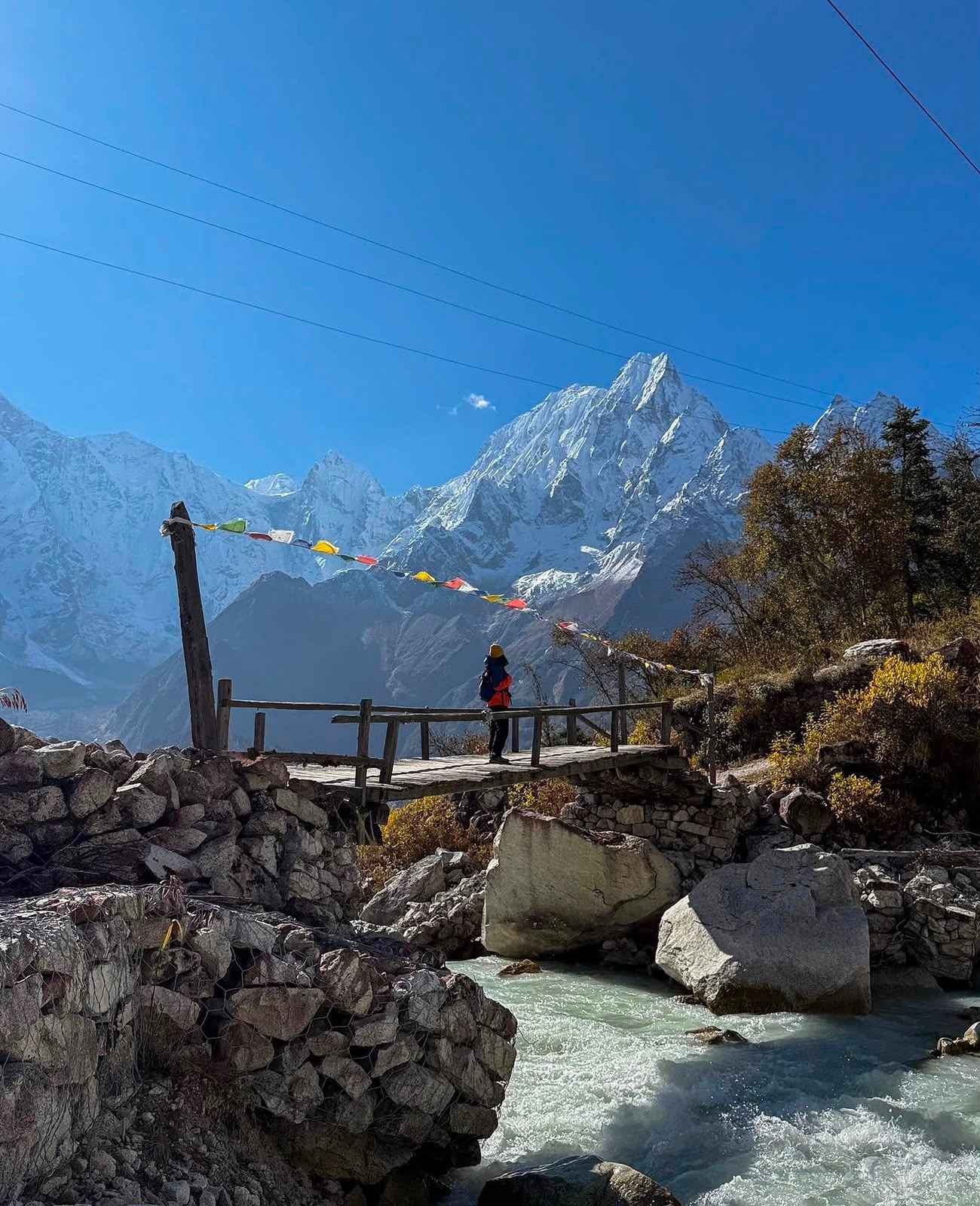
| Day 3 | Machha Khola to Jagat, 11 to 12 km, 5 to 6 hrs walk | 1,410 m | Comfortable daytime trekking temperatures, first river crossings and suspension bridges |
| Day 4 | Jagat to Deng, 19 km, 6 to 7 hrs walk | 1,860 m | Forest sections starting to show early spring growth, still warm by day |
| Day 5 | Deng to Namrung, 19 km, 6 to 7 hrs walk | 2,900 m | Noticeably cooler, first hints of rhododendron in sheltered forest patches |
| Day 6 | Namrung to Samagaon, 17 km, 6 to 7 hrs walk | 3,500 m | Cold mornings, first proper views of Manaslu, patchy snow possible on shaded trail |
| Day 7 | Acclimatization day at Samagaon, short side hike 8 to 10 km, 4 to 5 hrs | 3,500 m | Cold nights, clear morning views usually best for the side hike toward Manaslu base camp area |
| Day 8 | Samagaon to Samdo, 8 to 9 km, 3 to 4 hrs walk | 3,860 m | Snow cover more likely from here upward, dress in proper layers |
| Day 9 | Samdo to Dharamsala, 11 to 12 km, 4 to 5 hrs walk | 4,450 m | Genuinely cold, wind exposed, limited facilities at Dharamsala teahouse |
| Day 10 | Dharamsala over Larkya La (5,106 m) to Bimthang, 17 to 19 km, 8 to 10 hrs | Descend to about 3,700 m | Very early pre dawn start, snow and ice likely on the pass, longest and hardest day |
| Day 11 | Bimthang to Tilije, 12 to 13 km, 5 to 6 hrs walk | 2,300 m | Big drop in altitude, warmer air, rhododendron forest becomes more noticeable |
| Day 12 | Tilije to Kathmandu, about 210 km, 8 to 10 hrs drive | 1,300 m | Dry March road conditions typically make for a smoother return drive |
| Day 13 | Final departure from Kathmandu | 1,300 m | Buffer built in for flight delays or an extra day if the pass crossing was postponed |
Note that day 13 doubles as informal insurance against a delayed pass crossing. If a storm holds your group at Dharamsala for an extra day, this buffer generally absorbs it without threatening your international flight home. For the full narrative version of each stage, our route guide covers the trail underfoot in more detail than a table can.
What to Pack for a Cold Start to Spring
Packing for March on this trek means packing for two different climates on the same trip. You genuinely need light layers for the warm lower valley and full cold weather gear for the upper section and the pass, and cutting corners on either end causes real problems.
For the lower and mid sections, bring breathable trekking shirts, a light fleece for evenings, sun protection including a hat and sunscreen since the sun is strong at these elevations even in March, and a light rain layer in case of an unexpected shower.
For the upper section and the pass day, a good down jacket is essential, and this is one of the items we provide as part of our package along with a sleeping bag, both returned at the end of the trek. Underneath that, you want thermal base layers, a warm mid layer, waterproof and insulated outer shell trousers, a warm hat, a neck gaiter or buff, and gloves warm enough for well below freezing temperatures, ideally a liner glove plus an insulated outer mitt for the pass crossing itself.
Footwear matters more in March than in a dry autumn month. Sturdy, waterproof trekking boots that are already broken in are non negotiable, and I strongly recommend packing microspikes or lightweight crampons given the realistic chance of icy trail sections above Samagaon and on the pass approach. Gaiters keep snow out of your boots on the deeper sections. Trekking poles help enormously on the descent from the pass toward Bimthang, where the trail is steep, sometimes icy, and hard on the knees.
Other essentials include a good headlamp with spare batteries for the pre dawn pass start, sunglasses rated for snow glare rather than ordinary sunglasses, a reusable water bottle or bladder, water purification tablets or a filter as backup, a basic first aid kit, and a power bank since charging becomes limited and sometimes paid for the higher up you go. We include a trekking map, a first aid kit carried by your guide, and a completion certificate at the end of the trek as part of our standard package, so you do not need to source those yourself.
Permits and Costs for March
Manaslu sits in a restricted area, which means the permit process is more involved than for open trekking regions like the Annapurna or Everest base areas. You cannot trek here without a licensed guide, and you need several permits arranged through a registered agency rather than on your own at the trailhead.
March falls into the cheaper December to August permit bracket for the Manaslu Restricted Area Permit, just before the pricier September to November peak season bracket kicks in. This is a small but genuine cost advantage of trekking in this window rather than in peak autumn.
| Permit | Approximate Cost | Notes |
|---|---|---|
| Manaslu Restricted Area Permit (RAP) | About USD 75 for the first 7 days, plus about USD 10 per extra day | December to August off season rate, applies to March, cheaper than the September to November peak rate |
| Manaslu Conservation Area Permit (MCAP) | About USD 30 | Covers the conservation area you pass through in the Manaslu section |
| Annapurna Conservation Area Permit (ACAP) | About USD 30 | Needed for the section of the route that crosses into Annapurna Conservation Area territory near Tilije |
| Chum Nubri Rural Municipality fee | About USD 10 | Local fee, payable in cash in Nepali rupees, usually collected at a checkpoint around Jagat |
These figures should be reconfirmed close to your departure date, since permit pricing in Nepal is set by government bodies and does change periodically. We handle all of this paperwork as part of our package, including TIMS and local government fees, so you are not left figuring out checkpoint logistics on your own partway through the trek.
On package pricing, our current per person rates for the Manaslu Circuit Trek are approximately USD 1,350 for a solo traveler, USD 1,250 per person for a group of two to five, USD 1,200 per person for a group of six to eight, and USD 1,150 per person for a group of nine to ten. These rates include airport pickup and drop off, two nights in a Kathmandu hotel with breakfast, teahouse lodging throughout the trek, transport to and from the trailhead, all required permits, a licensed English speaking guide, porter service at a ratio of one porter per two trekkers carrying up to 20 kg, guide and porter wages, meals including three a day on the trek plus morning tea or coffee, insurance, a sleeping bag and down jacket provided and returned at trip end, a trekking map, a completion certificate, a first aid kit, government taxes, and a farewell dinner in Kathmandu.
Not included are your international airfare, Nepal entry visa, personal travel and evacuation insurance, and personal expenses such as laundry, phone or wifi charges, bottled water and other beverages, alcohol, snacks, and any extra food beyond what the package covers. For a full breakdown of cost questions and permit logistics, our Manaslu Circuit Trek cost and permit FAQ is worth a read before booking.
Who Does March Suit
March suits a trekker who wants a genuine spring experience without peak season crowds and who is comfortable accepting real cold and possible snow at altitude as part of the deal. It works particularly well for photographers who want clear, cold air and dramatic snow covered high sections without competing for the same viewpoint with a dozen other groups, and for trekkers who have some prior cold weather or winter hiking experience and are not intimidated by a pass day that may involve snow and ice.
It also suits trekkers whose schedules are somewhat flexible, since building in a spare buffer day gives real protection against a weather delayed pass crossing. If your dates are locked with zero flexibility, for example a fixed return flight the day after your planned Kathmandu arrival, March adds a bit more risk than I would be comfortable recommending without a proper buffer.
March does not suit trekkers who specifically want the fullest rhododendron bloom, since that peaks later in April. It also does not suit anyone hoping for a completely snow free pass crossing, which is more realistic in April, May, or the autumn months of October and November. If either of those matters more to you than a quieter trail, it is worth reading our seasonal comparison guide before settling on March specifically.
One option worth considering if you have extra time is combining the Manaslu Circuit with the Tsum Valley side route, which adds several days exploring a culturally distinct valley with strong Tibetan Buddhist influence before rejoining the main circuit. Our 23 day Tsum Valley and Manaslu Circuit combination trek is a good option for March if you have the extra days available, since the lower Tsum Valley sections share the same pleasant early spring weather as the main circuit’s lower stages.
Frequently Asked Questions
Is Larkya La passable in March?
Yes, in the great majority of years Larkya La is passable in March, and guided groups cross it successfully throughout the month. That said, passable does not mean easy or snow free. Expect real winter conditions on the pass itself, including packed or fresh snow, ice on sections of the trail, and a cold, early morning start well before sunrise. Crossings can be delayed by a day if a fresh storm rolls through right before your scheduled crossing, which is why we recommend building at least one buffer day into a March itinerary. Our guides make the call on the day based on current conditions rather than pushing through in genuinely unsafe weather, and that judgment is one of the main reasons a licensed guide is legally required in this restricted area in the first place.
How cold does it get at Dharamsala and on the pass in March?
Dharamsala sits at 4,450 m, and in March overnight temperatures there commonly fall to somewhere between minus 10 and minus 15 degrees Celsius, occasionally colder after a clear, calm night. Daytime temperatures even in direct sun rarely climb much above 5 degrees at this elevation. On the pass itself, which sits higher still at 5,106 m, wind chill during the early morning crossing can make conditions feel considerably colder than the actual air temperature. This is why we insist on a proper down jacket, warm base layers, and good gloves for anyone crossing in March, and why we provide a down jacket and sleeping bag as part of our standard package rather than leaving clients to source their own at short notice.
Will I see rhododendrons in bloom in March?
You will see the start of the rhododendron season, particularly at the lower end of the mid hill forest belt around 2,000 to 2,800 m, but not the full, dense flowering you get in mid to late April. Early flowering varieties, generally the deeper red types, tend to open first, and by late March you can find genuinely attractive patches of color along the forested sections between Jagat and Namrung. If seeing the entire forest in full bloom is a priority for your trip, plan for a mid to late April departure instead, since that is when the display reaches its peak across the wider elevation range of flowering rhododendron species found on this route.
Are teahouses open and well stocked in March?
Generally yes, though availability improves as the month goes on. By early to mid March, most teahouses along the standard route have reopened after the quiet winter months and are restocking supplies. In the first couple of weeks, some of the higher villages, particularly Samdo and Dharamsala, may have a slightly more limited food selection than you would find later in spring, simply because fresh supplies take time to reach these elevations after winter. By the back half of March, this has generally settled into a normal rhythm similar to what you would experience in April, with the added benefit of fewer other trekking groups competing for rooms.
Do I need crampons or microspikes for a March trek?
We recommend carrying lightweight microspikes as a sensible precaution, particularly for the section above Samagaon and for the pass crossing itself. You may not need them every day, since trail conditions vary a great deal depending on recent snowfall and how much sun a given section gets, but having them available means you are not caught out on an icy patch with only bare boot soles. Full mountaineering crampons are generally not necessary for this route even in March, since the trail does not require technical ice climbing, but proper winter grade trekking boots, gaiters, and trekking poles are genuinely useful rather than optional extras.
How difficult is the Manaslu Circuit Trek in March compared to other months?
The underlying distances, altitude gain, and physical demands of the trek do not change month to month, but March adds a layer of extra difficulty at altitude because of cold and potential snow, particularly above Samagaon and on the pass day itself. Compared to a settled October trek, March generally asks a bit more of you in terms of cold weather tolerance and comfort walking on snow or ice covered trail. Compared to a deep winter trek in December or January, March is considerably easier, since the coldest, most snow heavy period of the year has generally passed. For a full breakdown of the physical demands of this route across the whole itinerary, our Manaslu trek difficulty assessment is worth reading before you commit to any specific month.
What permits do I need for a March Manaslu trek, and are they cheaper than autumn?
You need the Manaslu Restricted Area Permit, the Manaslu Conservation Area Permit, the Annapurna Conservation Area Permit, TIMS, and a local Chum Nubri Rural Municipality fee payable in cash at a checkpoint, usually around Jagat. March falls into the December to August off season bracket for the Restricted Area Permit, which runs at roughly USD 75 for the first seven days plus about USD 10 per additional day, cheaper than the September to November peak season bracket. All of these fees should be reconfirmed close to your departure date since Nepal’s permit pricing changes periodically, and our cost and permit FAQ covers the current details along with other common cost questions.
Is a guide mandatory for the Manaslu Circuit, and does that change in March?
Yes, a licensed guide is legally required on this route regardless of season, group size, or your own trekking experience, because Manaslu is classified as a restricted area rather than an open trekking region. This requirement does not change in March. If anything, a knowledgeable guide matters more in this particular month, given the realistic chance of snow covered trail, reduced visibility on the pass, and the judgment calls involved in deciding whether conditions are safe enough to cross Larkya La on a given morning or whether it makes sense to wait a day.
Ready to Book Your March Manaslu Trek
March rewards trekkers who come prepared for genuine early spring conditions rather than expecting a fully settled trail. If that sounds like the kind of trip you want, get in touch with us directly and we will help you plan dates, confirm current permit costs, and put together a group or private departure that fits your schedule. You can reach Manaslu Treks and Expedition, based in Thamel, Kathmandu, by phone or WhatsApp at +977 9869225929, by email at info@manaslutreks.com, or through our contact. Full details on itinerary, inclusions, and current pricing are on our main Manaslu Circuit Trek, and our team is happy to answer specific questions about March conditions before you commit to a date.
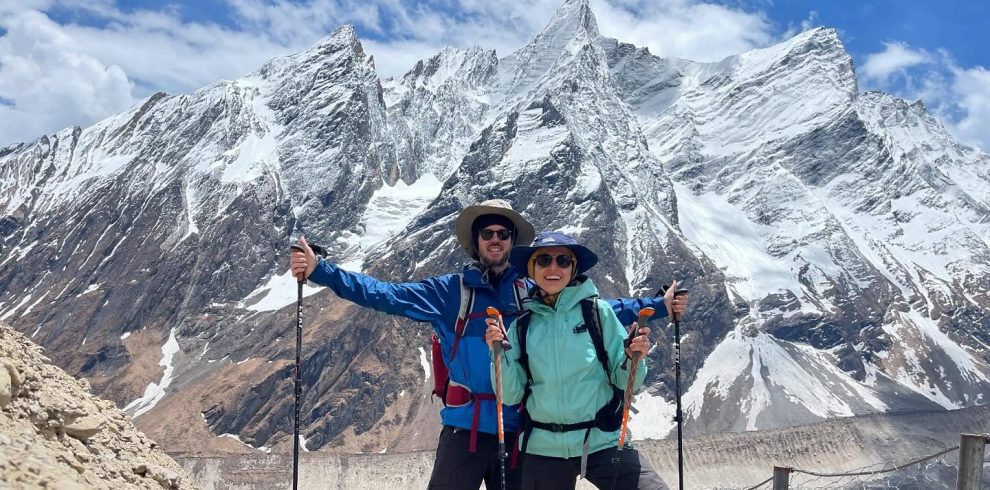
The 11-Day Manaslu Circuit Trek offers a quiet and scenic journey around Mount Manaslu (8,163m) – Nepal’s eighth-highest peak. With…