Written by Kiran Basnet, Senior Trekking Expert at Manaslu Treks and Expedition. The Manaslu Circuit Group Trek puts you face to face with one of the last genuinely remote corners of the Himalaya. Circling Mount Manaslu, the eighth highest mountain on earth at 8,163 meters, this trek carries you through old Tibetan Buddhist villages, thick rhododendron forest, glacial moraine, and finally over the Larkya La Pass at 5,106 meters before dropping into the Annapurna region. Because Manaslu sits inside a government protected and restricted area, Nepali law requires every foreign trekker to travel with a registered agency and a licensed guide, which is exactly why the group join format exists and why it has become the single most searched way to experience this trail.
Planning the Manaslu Circuit Trek and need help with permits, route, or group dates?
What the Manaslu Circuit Group Trek Actually Involves
The Manaslu Circuit Group Trek is a guided journey around Mount Manaslu that follows the Budhi Gandaki river valley north from the lowlands, climbs through Gurung and Tibetan settlements, and crosses into true high alpine terrain before the Larkya La Pass carries you into the Annapurna Conservation Area on the far side. The standard itinerary runs 14 days on the trail and 16 days total counting the drive in and out of Kathmandu.
Compared with the busier trails around Everest and Annapurna, Manaslu still feels genuinely quiet. You will share the path with other trekking groups, local traders, and the occasional mule train rather than long lines of hikers, and the villages along the way have kept a way of life that has not been reshaped by decades of mass tourism. Walking this route in a group also does something a solo itinerary cannot. Trekkers who arrive as strangers from a dozen different countries typically leave as friends, having shared the particular exhaustion of altitude, the relief of a hot meal in a cold dining room, and the specific pride of standing on Larkya La together.
- Total trail distance: approximately 177 kilometers
- Highest point: Larkya La Pass at 5,106 meters
- Lowest overnight stop: Machha Khola at roughly 870 to 930 meters
- Standard length: 14 days on the trail, 16 days total from Kathmandu back to Kathmandu
- Daily walking time: 5 to 7 hours on average, up to 10 hours on the day you cross Larkya La
- Region: Gorkha district, inside the Manaslu Conservation Area, exiting through the Annapurna Conservation Area
- Opened to foreign trekkers in 1991, and still classified today as a government restricted trekking area
The route at a glance runs by jeep from Kathmandu to Machha Khola, then on foot through Jagat, Deng, Namrung, Lho, Shyala, Samagaun, Samdo and Dharamsala, over the pass to Bhimthang, down to Dharapani, and back to Kathmandu by road. For a full breakdown of permits, fees and current regulation, see our complete Manaslu Circuit Trek booking guide.
The 14-Day Manaslu Circuit Trek takes you around Mount Manaslu at 8,163 meters, the eighth-highest mountain on earth, through one of…
Why Nepal Requires a Group and a Licensed Guide Here
What sets this circuit apart from almost every other trek in Nepal is its restricted area status. The trail runs close to the Tibetan border, so Nepal’s Department of Immigration requires every foreign trekker to hold a Manaslu Restricted Area Permit, known as the RAP, in addition to the Manaslu Conservation Area Permit and the Annapurna Conservation Area Permit needed for the exit leg through Dharapani. None of these three permits can be bought independently at a counter. Every one of them has to be arranged through a registered Nepali trekking agency, and a licensed guide must stay with the group for the entire trek.
Before March 2026, the Department of Immigration required at least two foreign trekkers named on the same RAP form before any permit would be issued. A rule change on 22 March 2026 now allows a single trekker to apply for a RAP alone, but the requirement for a registered agency and a licensed guide has not changed and remains fully enforced. Five checkpoints along the trail, at Jagat, Philim, Namrung, Samagaun and Samdo, will turn back any trekker who cannot show a properly issued RAP alongside a guide walking with them.
This legal framework is exactly why so many travelers who type “solo Manaslu Circuit Trek” into a search engine are actually looking for something else entirely, a group join departure where one traveler buys into a fixed departure alongside people they have not met yet. It is one of the most popular booking formats in Nepal, and it works particularly well on this specific trail.
Group Departure Dates for 2027 and 2028
Manaslu Treks and Expedition runs fixed group join departures through the spring and autumn trekking seasons, with new dates added regularly as demand grows for 2027 and 2028. Because departure calendars shift as groups fill, we keep the live, current schedule with our booking team rather than printing a calendar here that could go out of date within weeks.
| Month | Typical status | Why trekkers choose it |
| September | Booking open | Quieter trails, early autumn clarity, good value before peak season crowds arrive |
| October | Most popular | The most stable weather and clearest mountain views of the entire year |
| November | Booking open | Crisp, quiet conditions, colder nights, fewer trekkers on the trail |
| March to May | Booking open | Rhododendron blooms, mountaineering season atmosphere around Samagaun |
If your preferred travel window is not listed, send it to us directly. We can usually open a new fixed departure around a strong travel date, or build you a private departure on the exact schedule you need.
Want the latest confirmed group departure dates and current pricing?
Solo Versus Group: What Most Searches Actually Mean
This is the question almost every planner eventually asks, and the honest answer is that a true solo Manaslu Circuit Trek, in the sense of walking unaccompanied with no agency and no guide, simply does not exist under Nepali law. The table below compares the two formats that do exist, a group join departure and a fully private trek, side by side.
| Factor | Group join trek | Private trek |
| Average cost per person, 14 days | USD 850 to 1,200 | USD 1,290 to 1,900 |
| Permit logistics | Arranged for the whole group together | Arranged for your own party alone |
| Itinerary flexibility | Fixed dates and daily stages | Fully customizable to your pace |
| Social atmosphere | Trail family of 6 to 12 trekkers | Quieter and more intimate |
| Departure guarantee | Confirmed once the minimum group size forms | Guaranteed on the date you choose |
| Single supplement | Optional add on for a solo room | Not applicable |
| Best suited to | Solo travelers, budget travelers, social personalities | Couples, families, photographers, slower trekkers |
So when someone searches for a solo Manaslu Circuit Trek, what they almost always want is a group join fixed departure, where a single traveler is matched with other trekkers under one shared permit and one shared guide team.
Manaslu Circuit Trek Cost by Group Size for 2027
Group size directly changes the price per person, because permit processing, jeep transport, guide salary and porter logistics are all shared costs that get divided across however many people are on the departure. Larger groups bring the per person price down meaningfully.
| Group size | Cost per person |
| 1 person, solo trekker | USD 1,250 |
| 2 to 5 people, small group | USD 1,150 |
| 6 to 8 people, medium group | USD 1,050 |
| 9 to 10 people, large group | USD 950 |
| More than 10 people, large private group | Contact us for a custom quote |
Contact us with your group size and preferred departure date and we will confirm the best available price for your Manaslu Circuit Trek in 2027 or 2028. For a complete, itemized breakdown of every cost on this trek, read our full Manaslu Circuit Trek cost guide.
The Manaslu Circuit Trek is a spectacular journey around Mount Manaslu (8,163 m), the eighth-highest mountain in the world. Located…
Why the Group Format Works So Well on This Specific Trail
Joining a group is cheaper for the straightforward reason that permits, jeep transport, guide salary and porter logistics are shared across several paying members rather than carried by one or two people. It is also the practical solution to the RAP requirement, since multiple named trekkers on the same form keep the paperwork simple. Beyond the savings, the group format creates something a private trek genuinely cannot. Twelve days of remote mountain walking with the same small group of people builds a kind of trail companionship that trekkers consistently name as one of the best parts of the entire trip. When your legs are heavy at 4,000 meters and a fellow trekker sits with you over a hot lemon tea and laughs about how much harder this is than any brochure suggested, that connection stays with you long after the trek ends.
Groups also get priority teahouse booking in peak season. In mid October, when Samagaun and Dharamsala fill to capacity most nights, an organized agency pre books entire rooms weeks in advance. Trekkers without that network sometimes end up sleeping on dining room benches instead.
On the day you cross Larkya La specifically, the group advantage becomes a genuine safety factor. A guide monitoring every member’s pace, oxygen saturation and exposure to cold across an eight to ten hour crossing gives the whole group a kind of collective awareness that a lone trekker with a private guide simply does not have.
What Is Included and What Is Not Included
Our Manaslu Circuit Trek package covers the main permits, transportation, accommodation, meals and trekking support needed for the whole journey.
What is included
- Airport pickup and drop off in Kathmandu
- Kathmandu hotel accommodation with breakfast, as stated in the itinerary
- Transportation from Kathmandu to the trek starting point and back
- The Manaslu Restricted Area Permit, the Manaslu Conservation Area Permit and the Annapurna Conservation Area Permit
- Local municipality entry fee, where applicable
- A licensed and experienced Manaslu trekking guide, plus porter service according to your confirmed package
- Guide and porter salaries, meals, accommodation and insurance
- Breakfast, lunch and dinner every day on the trek, plus teahouse accommodation throughout, with private rooms where available
- A sleeping bag and down jacket where required, and a trekking duffel bag for your porter to carry
- A basic first aid kit and a pulse oximeter carried by your guide, plus seasonal fresh fruit when available
- Government taxes, company service charges, a pre trek briefing and full local support in Nepal
What is not included
- International flights to and from Nepal
- Your Nepal entry visa fee
- Travel and emergency evacuation insurance, which we cover fully in our travel insurance guide
- Alcoholic drinks, bottled drinks and soft drinks
Package inclusions can vary by itinerary, group size and transportation option, so always check your final booking confirmation for the exact services included.
Verified permit fees for 2027 and 2028
- RAP, September to November: USD 100 per person for the first 7 days, plus USD 15 per person for each extra day
- RAP, December to August: USD 75 per person for the first 7 days, plus USD 10 per person for each extra day
- MCAP: NPR 3,000, roughly USD 22 to 30
- ACAP: NPR 3,000, roughly USD 22 to 30
- Total permit cost in autumn: approximately USD 150 to 165 per person
- Total permit cost in the off season: approximately USD 125 to 140 per person
Honest Advantages and Disadvantages of Group Trekking
Every trekking format has real trade offs, and we would rather tell you both sides plainly than oversell the format that happens to be easiest for us to organize.
Advantages of joining a group
The cost saving is real and significant, since permits, transport and guide salary shared across eight to twelve trekkers produce a per person price that a two person private trek cannot match. The social side is equally real, and it is one of the most consistently mentioned highlights in trekker reviews of this route. Safety also improves with numbers on the Larkya La crossing, since a guide watching the whole group can catch early signs of altitude sickness in one member while keeping everyone else moving safely. The group format additionally removes a lot of logistics from your plate. Pre departure briefings in Kathmandu, tested daily stages, pre booked teahouses in peak season and a fixed daily meal system all reduce the planning load so the trip can be enjoyed rather than managed.
Disadvantages of the group format
The pace is set by the slowest acclimatizing member on any given day, which can frustrate a stronger trekker who wants to move faster. Twin sharing rooms are the default arrangement, so a single supplement applies if you want a solo room where one is available. Side trips to Pungyen Gompa, Manaslu Base Camp or Birendra Lake are often optional rather than guaranteed in the daily schedule. Group chemistry depends on the personalities who happen to book the same departure, and occasionally that mix is not perfect. Departure dates are fixed, so your international flights need to fit the group calendar rather than the other way around.
Best Time to Join a Group Manaslu Circuit Departure
The Manaslu Conservation Area experiences four distinct seasons, and two of them are genuinely ideal for a group departure while two of them are not recommended at all.
Autumn, mid September to late November, the gold standard season
The monsoon clears out by mid September and the Himalayan autumn begins. Trails firm up, visibility becomes consistently clear, and October stands out as the single best month for this trek, with warm lower valleys, a Larkya La generally free of fresh snow, fully stocked teahouses and the Dashain and Tihar festival season bringing extra color to villages along the way. Daytime temperatures in the lower villages typically run 10 to 20 degrees Celsius. Around Samagaun and Samdo they sit closer to 5 to 15 degrees during the day. At Dharamsala and on the pass itself, nights drop to minus 5 to minus 15 degrees Celsius, with wind chill pushing colder still. November is nearly as good as October, with crisper and quieter trail conditions, though nights get noticeably colder and a handful of teahouses begin closing in the final two weeks of the month.
Spring, March to May, the second peak season
Spring brings a different kind of beauty. Rhododendron forests between Machha Khola and Namrung bloom in deep red and pink, and mountaineering expedition teams begin rotating through Samagaun toward Manaslu Base Camp, adding an exciting undercurrent to the trail. April is the sweet spot inside this season, with warm lower valleys, manageable pass conditions and clear skies most mornings. Lower villages reach 15 to 25 degrees Celsius during the day, while upper villages sit around 5 to 15 degrees. Night temperatures at Larkya Phedi and the pass hover around minus 5 to minus 12 degrees. Late May can bring pre monsoon afternoon showers to the lower forest sections, and early March can leave Larkya La icy and demanding.
Winter, December to February, for well prepared trekkers only
Heavy snow accumulates on Larkya La from late December onward, and multiple teahouses in Samdo and Dharamsala close entirely for the season. Daytime highs barely reach zero at altitude, and pass crossings with wind chill can drop below minus 20 degrees Celsius. Early December remains a viable, quiet window for experienced, well equipped trekkers, but the rest of winter is genuinely difficult and we do not recommend it for group join departures.
Monsoon, June to August, generally not recommended
July brings heavy rain to the lower trail, leech filled forest sections, frequent landslides between Soti Khola and Jagat, and persistent cloud cover that hides the mountains for days at a time. The upper Manaslu region sits in a partial rain shadow, and some operators do run treks through this season, but visibility on the pass is poor and trail hazards are real. Ranked by popularity, the strongest months for a group departure are October, April, November, May, March and September, in that order.
Who This Group Trek Is Right For
The Manaslu Circuit is graded moderate to challenging, and it welcomes a broader range of trekkers than its remote reputation might suggest.
- Fitness level: you should be able to walk 6 to 8 hours a day over uneven mountain terrain carrying a daypack of 6 to 8 kilograms, and repeat that effort for 9 to 12 consecutive days. We recommend training for 8 to 12 weeks before departure, combining hilly hikes carrying a loaded pack with cardio four to five days a week and leg strengthening work like squats, lunges and step ups.
- Experience required: no technical climbing skill is necessary. Prior high altitude experience helps but is not required, and many trekkers complete this as their first trek in Nepal. Our guides regularly lead complete beginners through the full 14 to 16 day itinerary, since pacing and proper acclimatization matter far more than prior experience.
- Age range: there is no government imposed age limit. Our guides have led trekkers from age four walking with parents to trekkers past seventy in excellent health. For solo participation in a group join departure, we recommend an age range of 18 to 65, with trekkers over 60 encouraged to bring a recent medical clearance and speak with a doctor about altitude considerations before booking.
This trek suits solo travelers who want a built in trail family, budget conscious adventurers who want a genuine Himalayan experience without a private trek price, travelers drawn to Tibetan Buddhist culture in the Nubri Valley villages, and anyone who wants far fewer crowds than Everest Base Camp or the Annapurna Circuit while walking a route of equal scenic drama. Think carefully before booking if you have a serious cardiovascular or respiratory condition, are unwilling to spend twelve days in basic teahouse conditions with limited wifi, cold showers and pit toilets above Namrung, or are expecting luxury comfort at altitude.
Why Trek With Manaslu Treks and Expedition
Manaslu Treks and Expedition is a Kathmandu based, government registered local trekking company built around one region and one mission, giving every trekker the most genuine, well organized and fairly priced experience on the Manaslu Circuit and its neighboring trails. Our guides are not generalists pulled from a staffing pool. Many were born in or near Gorkha district and have been walking the Budhi Gandaki valley since childhood. They know which teahouse in Samagaun keeps the warmest dining hall, which stretch of trail between Ghap and Namrung is most prone to landslide debris after rain, and exactly when to call a weather hold on the morning of the Larkya La crossing. That knowledge comes from years on this specific trail, not from a training manual.
- No advance payment required. Confirm your trek on arrival in Kathmandu, so your money stays with you until we actually meet.
- All inclusive pricing, with every permit, transport leg, guide, porter, trail meal and Kathmandu hotel night bundled into your package with no surprise extras.
- Twenty four hour WhatsApp support, from the day you first ask a question to the day you fly home.
- Government licensed guides trained in altitude first response, carrying pulse oximeters and trained in supplemental oxygen protocol and emergency communication.
- Flexible options, with fixed departures for group join trekkers and private departures built around your exact schedule and pace.
- Transparent permit handling, tracking every update from the Department of Immigration, including the March 2026 RAP rule change, and applying current regulations precisely.
Reach us any time on WhatsApp at +977 9869225929 or by email at info@manaslutreks.com, and read verified client reviews at manaslutreks.com/reviews.
What to Prepare Before You Book a Group Manaslu Circuit Trek
Booking a restricted area trek in Nepal takes more preparation than a standard trail. Here is everything worth checking off before you confirm your departure.
Documents and permits
Bring a passport valid for at least six months beyond your Nepal entry date, along with two to four recent passport sized photographs for permit processing. Your agency needs your original passport, not a scan, to process permits with the Department of Immigration. A Nepal visa can be obtained on arrival at Tribhuvan International Airport or in advance through the e Visa portal. The RAP, MCAP and ACAP permits are non transferable and largely non refundable, and your agency needs at least one full working day in Kathmandu, Sunday through Friday, to process all three before you can head to the trailhead.
Insurance, which is not optional
Every trekker on the Manaslu Circuit must carry comprehensive travel insurance that explicitly covers high altitude trekking above 5,000 meters, restricted area trekking in Nepal, and helicopter rescue and evacuation to a minimum coverage of USD 6,000. From Samagaun through Bhimthang there is no road, so a helicopter is the only real emergency exit. Without valid insurance, your guide will not allow you to continue past a certain altitude, and for good reason. Commonly used providers include World Nomads, SafetyWing, Global Rescue, True Traveler and IMG Signature, and we always recommend reading the actual policy wording and confirming altitude coverage before you buy. Our full travel insurance guide and our helicopter rescue and evacuation guide cover this in complete detail.
Acclimatization rules every group member follows
A mandatory rest day in Samagaun is built into every responsible Manaslu Circuit itinerary, and many operators add a half day in Samdo as well. The principle is simple: hike high during the day and sleep lower at night. Drink 3 to 4 liters of water daily, avoid alcohol, tobacco and sleeping pills at altitude, and speak with your doctor about whether Diamox makes sense for you as a preventive measure. Our full altitude sickness and Diamox guide explains exactly how this works and what warning signs matter most.
Cash to carry
There is no ATM beyond Arughat. Carry NPR 30,000 to 50,000 in small denomination notes for hot showers, device charging, extra snacks, drinks and staff tips. Charging a device at altitude typically costs USD 1 to 5 per hour where electricity is available at all.
Essential gear to pack
Pack a layered clothing system with thermal base layers, a fleece mid layer, a down jacket and a waterproof shell, plus trekking trousers and thermal leggings. Bring a sleeping bag rated to at least minus 10 degrees Celsius comfort, which you can rent in Thamel if you prefer not to buy one, sturdy broken in waterproof boots with ankle support, trekking poles, a headlamp with spare batteries, UV400 sunglasses and SPF50 or higher sunscreen, a wide brimmed sun hat plus a warm beanie and liner gloves, a 2 to 3 liter hydration system plus purification tablets or a filter, microspikes for autumn late season or early spring, and a power bank of at least 20,000 mAh with a universal adapter. Our full packing list guide and our first aid and medical kit guide go through every item in far more detail.
Honest Challenges You Might Face on the Trail
Clear information about what can go wrong builds a kind of trust that marketing language never can. Here is what actually comes up on the Manaslu Circuit, and how the group format helps address it.
- Altitude sickness: risk begins above 3,000 meters and rises sharply above 3,500 meters, with headache, nausea, dizziness, appetite loss and disrupted sleep as the common early symptoms. The more serious forms are rare but genuinely dangerous and require descent or helicopter evacuation. Since the stretch from Samagaun to Bhimthang has no road access, a helicopter is often the only fast option in a real emergency, which is exactly why a licensed guide checking pulse oximeter readings daily matters so much. Our altitude sickness guide and our rescue and evacuation guide cover this fully.
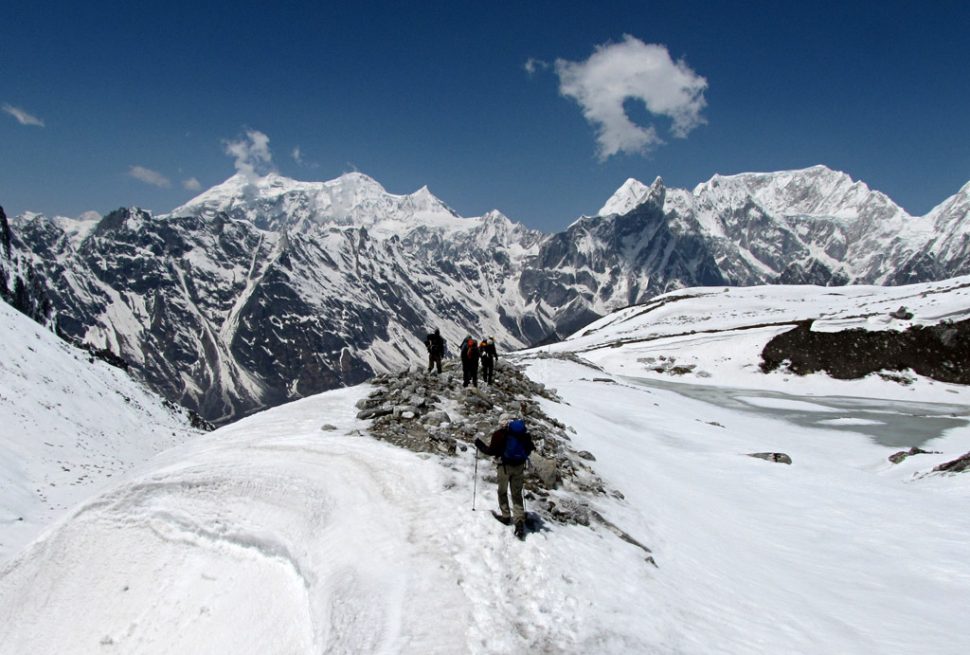
- The Larkya La day itself: the crossing begins at 3 to 4 in the morning from Dharamsala by headlamp, gains roughly 650 meters over frozen scree and often icy snow, then descends about 1,400 meters into Bhimthang over eight to ten total hours of walking. Cold, wind and crusted snow are normal even in October.
- Weather volatility: sudden snowfall on the pass, monsoon rain on the lower trail, fog in early September and cold snaps in late November all happen. Responsible operators build buffer days into the itinerary for exactly this reason.
- Landslide zones: the sections between Jagat and Deng, around Ghap, and the road between Soti Khola and Machha Khola are all prone to landslides after rain. Guides route around damage where possible and are honest about current conditions.
- Teahouse capacity in peak season: Samagaun, Samdo and Dharamsala fill to capacity most nights in mid October. Reputable group operators pre book rooms weeks ahead, which independent walkers without that network often cannot do.
- Connectivity: an NTC SIM gives the best partial signal along the lower trail, but dead zones begin above Samagaun. Plan to be fully offline on the pass and in Bhimthang.
The 14 Day Group Itinerary, Day by Day
The itinerary below is the standard 14 day route used by Manaslu Treks and Expedition, with every altitude, distance and overnight stop checked against the trail.
- Kathmandu to Machha Khola, 870 to 930 meters, 8 to 9 hours by jeep. The group meets for a pre departure briefing covering permits, gear and the days ahead, then drives out through the Trishuli valley, Dhading Bensi and Arughat, where the RAP gets its first stamp, before following a rough track beside the Budhi Gandaki river to Machha Khola.
- Machha Khola to Jagat, 1,340 to 1,410 meters, 6 to 7 hours, about 22 kilometers. The trail passes the hot pools at Tatopani, crosses a long suspension bridge high above the river gorge, and climbs stone staircases through terraced farmland to Jagat, the official entry checkpoint where your guide presents the RAP.
- Jagat to Deng, 1,860 meters, 6 to 7 hours, about 20 kilometers. Through the Gurung village of Philim and past the Tsum Valley junction at Lokpa, into a narrower gorge where bamboo crowds the trail on both sides.
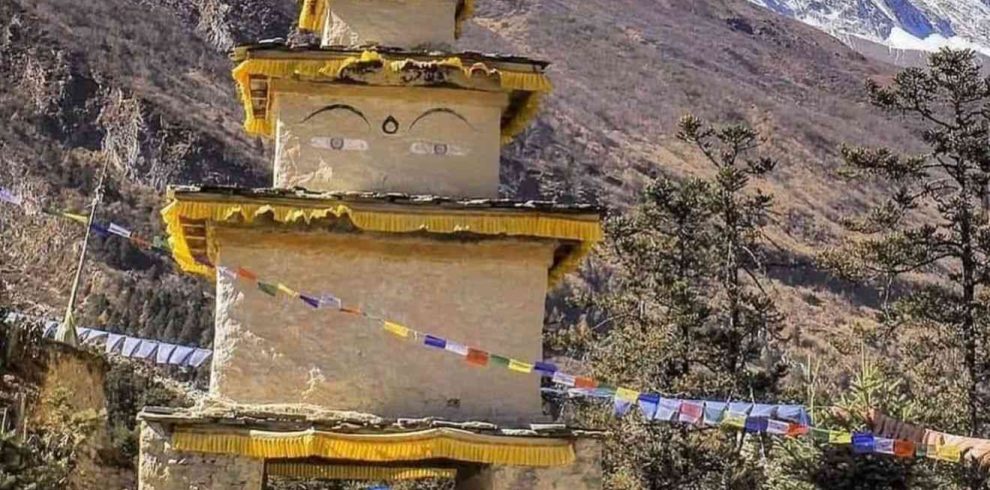
- Deng to Namrung, 2,630 to 2,660 meters, 6 to 7 hours, about 17 to 19 kilometers. A series of suspension bridges and small settlements lead to Namrung, where flat roofs, prayer flags and mani stone walls signal the shift into Tibetan influenced architecture.
- Namrung to Samagaun via Lho and Shyala, 3,520 to 3,530 meters, 6 to 7 hours, about 15 to 18 kilometers. The Ribung Gompa at Lho sits with the full face of Manaslu framed behind it, often the first clear sighting of the mountain, before the trail opens into the panoramic bowl at Shyala and descends into Samagaun.
- Acclimatization day in Samagaun, 3,520 meters. This rest day is mandatory. Optional hikes to Birendra Lake, Pungyen Gompa or toward Manaslu Base Camp at 4,800 meters give the group productive ways to acclimatize further.
- Samagaun to Samdo, 3,860 to 3,875 meters, 3 to 4 hours, about 8 kilometers. A short, intentionally gentle day along a wide valley floor, with time in the afternoon to rest and let the altitude settle.
- Samdo to Dharamsala, 4,460 to 4,470 meters, 4 to 5 hours, about 6 to 12 kilometers. A steady climb over alpine meadow and moraine to the basic stone shelter at Dharamsala, also called Larkya Phedi, where the alarm is set for 3 in the morning.
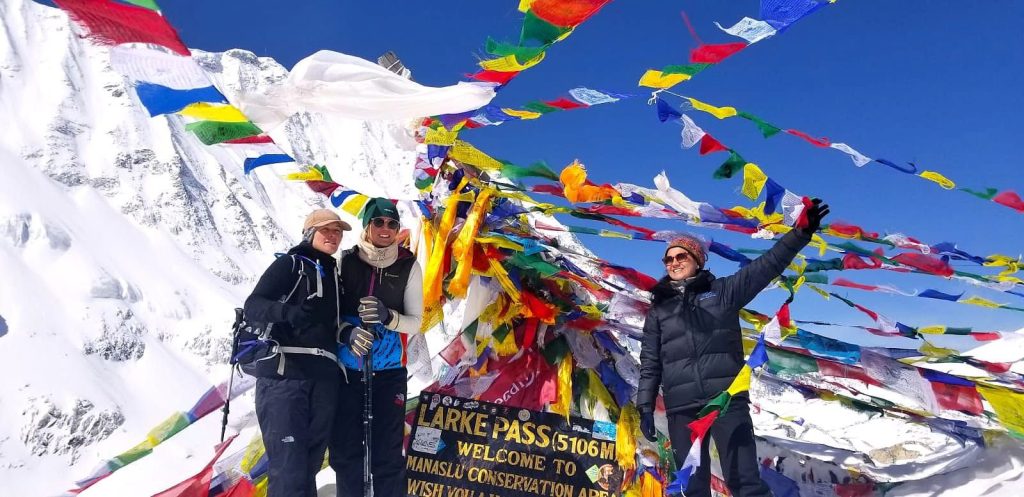
- Larkya La crossing to Bhimthang, 5,106 meters at the summit, 3,590 to 3,720 meters at Bhimthang, 8 to 10 hours, about 16 to 24 kilometers. The group sets out in darkness, climbs roughly 650 meters over snow and scree to the top of the pass, where prayer flags snap in the wind above a panorama that includes Himlung, Cheo Himal, Kangguru and the Annapurna range, then descends about 1,400 meters into the green meadow at Bhimthang.
- Bhimthang to Tilche or Dharapani, 1,910 to 2,515 meters, 6 to 7 hours, about 18 kilometers. Down through pine forest and apple orchard villages, rejoining the Annapurna Circuit trail, where thicker air and a warmer teahouse feel like real luxury after Dharamsala.
- Drive from Dharapani to Besisahar and on to Kathmandu, about 9 to 10 hours. A farewell dinner in Thamel closes out the trek with the guide and the group you have spent twelve days walking alongside.
Optional extensions through Manaslu Treks and Expedition include a 5 to 7 day Tsum Valley extension into one of Nepal’s most isolated Himalayan valleys, a one day Manaslu Base Camp side trip out of Samagaun, and a full continuation onto the Annapurna Circuit through Manang, Thorong La, Muktinath and Jomsom for a complete Himalayan traverse.
The Serang Gompa Trek is a cultural and nature-focused trekking route in the Nubri Valley of Nepal's Manaslu region. The…
The Manaslu Circuit Trek is a spectacular journey around Mount Manaslu (8,163 m), the eighth-highest mountain in the world. Located…
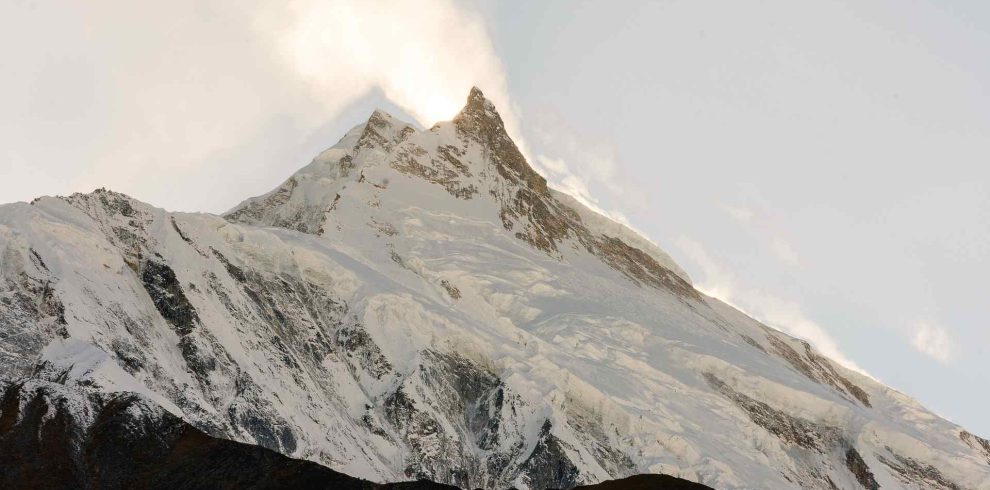
The 9 Days Manaslu Circuit Trek, also known as the Short Manaslu Circuit Trek, is designed for trekkers who want…
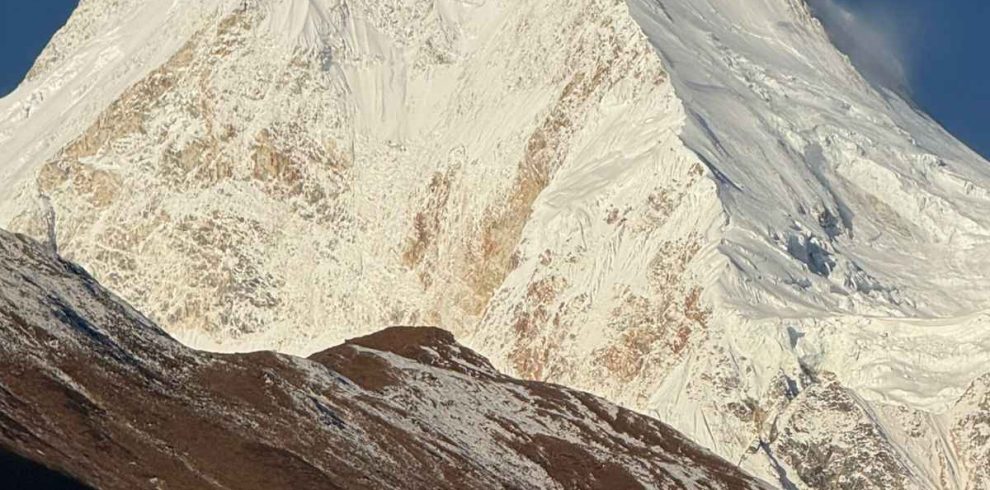
The Manaslu Base Camp Trek is one of Nepal's most spectacular and off-the-beaten-path trekking adventures. Set in the remote Manaslu…
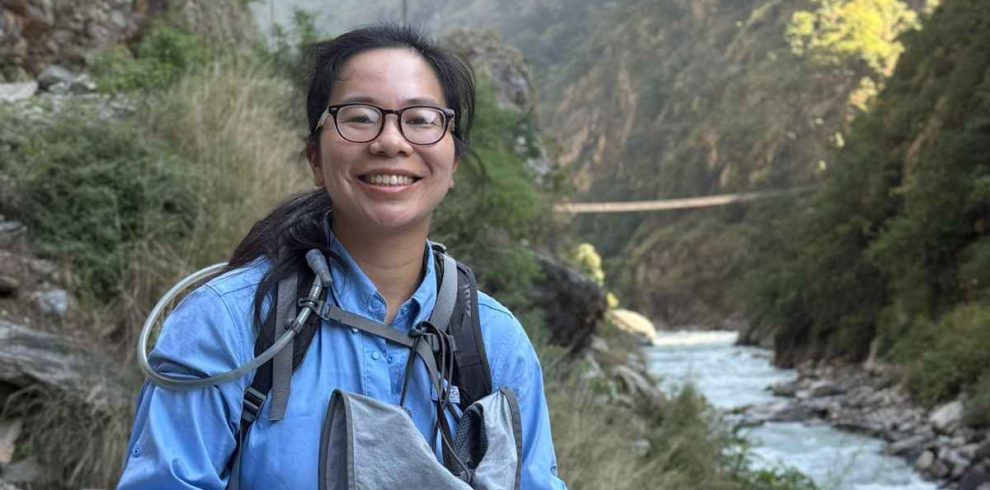
The Luxury Manaslu Circuit Trek is a comfortable way to explore one of Nepal’s most beautiful and less crowded trekking…
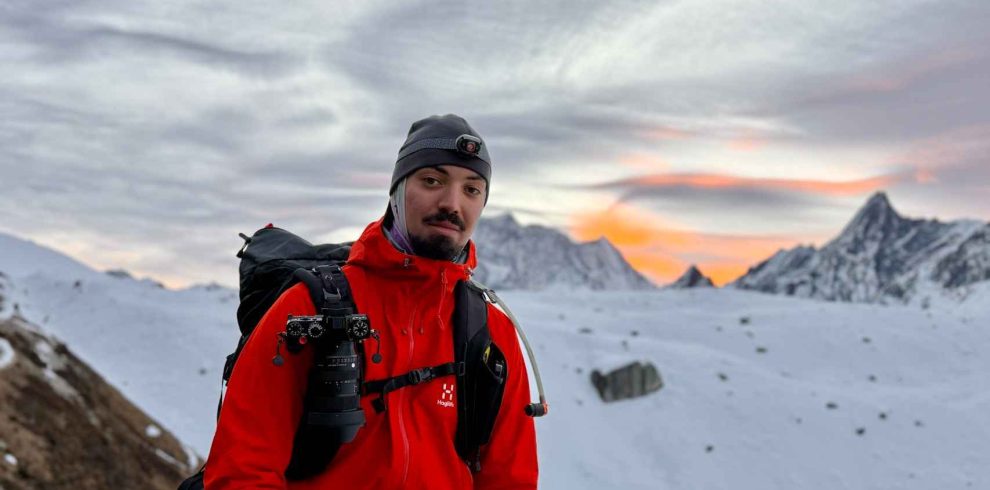
Are you interested in mountain photography and videography and looking for a quieter Himalayan route with more time at key…
Money Saving Tips for Your Group Departure
Travel in the early September or late November shoulder windows rather than peak October, book a group join departure instead of a private trek, share a porter with another trekker, choose local jeep transfers over a private vehicle, and rent your sleeping bag, down jacket and microspikes from a shop in Thamel rather than buying new gear for a single trip. Guide and porter tips together typically run around USD 100 to 200 per staff member for the full trek. For the complete, current breakdown of every cost on this trek, see our Manaslu Circuit Trek cost guide.
Frequently Asked Questions
Can I do the Manaslu Circuit Trek solo without joining a group
You cannot walk the Manaslu Circuit without a registered agency and a licensed guide, regardless of group size. The Restricted Area Permit is only issued through a registered Nepali agency. What most people searching for a solo trek actually want is a group join fixed departure, where they travel with other trekkers under one shared permit and guide team.
How many people are typically in a group join departure
Most fixed departures run with 6 to 12 trekkers, plus one guide and one assistant guide for every 6 to 8 members. Smaller groups of 4 to 6 trekkers are also common with local operators.
Is the Manaslu Circuit Trek suitable for beginners
Yes, with the right preparation. No technical climbing skill is needed. Beginners who train consistently for 8 to 12 weeks before departure and follow the acclimatization schedule on a 14 day itinerary complete this trek successfully every season.
What permits do I need for the Manaslu Circuit Group Trek
Three permits are required: the Manaslu Restricted Area Permit, the Manaslu Conservation Area Permit, and the Annapurna Conservation Area Permit. All three are arranged by your registered agency and bundled into the package price with Manaslu Treks and Expedition.
When is the best time to join a group Manaslu Circuit Trek
October is the single best month for clear skies, stable weather and the best pass conditions. April is the second best option. March, May, September and November are all viable, each with a minor trade off in weather, temperature or teahouse availability.
How difficult is the Larkya La Pass crossing
The crossing is long and demanding rather than technically difficult. It involves an 8 to 10 hour day with a 3 to 4 in the morning start, altitude above 5,100 meters, cold temperatures, wind and icy terrain. A fit, well acclimatized trekker completes it without any technical equipment, though trekking poles and microspikes are strongly recommended.
What is the Manaslu Circuit Trek group price for 2027
Group join packages across local operators typically run USD 850 to 1,900 per person for 14 to 16 days, all inclusive. Manaslu Treks and Expedition group join departures start around USD 950 to 1,250 per person depending on group size. Contact us directly for the current fixed departure calendar and pricing.
Is travel insurance mandatory for the Manaslu Circuit Trek
Yes. Comprehensive travel insurance covering high altitude trekking above 5,000 meters, restricted area trekking in Nepal, and helicopter rescue and evacuation is required. Your guide will ask to see proof of insurance before the group leaves Kathmandu.
What happens if my preferred departure date is not listed
Send us your preferred travel window directly. We can often open a new fixed group departure around strong demand dates, or arrange a private departure built entirely around your own schedule.
Book Your Group Manaslu Circuit Trek With Us
The Manaslu Circuit is not a trek you stumble into. You choose it deliberately, knowing the reward on the far side of Larkya La, an eight thousand meter peak at arm’s length, the quiet of the Nubri Valley, and the warmth of a teahouse fire after the longest walking day of your life, is worth every bit of preparation it takes to get there. Manaslu Treks and Expedition has led trekkers from around the world through every season on this circuit. Our team knows this trail the way you know your own neighborhood, and we handle every permit, every jeep transfer, every teahouse booking and every altitude check so that your only job on the trail is to walk, breathe and look up.
Fixed departure group join treks run throughout the spring and autumn seasons, and no advance payment is required to confirm your place.
Ready to confirm your spot on a Manaslu Circuit group departure?
Related reading on manaslutreks.com: our full Manaslu Circuit Trek booking guide, the Manaslu Circuit Trek cost guide, our Nepal visa guide for Manaslu trekkers, our first aid and medical kit guide, our helicopter rescue and evacuation guide, our photography and drone rules guide, and our Manaslu Trek difficulty assessment.