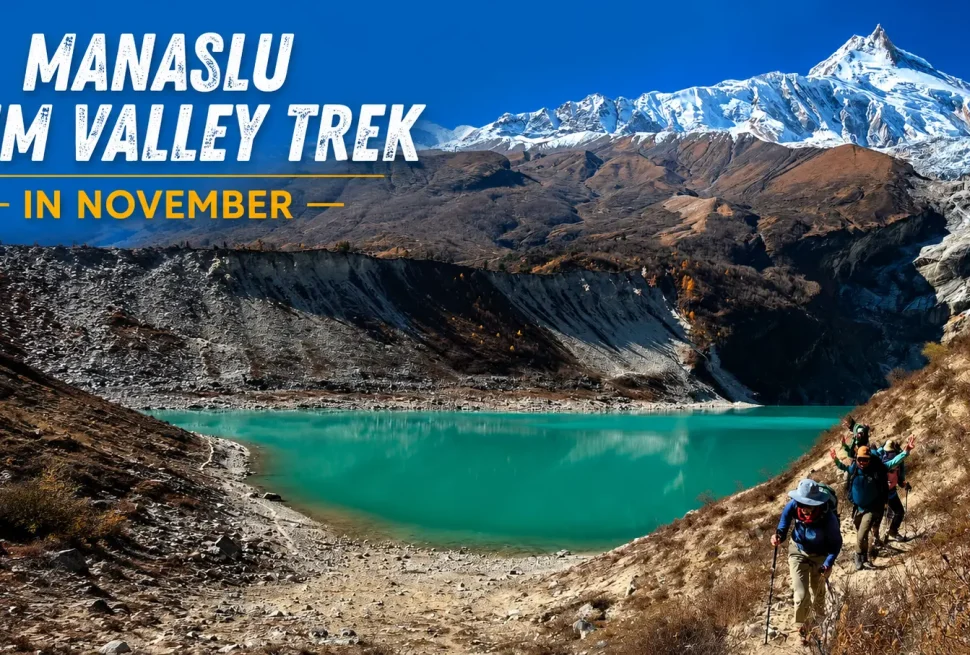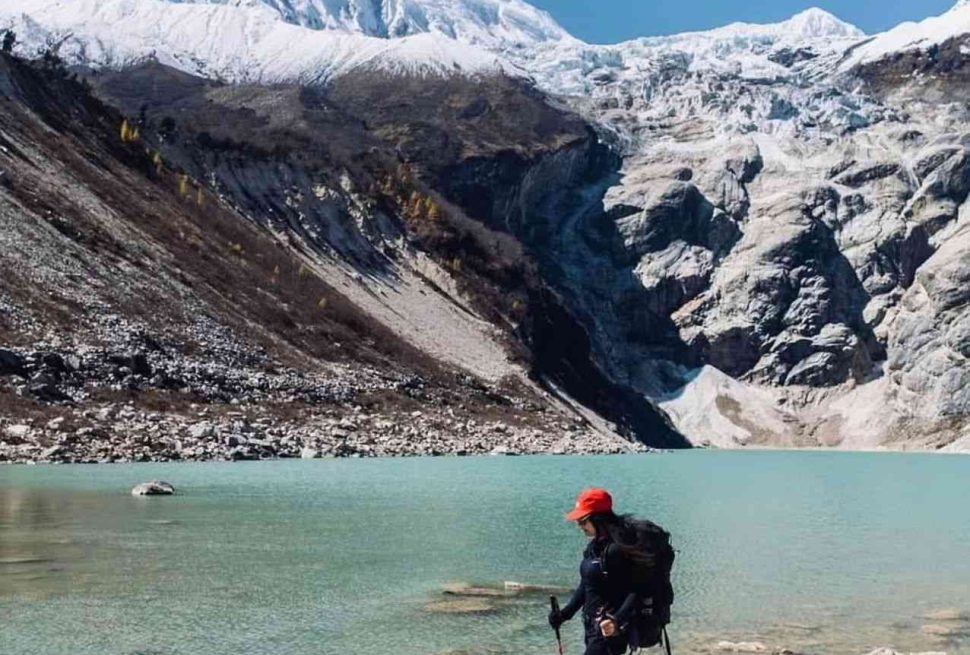
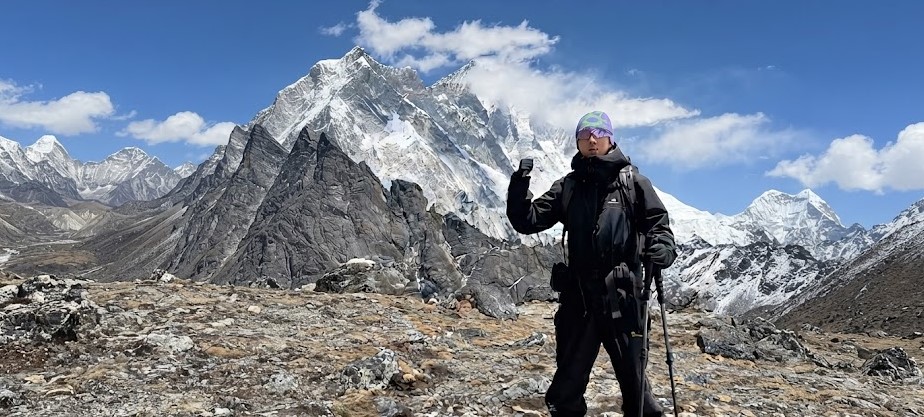
I have walked the Manaslu Circuit more times than I can count, and if there is one conversation I have with almost every group before we even leave Kathmandu, it is this one: altitude sickness is not a small risk on this trek, it is a real and central one. The Larkya La sits at 5,106 meters, and to get there you pass through villages that climb from under 1,000 meters to nearly 4,500 meters in about a week and a half. That is a genuine amount of altitude gain in a short window, and your body has to adapt to it or it will tell you, sometimes gently and sometimes not gently at all. Every year on this route I see trekkers who are strong, fit, and experienced in other mountains still get hit hard by acute mountain sickness, simply because altitude does not care about your fitness level. This article is written from that experience, but I want to be completely clear about one thing before we go any further: I am a trekking guide, not a doctor. Everything below reflects general, well established altitude medicine guidance drawn from sources such as the Wilderness Medical Society and the CDC Yellow Book, combined with what I have observed on the trail over many seasons. It is not personalized medical advice, and it is not a substitute for a proper consultation with your own doctor or a travel medicine clinic before you fly to Nepal. If you take one thing from this whole page, take that: talk to a doctor about your own health history, your own medications, and whether Diamox or any other altitude drug is right for you, before you book your flight.
Why Altitude Sickness Is a Real Concern on the Manaslu Circuit
The Manaslu Circuit is not the highest trek in Nepal, but it is one of the more aggressive ones in terms of how quickly the ground rises under your feet. You start at Machha Khola around 930 meters, a warm, subtropical river valley with rice terraces and mango trees. Within a handful of days you are in Jagat at 1,410 meters, then Deng at 1,860 meters, then Namrung at 2,900 meters, and by the time you reach Samagaon you are already at 3,500 meters, more than three and a half kilometers above sea level. From there the trail keeps going: Samdo at 3,860 meters, Dharamsala at 4,450 meters, and finally the Larkya La itself at 5,106 meters before you drop down the other side to Bimthang around 3,700 meters and eventually Tilije at 2,300 meters.
Put plainly, you gain more than 4,000 meters of net elevation over the course of ten or so trekking days, with the final and hardest push, the pass day, happening after you have already spent a week climbing steadily. This is exactly the profile that altitude physicians worry about most: a route where sleeping altitude increases day after day, with one long, high, physically demanding crossing at the very end when your body is tired and your reserves are lower than they were on day one. Compare that to a trek like Everest Base Camp, where there are more built in rest days spread throughout and the final high point is reached and then you descend the same day. On Manaslu, once you commit to crossing Larkya La, you are on a long day above 5,000 meters with limited quick exit options. That single fact is why altitude preparation deserves real attention here, not an afterthought squeezed in the night before you fly to Kathmandu. If you want to see the full day by day breakdown of this route, our Manaslu Circuit route guide lays out exactly where you sleep each night and why the pacing is built the way it is.
What Acute Mountain Sickness Actually Is
Acute mountain sickness, usually shortened to AMS, is your body’s response to reduced oxygen availability at altitude. As you climb higher, atmospheric pressure drops and each breath delivers fewer oxygen molecules to your lungs and blood, even though the percentage of oxygen in the air stays the same. Your body adapts through a set of changes collectively called acclimatization: you breathe faster and deeper, your heart rate rises somewhat, your kidneys start excreting more bicarbonate to help balance your blood chemistry, and over days your body produces more red blood cells to carry oxygen more efficiently. AMS happens when this adaptation process lags behind how fast you are climbing.
The honest truth, and something I tell every group on the first day, is that mild AMS is extremely common at these altitudes, not rare or exceptional. A headache, some fatigue, a bit of nausea, poor appetite, and disturbed sleep in the first night or two after crossing roughly 2,500 to 3,000 meters is something a large share of trekkers experience to some degree, and it usually does not mean anything is going seriously wrong. Symptoms typically show up somewhere between two and twelve hours after arriving at a new higher sleeping altitude, often worse at night, and mild cases usually settle within a day or two of rest, fluids, and not climbing any further until they resolve. The problem is not that AMS occurs. The problem is when it is ignored, pushed through, or allowed to worsen instead of being taken seriously the moment it appears.
Warning Signs and Symptoms: AMS Versus HAPE and HACE
It helps enormously to understand that there are really three different conditions under the umbrella of altitude illness, and they are not equally dangerous. AMS is the common, usually mild one. High altitude pulmonary edema, HAPE, is fluid building up in the lungs at altitude, and it is a serious, potentially life threatening emergency. High altitude cerebral edema, HACE, is swelling of the brain at altitude, essentially the most severe end of the AMS spectrum, and it is also a medical emergency that can progress to coma if not treated with descent. Both HAPE and HACE are far less common than plain AMS, but they are the reason nobody on this trek should treat altitude symptoms casually.
Below is a comparison of how these three present, so you know what to watch for in yourself and your trekking partners.
| Condition | Typical Symptoms | Urgency Level | Standard Response |
|---|---|---|---|
| AMS (Acute Mountain Sickness) | Headache plus at least one of nausea, loss of appetite, dizziness, fatigue, poor sleep | Low to moderate, but must be monitored closely | Stop ascending, rest at same altitude, hydrate, consider Diamox or simple pain relief, reassess in twelve to twenty four hours |
| HAPE (High Altitude Pulmonary Edema) | Breathlessness at rest, persistent dry or wet cough, chest tightness, extreme fatigue, gurgling sounds in the chest, in advanced cases pink or bloody frothy sputum, blue tinged lips | High, medical emergency | Immediate descent, supplemental oxygen if available, urgent evacuation, medication such as nifedipine only as a supportive measure while arranging descent |
| HACE (High Altitude Cerebral Edema) | Severe headache unrelieved by medication, confusion, loss of coordination or an inability to walk a straight line, drowsiness, irrational behavior, in advanced cases loss of consciousness | Highest, medical emergency | Immediate descent regardless of time of day or weather, oxygen if available, dexamethasone as a supportive measure, urgent evacuation |
The detail I want to underline is the loss of coordination test for HACE. On the trail we sometimes ask someone showing worrying signs to walk heel to toe along a straight line, the same rough idea as a roadside sobriety test. A person with early HACE frequently cannot do this smoothly, even if they insist they feel fine. That single sign, seen by an experienced guide, has triggered more than a few descents on this route that likely prevented a much worse outcome.
The Built In Acclimatization Day at Samagaon and Why the Itinerary Is Designed This Way
Every properly planned Manaslu Circuit itinerary includes a rest day at Samagaon, 3,500 meters, and this is not filler or a day thrown in to pad the trip length. It sits at almost exactly the point in the route where sleeping altitude has crossed the threshold where acclimatization time matters most, and it comes before the truly high stretch through Samdo, Dharamsala, and over the pass. The idea behind an acclimatization day is simple and backed by long standing high altitude medicine practice: climb somewhat higher during the day, then return to sleep at the lower altitude, following the old mountaineering guidance of climb high, sleep low. From Samagaon, most groups use the rest day to hike up toward Manaslu Base Camp or the Pungyen Gompa viewpoint, gaining several hundred meters of altitude exposure during the day before coming back down to sleep at 3,500 meters again.
This single day does an enormous amount of work for your body. It gives your kidneys and your breathing patterns more time to adjust before you push into the 3,800 to 4,500 meter zone where the air gets noticeably thinner and where AMS symptoms become more likely if you have climbed too fast. I have watched trekkers arrive at Samagaon feeling slightly off, headachy, a bit flat, and leave two days later feeling completely normal simply because they gave their body that extra time rather than pushing straight through. If your itinerary does not include this rest day, or compresses it into a shorter version, that is a real red flag worth asking about directly with any operator you are considering, since it directly affects your safety margin on the days that follow. Our difficulty assessment goes into more detail on how the pacing of this specific route compares to other treks in Nepal.
The Golden Rules of Safe Ascent
There are a small number of rules that genuinely matter more than any gadget, supplement, or piece of gear you could bring. I repeat these to every group, usually more than once, because they are simple to state and easy to ignore in the moment when everyone wants to keep moving toward the pass.
First, never continue ascending if your symptoms are getting worse. A mild headache that stays mild is one thing. A headache that is intensifying, or that is now joined by nausea, dizziness, or poor coordination, is a clear signal to stop climbing and reassess, not to push on because the itinerary says so or because your trekking partners want to keep the pace.
Second, if symptoms become serious, descend, and do not wait for morning. Altitude illness that includes confusion, an inability to walk normally, breathlessness at rest, or a cough producing frothy or blood tinged sputum needs descent as soon as it is recognized, at whatever hour of day or night it appears. Waiting to see if it improves overnight has cost lives in these mountains, and it is the single most avoidable mistake in altitude illness management.
Third, never leave someone with altitude symptoms alone, and never let them descend alone. Confusion and impaired judgment are part of how HACE presents, which means the affected person is often the worst judge of how serious their own condition actually is. A trekker with worsening symptoms should always be accompanied by a guide or a capable companion, both for the walk down and for monitoring along the way.
These three rules sound almost too simple to matter, yet in my experience they are exactly the rules that get bent under social pressure: nobody wants to be the person who slows the group down or who turns back a day before the pass. Recognizing that pressure in advance, and agreeing as a group before you even start trekking that safety decisions will not be argued with, saves a huge amount of difficulty later.
Diamox Explained: What It Is, Dosing, Who Should Avoid It, and Side Effects
Diamox is the trade name most trekkers know for acetazolamide, a medication that has been used for decades to help prevent and ease the symptoms of acute mountain sickness. It works by causing a mild metabolic acidosis, which in turn stimulates your breathing rate and helps your body adjust to lower oxygen levels somewhat faster than it would on its own, particularly overnight when breathing naturally slows and blood oxygen dips. It does not treat serious altitude illness such as HAPE or HACE, and it is not a substitute for proper acclimatization, gradual ascent, or descent when symptoms are serious. Think of it as a tool that nudges your acclimatization process along, not a shield that lets you ignore normal ascent rates.
The dosing commonly cited by the Wilderness Medical Society and reflected in CDC travel health guidance for prevention is 125 milligrams taken twice a day, usually starting the day before you begin gaining significant altitude and continuing for a few days once you have reached your higher sleeping elevation, sometimes longer depending on the itinerary. Some guidance mentions a higher dose for people over roughly 100 kilograms of body weight, and some trekkers and their doctors opt for a slightly different schedule depending on individual response, but 125 milligrams twice daily is the figure you will see most often in reputable prevention protocols. I want to state very clearly that this figure is general background information, not a prescription. The actual dose, timing, and whether you should take it at all is a decision for you and your doctor, made in a proper consultation before your trip, taking into account your medical history and any other medications you take.
Diamox is generally avoided in people with a known allergy to sulfonamide type drugs, particularly anyone with a history of a severe allergic reaction such as anaphylaxis or a serious skin reaction to a sulfa drug, and it is also not appropriate for people with certain kidney conditions, liver problems, or specific electrolyte issues, all of which your doctor will screen for. It is also not typically recommended during pregnancy without direct medical guidance. Common side effects include tingling sensations in the fingers, toes, or around the lips, increased urination since it works partly as a mild diuretic, and a strange but harmless effect where carbonated drinks taste flat because the medication interferes with how your tongue processes the carbonation. Most people find these side effects mild and tolerable, but some people are more sensitive than others.
This is exactly why I tell every trekker heading to Manaslu the same thing: try Diamox at home, at the dose your doctor recommends, well before your trip, ideally several weeks out. This tells you how your own body reacts, whether the tingling is mildly annoying or genuinely bothersome, and whether you tolerate the medication at all, all while you are safely at home rather than discovering an unexpected reaction for the first time at 3,860 meters in Samdo. Starting a new medication for the first time on the mountain is not a good plan, for Diamox or for anything else.
Other Prevention Measures That Actually Matter
Medication is one part of altitude preparation, but it is far from the only part, and in my experience the basics matter just as much if not more.
Hydration is genuinely important, since dehydration symptoms overlap with and can worsen AMS symptoms, and the dry mountain air combined with harder breathing at altitude increases how much fluid you lose without you necessarily noticing. Aim to drink consistently through the day rather than in large amounts all at once, and pay attention to urine color as a rough guide, pale rather than dark.
Alcohol is worth avoiding at altitude, particularly on the days you gain significant elevation, since it can worsen dehydration, disturb sleep quality, and mask early symptoms of altitude illness that you would otherwise notice and act on. The same logic applies to sleeping pills in the early days at altitude, since they can suppress your breathing rate at exactly the point when your body needs to breathe faster to adapt, and some sedatives can also blunt the symptoms that would otherwise warn you something is wrong.
Pacing is probably the single most controllable factor. Walking slowly and steadily, rather than racing ahead of your group and then waiting around at altitude, gives your body more time to adjust as you climb. The old mountain saying to walk at a pace where you could hold a conversation without gasping is a genuinely useful rough guide.
As for folklore, garlic soup is served on nearly every teahouse menu along this route and in the Everest region too, often marketed to trekkers as a natural altitude remedy. I am happy to say it is delicious and warming after a long day of walking, and there is nothing wrong with eating it, but there is no established medical evidence that garlic soup prevents or treats altitude sickness. Treat it as good, comforting food, not as a substitute for gradual ascent, proper hydration, or any medication your doctor has actually recommended.
The Luxury Manaslu Circuit Trek is a comfortable way to explore one of Nepal’s most beautiful and less crowded trekking…
How Guides on This Route Monitor Trekkers
A properly trained guide on the Manaslu Circuit is doing far more during the day than simply leading the way and pointing out mountain views. Part of the job, honestly the most important part, is watching each member of the group for subtle changes: someone who has gone quiet when they were talkative before, a trekker who is eating less at meals, someone whose pace has dropped off noticeably from previous days, or a person who seems slightly confused or is answering questions oddly. These small changes often show up before a trekker consciously registers that anything is wrong, and an experienced guide learns to notice them early.
At teahouses, especially from Samagaon onward, we routinely ask directly about headaches, appetite, sleep quality, and general how are you feeling check ins, rather than waiting for someone to volunteer that they feel unwell. Some guides carry a pulse oximeter to check blood oxygen saturation as one data point among several, though it is important to understand that oxygen readings alone do not tell the whole story and are interpreted alongside symptoms, not instead of them. If a guide asks you directly and repeatedly how you are feeling, or asks you to do something like walk a straight line, this is not excessive caution, it is exactly the kind of attentive monitoring that catches problems while they are still small and manageable rather than after they have become serious.
What Happens If Someone Shows Serious Symptoms: Evacuation and Costs
If a trekker develops signs of HAPE or HACE, or AMS symptoms that are clearly worsening rather than settling, the response is descent, arranged as quickly as conditions allow. On much of the upper Manaslu Circuit, particularly between Samagaon and Bimthang, foot descent with a guide is often the fastest and most reliable option given the terrain, though this depends heavily on how severe the symptoms are and how far the nearest lower village happens to be.
For serious cases, especially confirmed or suspected HAPE or HACE where rapid descent by foot is not fast enough or not possible due to weather, terrain, or the trekker’s condition, helicopter evacuation is the standard option in this part of Nepal. Helicopters can reach several points along the route, though landing conditions depend heavily on weather, cloud cover, and altitude, and mountain weather in this region can change quickly and ground flights for hours or occasionally longer. Costs for helicopter evacuation from this region typically run into several thousand US dollars depending on the exact location, distance to Kathmandu, and the operator involved, and this is exactly the kind of expense that comprehensive travel insurance covering high altitude trekking and helicopter evacuation is designed to handle. I cannot stress this enough: buy travel insurance that specifically covers trekking up to at least 6,000 meters and includes helicopter evacuation, and carry proof of it with you, since rescue coordination moves much faster when insurance details are confirmed immediately rather than negotiated from a teahouse with patchy phone signal. This is not a place to save money by skipping insurance or by buying a policy that quietly excludes altitudes above 4,000 or 5,000 meters, which some general travel policies do.
How Fitness Level Relates to Altitude Risk
This is one of the most persistent misunderstandings I encounter, and it is worth addressing directly: being physically fit does not meaningfully protect you from altitude sickness. Cardiovascular fitness makes the walking itself easier, the climbs feel less exhausting, and recovery between days is generally better, all genuinely useful things on a trek this long. But acclimatization is a separate biological process governed by how your specific body responds to reduced oxygen at altitude, and it does not correlate well with how many marathons you have run or how much time you spend at the gym.
I have guided very fit trekkers who struggled badly with AMS above 4,000 meters, and I have guided people with far more modest fitness levels who acclimatized easily and felt strong the entire way. Genetics, hydration, sleep quality, prior altitude exposure, ascent rate, and simple individual variation all play a much bigger role than gym fitness. This does not mean fitness does not matter for this trek, it absolutely does, since the days are long and the terrain is demanding, and being undertrained will make an already hard trek exhausting. It simply means fitness should never be treated as insurance against altitude illness, and a strong trekker who ignores worsening symptoms is at exactly the same risk as anyone else, arguably more so since fit people sometimes convince themselves that being strong somehow makes them immune.
The Psychological Side of Altitude: Pushing Through Versus Knowing When to Stop
There is a mental and emotional dimension to altitude that rarely gets enough attention in trek planning conversations, yet it is often the deciding factor in how situations actually unfold on the ground. Most people who commit to a three week trip, fly to Nepal, and spend ten days walking toward Larkya La arrive at Samagaon or Samdo with real emotional investment in reaching that pass. Turning back, or even just pausing for an extra rest day, can feel like failure, and there is often quiet social pressure within a group not to be the one who slows everyone else down.
I want to be direct about this because it matters enormously: recognizing early symptoms and choosing to rest, or in serious cases to descend, is not weakness or failure, it is exactly the skill that keeps trekkers safe on this route year after year. The mountain and the pass will still be there another season. Your health, in a genuinely serious case, may not fully recover from ignoring warning signs, and severe HACE or HAPE can become fatal within hours if descent is delayed. Part of what a good guide does is create space for trekkers to voice how they are actually feeling without shame, and part of what a good trekker does is get honest with themselves rather than performing toughness for the group. The trekkers I respect most on this route are not the ones who grit their teeth through a worsening headache, they are the ones who say clearly at breakfast that they did not sleep and their head hurts more than yesterday, because that honesty is what allows a guide to actually do their job.
Altitude Profile of the Manaslu Circuit, Day by Day
Below is the rough altitude progression most itineraries follow on this route, along with a note on what matters for acclimatization at each stage.
| Stage / Village | Approximate Altitude | Acclimatization Note |
|---|---|---|
| Machha Khola | 930 m | Low altitude start, warm subtropical valley, altitude illness risk essentially negligible here |
| Jagat | 1,410 m | Still low, gradual gain, a good stretch to settle into walking rhythm before altitude becomes a factor |
| Deng | 1,860 m | Moderate altitude, most trekkers feel no effects yet, though this is where the daily gain starts adding up |
| Namrung | 2,900 m | Crossing into the altitude zone where mild AMS symptoms can first appear in sensitive individuals |
| Samagaon | 3,500 m | Key acclimatization point with a built in rest day, climb high during the day and sleep low the same night |
| Samdo | 3,860 m | High altitude village, symptoms should be monitored closely, appetite and sleep often affected here |
| Dharamsala | 4,450 m | Final camp before the pass, basic facilities, this is where serious symptoms must be taken most seriously since options narrow the closer you get to pass day |
| Larkya La | 5,106 m | Highest point of the trek, long exposed crossing, no realistic quick descent options partway across, weather and timing matter greatly |
| Bimthang | 3,700 m | Significant descent after the pass, symptoms typically ease noticeably here as oxygen availability improves |
| Tilije | 2,300 m | Further descent, altitude illness risk drops substantially, most residual fatigue is simply from the physical effort of the crossing rather than altitude |
Looking at this table, the section from Samagaon through Dharamsala to the pass is where the real work of acclimatization and careful monitoring happens, and it is exactly why a properly built itinerary refuses to compress those days. If you are comparing itineraries from different operators, this is the part of the schedule worth scrutinizing most closely.
Preparing Before You Book: A Practical Checklist
A few practical steps make a real difference before you even land in Kathmandu. Book a consultation with a doctor or a travel medicine clinic several weeks ahead of departure, not the week before, so there is time to trial any medication and address any questions that come up. Ask specifically about Diamox given your own health history, and if it is prescribed, try it at home first. Confirm your travel insurance explicitly covers high altitude trekking up to at least 6,000 meters and includes helicopter evacuation, and keep a copy of the policy details accessible on the trek itself. Choose an itinerary that includes the Samagaon rest day and does not compress the days approaching the pass, and ask your operator directly how their guides are trained to recognize and respond to altitude illness. You can find our full recommended itinerary and trip details on the Manaslu Circuit Trek, and general cost and logistics questions are answered on our Manaslu Circuit FAQ and cost.
Keep our list of important contacts for the Manaslu Circuit saved on your phone as well, since knowing who to call quickly matters as much as recognizing the symptoms themselves.
Frequently Asked Questions
How common is altitude sickness on the Manaslu Circuit Trek?
Mild AMS symptoms such as headache, poor appetite, or disturbed sleep are common above roughly 3,000 meters and affect a meaningful share of trekkers to some degree, particularly around Samagaon and above. Serious altitude illness such as HAPE or HACE is far less common, especially when the itinerary includes proper acclimatization days and trekkers respond appropriately to early symptoms rather than pushing through them.
Do I need to take Diamox for this trek?
Not necessarily. Many trekkers complete this route successfully without any preventive medication, relying instead on a well paced itinerary, good hydration, and honest self monitoring. Diamox is one useful tool for some trekkers, particularly those with a history of altitude sickness or those wanting an additional margin of safety, but the decision should be made with your own doctor based on your medical history.
What is the typical Diamox dose trekkers use for prevention?
Guidance commonly cited by the Wilderness Medical Society and reflected in CDC travel health resources lists 125 milligrams taken twice a day as the standard preventive dose for adults, usually starting the day before significant altitude gain begins. This figure is general background information only, and your actual dose and whether to take it at all must be decided with your doctor.
Can Diamox mask serious symptoms and make things more dangerous?
Diamox helps your body acclimatize faster and can reduce mild AMS symptoms, but it does not prevent HAPE or HACE, and it is not meant to allow faster ascent than would otherwise be safe. Trekkers taking it should still monitor themselves closely and treat any new or worsening symptoms, including symptoms while on Diamox, as something to report to their guide immediately rather than assuming the medication has it covered.
What should I do if I get a headache at altitude on this trek?
Tell your guide immediately rather than quietly hoping it passes. Rest at the same altitude, hydrate well, avoid alcohol and sleeping pills, and monitor whether the headache is stable, improving, or worsening. If it worsens or is joined by other symptoms such as nausea, dizziness, or poor coordination, do not continue ascending, and consider descent if things do not improve.
Is the Larkya La pass day the most dangerous part of the trek for altitude illness?
It is the highest point and the longest single exposure above 5,000 meters, and it comes after several days of accumulated altitude exposure, so it deserves serious respect. However, the days from Samagaon through Dharamsala matter just as much since they determine how well acclimatized you are heading into pass day, which is exactly why those stages and the rest day at Samagaon exist in the itinerary.
What happens if I need to be evacuated from high on the Manaslu Circuit?
For serious symptoms, descent on foot with a guide is often arranged first where terrain and the trekker’s condition allow it. For confirmed or suspected HAPE or HACE, or when foot descent is not fast enough, helicopter evacuation is the standard option, subject to weather and landing conditions. This is why comprehensive travel insurance covering high altitude trekking and helicopter evacuation is essential before you depart.
Does being physically fit protect me from altitude sickness?
Not reliably. Fitness makes the walking easier and helps with overall stamina and recovery, but acclimatization is governed by individual physiology rather than gym fitness, and very fit trekkers can still develop significant AMS while less conditioned trekkers sometimes acclimatize with no trouble at all. Fitness should never be treated as protection against altitude illness.
Should older trekkers or those with health conditions worry more about altitude on this route?
Age alone is not a reliable predictor of altitude illness risk, and healthy older trekkers regularly complete this route without significant problems. However, anyone with existing heart, lung, kidney conditions, or other significant medical history should have a thorough conversation with their doctor well before booking, since these conditions can affect both altitude risk and whether medications such as Diamox are appropriate.
A Final Word Before You Book
None of what I have written here is meant to scare you away from this trek. The Manaslu Circuit remains one of the most rewarding routes in Nepal, with genuine remoteness, warm Tibetan influenced villages, and views of Manaslu itself that few trekking routes can match. What I want instead is for you to arrive prepared, informed, and honest with yourself about how your body is responding along the way, because that combination is what keeps this trek safe year after year for the vast majority of people who attempt it.
Please see a doctor before your trip to discuss your own medical history, whether Diamox or any other altitude medication is appropriate for you, and to confirm your travel insurance covers high altitude trekking and helicopter evacuation. Nothing in this article replaces that consultation.
If you have questions about altitude preparation, itinerary pacing, or anything else about this trek before you book, please reach out to us at Manaslu Treks and Expedition. You can call or message us on WhatsApp at +977 9869225929, email us at info@manaslutreks.com, or visit our contact to reach our team directly. We have guided this route many times, we take altitude safety seriously on every trip we run, and we are happy to answer honest questions before you commit to anything.