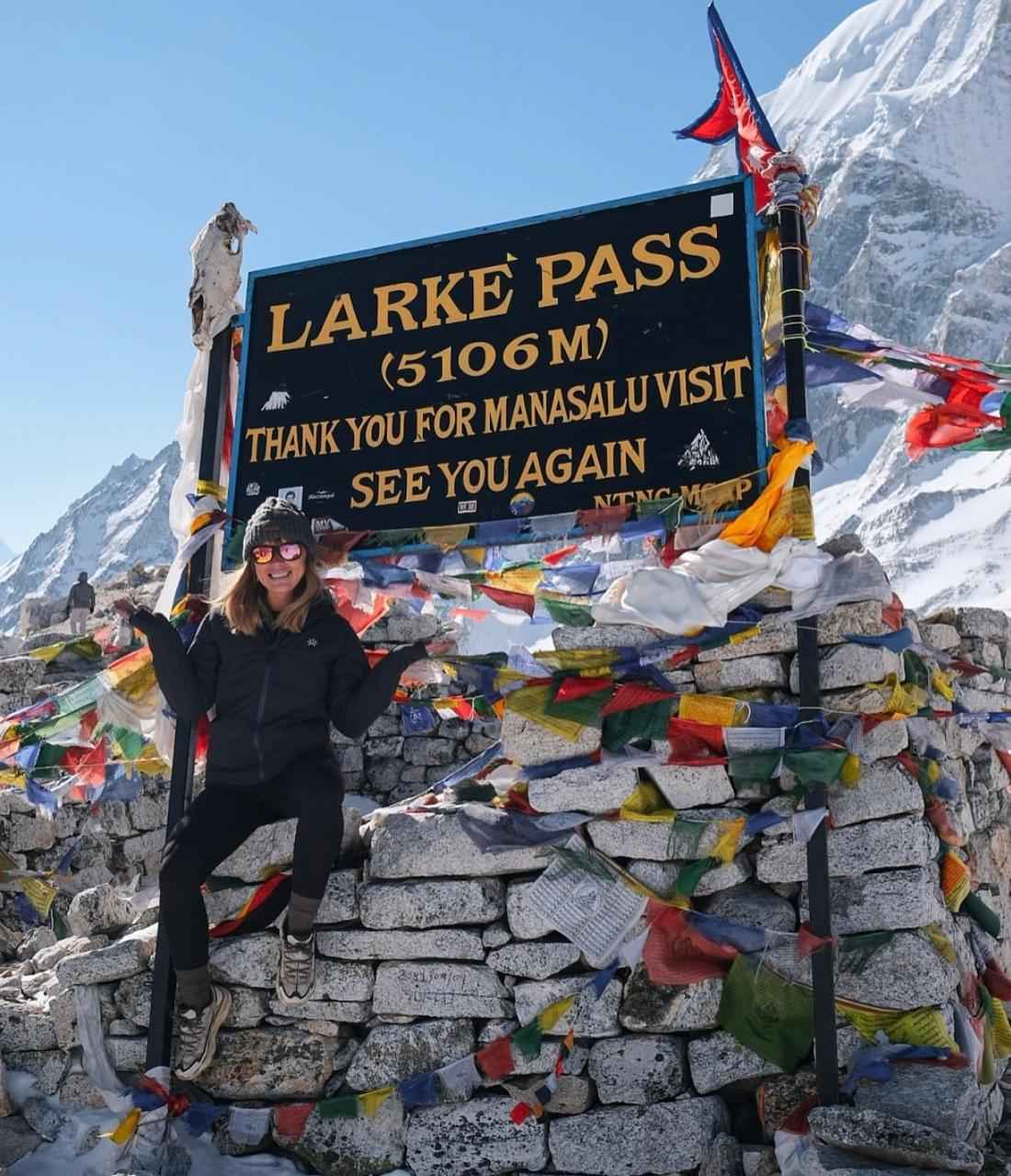
If you are reading this in Seoul, Busan, or Daegu and wondering whether the Manaslu Circuit Trek is realistic for a Korean traveler, the short answer is yes, and it may suit you better than almost any other trekker on the trail. I have guided groups from Korea on this route more than once, and the pattern is always the same: strong legs from years of weekend hiking on granite ridgelines, good gear already sitting in a closet at home, and a level of respect for the mountain that comes from growing up in a country where hiking is treated as a serious pursuit rather than a casual weekend outing. What is different here is not fitness, it is scale, altitude, and logistics. A Sunday climb up Bukhansan or a full day on Seoraksan’s ridgeline is a few hours from a subway station. Manaslu is three weeks away from a proper hospital, crosses a pass higher than any point in Korea by a factor of nearly three, and requires a licensed guide and a restricted area permit before you even leave Kathmandu. This guide walks through everything a South Korean trekker actually needs to plan this trip properly in 2026, from the flight out of Incheon to what your dinner will look like at 4,460 meters, written the way I would explain it to a client sitting across from me in our office rather than the way a generic travel site would summarize it.
Why South Korean Trekkers Are Drawn to the Manaslu Circuit
Korea does not lack mountains. With roughly seventy percent of the country classified as mountainous terrain, hiking is close to a national pastime, and the culture around it is genuinely serious. Seoraksan, with its granite peaks and famous autumn colors, and Jirisan, the tallest peak on the Korean mainland at just over 1,915 meters, both draw enormous crowds of hikers equipped with proper boots, trekking poles, and branded outdoor clothing that would not look out of place on an alpine expedition. Korean hiking culture treats the activity with a level of gear seriousness and trail etiquette that visitors from other countries sometimes find surprising, and this is exactly the mindset that transfers well to the Himalaya.
I want to be careful here and not overstate the comparison, because Jirisan and Seoraksan are simply not in the same category of mountain as Manaslu. A full traverse of Seoraksan might involve a full day of walking and an elevation gain of a bit over a thousand meters, done without a guide, without a permit, and without altitude to think about. The Manaslu Circuit is a three week commitment that climbs past 5,000 meters, crosses a genuine high pass at Larkya La, and takes you through villages where the nearest road ends days behind you. What Korean hikers bring to this trek is not familiarity with the specific challenge, but a baseline of trail discipline, physical conditioning, and comfort with long days on foot that many trekkers from flatter countries simply do not have when they arrive. Add to that Korea’s deep interest in Buddhist culture and pilgrimage travel, and Manaslu, with its Tibetan influenced villages, mani walls, and monasteries around Samagaon and Samdo, becomes a natural draw rather than a random choice. If you want to understand exactly what the trek involves before committing, our Manaslu Circuit Trek lays out the itinerary in full.
There is also a numbers story worth knowing. Korean visitor arrivals to Nepal have historically run in the tens of thousands annually, with around 40,000 Korean tourists visiting in 2018 before the pandemic era disrupted travel patterns everywhere, and numbers have been climbing back since. Korean trekkers have traditionally favored the Annapurna region because of its easier access and shorter logistics, but Manaslu is increasingly on the radar precisely because it offers something Annapurna no longer can: a restricted area with limited numbers, quieter trails, and a sense of being somewhere genuinely remote. If your goal is a Himalayan experience that feels closer to what Annapurna was decades ago, Manaslu delivers that in a way few other treks in Nepal still can.
Flight Options and Travel Time from Seoul Incheon to Kathmandu
As of the current schedule, Korean Air operates the only nonstop service between Seoul Incheon and Kathmandu Tribhuvan International Airport, flying a Boeing 787 several times a week with a flight time of roughly six hours and fifty minutes. This is genuinely convenient by regional standards and removes what used to be the biggest headache for Korean trekkers heading to Nepal, which was a long layover somewhere in between. That said, frequency on this route has fluctuated over the years and schedules do change with the seasons, so treat any specific flight number, day of week, or departure time you find online, including anything in this article, as something to reconfirm directly with the airline or a travel agent before you commit to dates.
If the nonstop flight does not line up with your dates, or if you are flying out of Busan or another regional airport, connecting through a Southeast Asian or South Asian hub is the standard alternative. Common connection points include Bangkok, Kuala Lumpur, Singapore, and Delhi, each served by a mix of Thai Airways, Malaysia Airlines, Singapore Airlines, and Air India along with their codeshare partners. These routings typically add somewhere between three and eight hours of total travel time depending on the layover length, but they also open up more departure times and can sometimes be considerably cheaper than the direct option, particularly if booked well in advance.
| Route | Approximate total duration | Notes |
|---|---|---|
| Seoul Incheon to Kathmandu, nonstop | About 7 hours in the air | Operated by Korean Air on a limited weekly schedule, reconfirm frequency and days before booking |
| Seoul Incheon via Bangkok to Kathmandu | Roughly 11 to 14 hours total including layover | Wide choice of connection times, Thai Airways is a common carrier on the Bangkok to Kathmandu leg |
| Seoul Incheon via Kuala Lumpur to Kathmandu | Roughly 12 to 15 hours total including layover | Malaysia Airlines, often competitively priced |
| Seoul Incheon via Singapore to Kathmandu | Roughly 12 to 16 hours total including layover | Singapore Airlines, generally a premium option with strong onward connection reliability |
| Seoul Incheon via Delhi to Kathmandu | Roughly 10 to 13 hours total including layover | Air India, useful if combining Nepal with an Indian leg of travel |
A practical note from experience: whichever routing you choose, try to arrive into Kathmandu with at least one full buffer day before your planned trek start date. Domestic flights and the overland jeep or bus journey to the trailhead at Soti Khola or Machha Khola depend on weather and road conditions in the hills, and an international flight delay stacked directly against a tight departure schedule has ruined more than one trekker’s itinerary. Build in the slack.
Nepal Visa Requirements and Process for South Korean Citizens
South Korean passport holders are eligible for Nepal’s visa on arrival, which is the option most of our Korean clients use, and Nepal also runs an online visa system that lets you enter your details in advance and print a barcode to speed up the airport process. Neither South Korea nor Nepal requires the more restrictive pre approved consular visa that a small number of nationalities are subject to, so the process is generally straightforward.
At Tribhuvan International Airport, the standard process involves filling out an arrival form (or completing it online beforehand through Nepal’s immigration portal), submitting a passport photo, and paying the visa fee in cash, usually accepted in US dollars alongside several other major currencies. Tourist visas are typically issued in three durations, with published fees historically set at around 30 US dollars for 15 days, 50 US dollars for 30 days, and 125 US dollars for 90 days, though fees and exact conditions can change and you should verify the current rate on Nepal’s official Department of Immigration website or with your booking agent before you travel, since this is exactly the kind of detail governments revise without much notice. For a three week trek like Manaslu, most of our Korean clients choose the 30 day visa, which comfortably covers the trek itself plus a few days of buffer in Kathmandu on either end.
You will need a passport valid for at least six months beyond your travel dates, a passport sized photo (bring two or three printed copies as a backup even if you plan to use the online system), and the visa fee in cash. Credit cards are not always reliably accepted at the visa payment counter, so carrying US dollars in small denominations is the safer approach. Beyond the entry visa, Manaslu itself requires additional paperwork that a general Nepal visa does not cover: because it sits inside a restricted area, you will need a Restricted Area Permit, a Manaslu Conservation Area Permit, and an Annapurna Conservation Area Permit for the portion of the route that spills into that conservation zone near the end. These are arranged through a registered trekking agency, not at the airport, and a licensed guide is a legal requirement to trek here at all, which is a separate but related point covered later in this guide. Our general Manaslu Circuit FAQ and cost breaks down current permit costs and requirements in more detail.
Best Time of Year to Trek Manaslu Around Korean Holidays
The two best trekking windows for Manaslu are spring, roughly March through May, and autumn, roughly late September through November, and both happen to line up reasonably well with common Korean vacation patterns, though not perfectly. Autumn is the more popular season overall for clear mountain views and stable weather, and it is also when Chuseok falls, usually landing somewhere in late September or early October depending on the lunar calendar. Chuseok itself is only a few days off work, which is too short for a full Manaslu trek on its own, but many Korean professionals extend it with additional annual leave to build a two to three week window, and this timing overlaps nicely with the start of Nepal’s best autumn trekking conditions.
Lunar New Year, or Seollal, falls in late January or February depending on the year, which sits at the edge of Nepal’s winter season. Winter on Manaslu is genuinely cold, with heavy snow likely at Larkya La and some teahouses above Samdo closing for the season, so this is not a window I recommend for this particular trek unless you have serious high altitude winter experience and are prepared for the very real possibility of the pass being closed. Summer break, when many Korean schools and universities are out and some workers take longer leave, falls during Nepal’s monsoon season from June through August, which brings daily rain, leech encounters on the lower trail sections, and clouded mountain views, though Manaslu’s rain shadow effect on the far side of the pass does make it somewhat more monsoon tolerant than treks like Annapurna Base Camp. Still, spring and autumn remain the two seasons I recommend without reservation. Our detailed best time to trek Manaslu and Tsum Valley guide goes through month by month conditions if you want to fine tune your dates against your specific leave schedule.
| Planning factor | Key detail for a Korean traveler |
|---|---|
| Visa | Visa on arrival or online pre registration available for South Korean passports, fee tiers by 15, 30, and 90 day duration, reconfirm current fees before travel |
| Currency | Nepalese Rupee is the local currency, US dollars exchange easily in Kathmandu, Korean Won is not commonly accepted or exchanged, cards work in the city but not on the trail |
| Time difference | Nepal is 3 hours and 15 minutes behind South Korea, a small and easy adjustment with no real jet lag |
| Best season | Spring, March to May, and autumn, late September to November, are the two recommended windows, both offering reasonable overlap with extended Chuseok or annual leave periods |
Time Zone Difference and Jet Lag Adjustment from Korea to Nepal
One small but genuinely pleasant surprise for Korean travelers is the time difference itself. Nepal runs on Nepal Standard Time, which is three hours and fifteen minutes behind South Korea. The odd fifteen minute offset always draws a question or two from clients, and it comes from Nepal’s decision to set its clocks based on the longitude of a specific meridian rather than rounding to the nearest full hour, which is also why Nepal’s time zone is unusual globally. Practically speaking, a gap of a little over three hours produces essentially no jet lag. If you land in Kathmandu at, say, five in the afternoon local time, your body still thinks it is early evening rather than the middle of the night, and most Korean travelers report adjusting within a day, sometimes without noticing any adjustment at all. This is a real advantage compared to travelers arriving from Europe or the Americas, who often lose their first day or two in Kathmandu to fatigue and disrupted sleep. Use that saved day productively: it is the ideal window to double check your gear, meet your guide, and walk through Thamel to pick up any last minute trekking items before heading to the trailhead.
Currency Exchange and Card Use for Korean Travelers
Nepal’s currency is the Nepalese Rupee, and Korean Won is not a currency you can exchange easily in Kathmandu or anywhere along the trekking route, so plan to arrive with US dollars, which remain the most widely accepted and easily exchanged foreign currency in Nepal. Many of our Korean clients convert Won to dollars before leaving Korea, since rates and availability for Won conversion inside Nepal are inconsistent and generally poor. Once in Kathmandu, exchange counters and licensed money changers throughout Thamel offer competitive rates for US dollars, euros, and a handful of other major currencies, and hotels can also exchange money though usually at a slightly worse rate.
Credit cards work reasonably well in Kathmandu itself for hotels, restaurants, and larger shops, with Visa and Mastercard the most widely accepted, though a small transaction fee is common. Once you leave the city and start trekking, card acceptance disappears almost entirely. Teahouses along the Manaslu route run on cash, and there are no ATMs once you are past the lower villages near Soti Khola, so you need to carry enough Nepalese Rupees in cash to cover your entire trek, including meals, snacks, hot showers, device charging, and WiFi where available, all of which are typically paid for individually at each teahouse rather than bundled into your trip cost. A rough daily budget of 25 to 40 US dollars equivalent in cash for personal spending on the trail is a reasonable planning figure, though this rises somewhat at the higher villages where everything must be carried in by mule or porter and prices increase accordingly. Bring more cash than you think you need and keep it in a mix of denominations, since change for large notes can be hard to come by in remote villages.
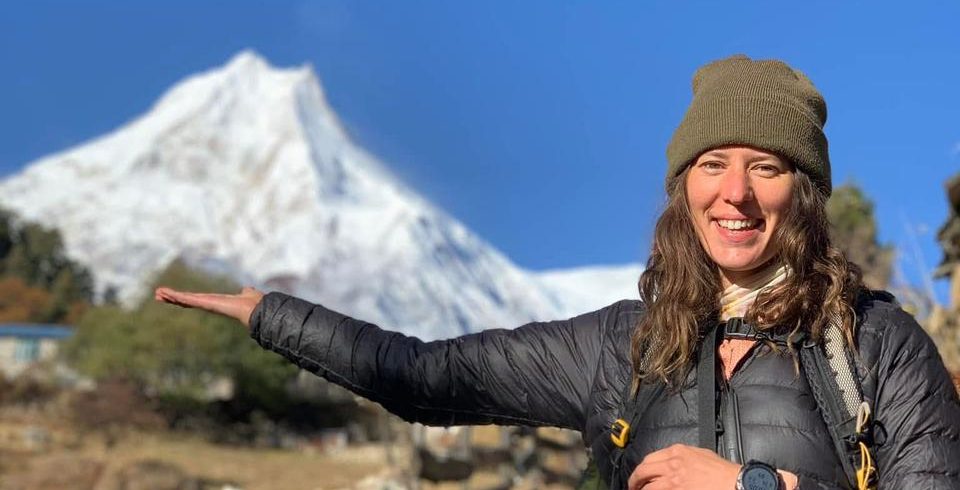
The 19-Day Manaslu Circuit with Tsum Valley Trek is one of Nepal’s most rewarding long-distance Himalayan journeys, combining remote valleys, ancient…
Language and Communication on the Trek
English is the working language of trekking in Nepal, and every licensed guide you will trek with speaks functional to fluent English, since it is a requirement of the government licensing process itself. That said, guides vary in their comfort level with detailed conversation versus basic trail communication, and this is worth asking about directly when you book, particularly if your own English is limited. Dedicated Korean speaking guides do exist in the Kathmandu trekking industry, though they are a smaller pool than English speaking guides and tend to be booked well ahead of the main spring and autumn seasons, so if having a Korean speaking guide is important to you, raise this early when planning your trip rather than assuming it can be arranged last minute. Even without a Korean speaking guide, most Korean trekkers find that a combination of simple English, translation apps on a phone (downloaded for offline use before you lose signal), and the universal language of pointing at a menu or a map works perfectly well for day to day needs. Porters and lodge owners along the route generally have very limited English, so most of your direct communication happens through your guide, which is one more reason a good guide relationship matters as much as the trekking itself.
Food on the Trek: What Korean Trekkers Should Actually Expect
This is one of the questions I get asked most directly by Korean clients, and I want to be honest about it rather than oversell it. Teahouse food on the Manaslu Circuit is simple, filling, and built around what can realistically be carried up the trail or grown locally at lower elevations. Dal bhat, a set meal of lentil soup, rice, vegetable curry, and often a pickle or small side, is the standard trekker meal and the one I recommend eating most often, both because it is usually the freshest option and because most teahouses offer unlimited refills, which matters a great deal when you are burning several thousand calories a day. Other regular menu items include fried noodles, fried rice, potato dishes in several forms, soup, and basic bread items, along with instant noodles that will feel at least somewhat familiar.
What will not be available is genuine Korean food. There is no kimchi, no gochujang based dishes, and nothing resembling Korean spice profiles once you are on the trail itself, though the fried and pickled elements of Nepali cuisine occasionally hit a similar comfort note. Some experienced Korean trekkers pack a small personal supply of gochujang paste, dried kimchi, or ramyeon packets from home to supplement teahouse meals, and this is a completely reasonable strategy that I have seen work well, particularly for the second and third weeks of the trek when appetite fatigue with repetitive menus can set in. If spice is important to you, ask for chili on the side, since Nepali food is not typically prepared very hot by default, though most teahouses can add chili flakes or a side of pickle on request. Before you fly out, Thamel itself is worth knowing about for the opposite reason: it has a genuine cluster of Korean restaurants, including established spots serving Korean barbecue, bibimbap, and proper banchan, so if you are craving familiar food before or after your trek, that is entirely achievable in Kathmandu even if it is not achievable on the mountain itself.
Packing Considerations for Someone Traveling from Korea’s Climate
Korean hikers generally already own excellent outdoor gear, which is one real advantage you bring to this trek. Korea’s own domestic hiking culture has produced a strong market for quality jackets, boots, and layering systems, and much of what you already use on Seoraksan or Bukhansan will transfer directly to Manaslu. Where Korean packing habits need adjusting is around the range of conditions you will face in a single trek. A day hike at home rarely spans more than one or two seasons worth of temperature, but on Manaslu you move from warm, humid lower valleys around 700 meters near Soti Khola to genuinely cold, wind exposed high altitude terrain above 5,000 meters at Larkya La, sometimes within the same week. That means your kit needs to cover both a Korean summer and a Korean deep winter in the same duffel bag.
Core items worth prioritizing include a proper down jacket rated for well below freezing temperatures, a good sleeping bag rated to at least negative fifteen degrees Celsius since teahouse rooms above 3,500 meters are not heated, thermal base layers, a windproof and waterproof outer shell, sturdy broken in trekking boots (not new ones, this is not the trip to test new footwear), trekking poles, sun protection including a hat and quality sunglasses rated for high altitude UV exposure, and a headlamp for the early morning pass crossing day. Korea’s four distinct seasons mean most trekkers already own the individual layering pieces; the main adjustment is packing enough of them together and not underestimating how cold the nights get at altitude even when the days are pleasant. Also worth noting: electrical outlets in Nepal generally use the same type C and type D configurations found across much of Asia, but voltage and plug shape can differ from what you use at home, so bring a universal adapter rather than assuming your Korean charger will fit directly.
Cultural Etiquette Differences Worth Knowing Between Korea and Nepal
Korea and Nepal share some cultural common ground, particularly around respect for elders and a certain formality in social interaction, but there are real differences worth knowing before you arrive. Physical greetings differ: a slight bow with hands together at the chest, the Nepali “namaste,” is the standard greeting rather than the deeper bow common in Korea, and it is used constantly, including with strangers, teahouse owners, and porters. Tipping, while not a major feature of daily life in Korea, is an expected and important part of trekking culture in Nepal, particularly for guides and porters at the end of a multi week trek, and Korean trekkers unfamiliar with this norm sometimes underestimate how much it matters to local staff who depend on it as a significant part of their income.
Religious etiquette is worth understanding too, since the Manaslu region passes through genuinely devout Buddhist communities. Walk around mani stones, prayer wheels, and chortens on the left side, spin prayer wheels clockwise, and ask before photographing people, monasteries, or religious ceremonies, a norm that applies particularly around Samagaon and Samdo where Tibetan Buddhist practice is a visible part of daily village life. Modesty in dress matters more in rural Nepal than it typically does in urban Korea, particularly around monasteries and in smaller villages, so packing at least one layer that covers shoulders and knees is a good idea even on a trek. Finally, pace and directness in conversation differ: Nepali trail culture tends to be warm, unhurried, and conversational in a way that can feel slower than typical Korean efficiency, and the most successful Korean trekkers I have guided are the ones who adjust their internal clock to match that rhythm rather than fighting it.
Safety and the Licensed Guide Requirement on This Restricted Area Trek
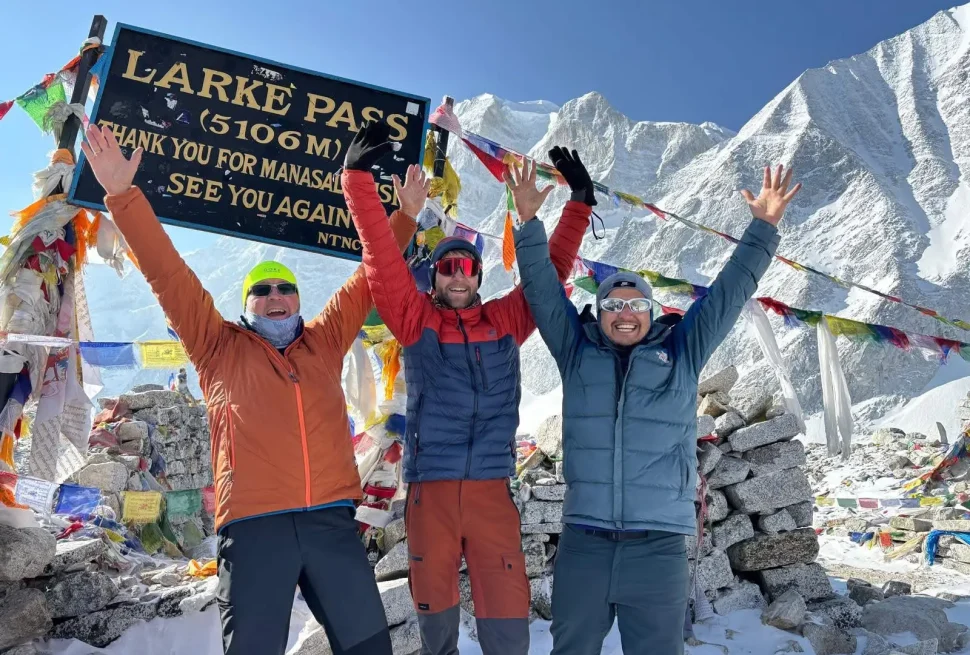
Manaslu is legally classified as a restricted area by the Nepali government, which means, unlike more open routes such as Annapurna Base Camp or the standard Everest Base Camp trail, you cannot trek here independently under any circumstances. A licensed guide is a legal requirement, not a recommendation, and permits will not be issued to trekkers without one. This is not simply bureaucracy for its own sake. The route crosses genuinely serious terrain, including the Larkya La pass at 5,106 meters, communication and rescue infrastructure is thin compared to more developed trekking regions, and weather conditions at altitude can change fast enough that local knowledge meaningfully affects safety outcomes.
For Korean trekkers specifically, who often arrive fit and well prepared with strong general hiking experience, the temptation can sometimes be to underestimate how different altitude illness risk is from anything faced on a Korean mountain, since nothing in Korea reaches anywhere close to the elevations involved here. Altitude sickness is not a fitness problem, it affects strong hikers and weak hikers alike, and a good guide’s real value is recognizing early symptoms, managing acclimatization pacing, and making the call to descend when needed, a decision that is much harder to make objectively about yourself than it is for an experienced guide watching a group. I would strongly encourage anyone planning this trek, regardless of hiking background, to read through our honest Manaslu trek difficulty assessment before booking, since it covers the altitude profile and physical demands in detail without oversimplifying them. Travel insurance that specifically covers high altitude trekking and helicopter evacuation is not optional for this trip, and I would treat it as a fixed cost of the trek rather than an item to skip to save money.
Route Overview and What a Typical Day Looks Like
The standard Manaslu Circuit runs roughly two to three weeks depending on your itinerary and any side trips into the Tsum Valley, starting with a long drive or flight to the trailhead near Soti Khola or Machha Khola, then following the Budhi Gandaki river valley upstream through a string of villages including Jagat, Deng, Namrung, and Lho before reaching Samagaon, the acclimatization hub beneath Manaslu itself. From there the trail climbs to Samdo and then to Dharamsala, the last camp before the pass, crosses Larkya La at 5,106 meters on a single long push day, and descends into the Marsyangdi valley on the Annapurna side, eventually connecting toward Besisahar or a road access point. A typical trekking day involves four to seven hours of walking, usually starting early to take advantage of clearer morning weather and to be off exposed high sections before afternoon cloud or wind builds. Our full Manaslu Circuit route guide breaks the itinerary down day by day with elevation profiles and village details, which is worth studying closely alongside this article since route knowledge and pacing decisions matter as much as physical fitness for how the trek actually feels.
Physical Preparation: Bridging Korean Hiking Fitness to Himalayan Altitude
If your regular hiking routine already includes multi hour days on Korean peaks with real elevation gain, you have a genuinely solid physical foundation for Manaslu, and I say this having guided enough Korean clients to trust the pattern. What I recommend adding in the months before departure is more about duration and pack weight than raw intensity: back to back long days on consecutive weekends to simulate the cumulative fatigue of a three week trek, training hikes with a loaded pack of eight to ten kilograms even though porters will carry your main bag, and if possible, exposure to any altitude you can access, even a single trip up a Korean or nearby regional peak above 2,000 meters, just to build some familiarity with your own body’s response to thinner air. Cardiovascular conditioning matters more than raw strength for this particular trek, so stair climbing, running, or cycling sessions layered on top of your regular hiking routine will serve you well. None of this replaces proper acclimatization on the mountain itself, which no amount of home training can substitute for, but it does mean you arrive with reserve capacity rather than running close to your limit from day one.
Choosing a Trekking Agency and What to Ask Before You Book
Given the restricted area status of this trek, your choice of agency matters more here than it might for an open route. Ask directly about your guide’s specific experience on Manaslu rather than general Himalayan experience, since route knowledge, acclimatization pacing on this particular trail, and familiarity with which teahouses are reliably open in your travel window all come from specific experience on this circuit rather than general guiding credentials. Ask how group size is handled, since a smaller group generally means more flexible pacing decisions around individual acclimatization needs. Ask what is included in your quoted price versus what you pay for separately on the trail, since permit costs, guide and porter wages, and teahouse meals are sometimes bundled differently between agencies and comparing quotes without checking what is actually included can be misleading. And if a Korean speaking guide matters to you, ask about this specifically and early, since it affects planning lead time. Our contact is the direct route to ask us any of these questions before you commit to dates.
Practical Pre Departure Checklist for Korean Trekkers
- Confirm your Korean passport has at least six months validity remaining and enough blank pages for entry stamps.
- Arrange your Nepal tourist visa, either through the online pre registration system or planning for the visa on arrival process at Tribhuvan International Airport, and bring US dollars in cash for the fee along with a passport photo.
- Convert some Korean Won to US dollars before leaving Korea, since Won is not reliably exchangeable inside Nepal.
- Book your flight with a buffer day on arrival in Kathmandu before your trek start date, given that domestic connections and road transfers to the trailhead depend on weather.
- Confirm your trekking agency has arranged your Restricted Area Permit, Manaslu Conservation Area Permit, and Annapurna Conservation Area Permit, and confirm your licensed guide assignment ahead of arrival.
- Purchase travel insurance that explicitly covers high altitude trekking above 5,000 meters and helicopter evacuation.
- Pack layering for both warm lower valley conditions and genuinely cold high altitude nights, including a proper down jacket and a cold rated sleeping bag.
- Bring broken in trekking boots, not new ones, along with trekking poles and a headlamp.
- Pack any personal supply of gochujang, dried kimchi, or ramyeon if familiar spice at mealtimes matters to your comfort on a three week trek.
- Download an offline translation app and offline maps before you lose reliable signal outside Kathmandu.
- Bring a universal power adapter, since Nepal’s outlet types and voltage differ from Korea’s.
- Carry enough Nepalese Rupee cash for the entire trek, since cards and ATMs disappear once you leave the lower villages.
- Set aside cash for tipping your guide and porters at the end of the trek, a standard and important part of trekking culture in Nepal.
If you know other trekkers planning this route from elsewhere in Asia, our planning guide for trekkers coming from Japan covers many of the same visa and flight questions from a neighboring country’s perspective.
Frequently Asked Questions
Is there a direct flight from Seoul to Kathmandu?
Yes, Korean Air operates a nonstop route between Incheon and Kathmandu with a flight time of roughly six hours and fifty minutes, though frequency has varied over the years and is currently limited to a few flights per week. Always check current schedules directly with the airline before booking, since frequency on this route changes with demand and season.
Do South Korean citizens need a visa in advance for Nepal?
No advance consular visa is required. South Korean passport holders can use Nepal’s visa on arrival process at the airport or complete the online pre registration system in advance to save time at immigration. Fees vary by duration, typically offered in 15, 30, and 90 day options, and you should confirm the current fee schedule on Nepal’s official immigration website before you travel.
Can I use Korean Won in Nepal?
Not easily. Korean Won is not a commonly exchanged currency in Kathmandu or anywhere on the trekking route. Bring US dollars for exchange, since dollars are widely accepted and easily converted to Nepalese Rupees at licensed exchange counters throughout Thamel.
Will there be Korean food available during the trek?
Not on the mountain itself. Teahouse menus are built around dal bhat, noodles, and simple local dishes, with nothing resembling authentic Korean cuisine once you leave Kathmandu. Thamel does have several established Korean restaurants where you can eat familiar food before or after your trek, and some trekkers bring a small personal supply of gochujang or dried kimchi to supplement teahouse meals on the trail.
Is a Korean speaking guide available for this trek?
Korean speaking guides do exist within Nepal’s trekking industry, though the pool is smaller than English speaking guides and tends to book up during peak spring and autumn seasons. If this matters to you, raise it when you first inquire rather than assuming it can be arranged close to departure. All licensed guides speak functional to fluent English as a requirement of their government certification.
How big is the jet lag adjustment from Korea to Nepal?
Very small. Nepal is three hours and fifteen minutes behind South Korea, which is a minor adjustment that most travelers barely notice, unlike the significant jet lag experienced by travelers arriving from Europe or the Americas.
Do I need previous high altitude experience to attempt Manaslu?
Previous high altitude experience helps but is not strictly required, since a licensed guide manages your acclimatization pacing throughout the trek. What matters more is a solid baseline of hiking fitness, which most Korean trekkers with regular experience on domestic peaks already have, combined with an honest respect for altitude illness risk, which affects fit and unfit hikers alike and is unrelated to how strong your legs are.
What is the best season for a Korean trekker to attempt this trek around normal vacation timing?
Autumn, from late September through November, is generally the best overall season and overlaps reasonably well with an extended Chuseok break combined with additional annual leave. Spring, from March through May, is equally strong for trekking conditions if your schedule allows a window at that time of year instead.
Can I trek Manaslu independently without a guide since I already hike regularly in Korea?
No. Manaslu is a legally restricted area, and a licensed guide along with the required permits are mandatory regardless of your personal hiking experience or fitness level. This is a legal requirement enforced through the permit system, not a suggestion, and it exists partly because rescue and communication infrastructure on this route is thinner than on more developed trekking corridors.
A Final Word Before You Book
Manaslu rewards trekkers who take it seriously without being intimidated by it, and Korean trekkers, in my experience, tend to arrive with exactly the right mix of physical preparation and respect for the mountain to do well here. The logistics from Korea, the visa process, the currency, the food, the culture, are all manageable with a bit of planning, and none of them should be the reason you hesitate. The mountain and the altitude deserve your full attention instead. If you still have questions after reading this, whether about your specific dates, a Korean speaking guide, group sizes, or anything else covered here, reach out to us directly before you book anything. You can call or message us on WhatsApp at +977 9869225929, email us at info@manaslutreks.com, or use our contact to send us your questions, and we will answer honestly, including telling you if a different trek or a different season suits your plans better than Manaslu does.