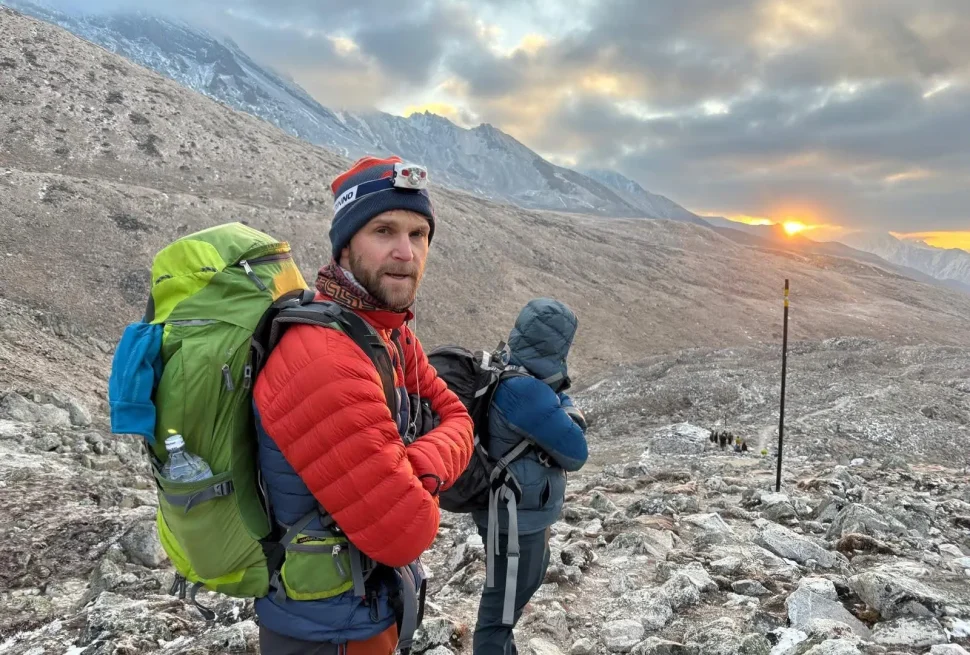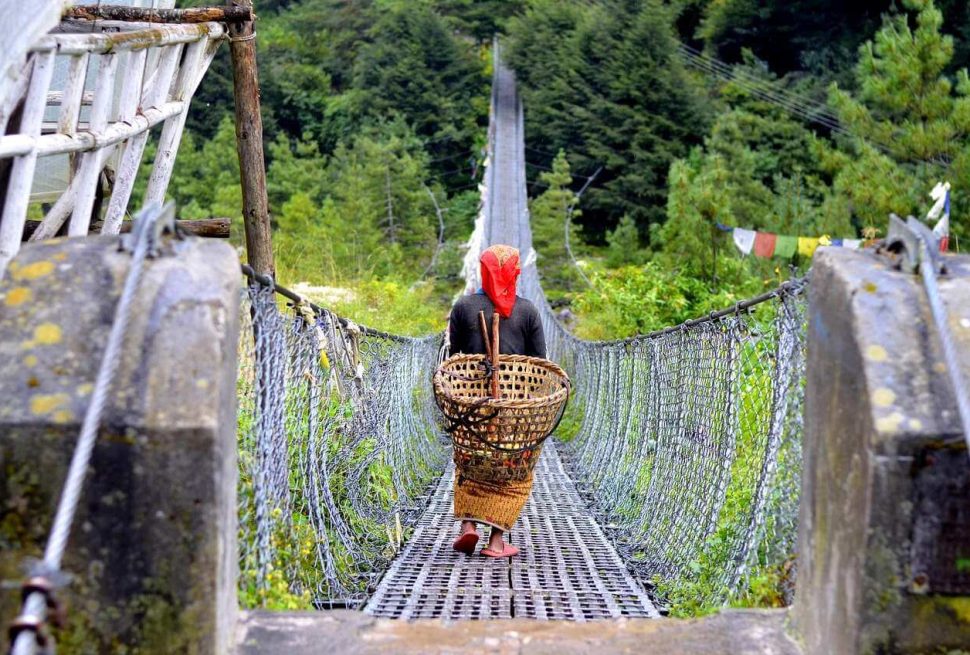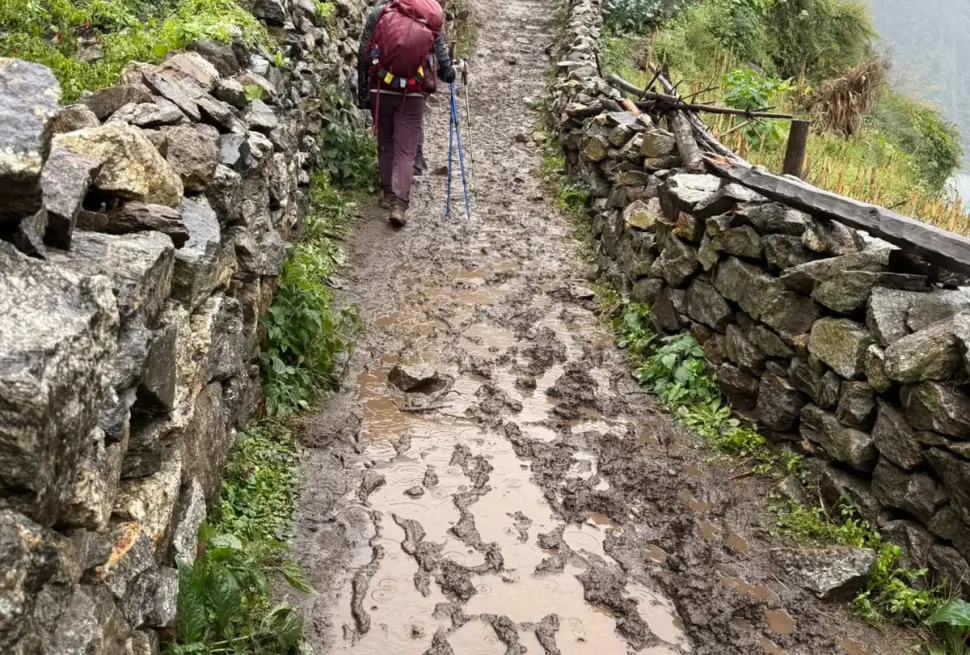
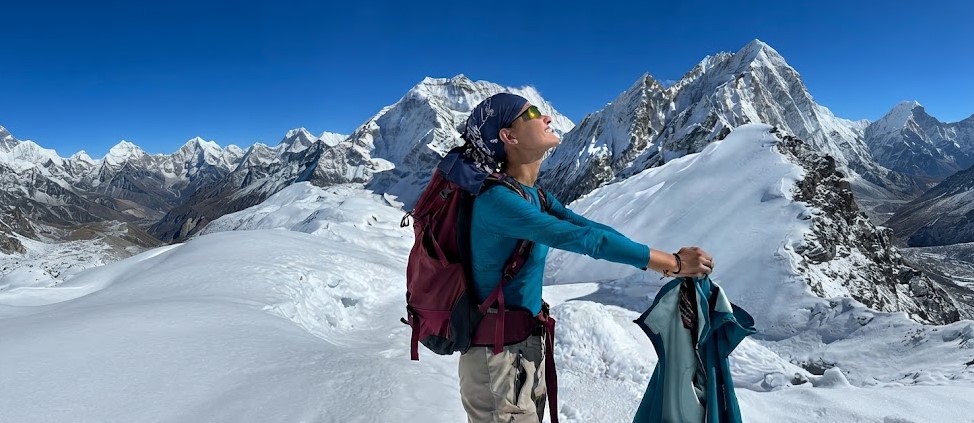
I have walked trekkers up to Larkya La more times than I can count now, and the question I get asked most often has nothing to do with permits or altitude sickness. It is some version of “how cold is it really going to be, and will my jacket and sleeping bag actually keep me warm.” It is a fair question, and it deserves a straight answer rather than a marketing brochure. At Dharamsala, the last camp before the pass at 4,450 meters, overnight temperatures commonly fall well below freezing, and on a clear still night in the winter months or the shoulder seasons they can drop to around minus 10 to minus 15 degrees Celsius inside the tent or lodge, not counting wind chill. Above roughly 3,500 meters, almost none of the teahouse rooms on this route are heated. You sleep in whatever you are wearing and whatever you are zipped into, and that is the whole story. On the Manaslu Circuit Trek, a proper down jacket and a sleeping bag rated for genuine cold are not optional add ons you can skip to save weight or money. They are the difference between a trek you remember fondly and a night you spend shivering, unable to sleep, watching the clock until dawn.
This guide is the long version of the answer I give trekkers before they book. I will walk through how cold each stage of the route actually gets, what fill power and fill weight mean and why both matter, how to read a sleeping bag temperature rating properly so you are not fooled by an optimistic number on a tag, when down beats synthetic insulation and when it does not, how to keep your gear dry in a place where you cannot simply throw it in a dryer, how layering works alongside your down jacket rather than instead of it, and exactly what we provide as part of our standard package versus when it makes sense to bring your own. If you are still deciding on the trek itself, our Manaslu Circuit Trek has the itinerary and logistics, and our route guide covers each day in more geographic detail than I will get into here.
How cold it actually gets, stage by stage
People planning their first Himalayan trek tend to think of “cold” as one number, but the Manaslu Circuit crosses such a range of elevation that the honest answer changes almost daily. Down at the start, around Machha Khola and Jagat, you are still in a subtropical river valley at under 1,000 meters, and nights are mild, often above 10 degrees Celsius even in winter. As you climb through Deng, Namrung, and Lho, the valley narrows and the nights sharpen. By the time you reach Samagaon at around 3,530 meters, you have crossed into genuine mountain cold. Clear nights there regularly sit at minus 5 to minus 10 degrees Celsius in the main trekking seasons, and colder in deep winter.
Samdo, the last permanent village before the pass area, sits close to 3,875 meters, and this is where most trekkers notice for the first time that their breath fogs inside the room. Dharamsala, sometimes marked on maps as Larkya Phedi, is not a village at all but a cluster of basic lodges built specifically to serve trekkers before the pass crossing, sitting at 4,450 meters. This is the cold spot of the whole circuit. Wind funnels down off the surrounding ice and rock, the lodges are simple wood and stone structures with limited insulation, and clear nights here are the ones that produce those minus 10 to minus 15 degree readings I mentioned above, sometimes colder when a high pressure system sits over the range and the sky stays perfectly clear. Paradoxically, a clear cloudless night at altitude is often colder than an overcast one, because clouds trap a small amount of radiant heat near the ground. Trekkers expecting a storm to be the cold danger are sometimes caught off guard by how brutal a calm, starry night at Dharamsala can feel.
The pass itself, Larkya La at 5,106 meters, is crossed in the early morning, often starting the walk from Dharamsala well before sunrise so as to be over the top and dropping down the far side before afternoon winds and weather build up. That predawn start is arguably the single coldest few hours of the entire trek, combining altitude, wind, and the daily temperature minimum that occurs just before sunrise. After the pass, descending toward Bimthang and then down into the Marsyangdi valley near Dharapani, temperatures climb again fairly quickly, and by the time you are back down near 2,000 meters the cold weather gear can mostly go back in the bag.
The practical takeaway is that you need your warmest gear for a specific stretch, roughly from Samagaon through Samdo, Dharamsala, and the pass crossing itself, a window of perhaps four to five days out of a typical two to three week trek. That is exactly the stretch where an underrated sleeping bag or a thin jacket will catch up with you. For a broader sense of how this cold interacts with the physical demands of the trek, our difficulty assessment covers the altitude and terrain side of things in more depth.
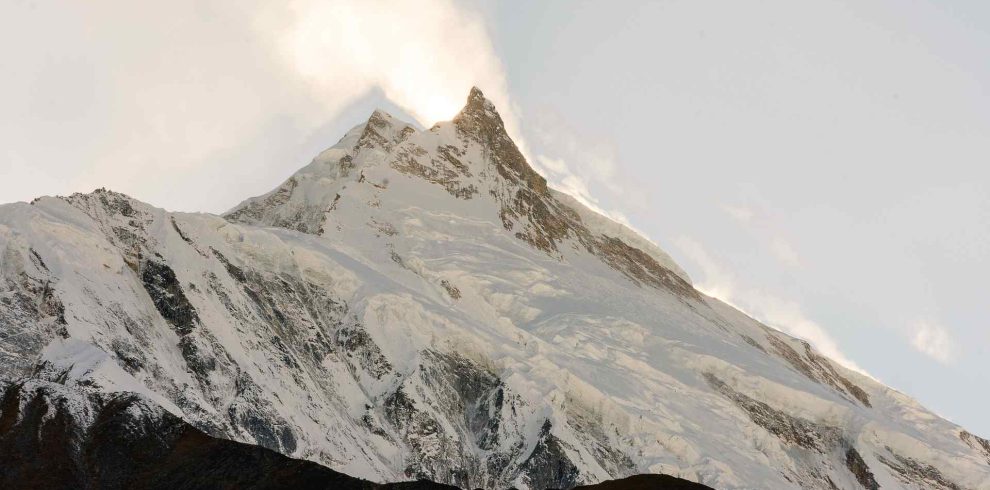
The 9 Days Manaslu Circuit Trek, also known as the Short Manaslu Circuit Trek, is designed for trekkers who want…
What fill power actually means
Fill power is a laboratory measurement, not a marketing number, though it gets used as one. To measure it, technicians take one ounce of down, let it loft fully in a controlled chamber, and measure how many cubic inches of space it fills. A cluster of down rated at 700 fill power will loft to fill 700 cubic inches per ounce, while an 800 fill power cluster fills 800 cubic inches from that same one ounce. The number is really telling you about the quality and structure of the individual down clusters, how large and complex they are, and how efficiently they trap still air, which is what actually provides insulation. Higher fill power down is generally sourced from more mature birds and processed more carefully, which is part of why an 800 or 850 fill power jacket costs more than a 600 fill power one of similar size.
Here is the part that trekkers often get backward though. Fill power tells you how efficient the down is per gram, not how warm the finished jacket will be. A jacket stuffed with a small amount of extremely high fill power down can be less warm overall than a jacket with a larger quantity of more ordinary down, because warmth in absolute terms comes from total loft, meaning the total thickness of trapped air across the whole garment, not from the quality rating of the down alone. This is exactly why two numbers matter together rather than one number alone, and it leads directly into the next section.
For a trek like this one, a fill power in the range of roughly 600 to 800 is a sensible practical zone. Ultralight alpine climbers chasing every gram sometimes pay a premium for 850 or 900 fill power down, but for trekking, where your jacket rides in a duffel most of the day and only comes out at camp and on the pass morning, the weight savings from those very top tier fill powers matters less than simply having enough total insulation. A well made 700 fill power jacket with generous fill weight will keep you considerably warmer than a minimalist 850 fill power jacket that has been built light rather than built warm.
Fill weight: the number that actually determines warmth
If fill power describes quality, fill weight describes quantity, and quantity is what your body actually feels at four in the morning on the way to Larkya La. Fill weight is simply the total mass of down inside the jacket, usually given in grams. A jacket built for city commuting or mild autumn hikes might carry somewhere around 80 to 120 grams of down. A jacket built for genuine high altitude cold, the kind you want in your pack for this trek, should realistically carry somewhere in the range of 200 to 300 grams or more, depending on the cut and size of the garment.
Manufacturers are inconsistent about publishing fill weight, which is frustrating, because it is honestly the more useful number for a trekker to know than fill power alone. If you are shopping for your own jacket rather than using ours, ask the retailer directly for the fill weight if it is not printed on the label or tag. A jacket described only as “800 fill power” tells you almost nothing about how it will perform at Dharamsala until you also know how many grams of that down are actually inside it. As a rule of thumb for this specific trek, look for a jacket that feels substantially puffy when you hold it, with visible baffle channels that are clearly filled rather than half empty, and that is rated by the manufacturer, explicitly or implicitly through its product category, for expedition or extreme cold use rather than everyday urban wear.
Sleeping bag temperature ratings explained properly
This is the area where I see the most confusion, and honestly the most disappointment on the trail, because a lot of trekkers buy a bag based on a single number stamped on the stuff sack without understanding what that number actually represents. Most reputable sleeping bag manufacturers now test their bags against an international standard, either the older EN 13537 or its current successor ISO 23537. Both use a heated mannequin placed inside the bag in a controlled cold chamber to measure heat loss, and both produce not one number but several.
The comfort rating is the temperature at which a standard adult woman, according to the testing model, can sleep all night in a relaxed position and stay comfortably warm. The limit rating, sometimes called the lower limit or limit of comfort, is the temperature at which a standard adult man can sleep for eight hours in a curled, defensive position while actively fighting the cold, not sleeping soundly and comfortably. There is often also an extreme rating, which represents the threshold at which a person risks hypothermia and should treat the bag as an emergency survival tool for a matter of hours, not a comfortable night’s sleep. Manufacturers frequently print only the limit rating on the outside of the bag or in the product name, because it produces the more impressive, colder sounding number, and that is precisely the number that misleads people.
If you buy a bag advertised as rated to minus 15 degrees Celsius, and that number is the limit rating rather than the comfort rating, you should mentally expect genuine comfortable sleep somewhere closer to zero or perhaps minus 5 degrees, not minus 15. The comfort rating for that same bag is very often 8 to 10 degrees warmer than the limit rating that gets printed on the label. This gap is not a flaw in the bag, it is simply what the two ratings mean, but it catches people out constantly, especially trekkers who have shopped online and only seen the headline number rather than the full ratings table on a spec sheet.
My own rule, after years of watching trekkers wake up shivering at Samdo and Dharamsala, is to build in a healthy margin between the coldest temperature you genuinely expect and the bag’s comfort rating, not its limit rating. I generally tell people to choose a bag whose comfort rating sits at or below the coldest overnight temperature they realistically expect on the coldest night of the trip. Given that Dharamsala can see minus 10 to minus 15 degrees Celsius on a clear night, that points toward a bag with a limit rating in the range of minus 15 to minus 20 degrees Celsius, which typically corresponds to a comfort rating somewhere around minus 5 to minus 10 degrees. Cutting it close on paper, buying a bag whose limit rating exactly matches the coldest night you expect, is a common and avoidable mistake.
Sleeping bag ratings matched against the stages of this trek
To make this concrete rather than abstract, here is roughly how the temperature demands change as you move up the valley toward the pass and back down the other side.
| Stage and approximate elevation | Typical overnight low | Sleeping bag comfort rating you want on hand |
|---|---|---|
| Machha Khola to Jagat, under 1,000 m | 10 to 15 degrees Celsius | Not needed, a light liner is enough |
| Deng to Namrung, 1,800 to 2,600 m | 0 to 8 degrees Celsius | Comfort rating around 0 to 5 degrees |
| Lho and Shyala, around 3,000 to 3,500 m | minus 5 to 0 degrees Celsius | Comfort rating around minus 5 degrees |
| Samagaon, around 3,530 m | minus 5 to minus 10 degrees Celsius | Comfort rating around minus 10 degrees |
| Samdo, around 3,875 m | minus 8 to minus 12 degrees Celsius | Comfort rating around minus 10 degrees |
| Dharamsala, 4,450 m, night before the pass | minus 10 to minus 15 degrees Celsius, colder possible | Comfort rating minus 10 to minus 15 degrees |
| Bimthang and descent toward Dharapani | minus 5 to 5 degrees Celsius | Comfort rating around minus 5 degrees |
Notice that the demanding stretch, from Samagaon through the pass, is the same window I flagged earlier as the coldest part of the trek. If you are buying or renting one bag for the entire trip rather than swapping partway through, size it for Dharamsala, not for the average night. It is far better to be slightly too warm at Lho than seriously cold at Dharamsala.
What we recommend for this specific trek
Based on years of running this exact route, our practical recommendation is a sleeping bag with a comfort rating of roughly minus 10 to minus 15 degrees Celsius, which usually means a bag marketed with a limit rating somewhere around minus 20 degrees Celsius, paired with a down jacket carrying a fill weight in the neighborhood of 200 to 300 grams at a fill power somewhere between 600 and 800. That combination, worn and used correctly alongside proper layering underneath, comfortably handles Dharamsala on all but the most unusually severe nights, and leaves a genuine safety margin rather than running right at the edge of the bag’s stated capability.
I want to be honest that a bag this warm is genuine overkill for the lower villages early in the trek, and that is fine. You are not choosing gear for the average night of the trip, you are choosing gear for the worst night, because that is the night that determines whether you sleep or shiver, and whether you arrive at the pass rested or exhausted before you have even started climbing.
Down versus synthetic insulation for this route
Both down and synthetic insulation have real strengths, and the right choice depends heavily on the climate you are walking through, which is why I want to be specific to Manaslu rather than giving generic gear advice. Down offers a genuinely superior warmth to weight ratio and compresses down small, which matters when you are also carrying a duffel bag that has to be manageable for a porter or mule over multiple weeks. Its one real weakness is that wet down loses loft dramatically and takes a long time to dry in the field, which is a serious concern in genuinely humid or rainy climates.
The Manaslu region, particularly once you climb above Samagaon into the drier high valley leading to Samdo and Dharamsala, sits in a cold, dry climate for most of the main trekking seasons, spring and autumn especially. This is exactly the environment where down performs at its best, because the moisture risk that makes down risky in humid tropical trekking, or in the wetter monsoon adjacent months, is much reduced. Snow at this altitude tends to be dry and powdery rather than wet, and precipitation events pass relatively quickly compared to the sustained damp of a rainforest trek. For these reasons, down is generally the preferred choice for this specific trek, and it is what we provide as standard.
Synthetic insulation still has a place, and it is worth understanding the tradeoffs honestly rather than treating one as simply better than the other in every case.
| Factor | Down insulation | Synthetic insulation |
|---|---|---|
| Warmth to weight ratio | Excellent, the best available for a given weight | Good but noticeably heavier for equivalent warmth |
| Packed size | Compresses very small | Bulkier for the same warmth level |
| Performance when wet | Loses loft and warmth significantly, dries slowly | Retains a meaningful portion of its warmth even damp, dries faster |
| Durability over years of use | Very durable if properly cared for and stored | Fibers gradually break down and lose loft with repeated compression |
| Cost | Higher for equivalent warmth | Generally more affordable |
| Best suited climate | Cold, dry conditions like the upper Manaslu valley | Wet, humid, or rainy conditions where moisture exposure is likely |
Given this route’s dry high altitude climate for the critical cold stretch, down is the sensible default, provided you take reasonable precautions to keep it dry, which brings us to the next section.
Keeping your down gear dry
The single biggest risk to a down jacket or sleeping bag on this trek is not rain in the way you might picture it from a temperate climate trek, it is dampness from other sources, condensation inside a duffel bag, a stream crossing where your bag brushes wet rock, sweat from your own body soaking into the jacket during a strenuous climbing section, or snow that gets tracked into a lodge room and settles onto gear left near the door. Down that gets even moderately damp loses a meaningful portion of its loft, and because it is not a fast drying material, that lost warmth may not come back until you reach somewhere with genuine sun and dry air to air it out properly.
The fix is straightforward and cheap. Pack your sleeping bag and down jacket inside a waterproof stuff sack or a heavy duty dry bag, not just the thin cotton or nylon storage sack many bags ship with, which is designed for storage at home, not for wet trail conditions. If you are using a duffel bag for porter transport, as most trekkers on this route do, line the inside of the duffel with a large waterproof liner bag as well, so that even if the outer duffel gets rained on or set down on wet ground at a stop, the contents stay dry. This is a five minute precaution that removes one of the few genuine risks to your warmest gear, and I mention it to every group before departure because it is the single most common preventable mistake I see.
Layering strategy alongside your down jacket
A down jacket is the outer, static insulation layer of your system, and it works best as part of a full layering strategy rather than as a single solution on its own. The system I recommend, built from the skin outward, starts with a moisture wicking base layer, a proper thermal top and bottom made from merino wool or a synthetic wicking fabric, never plain cotton, which holds sweat against your skin and chills you as soon as you stop moving. Over that goes a mid layer, typically a fleece or a lightweight synthetic insulated piece, which provides breathable warmth during active movement, when the down jacket itself would be too warm and would trap sweat.
The down jacket comes on top of that mid layer at rest stops, in camp in the evening, and during the cold predawn start toward the pass, when you are moving but slowly and the ambient temperature is at its lowest point of the day. Over everything goes a windproof and waterproof shell layer, which matters enormously at altitude because wind chill can turn a merely cold morning into a genuinely dangerous one, and because a shell also protects your down jacket from the abrasion and occasional spindrift it will meet on the pass crossing.
Do not fall into the trap of relying on the down jacket to do everything by itself. It excels at trapping heat when you are still, but it breathes poorly compared to fleece or synthetic mid layers, and wearing it while working hard uphill leads to sweating, which then dampens the down from the inside, which then reduces its ability to keep you warm later that same night. The correct habit is to keep the down jacket largely for camp, for breaks, and for the coldest stationary or slow moving stretches, while relying on breathable mid layers during sustained uphill effort.
Our included sleeping bag and down jacket policy
Here is something I want every prospective trekker to know clearly before they book, because it genuinely changes your packing list. As part of our standard Manaslu Circuit Trek package, Manaslu Treks and Expedition provides both a sleeping bag and a down jacket to every trekker for use throughout the trip. You use this gear for the full duration of the trek, and you return it to us at the end of the trip. There is no separate rental fee buried in the fine print, it is simply included as standard, because we have seen too many trekkers arrive underprepared for the cold and we would rather solve that problem before it happens than after.
This matters practically in a few ways. It means you do not need to buy an expedition grade down jacket and a cold rated sleeping bag specifically for this one trip if you do not already own suitable gear and have no plans to use it again afterward, which for many trekkers represents a real cost saving, since quality cold weather gear at this level is not cheap. It also means you do not need to worry about airline baggage weight for two of the bulkier items on a typical packing list, since we supply them locally once you arrive.
Trekkers who already own their own down jacket and sleeping bag rated appropriately for this route, or who simply prefer using familiar personal gear they trust, are entirely welcome to bring and use their own instead. This is a personal preference matter, not a requirement either way, and our guides are happy to have a direct conversation about your own gear’s suitability before departure if you want a second opinion.
Should you bring your own gear instead
Given that we include a sleeping bag and down jacket as standard, the honest question becomes when it actually makes sense to bring your own rather than use what is provided. A few situations come to mind from experience. If you already own high quality expedition gear from previous cold weather trips, and you know exactly how it performs on your own body, which varies person to person more than people expect, then using familiar gear you trust removes one unknown from an already demanding trek. Some trekkers are simply more comfortable in their own sleeping bag for reasons of fit, smell, or habit, and comfort at altitude, in every sense of the word, is worth respecting.
If you run unusually cold compared to most people, a condition that is real and not just a matter of toughness, you might prefer to bring a sleeping bag rated even warmer than what we provide as standard, and pairing it with your own trusted liner or hot water bottle routine. Conversely, if you already know from experience that you sleep warm, you might simply choose to rely on our provided gear without giving it another thought.
For the great majority of trekkers though, the provided gear removes a genuine logistical headache, particularly around the fact that a serious expedition down jacket and cold rated sleeping bag together often weigh close to two to three kilograms and take up a large fraction of an airline baggage allowance, before you have packed anything else. Whichever way you decide, raise it with us directly while planning your trip. Our general FAQ and cost covers a wider set of planning questions including packing and budget considerations beyond gear alone.
Caring for and storing down gear
Down gear, whether it is yours or borrowed, rewards a small amount of care with a much longer useful life. On the trail, avoid stuffing a down jacket or sleeping bag into the same tight compression sack for weeks on end without ever letting it loft back out, since prolonged compression gradually reduces the down’s ability to spring back to full loft. If you get a rest day or a sunny afternoon at a lodge, airing the jacket and bag out in direct sun for even twenty or thirty minutes helps drive off accumulated moisture from body vapor and restores loft noticeably.
Avoid direct contact between down gear and open fires or stoves, which are common in teahouse dining rooms during the cold evening hours, since down and its outer fabric are both vulnerable to burn holes and scorching from stray sparks. If your jacket or bag does get damp, dry it as fully as possible before packing it away the next morning, rather than sealing damp down inside a stuff sack where it can begin to smell and clump.
Once you are home, if you own your own gear, store it loose or in a large breathable cotton storage bag rather than in its compact travel stuff sack, since long term storage under compression is one of the more common ways down gear loses loft prematurely between trips. A gentle down specific wash every so often, following the manufacturer’s care instructions, also helps maintain loft over the years, though this is a topic for home care rather than trail care.
Packing checklist for cold weather gear on this trek
Beyond the sleeping bag and down jacket themselves, a handful of supporting items make the difference between adequate warmth and genuinely comfortable warmth at altitude. I recommend packing all of the following specifically for the cold sections of this route.
- A down jacket with substantial fill weight, ideally 200 grams or more, fill power in the 600 to 800 range, or use the one we provide
- A sleeping bag with a comfort rating around minus 10 to minus 15 degrees Celsius, or use the one we provide
- A sleeping bag liner, silk or fleece, which adds several degrees of extra warmth and keeps the bag itself cleaner over weeks of use
- A waterproof stuff sack or dry bag dedicated to your sleeping bag and down jacket
- Merino wool or synthetic thermal base layers, top and bottom, at least two full sets
- A fleece or synthetic insulated mid layer for active climbing sections
- A windproof and waterproof outer shell jacket and pants
- Insulated gloves plus a thin liner glove pair for dexterity tasks in the cold
- A warm hat that covers the ears, plus a neck gaiter or buff
- Insulated, waterproof trekking boots broken in well before the trip
- Down booties or thick wool socks for wearing inside the lodge and sleeping bag at night
- A closed cell foam sleeping pad or an insulated inflatable pad, since ground cold rises directly into a sleeping bag from below
- A reusable hot water bottle to fill before bed and place inside the sleeping bag near your feet
- A headlamp with spare batteries, since batteries drain faster in cold temperatures and the predawn pass start requires reliable light
If you are still deciding what to source locally versus bring from home, our guide to renting versus buying trekking gear in Kathmandu covers that decision in more depth.
Frequently asked questions
Do I really need a sleeping bag rated below minus 10 degrees Celsius for this trek
Yes, for the stretch from Samagaon through Dharamsala and the pass crossing itself. Lower down the valley you would be comfortable in a much lighter bag, but you are packing for the coldest night of the trip, not the average one, and that coldest night at Dharamsala can genuinely reach minus 10 to minus 15 degrees Celsius or occasionally colder on a clear still night.
What is the difference between a comfort rating and a limit rating on a sleeping bag
The comfort rating is the temperature at which most people sleep soundly and warmly through the night. The limit rating is a colder temperature at which a person can survive the night but only while curled up and actively fighting the cold, not sleeping comfortably. Manufacturers often print the limit rating prominently because it sounds more impressive, so always check for the comfort rating specifically when judging genuine warmth.
Is down or synthetic insulation better for the Manaslu Circuit
Down is generally the better choice for this specific route because the upper valley, where the coldest nights occur, has a cold and dry climate for most of the main trekking seasons, which suits down’s strengths and avoids its main weakness of losing warmth when wet. Synthetic insulation remains a reasonable choice for trekkers who specifically want moisture resistance as a priority or who already own quality synthetic gear.
Does Manaslu Treks and Expedition provide a sleeping bag and down jacket
Yes. As part of our standard package, we provide both a sleeping bag and a down jacket to every trekker for use throughout the trek, and these are returned to us at the end of the trip. There is no need to purchase expedition grade gear specifically for this trip unless you would prefer to use your own equipment.
Can I bring my own sleeping bag and jacket instead of using the provided gear
Absolutely. Trekkers who already own suitable cold weather gear, or who simply prefer familiar personal equipment, are welcome to bring and use their own instead of what we provide. This is entirely a matter of personal preference.
What fill power should my down jacket have
Something in the range of 600 to 800 fill power is a sensible practical choice for this trek, paired with a generous fill weight, ideally around 200 grams or more. Fill power alone does not determine warmth, so pay attention to fill weight as well, or simply confirm the total warmth rating with the retailer if fill weight is not listed.
How cold does it get at Dharamsala specifically
Dharamsala, at 4,450 meters, is the coldest camp on the route. On a clear night overnight temperatures commonly fall to somewhere between minus 10 and minus 15 degrees Celsius, and can occasionally go colder still under a particularly clear, calm sky. This is the single coldest stop of the entire trek, colder even than the pass crossing itself in terms of overnight low temperature.
Will a four season sleeping bag from home be warm enough
It depends entirely on that bag’s actual comfort rating rather than its marketing category. Many bags labeled as four season or winter rated in temperate climates are built for conditions considerably milder than Dharamsala. Check the specific comfort rating rather than trusting a seasonal label alone, and compare it against the minus 10 to minus 15 degree range this trek genuinely demands.
Should I bring a sleeping bag liner as well
Yes, a liner is a smart, lightweight addition. A silk or fleece liner adds several extra degrees of warmth to whatever bag you use, whether it is your own or the one we provide, and it also keeps the bag cleaner across weeks of continuous use, which matters for shared or rented gear especially.
Talk to us before you pack
Every trekker’s cold tolerance, budget, and existing gear collection is different, and the honest answer to “what should I bring” often depends on details specific to you rather than a single universal recommendation. If you are still deciding what to pack, or want a direct opinion on gear you already own, get in touch with us before you book or before you fly. You can reach our team by phone or WhatsApp at +977 9869225929, by email at info@manaslutreks.com, or through our contact. We would rather answer a detailed gear question in advance than have any trekker find out the hard way at Dharamsala that their jacket or bag was not quite warm enough.