I have sat down to more dal bhat plates on the Manaslu Circuit than I can count, and if you are wondering what you will actually eat on this trek, here is the honest answer: you will eat well, you will eat the same handful of dishes on repeat, and what lands on your plate will get simpler and pricier every day you climb higher toward the Larkya La. In the lower gorge around Machha Khola and Jagat the menus still stretch to pizza, buffalo steak and fresh greens grown a short walk from the kitchen. By the time you reach Samdo or Dharamsala, that same menu has narrowed down to rice, lentils, noodles, eggs and porridge, because everything above Samagaon arrives on a porter’s back or a mule train, not a truck. That single fact, supply lines that get longer and harder as the trail climbs, explains almost everything you need to know about food and water on the Manaslu Circuit Trek, and it is the thread I want to pull on through this whole guide.
This is not a route with lodges every few hundred meters like the Everest or Annapurna trails. Manaslu is a restricted area, the villages are smaller and further apart, and the kitchens that feed trekkers are family run operations that also feed their own households through the winter. Understanding how that system works, what to order, what to avoid, and how to keep your gut and your hydration in good shape for three weeks, makes a real difference to how much you enjoy the trek. I have tried to write this the way I would brief a client the night before we start walking from Machha Khola, not as a generic list of foreign dishes.
How Teahouse Food Actually Works on This Route
Every teahouse on the Manaslu Circuit Trek runs on the same basic model. There is one kitchen, usually run by the lodge owner’s family, and one menu that gets handed to every trekker in the dining room regardless of nationality or diet. You order in the evening for dinner and again in the morning for breakfast, and the kitchen cooks in batches, so if three groups all order dal bhat at once it comes out faster than if everyone orders something different. This is worth remembering on a cold evening at 4,000 meters when you are hungry and tired: ordering what the lodge is already prepared to cook, usually dal bhat or a simple noodle dish, gets food on your table much sooner than asking for a special request.
Almost all trekking lodges on this route are also home to the family that runs them, so the food you eat has usually been carried in on the same mule trains and porter loads that built the lodge itself. Rice, lentils, cooking oil, sugar, and packaged noodles all come from Kathmandu or Besisahar by truck as far as the road reaches, then by mule or on someone’s back for the rest of the way. Fresh vegetables are grown locally in the lower villages and become scarcer the higher you go, until above Samagaon almost everything on the menu is a dried, tinned, or preserved ingredient rather than something picked that morning. None of this is a complaint. It is genuinely impressive that you can sit down in a stone building at 4,460 meters in Dharamsala and be served a hot plate of food at all, and once you understand why the menu looks the way it does, you stop expecting a Kathmandu restaurant experience and start appreciating what is actually on offer.
If you want the fuller picture of what a typical day looks like on this trek, our Manaslu Circuit Trek route guide walks through each stage day by day, and pairing that with this food guide should give you a realistic sense of what to expect at each stop before you even land in Kathmandu.
Dal Bhat: The Trekker’s Best Value Meal
If you eat one thing consistently on this trek, make it dal bhat. It is rice, a lentil soup called dal, a vegetable curry, a pickle called achar, and sometimes a small portion of spinach or greens, all served together on one plate. The reason guides and porters eat it almost every single meal is not habit, it is that dal bhat is the most complete, most calorie dense, and most cost effective meal available anywhere on the trail, and in nearly every teahouse a second helping of rice, dal, and vegetables is free. You will see the phrase dal bhat power, twenty four hour printed on t shirts and painted on teahouse walls all over Nepal, and it is not just a joke, it reflects a real physiological truth: rice and lentils together provide a full set of amino acids, plenty of carbohydrate for the climb, and enough volume to actually fill you up after a seven hour walking day.
From a value standpoint, dal bhat is also simply the smartest thing to order. A plate in the lower gorge around Machha Khola or Jagat might cost three to four dollars, and while that price climbs steadily as you gain altitude, the free refill policy means you are paying once for as much food as you can eat, which is not true of noodle dishes, momos or pasta on this route. On a long trekking day when your appetite is unpredictable, being able to ask for another scoop of rice or a second ladle of dal without extra charge is worth more than it sounds. I tell every client on our Manaslu Circuit Trek itinerary the same thing: build your appetite around dal bhat, treat everything else on the menu as a variation, and you will eat well and spend less over three weeks than someone who orders pizza and pasta at every stop.
One small but useful detail: the vegetable curry and pickle that come with dal bhat change slightly from village to village and season to season, so even though you are eating the same named dish every day, it rarely tastes identical two nights running. Potato and spinach are common lower down, while at altitude you will more often get a curry built from cabbage, dried vegetables, or whatever came up on the last mule train.
Breakfasts, Soups, Noodles and the Rest of the Menu
Dinner and lunch are not the only meals worth planning for. Breakfast on the Manaslu Circuit generally falls into a few reliable categories: porridge made from oats, barley, or occasionally millet, cooked with milk powder and sugar; Tibetan bread or chapati served with honey, jam, or peanut butter; eggs cooked to order, boiled, fried, scrambled, or as a plain or vegetable omelet; and pancakes, which show up in apple, banana, chocolate or plain versions depending on what fruit or chocolate powder the kitchen has on hand. Toast is common lower down where bread is easier to source. I generally recommend porridge or eggs with chapati over pancakes on cold mornings, simply because they sit better for a long uphill walk and are less likely to leave you hungry an hour into the day.
Soups are one of the most underrated items on any teahouse menu in Nepal, and Manaslu is no exception. Garlic soup in particular is worth ordering every evening once you are above 3,000 meters, since garlic has long been used by local communities and trekking staff as a mild remedy believed to help with altitude adjustment, and whether or not you buy that fully, a hot bowl of garlic soup after a cold day is genuinely one of the better small pleasures of this trek. Other soup options include vegetable soup, tomato soup, and thukpa, which is a hearty noodle soup loaded with vegetables and sometimes small pieces of meat, closer to a meal than a starter and a good choice on a night when you want something warm and filling but do not feel like a full dal bhat plate.
Beyond soups, most teahouse kitchens on this route offer a rotating set of noodle and pasta dishes: chow mein, fried noodles, plain spaghetti with tomato or garlic sauce, and sometimes a simple macaroni dish. These are dependable, familiar, and easy on a stomach that is adjusting to altitude, though they are rarely gourmet. Momos, the steamed or fried dumplings filled with vegetable, potato, cheese, or occasionally buffalo meat lower down, are a trekker favorite and worth trying at least once in the lower villages where fresh filling ingredients are still available. Snack options round out the picture: biscuits, chocolate bars, roasted soybeans, popcorn, and instant noodles as a quick fix, along with fried potato dishes and French fries at the lodges that still have oil to spare for deep frying. None of this is fine dining, but taken together it is a surprisingly varied menu for a trail this remote.
How Menus and Prices Change as You Climb
This is the section I think matters most, because it is the part most first time trekkers underestimate. The Manaslu Circuit Trek has no road access above Machha Khola in the way the Annapurna region does, and no airstrip like Lukla feeding the Everest region, so every single item you eat above the lower gorge has been carried in on a mule, a yak, or a porter’s back over multiple days of trail. That changes both what is available and what it costs, in a fairly predictable pattern along the route.
In the lower gorge, roughly Machha Khola through Jagat and Philim, menus are at their widest. You will still find pizza, buffalo dishes, fresh salads, and a good range of momo fillings, because these villages sit close enough to the roadhead that supply is relatively easy and some fresh produce is grown locally. From Deng through Namrung and into the mid route, the menu starts to narrow. Meat dishes become less common and more expensive, fresh vegetables thin out, and dal bhat, noodles, and simple curries dominate. By the time you are in Samagaon, Samdo, and especially Dharamsala just before the Larkya La, the menu has shrunk to its simplest form: dal bhat, noodle soup, porridge, eggs, and basic hot drinks, with little to no fresh meat and a much shorter list of options overall.
Prices rise in step with that narrowing supply, and it is worth planning your budget around this rather than being surprised by it. As a rough guide, expect the same plate of dal bhat to cost something like three to four dollars around Machha Khola, climb to somewhere between six and eight dollars by Samagaon, and reach eight to ten dollars or more in Dharamsala, where every sack of rice and tin of oil has been carried in on someone’s back for several extra days. Below is a rough breakdown of what you can expect to pay across the route, though exact prices vary by season, teahouse, and how the local mule train schedule is running that week.
| Menu item | Lower gorge (Machha Khola to Jagat) | Mid route (Deng to Namrung) | High altitude (Samagaon to Dharamsala) |
|---|---|---|---|
| Dal bhat (rice, lentils, vegetable curry) | 3 to 4 USD | 5 to 7 USD | 8 to 10 USD |
| Noodle soup or thukpa | 2.50 to 3.50 USD | 4 to 5.50 USD | 6 to 8 USD |
| Vegetable momos (plate) | 3 to 4 USD | 4.50 to 6 USD | Rarely available |
| Porridge or muesli with milk | 2 to 3 USD | 3 to 4 USD | 4.50 to 6 USD |
| Two fried or boiled eggs | 2 to 3 USD | 3 to 4 USD | 4 to 5.50 USD |
| Black tea or milk tea (cup) | 0.50 to 1 USD | 1 to 1.50 USD | 1.50 to 2.50 USD |
| Garlic soup or vegetable soup | 2 to 3 USD | 3 to 4 USD | 4 to 5.50 USD |
| Boiled water (one liter) | 0.50 to 1 USD | 1 to 1.50 USD | 2 to 3 USD |
Two things follow from this pricing pattern. First, budget more generously for the days around Samagaon, Samdo and Dharamsala than you would for the lower gorge, both because the food costs more and because you will likely want extra hot drinks and soup at altitude. Second, treat any teahouse charging a bit more up high not as overcharging but as a fair reflection of what it actually took to get that plate of food to your table. Our Manaslu Circuit Trek FAQ and cost guide has a fuller breakdown of overall trip costs including permits and accommodation if you want to plan your full budget rather than just meals.
Vegetarian and Vegan Options, and Why They Are Usually the Safer Choice
Vegetarian food is not a limitation on the Manaslu Circuit Trek, it is close to the default. Vegetable dal bhat, vegetable noodles, vegetable fried rice, vegetable momos, vegetable soup and vegetable curry appear on every single menu along the route, cooked in the same kitchen using the same fresh ingredients as everything else. If you are vegetarian or vegan, you will not struggle to find food here, and honestly you may eat a more interesting variety of dishes than a meat eating trekker who keeps ordering the same buffalo curry.
There is also a practical safety argument for eating vegetarian above the mid route, and it is one I give every client regardless of their normal diet at home. Meat on this trail, when you find it at all above Namrung, has usually been carried up over several days without reliable refrigeration, since most teahouses run on solar power or a small generator and do not have the cold storage capacity that a city restaurant does. That meat may have started its journey as a healthy, fresh cut, but by the time it reaches a kitchen at 3,500 meters or higher, days after leaving the roadhead, in a building with no real refrigeration, it has been sitting in conditions that are far from ideal. This is exactly why so many trekking guides across Nepal, not just on Manaslu, quietly switch to a vegetarian diet themselves once they climb above 3,000 meters, and why most teahouse owners themselves eat vegetarian for stretches of the year. It is not that meat is forbidden or that eating it will definitely make you sick, but the odds of a stomach upset go up the higher and further from the roadhead you eat it, and a stomach upset at altitude is a genuinely miserable and potentially dangerous thing to deal with, since it compounds dehydration and can slow your acclimatization.
My honest advice, and this is what I tell people booking a Manaslu Circuit Trek with us regardless of whether they are lifelong vegetarians or committed carnivores, is to eat meat freely in the lower gorge if you want to, and switch to vegetarian meals once you pass Namrung or Samagaon. Dairy is usually fine throughout, since local yak cheese, milk and butter are more commonly produced close to where you are eating them, though even here it is worth using common sense about anything that looks like it has been sitting out a long time. Vegan trekkers should know that ghee, butter and milk powder do turn up in some dishes even when the menu says vegetable, so it is worth asking directly if strict avoidance of dairy matters to you, since kitchen staff are generally happy to leave it out if you ask clearly.
Food Safety and Hygiene Practices Worth Knowing
A few simple habits go a long way toward keeping your stomach settled for three weeks on the trail. Always eat food that is served hot, and if a dish comes out lukewarm, ask for it to be reheated rather than eating it as is, since heat is the single most reliable thing killing off whatever bacteria might be present. Freshly cooked dal bhat, soup, and noodle dishes that arrive steaming are about as safe as food gets on this route. Buffet style food that has been sitting out, which you occasionally see at busier lodges during peak season, is worth avoiding, and raw salads and unpeeled fruit are best limited to the lower villages where they are genuinely fresh, since above the mid route the same looking salad may have traveled a long way and sat around for a while before it reached your plate.
Hand hygiene matters just as much as what you eat. Carry a small bottle of hand sanitizer and use it before every meal, since dining rooms in busy teahouses see a lot of hands touching a lot of shared surfaces, menus, and cutlery over the course of a trekking season. It is also worth packing a basic stomach kit, oral rehydration salts, a general antidiarrheal, and whatever your doctor has recommended for travel to Nepal, not because you should expect to get sick but because a mild stomach upset caught early and managed calmly rarely derails a trek, while one ignored for a day or two definitely can. If you do develop symptoms, tell your guide immediately rather than trying to push through silently, since experienced guides on this route have seen every version of altitude related and food related stomach trouble and know when rest, medication, or a change of plan is the right call.
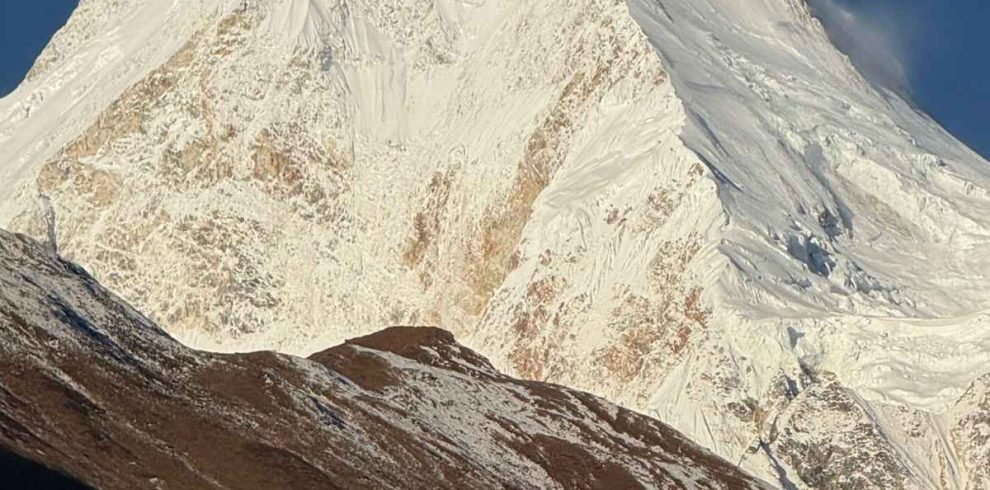
The Manaslu Base Camp Trek is one of Nepal's most spectacular and off-the-beaten-path trekking adventures. Set in the remote Manaslu…
Drinking Water Safety: The Full Comparison
Water is, if anything, more important to get right than food on this trek, because dehydration compounds altitude sickness risk and because you genuinely need a lot of it. Most guides recommend three to four liters of fluid per day once you are trekking above 3,000 meters, more on hot lower altitude days or if you are sweating heavily. Tap water and stream water on this route are not safe to drink untreated, full stop, regardless of how clear a mountain stream looks. Giardia, bacterial contamination, and other waterborne illness are real risks throughout Nepal’s trekking regions, and the Manaslu Circuit is no exception, so every liter you drink needs to have been treated in one of the following ways.
Boiled water is the oldest and most reliable method, and every teahouse on this route can provide it, usually for a fee that increases with altitude for the same reason food prices do, since boiling large quantities of water burns fuel that also has to be carried in. Boiling reliably kills bacteria, viruses, and parasites at any altitude, which makes it the single most trustworthy method available, though it does take fifteen to thirty minutes to prepare and cool enough to drink comfortably, and at the highest villages some teahouses may charge more for it or be reluctant to boil large quantities given how precious fuel becomes.
Purification tablets, usually chlorine dioxide based products like Aquatabs or Micropur, are cheap, weigh almost nothing, and are worth carrying as a backup even if you plan to rely mostly on boiled water. Drop a tablet into a liter of stream or tap water and it typically needs thirty minutes to two hours to fully neutralize bacteria and viruses, with cold water at altitude sometimes needing the longer end of that window. The main downside is a faint chemical taste that some trekkers dislike, and the fact that these tablets are far easier to find and buy at home before your trip than anywhere in Nepal, so bring what you need rather than counting on picking them up along the way.
UV purifiers, most commonly the SteriPen, use ultraviolet light to disrupt the DNA of bacteria, viruses and protozoa in about sixty to ninety seconds per liter, which makes them the fastest active method available and popular with trekkers who dislike the taste of tablets. The tradeoff is that they run on batteries or a rechargeable cell that needs power, which becomes a genuine planning consideration on a trek where charging costs money and is not always reliably available at the higher lodges, and they work less well in water that is very cloudy or full of sediment, since the UV light needs relatively clear water to penetrate effectively.
Pump or gravity filters, such as a Sawyer Squeeze, Katadyn, or similar inline filter, physically strain out bacteria and protozoa as water passes through a fine membrane, and some combined filter and chemical systems also handle viruses. These add a small amount of weight and bulk to your pack, generally around two hundred grams for a compact inline filter, but give you clean water immediately with no waiting and no chemical aftertaste, which makes them popular with trekkers who want a fast, chemical free option and do not mind carrying a bit of extra gear.
Bottled water is available for purchase at most teahouses along the route, but I want to be direct about why I do not recommend relying on it, beyond the fact that it is the most expensive option by a wide margin. The next section goes into more depth on that.
| Method | Effectiveness | Approximate cost | Convenience |
|---|---|---|---|
| Boiled water (from teahouse) | Very high, kills bacteria, viruses and parasites | Free to about 3 USD per liter, rising with altitude | Moderate, takes time to prepare and cool |
| Chlorine dioxide tablets | High for bacteria and viruses, needs full contact time | A few cents per liter, bring from home | Very portable, mild aftertaste, slow in cold water |
| UV purifier (SteriPen or similar) | High for bacteria, viruses and protozoa in clear water | 50 to 100 USD device, reusable | Fast, about a minute per liter, needs charged battery |
| Pump or gravity filter | High for bacteria and protozoa, variable for viruses | 30 to 80 USD device, reusable | Immediate, no waiting, adds weight to pack |
| Bottled water (purchased) | High as a product, but plastic waste and cost issues | 1 to 4 USD per bottle, rising sharply with altitude | Very convenient but environmentally and financially costly |
My own practical recommendation, after years of running this trek, is to carry a lightweight filter or a UV purifier as your main method, bring purification tablets as a backup in case your device fails or runs out of battery, and top up with boiled water from the teahouse whenever it is offered as part of your meal, since many lodges will fill your bottle with hot boiled water at no extra cost or a small one if you ask at dinner. That combination covers you if any single method fails and keeps your daily water costs down over a three week trek.
The Case Against Bottled Water on This Route
I want to be blunt about this because it matters for a trek through a genuinely remote and beautiful valley like Manaslu. Every plastic bottle sold to a trekker on this route has to be carried in on a mule or a porter’s back, and since there is no organized waste removal system once you are days from the roadhead, that same bottle has almost nowhere to go afterward except a burn pit or a slow accumulating pile behind the lodge. Plastic bottles can take several hundred years to break down, and the Everest region alone is estimated to generate well over ten thousand kilograms of solid waste annually from trekking tourism, a figure that should give anyone pause before buying yet another bottle of water on a trail through a valley this remote. Manaslu carries far fewer trekkers than Everest, which is exactly why it has stayed cleaner, and that is worth protecting rather than importing the same problem.
There is also a straightforward financial argument. A bottle of water that costs a dollar or so in the lower gorge can cost three to four dollars or more by the time you are near Samdo or Dharamsala, for the same reason everything else gets more expensive at altitude, and over a three week trek those individual purchases add up to a meaningful sum of money for something you can treat yourself for a fraction of the cost using a filter, UV pen, or tablets. Bringing a good reusable bottle and a reliable purification method pays for itself within the first week and leaves you far less dependent on whether a particular teahouse happens to have bottled water in stock that day, which at the higher villages is not guaranteed.
If you do end up buying bottled water at some point, which happens to almost everyone at least once, please carry the empty bottle back out with you or dispose of it responsibly rather than leaving it behind, and consider it a backup plan rather than your main water strategy for this trek.
How Your Guide and Porter Team Support Food and Water Logistics
Part of what an experienced guide and porter team does on a trek like this, beyond navigation and safety, is manage the practical realities of eating and drinking well for three weeks in a remote area. Your guide generally knows which teahouses along the route cook the most reliable dal bhat, which villages have the freshest vegetables on a given week depending on when the last mule train came through, and which lodges are worth a slightly longer walk to reach rather than stopping at the first option available. That local knowledge, built up over repeated trips on the same route, genuinely changes how well you eat compared to arriving cold with no sense of which teahouse in a given village is the better choice.
Guides also help manage water logistics directly, often carrying purification tablets as a backup for the group and knowing which teahouses reliably offer boiled water refills at a fair price versus those that charge more for less. On a longer trek like this, having someone who can quickly communicate dietary needs or food safety concerns to a kitchen in Nepali, rather than relying on hand gestures and a shared menu, smooths over a surprising number of small daily frictions. Porters, for their part, are often the reason a teahouse can serve you at all in the more remote stretches near Samdo and Dharamsala, since much of what is on that evening’s menu has traveled in on someone’s back over the preceding days, sometimes including supplies for our own trekking groups specifically when we know a particular lodge will be tight on stock during a busy season. If you want to understand how these logistics fit into the overall physical demands of the route, our Manaslu trek difficulty assessment covers how altitude, distance, and daily food and water needs interact over the full itinerary.
Dietary Restrictions and How to Communicate Them
If you have a specific dietary restriction, whether that is a gluten intolerance, a nut allergy, a strict vegan diet, or a religious dietary rule, the single most useful thing you can do is tell us before you book, not on the trail. This gives your guide time to brief teahouse owners in advance where that is possible, and lets us plan which lodges along the route are best equipped to handle your particular needs. Once you are actually trekking, be clear and specific every time you order, since a general statement like I do not eat meat is less useful to kitchen staff working in a second or third language than something concrete like please, vegetable dal bhat with no meat and no meat stock in the lentils.
Gluten free trekking on this route is genuinely challenging, since rice based dishes like dal bhat are naturally gluten free but noodles, pasta, bread, and most snack foods are not, and finding dedicated gluten free alternatives at 4,000 meters is simply not realistic. If gluten is a serious medical issue for you rather than a preference, plan around building most of your meals from dal bhat, rice, potatoes, and eggs, and bring some of your own safe snack food from home to fill the gaps, since teahouse kitchens along this route do not stock specialty flour or gluten free pasta. Nut allergies are worth flagging clearly as well, since peanut butter is a common breakfast spread and some sauces use small amounts of nut products, so a direct conversation with your guide about exactly what to avoid protects you far better than hoping the kitchen catches it on their own.
Whatever your situation, reach out to us through our contact before you book so we can talk through what is realistic for your specific needs on this particular route, since being upfront early genuinely changes how smoothly this part of the trek goes for you.
Tea and Hot Drink Culture on the Trail
Nepal runs on tea, and this trek is no exception. Milk tea, black tea, lemon tea, ginger tea, and the ubiquitous instant coffee are available at every teahouse, usually for somewhere between fifty cents and two and a half dollars a cup depending on altitude, and most trekkers end up drinking two to four hot drinks a day between meals, on top of their plain water intake. Beyond simply being comforting after a cold morning start or a long climb, hot drinks are a genuinely good habit at altitude, since they add to your total fluid intake without requiring you to force down more plain water than you feel like drinking, and warm liquid is easier on a stomach that may be working harder than usual to digest food at altitude.
Garlic soup deserves a specific mention again here, since it sits somewhere between a hot drink and a light meal and is worth ordering most evenings once you pass the mid route, both for the warmth and for the mild digestive benefit that guides and porters have sworn by for generations on this trail. Ginger tea, similarly, is a good choice if your stomach feels slightly off, since ginger is a genuinely useful mild remedy for nausea, which is a common enough symptom of altitude adjustment that having a reliable go to hot drink for it is worth knowing before you need it.
A Realistic Daily Food and Drink Budget
Putting the whole picture together, a realistic daily food and drink budget on the Manaslu Circuit Trek runs somewhere between twenty and thirty five US dollars per day, and it climbs toward the higher end of that range the further into the trek and the higher in altitude you go. That figure generally covers a hearty breakfast, dal bhat or an equivalent main meal at lunch, another substantial dinner, and two to three hot drinks spread across the day, plus a modest allowance for snacks like biscuits or chocolate. In the lower gorge you will likely spend closer to fifteen to twenty dollars a day on food, while around Samagaon, Samdo, and Dharamsala that same eating pattern can push toward thirty to forty dollars a day simply because everything costs more that high up.
Water adds a further small daily cost if you are relying on boiled water or purchased bottles rather than a reusable filter or purifier, typically another two to six dollars a day depending on altitude and how much you drink, though this drops close to zero if you are treating your own water from a stream or tap with tablets or a UV pen. Add these figures up over the roughly eighteen or so days most itineraries take to complete the full Manaslu Circuit, and food and drink alone can reasonably account for four hundred to six hundred US dollars of your total trip cost, separate from permits, guide and porter fees, and accommodation. For a fuller breakdown of the total trip cost including all of these elements together, our Manaslu Circuit Trek FAQ and cost covers the complete picture in more detail.
A handful of basic Nepali phrases for trekkers also go a long way at mealtimes, especially when you want to ask about ingredients or order something specific.
Frequently Asked Questions
Is the food on the Manaslu Circuit Trek safe to eat?
Generally yes, provided you stick to freshly cooked, hot food and avoid anything that has clearly been sitting out for a while. The kitchens along this route cook to order in almost every case, and dal bhat, soups, and noodle dishes served hot are about as safe as trail food gets anywhere in Nepal. The main risk factors are meat that has traveled a long way without proper refrigeration, particularly above the mid route, and raw salads or unpeeled fruit at the higher villages where freshness cannot be guaranteed.
Can I get vegetarian or vegan food throughout the entire trek?
Yes, vegetarian food is available at every teahouse on this route and is genuinely the default option rather than a special request. Vegetable dal bhat, vegetable noodles, vegetable momos, and vegetable soup appear on every menu from Machha Khola to Bimthang. Vegan trekkers can eat well too, though it is worth double checking for ghee, butter, or milk powder in specific dishes and asking the kitchen to leave these out if strict avoidance matters to you.
Should I avoid meat completely on this trek?
You do not need to avoid it entirely, but I recommend treating meat as a lower gorge option rather than something to order once you pass Namrung or Samagaon. Above that point, meat has usually traveled several days without reliable refrigeration before reaching a teahouse kitchen, and the odds of a stomach upset rise accordingly. Many experienced guides on this route quietly switch to vegetarian meals themselves once they climb above three thousand meters for exactly this reason.
How much should I budget for food and water each day?
Plan for somewhere between twenty and thirty five US dollars per day for food, rising toward the higher end as you climb, plus a further two to six dollars for water if you are relying on boiled or purchased water rather than your own purification method. Over an eighteen day itinerary, that generally works out to roughly four hundred to six hundred US dollars total for food and drink alone.
Is tap water or stream water safe to drink without treatment?
No. Untreated tap and stream water throughout the Manaslu region can carry bacteria, parasites like giardia, and other contaminants regardless of how clear the water looks, and drinking it untreated is a genuine risk. Every liter you drink should be boiled, filtered, treated with purification tablets, or passed through a UV purifier before you drink it, without exception.
What is the best water purification method to bring on this trek?
There is no single perfect method, which is why I recommend combining approaches. A lightweight filter or UV purifier as your primary method, purification tablets carried as a backup in case your device fails, and boiled water from teahouses as a third option, together cover you against almost any situation you might run into over three weeks on the trail.
Why does bottled water cost so much more at higher altitude?
Every bottle of water sold at a teahouse near Samdo or Dharamsala has been carried in on a mule or a porter’s back over several days of trail from the roadhead, and that transport cost is reflected directly in the price you pay. It is common for a bottle costing around a dollar in the lower gorge to cost three to four dollars or more by the time you reach the villages closest to the Larkya La.
Will I lose my appetite at higher altitude?
Many trekkers do notice a reduced appetite above four thousand meters, which is a normal part of how the body responds to altitude and thinner air. Sticking to simple, warm, easily digestible food like dal bhat, soup, porridge and eggs, eating smaller portions more frequently rather than forcing down one large meal, and staying well hydrated all help manage this. If you find you genuinely cannot eat at all, mention it to your guide, since it is worth monitoring alongside other altitude symptoms.
Can teahouses on this route handle food allergies or gluten free diets?
Teahouse kitchens can generally accommodate simple requests like leaving out meat or dairy from a specific dish, but they are not equipped for strict allergen management or specialty ingredients like gluten free pasta or flour. If you have a serious allergy or a medical requirement like celiac disease, tell us before you book so we can plan around it, build meals around naturally gluten free options like rice and eggs, and bring some of your own safe snacks from home to cover the gaps.
Food and water are a bigger part of how a trek like this actually feels day to day than most people expect before they arrive, and getting them right makes a real difference to how much you enjoy the walk itself. If you have any questions about what to expect on the trail, specific dietary needs, water purification gear, or any other part of planning a Manaslu Circuit Trek, please get in touch with us at Manaslu Treks and Expedition before you book. You can call or message us on WhatsApp at +977 9869225929, email us directly at info@manaslutreks.com, or reach out through our contact, and we will answer honestly based on what we have actually seen running this route for years.