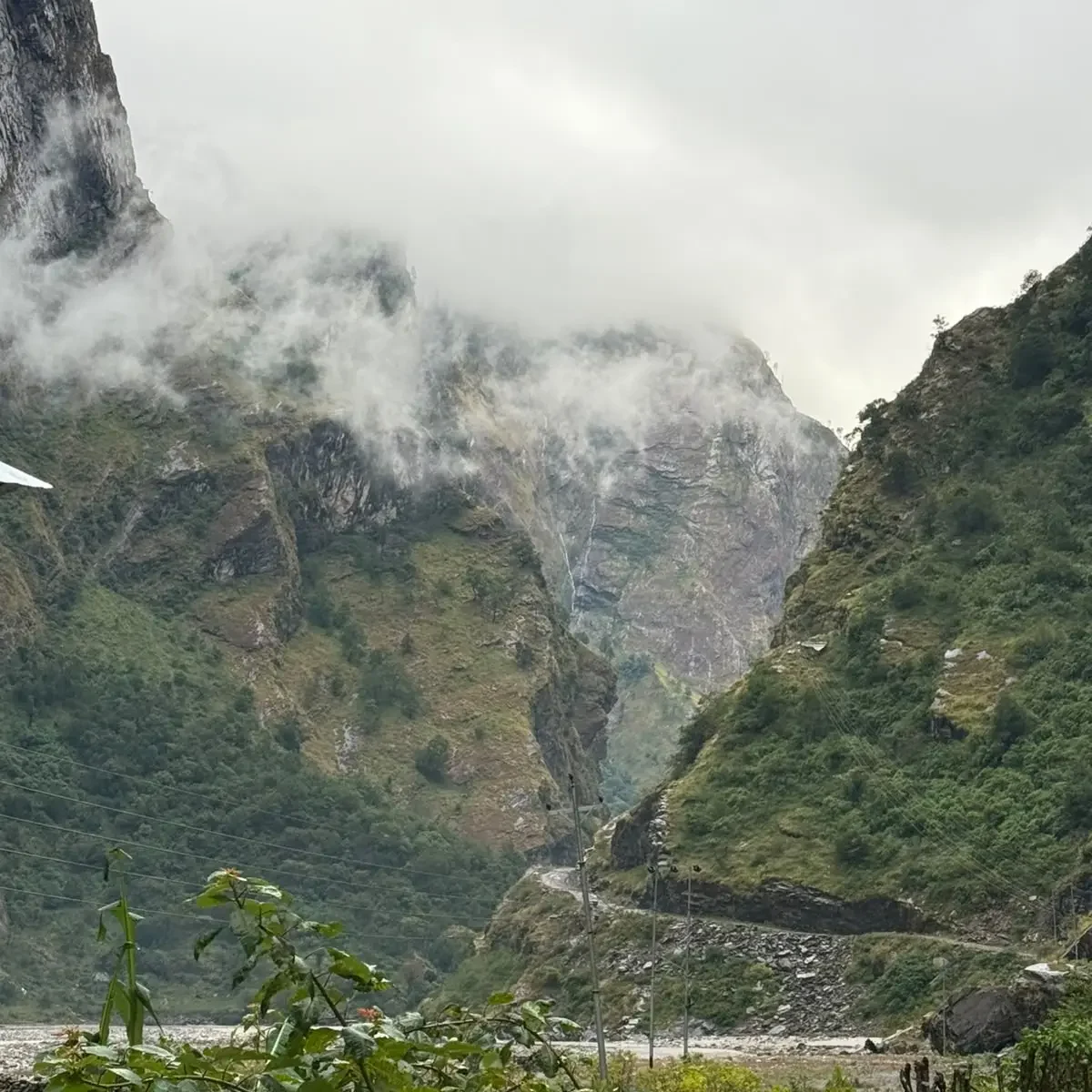
The Advice to “Avoid Nepal in June” Only Half Applies Here
Search for trekking advice about June in Nepal and most of it says the same thing: skip it, wait for autumn. That advice comes almost entirely from people planning routes through the Annapurna and Everest regions, where monsoon cloud genuinely wipes out mountain views for weeks at a time. Manaslu sits in a partial rain shadow relative to those better-known circuits, and the Tsum Valley side in particular is drier than either Annapurna or Everest during the same June weeks. That does not make June a peak-condition month here, it is a genuine transition period, but it is a meaningfully different proposition from what generic “avoid the monsoon” advice implies, and treating this route the same as Everest Base Camp in June is a mistake that costs some travelers a viable trip window unnecessarily.
Yes, though June is a genuine transition month and needs to be approached with realistic expectations. The monsoon typically arrives in the region around the second week of June, so the first few days of the month can still resemble late May, while the second half brings increasingly regular rain, especially in the lower valley. Higher up, near Larkya La, precipitation often falls as snow or sleet rather than rain, and the pass remains passable for prepared, well-guided groups, though with less certainty than in April or May. Trails become greener and quieter, but leeches appear in the lower forested sections, and road conditions can start to be affected by rain-related delays. June works for trekkers who specifically want a quiet, green, monsoon-adjacent experience and who come prepared for wet conditions; it is not the month for anyone wanting guaranteed clear mountain views.
Manaslu Tsum Valley Trek in June at a glance
| Factor | June conditions |
|---|---|
| Overall feasibility | Possible for prepared trekkers, transitional |
| Larkya La (5,106 m) | Passable, with snow or sleet possible rather than pure rain at this altitude |
| Daytime temperature, lower valley (700-1,900 m) | 24-29°C |
| Daytime temperature, Samagaun/Samdo (3,500-3,900 m) | 9-15°C |
| Night temperature, above 4,000 m | -5°C to -10°C |
| Rainfall/snowfall | Increasing through the month, heaviest in the lower valley from mid-June |
| Trail crowding | Low |
| Teahouse availability | Generally open, some upper-route lodges may operate on reduced schedules |
| Permit cost tier | Dec-Aug lower rate still applies |
| Best for | Trekkers comfortable with wet conditions who want a quiet, green, less touristed trek |
Who should consider trekking in June
June suits trekkers with monsoon trekking experience or a high tolerance for wet, muddy conditions, who value solitude and green scenery over guaranteed mountain views. It is a harder recommendation for first-time high-altitude trekkers, anyone prone to anxiety around uncertain weather, or those whose primary goal is unobstructed photography of the peaks. If your dates are flexible, aim for the first week of June before the monsoon fully sets in.
Reasons to choose June, and reasons to think twice
Why some trekkers choose June
- Very quiet trail: a significant drop in trekker numbers compared with the spring peak.
- Lush, green landscapes: the lower valley and forested mid-sections are especially vibrant this time of year.
- Lower prices in some cases: off-season timing can occasionally mean more flexibility on rates from operators and lodges.
- A different experience: for trekkers who have done the route in peak season before and want to see it in a different light.
Why many trekkers wait for autumn or earlier spring instead
- Increasing rain: particularly from mid-June, which affects trail conditions, visibility and comfort.
- Leeches: present in the forested lower and mid sections once the rains set in.
- Reduced mountain visibility: cloud cover often obscures the high peaks for much of the day.
- Road disruption risk: rain can occasionally delay the jeep transfer to and from the trailhead.
Weather and conditions by zone in June
Lower Budhi Gandaki: Machha Khola to Deng (700-1,900 m)
Hot and increasingly humid, with daytime temperatures around 24-29°C. Rain becomes more frequent through the month, particularly in the afternoons and evenings, and this is where leeches are most commonly encountered.
Tsum Valley: Chumling to Mu Gompa (2,400-3,700 m)
Tsum Valley sits partly in a rain shadow relative to the main Manaslu valley, so it can see somewhat less rainfall, though cloud cover is still common. Daytime temperatures range roughly 16-21°C.
Upper Manaslu: Namrung to Samagaun (2,600-3,500 m)
Green and increasingly cloudy, with daytime temperatures around 13-18°C. Views of the surrounding peaks become intermittent as cloud builds through the day.
Samagaun and Samdo (3,530-3,875 m)
Daytime highs typically run 9-15°C, with more cloud and occasional rain or drizzle than in May. Nights remain cool, around -3°C to -8°C.
Dharmasala/Larkya Base Camp (4,460 m)
Daytime temperatures around 0-5°C, with precipitation more likely to fall as snow or sleet given the altitude. Nights drop to roughly -6°C to -10°C.
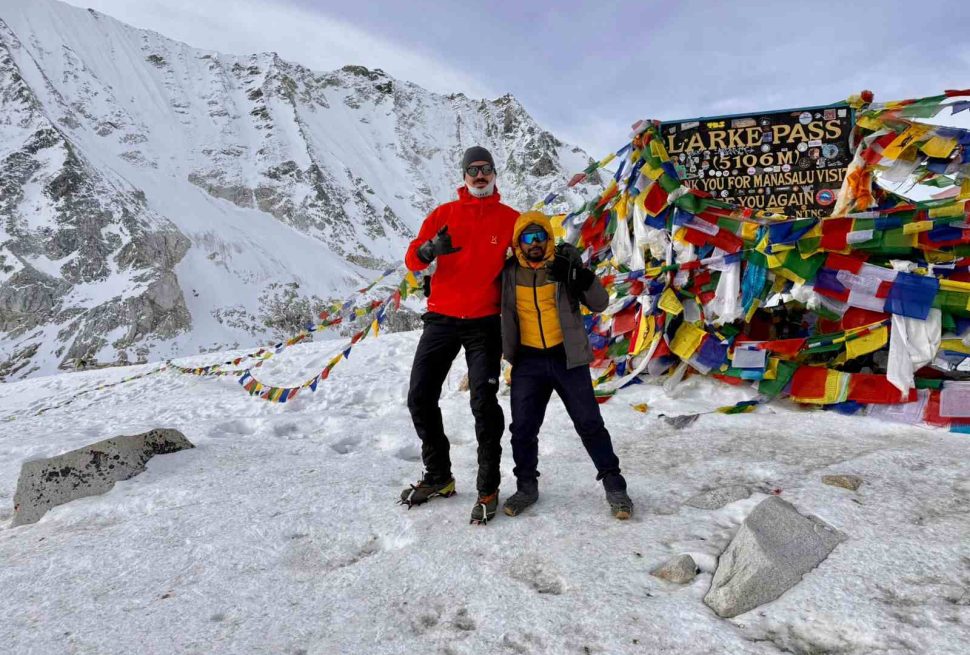
Larkya La (5,106 m)
Still passable in June, though conditions are noticeably less predictable than in April or May. Snow or sleet at the pass is common, and visibility can be significantly reduced by cloud. Guides typically favour very early starts to cross before afternoon cloud and precipitation build.
Bhimtang and the descent to Dharapani (1,860-3,720 m)
Green and increasingly wet on the descent, with rain more frequent as you drop toward Tilije and Dharapani.
June weather at a glance
| Zone | Altitude | Day temp | Night temp | Typical conditions |
|---|---|---|---|---|
| Machha Khola-Deng | 700-1,900 m | 24-29°C | 16-20°C | Hot, humid, increasing rain, leeches present |
| Tsum Valley | 2,400-3,700 m | 16-21°C | 8-12°C | Warm, partly rain-shadowed, cloudy |
| Namrung-Lho | 2,600-3,180 m | 13-18°C | 6-10°C | Green, increasingly cloudy |
| Samagaun/Samdo | 3,530-3,875 m | 9-15°C | -3 to -8°C | Cloudy, occasional rain or drizzle |
| Dharmasala | 4,460 m | 0-5°C | -6 to -10°C | Cold, snow or sleet possible |
| Larkya La | 5,106 m | -4 to 1°C | n/a (crossed by day) | Passable, snow/sleet and reduced visibility possible |
| Bhimtang-Dharapani | 1,860-3,720 m | 17-23°C | 8-13°C | Warm, increasingly wet on descent |
Rainfall, snowfall, wind and visibility in June
Rainfall increases steadily through June, with the first week generally drier and the second half of the month seeing regular afternoon and evening rain in the lower valley. At altitude, precipitation more often falls as snow or sleet, particularly around Dharmasala and the pass. Wind is generally moderate. Visibility is the most affected factor this month: mountain views are intermittent, often clearest in the early morning before cloud builds through the day.
Daylight hours in June
Daylight runs from roughly 5:10 am to 7:10 pm, around 14 hours, the longest of the year, though cloud cover often means less usable clear light than the raw daylight hours suggest.
A typical day’s weather pattern in June
Mornings are usually the clearest and driest part of the day, making early starts especially valuable this month. Cloud builds steadily from mid-morning, with rain most likely in the afternoon and evening, particularly at lower elevations. This pattern is why guides push for early departures and aim to reach the day’s destination before early afternoon.
Trail conditions in June
Trails become progressively muddier through June, particularly in the lower and mid-altitude forested sections. Good waterproof boots and gaiters are useful rather than optional this month. Above Samagaun, trail conditions are less affected by mud but can see fresh snow at the higher camps and the pass itself.
Road access and transport in June
Road access becomes progressively less reliable as June progresses, with rain-related delays and occasional minor landslides possible on the rougher sections of the jeep track. Build extra buffer time into your arrival and departure days this month.
Teahouses, rooms and food in June
Most teahouses remain open through June, though some of the smaller lodges above Samagaun may operate on a reduced basis given lower trekker numbers. Availability is generally not a concern given how quiet the trail is this month. Food menus remain standard, with fresh supply deliveries occasionally affected by road conditions.
Water, charging and connectivity in June
Water, charging and connectivity follow the usual seasonal pattern, though solar charging becomes less reliable given increased cloud cover, so a power bank is a sensible backup this month in particular.
How busy is the trail in June
Low. June marks a clear drop-off from the spring peak, and trekkers who prioritise solitude will find this one of the quieter months on the route, alongside July and August.
Permits and costs for June
June falls within the December-August lower permit rate tier. The Manaslu Restricted Area Permit (RAP) costs USD 75 for the first 7 days plus USD 10 per extra day. The Tsum Valley RAP costs USD 30 for the first 7 days plus USD 7 per extra day. MCAP and ACAP are each NPR 3,000 (foreigner rate), plus the one-time NPR 1,000 local municipality fee. See our Manaslu trekking permits guide for full current details.
Restricted area rules
The Manaslu and Tsum Valley areas remain restricted, requiring all permits to be arranged through a registered trekking agency, with checkpoints at Jagat, Philim, Namrung and Samagaun for the main route, and Lokpa, Chumling and Chekampar for Tsum Valley. As of the 22 March 2026 rule change, one trekker with one licensed guide meets the restricted-area requirement.
Guide and porter requirements
A licensed guide from a registered agency is mandatory. Porters remain optional but useful this month given the additional rain gear most trekkers carry.
Suggested itinerary for the Manaslu Tsum Valley Trek in June
| Day | Route | Altitude |
|---|---|---|
| 1 | Kathmandu to Machha Khola | 870 m |
| 2 | Machha Khola to Jagat | 1,340 m |
| 3 | Jagat to Lokpa | 2,240 m |
| 4 | Lokpa to Chumling (Tsum Valley) | 2,386 m |
| 5 | Chumling to Chhokangparo | 3,010 m |
| 6 | Chhokangparo to Mu Gompa | 3,700 m |
| 7 | Mu Gompa exploration and acclimatisation | 3,700 m |
| 8 | Mu Gompa to Chhokangparo, descend to Gumba Lungdang or Rachen Gompa | 3,200 m |
| 9 | Descend to Lokpa, continue to Deng | 1,860 m |
| 10 | Deng to Namrung | 2,630 m |
| 11 | Namrung to Lho | 3,180 m |
| 12 | Lho to Samagaun | 3,530 m |
| 13 | Samagaun acclimatisation, side trip to Manaslu Base Camp or Birendra Lake | 3,530 m |
| 14 | Samagaun to Samdo | 3,875 m |
| 15 | Samdo to Dharmasala | 4,460 m |
| 16 | Dharmasala over Larkya La to Bhimtang | 3,720 m |
| 17 | Bhimtang to Tilije/Dharapani | 1,860 m |
| 18 | Dharapani to Kathmandu via Besisahar | 1,400 m |
Most operators build in an extra buffer day for June departures given the higher chance of weather-related delays, both on the road and around the pass.
Acclimatisation in June
The two dedicated acclimatisation days remain essential. Wet, overcast conditions can make it tempting to push through faster than planned; resist this and stick to the built-in schedule.
Contingency planning and buffer days
June is one of the months where an extra buffer day is worth having, both for road delays on the approach and for potential weather delays around Larkya La. Confirm with your operator how this is handled in your itinerary and cost.
What to pack for June
| Category | June-specific notes |
|---|---|
| Insulation | Mid-weight down jacket for Dharmasala and the pass |
| Rain protection | Genuine waterproof jacket and trousers, a top priority this month |
| Footwear | Waterproof trekking boots with good grip for muddy trail sections |
| Leech protection | Leech socks or gaiters, plus salt or leech repellent for the lower forested sections |
| Sleep system | Three-season sleeping bag generally sufficient |
| Pack protection | Waterproof pack cover and dry bags for all electronics and documents |
Rain and wet-weather protection
- Waterproof jacket and trousers: genuine, fully seam-sealed rain gear rather than a light shower shell.
- Pack cover and dry bags: essential this month to keep gear and electronics dry.
- Quick-dry clothing: synthetic or merino layers that dry faster than cotton.
- Spare socks: pack more pairs than usual, wet feet are a common June complaint.
Leech and insect protection for the lower valley
- Leech socks or gaiters: worn over boots and lower trousers through the forested sections below Namrung.
- Salt or leech repellent: a small bag of salt is a traditional, effective, low-cost solution.
- Insect repellent: useful for the lower valley in general during the wetter months.
Footwear for muddy trail conditions
- Boots: waterproof trekking boots with strong tread for muddy sections.
- Gaiters: useful both for mud lower down and any snow near the pass.
- Camp shoes: a pair of sandals or lightweight shoes to change into at teahouses.
Documents, money and extras
- Cash in Nepali rupees: carry enough for the full trek.
- Permit documents and passport copies: carry your original passport and photos.
- Basic first aid and personal medication: including any altitude sickness medication discussed with your doctor.
Health and altitude considerations
Standard altitude precautions apply regardless of season: ascend gradually, use the built-in rest days, stay hydrated, and tell your guide about symptoms early. Wet conditions also raise the importance of keeping feet dry to avoid blisters and fungal issues. See our guide on what happens if you get sick on the Manaslu Circuit Trek for more detail.
Safety risks specific to June
The main June-specific risks are reduced visibility at the pass, muddy and occasionally slippery trail sections, and the possibility of road delays affecting your start or finish dates. None of these make the trek unsafe with a good guide and proper preparation, but they do require more flexibility than a spring or autumn trek.
Travel insurance
Comprehensive travel insurance covering trekking to at least 6,000 metres, including helicopter evacuation, is essential for this route in any month, and particularly worth double-checking for weather-delay coverage in June.
Is June right for beginners, experienced trekkers or solo trekkers
First-time high-altitude trekkers
June is not the ideal introduction to high-altitude trekking; April or October offer a gentler, more predictable first experience.
Experienced trekkers
Experienced trekkers who specifically want solitude and don’t mind wet conditions will likely find June rewarding in its own way.
Solo trekkers
Since the 22 March 2026 rule change, one trekker with one licensed guide meets the restricted-area requirement. See our solo trekking rule update for details.
Guides and porters: what to expect in June
Guides working in June are typically experienced with monsoon-season judgment calls around the pass and road conditions. Expect a more conservative, flexible approach to scheduling than in the dry spring or autumn months.
Photography in June
June rewards photographers who enjoy moody, atmospheric conditions: mist, cloud and dramatic light breaks, alongside vividly green landscapes. Clear mountain views are intermittent rather than guaranteed, so patience and flexibility help.
Festivals and cultural events in June
Local festival timing varies year to year with the lunar calendar; check current dates with your operator. See our guide to major festivals in the Manaslu region for a general overview.
Advantages and disadvantages of trekking in June
| Advantages | Disadvantages |
|---|---|
| Very quiet trail | Increasing rain, especially from mid-month |
| Lush, green scenery | Leeches present in lower forested sections |
| Long daylight hours | Intermittent mountain visibility |
| different trekking experience | Possible road delays affecting transport days |
| Lower crowd-related booking pressure | Less predictable Larkya La conditions than April/May |
Extra costs to budget for
Budget for standard trek package costs and permits, plus a buffer day or two in case of weather or road delays, tips for guides and porters, and consider renting or buying dedicated rain gear if you do not already own quality waterproofs, since this is the single most important gear category for a June trek.
How June compares to May and July
May offers more reliable weather with less rain, particularly in the first three weeks; see our Manaslu Tsum Valley Trek in May guide. July is deeper into the monsoon, with heavier rain but even fewer trekkers on the trail; see our Manaslu Tsum Valley Trek in July guide. June sits at the transition point between the two, drier than July but wetter than May.
June month-by-month comparison table
| Month | Feasibility | Larkya La | Crowd level |
|---|---|---|---|
| May | Recommended, narrowing window | Normally passable, watch pre-monsoon storms | Moderate |
| June | Possible for prepared trekkers, transitional | Passable, snow/sleet possible | Low |
| July | Possible, not recommended for first-timers | Passable but demanding, wet snow at times | Very low |
Alternatives to consider if June doesn’t work for you
If you want to avoid monsoon conditions entirely, consider shifting to April, May, or the post-monsoon autumn window from late September onward. If you specifically want a quiet trail but with more reliable weather, September or early October can offer a good middle ground. For a Tsum Valley-only itinerary without the Larkya La crossing, see our Manaslu Tsum Valley destination.
Final recommendation: should you trek in June
June is a genuine option for trekkers who want solitude and green scenery and who come prepared for rain, mud and leeches in the lower valley. It is not the month for guaranteed clear views or the easiest possible trek, but for the right trekker, particularly one who has done a spring or autumn trek before, it offers a different and rewarding perspective on the route. Explore our 19-Day Manaslu Circuit with Tsum Valley Trek or the 23-Day Tsum Valley and Manaslu Circuit Trek, or get in touch via our contact to discuss a June departure. For the full seasonal picture, see our Best Time to Go guide, and our Manaslu Circuit Trek Monsoon Update 2026 for the latest ground conditions.
Why Manaslu’s Rain Shadow Matters More Than People Realize
The Manaslu massif sits far enough west of the main Annapurna range and far enough from the direct monsoon corridor that hits Everest region valleys that it experiences a genuine, measurable rain shadow effect, particularly on the Tsum Valley side, which sits partially screened by the Ganesh Himal range to its east. This is not a marketing claim, it is a well-documented meteorological pattern that guides on this route have relied on for years when planning shoulder-season and even early-monsoon departures. Precipitation totals recorded in Chhekampar and Nile through June and even into July are consistently lower than comparable-elevation villages on the Annapurna Circuit or in the Khumbu, which is part of why Manaslu and Tsum Valley have quietly become the region’s preferred alternative for trekkers who need to travel in months that would be write-offs elsewhere in Nepal.
What Early June Actually Looks Like on the Trail
The first ten days to two weeks of June, before the monsoon fully establishes, often deliver some of the best conditions of the entire late-spring window: clear mornings, a lush, fully green valley floor, waterfalls running at their fullest from snowmelt and early rain, and a trail that has emptied out considerably compared to the May crowds. Guides who know this window well specifically target early June departures for clients who want a genuinely quiet trek without gambling on full monsoon conditions. The Budhi Gandaki runs high and loud through this period, the rice terraces around Philim and Deng are in their most vivid green stage of the year, and the forest sections are at their most biodiverse, with the heaviest bird and insect activity of any month.
Leeches: What to Actually Expect and How to Manage Them
Leeches are the single most-asked-about nuisance for June departures, and they deserve a direct, practical answer rather than vague reassurance. They appear in the humid forest sections roughly between Machha Khola and Namrung, most active in wet, warm conditions during and after rain, and largely absent above the treeline near Samdo and the pass. They are not dangerous, they do not transmit disease in Nepal, and the standard prevention kit, tightly gaitered boots, DEET or permethrin-treated socks and trouser cuffs, and a pinch of salt or a lighter carried by your guide for quick removal, handles them without drama. Most trekkers who prepare properly describe the leech factor as a minor, occasional annoyance rather than the trip-defining issue first-timers sometimes fear based on secondhand stories.
Landslide and Trail Condition Risk in a June Context
Landslide risk on the lower trail rises through June as rain saturates slopes that have been drying out since the previous monsoon, and this is a genuine consideration rather than a theoretical one, particularly on the steeper cut sections between Machha Khola and Jagat where the trail follows exposed riverside terrain. It is also precisely why a licensed guide and up-to-date local knowledge matter more in June than in dry-season months, guides communicate daily with lodge owners and other groups about any trail damage, and route adjustments, alternate crossing points, short reroutes around a slip, are a normal and manageable part of guiding this trail in early monsoon. We do not run June departures without daily condition checks built into the itinerary, and clients should expect a guide who treats trail-condition monitoring as an active, ongoing task through this month rather than a one-time briefing before departure.
Field Notes: A Guide’s Perspective on June Departures
Guides who like running June trips describe a specific kind of client who tends to enjoy this month most: photographers chasing the deep green landscape and dramatic cloud formations, returning trekkers who have already done Manaslu in a drier month and want to see it in a completely different mood, and travelers whose only available window happens to fall in June and who arrive with realistic expectations rather than hoping for October conditions. What guides watch for closely is footwear and gaiter quality before departure, more trekkers arrive under-prepared for wet-trail conditions in June than in any other month, and a pre-trip gear check catches most of the common mistakes, cotton socks instead of wool or synthetic, non-waterproof boots, no proper rain shell, before they become a problem three days into the trek.
Permit Costs and Booking Logistics for June
June sits within the lower Restricted Area Permit tier, USD 75 per week rather than the September to November peak rate of USD 100, the same favorable rate that applies May through August. Full permit details, including MCAP and ACAP fees, are covered in our Manaslu trekking permit guide. Booking lead time can be shorter in June than in peak season, guide and porter availability is rarely a constraint this month, though we still recommend two to three weeks’ notice to allow proper permit processing and trip-specific weather briefing before departure.
Larkya La Conditions Specifically in June
The pass at 5,106 meters sees its precipitation shift from the mixed rain-and-snow pattern of May to more consistently snow-dominated conditions as June progresses, since temperature at that elevation stays low enough that most precipitation falls as snow rather than rain even as the valleys below turn wet. This means fresh snow accumulation is a more relevant risk factor in June than mud or rain at the pass itself, though total accumulation is normally far below what winter delivers. Crossing windows in June still require the same early-morning start used year-round, before daytime warming softens snow and increases avalanche and slip risk on the steeper sections near the top, and guides watch overnight snowfall at Dharamsala closely before committing to a summit-day departure time.
Solo Trekkers and June Flexibility
The March 2026 removal of the two-trekker minimum for the Manaslu Restricted Area Permit applies in June exactly as it does in any other month, a licensed guide alone now satisfies the legal requirement for solo trekkers. This is particularly relevant for June specifically because it is a lower-demand month with fewer group departures scheduled, previously making it harder for solo trekkers to find a matching group to join. Now a solo trekker with a flexible June window can book independently without needing to coordinate around anyone else’s availability, pairing with one of our licensed guides on dates that suit their own schedule.
Packing Adjustments for a June Departure
June’s kit list should prioritize wet-weather management over cold-weather warmth for most of the trek, since temperatures below Samdo stay mild even under cloud cover. A genuinely waterproof jacket and trousers, not water-resistant, dry-bag lining for every item inside your pack rather than relying on a pack cover alone, and a spare set of completely dry clothes sealed away for evenings at the lodge are the highest-value additions to a June kit. Quick-dry trekking trousers and synthetic or wool socks, never cotton, reduce the discomfort of days that involve some rain exposure. Above Samdo the standard cold-weather layering system, down jacket, insulated gloves, warm hat, still applies in full for the Larkya La crossing itself, June does not reduce the need for genuine cold-weather gear at altitude even though the lower valley feels mild and wet.
Photography and the June Light
Photographers who understand what June offers rather than what it lacks tend to come away with some of the most distinctive images available on this route. Dramatic, fast-moving cloud formations around the peaks, shafts of light breaking through monsoon cloud onto the valley floor, waterfalls at full flow, and the deepest, most saturated green of the entire calendar year combine to produce a moodier, more atmospheric look than the clear-sky postcard shots typical of October. Early morning windows, before daily cloud builds, still deliver clear views on many June days, particularly in the first half of the month, so photographers should plan for dawn starts on key viewpoint days rather than assuming the entire day will be clouded over.
Comparing June to the Months on Either Side
Trekkers weighing June against the safer, more predictable months on either side should compare against our May Manaslu Tsum Valley guide, the last fully dry-season option, or look ahead to our October guide, generally regarded as the most reliable month once the monsoon fully clears. For a full stage-by-stage route breakdown independent of season, see our Manaslu Circuit route guide.
Tsum Valley in June: A Quieter Side of a Quieter Month
If June’s reduced crowds on the main Manaslu Circuit already appeal to you, Tsum Valley in June takes that further still. The side valley sees a fraction of the already-light June traffic on the main trail, and Mu Gompa and Rachen Gompa are typically nearly empty of other trekkers during this period, offering a genuinely contemplative experience for anyone drawn to the valley’s Buddhist heritage rather than its mountain views specifically. The trade-off is the same wet-trail and reduced-visibility conditions that apply to the wider region in June, but for trekkers whose priority is cultural immersion over guaranteed mountain photography, June in Tsum Valley is a legitimately underrated window that very few outside guides know to recommend.
Food, Appetite, and Staying Healthy on a Wet-Season Trek
Humid, wet conditions in June change a few practical health habits worth planning for. Appetite can dip slightly in warm, humid lower-valley stages compared to the sharper cold-weather hunger of autumn treks, so we encourage clients to eat consistently at meal stops rather than waiting to feel hungry, energy demands stay high regardless of appetite. Keeping feet dry at rest stops, changing into dry socks at lodges rather than leaving damp ones on overnight, meaningfully reduces blister and fungal-infection risk on multi-day wet-trail sections. Water treatment matters as much in June as any other month, boiled or filtered water is standard at every teahouse on this route, and trekkers should not assume monsoon rain makes local water sources any safer to drink untreated.
Who June Actually Suits Best
Stepping back from the individual practical considerations, June suits a specific kind of trekker rather than everyone: those whose schedule is fixed and happens to fall in this window, photographers and landscape enthusiasts drawn to dramatic monsoon-edge light, budget-conscious travelers taking advantage of lower-season permit rates and reduced competition for guides and porters, and repeat visitors to the region who have already experienced the classic dry-season version of this trek and want to see it in a completely different character. It does not suit trekkers whose primary goal is guaranteed, reliable mountain panoramas, for that specific goal, October remains the safer recommendation. Being honest about which category you fall into before booking is the single most useful thing we can offer any trekker considering a June date.
Frequently asked questions
Is June too wet for the Manaslu Tsum Valley Trek?
Not too wet to attempt, but wetter than spring or autumn, especially from mid-month. Prepared trekkers with good rain gear manage it well.
Is Larkya La open in June?
Usually passable, though snow or sleet at the pass is common and visibility can be reduced.
Are there leeches on this trek in June?
Yes, in the lower forested sections, particularly once the rains set in from mid-June. Leech socks and salt are effective countermeasures.
How busy is the trail in June?
Very quiet, one of the lowest crowd months of the year alongside July and August.
What permits do I need for June?
Manaslu RAP, Tsum Valley RAP, MCAP, ACAP and a local municipality fee, at the December-August lower rate tier.
Can I trek solo in June?
Yes, since the 22 March 2026 rule change, one trekker with one licensed guide meets the restricted-area requirement.
Is June a good time for first-time trekkers?
Not ideal; April or October are better introductions given more predictable conditions.
What is the weather like in Tsum Valley in June?
Warm and partly rain-shadowed compared with the main valley, with daytime temperatures around 16-21°C, though cloud cover is common.
Do I need special rain gear for June?
Yes, a genuine waterproof jacket and trousers are essential, not optional, this month.
How many days does the trek take in June?
A typical itinerary runs 18-19 days including acclimatisation and an extra weather buffer day.
Is altitude sickness more likely in June?
Not inherently, it depends on pace and acclimatisation rather than the calendar.
Is June better than July for this trek?
June is generally drier than July, since the monsoon only fully sets in partway through the month.
Do I need trekking poles in June?
Yes, especially useful for stability on muddy or wet trail sections.
Is travel insurance required?
Yes, comprehensive insurance covering trekking to at least 6,000 metres with helicopter evacuation is essential.
Can road delays affect my trip in June?
Occasionally, rain-related delays on the jeep track are possible; build a buffer day into your travel schedule.
Is June a good time for photography?
It offers a different, moodier aesthetic than the clear-sky months, with green valleys and dramatic cloud, though clear mountain views are intermittent.
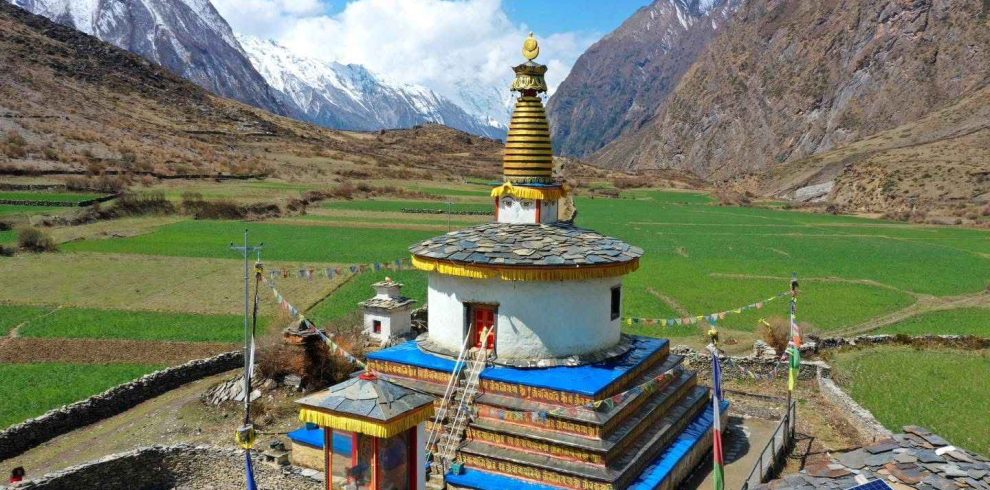
The 23-day Tsum Valley & Manaslu Circuit Trek combines breathtaking Himalayan landscapes with the preserved Tibetan Buddhist culture of a…