Five years ago, we would get maybe one or two inquiries a month about the Tsum Valley Trek. Most people asked about Everest Base Camp or the Annapurna Circuit; an inquiry, Lesley, was something we mentioned almost as an afterthought, a side valley the truly curious trekker might add on if they had extra days. That pattern has changed. Trekkers now write to us specifically asking about Tsum, often before they have even booked the Manaslu Circuit, and many arrive already knowing the names of Chumling, Chhokangparo and Mu Gompa.
The short answer to why this is happening comes down to a handful of practical things: trekk,ers are actively looking for trails with fewer people on them, they want a cultural experience that feels lived in rather than staged for tourism, and they have started to hear, through blogs, forums and word of mouth, that Tsum Valley offers a version of the Everest or Annapurna experience from thirty years ago. There is also a simple logistical reason. Tsum sits right next to the Manaslu Circuit, so a trekker who has already decided to commit to the restricted area permits and the licensed guide requirement for Manaslu can add the valley without duplicating much of that effort. In this guide, we go through what actually makes Tsum Valley different, what the trek involves in practice, and what a first-time visitor genuinely needs to know before booking, based on years of organizing this route for first-time trekkers.
Planning the Manaslu Circuit Tsum Trek and need help with permits, route, or itinerary?
WhatsApp us Email usWhat Is the Tsum Valley Trek?
Tsum Valley is a side valley off the Budhi Gandaki river system in the Gorkha district of Nepal, tucked behind the Manaslu massif and running close to the Tibetan border. Geographically, it sits in the village of Lokpa, where the main Manaslu Circuit trail continues north along the Budhi Gandaki, while a separate trail branches northeast up the Shyar Khola River into the valley itself. This branch is what people mean when they say Tsum Valley Trek: a route that runs into the valley through villages such as Chumling, Chhokangparo and Nile, reaches Mu Gompa near the head of the valley, then usually returns the same way to rejoin the main Manaslu route.
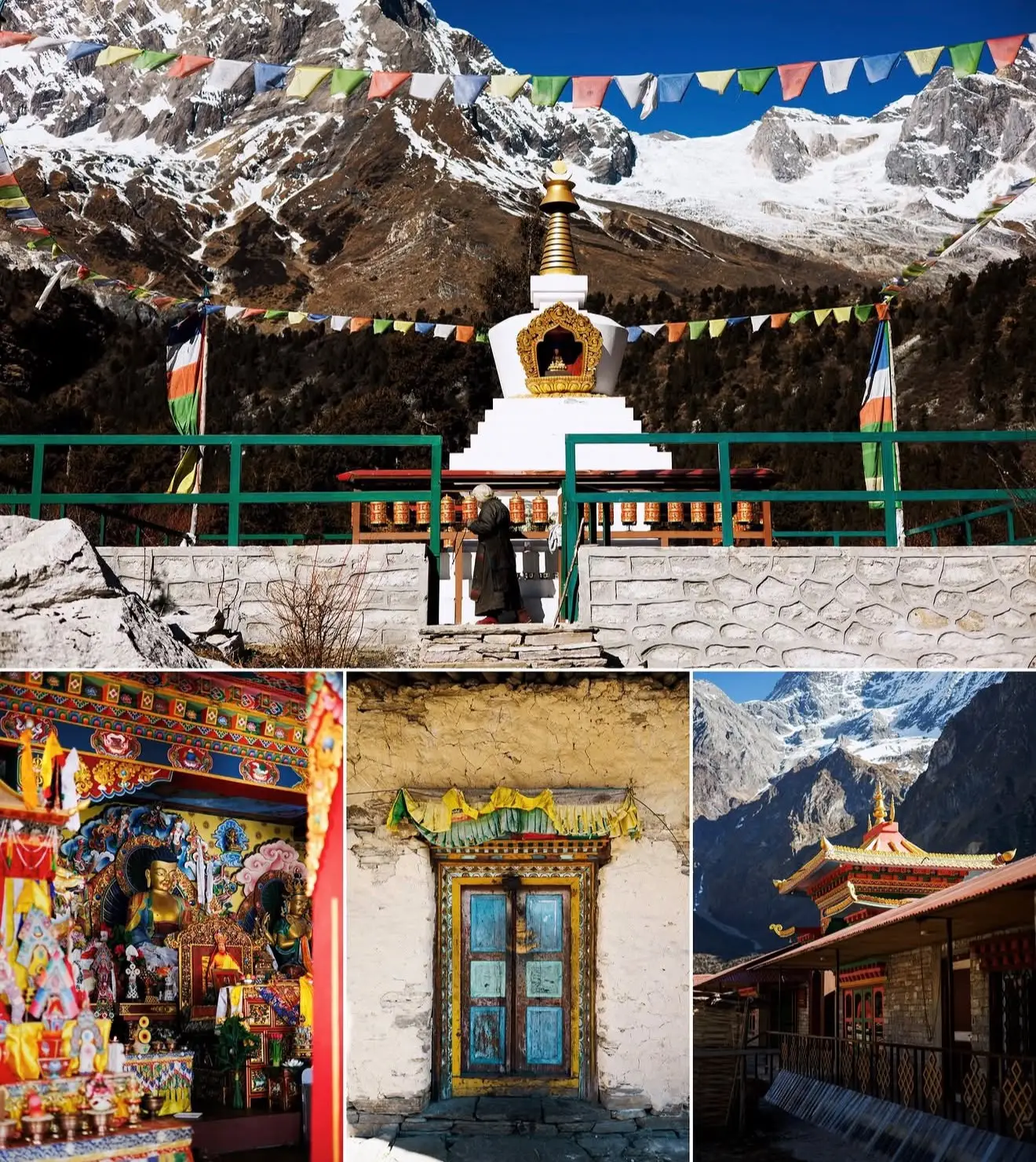
The valley was closed to outside visitors until 2008, a relatively recent opening compared with Everest and Annapurna, both of which have welcomed foreigners since the 1950s and 1960s. That late opening matters because it is a large part of why the culture here still functions on its own terms rather than around trekking tourism. The people of the valley, known as Tsumba, speak a dialect closer to Tibetan than to Nepali, and their religious life follows the Nyingma and Kagyu schools of Tibetan Buddhism, visible in the mani walls, chortens and monasteries that line the trail.
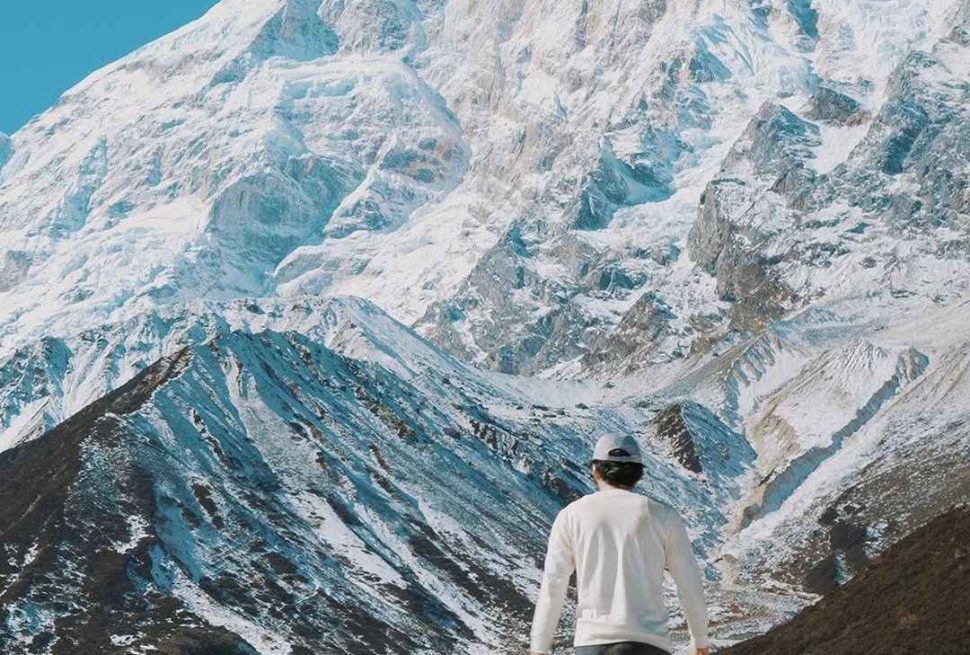
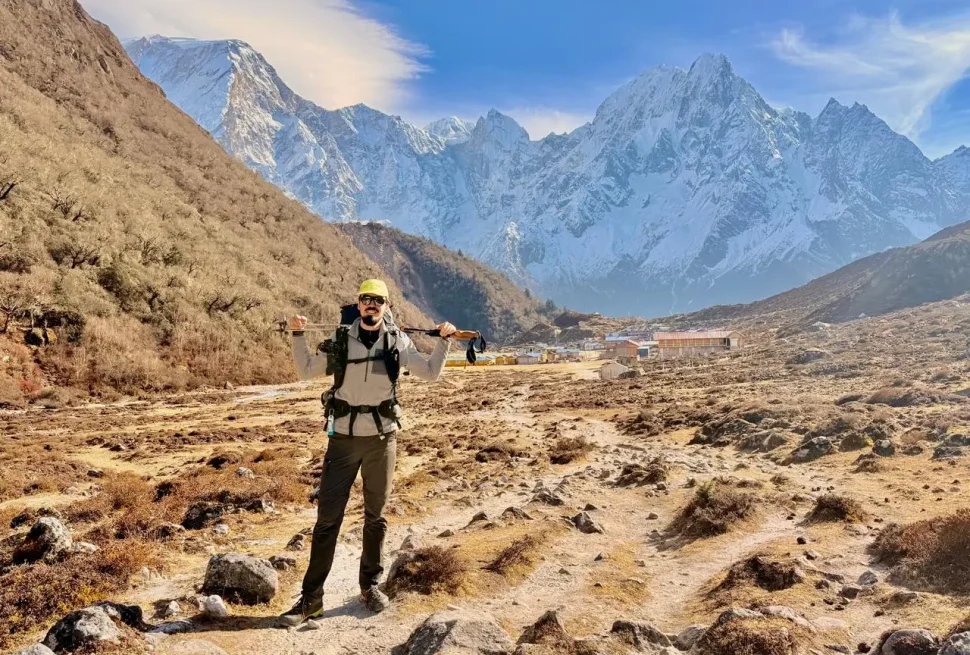
What makes this route different from a standard Himalayan trekking route is not just the scenery, though the views of Ganesh Himal, Sringi Himal and Baudha Himal are genuinely dramatic. It is that the valley is a self-contained cultural region with its own dialect, its own religious calendar, and its own rhythm of farming, self-contained, connected to the wider Manaslu region by a single trail rather than a network of roads. Trekking here means passing through a place that has kept a fairly consistent way of life while the routes around it have changed considerably.
Planning the Manaslu Circuit Tsum Trek and need help with permits, route, or itinerary?
WhatsApp us Email usTsum Valley Trek Info
| Detail | Information |
|---|---|
| Region | Manaslu region, Nubri and Tsum |
| Location | Gorkha district, Nepal, near the Tibetan border |
| Trek type | Tea house trekking with local lodges throughout |
| Difficulty | Moderate to challenging, depending on itinerary and pace |
| Recommended duration | Around 16 to 18 days from Kathmandu for a standalone route, longer if combined with the Manaslu Circuit |
| Highest point | Mu Gompa area, approximately 3,700 metres, with an optional extension to Ngak Dhar viewpoint near 4,070 metres |
| Best seasons | Spring (March to May) and autumn (September to November) |
| Accommodation | Local tea houses and lodges, simpler as you move higher into the valley |
| Main attraction | Tibetan Buddhist culture, monasteries, village life and mountain scenery |
| Permit requirement | Tsum Valley Restricted Area Permit plus the Manaslu Conservation Area Permit, arranged only through a registered trekking agency |
| Guide requirement | A licensed guide is mandatory at all times in the restricted area, checked at multiple posts along the route |
Why Is Tsum Valley Trek Becoming More Popular?
There is no single reason. It is a combination of things that have been building for a few years, some related to the trail itself and some related to how trekkers now research trips before over the pasty book.
Trekkers want quieter trails. Everest Base Camp and Annapurna Circuit both see large volumes of bookings during peak months, and word has spread that lodges can be full, trails can feel congested near popular viewpoints, and the sense of remoteness that drew people to these routes in the first place has thinned out in places. Tsum Valley does not have that problem. On a normal day in Chumling or Chhokangparo y, you might pass a handful of other trekking groups, and outside peak weeks y, you may see none at all.
Cultural trekking has grown as its own category. A lot of trekkers today are not ,casing a summit or a pass as the main goal. They want to understand how people actually live in a mountain environment, and Tsum Valley offers that directly, since the villages here are lived in year-round rather than existing mainly to serve trekkers.
There is real interest in destinations that have not become commercialized. Trekkers who have already done Everest or Annapurna, or who have read enough trip reports to know what those trails have become, are actively seeking out places that have not followed the same pattern of lodges upgrading every year and villages built increasingly around tourism income.
The experience is genuinely different from Everest and Annapurna. Those two routes are extraordinary, but they follow a familiar shape by now: teahouse, trail, viewpoint, teahouse. Tsum Valley has a different rhythm. The trail runs deeper into a single valley rather than climbing toward one obvious high point, and the cultural sites, particularly the monasteries, are as central to the experience as the mountain views.
Buddhist culture and monasteries are a specific draw. Trekkers with an interest in Tibetan Buddhism, whether from prior travel in Ladakh, Bhutan o, or Tibet itself, often seek out Tsum Valley specifically because Mu Gompa and Rachen Gompa are active religious centers rather than restored historical sites.
Planning the Manaslu Circuit Tsum Trek and need help with permits, route, or itinerary?
WhatsApp us Email usResponsible and community-based tourism has become a real consideration for trekkers, not just a marketing term. More trekking community-based directly how their trekking fees support local communities, whether porters are treated fairly, and whether their presence has a positive or negative effect on a place like Tsum. That question did not come up nearly as often ten years ago.
Trekking information has improved. A decade ago t,here was very little reliable information online about Tsum Valley. Now there are detailed blogs, updated permit information and route descriptions, which has made it much easier for an independent researcher to understand what the trek actually involves and to plan for it confidently.
Some trekkers want a longer, more immersive trip. Not everyone wants a trek that wraps up in ten days. Combining Tsum Valley with the Manaslu Circuit gives trekkers three or more weeks in the mountains, which some people specifically want, particularly those who have taken time off work or are traveling through Nepal as part of a longer trip.
It combines naturally with the Manaslu Circuit. Trekkers who are already planning a Manaslu Circuit Trek and researching restricted area permits often discover that adding Tsum Valley is a relatively small extension of effort for a considerable addition to the trip.
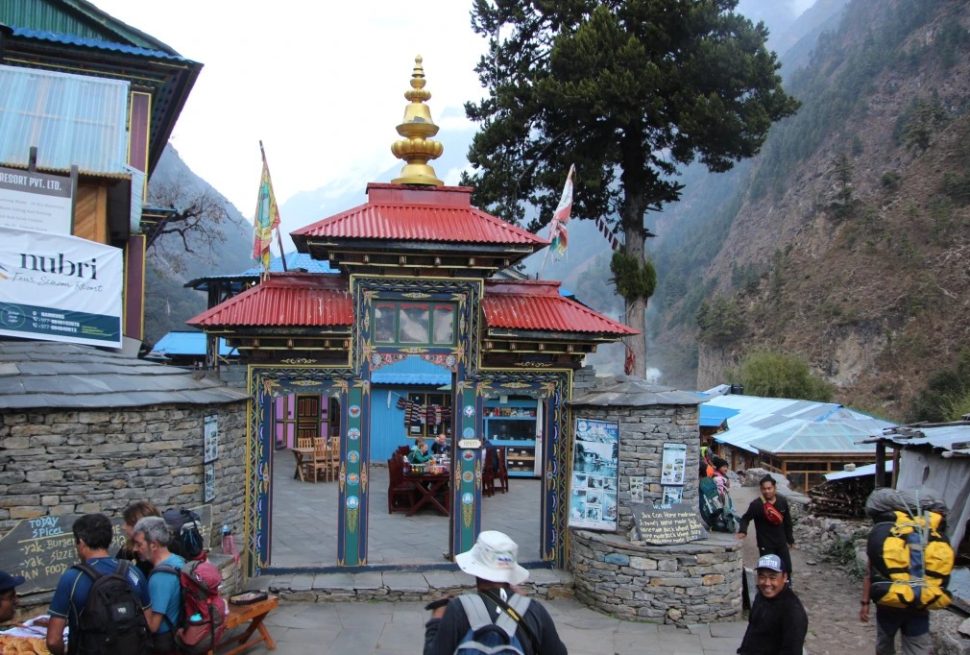
Photography and social media have raised the valley’s profile. Images of the welcome gate at the entrance to Tsum, the prayer flags strung across the Shyar Khola gorge and the setting at Mu Gompa have circulated more widely in the last few years, and that visibility has translated into direct eninquiriesrom trekkers who saw a photo before they knew the name of the place it was taken.
Social Media Has Increased Awareness of Tsum Valley
Photos and videos from remote Himalayan villages have helped introduce Tsum Valley to travelers who previously knew little about the region.
Images of traditional villages, Buddhist monasteries, prayer flags, mountain trails, and local life can spark interest in destinations once known mainly to experienced trekkers.
However, social media can also create unrealistic expectations. Tsum Valley is still a remote trekking destination, and visitors should expect basic accommodation, long walking days and changing mountain conditions.
Trekking Agencies Are Marketing Tsum Valley More Heavily
Another practical reason for the increase in awareness is the growing marketing activity from trekking agencies in Nepal.
Trekking companies are now promoting Tsum Valley through their websites, blogs, social media pages, videos, Google search campaigns and trekking marketplaces.
As more agencies publish detailed information about the route, travelers have more opportunities to discover it while researching trekking options in Nepal.
This does not mean marketing alone created the destination’s appeal. Tsum Valley already has strong cultural and natural attractions. Better online information has simply made the route easier for international travelers to discover and understand.
People Want More Natural and Less Developed Landscapes
A growing number of trekkers are interested in places that still feel connected to nature.
Tsum Valley has fewer large settlements and less tourism infrastructure than Nepal’s most established trekking areas. The upper valley in particular has a remote character, with narrow trails, forests, rivers, traditional villages and high mountain surroundings.
This does not mean the valley is completely untouched. Local people live and work here, and tourism has become an important part of the local economy. However, compared with heavily visited trekking corridors, the overall environment can feel much quieter and less developed.
Tsum Valley Is Not Just About Mountains
Ask a trekker who has done both Everest Base Camp and Tsum Valley what stands out from Tsum, and mountains are rarely the first thing they mention. They talk about the mani walls that run for hundreds of metres along the trail, the sound of a horn from a monastery at dawn, or an elderly woman spinning a prayer wheel outside her house while sorting barley.
The Tsumba people have lived in this valley for centuries, farming barley, buckwheat and potatoes at altitudes where little else grows reliably, and keeping yaks and cattle crossbreeds for milk, wool and transport. Their houses are built from stone with flat or slightly sloped roofs, often stacked with firewood and fodder for winter. Villages are marked by chortens at their entrances, and the trail between settlements is frequently lined with mani walls, stone structures carved with Buddhist prayers that trekkers are asked to pass on the left, keeping the wall on their right hand side, in line with local custom.
Tibetan Buddhism shapes daily life here in a way that is visible rather than explained for visitors. Prayer flags mark passes and river crossings. Small chapels sit within family homes. In the upper valley, particularly from Chhokangparo upward, communities observe the Shyagya tradition, a long-standing local practice of not slaughtering animals within the valley, which is one reason meat remains a staple on menus as you go higher.
None of this is presented as a show for trekkers. Farming continues, animals are herded, and religious practice carries on regardless of whether a trekking group happens to be walking through. That is a meaningful difference from routes where local life has, understandably, adapted itself around a tourism economy. It is worth saying clearly that this is not a community frozen in the past or a museum piece. People here have mobile phones where signal allows, send children to school, and travel to Kathmandu for work or medical care. The valley’s isolation is relative and gradually changing, not absolute.
What Makes Tsum Valley Different From Other Treks in Nepal?
Trekkers often ask us to compare Tsum Valley directly with the routes they already know. Here is how it lines up against the other major options.
Everest Base Camp Trek
Annapurna Base Camp Trek
Manaslu Circuit Trek
Langtang Valley Trek
Tsum Valley Trek
The point of this comparison is not to say Tsum Valley is better. Everest Base Camp and Annapurna Base Camp are extraordinary treks for good reasons, and their popularity is earned. Tsum Valley’s growing popularity does not mean it has caught up to those routes in visitor numbers or infrastructure, and it likely will not, given the restricted area system that intentionally limits access. What has changed is that more trekkers now know this option exists and are choosing it deliberately, for the specific things it offers rather than as a fallback.
The Remote Feeling of Tsum Valley
Trekkers often ask us how remote Tsum Valley actually feels compared with what they have read online, since remoteness gets used loosely in trekking marketing. Here is the practical picture.
There is no road into the valley itself. The trailhead at Machha Khola is reached by jeep or bus from Kathmandu, and from there everything is on foot. Once you turn off the main Manaslu route at Lokpa and head into Tsum, you are walking, and the nearest vehicle access point stays behind you until you return the same way.
Mobile network coverage exists in the lower villages but becomes unreliable and then largely absent as you move into the upper valley around Nile and Mu Gompa. Internet access, where it exists at all, is limited and slow, typically a paid wifi service at a handful of tea houses rather than anything consistent. Electricity is usually available for basic lighting and phone charging, often from small hydro or solar systems, but do not expect it everywhere or at every hour, and expect to pay a small fee for charging in most villages.
Medical facilities are minimal. There are basic health posts in some villages, but anything beyond first-aid level care means a return trip toward Kathmandu, and in a genuine emergency this may mean helicopter evacuation, which is one reason travel insurance with high-altitude rescue cover is not optional here. Supplies in the upper valley are limited by what can be carried in on foot or by mule, so the food and goods available become simpler the further you go, and prices rise accordingly since everything has to be transported in.
None of this should be exaggerated into a survival story. Trekking here with a good guide and a sensible itinerary is a well-managed experience, and thousands of trekkers complete it without incident every year. But it is genuinely more remote than Everest Base Camp or the Annapurna Circuit in the specific senses of communication, medical access and supply logistics, and trekkers should plan with that reality in mind rather than assuming teahouse standards will match the busier routes.
Planning the Manaslu Circuit Tsum Trek and need help with permits, route, or itinerary?
WhatsApp us Email usTsum Valley Trek Route and Major Villages
The standard route runs as follows, and we will not invent distances or times we have not confirmed, so where an exact figure is not solid we describe it in general terms instead.
The trek begins with a drive from Kathmandu to Machha Khola, at around 869 metres, which takes roughly seven to eight hours by private jeep or nine to ten hours by public bus, covering approximately 160 kilometres on a road that is paved for part of the way and rougher for the rest, particularly beyond Dhading Besi. From Machha Khola the trail follows the Budhi Gandaki river north through villages including Khorlabesi and Tatopani, known for its natural hot spring, before reaching Jagat at around 1,340 metres, the first checkpoint where permits are checked.
From Jagat, the trail continues through Philim, at around 1,570 meters, a larger Gurung village and another point where permits are verified, before reaching Lokpa at around 2,240 meters. This is the junction point. The main Manaslu Circuit trail continues north toward Namrung and Samagaon, while the Tsum Valley trail branches east, climbing along the Shyar Khola river.
The first significant village inside the valley is Chumling, at around 2,386 meters, which marks the beginning of what is generally called the lower Tsum Valley. Chumling has a couple of small monasteries, including Panago Gompa and Gurwa Gompa, and these are usually the first places trekkers get a real sense of the valley’s character. From Chumling the trail continues to Chhokangparo, sometimes referred to alongside its neighbouring settlement Chhekampar, at around 3,000 to 3,031 metres. This twin village complex marks the entrance to upper Tsum Valley and is usually where trekkers take a rest and acclimatization day, with the option to visit Rachen Gompa, an important nunnery in the valley, or the Milarepa Piren Phu cave, associated with the Buddhist yogi Milarepa.
Beyond Chhokangparo, the trail continues to Nile, at around 3,361 meters, a small settlement close to the head of the valley, and then on to Mu Gompa, at around 3,700 meters, the largest monastery in the valley, built in 1895 and still home to monks and young novice students. This is the commonly reached high point of the standalone Tsum Valley trek. Fitter trekkers with time and good acclimatization sometimes continue to Ngak Dhar, a viewpoint near 4,070 meters, for wider views toward Ganesh Himal and Sringi Himal, though this is an optional extension rather than part of every itinerary. From Mu Gompa, the standard route returns the same way, back through Chhokangparo, Chumling, and Lokpa to Philim and Machha Khola, where the drive back to Kathmandu begins.
We want to be direct about one thing here: any distances, elevations or walking times you see for this route, including the ones in this article, should be treated as approximate rather than fixed. Trail conditions, landslide damage, bridge repairs and even village names vary slightly between sources, and a route that took six hours for one group in dry October conditions might take longer after a wet spell in the monsoon. Your guide will confirm exact daily plans based on current conditions.
Planning the Manaslu Circuit Tsum Trek and need help with permits, route, or itinerary?
WhatsApp us Email usWhy Trekkers Love the Villages of Tsum Valley
The villages here work differently from what most trekkers have experienced on Everest or Annapurna. On those routes, especially in the busier sections, many lodges exist primarily to serve trekkers, and village economies have shifted substantially toward tourism. In Tsum Valley, farming and herding remain the backbone of daily life, and tea houses are often a side activity for a family rather than the main one.
This has a direct effect on what trekkers experience. Conversations with lodge owners tend to be less transactional and more curious on both sides, since foreign visitors are still enough of a novelty that people genuinely want to talk. One thing we notice with first time visitors is that they arrive expecting a quieter version of Everest Base Camp and instead find something with a slower, more personal rhythm, closer to visiting a real community than passing through a trekking corridor.
Expectations should stay realistic. Tea houses in Tsum Valley are simple, particularly in the upper section. Rooms are basic, usually twin bed with shared bathroom facilities, and the range of food, drinks and comforts narrows as you move higher. This is not a shortcoming so much as an accurate description of what remote valley life actually offers, and most trekkers who choose this route are looking for exactly that rather than hotel style comfort.
Buddhist Monasteries and Spiritual Culture
Mu Gompa, at around 3,700 metres, is the largest and most visited monastery in the valley. Built in 1895, it houses monks and young novice students, along with religious texts and artifacts that reflect the valley’s long standing Nyingma and Kagyu Buddhist tradition. Its setting, framed by the surrounding peaks, draws more cameras than almost any other point on the route, though the monastery itself is a working religious institution rather than a site maintained for visitors.
Rachen Gompa, near Chhokangparo, is one of the valley’s important nunneries, home to nuns of the Ngakpa tradition. Trekkers who visit are often struck by the contrast between the modest, weathered exterior of these buildings and the detail of the murals and religious objects inside. The Milarepa Piren Phu cave, associated with the Buddhist yogi Milarepa who is believed to have meditated in the region during his travels through the Himalayas, holds particular spiritual significance for Buddhist visitors and the local community alike.
We are careful not to overstate what any of this means for a visitor who does not share the religious tradition. These are living places of worship, not attractions built for tourism, and the respectful approach is to visit as a guest: ask your guide about appropriate behaviour before entering, avoid loud conversation near active prayer sessions, and follow local guidance on photography, which is not always permitted inside the main halls.
Tsum Valley Trek Difficulty
Trekkers often ask us to rate the difficulty in simple terms, and the honest answer is that it depends on which version of the trek you do. The standalone route to Mu Gompa and back does not cross a major mountain pass, which puts it below the Manaslu Circuit’s Larkya La crossing or the high passes on the Everest three passes route in terms of physical demand. That said, it is not an easy walk either.
Daily walking on most days runs between four and seven hours, with a handful of longer days closer to seven or eight hours, particularly on the approach through the lower gorge and on any day that combines two shorter village stages into one. The trail includes a fair amount of ascent and descent even on days that look modest on paper, since the route follows a river valley with repeated climbs around ridgelines and drops back down to cross tributaries. Underfoot conditions vary: well-maintained sections through forest and terraced farmland, rougher stretches with loose rock, and the occasional stretch of trail that narrows along a steep hillside.
Altitude adds a real factor even though the highest points are lower than on the Manaslu Circuit. Reaching 3,700 meters, or 4,070 meters if you extend to Ngak Dhar, is enough altitude for symptoms of acute mountain sickness to appear in trekkers who ascend too quickly, so the itinerary needs a proper acclimatization day, not just a rest day used for sightseeing.
Weather can change the difficulty considerably. A dry trail in October is a different experience from a wet trail in June, when river crossings can run higher and sections of path can turn to mud. Remoteness itself adds to the difficulty in a less obvious way: because help, supplies, and comfortable rest are further away than on busier routes, small problems, a blister, a stomach upset, mild altitude symptoms, need to be managed carefully rather than shrugged off.
Previous trekking experience helps but is not strictly required. Trekkers with no high-altitude experience complete this route successfully every year, provided their itinerary allows enough high-altitude acclimatization and they listen to their guide. What matters more than prior trekking résumé is a realistic level of general fitness, a willingness to walk several hours a day for over two weeks, and patience with basic conditions.
How High Does the Tsum Valley Trek Go?
The standalone Tsum Valley trek reaches its highest commonly visited point at Mu Gompa, around 3,700 meters. Trekkers who continue to the Ngak Dhar viewpoint go slightly higher, to around 4,070 meters, though this is an optional half-day extension rather than a fixed part of every itinerary and depends on time, weather, and how the group acclimatizes during the half-day. If you combine the valley with the full Manaslu Circuit, the trek’s overall high point becomes the Larkya La Pass, at approximately 5,106 to 5,160 meters depending on the source, which is a considerably more demanding crossing and requires its own dedicated acclimatization schedule at Samagaon and Samdo before the pass.
Even at 3,700 metres, altitude sickness is a genuine possibility, and it does not correlate neatly with fitness level. The standard advice applies here as it does anywhere in the Himalaya: ascend gradually, build at least one rest and acclimatization day into the schedule before pushing higher into the valley, drink enough water, and take symptoms seriously rather than pushing through them. Warning signs include persistent headache, nausea, loss of appetite, unusual fatigue, and in more serious cases shortness of breath at rest or confusion. The only reliable response to worsening symptoms is to stop ascending and, if needed, descend. This article is not a substitute for medical guidance, and any trekker with a pre existing health condition or concerns about altitude should speak with a doctor experienced in travel medicine before booking, and should trust their guide’s judgment on the trail over their own instinct to keep going.
Tsum Valley Trek Itinerary
A common mistake we see, particularly with trekkers booking through unfamiliar agencies or building their own plan from a generic template, is compressing this trek into too few days in order to save money or match a fixed holiday window. Tsum Valley does not reward rushing. The valley’s appeal is largely about pace: time to sit with a family over butter tea, time to visit a monastery without watching the clock, time to properly acclimatize before pushing to Mu Gompa. Cutting days out usually means cutting out the acclimatization day first, which is exactly the day that should not be cut.
Below is an example itinerary for a standalone Tsum Valley trek. It is one reasonable way to structure the route, not the only correct version, and real itineraries shift depending on road conditions between Kathmandu and Machha Khola, weather, teahouse availability during busy weeks, and how quickly your particular group walks.
Trekkers who want to add the Larkya La Pass and complete the full circuit typically look at 19 days from Kathmandu, and those who want extra time in both the valley and the upper Manaslu section, including a side trip toward Manaslu Base Camp, often choose a 23 day version. Our 19 day Manaslu Circuit with Tsum Valley trek and 23 day Tsum Valley and Manaslu Circuit trek are both built around this same logic of realistic pacing rather than a rushed itinerary. You can also see the fuller route, permit and cost breakdown for the combined trip on our Tsum Valley and Manaslu Circuit trek guide.
Planning the Manaslu Circuit Tsum Trek and need help with permits, route, or itinerary?
WhatsApp us Email usTsum Valley Trek Best Season
There is no single perfect month, and each season involves a real trade off rather than a simple better or worse ranking. trade-offbetter-or-worse
From our experience organizing Tsum Valley treks, autumn is the season most first-time trekkers should default to unless they have a specific reason to choose otherwise, simply because the season’s stable weather and manageable trail conditions remove many variables that can complicate a first visit to a remote valley. Spring is a close second and genuinely beautiful in the lower valley when the rhododendrons are out. Winter suits trekkers who specifically want solitude and don’t mind the cold. Monsoon is workable if you understand and accept the trade-offs, but we do not recommend it as a first choice.
Tsum Valley Trek Permits
Tsum Valley sits inside Nepal’s restricted area system, which means you cannot walk in independently. Permits can only be processed through a government-registered trekking agency, and a licensed guide is required at all times, checked at posts including Jagat, Philim, and the entry to the upper valley.
The main permits required are as follows. We are giving 2026 figures here as published by trekking operators working in the region, and we recommend confirming current fees with your operator at the time of booking, since permit pricing in Nepal’s restricted areas has changed more than once over the past few years and can change again.
- Tsum Valley Restricted Area Permit (RAP): During peak season, September to November, this is around USD 40 for the first seven days and USD 7 for each additional day. During the rest of the year it is around USD 30 for the first seven days, also USD 7 per additional day.
- Manaslu Conservation Area Permit (MCAP): Required from Philim onward, priced at around NPR 3,000, roughly USD 23 for non SAARC nationals at current exchange rates.
- Manaslu Restricted Area Permit (MRAP): Only required if your itinerary also covers the Manaslu Circuit section between Jagat and Dharapani. Peak season pricing is around USD 100 for the first seven days plus USD 15 per additional day, with off season pricing around USD 75 for the first seven days plus USD 10 per additional day.
- Annapurna Conservation Area Permit (ACAP): Only required if your route continues over the Larkya La Pass and exits toward Dharapani, priced at around NPR 3,000, roughly USD 23.
- Chum Nubri Rural Municipality Permit: A smaller local fee, around NPR 1,000, is collected along the trail and directed toward local infrastructure.
On the guide requirement, Nepal’s restricted area rules have shifted in 2026. Multiple trekking sources report that the Department of Immigration removed the long-standing rule requiring a minimum of two foreign trekkers per restricted-area permit as of March 2026, allowing a solo trekker to obtain a permit alongside a licensed guide. We want to be straightforward about an inconsistency we found in our own research: some current operator guidance specific to the Tsum Valley RAP still describes a minimum group size of two, separate from the general restricted area rule change. Because this kind of regulation can vary by permit type and is continually updated, we recommend treating the solo trekking question as unresolved until you confirm it directly with your operator at the time of booking, rather than assuming either answer. What has not changed, and is not in question, is the licensed guide requirement itself, which remains mandatory throughout the Tsum Valley and the Manaslu restricted area, regardless of group size.
Since March 2026, permit applications in this region also require proof of travel insurance that explicitly covers helicopter evacuation, with figures cited between 5,500 and 6,000 metres depending on the source, so buy a policy that names high altitude rescue coverage specifically rather than assuming a standard travel policy will qualify. TIMS cards are not required for this route, since the restricted area permit system covers that function here. For a fuller breakdown of how the permit process works in practice, see our guide to Manaslu trekking permits and our wider Manaslu region trekking guide.
How Much Does Tsum Valley Trek Cost?
Trekkers often ask for a single number, and we understand why, but a single number tends to be either misleadingly cheap or oversimplified. Cost depends heavily on trip length, group size, whether you hire a porter, the season you travel in, and whether you book the standalone valley route or combine it with the full Manaslu Circuit. Below is a realistic breakdown of what a trekker should budget for.
| Cost category | Approximate range (USD) | Notes |
|---|---|---|
| Tsum Valley Restricted Area Permit | 30 to 40 for the first week, plus 7 per extra day | Depends on season |
| Manaslu Conservation Area Permit | Around 23 | Required from Philim onward |
| Additional permits if combined with Manaslu Circuit | Around 75 to 250, depending on trip length and route | Covers MRAP, ACAP and the local municipality fee |
| Licensed guide | 25 to 35 per day | Often built into package pricing rather than paid separately |
| Porter | 20 to 25 per day | One porter typically supports one or two trekkers, carrying up to around 20 kg |
| Tea house accommodation and meals | 25 to 40 per day | Rises in the upper valley where supplies are limited |
| Kathmandu to Machha Khola transport, return | Roughly 50 to 90 per person shared jeep, considerably more for a private vehicle | Public bus is cheaper but slower and less comfortable |
| Kathmandu hotel, a few nights | 20 to 60 per night | Wide range depending on standard |
| Travel insurance with high altitude rescue cover | 80 to 180 for the trip | Must explicitly cover helicopter evacuation above at least 4,000 to 5,000 m |
| Personal trail expenses | 80 to 180 for the trip | Hot showers, device charging, snacks, bottled or purified water |
| Tips for guide and porter | 100 to 160 for the trip | Customary though not compulsory |
Put together, a fully organized standalone Tsum Valley package with a registered agency, including permits, guide, porter, teahouse accommodation and transport, typically starts somewhere in the range of USD 1,200 to 1,700 per person for a group booking, with private or custom trips running higher. Combined Tsum Valley and Manaslu Circuit packages generally run from around USD 1,600 up to USD 2,200 or more depending on duration and trip standard. Private trips, where you are not sharing guide and transport costs with other trekkers, cost meaningfully more per person than joining a group departure, since fixed costs like the jeep transfer and guide fee are spread across fewer people. Be wary of any quoted price that sits far below these ranges, since it usually signals that permits, insurance requirements or fair wages for guides and porters are being cut somewhere. You can see current package pricing for the combined route on our Tsum Valley Trek cost and itinerary, or view the standard Manaslu Circuit Trek cost breakdown if you are comparing against the circuit alone.
Accommodation During Tsum Valley Trek
Accommodation throughout is in local tea houses, family run lodges that provide a bed, basic bedding and meals. Rooms are usually twin share with two single beds, thin walls, and a shared bathroom down the hall rather than an en suite. In the lower valley, around Jagat and Philim, facilities are a step up from what you will find higher in the valley: some hot showers, occasional wifi, and a wider food menu.
As you move higher, particularly from Chhokangparo onward, facilities simplify. Hot showers become less reliable and may cost an extra fee where available. Electricity for charging phones and cameras is usually available but limited, often solar powered, and may come with a small charge. Wifi becomes rare to nonexistent above Chhokangparo. Heatisolar-poweredrooms is typically a wood or dung burning stove in the evening rather than heated bedrooms, so a good sleeping bag matters even though rooms have blankets, since blanket quality varies and nights get cold above 3,000 metres.
During peak season, October and November especially, beds in the upper valley villages can be scarce, and a good local operator will arrange accommodation in advance rather than leaving your group to arrive and hope for space. This is one of the practical reasons booking through an established Tsum Valley trekking company matters more here than it might on a busier route with more lodges to fall back on.
Food During Tsum Valley Trek
Dal bhat, rice served with lentil soup and vegetable curry, remains the standard trekking meal throughout the route and is usually the best value and most filling option on any menu. Alongside it you will typically find noodle dishes, fried rice, soups, potatoes prepared various ways, and eggs for breakfast. In the lower valley, menus lean closer to standard Nepali trekking fare with some variety.
Higher in the valley, particularly from Chhokangparo upward, menus shift toward Tibetan style dishes: momos where ingredients allow, thukpa noodle soup, tsampa, roasted barley flour that is a Tibetan dietary staple, and Tibetan bread. Because of the Shyagya tradition observed in the upper valley, meat becomes difficult to find from Chhokangparo onward, so trekkers who eat meat should expect a largely vegetarian menu in the higher villages, not because it is unavailable everywhere but because local custom does not support animal slaughter within the valley. Tea and coffee are available throughout, along with butter tea in the upper villages, which is a genuinely different experience from sweet milk tea and worth trying at least once. Do not expect every item on a printed menu to actually be available, particularly late in the trekking day or late in the season when supplies run low. Your guide will generally know what is realistically on offer at each stop.
Planning the Manaslu Circuit Tsum Trek and need help with permits, route, or itinerary?
WhatsApp us Email usIs the Tsum Valley Trek Suitable for Beginners?
This is a question nearly every first time trekker asks us, and the honest answer is that it depends on how a beginner prepares rather than on the trek itself being unsuitable. Someone with no prior trekking experience but reasonable general fitness, who commits to a properly paced itinerary and takes the acclimatization day seriously, can complete the standalone Tsum Valley trek successfully. The absence of a major mountain pass on the standalone route removes the single biggest technical demand you would face on, say, the Manaslu Circuit or Everest three passes trek.
What beginners underestimate more often is the cumulative effect of walking five to seveThree Passes Trek well over a week, on uneven terrain, at altitude, with basic accommodation. It is not technically difficult, but it is physically sustained, and turning up without any hiking preparation makes the days harder than they need to be. We recommend that first time trekkers build up general cardiovascular fitness and some multi day hiking or walking experience in the months before departure, choose the full 16 to 18 day itinerary rather than a compressed version, and be honest with their guide about how they are feeling rather than pushing through symptoms out of pride. Done this way, Tsum Valley works well as an ambitious but achievable first Himalayan trek.
Who Is Tsum Valley Trek Best For?
- Trekkers who are more interested in culture, monasteries and village life than in chasing a single dramatic viewpoint
- Experienced hikers who have done busier routes before and specifically want something quieter
- Photographers interested in Himalayan architecture, monasteries and daily village life rather than only landscape shots
- Travelers with a genuine interest in Tibetan Buddhist culture and practice
- Trekkers who want to combine the valley with the Manaslu Circuit for a longer, more complete trip
- People who prefer a longer, slower trekking experience over a short, fast paced itinerary
- Trekkers who are comfortable with basic accommodation and limited connectivity in exchange for a quieter trail
Who May Not Enjoy Tsum Valley Trek?
- Travelers who want comfortable, hotel standard accommodation every night
- Trekkers who prefer short walking days with an established, highly developed trail infrastructure
- Anyone who needs guaranteed mobile signal or reliable internet access throughout their trip
- Travelers uncomfortable with basic shared bathrooms and simple food options, especially in the upper valley
- Trekkers with only a few days available, since compressing this itinerary tends to work against what makes the trek worthwhile
Tsum Valley Trek vs Manaslu Circuit Trek
| Factor | Tsum Valley Trek | Manaslu Circuit Trek |
|---|---|---|
| Route | Side valley off the main Budhi Gandaki route, entered and exited via Lokpa | Full loop around the Manaslu massif, crossing the Larkya La Pass to Dharapani |
| Culture | Tsumba Tibetan Buddhist culture, largely undeveloped for tourism | Nubri villages, also Tibetan influenced but somewhat more used to trekking traffic in the main corridor |
| Scenery | Narrow valley views, Ganesh Himal, Sringi Himal and Baudha Himal | Wider high mountain scenery, direct views of Manaslu, dramatic pass scenery at Larkya La |
| Difficulty | Moderate to challenging, no major pass on the standalone route | Challenging, centred on the demanding Larkya La crossing |
| Highest point | Around 3,700 to 4,070 m | 5,106 to 5,160 m at Larkya La Pass |
| Duration | 16 to 18 days standalone from Kathmandu | 12 to 18 days depending on itinerary |
| Permits | Tsum Valley RAP plus MCAP | Manaslu RAP, MCAP and ACAP |
| Crowds | Very low | Low to moderate, busier at Samagaon and around the pass in peak season |
| Accommodation | Simple tea houses, basic above Chhokangparo | Simple to moderate tea houses throughout |
| Overall experience | A deep, slow paced cultural immersion | A high altitude wilderness circuit with a strong physical centrepiece |
Why Combine Tsum Valley With Manaslu Circuit?
The two routes share the same trailhead and much of the same lower trail, which is the practical reason combining them makes sense. From Lokpa, a trekker doing only the Manaslu Circuit continues straight north, while a Tsum Valley trekker branches east. Combining them means walking into Tsum first, coming back out to Lokpa, and then continuing north to rejoin the main circuit toward Namrung, Samagaon and eventually the Larkya La Pass.
Beyond the shared trailhead, there is a genuine complementary logic to the two routes. Tsum Valley offers cultural depth and a gentler altitude profile, while the Manaslu Circuit offers the physical high point of the Larkya La crossing and broader high-mountain scenery. Trekking only one route means missing what the other does particularly well. There is also a practical acclimatization benefit: time spent in Tsum Valley, gradually climbing from around 2,200 meters to 3,700 meters and back down, gives your body a useful adjustment period before the steeper altitude gain required on the main circuit toward Samagaon and the pass. It is not a substitute for the acclimatization days built into the circuit itself, but it does mean you are not starting the harder section of the trek from a completely low-altitude baseline.
Planning the Manaslu Circuit Tsum Trek and need help with permits, route, or itinerary?
WhatsApp us Email usResponsible Tourism in Tsum Valley
Tsum Valley’s appeal depends directly on the culture and environment that trekkers come to see, which makes responsible practice here more than a nice idea. A few things matter in particular.
- Hire local guides and porters rather than bringing outside staff, since this keeps trekking income within the communities the trek passes through
- Stay in local tea houses and eat what they offer rather than carrying in outside food and drink, which supports the village economy directly
- Buy local products where they are offered, including handicrafts and produce, rather than assuming everything should be brought from Kathmandu
- Ask before photographing people, homes or religious ceremonies, and follow guidance on appropriate behaviour inside monasteries
- Reduce plastic waste by carrying a reusable bottle and a water purification method rather than buying bottled water at every stop
- Carry out rubbish that cannot be properly disposed of locally, since waste management infrastructure in the upper valley is limited
- Respect local customs including the Shyagya tradition around not eating meat in the upper valley, and dress and behave modestly near religious sites
- Keep noise down around monasteries and during religious ceremonies, particularly early morning prayers
A trekking company’s responsibility does not end with itinerary planning. It extends to paying porters and guides fairly and on time, providing appropriate insurance and equipment for staff working at altitude, briefing trekkers clearly on cultural expectations before they enter the valley, and choosing accommodation and services that put money into local hands rather than routing spending elsewhere. These are not abstract commitments. They show up in small daily decisions on the trail, and trekkers who ask their operator direct questions about staff treatment before booking are asking a reasonable and useful question.
Common Mistakes Trekkers Make on Tsum Valley Trek
- Booking an itinerary that is too short. Cutting days out of the standard route usually means cutting the acclimatization day first, which is the wrong place to save time.
- Underestimating altitude because the highest point looks modest. At around 3,700 metres, altitude sickness is still a real risk, and trekkers sometimes treat this route as automatically easier than the Manaslu Circuit because it does not cross a major pass.
- Ignoring or rushing acclimatization. The Chhokangparo rest day exists for a reason and should not be treated as optional or skippable if the schedule runs behind.
- Packing too much. Overpacked bags slow porters down and are genuinely unnecessary given what tea houses provide, from blankets to basic hot water.
- Expecting city style facilities. Hot showers, strong wifi and varied menus are the exception rather than the rule, especially above Chhokangparo.
- Traveling without proper insurance. A policy that does not explicitly cover high altitude helicopter evacuation is not adequate for this route, and permit processing now requires proof of appropriate coverage.
- Not understanding permit requirements before arrival. Trekkers sometimes assume permits can be arranged on the trail or that a standard Nepal visa covers restricted area access. Neither is true.
- Choosing an operator on price alone without checking what is included. A cheaper quote that excludes proper permits, insurance requirements or fair wages for staff is not actually cheaper once the gaps become apparent.
- Not preparing for changing weather. Conditions in a narrow Himalayan valley can shift quickly, and packing only for the forecast you saw before leaving Kathmandu is a common error.
- Assuming mobile network will work throughout. Coverage drops off well before Mu Gompa, and trekkers who have not told family or colleagues to expect limited contact sometimes cause unnecessary worry back home.
What Should You Pack for Tsum Valley Trek?
| Category | Items |
|---|---|
| Footwear | Broken in trekking boots, comfortable camp shoes or sandals for evenings |
| Layers | Moisture wicking base layers, a fleece or insulating mid layer, a down or synthetic insulated jacket, a waterproof and windproof outer shell |
| Extremities | Warm hat, sun hat, gloves, a buff or scarf for dust and wind |
| Sleep | A sleeping bag rated to at least minus 10 degrees Celsius, particularly for the upper valley |
| Hydration | A reusable water bottle of at least one litre, and a purification method such as tablets or a filter rather than relying on bottled water |
| Health | A basic first aid kit, personal medications in original packaging, sunscreen, lip balm with sun protection, sunglasses with good UV protection |
| Electronics | Headlamp with spare batteries, a power bank for charging where mains power is unreliable |
| Documents | Passport and photocopies, passport photographs for permit processing, printed proof of travel insurance including evacuation cover, permit copies once issued |
| Other | Trekking poles, a dry bag or liner for your pack, a basic repair kit, cash in Nepali rupees since there are no ATMs beyond the lower villages |
Resist the urge to overpack. Porters carry a limited weight, typically capped around 20 kilograms shared between one or two trekkers, and most of what you actually need is available in the list above rather than in the extra layers or gadgets that tend to fill an oversized duffel bag. If you want a more detailed breakdown of fitness preparation and gear ahead of a Manaslu region trek, our trek preparation guide covers this in more depth.
Why Choose a Local Tsum Valley Trekking Company?
The value of a local operator on this specific route comes down to a handful of practical things that are hard to replicate from outside the region. Route knowledge matters because trail conditions, checkpoint procedures and even which villages have space during busy weeks change from season to season, and a company working here year round tracks that in a way a generalist agency cannot. Permit handling matters because a wrong or incomplete permit results in being turned back at a checkpoint, and the paperwork involved is specific enough that a company with direct, current experience of the process is a real asset rather than a formality.
Local guide relationships matter for a similar reason. Guides who are actually from the region, or who have spent years working this particular trail, know the teahouse owners, understand the Tsumba dialect well enough to bridge conversations, and recognize the difference between a genuinely concerning symptom and normal trail fatigue. Accommodation coordination matters during peak season, when beds in the upper valley can run out, and a company with existing relationships in Chhokangparo and Nile can secure space that a trekker showing up unannounced might not find. Emergency communication and transportation planning matter in a region where the nearest hospital is a full day’s travel away and mobile signal is unreliable, since a competent response in that situation depends on preparation made well before anything goes wrong.
We would not claim to be the only company capable of doing this well, and any operator making an unverifiable claim to be the single best or the number one choice in Nepal should be treated with some skepticism. What we can say plainly is what we actually specialize in: route knowledge specific to Tsum Valley and the Manaslu region, permit processing we handle directly and regularly, and guides who know this particular valley rather than a general roster of Nepal’s trekking routes.
Why Manaslu Treks and Expedition Focuses on Tsum Valley
Manaslu Treks and Expedition works specifically in the Manaslu region andExpeditions Focusr than offering Tsum Valley as one option among a long list of destinations across Nepal. That focus shapes how we operate. Our guides come from Gorkha district and the wider Manaslu region, know the checkpoints, teahouse owners and seasonal trail conditions firsthand, and have walked this route across multiple seasons rather than following a script written by someone else.
In practice this means we handle permit processing directly through official channels in Kathmandu, arrange transport between Kathmandu and the trailhead, confirm teahouse space in advance during busy periods when beds in the upper valley are limited, and build itineraries around realistic walking pace and proper acclimatization rather than the shortest possible schedule. We stay reachable throughout your trek and take the emergency planning side of this seriously, since it genuinely matters in a region with limited medical access. If something changes on the trail, whether weather, a group member’s pace, or teahouse availability, we can adjust the plan because we understand the route well enough to know what the reasonable alternatives are.
We organize both the 19 day Manaslu Circuit with Tsum Valley trek and the 23 day Tsum Valley and Manaslu Circuit trek, alongside the standard Manaslu Circuit Trek for trekkers who want the circuit without the valley extension. If you are still deciding which combination suits your time and fitness level, we are glad to talk it through directly rather than push you toward whichever package is easiest for us to sell.
Planning the Manaslu Circuit Tsum Trek and need help with permits, route, or itinerary?
WhatsApp us Email usTsum Valley Trek Frequently Asked Questions
Why is Tsum Valley Trek getting popular?
Mainly because trekkers are actively seeking quieter alternatives to Everest Base Camp and the Annapurna Circuit, and Tsum Valley offers a culturally rich, low crowd experience that pairs naturally with the Manaslu Circuit.
Where is Tsum Valley located?
In the Gorkha district of Nepal, a side valley off the Budhi Gandaki river system, close to the Tibetan border and accessed via a branch trail from Lokpa on the main Manaslu Circuit route.
How many days do I need for the Tsum Valley Trek?
A standalone route typically runs 16 to 18 days from Kathmandu including travel days. Combined with the full Manaslu Circuit, expect 19 to 23 days depending on the itinerary.
Is the Tsum Valley Trek difficult?
It is rated moderate to challenging. The standalone route does not cross a major mountain pass, but it involves sustained daily walking, altitude up to around 3,700 to 4,070 metres, and remote conditions that require proper preparation.
What is the highest altitude on the Tsum Valley Trek?
Around 3,700 metres at Mu Gompa, with an optional extension to Ngak Dhar near 4,070 metres. If combined with the full Manaslu Circuit, the overall trek reaches 5,106 to 5,160 metres at the Larkya La Pass.
What is the best month to trek Tsum Valley?
Autumn, particularly October and November, offers the most reliable weather and clearest mountain views. Spring, March to May, is a strong second choice with rhododendrons in bloom at lower elevations.
Do I need a guide for Tsum Valley Trek?
Yes. A licensed guide is mandatory throughout the restricted area and is checked at multiple posts along the route. This is not optional under current regulations.
What permits are required for Tsum Valley Trek?
The Tsum Valley Restricted Area Permit and the Manaslu Conservation Area Permit are the core requirements. If your route also covers the Manaslu Circuit, you will need the Manaslu Restricted Area Permit and, if exiting toward Dharapani, the Annapurna Conservation Area Permit, plus a small local municipality fee.
Can I trek Tsum Valley alone, without other trekkers in my group?
This is genuinely unclear at the moment. Nepal’s broader restricted area rules were updated in March 2026 to remove the old minimum of two trekkers, but some current guidance specific to the Tsum Valley permit still references a two person minimum. A licensed guide is required regardless of group size. Confirm the current group requirement directly with your operator when booking.
How much does Tsum Valley Trek cost?
A standalone package with a registered agency typically runs from around USD 1,200 to 1,700 per person for a group booking, covering permits, guide, porter, accommodation and transport. Combined routes with the Manaslu Circuit generally run higher, from around USD 1,600 to 2,200 or more.
Is Tsum Valley Trek suitable for beginners?
Yes, with proper preparation. The absence of a major mountain pass on the standalone route makes it more approachable than the Manaslu Circuit or Everest Three Passes Trek, though it still requires reasonable fitness and a full-length itinerary that includes acclimatization.
What is accommodation like on the Tsum Valley Trek?
Simple, family run tea houses throughout, with twin share rooms and shared bathrooms. Facilities are more developed in the lower valley and become basic from Chhokangparo upward, with limited hot water, charging and wifi.
Is there internet access in Tsum Valley?
Limited. Some tea houses in the lower valley offer paid wifi, but coverage becomes unreliable and then largely absent from around Chhokangparo upward. Mobile network coverage follows a similar pattern.
Can I combine Tsum Valley with the Manaslu Circuit?
Yes, and it is a common and logical combination since both routes share the same trailhead and lower trail. Combined itineraries typically run 19 to 23 days and include the Larkya La Pass crossing.
What should I pack for Tsum Valley Trek?
Layered clothing suitable for temperatures from warm daytime sun to cold nights, a sleeping bag rated to at least minus 10 degrees Celsius, broken in trekking boots, a water purification method, headlamp, power bank, sun protection and copies of your documents and permits.
Is Tsum Valley Trek safe?
For trekkers who go with a licensed guide, follow a properly paced itinerary and carry appropriate travel insurance, this is a well managed and regularly completed trek. The main risks are the same as anywhere in the Himalaya: altitude, weather and remoteness, all of which are manageable with proper preparation and a competent guide.
How does Tsum Valley Trek differ from the Manaslu Circuit Trek?
Tsum Valley is a side valley focused on culture, monasteries and village life, without a major mountain pass. The Manaslu Circuit is a full loop around the Manaslu massif centred on the demanding Larkya La Pass crossing at over 5,000 metres. Many trekkers combine both for a complete experience of the region.
Final Thoughts
Strip away the individual reasons and what is really happening is straightforward. Trekkers who have already experienced Everest or Annapurna, or who have researched enough to know what those trails have become, are looking for something with more room to breathe, and Tsum Valley offers that without asking anyone to compromise on genuine Himalayan scenery or cultural depth. The valley’s Buddhist heritage, its village life that continues on its own terms, its manageable but real physical challenge, and its natural pairing with the Manaslu Circuit all add up to a trek that rewards trekkers looking for something more meaningful than a checklist destination.
combinef thcreate at means the trek is effortless or that it suits every traveler. It asks for a realistic itinerary, proper acclimatization, a licensed guide, and a willingness to accept basic conditions in exchange for a quieter, more personal experience. For trekkers who go in with that understanding, Tsum Valley tends to deliver exactly what its growing reputation suggests. Manaslu Treks and Expedition has spent years working specifically in this region, and we are happy to talk through whether a standalone Tsum Valley trek or a combined route with the Manaslu Circuit fits your time, fitness and interests, whenever you are ready to plan.