
I get asked this question almost every week by trekkers planning a Nepal trip, and there is no single right answer, only the right answer for the person asking. The Manaslu Circuit Trek and the Everest Base Camp Trek are the two treks people compare more than any other pairing in Nepal, and having led groups on both routes multiple times, my honest early take is this: if you want the classic bucket list mountain and don’t mind sharing the trail with a lot of other people, go to Everest Base Camp. If you want a genuinely wild, less crowded high altitude experience with equally dramatic scenery and you are willing to trek as part of a small organized group with a licensed guide, the Manaslu Circuit Trek will likely leave you more satisfied. Read on and I will walk you through every practical factor so you can make your own informed call.
The Core Difference Between These Two Treks
Everest Base Camp is a pilgrimage. Thousands of trekkers fly into Lukla every peak season to stand near the base of the world’s tallest mountain, and the trail infrastructure, from bakery cafes to bar and coffee shops in Namche Bazaar, has grown up around that demand for decades. The Manaslu Circuit Trek is a full circuit around the eighth highest mountain on earth, tucked between the Ganesh Himal and Annapurna regions, and it only opened to foreign trekkers in the early 1990s. It remains a restricted area, which means you cannot simply show up and walk it alone the way independent trekkers still sometimes do on the EBC trail. You need a licensed guide and a minimum group size of two people arranged through a registered trekking agency. That single rule shapes almost every other difference between these two treks, from crowd levels to the feel of the villages you pass through each day.
Duration and Time Commitment Compared
Most organized Everest Base Camp itineraries run twelve to sixteen days total, with fourteen days being the most common package length once you count the flights, the Kathmandu buffer day, and the return. The Manaslu Circuit Trek typically runs thirteen to eighteen days depending on the operator and whether you add the Tsum Valley extension or extra acclimatization days. Our own Manaslu Circuit Trek itinerary runs around thirteen days on the trail, which is efficient but still leaves proper acclimatization built in before the Larkya La crossing. Neither trek is a quick weekend outing. Budget two full weeks away from home for either one once you include travel days, and do not try to compress either itinerary just to save a few days, because that is exactly how people end up turning back with altitude sickness.
It helps to think about time commitment in three separate chunks rather than one lump number. There is the international flight time to and from Kathmandu, there is a buffer day or two in the city before and after the trek for permit paperwork, gear checks and rest, and then there is the trekking itself. For Everest Base Camp, add an extra day of slack on either end of your trekking days specifically for Lukla flight delays, since it is common for flights to be grounded by weather for a day or more during busy months. For Manaslu, since the trailhead is reached by road, weather related delays are less likely to eat into your schedule, though road conditions can occasionally add an hour or two to a driving day. When clients ask me how many total days to block off on their calendar, I tell them to plan for sixteen to eighteen days total for Everest Base Camp once travel and buffer days are included, and roughly the same for Manaslu once you count the drive in and out, even though the pure trekking days differ slightly between the two.
Maximum Altitude and How Each Trek Affects Your Body
Everest Base Camp itself sits at 5364 meters, and almost everyone who does this trek also climbs Kala Patthar for the sunrise view of Everest, which tops out at 5545 meters, making it the higher point most trekkers actually reach on that route. The Manaslu Circuit Trek’s high point is the Larkya La pass at 5106 meters, which is lower than Kala Patthar but still firmly in the same serious altitude bracket. What matters more than the exact number is the rate of ascent and the days spent at altitude. On Everest Base Camp you spend several nights around 3400 to 4400 meters with dedicated acclimatization days in Namche and Dingboche before pushing higher. On Manaslu you follow a similar pattern, with acclimatization built in around Samagaon and Samdo before the long push over Larkya La. Both treks carry a genuine risk of acute mountain sickness if you rush them, and neither should be attempted with a compressed schedule. In my experience guiding both, the single biggest predictor of whether someone gets altitude sickness has nothing to do with which trek they picked and everything to do with whether they respected the acclimatization days and walked at a sensible pace.
Difficulty Level, Terrain and Daily Walking Compared
People often assume Everest Base Camp is the harder trek because it is more famous, but that is not quite right. Both treks are rated moderate to strenuous, and both demand good cardiovascular fitness rather than technical climbing skill. The Manaslu Circuit Trek edges slightly ahead in raw physical demand because the terrain is rougher, the trail surface is less developed in the lower and middle sections, and the pass day over Larkya La is a genuinely long push, often nine to ten hours from a high camp before dawn. Our detailed difficulty assessment lays this out clearly if you want the full breakdown of daily walking hours and elevation gain. Everest Base Camp has well graded trails through most of the Khumbu, with stone steps and established paths, but it makes up for that with sheer number of days spent above 3500 meters and the psychological grind of long uphill stretches like the climb into Namche and the final push from Gorak Shep. Honestly, neither trek is a walk in the park, and anyone who tells you Everest Base Camp is easy has probably not carried their own bag through the Khumbu in a snowstorm. If you have a knee or joint issue, the smoother EBC trail may be kinder to you. If you are simply looking for the tougher physical challenge, Manaslu wins that comparison.
Cost Comparison, What You Actually Pay
This is where the two treks separate more clearly than most people expect. A typical organized Everest Base Camp package with a guide, porter, permits, teahouse lodging and meals along the trail runs somewhere in the range of two thousand to four thousand five hundred US dollars per person, and that range swings widely based on whether you fly commercial or charter into Lukla, how many extra days you build in, and whether you choose a budget or more comfortable operator. A large chunk of that cost comes from the Lukla flight itself, which is expensive and subject to weather delays and last minute rebooking fees. The Manaslu Circuit Trek tends to run noticeably less, typically in the range of eleven hundred to nineteen hundred US dollars per person for a full package including permits, guide, porter, teahouse accommodation and meals, though prices do vary by group size and season. Our own FAQ and cost breakdown covers this in detail including what is and is not included in different packages. Part of the reason Manaslu comes in cheaper is that there is no expensive short haul mountain flight built into the standard itinerary, since most trekkers reach the trailhead by road. If your budget is a major factor in this decision, Manaslu is very often the more cost effective option for a trek of comparable altitude and difficulty.
It is worth breaking down where your money actually goes on each trek, because the line items differ more than most people expect. On Everest Base Camp, a large single expense is the Lukla flight, often three hundred sixty to three hundred eighty US dollars round trip per person during peak season, and that price can climb further if flights get disrupted and you need to charter a helicopter to avoid missing your international connection home. Add to that guide fees of around thirty to thirty five US dollars per day, porter fees of around twenty to twenty five US dollars per day, permit costs of roughly forty five US dollars, and teahouse lodging and meals that get progressively more expensive the higher you climb, since everything has to be carried in by porter or yak. On the Manaslu Circuit Trek, you skip the flight cost entirely, guide and porter day rates are broadly similar, permit costs run higher because of the Restricted Area Permit fee, but the overall package still tends to land lower once everything is totaled, mainly because there is no expensive short haul flight built into the base cost. Neither figure includes your international airfare to Nepal, travel insurance that specifically covers high altitude trekking and emergency evacuation, or personal gear, so budget separately for those regardless of which trek you choose.
One more cost factor worth mentioning honestly, tipping is customary at the end of both treks for your guide and porter team, and this is not optional in practice even though it is technically discretionary. Budget an additional one hundred fifty to two hundred fifty US dollars per trekker for tips on either trek, split between guide and porter according to the standard local convention your operator can advise you on before you go.
Permits and Legal Requirements for Each Trek
The permit process for these two treks is genuinely different, not just in price but in structure. For the Manaslu Circuit Trek you need three separate permits. First is the Restricted Area Permit, which during the peak autumn season of September through November costs around one hundred US dollars for the first seven days plus fifteen dollars for each additional day, and during the quieter December through August period costs around seventy five dollars for the first seven days plus ten dollars per additional day. Second is the Manaslu Conservation Area Permit, roughly twenty three US dollars. Third is the Annapurna Conservation Area Permit, also around twenty three US dollars, required because the tail end of the circuit crosses into Annapurna Conservation Area territory near Dharapani. Critically, because Manaslu is a restricted area, you cannot obtain these permits as an independent solo trekker. You must be part of a group of at least two trekkers, travelling with a government licensed guide, and the permits must be processed through a registered trekking agency. Our route guide walks through exactly where each permit checkpoint sits along the trail.
Everest Base Camp requires a simpler two permit system. You need the Sagarmatha National Park entry permit, which runs around twenty three US dollars, and the Khumbu Pasang Lhamu Rural Municipality entry permit, also around twenty three US dollars, bringing the total to roughly forty five to fifty US dollars. There is no restricted area permit needed for the standard EBC route through the Khumbu, since it is not classified as a restricted zone. However, it is worth knowing that a licensed guide has been mandatory for all foreign trekkers on this route since new rules took effect in 2023, so the old fully independent solo trekking style has largely disappeared from this trail too, even though the group size and restricted area rules do not apply the way they do on Manaslu.
Getting There, Flights Versus Road Access
This is one of the most practical differences between the two treks and it affects your budget, your schedule reliability, and your stress levels before the trek even starts. The standard way to reach the Everest Base Camp trailhead is a short mountain flight from Kathmandu to Lukla, landing on one of the more famous and genuinely thrilling airstrips in the world. Lukla flights are notorious for weather delays, especially in the monsoon shoulder months, and it is common for parties to lose a day or two waiting for flights to clear, so build buffer days into your schedule if you go this route. The Manaslu Circuit Trek is typically reached by road from Kathmandu, driving to Machha Khola or Soti Khola depending on current road conditions, which means no flight dependency and one less variable that can derail your trip timing. Road quality on the way to the Manaslu trailhead can be rough in places and travel times can vary with weather and road maintenance, so always confirm current conditions with your operator closer to your travel date, since infrastructure in this region continues to develop and can change year to year.
There is also a comfort dimension to this that people rarely think about ahead of time. A Lukla flight is short, usually well under an hour in the air, but it involves an early morning departure from Kathmandu, a wait at a small domestic terminal, and landing on a short uphill runway that some travelers find nerve wracking, though it is a completely routine flight for the pilots who fly it daily. The drive to the Manaslu trailhead takes considerably longer, often six to eight hours depending on road conditions, on winding mountain roads that can themselves be tiring, so you trade flight anxiety for a longer and bumpier road journey. Neither option is objectively more pleasant, they are just different kinds of travel discomfort, and which one bothers you less is worth thinking about honestly before you commit to either trek.
Crowd Levels and How Busy Each Trail Feels
Everest Base Camp is, without question, the busier of the two trails during peak season. Namche Bazaar in October can feel like a small mountain town bustling with trekkers from dozens of countries, teahouses fill up fast, and you will often be walking within sight of other groups for much of the day. That is not necessarily a bad thing, there is a real camaraderie to it and the infrastructure built around that traffic means better wifi, more food variety, and a livelier social atmosphere in the evenings. The Manaslu Circuit Trek, by contrast, still feels genuinely remote even in the busiest months. Because of the restricted area rules limiting who can trek there and the lack of a big international airport gateway feeding into it, you will pass through villages where you might not see another foreign trekker for hours. If solitude and a stronger sense of being somewhere untouched matters to you, Manaslu delivers that in a way that Everest Base Camp, for all its beauty, simply cannot anymore.
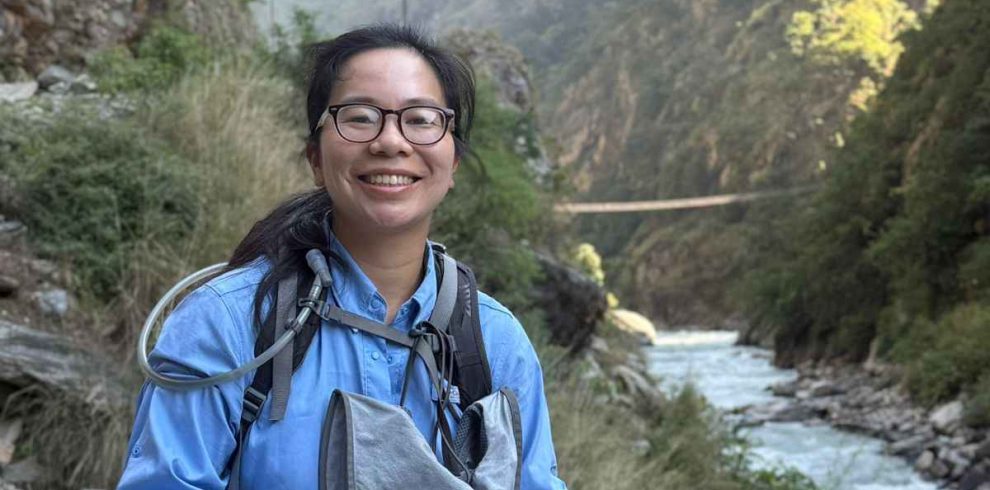
The Luxury Manaslu Circuit Trek is a comfortable way to explore one of Nepal’s most beautiful and less crowded trekking…
Scenery, Culture and What You Actually See Each Day
Both treks deliver extraordinary mountain scenery, but the character of what you see differs. On Everest Base Camp you are walking through Sherpa country, past monasteries like Tengboche with its dramatic backdrop of Ama Dablam, through increasingly stark high altitude terrain until you reach the Khumbu Glacier itself and the base camp jumble of rock and ice beneath the Khumbu Icefall. The views of Everest, Lhotse, Nuptse and Ama Dablam are genuinely world class and the payoff at Kala Patthar at sunrise is one of the most rewarding moments in trekking anywhere. The Manaslu Circuit offers a different kind of variety, starting in lush subtropical river valleys with rice terraces and waterfalls, climbing through forests of rhododendron and pine, then into high alpine terrain around Samagaon and Samdo with close up views of Manaslu itself, before the dramatic crossing of Larkya La with panoramic views of Himlung Himal, Cheo Himal and the Annapurna range beyond. The Manaslu route also passes through villages with strong Tibetan Buddhist cultural influence, and a side trip into the Tsum Valley, if you have extra time, adds an even deeper cultural layer that most Everest itineraries simply do not offer in the same way. If variety of landscape across a single trek matters to you, Manaslu genuinely has the edge, since you pass through more distinct ecological zones in one trip.
Wildlife sightings are possible on both routes though never guaranteed, and I always tell clients not to build their trip around the hope of seeing rare animals. On the Manaslu side of things, the forested lower sections occasionally reward quiet, early morning walkers with sightings of Himalayan tahr or langur monkeys, and higher up near Samdo it is not unheard of to spot a herd of blue sheep on distant slopes, which is also the primary prey species for the elusive snow leopard that inhabits this wider region, though actually seeing one is exceptionally rare. On the Everest side, the higher and more heavily trafficked terrain above Namche sees less wildlife activity simply because of the volume of foot traffic, though yaks and their crossbred cousins called dzopkyo are a constant and photogenic presence carrying loads along the trail on both routes. Bird life is rich on both treks at the lower elevations, with colorful pheasants and raptors visible if you keep your eyes up rather than only watching your footing.
Cultural texture also differs in a way that is easy to underestimate from a photo comparison alone. The Khumbu region around Everest has a strong, proud Sherpa identity built partly around decades of mountaineering history, and you will pass memorials to climbers who lost their lives on Everest, monasteries with deep mountaineering connections, and museums dedicated to the history of Everest expeditions. The Manaslu region carries a quieter but equally rich Tibetan Buddhist heritage, with prayer wheels, chortens and mani walls lining the trail in villages like Lho and Sama Gaon, and if your schedule allows a detour into the Tsum Valley, you will find some of the most untouched Buddhist culture left in the Nepal Himalaya, largely because that side valley only opened to foreign trekkers in 2008 and still sees comparatively few visitors each year.
Teahouse Standard and Comfort Level Differences
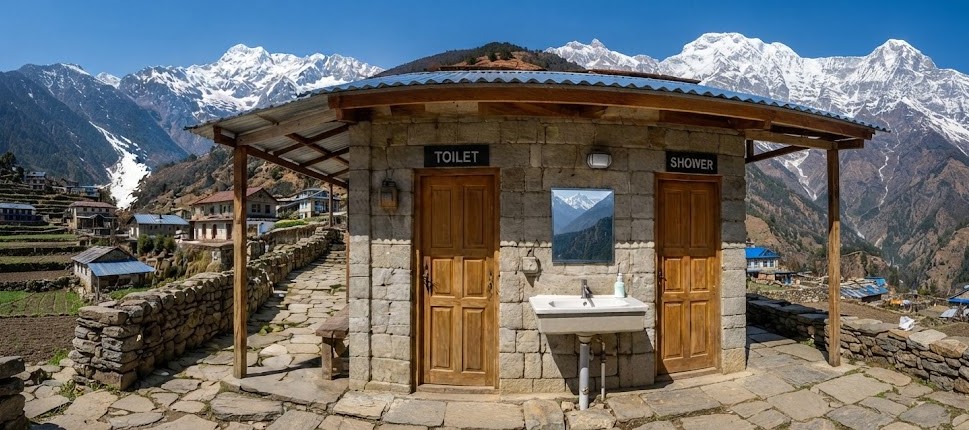
Teahouses on the Everest Base Camp route are, on the whole, more developed and comfortable than what you will find on Manaslu. Decades of heavy trekking traffic have built up better infrastructure in the Khumbu, so expect more reliable hot showers, better wifi connections, bakery items, a wider range of food on the menu, and in places like Namche and Dingboche, genuinely comfortable lodges with attached bathrooms in some rooms. The Manaslu Circuit Trek’s teahouses are simpler, particularly in the higher villages like Samdo and the high camp before Larkya La, where facilities are basic, rooms are often just wooden partitions, hot showers may not be available at all, and the food menu narrows considerably the higher you climb. This is part of what keeps the Manaslu route feeling wilder, but it also means you should set your comfort expectations accordingly. This is also exactly why we include a proper sleeping bag and a down jacket as standard equipment for every trekker on our Manaslu Circuit Trek, provided for the duration of the trek and returned at the end, because at these altitudes and with these teahouse standards, having reliable warm gear is not a luxury, it is a basic safety requirement.
Charging your phone or camera battery is another small but constant concern on both treks, and both routes now generally offer paid charging in teahouses, with the price per hour climbing the higher you go, since electricity in these villages is generated locally through small hydro or solar setups with limited capacity. Wifi is more consistently available and generally faster on the Everest Base Camp route, usually through a paid card system, while on Manaslu wifi access becomes patchy or nonexistent above the mid section of the trek, so if staying connected matters to you for work or family reasons, plan around that reality rather than assuming you will have a signal everywhere.
Best Season to Do Each Trek
The good news here is that both treks share essentially the same two prime windows. Spring, from March through May, brings warming temperatures, blooming rhododendrons at lower elevations, and generally stable weather for the high passes. Autumn, from September through November, is widely considered the single best season for both treks, with the clearest mountain visibility of the year following the monsoon rains and comfortable daytime trekking temperatures. Winter is possible on both routes for experienced cold weather trekkers but brings serious cold at altitude and more logistical risk, and the summer monsoon months bring rain, leeches at lower elevations, and much higher risk of Lukla flight cancellations for the Everest route specifically. If your travel dates are flexible, aim for late September through early November or April into early May for either trek, and if you are choosing between the two based on season alone, honestly there is no meaningful difference, both operate on the same seasonal calendar.
Side By Side Stats Comparison
| Factor | Manaslu Circuit Trek | Everest Base Camp Trek |
|---|---|---|
| Typical duration | 13 to 18 days | 12 to 16 days |
| Typical organized cost | Approximately 1100 to 1900 USD | Approximately 2000 to 4500 USD |
| Maximum altitude | Larkya La, 5106 meters | Kala Patthar, 5545 meters (EBC itself is 5364 meters) |
| Difficulty | Moderate to strenuous, rougher terrain | Moderate to strenuous, better graded trail |
| Flight required | Usually no, road access from Kathmandu (verify current road status) | Usually yes, short flight to Lukla |
| Permits required | Restricted Area Permit, MCAP, ACAP, plus mandatory guide and minimum group of two | Sagarmatha National Park permit and Khumbu Pasang Lhamu entry permit, guide mandatory since 2023 |
| Crowd level in peak season | Low to moderate, still feels remote | High, one of the busiest trails in Nepal |
| Teahouse comfort | Basic, simpler higher up | More developed, better amenities overall |
| Best seasons | Spring March to May and autumn September to November | Spring March to May and autumn September to November |
Which Trek Suits Which Kind of Trekker, A Decision Framework
After leading groups on both routes, I find it easier to sort trekkers into rough profiles rather than pretend there is one universal answer. Someone who wants their first big Himalayan trip to be the iconic, famous name they can tell people about at home usually leans toward Everest Base Camp, and that is a perfectly good reason to choose it. Someone who has already done a popular trek before, or who specifically wants to avoid crowds and get a stronger sense of discovery, tends to fall in love with Manaslu once they understand what it offers. Budget conscious trekkers, especially those trying to keep total trip cost down without giving up a serious high altitude challenge, usually end up choosing Manaslu once they see the numbers side by side.
| Trekker Type | Recommended Trek | Why |
|---|---|---|
| First time Himalayan trekker wanting the iconic experience | Everest Base Camp | Better trail infrastructure, more support services, world famous name recognition |
| Experienced trekker seeking solitude and remoteness | Manaslu Circuit | Restricted area rules keep crowds low, trail feels genuinely wild |
| Budget focused traveler | Manaslu Circuit | No expensive Lukla flight, generally lower overall package cost |
| Trekker who wants maximum comfort and better wifi | Everest Base Camp | More developed teahouses, wider food variety, established amenities |
| Trekker who wants varied scenery in one trip | Manaslu Circuit | Passes through subtropical, forest, alpine, and high pass zones in one route |
| Trekker traveling completely solo without companions | Everest Base Camp | Manaslu legally requires a minimum group of two trekkers |
| Trekker with limited vacation days and tight budget for time off | Everest Base Camp or Manaslu, both similar | Durations overlap significantly, choose based on other factors |
| Trekker interested in deeper cultural immersion and Buddhist heritage sites | Manaslu Circuit | Route passes closer to Tibetan influenced villages and can extend into Tsum Valley |
Can You Do Both, and In What Order
Yes, and quite a few of the trekkers I have guided over the years have eventually done both treks, usually across separate trips rather than back to back, since combining them in one single trip would mean an extremely long and physically demanding itinerary that most people’s schedules and bodies are not built for. My honest advice on ordering is to do Everest Base Camp first if fame and bucket list appeal matter most to you, since it is the trek most people want to complete before anything else, and then do Manaslu once you already have some high altitude trekking experience under your belt and want something quieter and more rugged. Alternatively, if you specifically want to build genuine high altitude fitness and confidence before tackling the busier and more expensive EBC trip, doing Manaslu first is a smart move, since the terrain and altitude demands prepare you well for what comes next. Either order works, there is no rule that says one has to come before the other, it really comes down to what motivates you more right now.
My Honest Recommendation
If you force me to give one simple answer for most people reading this, here it is. If this is your very first serious mountain trek and you want the safety net of established infrastructure, more trekkers around you for reassurance, and the singular thrill of standing near the base of Everest, book Everest Base Camp and do not look back. If you have some trekking experience already, or you are simply someone who prioritizes a wilder feeling trail, better value for money, and a genuinely diverse landscape across a single trip, the Manaslu Circuit Trek is very likely going to be the more memorable choice, and it is the trek I personally recommend more often once someone tells me they are open minded about which one to pick. Both are outstanding treks. Neither is a mistake. But do not choose based on fame alone, choose based on what kind of experience you actually want on the trail each day.
I would also add one more practical consideration that rarely comes up in generic trip comparisons. Think honestly about how you handle unpredictability, because that is where these two treks genuinely diverge in the field. Everest Base Camp’s main unpredictable variable is the Lukla flight, a single point of failure that can shift your entire schedule by a day or two with almost no warning, and you need to be mentally prepared to simply wait it out at either end of the trek. Manaslu’s main unpredictable variable is more spread out across the whole trip, from road conditions on the drive in to the general remoteness of rescue and communication options if something goes wrong high on the circuit, since you are further from a hospital and further from reliable phone signal for a larger share of the trek. Neither risk profile is dramatically worse than the other, but if you are the kind of traveler who gets anxious about flight delays specifically, Manaslu removes that particular stressor from your trip, and if you are the kind of traveler who wants to know that help is never too many hours away no matter where you are on the trail, the more built up Khumbu infrastructure around Everest Base Camp gives you that reassurance instead.
If Manaslu comes out ahead for you, it is worth reading our complete guide to crossing Larkya La so you know exactly what the pass day involves.
Frequently Asked Questions
Which trek is harder, Manaslu Circuit or Everest Base Camp?
They are close, but Manaslu tends to be slightly more physically demanding overall because of rougher trail conditions and the long push over Larkya La pass, while Everest Base Camp has better graded trails but more cumulative days spent at very high altitude. Neither is a beginner walk in the park, and both require good fitness and mental preparation.
Which trek is cheaper, Manaslu Circuit or Everest Base Camp?
The Manaslu Circuit Trek is generally the more affordable option, typically running around eleven hundred to nineteen hundred US dollars for an organized package, compared to roughly two thousand to four thousand five hundred US dollars for Everest Base Camp, largely because Manaslu does not require the expensive Lukla flight that adds significant cost to the EBC trip.
Which trek has better mountain views?
This comes down to personal taste rather than a clear winner. Everest Base Camp offers the unmatched thrill of seeing Everest itself along with Ama Dablam and Lhotse, while Manaslu offers a wider variety of scenery across subtropical, forest and high alpine zones plus close up views of Manaslu and the Annapurna range from Larkya La. Many experienced trekkers actually rate the Manaslu scenery as more varied across a single trip.
Can a complete beginner do either of these treks?
A reasonably fit beginner with several months of dedicated physical preparation can attempt either trek, but neither is truly a beginner level walk. Both involve multiple days above 3500 meters, sustained daily walking of five to eight hours, and real altitude risk. If you have never done any multi day trekking before, start your training early and consider a shorter acclimatization trek first if your schedule allows it.
Which trek requires more time overall?
They overlap significantly, with Everest Base Camp usually running twelve to sixteen days and Manaslu usually running thirteen to eighteen days. If you add the Tsum Valley extension to the Manaslu route, that trip can stretch out closer to three weeks, so the true time gap depends more on which optional extensions you choose than on the base itinerary of either trek.
Do you need previous high altitude trekking experience for either trek?
Previous experience is not a strict legal requirement for either trek, but it genuinely helps. Prior multi day trekking experience teaches you how your own body responds to altitude and builds the mental stamina needed for long walking days, and I always recommend at least one shorter trek beforehand if these will be your first time above four thousand meters.
Which trek is safer regarding altitude sickness risk?
Both carry similar altitude sickness risk since both push above 5000 meters, and risk on either trek depends far more on your itinerary’s acclimatization schedule and your own pace than on which trek you choose. A well designed itinerary with proper rest days at Namche and Dingboche for Everest, or at Samagaon and Samdo for Manaslu, reduces risk substantially on either route. Never let anyone rush you past a scheduled acclimatization day.
Which trail is less crowded in peak season?
Manaslu Circuit is noticeably less crowded than Everest Base Camp, largely because of the restricted area rules limiting independent access and the lack of a direct flight gateway feeding trekkers straight to the trailhead. If avoiding crowds is a priority for you, Manaslu is the clear choice between the two.
Can you combine both treks into one single trip?
It is technically possible if you have roughly a month of vacation time and excellent fitness, but I generally advise against cramming both into one back to back trip because of how physically demanding that combination becomes and how little buffer time it leaves for weather delays or illness. Most trekkers get more out of doing each trek properly on its own trip, with time in between to recover and reflect.
If you want honest, specific advice on planning the Manaslu Circuit Trek, including current permit rules, realistic daily itineraries, and what gear you actually need versus what we provide, reach out to our team at Manaslu Treks and Expedition. Call or message us on WhatsApp at +977 9869225929, email us directly at info@manaslutreks.com, or send a message through our contact and we will help you figure out whether Manaslu, Everest Base Camp, or some other route entirely is the right fit for your next trip to Nepal.