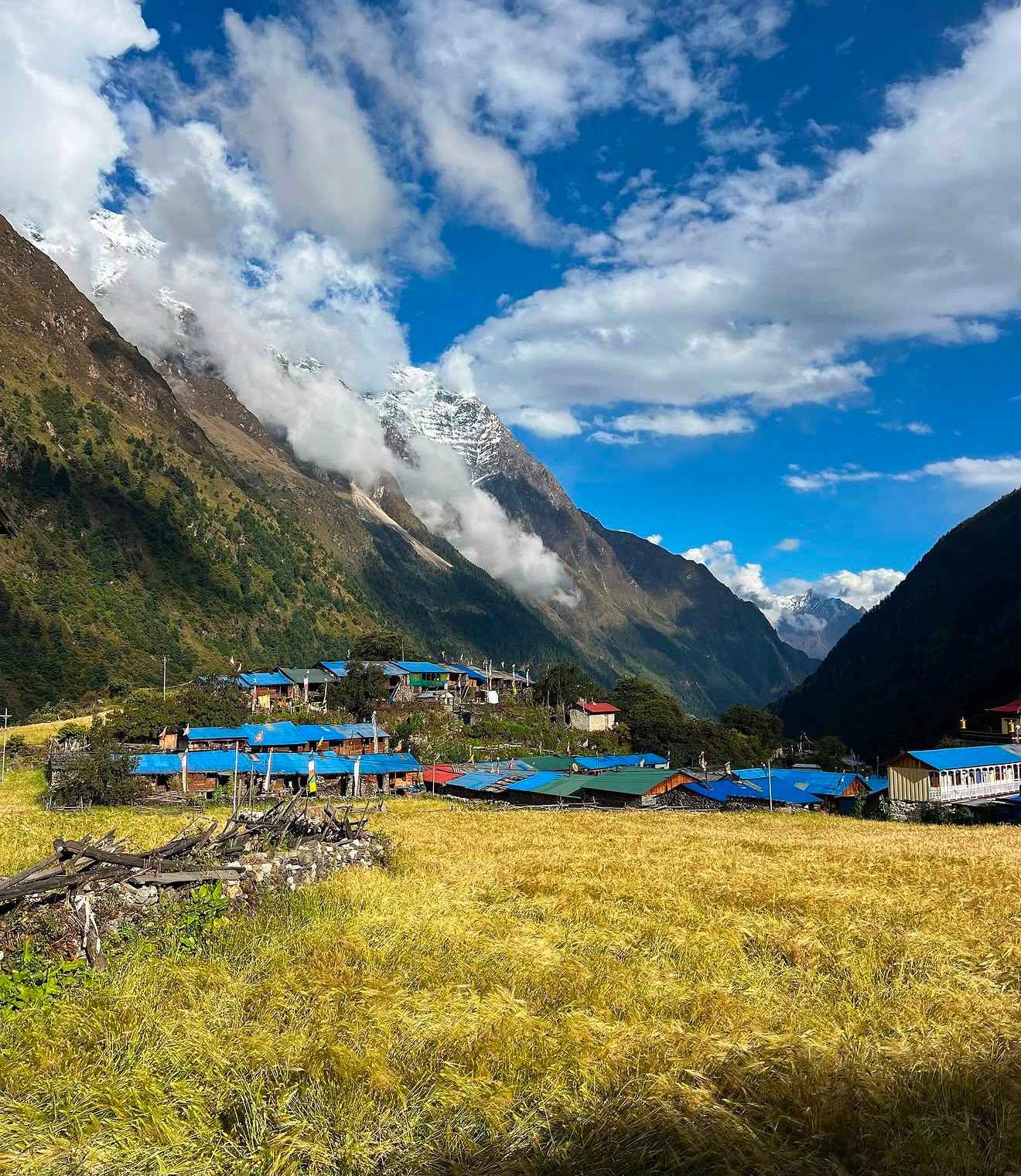
Is June a good month for the Manaslu Circuit Trek? The honest answer is: it depends on which half of the month you mean, and how much you are willing to gamble on the weather. Early June, roughly the first ten days, often still behaves like late spring in this part of Nepal, with mostly stable trail conditions and reasonable mountain views. By the third week of June the southwest monsoon has typically settled in across most of the country, and the second half of the month usually brings daily rain, low cloud, and muddier trails in the lower gorge. June is not one of the two peak windows for this route, which are spring (March to May) and autumn (late September to November). It sits in a transition period, part late pre monsoon, part early monsoon, and I want to be upfront about that before anything else in this guide, because too many trekking blogs oversell shoulder months without saying so plainly. If you go in early June with realistic expectations, you can have a genuinely good trip. If you go in late June without flexible dates and good rain gear, you are trading predictability for green hillsides, fewer crowds, and a real chance of wet, low visibility days.
I have guided groups through the Manaslu region across most months of the year, and June always produces a mixed bag of feedback. Some clients loved the quiet trail and the waterfalls running full below Jagat. Others got three straight days of cloud at Samagaon and never saw Manaslu’s summit at all. Both experiences are normal for this month. This guide walks through what actually changes on the ground as June progresses, so you can decide with open eyes whether it suits your plans, and if you do go, how to trek it sensibly.
Manaslu Circuit Trek in June: Quick Overview
The Manaslu Circuit Trek circles the eighth highest mountain on earth, Mount Manaslu at 8,163 meters, through the Manaslu Conservation Area and the Chumnubri Rural Municipality in the Gorkha district. The trek’s high point is Larkya La, also written Larke Pass, at 5,106 meters, a demanding crossing that connects the Manaslu valley to the Annapurna region near Bimthang. It is a restricted area, which means every trekker must be accompanied by a licensed guide and hold a special permit, regardless of group size or experience level. There is no getting around this rule, and honestly it is not a bad thing on a trail this remote, where weather and terrain decisions matter.
In June the route itself does not change, but the character of each day does. You start in the subtropical lower valley around Machha Khola and Jagat, climb through forest to the alpine terrain near Samagaon and Samdo, then cross the pass into the drier Manang side rain shadow before dropping to Bimthang and out through Tilije. In June, the lower and middle sections carry the heaviest weather impact, since that is where the monsoon actually delivers rain first and hardest. The upper valley beyond Samagaon sits in a partial rain shadow created by the Manaslu massif itself, so conditions there are often better than what the lower gorge experiences on the same day. This is one detail a lot of general season guides miss, and it matters a lot for how you plan a June trip. For a full stage by stage breakdown of the route regardless of season, our Manaslu Circuit Trek route guide is worth reading alongside this article.
Temperature and Weather by Altitude Band in June
Temperature on this trek is really a function of altitude more than the calendar, though June’s cloud cover and humidity change how that cold or heat actually feels on your skin. Here is roughly what to expect band by band, based on general climate patterns for these elevations in the Nepal Himalaya during early summer.
In the lower gorge, from Machha Khola around 930 meters up through Jagat and Deng near 1,400 to 1,900 meters, June daytime temperatures typically run warm and humid, often in the high 20s Celsius during clear spells, dropping into the high teens at night. This is the stickiest, most humid part of the trek in June, since you are down in subtropical forest with the monsoon’s moisture building through the day. Expect to sweat through your shirt by mid morning even without direct sun, because the air itself carries so much water.
Moving up through Namrung and Samagaon, between roughly 2,900 and 3,500 meters, daytime temperatures cool noticeably, generally comfortable in the teens Celsius when skies are clear, dropping toward freezing or just above at night. This band still sees regular afternoon cloud buildup in June, and rain showers are common from early afternoon onward, though mornings are often clearer.
Above Samagaon, at Samdo near 3,860 meters and Dharamsala around 4,450 meters, June nights can still drop below freezing, sometimes noticeably so, while daytime temperatures in the sun can feel mild if skies are clear. This is high altitude terrain and the daily temperature swing is large no matter the season. Wind chill at these elevations matters more than the raw number on a thermometer.
At Larkya La itself, 5,106 meters, June mornings before dawn can be cold enough for a light frost even outside deep winter, and the crossing should always be planned as an early start, both for weather and for the physical demands of the altitude. The good news is that June generally does not bring the brutal subzero wind chill of winter crossings, so if the weather cooperates the pass is genuinely more comfortable to cross in June than in peak winter months.
For a broader look at how these numbers shift across the whole year, our seasonal comparison guide for Manaslu and Tsum Valley lays out spring, autumn, monsoon and winter side by side.
Monsoon Onset Timing: How Early June Differs from Late June
Nepal’s monsoon does not arrive on a fixed date. The Department of Hydrology and Meteorology tracks an average onset date for the country, and in most years the monsoon crosses into eastern Nepal somewhere between the first and second week of June, then spreads west and into the hill and mountain districts over the following one to two weeks. Some years it arrives earlier than average, other years later, and the pattern is genuinely variable from one year to the next, so treat any specific date as a rough guide rather than a guarantee. What this means practically for a Manaslu trek is that early June, say the first ten days of the month, often still carries some late spring stability, particularly in the earlier part of the window before the monsoon front has fully established itself over the central hills.
By the middle of June, most years, the monsoon has typically taken hold across the central Himalaya including the Gorkha and Manaslu region, and afternoon rain becomes a near daily event in the lower and middle valley. Late June, the final ten days, is usually the wettest and least predictable stretch, with rain that can start earlier in the day and last longer, sometimes continuing overnight. If your travel dates are flexible at all, booking for the very start of June rather than the last week gives you meaningfully better odds of drier trail conditions, clearer mountain views, and fewer transport disruptions. This is not a guarantee, since some years bring an early or heavy monsoon, but it is the general pattern worth planning around.
Trail Conditions in the Lower Gorge: Mud and Leeches
This is the part of a June trek that surprises people who have only read about the mountain views and not the actual walking conditions underfoot. The lower gorge section between roughly Soti Khola or Machha Khola and Deng runs through dense, humid forest along the Budhi Gandaki river, and once the monsoon rain sets in, this stretch turns genuinely muddy. Trail surfaces that are dusty and firm in April or October become slick, sometimes ankle deep in mud after a hard rain, particularly on the steeper switchback sections and anywhere buffalo or mule trains have already churned up the path.
Leeches are the other honest reality of this stretch once the rain arrives. They are a normal part of monsoon season trekking anywhere in Nepal’s mid hills, not unique to Manaslu, and they show up in the humid forest floor from around Machha Khola through Jagat and sometimes higher depending on rainfall. They are more of an irritation than a danger, a leech bite does not hurt and bleeds a bit more than it should, but most trekkers find them unpleasant enough to want to prepare for. Gaiters, salt, and tucking trousers into socks all help, and your guide will know the worst spots to walk through quickly rather than lingering.
Above Namrung, the trail gains altitude and the vegetation changes from subtropical forest to pine and then alpine scrub, and both the mud and the leech problem drop off noticeably. By the time you reach Samagaon, you are largely past both issues for the rest of the trek, aside from patches near Bimthang on the way down.
Visibility and Mountain Views in June
Mountain photography and clear summit views are the single biggest trade off in a June trek. Cloud builds through the morning in most valleys during the monsoon transition, and by early afternoon low hanging cloud frequently obscures the higher peaks, sometimes for days at a stretch during wetter spells. Manaslu itself, along with Himlung, Naike Peak, and the other summits visible from Samagaon and Samdo, can disappear behind cloud for the entire middle part of a rainy day and only clear briefly at dawn or occasionally in the evening.
Early morning is genuinely your best window in June for a clear look at the peaks, since convection cloud has not yet built up from the day’s heat and moisture. Many trekkers who go in June describe getting a good, clear view on two or three mornings out of a full trek, with the rest of the day cloudy. This is simply the nature of a monsoon transition month, and no amount of luck fully guarantees more than that. If seeing Manaslu’s summit clearly on every single day is your top priority, this is a real reason to shift your trip to autumn or spring instead, and our best time to trek guide goes into which months statistically offer the clearest skies.
That said, June brings its own visual reward that clearer months do not: the hillsides are intensely green, waterfalls run at their fullest, rhododendron and other wildflowers linger later at higher elevations than in spring, and the terraced fields around the lower villages are active with planting. It is a different kind of scenery, not a lesser one, just not the crisp, long distance mountain photography that autumn delivers.
Status of Larkya La in June
The pass itself, at 5,106 meters, is generally passable in June and does not carry the deep snow accumulation risk of winter months. Physically the trail across the pass is usually clear of major snow by early summer, and the main additional risk in June compared to spring or autumn is weather related rather than terrain related: afternoon cloud, wind, and the possibility of rain or even a wet snow shower at that elevation, especially as the month progresses and monsoon moisture pushes higher into the valley.
The standard practice for crossing Larkya La applies just as strongly in June as any other month, arguably more so: start very early, well before dawn, from Dharamsala, so that you are over the pass and dropping toward Bimthang before early afternoon cloud and instability typically build. Guides watch the sky and the overnight weather pattern closely before committing to a crossing day, and on rare occasions in a wet June a crossing gets delayed a day at Dharamsala to wait out a bad weather system. This is a real possibility you should budget flexibility for if you are trekking in the second half of June, since it protects against a genuinely miserable and potentially unsafe crossing in poor visibility and cold rain at altitude.
Trail footing on the pass itself, on the moraine and rocky sections either side, can also get slippery when wet, so trekking poles and proper waterproof boots matter more in June than in a dry season crossing.
Road Conditions and Landslide Risk to the Trailhead
Getting to the trailhead, whether that is Machha Khola or Arughat depending on current road conditions, involves a long drive from Kathmandu on rural roads through the middle hills. In dry months this drive, while long and rough in places, is fairly predictable. Once the monsoon rain sets in, this changes. The unpaved and partially paved sections of road through the Gorkha hills become more prone to landslides, washouts, and temporary blockages after heavy rain, which is a normal seasonal risk across most of rural Nepal’s hill road network during the wet months, not something specific to this one route.
In practice this means a June transfer to the trailhead can run longer than the roughly eight to nine hours quoted for dry season conditions, and in a genuinely bad weather spell a road can be closed for a day while a landslide is cleared. This is one of the more concrete reasons early June is the safer bet within this month, since the road network has usually not yet been hit by sustained heavy rain, whereas by late June repeated storms have often already caused some damage to the route. A guide company that has current, on the ground information about road status the week you travel is genuinely useful here, since conditions can change within days. We recommend building at least one buffer day into your overall itinerary if you are trekking in the back half of June, precisely to absorb a delayed departure or a slow drive without it threatening your flight home.
Teahouse and Accommodation Availability in June
Availability is one of the few things that gets easier in June. This is one of the quieter months on the Manaslu Circuit, well below the trekker numbers seen in the peak spring and autumn seasons, so teahouse rooms are rarely a problem to secure, even without advance notice in most villages. This has real upsides beyond just guaranteed beds: dining rooms are quieter, owners often have more time to chat and share local knowledge, and you are not competing for hot water or a spot by the stove in the evening the way you might in a crowded October week.
The trade off is that a small number of teahouses in the more remote, less visited stretches sometimes close or reduce services during the wettest part of the monsoon, particularly if the owning family also uses this quieter period to travel down to lower villages or attend to farming. This is not universal and most main lodges along the route stay open year round, but it is worth having your guide confirm which teahouses are actively operating in a given month, especially near Samdo and Dharamsala, since these settlements are smaller with fewer standby options.
Pros and Cons of Trekking the Manaslu Circuit in June
Weighing this month honestly means putting the good and bad side by side rather than only selling the positives. Here is how it breaks down in practice.
| Aspect | Pros in June | Cons in June |
|---|---|---|
| Crowds | Among the quietest months on the route, easy teahouse bookings, no queueing at checkpoints | Fewer fellow trekkers on the trail if you enjoy that social element of a group trek |
| Scenery | Intensely green hillsides, full waterfalls, active terraced farmland, lingering high altitude wildflowers | Cloud frequently blocks direct mountain views, especially afternoons |
| Trail conditions | Lower gorge trail still walkable with proper footwear and gaiters | Mud in the lower and middle valley, leeches once rain sets in, slippery stone steps |
| Weather predictability | Early June often still stable, similar to late spring | Late June brings near daily rain and reduced visibility |
| Larkya La crossing | Generally free of major snow accumulation, milder temperatures than winter | Higher chance of afternoon cloud, wind, or rain at the pass, occasional weather delays |
| Access and transport | Roads generally still functional, especially early in the month | Rising landslide and road delay risk as rain accumulates through the month |
| Cost and value | Same permit and package pricing as busier months, but a quieter, more personal experience | Some remote teahouses may reduce services during the wettest stretch |
Read together, this table says something fairly simple: June rewards trekkers who value solitude and green scenery over guaranteed clear summit photography, and who build enough schedule flexibility to absorb a weather delay without panic. For a technical breakdown of how demanding this route is regardless of month, see our Manaslu trek difficulty assessment, since June’s mud and altitude both add to the physical challenge beyond what a dry season trekker experiences.
Day by Day Sample Itinerary for the Manaslu Circuit Trek
This is our standard 13 day itinerary, the same route used across seasons, adapted here with June specific notes on what to expect each day. Actual walking times can run longer in June if trail mud slows the pace or if a rain delay pushes a day back.
| Day | Route | Altitude | Notes for June |
|---|---|---|---|
| Day 1 | Arrival in Kathmandu, airport transfer | 1,300 m | Kathmandu itself often sees afternoon monsoon showers in June, plan indoor time accordingly |
| Day 2 | Kathmandu to Machha Khola, about 160 km, 8 to 9 hrs drive | 930 m | Road conditions can slow this drive once rain sets in, build in buffer time |
| Day 3 | Machha Khola to Jagat, 11 to 12 km, 5 to 6 hrs walk | 1,410 m | Warm, humid walking, first stretch where leeches can appear after rain |
| Day 4 | Jagat to Deng, 19 km, 6 to 7 hrs walk | 1,860 m | Still in the humid lower gorge, expect muddy sections and possible afternoon rain |
| Day 5 | Deng to Namrung, 19 km, 6 to 7 hrs walk | 2,900 m | Terrain begins shifting to pine forest, temperatures cooler, mud and leech risk drops |
| Day 6 | Namrung to Samagaon, 17 km, 6 to 7 hrs walk | 3,500 m | Best mountain views usually come in the early morning here before cloud builds |
| Day 7 | Acclimatization day at Samagaon, short side hike 8 to 10 km, 4 to 5 hrs | 3,500 m | Use a clear morning for the side hike toward Manaslu Base Camp viewpoint if weather allows |
| Day 8 | Samagaon to Samdo, 8 to 9 km, 3 to 4 hrs walk | 3,860 m | Shorter day, drier air than lower valley, still watch for afternoon cloud |
| Day 9 | Samdo to Dharamsala, 11 to 12 km, 4 to 5 hrs walk | 4,450 m | Cold nights even in June, guide will assess weather ahead of the pass crossing |
| Day 10 | Dharamsala over Larkya La to Bimthang, 17 to 19 km, 8 to 10 hrs | 5,106 m pass, descending to about 3,700 m at Bimthang | Very early start essential, aim to be off the pass before afternoon cloud sets in |
| Day 11 | Bimthang to Tilije, 12 to 13 km, 5 to 6 hrs walk | 2,300 m | Descending into the Annapurna side, some rain shadow benefit but still monsoon exposed lower down |
| Day 12 | Tilije to Kathmandu, about 210 km, 8 to 10 hrs drive | Return to 1,300 m | Again, monsoon season road delays are possible, keep this day flexible if you can |
| Day 13 | Final departure from Kathmandu | Buffer day recommended in June in case Day 12 was delayed |
Notice that days 2 and 12, the long road transfers, and day 10, the pass crossing, are the three points in this itinerary where June weather has the most potential to disrupt plans. Everything else on the route is manageable with the right gear and a realistic mindset. If you want the Tsum Valley added onto this same route, our 23 day Tsum Valley and Manaslu Circuit combination is a good option worth considering, since the extra days built into that itinerary also give more natural buffer against a June weather delay.
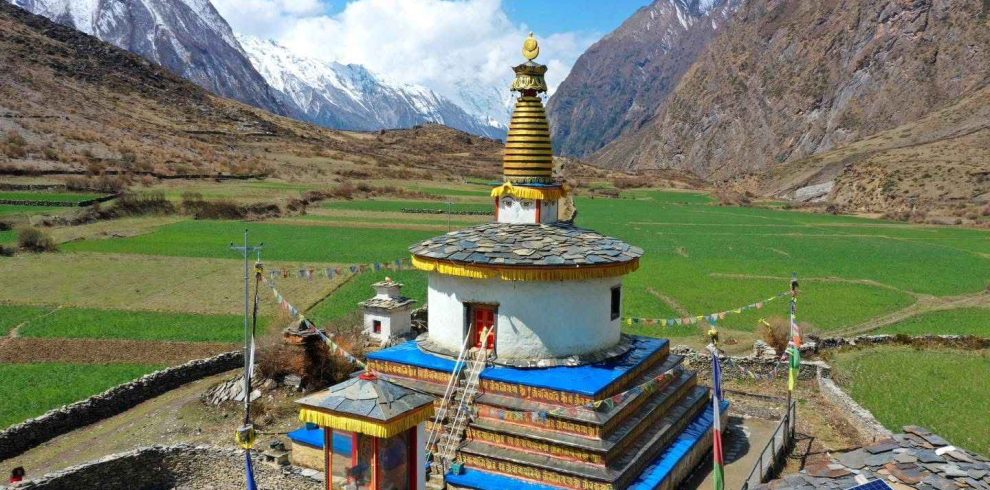
The 23-day Tsum Valley & Manaslu Circuit Trek combines breathtaking Himalayan landscapes with the preserved Tibetan Buddhist culture of a…
What to Pack for Early Monsoon Conditions on Manaslu
Packing for June on this route is really packing for two different climates in one trek, humid lower valley and cold high altitude, plus planning for rain throughout. A few items matter more in June than in a dry season trek.
A proper waterproof, breathable rain jacket is essential, not optional, and a rain cover or dry bag liner for your pack is worth the small extra weight given how often gear gets wet in the lower gorge. Gaiters help significantly against both mud and leeches in the forested sections below Namrung. Quick drying trekking trousers and shirts matter more in June than any other month, since cotton stays wet and heavy for days in this humidity, while synthetic or merino wool layers dry faster overnight even in a damp teahouse room.
Footwear deserves real thought. Waterproof trekking boots with good tread are strongly recommended for the muddy lower sections and the wet rock you may encounter near the pass, and a spare pair of dry socks packed in a waterproof bag for each day is a small luxury that makes a real difference to comfort and foot health on a wet trek.
For the cold at altitude, you still need a warm down jacket and a proper sleeping bag rated for below freezing temperatures for the nights at Samdo, Dharamsala, and around the pass crossing, since June nights up there are not tropical no matter how humid the lower valley feels. Manaslu Treks and Expedition provides a sleeping bag and down jacket as part of the standard package, returned at the end of the trek, which saves you from carrying or buying this bulky gear yourself.
Other useful June specific items include a headlamp with good batteries for the pre dawn pass crossing start, trekking poles for stability on muddy and wet stone trail sections, a basic tube of salt or a leech proofing spray for the lower gorge days, water purification tablets or a filter since streams run higher and murkier in the rain, and a dry bag or two for phones, cameras and documents given how often light rain can start without much warning.
Permits and Costs for June
Permit requirements and pricing do not change with the season on the Manaslu Circuit, but June’s off peak status is still worth understanding since permit fees on this route are structured by seasonal bracket rather than a flat annual rate. The core permits required are the Manaslu Restricted Area Permit, the Manaslu Conservation Area Permit, the Annapurna Conservation Area Permit, since the route exits through Annapurna Conservation Area near Bimthang, and TIMS along with local government fees.
The Manaslu Restricted Area Permit is priced by season, and June falls within the cheaper December to August bracket rather than the pricier September to November peak autumn bracket. As a rough guide, expect around 75 US dollars for the first seven days in this off season window, plus roughly 10 US dollars for each additional day beyond that. The Manaslu Conservation Area Permit runs around 30 US dollars, and the Annapurna Conservation Area Permit is similarly around 30 US dollars. On top of these you will also pay a small local Chumnubri Rural Municipality fee, roughly 10 US dollars, payable in cash in Nepali rupees at a checkpoint along the route, usually at Jagat.
These figures should always be reconfirmed close to your actual departure date, since permit pricing and rules for this restricted area are reviewed and occasionally adjusted by the relevant Nepali authorities. Our Manaslu Circuit Trek cost and permit FAQ keeps a more detailed running breakdown of current fees and requirements.
| Permit | Approximate cost | Notes |
|---|---|---|
| Manaslu Restricted Area Permit | About 75 USD for first 7 days, plus about 10 USD per extra day | June falls in the cheaper December to August off season bracket |
| Manaslu Conservation Area Permit | About 30 USD | Required regardless of season |
| Annapurna Conservation Area Permit | About 30 USD | Needed since the route exits through Annapurna Conservation Area near Bimthang |
| Chumnubri Rural Municipality local fee | About 10 USD | Paid in cash, Nepali rupees, usually at the Jagat checkpoint |
A licensed guide is legally mandatory throughout the Manaslu restricted area regardless of group size or season, and this is genuinely a safety benefit in June, when weather calls and route decisions around the pass require current, on the ground judgment rather than a fixed schedule followed regardless of conditions.
On package pricing, Manaslu Treks and Expedition runs the same per person rates in June as any other month, since these reflect the fixed costs of permits, guide and porter wages, teahouse arrangements, and logistics rather than seasonal demand. For a solo traveler the rate is approximately 1,350 US dollars per person. For a group of 2 to 5 travelers it drops to approximately 1,250 US dollars per person. Groups of 6 to 8 travelers pay approximately 1,200 US dollars per person, and larger groups of 9 to 10 travelers pay approximately 1,150 US dollars per person. These figures should be confirmed as current at the time of booking, and full package details are on the Manaslu Circuit Trek package.
The package includes airport pickup and drop off, 2 nights in a Kathmandu hotel with breakfast, teahouse lodging throughout the trek, transport to and from the trailhead, all required permits, a licensed English speaking guide, porter service at a ratio of 1 porter per 2 trekkers carrying up to 20 kilograms, guide and porter wages, three meals a day during the trek plus morning tea or coffee, travel insurance for the guide and porter team, a sleeping bag and down jacket provided for the trek and returned at the end, a trekking map, a completion certificate, a first aid kit, government taxes, and a farewell dinner in Kathmandu. It does not include your international airfare, Nepal entry visa fee, your own personal travel and evacuation insurance, personal expenses such as laundry, phone charges or wifi, bottled water and other beverages, alcohol and snacks, or any extra food beyond what is already included in the package.
Who Should Trek Manaslu in June
June suits a fairly specific kind of trekker, and being honest about that fit matters more than pushing everyone toward the same booking. It works well for travelers whose schedule is genuinely fixed to this window and cannot shift to spring or autumn, since a well prepared June trek is still a legitimate, rewarding experience, not a compromise trek. It suits people who actively prefer quieter trails and are not chasing crowd free photo spots so much as crowd free trail time, teahouse conversations, and a slower pace without competing for rooms. It also suits trekkers who are comfortable with genuine uncertainty around mountain visibility and who will not be deeply disappointed if Manaslu’s summit stays wrapped in cloud for a day or two.
June is a harder sell for anyone whose main goal is clear, dramatic mountain photography on every single day of the trek, since cloud cover is a real and frequent feature of this month, not an occasional inconvenience. It is also not the best choice for trekkers with an inflexible return flight the same day their trek is scheduled to end, given the realistic chance of a weather related delay on the drive to or from the trailhead, or occasionally at the pass itself.
If you are unsure which season actually fits your priorities, whether that is guaranteed clear views, lower cost, quieter trails, or specific vacation dates, it is worth a direct conversation with a guide who treks this route regularly rather than relying only on general season charts, since actual year to year conditions do shift.
Frequently Asked Questions About the Manaslu Circuit Trek in June
Is the Manaslu Circuit Trek safe in June?
Yes, with the normal precautions that apply to any monsoon season trek in Nepal’s mid hills and high mountains. The main added risks in June compared to spring or autumn are slippery trail surfaces in the lower gorge, reduced visibility at higher altitude which affects route finding and weather judgment near the pass, and a higher chance of a road delay from a landslide on the drive to or from the trailhead. None of these are unmanageable with a licensed, experienced guide who is actively monitoring conditions and willing to adjust the schedule when needed, which is exactly why a guide is legally required in this restricted area regardless of season.
Will I be able to see Mount Manaslu clearly during a June trek?
You will likely get some clear views, most probably in the early morning before daily cloud builds, but you should not expect guaranteed clear summit views on every day of the trek. Cloud cover is a normal feature of this transition month, and some trekkers get lucky with several clear mornings, while others see the peak only briefly or not at all during a particularly wet stretch. If consistent, dependable mountain photography is your top priority, spring or autumn will serve that goal more reliably than June.
How muddy does the trail actually get in June?
The lower gorge section between roughly Machha Khola and Deng is the muddiest part of the route once the monsoon rain sets in, particularly on steeper switchbacks and anywhere pack animals have already churned the path. Above Namrung, as the trail climbs into pine forest and then alpine terrain, mud becomes far less of an issue. Waterproof boots, gaiters, and trekking poles handle this section without much trouble, and your guide will know which stretches to move through quickly after a hard rain.
Are leeches a real problem on this trek in June?
Leeches do appear in the humid lower forest sections, generally from around Machha Khola through Jagat and sometimes a bit higher depending on how much rain has fallen recently, once the monsoon has properly set in. They are unpleasant but not dangerous, since a leech bite does not hurt and the main downside is a bit of extra bleeding and the general discomfort of finding one on your leg. Gaiters, tucked in trousers, and a bit of salt help, and the problem largely disappears once you climb above the forested lower valley.
Is Larkya La pass actually crossable in June?
Yes, the pass is generally passable in June and does not carry the deep snow risk of the winter months. The main consideration is weather rather than snow accumulation, since afternoon cloud, wind, and occasional rain or wet snow showers become more likely as the month progresses. Guides manage this by starting the crossing very early, well before dawn, so the group is over the pass and descending before typical afternoon cloud builds, and by occasionally waiting a day at Dharamsala if the overnight weather pattern looks genuinely unsafe.
Should I book early June or late June for a better experience?
If your dates are flexible at all, early June, roughly the first ten days of the month, generally offers more stable weather, drier trail conditions, and lower landslide risk on the access road, since the monsoon typically has not fully established itself over the central hills yet. Late June usually brings more consistent rain, muddier trail conditions in the lower gorge, and a higher chance of a road delay. This is a general pattern based on average monsoon timing, not a guarantee for any specific year, but it is worth factoring into your booking if you have any flexibility.
Do I need special gear for a June trek that I would not need in autumn?
Yes, a few things matter more in June specifically. A genuinely waterproof rain jacket and pack cover, gaiters for the lower forest sections, quick drying rather than cotton clothing, and waterproof boots all matter more here than in a dry season trek. You will still need the standard cold weather gear for the upper valley and pass crossing, since altitude cold does not disappear just because it is technically summer at lower elevations. Manaslu Treks and Expedition includes a sleeping bag and down jacket in the standard package to cover the cold altitude gear, which simplifies your packing list somewhat.
Is June a cheaper time to trek the Manaslu Circuit?
Package pricing itself generally stays consistent across the year, since it reflects fixed costs like permits, guide and porter wages, and logistics rather than seasonal demand pricing. Where June does save you money is on the Manaslu Restricted Area Permit specifically, since this permit is priced by season and June falls within the cheaper December to August bracket rather than the higher priced September to November autumn peak bracket. It is a modest saving on one line item rather than a broadly discounted trip, so budget accordingly.
What should I do if heavy rain disrupts my itinerary during a June trek?
This is exactly why building at least one buffer day into a June itinerary is worth doing, ideally around the road transfer days or just before your return flight. A licensed guide will typically adjust the daily schedule around genuine weather risk rather than pushing through regardless, which might mean a shorter walking day, an extra rest day at Dharamsala before the pass, or a delayed departure from the trailhead if the access road has been affected by a landslide. Having a day or two of slack in your overall trip plan, rather than a tight back to back schedule with flights booked the same day the trek ends, is the single most useful thing you can do to protect a June trip from weather disruption.
Final Thoughts and How to Book Your June Trek
June on the Manaslu Circuit is not the easy sell that spring or autumn is, and I would rather tell you that directly than let you find out on the trail. It is a genuine option for the right traveler, someone with flexible dates who values a quiet trail and green scenery over guaranteed clear mountain photography, and who packs and plans with the monsoon transition in mind rather than ignoring it. Early June, in particular, can deliver a trek that feels close to late spring conditions with none of the crowds. Late June asks more patience and more rain gear in exchange for that same solitude.
If you are weighing this month against your own travel window, our team at Manaslu Treks and Expedition has walked this route across every season and can give you a straight answer about whether your specific dates make sense, rather than a generic sales pitch. Reach out to us by phone or WhatsApp at +977 9869225929, by email at info@manaslutreks.com, or through our contact, and we will help you plan a June itinerary with the right buffer days, gear list, and route pacing built in from the start. You can review the full package details, inclusions, and current pricing on our Manaslu Circuit Trek, and if the Tsum Valley extension interests you as a way to add more remote, less visited terrain to the same trip, that combined itinerary is also worth a look.