Is January a good month for the Manaslu Circuit Trek? Honestly, only for a specific kind of trekker. January is the coldest month of the year in the Manaslu region and, in most years, the snowiest one too. Nights at Samdo and Dharamsala regularly drop well below freezing, the trail above Samagaon can be buried under fresh snow for days at a time, and Larkya La at 5,106 m sometimes becomes difficult or effectively impassable without technical gear and real winter experience. We still run and support January departures for trekkers who come prepared, but we will not tell you it is an easy or reliable month. If you have not walked in deep snow before, have never dealt with double digit negative temperatures overnight, or you need a guaranteed pass crossing on a fixed date, we would steer you toward autumn or spring instead. If you are physically fit, mentally ready for a slower and harder trek, flexible with your schedule, and you want near total solitude on one of the most remote circuits in Nepal, January can still be a genuinely rewarding month to walk this route.
Manaslu Circuit Trek in January: What to Expect Overall
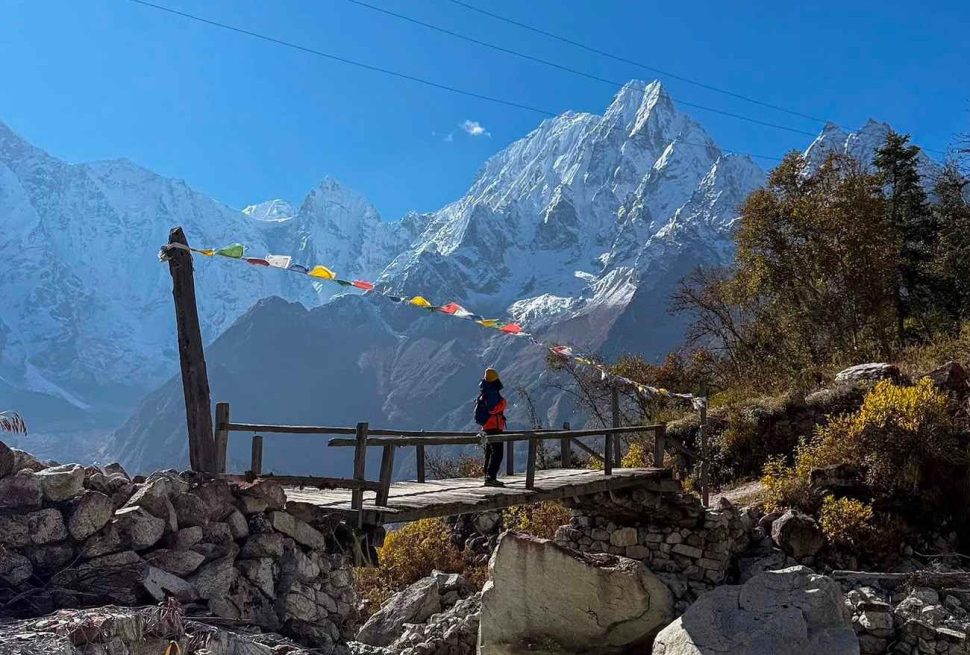
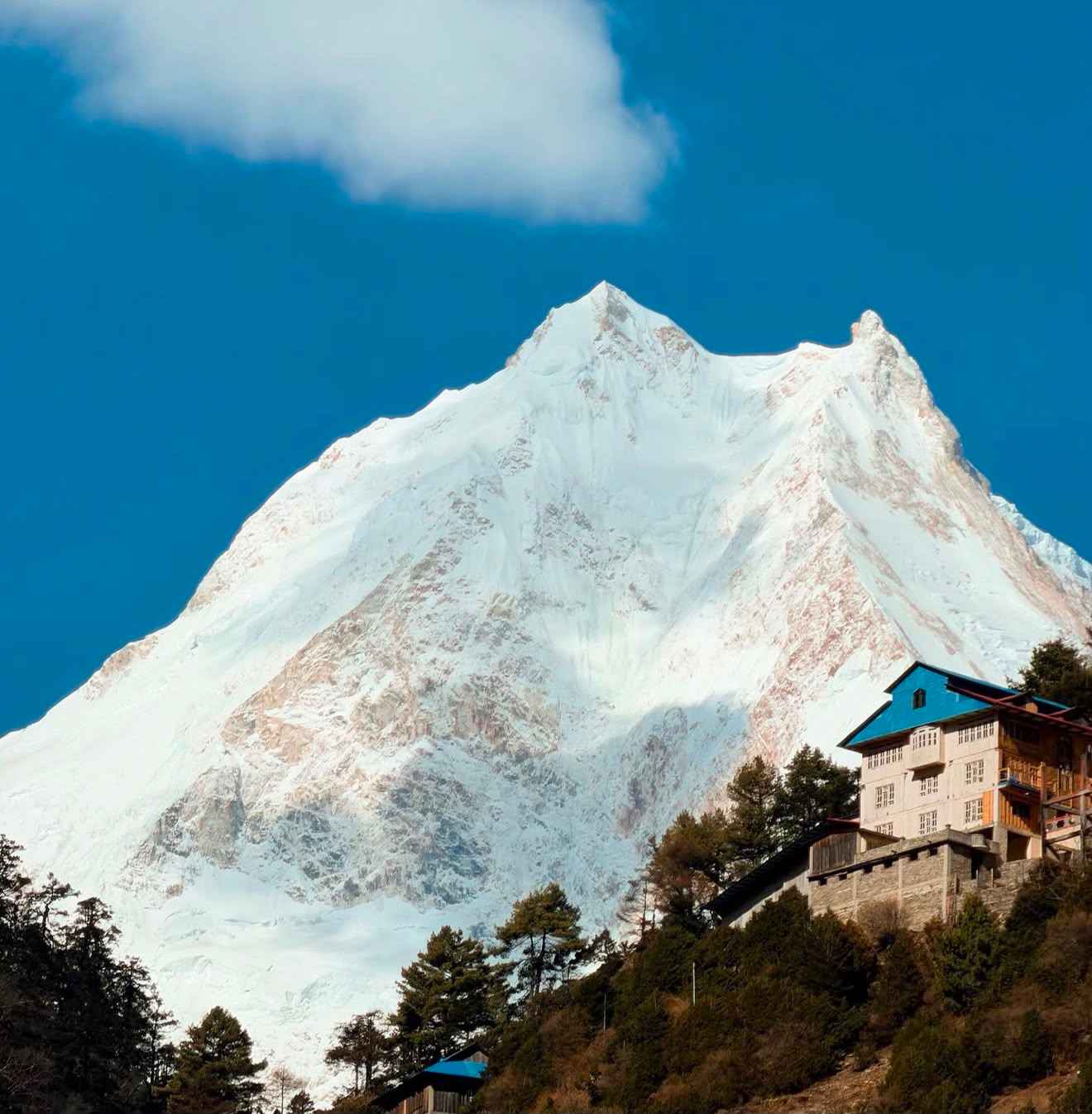
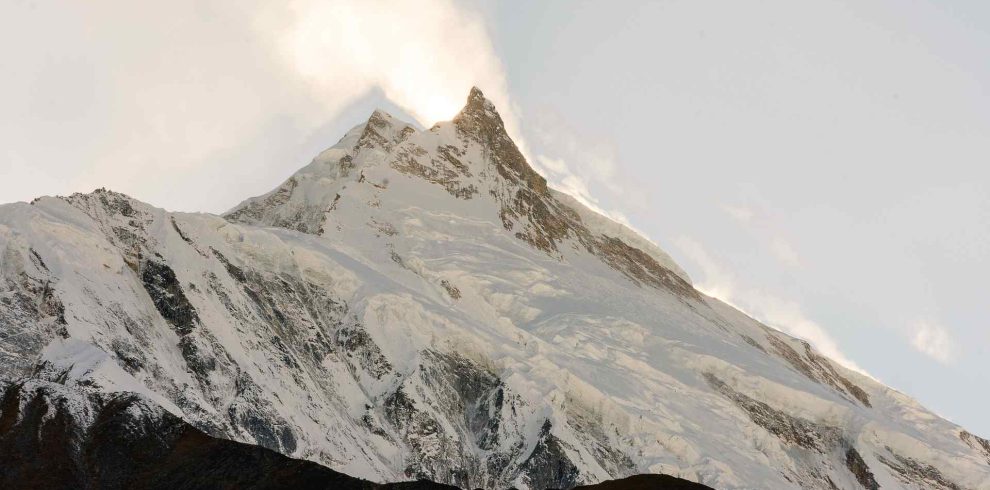
The Manaslu Circuit is already a demanding trek in any season. It circles the eighth highest mountain on earth, Mount Manaslu at 8,163 m, through a restricted area that requires a licensed guide by law regardless of group size. In January you get the same route and the same views, often clearer than in the hazier autumn months, but you also get a trail that behaves very differently. Below about 2,000 m, in villages like Machha Khola and Jagat, January weather is mild and quite pleasant, similar to a cool autumn day at home. As you climb past Namrung and Lho into the alpine zone around Samagaon, Samdo and Dharamsala, winter takes over completely. Fresh snowfall is common, the ground stays frozen through much of the day at altitude, and the final push over Larkya La becomes a genuine mountaineering style day rather than a straightforward high pass crossing.
What this means practically is that a January trip on the Manaslu Circuit Trek needs more built in flexibility than an autumn one. We build extra contingency days into the schedule, we watch the weather at Samagaon and Samdo closely in the days before the pass, and we are honest with clients when conditions mean waiting an extra day or two, or in rare years, turning back before the pass and returning the way we came. Nobody who treks with us in January should expect the trip to run exactly like a brochure itinerary from start to finish. The itinerary is a plan, not a guarantee, and that is more true in January than in any other month.
Temperature and Weather by Altitude Band
Temperature on the Manaslu Circuit changes enormously with altitude, and January exaggerates that difference more than any other month. The numbers below are typical ranges reported by trekkers and guides who have walked the route in January in recent years. Weather varies year to year, so treat these as a planning guide rather than an exact forecast, and reconfirm conditions with your guide close to departure.
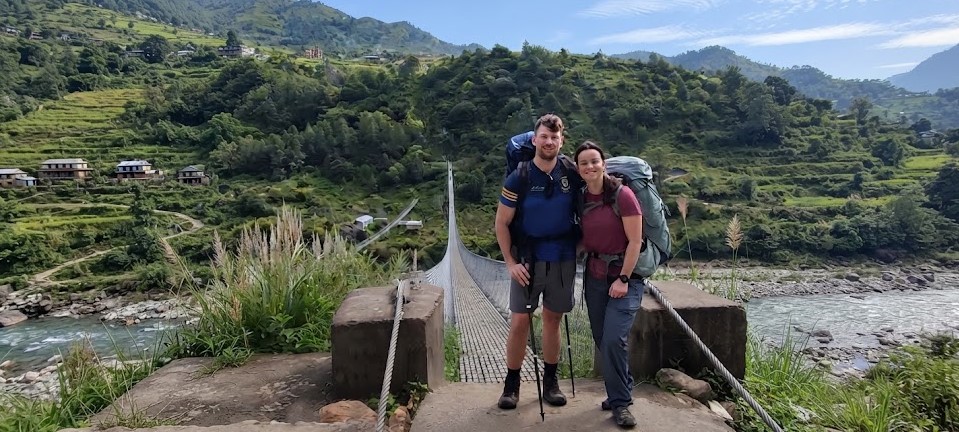
In the lower valley around Machha Khola and Jagat, roughly 900 to 1,400 m, January days are genuinely mild. Daytime temperatures commonly sit somewhere between 12 and 20 degrees Celsius in direct sun, dropping to somewhere around 5 to 8 degrees Celsius after dark. This stretch of the trek, subtropical forest and terraced farmland along the Budhi Gandaki river, barely feels like winter at all during the day, though mornings can be sharp before the sun clears the gorge walls.
Through the mid hills around Namrung and Lho, roughly 2,900 to 3,200 m, the character of the trek starts to shift. Daytime temperatures typically run from about 2 to 10 degrees Celsius depending on cloud cover and wind, while nights fall to somewhere around minus 5 to minus 10 degrees Celsius inside an unheated teahouse room. This is usually the point where trekkers first put on their down jacket in the mornings and start noticing frost on the trail before the sun reaches it.
At the high villages of Samagaon and Samdo, both above 3,500 m, January becomes properly cold. Daytime highs in the sun can still reach a few degrees above freezing on a clear day, but overcast or windy days can stay below zero all day. Nighttime temperatures at Samagaon and Samdo commonly fall to somewhere between minus 10 and minus 20 degrees Celsius, and colder snaps into the minus 20s are not unusual during a cold spell. Wind chill makes the effective cold feel considerably worse than the thermometer reading, especially at Samdo where the valley funnels wind down from the Tibetan plateau side.
At Dharamsala, the final camp before Larkya La at 4,450 m, and on the approach to the pass itself at 5,106 m, January conditions are the harshest on the entire circuit. Daytime temperatures on the climb toward the pass frequently sit well below freezing, commonly in the range of minus 10 to minus 20 degrees Celsius even under clear skies, and overnight lows at Dharamsala can drop into the minus 20 to minus 30 degree range in a hard winter. Add wind and the effective cold on a clear but breezy pass morning can feel considerably more severe. This is exactly why an early start, solid winter gear and a guide who knows when to call off a pass attempt all matter so much in this month.
For a broader comparison of how these numbers change through the rest of the year, our seasonal guide to the best time for the Manaslu and Tsum Valley treks lays out month by month conditions if January does not end up being the right fit for your plans.
Snow and Trail Conditions in January
Snow is the defining feature of the Manaslu Circuit in January, and it changes the character of the trek in several practical ways. Below Namrung, snow is rare and usually melts within a day or two even if it does fall. From Namrung upward, and especially from Samagaon onward, fresh snowfall becomes a normal part of the trek rather than an exception. A storm can drop anywhere from a light dusting to 30 or 40 centimetres of new snow overnight at these altitudes, and in a heavier winter storm cycle, considerably more can pile up around Samdo and Dharamsala over several days.
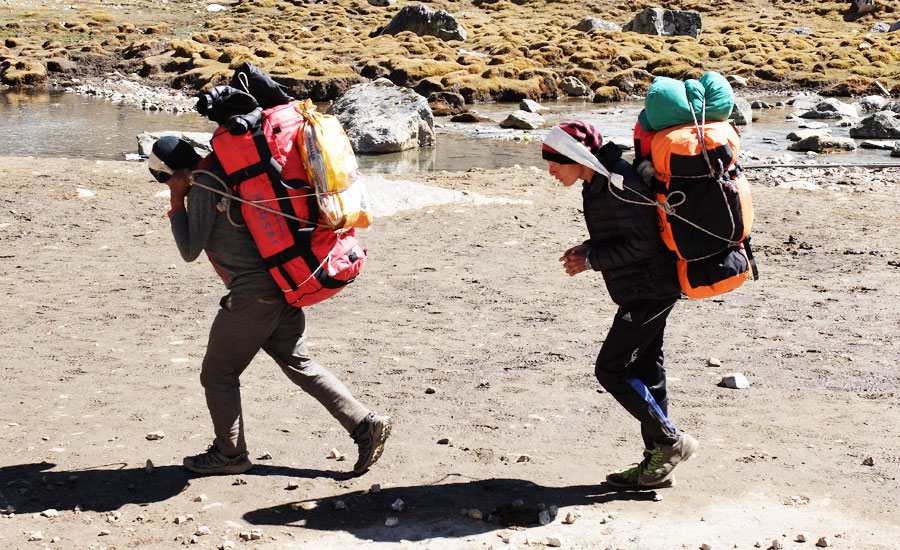
What this means on the ground is that the trail between Samagaon and the pass is frequently broken by whichever guide team or local porter happens to pass first after a storm. On a clear stretch with settled older snow, walking is straightforward with proper boots and gaiters. After a fresh dump, especially above Dharamsala, trail breaking through knee deep or occasionally thigh deep snow is slow, exhausting work, and pace drops sharply. Guides in this region generally wait for a day or two of settled weather after a heavy snowfall before attempting the pass, both to let the new snow consolidate and to reduce avalanche risk on the steeper sections above Dharamsala.
Ice is the other factor worth mentioning. Meltwater that refreezes overnight creates icy patches on shaded sections of trail, particularly in the gorge sections below Namrung and on the exposed rock steps near Samdo. Trekking poles and, in some years, microspikes are genuinely useful rather than optional extras in January. We generally recommend clients bring their own microspikes for this trek in winter, since teahouses along the route do not rent this kind of gear.
For a stage by stage description of what the trail actually looks like underfoot at each point of the route, our detailed Manaslu Circuit route guide covers the terrain village by village, which is worth reading alongside this article if you want the full picture before booking.
Larkya La Pass in January: An Honest Assessment
Larkya La, also called Larke Pass, is the high point of the entire circuit at 5,106 m, and it is the single biggest variable in a January Manaslu trip. We are not going to soften this. January is the hardest month of the year to cross this pass, and in a heavy snow year it can become genuinely difficult or, in the worst conditions, effectively impassable for a standard trekking group without technical mountaineering equipment and skills.
The approach from Dharamsala climbs steeply over loose moraine and glacial terrain before the final push to the pass itself, and in winter this section is frequently covered in wind packed or fresh snow that can hide the trail entirely. Steep sections near the top can develop avalanche prone slab conditions after a heavy snowfall, and the descent on the far side toward Bimthang, though shorter, is often icy and exposed. Some trekking operators choose not to schedule departures over Larkya La at all during the deepest part of winter, generally mid December through February, precisely because of this unpredictability.
In practice, this is how a licensed guide actually makes the call on pass day. We look at the accumulated snow depth reported from Samdo and Dharamsala in the days before the crossing, the recent weather pattern rather than just the forecast for that single day, wind conditions at altitude, and whether any other guide teams have crossed recently and what they report about trail conditions on the far side. We always build at least one, ideally two, buffer days into a January itinerary specifically to allow for a weather delay at Samdo or Dharamsala before attempting the pass. If conditions on the planned day look unsafe, the responsible decision is to wait, not to push through. In a genuinely bad winter, or after an unusually large storm, it is possible that the pass cannot be safely crossed at all during a given window, and the group has to retrace the route back down to Dharamsala, Samdo and eventually out via the way they came in, rather than completing the full circuit over to Bimthang and Tilije.
This is the single most important thing to understand before booking a January departure. Most years, with a properly guided, well equipped, physically prepared group, the pass does go, though often later in the morning than in autumn and with a slower, more careful pace. But no honest operator can promise you a guaranteed crossing on a fixed date in the deepest part of winter, and anyone who tells you otherwise is not being straight with you. If a guaranteed pass crossing on schedule matters more to you than experiencing the region in winter, autumn or spring is the safer choice, and our Manaslu trek difficulty assessment goes into more detail on how the pass compares across seasons.
Daylight Hours and How That Affects Daily Start Times
January has the shortest days of the year in Nepal, and this genuinely reshapes how each trekking day is planned. Around this time of year, daylight in the Manaslu region runs from roughly sunrise at about 6:45 to 7:00 in the morning to sunset around 5:15 to 5:30 in the evening, giving something in the region of ten and a half hours of usable daylight, noticeably less than the twelve or more hours available in April or October.
This shorter window matters most on the longer days of the trek, particularly the pass crossing day from Dharamsala to Bimthang, which can run eight to ten hours including the descent. To have enough daylight margin, we start pass day well before sunrise, typically leaving Dharamsala by headlamp somewhere between 4:00 and 5:00 in the morning so the group is over the pass and starting the long descent while there is still good light and, ideally, before the afternoon wind picks up at altitude. Earlier starts also mean firmer, more predictable snow underfoot, since overnight freezing keeps the surface more stable before the sun softens it later in the day.
On the lower, shorter walking days below Namrung, the shorter daylight is less of an issue since those stages rarely run past five or six hours. But it does mean less flexibility for long lunch breaks, side trips, or a late start if someone is feeling slow that morning. Guides in January tend to keep the daily schedule tighter and more disciplined than in the long days of spring or early autumn.
Teahouse and Accommodation Availability in January
This is one of the most practical concerns for January trekkers, and one we get asked about constantly. The honest answer is that teahouse availability drops noticeably above Samagaon during the coldest weeks of winter. Below Namrung, and generally through Lho and Samagaon itself, most teahouses stay open year round since these villages have a resident population that does not fully relocate in winter, though some smaller lodges do close if the owning family travels to Kathmandu or lower valley villages for the season.
Above Samagaon, the picture changes. At Samdo, only a portion of the guesthouses stay open through the peak winter weeks, commonly reported as somewhere in the range of a third to half of the village’s usual lodges, with the rest shuttered until the owners return in spring. At Dharamsala, the last stop before the pass, facilities are minimal even in high season, essentially one or two basic lodges built specifically to service pass crossings, and in a hard winter some or all of these can close entirely if the operators judge that trekker numbers do not justify staying open through the coldest stretch.
What this means for planning is that a January trek absolutely needs advance coordination rather than a walk in, find a bed approach. As your outfitter, we contact lodge owners at Samdo and Dharamsala ahead of a scheduled departure to confirm which houses are actually running that week, and we adjust the plan if the usual stop is closed. In some winters this has meant consolidating in a single open lodge at Samdo with a larger group than usual, or in rare cases carrying extra provisions in case Dharamsala turns out to be fully closed on arrival. None of this makes the trek unworkable, but it does mean January travelers should book through an operator with current, direct contact with these villages rather than assuming teahouse infrastructure works exactly as described in a summer travel blog.
Road and Transport Conditions to the Trailhead in Winter
Getting to and from the Manaslu Circuit trailhead adds its own layer of winter uncertainty. The drive from Kathmandu to Machha Khola covers roughly 160 km but takes eight to nine hours because much of the route, especially the final stretch beyond Arughat, runs on a rough, partly unpaved mountain road that follows the Budhi Gandaki valley. In winter this road is not typically blocked by snow at these lower elevations, but it can be affected by landslide debris left over from the monsoon season, occasional rockfall on the narrower sections, and, on colder mornings, icy patches on shaded stretches of dirt road at higher points along the drive.
The road has also been under intermittent construction and improvement in recent years as it is gradually extended and upgraded, which means road conditions can change from one season to the next depending on which sections are being worked on at the time. Night driving on the roughest stretches is best avoided, so we plan the Kathmandu to Machha Khola drive to arrive before dark whenever possible, though a late departure, a puncture, or a construction delay can occasionally push arrival into the early evening. On the return leg from Tilije to Kathmandu, a longer drive of around 210 km taking eight to ten hours, conditions are broadly similar, road quality rather than snow being the main variable in January.
None of this is unique to winter, since the road is rough in every season, but shorter daylight hours in January mean less margin if the drive runs long, and cold mornings can make the first hour or two of driving on frosted dirt sections slower than in warmer months. We recommend building a buffer day into the Kathmandu schedule both before departure and after return, particularly for international flight connections, exactly for this reason.
Pros and Cons of Trekking the Manaslu Circuit in January
Every month has tradeoffs on this route, and January’s tradeoffs are more extreme than most. Here is an honest breakdown to help you decide if this is the right month for you.
| Aspect | Advantage in January | Drawback in January |
|---|---|---|
| Crowds | Among the quietest months on the circuit, often just your group and a handful of others at each stop | Fewer trekkers also means less social atmosphere in teahouses and fewer people to share pass day nerves with |
| Views | Cold, dry winter air often gives exceptionally clear mountain views with less haze than autumn | Cloud and storm systems, when they roll in, can obscure views for days at a stretch |
| Trail conditions | Frozen ground can actually be firmer and less muddy underfoot than in wetter months | Snow and ice above Namrung slow progress and raise the physical difficulty of every high altitude day |
| Larkya La | A successful winter crossing is a genuinely serious mountaineering style achievement | Real risk of delay, difficulty, or in a bad year an inability to safely cross at all |
| Accommodation | Whichever teahouses are open tend to be warm, welcoming and glad of the business | Fewer beds available at Samdo and Dharamsala, requiring advance coordination |
| Cost | Off season Manaslu Restricted Area Permit pricing is noticeably cheaper than the autumn rate | Extra gear costs for serious cold weather equipment can offset some of that savings |
| Physical demand | A strong sense of accomplishment for trekkers who complete it in genuine winter conditions | Meaningfully harder on the body than the same route in April or October |
Day by Day Sample Itinerary for a January Manaslu Circuit Trek
This is our standard 13 day Manaslu Circuit itinerary, the same route we run in other seasons, adapted here with January specific notes. Actual pacing can shift by a day or two depending on weather at Samdo and before the pass, and we always recommend keeping some flexibility in your travel plans after Kathmandu for exactly this reason.
| Day | Route | Altitude | January Notes |
|---|---|---|---|
| Day 1 | Arrival in Kathmandu, airport transfer | 1,300 m | Kathmandu itself is cool but comfortable in January, cold mornings and mild sunny afternoons |
| Day 2 | Kathmandu to Machha Khola, about 160 km, 8 to 9 hours drive | 930 m | Rough dirt road for the final stretch, plan for a daylight arrival where possible |
| Day 3 | Machha Khola to Jagat, 11 to 12 km, 5 to 6 hours walk | 1,410 m | Mild, forest and terraced farmland walking, permit checkpoint at Jagat |
| Day 4 | Jagat to Deng, 19 km, 6 to 7 hours walk | 1,860 m | Still relatively mild, some morning frost, gorge sections can be icy in shade |
| Day 5 | Deng to Namrung, 19 km, 6 to 7 hours walk | 2,900 m | Noticeably colder from here, first down jacket mornings, entering the alpine zone |
| Day 6 | Namrung to Samagaon, 17 km, 6 to 7 hours walk | 3,500 m | Mount Manaslu comes into view, cold but usually manageable teahouse availability |
| Day 7 | Acclimatization day at Samagaon, short side hike, 8 to 10 km, 4 to 5 hours | 3,500 m | Rest and acclimatize, good visibility days are common here in winter |
| Day 8 | Samagaon to Samdo, 8 to 9 km, 3 to 4 hours walk | 3,860 m | Confirm which lodges are open, this is where winter conditions become obvious |
| Day 9 | Samdo to Dharamsala, 11 to 12 km, 4 to 5 hours walk | 4,450 m | Buffer day may be added here if snow or wind delays the pass window |
| Day 10 | Dharamsala over Larkya La (5,106 m) to Bimthang, 17 to 19 km, 8 to 10 hours | Descending to about 3,700 m | Very early start by headlamp, the hardest and coldest day of the trek |
| Day 11 | Bimthang to Tilije, 12 to 13 km, 5 to 6 hours walk | 2,300 m | Rapid descent out of the alpine zone, noticeably warmer with every hour |
| Day 12 | Tilije to Kathmandu, about 210 km, 8 to 10 hours drive | 1,300 m | Long drive day, road conditions similar to the inbound journey |
| Day 13 | Final departure from Kathmandu | 1,300 m | Keep this date flexible if possible given winter contingency risk earlier in the trip |
If you want more time in the region and the option to combine this route with the culturally distinct Tsum Valley, our 23 day Tsum Valley and Manaslu Circuit combination trek is worth a look, though we generally recommend the combined route for spring or autumn departures rather than January, given how much extra high altitude walking it adds on top of an already demanding winter itinerary.
What to Pack for Serious Winter Cold
Packing for a January Manaslu trek is not the same exercise as packing for an autumn one, and underestimating the cold at Samdo and Dharamsala is one of the most common mistakes we see. As part of our standard package we provide a sleeping bag and down jacket, which you return at the end of the trek, but these are meant to supplement, not replace, a properly built winter layering system that you bring yourself.
For your base and mid layers, bring proper thermal underwear in a moisture wicking material for both top and bottom, at least two sets so you can rotate while one dries. Add a fleece or synthetic insulating mid layer for your torso, and a heavier insulated jacket for evenings and the pass crossing itself. A windproof and waterproof outer shell jacket and pants are essential above Namrung, since wind chill at altitude in January can make a clear, dry day feel far colder than the actual temperature suggests.
For your legs, thermal leggings under trekking trousers work well for most of the route, with a heavier insulated or softshell trouser useful for pass day itself. Good quality trekking boots that are already broken in are essential, ideally a pair rated for cold conditions rather than a lightweight three season boot, paired with gaiters to keep snow out above the ankle. We strongly recommend bringing your own microspikes for icy sections, since these are not available to rent along the route.
For your hands and head, bring a warm insulated hat that covers your ears, a lighter buff or balaclava for wind protection on pass day, and two pairs of gloves, a lighter liner glove for general walking and a heavier insulated or mitten style glove for the coldest mornings and the pass itself. Down mittens are genuinely useful rather than excessive for a January crossing of Larkya La.
Other essentials worth calling out specifically for winter include a good headlamp with spare batteries, since pass day starts in the dark and cold drains battery life faster than usual, a insulated water bottle or thermos since standard bottles can freeze overnight at Samdo and Dharamsala, hand and toe warmer packets as a backup for the coldest morning, sunglasses with strong UV protection for the intense glare off fresh snow, and a good quality sunscreen and lip balm since sun exposure at altitude on snow is more intense than most people expect even in cold weather. A basic first aid kit is included as part of our package, but personal medication and any specific cold or altitude related items you use should be packed separately and kept accessible rather than buried at the bottom of your bag.
Permits and Costs for January Departures
One genuine upside of trekking Manaslu in January is permit pricing. The Manaslu Restricted Area Permit is priced seasonally, and January falls into the cheaper off season bracket that runs from December through August, as opposed to the more expensive September through November peak season rate. A licensed guide is legally required in this restricted area at all times, regardless of the size of your group or your own trekking experience, and this is strictly enforced at the checkpoints along the route.
| Permit or Fee | Approximate Cost | Notes |
|---|---|---|
| Manaslu Restricted Area Permit (RAP) | Around USD 75 for the first 7 days, plus about USD 10 per extra day | January falls in the cheaper December to August off season bracket, roughly a third less than autumn pricing |
| Manaslu Conservation Area Permit (MCAP) | Around USD 30 | One time fee covering the conservation area portion of the route |
| Annapurna Conservation Area Permit (ACAP) | Around USD 30 | Required since the trek exits into the Annapurna Conservation Area near Bimthang and Tilije |
| Chumnubri Rural Municipality local fee | Around USD 10, payable in Nepali rupees cash | Collected at a local checkpoint, usually Jagat |
These figures should be reconfirmed close to your departure date, since permit fees and exchange rates are set by the relevant Nepali authorities and can change from year to year without much advance notice. Our per person package pricing for the standard 13 day trip runs USD 1,350 for a solo traveler, USD 1,250 per person for groups of 2 to 5, USD 1,200 per person for groups of 6 to 8, and USD 1,150 per person for groups of 9 to 10, and these rates are the same regardless of the season you choose. What is included covers airport pickup and drop off, 2 nights at a Kathmandu hotel with breakfast, teahouse accommodation throughout the trek, transport to and from the trailhead, all required permits, a licensed English speaking guide, porter service at one porter per two trekkers carrying up to 20 kg, guide and porter wages, three meals a day on the trek plus morning tea or coffee, insurance, a sleeping bag and down jacket provided for the duration and returned at the end, a trekking map, a completion certificate, a first aid kit, government taxes, and a farewell dinner in Kathmandu. Not included are your international airfare, Nepal entry visa, personal travel and evacuation insurance, personal expenses such as laundry, phone and wifi charges, bottled water and other beverages, alcohol and snacks, and any extra food beyond what the package covers. For a fuller breakdown of how these costs compare across the whole year, our Manaslu Circuit cost and permit FAQ is a good companion read.
Cultural and Festival Notes for January
The villages along the upper Manaslu route, particularly Samagaon and Samdo, have a strong Tibetan Buddhist cultural character, and travelers often ask whether any major festivals fall during a January trip. Honestly, we cannot point to a major, widely celebrated festival that reliably falls within January itself in this region. Losar, the Tibetan New Year, is the most significant festival in these communities, but it follows the Tibetan lunar calendar and its date shifts from year to year, generally landing in February or occasionally early March rather than January. If your trip happens to overlap with local preparations for Losar toward the very end of January in a given year, you might see some early signs of it, but this is not something we can promise or schedule around, and dates should be confirmed locally rather than assumed. Day to day life in these villages in January is quieter than in festival season, with families focused on winter routines, livestock care and, in many households, time away in Kathmandu or lower valley towns rather than large communal celebrations.
Who January Suits and Who Should Consider a Different Season
January genuinely suits a specific kind of trekker. If you have prior experience walking in snow and serious cold, you own or are willing to invest in proper winter gear, you are physically well conditioned for sustained high altitude effort, and you value solitude and clear winter air over guaranteed comfort and certainty, this can be one of the most memorable months to walk the Manaslu Circuit. You will likely have long stretches of trail entirely to yourself, teahouse dining rooms that feel intimate rather than crowded, and mountain views on clear days that are as sharp as anywhere in the Himalaya.
January is probably not the right choice if this would be your first ever trek at altitude, if you have never dealt with genuinely cold nighttime temperatures while camping or trekking before, if your schedule cannot absorb an extra day or two of delay around the pass, or if the idea of a possible pass turnaround, however unlikely in a normal winter, would ruin the trip for you rather than simply being a disappointing but understandable outcome. For most first time Manaslu trekkers, we recommend either the pre monsoon window in March and April or the post monsoon window in October and November, both of which offer a far more predictable pass crossing and considerably milder nights at altitude. Our seasonal comparison guide lays out exactly how those months differ from January if you want to weigh the tradeoffs yourself before deciding.
Frequently Asked Questions
Can beginners trek the Manaslu Circuit in January?
We would not recommend it as a first trek at altitude. The combination of restricted area logistics, a high pass over 5,000 m, and genuine winter cold and snow makes January one of the more demanding versions of an already serious trek. If you have solid general fitness but limited high altitude or winter experience, we would rather guide you on this same route in a milder month first and consider a January return trip once you know how your body handles cold and altitude.
Is Larkya La guaranteed to be open in January?
No, and we would never promise that. In most winters, with a well prepared group and careful timing, the pass is crossed successfully, sometimes with a delay of a day or two while waiting out weather at Samdo or Dharamsala. In a heavier snow year, or after an unusually large storm, the pass can become too dangerous to cross safely within a normal group’s capability, and the responsible choice at that point is to wait, or in rare cases, to turn back rather than push through unsafe conditions.
How cold does it actually get at night on this trek in January?
It depends heavily on altitude. Down at Machha Khola and Jagat, nights stay relatively mild, generally not much below 5 to 8 degrees Celsius. At Samagaon and Samdo, nighttime temperatures commonly fall to somewhere between minus 10 and minus 20 degrees Celsius, and at Dharamsala just before the pass, nights can drop into the minus 20 to minus 30 degree range during a cold spell. This is exactly why the sleeping bag we provide as part of the package, combined with your own proper layering, matters so much on this route in winter.
Will I need special equipment like crampons or ice axes?
Full mountaineering crampons and an ice axe are not standard requirements for a normal January crossing under typical conditions, but we do strongly recommend bringing your own microspikes for icy sections of trail, particularly around Samdo and on the approach to Dharamsala. In an unusually icy or heavy snow year, your guide may recommend additional gear or, if conditions are genuinely unsafe, may recommend not attempting the pass at all rather than pushing through with inadequate equipment.
Are teahouses open the whole way in January?
Most teahouses below Samagaon stay open year round. Above that, availability drops, with only a portion of the lodges at Samdo typically operating through peak winter, and Dharamsala sometimes reduced to a single basic lodge or, in a hard winter, closed entirely. This is why booking through an operator who actively confirms which lodges are open ahead of your specific departure matters far more in January than in busier seasons.
How much does the Manaslu Circuit Trek cost in January compared to other months?
Our per person package pricing does not change by season, running from USD 1,350 for a solo trekker down to USD 1,150 per person for a group of 9 to 10. What does change is the Manaslu Restricted Area Permit fee, which is cheaper in the December through August off season bracket that includes January compared to the September through November peak season rate. This makes January one of the less expensive months for permits specifically, even though overall trip costs and gear investment can offset some of that saving.
What happens if the pass cannot be crossed on the planned day?
Your guide will assess conditions each morning based on recent snowfall, wind, and reports from other teams, and will simply wait an extra day at Samdo or Dharamsala if conditions are not safe rather than push ahead on schedule. This is exactly why we build buffer days into January itineraries. In the rare case that conditions remain unsafe for an extended period, the group would descend back the way it came rather than risk an unsafe crossing, which is why we also recommend keeping some flexibility in your onward international travel plans when booking a January departure.
Is January cheaper or more expensive overall than trekking in autumn?
Permit costs are lower in January due to off season pricing, but this saving can be offset by the cost of proper winter gear if you do not already own it, and potentially by the practical cost of an extra buffer day or two built into the schedule to manage weather risk around the pass. Overall trip cost with our package stays the same across seasons, so the main financial variable really comes down to the permit fee difference and your personal gear budget.
Final Thoughts and How to Book
January on the Manaslu Circuit is not a trek we recommend lightly, but it is one we genuinely enjoy guiding for the right traveler. Clear cold air, near empty trails, and a proper sense of winter mountaineering on pass day make it a completely different experience from the same route in busier months, and for trekkers who come prepared, it can be one of the more memorable versions of this trip. What it demands in return is honesty about the risks, proper cold weather gear, physical readiness, and a flexible mindset about the schedule, particularly around Larkya La.
If you are seriously considering a January Manaslu Circuit Trek, talk to us before you book flights or take time off work. We can walk you through current conditions, help you decide if this month genuinely suits your experience level, and confirm teahouse availability at Samdo and Dharamsala ahead of your specific dates. You can reach Manaslu Treks and Expedition, based in Thamel, Kathmandu, by phone or WhatsApp at +977 9869225929, by email at info@manaslutreks.com, or through our contact. You can also review the full itinerary, inclusions and current departure dates directly on our Manaslu Circuit Trek and get in touch with any questions before committing to a winter departure.
The 9 Days Manaslu Circuit Trek, also known as the Short Manaslu Circuit Trek, is designed for trekkers who want…