Manaslu Circuit Trek: A Real Trekker’s Guide to One of Nepal’s Most Rewarding Himalayan Journeys. Book with the best manaslu trek company for competitive pricing and guaranteed departures.
Introduction to Manaslu Circuit Trek
There is a trail in Nepal that most people have not heard about yet, and that is exactly what makes it so extraordinary. The Manaslu Circuit Trek takes you around Mount Manaslu, the eighth highest mountain in the world at 8,163 meters, through a landscape that has remained largely unchanged for centuries. While Everest Base Camp and the Annapurna Circuit attract thousands of trekkers every season, Manaslu stays quiet, authentic, and genuinely wild in a way that those famous routes no longer are.
We at Manaslu Treks and Expedition have been guiding trekkers through this region for many years. We know every tea house on the route, every section where the trail gets difficult, and every moment where the scenery stops you dead in your tracks. This guide is not written from a brochure. It is written from real experience on the ground, from hundreds of treks completed with clients who came searching for something deeper than a standard Himalayan experience.
The Manaslu Circuit Trek covers roughly 177 kilometers and takes between 14 and 18 days depending on your pace and whether you choose to add extensions like the Tsum Valley. The trail begins in the lowlands of Arughat or Soti Khola and gradually climbs through river gorges, terraced hillside villages, dense rhododendron forests, and eventually into high alpine terrain before crossing the legendary Larkya La Pass at 5,160 meters. The descent takes you back down into the lush valleys of the Marsyangdi River before ending near the Annapurna Circuit at Dharapani.
The Manaslu is a restricted area trek in Nepal, which means you cannot do it independently. You need licensed guides, specific permits, and careful planning. But rather than seeing this as an obstacle, understand it for what it is: a protection mechanism that has kept this region from becoming overtouristed. The restriction is the very reason the trail still feels real.
Planning the Manaslu Circuit Trek and need help with permits, route, or itinerary?
WhatsApp us Email usWhy Choose Manaslu Circuit Trek in Nepal
People choose the Manaslu trek in Nepal for different reasons, but they almost all leave with the same feeling. This trek gave them something the other famous trails could not.
For trekkers who have already done Everest Base Camp Trek or the Annapurna Circuit, Manaslu feels like a discovery. The villages are smaller and more isolated. The people you meet along the way have seen far fewer foreign visitors. When you sit down for dinner in a remote tea house and the family who runs it joins you at the table, it does not feel like a performance. It feels genuine.
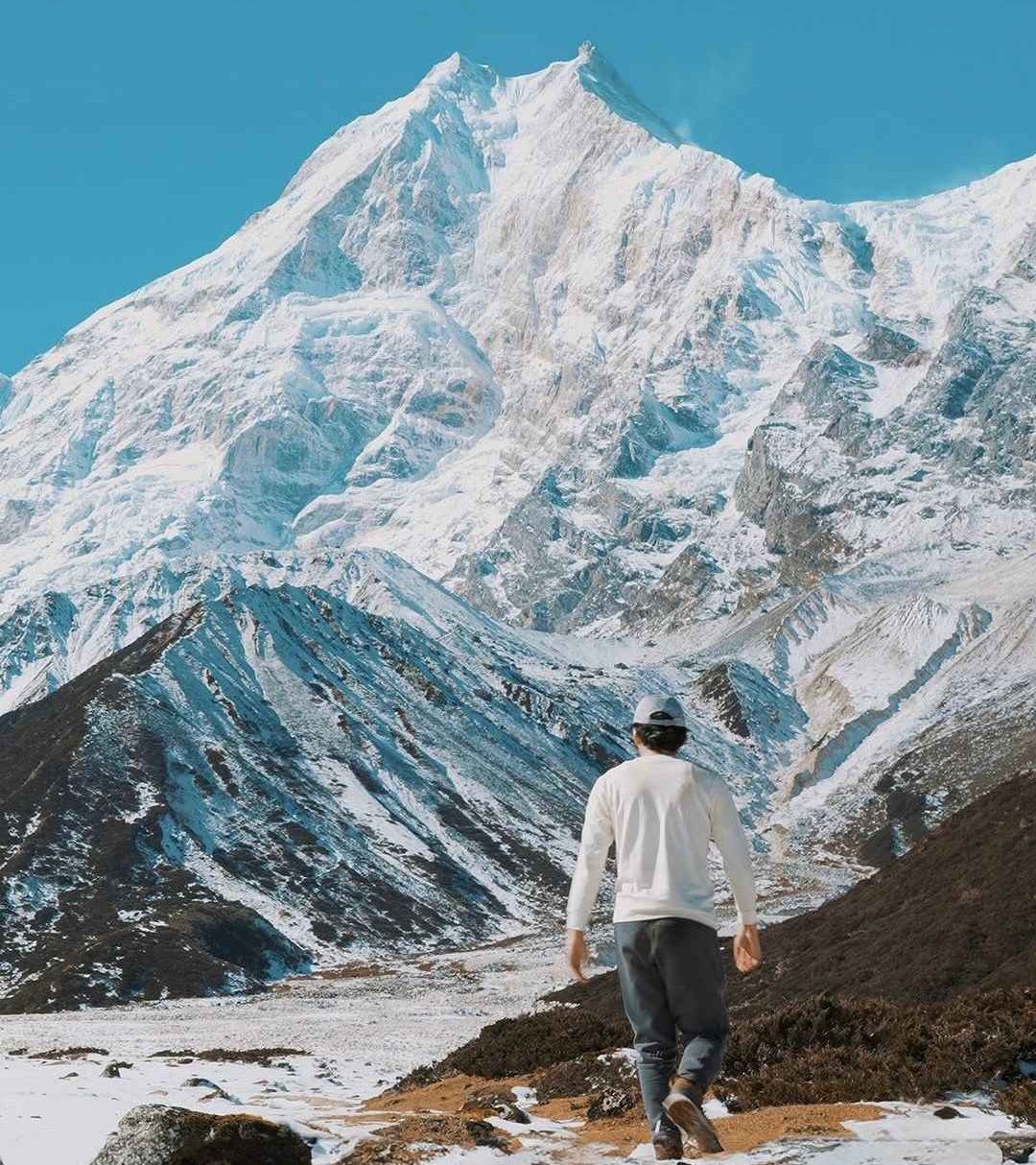
From a scenic perspective, the Manaslu Circuit Trek route is extraordinary. You are never far from the mountain itself. Manaslu dominates the northern horizon for much of the trek, and its southwest face is one of the most dramatic mountain walls you will ever see up close. Beyond Manaslu, the circuit takes you past several other peaks above 6,000 and 7,000 meters. Himalchuli, Ngadi Chuli, and Ganesh Himal all make appearances depending on where you are standing.
The cultural immersion is something no photograph fully captures. The upper parts of the Manaslu region have historically been connected to Tibet, and the communities you pass through near Lho, Sama Gaun, and Samdo practice Tibetan Buddhism. Ancient monasteries sit above the trail. Mani walls stretch for hundreds of meters. Prayer flags mark every pass and ridge. You are walking through a living cultural tradition, not an exhibit.
Planning the Manaslu Circuit Trek and need help with permits, route, or itinerary?
WhatsApp us Email usThe trail itself is also physically satisfying in a way that feels earned. This is not an easy walk. There are steep climbs, long days, cold nights, and sections where the path is narrow and the exposure is serious. But that difficulty is part of what makes arriving at the top of Larkya La feel like one of the great moments in trekking. You work for it, and it rewards you completely.
Manaslu Circuit Trek Highlights
Before we go into the logistics and details, here are the moments that people consistently talk about when they return from the Manaslu Circuit Trek.
Standing at Larkya La Pass
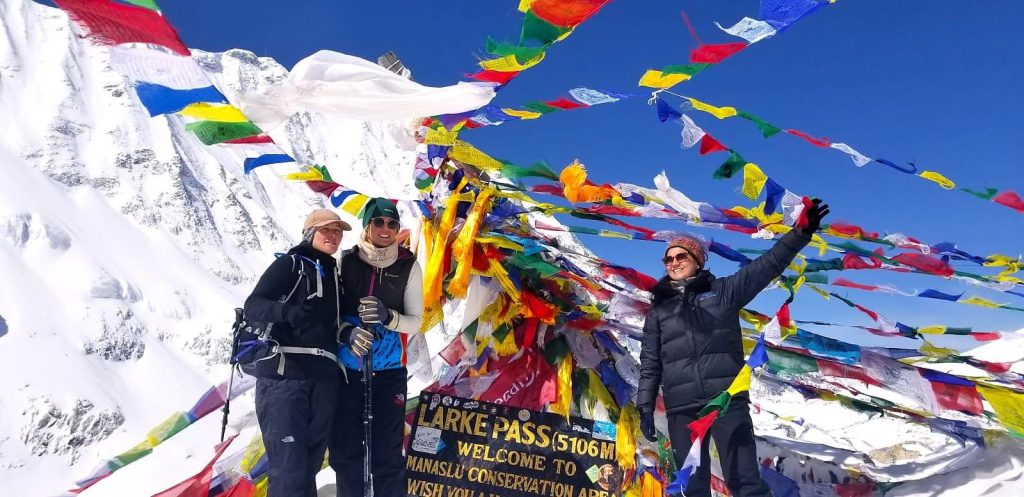
At 5,160 meters, the Larkya La Pass is the highest and most demanding point of the entire trek. The crossing usually begins before dawn and takes four to six hours to reach the summit from the overnight camp at Larkya Phedi. When you finally stand at the top and see the panorama of Himalayan peaks stretching across the horizon, the effort makes complete sense.
Planning the Manaslu Circuit Trek and need help with permits, route, or itinerary?
WhatsApp us Email usSama Gaun and the Manaslu Base Camp Side Trip
The village of Sama Gaun at 3,530 meters sits directly beneath the southwest face of Manaslu. From here, you can make a day hike up toward Manaslu Base Camp or to the Birendra Tal glacier lake. This is one of the finest high mountain environments accessible to trekkers anywhere in Nepal.
The Budhi Gandaki River Gorge
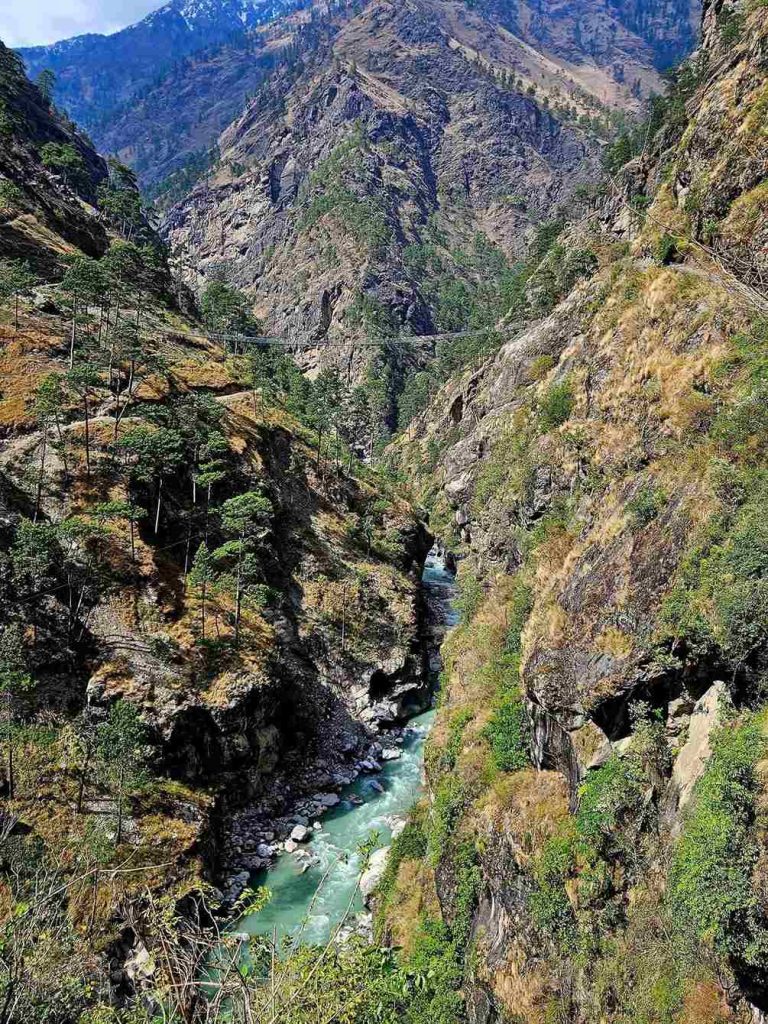
In the lower sections of the trek, the trail follows the Budhi Gandaki River through a progressively deepening gorge. The landscape shifts from tropical lowlands to subtropical forests to temperate alpine zones over just a few days of walking. The waterfalls, suspension bridges, and sheer rock walls of this gorge are amazing.
Tibetan Buddhist Villages and Monasteries
The monastery at Pungen Gompa above Sama Gaun, the carved mani stones throughout the upper valley, and the ancient village layouts of Lho and Samagaon are among the cultural highlights of any trekking journey in Nepal. These are not tourist reconstructions. They are active religious and cultural spaces.
The Complete Mountain Circuit Experience
Unlike an out-and-back trek, the Manaslu Circuit is exactly that: a full circuit. You never repeat the same trail. Every day brings a new valley, a new perspective, and a new feeling of moving forward into unknown territory.
Manaslu Circuit Trek Itinerary: Day by Day
Below is the standard 14 to 16-day Manaslu Circuit Trek itinerary that we use at Manaslu Treks and Expedition. Depending on your fitness level and how much acclimatization time you need, we can adjust the pace. We always prioritise safety over speed.
Day 1: Kathmandu Arrival and Briefing You arrive in Kathmandu and check in to your hotel. Our team meets you, handles permit paperwork, and gives you a full pre-departure briefing. This is the day to get your gear sorted and ask all the questions you have been holding.
Day 2: Drive from Kathmandu to Soti Khola (710m) The drive takes roughly 8 to 9 hours along winding mountain roads, first on highway and then on rough unpaved tracks through the Gorkha district. It is a long day in the jeep, but the scenery is worth it. You spend the night at a tea house in Soti Khola, your first real taste of basic trekking accommodation.
Planning the Manaslu Circuit Trek and need help with permits, route, or itinerary?
WhatsApp us Email usDay 3: Soti Khola to Machha Khola (930m) — 6 to 7 hours The trail begins gently, moving through tropical forests and terraced farmlands. You cross several suspension bridges over the Budhi Gandaki and pass through small Gurung and Bhotia villages. The first full day of walking gives your body a chance to find its rhythm.
Day 4: Machha Khola to Jagat (1,410m) — 6 hours The gorge begins to narrow here and the trail becomes more demanding. You gain elevation steadily through sub-tropical forest. Jagat is the first checkpoint where your Manaslu trekking permits are properly inspected. The tea houses here are basic but functional.
Day 5: Jagat to Deng (1,860m) — 6 to 7 hours This is a long and sometimes strenuous day with multiple river crossings and some challenging sections through the upper gorge. The landscapes become more dramatic as you move deeper into the restricted zone. Deng is a small village with a handful of tea houses and a noticeable drop in tourist traffic compared to popular Nepal trails.
Day 6: Deng to Namrung (2,630m) — 6 hours The trail moves through forests of oak, rhododendron, and bamboo. You begin to see the cultural transition happening around you as the villages become more Tibetan in character. Prayer flags appear more frequently. The air starts to feel thinner.
Day 7: Namrung to Lho (3,180m) — 4 to 5 hours Lho is one of the most visually dramatic villages on the entire route. From here, Manaslu appears directly to the north in full profile. The village monastery dates back centuries and is still an active place of worship. This is a shorter walking day that allows you to spend time exploring the village and monastery before your next big push.
Day 8: Lho to Sama Gaun (3,530m) — 4 hours The trail above Lho moves through high alpine meadows with increasingly spectacular mountain views. Sama Gaun is the largest village in the upper valley and the base for rest and acclimatization before Larkya La. Most trekkers spend two nights here.
Day 9: Rest and Acclimatization Day at Sama Gaun This is not a rest day in the lazy sense. You hike up to the Manaslu Base Camp viewpoint or to Birendra Tal, a glacial lake at around 3,980 meters. The acclimatization hike helps your body adjust to altitude. This day is important and should not be skipped.
Day 10: Sama Gaun to Samdo (3,875m) — 3 to 4 hours A shorter but important day that moves you higher in elevation. Samdo is a quiet, windswept village with unobstructed views of the Tibetan plateau to the north. The nights here are cold, often below freezing even in the shoulder seasons.
Day 11: Samdo to Larkya Phedi (Dharmasala, 4,460m) — 4 to 5 hours Larkya Phedi means the base of the Larkya La Pass. The tea house here is one of the most basic on the entire circuit: a stone building with a smoky common room, simple beds, and basic food. You eat well, sleep early, and prepare your layers for the pre-dawn start the next morning.
Day 12: Larkya Phedi to Bhimthang (3,720m) via Larkya La Pass (5,160m) — 8 to 9 hours This is the defining day of the Manaslu Circuit Trek. You start at around 3:00 or 4:00 in the morning, walking by headlamp across moraines and glaciated terrain. The final approach to the pass is steep and can be icy. At the top, if the weather is clear, you see a full arc of Himalayan giants. The descent to Bhimthang is long and hard on the knees. When you finally reach the tea houses at Bhimthang, the relief and satisfaction are difficult to describe.
Planning the Manaslu Circuit Trek and need help with permits, route, or itinerary?
WhatsApp us Email usDay 13: Bhimthang to Tilje or Dharapani (1,860m) — 6 to 7 hours The descent continues through increasingly green and lush terrain. You pass through rhododendron forests and small farming villages. By the time you reach Dharapani, you have crossed from the Manaslu Conservation Area into the Annapurna region. This is where the Manaslu Circuit Trek officially joins the Annapurna Circuit Trail.
Day 14: Drive from Dharapani back to Kathmandu or Pokhara A long jeep drive or a combination of jeep and bus takes you back to civilization. Most trekkers opt to stop in Besisahar and then connect to Pokhara or Kathmandu from there. After two weeks on the trail, the road feels both comforting and slightly surreal.
Manaslu Circuit Trek Route Overview
The Manaslu Circuit Trek route follows the Budhi Gandaki River valley from south to north before crossing the Larkya La Pass and descending into the Marsyangdi Valley. The total circuit covers approximately 177 kilometers of trail.
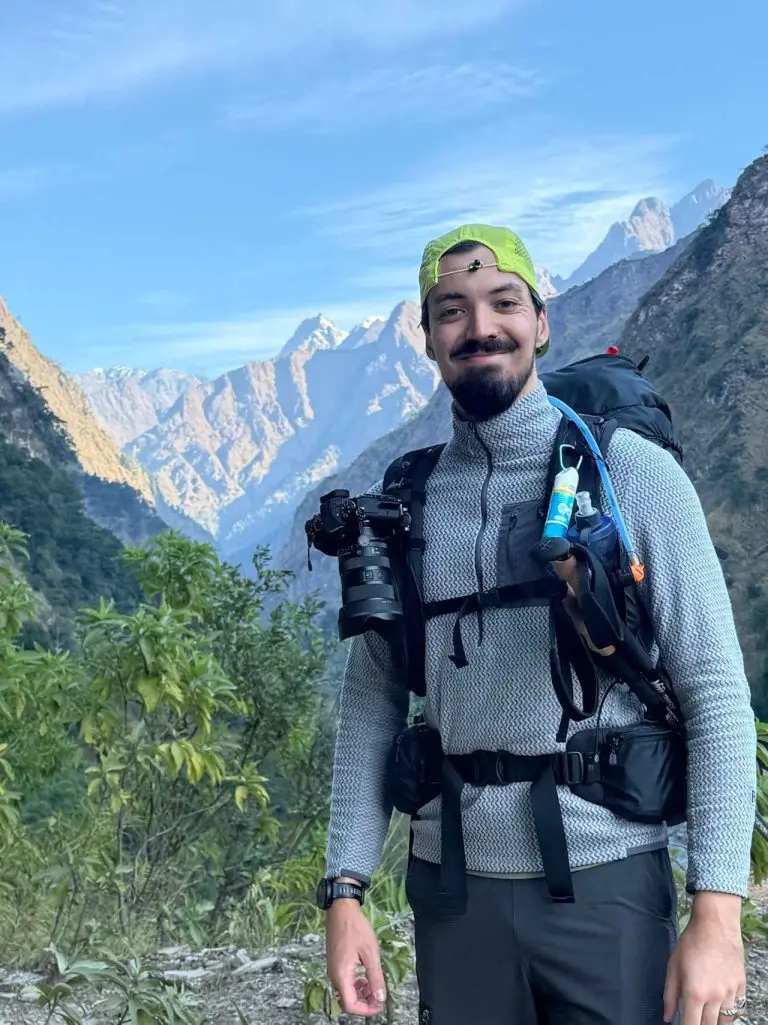
The southern entry point is either Soti Khola or Arughat, both reachable by road from Kathmandu via Gorkha or Arughat. Most itineraries now begin at Soti Khola to save a day of walking on less scenic lower trail.
The route passes through the following major waypoints: Soti Khola, Machha Khola, Jagat, Deng, Namrung, Lho, Sama Gaun, Samdo, Larkya Phedi, and then over Larkya La to Bhimthang and Dharapani. The northern arc of the circuit passes through progressively more Tibetan influenced territory until the pass crossing marks the geographical and cultural midpoint.
Manaslu Circuit Trek Distance and Duration
The total trekking distance of the Manaslu Circuit is approximately 177 kilometers. The number of days required depends on your starting point and pace. Most trekkers complete the main circuit in 14 to 16 days. If you include the Tsum Valley extension, the total duration rises to 20 to 24 days.
Daily walking distances range from around 10 kilometers on acclimatization days to 18 or 20 kilometers on longer sections. The elevation gain and loss on certain days make the distances more demanding than they look on paper. The crossing day from Larkya Phedi to Bhimthang covers around 18 kilometers but includes nearly 700 meters of ascent and over 1,600 meters of descent in a single day.
Manaslu Circuit Trek Difficulty Level
This is a moderately difficult to difficult trek. It is not a technical mountaineering route, but it demands genuine physical fitness and proper preparation. The combination of altitude, long daily walking hours, cold temperatures, basic accommodation, and the serious nature of the Larkya La crossing puts it firmly in the challenging category.
You do not need prior trekking experience at high altitude to do the Manaslu Circuit, but you should have a base level of fitness and ideally some prior multi-day trekking experience. People who regularly hike, run, or engage in cardiovascular exercise will find the physical demands manageable with good preparation.
The most common challenges trekkers face on the Manaslu Circuit are altitude sickness in the upper sections, extreme cold during the pass crossing, and the psychological challenge of consecutive long days with very basic facilities. None of these are unsurmountable, but none should be underestimated either.
Larkya La Pass: The Heart of the Manaslu Circuit Trek
The Larkya La Pass at 5,160 meters is the highest point of the Manaslu Circuit Trek and the moment that defines the entire journey. Everything before it is preparation, and everything after it is reward.
The crossing typically begins between 3:00 and 4:30 in the morning. The reason for the early start is practical: the afternoon winds on the pass can be extremely strong and dangerous. Starting early also means you have maximum time to descend safely to Bhimthang before darkness.
The ascent from Larkya Phedi takes three to four hours depending on fitness and conditions. The terrain includes rocky moraine, some glaciated sections, and a final steep snowfield or scree approach to the pass marker. Trekking poles are highly recommended. Microspikes or crampons may be needed in winter months or early spring.
At the top of Larkya La, on a clear day, you see Manaslu’s northwest face, Himlung Himal, Cheo Himal, Kang Guru, and the entire arc of the Himalayan chain stretching toward Annapurna. It is one of the most powerful mountain panoramas accessible to non-technical trekkers anywhere in the world.
The descent from the pass to Bhimthang involves negotiating a steep, sometimes icy slope and then a long knee-straining descent through high pasture and forest. Many trekkers find this descent harder on the body than the ascent.
Spring is an excellent time for the Manaslu Circuit Trek. The temperatures are warming, rhododendron forests are in full bloom at lower and middle elevations, and the days are long. Snow on the Larkya La pass will still be present in early March but is typically manageable with proper gear. By April and May, conditions on the pass are usually at their best.
Planning the Manaslu Circuit Trek and need help with permits, route, or itinerary?
WhatsApp us Email usThe landscape in spring has a particular vibrancy. Lower valley villages are in full agricultural activity, flowers are blooming at every elevation, and the contrast between green vegetation and white peaks is at its most photogenic. Visibility in spring is generally good, although afternoon clouds can build quickly in May as the pre-monsoon period approaches.
Autumn Trekking on the Manaslu Circuit (September to November)
Autumn is considered the prime trekking season across Nepal, and the Manaslu Circuit is no exception. After the monsoon rains clear in late September, the skies become extraordinarily clear. Mountain views are at their sharpest. The air is crisp and cool. The trails are in good condition from the monsoon rains and subsequent recovery.
October is widely considered the best single month for the Manaslu Circuit Trek. Temperatures are comfortable for walking during the day, the passes are clear of snow, and the light quality for photography is exceptional. November is still possible but progressively colder, particularly above 4,000 meters.
Monsoon and Winter
The monsoon season from June through August brings heavy rainfall, leeches on lower trails, landslides, and reduced visibility. The Manaslu region receives slightly less rainfall than the Everest and Annapurna zones due to its position, which makes monsoon trekking technically possible but still not recommended for most trekkers.
Winter trekking from December through February is undertaken by experienced trekkers only. The Larkya La Pass may be completely snowed in and require proper mountaineering equipment to cross safely.
Permits Required for Manaslu Circuit Trek
The Manaslu Circuit Trek requires more permits than any other major trekking route in Nepal. This is because the area falls within both a national conservation area and a restricted zone. Understanding the permit requirements is essential for planning.
Manaslu Restricted Area Permit
This is the most significant permit. Because the Manaslu region borders Tibet, it has been designated a restricted area by the Nepali government. The permit costs USD 100 per person per week during September, October, and November, and USD 75 per person per week during all other months.
Manaslu Conservation Area Permit (MCAP)
All trekkers entering the Manaslu Conservation Area must obtain this permit. The fee is NPR 3,000 per person (approximately USD 22). This fee contributes to conservation efforts in the region.
Annapurna Conservation Area Permit (ACAP)
Because the exit route through Dharapani falls within the Annapurna Conservation Area, trekkers also need the ACAP permit. The fee is NPR 3,000 per person.
Important Note on Permits
All of the above permits can be arranged through a registered trekking agency in Kathmandu. It is not possible to obtain the Manaslu Restricted Area Permit independently. Our team at Manaslu Treks and Expedition handles all permit processing for our clients as part of the booking process.
Restricted Area Rules and the Mandatory Guide Requirement
The Nepali government requires all trekkers in the Manaslu restricted zone to be accompanied by a licensed guide. A minimum group of two trekkers is also technically required, though this rule has been applied with some flexibility in practice. The guide requirement exists for both safety and cultural protection reasons.
Trekking independently in this region without a licensed guide is not permitted and can result in fines, permit confiscation, and being turned back at checkpoints. Checkpoints are stationed throughout the route and permits are checked thoroughly.
For trekkers who prefer solitude and independent movement, the guide requirement can initially feel restrictive. In practice, most trekkers who try the Manaslu Circuit with a guide end up considering it one of the best decisions they made. A knowledgeable local guide opens doors to cultural experiences, handles communication in remote villages, manages emergencies, and contributes enormously to the depth of the experience.
Manaslu Circuit Trek Cost Breakdown
The total cost of the Manaslu Circuit Trek depends on several factors: the duration of your trek, the level of accommodation and food you choose, your gear needs, and whether you add extensions. Below is a realistic cost breakdown for a standard 14 to 16 day Manaslu Circuit Trek arranged through a reputable local agency.
Permit and Entry Fees: Approximately USD 250 to 350 per person, depending on season and duration. This covers the Restricted Area Permit, MCAP, ACAP, and TIMS.
Agency and Guide Fees: A full package arranged through a Kathmandu based trekking agency for the Manaslu Circuit Trek typically costs between USD 1,200 and USD 2,000 per person depending on group size, services included, and agency quality. This generally includes guide fees, porter fees if applicable, permit processing, airport transfers, and accommodation in Kathmandu.
Tea House Accommodation: Along the trail, tea house accommodation costs between USD 3 and USD 10 per night per person depending on location and season. Higher elevation tea houses generally charge more.
Food and Drinks on the Trail: Daily food costs in tea houses typically range from USD 15 to USD 30 per person per day. Prices increase at higher altitudes. Hot drinks like tea, coffee, and hot lemon are a significant daily expense at altitude and run between USD 1 and USD 3 per cup.
International Flights and Gear: These vary widely by origin and individual needs. Budget travelers can rent most gear in Kathmandu’s Thamel district at reasonable rates.
Total Budget Estimate: A well-planned Manaslu Circuit Trek with a local agency, including all permits, guide, accommodation on trail, and food, typically costs between USD 1,500 and USD 2,500 per person, not including international flights or personal gear.
Planning the Manaslu Circuit Trek and need help with permits, route, or itinerary?
WhatsApp us Email usAccommodation and Food on the Manaslu Circuit Trek
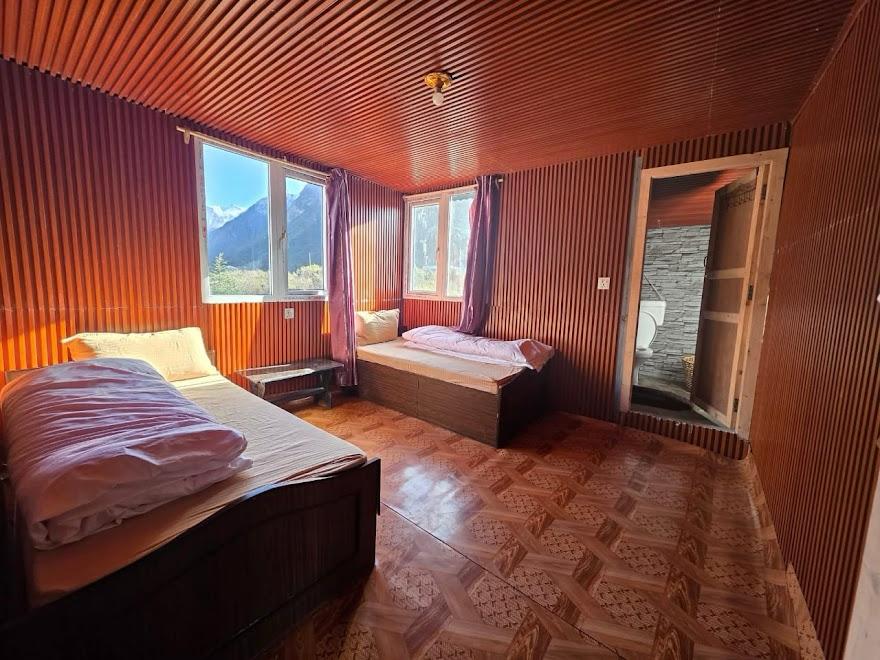
It is important to have realistic expectations about what accommodation looks like on the Manaslu Circuit Trek. This is not the Everest region where tea houses have become surprisingly comfortable lodges with heated dining rooms and attached bathrooms. Many tea houses on the Manaslu route are family homes with extra rooms added on to the back or top.
Rooms are typically simple: a wooden or concrete room with two single beds, basic mattresses, and blankets. Attached bathrooms are rare in the upper sections. Shared squat or western toilets are common. Hot showers are available at some tea houses for a fee, but in the high section above 3,500 meters, options become more limited. Solar heated showers are increasingly available, but do not count on them every night.
The common areas of tea houses are usually where all guests gather, as these rooms have the only source of heat: a wood burning or yak dung burning stove in the center. These rooms become social spaces in the evening, which is one of the real pleasures of trail life.
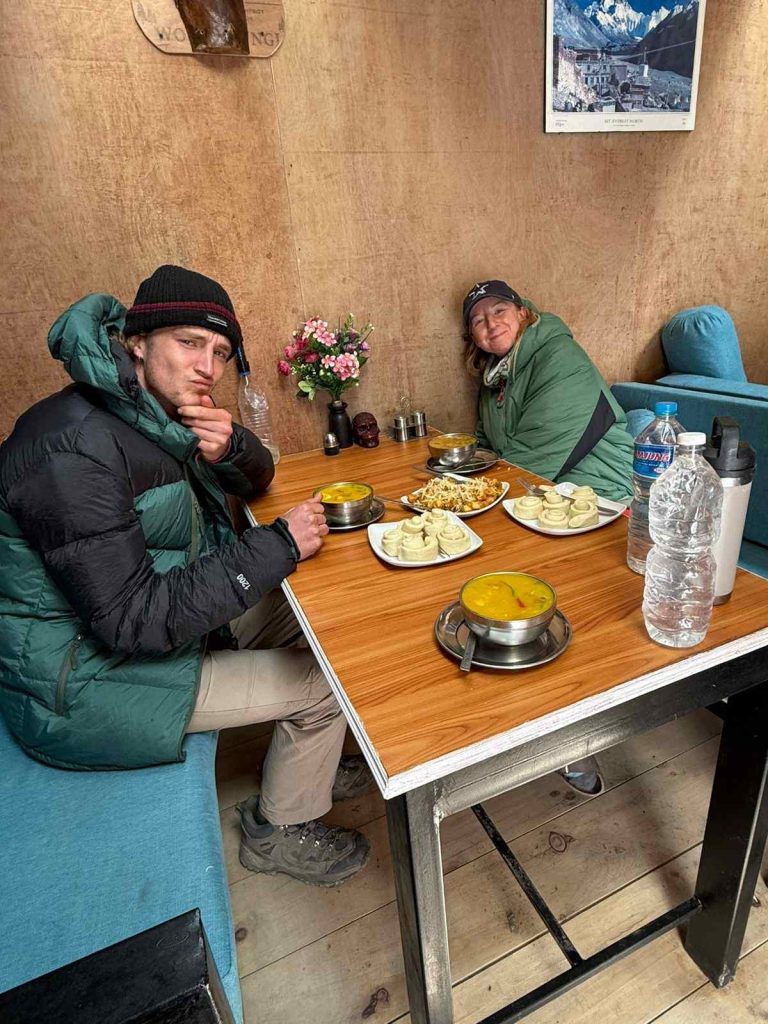
Food on the Manaslu Circuit is straightforward and nourishing. Dal bhat, the traditional Nepali meal of rice, lentil soup, and vegetable curry, is the staple and the best value option. It is filling, freshly prepared, and comes with free refills at most tea houses. Pasta, noodle soups, fried potatoes, eggs in various forms, pancakes, and porridge are all commonly available. Meat dishes are theoretically available but not recommended at high elevations due to freshness concerns given the supply chain.
Hydration is important at altitude. Bottled water is available along the route but contributes to plastic waste. We strongly recommend trekkers carry a good water filter or purification tablets and refill from the many natural water sources along the trail.
Transportation Options to and from the Manaslu Circuit
Getting to the trailhead and returning from the finish point both require road transport. This is part of the journey and not always a smooth one.
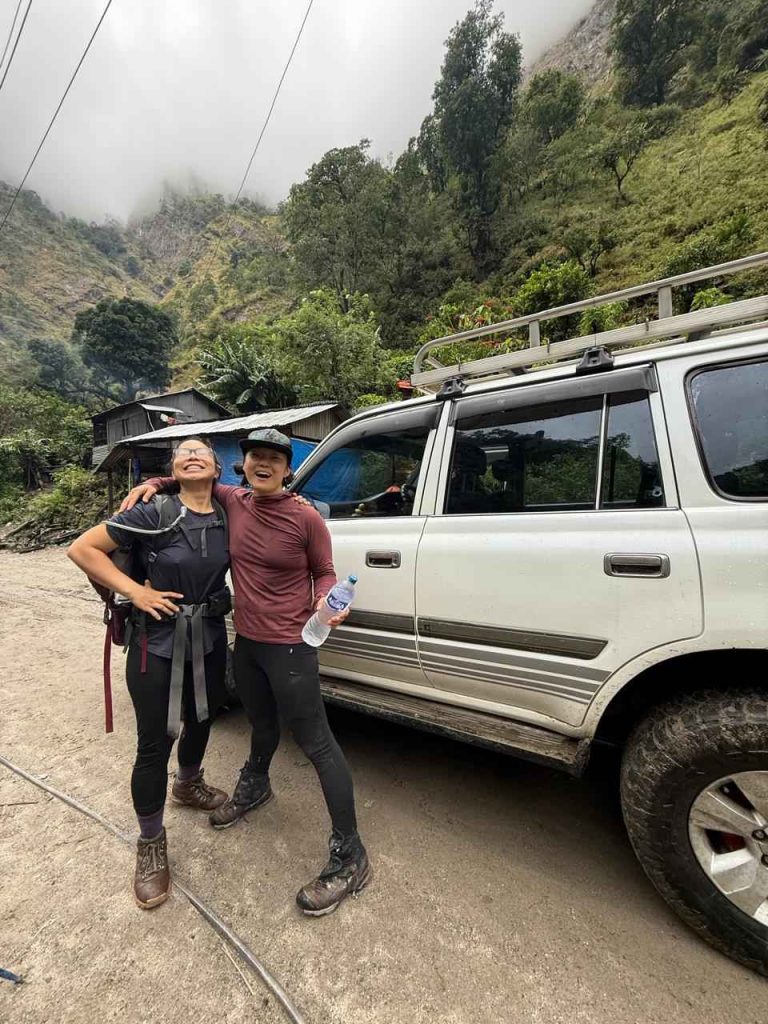
To the Trailhead: The Manaslu Circuit Trek typically begins at Soti Khola, which is accessible from Kathmandu via Gorkha. The road from Gorkha to Soti Khola is unpaved and rough in many sections. A private jeep takes between 8 and 10 hours and is the most comfortable option. Local buses are slower and less comfortable but significantly cheaper.
From the Finish Point: The trek ends near Dharapani on the Annapurna Circuit. From Dharapani, a jeep or local bus can take you to Besisahar, from where you have two options: continue by road to Pokhara (approximately 3 to 4 hours) or return to Kathmandu (approximately 7 to 8 hours).
Our agency arranges all transportation logistics for our clients. We coordinate pick up timing, book private jeeps where appropriate, and ensure you are not left standing on a roadside at the end of a two week trek.
Altitude Sickness and Acclimatization on the Manaslu Circuit Trek
Altitude sickness is the most serious health concern on the Manaslu Circuit Trek. The route climbs from below 1,000 meters to over 5,160 meters in a matter of days. If the body does not acclimatize properly, altitude sickness can progress from unpleasant to life threatening very quickly.
Acclimatization principles to follow:
Go high, sleep low whenever possible. The rest day at Sama Gaun exists for good reason. Use it to hike higher in the morning and return to a lower elevation to sleep. Do not skip this day because you feel fine. Altitude sickness often has a delayed onset, and how you feel on the acclimatization day is not necessarily how you will feel on the pass.
Hydrate constantly. Dehydration accelerates altitude sickness. Drink at least three to four liters of water per day on the upper sections of the trail, even when you are not thirsty.
Eat and sleep. Appetite decreases at altitude, but your body needs fuel. Force yourself to eat full meals even when you would rather sleep. Good nutrition directly supports your body’s ability to acclimatize.
Know the symptoms and descend if they worsen. Mild headaches and some breathlessness are normal. Severe headache, vomiting, loss of coordination, mental confusion, or persistent breathlessness at rest are warning signs of serious altitude sickness that require immediate descent. Never take medication to push through serious symptoms. Descent is the only cure.
Diamox (acetazolamide) is a prescription medication that can help prevent and manage altitude sickness. Discuss its use with your doctor before the trip. It is not a substitute for proper acclimatization.
What to Pack for Manaslu Circuit Trek
Packing well for the Manaslu Circuit Trek means finding the balance between carrying enough for safety and not destroying your knees with an overloaded pack. Below is a practical gear list based on our experience guiding clients on this route.
Layering system for cold: A quality moisture wicking base layer, a mid layer fleece or down jacket, and a waterproof shell jacket are non-negotiable. Nights above 4,000 meters will drop below freezing even in October.

Trekking trousers and gaiters: Convertible trekking trousers for variable temperatures, and waterproof gaiters for the snow on Larkya La.
Footwear: Waterproof, ankle supporting trekking boots that you have already broken in before the trek. Never wear new boots on a trek like this. Trekking sandals or camp shoes for tea house evenings.
Sleeping bag: A sleeping bag rated to at least minus 10 degrees Celsius is recommended. Tea houses provide blankets but they are sometimes insufficient on cold nights.
Trekking poles: Very strongly recommended. They reduce knee stress on the long descents and are useful for balance on icy sections of the pass.
Sun protection: At altitude, UV radiation is significantly stronger. Sunscreen SPF 50 or higher, UV blocking sunglasses, and a sun hat are all essential.
Other essentials: A quality headlamp with spare batteries for the pre-dawn Larkya La start, a basic medical kit with blister treatments, pain relievers, and altitude medication, a water filter or purification tablets, a power bank for charging devices, and cash in Nepali rupees as there are no ATMs beyond Gorkha.
Planning the Manaslu Circuit Trek and need help with permits, route, or itinerary?
WhatsApp us Email usCulture and Local Lifestyle in the Manaslu Region
One of the most compelling reasons to trek the Manaslu Circuit is the cultural experience. The villages you pass through represent communities that have lived in these valleys for generations, maintaining practices and traditions that connect directly to Tibetan Buddhist heritage.
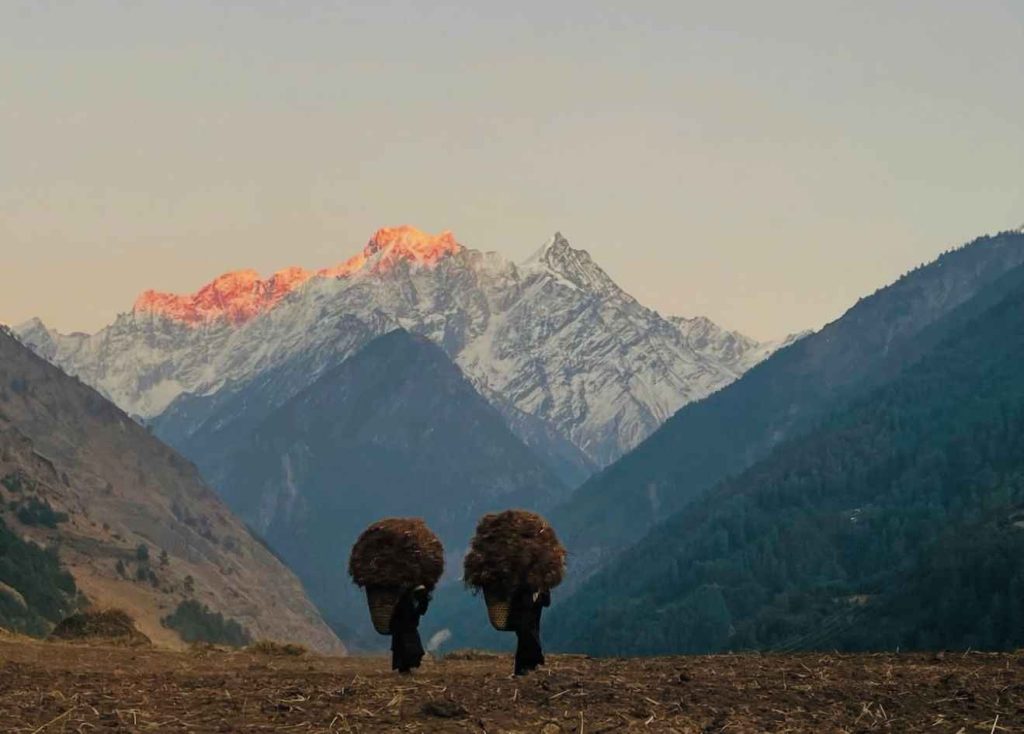
In the lower valleys, the villages are predominantly Hindu and Gurung with a farming based economy. Terraced fields of millet, maize, and rice cover every available slope. As you move higher, the culture shifts completely. Above Namrung, the communities are predominantly Tibetan Buddhist Nubri people, whose ancestors migrated from Tibet centuries ago.
In villages like Lho, Sama Gaun, and Samdo, daily life centers around Buddhism. Monasteries are not tourist attractions but active centers of community life. You will hear monks chanting in the early morning hours. You will see villagers doing their daily circumambulation of local stupas. Yaks are the primary animal for transport and agriculture at these elevations, and watching a herder move a yak train across a high alpine meadow is one of those images that stays with you long after the trek is over.
Tibetan Buddhism shows itself in the architecture too. Mani walls, which are long stone walls carved with Tibetan prayers, line the approach to villages. Chortens mark key points along the trail. Colorful prayer flags snap in the wind at every ridge and pass. There is a quiet reverence to this landscape that is impossible to ignore.
Tsum Valley Extension: The Hidden Gem
For trekkers with more time and a desire to go even deeper into restricted Nepal, the Tsum Valley extension transforms the Manaslu Circuit into one of the most complete cultural trekking experiences in Asia.
Tsum Valley branches off the main Manaslu Circuit near Jagat and penetrates into an even more remote and restricted area bordering Tibet. It has only been open to foreign trekkers since 2008 and sees very few visitors even today. The valley is sacred in Tibetan Buddhist tradition and home to some of the most pristine religious culture remaining in Nepal.
The Tsum Valley Trek adds approximately 8 to 10 days to the Manaslu Circuit and requires additional restricted area permits. The accommodation is even more basic than the main circuit, and the trail can be challenging and poorly marked in sections. This is not for those who prioritize comfort or efficiency. But for those who want to experience a part of Nepal that genuinely feels untouched, the Tsum Valley extension is extraordinary.
Our team at Manaslu Treks and Expedition has extensive experience running combined Manaslu Circuit and Tsum Valley itineraries. We can design the right combination based on your interests and available time.
Manaslu Circuit Trek vs Annapurna Circuit vs Everest Base Camp
Every serious trekker in Nepal eventually asks this question: how does the Manaslu Circuit compare to the Annapurna Circuit and Everest Base Camp?
The honest answer is that all three are excellent, but they offer fundamentally different experiences.
The Annapurna Circuit was once the gold standard of Himalayan trekking, but road construction has significantly shortened the trail and the most popular sections are now quite busy. It remains beautiful, especially around Thorong La Pass and the Kali Gandaki Gorge, but the trail experience is increasingly familiar and commercial.
Everest Base Camp is the most famous trekking destination in the world, and for good reason. The approach through the Khumbu valley is spectacular and the goal of reaching the base of the world’s highest mountain is deeply satisfying. But the trail is extremely busy from late September through November, and the experience in peak season can feel surprisingly crowded.
The Manaslu Circuit Trek occupies a different category. It is more remote, more culturally intact, more physically demanding, and more logistically complex than either of the above. It has fewer trekkers, which means more genuine interaction with local communities and fewer queues at tea house toilets. The scenery is comparable to both routes and in some ways superior given the intimate proximity to Manaslu throughout much of the journey.
If you have already done Annapurna or Everest Base Camp and want something that pushes you further and rewards you more deeply, the Manaslu Circuit is the natural progression.
Is Manaslu Circuit Trek Worth It?
After everything we have described above, this is the question that matters most. The Manaslu Circuit Trek requires genuine effort, real cost, and careful planning. It involves multiple permits, mandatory guides, basic tea houses, cold nights, and a genuinely demanding high pass crossing. Is it worth all of that?
Yes. Without any qualification.
Every trekker we have guided on the Manaslu Circuit has returned with one consistent reflection: this was more than they expected. More beautiful, more culturally rich, more physically satisfying, and more personally meaningful than they anticipated.
The combination of a mountain of rare stature, an intact cultural landscape, a trail that feels wild and unstructured, and a physical challenge that tests and rewards in equal measure makes the Manaslu Circuit Trek one of the finest trekking routes in the world. Not just in Nepal. In the world.
Who Is This Trek Suitable For
The Manaslu Circuit Trek is suitable for trekkers who are physically fit and genuinely motivated. You do not need mountaineering experience or technical skills. You do need the following:
A solid aerobic base built through regular exercise in the weeks and months before the trek. Good mental resilience for managing basic living conditions, cold, and long days on the trail. A genuine interest in the experience of remote mountain travel rather than just the achievement of a summit or destination. Realistic expectations about what a tea house trek involves at higher altitudes.
The trek is not suitable for very young children, elderly individuals with heart or respiratory conditions, or anyone who has not been medically cleared for high altitude activity. We recommend consulting a physician before booking if you have any concerns about altitude or cardiovascular fitness.
The trek is ideal for trekkers in their 20s, 30s, 40s, and healthy 50s who have done some multi-day hiking before and want to take on something more serious. It is also excellent for those who have already completed more popular Nepal treks and are ready for something less traveled.
Safety Tips and Real Trekking Advice from the Field
After years of leading groups on the Manaslu Circuit Trek, we have a few pieces of practical advice that go beyond what you typically read in travel guides.
Start every pass day early. Not because it is advised, but because Himalayan weather changes fast in the afternoon. The Larkya La Pass should be completed before noon if at all possible.
Do not trust your phone for navigation. Carry a printed map or a downloaded offline map. Cell coverage disappears for significant stretches of the route and GPS can be unreliable in steep gorge terrain.
Treat every crossing bridge with respect. Suspension bridges in Nepal’s mountains range from sturdy modern structures to old and worn traditional constructions. Cross single file, move steadily, and do not be brave.
Budget extra days. Weather can close the Larkya La pass or make conditions dangerous. Having one or two flex days in your itinerary means a weather delay does not force you into a dangerous situation.
Build relationships with your guide. Your guide is not just a path finder. They are a cultural interpreter, a safety professional, and often the most knowledgeable person you will ever meet about a specific place on earth. Ask questions. Listen. The trek is better for it.
Listen to your body. The mountain will still be there next year. You only have one body. If you feel genuinely unwell above 4,000 meters, descend first and discuss options second.
Why Trek with Manaslu Treks and Expedition
We are a Nepali company founded by trekkers from the Manaslu region itself. Our guides grew up in the villages along this trail. They have crossed the Larkya La dozens of times. They know which tea house cooks the best dal bhat at 4,000 meters and which section of the trail becomes genuinely dangerous after heavy snow.
We are not a mass-market operator running dozens of groups simultaneously through a conveyor belt booking system. Every group we take on the Manaslu Circuit Trek is planned individually, with attention to fitness levels, interests, dietary needs, and personal goals. We handle every permit in-house, arrange logistics we have refined over many seasons, and provide guides we would trust with our own families on the mountain.
We believe the Manaslu Circuit Trek is among the greatest trekking experiences available to anyone, anywhere. We want every person we guide on this route to return home with memories that last a lifetime. That is not a marketing phrase. It is the standard we hold ourselves to on every trip.
Our service includes pre-trip consultation, all permit processing, airport transfers, guide and porter services, accommodation in Kathmandu before and after the trek, and full support in case of any medical or logistical emergency on the trail. We are registered with the Nepal Tourism Board and all our guides are certified by the Nepal Tourism and Hotel Management Training Centre.
Book Your Manaslu Circuit Trek Today
The trail is waiting. Manaslu is waiting. The tea houses with their smoky stoves and their views of glaciers in the morning light are waiting for you.
If you are ready to experience one of Nepal’s last great wilderness trekking routes before it becomes as well-known as the trails it deserves to stand alongside, now is the time to plan your journey.
Contact Manaslu Treks and Expedition today to discuss your Manaslu Circuit Trek itinerary, cost, and booking details. Whether you have a specific date in mind or are just beginning to research your options, our team will give you honest, experienced advice based on real knowledge of this route.
Reach out to us through our website, by email, or by WhatsApp. We respond to every inquiry personally and we look forward to helping you plan the trek of a lifetime.
u003cstrongu003eHow long is the Manaslu Circuit Trek?u003c/strongu003e
The Manaslu Circuit Trek typically takes 9 to 16 days to complete the main circuit. If you add the u003ca href=u0022https://manaslutreks.com/trip/23-day-tsum-valley-manaslu-circuit-trek/u0022u003eTsum Valley Trek u003c/au003eextension, the total duration increases to 18 to 24 days depending on your pace and acclimatization needs.
How difficult is the Manaslu Circuit Trek?
The Manaslu Circuit Trek is rated moderately difficult to difficult. The biggest challenge is crossing the Larkya La Pass at 5,160 meters, which requires a pre-dawn start, good physical fitness, and proper acclimatization. No technical climbing skills are needed but solid trekking experience is recommended.
What permits do I need for the Manaslu Circuit Trek?
You need four permits for the Manaslu Circuit Trek. These are the Manaslu Restricted Area Permit, the Manaslu Conservation Area Permit (MCAP), the Annapurna Conservation Area Permit (ACAP), and a TIMS card. All permits can be arranged through a registered trekking agency in Kathmandu.
u003cstrongu003eIs a guide mandatory for the Manaslu Circuit Trek?u003c/strongu003e
Yes. The Nepali government requires all trekkers in the Manaslu restricted zone to be accompanied by a licensed guide. Independent trekking without a guide is not permitted and you will be turned back at checkpoints.
What is the best time for the Manaslu Circuit Trek?
The best time for the Manaslu Circuit Trek is spring from March to May and autumn from September to November. October is considered the single best month due to clear skies, stable weather, and excellent mountain views.
u003cstrongu003eHow much does the Manaslu Circuit Trek cost?u003c/strongu003e
The u003ca href=u0022https://manaslutreks.com/how-much-does-the-manaslu-circuit-trek-cost/u0022u003eManaslu Circuit Trek Cost u003c/au003etypically start from USD 1,100 to USD 2,000 per person. This includes permits, guide fees, tea house accommodation, and food on the trail. International flights and personal gear are not included in this estimate.
What is the highest point of the Manaslu Circuit Trek?
u003cstrongu003eThe highest point of the Manaslu Circuit Trek is the Larkya La Pass at 5,160 meters above sea level. This is the most physically demanding section of the entire route and is usually crossed on day 12 of the standard itinerary.u003c/strongu003e
What is Larkya La Pass and why is it important?
u003ca href=u0022https://manaslutreks.com/manaslu-circuit-trek-peaks-larkya-la-pass-route-tips/u0022u003eLarkya La Passu003c/au003e at 5,160 meters is the highest and most iconic point of the Manaslu Circuit Trek. Crossing it is the defining moment of the entire journey. The pass offers a panoramic view of Manaslu, Himlung Himal, Cheo Himal, and the broader Himalayan range. The crossing takes 8 to 9 hours in total including the descent to Bhimthang.
What kind of accommodation is available on the Manaslu Circuit Trek?
u003ca href=u0022https://manaslutreks.com/accommodation-in-manaslu-circuit-trek-2/u0022u003eAccommodation on the Manaslu Circuit Treku003c/au003e is in basic tea houses run by local families. Rooms have simple beds and blankets. Attached bathrooms are rare in the upper sections. Hot showers are available at some tea houses for an extra fee. Expect simple, clean, and functional rather than comfortable or luxurious.
Can I do the Manaslu Circuit Trek in winter?
Winter trekking from December to February is possible but only recommended for experienced trekkers with proper cold weather gear. The Larkya La Pass may be snowbound and require additional equipment. Temperatures drop well below freezing at higher elevations and some tea houses may be closed.
How does the Manaslu Circuit Trek compare to Everest Base Camp?
The Manaslu Circuit Trek is more remote, less crowded, and more culturally intact than the Everest Base Camp trek. It is physically comparable in difficulty but offers a full circuit experience rather than an out and back route. Manaslu is the better choice for trekkers seeking solitude and authentic cultural immersion.
Why should I trek with Manaslu Treks and Expedition?
Manaslu Treks and Expedition is a local Nepali company with deep roots in the Manaslu region. Our guides have crossed the Larkya La Pass dozens of times and know every section of the trail intimately. We handle all permits, logistics, and emergency support so you can focus entirely on the experience. We are registered with the Nepal Tourism Board and committed to responsible, community-focused trekking.
What is the Serang Gompa Trek, and can it be combined with the Manaslu Circuit Trek?
u003ca href=u0022https://manaslutreks.com/serang-gompa-trek/u0022u003eSerang Gompa Treku003c/au003e is a hidden gem trekking route in the Manaslu region that takes you to the ancient and sacred Serang Gompa monastery, perched dramatically in the high mountains above the Budhi Gandaki valley. The Serang Gompa Trek offers breathtaking views of Manaslu, Himalchuli, and the surrounding Himalayan peaks while passing through remote Tibetan Buddhist villages that very few foreign trekkers have ever visited.u003cbru003eYes, the Serang Gompa Trek can absolutely be combined with the Manaslu Circuit Trek as a side trip or extension, making your overall Manaslu trekking experience even richer and more complete. The route to Serang Gompa branches off the main Manaslu Circuit trail and adds approximately 2 to 3 days to your itinerary depending on your starting point and pace.u003cbru003eThe Serang Gompa monastery itself is one of the most spiritually significant sites in the entire Manaslu region. The setting is extraordinary, sitting high above the valley floor with unobstructed views of the mountain giants that dominate this part of Nepal. For trekkers interested in Tibetan Buddhist culture and remote mountain scenery, the Serang Gompa Trek is one of the most rewarding detours available anywhere in the Himalayas.u003cbru003eBecause the Serang Gompa Trek falls within the Manaslu restricted area, the same permit requirements apply. A licensed guide is mandatory and the Manaslu Restricted Area Permit covers this extension. At Manaslu Treks and Expedition we have guided trekkers to Serang Gompa many times and can seamlessly incorporate it into your Manaslu Circuit Trek itinerary without disrupting the overall flow of your journey.
Manaslu Treks and Expedition
Your trusted partner for the Manaslu Circuit Trek in Nepal