Every trekker who books the Manaslu Circuit asks me about permits, flights, and fitness requirements before they leave home, and almost nobody asks me what the teahouses are actually like, which is strange given how much of this trip you spend inside them. You will sleep in a teahouse roughly eighteen to twenty nights depending on your itinerary, eat every meal in one, and spend long cold evenings in their dining rooms waiting out the dark. The lodge you stay in shapes your experience of this trek almost as much as the trail itself does, and yet most guides I see online reduce the whole subject to a single price table and move on. This guide is the one I actually give clients who ask me what to expect, stage by stage, room by room, built from years of walking this same route and watching which teahouses genuinely deliver a good night’s rest and which ones you push through only because there is nowhere better to stop. It is not about what things cost, our full cost breakdown already covers that in detail, but about what it actually feels like to stay in each one.
What a Manaslu Teahouse Actually Is
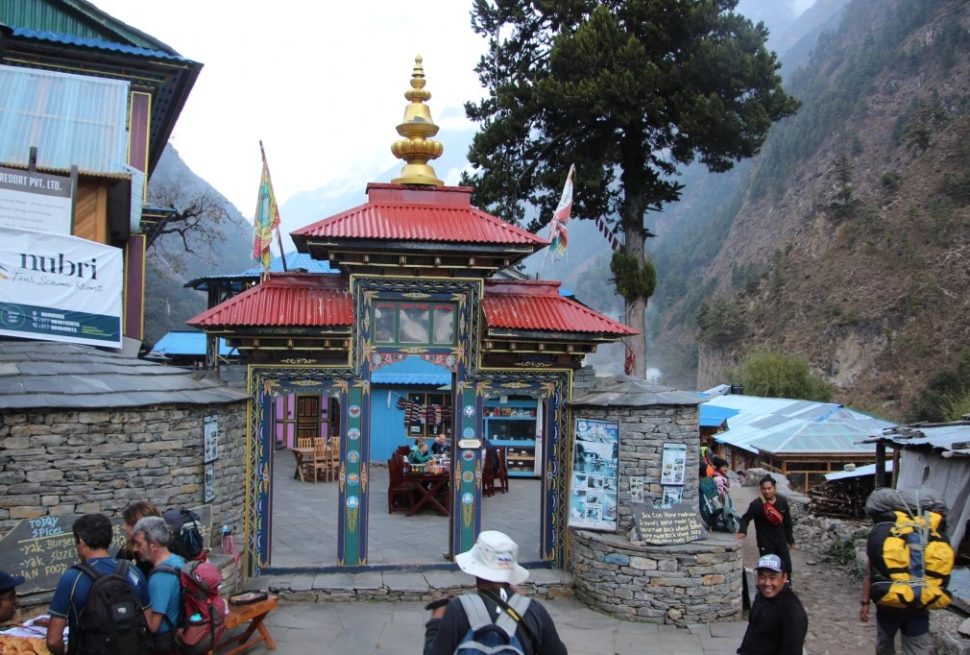
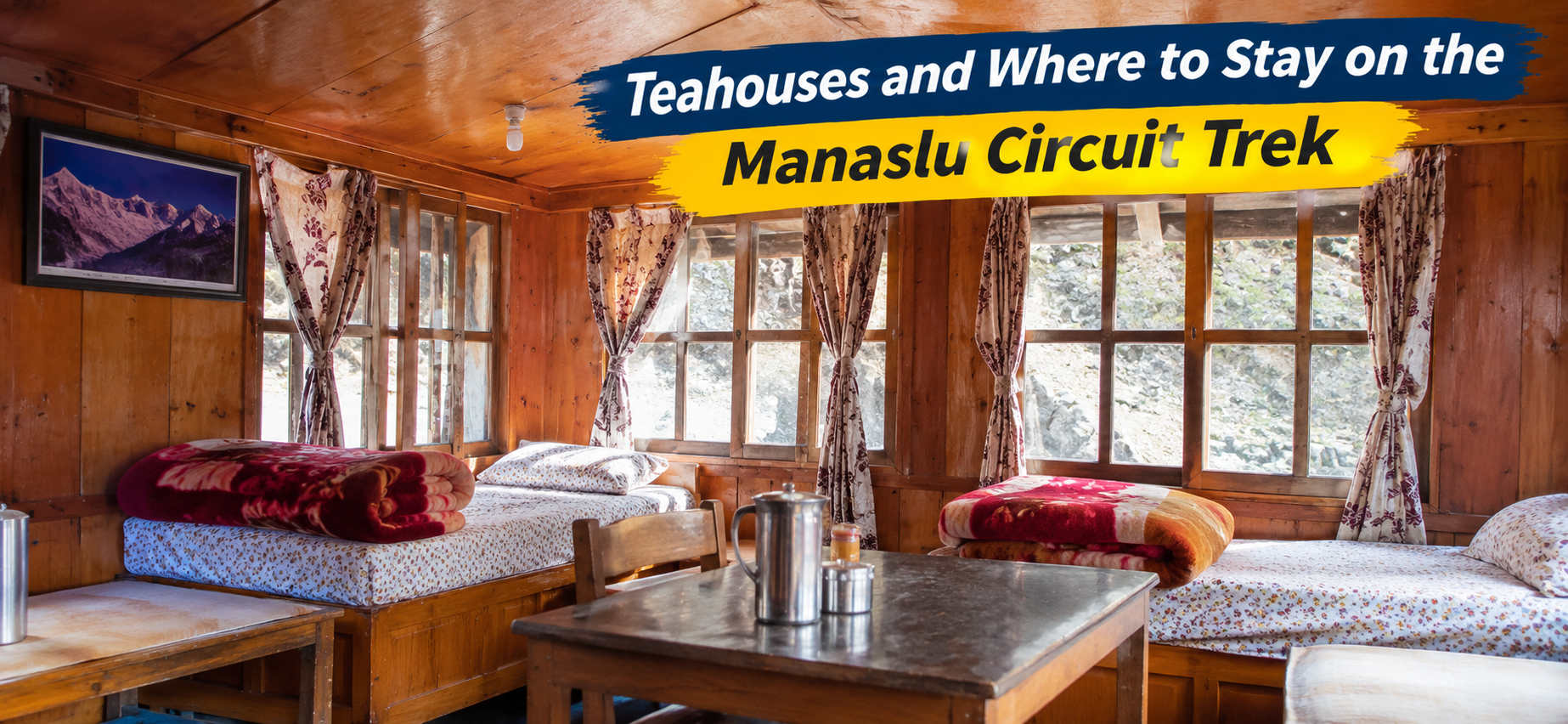
Before getting into the stage-by-stage detail, it helps to set expectations for what a teahouse on this specific route looks like, since first-time Himalayan trekkers sometimes arrive picturing something closer to a mountain hostel or a guesthouse on the Annapurna Circuit’s busier sections. A Manaslu teahouse is typically a family-run lodge, often the home of the family who built and operates it, with a handful of basic guest rooms attached or built as a separate block, and a central dining room that functions as the kitchen, restaurant, communal gathering space, and sometimes the only heated room in the entire building. Rooms are almost always twin-share with two single beds, a thin foam mattress, a pillow, and a blanket that varies wildly in quality and warmth from one teahouse to the next, which is exactly why every packing list for this trek insists on bringing your own sleeping bag rated for genuinely cold nights rather than relying on what is provided.
Walls on this route are typically basic wood paneling or plywood, not solid stone or concrete construction, which means sound carries between rooms more than most first-time trekkers expect, and privacy is more a matter of politeness and shared understanding than physical isolation. This matters more at some stops than others, and I will flag the specific villages where thin walls are a genuine consideration rather than a minor inconvenience. Bathrooms are shared on this route almost everywhere outside the lower villages, typically a basic squat or Western-style toilet in a separate block a short walk from your room, and attached private bathrooms are rare enough on the Manaslu side that you should not plan around expecting one.
Soti Khola and Machha Khola: The Most Comfortable Nights of the Whole Trek
Whichever trailhead your itinerary starts from, Soti Khola or the slightly further Machha Khola, these first-night teahouses are, without much competition, the most comfortable lodging you will experience on this entire trek, and it is worth appreciating them rather than treating them as an afterthought before the “real” trek begins. Several lodges here have been upgraded in recent years with better mattresses, more reliable electricity, and in a few cases actual hot showers rather than the bucket-and-solar-bag arrangement you will rely on further up the valley. Rooms are generally larger and better separated than anything you will find above Jagat, and WiFi, where available, tends to be genuinely functional rather than the intermittent, slow connection you will get used to higher up.
My advice for this first night is simple: enjoy it. Take the hot shower if the lodge offers one, charge every device fully, and do not assume the comfort level you experience here is representative of what is coming. Several clients over the years have told me they wished someone had warned them that Soti Khola’s comfort was the high point of the trip’s accommodation rather than a floor, and I would rather you know that going in.
Khorlabesi, Tatopani and Jagat: The Transition Begins
Moving through Khorlabesi, Tatopani (notable for its natural hot spring, a genuine highlight if your schedule allows a soak), and into Jagat, teahouse quality starts to show more variation stop to stop, and this is where I recommend trekkers start paying closer attention to which specific lodge their guide is choosing rather than assuming uniform quality. Jagat in particular has a decent cluster of lodges to choose from, several with reasonably well-maintained rooms and solid dining halls, and it functions as something of a last “normal village” feel before the trail starts climbing more seriously into less-visited territory.
WiFi at this stage is generally available but inconsistent, often a paid add-on of a few hundred rupees for an access code rather than a free amenity, and charging ports in rooms are rare; expect to charge devices in the dining room, sometimes for a small fee, and budget your device charging strategy accordingly rather than assuming your room will have a working outlet. Hot showers here are typically solar-bag or gas-heated rather than a plumbed hot water system, perfectly adequate but not something to expect instantly on arrival; ask when you check in and plan your shower timing around when the water will actually be warm.
Deng and Namrung: Simpler Lodges, Genuine Mountain Character
Deng is a smaller, quieter stop with fewer lodge options than villages further down the valley, and the teahouses here are noticeably more basic, simple rooms, simpler dining halls, less consistent electricity. What Deng lacks in amenities it makes up for in atmosphere; this is genuinely remote mountain territory now, and the lodges reflect that honestly rather than trying to project a comfort level the location cannot support. Namrung, by contrast, has developed into a reasonably well-equipped stop in recent years, with a few lodges offering solidly built rooms and dining halls that stay noticeably warmer in the evening than what you will find in Deng, likely a function of Namrung’s slightly larger permanent population and more established trekking infrastructure.
This is also roughly where I start reminding clients that device charging increasingly comes with a fee attached, sometimes charged per hour or per device, and that you should carry a power bank charged at Soti Khola or Jagat as backup rather than relying entirely on teahouse charging as you move higher.
Lho: One of the Most Comfortable Stops in the Upper Valley
Lho is a village I encourage clients to enjoy rather than rush through, both for its cultural significance, home to Ribung Gompa, one of the most atmospheric monasteries on the route, and for its genuinely good lodge options relative to its altitude. Several teahouses in Lho offer rooms with real views toward Manaslu on a clear morning, a detail worth asking about when you check in rather than accepting whichever room is offered first, and the dining halls here tend to be well-run and sociable, often the best place on the upper trail to compare notes with other trekking groups heading the same direction.
Hot water in Lho is generally available via solar bag or gas heater, and WiFi, where offered, works reasonably well by upper-valley standards, though do not expect speeds adequate for video calls. This is a good stop to budget a little extra time for a relaxed afternoon rather than arriving late and leaving early, particularly if you are planning a side visit to the monastery.
Samagaon: The Widest Choice of Lodges on the Entire Route
Samagaon is the largest village in the upper Manaslu region and, correspondingly, offers the widest range of teahouse choice anywhere on the circuit, with somewhere in the range of six to eight established lodges operating depending on the season, a genuinely useful thing to know since it means you are rarely stuck with a single bad option the way you can be at smaller, single-lodge stops higher up the trail. Because most itineraries include a full acclimatisation day here, your choice of lodge matters more at Samagaon than almost anywhere else on the trek; you are not just passing through for one night, you are based here for two.
Quality varies meaningfully between Samagaon’s lodges. Some offer genuinely solid construction, better insulated dining rooms, and more reliable solar power setups, while others are serviceable but basic, better suited to a single overnight than a two-night stay. If your trekking agency has strong relationships in Samagaon, and ours does, ask specifically for a recommendation on which lodge to base your acclimatisation day at, rather than accepting whichever is first available, since the difference in comfort over two nights is more noticeable here than a one-night stop elsewhere. Hot showers are widely available across Samagaon’s lodges, generally solar or gas heated, and WiFi access is reasonably common, usually paid, with speed that is workable for messaging though not much more. This is also the last stop where device charging is relatively straightforward and not yet prohibitively expensive, worth keeping in mind as you plan your power budget for the remainder of the trek.
Samdo: Fewer Choices, Still Reasonably Comfortable
Samdo offers a noticeably smaller selection than Samagaon, typically three to four operating lodges depending on the season, reflecting the village’s smaller permanent population and its position closer to the Tibetan border trading post history than a major trekking hub. What Samdo’s lodges lack in quantity they generally make up for in character; several of the operating families here have run their teahouse for multiple generations, and conversations with lodge owners about the village’s trading history with Tibet, before the border tightened, are some of the more memorable off-trail moments my clients report from this stretch of the trek.
Physical comfort drops a notch from Samagaon here, consistent with the altitude and remoteness; expect more basic insulation, colder nights even inside the dining hall, and less consistent hot water availability, sometimes dependent on whether enough solar charge accumulated during the day. WiFi, where available at all, is unreliable at best, and I would recommend treating Samdo as a stop where you mentally disconnect rather than expect to stay in touch with home, which, depending on your perspective, some clients tell me is actually one of the more appreciated parts of the stop.
Dharamsala: The Stop You Must Plan Around, Not Just Pass Through
Dharamsala, the last stop before the push over Larkya La, deserves more specific attention than any other village on this route, because it is genuinely different from everywhere else described in this guide. Dharamsala is not a real village in the way Samagaon or Lho are; it exists almost entirely to serve trekkers staging for the pass crossing, and accommodation here is limited to around two basic lodges, sometimes described locally as more of a single larger facility with very simple shared dormitory-style arrangements than the twin-room teahouses you have stayed in everywhere else on the trek.
Walls at Dharamsala are thinner than anywhere else on the route, and privacy is minimal; most trekking groups end up sharing larger communal sleeping spaces rather than individual twin rooms, a direct function of how many trekkers converge here on any given night before attempting the pass the following morning. This is also the coldest overnight stop on the standard itinerary, sitting higher than Samdo, and heating is limited essentially to body heat and your own sleeping bag rather than any reliable room heating. Hot water is not a realistic expectation here; most trekkers simply do without a shower the night before the pass crossing.
Because of how limited capacity is at Dharamsala, and because every trekking group on a similar itinerary converges here on the same handful of nights each week during peak season, booking ahead through your agency matters more at this single stop than at any other point on the entire circuit. A well-connected local agency with an established relationship with the Dharamsala operators can secure you a marginally better spot, closer to the stove in the dining area, for instance, than a group arriving without any advance arrangement. This is one of the clearest examples on this whole trek of why the agency you choose and the relationships they maintain along the route genuinely affect your night-to-night experience, not just your paperwork.
After the Pass: Bimthang and the Descent Toward Dharapani
Crossing Larkya La and descending into the Annapurna side of the circuit brings a genuine and immediate improvement in teahouse quality, mirroring the broader shift from the restricted, less-developed Manaslu side to the longer-established Annapurna Circuit infrastructure. Bimthang, the first stop after the pass, offers a small number of lodges with noticeably better construction and more reliable amenities than Dharamsala or even Samdo, a welcome change after the demands of pass-crossing day, and most trekkers describe arriving at Bimthang as something close to a psychological relief as much as a physical one.
Continuing down through Tilije and toward Dharapani or Besisahar, where most itineraries conclude or connect to road transport, teahouse standards rise further still, benefiting from the Annapurna Circuit’s decades of more developed trekking infrastructure. Hot showers become consistently reliable, WiFi improves meaningfully, and by the time you reach a roadhead village, you will likely find amenities approaching what you experienced on your very first night at Soti Khola, closing the loop on what has been, accommodation-wise, a genuine journey from comfortable to basic and back to comfortable again.
Teahouses in Tsum Valley: A Different Rhythm
If your itinerary includes the Tsum Valley extension, branching off after Philim, the teahouse experience here runs on its own separate rhythm from the main Manaslu Circuit, since Tsum sees meaningfully fewer trekkers and developed its lodging infrastructure later, following the valley’s later opening to foreign visitors in 2008. Chumling and Chhokangparo, two of the more established stops in lower and mid Tsum, offer decent, if basic, lodges with friendly, personally attentive family-run service, often with fewer other trekking groups to share the dining room with compared to the main circuit, a genuine draw for anyone seeking a quieter trekking experience.
Higher up toward Nile and the Mu Gompa area, lodges become more basic again, consistent with the pattern seen throughout this guide of accommodation quality tracking remoteness and altitude. Expect simple rooms, limited or no WiFi, and hot water availability that depends heavily on the day’s solar charge and the specific lodge’s setup. What Tsum’s higher lodges lack in amenities, they generally make up for with a level of quiet and genuine remoteness that is increasingly hard to find anywhere else in Nepal’s more heavily trekked regions, and most clients who add the Tsum extension tell me afterward that the simpler accommodation was a fair trade for the valley’s atmosphere.
WiFi and Connectivity: What to Realistically Expect by Stage
Connectivity on this route follows a fairly predictable pattern tied to altitude and distance from the roadhead, and understanding this before you leave helps set realistic expectations rather than frustration in the moment. From Soti Khola through Jagat, WiFi is reasonably common and functional enough for messaging and occasional light browsing, sometimes free, more often a paid add-on of a few hundred rupees. From Deng through Namrung and Lho, connectivity becomes patchier, generally present but slow, adequate for a quick text message home but not reliable for calls or significant data use. By Samagaon and especially Samdo, treat any WiFi you find as a pleasant surprise rather than an expectation, and at Dharamsala, plan for complete disconnection. Our dedicated connectivity guide covers local SIM card options and mobile signal patterns in more depth if staying in touch matters significantly to your trip planning.
Hot Showers and Washing: Managing Expectations Stage by Stage
Hot water across this entire route comes from one of two sources: a solar-heated bag system, essentially a large black plastic bag filled with water and left in the sun during the day, or a gas-heated bucket or shower system, more common at higher, less sunny stops where solar heating is less reliable. Neither system delivers anything close to a continuous hot shower in the way most trekkers are used to at home, and both are weather and timing dependent; a cloudy afternoon at a solar-bag lodge often means no hot water that evening regardless of what you were told at check-in.
My practical advice is to shower when hot water is genuinely available rather than holding out for your preferred time of day, and to accept that from Samdo onward, a hot shower becomes a genuine highlight rather than a daily expectation. Baby wipes and a small quick-dry towel are worth packing specifically for the higher stages of this trek, where washing with hot water simply may not be realistically available on a given night, particularly at Dharamsala.
Room Types and What to Actually Ask For
Standard rooms across this entire route are twin-share with two single beds, and solo trekkers should expect to either pay a single supplement for a private twin room or, at busier stops, potentially share with another solo trekker of the same gender traveling with a different group, something worth clarifying with your agency before departure if privacy matters to you. A small number of the better-established lodges, particularly in Samagaon and at the roadhead villages on both ends of the trek, offer rooms with slightly better mattresses or marginally better window seals against the cold, and it is always worth asking your guide, who typically knows the specific lodge well, which room tends to be warmest or quietest before you settle in rather than accepting the first room offered without question.
At Dharamsala specifically, given the limited and often shared nature of accommodation there, manage your expectations toward a simple, communal arrangement rather than a private room, and focus your energy on getting an early, warm night’s sleep ahead of the pass crossing rather than on room comfort itself.
Food and the Dining Hall as the Real Social Center
The dining hall, not your bedroom, is where you will actually spend most of your waking evening hours on this trek, and its quality, typically measured by how warm it stays, how good the stove or heater is, and how sociable the atmosphere feels, matters more to overall trip satisfaction than most first-time trekkers anticipate. The better lodges on this route, Lho and the stronger options in Samagaon particularly, maintain genuinely warm, welcoming dining halls where trekking groups mix, swap trail information, and spend a comfortable evening before an early departure. Weaker lodges, more common at smaller, single-option stops, can leave you eating dinner in a cold, under-heated room with little atmosphere, which is one more reason agency-level lodge selection genuinely affects how enjoyable your evenings feel, not just your sleep quality.
Electricity and Power: How Lodges Actually Keep the Lights On
Almost every lodge on this route generates its own electricity rather than drawing from a grid connection, typically through a combination of micro-hydro where a village has access to a suitable stream, solar panels, or in some cases a small diesel generator reserved for essential evening lighting hours only. This matters practically in a few ways worth understanding before you arrive. Power is generally available in the dining hall each evening for a set window of a few hours after dark, often from roughly six to nine or ten at night, after which many lodges switch off entirely to conserve fuel or battery capacity, so charging devices or using any electrical equipment outside that window is often not possible regardless of what you are willing to pay for it.
Room lighting, where it exists at all, is frequently a single dim bulb rather than anything bright enough to read comfortably by, which is one more reason a reliable headlamp earns its place near the top of every packing list for this trek. Solar-dependent lodges, more common above Samagaon, are naturally less reliable during extended cloudy stretches, and during the shoulder seasons when daylight hours are shorter, you may find less power available in the evening than during peak spring or autumn conditions. None of this is a flaw in how these lodges operate; it reflects the genuine logistical challenge of running any electrical infrastructure at all in villages this remote, often a full week’s walk or more from the nearest road, and most trekkers find that adjusting to this rhythm, rather than fighting it, becomes part of the trek’s appeal rather than a hardship.
Peak Season Crowding and How It Changes the Teahouse Experience
Manaslu sees far fewer trekkers than Everest or Annapurna, but the route’s peak season, roughly the heart of autumn in October and November and the strongest weeks of spring in April and May, still brings noticeably more groups through the same limited set of lodges at stops like Samagaon and especially Dharamsala. During these peak weeks, dining halls fill up more fully in the evening, the best rooms at any given lodge go to whichever group arrives earliest in the afternoon, and at Dharamsala specifically, capacity constraints become most acute, with some trekkers ending up in more cramped shared arrangements than they might experience during quieter weeks.
If you are trekking during a shoulder season window, late winter before the main spring season builds, or just after the main autumn season winds down, you will generally find quieter dining halls, more room choice at multi-lodge stops, and a more relaxed, personal atmosphere with lodge owners who have more time to talk. The trade-off, as covered in more depth in our itinerary and seasonal planning guide, is less certain weather and a higher chance of some higher lodges operating on reduced capacity or closing certain rooms entirely. Arriving at any stop earlier in the afternoon rather than later, a general rule of good practice on this trek regardless of season, gives you first choice of room and a better seat in the dining hall before it fills, and is a habit worth building into your daily pace from day one.
Practical Advice for a Better Night’s Sleep on This Route
- Bring a sleeping bag rated to at least negative fifteen degrees Celsius, since blanket quality and room heating vary too much to rely on teahouse bedding alone, particularly above Samagaon.
- Carry a lightweight sleeping bag liner, both for an extra warmth layer and for hygiene across many consecutive nights of teahouse use.
- Pack a reliable headlamp with spare batteries, since shared bathroom blocks are often a short, unlit walk from your room and room lighting can be inconsistent, especially at higher, more basic stops.
- Carry a power bank charged at the lower villages, since charging becomes progressively more expensive and less convenient the higher you climb, and is essentially unavailable at Dharamsala.
- Ask your guide which specific lodge they recommend at multi-option stops like Samagaon, rather than assuming all available teahouses at a given village are comparable.
- Accept Dharamsala’s basic, shared conditions as a one-night trade-off for the pass crossing ahead, rather than expecting the standard twin-room privacy you had everywhere else on the trek.
- Shower when hot water is actually available rather than waiting for a preferred time, particularly from Samdo onward where availability is weather dependent.
- Pack earplugs, useful both for thin-walled rooms at busier stops and for the shared communal sleeping arrangement at Dharamsala.
For a full breakdown of what each stage of this route actually costs, including accommodation, meals, and the additional fees for hot water, WiFi, and charging referenced throughout this guide, our complete cost guide lays out exact current-season figures. And if you are still finalising your itinerary and want to understand how teahouse stops map onto a day-by-day walking schedule, our full itinerary guide covers that ground in detail.
Frequently Asked Questions
Do I need to book teahouses in advance on the Manaslu Circuit?
Your trekking agency typically arranges accommodation as part of your package, coordinating directly with lodge owners along the route. The one stop where advance arrangement genuinely matters is Dharamsala, given its very limited capacity and the fact that most groups on similar itineraries converge there on the same nights.
Which village has the best teahouses on the whole route?
Soti Khola, at the very start of the trek, offers the most comfortable accommodation overall, though it is really the warm-up rather than the trek itself. Among the higher villages, Lho and the better lodges in Samagaon offer the strongest combination of comfort, atmosphere, and amenities.
Is Dharamsala really as basic as people say?
Yes. Dharamsala has only around two basic lodging facilities, thin walls, limited privacy, and no realistic expectation of hot water or heating beyond your own sleeping bag. Treat it as a one-night functional staging point before the pass rather than judge the rest of the trek’s accommodation by it.
Can I get a private room for the whole trek if I am traveling solo?
In most cases yes, for an additional single supplement, though at Dharamsala specifically, limited capacity may mean a more communal arrangement regardless of what you have booked elsewhere on the trek. Discuss this specific stop with your agency in advance if privacy is a priority.
Is WiFi available throughout the trek?
No, and you should not plan around it being available. It is reasonably reliable in the lower villages through Jagat, patchy through the middle section, and should not be expected at all from Samdo onward, particularly at Dharamsala.
How reliable are hot showers at altitude?
Hot water above Samagaon depends on solar charge or gas availability and is genuinely weather and timing dependent rather than guaranteed. Shower when it is available rather than holding out for a specific time, and accept that a hot shower the night before the pass crossing at Dharamsala is not realistic.
Are teahouses in Tsum Valley as developed as those on the main Manaslu Circuit?
Generally no. Tsum Valley opened to trekkers later than the main circuit and sees considerably less traffic, so lodges there, especially higher up near Nile and Mu Gompa, are more basic, though often with a quieter, more personal atmosphere than busier main-circuit stops.
A Final Word Before You Book
Where you sleep on this trek shapes how you experience it just as much as the mountain views do, and understanding the real texture of each stop, not just its price, helps you arrive with the right expectations and the right gear. Soti Khola will spoil you briefly, the middle villages will settle into a comfortable, honest rhythm, Dharamsala will test your tolerance for one genuinely basic night, and the descent back toward the Annapurna side will feel like a small luxury by comparison. If you have specific questions about accommodation at any stage of this trek, whether about Samagaon’s lodge options for your acclimatisation days, what to expect at Dharamsala, or how the Tsum Valley extension compares, reach out to us directly. You can call or message us on WhatsApp at +977 9869225929, email us at info@manaslutreks.com, or use our contact page, and we will help you plan an itinerary with accommodation that matches what you are actually looking for from this trek.