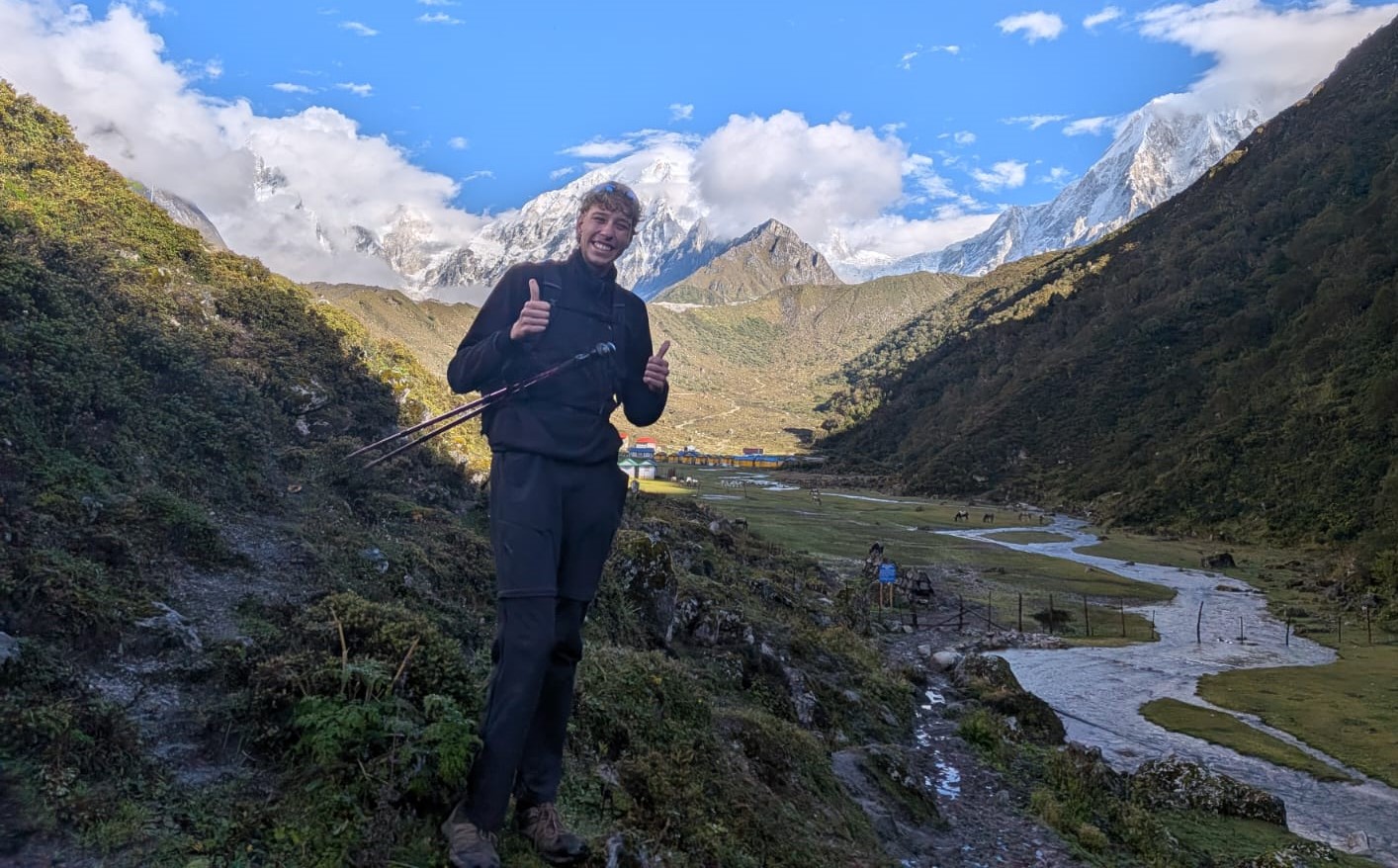
Every season we talk to trekkers who found three or four listings for the exact same Manaslu Circuit Trek itinerary, at three or four very different prices, and had no idea why. The honest answer is simple once you understand how trekking actually gets organized in Nepal. Somewhere behind almost every big, glossy international booking site is a local Nepali company that is actually running the trek on the ground, hiring the guide, arranging the permits, and managing the teahouses. The question is not really whether your trip will be handled by a local operator. It almost always will be. The real question is whether you are paying that local operator directly, or paying an overseas reseller a large markup to pass your booking along.
This guide walks through exactly why booking directly with a registered local Manaslu trekking company makes sense, backed by real numbers and how the industry is actually structured, then gives you ten specific, practical reasons to make that choice with confidence rather than guessing.
Local Company vs International Agency: What Is Actually Different
Before the ten reasons, it helps to understand the basic structure of how trekking in Nepal works, because this explains almost everything else in this article:
- A local Nepali trekking company is registered with Nepal’s Department of Tourism, based in Nepal, and directly employs or contracts the guides and porters who walk the trail with you
- Most large international agencies advertising Nepal treks do not run their own operations on the ground here at all. Instead, they take your booking, add their own margin, and subcontract the entire trip to a local company just like ours
- In many cases, your guide, your teahouse bookings, and your permits end up being arranged by the very same local operators you could have booked with directly, at a noticeably lower price
- The trekking experience itself, meaning the trail, the guide’s skill, the teahouses, and the food, is essentially identical either way, since the same local companies and the same licensed guides are doing the actual work in both cases
Once you see the structure this clearly, the ten reasons below start to make a lot more practical sense.
Reason 1: You Pay Directly for the Trek, Not for Someone Else’s Markup
This is the reason most trekkers care about first, and the numbers back it up clearly. Industry comparisons of Manaslu Circuit pricing consistently show local Nepali operators charging somewhere around USD 1,100 to 1,600 for a standard fourteen day trip, while the same itinerary sold through an international agency commonly runs USD 2,500 to 4,500 for identical service. That is not a small gap. It regularly works out to paying 40 to 60 percent more for a trek that is planned, guided, and fed by exactly the same people either way. Booking local simply removes a layer of markup that adds no real value to your actual days on the trail.
Reason 2: Most International Agencies Just Subcontract to Local Companies Anyway
This is the part that surprises people the most once they learn it. A large share of international agencies selling Nepal treks do not operate their own guides, do not run their own teahouse network, and do not hold Nepal’s restricted area permits themselves. What they run is a booking office and a customer service team, usually based outside Nepal. Once you pay and your trip date approaches, your booking is handed to a local Nepali company on the ground, who then does everything that actually matters: hiring your guide, confirming your teahouses, and handling your permits. You end up with the same guide and the same trail experience you would have gotten by booking that local company directly, just with an extra name and an extra invoice added in the middle.
Reason 3: The Manaslu Restricted Area Permit Legally Requires a Local Agency
This reason is specific to Manaslu, and it is worth knowing because it is not a matter of opinion, it is written into how the permit system works. Unlike many other trekking permits in Nepal, the Manaslu Restricted Area Permit cannot be applied for independently by a trekker, foreign or Nepali. A registered Nepali trekking agency has to apply for it on your behalf. On top of that, the permit requires a minimum of two trekkers on the application, and every group is legally required to travel with a government licensed guide for the entire restricted section, a requirement a porter alone cannot satisfy. In practical terms, this means there is no version of the Manaslu Circuit Trek that does not involve a registered local agency somewhere in the process. Booking with one directly, rather than through a foreign reseller who then hires one on your behalf, simply cuts out the unnecessary middle step.
Reason 4: Registered, Licensed Guides You Can Actually Verify
A genuine local Nepali company is registered with the Department of Tourism and, in most cases, holds membership with the Trekking Agencies Association of Nepal, generally known as TAAN. That membership is not just a badge on a website. It requires submitting an official operating license, business registration documents, and identification for the company’s shareholders, all reviewed before approval. Guides working for a properly registered company hold Nepal Tourism Board guide licenses and, at reputable operators, wilderness first aid training on top of that. When you book locally and directly, you can ask to see this documentation and speak to the actual people managing your trip, rather than relying on a foreign website’s marketing copy about standards it does not directly control.
Reason 5: Your Money Stays in the Villages You Are Walking Through
When you book with a local company, a meaningfully larger share of what you pay stays inside Nepal’s economy, specifically inside the guide’s, porter’s, and teahouse owner’s household budgets, rather than covering an overseas office’s rent, marketing spend, and profit margin. That money supports the same Nubri and Tsum valley communities whose villages you are walking through and whose teahouses you are eating in and sleeping in every night. Responsible, sustainable trekking is not just a phrase we put on a website. It is a direct, practical outcome of who actually receives your payment.
Reason 6: Real Time Trail Knowledge, Not Office Guesswork
A local company with guides and staff actually living in or regularly working the Manaslu region has current, firsthand information about trail conditions, bridge status, and weather patterns that a booking office thousands of kilometres away simply cannot match. This matters more than it might sound. We covered a real example of this in our earlier post on the Manaslu Circuit Trek reopening after the Namrung flood, where knowing the actual, current state of a specific bridge and route section made a real difference to trip planning. A local team hears about these developments directly and quickly, rather than through a chain of emails passed along from an overseas office.
Reason 7: Genuine Flexibility Instead of a Rigid Fixed Itinerary
International resellers often lock you into a fixed, pre packaged itinerary with limited room to adjust, since changes have to be relayed back through their local partner and confirmed before anything can move. Booking directly with the local company running your trek cuts that delay out entirely. If you want an extra acclimatization day, a side trip to somewhere like Birendra Lake or Ponkar Lake, or a slower pace after a hard day, you are talking directly to the people who can actually say yes and make it happen, not relaying a request through a customer service inbox in another country. Our Manaslu Circuit Trek Itinerary guide shows just how many reasonable variations exist on the standard route, and a direct booking makes it far easier to actually use them.
Reason 8: Direct Communication With the People Actually Running Your Trek
Booking locally means your questions, before and during the trip, go straight to the company and guides who will actually be on the trail with you, not to a call centre or a general inbox managed by a separate booking company. This matters for practical things like packing questions, permit paperwork, and payment logistics, and it matters even more if something needs adjusting once you have already arrived in Nepal. There is no time zone gap and no relay chain to slow things down when you are talking directly to the operator.
Reason 9: Long Term Investment in the Trail, Not a One Time Sale
A local company whose guides, office staff, and often their own families live near this trail has a long term stake in keeping it safe, clean, and sustainably managed, because they and their children will keep using it long after your trip is over. An overseas reseller’s relationship with the Manaslu region generally ends the moment your booking is confirmed and handed off. This difference shows up in small, practical ways: how seriously waste management and trail etiquette are taken, how guides are trained and retrained, and how much genuine care goes into representing the region honestly rather than just selling a package.
Reason 10: Support for a Whole Local Economy, Not Just One Guide
A well run local company is not a single guide working alone, it is a wider structure of guides, porters, office staff, teahouse partners, and often training programs for newer staff entering the trekking industry. Booking with one supports that entire structure directly, rather than a single line item in an overseas company’s spreadsheet. Over a full season, that adds up to a meaningfully larger, more direct contribution to the people and communities who make this trek possible in the first place.
Want to talk directly with the local team who will actually guide your Manaslu Circuit Trek, permits, guide, and itinerary included?
WhatsApp us Email usWhere Your Money Actually Goes on This Trek
It helps to see roughly how a trekking payment breaks down, since this is exactly where the gap between local and international pricing comes from:
- Permit fees, including the Manaslu Restricted Area Permit, the Manaslu Conservation Area Permit, and the Annapurna Conservation Area Permit already included in a standard itinerary, are fixed government charges and identical no matter who books your trip
- Guide and porter wages, along with their food, accommodation, and insurance while on the trail, form a significant, direct share of the cost, and this is money that stays with the people actually walking the route with you
- Teahouse accommodation and meals are paid at the same local rates whether you booked directly or through a reseller, since the teahouse owner is charging the operator on the ground either way
- A local company’s own office costs and a fair margin for running the business make up the rest of a direct booking’s price
- With an international reseller, all of the above still applies, plus an additional layer of overseas marketing spend, customer service staffing, and profit margin added on top before the trip is subcontracted back down to the same local operator
Seeing the breakdown this way makes the price gap much less mysterious. You are not paying less for a lower quality trek when you book local, you are simply not paying for a layer of overseas overhead that adds nothing to your actual days on the trail.
A Trekker Who Learned This the Hard Way
A few seasons ago, we had a trekker join one of our Manaslu groups who had originally tried to book through a well known international website. After paying a deposit, he mentioned casually to another trekker in his group, who had booked directly with us at a noticeably lower price, that his invoice listed a company he had never heard of as the actual trek operator. It turned out to be us. He had unknowingly paid a foreign reseller a significant premium to book the exact same trip, with the exact same guide, that the person standing next to him had booked directly for close to half the price. He was not upset with us, since the trek itself was excellent either way, but he was candid afterward that he wished he had known to ask, before booking, exactly which company would be running his trip on the ground. That single question would have saved him a substantial amount of money for an identical experience.
The Environmental and Cultural Case for Booking Local
Beyond price and logistics, there is a longer term argument for booking local that is easy to overlook in the moment. The Manaslu Conservation Area depends on tourism revenue and community stewardship to fund trail maintenance, waste management, and conservation work, and local operators are directly embedded in that system in a way an overseas booking office simply is not. Guides from this region generally have a personal stake in how the trail looks and functions for the next season, and the next decade, because it runs through the villages where their families still live. That long term relationship tends to show up in small but real ways: how trekking groups are briefed on waste and etiquette, how seriously environmental guidelines are followed, and how much genuine effort goes into representing Nubri and Tsum culture accurately rather than as a marketing backdrop.
How to Tell If a Company Is Actually Local
Plenty of websites use warm, local sounding language without actually being a registered Nepali operator. A few genuine checks are worth running before you book:
- Ask directly whether the company is registered with Nepal’s Department of Tourism and whether it holds TAAN membership, and ask to see the registration number rather than taking a general claim at face value
- Look for a real, physical office address in Nepal, not just a Kathmandu sounding name attached to an office based somewhere else entirely
- Ask whether the guide who will lead your specific trek is directly employed or contracted by the company you are talking to, or whether your booking will later be handed to a separate operator
- Ask how permits are handled and by whom, since a genuine local operator will be able to explain this process specifically rather than vaguely
- Read reviews that mention the actual guide’s name and specific details about the trek, which tend to be a stronger signal than generic five star praise with no real detail attached
Common Myths About Booking Local
- Myth: booking local is riskier than booking with a big international name. In practice, both routes usually end with the same local guides and the same permits, since international names generally subcontract to the same registered Nepali operators anyway
- Myth: cheaper always means lower quality. The price difference mostly reflects removed markup and overseas overhead, not a difference in guide quality, food, or safety standards, since both booking paths draw on the same pool of licensed guides
- Myth: local companies cannot handle international customer service well. Established local operators handle bookings, payments, and communication with international trekkers every single season, and many run this side of the business specifically because most of their clients come from abroad
- Myth: it is hard to verify a local company is legitimate from overseas. Registration numbers, TAAN membership, and direct guide details can all be requested and checked before you pay a deposit, regardless of where you are booking from
What to Ask Before You Book
- Who exactly will be my guide, and are they directly employed by your company
- Can you show me your Department of Tourism registration and TAAN membership
- How and by whom will my Manaslu Restricted Area Permit be arranged
- What happens if I want to adjust my itinerary once I am already on the trail
- Who do I contact directly if something changes or goes wrong during the trek
A genuine local company will answer every one of these clearly and specifically. Vague or evasive answers to any of them are worth treating as a warning sign, regardless of how polished the company’s website looks.
Local Company Versus International Reseller, Side by Side
- Price: local companies typically charge 30 to 60 percent less for an identical Manaslu Circuit itinerary
- Who actually runs the trek: usually the same local operator either way, since most international resellers subcontract to a registered Nepali company
- Permit handling: legally required to go through a registered Nepali agency regardless of who you book with, so booking direct simply removes the extra layer
- Flexibility: direct booking generally means faster, simpler changes to pace or itinerary, since you are talking straight to the people making those decisions
- Communication: direct, without a relay chain through a separate customer service team in another country
- Economic impact: a larger share of your payment goes directly to the guides, porters, and teahouse owners in the Manaslu region itself
Frequently Asked Questions About Booking Local for the Manaslu Circuit Trek
Is it actually safe to book directly with a local Nepali company?
Yes, provided the company is genuinely registered with Nepal’s Department of Tourism and, ideally, holds TAAN membership. These same registered local companies are the ones international agencies subcontract to anyway, so the underlying safety standards are the same either way.
Will I save a meaningful amount of money by booking local?
Generally yes. Industry pricing comparisons commonly show a difference of 30 to 60 percent between local Nepali operators and international resellers for the same Manaslu Circuit itinerary.
Do I still need a licensed guide if I book with a local company?
Yes, this is a legal requirement for the Manaslu restricted area regardless of who you book with, and any properly registered local company will already have this built into your trip.
How do I know if an agency is really local or just using local sounding branding?
Ask for their Department of Tourism registration number and TAAN membership details directly, and ask specifically who will guide your trek and whether that guide works for the company you are speaking with.
Can a local company still handle everything if I am booking from abroad?
Yes. Established local Manaslu trekking companies deal with international bookings, payments, and communication every season, since the large majority of their clients are traveling from outside Nepal.
When an International Agency Might Still Make Sense
In fairness, there are a few situations where booking through a larger international name still has real appeal, and it is worth being honest about them rather than pretending there is never a reason:
- If you are combining a Nepal trek with travel in several other countries and prefer a single booking platform handling everything under one payment and one itinerary
- If your workplace or insurance provider specifically requires booking through a company registered in your home country for reimbursement or liability reasons
- If you simply feel more comfortable, for a first international trip like this, paying a company whose name and reviews you already recognize, even knowing a local operator will still run the trek itself
These are legitimate reasons for some trekkers, and there is no shame in choosing that route if it genuinely fits your situation better. What matters most is making that choice with full knowledge of how the industry works, rather than assuming a bigger, more expensive name automatically means a better or safer trek on the ground, when in most cases it means the same trek at a higher price.
The Bottom Line
Almost every Manaslu Circuit Trek ends up being run, on the ground, by a registered local Nepali company, a licensed local guide, and local porters and teahouse owners, regardless of which website you booked through. The real choice in front of you is simply whether you pay that local operator directly, at a fair price, with direct communication and real flexibility, or pay a foreign reseller a significant markup to pass your booking along to the same people anyway. Once you see the industry structure clearly, booking local is not really a leap of faith, it is the more transparent, better value, and more directly supportive option, and it is worth asking the right questions to confirm exactly who will be running your trip before you pay anything.
If you want to talk directly with the people who will actually plan, guide, and run your Manaslu Circuit Trek, get in touch and we will walk you through exactly how your trip, your permits, and your guide will be handled from start to finish.