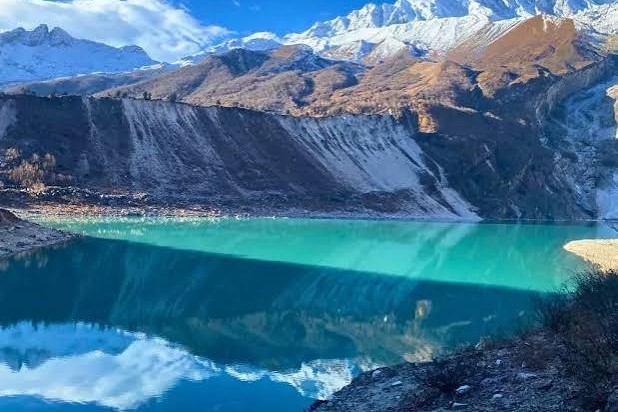
Most people who research the Manaslu Circuit Trek focus on the big landmarks: the Larkya La crossing, the restricted area permits, the villages of Samagaon and Bimthang. What tends to get mentioned only in passing, if at all, are two glacial lakes sitting right along that same route: Birendra Lake above Samagaon, and Ponkar Lake near Bimthang. Both are real, walkable side trips that most trekking groups already pass close enough to visit, and both add something the main trail alone does not.
This guide covers each lake in detail: where it sits, how it formed, what the hike there actually involves, what you see when you arrive, and why one of them in particular is worth knowing about for safety reasons as much as scenery. We researched this from multiple independent trekking guides and, for Birendra Lake, from a published scientific study of an event that affected the lake in 2024, so the facts below are grounded rather than guessed at.
A Quick Overview of the Two Lakes
Before getting into detail on each, here is how the two compare at a glance:
- Birendra Lake sits above Samagaon at roughly 3,690 metres, reached by a short walk of about 45 minutes to two hours from the village, well before Larkya La
- Ponkar Lake sits near Bimthang at roughly 3,970 to 4,100 metres (sources vary slightly), reached by a longer excursion of three to six hours round trip, on the far side of Larkya La
- Both are freshwater glacial lakes fed by meltwater from glaciers on Manaslu’s flanks, and both carry the same pale turquoise colour caused by fine rock particles suspended in the water
- Birendra Lake is by far the more visited of the two, since it sits so close to Samagaon, a village where almost every itinerary spends a rest day. Ponkar Lake is genuinely quiet, since it requires a deliberate extra excursion from Bimthang that a good number of groups skip entirely
Birendra Lake: The Glacial Lake Above Samagaon
Birendra Lake, also written as Birendra Tal, sits just above Samagaon in the Nubri valley, inside the Manaslu Conservation Area. Samagaon itself sits at about 3,530 metres, and the lake is only a modest climb above it, at approximately 3,690 metres. It formed at the foot of the Manaslu Glacier, which descends from the south face of Mount Manaslu, the eighth highest mountain on earth at 8,163 metres.
The lake owes its name to the late King Birendra Bir Bikram Shah Dev of Nepal. For the Nubri people who live in this valley, water sources like this one carry cultural and spiritual weight, and the lake is treated as part of a landscape that deserves respect rather than casual disturbance.
How the Water Gets Its Colour
The turquoise tone of Birendra Lake, like most glacial lakes in the Himalaya, comes from what glaciologists call rock flour: extremely fine mineral particles ground down by the moving ice of the glacier and carried into the water by meltwater streams. These particles stay suspended rather than settling, and they scatter light in a way that gives the water its distinctive pale blue and green tint. The effect is strongest on clear days with good light, and noticeably duller under overcast skies, so timing your visit matters if photographs are part of the plan.
Getting to Birendra Lake from Samagaon
This is one of the easiest worthwhile side trips on the entire route:
- The trailhead starts right from Samagaon village, so no extra transport or early departure is needed
- Most trekkers cover the roughly 1.5 to 2 kilometre trail in somewhere between 45 minutes and two hours each way, depending on pace and how acclimatized they already feel
- The elevation gain from the village is modest, around 100 to 150 metres, making this a genuinely gentle walk by Manaslu Circuit standards
- The trail surface is rocky and uneven in places, so sturdy footwear with good grip is worth having even for such a short outing
- A guide is required for this side trip in the same way one is required for the entire Manaslu restricted area, since it falls inside the same permit zone
Because it is short and low effort relative to the rest of the trek, most itineraries schedule it on the acclimatization day already built into the Samagaon stop, rather than adding an extra day just for the lake.
What You Actually See and Feel There
Arriving at Birendra Lake after the walk up from Samagaon, the trail opens onto a wide glacial basin ringed by moraine walls and rough alpine ground. On a calm, clear morning the lake surface reflects Manaslu’s southern face directly, glacier tongue and all, close enough that you can watch and sometimes hear small pieces of ice calving off the terminus. It is quiet in a way the main trail rarely is: no teahouses, no passing mule trains, just the sound of wind and occasionally the low crack of moving ice. Most trekkers describe it as one of the more peaceful stops on the entire circuit, precisely because so little effort is required to reach somewhere that feels this remote.
Why Birendra Lake Doubles as a Smart Acclimatization Stop
The hike is not just scenic, it is functionally useful for how your body handles the altitude ahead:
- Walking up and back down within a few hours follows the classic climb high, sleep low pattern that helps the body adjust before tackling genuinely serious elevation later at Larkya La
- It adds meaningful activity to what would otherwise be a fully passive rest day in Samagaon, without adding real strain
- It gives guides a useful, low stakes opportunity to observe how each trekker in a group is handling the altitude before the much harder days ahead
If you want a clear sense of what normal adjustment to altitude feels like versus symptoms that actually need attention, our Normal Trekking Symptoms at High Altitude guide is worth reading before this stage of the trek, not after.
A Word on Safety: What Happened at Birendra Lake in 2024
This is worth knowing before you visit, not to cause alarm, but because it is genuinely documented and relevant. On the morning of April 21, 2024, at around 9:30, a large mass of ice broke away from the heavily crevassed snout of the Manaslu Glacier and fell into Birendra Lake. The impact displaced a wave of water that overflowed through the lake’s natural outlet channel, sending a surge downstream that destroyed a wooden bridge on the Samdo to Samagaon route and noticeably raised water levels in the Budhi Gandaki river below. Researchers who later studied the event, published in the journal Natural Hazards, attributed it to weeks of unusually warm weather that had destabilized the glacier’s crevassed terminus, allowing large blocks of ice to detach.
No trekkers were reported injured in the event, and the lake itself remains open and visited as a normal side trip. The practical takeaway is simple:
- Do not walk right up to the glacier snout or the immediate shoreline directly beneath it, since this is exactly where the 2024 ice fall originated
- Follow your guide’s instructions about where it is safe to stand and how long to linger near the water
- Treat the lake with the same respect you would any active glacial environment: conditions can change quickly, particularly in warmer months when melting accelerates
None of this should discourage a visit. It is simply a reminder that this is a living glacial landscape, not a static postcard view, and that the same forces that carved this beautiful lake are still at work today.
When to Visit Birendra Lake
Spring, from March to May, and autumn, from September to November, both offer the clearest views and the most stable weather for the walk up. Autumn in particular tends to deliver the sharpest reflections of Manaslu on the water, since skies are typically clearer and winds calmer than in spring. For a full breakdown of seasonal conditions across the entire circuit, see our Best Time to Trek the Manaslu Circuit Trek guide.
Planning your Samagaon rest day and want Birendra Lake, or the Ponkar Lake side trip near Bimthang, built into your itinerary from the start? We can put together a realistic day by day plan for you.
WhatsApp us Email usPonkar Lake: The Quiet Lake Near Bimthang
Ponkar Lake, also called Ponkar Tal, sits on the far side of Larkya La from Samagaon, close to the small settlement of Bimthang. Where Birendra Lake is visited by a large share of everyone who passes through Samagaon, Ponkar Lake is seen by a much smaller number of trekkers, simply because reaching it means committing to a deliberate extra excursion after already crossing one of the highest passes on the entire route.
Where Ponkar Lake Actually Sits on the Route
Geographically, Ponkar Lake sits right at the base of Larkya La, on the western side, in terrain that technically belongs to the Manang district rather than Gorkha, even though it is reached as part of the standard Manaslu Circuit itinerary. Bimthang, the usual base for the visit, sits at around 3,700 metres, having been reached by descending from the pass itself. From Bimthang, most trekkers continue down toward Tilje and Dharapani, where the trail joins the classic Annapurna Circuit route. If you are curious about that connection, our guide on trekking the Annapurna Circuit after Manaslu from Dharapani covers it in full.
Getting to Ponkar Lake from Bimthang
Distances and times quoted for this side trip vary more than they do for Birendra Lake, largely because different operators measure the route slightly differently:
- Ponkar Lake sits at approximately 3,970 to 4,100 metres, depending on the source, roughly 250 to 400 metres above Bimthang itself
- Round trip hiking time from Bimthang typically runs from about three hours on the shorter estimates to five or six hours on the longer ones, so it is worth confirming with your guide before committing your rest day to it
- The trail follows a rocky track behind the glacier terrain above Bimthang, transitioning from the forest and rhododendron cover lower down to bare, rough alpine ground closer to the lake
- Many guides recommend an early start, since cloud tends to build over the surrounding peaks later in the morning, reducing visibility right when you arrive
The Glaciers Behind Ponkar Lake
What makes Ponkar Lake distinct is what feeds it. The lake sits close to the confluence of three separate glaciers coming off the surrounding peaks, generally referred to as the Kechakyu, Ponkar and Salpudanda glaciers. This gives the immediate surroundings a genuinely wild, high mountain character, with moraine ridges and ice visible from multiple directions rather than a single glacier tongue as at Birendra Lake. On a clear day, the panorama from near the lake includes Manaslu itself, along with Himlung Himal, Larke Peak, Himalchuli, Nagdichuli and, further along the ridge line, Annapurna II. Few other points on the entire circuit offer this many named 7,000 and 8,000 metre peaks visible from one spot with so few other trekkers around.
Permits and Practical Notes for Visiting Ponkar Lake
Because Bimthang and Ponkar Lake sit just across the district line in the Annapurna Conservation Area rather than the Manaslu Conservation Area, there is a small but genuinely useful permit detail worth knowing:
- Your Manaslu Restricted Area Permit and Manaslu Conservation Area Permit cover the route up to and across Larkya La, but the standard Manaslu Circuit itinerary already includes an Annapurna Conservation Area Permit as well, precisely because the trail descends into ACAP territory on the far side of the pass
- This means most trekkers already hold the correct paperwork to visit Ponkar Lake without arranging anything extra, though it is always worth confirming with your agency before departure, since permit rules for this region have been updated more than once in recent years
- Your existing guide, already licensed for the Manaslu restricted section, can lead the side trip to Ponkar Lake without needing separate certification, since the licensing requirement that applies earlier in the trek does not apply on this side of the pass
Why So Few Trekkers Ever See Ponkar Lake
A few honest reasons explain why this lake stays quiet even though it sits so close to the main trail:
- By the time most groups reach Bimthang, they have just crossed Larkya La, often the hardest single day of the entire trek, and many simply want rest rather than another few hours of walking
- Some itineraries are booked tightly enough that there is no slack day built in around Bimthang for a side trip at all
- The lake is genuinely less publicized than Birendra Lake, so plenty of trekkers finish the entire circuit without ever hearing it was an option
For anyone with even one spare day around Bimthang and the energy left after the pass, it is one of the better kept rewards on the whole route, precisely because so few people make the effort.
Birendra Lake vs Ponkar Lake: How They Compare
- Effort: Birendra Lake is a short, gentle walk from Samagaon. Ponkar Lake is a longer, more demanding excursion from Bimthang, undertaken right after a major pass crossing
- Crowd levels: Birendra Lake sees a large share of everyone passing through Samagaon. Ponkar Lake is visited by a small minority of trekkers
- Setting: Birendra Lake sits beneath a single glacier tongue with a direct view of Manaslu’s south face. Ponkar Lake sits near the confluence of three glaciers with a wider ring of visible peaks
- Timing on the trek: Birendra Lake comes before Larkya La, while your legs are still relatively fresh. Ponkar Lake comes after the pass, when fatigue is a real factor in the decision to go or skip it
- Permit region: Birendra Lake sits inside the Manaslu Conservation Area. Ponkar Lake sits just inside the Annapurna Conservation Area, though already covered by a standard Manaslu Circuit permit package
Should You Add Both Lakes to Your Itinerary?
For most trekkers with a standard schedule, Birendra Lake is close to a default addition, since it fits neatly into the rest day already planned at Samagaon and asks very little in return. Ponkar Lake is more of a judgment call, best suited to trekkers who feel strong after Larkya La and have at least a small buffer day built into their schedule around Bimthang. If your itinerary is tightly booked with no spare day near Bimthang, it is worth asking your agency in advance whether a short extension is possible, rather than discovering the option only after arriving there. Our Manaslu Circuit Trek Itinerary guide breaks down where rest and buffer days typically sit across the standard route, which is a useful starting point for slotting either lake in. For a broader sense of how demanding the days around both lakes are relative to the rest of the trek, our Manaslu Trek Difficulty Assessment is worth reading as well.
Packing and Gear Notes for Visiting Both Lakes
Neither side trip demands specialized gear beyond what a standard Manaslu Circuit packing list already covers, but a few small additions are worth having:
- Sturdy, broken in boots with a good grip, since both trails involve loose rock and uneven footing rather than smooth path
- A warm layer even on a clear day, since both lakes sit in exposed basins where wind picks up quickly once the sun drops behind the surrounding ridgelines
- Sun protection, including sunglasses and sunscreen, since glare off both the ice and the pale coloured water is stronger than it looks on an overcast seeming day
- A camera or phone with a full charge and, ideally, a spare battery, since cold temperatures drain batteries faster at this elevation
Our full Manaslu Circuit Trek Packing List covers everything else you will need across the rest of the trek.
Common Mistakes Trekkers Make at These Two Lakes
- Treating Birendra Lake as risk free simply because the walk up is short, and wandering too close to the glacier snout for a photograph
- Skipping Ponkar Lake without ever asking whether a short buffer day could be arranged, only to hear about it from other trekkers after the trek is over
- Visiting either lake under heavy cloud and leaving disappointed, when a short wait or an earlier start the next morning would likely have delivered a clear view
- Assuming a guide is optional for these short side trips, when both fall inside permit zones where a licensed guide is required by regulation, not just by convention
A Trekker’s Morning at Both Lakes
One group we guided a couple of seasons ago had almost written off Ponkar Lake entirely, assuming a single rest day at Bimthang meant no time for it after the exhaustion of Larkya La. Over dinner that evening one trekker asked what it would actually take, and once we laid out the honest number, a three hour round trip with an early start, the whole group decided to try it the next morning rather than sleep in. They left before sunrise, reached the lake just as the cloud that usually builds by mid morning was still hours away, and got a clean, mirror still view of Manaslu’s north side reflected in the water, something none of them had planned for when they booked the trip. It became, by their own account afterward, one of the two or three moments from the entire three week trek that stuck with them most, right alongside the pass crossing itself and their first sight of Birendra Lake back in Samagaon at the very start of the high mountain section.
Frequently Asked Questions About Birendra Lake and Ponkar Lake
Do I need extra time in my itinerary to visit these lakes?
Birendra Lake usually fits inside the rest day already scheduled at Samagaon, so it rarely needs extra time. Ponkar Lake is more likely to need a small buffer day around Bimthang, which is worth requesting from your agency when you book.
Is a guide required to visit either lake?
Yes. Both lakes sit inside permit controlled areas along the Manaslu Circuit route, and the same guide requirement that applies to the rest of the restricted section applies here too.
Which lake has better mountain views?
Birendra Lake gives a close, direct view of Manaslu’s south face and glacier tongue. Ponkar Lake offers a wider panorama, including Manaslu, Himlung Himal, Larke Peak, Himalchuli and Annapurna II, thanks to its position near three glaciers rather than one.
Is Birendra Lake safe to visit after the 2024 ice fall event?
Yes, the lake remains open and is visited regularly. The event was a documented, naturally occurring glacial hazard, and the practical precaution is simply to avoid standing directly beneath the glacier snout or right at the water’s edge closest to it, which your guide will already know to steer you away from.
Can beginners manage the walk to both lakes?
Birendra Lake is manageable for almost any reasonably fit trekker, since it is short and involves little elevation gain. Ponkar Lake asks more, both in distance and in the fact that it comes right after crossing Larkya La, so it suits trekkers who are still feeling reasonably strong at that point in the trip rather than those who are already running on empty.
Climate Change and the Future of These Glacial Lakes
Neither lake exists in isolation from what is happening to the wider Manaslu glacier system, and it is worth understanding the bigger picture rather than treating the 2024 event at Birendra Lake as an isolated curiosity. Regional research groups studying Nepal’s high mountain glaciers have flagged a significant share of them, including systems feeding both Birendra and Ponkar Lakes, as increasingly exposed to accelerated melting as temperatures rise. That accelerated melt is exactly what destabilized the crevassed glacier snout above Birendra Lake in April 2024, and it is the same underlying process shaping how both lakes will likely change in the coming years, generally by growing larger as more meltwater collects behind their moraine walls.
Researchers who studied the 2024 event specifically called for better monitoring around Birendra Lake, including satellite tracking, time lapse cameras and in situ water level sensors, along with a proper flood early warning system for communities downstream along the Budhi Gandaki river. As of now, some of that monitoring has been discussed in scientific literature rather than fully implemented on the ground, which is a fair reminder that this remains an active area of study rather than a settled, fully managed risk. None of this changes the practical advice already given above: visit with a guide, respect the boundaries they set, and treat the glacier terrain with the seriousness it deserves. It does mean that the landscape you see at either lake today may look measurably different in ten or twenty years, which is, in its own way, one more reason to see both while you are already on the trail.
The Cultural Weight of These Lakes for Local Communities
For the Nubri people of the Samagaon area and the communities living closer to the Manang side near Bimthang, lakes like these are not simply scenic stops for outside trekkers. Water sources fed directly by sacred peaks carry real spiritual significance in the Tibetan Buddhist tradition practiced throughout this region, and Birendra Lake in particular, sitting beneath Manaslu itself, is regarded as part of a landscape that deserves care rather than casual disturbance. Practically, this means simple things: packing out any rubbish rather than leaving it at either lakeside, avoiding loud or disruptive behaviour near the water, and following your guide’s lead on any local customs or small courtesies expected at these sites. None of this asks much of a visiting trekker, and it goes a long way toward keeping both places as clean and undisturbed as they are today for the communities who consider them home ground, not just a stop on someone else’s itinerary.
The Bottom Line
Birendra Lake and Ponkar Lake are not detours that pull you away from the Manaslu Circuit Trek, they sit right alongside it, close enough that most itineraries can absorb at least one of them without real disruption. Birendra Lake rewards almost no effort with a striking, close up view of Manaslu reflected in glacial water, and doubles as a genuinely useful acclimatization outing before the pass. Ponkar Lake asks more of you, arriving as it does right after Larkya La, but pays that effort back with a wider, quieter mountain panorama that a large share of trekkers on this route never see at all.
If you want either or both lakes properly built into your schedule rather than left to chance on the day, get in touch and we will put together a realistic itinerary around them from the very start of the trip.