
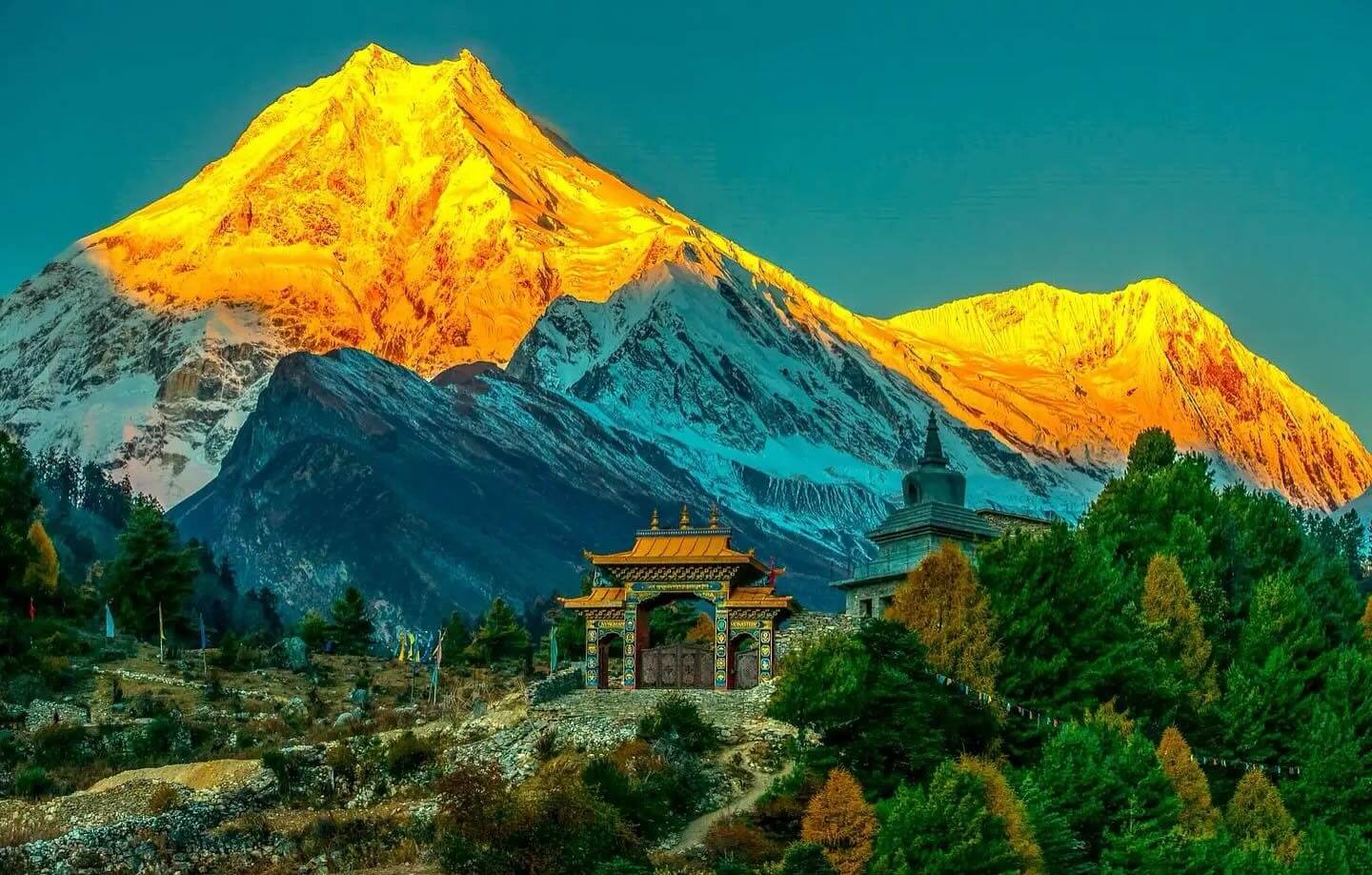
My Recommendation: The Manaslu Circuit Trek
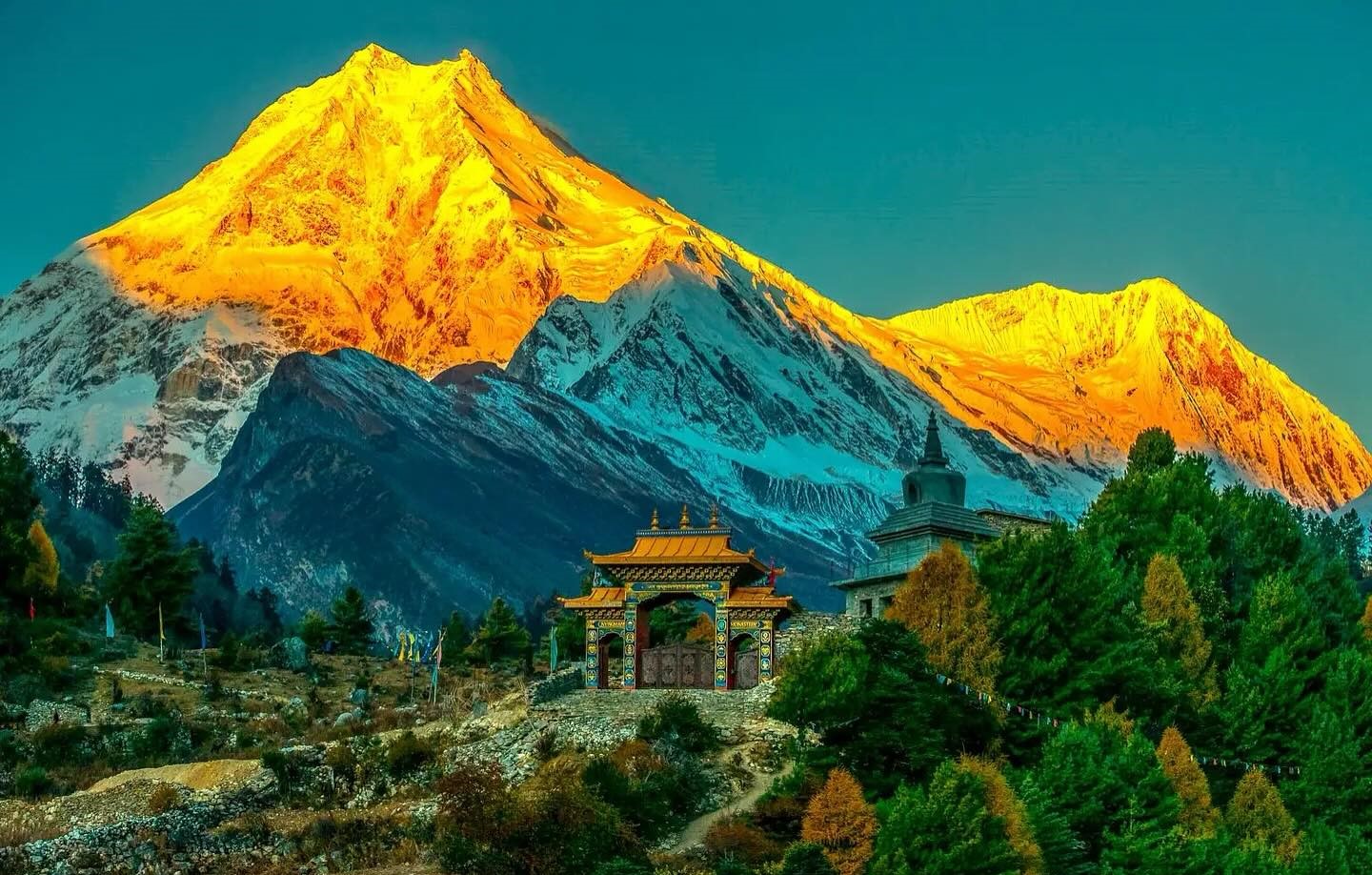
I am Kiran Basnet. I grew up in Tripura Sundari Municipality in Dhading district, which sits at the entrance of the Manaslu Circuit. The mountains I am recommending to you are not mountains I read about. They are the mountains I grew up looking at.
I started in trekking the way many people from this part of Nepal do — as a helper on the trail. My first trek was the Ghorepani Poon Hill route in the Annapurna region. I was young, I did not have a formal guide certificate, and I was learning what it meant to be responsible for people in the mountains. That experience made it clear to me that this work mattered and that I wanted to do it properly.
I In 2018 I became a licensed trekking guide. Since then I have completed the Manaslu Circuit more than 20 times. I have also guided the Everest Base Camp trek, the Annapurna Circuit, Annapurna Base Camp, and the Langtang Valley trek. I know the teahouses on every one of these routes, who runs them, and what to expect at each one. Before founding Manaslu Treks and Expedition, I worked as a local operator guide for Trip a Deal, an Australian travel company that sent international guests to Nepal and ran their ground operations through local agencies. That experience showed me how trekking companies work from both sides.
I founded Manaslu Treks and Expedition because I wanted to run the kind of operation that I would trust with my own family. Local knowledge, honest information, and guides who know this specific region rather than generalists who cover every route in Nepal the same way.
Of all the routes I have guided, the Manaslu Circuit is the one I recommend most often when someone asks me which trek in Nepal is worth their time. Not because it is the most famous. Because it is the most honest. The trail is real, the villages are real, the mountains are real, and the experience you take home is real. I have watched it change people over 13 days in a way that the busier routes no longer can.
I come from Dhading, the gateway district of this trek. These are not mountains I discovered as a guide. They are the mountains I grew up with.
Why I Recommend the Manaslu Circuit Over Other Nepal Treks
I have guided Everest Base Camp, Annapurna, and Langtang. I know what each route feels like on the ground, not from a brochure. When people ask me which trek to choose, I ask them one question: do you want to feel like you are on a trail, or do you want to feel like you are in the mountains?
The Annapurna Circuit recorded roughly 250,000 trekkers in 2024. Everest Base Camp saw around 50,000. The Manaslu Circuit had about 12,500. That difference is felt on every day of the walk. You will pass other trekkers on the Manaslu Circuit but you will also walk full morning hours where the only people you see are the families who live there.
The villages between Deng and Samagaun are Tibetan Buddhist communities that have been living the same way for centuries. The Nubri people in the upper valley have a culture and a relationship to the land that tourism has not yet flattened into something performed for visitors. When you sit in a teahouse in Samagaun, the family running it is not doing it for you. They are doing it because it is how they live. That difference comes through in every interaction.
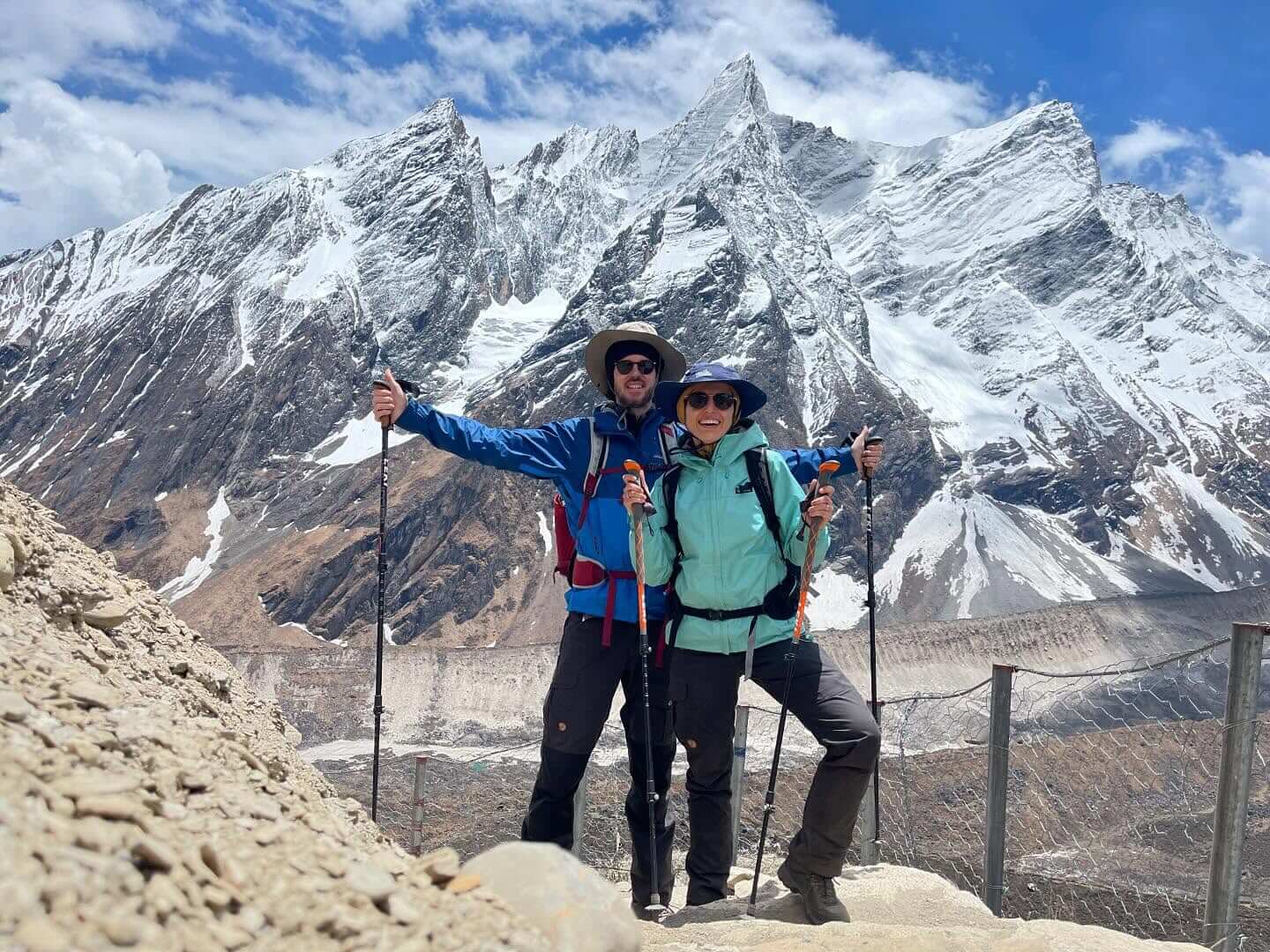
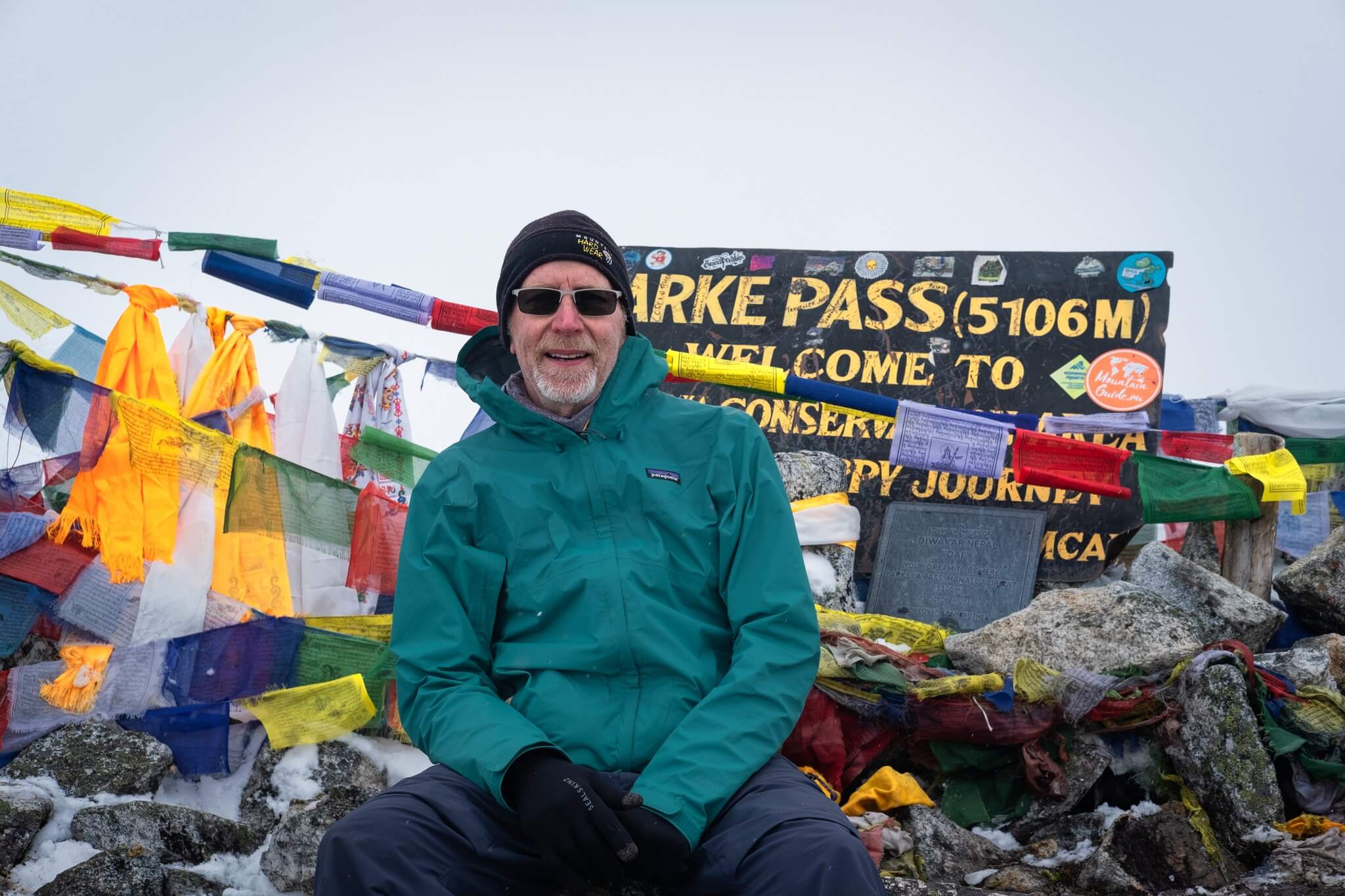
The Larkya La Pass at 5,106 metres is the hardest day of the trek. I have crossed it more than 20 times and it is still the day I look forward to most when I am planning a group trip. From the top, Himlung Himal, Cheo Himal, Kang Guru, and Manaslu are all visible in one frame with nothing in between. There is no other point on the circuit that gives you that view. Trekkers who reach it after 10 days on the trail are not just seeing four peaks. They have earned that view with their legs and their lungs and the nights they spent at altitude preparing for it.
I also know something that does not make it into most trek descriptions: the people who run the teahouses along the Manaslu Circuit are people I have known for years. Some of them were helpers on the trail when I was starting out. Some have become teahouse owners. I know their names, their families, and which teahouses to recommend for which groups. That kind of connection is something no booking platform can give you and it makes a real difference to how your trip runs day to day.
Acclimatisation on the Manaslu Circuit: What I Tell Every Group
After more than 20 trips on this route, the single biggest factor that determines whether someone has a strong crossing of the Larkya La or a difficult one is not their fitness. It is how well they have acclimatised in the days before the pass. I have seen very fit trekkers struggle above 4,500 metres because they moved too fast in the lower sections. I have seen trekkers who were nervous about their fitness cross the pass comfortably because they respected the altitude schedule.
The Manaslu Circuit itinerary I recommend is built around two principles that most 13-day plans get right but that many shorter plans get wrong. First, the rest day at Samagaun at 3,530 metres is not optional. It is the most important day of the trek. The body needs time to adjust at that altitude before moving to Samdo at 3,860 metres and then to Dharamsala at 4,460 metres. Cutting the Samagaun rest day to save one day is the single most common mistake I see on other agencies’ itineraries.
Second, the night at Dharamsala before the Larkya La is a short night. You leave at 4am. Most trekkers sleep 4 to 5 hours at most because of the altitude and the anticipation. This means you are crossing the most demanding section of the trek on partial sleep after 10 days of accumulated fatigue. The solution is to arrive at Dharamsala with as much acclimatisation base as possible. The days at Samagaun and Samdo are what build that base.
The acclimatisation schedule I use
The route itself is designed well for altitude gain. The problem is that some agencies compress the lower days to save cost. On my itinerary, we do not rush the section between Deng and Namrung. The altitude gain from Machha Khola at 870 metres to Samagaun at 3,530 metres happens over seven walking days. That is the right pace. Faster than that and you are asking trekkers to acclimatise on the move rather than giving them the rest days to do it properly.
What I tell every group the night before Larkya La: drink water before you sleep even if you are not thirsty, put your batteries inside your sleeping bag, set your alarm for 3:30am and be ready to walk by 4:00am. The groups that leave early have the best conditions on the pass. The groups that leave late walk into the wind that comes up after 9:00am on most days. That wind at 5,000 metres in the cold is the thing that makes a hard day into a very hard day.
I have guided trekkers from their 20s to their early 60s across this pass. Age matters less than preparation and pace. Go slow. Drink water. Trust the schedule.
The Teahouses on the Manaslu Circuit: What I Know From 20 Trips
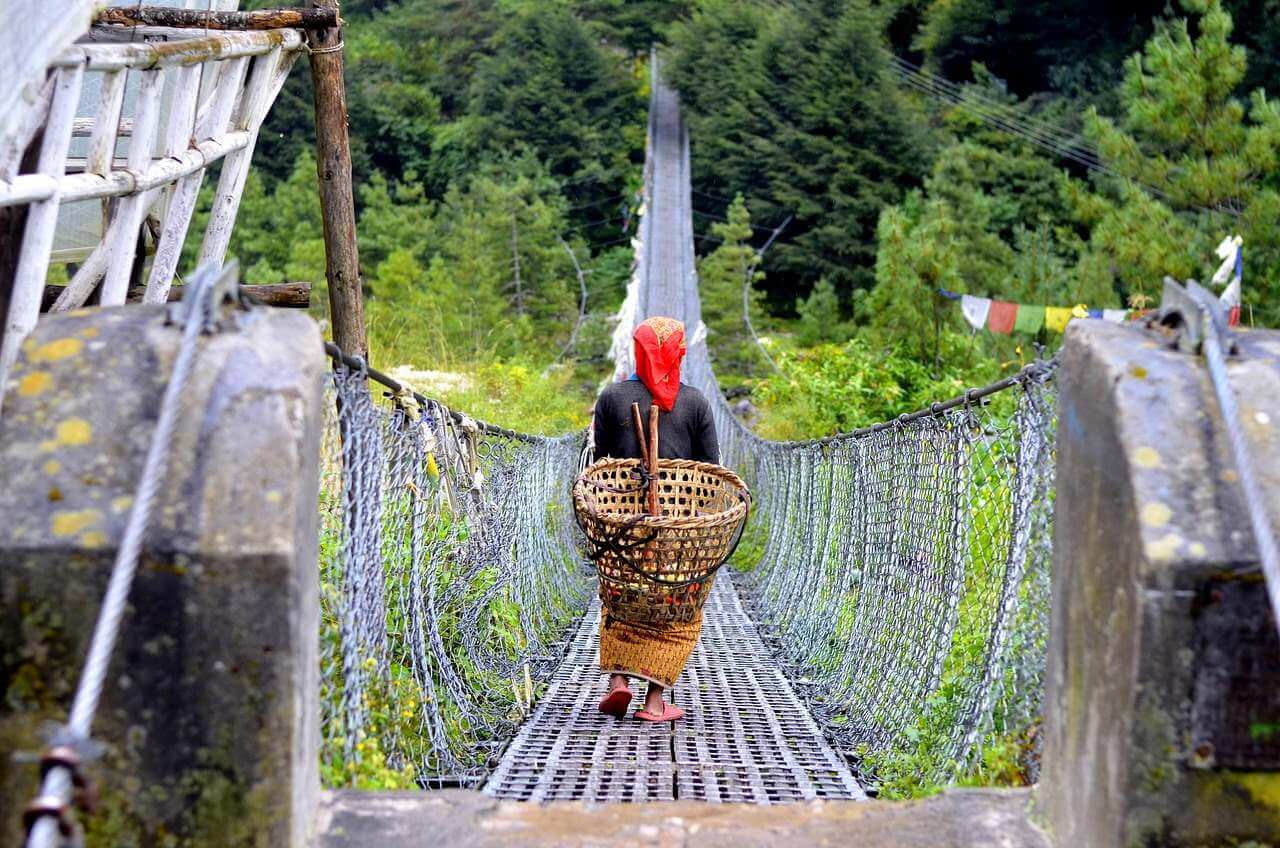
I know every teahouse on the Manaslu Circuit by name and by owner. Some of the people running teahouses on this route today were helpers and porters when I first started guiding here. A few were working the same trail I was working when I was learning the route. Watching them build their own businesses over the years is one of the most satisfying things about doing this work in a region I come from.
The teahouses on the Manaslu Circuit are not luxury accommodation and they are not trying to be. From Machha Khola to Jagat the rooms are simple but warm. As you move higher into the Nubri valley the rooms get smaller and the nights get colder. At Dharamsala the accommodation is the most basic on the entire route because the teahouse there exists for one reason: to shelter trekkers the night before the Larkya La. Nobody stays there for comfort. They stay there because the pass is four hours away in the morning dark.
What the teahouses do consistently well is the food. The dal bhat on this route is cooked by people who have been making it their whole lives. It is not trekker food in the way that some Kathmandu restaurants interpret it. At Samagaun especially, the families cooking are using what they have grown and what they have raised. I recommend dal bhat over pasta or pizza at every teahouse above Deng, not because I am being traditional, but because it is genuinely better and because the carbohydrate load is exactly what your body needs at altitude.
Electricity above Samagaun is solar dependent. It is not reliable enough to plan your charging schedule around. Bring a full power bank and keep it warm at night alongside your camera batteries. This is not a problem I tell people about to manage expectations. It is just the reality of being in a remote valley at 3,500 metres where the solar panels on the teahouse roof are doing their best.
One thing I tell every group before we leave Kathmandu: the teahouses on this route are family businesses run by people who have chosen to stay in their community and build something there. Treat their homes with respect. Leave the rooms as you found them. The Manaslu Circuit is still a quiet route in part because the communities along it have had a better experience with trekkers than the communities on the busier routes. That is worth protecting.
Manaslu Circuit Permits in 2026: What Changed and What You Need to Know
Something significant changed on March 22, 2026. Nepal’s Department of Immigration officially updated the Manaslu Restricted Area Permit rules. The requirement that forced solo trekkers to find a second foreign trekker before a permit would be issued has been removed. Solo trekkers can now apply for the Manaslu Restricted Area Permit individually.
I want to be clear about what this does and does not change. The guide requirement has not changed. A licensed guide from a registered agency is still mandatory on the Manaslu Circuit and independent trekking without a guide is still prohibited. What changed is that you no longer need to find another trekker to share a permit application with. If you want to do this trek alone, you can now book it as a solo trekker and we arrange the permit for you individually.
The permits required for the Manaslu Circuit in 2026 are three: the Manaslu Restricted Area Permit, the Manaslu Conservation Area Permit, and the Annapurna Conservation Area Permit. You also pay a Chumnubri Rural Municipality entry fee at the Jagat checkpoint. TIMS cards are not required for this route. If any agency tells you otherwise, they are either not up to date or adding cost that does not belong.
One practical note about the checkpoints: as of 2026, the main checkpoints at Jagat and Namrung use digital tracking systems for permit verification. Your guide handles the scanning at each post. Keep a digital copy of your permits on your phone as a backup. The river crossings on the lower Budhi Gandaki sections have a way of getting into bags and paper permits do not survive that well.
We process all permits here in Kathmandu. We need your original passport and it takes one to two business days. During October when the immigration office is at its busiest, allow three to four days. We collect your passport on arrival day and have everything ready before you leave the city. All permit costs are included in the trek price. There is nothing to arrange or pay separately.