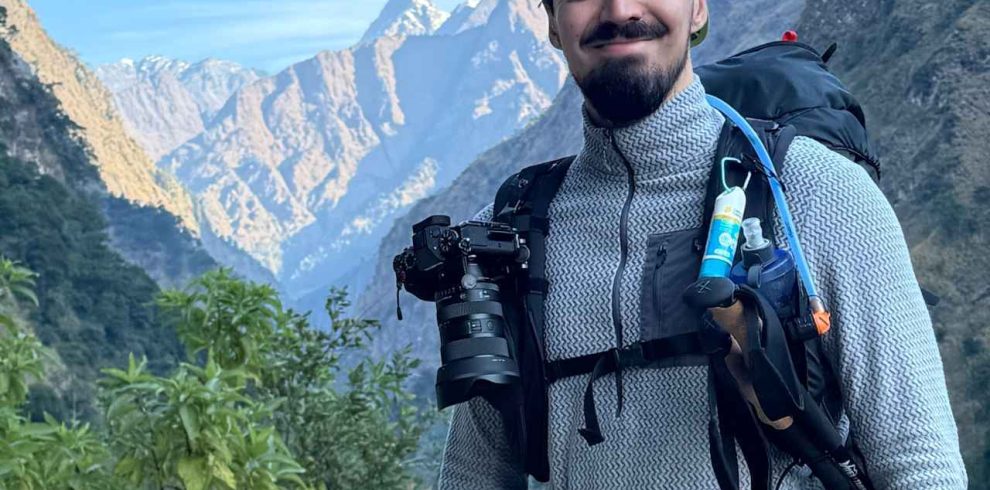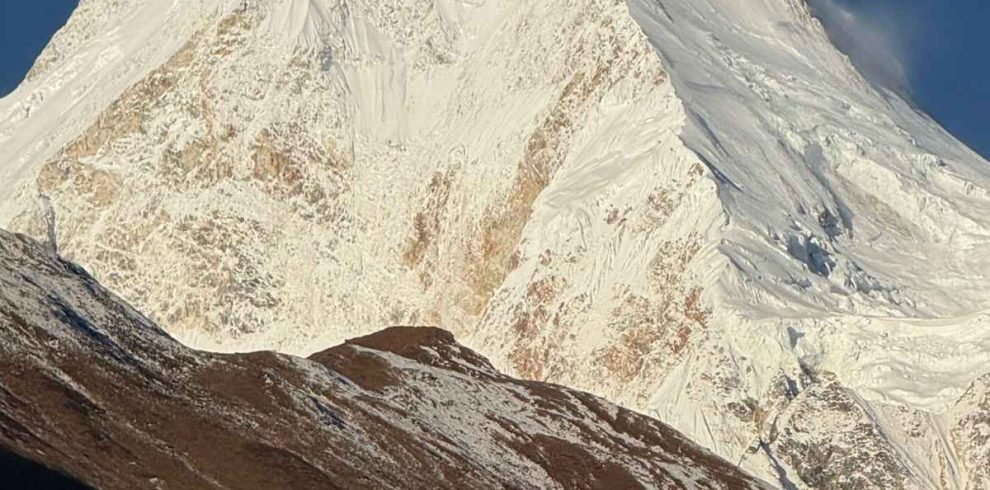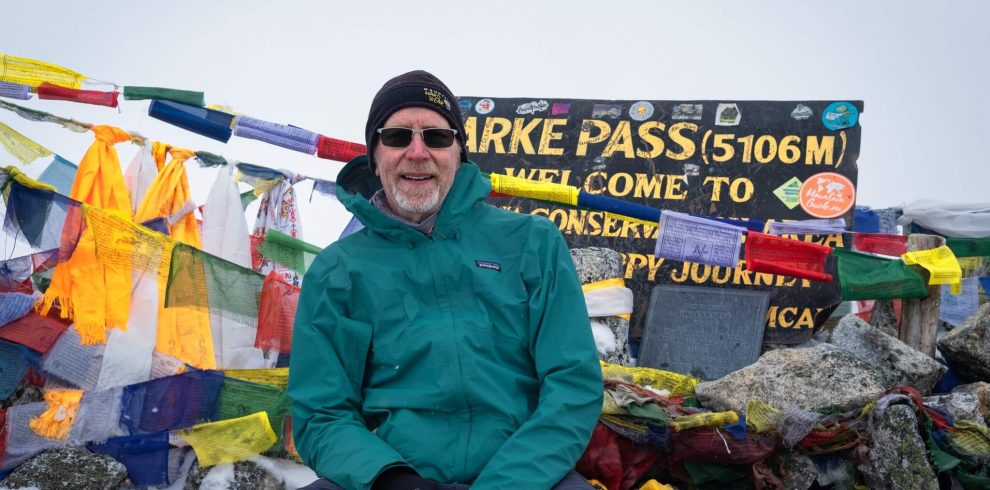
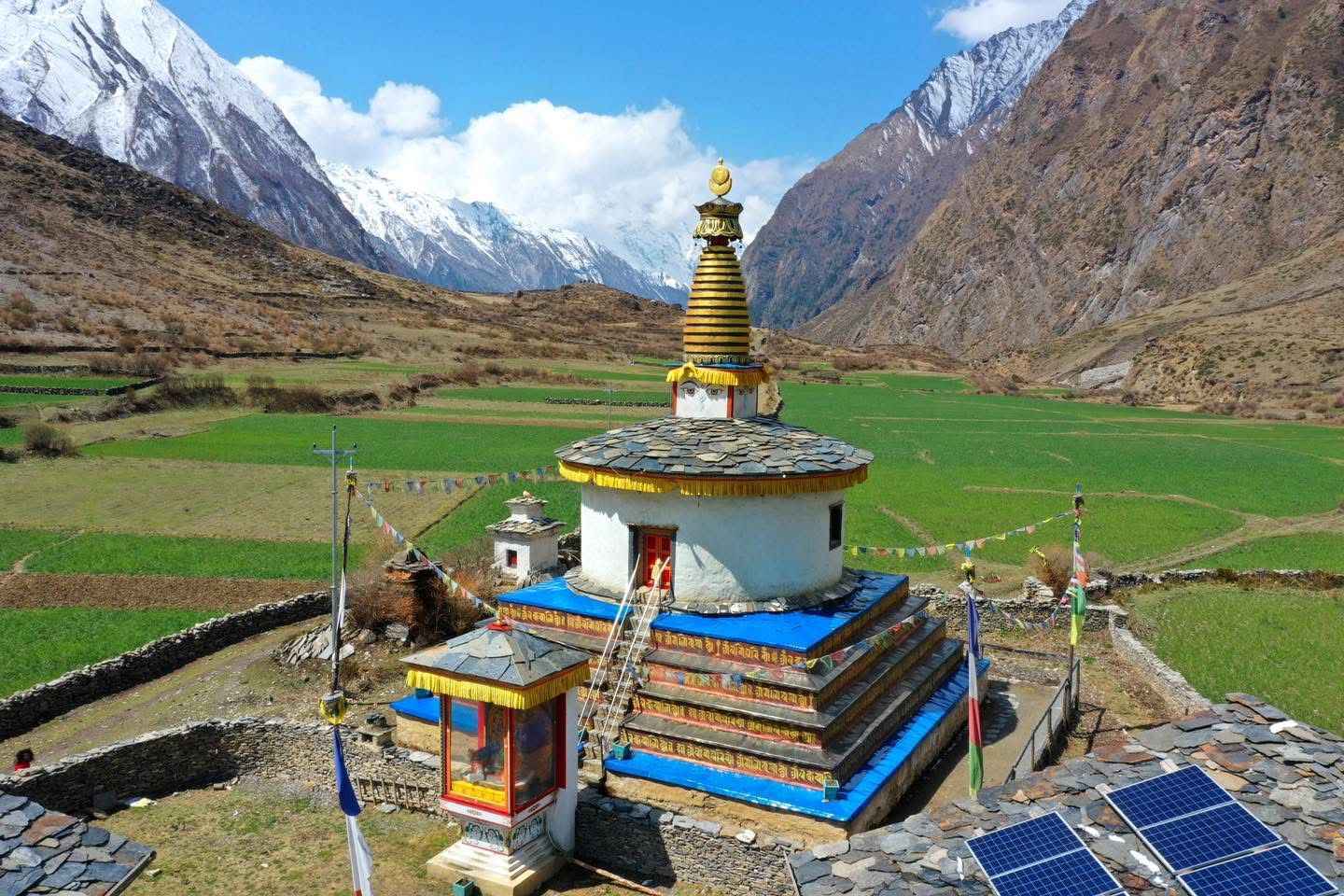
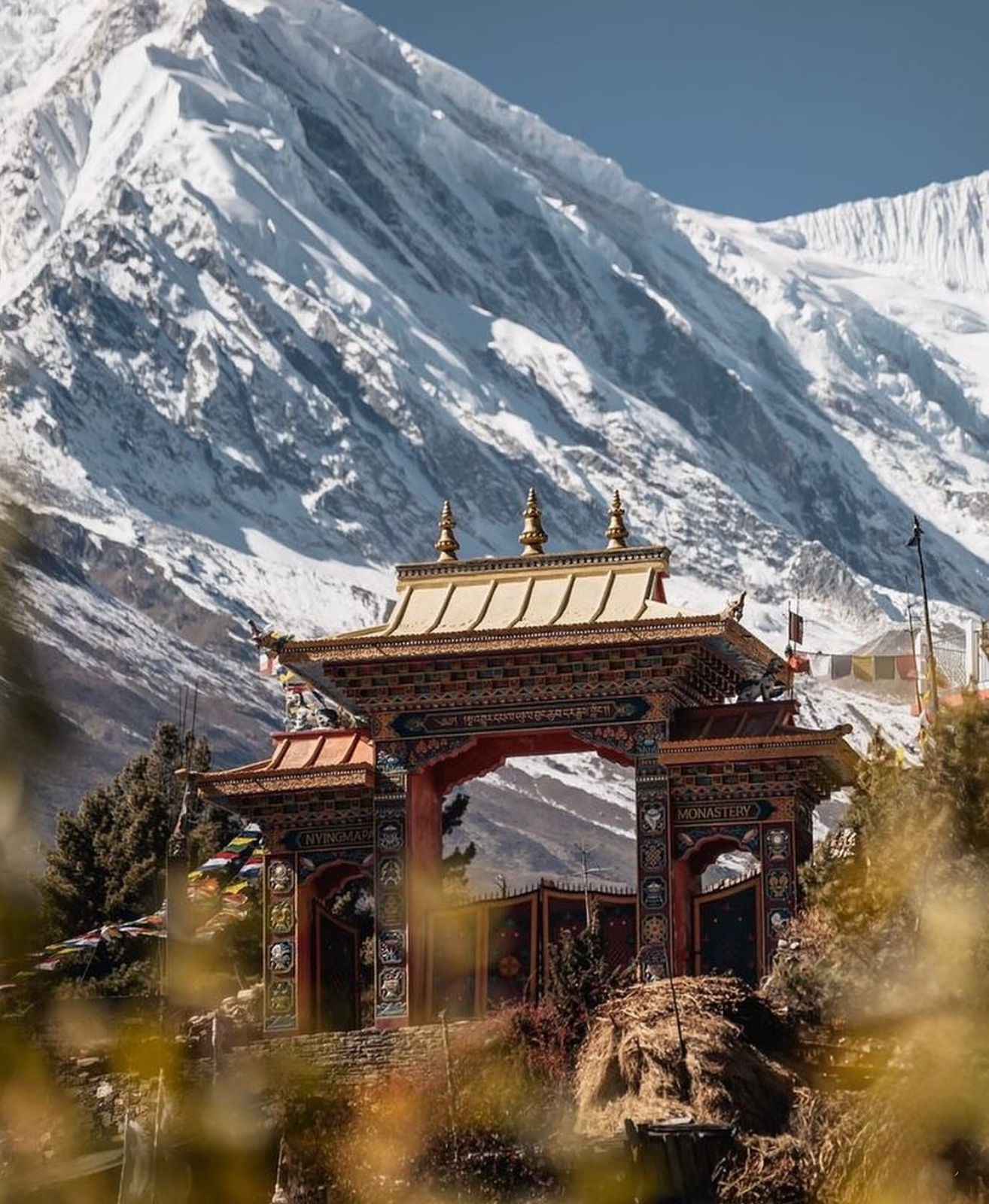
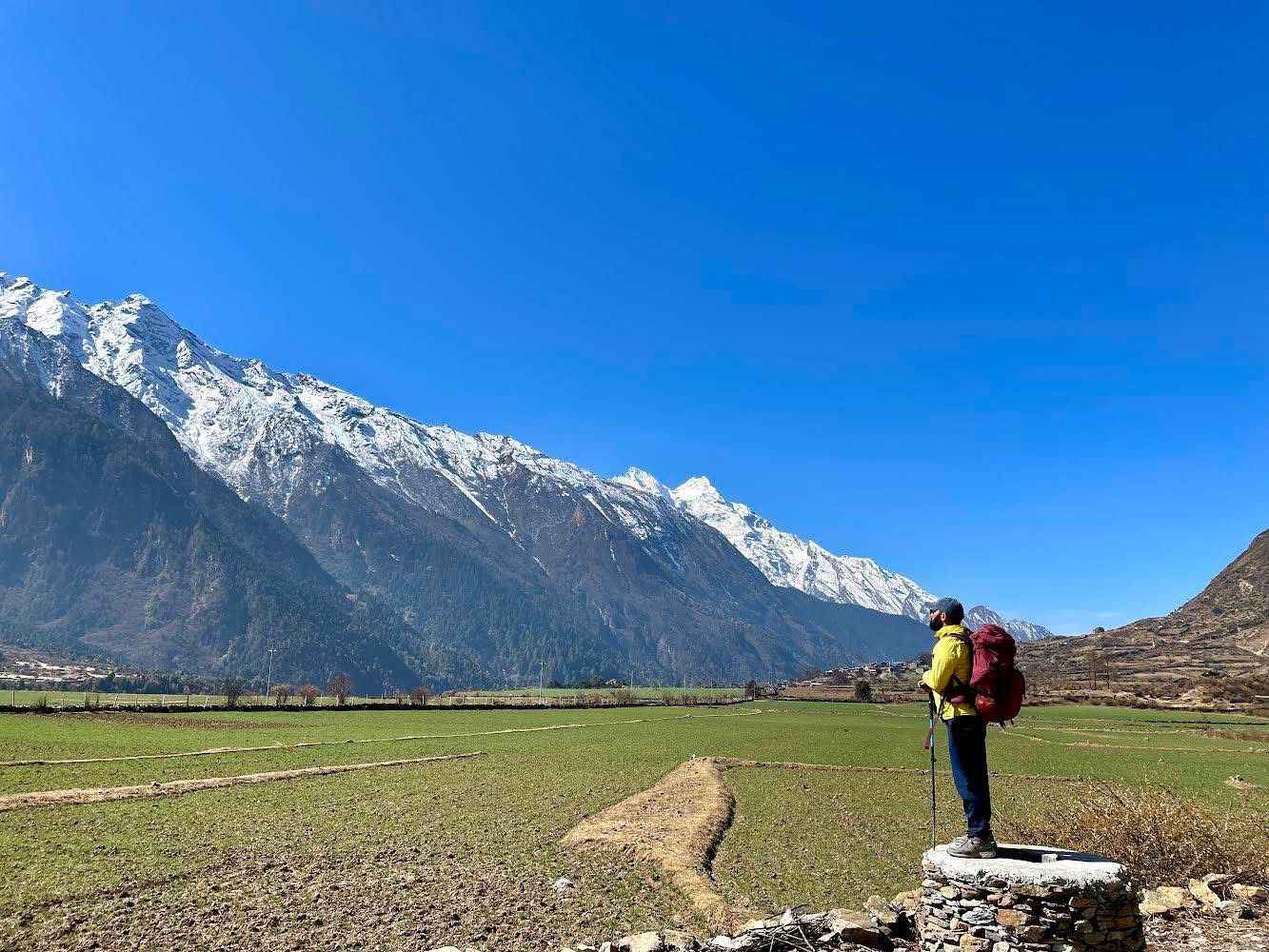
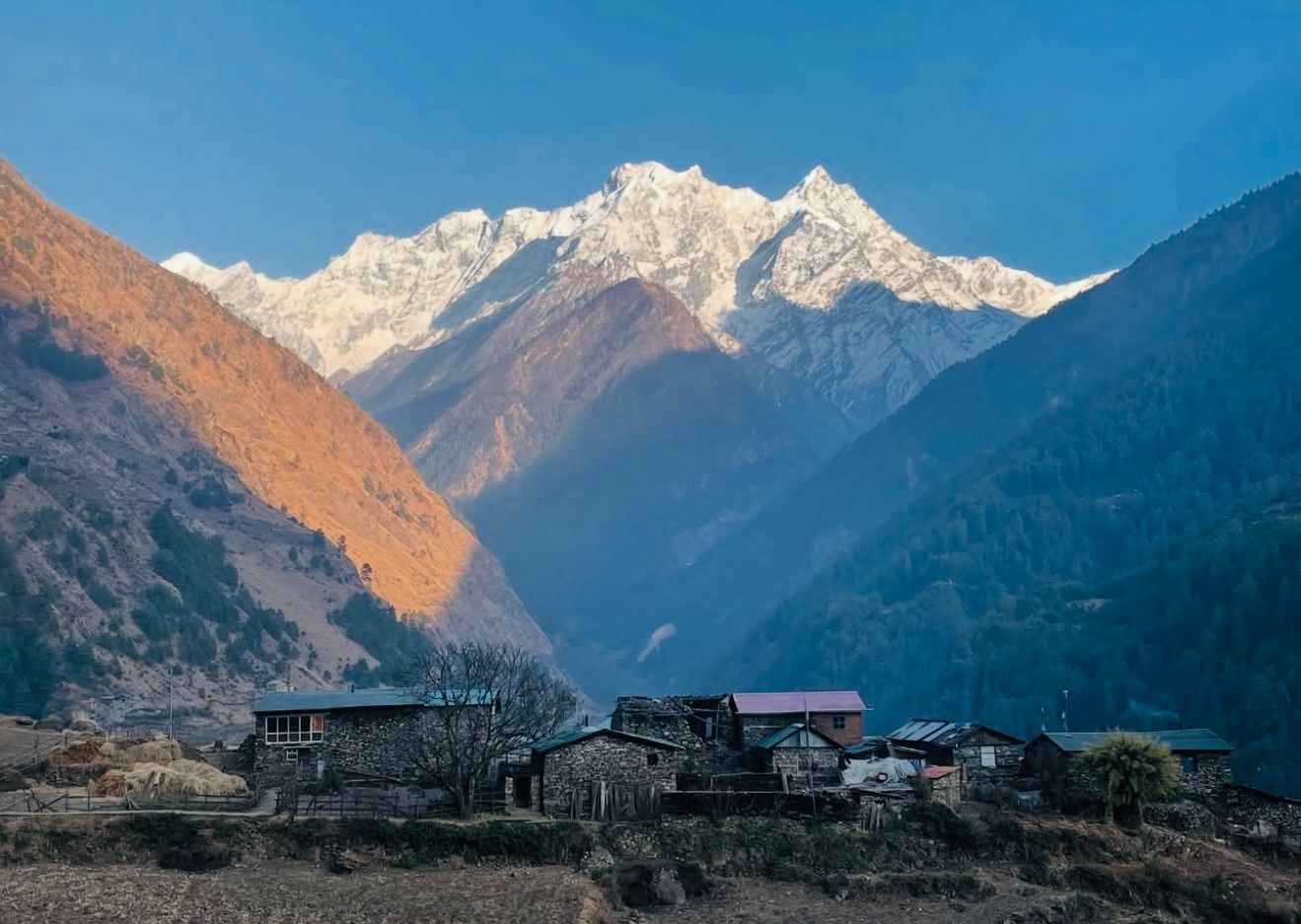
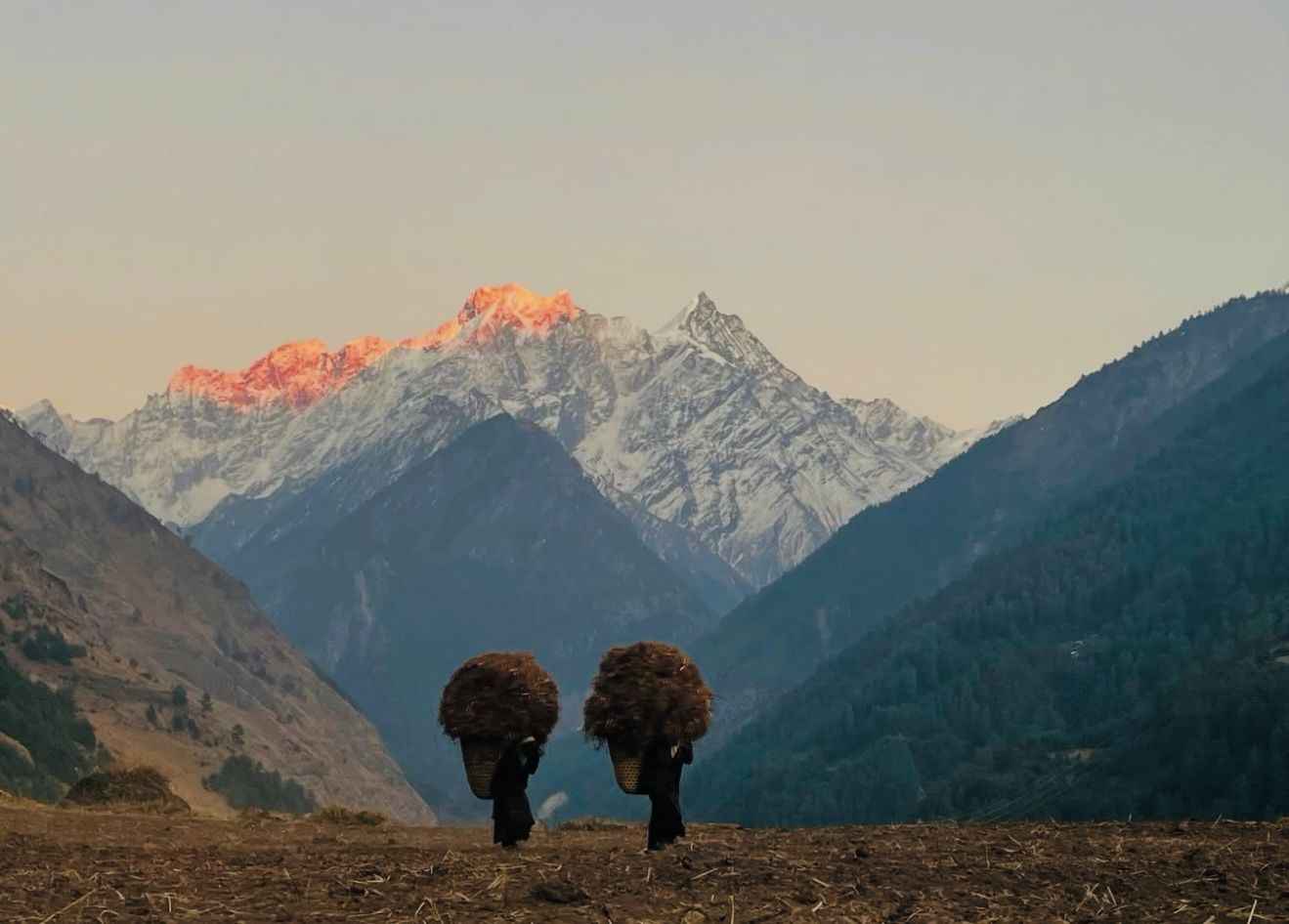
The 23-day Tsum Valley & Manaslu Circuit Trek combines breathtaking Himalayan landscapes with the preserved Tibetan Buddhist culture of a hidden valley. The Tsum Valley & Manaslu adventure takes you around Mount Manaslu and into the remote Tsum Valley, where ancient monasteries, prayer walls, and traditional villages offer a rare cultural immersion alongside high mountain passes and stunning views.
23 Days Tsum Valley and Manaslu Circuit Trek Cost 2026 and 2027
The 23 days Tsum Valley and Manaslu Circuit Trek cost for 2026 and 2027 starts from USD $1,295 per person and goes up to USD $1,995 per person.
This price is 100 percent all inclusive, which means there are no hidden costs, no surprise charges, and nothing extra to pay after you arrive in Nepal. Everything needed for the trek such as permits, accommodation, meals, guide, and logistics is included as per the itinerary.
23 Days Tsum Valley & Manaslu Circuit Trek Overview
The Tsum Valley & Manaslu Circuit Trek is one of Nepal’s most rewarding adventures, combining untouched Himalayan wilderness with deep spiritual heritage. Located to the north-east of the Manaslu massif, the remote Tsum Valley was opened to trekkers only recently. Its isolation has preserved a rich Tibetan Buddhist culture. Along the trail you will see long mani walls carved with prayers, colorful prayer flags fluttering in the wind, and ancient monasteries such as Mu Gompa and Rachen Gompa, where centuries-old scriptures are still preserved.
When joined with the classic Manaslu Circuit, this journey becomes truly unforgettable. Trekkers circle the towering Mount Manaslu (8,163 m), cross the challenging Larkya La Pass (5,160 m), and explore hidden valleys filled with traditional villages and sacred temples. Unlike the more crowded Everest or Annapurna routes, this region offers an authentic off-the-beaten-path feel while still rewarding you with spectacular Himalayan views.
This carefully designed 23-day itinerary provides the right balance of adventure and safety. With enough acclimatization and rest days built in, you can fully enjoy both the natural beauty and the cultural highlights of the region. It is the ideal choice for adventure seekers who want a complete and meaningful trekking experience in Nepal.
The Tsum Valley and Manaslu Circuit Trek spans a wide altitude range, starting from 869 m in the Budhi Gandaki valley and reaching 5,160 m at Larkya La Pass. Because of the high elevation and remote terrain, choosing the correct trekking season is critical for safety, visibility, and overall comfort.
23-Day Tsum Valley and Manaslu Trek Outline Itinerary 2026
| Day | Destination | Alt (m) |
| 01 | Kathmandu | 1,350 |
| 02 | Machha Khola | 869 |
| 03 | Jagat | 1,340 |
| 04 | Lokpa | 2,240 |
| 05 | Chumling | 2,386 |
| 06 | Chhokang Paro | 3,031 |
| 07 | Nile | 3,361 |
| 08 | Mu Gompa | 3,700 |
| 09 | Chhokang Paro | 3,031 |
| 10 | Gumba Lungdang | 3,200 |
| 11 | Ganesh Himal BC | 4,900 |
| 12 | Chumling | 2,470 |
| 13 | Deng | 1,860 |
| 14 | Namrung | 2,630 |
| 15 | Lho | 3,180 |
| 16 | Sama Gaun | 3,530 |
| 17 | Sama (Rest) | 3,530 |
| 18 | Samdo | 3,860 |
| 19 | Dharmasala | 4,460 |
| 20 | Larkya Pass | 5,160 |
| 21 | Dharapani | 1,860 |
| 22 | Kathmandu | 1,350 |
| 23 | Departure | 1350 |
Best Month for Tsum Valley Manaslu Trek 2026
Choosing the right time for the 23 days Tsum Valley Manaslu Circuit Trek is important because this route combines two very different environments. Tsum Valley sits deep inside a narrow Himalayan valley, while the Manaslu section includes high altitude terrain and the Larkya La Pass at 5106 meters. Weather conditions can vary significantly between these areas, so timing affects both safety and overall experience.
Spring Season March to May
Spring is one of the most balanced seasons for the 23 days Tsum Valley Manaslu Circuit Trek. The lower valley becomes green, and trekking conditions gradually improve after winter.
- Moderate temperatures in lower and mid altitude villages
- Clear morning views of Ganesh Himal and Manaslu
- Blooming forests between Jagat and Chhekampar
- Snow still present near Larkya La but generally manageable
From field experience, April offers the most stable combination of weather and visibility in spring.
Autumn Season September to November
Autumn is the most reliable season for the 23 days Tsum Valley Manaslu Circuit Trek, especially for safe crossing of Larkya La Pass.
- Clear skies and dry trails after monsoon
- Best mountain visibility throughout the trek
- Stable conditions for high altitude sections
- Higher success rate for pass crossing
October is generally the best month overall, with consistent weather and clear views throughout both Tsum Valley and Manaslu sections.
Winter Season December to February
Winter trekking is possible but challenging for the full 23 days Tsum Valley Manaslu Circuit Trek.
- Heavy snow can block Larkya La Pass
- Many teahouses in Samdo and upper Tsum may close
- Night temperatures can drop below minus 20 degrees Celsius
This season is suitable only for experienced trekkers with flexible plans.
Monsoon Season June to August
Monsoon brings difficult conditions in the lower sections of the trek.
- Heavy rain in the Budhi Gandaki valley
- Slippery trails and possible landslides
- Leeches common in forest areas of Tsum Valley
- Cloud cover reduces mountain visibility
While Tsum Valley is slightly more protected than lower regions, overall conditions are not ideal for a long trekking itinerary.
Local Recommendation
For the best overall experience on the 23 days Tsum Valley Manaslu Circuit Trek, we recommend planning your trip between mid April and early May or from late September to early November.
During the trek, we monitor weather conditions in areas such as Chhekampar, Samagaun, and Larkya La to adjust pacing and ensure safe crossing days. Timing the pass crossing early in the morning is important, as wind and cloud build up quickly after midday.
Seasonal Temperature and Conditions Overview of Manaslu Tsum Valley Trek
| Season | Best Months | Daytime Temp | Night Temp (High Altitude) | Visibility |
|---|---|---|---|---|
| Autumn | Oct – Nov | 12°C to 18°C | -5°C to -10°C | Excellent |
| Spring | Mar – May | 10°C to 16°C | -2°C to -8°C | Good |
| Winter | Dec – Feb | 5°C to 10°C | -15°C to -20°C | Clear but icy |
| Monsoon | Jun – Aug | 18°C to 25°C | 5°C to 10°C | Poor (cloudy) |
Highlights of the Tsum Valley & Manaslu Circuit Trek
- Discover the remote Tsum Valley, rich in Tibetan Buddhist culture, monasteries, and sacred caves
- Trek around Mount Manaslu (8,163 m) with stunning views of Ganesh Himal, Himal Chuli, and Sringi Himal
- Cross the dramatic Larkya La Pass (5,160 m) for one of the best Himalayan panoramas
- Walk through diverse landscapes from lush forests and terraced fields to glaciers and alpine valleys
- Visit cultural landmarks like Mu Gompa, Rachen Gompa, and traditional Tsumba villages
- Enjoy a less crowded alternative to Everest and Annapurna with authentic off-the-beaten-path trails
- Travel safely with ample acclimatization days and support from experienced local guides and porters
Tsum Valley and Manaslu Circuit Trek 23 Days Detailed Itinerary
Your Himalayan journey begins as soon as you step off the plane at Tribhuvan International Airport in Kathmandu. The busy arrival hall is full of travellers, but outside, our representative is waiting to greet you with a smile and a traditional khada scarf. A short 30-minute drive through the colourful streets of Kathmandu brings you to Thamel, the lively heart of the city.
Thamel is alive with prayer flags, small temples, trekking shops, cafes, and the scent of incense. After checking in at your hotel, you can explore the narrow alleys at your own pace or relax after your long flight. Later in the evening, your trekking guide will meet you for a comprehensive briefing about the adventure, help you check your gear, and answer any questions you may have.
This first evening is a gentle introduction to the energy of Nepal. It allows you to settle in, adjust to the new atmosphere, and prepare for the great journey ahead.
The first full day begins with an early departure from Kathmandu. Leaving the busy capital behind, the road winds along the Trishuli River past rolling hills, roadside markets, and farming villages. The first few hours are on paved highway, but once you reach Arughat the smooth road gives way to a rougher track that follows the Budhi Gandaki River.
This drive is long, around eight to nine hours, but it is full of incredible scenery. You will see terraced fields carved into the hillsides, waterfalls tumbling down steep cliffs, and locals carrying heavy baskets of produce along narrow trails. Children wave at passing jeeps, and farmers tend to their crops as you pass by.
By late afternoon you arrive in Machhakhola, a small settlement beside the river whose name means “Fish River.” Here you get your first taste of rural mountain life. A simple tea house provides shelter and hot food to prepare you for tomorrow’s first walking day.
Your first real trekking day begins with the sound of the Budhi Gandaki River rushing beside you. The trail undulates along its banks, sometimes climbing over rocky ridges and sometimes dropping back to the water’s edge. You cross suspension bridges that sway gently under your feet, offering thrilling views down to the river below.
The walk passes through small villages like Khorlabesi and Dobhan, where locals smile and offer you tea. Along the way you will pass Tatopani, known for its natural hot springs, where steam rises from the rocks beside the trail. The vegetation shifts from lush subtropical forest to more open farmland as you climb steadily higher.
By late afternoon you reach Jagat, a beautiful stone paved village perched on a ridge. This is the official checkpoint for the Manaslu Conservation Area, where your permits are registered. Jagat feels timeless, with its traditional houses, mani walls, and children playing in the alleys. The sense of entering a restricted and sacred region begins here.
From Jagat the trail continues along the Budhi Gandaki, climbing through dense forest and bamboo groves. You pass through Philim, a larger village known for its school built with Japanese support. The path becomes narrower as you enter a dramatic gorge where waterfalls drop from cliffs above.
At Ekle Bhatti the trail divides. The left path continues along the Manaslu Circuit, while the right path climbs steeply toward the sacred Tsum Valley. You follow the latter, gradually ascending through pine forest where the air feels cooler and fresher.
By evening you arrive in Lokpa, the first village in Tsum Valley. Lokpa is a quiet settlement surrounded by forest, prayer flags, and distant views of snow capped peaks. You will notice an immediate change in atmosphere. This valley is more remote, more spiritual, and less touched by modern development. Tonight you rest at a tea house where silence and mountain air set the tone for the days ahead.
Leaving Lokpa, the trail descends through forest filled with pine, rhododendron, and moss covered rocks. A long suspension bridge crosses the Shiar Khola, whose water is crystal clear and fast flowing. On the far side, the path climbs gently toward Chumling.
As you walk, the landscape begins to reveal Tsum Valley’s Tibetan influence. Houses are built from stone with wooden roofs, and mani walls inscribed with Buddhist prayers line the path. Small monasteries appear tucked into hillsides, and the people wear traditional clothing.
By mid afternoon you reach Chumling, a peaceful village with fewer than 200 residents. Life here is slow and traditional. The elders still speak the old Tsum language, and villagers offer butter tea to travelers. The simplicity and authenticity of the place makes you feel as though you have stepped back in time.
The trail from Chumling climbs steadily through farmland and terraced fields. Mani stones carved with prayers are scattered along the route, each one a testament to centuries of devotion. You pass through small hamlets like Gho and Rainjam, where children study in wooden classrooms and monks sweep monastery courtyards.
By late afternoon you arrive in Chhokang Paro, one of the largest and most important villages in Tsum Valley. From here you can see Ganesh Himal rising in the distance, its snow fields glowing pink at sunset. The tea houses here are simple but welcoming, and the views are unforgettable. Chhokang Paro offers a real taste of the valley’s culture, with its traditional houses, carved windows, and the sound of prayer wheels spinning in the breeze.
The trail to Nile is filled with cultural treasures. Along the way you pass the villages of Lamagaon, Phurbe, and Pangdun, each smaller and quieter than the last. Prayer flags hang across the trail, and chortens mark the entrances to villages.
Nile is the last permanent settlement in northern Tsum Valley. Beyond this point there are only seasonal yak herders and isolated monasteries. The village sits high above the river, surrounded by mountains and open sky. It is an ideal place to rest and prepare for tomorrow’s acclimatization hike to Mu Gompa, the spiritual heart of the valley.
Today is an important acclimatization day. After breakfast, you hike to Mu Gompa, the largest and most revered monastery in Tsum Valley. Built in the fifteenth century, it holds ancient scriptures, murals, and statues of Buddhist deities.
The climb is steady but not too difficult, and the views expand as you ascend. From the monastery, the panorama stretches across the valley with jagged peaks and glaciers in every direction. Inside, the atmosphere is calm and sacred. Monks chant softly while butter lamps flicker in the dim light.
After spending time exploring Mu Gompa and perhaps visiting the nearby hermitage of Dhephyudonma, you descend back to Nile for another night. This day helps your body adjust to higher altitude while also offering deep cultural immersion.
Leaving Nile, you descend gradually along a different route that takes you past Rachen Gompa, one of the most important nunneries in Tsum Valley. The nunnery is home to hundreds of nuns who dedicate their lives to meditation and study. Visitors are often invited for tea and a glimpse into their simple daily routines of prayer and teaching.
The trail is surrounded by mani walls and chortens, and you may see local women spinning wool or monks carrying supplies along the path. After a relaxed cultural stop at the monastery, you continue back to Chhokang Paro. Returning here feels almost like coming home, as the locals recognize you from a few days before and welcome you warmly.
The trail descends first to Domje, a small settlement with medical facilities run by monks, and then climbs steadily through thick rhododendron and pine forest. The path is steep in sections but incredibly rewarding as you rise above the tree line.
Gumba Lungdang is a secluded monastery perched dramatically on a hillside. The views of Ganesh Himal from here are breathtaking, especially at sunrise and sunset when the snow peaks glow with shifting colors. The monastery is simple and rustic, with chanting heard late into the night. Accommodation is basic but the spiritual atmosphere more than compensates.
This is one of the most challenging and rewarding days in Tsum Valley. You begin early, climbing steadily through forests and yak pastures before tackling rocky moraines and steeper slopes. The air is thinner here and progress is slow, but every step brings you closer to the foot of Ganesh Himal.
At 4,900 meters, you stand at Ganesh Himal Base Camp. The view is spectacular with glaciers spilling down into the valley and massive peaks rising all around. The silence here is almost overwhelming, broken only by the wind. After soaking in the scenery and taking time to rest, you retrace your steps back to Gumba Lungdang for the night.
Today’s walk is mostly downhill as you retrace your steps back toward the lower part of Tsum Valley. The air becomes warmer and the vegetation lusher as you descend. You notice small details you may have missed on the way up, such as wildflowers blooming by the trail or children playing near streams.
By afternoon you reach Chumling, the same village you passed earlier in the trek. The familiar surroundings and welcoming locals give a sense of comfort. This night in Chumling offers one last taste of Tsum Valley before rejoining the Manaslu Circuit.
Leaving Tsum Valley behind, you descend back to Lokpa and rejoin the main Manaslu trail. The path follows the Budhi Gandaki River again, crossing suspension bridges and climbing gradually through forest.
By late afternoon you arrive at Deng, a small riverside village with a handful of tea houses. Deng marks the beginning of the Nupri region, home to Tibetan influenced communities who settled here centuries ago. The sound of the river rushing below your tea house creates a peaceful backdrop as you rest for the night.
The trail today alternates between dense forest and open farmland. You pass through small settlements such as Ghap, where mani walls and prayer flags indicate the strong Buddhist culture. The Budhi Gandaki River remains your constant companion, sometimes far below in a gorge, sometimes right beside the trail.
The final climb into Namrung is steep but rewarding. Namrung is a checkpoint village and one of the larger settlements in this part of the trek. From here you have stunning views of Sringi Himal, Ganesh Himal, and Himal Chuli. The village itself has traditional stone houses and a small monastery where monks bless travelers.
Today is a shorter day, allowing for rest and acclimatization as you gain altitude. The path climbs gently through alpine scenery and passes through picturesque villages such as Lihi and Sho. Fields of barley and potatoes line the trail, and yaks graze on the grassy slopes.
By midday you reach Lho, a beautiful village with Ribung Gompa overlooking the settlement. The monastery is impressive, and the backdrop of Mount Manaslu towering above is unforgettable. At sunset, the mountain glows in golden light, creating one of the most memorable views of the trek.
The trek from Lho to Samagaon is relatively easy but incredibly scenic. Passing through Shyala village, you are surrounded by panoramic views of Himal Chuli, Ngadi Chuli, and Manaslu itself. The trail winds through forests and open fields, gradually leading into the broad valley of Samagaon.
Samagaon is one of the largest villages in the region. Its traditional houses, old monasteries, and views of Manaslu make it a highlight of the entire trek. In the afternoon you can explore Birendra Lake, a glacial lake with turquoise water reflecting the surrounding peaks.
This day is essential for altitude adjustment. You have the option of a challenging hike to Manaslu Base Camp at 4,800 meters, which takes you closer to the glaciers and the massive face of Mount Manaslu. The climb is tough but offers incredible views.
Alternatively, you can choose an easier acclimatization hike to Pungyen Gompa, a monastery located on a ridge with panoramic mountain scenery. Either option provides the opportunity to explore and adapt to higher altitude while immersing yourself in local culture.
The rest of the day is for rest and exploration of the village. You can interact with locals, visit monasteries, and enjoy the calm mountain environment.
Today is a shorter trekking day, which helps with acclimatization. The trail climbs gradually across open yak pastures and barren slopes. Along the way you see mani walls, carved stones, and occasional herders leading their animals.
Samdo is a small but culturally rich village located near the Tibetan border. Many families here have trade connections with Tibet, and you may see traditional goods being exchanged. The village has a monastery and offers expansive views of the surrounding peaks.
Today the trail leads you closer to the great pass. From Samdo, the path climbs gradually across barren ridges and rocky ground. The air feels colder and thinner with every step, reminding you that you are heading into high altitude.
Along the way you pass the remains of old Tibetan trading posts, a reminder of the centuries of commerce that once flourished here. The landscape is stark but majestic, with glaciers gleaming in the distance and snow capped peaks surrounding the valley.
After around four to five hours you arrive at Dharamsala, also known as Larkya Phedi, the base camp for the pass. Accommodation here is very basic with simple dormitory style tea houses, but the atmosphere is filled with excitement as trekkers from around the world gather to prepare for the big crossing. Spend the rest of the day resting, staying warm, and preparing your gear for an early start tomorrow.
This is the most challenging and rewarding day of the trek. Wake up before dawn and begin the climb with headlamps lighting the way. The trail is gradual but steady, climbing over rocky moraine and past frozen lakes. Every breath feels heavier in the thin air, but the snow peaks glowing with the sunrise keep you motivated.
After about four hours of effort you reach the top of Larkya La Pass at 5,160 meters. At the summit, prayer flags flutter wildly in the wind and the panorama is beyond words. Peaks such as Himlung Himal, Cheo Himal, Kang Guru, and Annapurna II stretch endlessly before you. It is a moment of pure triumph, one that makes every step worthwhile.
The descent is long and demanding, often over scree and snow, but as you drop in altitude the air becomes easier to breathe. Eventually the barren slopes give way to alpine meadows and forests. By late afternoon you arrive in Bimthang, a wide green valley surrounded by towering peaks. The tea houses here are comfortable, and after such a long day a warm meal and rest feel heavenly.
Your final trekking day begins with a beautiful descent from the wide valley of Bimthang. The trail drops steadily through forests of rhododendron, oak, and pine. The sound of birds returns and waterfalls cascade down cliffs as the air grows warmer and thicker with each step. You pass through the small villages of Goa and Tilije, where stone houses, apple orchards, and terraced fields show a gentle transition from high mountain wilderness to the settled mid hills. Local farmers work in their fields, and children run to greet trekkers with bright smiles. By late afternoon you arrive at Dharapani, where the Manaslu Circuit officially meets the Annapurna Circuit. Dharapani has better facilities, electricity, and more tea houses, making it a comfortable final stop of your trekking journey.
After breakfast, you leave Dharapani by jeep. The road is rough and bumpy in sections, winding along the Marsyangdi River. The drive gradually descends through hillsides covered with terraced fields, small towns, and forests.
As the journey continues, the road improves and the scenery opens into green valleys dotted with villages, temples, and roadside tea shops. After nine to ten hours on the road, you finally arrive back in Kathmandu. The lively streets, familiar sounds, and rich aromas of the capital feel almost overwhelming after weeks in the quiet mountain wilderness.
In the evening, Manaslu Treks & Expedition hosts a special farewell dinner at a traditional Nepali restaurant. This is a time to celebrate your successful journey with your team, enjoy cultural performances, and share stories from the trek. At the end of the dinner, you will also receive a Trip Achievement Award a certificate and a token of recognition for completing one of Nepal’s most rewarding treks.
After dinner, you return to your hotel in Thamel for a final night in Nepal.
Your Himalayan adventure comes to an end today. Depending on your flight time, you may have a few hours for last minute shopping or sightseeing in Kathmandu. At the scheduled time, our team will escort you to Tribhuvan International Airport for your departure.
As your plane takes off and the Kathmandu Valley disappears below, you carry home unforgettable memories of remote Tsum Valley, the mighty Manaslu range, and the warmth of the local people who made your trek special.
What’s Included in the Manaslu Circuit and Tsum Valley Trek Package
Manaslu Circuit and Tsum Valley Trek Package Inclusions
- Professional, licensed English-speaking trekking guide with extensive experience in the Manaslu and Tsum Valley region
- Reliable porter service to carry trekking luggage (one porter for every two trekkers, maximum 20 kg) including their salary, meals, accommodation, equipment, and insurance
- All trekking staff arranged by Manaslu Treks and Expedition, fully insured and properly equipped
- Accommodation in the best available teahouses and mountain lodges during the trek
- All meals during the trek (breakfast, lunch, and dinner) with tea or coffee
- Airport pick-up and drop-off by private car or jeep
- Three nights in a 3-star hotel in Kathmandu with breakfast
- Transportation from Kathmandu to Arughat to Soti Khola by public bus, from Dharapani to Besisahar by private jeep, and bus return to Kathmandu
- Manaslu Restricted Area Special Permit and Annapurna Conservation Area Permit (ACAP) fees
- Fully guided Kathmandu sightseeing tour with private car or jeep and professional city guide
- All government taxes, local fees, and official trekking documents
- Use of sleeping bag, down jacket, duffel bag, and trekking poles (to be returned after trek)
- Oxygen meter to monitor oxygen level, pulse, and heart rate daily for altitude safety
- Assistance in arranging emergency rescue operations (covered by client’s insurance)
- Complimentary Manaslu Treks and Expedition trekking T-shirt
- Official certificate of achievement and trek completion from Manaslu Treks and Expedition
Cost Not Included in the Package
- Nepal visa fee (available on arrival at Tribhuvan International Airport)
- International airfare to and from Kathmandu
- Travel insurance (must include emergency evacuation coverage)
- Meals in Kathmandu (lunch and dinner)
- Personal expenses like snacks, bottled water, soft drinks, alcohol, Wi-Fi, battery charging, and hot showers during the trek
- Tips for guide and porter
- Any services not mentioned in the “Included” section
Join Our Fixed Trip Starting Date
Contact us for private trip
- SEND EMAIL INFO@MANASLUTREKS.COM
- MAKE CALL ON WHATSAPP
-
Group Discount Available GuaranteedFridayJun 12, 2026SaturdayJul 4, 2026$2,215$1,99510% OFFAvailable
-
Group Discount Available GuaranteedSaturdayJun 13, 2026SundayJul 5, 2026$2,215$1,99510% OFFAvailable
-
Group Discount Available GuaranteedSundayJun 14, 2026MondayJul 6, 2026$2,215$1,99510% OFFAvailable
Tsum Valley Trek Details
Solo Permits for Tsum Valley and Manaslu 2026 Update
As of March 22 2026, new trekking regulations have been introduced for both the Tsum Valley and Manaslu regions. These updates have changed how restricted area permits are issued, especially for solo travelers planning remote treks in Nepal.
Solo Permit Rule for Tsum Valley Trek
Trekkers can now apply for the Tsum Valley Restricted Area Permit as an individual. This means you no longer need to join a group or find another trekker to meet the previous two person requirement.
However, trekking independently without support is still not allowed. All solo trekkers must be accompanied by a licensed trekking guide throughout the restricted area.
Manaslu and Tsum Valley Combined Permit
For routes that combine Tsum Valley and the Manaslu Circuit, trekkers must obtain both permits:
- Tsum Valley Restricted Area Permit
- Manaslu Restricted Area Permit
- Manaslu Conservation Area Permit
- Annapurna Conservation Area Permit
These permits must be processed through a registered trekking agency in Nepal. Individual application at immigration offices is not permitted.
Guide Requirement and Safety
Even with the updated solo permit rule, hiring a licensed guide is mandatory for both Tsum Valley and Manaslu treks. This regulation is in place due to the remote terrain, limited infrastructure, and high altitude conditions of the region.
Guides are responsible for route navigation, safety monitoring, and managing logistics throughout the trek. This becomes especially important in less developed sections of Tsum Valley where services are limited.
What This Means for Trekkers in 2026
The new regulation makes it easier for solo travelers to plan the Tsum Valley and Manaslu Circuit trek without needing to join a group. At the same time, the requirement of a professional guide ensures safety and proper management in remote Himalayan areas.
If you are planning a Tsum Valley and Manaslu Circuit trek in 2026, working with a reliable local agency ensures that all permits, guide arrangements, and logistics are handled correctly from the beginning.
Comprehensive Packing List for 23 Days Tsum Valley Manaslu Circuit Trek 2026
Preparing for the 23 days Tsum Valley Manaslu Circuit Trek requires practical and well planned gear selection. This is a long route that moves through deep valleys, remote villages, and high altitude terrain up to Larkya La Pass at 5106 meters. You will be trekking for more than three weeks, so your equipment must balance comfort, weight, and durability.
We provide a durable duffel bag for porter use, while you carry a personal daypack with essential items needed during the day.
Layering System for High Altitude
Layering is the most important part of staying comfortable during the 23 days Tsum Valley Manaslu Circuit Trek. Weather can change quickly between valley sections and high passes.
- Base layers made from merino wool or synthetic material for moisture control
- Three sets of thermal tops and bottoms for rotation
- Mid layer such as fleece or light insulated jacket for daily use
- Down jacket for cold evenings and early morning starts at high altitude
- Waterproof and windproof outer shell jacket and pants for protection from snow and wind
- Comfortable clothing for evenings in teahouses
Footwear for Long Distance Trekking
The trail includes stone paths, river crossings, and snow sections near Larkya La Pass, so reliable footwear is essential.
- Waterproof trekking boots with ankle support that are already broken in
- Lightweight shoes or sandals for use inside teahouses
- Five pairs of warm trekking socks and spare liner socks
Essential Trekking Equipment
- Sleeping bag rated for minus 15 to minus 20 degrees Celsius for high altitude nights
- Trekking poles to reduce strain on knees during long descents
- Headlamp with spare batteries for early morning starts
- Microspikes recommended in early spring or late autumn for icy sections
- Daypack with rain cover for daily essentials
- Water bottles or hydration system with minimum 2 liter capacity
Health, Hygiene, and Safety
Health preparation is important due to the remote nature of the 23 days Tsum Valley Manaslu Circuit Trek.
- Personal medication including Diamox for altitude management after medical consultation
- Basic first aid kit with pain relief and stomach medicine
- Sunscreen with high SPF and lip protection
- Hand sanitizer and biodegradable soap
- Water purification tablets or filter to reduce plastic use
Electronics and Power Planning
Electricity is limited in remote villages, especially in Tsum Valley and higher Manaslu sections.
- Power bank with at least 20000 mAh capacity
- Charging cables and spare batteries for camera or phone
- Phone or camera for navigation and photography
Cash and Logistics
There are no reliable ATMs during the 23 days Tsum Valley Manaslu Circuit Trek. All personal expenses must be covered in cash.
- Carry enough Nepalese Rupees for WiFi, hot showers, drinks, and tips
- We assist with currency exchange in Kathmandu before departure
Equipment Provided by Our Team
We provide essential trekking equipment including a high quality down jacket, sleeping bag, trekking poles, and a waterproof duffel bag. This reduces your packing weight and ensures you are properly equipped for high altitude conditions.
Our guides also check equipment before departure and during the trek to make sure everything is suitable for the route and weather conditions.
How to Plan 23 Days Tsum Valley Manaslu Circuit Trek from USA and Europe 2026
Planning the 23 days Tsum Valley Manaslu Circuit Trek from the United States and Europe requires proper coordination of flights, visa, gear, and logistics in Nepal. This is a remote trekking route, so preparation before arrival makes a significant difference in your overall experience.
International Flights to Kathmandu
There are no direct flights from the USA or most European countries to Nepal, so you will travel through major transit hubs.
- From USA: Common routes connect through Doha, Dubai, or Istanbul. Total travel time is usually between 20 to 24 hours
- From Europe: Flights from London, Frankfurt, or Paris usually connect through Istanbul or Doha with shorter total travel time
From operational experience, flights via Doha and Istanbul are generally more reliable for trekking schedules.
Arrival and Visa Process in Nepal
Travelers from the USA and most European countries can obtain a visa on arrival at Tribhuvan International Airport in Kathmandu.
- 30 day tourist visa is recommended for the 23 days Tsum Valley Manaslu Circuit Trek
- Visa fee is 50 USD
- Online application before arrival helps reduce waiting time
- Carry cash in US dollars to avoid payment delays at the airport
Pre Trek Preparation in Kathmandu
After arrival, we handle all necessary preparation before starting the trek. This includes permit processing, equipment check, and final briefing.
- Manaslu Restricted Area Permit and Tsum Valley permits arranged through our office
- Gear inspection and rental support if needed
- Final trek briefing with guide
Gear and Equipment Options
Many international trekkers prefer to travel light and arrange equipment in Kathmandu. We assist in selecting reliable gear suitable for high altitude conditions.
- Down jackets and sleeping bags available for rent
- Equipment quality checked before trek
- We also provide essential gear including duffel bag, sleeping bag, and down jacket
Money and Expenses on the Trek
Proper cash planning is important for the 23 days Tsum Valley Manaslu Circuit Trek as there are no ATMs on the route.
- ATMs available only in Kathmandu
- Carry enough Nepalese Rupees for personal expenses
- Expenses include WiFi, charging, hot showers, drinks, and tips
Travel Time and Buffer Days
When traveling from USA or Europe, it is important to include buffer days in your itinerary.
- Allow at least one extra day in Kathmandu before the trek
- Weather delays can affect transport in remote regions
- Return flights should be scheduled with flexibility
Why International Trekkers Choose Our Team
We understand the expectations of travelers coming from USA and Europe, especially regarding safety, communication, and clear planning.
- Airport pickup and drop in private vehicle
- Experienced English speaking guides with high altitude knowledge
- Full permit handling and logistics management
- 24 hour support during the trek
- No advance payment required, payment after arrival in Nepal
- We accept both cash and card payment options
With proper coordination and local support, your journey from international departure to the Tsum Valley and Manaslu region becomes smooth and well organized.
Group Join vs Private Trek for 23 Days Tsum Valley Manaslu Circuit Trek
When planning the 23 days Tsum Valley Manaslu Circuit Trek, one of the most common decisions is whether to join a group or book a private trek. Both options are possible in this region, but the experience can be quite different due to the remote nature of the route.
Group Join Trek
A group join trek means you travel with other trekkers who have booked the same itinerary. This option is often chosen by solo travelers who want to share costs and meet other people during the journey.
- Lower overall cost compared to private trek
- Good for solo travelers looking for company
- Fixed itinerary and fixed departure dates
- Pace depends on the group, not individual preference
From real experience, group treks in Manaslu and Tsum Valley are usually smaller than Everest region groups, but flexibility is limited once the trek starts.
Private Trek
A private trek is organized specifically for you or your group. This is the most recommended option for the 23 days Tsum Valley Manaslu Circuit Trek due to the length and remote conditions.
- Flexible itinerary based on your pace and condition
- Better acclimatization control and rest days if needed
- More comfortable experience in remote villages
- Direct support from guide and porter team
In remote sections like Tsum Valley and Samdo, flexibility becomes important. Weather, altitude, and personal condition can affect the plan, and a private trek allows adjustments without pressure from a group schedule.
Which Option is Better
For shorter treks, group joining works well. However, for a long and demanding route like the 23 days Tsum Valley Manaslu Circuit Trek, a private trek is usually the better option.
The combination of altitude, remote terrain, and changing weather conditions means flexibility is important. A private setup allows your guide to adjust the pace, manage acclimatization, and plan safe crossing of Larkya La Pass.
Our Recommendation
We recommend a private trek for most travelers planning this route. It provides a safer and more comfortable experience, especially for those who are trekking for the first time in high altitude regions.
If you are traveling solo and prefer a group, we can arrange a small group join option. At the same time, we keep group sizes manageable to maintain safety and quality of experience.
We do not require advance payment. You can confirm your trek and finalize everything after arrival in Nepal.
Difficulty Level of 23 Days Tsum Valley Manaslu Circuit Trek
The 23 days Tsum Valley Manaslu Circuit Trek is a long and physically demanding route that combines remote valley trekking with high altitude crossing. The difficulty comes from the length of the itinerary, continuous walking days, and the high elevation of Larkya La Pass at 5106 meters.
Overall Difficulty
The 23 days Tsum Valley Manaslu Circuit Trek is considered moderate to challenging. Most trekking days involve 5 to 8 hours of walking, with longer days during remote sections and pass crossing. No technical climbing is required, but endurance and consistency are important.
Day by Day Difficulty Progression
Days 1 to 4: Lower Valley Section
The 23 days Tsum Valley Manaslu Circuit Trek begins in lower altitude areas like Machha Khola and Jagat. The trail follows the Budhi Gandaki river with frequent ascents and descents. These days can feel tiring due to constant elevation change even though altitude is not yet a major factor.
Days 5 to 8: Tsum Valley Entry and Remote Trails
As the 23 days Tsum Valley Manaslu Circuit Trek moves into Tsum Valley, the route becomes quieter and more remote. Walking hours increase and facilities become more basic. The difficulty here comes from distance and isolation rather than steep climbing.
Days 9 to 11: Mu Gompa and Return Section
The hike to Mu Gompa involves gradual ascent at higher altitude. While not technically difficult, the longer walking days begin to build fatigue. This section requires steady pacing.
Days 12 to 15: Transition to Main Manaslu Route
The 23 days Tsum Valley Manaslu Circuit Trek reconnects with the main Manaslu trail. Altitude becomes more noticeable above 3000 meters. Walking pace slows down and acclimatization becomes important.
Days 16 to 17: Samagaun and Samdo Acclimatization
These days are critical for adjusting to altitude. Energy levels may decrease, and short acclimatization hikes are necessary. Proper rest and hydration play an important role during this phase.
Day 18: Dharamsala Preparation
The trek to Dharamsala is shorter but physically demanding due to altitude. The environment becomes colder and more exposed as you prepare for the pass crossing.
Day 19: Larkya La Pass Crossing 5106 meters
This is the most difficult day of the 23 days Tsum Valley Manaslu Circuit Trek. The day starts early and involves 8 to 10 hours of walking. The ascent is gradual but long, and the descent toward Bimthang is steep and tiring. Cold temperature, wind, and altitude make this the most challenging section.
Days 20 to 23: Descent and Exit
The final days of the 23 days Tsum Valley Manaslu Circuit Trek involve descending toward lower altitude areas. Walking becomes easier in terms of breathing, but long downhill sections can be hard on the knees.
Key Challenges
- Long duration of 23 days with limited rest days
- Remote sections in Tsum Valley with basic facilities
- High altitude above 5000 meters at Larkya La Pass
- Continuous walking on uneven terrain
Who Is This Trek Suitable For
The 23 days Tsum Valley Manaslu Circuit Trek is suitable for trekkers with good physical fitness and the ability to walk for multiple consecutive days at altitude. Previous trekking experience is helpful but not required if proper preparation is done before arrival.
With proper pacing and guidance, even first time trekkers can complete the 23 days Tsum Valley Manaslu Circuit Trek successfully. Our guides manage daily walking speed, monitor altitude conditions, and adjust plans based on real mountain conditions to ensure safety.
Manaslu Circuit and Tsum Valley Trek FAQs
The Tsum Valley Manaslu trek is considered challenging but very rewarding. The trail takes you through remote valleys, high mountain passes, and hidden Buddhist villages. You will be trekking for 6 to 8 hours a day on rugged paths, so good fitness and some prior trekking experience are recommended. The adventure is not only about physical endurance but also about experiencing untouched landscapes and ancient culture.
The best trekking seasons are spring (March to May) and autumn (September to November). During these months, the skies are clearer, the temperatures are moderate, and the mountain views are spectacular. Spring is famous for blooming rhododendrons and lush landscapes, while autumn is known for crisp air and festival season in Nepal. Treks are possible in winter too, but heavy snow may block Larkya La Pass.
Yes, permits are mandatory for the 23 days Tsum Valley Manaslu Circuit Trek because both regions fall under restricted areas of Nepal.
You will need the following permits:
- Manaslu Restricted Area Permit
- Tsum Valley Restricted Area Permit
- Manaslu Conservation Area Permit
- Annapurna Conservation Area Permit (required after crossing Larkya La)
These permits cannot be obtained individually. They must be arranged through a government registered trekking agency in Nepal.
In addition, trekking without a guide is not allowed in these regions. A licensed guide is required at all times. This regulation is in place to ensure safety in remote areas and to help preserve the local culture, traditions, and environment of the Tsum Valley and Manaslu region.
Our team manages all permit arrangements before the trek, so you do not need to worry about the process.
Accommodation is in local teahouses operated by families along the route. In lower areas, teahouses have simple rooms with twin beds and shared bathrooms. In remote Tsum Valley, facilities are more basic, but the hospitality of locals makes the experience unique. At higher altitudes, heating, hot showers, and electricity are limited, so carrying a warm sleeping bag and power bank is recommended. Staying in teahouses also helps you connect directly with the local culture.
The trek’s highest point is Larkya La Pass at 5,160 meters. Most nights are spent between 2,000 and 4,000 meters. The risk of altitude sickness exists, but a well-planned itinerary with acclimatization days (like at Sama Gaun and Samdo) helps minimize it. Walking slowly, drinking plenty of water, and avoiding alcohol are simple but effective precautions. Your guide is trained to handle altitude-related issues and will advise you if symptoms appear.
While prior experience is helpful, it is not strictly required. However, this is a strenuous high-altitude trek. You must be in excellent physical condition. We recommend at least 4–6 weeks of cardio and strength training (stair climbing, jogging) before your arrival.
The best seasons are Autumn (October to November) for clear skies and stable weather, and Spring (March to May) for blooming rhododendrons and warmer temperatures.
There is no official government age limit. However, due to the high altitude ($5,160$ m), it is generally recommended for healthy individuals aged 10 to 70.
You will eat at local teahouses. The staple is Dal Bhat (rice, lentil soup, and vegetable curry)—it is all-you-can-eat and the best fuel. Other options include pasta, noodles, potatoes, eggs, and Tibetan bread.
Yes. Vegetarianism is common in the mountains, and most teahouse meals are naturally vegetarian. Fresh meat is rare and often not recommended at high altitudes for hygiene reasons.
You will stay in teahouses (mountain lodges). These are basic but cozy, usually with twin-sharing rooms. In the remote Tsum Valley, facilities are more rustic and authentic.
Toilets: Most teahouses have common toilets (often squat-style).
Showers: Hot showers are available in lower villages for a small fee ($2–$3). At higher altitudes (like Dharmasala), showers are unavailable due to the freezing cold.
You need layering: moisture-wicking base layers, fleece mid-layers, and a heavy down jacket. Yes, you can buy or rent everything in the Thamel district of Kathmandu for very reasonable prices.
If you have your own, bring them. If not, most trekking agencies (including us) provide or rent high-quality down jackets, sleeping bags, and poles.
Most hotels in Kathmandu provide secure, free luggage storage for items you don’t need on the trail (like city clothes or suitcases). we have our own store in the office, you can store without any cost.
A porter typically carries up to 20–25 kg. Usually, one porter is shared between two trekkers (12 kg each).
On average, you will walk 6 to 8 hours per day. Some days are shorter (4 hours for acclimatization), while the Larkya La Pass day can take 10+ hours.
Altitude Sickness (AMS) is a risk. Symptoms include headaches, nausea, and dizziness. We manage this by including “rest days” in Samagaun and Samdo and climbing at a slow, steady pace.
Wi-Fi: Available in most villages for a fee ($1–$3), but it can be slow and unreliable.
Charging: Most teahouses offer solar or hydroelectric charging for a small fee. We recommend bringing a power bank.
No. There are no ATMs after you leave Soti Khola/Machha Khola. You must carry enough cash in Nepalese Rupees for personal expenses (extra snacks, showers, charging, tips).
The trek is very safe when done with a professional guide. Our guides carry first aid kits, oximeters to check your oxygen levels, and are trained in emergency protocols.
-
Tsum Valley in 23 Days Is the Himalayan Trek I Will Never Stop RecommendingBy Fatima Al Rashid June 8, 2026I have been telling everyone I know about this trek since I returned and I will continue doing so because it genuinely deserves a wider audience. The 23 day Tsum Valley and Manaslu Circuit route is the most complete Himalayan trekking experience available and Manaslu Treks and Expedition is the right company to do it with. Guide Sunil was professional, knowledgeable, and kind throughout all 23 days. On the practical side everything worked. Permits were in place, teahouse bookings were confirmed, the medical kit was comprehensive, and communication with the main office via Kiran on WhatsApp was smooth throughout. On the human side the journey was extraordinary. The Tsum Valley changed my understanding of what is possible in a mostly untouched high altitude community. The Manaslu Circuit section connected that cultural experience to world class mountain scenery. I did have a difficult day around day 12 when my knees ached so badly after a long descent that I sat at the teahouse that evening genuinely wondering how I would manage another 11 days. Porter Pemba noticed and without any fuss produced a knee brace from his personal kit that he lent me for the rest of the trek. The brace changed everything. By day 14 I had forgotten about my knees completely. The Larkya La crossing on day 21 was the culmination of everything and I reached the summit with unexpected ease having paced myself well through the long approach. Perfect in every way.Date of Experience: August 26, 2025
-
The Manaslu Circuit Plus Tsum Valley Is the Route That Has EverythingBy Marcus Webb June 8, 2026After doing the Everest Base Camp trek two years ago I wanted something less crowded and more culturally rich. A friend who had done the Manaslu Circuit recommended I look at the Tsum Valley extension and after finding Manaslu Treks and Expedition I went straight for the 23 day version. Best decision I made in the planning process. Kiran sent me a detailed packing list and route breakdown within 24 hours of my inquiry and followed up the next day to check I had everything I needed. Guide Ramsharan led our small group with quiet confidence through the entire 23 days. His patience with my many questions about Buddhism, local history, and the natural environment never wavered. The days in Tsum Valley were the cultural highlight of my trekking life. Rachen Gompa on day 8 during morning prayers with mist still sitting in the valley below was so beautiful I genuinely could not speak for several minutes. On day 18 during the approach to Larkya La base camp I started crying unexpectedly. Not from pain or fear but from some combination of exhaustion and overwhelming beauty that I could not fully explain. Ramsharan sat with me until I was ready to walk on. That kind of human care is what makes this company different. Porter Karma carried my extra layers that day and walked beside me without making me feel self conscious. The pass crossing on day 21 was triumphant. This trek changed something in me.Date of Experience: December 05, 2025
-
The Complete Himalayan Experience Over 23 Extraordinary DaysBy Zoe Petersen June 8, 2026I chose the 23 day version specifically because I wanted more than just the Manaslu Circuit. I wanted the full depth of the Tsum Valley and the longer itinerary delivers exactly that. Kiran explained the difference clearly during a long phone conversation and his honest breakdown of what each extra day offered convinced me immediately. From the moment we left Machha Khola on day 1 to the final bus ride back from Dharapani on day 23 every single day delivered something new and meaningful. Guide Nakul was steady, wise, and deeply good company for 23 days. He knew when to push the pace and when to slow down and got that calibration right for our group of three every single day. On day 6 approaching Chhekampar I twisted my left ankle on a loose stone and came down hard. The ankle swelled noticeably within the hour. Nakul assessed it carefully, strapped it with a bandage from the medical kit, and had me walk the final section of the day at half pace with porter Dawa carrying extra gear. The ankle was stiff for three days but functional and I completed the full 23 days without further problems. Standing at Larkya La on day 21 with the full panorama of Himalayan peaks in every direction around us was the moment I understood completely why people dedicate years of planning to experiences like this. Exceptional.Date of Experience: June 11, 2025
-
Twenty Three Days That Felt Like a Lifetime in the Best Possible WayBy Ryan Caldwell June 8, 2026When people ask me how my trek was I struggle to summarise 23 days in a way that does them justice. The short answer is that it was the most meaningful holiday I have ever taken. The longer answer fills an entire journal. Guide Susam was with us for every one of those 23 days and by the end felt less like a professional guide and more like a genuinely knowledgeable friend who happened to know every mountain, monastery, and village on the route. The Tsum Valley section from Lokpa through to Mu Gompa gave us eight days of cultural depth that I had not expected to find on a trekking holiday. The monasteries were not museums. They were active living places with monks studying, cooking, arguing, and laughing. Around day 15 during the Manaslu Circuit section I had a 24 hour period of severe nausea that I can only attribute to a combination of altitude and something I ate. I could barely leave the teahouse room. Porter Tenzin sat outside my door for much of that night in case I needed anything. Susam rearranged the following day to a short rest stage to give me recovery time. By day 17 I was stronger than ever and the Larkya La crossing two days later was everything I had hoped for. Manaslu Treks and Expedition treated every aspect of this trip with professionalism and genuine human warmth. I will book with them again.Date of Experience: September 08, 2025
-
Nothing Prepares You for the Tsum Valley Until You Are ThereBy Isabelle Fontaine June 8, 2026I had read everything I could find about the Tsum Valley before arriving in Nepal. Travel articles, trekking forums, academic papers about the culture. None of it prepared me for the physical reality of walking through it. The scale of the Ganesh Himal massif framing the upper valley, the quality of silence in the early mornings, the prayer wheels spinning endlessly outside Rachen Gompa, these things do not translate into words. They need to be experienced. And the 23 day itinerary gives you the time to experience them rather than rushing through. Our guide Praldah had the gift of knowing when to speak and when to let the landscape do the work. On a stunning morning above Nile he simply stopped walking, made a small gesture towards the mountains, and said nothing. We stood there for several minutes in complete silence. That was the best guiding I received on any trek. I did have a frightening moment around day 10 when I had a nosebleed that would not stop for nearly 30 minutes. I was already anxious about the altitude and this made it much worse. Praldah handled it with absolute calm and afterwards explained clearly what had caused it and what to watch for going forward. Porter Bikash stayed close to me for the rest of that day. The Larkya La crossing on day 21 in bright morning sunshine was the physical culmination of everything. Kiran had told me before I left that this would change me and he was completely right.Date of Experience: April 03, 2026
-
Every Trek I Do From Now On Will Be Compared to This OneBy Patrick Desrochers June 8, 2026I am 58 years old and have been trekking since my twenties. I say this not to boast but to provide context when I say that the 23 day Tsum Valley and Manaslu Circuit trek is the single finest walking journey I have undertaken in my life. It has everything. Remote valleys untouched by mass tourism, high mountain passes that test your limits, ancient monasteries with living traditions, teahouse warmth on cold nights, and a team of people led by guide Dhana Sherpa who treated our wellbeing as a genuine personal responsibility throughout all 23 days. The Tsum Valley section gave me a window into a way of life that feels increasingly rare in a connected world. The children in Chhekampar greeted us each morning as we passed through and on the last evening in the valley a local family invited our group for dinner. That kind of generosity cannot be organised or scheduled. Around day 17 on the long climb above Dharamsala my left knee began sending strong signals of protest. I had ignored early twinges for two days and by this point it was genuinely painful. Dhana evaluated the situation, adjusted my pack weight with porter Pemba taking more, had me use both poles, and reduced my daily distance for the next two days. The knee recovered sufficiently to handle the Larkya La pass without further trouble. Manaslu Treks and Expedition manages this route with care and professionalism. Kiran builds a team that genuinely looks after you.Date of Experience: January 14, 2026
-
The Tsum Valley Sections Alone Are Worth the 23 Day CommitmentBy Nina Solberg June 8, 2026What separates the 23 day version from anything shorter is the depth of time you spend in the Tsum Valley itself. By having more days in the valley you visit both Mu Gompa and Rachen Gompa properly, you walk between the villages at a pace that allows conversation and observation, and you leave with a genuine understanding of Tibetan Buddhist culture rather than a superficial impression. Guide Sunil made the cultural content of this trek extraordinary. He had studied the history of the Tsum Valley formally and when he explained the significance of the sky burial sites or the particular murals inside Mu Gompa it was with the precision and passion of someone who genuinely cared that you understood what you were seeing. I had a rough few days around days 14 and 15 with stomach troubles that slowed me down and made the evenings miserable. Sunil sourced the right medication from a health post in a nearby village, adjusted the next day timing to give me more rest, and checked on me every hour through the night with quiet concern. Porter Pasang took on extra weight from my pack both those days without being asked. By day 16 I was completely recovered and tackled the approach to Larkya La on day 20 in strong form. Kiran had recommended this route to me over a phone call saying it was the best they offered and he was absolutely right. A breathtaking 23 day journey.Date of Experience: February 08, 2026
-
For Serious Trekkers This 23 Day Route Is the Ultimate ChallengeBy Oliver Pemberton June 8, 2026I have trekked extensively across Nepal, India, and South America and this 23 day route through Tsum Valley and the Manaslu Circuit is the finest multi day trek I have completed. The length is genuinely necessary. You need time to acclimatise to the altitude, to process the cultural depth of the Tsum Valley, and to build the physical and mental reserves required for the Larkya La crossing. Manaslu Treks and Expedition handled the permits which are genuinely complex for this route requiring both the Manaslu Restricted Area Permit and the Tsum Valley permit. Everything was organised without any stress on our end. Guide Ramsharan had a calm authority that made every decision on the trail feel trustworthy. When the weather closed in above Chhekampar on day 9 he made the call to stop early and we stayed in a small teahouse run by an elderly couple. The hot soup they made that evening and the warmth of the yak dung fire remains one of my favourite memories of the entire 23 days. Around day 19 approaching Larkya La my altitude headache returned after a mostly healthy run and I felt genuine anxiety about the high pass ahead. Ramsharan adjusted our wake up time, ensured I ate properly, and kept the pace steady on the ascent. The pass crossing itself took 7 hours and was the hardest physical effort of the trek but Porter Karma was right there with extra snacks and encouragement the whole way. Exceptional in every regard.Date of Experience: November 17, 2025
-
I Almost Turned Back on Day 13 and I Am So Glad I Did NotBy Amara Diallo June 8, 2026The truth about trekking for 23 days is that there will be moments when you seriously consider stopping. For me that moment came on day 13 during a long relentless climb above Samdo in deteriorating weather. The wind picked up sharply and the trail became increasingly steep and I genuinely sat down on a boulder and thought I was done. Guide Nakul sat down beside me without saying anything for a few minutes. Then he pointed to the ridge line and said we were closer than I thought and that the next teahouse had the best dal bhat on the route. We laughed and somehow I stood up and kept moving. That teahouse did have exceptional dal bhat. Looking back those low moments are as much a part of the journey as the high ones and I am grateful Nakul understood that instinctively. The Tsum Valley section earlier in the trek had been spiritual and deeply moving. Rachen Gompa on day 7 during early morning puja was unlike anything I had experienced. The Larkya La crossing on day 21 was brutal in terms of effort but the panorama from the top was so extraordinary that I stood there for much longer than we had planned. Porter Tenzin had been steady and kind throughout all 23 days. Kiran sent a WhatsApp message around day 10 asking if everything was going well which I found genuinely touching. Manaslu Treks and Expedition delivered exactly what they promised.Date of Experience: May 16, 2025
-
Everything About This Trek Exceeded My ExpectationsBy Stefan Hofmann June 8, 2026I booked this trek eight months in advance after seeing a photograph of the Tsum Valley and spending weeks trying to find the right operator. Kiran at Manaslu Treks and Expedition responded to my first email within hours and over the following weeks answered every question I had about the route, permits, fitness requirements, and gear. His communication throughout the planning phase was exemplary. Our guide Susam was assigned to our group of two and he was perfect for us. He matched our pace without effort and was genuinely interested in ensuring we had the deepest possible experience rather than just completing the route. Entering the Tsum Valley through Lokpa on day 4 felt like crossing an invisible boundary into another era. The prayer flags, the mani walls, the yak herders moving slowly across the upper pastures, none of it felt like performance. It was simply life continuing as it had for centuries. Around day 12 I had the first nosebleed of my adult life, caused by the dry altitude air above Nile village. It was unexpected and alarming and I panicked slightly. Susam was immediately by my side, calm and unhurried, and within 15 minutes it had stopped completely. He monitored me for the rest of that day and we adjusted altitude gain for the next 48 hours. Porter Mingma had hot tea at every stop which helped enormously. The 23 days gave us a complete journey in a way that shorter versions simply cannot replicate. An extraordinary company and an extraordinary route.Date of Experience: March 19, 2025
-
A Trek That Tests You and Rewards You in Equal MeasureBy Chloe Marchetti June 8, 2026The 23 day version of this trek gives you something the shorter versions cannot. It gives you time. Time to acclimatise properly, time to sit in a monastery courtyard and watch daily life unfold, time to have conversations with your guide that go beyond trek logistics and into real human connection. Our guide Praldah was one of the most interesting people I met during my entire time in Nepal. He had been guiding in the Tsum Valley for over a decade and his respect for the local culture and environment was evident in everything he did. He never walked past a mani stone without going around it on the correct side and he made sure we all did the same. Around day 8 I got my worst blisters of the entire trip on a long downhill stretch approaching the Tsum Valley floor. Both heels were raw by evening and I was quietly dreading the next morning. Porter Pemba noticed I was walking awkwardly at dinner and without any fuss went and found proper blister plasters from his pack. That small act of kindness made the next four days manageable. The Larkya La crossing on day 20 in brilliant October sunshine with a light snowfall from the night before dusting the pass was simply breathtaking. Kiran checked in via WhatsApp during the trek to make sure everything was going well which I thought was a really thoughtful touch from back in Kathmandu. Manaslu Treks and Expedition ran this flawlessly.Date of Experience: October 29, 2024
-
Worth Every Single One of the 23 Days Without QuestionBy Yuki Tanaka June 8, 2026I came to Nepal specifically for this trek after spending a year reading about Tsum Valley and the Manaslu Circuit. I had done shorter treks in Nepal before but nothing remotely approaching 23 days. Kiran at Manaslu Treks and Expedition had communicated with me via email for several weeks answering every question patiently. On arrival in Kathmandu the team was waiting at the airport exactly as promised. Guide Dhana Sherpa led us for the full 23 days and his depth of knowledge about both the natural and cultural landscape was remarkable. He grew up near the Manaslu region and could point out medicinal plants, identify bird species by call, and explain the lineage of every major gompa we visited. I had one truly difficult moment around day 11 when a bad night of altitude symptoms left me genuinely wondering if I should turn back. I had barely slept, my head was pounding, and I sat at breakfast unable to eat. Dhana sat with me for 45 minutes telling me stories about the valley while making sure I drank warm lemon tea. He rearranged the day to include a rest stop at Mu Gompa where the stillness and beauty of the place completely reset my mood. Porter Bikash had tea ready at every rest stop. The views of Ganesh Himal from the upper Tsum Valley on a clear morning are the most beautiful thing I have ever seen. Twenty three days well spent.Date of Experience: September 23, 2024
-
Tsum Valley for 23 Days Is a Completely Different WorldBy Ben Gallagher June 8, 2026Most people know the Annapurna Circuit or Everest Base Camp. Far fewer know about Tsum Valley and even fewer do the full 23 day version. I found Manaslu Treks and Expedition through a friend recommendation and after reading their website I contacted Kiran via WhatsApp. He was responsive and warm and sent me a detailed PDF of the route within a day. What struck me during the trek itself was how the pace of 23 days allowed the landscape to change gradually around you. You move from dense subtropical forest along the Budhi Gandaki through alpine meadows and eventually into the high desert plateau of the Tsum Valley feeling every transition. Our guide Sunil was quietly exceptional. He did not fill every moment with commentary but when he spoke about the history of Rachen Gompa or the significance of the mani walls stretching for hundreds of meters through the valley floor the information was precise and fascinating. On day 7 I slipped on a wet wooden bridge near Lokpa and went down hard on my elbow. It bled quite a bit and frightened the group. Sunil cleaned and bandaged the wound professionally and kept everyone calm. The elbow healed fine within a week. The Larkya La pass crossing after 19 days of preparation was exhilarating. Porter Pasang carried our heavy bags with tireless good humour. This is the trek I will be recommending to everyone for the rest of my life.Date of Experience: November 04, 2025
-
The Longest Trek I Have Done and the Best Decision I Ever MadeBy Michael Reeves June 8, 2026Twenty three days is a serious commitment for anyone with a job and a life back home. I went back and forth on whether to do this or a shorter version for months before Kiran called me directly after I sent an inquiry email. He explained what the extra days specifically gave you in the Tsum Valley and by the end of that call I had completely changed my mind. I am so glad I did. Our guide Ramsharan led us through the full length of the Tsum Valley and his cultural knowledge was extraordinary. He had personal connections in several villages and in Nile we were invited into a family home where the grandmother had never met a foreign trekker before. That kind of experience simply does not happen when you are rushing through. The Manaslu Circuit section added an entirely different character to the trip. The approach to Samagaun with Manaslu dominating the horizon stopped me in my tracks on day 14. Around day 16 I had a bad night with stomach cramps and spent most of the next day resting at Samdo. I felt terrible and honestly considered whether I could continue but Ramsharan made sure I stayed hydrated and brought digestive medicine from the teahouse owner. By day 18 I was feeling strong again and the Larkya La crossing was one of the greatest experiences of my life. Porter Karma was always cheerful and carried my extra weight without complaint. Manaslu Treks and Expedition organised every permit and logistic perfectly.Date of Experience: April 12, 2025
-
23 Days of Pure Magic in the Heart of the HimalayasBy Anna Bergstrom June 8, 2026I had been planning a major trek for three years and when I discovered the 23 day Tsum Valley and Manaslu Circuit combination I knew immediately this was it. The extra days compared to shorter versions of this route make an enormous difference. You move slowly through the Tsum Valley without feeling rushed and you actually have time to sit with the monks at Mu Gompa rather than just photographing the entrance and leaving. Kiran from Manaslu Treks and Expedition spent nearly an hour on a WhatsApp call with me going through the day by day itinerary before I committed. He answered every question I had and a few I had not thought to ask. Our guide Nakul was outstanding throughout all 23 days. He was patient with our group of four who had very different fitness levels and always made sure no one felt left behind. Around day 9 somewhere above Chhekampar I developed a splitting headache from the altitude that I genuinely thought might end my trek. I remember sitting on a rock thinking I could not continue. Nakul sat beside me without rushing me at all, gave me some paracetamol, made sure I drank a full litre of water, and after 40 minutes we walked on at half pace. The headache was gone by the next morning. The Larkya La pass on day 20 was the most physically demanding thing I have ever done but standing at 5160 meters with Manaslu filling the sky was worth every uphill step. Porter Dawa never stopped smiling through all 23 days which says something about the spirit of this team.Date of Experience: October 07, 2024

Write a Review Cancel reply
Thank you. Your review will appear after admin approves it.
Please fill all the fields.