Short answer: yes, December works for the Manaslu Circuit Trek, but only if you go in with realistic expectations about cold nights, short daylight, and a genuine chance that Larkya La gives you a harder crossing than it would in October. Early December is the more reliable window. Late December, especially after the 20th, carries a real risk of fresh snow making the pass slow, cold, or occasionally unsafe to cross on a given day. If you can be flexible with an extra buffer day and you pack correctly, December rewards you with empty trails, clear mountain views, and a version of the Manaslu region that autumn trekkers never see. If you cannot handle cold, tight timing, or the possibility of a delay at high camp, choose a different month.
We have guided this route enough winters to know it is not a trek to romanticize. It is a serious cold weather crossing of a 5,106 meter pass below an 8,163 meter mountain, done on a trail where several of the highest teahouses reduce services or close outright for the season. This guide lays out what December actually looks like on the ground, altitude band by altitude band, so you can decide honestly whether it suits you, and if it does, how to prepare.
Is December a Good Time for the Manaslu Circuit Trek
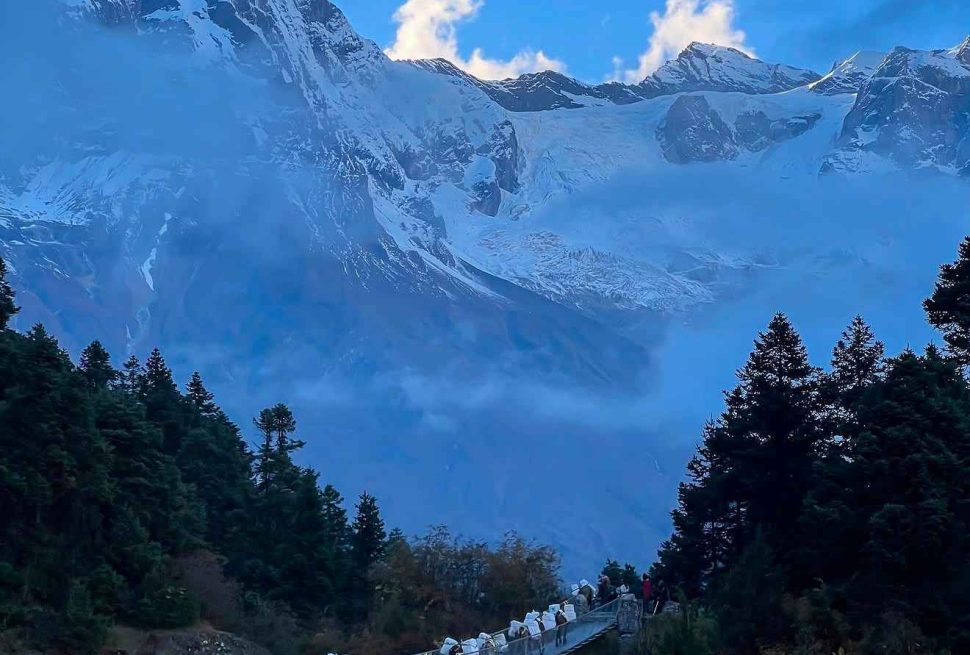
December sits at the front edge of the Nepal winter trekking season. The monsoon is long finished, the air is dry, and on clear days the visibility toward Manaslu, Himlung, and the peaks around the Nagdi Chuli group is as good as anything you get in October or November, sometimes better because there is less haze in the lower valleys. The tradeoff is temperature. Nighttime cold at Samagaon, Samdo, and especially at Dharamsala below the pass is a different order of difficult than the same villages in October. You are also working with roughly ten to ten and a half hours of daylight instead of eleven or twelve, which compresses every day’s walking window and means an early start is not optional, it is mandatory.
For trekkers who have done at least one multi day trek at altitude before, who own or are willing to rent proper down gear, and who are not locked into a single fixed date with no room to wait out weather at Dharamsala, December is a legitimate month to attempt the Manaslu Circuit Trek. For a first time high altitude trekker, or anyone traveling on a schedule so tight that a one day weather delay at the pass would wreck their return flight, we generally steer people toward a different season. We say this honestly rather than talk anyone into a booking that does not fit them.
Temperature and Weather by Altitude Band
Temperature on this route changes fast because you gain nearly 4,200 meters of net elevation between the trailhead and Larkya La. Numbers below are typical ranges reported by guides and previous December groups on this trail. Conditions vary year to year with the strength of the winter westerlies coming off the Tibetan plateau, so treat these as planning figures, not guarantees, and confirm current conditions with us close to your departure date.
Lower valley, Machha Khola to Jagat, around 900 to 1,400 meters. Daytime temperatures typically run in the low to mid teens Celsius in direct sun, dropping into single digits in shade or once the sun drops behind the ridge in the early afternoon. Nights cool to somewhere around 4 to 8 degrees Celsius, occasionally colder in a still, clear night. You will walk in a light fleece or even a t shirt at midday and want a proper jacket by six in the evening.
Mid hills, Namrung to Lho, around 2,600 to 3,200 meters. This is where December starts to feel like winter. Daytime temperatures in sun often sit around 8 to 12 degrees Celsius, but that number collapses fast once you are in shadow or the wind picks up along the ridge lines near Lho. Nighttime lows commonly fall to somewhere between 2 degrees and minus 3 degrees Celsius inside this band, and teahouse dining rooms, heated only by a single wood or dung stove, are the only warm space in the building.
High villages, Samagaon and Samdo, around 3,500 to 3,900 meters. Daytime highs in direct sun can still reach a comfortable 2 to 7 degrees Celsius on a calm, clear day, which is part of why December photographs so well here, but wind chill changes that picture instantly. Night temperatures at Samagaon and Samdo in December routinely drop to somewhere between minus 10 and minus 18 degrees Celsius, and colder nights are not unusual in a hard cold snap. This is where your down jacket and a rated sleeping bag stop being optional comfort items and start being safety equipment.
Dharamsala and Larkya La, 4,450 to 5,106 meters. Daytime temperatures at Dharamsala hover close to freezing, often between minus 2 and 2 degrees Celsius even in sun, and drop further with any wind. On the pass itself at 5,106 meters, expect daytime temperatures anywhere from minus 5 to minus 10 degrees Celsius on the actual crossing morning, with wind chill making it feel considerably colder. Overnight at Dharamsala, temperatures inside an unheated stone shelter commonly fall to minus 15 to minus 25 degrees Celsius. Wind at the pass itself can run 30 to 40 kilometers an hour on an active day, which is the single biggest factor in how brutal or how manageable the crossing feels, more so than the raw temperature number.
Two more points worth knowing. First, December has essentially no rain on this route, the precipitation you will encounter is snow, not rain, and it falls mostly above 3,500 or 4,000 meters. Second, the air is genuinely dry in December, which means clear skies are common, but it also means dehydration and chapped skin sneak up on trekkers who assume cold weather means they do not need to drink water. Keep drinking even when you do not feel thirsty.
Snow and Trail Conditions
Below Namrung, December trail conditions are close to what you would find in autumn, dry dirt and stone paths, the occasional icy patch in permanent shade near a stream crossing, nothing that calls for special gear beyond good boots. Between Namrung and Samagaon you start to see patchy snow on the trail after any storm, usually a few centimeters that melts off south facing sections within a day or two of sun.
Above Samagaon is where December trail conditions genuinely change. Early December typically brings light snow once or twice a week above Samdo, a dusting rather than an accumulation, and trails stay walkable with basic microspikes if you have them. Late December is a different story. Snowfall above 4,000 meters becomes heavier and more frequent, and a storm cycle can leave 15 to 30 centimeters or more sitting on the approach to Dharamsala and on the pass itself. In a hard winter, the trail from Dharamsala up to the pass can turn genuinely icy in patches where wind has packed snow onto rock, and a guide will assess day by day whether crampons or microspikes are needed for that section.
None of this means the trail is dangerous by default. It means the margin for error narrows, and a guide who knows the route needs to be reading the snowpack and the weather each morning rather than following a fixed schedule regardless of conditions. This is one of the clearest reasons the government requires a licensed guide in the Manaslu restricted area regardless of group size, and it is doubly true in winter.
Larkya La in December: Snow Risk and How We Handle the Crossing
Larkya La at 5,106 meters is the technical and psychological center of this whole trek, and December is the month where its mood swings the most. In the first half of the month, roughly the 1st through the 15th, the pass is open and crossable on the large majority of days, guides in the region generally put good crossing conditions at somewhere around 80 to 90 percent of days in this early window, assuming no unusual storm system moves through. In the second half of December, from around the 16th onward, the odds shift. Heavier and more frequent snowfall raises the chance of a poor or blocked crossing day to something in the range of 40 to 50 percent, and that estimate moves around a lot depending on the specific winter.
What this means in practice is not that the pass simply closes for the season and reopens in spring, plenty of teams do cross successfully in late December in a good weather year. It means we build a buffer day into the schedule and refuse to gamble a client’s safety against a flight home. If snow has fallen heavily in the 24 to 48 hours before the planned crossing, the honest and correct call is to wait a day at Dharamsala or Samdo rather than push into deteriorating conditions, deep unconsolidated snow, low visibility, and cold combine badly at 5,106 meters. Guides who know this route watch the sky, talk to other guide teams coming the other direction, and check conditions each morning before committing.
Practically, this means two things for you as a trekker booking a December departure. First, do not schedule your international flight home for the same day your trek is supposed to finish, build in at least one, ideally two, spare days at the end of the trip. Second, trust your guide’s call if a crossing gets postponed a day. It is not indecision, it is the difference between an uncomfortable but safe pass day and a genuinely risky one. You can read more about how the route is graded and what the harder sections actually demand on our Manaslu trek difficulty, and a full stage by stage breakdown of the route itself is on our route guide.
Daylight Hours and Daily Start Times
Nepal does not observe daylight saving changes, but the earth’s tilt still applies, and December days in the Manaslu region run around ten to ten and a half hours of usable daylight, sunrise somewhere near 6:15 to 6:30 in the morning and sunset by around 5:00 to 5:15 in the afternoon, with the light fading noticeably in the twenty minutes after that as the sun drops behind the surrounding ridgelines even earlier at the bottom of narrow valleys like the one below Samagaon.
That window is roughly ninety minutes shorter than what you get on an October trek, and it changes how every day is run. We start walking most mornings by 7:00 to 7:30 rather than the more relaxed 8:00 to 8:30 starts common in autumn, and we push to have the group into the next teahouse by early to mid afternoon rather than cutting it close to dusk. On the pass crossing day specifically, an early start, often well before sunrise, is standard practice regardless of season, but in December it becomes non negotiable, because losing daylight at 5,106 meters in freezing temperatures is not a minor inconvenience, it is the exact situation you want to avoid entirely.
The upside of short days is a longer, more relaxed evening in the teahouse. Dinner tends to happen earlier, conversation around the stove runs longer, and most trekkers find themselves in a sleeping bag by 8:00 or 8:30 most nights, which honestly suits the rhythm of the trek better than you might expect.
Teahouse and Accommodation Availability in December
This is one of the most practical differences between a December trek and an autumn one, and it deserves a straight answer rather than a vague one. From Machha Khola through Namrung, teahouses run close to normal operations year round, the villages here are lower, warmer, and see enough traffic that owners keep their doors open through winter. You will have a normal range of rooms and menu options in this stretch.
From Lho and Samagaon upward, options thin out. A number of lodges in Samagaon reduce their offerings in December, some close entirely for the season and reopen in spring, so the choice of where to stay is smaller than in October or November, though there is still enough capacity for the modest number of trekkers who come through in winter. Samdo typically has only a handful of lodges still running in December, often as few as two or three, compared to the fuller range available in peak season. Dharamsala is the most basic link in the chain even in high season, it is really a single simple shelter rather than a village, and in December that shelter commonly offers dormitory style sleeping only, without private rooms, and with correspondingly basic heating.
None of this should surprise or worry you if you go in informed, and it is exactly why we build the sleeping bag and down jacket we provide into every package rather than leaving it up to chance. What it does mean is that a December Manaslu trek is not the place for someone who needs a private room and a hot shower every single night. Expect shared spaces, a wood stove as the main heat source, and a simpler food menu the higher you climb. We tell every client this upfront because managing that expectation before departure matters more than discovering it at 3,900 meters.
Road and Transport Conditions to the Trailhead in Winter
The drive from Kathmandu to the trailhead at Machha Khola runs roughly 160 kilometers and takes about 8 to 9 hours by jeep, following the Prithvi Highway and then a rougher local road up the Budhi Gandaki valley. In December this drive is generally more reliable than during the monsoon months, there is no rain to trigger landslides and no flooded river crossings to wait out, which is a genuine advantage of the dry winter season. The tradeoff is dust. The unpaved sections of this road throw up a lot of dust in dry conditions, and temperatures overnight along this stretch, particularly once you are past Arughat, can dip closer to single digits, so a layer for the jeep ride is worth having even before the trekking starts.
Occasional short delays from minor road work, a stuck vehicle ahead of you, or a landslide scar from earlier in the year that has not been fully cleared are always possible on this route regardless of season, this is rural mountain road infrastructure, not a highway, and we build a little slack into the schedule for exactly that reason. On the return leg from Tilije back to Kathmandu, the same general conditions apply, a longer drive of around 210 kilometers taking 8 to 10 hours. We monitor road conditions in the weeks before each departure and will always tell you honestly if anything unusual is affecting the route that season.
Pros and Cons of Trekking Manaslu in December
Every season on this route is a tradeoff. Here is the honest breakdown for December specifically, factor by factor.
| Factor | Advantage in December | Downside in December |
|---|---|---|
| Crowds on trail | Far fewer trekkers than October or November, quiet teahouses and trail | Fewer people around if something goes wrong, and less social atmosphere in the evenings |
| Mountain views | Very clear air, often sharper visibility of Manaslu and surrounding peaks than in busier months | Clouds can still roll in fast at high altitude and obscure views for a day at a time |
| Temperature | Dry, no rain anywhere on route | Genuinely cold at night above Samagaon, real risk of frostbite without proper gear |
| Larkya La conditions | Good odds of a straightforward crossing in the first half of the month | Rising snow risk after mid month, possible delay of a day or more waiting for conditions to settle |
| Teahouse choice | No shortage of beds since fewer trekkers are competing for rooms | Fewer lodges open at all above Samagaon, more basic facilities at Samdo and Dharamsala |
| Daylight and pacing | Evenings feel long and relaxed, good for rest and acclimatization | Only about ten hours of usable daylight, tighter daily walking windows and earlier starts |
| Cost and availability | Easier to arrange last minute departures since demand is lower | Some agencies reduce staffing in the off season, so book with an operator that actually runs winter trips regularly |
| Photography | Snow dusted villages and clear skies make for genuinely good images | Cold hands and battery drain in freezing temperatures slow down photography in practice |
Day by Day Sample Itinerary for December
Below is our standard 13 day Manaslu Circuit itinerary with notes specific to what December adds at each stage. Distances, walking times, and altitudes are the same route facts we use year round, the notes column is where the winter specific detail lives.
| Day | Route | Altitude | Notes |
|---|---|---|---|
| Day 1 | Arrival in Kathmandu, airport transfer | 1,300 m | Evening briefing to check gear and confirm the down jacket and sleeping bag we provide fit properly before you leave the city |
| Day 2 | Kathmandu to Machha Khola, about 160 km, 8 to 9 hours drive | 930 m | Dry roads compared to monsoon season, dusty in places, cool once the sun drops behind the valley walls in late afternoon |
| Day 3 | Machha Khola to Jagat, 11 to 12 km, 5 to 6 hours walk | 1,410 m | Comfortable daytime temperatures, this is where the local Chumnubri checkpoint fee is usually paid in cash |
| Day 4 | Jagat to Deng, 19 km, 6 to 7 hours walk | 1,860 m | Still mild by day, noticeably cooler mornings, first hint of the colder air ahead |
| Day 5 | Deng to Namrung, 19 km, 6 to 7 hours walk | 2,900 m | Down jacket comes out for evenings from here on, teahouses still fully operational |
| Day 6 | Namrung to Samagaon, 17 km, 6 to 7 hours walk | 3,500 m | First proper cold night of the trek, clear views of Manaslu are common on calm December evenings |
| Day 7 | Acclimatization day at Samagaon, short side hike, 8 to 10 km, 4 to 5 hours | 3,500 m | Important to rest and hydrate properly here, cold dry air makes altitude symptoms easier to miss |
| Day 8 | Samagaon to Samdo, 8 to 9 km, 3 to 4 hours walk | 3,860 m | Lodge choice is limited in December, expect a simpler but adequate setup |
| Day 9 | Samdo to Dharamsala, 11 to 12 km, 4 to 5 hours walk | 4,450 m | Coldest overnight of the whole trip, dormitory style accommodation only, early dinner and early sleep |
| Day 10 | Dharamsala over Larkya La (5,106 m) to Bimthang, 17 to 19 km, 8 to 10 hours | Down to about 3,700 m | Predawn start is standard in December, guide assesses snow and wind before committing to the crossing, buffer day may be used here if conditions are poor |
| Day 11 | Bimthang to Tilije, 12 to 13 km, 5 to 6 hours walk | 2,300 m | Noticeably warmer once you drop below 3,000 meters, a welcome change after the pass |
| Day 12 | Tilije to Kathmandu, about 210 km, 8 to 10 hours drive | 1,300 m | Long drive day, celebratory farewell dinner in Kathmandu that evening |
| Day 13 | Final departure from Kathmandu | 1,300 m | Build a spare day into your international flight booking if possible given winter pass timing |
If you want more time in the region and are already committed to a winter departure, our 23 day Tsum Valley and Manaslu Circuit combination adds the Tsum valley side trip before joining the main circuit. It is a longer, colder commitment, so it suits trekkers who already know they handle cold well and want the added cultural depth of Tsum’s monasteries, rather than a first time winter trekker looking for the shorter, more standard route.
What to Pack for December Cold
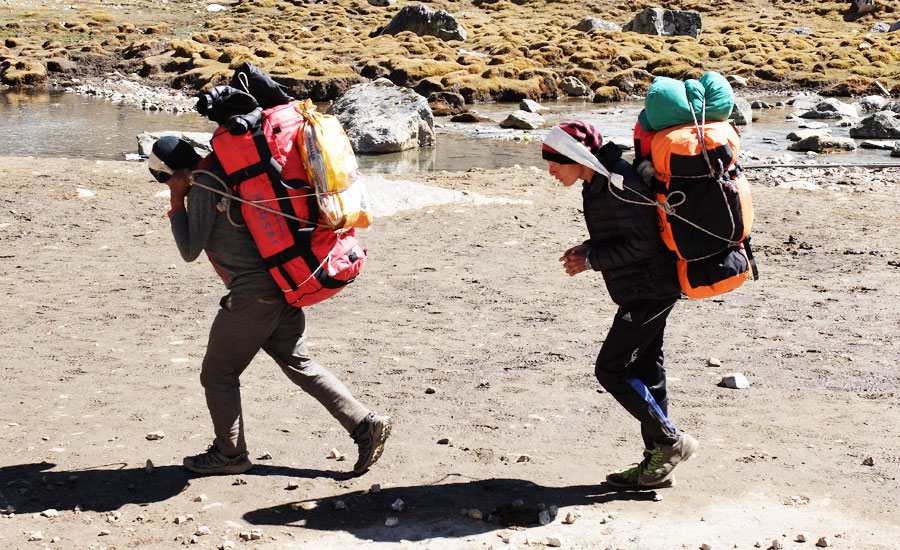
Layering is the whole game here, and the difference between a manageable December trek and a miserable one usually comes down to gear choices made before you ever leave home. We provide a sleeping bag rated for cold conditions and a down jacket as part of every package, both returned at the end of the trip, but everything below that layer is on you.
Start with a proper base layer, a lightweight merino wool or synthetic thermal top and bottom that you can wear day and night without it holding sweat against your skin. Add a mid layer of fleece or a light synthetic insulated jacket for daytime walking, since you will be generating heat while moving even in cold air. Bring a hard shell jacket that blocks wind, this matters more on the exposed sections above Samagaon and especially at the pass than almost anything else in your bag, wind chill does more damage to your comfort than the raw temperature reading. Insulated waterproof trekking pants, not just a single layer of hiking pants, make a real difference on the pass day and at Dharamsala.
For your hands, bring both a lighter glove for general walking and a heavier insulated mitten or glove for the pass crossing itself, cold fingers lose dexterity fast and you want a spare pair in case one gets damp. A warm hat that covers your ears, a buff or neck gaiter you can pull up over your face against wind, and sunglasses or glacier glasses for the snow glare near the pass are all essential rather than optional. Bring good quality wool hiking socks and a spare pair or two, wet or thin socks in December cold is a fast route to frostbite risk on the toes.
Footwear should be a proper insulated, waterproof trekking boot, broken in well before you arrive, not a lightweight three season boot. Microspikes are worth carrying for icy sections above Samdo even if your guide decides they are not needed every day, having them in your pack costs little and saves a genuinely dangerous slip. A four season sleeping bag liner adds a meaningful margin of warmth inside the sleeping bag we provide, particularly at Dharamsala. Bring a headlamp with fresh batteries and a spare set, cold drains battery power fast and you will need it both for the predawn pass start and simply moving around a dark teahouse in the evening. A reusable water bottle with an insulating cover or a wide mouth thermos helps keep your water from partially freezing overnight, which does happen at Samdo and Dharamsala. Hand and toe warmers, the small chemical packets, are cheap insurance worth packing for the pass day specifically.
Finally, sun protection matters more in winter at altitude than most people expect, strong UV reflecting off snow at Dharamsala and the pass can burn skin quickly even in freezing air, so bring a proper high SPF sunscreen and lip balm with sun protection.
Permits and Costs for December
The good news for a December booking is that you land in the cheaper permit bracket. The Manaslu Restricted Area Permit is priced by season, and the December through August window falls into the off season rate rather than the more expensive September through November peak rate. Expect the restricted area permit to run around USD 75 for the first seven days plus roughly USD 10 for each additional day beyond that in this off season bracket, compared to a noticeably higher daily rate in the autumn peak season. On top of that you need the Manaslu Conservation Area Permit, priced around USD 30, and since the route exits into Annapurna Conservation Area territory near Bimthang and Tilije, the Annapurna Conservation Area Permit as well, also around USD 30. There is also a small local fee, roughly USD 10, charged by the Chumnubri Rural Municipality and typically collected in cash Nepali rupees at a checkpoint along the trail, usually at Jagat.
| Permit | Approximate Cost | Notes |
|---|---|---|
| Manaslu Restricted Area Permit | About USD 75 for first 7 days, plus about USD 10 per extra day | December falls in the cheaper off season bracket, rates can change so confirm close to departure |
| Manaslu Conservation Area Permit | About USD 30 | Flat fee regardless of season or trip length |
| Annapurna Conservation Area Permit | About USD 30 | Needed because the route exits through Annapurna Conservation Area near Bimthang |
| Local municipality fee | About USD 10 | Paid in cash Nepali rupees, usually at a checkpoint in Jagat |
All permit fees change periodically, so treat these numbers as a planning guide and confirm the current figures with us before you finalize your booking, we handle the paperwork either way. One rule that does not change with season, a licensed guide is legally mandatory for the Manaslu restricted area regardless of group size, solo trekking without a guide is not permitted here.
Our package pricing for the 13 day Manaslu Circuit Trek is USD 1,350 per person for a solo traveler, USD 1,250 per person for a group of 2 to 5, USD 1,200 per person for a group of 6 to 8, and USD 1,150 per person for a group of 9 to 10. These are approximate rates, please confirm current pricing with us directly when booking, as costs can shift with permit changes and fuel prices. The package includes airport pickup and drop off, 2 nights in a Kathmandu hotel with breakfast, teahouse lodging throughout the trek, transport to and from the trailhead, all permits mentioned above including TIMS and local fees, a licensed English speaking guide, porter service at one porter per two trekkers carrying up to 20 kilograms, guide and porter wages, three meals a day on trek plus morning tea or coffee, insurance for your guide and porter team, a sleeping bag and down jacket provided for your use and returned at the end, a trekking map, a completion certificate, a first aid kit carried by your guide, government taxes, and a farewell dinner in Kathmandu. Not included are your international airfare, Nepal entry visa, personal travel and evacuation insurance, and personal expenses such as laundry, phone and wifi charges, bottled water and other beverages, alcohol, and any snacks or extra food beyond what the package covers. For a full breakdown of costs and permit questions, our Manaslu Circuit cost and permit FAQ covers additional detail.
Who December Suits and Who Should Consider a Different Season
December suits a specific kind of trekker. If you have done at least one trek above 4,000 meters before and know roughly how your body handles altitude, if you genuinely enjoy cold weather and quiet trails more than you mind shivering through an evening in a teahouse, if your travel dates have some flexibility built in around the pass crossing, and if you own or are willing to rent proper cold weather gear rather than making do, December can give you one of the best versions of this trek, clear skies, near empty villages, and a real sense of being somewhere remote.
December is a poor fit if this is your first time trekking at altitude and you are not sure how your body responds to thin air combined with hard cold, if you are traveling on rigid dates with no slack for a weather delay at Dharamsala, if you are traveling with children or anyone with circulation issues or a history of cold sensitivity, or if a private room and hot shower every night matters more to you than saving on crowds. For any of those situations, we would rather point you toward late September through November, or the pre monsoon window of March through May, both of which carry warmer nights and a more predictable Larkya La crossing. Our seasonal comparison guide lays out how each month on the calendar actually compares if you are still deciding.
Cultural Notes for December
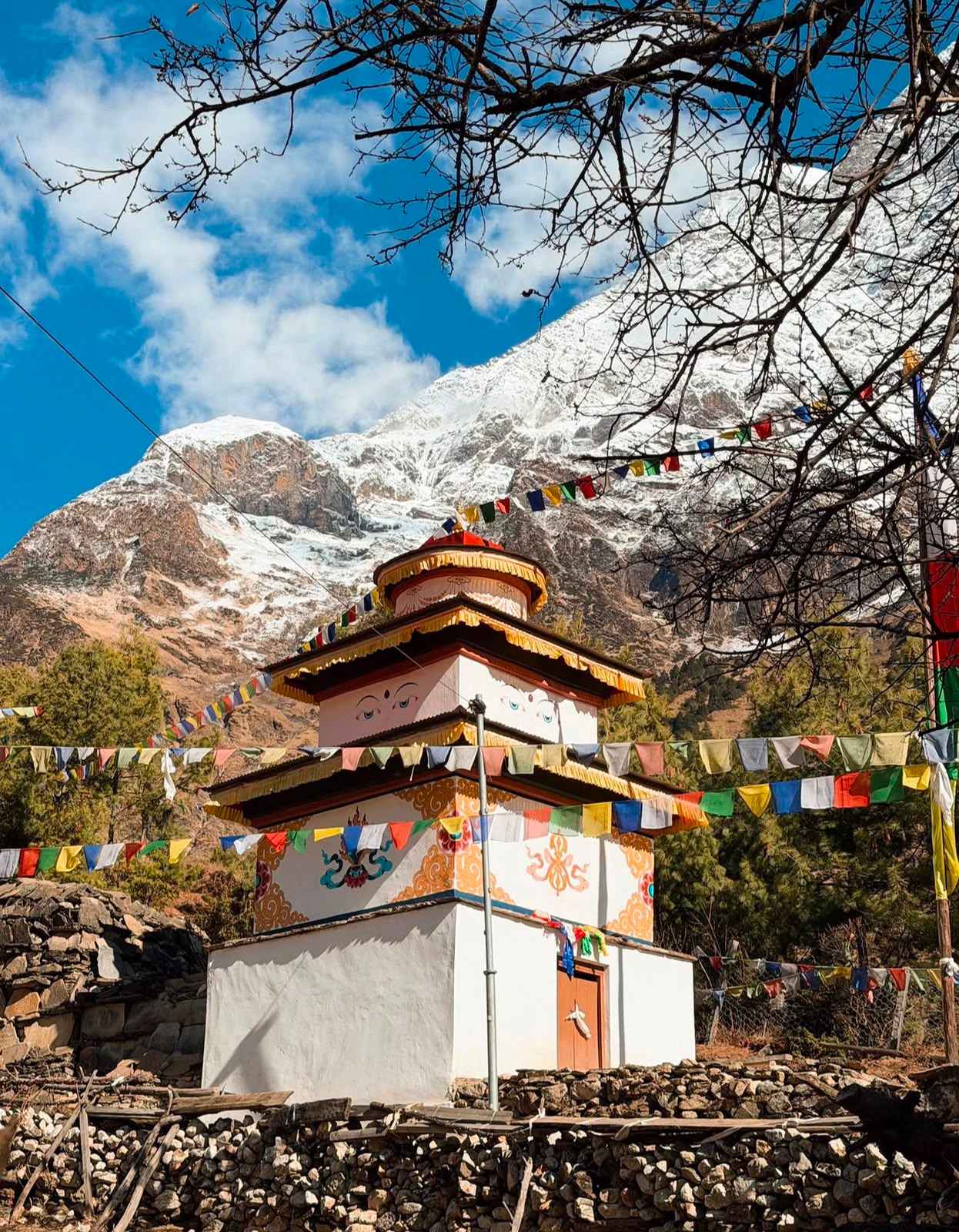
The villages of Samagaon and Samdo in the upper Nubri valley are Tibetan Buddhist communities, and you will pass mani walls, chortens, and monasteries throughout the upper part of the route regardless of when you go. We want to be straightforward here rather than invent a festival date to make the article sound richer, we could not verify a major fixed Tibetan Buddhist festival that reliably falls within December itself in this specific valley, Losar, the Tibetan New Year, typically falls in February or March depending on the lunar calendar, and other regional celebrations in this area tend to cluster around the autumn months. If a local observance happens to coincide with your specific December dates, your guide will tell you about it and can help arrange a respectful visit to a monastery, but we would rather tell you honestly that December is not defined by a known festival calendar here than promise you something we cannot confirm.
What is reliably present in December is a slower pace of life in these high villages. Many families that run guesthouses in summer and autumn have less agricultural work in the cold months, and conversations with lodge owners and local guides tend to be longer and less rushed simply because there are fewer trekkers passing through to occupy their attention.
Frequently Asked Questions
Is Larkya La actually closed in December?
Not as a rule, no. The pass is not administratively closed the way a road might be, and teams cross it throughout December in most years. What changes is the day to day probability of a clean crossing. Early December sees good conditions on the large majority of days. Late December carries a meaningfully higher chance of heavy snow making that particular day’s crossing difficult or inadvisable, in which case the correct response is to wait a day, not to push through regardless. Building a spare day or two into your schedule is the practical answer to this question rather than a firm yes or no on closure.
How cold does it actually get at night on this trek in December?
It depends heavily on altitude. Down at Machha Khola and Jagat, nights are cool but manageable, typically somewhere in the 4 to 8 degree Celsius range. By the time you reach Samagaon and Samdo above 3,500 meters, nighttime temperatures commonly fall to somewhere between minus 10 and minus 18 degrees Celsius. At Dharamsala just below the pass, overnight temperatures can drop to minus 15 to minus 25 degrees Celsius inside an unheated shelter. This is exactly why the down jacket and cold rated sleeping bag we include in every package are not a nice extra, they are core equipment for this trip in winter.
Do I need previous high altitude trekking experience to attempt this in December?
It is not an absolute requirement, but we recommend it strongly. The combination of altitude, cold, and shorter daylight windows means there is less margin for a first timer to figure out their own pacing and altitude response on the fly. If this would be your first trek above 4,000 meters, we would rather discuss a warmer season with you, or at minimum make sure you understand exactly what the cold and altitude combination will feel like before you commit to December dates.
Are the teahouses actually open the whole way in December?
From Machha Khola through Namrung, yes, normal operations continue year round. From Lho and Samagaon upward, some lodges close for the season and the remaining ones offer a more basic setup than you would find in October. Samdo typically has only a small number of lodges running, and Dharamsala offers dormitory style shelter only, without private rooms. This is normal for the season and something every one of our December groups is briefed on before departure, it is not a surprise sprung on you at 3,900 meters.
What is the biggest safety concern specific to December on this route?
Cold combined with wind at altitude is the primary concern, more than the walking difficulty of the trail itself. Frostbite risk on fingers and toes rises sharply in genuinely cold, windy conditions if a trekker is under equipped, and altitude symptoms can be harder to notice under heavy layers and general winter discomfort. This is why we brief every client on gear before departure and why our guides carry a first aid kit and know the early signs of both cold injury and altitude illness to watch for throughout the trek.
Can I still see clear mountain views of Manaslu in December?
Generally yes, and often better than in busier months, since the dry winter air tends to produce sharp, clear conditions on calm days. Clouds can still build quickly at altitude and obscure a view for a day, that is true in any season, but December does not put you at a disadvantage for visibility compared to autumn, and the lack of trekking traffic makes for quieter, more personal moments at viewpoints that would otherwise be crowded in peak season.
How much does the trek cost and what is actually included?
Our 13 day package runs USD 1,350 per person solo, USD 1,250 per person for groups of 2 to 5, USD 1,200 per person for groups of 6 to 8, and USD 1,150 per person for groups of 9 to 10, please confirm current rates with us when booking. It covers airport transfers, 2 nights in a Kathmandu hotel with breakfast, teahouse lodging on trek, transport to and from the trailhead, all required permits, a licensed guide, porter service, three trek meals a day plus morning tea or coffee, a provided sleeping bag and down jacket, a trekking map, completion certificate, first aid kit, government taxes, and a farewell dinner. It does not include your international flight, Nepal visa, personal insurance, or personal expenses like laundry, wifi, and drinks. Full detail is on our cost and permit FAQ.
Should I book a private trip or join a fixed group departure for a December trek?
Either can work, the deciding factor is usually flexibility around the pass crossing. A private departure gives you full control to add a buffer day at Dharamsala if the weather calls for it without affecting anyone else’s plans. A fixed group departure can work just as well as long as everyone in the group understands upfront that the itinerary may need to flex by a day around Larkya La. We are happy to talk through which setup suits your travel dates and risk tolerance when you contact us.
Ready to Trek Manaslu in December
If a quiet trail, clear winter skies, and an honest, well prepared crossing of Larkya La sound like the trip you want, get in touch and we will walk you through gear, dates, and what a realistic December schedule looks like for your specific travel window. Reach Manaslu Treks and Expedition, based in Thamel, Kathmandu, by phone or WhatsApp at +977 9869225929, by email at info@manaslutreks.com, or through our contact. You can also view full details and book directly through our Manaslu Circuit Trek. We will tell you plainly if your dates fall in a riskier window for the pass, and we will help you plan around it rather than talk you into a booking that does not fit your situation.
Are you interested in mountain photography and videography and looking for a quieter Himalayan route with more time at key…