![Edit Post Site Icon Pattern Engine Edit with Elementor Gluten Free And Vegetarian Food On The Manaslu Circuit Trek · Post Ctrl+K 59 / 100 Save Gluten Free And Vegetarian Food On The Manaslu Circuit Trek If you are planning the Manaslu Circuit Trek and you eat vegetarian, or you live with celiac disease or a gluten intolerance, you have probably typed some version of this question into Google at two in the morning. Can I actually eat safely on this trek. Will there be enough food that does not make me sick. Will the guides even understand what gluten free means. We get this question from guests every single season, and this year it came from a guest we will never forget, a trekker named Claudia who flew in from Argentina. This guide is our honest answer to that question, written from years of running treks through the Manaslu Conservation Area with guides who grew up in these villages, cook in these kitchens, and know exactly what a teahouse can and cannot put on your plate. We are not going to tell you the trail is a five star buffet, because it is not. But we are going to tell you, with real detail, why the Manaslu Circuit Trek is one of the easier Himalayan routes for vegetarian and gluten free travelers, why local crops here actually work in your favor, and what more than 100 vegetarian dishes actually look like once you count every combination on the trail. Why Manaslu Circuit Trek Is Surprisingly Good For Vegetarian And Gluten Free Trekkers Most travelers assume a remote Himalayan trail with no roads will have the worst food options, not the best. On Manaslu it works the other way around. The villages along this route, from Machha Khola up through Namrung, Lho, Shyala, Samagaon and Samdo, sit in the Nubri and Tsum valleys, where farming has depended on lentils, potatoes, buckwheat, barley and green vegetables for generations, long before trekking tourism arrived. Meat is expensive to carry in and difficult to store safely at altitude, so most households and teahouses default to plant based cooking anyway. That is good news if you are vegetarian, because you are not asking for a special exception, you are asking for what the kitchen already knows how to cook. For gluten free trekkers the picture is a little more work, but still workable. Nepali kitchens on this route rely heavily on rice, potatoes, lentils and local buckwheat flour, all of which are naturally free of gluten. Wheat based items like chapati, Tibetan bread, momo wrappers and noodles are common too, so the risk is not a lack of gluten free food, it is making sure the wheat based items do not end up on your plate by accident. Once you understand the pattern, which we explain fully below, this becomes very manageable. The Real Story Of Claudia From Argentina And Her Gluten Free Worry Claudia joined one of our Manaslu Circuit Trek groups last season, and she told our guide on the very first day at Soti Khola that she was nervous about food. She has celiac disease, so this is not a preference for her, it is medical. Back home in Argentina she is used to reading every label and asking every waiter three or four questions before she orders anything. She told us she almost did not book the trip because every gluten free trekking article she found online talked about Everest or Annapurna, and almost nothing existed about Manaslu specifically. Our guide did two simple things. First, he told every teahouse owner in advance, at every stop, exactly what Claudia could and could not eat, using the local language rather than relying on English alone. Second, he taught her which dishes on the standard menu card were already safe without any special request, so she was not depending on a special meal being cooked from nothing every night. By the time the group reached Samagaon, Claudia was ordering her own dal bhat, her own roasted potatoes and her own vegetable soup directly from the menu without needing to ask twice. She told us afterward that she was genuinely surprised. Not because the food was fancy, it was not trying to be, but because every single teahouse on the route had something she could eat safely, and more than one place surprised her with buckwheat pancakes made completely separately from the wheat flour used for everyone else. She said it was the first big trek where she never went hungry and never once felt like a burden to the kitchen. That single trip changed how we brief every gluten free guest who books with us now, and it is a big part of why we wrote this guide. Understanding The Teahouse Kitchen System On The Manaslu Trail Every teahouse on the Manaslu Circuit runs on a similar system. There is one kitchen, usually a single wood or gas stove, run by the owner or a family member, cooking to order for everyone in the dining room that night. There are no large fryers, no shared prep lines and no packaged sauces hiding wheat or dairy the way you might find in a city restaurant. Meals are cooked individually in a wok or a pot, which actually works in favor of trekkers with dietary needs, because a cook can leave the flour or the meat out of your portion without disrupting anyone else's order. The tradeoff is that menus repeat. You will see the same core list of twenty to thirty dishes at almost every teahouse, with slight regional variation as you climb higher. The good news is that this repetition makes the menu predictable, and once you know which items are naturally vegetarian and which are naturally gluten free, you can order with confidence at every single stop from Machha Khola to Bimthang. Vegetarian Food On The Manaslu Circuit Trek: What You Can Actually Order The Manaslu Circuit is genuinely one of the most vegetarian friendly treks in Nepal. The base of almost every meal is dal bhat, a set plate of steamed rice, lentil soup, a seasonal vegetable curry and a small pickle, and it is vegetarian by default in every teahouse on this route. Most kitchens also offer unlimited refills of rice, lentils and vegetables with dal bhat at no extra cost, which makes it the best value meal on the entire trail as well as the most reliable one. Beyond dal bhat, you will find vegetable fried rice, vegetable fried noodles, vegetable momos, vegetable thukpa noodle soup, potato dishes cooked half a dozen different ways, Tibetan bread served with honey, jam or peanut butter, chapati with vegetable curry, and a rotating list of soups including garlic soup, tomato soup and mixed vegetable soup. Garlic soup in particular is a trail favorite at altitude, since garlic is traditionally believed to help with acclimatization, and every teahouse from Namrung upward tends to serve it. More Than 100 Vegetarian Dishes You Can Actually Find Across The Teahouses When our guests ask how many vegetarian options exist on this trek, the honest answer is that it depends how you count, but once you add up every base dish, every style of cooking it and every village variation, you comfortably pass 100 separate vegetarian items across the full seventeen days of trekking. Here is what that actually looks like broken down by category, based on the menus our guides have seen repeated at teahouses from Soti Khola to Dharmasala. Rice and grain dishes: plain steamed rice, vegetable fried rice, egg fried rice, mixed vegetable rice, buckwheat porridge, tsampa roasted barley porridge, rice pudding, and plain dal bhat with seasonal vegetable variations that change almost every day depending on what the village has that week, easily fifteen to twenty variations across the trek. Potato dishes: boiled potatoes, roasted potatoes, fried potatoes, potato curry, potato and vegetable curry, hash brown style potato fritters, and potato soup, each one made slightly differently at nearly every teahouse, adding another dozen or more options. Noodle and dumpling dishes: vegetable noodle soup, vegetable fried noodles, vegetable thukpa, vegetable momos steamed or fried, vegetable chow mein, and Tibetan style dumpling soup, giving you another eight to ten variations. Bread and pancake items: Tibetan bread plain, Tibetan bread with honey, Tibetan bread with jam, Tibetan bread with peanut butter, chapati, plain pancake, apple pancake when apples are in season near Jagat and Philim, buckwheat pancake, and porridge with local honey, another eight to ten items. Soups: garlic soup, tomato soup, mixed vegetable soup, potato soup, lentil soup served on its own, sherpa stew made vegetarian on request, and thukpa without meat, roughly seven regular options that appear at almost every stop. Egg dishes for lacto ovo vegetarians: plain omelet, vegetable omelet, cheese omelet where cheese is available, boiled eggs, fried eggs and scrambled eggs, another six options. Snacks, sides and extras: roasted soybeans, boiled soybeans, mixed pickle, cucumber salad in season, seasonal greens sauteed simply, popcorn at some teahouses, biscuits, and local apples and walnuts from the lower villages, adding another eight to ten items depending on the season you trek in. Add all of that up across seventeen days of trekking through more than a dozen villages, each with its own small variation on these dishes, and you land well past 100 vegetarian meal combinations by the time you reach Bimthang on the far side of the Larke Pass. It is not a five star menu with endless creativity, but it is genuinely varied enough that you will not eat the same exact plate every single night. Gluten Free Food On The Manaslu Circuit Trek: What Is Naturally Safe Gluten free trekking on Manaslu is honestly not as difficult as most people assume before they arrive, including Claudia herself. The core trail staples, rice, lentils, potatoes and most vegetable curries, are naturally gluten free because they do not use wheat flour at all. Dal bhat without a side of chapati is one of the safest and most filling meals on the entire route, and it is available at every single teahouse from the trailhead to the pass. Plain rice, fried rice without soy sauce, boiled or roasted potatoes, vegetable curry, lentil soup on its own, garlic soup, tomato soup, plain omelets and boiled eggs are all reliably gluten free across the trail. Buckwheat, despite the name, contains no wheat and no gluten at all, and it grows locally in the Nubri valley, so buckwheat porridge and buckwheat pancakes at higher villages like Lho and Samagaon are both authentic to the region and safe for celiac trekkers, as long as they are cooked in a clean pan separate from wheat flour. Foods To Avoid Or Ask About If You Are Gluten Free The main things to watch for on this trek are chapati, Tibetan bread, momo wrappers, regular noodles and pasta, all of which are made with wheat flour. Soy sauce used in fried rice or fried noodles often contains wheat as well, so if you are strict about cross contamination it is worth asking the kitchen to cook your portion in soy sauce free style or in a separate pan. Some packaged biscuits and instant noodles sold at trailside shops also contain gluten, so check labels before buying trail snacks in villages like Jagat or Deng. The other detail worth knowing is that a single pan is sometimes used for multiple dishes back to back in smaller teahouses, especially at higher altitude where kitchens are simpler. This is not unique to Manaslu, it is true across most teahouse trekking in Nepal, so if you have celiac disease rather than a general sensitivity, tell your guide clearly so they can ask the cook to use a clean pan or cook your meal first, before anything containing flour touches that same surface. Local Buckwheat, Millet And Barley: Why The Nubri And Tsum Valleys Help Gluten Free Trekkers One detail that most general Nepal trekking food guides miss, because it is specific to this region, is what actually grows in the fields around Namrung, Lho, Shyala and Samagaon. The Nubri and Tsum valleys sit at elevations where wheat struggles but buckwheat, barley and millet thrive, alongside potatoes and hardy green vegetables. These crops have fed local families here for centuries, long before any trekker showed up asking about gluten. That local farming pattern is exactly why gluten free trekkers do better on Manaslu than on some busier routes. Tsampa, roasted barley flour mixed into tea or porridge, buckwheat pancakes, and buckwheat porridge are traditional Tibetan influenced dishes here, not a special modern accommodation invented for tourists. When Claudia was served buckwheat pancakes in Samagaon, she was not eating a substitute, she was eating what many families in that village have eaten for generations. That authenticity is part of what makes this trek work so well for a gluten free diet. How Food Changes As You Climb Higher On The Manaslu Circuit Food variety on this trek follows a predictable curve. From Soti Khola through Jagat and Deng, teahouses are close to the road, so menus are widest, prices are lowest and fresh vegetables are easiest to find. From Namrung through Lho and Shyala up to Samagaon, everything has to be carried in by porter or mule, so menus narrow slightly, prices rise, and fresh meat basically disappears from the menu, which actually works in favor of vegetarian trekkers since it removes the temptation and the risk of undercooked meat at altitude. Above Samagaon, at Samdo and especially at Dharmasala below the Larke Pass, menus become genuinely simple. Expect dal bhat, noodle soup, garlic soup, potatoes, plain rice and basic eggs, with almost nothing fried or elaborate. This is normal and it is not a sign of a bad teahouse, it reflects how difficult it is to carry supplies to nearly 4,500 meters. Vegetarian dal bhat remains reliably available even at Dharmasala, and it is genuinely the best choice at that altitude anyway, since simple carbohydrates and lentils digest more easily than heavy or fried food when oxygen is low. Village By Village Food Guide On The Manaslu Circuit Trek Soti Khola and Machha Khola sit close to the road, so menus here are the widest on the entire trek, including fresh salad, a full range of momos, pizza style flatbreads and fresh fruit juice alongside the usual dal bhat. Jagat and Deng mark the entry into the restricted Manaslu Conservation Area. Menus stay reasonably varied here, with good vegetable curry, fried rice and noodle options, and this is usually the last easy place to stock up on packaged gluten free snacks before the villages get remote. Namrung and Lho introduce more Tibetan influenced cooking, including thukpa, tsampa porridge and the first buckwheat dishes on the route. This is where the trek genuinely starts to feel like it is cooking with what the valley actually grows. Shyala and Samagaon are the best villages on the entire trek for buckwheat pancakes, buckwheat porridge and hearty vegetable dal bhat, and this is usually where trekkers with celiac disease or gluten sensitivity, like Claudia, feel most reassured, since the local diet already leans so heavily on gluten free grains. Samdo and Dharmasala have the simplest menus on the trek, focused on dal bhat, noodle soup, garlic soup and basic eggs. This is the stretch where we recommend carrying your own gluten free snacks as backup, simply because supply is limited this high, not because the kitchens are unwilling to help. Bimthang, on the far side of the Larke Pass, feels like a small reward. Menus widen out again once you drop in elevation, with a return to fried rice, noodles, momos and a wider range of vegetable curries as you descend toward Dharapani and the road. How To Communicate Your Dietary Needs To Guides And Teahouse Owners The single biggest factor in how well a vegetarian or gluten free trekker eats on Manaslu is not the menu itself, it is communication. Tell your trekking company before you fly to Nepal, not on the first day of the trek. This gives your guide time to brief every teahouse ahead of the group and, where needed, call ahead so the kitchen has the right ingredients on hand. On the trail, ask your guide to translate your restriction clearly to the cook rather than relying on the printed English menu alone, since most menu cards do not list ingredients in detail. If you have celiac disease specifically, say so, since teahouse staff often understand a simple preference differently than a medical requirement, and knowing the difference changes how carefully they handle cross contact with wheat flour. This is exactly what worked for Claudia, and it is the single tip we repeat to every gluten free or vegetarian guest who books with us now. What To Pack If You Are Vegetarian Or Gluten Free You do not need to pack a full expedition of backup food, but a small supply is smart insurance, especially for the stretch above Samagaon. Good options include gluten free energy bars, peanut butter in a squeeze packet, roasted nuts, dried fruit, electrolyte powder, instant gluten free oats, and a few protein bars for the two long days around the Larke Pass. Vegetarian trekkers rarely need to pack much extra food at all, since plant based meals are the default across the whole trek, but bringing a personal favorite snack or two always helps morale on a long climbing day. Water, Tea And Drinks On A Gluten Free Or Vegetarian Diet Black tea, milk tea, ginger tea, lemon tea, mint tea and hot water with honey are available at every teahouse and are naturally free of both gluten and animal products aside from the milk in milk tea. Tsampa flour is sometimes stirred into butter tea in the higher villages as a traditional Tibetan drink, and this is gluten free since it is made from roasted barley, not wheat. Bottled water and boiled water are both widely available, and we always recommend boiled water over bottled plastic for both cost and environmental reasons on a trail with no waste collection. Vegan Trekkers On The Manaslu Circuit Vegan trekkers can eat well here too, with a bit more attention to detail than vegetarians need. Dal bhat is usually cooked with a small amount of ghee, so ask for it without ghee or oil based instead. Tibetan bread and momos are typically vegan already unless cheese is added. Milk tea obviously contains dairy, so switch to black tea, lemon tea or plain hot water if you are strict vegan. Roasted soybeans, boiled potatoes, plain rice, lentil soup without ghee and most vegetable curries are naturally vegan across the whole route once you ask the kitchen to leave out butter or ghee. Common Mistakes Trekkers Make With Special Diets On This Trek The most common mistake is staying quiet about a dietary need on the first day and only mentioning it once a problem happens. Speak up from day one. The second mistake is assuming every teahouse understands the word gluten free the same way a restaurant in Europe or North America would. Many do, especially after years of hosting international trekkers, but it is always safer to explain what you cannot eat in simple terms rather than relying on the phrase alone. The third mistake is skipping backup snacks entirely and assuming the menu will always have something available at nearly 4,500 meters. It usually will, but a small backup supply removes any risk of an uncomfortable night with limited options. Frequently Asked Questions About Vegetarian And Gluten Free Food On The Manaslu Circuit Trek Is the Manaslu Circuit Trek good for vegetarians. Yes. Vegetarian food is the default across nearly every teahouse on this route, built around dal bhat, vegetable curry, potatoes, rice, noodles and momos, so vegetarians rarely need to ask for special treatment. Can I eat gluten free safely on the Manaslu Circuit Trek. Yes, with some planning. Rice, lentils, potatoes and local buckwheat dishes are naturally gluten free and widely available. Wheat based items like chapati, Tibetan bread, momos and noodles are common too, so you simply need to avoid those and tell your guide clearly about your dietary need. Is buckwheat really gluten free. Yes. Buckwheat contains no wheat and no gluten despite the name, and it grows locally in the Nubri valley, which is why buckwheat pancakes and porridge in villages like Lho and Samagaon are both traditional and safe for celiac trekkers. Do teahouses on Manaslu understand celiac disease. Many guides and experienced teahouse owners do, especially after hosting international trekkers for years, but it is always best to explain clearly that this is a medical condition and not just a preference, so the kitchen takes cross contact seriously. What should I pack if I am gluten free on this trek. A small supply of gluten free energy bars, oats, peanut butter and dried fruit is smart, especially for the stretch above Samagaon where menus are simplest. Is dal bhat always vegetarian and gluten free. Standard dal bhat, meaning rice, lentil soup and vegetable curry, is vegetarian and gluten free at every teahouse on this route as long as you skip any bread served alongside it. Can I get vegan food on the Manaslu Circuit Trek. Yes, with slightly more communication than vegetarian food needs. Ask for dishes without ghee, butter or milk, and stick to black tea instead of milk tea, and most meals on the standard menu can be made fully vegan. How many vegetarian dishes are actually available on this trek. Counting every base dish and every village variation across rice, potatoes, noodles, breads, soups, eggs and snacks, you pass 100 separate vegetarian meal combinations over the full trek, even though the core menu repeats at each teahouse. Why Book With Manaslu Treks And Expedition For A Special Diet Trek We run Manaslu Circuit Trek groups every season with guides who grew up in Nubri and Tsum, which means they are not reading a menu translation off a laminated card, they are talking to teahouse owners in their own language about exactly what you need. We brief every teahouse on your route in advance when a guest tells us about a dietary requirement, the same way we did for Claudia, so the kitchen already knows before you sit down for dinner. If you are still worried about eating safely at altitude, you are not alone, and you are not being difficult by asking these questions before you book. Tell us your dietary needs when you reach out, and we will build your itinerary and brief your guide accordingly, the exact same way we do for every vegetarian, vegan and gluten free guest who joins us on this trail. Ready To Plan Your Manaslu Circuit Trek Whether you eat strictly gluten free like Claudia, you are vegetarian, vegan, or you simply want to know what is actually on the plate before you commit to seventeen days on this trail, we are happy to answer your questions directly before you book. Get in touch with Manaslu Treks and Expedition to plan your Manaslu Circuit Trek with a team that already knows exactly how to feed you safely, from Soti Khola all the way over the Larke Pass to Bimthang. Move upMove downToggle panel: Sidebar Layout Choose Sidebar Template Default Sidebar Right Sidebar Left Sidebar Full Width Full Width Centered Move upMove downToggle panel: Table of Contents Disable the automatic insertion of the table of contents. Header Label Eg: Contents, Table of Contents, Page Contents Position Select Position Choose where where you want to display the table of contents. Word Count Limit 0 Minimum word count to display TOC. Set to 0 for unlimited words (default). Appearance: NOTE: Using the appearance options below will override the global Appearance settings. Device Target Select Alignment None (Default) Advanced: NOTE: Using the advanced options below will override the global advanced settings. Headings: Heading 1 (h1) Heading 2 (h2) Heading 3 (h3) Heading 4 (h4) Heading 5 (h5) Heading 6 (h6) Select the heading to consider when generating the table of contents. Deselecting a heading will exclude it. Initial View Initially hide the table of contents. Hide Counter Do not show counters for the table of contents. Alternate Headings Specify alternate table of contents header string. Add the header to be replaced and the alternate header on a single line separated with a pipe |. Put each additional original and alternate header on its own line. Examples: Level [1.1]|Alternate TOC Header Replaces Level [1.1] in the table of contents with Alternate TOC Header. Note:This is case sensitive. Exclude Headings Specify headings to be excluded from appearing in the table of contents. Separate multiple headings with a pipe |. Use an asterisk * as a wildcard to match other text. Examples: Fruit*Ignore headings starting with "Fruit". *Fruit Diet*Ignore headings with "Fruit Diet" somewhere in the heading. Apple Tree|Oranges|Yellow BananasIgnore headings that are exactly "Apple Tree", "Oranges" or "Yellow Bananas". Note: This is not case sensitive. Post Block Gluten Free And Vegetarian Food On The Manaslu Circuit Trek Set featured image Generate with Elementor AI A complete guide to vegetarian and gluten free food on the Manaslu Circuit Trek, with real teahouse menus, village by village detail and a guest story from Argentina. Edit excerpt 3,861 words, 20 minutes read time. Last edited an hour ago. Status Published Publish September 11, 2026 6:21 am UTC+0 Slug gluten-free-vegetarian-food-manaslu-circuit-trek Author Kiran Basnet Template Default template Discussion Open Lock Modified Date Move to trash Categories Uncategorized Camping Manaslu Circuit Trek Manaslu Travel Guide Manaslu Tsum Valley Trek Guide Travel Guide Trekker Diaries Add Category Tags Add Tag Separate with commas or the Enter key. Most Used Larkya La PassManaslu Tsum Valley TrekAutumn Trekking NepalMonsoon Trekking NepalWinter Trekking NepalSpring Trekking NepalPre-Monsoon Trekking NepalManaslu Circuit Trek JuneManaslu Circuit Trek Julymanaslu guide Open save panel Post Close dialog Featured image Upload filesMedia Library Filter mediaFilter by type Images Filter by date All dates Search media Media list Showing 81 of 522 media items Load more Attachment Details Gluten-Free-food-in-Manaslu-circuit-Trek.jpg September 11, 2026 134 KB 1024 by 572 pixels Edit Image Delete permanently Alt Text Learn how to describe the purpose of the image(opens in a new tab). Leave empty if the image is purely decorative.Title Gluten Free food in Manaslu circuit Trek Caption Description File URL: https://manaslutreks.com/wp-content/uploads/2026/09/Gluten-Free-food-in-Manaslu-circuit-Trek.jpg Copy URL to clipboard Status:In Progress Selected media actionsSet featured image](https://manaslutreks.com/wp-content/uploads/2026/09/Gluten-Free-food-in-Manaslu-circuit-Trek.jpg)
If you are planning the Manaslu Circuit Trek and you eat vegetarian, or you live with celiac disease or a gluten intolerance, you have probably typed some version of this question into Google at two in the morning. Can I actually eat safely on this trek. Will there be enough food that does not make me sick. Will the guides even understand what gluten free means. We get this question from guests every single season, and this year it came from a guest we will never forget, a trekker named Claudia who flew in from Argentina.
This guide is our honest answer to that question, written from years of running treks through the Manaslu Conservation Area with guides who grew up in these villages, cook in these kitchens, and know exactly what a teahouse can and cannot put on your plate. We are not going to tell you the trail is a five star buffet, because it is not. But we are going to tell you, with real detail, why the Manaslu Circuit Trek is one of the easier Himalayan routes for vegetarian and gluten free travelers, why local crops here actually work in your favor, and what more than 100 vegetarian dishes actually look like once you count every combination on the trail.
Why Manaslu Circuit Trek Is Surprisingly Good For Vegetarian And Gluten Free Trekkers
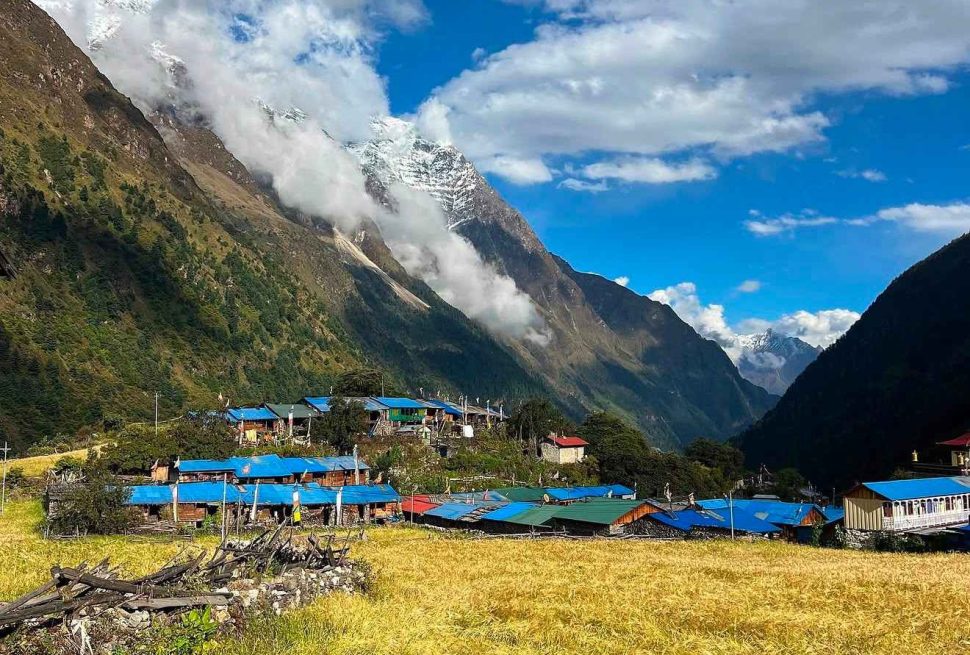
Most travelers assume a remote Himalayan trail with no roads will have the worst food options, not the best. On Manaslu it works the other way around. The villages along this route, from Machha Khola up through Namrung, Lho, Shyala, Samagaon and Samdo, sit in the Nubri and Tsum valleys, where farming has depended on lentils, potatoes, buckwheat, barley and green vegetables for generations, long before trekking tourism arrived. Meat is expensive to carry in and difficult to store safely at altitude, so most households and teahouses default to plant based cooking anyway. That is good news if you are vegetarian, because you are not asking for a special exception, you are asking for what the kitchen already knows how to cook.
For gluten free trekkers the picture is a little more work, but still workable. Nepali kitchens on this route rely heavily on rice, potatoes, lentils and local buckwheat flour, all of which are naturally free of gluten. Wheat based items like chapati, Tibetan bread, momo wrappers and noodles are common too, so the risk is not a lack of gluten free food, it is making sure the wheat based items do not end up on your plate by accident. Once you understand the pattern, which we explain fully below, this becomes very manageable.
The Real Story Of Claudia From Argentina And Her Gluten Free Worry
Claudia joined one of our Manaslu Circuit Trek groups last season, and she told our guide on the very first day at Soti Khola that she was nervous about food. She has celiac disease, so this is not a preference for her, it is medical. Back home in Argentina she is used to reading every label and asking every waiter three or four questions before she orders anything. She told us she almost did not book the trip because every gluten free trekking article she found online talked about Everest or Annapurna, and almost nothing existed about Manaslu specifically.
Our guide did two simple things. First, he told every teahouse owner in advance, at every stop, exactly what Claudia could and could not eat, using the local language rather than relying on English alone. Second, he taught her which dishes on the standard menu card were already safe without any special request, so she was not depending on a special meal being cooked from nothing every night. By the time the group reached Samagaon, Claudia was ordering her own dal bhat, her own roasted potatoes and her own vegetable soup directly from the menu without needing to ask twice.
She told us afterward that she was genuinely surprised. Not because the food was fancy, it was not trying to be, but because every single teahouse on the route had something she could eat safely, and more than one place surprised her with buckwheat pancakes made completely separately from the wheat flour used for everyone else. She said it was the first big trek where she never went hungry and never once felt like a burden to the kitchen. That single trip changed how we brief every gluten free guest who books with us now, and it is a big part of why we wrote this guide.
Understanding The Teahouse Kitchen System On The Manaslu Trail
Every teahouse on the Manaslu Circuit runs on a similar system. There is one kitchen, usually a single wood or gas stove, run by the owner or a family member, cooking to order for everyone in the dining room that night. There are no large fryers, no shared prep lines and no packaged sauces hiding wheat or dairy the way you might find in a city restaurant. Meals are cooked individually in a wok or a pot, which actually works in favor of trekkers with dietary needs, because a cook can leave the flour or the meat out of your portion without disrupting anyone else’s order.
The tradeoff is that menus repeat. You will see the same core list of twenty to thirty dishes at almost every teahouse, with slight regional variation as you climb higher. The good news is that this repetition makes the menu predictable, and once you know which items are naturally vegetarian and which are naturally gluten free, you can order with confidence at every single stop from Machha Khola to Bimthang.
Vegetarian Food On The Manaslu Circuit Trek: What You Can Actually Order
The Manaslu Circuit is genuinely one of the most vegetarian friendly treks in Nepal. The base of almost every meal is dal bhat, a set plate of steamed rice, lentil soup, a seasonal vegetable curry and a small pickle, and it is vegetarian by default in every teahouse on this route. Most kitchens also offer unlimited refills of rice, lentils and vegetables with dal bhat at no extra cost, which makes it the best value meal on the entire trail as well as the most reliable one.
Beyond dal bhat, you will find vegetable fried rice, vegetable fried noodles, vegetable momos, vegetable thukpa noodle soup, potato dishes cooked half a dozen different ways, Tibetan bread served with honey, jam or peanut butter, chapati with vegetable curry, and a rotating list of soups including garlic soup, tomato soup and mixed vegetable soup. Garlic soup in particular is a trail favorite at altitude, since garlic is traditionally believed to help with acclimatization, and every teahouse from Namrung upward tends to serve it.
More Than 100 Vegetarian Dishes You Can Actually Find Across The Teahouses
When our guests ask how many vegetarian options exist on this trek, the honest answer is that it depends how you count, but once you add up every base dish, every style of cooking it and every village variation, you comfortably pass 100 separate vegetarian items across the full seventeen days of trekking. Here is what that actually looks like broken down by category, based on the menus our guides have seen repeated at teahouses from Soti Khola to Dharmasala.
Rice and grain dishes: plain steamed rice, vegetable fried rice, egg fried rice, mixed vegetable rice, buckwheat porridge, tsampa roasted barley porridge, rice pudding, and plain dal bhat with seasonal vegetable variations that change almost every day depending on what the village has that week, easily fifteen to twenty variations across the trek.
Potato dishes: boiled potatoes, roasted potatoes, fried potatoes, potato curry, potato and vegetable curry, hash brown style potato fritters, and potato soup, each one made slightly differently at nearly every teahouse, adding another dozen or more options.
Noodle and dumpling dishes: vegetable noodle soup, vegetable fried noodles, vegetable thukpa, vegetable momos steamed or fried, vegetable chow mein, and Tibetan style dumpling soup, giving you another eight to ten variations.
Bread and pancake items: Tibetan bread plain, Tibetan bread with honey, Tibetan bread with jam, Tibetan bread with peanut butter, chapati, plain pancake, apple pancake when apples are in season near Jagat and Philim, buckwheat pancake, and porridge with local honey, another eight to ten items.
Soups: garlic soup, tomato soup, mixed vegetable soup, potato soup, lentil soup served on its own, sherpa stew made vegetarian on request, and thukpa without meat, roughly seven regular options that appear at almost every stop.
Egg dishes for lacto ovo vegetarians: plain omelet, vegetable omelet, cheese omelet where cheese is available, boiled eggs, fried eggs and scrambled eggs, another six options.
Snacks, sides and extras: roasted soybeans, boiled soybeans, mixed pickle, cucumber salad in season, seasonal greens sauteed simply, popcorn at some teahouses, biscuits, and local apples and walnuts from the lower villages, adding another eight to ten items depending on the season you trek in.
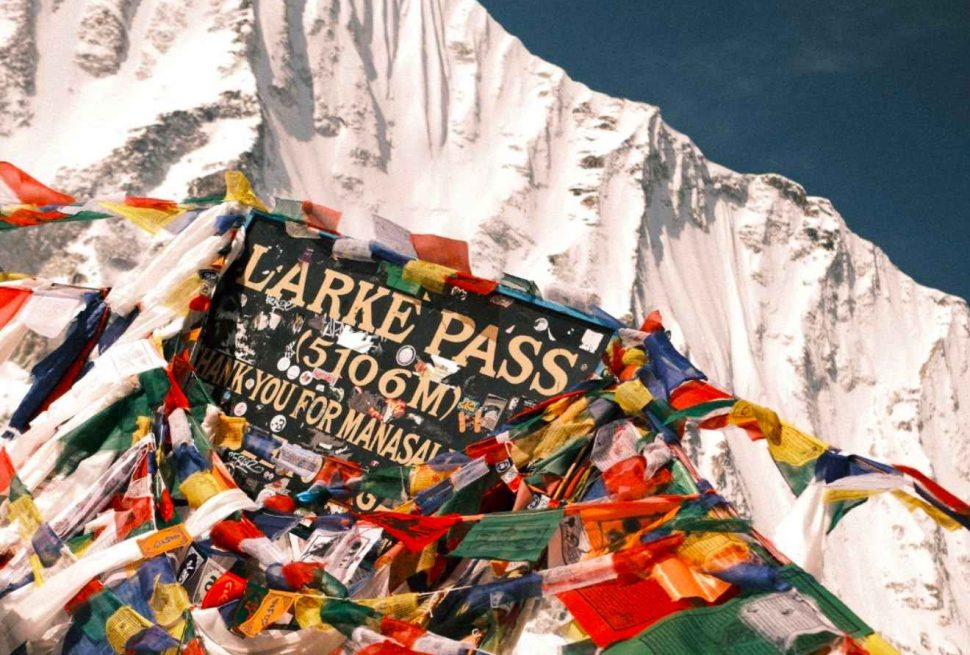
Add all of that up across seventeen days of trekking through more than a dozen villages, each with its own small variation on these dishes, and you land well past 100 vegetarian meal combinations by the time you reach Bimthang on the far side of the Larke Pass. It is not a five star menu with endless creativity, but it is genuinely varied enough that you will not eat the same exact plate every single night.
Gluten Free Food On The Manaslu Circuit Trek: What Is Naturally Safe
Gluten free trekking on Manaslu is honestly not as difficult as most people assume before they arrive, including Claudia herself. The core trail staples, rice, lentils, potatoes and most vegetable curries, are naturally gluten free because they do not use wheat flour at all. Dal bhat without a side of chapati is one of the safest and most filling meals on the entire route, and it is available at every single teahouse from the trailhead to the pass.
Plain rice, fried rice without soy sauce, boiled or roasted potatoes, vegetable curry, lentil soup on its own, garlic soup, tomato soup, plain omelets and boiled eggs are all reliably gluten free across the trail. Buckwheat, despite the name, contains no wheat and no gluten at all, and it grows locally in the Nubri valley, so buckwheat porridge and buckwheat pancakes at higher villages like Lho and Samagaon are both authentic to the region and safe for celiac trekkers, as long as they are cooked in a clean pan separate from wheat flour.
Foods To Avoid Or Ask About If You Are Gluten Free
The main things to watch for on this trek are chapati, Tibetan bread, momo wrappers, regular noodles and pasta, all of which are made with wheat flour. Soy sauce used in fried rice or fried noodles often contains wheat as well, so if you are strict about cross contamination it is worth asking the kitchen to cook your portion in soy sauce free style or in a separate pan. Some packaged biscuits and instant noodles sold at trailside shops also contain gluten, so check labels before buying trail snacks in villages like Jagat or Deng.
The other detail worth knowing is that a single pan is sometimes used for multiple dishes back to back in smaller teahouses, especially at higher altitude where kitchens are simpler. This is not unique to Manaslu, it is true across most teahouse trekking in Nepal, so if you have celiac disease rather than a general sensitivity, tell your guide clearly so they can ask the cook to use a clean pan or cook your meal first, before anything containing flour touches that same surface.
Local Buckwheat, Millet And Barley: Why The Nubri And Tsum Valleys Help Gluten Free Trekkers
One detail that most general Nepal trekking food guides miss, because it is specific to this region, is what actually grows in the fields around Namrung, Lho, Shyala and Samagaon. The Nubri and Tsum valleys sit at elevations where wheat struggles but buckwheat, barley and millet thrive, alongside potatoes and hardy green vegetables. These crops have fed local families here for centuries, long before any trekker showed up asking about gluten.
That local farming pattern is exactly why gluten free trekkers do better on Manaslu than on some busier routes. Tsampa, roasted barley flour mixed into tea or porridge, buckwheat pancakes, and buckwheat porridge are traditional Tibetan influenced dishes here, not a special modern accommodation invented for tourists. When Claudia was served buckwheat pancakes in Samagaon, she was not eating a substitute, she was eating what many families in that village have eaten for generations. That authenticity is part of what makes this trek work so well for a gluten free diet.
How Food Changes As You Climb Higher On The Manaslu Circuit
Food variety on this trek follows a predictable curve. From Soti Khola through Jagat and Deng, teahouses are close to the road, so menus are widest, prices are lowest and fresh vegetables are easiest to find. From Namrung through Lho and Shyala up to Samagaon, everything has to be carried in by porter or mule, so menus narrow slightly, prices rise, and fresh meat basically disappears from the menu, which actually works in favor of vegetarian trekkers since it removes the temptation and the risk of undercooked meat at altitude.
Above Samagaon, at Samdo and especially at Dharmasala below the Larke Pass, menus become genuinely simple. Expect dal bhat, noodle soup, garlic soup, potatoes, plain rice and basic eggs, with almost nothing fried or elaborate. This is normal and it is not a sign of a bad teahouse, it reflects how difficult it is to carry supplies to nearly 4,500 meters. Vegetarian dal bhat remains reliably available even at Dharmasala, and it is genuinely the best choice at that altitude anyway, since simple carbohydrates and lentils digest more easily than heavy or fried food when oxygen is low.
Village By Village Food Guide On The Manaslu Circuit Trek
Soti Khola and Machha Khola sit close to the road, so menus here are the widest on the entire trek, including fresh salad, a full range of momos, pizza style flatbreads and fresh fruit juice alongside the usual dal bhat.
Jagat and Deng mark the entry into the restricted Manaslu Conservation Area. Menus stay reasonably varied here, with good vegetable curry, fried rice and noodle options, and this is usually the last easy place to stock up on packaged gluten free snacks before the villages get remote.
Namrung and Lho introduce more Tibetan influenced cooking, including thukpa, tsampa porridge and the first buckwheat dishes on the route. This is where the trek genuinely starts to feel like it is cooking with what the valley actually grows.
Shyala and Samagaon are the best villages on the entire trek for buckwheat pancakes, buckwheat porridge and hearty vegetable dal bhat, and this is usually where trekkers with celiac disease or gluten sensitivity, like Claudia, feel most reassured, since the local diet already leans so heavily on gluten free grains.
Samdo and Dharmasala have the simplest menus on the trek, focused on dal bhat, noodle soup, garlic soup and basic eggs. This is the stretch where we recommend carrying your own gluten free snacks as backup, simply because supply is limited this high, not because the kitchens are unwilling to help.
Bimthang, on the far side of the Larke Pass, feels like a small reward. Menus widen out again once you drop in elevation, with a return to fried rice, noodles, momos and a wider range of vegetable curries as you descend toward Dharapani and the road.
How To Communicate Your Dietary Needs To Guides And Teahouse Owners
The single biggest factor in how well a vegetarian or gluten free trekker eats on Manaslu is not the menu itself, it is communication. Tell your trekking company before you fly to Nepal, not on the first day of the trek. This gives your guide time to brief every teahouse ahead of the group and, where needed, call ahead so the kitchen has the right ingredients on hand.
On the trail, ask your guide to translate your restriction clearly to the cook rather than relying on the printed English menu alone, since most menu cards do not list ingredients in detail. If you have celiac disease specifically, say so, since teahouse staff often understand a simple preference differently than a medical requirement, and knowing the difference changes how carefully they handle cross contact with wheat flour. This is exactly what worked for Claudia, and it is the single tip we repeat to every gluten free or vegetarian guest who books with us now.
What To Pack If You Are Vegetarian Or Gluten Free
You do not need to pack a full expedition of backup food, but a small supply is smart insurance, especially for the stretch above Samagaon. Good options include gluten free energy bars, peanut butter in a squeeze packet, roasted nuts, dried fruit, electrolyte powder, instant gluten free oats, and a few protein bars for the two long days around the Larke Pass. Vegetarian trekkers rarely need to pack much extra food at all, since plant based meals are the default across the whole trek, but bringing a personal favorite snack or two always helps morale on a long climbing day.
Water, Tea And Drinks On A Gluten Free Or Vegetarian Diet
Black tea, milk tea, ginger tea, lemon tea, mint tea and hot water with honey are available at every teahouse and are naturally free of both gluten and animal products aside from the milk in milk tea. Tsampa flour is sometimes stirred into butter tea in the higher villages as a traditional Tibetan drink, and this is gluten free since it is made from roasted barley, not wheat. Bottled water and boiled water are both widely available, and we always recommend boiled water over bottled plastic for both cost and environmental reasons on a trail with no waste collection.
Vegan Trekkers On The Manaslu Circuit
Vegan trekkers can eat well here too, with a bit more attention to detail than vegetarians need. Dal bhat is usually cooked with a small amount of ghee, so ask for it without ghee or oil based instead. Tibetan bread and momos are typically vegan already unless cheese is added. Milk tea obviously contains dairy, so switch to black tea, lemon tea or plain hot water if you are strict vegan. Roasted soybeans, boiled potatoes, plain rice, lentil soup without ghee and most vegetable curries are naturally vegan across the whole route once you ask the kitchen to leave out butter or ghee.
Common Mistakes Trekkers Make With Special Diets On This Trek
The most common mistake is staying quiet about a dietary need on the first day and only mentioning it once a problem happens. Speak up from day one. The second mistake is assuming every teahouse understands the word gluten free the same way a restaurant in Europe or North America would. Many do, especially after years of hosting international trekkers, but it is always safer to explain what you cannot eat in simple terms rather than relying on the phrase alone. The third mistake is skipping backup snacks entirely and assuming the menu will always have something available at nearly 4,500 meters. It usually will, but a small backup supply removes any risk of an uncomfortable night with limited options.
Frequently Asked Questions About Vegetarian And Gluten Free Food On The Manaslu Circuit Trek
Is the Manaslu Circuit Trek good for vegetarians. Yes. Vegetarian food is the default across nearly every teahouse on this route, built around dal bhat, vegetable curry, potatoes, rice, noodles and momos, so vegetarians rarely need to ask for special treatment.
Can I eat gluten free safely on the Manaslu Circuit Trek. Yes, with some planning. Rice, lentils, potatoes and local buckwheat dishes are naturally gluten free and widely available. Wheat based items like chapati, Tibetan bread, momos and noodles are common too, so you simply need to avoid those and tell your guide clearly about your dietary need.
Is buckwheat really gluten free. Yes. Buckwheat contains no wheat and no gluten despite the name, and it grows locally in the Nubri valley, which is why buckwheat pancakes and porridge in villages like Lho and Samagaon are both traditional and safe for celiac trekkers.
Do teahouses on Manaslu understand celiac disease. Many guides and experienced teahouse owners do, especially after hosting international trekkers for years, but it is always best to explain clearly that this is a medical condition and not just a preference, so the kitchen takes cross contact seriously.
What should I pack if I am gluten free on this trek. A small supply of gluten free energy bars, oats, peanut butter and dried fruit is smart, especially for the stretch above Samagaon where menus are simplest.
Is dal bhat always vegetarian and gluten free. Standard dal bhat, meaning rice, lentil soup and vegetable curry, is vegetarian and gluten free at every teahouse on this route as long as you skip any bread served alongside it.
Can I get vegan food on the Manaslu Circuit Trek. Yes, with slightly more communication than vegetarian food needs. Ask for dishes without ghee, butter or milk, and stick to black tea instead of milk tea, and most meals on the standard menu can be made fully vegan.
How many vegetarian dishes are actually available on this trek. Counting every base dish and every village variation across rice, potatoes, noodles, breads, soups, eggs and snacks, you pass 100 separate vegetarian meal combinations over the full trek, even though the core menu repeats at each teahouse.
Why Book With Manaslu Treks And Expedition For A Special Diet Trek
We run Manaslu Circuit Trek groups every season with guides who grew up in Nubri and Tsum, which means they are not reading a menu translation off a laminated card, they are talking to teahouse owners in their own language about exactly what you need. We brief every teahouse on your route in advance when a guest tells us about a dietary requirement, the same way we did for Claudia, so the kitchen already knows before you sit down for dinner.
If you are still worried about eating safely at altitude, you are not alone, and you are not being difficult by asking these questions before you book. Tell us your dietary needs when you reach out, and we will build your itinerary and brief your guide accordingly, the exact same way we do for every vegetarian, vegan and gluten free guest who joins us on this trail.
Ready To Plan Your Manaslu Circuit Trek
Whether you eat strictly gluten free like Claudia, you are vegetarian, vegan, or you simply want to know what is actually on the plate before you commit to seventeen days on this trail, we are happy to answer your questions directly before you book. Get in touch with Manaslu Treks and Expedition to plan your Manaslu Circuit Trek with a team that already knows exactly how to feed you safely, from Soti Khola all the way over the Larke Pass to Bimthang.