Every trekker who lands in Kathmandu and walks into Thamel for the first time faces the same small crisis. You are staring at a narrow street lined with gear shops, rental counters, and stalls selling jackets in every color, and you have to decide, often within a day or two of your trek starting, what you actually need to carry to Larkya La and back. Do you rent the bulky down jacket and sleeping bag to save weight and money, or do you buy something you trust and can keep using for years? Do you trust the shop selling a jacket with a familiar logo for twelve dollars, or do you assume it is fake and walk on? I have walked hundreds of clients through this exact decision over many seasons of running the Manaslu Circuit Trek, and my honest opinion, before we get into the details, is this: rent the big, expensive, single trip items you will not use again soon, such as a heavy expedition down jacket or a four season sleeping bag, and buy or bring from home the items that touch your body every day and that you cannot afford to have fail on you, such as boots, base layers, and anything with a zipper you will be relying on above four thousand meters. Thamel makes this decision more confusing than it needs to be because genuine gear, rental gear, and convincing fakes sit on the very same shelves, sometimes in the very same shop.
This guide is built from what I have seen happen to real trekkers in real shops, combined with current research into how Thamel’s rental and retail market actually works. I want you to leave Kathmandu with the right kit, not too much of it, not the wrong version of it, and without having paid genuine gear prices for a jacket that will not survive one windy night at Samdo.
How Thamel’s Gear Market Actually Works
Thamel is not one type of shop repeated a hundred times, it is three overlapping markets stacked into a few dense streets and it helps to understand which one you are standing in before you hand over any money.
The first is the rental only counter. These are small shops, sometimes just a room off an alley, whose entire business is lending out down jackets, sleeping bags, trekking poles, duffel bags, gaiters, microspikes, and sometimes tents. They rarely sell anything new, their stock is worn from years of use, and their prices are quoted per day. The second is the genuine outdoor retailer, a proper shop carrying authentic stock from established brands, staffed by people who know the technical specifications of what they sell and price accordingly. The third, and the one that catches out almost every first time visitor, is the mixed shop that sells looking alike branded gear at a fraction of the real price, rents out some of its own stock on the side, and displays everything together so a jacket with a stitched North Face tag hangs right next to something genuine with no obvious difference to an untrained eye.
What makes this confusing is that a single street, sometimes a single block, contains all three types, and the shopfronts often look equally professional. A shop can have a clean glass window, good lighting, and a friendly owner who speaks confident English, and still be selling entirely counterfeit stock. Price is your best early signal, a jacket priced at a fifth of what the same branded model costs at home is not a bargain, it is a fake, but price alone will not protect you from a shop that mixes a few genuine pieces in with a large stock of imitation gear to make the whole display look credible.
Something else worth knowing before you set foot in Thamel is that the market has grown up around demand from a very wide range of trekkers, from budget backpackers doing a short teahouse walk near Pokhara to serious mountaineers preparing for a technical climb. That range of customers is exactly why the market is so mixed. A shop that survives mainly on backpackers doing an easy few days of walking has little incentive to stock genuinely technical equipment, since most of its customers would not know the difference and would not pay for it anyway. A shop that genuinely serves expedition climbers, by contrast, tends to carry authentic gear because its regular customers actually test that gear at altitude and would stop returning if it failed. Knowing roughly which type of trekker a shop is set up to serve tells you a great deal about what you are likely to find inside before you even walk through the door.
Before you start shopping, it is worth reading our Manaslu Circuit Trek difficulty assessment so you understand exactly what conditions your gear needs to handle, since the altitude and cold at Larkya La are not something you want to discover your equipment cannot manage.
What Is Generally Sensible To Rent
Some gear is expensive to buy, bulky to carry home afterward, and only needed for the two or three coldest nights of your trip. This is the category where renting genuinely makes sense for most trekkers, and it is also the category our own package already covers, which I will come back to shortly.
A heavy expedition weight down jacket is the classic rental item. If you already own a solid three season jacket for home use, there is little reason to buy a second, far heavier one just for two weeks of walking around Manaslu. Renting one in Kathmandu for the trek and handing it back afterward avoids an expensive purchase and an awkward extra kilogram in your suitcase on the flight home. The same logic applies to a good four season sleeping bag rated to minus fifteen or colder, which most trekkers will never use again once they are home in a warmer climate, and to a duffel bag, since porters and mules carry your main bag in a soft duffel rather than a wheeled suitcase, and almost nobody needs a sixty liter duffel bag once the trek is over.
Trekking poles, gaiters, and microspikes for the pass crossing fall into the same bucket for many trekkers, particularly those who do not hike regularly at home and do not want a permanent collection of specialist equipment cluttering a closet. Even a spare headtorch or a set of thermal base layers can be rented cheaply if you are traveling light and prefer not to buy items you will use once a year at most.
There is also a simple luggage math argument for renting that many first time trekkers do not think about until they are standing at an airline check in counter weighing their bag for the international flight home. A genuine expedition down jacket and a four season sleeping bag together can weigh close to three or four kilograms and take up a huge amount of space in a pack. If you buy both of these at home and carry them out to Nepal, you are hauling that bulk both ways for the sake of a handful of very cold nights near Samdo and Dharamsala. Renting locally means that weight and space simply disappears from your luggage the moment you hand the gear back in Thamel, leaving far more room for the souvenirs, extra layers, and gifts many trekkers end up buying once the trek itself is finished.
What Is Generally Sensible To Buy
Other gear is worth owning outright, either because it needs to fit your body precisely, because your safety depends on it working exactly as expected, or because it is something you will use again on future trips.
Boots are the single most important example. A rented boot has been broken in by dozens of other feet in ways you cannot predict, and an ill fitting boot on a multi day trek is how blisters turn into infected sores by the time you reach Bimtang. Buy your boots at home, well before your trip, and walk in them enough that they are fully broken in by the time you land in Kathmandu. The same goes for socks and any insoles you rely on.
Base layers, the thermal tops and bottoms worn against skin, are also worth owning rather than renting, partly for hygiene and partly because a well fitted base layer regulates temperature far better than a loose one. Underwear, a personal sleeping bag liner, sunglasses rated for high altitude glare, a headtorch you already know how to operate, a water bottle or bladder, and any personal medication or first aid items obviously belong in the buy category too, since these are not things you want to rely on a rental counter for.
Gloves and a warm hat can go either way depending on your budget, but I generally recommend buying these since they are inexpensive even from genuine retailers and fit is important for keeping fingers functional in the cold above Samagaon. If you already own quality gear for winter activities at home, bring it, it will very likely outperform anything you find secondhand in a Thamel rental shop.
A trekking backpack, the daypack you carry yourself each day rather than the duffel your porter carries, also belongs firmly in the buy category for most trekkers. This bag needs to fit your own back length and hip shape properly, since a poorly fitted daypack causes shoulder and lower back strain over many consecutive days of walking, something a one size fits all rental bag cannot guarantee. If you already own a suitable thirty to forty liter daypack from previous hiking trips, bring it, and if you do not, buying one at home from a shop where staff can fit it to your body properly is worth the effort. A rain cover for your daypack, a small dry bag or two for electronics, and any specific medication you take regularly should also travel with you from home rather than being left to chance in Kathmandu.
The Counterfeit Gear Problem In Kathmandu
I want to be direct about this because it catches out so many trekkers who assume a familiar logo means genuine quality. Kathmandu, and Thamel in particular, has a large and well established trade in imitation outdoor gear. Independent visitors who have surveyed dozens of shops across Thamel have found that a large share of storefronts, many with names deliberately close to famous outdoor brands, carry stock that is entirely or mostly counterfeit. Some shops misspell the brand name slightly on the label, others use the correct name but with a logo that is subtly off, and product lines sometimes reference gear or model numbers that do not exist in the real brand’s actual catalogue.
The quality of these copies varies enormously. Some are reasonably warm and weatherproof for casual use around town or for short walks at lower altitude, and plenty of Nepali locals wear them happily for everyday life since they are inexpensive and functional enough for that purpose. The problem is when a trekker relies on a counterfeit down jacket or sleeping bag for actual protection at high camps near five thousand meters, where a jacket that looks full and puffy in the shop can turn out to be stuffed with a thin layer of poor quality down or synthetic fiberfill that compresses flat and stops insulating exactly when the temperature drops hardest, which tends to be the coldest night before your pass crossing.
A few practical checks help you tell real from fake. Genuine branded gear is priced close to what you would pay at home, a jacket claiming to be a premium expedition brand for a fifth of the normal retail price is not genuine no matter how convincing the tag looks. Check stitching quality closely, genuine gear has even, tight stitching with no loose threads, while counterfeits often show uneven seams under close inspection. Feel the fill of a down jacket by squeezing it, genuine down springs back immediately and feels light yet substantial, while poor fill feels lumpy, thin in patches, or unusually heavy for its loft. Zippers on genuine gear are almost always a recognizable branded zipper type that glides smoothly, while fakes often use generic zippers that catch or feel loose. Look at the label itself under good light for blurry printing, incorrect fonts, or spelling that is close but not quite right, and if the shop cannot tell you where the item was manufactured or produced no receipt or authenticity information, treat that as a warning sign rather than a small detail.
I want to be fair to the imitation gear trade too, since it is not entirely a scam industry aimed purely at tourists. A great deal of the imitation stock is bought and worn by local Nepali people who need affordable, reasonably warm clothing for everyday life in a cold climate and cannot justify paying full international retail prices for it, and for that everyday purpose the gear is often perfectly adequate. The issue is purely one of context. A jacket that keeps a shopkeeper comfortable walking around Kathmandu on a cool evening is a different product entirely from a jacket that needs to keep a trekker alive and functioning through a windy night at high camp before a five in the morning start for the pass. Buy imitation gear for casual use around Kathmandu if you like the look of it and the price, but do not let it be the only layer standing between you and a genuinely cold night above four thousand meters.
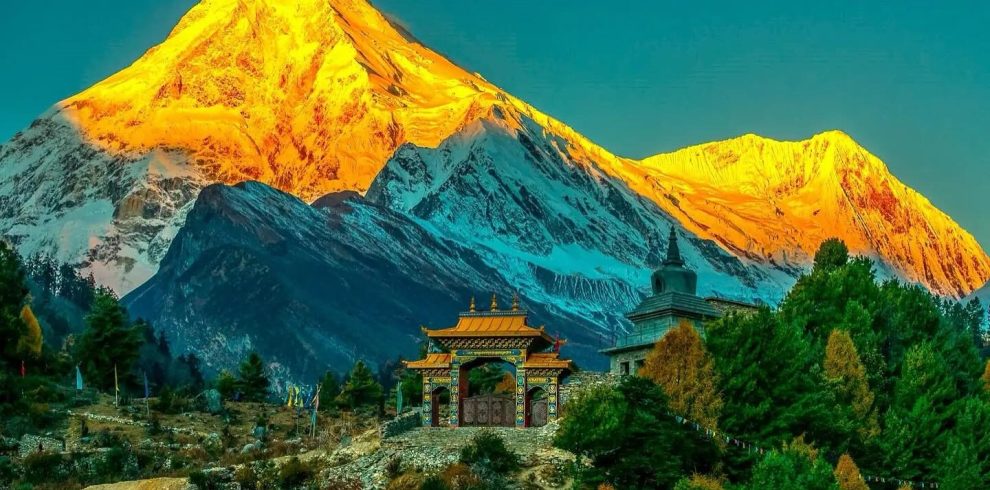
Manaslu Circuit Trek with licensed local guides. 14-day trek around Manaslu mountain through restricted conservation areas, traditional villages, and high alpine passes. Includes all permits, teahouse accommodation, and expert support from guides based in Dhading.
Well Regarded Genuine Gear Stores Worth Knowing About
The good news is that genuine outdoor retailers do exist in Kathmandu and are not hard to find once you know what you are looking for. Sherpa Adventure Gear is a homegrown Nepali brand with proper retail stores carrying authentic clothing and equipment designed with Himalayan conditions specifically in mind, and it has built a solid reputation among trekkers and mountaineers over many years. Several established rental focused shops in Thamel, often recommended directly by trekking agencies, have built long standing reputations for carrying genuinely good quality rental stock even though they are not selling branded new gear, and returning trekkers often mention the same handful of shop names because owners there have looked after their equipment and their customers well for years.
A small number of shops and showrooms in Kathmandu also carry authorized stock from international brands such as Mountain Hardwear, Marmot, and Salomon, generally at prices close to what you would expect to pay at home rather than the suspiciously low prices typical of imitation stock. If a shop’s prices look like normal international retail prices rather than a steep discount, that alone is a reasonably strong signal you are looking at genuine stock. When in doubt, ask your trekking agency for a specific shop recommendation rather than wandering in cold, since agencies that have sent hundreds of trekkers through Thamel generally know exactly which storefronts are reliable and which to avoid.
It is also worth mentioning that some genuine retailers in Kathmandu operate as proper multi story showrooms rather than single narrow shopfronts, and these tend to be easier to trust simply because of the scale of investment involved, a shop leasing an entire floor of retail space and employing several trained staff members is a very different business proposition from a small stall that can close down and reopen under a new name within days if it develops a bad reputation. Ask locally, ask your guide once you arrive, and do not be afraid to walk into two or three shops and compare before settling on where to spend real money on gear you plan to keep and rely on for years.
How Rental Shops Typically Work
Renting gear in Thamel is a simple, informal process, but it pays to understand how it usually runs so nothing catches you off guard. You walk in, describe what you need, and the shopkeeper pulls options off a rack or shelf for you to try on. Fit is checked on the spot, and you should insist on trying every item before agreeing to rent it rather than accepting whatever is handed to you.
Almost every rental shop asks for a deposit, and this is where trekkers occasionally get an unpleasant surprise if they were not expecting it. Deposits are usually taken either as a cash sum held until the gear is returned, or as your passport held at the shop for the duration of the rental. I generally recommend against leaving your actual passport as security, a cash deposit or a clear photocopy plus a smaller cash deposit is a fairer arrangement, and most established shops will agree to this if you ask. Confirm exactly what condition the gear needs to be returned in, whether a small stain or a broken zipper pull results in a deduction from your deposit, and get this understanding before you pay, ideally with a simple handwritten receipt noting the item, the daily rate, and the deposit amount.
Rental periods are usually counted by calendar day rather than by hour, so renting the evening before you leave and returning the gear the evening you get back typically counts as the full number of trekking days plus a day or two on each end, and shops are used to this and price accordingly. Always ask directly whether the quoted price includes the shopping days before and after the trek itself.
Typical Rental Price Ranges For Common Items
Prices in Thamel move with the season, the exchange rate, and how much bargaining you do, so treat the numbers below as a general sense of typical ranges rather than a fixed price list. Peak autumn and spring trekking seasons tend to push prices toward the higher end of these ranges since demand is high and shopkeepers know it.
| Item | Typical Daily Rental Range | Notes |
|---|---|---|
| Down jacket, expedition weight | Roughly one to two US dollars per day | Check the fill by squeezing, not just the size on the label |
| Sleeping bag, four season rated | Roughly one to two US dollars per day | Ask the rated temperature and inspect the lining for wear |
| Duffel bag | Under one US dollar per day | Check zippers and seams, this bag takes rough handling from porters |
| Trekking poles, per pair | Under one US dollar per day | Test the locking mechanism before leaving the shop |
| Gaiters | Under one US dollar per day | Confirm they fit over your actual boots |
| Microspikes or crampons | One to two US dollars per day | Needed mainly around the pass crossing depending on season and snow |
| Small tent, where offered | Roughly three to five US dollars per day | Rarely needed on a teahouse based trek such as Manaslu Circuit |
These figures come from current traveler reports and are meant as a planning guide only, actual prices vary shop to shop and change over time, so always confirm the daily rate and total cost out loud before you agree to rent anything.
Quality And Reliability Concerns With Rented Gear
Rented gear has usually been used by dozens if not hundreds of previous trekkers, and it shows. Zippers wear out, down loses loft after repeated compression and washing, seams stretch, and buckles crack from cold weather use season after season. None of this makes renting a bad idea, but it does mean you need to inspect everything carefully before you leave the shop rather than trusting that a rental item is automatically fit for the job.
Check a rented down jacket by holding it up to a window or bright light and looking for thin patches where little or no down is visible, squeeze several sections of the jacket to feel for lumps or bald spots, and check every zipper by running it fully open and closed more than once. For a sleeping bag, unzip it fully and check the inside lining for tears, check that the zipper does not snag, and ask directly what temperature the bag is rated to rather than assuming a bag described as warm will actually handle a night at high camp. For trekking poles, extend and lock each section fully and apply firm downward pressure to make sure the lock holds, a pole that slips under weight on a steep descent is a genuine injury risk. For a duffel bag, check every seam and the strength of the handles, since porters carry these bags roughly and a failing strap partway through the trek is a real inconvenience.
If anything about the gear looks worn beyond what you are comfortable trusting at altitude, ask for a different item rather than accepting it to avoid an awkward conversation. Good rental shops expect this and will not push back on a reasonable request to swap for a better condition item.
Bargaining Norms And Etiquette In Thamel Shops
Bargaining is normal and expected in most Thamel shops, both for rentals and for purchases, though the degree varies by shop type. Independent stalls and small rental counters expect some negotiation and often quote an opening price with room built in, while established genuine retailers carrying international brands usually have fixed prices with little to no room to negotiate, since they are selling authentic stock at close to real retail value.
A polite, friendly approach works far better than an aggressive one. Ask the price, offer something reasonably lower rather than insultingly low, and expect to settle somewhere in between after a short back and forth. For rentals, it is common to negotiate a lower daily rate when you are renting several items together or renting for a longer period, and shopkeepers are often willing to reduce the deposit slightly for a group booking through a known trekking agency. Do not bargain over safety relevant details, such as whether a jacket is genuinely warm enough or a pole locks properly, those are not points to compromise on to save a small amount of money.
It also helps to be clear and friendly rather than rushed. Shopkeepers in Thamel deal with hundreds of trekkers every season and can tell quickly who is serious about a fair deal and who is simply trying to get something for nothing, and the friendlier, more respectful conversations tend to end in a better outcome for both sides.
What Our Own Package Includes So You Do Not Rent Or Buy Unnecessarily
This is the part I most want every trekker booking with us to read carefully before they spend a single dollar in Thamel. Manaslu Treks and Expedition provides every trekker on our Manaslu Circuit Trek with a proper sleeping bag and a down jacket as a standard part of the package. These are handed to you at the start of the trip for your use throughout the trek and simply returned to us at the end, at no extra rental cost and with no deposit required from you.
What this means practically is that two of the most commonly rented, most expensive, and most confusing items to judge for quality in Thamel are already taken care of if you book with us. You do not need to search for a rental shop, negotiate a deposit, or inspect a stranger’s gear for hidden wear, and you certainly do not need to buy an expensive expedition jacket or four season sleeping bag you will use once and then store in a cupboard for years afterward.
My honest advice to every trekker, regardless of which agency you book with, is simple, ask your agency directly and in writing exactly what gear is included in your package before you go shopping or renting anything in Thamel. Trekkers who skip this step regularly end up paying to rent or buy a duplicate sleeping bag or jacket they never actually needed, which wastes both money and time that could have gone toward relaxing in Kathmandu before an early flight or drive to the trailhead. If you have any doubt about what is included in a package you are considering, our Manaslu Circuit Trek FAQ and cost covers this along with the other common questions trekkers ask us before booking.
A Decision Framework, Item By Item
To make this practical rather than theoretical, here is how I would personally decide on each major item if I were preparing for the Manaslu Circuit Trek today.
| Item | Recommendation | Reasoning |
|---|---|---|
| Trekking boots | Buy at home | Fit and break in time matter more than anything else for foot health on a multi day trek |
| Down jacket | Confirm with your agency first, otherwise rent in Kathmandu | Single trip item for most people, expensive to buy, easy to check for wear before accepting |
| Sleeping bag | Confirm with your agency first, otherwise rent in Kathmandu | Bulky, expensive, and rarely used again once home |
| Duffel bag | Rent in Kathmandu | Inexpensive to rent and almost nobody needs to own one afterward |
| Base layers | Buy at home | Worn against skin daily, fit and hygiene both matter |
| Trekking poles | Rent in Kathmandu, or buy at home if you already hike often | Cheap either way, check the locking mechanism carefully if renting |
| Gloves and warm hat | Buy in Kathmandu or at home | Inexpensive from genuine retailers, fit matters for warmth |
| Sunglasses, high altitude rated | Buy at home | Eye protection at altitude is not worth compromising on quality |
| Headtorch | Buy at home | You want to already know how it operates before relying on it in the dark |
| Gaiters and microspikes | Rent in Kathmandu | Only needed briefly around the pass crossing depending on conditions |
Timing Advice, When To Shop In Kathmandu Before Departure
Give yourself at least a full day in Kathmandu before your trek starts purely for gear, and ideally two if this is your first time in Thamel. Renting or buying on the same day you plan to leave for the trailhead is stressful and leaves no room to fix a problem, such as a deposit disagreement, a poorly fitting boot, or a jacket you decide is not warm enough once you look at it again in daylight.
Shop earlier in the day rather than in the evening rush when shops are busiest and staff have less time to help you check fit and condition properly. If you are trekking during peak season in autumn or spring, be aware that good rental stock, particularly larger sizes, gets picked over quickly, so shopping a day or two ahead rather than at the last minute gives you a better chance of finding well maintained gear rather than whatever is left over. Our Manaslu Circuit Trek route guide is worth reading during this same window, since understanding exactly where you will sleep each night helps you judge how much cold weather protection you genuinely need for each stage of the trek.
For more on the specific item that causes the most confusion in Thamel, our guide to choosing and breaking in trekking boots is worth reading before you shop.
Frequently Asked Questions
Is it safe to rent a down jacket in Kathmandu for the Manaslu Circuit Trek
Yes, as long as you inspect it carefully before accepting it. Hold the jacket up to light and squeeze several sections to check for thin patches or lumpy fill, run every zipper fully open and closed, and ask directly what temperature the jacket is rated for. If you book with an agency that already provides a down jacket as part of your package, ask about that first before renting anything.
How much should I expect to pay to rent gear in Thamel
Individual items such as a down jacket, sleeping bag, or trekking poles typically rent for roughly one to two US dollars per day each, with duffel bags and gaiters usually costing less. These figures shift with season and demand and are only a general guide, so always confirm the exact daily rate with the shop before agreeing.
Do rental shops in Thamel require a deposit
Almost all of them do. Deposits are commonly requested either as cash or as your passport held until the gear is returned. I recommend offering a cash deposit or a photocopy of your passport rather than leaving the original document, and most established shops will accept this if you ask politely.
How can I tell if North Face or other branded gear in Thamel is genuine
Price is the strongest signal, genuine branded gear costs close to what you would pay at home, not a small fraction of it. Beyond price, check the label for spelling and font accuracy, feel the fill of a down item by squeezing it for evenness, test the zipper for smooth branded quality, and check stitching for even, tight seams without loose threads.
Should I buy my trekking boots in Kathmandu or bring them from home
Bring them from home, already broken in. Boot fit is too important to leave to chance in an unfamiliar shop days before a multi day trek, and boots need time worn on your own feet before they perform properly on rocky, uneven trail sections around Larkya La.
Does Manaslu Treks and Expedition provide any gear as part of the package
Yes, every trekker on our Manaslu Circuit Trek is provided with a sleeping bag and a down jacket as part of the standard package, for use throughout the trek and returned to us at the end of the trip. This means many trekkers booking with us do not need to rent or buy either item separately, and we recommend confirming exactly what is included before spending money in Thamel.
What is the biggest mistake first time trekkers make when shopping in Thamel
Assuming that a shop’s confident appearance or a familiar looking logo guarantees genuine quality. The biggest mistake is not checking gear closely enough before accepting it, whether that is a rental jacket with worn out fill or a purchased item that turns out to be a convincing imitation of a real brand rather than the genuine article.
Can I bargain over rental prices in Thamel
Yes, a moderate amount of bargaining is normal and expected, especially at independent stalls and small rental counters. Established retailers selling genuine branded stock tend to have fixed prices with little room to negotiate. Keep the conversation friendly, and never bargain down on anything related to genuine safety, such as whether gear is actually warm enough or a locking mechanism actually holds.
How many days before my trek should I shop for gear in Kathmandu
Plan on at least one full day, ideally two, before you leave for the trailhead. This gives you time to properly try on and inspect rented or purchased items, fix any problems such as a poor fit, and avoid the stress of last minute shopping the same day you are due to leave.
If you still have questions about what gear you personally need for the Manaslu Circuit Trek, or what exactly is included in our package, please reach out to us before you book so we can plan properly around it rather than leaving you guessing in a Thamel shop the week you arrive. You can call or message us directly on WhatsApp at +977 9869225929, email us at info@manaslutreks.com, or visit our contact to send us your questions, we are always glad to talk gear with trekkers before they commit to anything.