Every year, more Canadian trekkers are turning away from the crowded trails of Everest Base Camp and Annapurna and choosing something quieter, wilder, and far less traveled. The Manaslu Circuit Trek, which loops around the world’s eighth-highest mountain, has become one of the most searched trekking routes among travelers from Toronto, Vancouver, Calgary, and Montreal. If you are a Canadian planning this trek, you are likely juggling a long list of questions. How do you actually get from Canada to Nepal? What visa do you need? How much will the whole trip cost in Canadian dollars? Is the altitude something you can realistically prepare for coming from sea-level cities like Vancouver or from flatter provinces like Manitoba and Ontario?
This guide answers every one of those questions in detail, using current information rather than guesswork. We run treks in this exact region every season, and this article reflects what our own Canadian clients have asked us directly, along with verified flight routes, permit costs, visa rules, and season-by-season conditions. By the end, you should have a complete and realistic picture of what a Manaslu Circuit Trek from Canada actually involves, from the moment you book your flight to the moment you cross Larkya La Pass at over five thousand meters.
What Makes the Manaslu Circuit Trek Worth the Long Journey from Canada
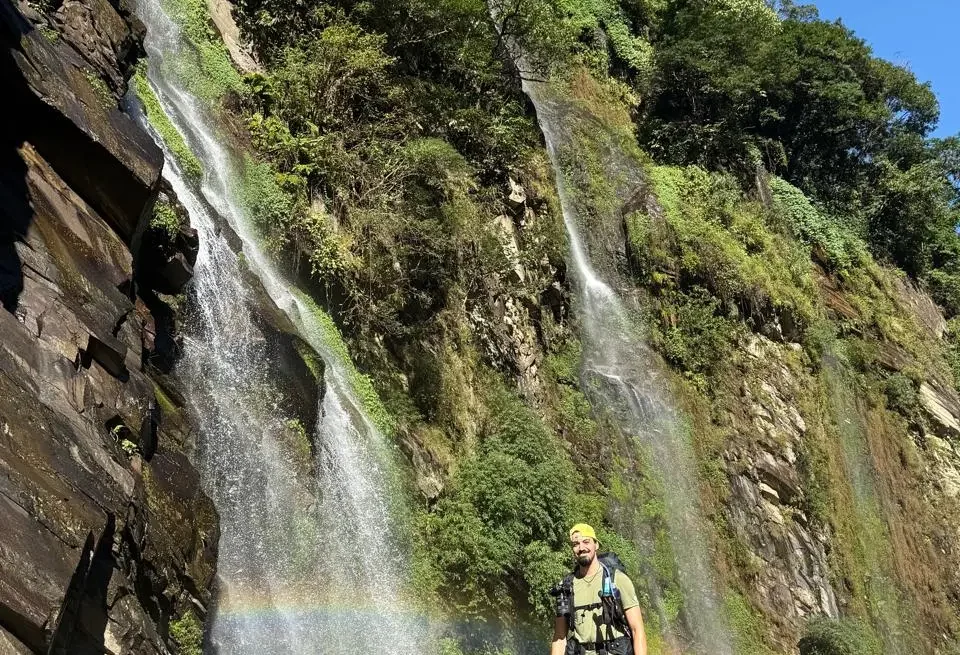
Mount Manaslu stands at 8,163 meters, the eighth-highest mountain on Earth, and the circuit trek that wraps around its base takes you through a landscape that feels almost untouched compared to the busier trails further east and west. The trail follows the Budhi Gandaki River north from the middle hills of Gorkha district, climbing steadily through subtropical forest, terraced farmland, pine and rhododendron woodland, and finally into high alpine terrain near the Tibetan border.
Unlike Everest Base Camp or the Annapurna Circuit, both of which see thousands of trekkers every season, Manaslu remains a restricted area that Nepal only opened to foreign trekkers in the early 1990s. That single fact shapes almost everything about the experience. Villages along the route, including Jagat, Deng, Namrung, Lho, and Samagaon, still function largely as they have for generations, with far less commercial tourism infrastructure than you would find in the Khumbu region. The people living in the upper valley, particularly around Samagaon and Samdo, are ethnically Tibetan, and the culture, language, and monasteries along the trail reflect that heritage closely.
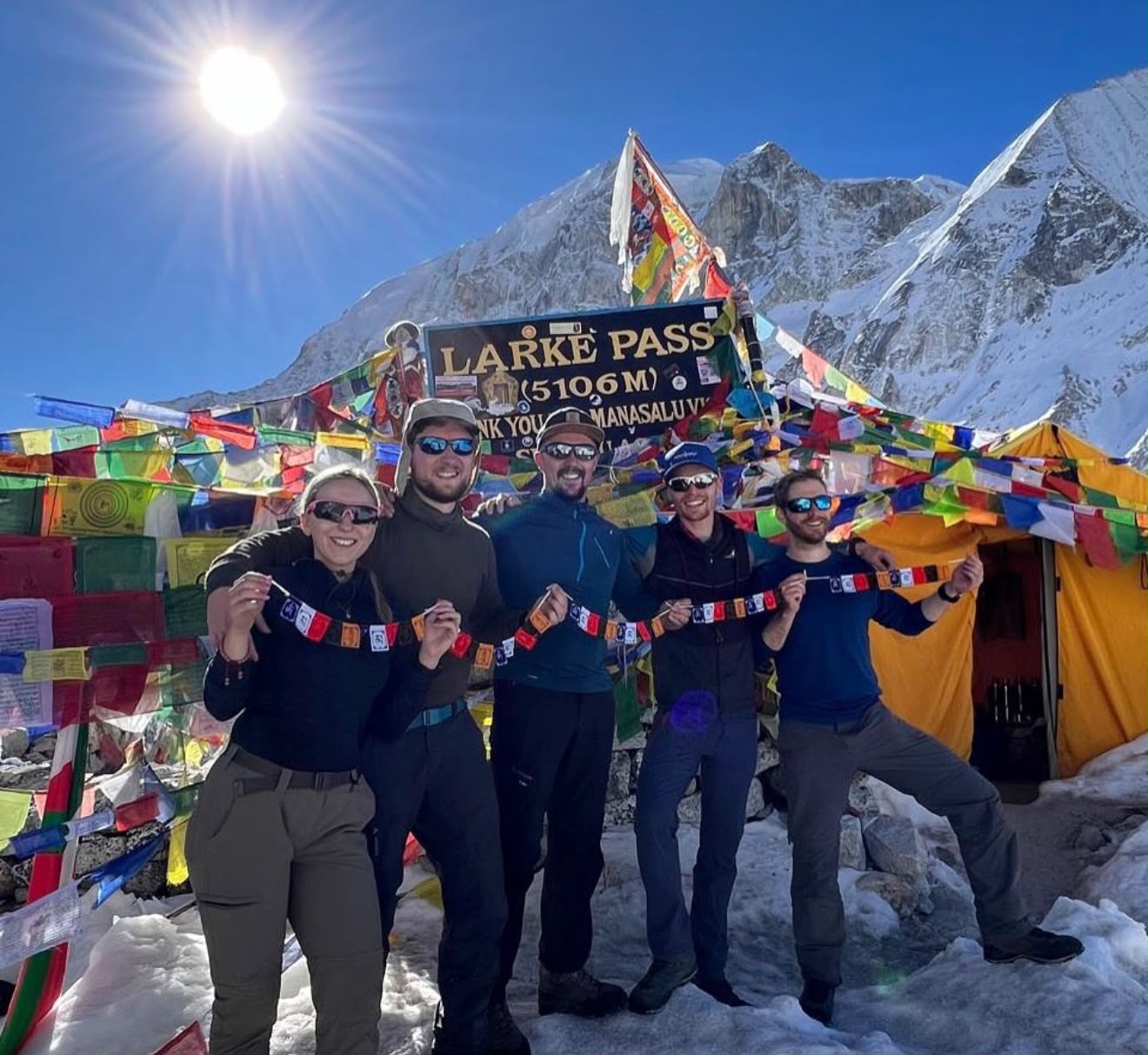
For Canadian trekkers who have already done a shorter trek somewhere else in the world, or who simply want a Himalayan experience without walking alongside hundreds of other people every day, Manaslu offers something genuinely different. The trek is also physically demanding. You will cross Larkya La Pass at around 5,106 meters, one of the highest and most exposed passes on any standard trekking route in Nepal, so this is not a trip to underestimate simply because it draws fewer crowds than Everest.
How to Get to Nepal from Canada
This is usually the first practical hurdle for Canadian trekkers, and it deserves a clear answer. As of 2026, there are no direct flights from any Canadian city to Kathmandu. Every route requires at least one stop, and most require two, so budgeting for a long travel day, or two, is simply part of planning this trip properly.
From Toronto Pearson, the most common routes run through Doha with Qatar Airways, Hong Kong with Cathay Pacific, Delhi with Air India, or Istanbul with Turkish Airlines. Total travel time typically runs between twenty and twenty-six hours, including the layover, and round-trip fares generally fall somewhere between sixteen hundred and twenty-two hundred Canadian dollars, though prices swing depending on season and how far ahead you book. February tends to be the cheapest month to fly this route, while December and the weeks around the spring trekking season tend to run higher due to demand.
From Vancouver, the routing options are similar, often connecting through Hong Kong, Guangzhou, or Delhi, with total travel time in a comparable range. Travelers from Calgary, Montreal, or Ottawa will almost always connect through Toronto or Vancouver before taking one of these longer international legs.
A few practical booking tips that consistently save our Canadian clients both money and stress. Book at least two to three months before your trekking dates if you want better fares, since prices climb sharply in the final weeks before departure. Build in at least one full day of buffer in Kathmandu before your trek begins, because long-haul flights with multiple connections carry a real risk of delays, and missing your first trekking day due to a missed connection is a frustrating way to start an expensive trip. If your itinerary allows it, flying into Kathmandu two or three days before your trek start date also gives your body a small head start on time zone adjustment and altitude, since Kathmandu itself sits at around 1,400 meters.
Nepal Visa Requirements for Canadian Citizens
The good news here is that the visa process for Canadians is straightforward. Canadian passport holders are eligible for a visa on arrival at Tribhuvan International Airport in Kathmandu, the same system used by most Western nationalities. You do not need to apply at a Nepali embassy or consulate in Canada before your trip.
On arrival, you can choose between three visa durations. A fifteen-day visa costs thirty US dollars, a thirty-day visa costs fifty US dollars, and a ninety-day visa costs one hundred twenty-five US dollars. Given that a full Manaslu Circuit Trek, including time in Kathmandu before and after, typically takes between eighteen and twenty-five days depending on your exact itinerary, most Canadian trekkers choose the thirty-day visa, and anyone combining Manaslu with additional travel elsewhere in Nepal should strongly consider the ninety-day option, since it works out cheaper than paying extension fees later.
You will need to pay the visa fee in US dollars in cash at the airport, so bring clean, undamaged bills rather than relying on withdrawing dollars once you land. Nepal also offers an online arrival form that you can complete up to fifteen days before your flight, which speeds up the airport process considerably and is worth doing the night before you fly.
One detail Canadian travelers sometimes overlook. Canada does not operate a full embassy in Kathmandu, only an honorary consulate, and Nepal does not have an embassy in most Canadian cities either, aside from its embassy in Ottawa and honorary consulates in Toronto, Montreal, Calgary, and Victoria. This does not affect your visa process at all, but it is worth knowing before you travel in case you need consular assistance during your trip. Registering your trip with Global Affairs Canada before you leave is a simple, free step that we recommend to every Canadian client heading into a remote trekking region like Manaslu.
Manaslu Circuit Trek Permits and What They Cost
Because Manaslu sits in a restricted border area close to Tibet, the permit system here is more involved than what you might have encountered on other Himalayan treks, and it is not something you can arrange on your own from Canada before you arrive.
Three permits are required for the standard Manaslu Circuit. The Manaslu Restricted Area Permit is the main permit, and its cost varies by season. During autumn, which runs from September through November and is the busiest and most popular trekking window, the fee is 100 US dollars per person for the first 7 days, plus 15 US dollars per person for each additional day. During the rest of the year, from December through August, the fee drops to seventy-five$75 for the first 7 days, plus $10 per additional day. On top of this, you will need the Manaslu Conservation Area Permit and the Annapurna Conservation Area Permit, since the circuit trail crosses into Annapurna Conservation Area territory near the end of the route. Each of these costs around thirty US dollars per person, charged at the same rate regardless of season.
For a typical fourteen-day itinerary through the restricted zone in autumn, total permit costs usually range from 200 to 260 US dollars per person. In the quieter spring and winter months, the total comes down slightly, generally in the range of one hundred seventy-five to two hundred twenty dollars.
There is no Trekkers’ Information Management System (TIMS) card required for Manaslu, unlike some other Nepali treks. However, if your itinerary continues into the Annapurna region toward Jomsom or Muktinath after finishing the circuit, you will need to arrange a TIMS card at that point.
Here is the important part for anyone planning independently. You cannot obtain the Manaslu Restricted Area Permit on your own, no matter how organized you are. It must be arranged through a trekking agency registered with the Trekking Agencies Association of Nepal, and Nepali immigration requires a minimum of two trekkers per group, along with a licensed guide, before issuing the permit. Solo, fully independent trekking is not permitted in this region. This is one of the main reasons Canadian trekkers headed to Manaslu almost always book through a local operator rather than attempting a self-guided trip, which might be possible on more open routes like Ghorepani Poon Hill.
Manaslu Circuit Permit Costs at a Glance
| Permit | Autumn Cost (Sep to Nov) | Rest of Year Cost | Notes |
|---|---|---|---|
| Manaslu Restricted Area Permit | 100 USD for the first 7 days, plus 15 USD per extra day | 75 USD for the first 7 days, plus 10 USD per extra day | Must be arranged through a registered agency |
| Manaslu Conservation Area Permit | Around 30 USD | Around 30 USD | Same rate year-round |
| Annapurna Conservation Area Permit | Around 30 USD | Around 30 USD | Covers the final section of the trail |
| TIMS Card | Not required for Manaslu | Not required for Manaslu | Only needed if continuing into further Annapurna routes |
Best Time to Trek Manaslu Coming from Canada
Choosing your travel window matters more on this trek than on most, because the Manaslu region sits close enough to the Tibetan Plateau that weather swings can be sharp, and the Larkya La Pass crossing becomes genuinely dangerous under heavy snow.
Autumn, running from late September through November, is widely considered the best season. Skies are generally clear, temperatures are cold but manageable, and visibility across the high passes tends to be excellent. This is also the busiest season, which for a relatively quiet trek like Manaslu is not a bad thing at all, since you will still see far fewer trekkers than you would on Everest Base Camp during the same window.
Spring, from March through May, is the second strong option, bringing blooming rhododendron forests at the lower elevations and generally stable weather, though afternoon cloud buildup is more common than in autumn.
Winter, from December through February, is possible but demanding. Larkya La Pass can become snowbound and occasionally impassable, and several teahouses at the higher elevations reduce services or close entirely. We generally advise Canadian trekkers against attempting a winter trek unless they already have significant high-altitude winter experience.
Monsoon season, from June through early September, is the one window we recommend avoiding entirely. Heavy rainfall increases landslide risk substantially along the lower Budhi Gandaki gorge section of the trail, leeches become a genuine nuisance in the forested lower valley, and cloud cover blocks most of the mountain views that make this trek worthwhile in the first place.
For Canadian trekkers specifically, autumn also lines up conveniently with shoulder-season flight pricing out of Toronto and Vancouver, and it avoids the extreme cold that can make a Rocky Mountain winter feel routine to you, but that behaves very differently at five thousand meters in the Himalayas, where the air itself carries far less oxygen than cold weather back home.
Sample Manaslu Circuit Itinerary
Itineraries vary by operator and by how many acclimatization days you build in, but the table below shows a realistic fourteen-day version that we consider well-balanced for most Canadian trekkers coming from sea-level or near-sea-level cities.
| Day | Route | Approximate Altitude | Notes |
|---|---|---|---|
| 1 | Kathmandu to Machha Khola | 869 m | Drive for roughly seven to eight hours |
| 2 | Machha Khola to Jagat | 1,340 m | First restricted area checkpoint |
| 3 | Jagat to Deng | 1,860 m | The trail narrows through the forest |
| 4 | Deng to Namrung | 2,630 m | Entering the Nubri cultural region |
| 5 | Namrung to Lho | 3,180 m | First close views of Manaslu |
| 6 | Lho to Samagaon | 3,530 m | Base for acclimatization |
| 7 | Acclimatization day in Samagaon | 3,530 m | Optional day hike to Manaslu Base Camp or Pungyen Gompa |
| 8 | Samagaon to Samdo | 3,860 m | Short walking day to aid altitude adjustment |
| 9 | Samdo to Dharamsala (also called Larkya Phedi) | 4,460 m | Short day before the pass crossing |
| 10 | Dharamsala over Larkya La Pass to Bimthang | 5,106 m at the pass, descending to 3,720 m | The longest and most demanding day of the trek |
| 11 | Bimthang to Tilije | 2,300 m | Long descent through forest |
| 12 | Tilije to Dharapani | 1,860 m | End of the restricted area section |
| 13 | Drive from Dharapani to Kathmandu | 1,400 m | Long scenic drive, sometimes split over two days |
| 14 | Buffer day in Kathmandu | 1,400 m | Rest, sightseeing, or extension planning |
Many operators, including us, offer a longer version of this itinerary that includes the Tsum Valley extension near the start of the trek, which typically adds seven to nine days and brings the total trip length to about twenty-one or twenty-three days. Given how far Canadian trekkers already travel to reach Nepal, we often recommend the longer combined itinerary, since the extra days meaningfully add to the trip’s cultural depth without a proportional increase in difficulty.
How Difficult Is the Manaslu Circuit for Someone Coming from Canada
This is a fair question, and the honest answer is that this trek falls squarely into the strenuous category, not the beginner category. If your Himalayan trekking experience so far has been limited to research and enthusiasm rather than actual mountain hiking, Manaslu is not the ideal first trek in Nepal.
The physical demands come from a combination of factors. Daily walking typically runs between five and seven hours, often over uneven stone trails, suspension bridges, and steep sections near the upper valley. The cumulative altitude gain over the trek is significant, rising from under 1,000 meters at the start to over 5,000 meters at Larkya La Pass. The pass crossing day itself is long, often 10 to 12 hours of walking, and involves several hours on snow or ice, depending on the season, at an elevation where the air contains roughly half the oxygen available at sea level.
For Canadian trekkers, a useful point of comparison is your own mountains. If you have hiked extensively in the Canadian Rockies around Banff or Jasper, or done multi-day backcountry trips in British Columbia, you already have a reasonable baseline of fitness and trail experience. What those trips generally will not have prepared you for is sustained time above four thousand meters, since almost nowhere in Canada reaches that altitude, so acute mountain sickness remains a real variable regardless of how fit or experienced you are.
We recommend that Canadian trekkers begin a structured fitness routine at least eight to twelve weeks before departure, focusing on cardiovascular endurance, stair climbing or hill repeats with a loaded pack, and multi-hour hikes on consecutive days to simulate the demands of back-to-back trekking days. If you have access to altitude training facilities in cities like Calgary or Banff, even limited exposure can help, though nothing fully replicates the real thing until you are actually on the mountain.
Total Cost of the Manaslu Circuit Trek from Canada
Budgeting for this trip involves more moving pieces than the trek package price alone, so it helps to see the full picture broken down by category. The table below gives realistic ranges in both US dollars and Canadian dollars, using an exchange rate of roughly 1 US dollar to 1.39 Canadian dollars, which reflects rates through much of 2026.
| Expense Category | Estimated Cost in USD | Estimated Cost in CAD | Notes |
|---|---|---|---|
| Round trip flight from Toronto or Vancouver | 1,150 to 1,600 | 1,600 to 2,200 | Price depends heavily on season and booking window |
| Nepal visa on arrival | 50 (for 30 days) | Around 70 | Bring US dollars cash to the airport |
| Manaslu trek package | 1,200 to 2,800 | 1,650 to 3,900 | Includes guide, permits, teahouse accommodation, and most meals on most packages |
| Travel and rescue insurance | 150 to 350 | 210 to 490 | Must cover helicopter evacuation up to at least 6,000 meters |
| Kathmandu accommodation before and after | 100 to 300 | 140 to 420 | Depends on hotel standard and number of nights |
| Personal gear not already owned | 300 to 900 | 420 to 1,250 | Varies enormously depending on what you already have |
| Tips for guide and porter | 150 to 250 | 210 to 350 | Considered standard practice, not optional in most operator guidelines |
| Miscellaneous spending in Kathmandu and on trail | 100 to 250 | 140 to 350 | Snacks, WiFi, hot showers, souvenirs |
Adding these together, a realistic total budget for a Canadian trekker completing the Manaslu Circuit, including flights and everything else, typically lands somewhere between four thousand and six thousand Canadian dollars for a mid-range trip, with the flight and the trek package itself making up the bulk of that figure. Trekkers who choose a longer combined Manaslu and Tsum Valley itinerary should expect the trek package portion to run higher, generally by several hundred dollars, given the added permit days and trail time.
Travel Insurance for Canadians Trekking in Manaslu
This is one area where we see Canadian trekkers occasionally underprepare, often because standard travel insurance sold through Canadian banks or credit cards does not automatically cover high-altitude trekking or helicopter evacuation, which are treated as adventure activities requiring a separate rider or a specialized policy.
Before booking your trek, confirm that your policy explicitly covers trekking up to at least 6,000 meters, since Larkya La Pass sits above 5,000 meters and some policies set a lower altitude ceiling that would leave you uncovered exactly where coverage matters most. Confirm as well that the policy includes helicopter evacuation, since this is by far the most expensive potential cost you could face in an emergency, sometimes running into tens of thousands of dollars if you attempt to pay out of pocket without coverage.
Popular options among Canadian trekkers include World Nomads and SafetyWing, both of which offer policies with adjustable altitude and activity coverage, though we recommend reading the policy wording carefully rather than assuming any generic travel policy will apply. We ask every client, Canadian or otherwise, to send us proof of appropriate insurance before final trek confirmation, simply because it protects you far more than it protects us.
What to Pack for Manaslu Coming from Canada
Canadian trekkers have an advantage here that trekkers from warmer countries do not always have, since many of you already own solid cold-weather gear from Canadian winters. That said, mountain cold at high altitude behaves differently from a Canadian winter at sea level, mainly because of the combination of thin air, intense daytime sun, and rapid temperature swings between day and night.
A proper layering system matters more than any single expensive item. Base layers should be moisture-wicking synthetic or merino wool rather than cotton, which stays wet and cold once you sweat. A solid insulating layer, either down or synthetic fill, handles the cold mornings and evenings at higher camps. A waterproof and windproof outer shell protects against the sudden weather changes common near Larkya La. A good pair of already broken-in trekking boots is essential, since blisters on day three of a fourteen-day trek are a genuinely miserable way to spend the rest of your trip.
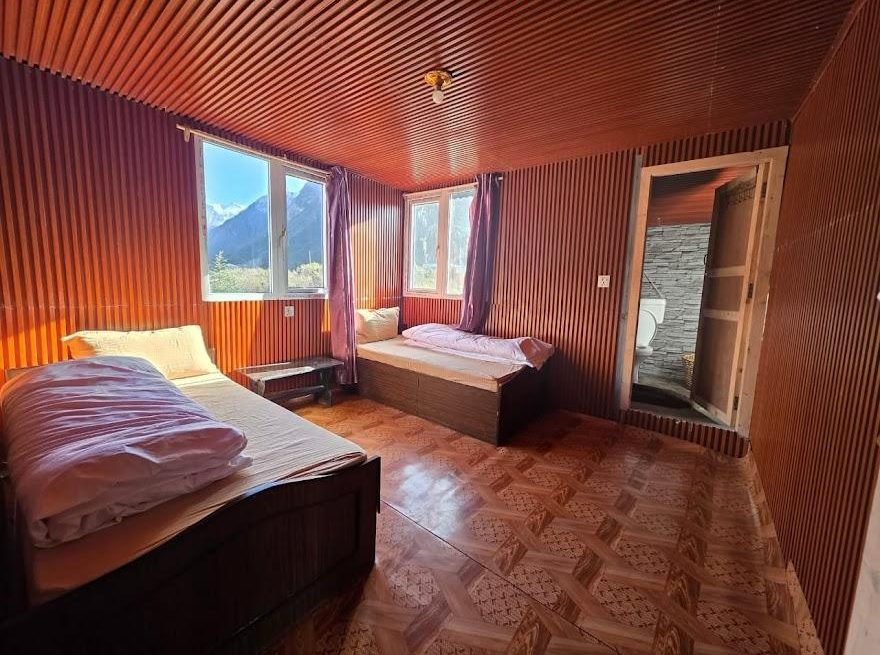
Sleeping bags rated to at least minus fifteen degrees Celsius are recommended for the higher camps near the pass, since teahouse rooms at that altitude are not heated. Trekking poles reduce strain on your knees significantly during the long descent from the pass toward Bimthang. A good pair of sunglasses with strong UV protection matters more than people expect, since snow glare above four thousand meters can cause real eye damage surprisingly quickly.
Most of this gear can be brought from home if you already own it from Canadian outdoor activities, which saves money compared to buying everything new in Kathmandu. That said, Kathmandu has an enormous market of both genuine and replica outdoor gear at prices generally lower than Canadian retail, particularly around the Thamel district, so items you do not already own or do not want to check as luggage on a long international flight can reasonably be picked up on arrival.
Health and Safety Considerations Specific to This Trek
Acute mountain sickness remains the single biggest health risk on the Manaslu Circuit, affecting trekkers regardless of fitness level or age. The standard itinerary above includes acclimatization days in Samagaon specifically to reduce this risk, and we strongly discourage any Canadian trekker from choosing a compressed itinerary that skips these rest days simply to save time or money.
Symptoms to watch for include persistent headache, nausea, unusual fatigue beyond what the day’s walking would explain, and disturbed sleep. Mild symptoms are common and usually resolve with rest, hydration, and avoiding further altitude gain until they pass. Worsening symptoms, particularly confusion, loss of coordination, or shortness of breath at rest, require immediate descent and should never be pushed through.
Water throughout the trek should be treated, either with purification tablets, a filtration system, or by boiling water purchased at teahouses, rather than consumed directly from streams, regardless of how clean they appear. Food along the route is generally simple and hearty, centered on dal bhat, the traditional Nepali lentil-and-rice meal, along with soups, noodles, and basic Western-style dishes in larger villages. Portions are generous and refills are typically included, which matters given the calorie demands of trekking six or more hours a day at altitude.
The Culture of the Manaslu Region
Part of what draws so many trekkers to Manaslu, including Canadian visitors, is the cultural depth of the villages you pass through, particularly in the upper Nubri valley near Samagaon and Samdo. This area sits close enough to the Tibetan border that the population is largely ethnically Tibetan, following Tibetan Buddhist traditions that have continued largely unchanged for centuries.
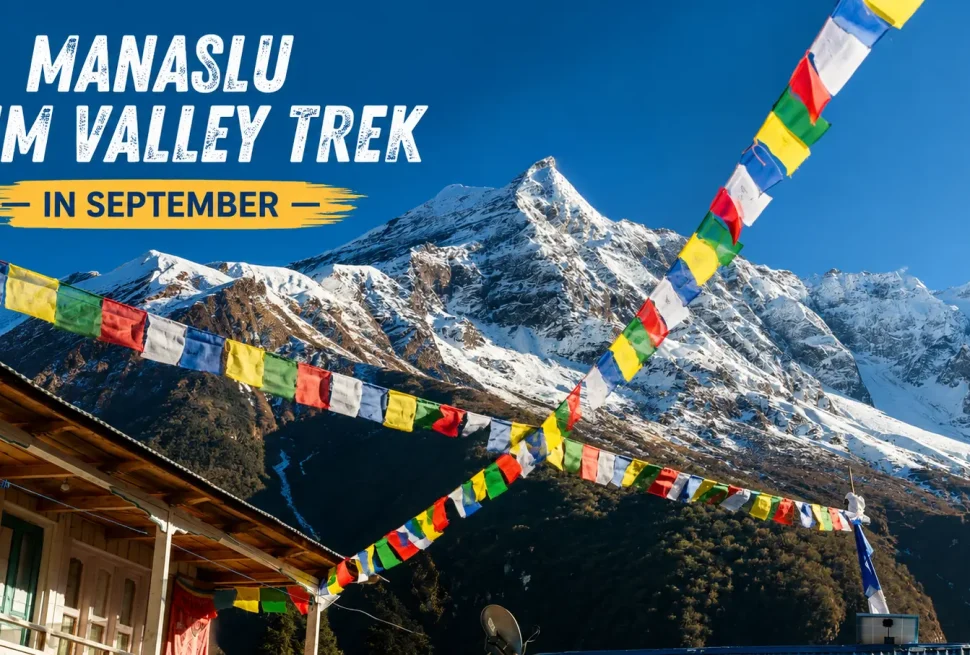
You will pass long mani walls carved with sacred mantras, colorful prayer flags strung between village houses, and monasteries including Pungyen Gompa near Samagaon, home to monks who maintain daily prayer routines that visitors are welcome to observe respectfully. If your itinerary includes the Tsum Valley extension, this cultural experience deepens further as you are taken into one of Nepal’s most spiritually significant and least commercialized valleys, home to villages like Chumling, Chhokang Paro, and the remote Mu Gompa monastery near the Tibetan frontier.
For Canadian trekkers, many of whom come from multicultural backgrounds themselves, this aspect of the trek often proves just as memorable as the mountain scenery, offering a genuine window into a way of life that has adapted very little to the modern world despite being only a few hundred kilometers from Kathmandu.
Manaslu Circuit Compared to Everest Base Camp and Annapurna Circuit
Canadian trekkers researching Nepal often compare several routes before deciding, so it helps to see the main differences laid out side by side.
| Factor | Manaslu Circuit | Everest Base Camp | Annapurna Circuit |
|---|---|---|---|
| Highest point | 5,106 m at Larkya La Pass | 5,364 m at Base Camp, 5,555 m at Kala Patthar | 5,416 m at Thorong La Pass |
| Typical duration | 14 to 18 days | 12 to 14 days | 15 to 20 days |
| Trekker traffic | Low, restricted area | Very high | Moderate to high |
| Guide requirement | Mandatory: minimum of two trekkers | Mandatory since 2023 | Mandatory since 2023 |
| Road access | Improving but still limited | None beyond Lukla, reached by flight | Partial, some sections now have road access |
| Cultural experience | Strong Tibetan Buddhist influence in upper valley | Sherpa culture throughout | Mixed Gurung, Thakali, and Tibetan influence |
| Overall difficulty | Strenuous | Strenuous, mainly due to altitude | Strenuous, similar altitude profile to Manaslu |
None of these routes is objectively better than the others, and the right choice depends on what you are looking for. Trekkers who want the quietest trail with the least commercial infrastructure generally choose Manaslu. Trekkers who want the most famous name and the strongest support infrastructure choose Everest Base Camp. Trekkers seeking a long, varied trek across multiple climate zones often choose the Annapurna Circuit.
Canadian Consular Support While Trekking
Because Manaslu takes you into a genuinely remote part of Nepal for well over a week at a time, it is worth understanding what consular support looks like before you go. Canada maintains an honorary consulate in Kathmandu rather than a full embassy, which handles emergency consular assistance for Canadians, including lost passports, medical emergencies, and other urgent situations. This office is your point of contact in Nepal, though for a genuinely remote trek like Manaslu, your trekking agency and travel insurance provider will typically be your fastest source of help in the moment, since the consulate is not positioned to send physical assistance into the mountains directly.
We strongly recommend registering your trip with Global Affairs Canada before departure, a free service that allows the government to reach you in the event of a natural disaster, political situation, or family emergency back home. Nepal, for its part, maintains its embassy in Ottawa along with honorary consulates in Toronto, Montreal, Calgary, and Victoria, which can assist with visa questions or documentation needs before you even leave Canada.
Why Trek Manaslu with Manaslu Treks and Expedition
We are a Nepal-based trekking company that has operated specifically in this region for more than a decade, and Manaslu is not a side offering for us; it is our primary focus. Our guides grew up in villages along this exact trail, which means they understand the terrain, the weather patterns, and the cultural context of the Nubri and Tsum valleys at a level that a generalist agency covering all of Nepal’s treks simply cannot match.
For Canadian trekkers specifically, we handle every part of the process that is difficult to arrange from overseas, including the restricted area permit, which, as covered earlier, cannot be obtained independently and requires a minimum group size of two. We build acclimatization properly into every itinerary rather than compressing the schedule to save a day, and our guides carry the training and authority to adjust or slow an itinerary if altitude symptoms appear, rather than pushing forward to stay on schedule. We also maintain working relationships with helicopter evacuation services across the region, which matters far more once you are two days’ walk from the nearest road than it does while reading about it from home.
If you are still deciding on dates, group size, or whether to add the Tsum Valley extension, reach out to us directly. We would rather spend time upfront matching you with the right itinerary for your fitness level and available vacation time than have you book something that doesn’t fit either.
Frequently Asked Questions for Canadian Trekkers
Do I need a specific visa for trekking, separate from a regular tourist visa? No. The standard Nepal tourist visa on arrival covers trekking activities. There is no separate trekking visa. You simply need the correct trekking permits, which your agency arranges once you are in Kathmandu.
How many vacation days should I request from work for this trip? Given the flight time from Canada, the trek duration itself, and buffer days in Kathmandu, we recommend planning for at least three full weeks away from Canada for the standard fourteen-day circuit, or closer to four weeks if you are adding the Tsum Valley extension.
Is it safe for a solo Canadian traveler to do this trek without friends or family joining? Yes, though you cannot trek entirely alone, as the permit rules require a minimum of two trekkers and a licensed guide. Solo travelers regularly join small group departures organized by agencies like ours, meeting fellow trekkers from other countries along the way.
Will my Canadian cell phone plan work on the trail? Coverage is patchy and unreliable above Namrung. Many trekkers purchase a local Nepali SIM card in Kathmandu before departure, which offers better and cheaper data access at lower elevations, though expect limited or no signal for stretches near the pass.
What is the biggest mistake Canadian trekkers make when planning this trip? Underestimating the altitude because their fitness level from hiking in the Rockies or elsewhere in Canada is genuinely strong. Fitness helps enormously with the physical demands of walking, but it does not prevent acute mountain sickness, which depends far more on pacing and acclimatization than on raw cardiovascular fitness.
Can I extend my trip to see other parts of Nepal afterward? Absolutely, and many Canadian trekkers do exactly this, often adding a few days in Pokhara or Chitwan National Park after finishing the circuit. Just remember that if your extended plans involve trekking in a different conservation area, you may need an additional permit such as a TIMS card, which your agency can also help arrange.
Final Thoughts
The Manaslu Circuit Trek demands a lot from anyone attempting it, including Canadian trekkers who are already committing to one of the longest possible journeys just to reach the starting point. But for those willing to make that journey, the reward is a trek that still feels genuinely remote, a culture along the trail that has not been reshaped by mass tourism, and a crossing of Larkya La Pass that ranks among the most memorable single days of trekking anywhere in Nepal.
Plan your flights early, secure the right insurance before you leave Canada, give your body the acclimatization days it needs, and work with a local team that knows this specific valley well. Do those four things properly, and the distance between Canada and the base of the eighth-highest mountain on Earth becomes a lot more manageable than it looks on a map.