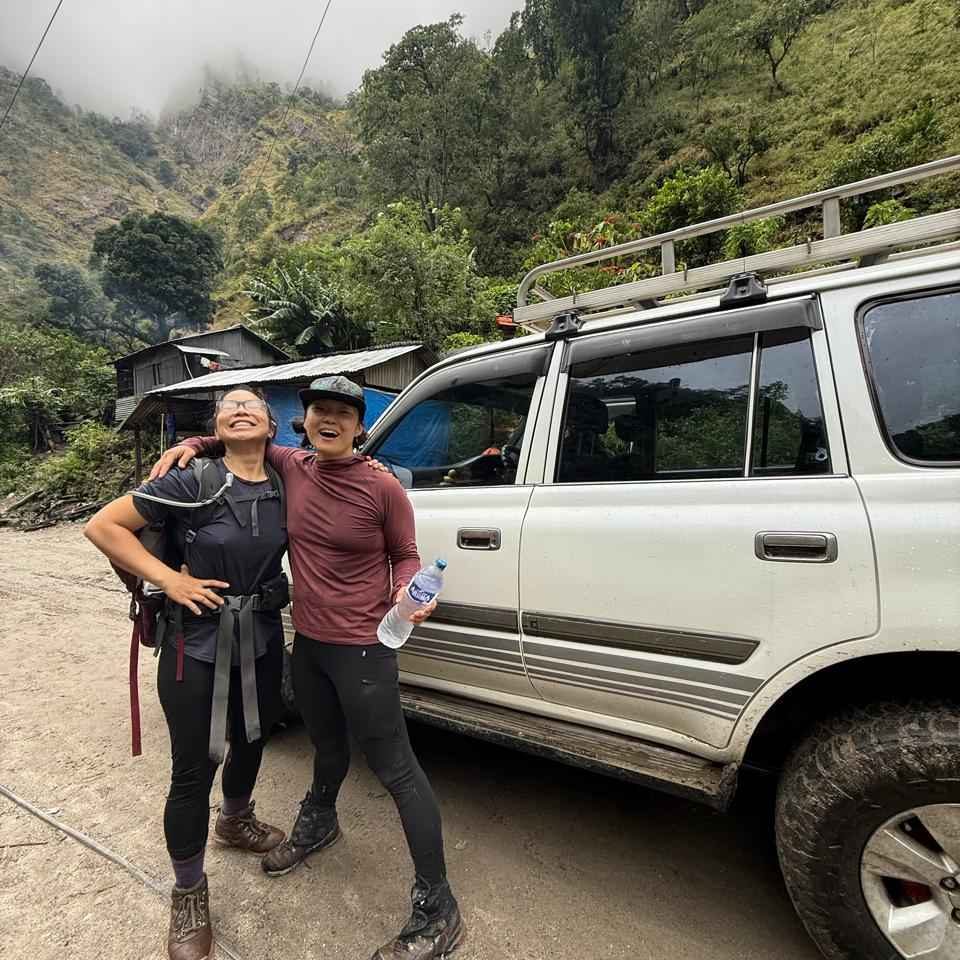
Every Manaslu Circuit trekker faces the same decision before they take a single step on the actual trail: how to get from Kathmandu to the road-end at Soti Khola or Machha Khola, and later, how to get out from Dharapani or Besisahar back to civilization. This decision gets far less attention in trip planning than permits, itineraries, or gear lists, and that is a mistake. The transport days at the start and end of the circuit are long, physically taxing in their own right, and the choice between local bus and jeep affects your budget, your schedule, your comfort, and, in the worst cases, your safety.
This guide covers the practical realities of both options on every leg of the journey: the drive in through Arughat to Soti Khola and Machha Khola, and the drive out from Dharapani through Besisahar. It covers road conditions section by section, current costs, journey times, what actually happens at the bus park, what a shared jeep booking looks like, how the monsoon changes everything, and what we recommend to our own clients after years of running this route. Prices below are approximate and change with fuel costs, season, and group size. Treat every figure here as a planning guide, not a quote, and confirm current rates with your agency or at the bus park before you travel.
The Road to the Manaslu Circuit: What You Are Actually Deciding Between
The drive from Kathmandu to the Manaslu Circuit road-end is not one uniform road. It is three different roads stitched together, and understanding this is the key to understanding why the bus-versus-jeep decision matters so much more here than it would on, say, the drive to Pokhara.
The first section runs from Kathmandu through Trishuli Bazaar and Dhading Besi. This is the Prithvi Highway and its Dhading branch, both sealed, both in reasonably maintained condition, and both fine for any vehicle including a standard public bus. This section covers roughly the first 80 kilometers and takes two to three hours depending on Kathmandu traffic, which can itself add 45 minutes to an hour before you even clear the Ring Road.
The second section runs from Dhading Besi to Arughat. The pavement becomes patchier here, with stretches of broken blacktop mixed with graded dirt, but the road remains passable for most vehicles in dry conditions. This section is where a bus starts to feel every bump, though it is not yet the difficult part of the journey.
The third section, from Arughat to Soti Khola and on to Machha Khola, is where the character of the road changes completely. This is a dirt and gravel track cut into hillside, following the Budhi Gandaki valley upstream, with sections of loose rock, washouts, and gradients that a standard two-wheel-drive bus manages only slowly and with visible strain on the engine and suspension. This is the section where four-wheel-drive jeeps earn their higher price, and where the difference between bus and jeep stops being about comfort and starts being about reliability.
The Luxury Manaslu Circuit Trek is a comfortable way to explore one of Nepal’s most beautiful and less crowded trekking…
| Section | Approx. Distance | Road Surface | Typical Condition |
|---|---|---|---|
| Kathmandu to Trishuli Bazaar / Dhading Besi | ~80 km | Paved highway | Good, occasional traffic delays |
| Dhading Besi to Arughat | ~30 km | Mixed paved and graded dirt | Fair, dusty in dry season, slippery in rain |
| Arughat to Soti Khola | ~20 km | Dirt and gravel track | Rough, washouts and loose rock common |
| Soti Khola to Machha Khola | ~7 km | Dirt track, narrower | Rough, occasionally requires walking sections when very wet |
Total road distance from Kathmandu to Machha Khola runs approximately 140 to 160 kilometers depending on which source you consult and exactly which route variant the driver takes, and the full drive takes anywhere from 8 to 12 hours. That is a wide range, and the reason it is wide is precisely the bus-versus-jeep question this guide is built around.
One more thing worth knowing before you book anything: the road has been creeping further into the valley for several years now. Arughat used to be the practical starting point for many itineraries, with trekkers walking an extra day or two to reach Machha Khola on foot. Ongoing army-led road construction has pushed usable vehicle access further up the valley, and in 2026 most itineraries now reach Machha Khola directly by road in a single day, cutting a day of relatively unremarkable lower-valley walking out of the standard itinerary. This is a genuine improvement for most trekkers, though it does mean slightly less time acclimatizing at lower altitude before the trail begins in earnest. Flood damage from the end of the monsoon in 2024 also affected sections of road further up toward Jagat, and as of this writing a stretch of walking between Jagat and Philim remains necessary regardless of how you arrive at the road-end. Road conditions on this route change from year to year and even month to month; always ask your agency for the current status before you fix your itinerary, and check with us directly if you are booking a Manaslu Circuit Trek with Manaslu Treks, since we track these changes on the ground.
Local Bus to Machha Khola: What It Is Actually Like
The public bus is the transport option most trekkers rule out after one conversation with a previous trekker, and also the option that a smaller, more budget-conscious group genuinely should consider. It deserves an honest description rather than either dismissal or false modesty.
Buses to Machha Khola depart from Kathmandu’s Gongabu bus park, also called New Bus Park, in the early morning, typically between 6:30 and 7:30 am. Some operators also use a stop near Macha Pokhari. You will not find a single centralized ticket counter for this route the way you would for the Kathmandu-Pokhara tourist buses; these are local buses serving local Gorkha District traffic as much as trekkers, and tickets are usually bought at a small counter or directly from the conductor at the bus park on the morning of travel, though pre-booking a day ahead through your guesthouse or trekking agency is worth doing in peak season when seats fill up.
The fare itself is genuinely low, typically in the range of NPR 800 to 1,500 per person (roughly USD 6 to 11), which is a fraction of any jeep option. For a solo trekker or a very tight budget, this price difference across a multi-day trek adds up, and it is the single biggest reason some trekkers choose the bus despite its drawbacks.
Those drawbacks are real. The bus is a standard Nepali local bus: hard seats, no reliable air conditioning, frequent stops to pick up and drop off local passengers and goods, and luggage stowed on the roof rack rather than in an enclosed compartment. Roof storage means your duffel gets dusty, occasionally damp if it rains, and needs a waterproof liner or dry bag regardless of season. The bus is also, on a normal day, full. Trekkers who board without a reservation in the peak autumn season sometimes find themselves standing in the aisle for the first hour or two until seats clear at intermediate stops, which is an uncomfortable way to start a 10-plus-hour travel day.
The travel time itself runs longer than a jeep on the same route, typically 10 to 12 hours door to door versus 8 to 10 for a jeep, because of the additional stops, the bus’s slower pace on the rough Arughat-to-Soti Khola section, and the higher likelihood of a genuine breakdown or delay on a vehicle that sees more daily wear than a dedicated tourist jeep. Breakdowns on this route are not rare exotic events. A bus losing a significant amount of time to a flat tire, an overheating engine on a steep grade, or a queue behind another vehicle stuck in mud is a normal, if unwelcome, part of the local bus experience here, and trekkers who take the bus should build in a mental buffer of at least a few extra hours rather than assuming the schedule will hold exactly.
What the bus does offer, beyond the price, is a genuine slice of how people in this part of Nepal actually travel. You will share the vehicle with Gorkha District residents heading home with sacks of rice, chickens in baskets, schoolchildren, and the ordinary daily traffic of the Budhi Gandaki valley’s lower reaches, not just other foreign trekkers. Some travelers value this exposure and find it a better introduction to rural Nepal than an air-conditioned jeep with only their own trekking group inside. Others find ten-plus hours of it exhausting before the trek has even begun. Know which kind of traveler you are before you commit.
The Luxury Manaslu Circuit Trek is a comfortable way to explore one of Nepal’s most beautiful and less crowded trekking…
Jeep Options: Shared and Private
The jeep category is not one option but three, and the differences between them matter more than the bus-versus-jeep framing suggests.
A shared jeep is a Toyota Land Cruiser or similar four-wheel-drive vehicle, typically configured for around 7 to 9 passengers, that departs once full rather than on a fixed schedule, or on a loosely fixed morning schedule that slips if the vehicle is not full. Shared jeeps cost approximately USD 25 to 40 per person for the Kathmandu to Soti Khola or Machha Khola run, a meaningful step up from the bus fare but still well within reach of most trekking budgets. The vehicle itself is far more capable on the rough Arughat-to-Machha Khola section than a bus, with genuine four-wheel drive, higher ground clearance, and a driver experienced specifically on this route rather than a general highway route. Travel time drops to roughly 8 to 10 hours, and luggage typically goes on a roof rack or rear cargo area rather than loose in the passenger compartment, though space is still tighter than most trekkers expect for a multi-day duffel plus a day pack.
A private jeep is the same vehicle chartered for your group alone rather than shared with strangers. Pricing runs approximately USD 150 to 250 per vehicle for the Kathmandu to Machha Khola leg, which sounds steep until you divide it across a group of four to six trekkers, at which point it often lands close to or only slightly above the shared jeep per-person rate while giving you full control over departure time, stops, and pace. A private jeep also means you are not waiting at a bus park for a shared vehicle to fill up, which on a slow morning can itself burn an hour or more. For couples, families, or small private groups, this is generally the option we recommend, and it is what we arrange by default for clients booking our Manaslu Circuit Trek package unless a client specifically requests the local bus for budget reasons.
A private coaster or minibus is the third option, generally used for larger groups of eight or more, and runs approximately USD 300 to 350 for the vehicle. It offers bus-like seating capacity with more reliability and comfort than a public bus, though on the roughest stretch of road past Arughat, a coaster’s lower ground clearance and lack of four-wheel drive make it a worse choice than a jeep convoy for the same group size once the road is wet or freshly damaged. We generally steer larger groups toward two or three shared jeeps rather than one coaster once the itinerary includes the Arughat-to-Machha Khola section, purely on the basis of what handles that road surface better.
Booking a jeep, whether shared or private, is most reliably done through a trekking agency rather than by walking into a bus park and asking around, though shared jeeps can be arranged informally at Gongabu or through a hotel in Thamel with enough advance notice, typically a day. The informal shared jeep market operates on a loose syndicate system in which local operators coordinate departures and passenger loads; this works fine in practice but is less transparent to a first-time visitor than simply having an agency confirm your seat and departure time in advance.
Road Conditions Through the Seasons
The bus-versus-jeep decision is not static across the year. The same road that a bus manages reasonably well in November becomes a road that even a jeep struggles with in July, and the seasonal character of the Arughat-to-Machha Khola stretch specifically should weigh heavily on how you choose.
| Season | Months | Road Condition | Recommended Transport |
|---|---|---|---|
| Autumn (peak) | October to November | Dry, dusty, generally stable; occasional grading after summer damage | Bus or jeep both viable; jeep still faster and more comfortable |
| Winter | December to February | Dry and cold, generally stable at these lower elevations; frost possible in early morning | Bus or jeep both viable |
| Spring | March to May | Dry early, increasingly dusty; pre-monsoon showers from late April can soften sections | Jeep preferred, especially from mid-April |
| Monsoon | June to September | Wet, landslide-prone, washouts common, road may be temporarily impassable | Jeep strongly preferred; delays likely regardless of vehicle; some days may require waiting out a blockage |
During the monsoon months, this is not really a comfort question anymore. Landslides along the Arughat-to-Machha Khola stretch and further up the valley toward Jagat are a normal seasonal occurrence, not a rare disaster, and the road has been closed for periods ranging from a few hours to several days in past monsoon seasons after significant slides. A four-wheel-drive jeep with an experienced local driver can navigate a partially cleared or freshly graded section that a bus simply cannot, and jeep drivers on this route generally have better real-time information about which sections are currently passable, since they run the road daily and talk to other drivers coming the other direction. If you are trekking the Manaslu Circuit in the monsoon season, which some trekkers do specifically for the quieter trails and the dramatic waterfalls in the gorge, budget extra contingency days for transport delays and strongly consider a private jeep over any bus option.
Outside monsoon, the difference narrows considerably. In October and November, the peak season, the road has usually been freshly graded after the monsoon’s damage, and both bus and jeep make the journey in something close to their normal time, weather permitting. Winter is dry and generally stable at these lower elevations, since the cold and snow that affect the high circuit above Namrung do not reach down to the 500-to-900-meter altitude range of the road itself.
The Return Leg: Dharapani, Besisahar, and Back to Kathmandu
Getting out of the Manaslu Circuit at the end of the trek is a different logistical problem from getting in, and it is one that some trekkers underplan because all the attention during booking goes to the more dramatic entry leg.
After crossing the Larke La and descending to Bimthang, the standard circuit continues down to Dharapani, which sits within the Annapurna Conservation Area and marks the exit checkpoint where your ACAP permit is logged. From Dharapani, trekkers face a similar bus-versus-jeep choice to the one at the start, though the road here is generally in better condition than the Arughat-to-Machha Khola stretch, since this section has benefited from years of Annapurna Circuit road development and more recent hydropower access road construction in the Marsyangdi valley.
A local jeep from Dharapani to Besisahar costs approximately USD 20 to 25 per person and takes 4 to 5 hours, following the Marsyangdi valley road down through Chame, Tal, and the villages that most Annapurna Circuit trekkers will recognize from that route. From Besisahar, a public bus to Kathmandu costs approximately USD 10 to 15 per person and takes 6 to 7 hours on the paved Prithvi Highway, a much easier stretch than anything on the Manaslu side.
For trekkers who want to avoid the two-stage break at Besisahar, a private jeep booked to run the whole distance from Dharapani directly to Kathmandu is available, typically priced around USD 300 to 350 for the vehicle, or arranged as a shared jeep at roughly NPR 1,500 to 2,000 per person where enough passengers are traveling the same day. This saves the hassle of switching vehicles and buying a second ticket at Besisahar, though it does not save much actual travel time over the two-stage option, since the total distance and road character are largely the same either way.
| Leg | Option | Approx. Cost | Approx. Time |
|---|---|---|---|
| Dharapani to Besisahar | Local jeep | USD 20-25 per person | 4-5 hours |
| Besisahar to Kathmandu | Public bus | USD 10-15 per person | 6-7 hours |
| Dharapani to Kathmandu | Private jeep (direct) | USD 300-350 per vehicle | 7-9 hours |
| Dharapani to Kathmandu | Shared jeep (direct, when available) | approx. NPR 1,500-2,000 per person | 7-9 hours |
A practical point that trips up first-time visitors: unlike the drive in, where most trekkers pre-arrange transport before the trek even begins, the drive out is often booked on the ground at Dharapani itself, once your group knows its actual finish date, which can shift by a day in either direction depending on pace, weather at the pass, and how your acclimatization schedule played out. If you are traveling independently rather than through an agency, ask your guide or the teahouse at Dharapani about the jeep situation a day or two before you expect to arrive, since departures are more frequent in peak autumn season and thinner outside it. Clients traveling with Manaslu Treks have this leg arranged as part of their package, coordinated once the final itinerary firms up, which removes this particular piece of on-the-ground guesswork.
Permits, Checkpoints, and Where the Road Meets the Trail
The transport question and the permit question intersect at a few specific points, and it is worth understanding exactly where.
Your Restricted Area Permit, Manaslu Conservation Area Permit, and the Chumnubri Rural Municipality permit are checked at Jagat, which sits a day or two of walking beyond the current road-end at Machha Khola, not at the road-end itself. This means your bus or jeep driver has no involvement in the permit process; permits are arranged in Kathmandu in advance through your agency and carried with you on the walk, then checked once you reach Jagat on foot. If you want the full detail on why this region requires the permit stack it does and how the checkpoint system works, we have covered that in full in our guide to why the Manaslu Circuit is a restricted area.
Where transport and trail genuinely do overlap is at Machha Khola itself, the practical end of the road and the beginning of the walking trek for most 2026 itineraries. If you want a fuller picture of what to expect at this transition point, including accommodation, the first river crossings, and how the valley’s character shifts once you leave the vehicle behind, our dedicated guide to Machha Khola covers it. On the return side, the exit checkpoint at Dharapani is where your ACAP permit gets its final check as you leave the restricted zone and enter the Annapurna Conservation Area proper, which is also the point where the jeep-versus-bus choice for the journey home begins.
One detail worth flagging for anyone driving rather than flying into the region: there is no permit checkpoint at Arughat or along the Arughat-to-Machha Khola road itself, so a bus or jeep does not stop for document checks the way it might elsewhere in Nepal. The paperwork happens entirely on foot, at Jagat, once the road portion of your journey is already behind you.
Cost Comparison: What the Whole Transport Package Actually Runs
Pulling the numbers together for a single trekker doing a standard itinerary, starting at Kathmandu and finishing via Dharapani and Besisahar, gives a reasonably clear picture of what each transport strategy costs in total. These figures are per person, approximate, and assume a solo or small-group traveler rather than a fully private charter for one person, which would cost considerably more on both legs.
| Strategy | Kathmandu to Machha Khola | Dharapani to Kathmandu | Approx. Total (USD) |
|---|---|---|---|
| All local bus / public transport | $6-11 | $20-26 (jeep + bus combo) | $26-37 |
| All shared jeep | $25-40 | $20-25 (jeep) + $10-15 (bus) or $20-30 (direct shared) | $55-95 |
| Private jeep, shared across a group of 4 | ~$40-60 (private jeep split 4 ways) | ~$75-90 (direct private split 4 ways) | $115-150 |
| Private jeep, solo traveler | $150-250 | $300-350 | $450-600 |
The gap between the cheapest and most comfortable options is significant in absolute terms but modest relative to the total cost of a Manaslu Circuit Trek once permits, guide fees, teahouse costs, and food are included. For a full breakdown of what the entire trek costs across a standard itinerary, our cost and budget guide walks through every line item, transport included.
Which Should You Choose? Honest Trade-offs
There is no single correct answer here, and any operator who tells you there is one is selling you something rather than advising you.
The local bus makes sense if your budget is genuinely tight, if you are traveling solo or as a pair and do not mind the crowd, if you are trekking in the dry season when the road behaves itself, and if you have some flexibility in your schedule to absorb a delay without it cascading into missed onward flights or a tightly booked itinerary. It also makes sense if part of what you want from this trip is unfiltered exposure to how people in this part of Nepal actually travel, which a private vehicle insulates you from almost entirely.
The shared jeep is the option we point most independent trekkers toward by default. It costs meaningfully more than the bus but not dramatically more, cuts real hours off the journey, handles the rough Arughat section with far more confidence, and still puts you in a vehicle with other travelers rather than isolating you completely, which some solo trekkers actually prefer for the company on a long travel day.
The private jeep earns its higher price for groups, families, couples who want to control their own schedule, anyone trekking in or near monsoon season when road reliability actually matters for safety rather than just comfort, and anyone whose overall trip schedule has little slack for delays, for example travelers with a fixed international flight home shortly after the trek ends. Once you split the cost across three or four people, the per-person premium over a shared jeep is often smaller than it first appears, while the certainty of departure time and the ability to stop where you want, including for photographs at viewpoints along the upper sections of the drive, adds real value beyond simple speed.
What we do not recommend, in almost any circumstance, is the local bus during monsoon season, purely on reliability and safety grounds rather than comfort. The risk on that specific combination is not that you will be uncomfortable; it is that you may lose a day or more to a blocked road with a vehicle and driver less equipped to find or wait out an alternative than a dedicated jeep and driver working this route daily.
The Luxury Manaslu Circuit Trek is a comfortable way to explore one of Nepal’s most beautiful and less crowded trekking…
What Local Guides Actually Recommend and Why
Ask ten different Manaslu guides which transport option they steer clients toward and you will get a fairly consistent answer, with the details depending on group size and season. For solo or paired trekkers traveling outside monsoon, most experienced guides suggest the shared jeep as the sensible middle ground: enough capability to handle the road properly, a fair price, and no real loss of the local travel experience since you are still sharing the vehicle with other passengers, often including local residents alongside other trekkers. For groups of three or more, private jeep charter becomes cost-competitive on a per-person basis and removes enough friction, waiting for a shared vehicle to fill, uncertain departure times, that most guides consider it worth arranging regardless of budget position.
The bus gets recommended specifically to trekkers who ask for it, usually for budget reasons, and guides who have worked this route for years will generally be honest that it works fine outside monsoon and carries real risk of delay within it. None of the guides we have spoken with over years of running this trek discourage the bus outright; they simply set expectations honestly about the time and comfort trade-off, which is the same approach we take with our own clients.
The one point every experienced Manaslu guide agrees on without exception is the monsoon caveat. Whatever your budget, if you are trekking between June and September, the jeep is the safer and more reliable choice for the drive in, and the extra cost buys real risk reduction rather than just comfort.
Booking Your Transport: Practical Steps
If you are arranging this yourself rather than through an agency, a few practical steps make the process considerably smoother.
For the drive in, decide on bus versus jeep before you arrive in Kathmandu if possible, since this affects which day you need to be at Gongabu or arrange a jeep pickup, and book at least a day ahead in the October-November peak season when seat availability tightens noticeably. Confirm the exact departure point with whoever you book through, since local bus departure points shift between Gongabu and nearby stops depending on the operator, and turning up at the wrong stand at 6:30 am with a loaded duffel is not how anyone wants to start a multi-week trek.
For the drive out, do not try to lock in an exact date and vehicle from Kathmandu weeks in advance. Trek timing on the Manaslu Circuit has enough natural variation, weather at the Larke La, pace, health, that a rigid pre-booked return transport date can create more stress than it saves. Arrange the Dharapani-to-Besisahar or Dharapani-to-Kathmandu leg once you are a day or two out from finishing, either through your guide’s local contacts or, if trekking independently, by asking at teahouses in Bimthang or Dharapani, where current jeep availability and departure patterns are common knowledge among teahouse owners who deal with this daily.
If you are booking through Manaslu Treks, both legs are handled as part of your package: a private or shared jeep or bus arranged in Kathmandu for the drive in based on your group size and budget preference, and the return leg coordinated once your finish date is confirmed on the trail itself, removing the guesswork from both ends of the trip.
Frequently Asked Questions About Manaslu Circuit Transportation
The Luxury Manaslu Circuit Trek is a comfortable way to explore one of Nepal’s most beautiful and less crowded trekking…
Is the local bus safe on the Manaslu Circuit road?
The local bus is used daily by Gorkha District residents and is not inherently unsafe in normal dry-season conditions, though standard cautions about Nepali mountain road travel apply: buses can be crowded, drivers vary in caution, and the rough Arughat-to-Machha Khola section is genuinely more demanding on any vehicle than a highway drive. During monsoon, the practical risk shifts from vehicle safety to the possibility of the route becoming impassable due to landslides, which is a road condition issue rather than a bus-specific one, though a jeep is better equipped to navigate around or wait out a partial blockage.
How much does a jeep from Kathmandu to Soti Khola actually cost in 2026?
Shared jeep seats run approximately USD 25 to 40 per person, and a private jeep charter runs approximately USD 150 to 250 for the vehicle, split however many passengers you have. These figures shift with fuel prices, season, and negotiation, so treat them as a planning range rather than a fixed quote, and confirm current pricing with your agency before departure.
Can I take a bus all the way to Machha Khola, or do I need to change vehicles?
Direct buses to Machha Khola do operate from Kathmandu, departing from Gongabu bus park in the early morning, though on some days and with some operators you may find your through-ticket actually involves a change of vehicle at Arughat or Soti Khola if the connecting service to Machha Khola is separately operated. Ask specifically when booking whether your ticket is a genuine through-service to Machha Khola or requires a change partway.
What happens if the road is blocked by a landslide during my trip?
If a landslide blocks the road during your journey in or out, your options are to wait for clearance, which local road crews generally manage within hours for smaller slides and up to a few days for major ones, or in some cases to walk a short blocked section and arrange a second vehicle on the far side, which guides and jeep operators on this route are generally experienced at coordinating. This is one of the strongest arguments for building buffer days into your overall itinerary rather than scheduling international flights for the day immediately after your expected trek finish.
Is it cheaper to arrange transport myself or through a trekking agency?
Arranging transport yourself can save a modest amount, mainly by avoiding any agency margin on the vehicle booking, but the savings are usually small relative to the total trip cost, and doing it yourself means handling the uncertainty of the return leg booking on your own, without the agency’s local contacts and daily knowledge of current road and vehicle availability. Most trekkers booking a full guided trek find it simpler to have transport included and coordinated as part of the package.
Do I need a four-wheel-drive vehicle, or is a standard car an option?
A standard two-wheel-drive car is not a realistic option for the Arughat-to-Machha Khola section under most conditions; this is jeep or bus territory specifically because of the surface and gradient. Four-wheel drive is not always strictly necessary in the best dry-season conditions but is the standard and sensible choice given how much the road surface can change with a single rainstorm.
How long should I budget for the journey door to door?
Budget a full day, roughly 8 to 12 hours depending on your transport choice, for the drive from Kathmandu to Machha Khola, and do not schedule any activity, permit collection, or trek start on the same calendar day as your arrival. The same applies in reverse for the drive out; treat both transport days as their own dedicated day in your itinerary rather than assuming you can combine them with the first or last day of trekking.
Getting There Is Part of the Trek
It is tempting to think of the drive to Soti Khola or Machha Khola as dead time, the boring part before the real trek begins, and the same for the drive out at the end. Anyone who has actually done this journey by bus, with a full vehicle of local passengers, sacks of rice on the roof, and the Budhi Gandaki valley slowly narrowing and steepening around the road as the pavement runs out past Arughat, knows this is not quite right. The transport days are the first and last chapters of a Manaslu Circuit story that, for most trekkers, does not really end at the trailhead or begin again at the exit checkpoint. They are simply a different kind of chapter, less scenic in the conventional sense than the high villages above Namrung but genuinely part of how this region actually works: a place still reached by a road that has not entirely caught up with the trail it feeds, where the choice between a few extra dollars for a jeep seat and a long day on a crowded local bus is, in its own small way, a choice about how you want to experience Nepal’s most restricted and least developed major trekking region.
If you are planning a Manaslu Circuit Trek and want help deciding between bus and jeep for your specific group size, budget, and season, or want the transport legs handled entirely as part of a guided package, contact us at Manaslu Treks. We run this route year-round, track current road conditions on the ground rather than from outdated blog posts, and can put together a transport plan that matches how you actually want to travel, not just the cheapest or the most comfortable option in the abstract.
The Luxury Manaslu Circuit Trek is a comfortable way to explore one of Nepal’s most beautiful and less crowded trekking…